Aoifinn Devitt: Series 5 of the 2025 50 Faces podcast is kindly supported by Diamond Hill. Diamond Hill invests on behalf of clients through a shared commitment to its valuation-driven investment principles, long-term perspective, capacity discipline, and client alignment. An independent active asset manager with significant employee ownership, Diamond Hill’s investment strategies include differentiated US and non-US equity, alternative long-short equity, and fixed income.
Lindsey Bass: We’ve recognized that women are disproportionately affected by climate change, and so therefore, by financing infrastructure services that can specifically target and improve the lives of women, such as water, sanitation, and healthcare, that you double down on that multiplier effect and you can really improve economic and social outcomes for these communities and these regions. And that is what I find really, really fascinating.
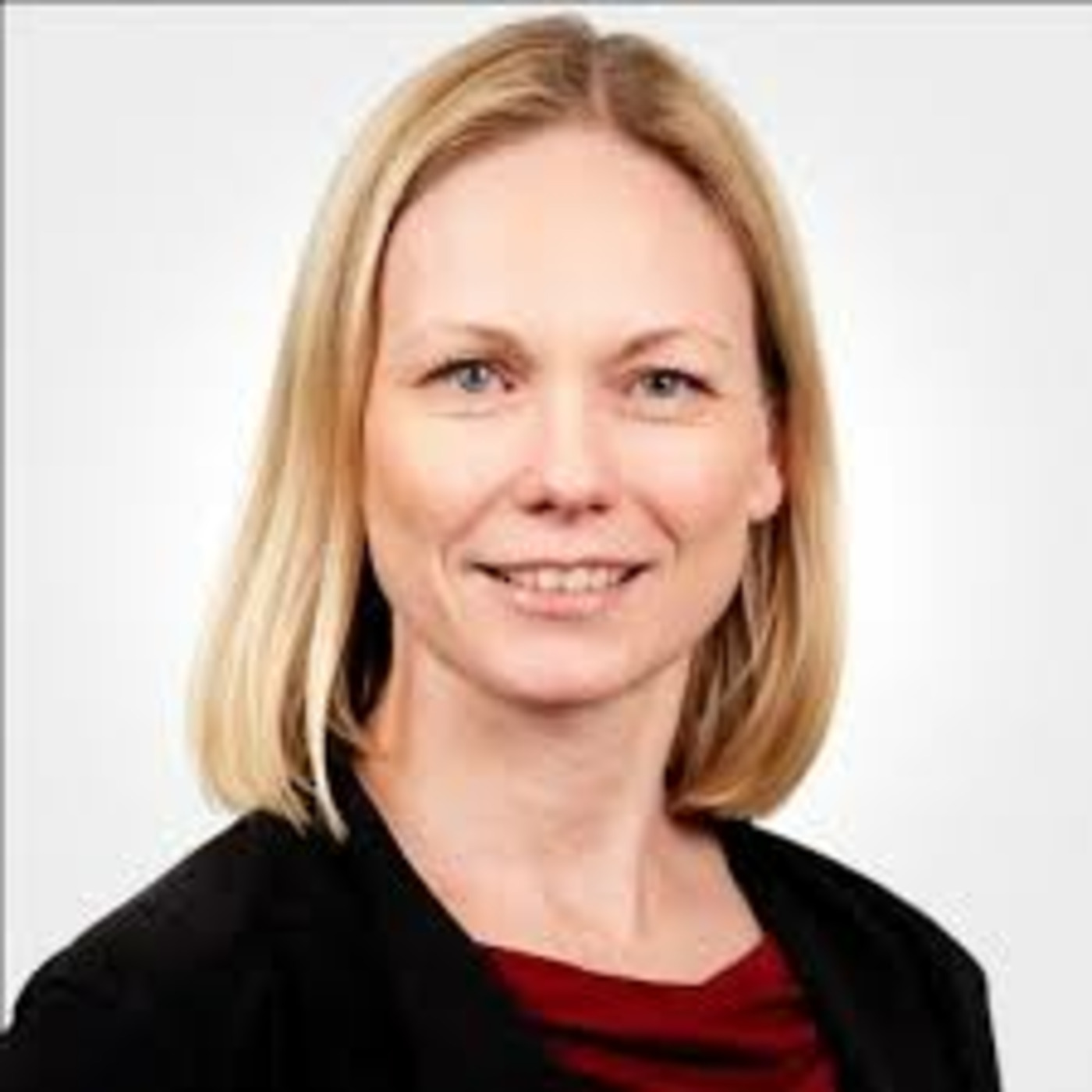
Aoifinn Devitt: I’m Aoifinn Devitt, and welcome to the 50 Faces Podcast, a podcast committed to revealing the richness and diversity of the world of investment by focusing on its people and their stories. I’m joined today by Lindsay Bass, who’s the head of marketing and in charge of fundraising at ImpactA Global, a position she’s held since late 2023. She’s a passionate advocate for more diversity in the investment industry, as well as emerging managers. She’s been active on the Asset Owner Diversity Charter as an advisory board member and in the Diversity Project Investment Industry, where she has co-led the mental health work stream, as well as other responsibilities. She’s also been an early and consistent supporter of 50 Faces, for which we are hugely grateful. Welcome, Lindsay, thanks for joining me today.
Lindsey Bass: Thank you so much, Aoifinn, for having me on. It’s an absolute pleasure to be here.
Aoifinn Devitt: Well, it’s wonderful to actually now interview one of our supporters, because I think you made your interest in our shared mission clear from the outset. But before we get into your commitment to emerging managers and diversity, can we talk a little bit about your background, career journey, and how you came to enter the world of finance?
Lindsey Bass: Gosh, yeah, absolutely. So, I’ve had a, a very atypical route into the world of finance. Growing up-wise, I grew up just outside Bristol. My dad was a music radio producer. My mom stayed at home while having me and my sister, but both before and after, she was in PR, very kind of corporate B2B PR, certainly afterwards, and set up her own business. And actually, while she was off with us, she set up her own dressmaking business as well. So she was always, always very active. Growing up, I had a couple of kind of key interests. In my day, we called it wildlife, but nature for sure was like a real passion of mine. I was a member of the World Wildlife Fund and was an absolute passionate kind of interest in saving the planet. And from a career perspective, really, really early on, I wanted to work in TV production. I was completely dead set from the age of about 15 that I was going to be a TV producer. I was very fortunate living outside Bristol. As I said, my dad was a radio producer. He worked for the BBC. I was able to get my first work experience in the BBC and worked in the Natural History Unit. So absolute my passion, and I thought that was the best thing in the world. I absolutely wanted to work in TV production, would love to have worked in Natural History Unit or any documentary, and spent the rest of my kind of next few years always working in and around the TV industry in Bristol. Every Easter summer holidays I could get, I’d be doing that. I nearly didn’t go to university because I had work and work experience. I was getting jobs, paid jobs in TV production, and thought, well, I’ll just carry on doing that because 3 years of that would be much better than, you know, starting afresh in 3 years’ time. But I guess some kind of sense took over and thought, well, I better just get a degree just in case, which I did. Again, continued to work through uni, working in TV production where I could. Came out of university working in some TV production roles, but I got made redundant. This was 2001, big kind of dot-com and media recession happening at that time. So I left the industry. My last job was working on a fantastic cartoon and animation series with French and Saunders providing the voiceovers, so it was a lot of fun. But needs must, and I turned to various different temp jobs to get cash. Living in London, it was very difficult. I somehow ended up in a fashion manufacturing company doing some kind of production type role, ended up staying in that company for quite a few years and then went to another organization and then reskilled. I was in a technical role in this fashion business and thought, what am I doing? This is not my love, not my passion in life. And yet what I had learned is that I could reskill, I could retrain, I could do something else. So how I ended up in finance from fashion It was quite a big step, but I had a very good friend of mine who worked with me in that firm, and she then moved to Rothschild. She said, Lindsay, you’ve got to come to work in finance. It’s brilliant. You get bonuses. I get luncheon vouchers. This was a while ago, clearly. And so I rewrote my CV multiple times and found myself, ended up with a couple of different roles. I basically thought, well, teach me everything and I will find something new. And I ended up with two job offers. One at Bank AIG and one at Bluecrest. Very fortunately, I took the role at Bluecrest, mainly because the AIG one sounded like it was involving far too many spreadsheets. And I’d say the rest is history, but there are a fair few twists and turns following that. But I, yeah, I walked into Bluecrest and said, teach me everything, I want to learn everything. And as I say, that was certainly— I didn’t look back as far as working in the world of finance, but I absolutely have had a number of different roles throughout my time in finance. That was, as I say, 20 years ago. So I’ve worked in hedge funds at Bluecrest. I worked at a small credit asset management firm called Credaris that then became part of Cairn Capital. I then worked at Legal General Investment Management, a huge big change to work in an organization like that. And now I’m at Impacta Global. So I’ve always been on the side of clients. I’ve always been trying to build businesses and build relationships, and I’ve always been learning for sure.
Aoifinn Devitt: I love that trajectory, and it’s kind of fitting that your mother’s dressmaking business— you’ve touched on it a little bit in fashion— and came out and actually Carol Jeremiah, who, when I interviewed her as chair at MFS, spoke about her background in fashion and how that prepared her for some of the fickleness of finance and the potential for there to be fads and fashions in finance too, as well as the need to be pretty creative and pivot. So I do think these things can be more similar than we think, which is great. And also this set of twists and turns and diversity itself that characterizes your trajectory probably, I would think, affected your passion now for ensuring that other emerging managers thrive and get a fair shake, I suppose, in the selection process. So I’d love to move to that now. And you’ve spoken out on LinkedIn about emerging managers and about some of this drive among consolidation in asset allocators and the drive of consolidation, how that was maybe going to be to the disadvantage of emerging managers. And I’d love if you could just kind of paint a picture for us of who do you consider emerging managers and Maybe we can draw upon the US example here as well, maybe as a comparison, given we’re both recording this from the UK.
Lindsey Bass: Yeah, sure. So I think the definitional point is an interesting one because I think there’s a lot of groupings that can mean slightly different things and can group different people together. So you’ve kind of got small managers, you have emerging managers, which can often be the same, but not necessarily. And then you have diverse-owned managers. And again, sometimes they all get lumped in together, but you can be one and not the other necessarily. So how I would define— well, I guess how you define a small manager depends on the asset class, can be anything between kind of $500 million up to a billion. How you define an emerging manager, I think the official rule as far as the private markets naming conventions are concerned is kind of anywhere up to your third or fourth fund, which is quite a lot actually. You could be going for several years and still be classified as an emerging manager. And then obviously diverse-owned managers, again, official categorizations tend to be ensuring that you have more than 50% ownership of people of diverse backgrounds or underrepresented backgrounds. I think there’s a really interesting opportunity set, and I’ve worked at big managers and I’ve worked at small managers, and I think there is a place for both in portfolios. My concern is that this kind of haste towards greater consolidation— and there’s been consolidation for a long time in the asset management space, but now obviously there’s a huge amount of consolidation, particularly in the UK— the asset owner level there’s a lot of kind of potential babies being thrown out with the bathwater a little bit, that the idea of building scaled portfolios of investor capital should allow you the diversity, the diversification benefits for looking at all sorts of different things rather than what I am seeing. And I’m kind of generalizing here, but what I’m seeing a lot of is large asset owners saying we want to focus on really big strategic relationships with managers. Now, strategic relationships tend to work well for big managers, doesn’t tend to work very well for small, kind of more niche managers, because they don’t, you know, a lot of these owners don’t have the resources, they don’t have the capacity necessarily to want to work with loads of different managers. So they’re thinking that they can get the benefits of fee scales by working with big strategic relationships. That’s really what’s being talked about here, it’s about fees. And I think what is getting lost is the capacity for diversity. So you’re right, there are some interesting lessons from around the world actually, you know, Definitely the US. I mean, people look to the Australian model, big super funds in Australia, investment-wise. Obviously, historically they’ve done a lot of kind of home bias investing, but they’ve done some really interesting things across private markets, and particularly things like infrastructure. The Nordic model as well, different system there, but again, big-scale pools of capital. They’ve done some amazing things within sustainability as their kind of overriding theme, just as a generalization again. But in the US, huge scale amounts of capital just by the sheer nature of the size of the country and the pools of capital. But I think what they’ve been able to do, I guess if I had to characterize what the US have done, and it is more skewed towards alternatives and private markets from hedge funds all the way to the kind of private equity end, a lot of it following the old kind of Yale, kind of Harvard type model, which has meant that they’ve really understood that there’s a real value add potential in small and emerging managers, managers that are hungrier because they’ve got— either they’re smaller and more nimble, or they’re newer and hungrier and are not pure kind of asset gatherers, kind of fee generators. So they’re really having to prove their worth and they’re working harder. And there’s a lot of data out there. There’s a great Barings report that kind of gets refreshed relatively often about emerging managers, looking at the data of performance in the emerging manager space, as well as also on the diverse manager space. And they have built great programs and said, okay, we’ve got a 60, 70, 80 bigger billion portfolio. Let’s carve out 1 or 2 billion over here and allocate to diverse and emerging managers because we think that’s diversification to the portfolio and a real value add. And you can capture these new managers that are getting up the curve and be part of helping them grow. Then they’re going to be loyal to you as an investor over time. I think we just have got so focused in the UK on fees, and obviously some of the consolidation has come from the local government scheme sector, that there’s a big risk the kind of politicization of portfolios leads to a kind of missed opportunity. That’s kind of my current kind of standing on that.
Aoifinn Devitt: Yeah, it’s really interesting because I think it’s a little bit related to this argument around AI, you know, this kind of creation of this diamond effect, you know, in AI, whereas we won’t need as many entry-level because that’s the role that can be done. But if we don’t have any entry-level employees, how will we train the next mid-level, the next leaders? And in a sense, when it comes to innovation, sure, we could just have ever larger investment managers, but where are we going to get the innovation? Where are we going to get the ability? I suppose it’s ironic, this fee issue. Yes, you need a certain level of fees to get off the ground, but equally innovative structures in terms of GP stakes or participation or, you know, just general truly innovative smaller strategies that cannot be swamped by large amounts of capital. That they do need to be pursued by emerging managers. And it’s an interesting, I you think, know, it’s almost like a sustainability of the industry question to have this tier. And I think you’re right, there are certain aspects of scale that don’t fit with that model. It’s great, thank you for raising this question. I think it’s probably more important now than ever. And then just moving to your role at ImpactA, can you tell us about that in terms of the impact that’s envisaged by the impact in the name? And the strategy pursued.
Lindsey Bass: Yeah, absolutely. And something that brought me to kind of be interested in Impactor is really at the kind of intersection of quite a few of these themes and my passion in DEI. So I, as you’re right, have been kind of involved in a lot of projects around diversity for quite a long time and was getting kind of increasingly frustrated that the focus on diversity was at the constitution of the asset manager makeup. So how many female fund managers or how many kind of Black and ethnic various different kind of people do you have and kind of very statistical based on the demographics of the business. And then the questions would stop there. And my kind of sense was, but the so what, like, so you’ve got female-run team or so you’ve got a better diversity in your investment team. So what, how is that changing your investment decisions? That’s where I was starting to kind of feel like there was a disconnect. And I came across Impactor, and Impactor is a relatively new women-founded and women-led fund management firm. It’s actually backed by Legal General, so not too far from the kind of original mothership. And we are, as an asset management level, we’re focused on infrastructure debt for emerging markets. And what I feel passionate about with Impactor is that they’ve kind of brought the connection between being a diverse manager, but also having a diverse outcome to the way they think about investments. At Impacta, we are absolutely passionate about demonstrating that infrastructure and financing infrastructure can deliver better outcomes with regards to the climate transition, but also addressing inequalities. Because the provision of critical infrastructure, particularly— so we focus on lower and middle-income regions in emerging markets, so things like Latin America, Caribbean, Sub-Saharan Africa. We think it has an incredible power to deliver better economic outcomes, has huge multiplier effect. I think the World Bank says there’s a, I think it’s now 5 times multiplier effect of investing into infrastructure for the power of the economy. We also know that to address climate mitigation and adaptation solutions, we’ve gotta be investing about $500 billion annually to be able to get anywhere near hitting some of the global SDG targets. But the kind of interesting quirk for me is that we’ve recognized that women are disproportionately affected by climate change. And so therefore, by financing infrastructure services that can specifically target and improve the lives of women, such as water, sanitation, and healthcare, that you double down on that multiplier effect and you can really improve economic and social outcomes for these communities in these regions. And that is what I find really, really fascinating.
Aoifinn Devitt: We’re going to take a short break to hear from the sponsor of this series, Diamond Hill. I sat down with Henry Sung, fixed income portfolio manager of Diamond Hill, and asked him about their philosophy as fixed income investors.
Lindsey Bass: It’s really trying to find the least.
Aoifinn Devitt: Risky way to deliver the results that.
Lindsey Bass: Your clients are asking is the puzzle.
Aoifinn Devitt: You’Re really trying to solve there. I don’t think you need to take on excess risk when the clients are not expecting that.
Lindsey Bass: So really trying to align your investment process and philosophy with what the clients are really expecting out of you is.
Aoifinn Devitt: Very important in fixed income investing. And now back to the show. And just quickly, could we dig in when you say that women are disproportionately affected by climate change, what kind of studies have shown that in what respect?
Lindsey Bass: So there are a number of different studies. The World Bank lead a number of them, as do the UN, looking at the fact that women have a greater exposure to rural economies. They’re more likely to be working on farms and so therefore much more exposed to challenges, to drought, some challenges from floods. They are the caregivers, and so they’re naturally much more at risk if they don’t have good access to local healthcare facilities. They are spending so much of their time collecting water that obviously if there are droughts and problems relating to kind of water usage or water sanitation and cleanliness due to pollution problems, then that’s going to have a huge impact on their day and their ability to keep their family in good order. So there are a number of different really interesting studies that point to the effects of climate change impacting women.
Aoifinn Devitt: Fascinating. And clearly on that diversity theme, you did something you’ve been active at for years in various different organizations, the Asset Owner Diversity Charter, as well as the Diversity Project. Can you just give a sketch a little bit as to the work that these two organizations are doing today? We know that they’ve made massive strides in terms of moving the needle, at least in terms of awareness. Where are you now focusing?
Lindsey Bass: So the Diversity Project has come on some really interesting leaps and bounds over the years. So it was set up in 2015. And it’s gone through, I think, a number of different phases, and I would say it’s much more of a self-awareness phase. So I was involved recently in a project that we did at the Diversity Project with Dr. Alex Edmonds on this study of cognitive diversity. So we recognize that there is obviously a lot of debate, shall we say, around diversity and the kind of whether it’s been overdone, underdone, badly done. And I think we also have recognized that Actually, there are times when we’ve probably been part of that problematic conversation, if you like. You know, actually, if we don’t ensure that everybody is included in the discussion process, if we don’t make it clear that this is for everyone, this isn’t just for certain segments of the workforce, then we can actually be part of the problem. And so one of the things we wanted to do was say, okay, let’s go back to basics. Let’s really try and prove the case here. Let’s try and prove the point questioning whether there is a link between cognitive diversity and performance. So we work really hard on, on an incredible project that Dr. Alex Edmonds did for us, which came out with the conclusion that it can make a difference provided it is coupled with incredible culture and leadership success factors. In and of itself, on average, kind of nothing tends to outperform because that’s the nature of averages. But if you can couple being mindful and thoughtful and careful about how you support people and provide safe spaces for your workforces, then you can have an incredible powerful impact from diversity because they’re, you know, all the positive benefits of diversity come together rather than the negative. And there are negative effects of diversity. It can create debate, it can create disassociation, it can create silos of different types of people who feel like they’re all fighting against each other for some kind of shared pot that they’re not going to get a piece of. So I think being able to be self-aware enough to realize that perhaps we were part of the challenges in the diversity debate meant that we could really try and come together and kind of be driving that forward. So that’s something the Diversity Project has been involved in. On the asset owner diversity side, I really wanted to be part of that because I recognize, particularly working within asset management, that there is so much power and influence at the asset owner level. And I really wanted to kind of be part of shaping how that was basically kicking the asset management industry into progress. We’re very, very focused at the moment on kind of improving and streamlining the data to raise that conversation and still kind of enhance that conversation that can be had between asset owners and asset managers. And there’s been some amazing progress. I mean, the team underneath us that kind of do all the amazing hands-on work are fantastic. I think the real challenge with a lot of these organizations is that they’re voluntary run. And I think that’s the one of the biggest frustrations and challenges around diversity that I get is that everybody does it on the side of their desks. And that’s not really allowing people the space and the time to dedicate to it. And also I feel like if you feel that diversity generates better performance, or if you feel that diversity is the right thing to do, let’s invest some money into it, which goes back to my point of connecting the so what of diversity. So I would like to see more organizations like the AODC, and I mean, the Diversity Project does have funding, but to kind of see these solutions as funded to make sure that people are putting their money where their mouth is.
Aoifinn Devitt: And in terms of the work at the asset owner, do you see that there will be more of the Diversity Charter? Do you see that there will be more representation? I suppose, what grade do you give the industry today? We’ve seen a lot more of these intern programs, we’ve seen more Girls Are Investors, Girls Who Invest. We’ve seen this happen. I’m not sure whether we’ve seen the proof of the pudding yet of some of these. What grade would you give it today?
Lindsey Bass: So, it depends is going to be my classic kind of consultancy type answer, which is it really depends where you’re working and it depends who you’re working with. To go back to Alex Edmonds’s kind of point really is that you kind of can’t generalize about this. The people that do it well can do it really well. If I had to create an average, it’s probably maybe a 6 out of 10. Because you’re right, I think that statistically, if we look at the number of female fund managers, the number of women-run and owned private markets businesses, they’re still so low. They’re all under 20%. So if you were to take that as a proxy of how well we’re doing in diversity, it’s not very good. And I think it’s because some of the difficult conversations aren’t being had. I think it’s because it’s still coupled with so many challenges, societal challenges around how we think about work, how we value people, how we value childcare, how we think about the kind of extracurricular. I mean, the world of work— it’s kind of potentially going off topic— but the world of work in its current guise just isn’t suited to people with caring responsibilities, whether it’s childcare or elder care. If you’re in a kind of classic two-person parental situation, two-parent families can’t also look after their children full-time and work full-time. That in itself is a failure. And yet we’re all having to work full-time because it’s too expensive to do otherwise. And so therefore there is some kind of disconnect between how we are setting up our businesses and how we are thinking about our people. So that’s why I think there’s so much work still to be done. There is only so much we can do as a diversity kind of industry. But I do feel like this is why I kind of go back to the power that asset owners and asset managers have. We are stewards. Trillions of dollars of assets between us collectively. We have a big responsibility to society, which is the same people know, that, you as us. We’re all interdependent on each other. And I think we have a huge power and responsibility to create a better social structure and social system through the power of our investments.
Aoifinn Devitt: Well, thank you so much for keeping up the good work, flying the flag even when it’s no longer news, and for continuing to move this work on, because I think clearly it needs to be dynamic and to evolve. And now just moving to some personal reflections. So I’ve spoken about some of the twists and turns of your career and some of your, your origins and original passions. Can you speak a little bit about your highs and lows and whether there were of this career and whether there were any particular lessons learned?
Lindsey Bass: So I think the lows that I’ve had professionally have all been kind of redundancy based. I mean, you know, whenever you get made redundant, and I’ve got made redundant a few times throughout my career, it’s always a big personal blow. Like no matter how it is done or how it comes about, that always feels like a real physical and personal blow. It takes a while to come back from that, but I think that kind of rebuilding journey is, is such also a really powerful learning journey in the same process. So I kind of think actually my highs, I I don’t, can’t really think of any really obvious highs to equate to the lows. I think they’re much more about incremental progress journeys. And actually that is for me the biggest kind of success factor is being able to rebuild and relearn and regrow. On the back of the lows. And that all having said, being here, it’s definitely a personal and professional high.
Aoifinn Devitt: Well, thank you very much, but only because you’ve consistently come to my attention. It’s interesting, that point about layoffs and redundancy, which is, I think, unfortunately part of the territory in finance. And it was actually David Hickey, now at BlackRock— I interviewed him, and he spoke about how he was made redundant early in his career, and he had to resort to landscaping work, funnily But enough. Then we spoke about nature at the beginning. Landscaping work digging holes for £10 an hour and how his fallow period was about 10 months long. And that was deeply vulnerable and I think just honest. And I remember thinking, this is why I need to keep doing these podcasts, is we need to normalize these setbacks because everybody needs to know that they’re not alone when they’re facing them. I don’t think it’s easy to prepare, but it is deeply, I think, reassuring to know that other people have been through that and have come out with flying colors. But to normalize this experience because it’s probably going to be another wave we see of that now. So thank you for being so vulnerable yourself in noting that. And we’ve spoken a lot about teams and some of the mentorship certainly that is done through things like the Diversity Project. Did you have any particular key person in your career that was influential in some way?
Lindsey Bass: I’ve probably got a few because every time you meet somebody, they bring something new to you. That’s why I love this industry, because there are some incredible people. And as long as you’re open and willing to listen to them and their stories, then I think you learn a great deal. But there are probably, if I had to pick out, I’d pick out a few. One, one of my first bosses who’s now retired, the great Piers Westermann from Bluecrest. He was an absolute kind of legend of a man, really taught me and my colleagues so much about relationship building that was so valuable. Another colleague who is now an excellent industry great is Leila Bougie, Leila Cotler Bougie, who’s now at IFM, who was also a colleague at Blue Cross. I mean, she’s a Tasmanian devil of a power of energy and just taught me so much, probably about kind of work ethic and humor and humility and love. I mean, she was just kind of embodies all of those. And my most recent boss taught me so much, Mike Walsh. From Legal General taught me so much about clients and the client journey and listening and understanding clients. You know, without those types of kind of influences, probably wouldn’t have got to where I am.
Aoifinn Devitt: I love that. Well, nice range from across the spectrum there. And my last question is around any words of advice, a creed or motto that you live by, or advice you would have for your younger self. Anything you can leave us with?
Lindsey Bass: I’m always loath to give advice to my younger self because, I mean, like, I think everybody always says, well, I wouldn’t listen to it anyway. But I think it’s always been about don’t take yourself too seriously, probably number one. Keep having fun and do things because they’re fun. Do things because they’re enjoyable. Keep learning. It’s the one kind of constant throughout my career is that I’ve kept learning. And absolutely, if I did give myself one piece of advice, is just look after yourself. Look after yourself physically, look after yourself mentally, and look after the people around you.
Aoifinn Devitt: Great advice. And certainly this is a journey. This is a, well, the marathon, not a sprint. So I think especially when we talk about some of the bigger issues we’re trying to change, change. There is a stamina requirement, so I think that is a great reminder. And I think anyone who works with emerging managers knows just how volatile those ups and downs can be. So I think you may give that advice to us yourself, but I think probably to emerging managers too, more than ever, is to play the long game and look after themselves. And I think that’s something, besides all the marketing advice, et cetera, and the capital raising advice, that we should all remember. Well, thank you so much, Lindsay, for being such a consistent supporter of us, as well as being such a voice in the industry for change, and to remind us of the breadth of the market, and sometimes to make us ask the question around things like scale and consolidation. And that was the latest question you asked, which really triggered an interesting conversation. So thank you for coming here and sharing your insights with us.
Lindsey Bass: Thank you very much for having me. It’s been lots of fun.
Aoifinn Devitt: I’m Aoifinn Devitt. Thank you for listening to the 50 Faces podcast. If you liked what you heard and would like to tune in to hear more inspiring investors on their personal journeys, Please subscribe on Apple Podcasts or wherever you get your podcasts. This podcast is for informational purposes only and should not be construed as investment advice, and all views are personal and should not be attributed to the organizations and affiliations of the host or any guest.
Aoifinn Devitt: Series 5 of the 2025 50 Faces podcast is kindly supported by Diamond Hill. Diamond Hill invests on behalf of clients through a shared commitment to its valuation-driven investment principles, long-term perspective, capacity discipline, and client alignment. An independent active asset manager with significant employee ownership, Diamond Hill’s investment strategies include differentiated US and non-US equity, alternative long-short equity, and fixed income.
Lindsey Bass: We’ve recognized that women are disproportionately affected by climate change, and so therefore, by financing infrastructure services that can specifically target and improve the lives of women, such as water, sanitation, and healthcare, that you double down on that multiplier effect and you can really improve economic and social outcomes for these communities and these regions. And that is what I find really, really fascinating.
Aoifinn Devitt: I’m Aoifinn Devitt, and welcome to the 50 Faces Podcast, a podcast committed to revealing the richness and diversity of the world of investment by focusing on its people and their stories. I’m joined today by Lindsay Bass, who’s the head of marketing and in charge of fundraising at ImpactA Global, a position she’s held since late 2023. She’s a passionate advocate for more diversity in the investment industry, as well as emerging managers. She’s been active on the Asset Owner Diversity Charter as an advisory board member and in the Diversity Project Investment Industry, where she has co-led the mental health work stream, as well as other responsibilities. She’s also been an early and consistent supporter of 50 Faces, for which we are hugely grateful. Welcome, Lindsay, thanks for joining me today.
Lindsey Bass: Thank you so much, Aoifinn, for having me on. It’s an absolute pleasure to be here.
Aoifinn Devitt: Well, it’s wonderful to actually now interview one of our supporters, because I think you made your interest in our shared mission clear from the outset. But before we get into your commitment to emerging managers and diversity, can we talk a little bit about your background, career journey, and how you came to enter the world of finance?
Lindsey Bass: Gosh, yeah, absolutely. So, I’ve had a, a very atypical route into the world of finance. Growing up-wise, I grew up just outside Bristol. My dad was a music radio producer. My mom stayed at home while having me and my sister, but both before and after, she was in PR, very kind of corporate B2B PR, certainly afterwards, and set up her own business. And actually, while she was off with us, she set up her own dressmaking business as well. So she was always, always very active. Growing up, I had a couple of kind of key interests. In my day, we called it wildlife, but nature for sure was like a real passion of mine. I was a member of the World Wildlife Fund and was an absolute passionate kind of interest in saving the planet. And from a career perspective, really, really early on, I wanted to work in TV production. I was completely dead set from the age of about 15 that I was going to be a TV producer. I was very fortunate living outside Bristol. As I said, my dad was a radio producer. He worked for the BBC. I was able to get my first work experience in the BBC and worked in the Natural History Unit. So absolute my passion, and I thought that was the best thing in the world. I absolutely wanted to work in TV production, would love to have worked in Natural History Unit or any documentary, and spent the rest of my kind of next few years always working in and around the TV industry in Bristol. Every Easter summer holidays I could get, I’d be doing that. I nearly didn’t go to university because I had work and work experience. I was getting jobs, paid jobs in TV production, and thought, well, I’ll just carry on doing that because 3 years of that would be much better than, you know, starting afresh in 3 years’ time. But I guess some kind of sense took over and thought, well, I better just get a degree just in case, which I did. Again, continued to work through uni, working in TV production where I could. Came out of university working in some TV production roles, but I got made redundant. This was 2001, big kind of dot-com and media recession happening at that time. So I left the industry. My last job was working on a fantastic cartoon and animation series with French and Saunders providing the voiceovers, so it was a lot of fun. But needs must, and I turned to various different temp jobs to get cash. Living in London, it was very difficult. I somehow ended up in a fashion manufacturing company doing some kind of production type role, ended up staying in that company for quite a few years and then went to another organization and then reskilled. I was in a technical role in this fashion business and thought, what am I doing? This is not my love, not my passion in life. And yet what I had learned is that I could reskill, I could retrain, I could do something else. So how I ended up in finance from fashion It was quite a big step, but I had a very good friend of mine who worked with me in that firm, and she then moved to Rothschild. She said, Lindsay, you’ve got to come to work in finance. It’s brilliant. You get bonuses. I get luncheon vouchers. This was a while ago, clearly. And so I rewrote my CV multiple times and found myself, ended up with a couple of different roles. I basically thought, well, teach me everything and I will find something new. And I ended up with two job offers. One at Bank AIG and one at Bluecrest. Very fortunately, I took the role at Bluecrest, mainly because the AIG one sounded like it was involving far too many spreadsheets. And I’d say the rest is history, but there are a fair few twists and turns following that. But I, yeah, I walked into Bluecrest and said, teach me everything, I want to learn everything. And as I say, that was certainly— I didn’t look back as far as working in the world of finance, but I absolutely have had a number of different roles throughout my time in finance. That was, as I say, 20 years ago. So I’ve worked in hedge funds at Bluecrest. I worked at a small credit asset management firm called Credaris that then became part of Cairn Capital. I then worked at Legal General Investment Management, a huge big change to work in an organization like that. And now I’m at Impacta Global. So I’ve always been on the side of clients. I’ve always been trying to build businesses and build relationships, and I’ve always been learning for sure.
Aoifinn Devitt: I love that trajectory, and it’s kind of fitting that your mother’s dressmaking business— you’ve touched on it a little bit in fashion— and came out and actually Carol Jeremiah, who, when I interviewed her as chair at MFS, spoke about her background in fashion and how that prepared her for some of the fickleness of finance and the potential for there to be fads and fashions in finance too, as well as the need to be pretty creative and pivot. So I do think these things can be more similar than we think, which is great. And also this set of twists and turns and diversity itself that characterizes your trajectory probably, I would think, affected your passion now for ensuring that other emerging managers thrive and get a fair shake, I suppose, in the selection process. So I’d love to move to that now. And you’ve spoken out on LinkedIn about emerging managers and about some of this drive among consolidation in asset allocators and the drive of consolidation, how that was maybe going to be to the disadvantage of emerging managers. And I’d love if you could just kind of paint a picture for us of who do you consider emerging managers and Maybe we can draw upon the US example here as well, maybe as a comparison, given we’re both recording this from the UK.
Lindsey Bass: Yeah, sure. So I think the definitional point is an interesting one because I think there’s a lot of groupings that can mean slightly different things and can group different people together. So you’ve kind of got small managers, you have emerging managers, which can often be the same, but not necessarily. And then you have diverse-owned managers. And again, sometimes they all get lumped in together, but you can be one and not the other necessarily. So how I would define— well, I guess how you define a small manager depends on the asset class, can be anything between kind of $500 million up to a billion. How you define an emerging manager, I think the official rule as far as the private markets naming conventions are concerned is kind of anywhere up to your third or fourth fund, which is quite a lot actually. You could be going for several years and still be classified as an emerging manager. And then obviously diverse-owned managers, again, official categorizations tend to be ensuring that you have more than 50% ownership of people of diverse backgrounds or underrepresented backgrounds. I think there’s a really interesting opportunity set, and I’ve worked at big managers and I’ve worked at small managers, and I think there is a place for both in portfolios. My concern is that this kind of haste towards greater consolidation— and there’s been consolidation for a long time in the asset management space, but now obviously there’s a huge amount of consolidation, particularly in the UK— the asset owner level there’s a lot of kind of potential babies being thrown out with the bathwater a little bit, that the idea of building scaled portfolios of investor capital should allow you the diversity, the diversification benefits for looking at all sorts of different things rather than what I am seeing. And I’m kind of generalizing here, but what I’m seeing a lot of is large asset owners saying we want to focus on really big strategic relationships with managers. Now, strategic relationships tend to work well for big managers, doesn’t tend to work very well for small, kind of more niche managers, because they don’t, you know, a lot of these owners don’t have the resources, they don’t have the capacity necessarily to want to work with loads of different managers. So they’re thinking that they can get the benefits of fee scales by working with big strategic relationships. That’s really what’s being talked about here, it’s about fees. And I think what is getting lost is the capacity for diversity. So you’re right, there are some interesting lessons from around the world actually, you know, Definitely the US. I mean, people look to the Australian model, big super funds in Australia, investment-wise. Obviously, historically they’ve done a lot of kind of home bias investing, but they’ve done some really interesting things across private markets, and particularly things like infrastructure. The Nordic model as well, different system there, but again, big-scale pools of capital. They’ve done some amazing things within sustainability as their kind of overriding theme, just as a generalization again. But in the US, huge scale amounts of capital just by the sheer nature of the size of the country and the pools of capital. But I think what they’ve been able to do, I guess if I had to characterize what the US have done, and it is more skewed towards alternatives and private markets from hedge funds all the way to the kind of private equity end, a lot of it following the old kind of Yale, kind of Harvard type model, which has meant that they’ve really understood that there’s a real value add potential in small and emerging managers, managers that are hungrier because they’ve got— either they’re smaller and more nimble, or they’re newer and hungrier and are not pure kind of asset gatherers, kind of fee generators. So they’re really having to prove their worth and they’re working harder. And there’s a lot of data out there. There’s a great Barings report that kind of gets refreshed relatively often about emerging managers, looking at the data of performance in the emerging manager space, as well as also on the diverse manager space. And they have built great programs and said, okay, we’ve got a 60, 70, 80 bigger billion portfolio. Let’s carve out 1 or 2 billion over here and allocate to diverse and emerging managers because we think that’s diversification to the portfolio and a real value add. And you can capture these new managers that are getting up the curve and be part of helping them grow. Then they’re going to be loyal to you as an investor over time. I think we just have got so focused in the UK on fees, and obviously some of the consolidation has come from the local government scheme sector, that there’s a big risk the kind of politicization of portfolios leads to a kind of missed opportunity. That’s kind of my current kind of standing on that.
Aoifinn Devitt: Yeah, it’s really interesting because I think it’s a little bit related to this argument around AI, you know, this kind of creation of this diamond effect, you know, in AI, whereas we won’t need as many entry-level because that’s the role that can be done. But if we don’t have any entry-level employees, how will we train the next mid-level, the next leaders? And in a sense, when it comes to innovation, sure, we could just have ever larger investment managers, but where are we going to get the innovation? Where are we going to get the ability? I suppose it’s ironic, this fee issue. Yes, you need a certain level of fees to get off the ground, but equally innovative structures in terms of GP stakes or participation or, you know, just general truly innovative smaller strategies that cannot be swamped by large amounts of capital. That they do need to be pursued by emerging managers. And it’s an interesting, I you think, know, it’s almost like a sustainability of the industry question to have this tier. And I think you’re right, there are certain aspects of scale that don’t fit with that model. It’s great, thank you for raising this question. I think it’s probably more important now than ever. And then just moving to your role at ImpactA, can you tell us about that in terms of the impact that’s envisaged by the impact in the name? And the strategy pursued.
Lindsey Bass: Yeah, absolutely. And something that brought me to kind of be interested in Impactor is really at the kind of intersection of quite a few of these themes and my passion in DEI. So I, as you’re right, have been kind of involved in a lot of projects around diversity for quite a long time and was getting kind of increasingly frustrated that the focus on diversity was at the constitution of the asset manager makeup. So how many female fund managers or how many kind of Black and ethnic various different kind of people do you have and kind of very statistical based on the demographics of the business. And then the questions would stop there. And my kind of sense was, but the so what, like, so you’ve got female-run team or so you’ve got a better diversity in your investment team. So what, how is that changing your investment decisions? That’s where I was starting to kind of feel like there was a disconnect. And I came across Impactor, and Impactor is a relatively new women-founded and women-led fund management firm. It’s actually backed by Legal General, so not too far from the kind of original mothership. And we are, as an asset management level, we’re focused on infrastructure debt for emerging markets. And what I feel passionate about with Impactor is that they’ve kind of brought the connection between being a diverse manager, but also having a diverse outcome to the way they think about investments. At Impacta, we are absolutely passionate about demonstrating that infrastructure and financing infrastructure can deliver better outcomes with regards to the climate transition, but also addressing inequalities. Because the provision of critical infrastructure, particularly— so we focus on lower and middle-income regions in emerging markets, so things like Latin America, Caribbean, Sub-Saharan Africa. We think it has an incredible power to deliver better economic outcomes, has huge multiplier effect. I think the World Bank says there’s a, I think it’s now 5 times multiplier effect of investing into infrastructure for the power of the economy. We also know that to address climate mitigation and adaptation solutions, we’ve gotta be investing about $500 billion annually to be able to get anywhere near hitting some of the global SDG targets. But the kind of interesting quirk for me is that we’ve recognized that women are disproportionately affected by climate change. And so therefore, by financing infrastructure services that can specifically target and improve the lives of women, such as water, sanitation, and healthcare, that you double down on that multiplier effect and you can really improve economic and social outcomes for these communities in these regions. And that is what I find really, really fascinating.
Aoifinn Devitt: We’re going to take a short break to hear from the sponsor of this series, Diamond Hill. I sat down with Henry Sung, fixed income portfolio manager of Diamond Hill, and asked him about their philosophy as fixed income investors.
Lindsey Bass: It’s really trying to find the least.
Aoifinn Devitt: Risky way to deliver the results that.
Lindsey Bass: Your clients are asking is the puzzle.
Aoifinn Devitt: You’Re really trying to solve there. I don’t think you need to take on excess risk when the clients are not expecting that.
Lindsey Bass: So really trying to align your investment process and philosophy with what the clients are really expecting out of you is.
Aoifinn Devitt: Very important in fixed income investing. And now back to the show. And just quickly, could we dig in when you say that women are disproportionately affected by climate change, what kind of studies have shown that in what respect?
Lindsey Bass: So there are a number of different studies. The World Bank lead a number of them, as do the UN, looking at the fact that women have a greater exposure to rural economies. They’re more likely to be working on farms and so therefore much more exposed to challenges, to drought, some challenges from floods. They are the caregivers, and so they’re naturally much more at risk if they don’t have good access to local healthcare facilities. They are spending so much of their time collecting water that obviously if there are droughts and problems relating to kind of water usage or water sanitation and cleanliness due to pollution problems, then that’s going to have a huge impact on their day and their ability to keep their family in good order. So there are a number of different really interesting studies that point to the effects of climate change impacting women.
Aoifinn Devitt: Fascinating. And clearly on that diversity theme, you did something you’ve been active at for years in various different organizations, the Asset Owner Diversity Charter, as well as the Diversity Project. Can you just give a sketch a little bit as to the work that these two organizations are doing today? We know that they’ve made massive strides in terms of moving the needle, at least in terms of awareness. Where are you now focusing?
Lindsey Bass: So the Diversity Project has come on some really interesting leaps and bounds over the years. So it was set up in 2015. And it’s gone through, I think, a number of different phases, and I would say it’s much more of a self-awareness phase. So I was involved recently in a project that we did at the Diversity Project with Dr. Alex Edmonds on this study of cognitive diversity. So we recognize that there is obviously a lot of debate, shall we say, around diversity and the kind of whether it’s been overdone, underdone, badly done. And I think we also have recognized that Actually, there are times when we’ve probably been part of that problematic conversation, if you like. You know, actually, if we don’t ensure that everybody is included in the discussion process, if we don’t make it clear that this is for everyone, this isn’t just for certain segments of the workforce, then we can actually be part of the problem. And so one of the things we wanted to do was say, okay, let’s go back to basics. Let’s really try and prove the case here. Let’s try and prove the point questioning whether there is a link between cognitive diversity and performance. So we work really hard on, on an incredible project that Dr. Alex Edmonds did for us, which came out with the conclusion that it can make a difference provided it is coupled with incredible culture and leadership success factors. In and of itself, on average, kind of nothing tends to outperform because that’s the nature of averages. But if you can couple being mindful and thoughtful and careful about how you support people and provide safe spaces for your workforces, then you can have an incredible powerful impact from diversity because they’re, you know, all the positive benefits of diversity come together rather than the negative. And there are negative effects of diversity. It can create debate, it can create disassociation, it can create silos of different types of people who feel like they’re all fighting against each other for some kind of shared pot that they’re not going to get a piece of. So I think being able to be self-aware enough to realize that perhaps we were part of the challenges in the diversity debate meant that we could really try and come together and kind of be driving that forward. So that’s something the Diversity Project has been involved in. On the asset owner diversity side, I really wanted to be part of that because I recognize, particularly working within asset management, that there is so much power and influence at the asset owner level. And I really wanted to kind of be part of shaping how that was basically kicking the asset management industry into progress. We’re very, very focused at the moment on kind of improving and streamlining the data to raise that conversation and still kind of enhance that conversation that can be had between asset owners and asset managers. And there’s been some amazing progress. I mean, the team underneath us that kind of do all the amazing hands-on work are fantastic. I think the real challenge with a lot of these organizations is that they’re voluntary run. And I think that’s the one of the biggest frustrations and challenges around diversity that I get is that everybody does it on the side of their desks. And that’s not really allowing people the space and the time to dedicate to it. And also I feel like if you feel that diversity generates better performance, or if you feel that diversity is the right thing to do, let’s invest some money into it, which goes back to my point of connecting the so what of diversity. So I would like to see more organizations like the AODC, and I mean, the Diversity Project does have funding, but to kind of see these solutions as funded to make sure that people are putting their money where their mouth is.
Aoifinn Devitt: And in terms of the work at the asset owner, do you see that there will be more of the Diversity Charter? Do you see that there will be more representation? I suppose, what grade do you give the industry today? We’ve seen a lot more of these intern programs, we’ve seen more Girls Are Investors, Girls Who Invest. We’ve seen this happen. I’m not sure whether we’ve seen the proof of the pudding yet of some of these. What grade would you give it today?
Lindsey Bass: So, it depends is going to be my classic kind of consultancy type answer, which is it really depends where you’re working and it depends who you’re working with. To go back to Alex Edmonds’s kind of point really is that you kind of can’t generalize about this. The people that do it well can do it really well. If I had to create an average, it’s probably maybe a 6 out of 10. Because you’re right, I think that statistically, if we look at the number of female fund managers, the number of women-run and owned private markets businesses, they’re still so low. They’re all under 20%. So if you were to take that as a proxy of how well we’re doing in diversity, it’s not very good. And I think it’s because some of the difficult conversations aren’t being had. I think it’s because it’s still coupled with so many challenges, societal challenges around how we think about work, how we value people, how we value childcare, how we think about the kind of extracurricular. I mean, the world of work— it’s kind of potentially going off topic— but the world of work in its current guise just isn’t suited to people with caring responsibilities, whether it’s childcare or elder care. If you’re in a kind of classic two-person parental situation, two-parent families can’t also look after their children full-time and work full-time. That in itself is a failure. And yet we’re all having to work full-time because it’s too expensive to do otherwise. And so therefore there is some kind of disconnect between how we are setting up our businesses and how we are thinking about our people. So that’s why I think there’s so much work still to be done. There is only so much we can do as a diversity kind of industry. But I do feel like this is why I kind of go back to the power that asset owners and asset managers have. We are stewards. Trillions of dollars of assets between us collectively. We have a big responsibility to society, which is the same people know, that, you as us. We’re all interdependent on each other. And I think we have a huge power and responsibility to create a better social structure and social system through the power of our investments.
Aoifinn Devitt: Well, thank you so much for keeping up the good work, flying the flag even when it’s no longer news, and for continuing to move this work on, because I think clearly it needs to be dynamic and to evolve. And now just moving to some personal reflections. So I’ve spoken about some of the twists and turns of your career and some of your, your origins and original passions. Can you speak a little bit about your highs and lows and whether there were of this career and whether there were any particular lessons learned?
Lindsey Bass: So I think the lows that I’ve had professionally have all been kind of redundancy based. I mean, you know, whenever you get made redundant, and I’ve got made redundant a few times throughout my career, it’s always a big personal blow. Like no matter how it is done or how it comes about, that always feels like a real physical and personal blow. It takes a while to come back from that, but I think that kind of rebuilding journey is, is such also a really powerful learning journey in the same process. So I kind of think actually my highs, I I don’t, can’t really think of any really obvious highs to equate to the lows. I think they’re much more about incremental progress journeys. And actually that is for me the biggest kind of success factor is being able to rebuild and relearn and regrow. On the back of the lows. And that all having said, being here, it’s definitely a personal and professional high.
Aoifinn Devitt: Well, thank you very much, but only because you’ve consistently come to my attention. It’s interesting, that point about layoffs and redundancy, which is, I think, unfortunately part of the territory in finance. And it was actually David Hickey, now at BlackRock— I interviewed him, and he spoke about how he was made redundant early in his career, and he had to resort to landscaping work, funnily But enough. Then we spoke about nature at the beginning. Landscaping work digging holes for £10 an hour and how his fallow period was about 10 months long. And that was deeply vulnerable and I think just honest. And I remember thinking, this is why I need to keep doing these podcasts, is we need to normalize these setbacks because everybody needs to know that they’re not alone when they’re facing them. I don’t think it’s easy to prepare, but it is deeply, I think, reassuring to know that other people have been through that and have come out with flying colors. But to normalize this experience because it’s probably going to be another wave we see of that now. So thank you for being so vulnerable yourself in noting that. And we’ve spoken a lot about teams and some of the mentorship certainly that is done through things like the Diversity Project. Did you have any particular key person in your career that was influential in some way?
Lindsey Bass: I’ve probably got a few because every time you meet somebody, they bring something new to you. That’s why I love this industry, because there are some incredible people. And as long as you’re open and willing to listen to them and their stories, then I think you learn a great deal. But there are probably, if I had to pick out, I’d pick out a few. One, one of my first bosses who’s now retired, the great Piers Westermann from Bluecrest. He was an absolute kind of legend of a man, really taught me and my colleagues so much about relationship building that was so valuable. Another colleague who is now an excellent industry great is Leila Bougie, Leila Cotler Bougie, who’s now at IFM, who was also a colleague at Blue Cross. I mean, she’s a Tasmanian devil of a power of energy and just taught me so much, probably about kind of work ethic and humor and humility and love. I mean, she was just kind of embodies all of those. And my most recent boss taught me so much, Mike Walsh. From Legal General taught me so much about clients and the client journey and listening and understanding clients. You know, without those types of kind of influences, probably wouldn’t have got to where I am.
Aoifinn Devitt: I love that. Well, nice range from across the spectrum there. And my last question is around any words of advice, a creed or motto that you live by, or advice you would have for your younger self. Anything you can leave us with?
Lindsey Bass: I’m always loath to give advice to my younger self because, I mean, like, I think everybody always says, well, I wouldn’t listen to it anyway. But I think it’s always been about don’t take yourself too seriously, probably number one. Keep having fun and do things because they’re fun. Do things because they’re enjoyable. Keep learning. It’s the one kind of constant throughout my career is that I’ve kept learning. And absolutely, if I did give myself one piece of advice, is just look after yourself. Look after yourself physically, look after yourself mentally, and look after the people around you.
Aoifinn Devitt: Great advice. And certainly this is a journey. This is a, well, the marathon, not a sprint. So I think especially when we talk about some of the bigger issues we’re trying to change, change. There is a stamina requirement, so I think that is a great reminder. And I think anyone who works with emerging managers knows just how volatile those ups and downs can be. So I think you may give that advice to us yourself, but I think probably to emerging managers too, more than ever, is to play the long game and look after themselves. And I think that’s something, besides all the marketing advice, et cetera, and the capital raising advice, that we should all remember. Well, thank you so much, Lindsay, for being such a consistent supporter of us, as well as being such a voice in the industry for change, and to remind us of the breadth of the market, and sometimes to make us ask the question around things like scale and consolidation. And that was the latest question you asked, which really triggered an interesting conversation. So thank you for coming here and sharing your insights with us.
Lindsey Bass: Thank you very much for having me. It’s been lots of fun.
Aoifinn Devitt: I’m Aoifinn Devitt. Thank you for listening to the 50 Faces podcast. If you liked what you heard and would like to tune in to hear more inspiring investors on their personal journeys, Please subscribe on Apple Podcasts or wherever you get your podcasts. This podcast is for informational purposes only and should not be construed as investment advice, and all views are personal and should not be attributed to the organizations and affiliations of the host or any guest.