Aoifinn Devitt: Series 5 of the 2025 50 Faces podcast is kindly supported by Diamond Hill. Diamond Hill invests on behalf of clients through a shared commitment to its valuation-driven investment principles, long-term perspective, capacity discipline, and client alignment. An independent active asset manager with significant employee ownership, Diamond Hill’s investment strategies include differentiated US and non-US equity, alternative long-short equity, and fixed income.
Pilar Gomez: I mean, I think sometimes we take for granted our hobbies and don’t think much of them, but I really truly started realizing the value of having a well-rounded life when leaving Collabs because I saw a lot of my colleagues who had put on hold their lives just to succeed in a career. And when that didn’t turn out— again, going on about managing expectations when you’re forced with career change— they lost everything and it was devastating to them. But I realized that I had a rich life outside of work with my family and my friends and again, my interests. And that kept me going. I mean, mind you, I cried a lot, but I still kind of got through it.
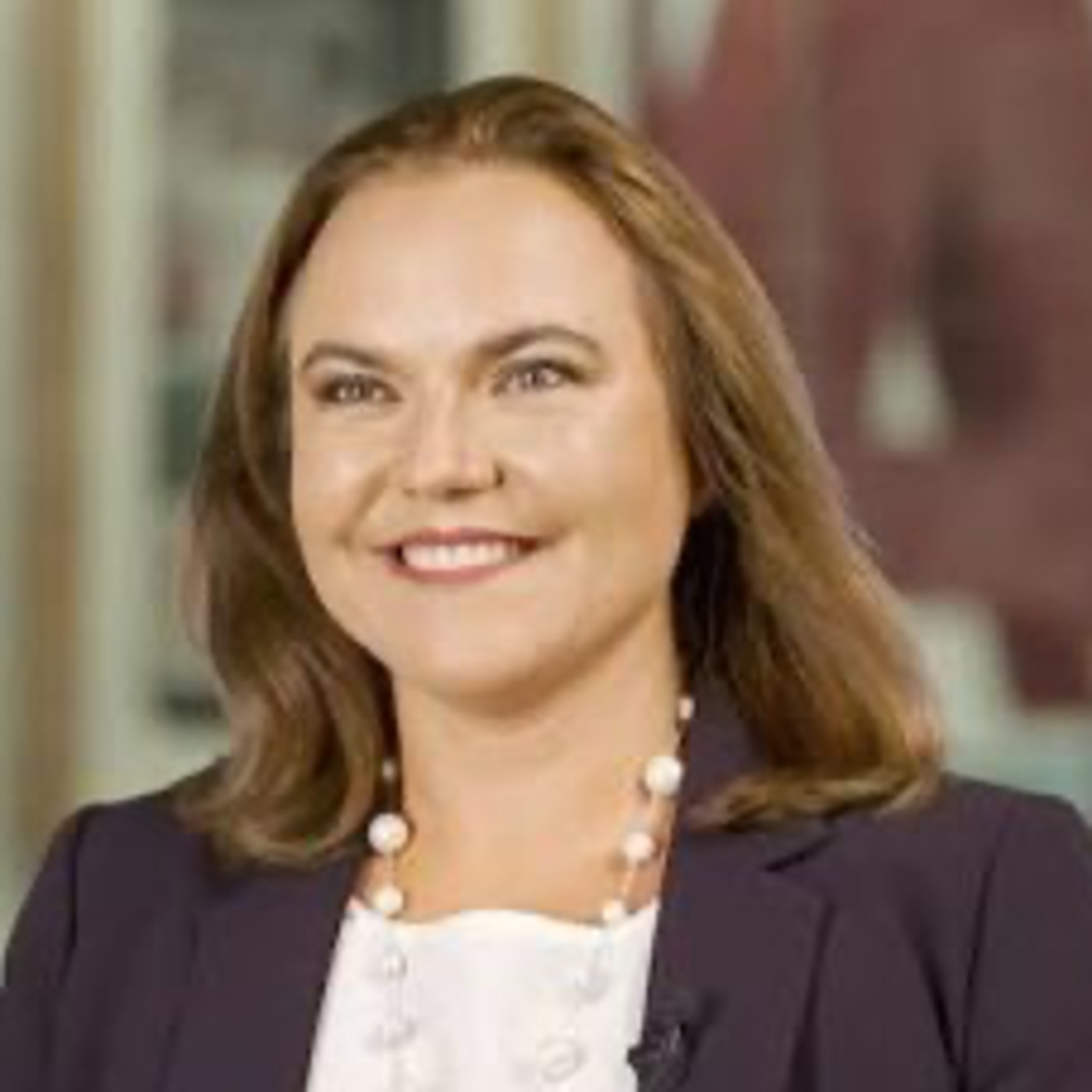
Aoifinn Devitt: I’m Aoifinn Devitt, and welcome to the 50 Faces podcast, a podcast that showcases inspiring professionals in the world of investment and beyond. By focusing on people and their stories. I’m joined today by Pilar Gomez Bravo, who is Co-Chief Investment Officer, Fixed Income and Portfolio Manager at MFS Investment Management. She was previously a Managing Director at Norbert Gehrman and prior to that spent a significant amount of her career at Lehman Brothers. Welcome, Pilar, thanks for joining me today.
Pilar Gomez: Thank you so much, I’m very excited to be here.
Aoifinn Devitt: Well, we had a great meeting a long time ago at a dinner in London, and I learned a little bit about not only your rich investment career, but also some of the rich backstory behind that. And I hope we can touch on a little bit of that and your other interests in this podcast. So let’s just start with where you grew up and maybe can you take us through your career journey starting with where you grew up and what you studied?
Pilar Gomez: Yes. So yeah, life takes many turns. I grew up between the US and Spain, actually. My name is very Spanish, although my accent is not. And I was born in Madrid but moved against my parents basically due to my father moved around quite a bit in that context. With hindsight, it was painful but also super helpful because it made me a lot more flexible and adaptable, at least I so tell myself. And so when we went back, when we came back to Spain, was just to start university after having done high school in the US in a kind of fast-track sense because we knew we were going back to Spain. And then not knowing— and this is kind of a little bit of a trait of my life, not really wanting to commit to one thing or another— I decided to study both law and economics. So, I did two degrees at the same time and trying to hedge my bets, right? So, I thought, okay, let me hedge my bets, humanities and science, and did both. And after that, obviously had to face the decision, do I go into law or do I go into economics or business? And decided to end up in consulting, again hedging my bets, thinking just want to learn. I’m not quite sure which industry or what to do and spent a couple of years at a US consulting firm. 2 to 3 years basically, and then thought that was not for me. And the reason for that was because there were two large risks that I wasn’t happy with. It was a great learning ground, don’t get me wrong. The first one is that you’re basically holed up with a group of people for 6 months in the middle of nowhere, and if you don’t like them or they don’t like you, it’s really, really painful. And the other thing is obviously you are sort of holed up in the middle of nowhere for 6 months, and therefore to maintain family and friends and sort of outside activities becomes also quite difficult, especially if you’re working in a project that is not particularly interesting. So having done that for 2 or 3 years, I did what many management consultants do and sort of decided to go and do an MBA. And, you know, having already done economics and law, I decided to go to MIT, to Sloan, because at least it had the technology angle, which was kind of new to me. And I thought I might as well learn something new and sort of finish my MBA. At Sloan. And through that period, I decided to switch careers and go into more the investment banking side of the world. And you’ll ask why, you know, firstly, because mostly management consultants and bankers are all over the MBAs. And so it was kind of an easy thing to do. But the second is I actually have an identical twin sister, and we both studied the same thing, which was super confusing. And she ended up going to Salomon Brothers. And so I was intrigued by her path and her career. And so when the banks came around to Sloan, I decided to do internships with them and became fascinated with the more dynamic nature of the financial services world. So decided then to join Lehman Brothers when I finished my MBA. And at the time I thought I was going to work in the US and they said, well, we don’t have enough Europeans with your skill set and your sort of MBA, so we need you in London. So I moved to London at the time in the late ’90s. Just in time for the Russian collapse, the Asian currency crisis, and the LTCM debacle. So that was quite interesting, but I basically kind of took a path of sort of hedging my bets, trying to kind of not make a decision until I really knew what I wanted, or at least what I didn’t want. And also that’s why I ended up in research, also trying to keep the doors open.
Aoifinn Devitt: Fascinating. Well, it’s no surprise at all that you have multiple interests and have a difficult time choosing between them, as I think that was part of the tenor of our discussion there a year or two ago. So clearly some surprising turns, and I think the very logical reason behind them though, in terms of shifting from consulting into the MBA. And now I’d love to fast forward to the fixed income world today. So can you take us through how you became an expert in fixed income, rising to the ranks of CIO, and what’s on your mind today in that CIO role? Yes.
Pilar Gomez: So I didn’t follow a very traditional path in, well, I guess I would sort of say not very traditional. I thought I was going to go into equities. I was convinced that equities was what my career was going to be. And in fact, when I started at Lehman Brothers, I went into rotating in equities into equity research and some of the derivatives desks there. But what happened is that as part of the associate program at Lehman Brothers, I happened to get really high math scores in all the tests that were being done. So, I got visited by the head of the fixed income department at the time, who also was heading up mortgages. And he said, no, no, I really think that you should be rotating in fixed income. And I, of course, at that point, young in your career, didn’t want to really say no. And so I rotated in fixed income, fell in love with the asset class because there were just so many ways to make money without necessarily having to have a strong view on a DCF model to tell you what the share price should be. And I never looked back, and I rotated around many different parts of the fixed income markets in terms of the asset classes and ended up thinking that research was the way to go because I thought it was just more intellectually interesting and also allowed me to become subject matter expert. In the areas that I was covering at the time. I went into credit research and also I would have a name attached to my work, right? So when I write a research report, my name would be there and later on the road I could sort of then go and do trading or sales or become a portfolio manager. So that’s what I did and focused really on being the best that I could be in the job that I had, which is being an analyst and recommending and talking to clients about the names that I covered. Having been on the sell side for quite many years, I decided then to put my money where my mouth was and move on to the buy side. And at the time, we’re talking about 2006, I thought, oh, what better place to be managing fixed income than having Lehman Brothers in front of asset management? 2 years later, it was not such a great thing to have Lehman Brothers in front of asset management. But at that point, I had already become a portfolio manager managing credit portfolios and also global fixed income multi-sector portfolios. And I loved the job of becoming a portfolio manager and having the breadth of being able to to take risk. And then obviously came the debacle of Lehman Brothers. It was obviously a great learning experience, a very painful experience as well. And from that sort of perseverance and resistance, I ended up deciding, like you do, you know, when you’ve tried something and it hasn’t worked out, you go and try to do something completely different. And so I decided when I had sort of been at Neuberger for a couple of years, which was the old Lehman Brothers Asset Management, to try my luck with hedge funds. So not you enough, know, trying to go to a hedge fund, a large hedge fund. I decided that I wanted to start my own hedge fund. So threw caution to the wind, having lost everything literally with Lehman Brothers. I decided to sort of team up and been approached by an ex-hedge fund manager to try to launch our own credit hedge fund. So worked on that for a couple years. Again, he decided he didn’t want to do it after a couple years. So again, I had to start over. Literally, and worked into the world of small hedge funds and realized that that world was not necessarily for me. When I joked around, I was way too fiduciary for some of the things that I was seeing in that world. And that’s when I started talking to an ex-MBA colleague. So networking does matter. So one of my friends from the MBA works at MFS, and he’s the one who introduced me to MFS. So from there, I found my home again, sort of long-term real money investing. And from there, I was just given a lot of scope to grow. And what really attracted me to the opportunity was the growth and being able to create a team and to grow a team and to build our investment capabilities. And I guess I was doing okay because they just gave me more responsibilities. As I was always a portfolio manager when I joined, and then I became director of fixed income for Europe. And then 2 years ago, almost 3 years ago, they made me co-chief investment officer in fixed income. So I must be doing something right, at least at MFS, to be given this opportunity.
Aoifinn Devitt: Well, that’s a wonderful story. That’s very candid, I think, about the ups and downs of financial markets and jobs in them, that not everybody experiences a Lehman Brothers in their career or a hedge fund that doesn’t work out. I think there’s definitely an impression that kind of volatility makes on you. And you’re not the first person to have described MFS like a kind of a family. I had an interview with Carol Jeremiah, who had a similar experience having started much earlier in her career, and she describes just how she felt she fit within that culture, and it was a very good fit and long-term fit. Just before we move on to talk about the fixed income market today and its features and characteristics, how would you say that those experiences shaped you in terms of maybe just managing your expectations around workplace security, advice you might give someone else entering the workplace and thinking about a boutique or a large firm?
Pilar Gomez: Yeah, I mean, I think that for me, the lesson learned is that you need to always get up and try again. You have to have the courage to continue. You don’t know what life brings, you know. Life can bring many things, joyful things and painful things, and you just need to be true to yourself and try to do the best for you. And, and, you know, see I can’t say I have a degree of ambition, otherwise I wouldn’t have pursued all these things. So you have to know what motivates you and what makes you passionate about what you do, because it’s tough out there and you need to really commit for your own sake and obviously for wherever you’re working at. But I would say that I think that the biggest lesson learned is that you have to keep your horizons open. You have to know you that, know, there may be things— sometimes we have to take one step back to take two steps forward, and you have to be willing to do that. And I think it’s not so easy when you’re sort of so committed to a single career. And the reality is that we can all have many careers, but when you sort of commit to one of careers and kind of what we do, it takes a toll on you and you really need to want to do it because I think there are sacrifices along the way that we make. For me, it’s worthwhile, but it’s never a straight line and each path is different. But you have to be willing to take the different paths and course correct., and you have to be happy with the course correction and sort of failing and trying again. So that’s for me what really mattered as I look back is that yes, I had all these like turns of events, but I’m really happy with obviously kind of where I am at. And I don’t think I would’ve been who I am if I hadn’t gone through these periods of self-reflection and learning.
Aoifinn Devitt: And nothing I think reminds you of just how privileged we are to manage assets than being in a startup that has to start to try to gain them. I think just that the sheer toil that that exerts and just how long I think has to be invested in building those relationships. Very humbling indeed. And I’d love to now move to the fixed income markets today. So we’re in a point of coming off the top of a rapid hiking cycle. Now we’re on the other side of that. We’ve seen fixed income look quite suitable for large allocations, cash to be allocated there for some time among our institutional and client portfolios. Has not been a drag to have cash necessarily. And equally, there’s been a bit more volatility perhaps in fixed income. Than people are used to historically. So how would you paint a picture of the landscape today in terms of where it is today versus, say, other parts of your career?
Pilar Gomez: Yeah, I mean, I think it’s— I guess every period looks challenging when you’re in it, but this particular period brings quite a lot of uncertainty, mainly because hearing about whether we’re in regime change— is this regime change? And regime change can’t be thrown around every year, right? These are significant issues around debasement of the dollar, the political landscape that we have with regards to making policy decisions from a macroeconomic perspective, Fed independence. All these things are sort of thrown around lightly, but very, very important with regards to not just the fixed income and general markets. And sometimes I joke around that I look around and so, you know, we used to be, have this balance of the 60%, 40%, the 60/40 portfolio, equities, fixed income. And now sometimes I look around and I feel that the 60/40 is 60 AI and 40 Bitcoin. Like, you know, we’ve lost the anchor of what really kind of traditional investing is, right? And I think that this poses a big challenge because it’s not easy to go through a period like 2022 where the absolute returns in fixed income were just so atrocious in what is supposed to be a conservative asset class. And I think a lot of investors still have that memory of what happened and again, have been happy to have 40% in cash and maybe, you know, again, equities. But I do think that you have to take a step back. And again, none of us know the future, but we can sort of look at the past and sort of at least create some sort of alternate expectations of where we’re going. And I do think that given kind of where yields are right now, obviously you have to think about where you go within fixed income, but just overall yields compared to valuations in other asset classes, I think make it for a relatively reasonable value proposition for investors. And then of course, we can have the flexibility, given the breadth of the global fixed income asset class, to tailor outcomes for clients. So I do think on one hand, it’s super kind exciting, of being able to have income and yield finally. On the other hand, we are navigating very choppy waters, and I think there are a lot of crowded trades out there. And I think finally there’s going to be a lot of winners and losers. So, you know, I do think that the value of active management is there, particularly, as I said, as always in fixed income. And I do think that, you know, we are going to be navigating kind of very difficult waters over the next few years.
Aoifinn Devitt: We’re going to take a short break to hear from the sponsor of this series, Diamond Hill. I sat down with Krishna Mohanraj, International Portfolio Manager of Diamond Hill, and asked him about the philosophy of Diamond Hill and how it pertains to teams.
Speaker C: Some of the famous investors, when they talk about it, I’ve never heard anybody talk about the power of the team. And personally, in Diamond Hill, we are very, very proud of the team dynamic that we’ve built. All of us in the international team, We have a stock picker mindset. You know, we’re always looking for that diamond in the rough. And we are also very collaborative. So very collaborative and close-knit. In fact, if you look at us, you would get different accents and different background, different skill set, but we’re very complementary in how we think. We have the same philosophy but different skill set. And so it’s beautiful when that comes together.
Aoifinn Devitt: And now back to the show. Very interesting. I definitely have heard that too, that valuations aren’t particularly attractive given where spreads are today. It’s a bit of a challenging entry very point. How would you describe your leadership style? Because you now in this co-CIO role, having moved very quickly, let’s say, through the ranks there, and how do you weave in maybe some of your prior experience in the leader you are today?
Pilar Gomez: Yeah, so I mean, I think, you know, sometimes it’s on the eye of the beholder. I like to think that my leadership style is really kind of leading by example. I really think that if I’m asking the investment platform to do something, that I have to be willing to show that I’m doing it myself or that I’ve done it myself. And so that work ethic integrity, the values that we want to have as investors on behalf of our clients are ones that I espouse myself on the day-to-day. So that leadership by example is really important. Also, I think that I probably, my approach is more providing vision and motivation and guidance of the future. And I think that’s really important because, you know, investors are quirky. We each have our own individual personalities, but you do need to provide the passion for what we do on behalf of our clients. And I think that’s what I love doing. I love looking ahead and sort of showcasing the opportunity that we have to provide value for clients and how we can do it better and how we can grow. And so if you ask others about who Pilar is as a leader or who I am as a leader, I think that they would probably say— and I can say this because obviously I have my year-end reviews given our 360 peer review feedback— so that I’m a good listener, that I have empathy, But on the other hand, I always see myself as very analytical, again, going back to the math course, and sort of very data-driven. So when I do manage the team and the platform, I do like to make sure that I have the data and the evidence so that again, I can bring people together and going forward. So it’s a little bit of a Frankenstein approach to leadership. But at the end of the day, you have to be there. If you’re going to be in front of the troops, you have to be with them and not somewhere else. And so I sit amongst the team. And we work together to deliver for clients.
Aoifinn Devitt: It’s interesting. I haven’t heard it described as a Frankenstein approach before, but I do think that what we expect of leaders is changing all the time. So we have to bring different characteristics to the table and reconfigure constantly. So actually it’s particularly appropriate. And you mentioned doing this in order to respond to clients and their changing needs. And I’d love to just ask about that, given that you brought in the specter of a Bitcoin and AI portfolio. How do you think clients’ needs are changing their use of fixed income? Are they using it for income, for ballast, for deflation hedging, for just general diversification? And how are you matching these evolving needs?
Pilar Gomez: Yes, I mean, I think for all those I reasons. Mean, because our clients are quite diverse, you know, you have institutional clients and they can vary from insurance companies to pension funds. And you obviously have retail clients across the world, right? So they’re looking for slightly different things from their fixed income allocations. And we try to obviously meet those outcomes. I think that most clients, regardless of where they sit, are just more geared towards talking around outcomes. They don’t really want to talk about products or even as much necessarily strategy specifically. They just want to engage with an investment manager around specific outcomes that they need and solutions that they need based on the landscape that they face. And, you know, they all face very complicated landscapes as well. They’re facing fast regulatory change, fast technology change. A lot of reputational risk in general as well, and a lot of the fiduciary duties that they have towards their own clients. And so what they need from fixed income varies. Obviously, they definitely need income and diversification and capital protection. But what they need, I think, from managers in terms of how it’s changing is a sounding board as well. I mean, I think sometimes we tend to obviously talk about alpha and outperformance, but frankly, I think that’s table stakes. I mean, that’s kind of like the basics, right? It’s kind of necessary but not sufficient. I think what they need is what they’ve always needed, even though we’re changing and the world is changing. They need somebody they can trust, that they can sound off ideas, that can offer them a creative solution. So we engage a lot in discussions around customizing portfolios for outcomes to particular institutional clients, thinking about what vehicles suit our retail clients. And also importantly, I think a lot of what we talk to clients about is sharing our own investment insights and being able to provide to them the courage of the conviction that we have. In sort of that active long-term investment, mostly because I think there’s a lot of pressure on our clients on shrinking their investment horizons. I, you know, the world just moves so fast now with social media and, you know, Twitters and all that stuff that they’re shrinking kind of their expectations for investment horizons. And we continue to advocate for that consistency of approach, but they just need somebody that they can go to and that will share their own intellectual thought leadership to help them create solutions that they need, not just in fixed income, but can help them with asset allocation, can help them think about more holistically approach to investment management. And sometimes you’ll laugh. I mean, sometimes the discussions that I have as co-CIO with other chief investment officers on our clients is actually how do you manage people? How do you motivate them? How do you actually make them take risk? You know, we’re investors, like, how can I get my team to take risk? How do you organize them? How do you recruit talent? How do you maintain the talent? And so sometimes clients look for us not just again for that alpha, they look for all sorts of sharing of ideas in terms of how to run successful investment platforms and to make better investment decisions.
Aoifinn Devitt: Yeah, that’s a fascinating analysis and it reflects very articulately something that I’ve seen. And it is, I think the consultative sales becomes the consultative relationship. And you then have, as you said, that relationship of trust, and essentially you are helping the client do their job and providing counsel in what can be quite a lonely role. You mentioned the CIO, the client may have one CIO or a team of senior investment professionals, and it’s a firm like MFS that is large enough to have the depth to be able to lend resources, lend IT, IP, and I think really supplement what a client does, and that to me is the future of asset management. Is true partnership, which I think will actually create more loyalty than a typical kind of product model.
Pilar Gomez: Yeah, which is ironic given that we’re moving to a world where in theory we’re all going to lose our jobs to AI. And yet that value of that trusted relationship, I think, is more important than ever. And again, know, you the value for a client is not just this is your product and this is your outperformance. It’s a lot more than that in terms of how do you define value that’s being created over long periods of time.
Aoifinn Devitt: Well, I’d love to now move to some of those other interests that we discussed at the dinner we had, because you are— you have a very rich backstory, and you’re certainly more than just a co-CIO. You have a lot of other interests. Anything else that you can mention here, maybe, that you take from the extracurricular life and into your professional life?
Pilar Gomez: Yeah, I mean, I think sometimes we take for granted our hobbies and don’t think much of them, but I really truly started realizing the value of having a well-rounded life, wouldn’t even collapse, because I saw a lot of my colleagues who had put on hold their lives just to succeed in a career. And when that didn’t turn out— again, going on about managing expectations when you’re forced with career change— they lost everything, and it was devastating to them. But I realized that I had a rich life outside of work with my family and my friends, and again, my interests, and that kept me going. I mean, mind you, I cried a lot, but I still kind of got through it. So in terms of hobbies, I mean, I, I have 4 kids. We talked about this as well, and they are my first passion, obviously, and family and friends. But I also thought myself that my hobbies kind of change every like 6 months or a year to some extent. I’m always looking for something interesting and new, but cooking has always been an interesting hobby, maybe because I’m Spanish. Knitting was a more recent hobby, and now crochet. I love puzzles. You know, working on puzzles. And I was thinking, what do those things have in common? And I think it’s mixing creative with method. Like, they all require creativity in a way, but they have a certain method that you can create and follow, right? Which maybe is a very fixed income way of approaching the hobbies, but it gives me like a certain peace of being able to do these things that have a flair of creativity because I’m terrible at painting. I don’t sing or anything like that, but I find that that soothes my inner need for creativity. While still kind of giving me some degree of method. And more lately, what I’m trying to explore— so I used to be a teaching assistant actually at MIT in macroeconomics, and now I miss teaching. And maybe what I do again, talking to clients and talking to our investment platform, a lot of it is communicating, right? I mean, you have to communicate, you have to be passionate about what you do. But I do miss a little bit of that teaching. So I’m sort of thinking and working to sort of see with my kids’ schools if I can do some extracurricular clubs for them around investing for young kids so that they can early on sort of learn about what investing is and, you know, in a very simple way because investing is simple but not easy and sort of maybe helping that. So that’s my next project that I’m hoping that I can work on outside of work is maybe sort of giving back a little bit more to the community.
Aoifinn Devitt: Well, that sounds wonderful. And I think you’d be a natural in that. And your hobbies, you mentioned the crochet, the cooking. They’re quite immersive too. I mean, you can’t really— you have to really be fully present for those, or otherwise disaster could unfold. So I, I think I can see how that would be a nice balance to the intensity of professional life. And moving to some more reflections now, because we have already woven quite a number of reflections into this so far. If you were to look back at your career in terms of highs and lows, I know you mentioned some setbacks, some lessons learned. Anything else that you can note maybe that stood out as a high point or low point?
Pilar Gomez: Yeah, I mean, I think one of the things when you’ve done this for way too long is you learn to get to know yourself. And I think that’s really important. And what I’ve learned about myself is that I have an entrepreneurial bug. I like to grow things. I like to grow Alpha for our clients. I like to grow kind of the investment platform. I like to nurture. That’s why I have 4 kids. And so in that context, you know, the highs in my career are where I’ve looked back and I realized, I made something, I grew something, I delivered something, and this sort of the pride of what you leave behind in a way. And so, you know, that’s why I think now I am in the heights of my career. Obviously I’m still managing portfolios, which I love to do. That’s kind of what my core is as an investor. But I look back and, you know, I’ve continued to deploy and deliver that growth mindset to our teams and hopefully kind of also help our clients have that growth mindset as well. And that makes me super happy. The lows, you know, I think that the lows sometimes are professional. Obviously, as we mentioned, Lehman Brothers was obviously the losing everything, still having my job. I guess I definitely was thankful for that compared to my colleagues. But losing everything was really painful professionally. But I think what now in hindsight has been really, really difficult is that I don’t have family around me. Like, I’m from Spain. My husband’s American. We’ve been in London for a long time. I’ve moved around. And maybe now with hindsight, it’s been tough times being lonely in terms of not having necessarily your natural family around. And sometimes that can be tough, right, in terms of like when you’re— especially when you’re raising 4 kids. And so sometimes the lows are not so much lows of decisions made professionally. They’re lows that you think are really tough in environments that might be emotionally difficult, where maybe that support network that you have is not as strong as you would like it to be. And so, yeah, I mean, I would sort of say, yes, there’s obviously ups and downs professionally. But for me, I think some of the lows have been not being around when my father passed away because he was in Madrid and I couldn’t get a flight on time. Those are the things that nag at you more so than losing all your stocks and all your bonuses at Lehman Brothers after 14 years.
Aoifinn Devitt: No, very well said. And I think we sometimes forget the human toll that these high-paced financial jobs take. They’re always involving international travel. I’d say I’ve had a similar experience. Without family being around me, but I think what you do do is you find the connections in other places. So whether it’s building a deep network of carpooling parents who can help do the run to sports games, or with schools, or with neighbors. So I, I think you do compensate, which probably enriches you even more. But I think well said in terms of the human toll, which is exactly why we do these podcasts, to share the human side of our industry. And staying on the human side, mentors, that’s something that often you mentioned, the passing the knowledge on, and having mentors can sometimes be very instrumental in a life in finance. Did you have any particular mentor or any person that was influential for you?
Pilar Gomez: I mean, I think that, remember, you were talking about, we’re talking about the Frankenstein thing and that you require different leadership skills and different characteristics depending on the environment and the teams. It’s kind of the same. I’ve had different mentors at different times of my life. And they’re usually people that either I worked with or in the same environment that I worked with. Or kind of active listeners. You know, my sister, obviously identical twins, and she’s also in the financial services world. There’s always somebody that I can talk to that sort of keeps me grounded as well. And that’s always been a constant. But there’s been some MDs in management consulting, some others who retired a long time ago that have been sounding boards as well. The one thing that I haven’t really done much is having— and some people do very successfully— is having like a coach or something like that. That’s not something that I’ve explored. Maybe again, it’s just maybe in Europe is not so common, I guess. But I do surround myself from voices that will challenge me. I don’t surround myself with voices that will say, no, Pilar, you’re doing a great job. The mentors I tend to look for are mentors that are willing to give me honest feedback. And I think that once we look around, the best value mentorships that we can have is those that will be honest and critical in a constructive fashion. And that whenever I do mentoring, and I’ve started a network in MFS called FIFI, Females in Fixed Income, and we’ve started also a mentoring program because I think it’s really important to be able to provide feedback in a way that sort of challenges us to be better investors.
Aoifinn Devitt: And it’s interesting, I think the more senior you get, the harder it is to get that honest feedback, much harder, because you’re naturally, there are fewer people above you, you’re rarely going to get it from somebody below you or even laterally. And it takes it just that bit harder to actually get sometimes, and it needs to come from somewhere totally different. And your children, I find, are usually pretty healthy givers of feedback, at least in my case. My last question is around any word of wisdom, creed, or motto you might have, or advice for your younger self, anything you can leave us with.
Pilar Gomez: Yeah, I mean, I think grit is very important and resilience. And I think that if I look back, I would’ve just said, you know, look ahead. Everything will be fine, but you have to have courage and keep on going. And I think that sometimes in your early careers, you just don’t know how much you can sort of say or do that. And, you know, another mantra that I always like to sort of say is you have to be early not to be late. And sort of just thinking ahead, sort of making sure that sort of you’re kind of aware, you know, either professionally or personally or investing-wise, that if you fail to prepare, you prepare to fail.. And so those are the things that I tend to sort of think about that I tell myself as well. But yeah, I mean, again, I think that feedback is super important. And if I told myself before, I said always never be afraid of asking for feedback. I think that’s really important.
Aoifinn Devitt: Well, thank you so much, Pilar. It is no surprise that you have found yourself in these relationships with your clients of such trust and sharing, because from the very time we met, you were very open to sharing everything about yourself, your professional and aspects of your personal life that really enriched my knowledge of you in a very short space of time. So thank you so much for coming here and sharing the rich set of insights with us.
Pilar Gomez: Thank you, it’s been a pleasure, and hopefully, uh, we’ll see each other soon again.
Aoifinn Devitt: I’m Aoifinn Devitt. Thank you for listening to our 50 Faces podcast. If you liked what you heard and would like to tune in to hear more inspiring professionals and their journeys, please subscribe on Apple Podcasts or wherever you get your podcasts. This podcast is for informational purposes only and should not be construed as investment advice, and all views are personal and should not be attributed to the organizations and affiliations of the host or any guest.
Aoifinn Devitt: Series 5 of the 2025 50 Faces podcast is kindly supported by Diamond Hill. Diamond Hill invests on behalf of clients through a shared commitment to its valuation-driven investment principles, long-term perspective, capacity discipline, and client alignment. An independent active asset manager with significant employee ownership, Diamond Hill’s investment strategies include differentiated US and non-US equity, alternative long-short equity, and fixed income.
Pilar Gomez: I mean, I think sometimes we take for granted our hobbies and don’t think much of them, but I really truly started realizing the value of having a well-rounded life when leaving Collabs because I saw a lot of my colleagues who had put on hold their lives just to succeed in a career. And when that didn’t turn out— again, going on about managing expectations when you’re forced with career change— they lost everything and it was devastating to them. But I realized that I had a rich life outside of work with my family and my friends and again, my interests. And that kept me going. I mean, mind you, I cried a lot, but I still kind of got through it.
Aoifinn Devitt: I’m Aoifinn Devitt, and welcome to the 50 Faces podcast, a podcast that showcases inspiring professionals in the world of investment and beyond. By focusing on people and their stories. I’m joined today by Pilar Gomez Bravo, who is Co-Chief Investment Officer, Fixed Income and Portfolio Manager at MFS Investment Management. She was previously a Managing Director at Norbert Gehrman and prior to that spent a significant amount of her career at Lehman Brothers. Welcome, Pilar, thanks for joining me today.
Pilar Gomez: Thank you so much, I’m very excited to be here.
Aoifinn Devitt: Well, we had a great meeting a long time ago at a dinner in London, and I learned a little bit about not only your rich investment career, but also some of the rich backstory behind that. And I hope we can touch on a little bit of that and your other interests in this podcast. So let’s just start with where you grew up and maybe can you take us through your career journey starting with where you grew up and what you studied?
Pilar Gomez: Yes. So yeah, life takes many turns. I grew up between the US and Spain, actually. My name is very Spanish, although my accent is not. And I was born in Madrid but moved against my parents basically due to my father moved around quite a bit in that context. With hindsight, it was painful but also super helpful because it made me a lot more flexible and adaptable, at least I so tell myself. And so when we went back, when we came back to Spain, was just to start university after having done high school in the US in a kind of fast-track sense because we knew we were going back to Spain. And then not knowing— and this is kind of a little bit of a trait of my life, not really wanting to commit to one thing or another— I decided to study both law and economics. So, I did two degrees at the same time and trying to hedge my bets, right? So, I thought, okay, let me hedge my bets, humanities and science, and did both. And after that, obviously had to face the decision, do I go into law or do I go into economics or business? And decided to end up in consulting, again hedging my bets, thinking just want to learn. I’m not quite sure which industry or what to do and spent a couple of years at a US consulting firm. 2 to 3 years basically, and then thought that was not for me. And the reason for that was because there were two large risks that I wasn’t happy with. It was a great learning ground, don’t get me wrong. The first one is that you’re basically holed up with a group of people for 6 months in the middle of nowhere, and if you don’t like them or they don’t like you, it’s really, really painful. And the other thing is obviously you are sort of holed up in the middle of nowhere for 6 months, and therefore to maintain family and friends and sort of outside activities becomes also quite difficult, especially if you’re working in a project that is not particularly interesting. So having done that for 2 or 3 years, I did what many management consultants do and sort of decided to go and do an MBA. And, you know, having already done economics and law, I decided to go to MIT, to Sloan, because at least it had the technology angle, which was kind of new to me. And I thought I might as well learn something new and sort of finish my MBA. At Sloan. And through that period, I decided to switch careers and go into more the investment banking side of the world. And you’ll ask why, you know, firstly, because mostly management consultants and bankers are all over the MBAs. And so it was kind of an easy thing to do. But the second is I actually have an identical twin sister, and we both studied the same thing, which was super confusing. And she ended up going to Salomon Brothers. And so I was intrigued by her path and her career. And so when the banks came around to Sloan, I decided to do internships with them and became fascinated with the more dynamic nature of the financial services world. So decided then to join Lehman Brothers when I finished my MBA. And at the time I thought I was going to work in the US and they said, well, we don’t have enough Europeans with your skill set and your sort of MBA, so we need you in London. So I moved to London at the time in the late ’90s. Just in time for the Russian collapse, the Asian currency crisis, and the LTCM debacle. So that was quite interesting, but I basically kind of took a path of sort of hedging my bets, trying to kind of not make a decision until I really knew what I wanted, or at least what I didn’t want. And also that’s why I ended up in research, also trying to keep the doors open.
Aoifinn Devitt: Fascinating. Well, it’s no surprise at all that you have multiple interests and have a difficult time choosing between them, as I think that was part of the tenor of our discussion there a year or two ago. So clearly some surprising turns, and I think the very logical reason behind them though, in terms of shifting from consulting into the MBA. And now I’d love to fast forward to the fixed income world today. So can you take us through how you became an expert in fixed income, rising to the ranks of CIO, and what’s on your mind today in that CIO role? Yes.
Pilar Gomez: So I didn’t follow a very traditional path in, well, I guess I would sort of say not very traditional. I thought I was going to go into equities. I was convinced that equities was what my career was going to be. And in fact, when I started at Lehman Brothers, I went into rotating in equities into equity research and some of the derivatives desks there. But what happened is that as part of the associate program at Lehman Brothers, I happened to get really high math scores in all the tests that were being done. So, I got visited by the head of the fixed income department at the time, who also was heading up mortgages. And he said, no, no, I really think that you should be rotating in fixed income. And I, of course, at that point, young in your career, didn’t want to really say no. And so I rotated in fixed income, fell in love with the asset class because there were just so many ways to make money without necessarily having to have a strong view on a DCF model to tell you what the share price should be. And I never looked back, and I rotated around many different parts of the fixed income markets in terms of the asset classes and ended up thinking that research was the way to go because I thought it was just more intellectually interesting and also allowed me to become subject matter expert. In the areas that I was covering at the time. I went into credit research and also I would have a name attached to my work, right? So when I write a research report, my name would be there and later on the road I could sort of then go and do trading or sales or become a portfolio manager. So that’s what I did and focused really on being the best that I could be in the job that I had, which is being an analyst and recommending and talking to clients about the names that I covered. Having been on the sell side for quite many years, I decided then to put my money where my mouth was and move on to the buy side. And at the time, we’re talking about 2006, I thought, oh, what better place to be managing fixed income than having Lehman Brothers in front of asset management? 2 years later, it was not such a great thing to have Lehman Brothers in front of asset management. But at that point, I had already become a portfolio manager managing credit portfolios and also global fixed income multi-sector portfolios. And I loved the job of becoming a portfolio manager and having the breadth of being able to to take risk. And then obviously came the debacle of Lehman Brothers. It was obviously a great learning experience, a very painful experience as well. And from that sort of perseverance and resistance, I ended up deciding, like you do, you know, when you’ve tried something and it hasn’t worked out, you go and try to do something completely different. And so I decided when I had sort of been at Neuberger for a couple of years, which was the old Lehman Brothers Asset Management, to try my luck with hedge funds. So not you enough, know, trying to go to a hedge fund, a large hedge fund. I decided that I wanted to start my own hedge fund. So threw caution to the wind, having lost everything literally with Lehman Brothers. I decided to sort of team up and been approached by an ex-hedge fund manager to try to launch our own credit hedge fund. So worked on that for a couple years. Again, he decided he didn’t want to do it after a couple years. So again, I had to start over. Literally, and worked into the world of small hedge funds and realized that that world was not necessarily for me. When I joked around, I was way too fiduciary for some of the things that I was seeing in that world. And that’s when I started talking to an ex-MBA colleague. So networking does matter. So one of my friends from the MBA works at MFS, and he’s the one who introduced me to MFS. So from there, I found my home again, sort of long-term real money investing. And from there, I was just given a lot of scope to grow. And what really attracted me to the opportunity was the growth and being able to create a team and to grow a team and to build our investment capabilities. And I guess I was doing okay because they just gave me more responsibilities. As I was always a portfolio manager when I joined, and then I became director of fixed income for Europe. And then 2 years ago, almost 3 years ago, they made me co-chief investment officer in fixed income. So I must be doing something right, at least at MFS, to be given this opportunity.
Aoifinn Devitt: Well, that’s a wonderful story. That’s very candid, I think, about the ups and downs of financial markets and jobs in them, that not everybody experiences a Lehman Brothers in their career or a hedge fund that doesn’t work out. I think there’s definitely an impression that kind of volatility makes on you. And you’re not the first person to have described MFS like a kind of a family. I had an interview with Carol Jeremiah, who had a similar experience having started much earlier in her career, and she describes just how she felt she fit within that culture, and it was a very good fit and long-term fit. Just before we move on to talk about the fixed income market today and its features and characteristics, how would you say that those experiences shaped you in terms of maybe just managing your expectations around workplace security, advice you might give someone else entering the workplace and thinking about a boutique or a large firm?
Pilar Gomez: Yeah, I mean, I think that for me, the lesson learned is that you need to always get up and try again. You have to have the courage to continue. You don’t know what life brings, you know. Life can bring many things, joyful things and painful things, and you just need to be true to yourself and try to do the best for you. And, and, you know, see I can’t say I have a degree of ambition, otherwise I wouldn’t have pursued all these things. So you have to know what motivates you and what makes you passionate about what you do, because it’s tough out there and you need to really commit for your own sake and obviously for wherever you’re working at. But I would say that I think that the biggest lesson learned is that you have to keep your horizons open. You have to know you that, know, there may be things— sometimes we have to take one step back to take two steps forward, and you have to be willing to do that. And I think it’s not so easy when you’re sort of so committed to a single career. And the reality is that we can all have many careers, but when you sort of commit to one of careers and kind of what we do, it takes a toll on you and you really need to want to do it because I think there are sacrifices along the way that we make. For me, it’s worthwhile, but it’s never a straight line and each path is different. But you have to be willing to take the different paths and course correct., and you have to be happy with the course correction and sort of failing and trying again. So that’s for me what really mattered as I look back is that yes, I had all these like turns of events, but I’m really happy with obviously kind of where I am at. And I don’t think I would’ve been who I am if I hadn’t gone through these periods of self-reflection and learning.
Aoifinn Devitt: And nothing I think reminds you of just how privileged we are to manage assets than being in a startup that has to start to try to gain them. I think just that the sheer toil that that exerts and just how long I think has to be invested in building those relationships. Very humbling indeed. And I’d love to now move to the fixed income markets today. So we’re in a point of coming off the top of a rapid hiking cycle. Now we’re on the other side of that. We’ve seen fixed income look quite suitable for large allocations, cash to be allocated there for some time among our institutional and client portfolios. Has not been a drag to have cash necessarily. And equally, there’s been a bit more volatility perhaps in fixed income. Than people are used to historically. So how would you paint a picture of the landscape today in terms of where it is today versus, say, other parts of your career?
Pilar Gomez: Yeah, I mean, I think it’s— I guess every period looks challenging when you’re in it, but this particular period brings quite a lot of uncertainty, mainly because hearing about whether we’re in regime change— is this regime change? And regime change can’t be thrown around every year, right? These are significant issues around debasement of the dollar, the political landscape that we have with regards to making policy decisions from a macroeconomic perspective, Fed independence. All these things are sort of thrown around lightly, but very, very important with regards to not just the fixed income and general markets. And sometimes I joke around that I look around and so, you know, we used to be, have this balance of the 60%, 40%, the 60/40 portfolio, equities, fixed income. And now sometimes I look around and I feel that the 60/40 is 60 AI and 40 Bitcoin. Like, you know, we’ve lost the anchor of what really kind of traditional investing is, right? And I think that this poses a big challenge because it’s not easy to go through a period like 2022 where the absolute returns in fixed income were just so atrocious in what is supposed to be a conservative asset class. And I think a lot of investors still have that memory of what happened and again, have been happy to have 40% in cash and maybe, you know, again, equities. But I do think that you have to take a step back. And again, none of us know the future, but we can sort of look at the past and sort of at least create some sort of alternate expectations of where we’re going. And I do think that given kind of where yields are right now, obviously you have to think about where you go within fixed income, but just overall yields compared to valuations in other asset classes, I think make it for a relatively reasonable value proposition for investors. And then of course, we can have the flexibility, given the breadth of the global fixed income asset class, to tailor outcomes for clients. So I do think on one hand, it’s super kind exciting, of being able to have income and yield finally. On the other hand, we are navigating very choppy waters, and I think there are a lot of crowded trades out there. And I think finally there’s going to be a lot of winners and losers. So, you know, I do think that the value of active management is there, particularly, as I said, as always in fixed income. And I do think that, you know, we are going to be navigating kind of very difficult waters over the next few years.
Aoifinn Devitt: We’re going to take a short break to hear from the sponsor of this series, Diamond Hill. I sat down with Krishna Mohanraj, International Portfolio Manager of Diamond Hill, and asked him about the philosophy of Diamond Hill and how it pertains to teams.
Speaker C: Some of the famous investors, when they talk about it, I’ve never heard anybody talk about the power of the team. And personally, in Diamond Hill, we are very, very proud of the team dynamic that we’ve built. All of us in the international team, We have a stock picker mindset. You know, we’re always looking for that diamond in the rough. And we are also very collaborative. So very collaborative and close-knit. In fact, if you look at us, you would get different accents and different background, different skill set, but we’re very complementary in how we think. We have the same philosophy but different skill set. And so it’s beautiful when that comes together.
Aoifinn Devitt: And now back to the show. Very interesting. I definitely have heard that too, that valuations aren’t particularly attractive given where spreads are today. It’s a bit of a challenging entry very point. How would you describe your leadership style? Because you now in this co-CIO role, having moved very quickly, let’s say, through the ranks there, and how do you weave in maybe some of your prior experience in the leader you are today?
Pilar Gomez: Yeah, so I mean, I think, you know, sometimes it’s on the eye of the beholder. I like to think that my leadership style is really kind of leading by example. I really think that if I’m asking the investment platform to do something, that I have to be willing to show that I’m doing it myself or that I’ve done it myself. And so that work ethic integrity, the values that we want to have as investors on behalf of our clients are ones that I espouse myself on the day-to-day. So that leadership by example is really important. Also, I think that I probably, my approach is more providing vision and motivation and guidance of the future. And I think that’s really important because, you know, investors are quirky. We each have our own individual personalities, but you do need to provide the passion for what we do on behalf of our clients. And I think that’s what I love doing. I love looking ahead and sort of showcasing the opportunity that we have to provide value for clients and how we can do it better and how we can grow. And so if you ask others about who Pilar is as a leader or who I am as a leader, I think that they would probably say— and I can say this because obviously I have my year-end reviews given our 360 peer review feedback— so that I’m a good listener, that I have empathy, But on the other hand, I always see myself as very analytical, again, going back to the math course, and sort of very data-driven. So when I do manage the team and the platform, I do like to make sure that I have the data and the evidence so that again, I can bring people together and going forward. So it’s a little bit of a Frankenstein approach to leadership. But at the end of the day, you have to be there. If you’re going to be in front of the troops, you have to be with them and not somewhere else. And so I sit amongst the team. And we work together to deliver for clients.
Aoifinn Devitt: It’s interesting. I haven’t heard it described as a Frankenstein approach before, but I do think that what we expect of leaders is changing all the time. So we have to bring different characteristics to the table and reconfigure constantly. So actually it’s particularly appropriate. And you mentioned doing this in order to respond to clients and their changing needs. And I’d love to just ask about that, given that you brought in the specter of a Bitcoin and AI portfolio. How do you think clients’ needs are changing their use of fixed income? Are they using it for income, for ballast, for deflation hedging, for just general diversification? And how are you matching these evolving needs?
Pilar Gomez: Yes, I mean, I think for all those I reasons. Mean, because our clients are quite diverse, you know, you have institutional clients and they can vary from insurance companies to pension funds. And you obviously have retail clients across the world, right? So they’re looking for slightly different things from their fixed income allocations. And we try to obviously meet those outcomes. I think that most clients, regardless of where they sit, are just more geared towards talking around outcomes. They don’t really want to talk about products or even as much necessarily strategy specifically. They just want to engage with an investment manager around specific outcomes that they need and solutions that they need based on the landscape that they face. And, you know, they all face very complicated landscapes as well. They’re facing fast regulatory change, fast technology change. A lot of reputational risk in general as well, and a lot of the fiduciary duties that they have towards their own clients. And so what they need from fixed income varies. Obviously, they definitely need income and diversification and capital protection. But what they need, I think, from managers in terms of how it’s changing is a sounding board as well. I mean, I think sometimes we tend to obviously talk about alpha and outperformance, but frankly, I think that’s table stakes. I mean, that’s kind of like the basics, right? It’s kind of necessary but not sufficient. I think what they need is what they’ve always needed, even though we’re changing and the world is changing. They need somebody they can trust, that they can sound off ideas, that can offer them a creative solution. So we engage a lot in discussions around customizing portfolios for outcomes to particular institutional clients, thinking about what vehicles suit our retail clients. And also importantly, I think a lot of what we talk to clients about is sharing our own investment insights and being able to provide to them the courage of the conviction that we have. In sort of that active long-term investment, mostly because I think there’s a lot of pressure on our clients on shrinking their investment horizons. I, you know, the world just moves so fast now with social media and, you know, Twitters and all that stuff that they’re shrinking kind of their expectations for investment horizons. And we continue to advocate for that consistency of approach, but they just need somebody that they can go to and that will share their own intellectual thought leadership to help them create solutions that they need, not just in fixed income, but can help them with asset allocation, can help them think about more holistically approach to investment management. And sometimes you’ll laugh. I mean, sometimes the discussions that I have as co-CIO with other chief investment officers on our clients is actually how do you manage people? How do you motivate them? How do you actually make them take risk? You know, we’re investors, like, how can I get my team to take risk? How do you organize them? How do you recruit talent? How do you maintain the talent? And so sometimes clients look for us not just again for that alpha, they look for all sorts of sharing of ideas in terms of how to run successful investment platforms and to make better investment decisions.
Aoifinn Devitt: Yeah, that’s a fascinating analysis and it reflects very articulately something that I’ve seen. And it is, I think the consultative sales becomes the consultative relationship. And you then have, as you said, that relationship of trust, and essentially you are helping the client do their job and providing counsel in what can be quite a lonely role. You mentioned the CIO, the client may have one CIO or a team of senior investment professionals, and it’s a firm like MFS that is large enough to have the depth to be able to lend resources, lend IT, IP, and I think really supplement what a client does, and that to me is the future of asset management. Is true partnership, which I think will actually create more loyalty than a typical kind of product model.
Pilar Gomez: Yeah, which is ironic given that we’re moving to a world where in theory we’re all going to lose our jobs to AI. And yet that value of that trusted relationship, I think, is more important than ever. And again, know, you the value for a client is not just this is your product and this is your outperformance. It’s a lot more than that in terms of how do you define value that’s being created over long periods of time.
Aoifinn Devitt: Well, I’d love to now move to some of those other interests that we discussed at the dinner we had, because you are— you have a very rich backstory, and you’re certainly more than just a co-CIO. You have a lot of other interests. Anything else that you can mention here, maybe, that you take from the extracurricular life and into your professional life?
Pilar Gomez: Yeah, I mean, I think sometimes we take for granted our hobbies and don’t think much of them, but I really truly started realizing the value of having a well-rounded life, wouldn’t even collapse, because I saw a lot of my colleagues who had put on hold their lives just to succeed in a career. And when that didn’t turn out— again, going on about managing expectations when you’re forced with career change— they lost everything, and it was devastating to them. But I realized that I had a rich life outside of work with my family and my friends, and again, my interests, and that kept me going. I mean, mind you, I cried a lot, but I still kind of got through it. So in terms of hobbies, I mean, I, I have 4 kids. We talked about this as well, and they are my first passion, obviously, and family and friends. But I also thought myself that my hobbies kind of change every like 6 months or a year to some extent. I’m always looking for something interesting and new, but cooking has always been an interesting hobby, maybe because I’m Spanish. Knitting was a more recent hobby, and now crochet. I love puzzles. You know, working on puzzles. And I was thinking, what do those things have in common? And I think it’s mixing creative with method. Like, they all require creativity in a way, but they have a certain method that you can create and follow, right? Which maybe is a very fixed income way of approaching the hobbies, but it gives me like a certain peace of being able to do these things that have a flair of creativity because I’m terrible at painting. I don’t sing or anything like that, but I find that that soothes my inner need for creativity. While still kind of giving me some degree of method. And more lately, what I’m trying to explore— so I used to be a teaching assistant actually at MIT in macroeconomics, and now I miss teaching. And maybe what I do again, talking to clients and talking to our investment platform, a lot of it is communicating, right? I mean, you have to communicate, you have to be passionate about what you do. But I do miss a little bit of that teaching. So I’m sort of thinking and working to sort of see with my kids’ schools if I can do some extracurricular clubs for them around investing for young kids so that they can early on sort of learn about what investing is and, you know, in a very simple way because investing is simple but not easy and sort of maybe helping that. So that’s my next project that I’m hoping that I can work on outside of work is maybe sort of giving back a little bit more to the community.
Aoifinn Devitt: Well, that sounds wonderful. And I think you’d be a natural in that. And your hobbies, you mentioned the crochet, the cooking. They’re quite immersive too. I mean, you can’t really— you have to really be fully present for those, or otherwise disaster could unfold. So I, I think I can see how that would be a nice balance to the intensity of professional life. And moving to some more reflections now, because we have already woven quite a number of reflections into this so far. If you were to look back at your career in terms of highs and lows, I know you mentioned some setbacks, some lessons learned. Anything else that you can note maybe that stood out as a high point or low point?
Pilar Gomez: Yeah, I mean, I think one of the things when you’ve done this for way too long is you learn to get to know yourself. And I think that’s really important. And what I’ve learned about myself is that I have an entrepreneurial bug. I like to grow things. I like to grow Alpha for our clients. I like to grow kind of the investment platform. I like to nurture. That’s why I have 4 kids. And so in that context, you know, the highs in my career are where I’ve looked back and I realized, I made something, I grew something, I delivered something, and this sort of the pride of what you leave behind in a way. And so, you know, that’s why I think now I am in the heights of my career. Obviously I’m still managing portfolios, which I love to do. That’s kind of what my core is as an investor. But I look back and, you know, I’ve continued to deploy and deliver that growth mindset to our teams and hopefully kind of also help our clients have that growth mindset as well. And that makes me super happy. The lows, you know, I think that the lows sometimes are professional. Obviously, as we mentioned, Lehman Brothers was obviously the losing everything, still having my job. I guess I definitely was thankful for that compared to my colleagues. But losing everything was really painful professionally. But I think what now in hindsight has been really, really difficult is that I don’t have family around me. Like, I’m from Spain. My husband’s American. We’ve been in London for a long time. I’ve moved around. And maybe now with hindsight, it’s been tough times being lonely in terms of not having necessarily your natural family around. And sometimes that can be tough, right, in terms of like when you’re— especially when you’re raising 4 kids. And so sometimes the lows are not so much lows of decisions made professionally. They’re lows that you think are really tough in environments that might be emotionally difficult, where maybe that support network that you have is not as strong as you would like it to be. And so, yeah, I mean, I would sort of say, yes, there’s obviously ups and downs professionally. But for me, I think some of the lows have been not being around when my father passed away because he was in Madrid and I couldn’t get a flight on time. Those are the things that nag at you more so than losing all your stocks and all your bonuses at Lehman Brothers after 14 years.
Aoifinn Devitt: No, very well said. And I think we sometimes forget the human toll that these high-paced financial jobs take. They’re always involving international travel. I’d say I’ve had a similar experience. Without family being around me, but I think what you do do is you find the connections in other places. So whether it’s building a deep network of carpooling parents who can help do the run to sports games, or with schools, or with neighbors. So I, I think you do compensate, which probably enriches you even more. But I think well said in terms of the human toll, which is exactly why we do these podcasts, to share the human side of our industry. And staying on the human side, mentors, that’s something that often you mentioned, the passing the knowledge on, and having mentors can sometimes be very instrumental in a life in finance. Did you have any particular mentor or any person that was influential for you?
Pilar Gomez: I mean, I think that, remember, you were talking about, we’re talking about the Frankenstein thing and that you require different leadership skills and different characteristics depending on the environment and the teams. It’s kind of the same. I’ve had different mentors at different times of my life. And they’re usually people that either I worked with or in the same environment that I worked with. Or kind of active listeners. You know, my sister, obviously identical twins, and she’s also in the financial services world. There’s always somebody that I can talk to that sort of keeps me grounded as well. And that’s always been a constant. But there’s been some MDs in management consulting, some others who retired a long time ago that have been sounding boards as well. The one thing that I haven’t really done much is having— and some people do very successfully— is having like a coach or something like that. That’s not something that I’ve explored. Maybe again, it’s just maybe in Europe is not so common, I guess. But I do surround myself from voices that will challenge me. I don’t surround myself with voices that will say, no, Pilar, you’re doing a great job. The mentors I tend to look for are mentors that are willing to give me honest feedback. And I think that once we look around, the best value mentorships that we can have is those that will be honest and critical in a constructive fashion. And that whenever I do mentoring, and I’ve started a network in MFS called FIFI, Females in Fixed Income, and we’ve started also a mentoring program because I think it’s really important to be able to provide feedback in a way that sort of challenges us to be better investors.
Aoifinn Devitt: And it’s interesting, I think the more senior you get, the harder it is to get that honest feedback, much harder, because you’re naturally, there are fewer people above you, you’re rarely going to get it from somebody below you or even laterally. And it takes it just that bit harder to actually get sometimes, and it needs to come from somewhere totally different. And your children, I find, are usually pretty healthy givers of feedback, at least in my case. My last question is around any word of wisdom, creed, or motto you might have, or advice for your younger self, anything you can leave us with.
Pilar Gomez: Yeah, I mean, I think grit is very important and resilience. And I think that if I look back, I would’ve just said, you know, look ahead. Everything will be fine, but you have to have courage and keep on going. And I think that sometimes in your early careers, you just don’t know how much you can sort of say or do that. And, you know, another mantra that I always like to sort of say is you have to be early not to be late. And sort of just thinking ahead, sort of making sure that sort of you’re kind of aware, you know, either professionally or personally or investing-wise, that if you fail to prepare, you prepare to fail.. And so those are the things that I tend to sort of think about that I tell myself as well. But yeah, I mean, again, I think that feedback is super important. And if I told myself before, I said always never be afraid of asking for feedback. I think that’s really important.
Aoifinn Devitt: Well, thank you so much, Pilar. It is no surprise that you have found yourself in these relationships with your clients of such trust and sharing, because from the very time we met, you were very open to sharing everything about yourself, your professional and aspects of your personal life that really enriched my knowledge of you in a very short space of time. So thank you so much for coming here and sharing the rich set of insights with us.
Pilar Gomez: Thank you, it’s been a pleasure, and hopefully, uh, we’ll see each other soon again.
Aoifinn Devitt: I’m Aoifinn Devitt. Thank you for listening to our 50 Faces podcast. If you liked what you heard and would like to tune in to hear more inspiring professionals and their journeys, please subscribe on Apple Podcasts or wherever you get your podcasts. This podcast is for informational purposes only and should not be construed as investment advice, and all views are personal and should not be attributed to the organizations and affiliations of the host or any guest.