Aoifinn Devitt: Series 5 of the 2025 50 Faces podcast is kindly supported by Diamond Hill. Diamond Hill invests on behalf of clients through a shared commitment to its valuation-driven investment principles, long-term perspective, capacity discipline, and client alignment. An independent active asset manager with significant employee ownership, Diamond Hill’s investment strategies include differentiated US and non-US equity, alternative long-short equity, and fixed income.
Deanne Stewart: We are very, very clear that our number one mandate and objective is to get the very best returns. So we’re very clear about that. But as we do that, because we’re a retirement business, a pension business, we’re not investing for what might happen overnight or short-term returns. We’re actually investing for someone— if you think about a member that joins today, they may not be retiring until 2070. And so when we think about what we invest in, whether that be listed, but particularly when we’re thinking about our unlisted or our private assets, we’re thinking about how do we ensure we create enduring value. And so that’s where, whether it’s ESG or environmental social governance and thinking through those risks, but those opportunities, but also really ensuring that what we’re doing is responsible and will be enduring is a really core part to what we look to. We’re not looking to invest in sort of things that will create a short-term profit but may actually not be there for the long term or not be great from an overall longer-term perspective.
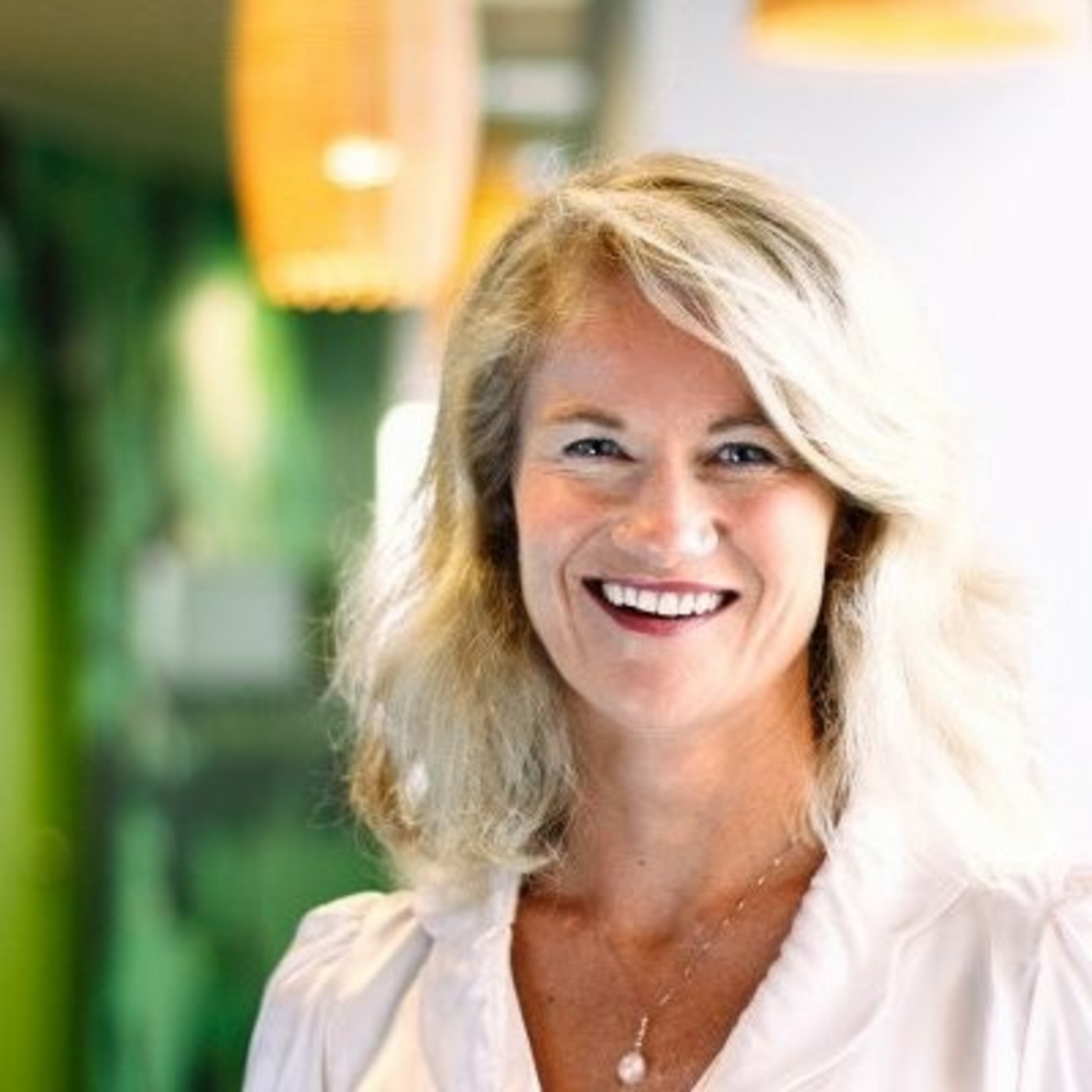
Aoifinn Devitt: I’m Aoifinn Devitt, and welcome to the 50 Faces podcast, a podcast committed to revealing the richness and diversity of the world of investment by focusing on its people and their stories. I’m joined today by Deanna Stewart, who is CEO at Aware Super, an Australian superannuation fund with over $200 billion Australian dollars in assets under management. And the third largest superannuation fund in the country. She has held this role for close to 7 years and was previously Chief Executive Officer at MetLife in Sydney, and prior to that held a series of financial services roles. Welcome, Deanna, thanks for joining me today.
Deanne Stewart: Oh, thanks so much, Evin, it’s great to join you.
Aoifinn Devitt: Well, you are no stranger to podcasts and you’ve told your story in wonderful detail many times, and I’ll put links to those podcasts in the show notes. So instead of repeating your career trajectory here, I’d like to take a slightly different approach and focus on the future and some of your reflections also in getting to this role. And you’ve worn many different hats, a consulting firm, within an asset manager, and now within an allocator. How would you say you weave those insights from wearing those different hats into your role as CEO?
Deanne Stewart: Oh, you are right. I feel like I really have had a grab bag of different experiences that has really helped me with the role that I have today, getting to lead such an incredible pension fund here in Australia. So those grab bag of experiences, as you said, it started with an asset manager firm, BT Funds Management, that was preeminent asset management firm here in Australia in the early 1990s. Then an opportunity to work for McKinsey and Company and really cut my teeth on management consulting in the world of strategic problem solving. Then an opportunity to work in New York with Merrill Lynch And then back to Australia where I got to work with BT, then was CEO of MetLife, so we’ve got the life insurance side, and then ultimately here at Aware Super that is a really global asset owner. And I think if I think about the different experiences, it’s helped me recognise that in your role, particularly as a senior executive or as a CEO, you need to have expertise in the industry that you’re in. So being able to sort of cut my teeth and get the asset management side, the asset ownership side, the life insurance side, all of that is very relevant for the role that I play today. But also the fact that as CEO in particular, you know, really creating that ambitious strategy, that vision, that north star for the organization, working with the people in the organization to really create that, that has been really useful having an experience like a McKinsey company together with the expertise of the industry. But I think the other elements I think you can learn no matter what your role is that I think I’ve really learnt so much, and quite frankly, even I’m learning every single day, is actually much more the human side. So in any leadership role, most of your role is truly about how are you unlocking the potential of your people, how are you attracting and retaining and truly developing the the very best people, and then how are you harnessing that to really execute well around a purpose, around a vision? And for me, I feel like as my experience has gone, I’ve learned more and more how important that side, together with relationships more broadly with stakeholders, is so paramount. So you might have the strategy, you might have the technical expertise, But if you don’t have that human side, you can really only go so far or so fast. And so that bit, I’ve really probably learned so much more over the past 7 years, and it’s been a pretty awesome journey.
Aoifinn Devitt: Well, let’s jump into that human side now in terms of leadership style. So how would you then describe your leadership style and maybe how has it evolved? Yeah, how do you bridge the technical with that human side?
Deanne Stewart: I would say it’s certainly evolved and it’s still evolving now. I am far from a perfect leader and I, I don’t know that I have met a perfect leader. I’ve certainly met great leaders, but I think you’re constantly evolving. I think me in the earlier days, and people would recognize this that certainly worked with me or that I led, I was certainly much more that classic manager in many ways, managing people being more technical, I felt like I needed to know the answers, I needed to be technically capable in the area that I was leading. And that only gets you so far. And certainly I remember at that time, it was when I was at Merrill Lynch, it was a 360-degree feedback. And the feedback was like, you’ve got a great strategy, you’ve got a great vision, da-da-da, but it’s your strategy, it’s your vision. Like, we want to be engaged and taken on this journey, we want to be heavily empowered And so I think my leadership style has really evolved to being one much more as sort of really how do you engage and inspire and unlock that potential and really empower people and bring them on that journey to be able to do things that they didn’t even know they were capable of themselves. So that part of me, I’ve really learned. I think I’ve also learned, I think I always had it in me, but I think leadership is also about being courageous. And I think about where we’re at today from an Aware Super perspective. We’ve taken some really bold moves. We’ve been very innovative in what we’ve done in technology, in member experience, in a number of— on the investment side. We haven’t remained static. We haven’t remained the same as the pack. And that has really paid dividends. So I think I’ve learnt to sort of embrace that courageous, bold side Probably the final thing that I’d say, which I’ve always had from— I think my parents would say I had this as a kid that I think has served me well— is that curiosity. You know, that thirst for, “But what about this?” and “Why does that happen?” and just curiosity about people and curiosity about the world. I think if you’re just constantly in that learning mode, you fear failure a lot less. And I think that has really helped me with that sort of more courageous and humanistic side as well.
Aoifinn Devitt: It’s fascinating because even that whole aspect of asking questions, there’s a certain vulnerability to that, not knowing all the answers. And I really love that part about the need to continuously communicate a vision and get that engagement piece, which of course is key to enacting it. And let’s segue then to Aware Super today. Can you describe where it sits? We’re over $200 billion, as we noted in the intro. Where does that sit within the Australian superannuation landscape and the role that you see Aware Super playing in it?
Deanne Stewart: Yeah, so Aware Super is one of the largest pension funds here in Australia, and it’s probably known for a couple of things. First of all, its history and its heritage. It came out of the New South Wales public sector, and so at the heart of our fund is a really strong ethos around essential workers and really making sure we’re providing truly the very best retirement outcomes, including the way we invest, and that has really impacted our DNA of that responsible ownership ethos from an investment perspective of really making sure we’re taking care of our members where they work, live, and retire. We’re taking care of their future, and so that’s certainly a core part of Aware. But as we’ve evolved over the years, we’ve also really invested very significantly in technology. So here in Australia, we’d probably be regarded as one of the most innovative tech tech-led superannuation funds. And if you look at our members, if they’re wanting to do anything, they can do it all online. Most of it is straight through. We’ve invested very significantly in digital tools, digital advice, both before retirement and in retirement. And so Aware is known quite as a very strong innovator in customer experience and real member engagement. And then finally, as I touched on, from an investment perspective, because we are one of the largest funds, we’ve really expanded globally, but we’re also very strong from an internal perspective as well as partnering with global asset managers around the globe, both on the private side and on the public side, but with a very strong responsible ownership ethos. So that’s sort of where we would be known. Where we fit inside the superannuation sector, well, it’s a really fascinating and rapidly growing sector here in Australia. The super system here in Australia is now $4.3 trillion, but it’s expected to grow to $11 trillion by 2040. So at the moment, even though Australia from a GDP perspective is the 13th largest economy in terms of assets under management for its pension business, it is the 4th largest, but tipped to become the 2nd largest only behind the US within the next 5 years, including the UK. And Canada. So that gives you a sense of the size and scale of the superannuation system. What really drives that is the fact that the super guarantee, the 12% coming out of people’s wages, is mandated. It’s a defined contribution system, so 12% of people’s remuneration comes out mandated. It’s universal, so all working Australians have superannuation, and it really works for all working Australians. And it’s also preserved ’til they’re reaching retirement, and so you can’t tap into that superannuation. So that really does embed that very strong growth side of the superannuation system, which I think is what helps it really be one of the, I think, the world-class pension systems.
Aoifinn Devitt: And just digging into that, this responsible ownership ethos, what does that mean to you today?
Deanne Stewart: For us, what it means is We are very, very clear that our number one mandate and objective is to get the very best returns. So we’re very clear about that. But as we do that, because we’re a retirement business, a pension business, we’re not investing for what might happen overnight or short-term returns. We’re actually investing for someone— if you think about a member that joins today, they may not be retiring until 2070. And so when we think about what we invest in, whether that be listed, but particularly when we’re thinking about our unlisted or our private assets, we’re thinking about how do we ensure we create enduring value. And so that’s where, whether it’s ESG or environmental, social governance and thinking through those risks, but those opportunities, but also really ensuring that what we’re doing is responsible and will be enduring is a really core part to what we look to. We’re not looking to invest in sort of things that will create a short-term profit but may actually not be there for the long term or not be great from an overall longer-term perspective. So that really is at the heart of our responsible ownership ethos. And from a member perspective, if you think about the type of members we serve, whether it be teachers or nurses or doctors or emergency workers, they are at that frontline of serving the community and are very keen also to make sure the way we think about what we’re investing in has a positive impact on the community where they live, where they work, where they retire. And so that really does drive quite a strong ethos in the fund as well.
Aoifinn Devitt: And just when we’re discussing returns, so the idea of a total portfolio approach has got a lot of traction recently, particularly among some of your peers as well as some of the Canadian pension plans. Do you adopt this approach? How do you frame it? Is it a total return, total portfolio approach?
Deanne Stewart: I would say we’re in the early stages of that even. Like, I think particularly with an Australian landscape, our approach has been a more traditional strategic asset allocation approach with very strong sector teams where we internalise some of it and work with external partners. That essentially has been our approach up till now. We are very much looking at the whole total portfolio approach going into the future, particularly that should be a competitive advantage. When you think of it as an asset owner, there should be advantage to that. But for that to be an advantage, you actually need to invest really significantly in technology and data. And so if you think about the data flow you need right across your portfolio to be able to truly determine where that next marginal investment from a risk perspective should go, you actually need really good data. And so over the last couple of years, we’ve been investing very significantly in a whole technology right across public and private assets so that we have complete data look-through across the portfolio to be able to enable that. And so for me, your total portfolio approach is really strong culture and ethos and principles around it, but so too do you need the data. And so that really is our next chapter of where we’re moving to.
Aoifinn Devitt: And in terms of the global focus, you mentioned just the pace of growth of all the superannuation funds given the structure there. How do you, with obviously the Australian market has its limitations, how do you continue to secure these returns and what’s your focus on the global expansion?
Deanne Stewart: Certainly from an Aware Super perspective, when you look inside our portfolio, we’re about 50% domestic assets, including listed equities, property, infrastructure, private equity, and about 50% global. We certainly envisage that as we continue to scale up, we’ll continue to invest significantly in Australia. But I do think more and more that global assets is a really core part of our portfolio. From a listed perspective, that is a relatively easy thing to scale up. If you think about whether it be index or working with fund managers around the globe, But from a private assets perspective, that is why, for example, we started our London office a couple of years ago because we’d already started investing in really significant private assets in Europe, including Get Living, for example, which is build-to-rent, or certainly taking a stake in Octopus, for example, with the energy transition. That’s some of the examples, but what we found was it was much better to have sort of feet on the ground and really strong relationships in local markets to both look after those assets, but also be much closer to the deal flow. And so we started the London office a couple of years ago, and so far that has worked really well for us, and we’ve found some very good opportunities in Europe.
Aoifinn Devitt: Moving then to the future, and clearly you mentioned the size, the growth of assets, focusing on Europe. And what would you say is at the forefront of your mind today as you look to the next 5 years? We’ve heard about the evolution of your responsible ownership ethos, and I know that there is future consolidation and existing consolidation announced around Telstra Super. How do you see the next 5 years evolving and what is at the forefront of your mind in light of that?
Deanne Stewart: The main thing that’s at the forefront of my mind, and then there are implications for this as it relates to investments, is actually how we really win in retirement. And so what I’d say about the Australian pension system is that it is still relatively young. It sort of, as we know it today, the super guarantee that’s now 12% began back in 1992. So it’s 30-odd years old. And so the system to date has really focused on the accumulation side or being a great savings machine. But as more and more Australians, and you can see this pattern around the globe, head into retirement, what you need in retirement, the help, the guidance, the investments, the investment solutions, the products, are actually quite different. And so that is forefront on my mind, is how do we truly be the number one choice in Australia and really reimagine what retirement should and could look like for our members. And so we’re investing really significantly, not just on the investment side as to what that means, but also on the solutioning side as we sort of really work through what does it mean for downside protection for members, what does it mean for a more income base, what does it mean for liquidity, those aspects. But we’re also investing really significantly in that help and guidance and advice, as many members retire, you know, many don’t have that confidence or aren’t sort of experts in the field, and certainly superannuation is quite complex to get your head around. And so we’re really investing significantly on that side as well. And then the final aspect that I would say as an asset owner is really around security. So whether it be financial crime or cybersecurity, making sure that we’re very safe for our members because, as you can imagine, retirement savings are significant per individual. And so there are huge ramifications if you don’t keep the system safe. So there’s some of the aspects. I can dive a little bit more onto the investment side if that’s helpful, but that’s really at the heart of what’s on my mind.
Aoifinn Devitt: I’d love a little bit, if we could, just a little bit of a sneak peek into the investment priorities. And then also when you speak about the engagement, which is clearly so key across across the world in terms of retirement, it is a challenge, I think, to get that engagement. Do you find that that engagement kind of can latch on to some of this responsible and mission-driven investing that you do? Does that help?
Deanne Stewart: So if I just— maybe if I touch on a couple of things we’re doing in the investment space, and then I’ll just jump into engagement, if that’s helpful. So on the investment side, firstly, as we’re doing a lot more in the retirement space, we’re certainly spending a lot of time at the moment as to What does longevity mean and how do we build that into our solutioning and how do we support Australians in that? And therefore, what do you need from an investment perspective? So that’s part of it. But even beyond just pure longevity, when we’re looking at our retirement propositions, how do we really make sure we’re stress testing the liquidity side under completely different scenarios, knowing the volatility in the markets? But also build a little bit more focus on income because that becomes far more important in retirement. So there’s some of the things that we’re doing more focused because of the retirement side. More broadly in investments, as I said, we’re certainly looking at how we continue to grow globally and what we want to do internationally versus based out of Australia. We’re also spending more time on what we want to internalise more given the scale and size of Aware Super now. So there’s some of the things that we’re doing on the investment side together with that total portfolio approach, as I mentioned earlier. On the engagement side, this for me is just so exciting and such an opportunity if you think about where the future lies in any pension fund around the globe, but certainly in Australia where it is a defined contribution and choice is a really core part of our system here. So a member can move super funds literally at the click of a button here in Australia. And so really engaging members and really helping them take actions that set themselves up for their best possible retirement is really where we’re putting a huge amount of focus. And behind that is really harnessing the power of technology and data and how you really get under the hood of consumer behavior and why they are and aren’t taking actions. And you have to get all three right to truly engage a member. And I think that that’s why not too many pension funds around the globe have actually nailed member engagement. So some of the things we’ve been doing is investing really significantly in our technology and data on personalization, and so how we hyper-personalize. And so depending on what we know about you, depending on your age, depending on your assets, how do we serve up very different communications and messagings. We’ve also worked on our retirement tools. So we have a tool where if you’re planning your future, you can go on and play around with the tool and actually set up what type of future you’d like, and then you get a confidence score based on the type of retirement you’re wanting versus where you are at today. And then there’s little nudges and advice on what steps you might take to improve your confidence score. So that, we’ve had more than 200,000 members come on and use that and play around with that. We’ve just launched a new tool called Retirement Manager, which is actually more for members just about to retire or they are retiring. And unlike a defined benefit system where a lot of UK funds are, in Australia when you retire and you’ve got defined contribution, you don’t necessarily have a guaranteed income every year, and it’s the first time in your life you don’t have a paycheck. And so how do you actually plan your income, what your income needs are, what your expenses are? You want to, like, travel, you might want to pay down some of your mortgage. And so we’ve just developed Australia’s first tool for retirement of how you set up an income, and once again, giving you a confidence score for the type of income you’re wanting, the type of lifestyle you’re wanting to live, ‘How confident could you be that your money will last to your life expectancy?’ So we’ve just launched the last couple of months and it’s certainly getting pretty incredible feedback so far. So there’s some of the things that we’re doing to engage members and we’re certainly finding that that really is hitting the mark, but we are co-creating them with our members, so that’s been really helpful as well.
Aoifinn Devitt: We’re gonna take a short break to hear from the sponsor of this series, Diamond Hill. I sat down with Heather Brilliance, CEO of Diamond Hill, and asked her to talk about the culture of Diamond Hill as a boutique asset manager. When I think about our world as.
Deanne Stewart: Defined by being a boutique, I’d say.
Aoifinn Devitt: We’Re really committed to making sure that we are very investment-led and investment-driven. I just think that’s critical when you’re a boutique because your, your point of differentiation is differentiation, our performance. And in addition to that, though, I’d say one of the things that I think has really helped at Diamond Hill is that we have additionally invested in making sure that we can have a higher level of client service and that we have the, the people, the technology, and the resources to make sure that we can deliver what our clients need from us on a more custom basis, because that’s one of the things that.
Deanne Stewart: I think being a boutique gives you.
Aoifinn Devitt: An advantage in doing. And now back to the show. So interesting. And I would imagine you mentioned your investment in technology, that that’s greatly assisting the personalization quest.
Deanne Stewart: Correct. So because we’ve invested so much in the technology and really automated a lot of our servicing side, and we’ve actually got our digital advice tool completely integrated into our administration system, it does mean our ability to sort of move quite rapidly in building these new tools and allowing members to play around and then actually be able to transact off the back of them is really heightened relative to where many other pension funds are at.
Aoifinn Devitt: And I’d love to move then to the question of diversity, because clearly you serve a diverse body of members and you yourself have moved through the financial industry, which has had, I’d say, varying grades. Afforded to diversity. I’d love to hear your comment on where you think the industry is now around diversity, inclusion, representation, and maybe areas that you think it has for improvement.
Deanne Stewart: Well, certainly, and I have certainly been a very strong advocate for diversity for a number of reasons. From an Aware Super perspective, what you might not know is 63% of our members are women, and so we’ve got a very strong skew to women in our fund, but when you look at the system as a whole and you look at our membership as they’re going to retire, there’s a 25% gap in the retirement savings of men and women. So working out and certainly advocating for some of the changes to the super system that would make it a far fairer system is certainly one of the things that I’ve done in the system, as have many of my colleagues, by the I way. Certainly wouldn’t want to take all that credit, but that has certainly been one area where I think we’ve got room to improve, and certainly the government has been taking some great action on that front. But then when I look inside our industry, if you think about— so if I look at Aware Super, we’ve got just over 1,500 people in Aware Super, and we are very strong from a gender balance perspective. So I think we’re 54% women and 46% men.
Aoifinn Devitt: Men.
Deanne Stewart: Certainly at really senior levels, senior executive is 50/50. The board actually has a skew towards females, so we’ve got a very strong gender representation. Interesting, in our investment team, we’ve also got a very strong female representation, so 43% of our investment team are women. Now, that is very different to the investment management industry. If you look at the investment management industry and you look at portfolio manager or above, it is less than 20% are female. So the investment management industry, and I would certainly call out private equity as one of the worst offenders, certainly has a long way to go to really, really harness the very best in talent from a gender perspective. So that is certainly something that I’m doing a fair bit of work on here in the industry as really getting— we’re working with one of the universities here to get under the hood as to what’s really going on and why is that happening and why is it particularly happening not just at the grad level but particularly at that mid-career level where there might be strong gender diversity up to that point and then women are electing not to stay and stay on to senior roles or are not getting those senior roles. So, that’s something that I feel very passionate about and that we really need to address certainly here in Australia, but it is a global phenomenon. So that is certainly one of the areas. Now, a big reason that I am passionate about that isn’t just because of our members, isn’t just because of my own gender, but it is because if I think about the moments where we have done our very best work, and if you really want to harness the best ideas and the best from an innovation perspective, I think about the moments where that has really been a catalyst, and often it’s you’ve got very different people around the table from very different perspectives. And if you want an investment team that is at its best, you have to have an investment team that has very different perspectives, that brings different ideas and really challenges and is really courageous in their conversations so that the best ideas surface and win versus everyone thinks a very similar way or comes from a very similar background. So there’s a long way to go, I think, in investment management on that side.
Aoifinn Devitt: And in terms of that diversity around the table, hearing the diverse voices and getting contributions and challenge, how do you create a climate for that to happen? Are you intentional as a leader about stating and restating that you want opinions to be heard, that you want people to feel safe expressing those opinions, and that’s essentially why you’ve gathered them there.
Deanne Stewart: Yeah, look, I would say there’s no silver bullet to this, and that’s a real— there’s rarely a silver bullet to some of the wicked problems. I think you’ve definitely got to have the right policies in place that really support a more diverse organization, but the reality is it really comes down to good policies. It actually comes down to the culture and the work environment. And do people feel that they belong? Do people feel that if they put their voice forward, that that is going to be well supported? And the reality is, if you’ve got a team that really do look a certain way, act a certain way, and you’ve got a really different way of thinking coming to that, and it’s just one person, that is close to impossible to truly be heard. And so for me, there’s a real power in numbers, but there’s a really important setting up the culture, a culture that is curious, a culture that is really inclusive, and a culture that really wants different voices to be at the table. And so we’ve done a huge amount of work around that, Aoifinn, like very deliberate. We call it the Aware Way, and it is very much creating a culture and a way of working where you are surfacing different perspectives right up front, you’re really spending time on the problem you’re trying to solve, you’re really trying to be that adaptive type of thinker that really wrestles with really good problems by bringing different perspectives and then moving forward with potential options to then move forward. And so we’ve done a lot of work on that to really try and create that culture. I wouldn’t say that we’re perfect, but it’s certainly something that we’re being very intentional about in what we’re trying to create. So that is a really big part of it. And the last thing that I would say is that when you talk to people, and it can be men or women, at the heart of what people really want beyond feeling that they’re fairly compensated is actually they want to know that they’re learning and growing. And that they are empowered and that there’s flexibility to the way that they want to live life. And I often find many organizations, many investment organizations quite rigid in what they expect, the box that they’ll put in people. They get stuck in a certain type of role or a certain type of industry that they’ve got to cover rather than the ability to really learn and grow across different sectors, different industries. So we really try and harness that in our employee value proposition. But so do we really try and harness much more flexibility in the way of working and recognizing the different patterns of people’s lives. And so that really works for us in terms of our ability to attract and retain talent, together with a very strong purpose around our member-first ethos. So that, for me, they are the components that I think really help you attract very different people from different walks of life.
Aoifinn Devitt: I love that emphasis on learning and growing. Certainly I’m projecting my own, my own priorities there. And just before we move to some reflection questions, just to build on that learning, growing, and I think a piece on how we actually met was at a women’s event hosted in LinkedIn’s offices by yourself. And a lot of the focus was on voice and on amplification and having that piece heard, because it’s great to have a leader like yourself that wants the team to learn and grow. But there has to be a piece whereby they can also express themselves and make themselves heard and advocate. So can you just describe your motivations around that event?
Deanne Stewart: Fantastic. Yes, thank you. And part of the thinking of that event came from— and there’s a lot of research on this, certainly I’ve read a lot of research that’s come out of Harvard and INSEAD, for example, that shows— and this is stereotypic, right? So this is not every female or every male, but on the whole What you do find, and some of this I think is very societal and cultural norms, that as women go through a workforce, particularly if they are not a majority in a workforce, they often find that they lose their voice and confidence. And so for me, really helping address that and really help women find their voice, find their brand, find who they are, and have that confidence to really bring their perspectives to the table is a really core part of solving this equation. And so certainly in a cultural sense here at AwareSuper, it features very strongly around really making sure people feel that they have a voice, that they feel that they can speak up. That we survey that all the time and have a really good sense of where people are feeling on that dimension. But we also do quite a few training and learning so that people get to practice those things. And like all things, there is something about just putting yourself out there, practicing, and then practicing again and practicing again. And so we certainly do a fair bit of that type of training as well.
Aoifinn Devitt: Well, just moving to the— thank you for that and for the work you’ve done. And moving to the reflection questions. So what really struck me about the many podcasts I’ve listened to that you featured in, and I also will, as I said, link to them so our listeners can also take advantage, is you’ve been extremely open and transparent about your career journey, about some of the vulnerabilities and the comfort zone breaching that you had to do as part of that and what you learned. And I’ve given businesses to run where you didn’t feel you were ready, etc. And one thing that struck me as I moved through my career is that those challenges and setbacks, they keep coming. It’s not as if we just experience them and then we kind of go through them. Mean, I just maybe if you look more at maybe, say, recent years as opposed to the early years, were there any challenges, setbacks that you learned lessons from maybe in the last 10 years? That you can mention here?
Deanne Stewart: Certainly, and I think it’s very much under that banner of what doesn’t kill you makes you stronger. But also, I do think some of your biggest moments of learnings do come from trying something and it doesn’t work and actually facing into that and being really self-aware. Okay, what did I own with that and what actually was outside of my control? And really taking that time of self-reflection. Otherwise, you don’t grow, you don’t learn, you don’t get better. And so for me, I’m a really avid believer in that. That’s probably why I’ve probably sounded a little bit more vulnerable in podcasts, is I’ve probably done a fair bit of that heavy thinking and lifting because I have had these moments that haven’t worked out and I’m like, huh, what happened there? So possibly a couple that I can think about that have occurred over the last, I’d say, 10 to 15 years Certainly one is where I had a very senior role and more and more work was being piled on me. And also, at the same time, I wasn’t really lined up to the values of the organization. So two things were happening. I didn’t feel that extra energy and lift because I didn’t feel really attuned to the values and where the organization was really going. But then secondly, I was getting more and more work piled on me and I just came close to being burnt out. And when I reflect on that, I’m like, how did I let that happen? Why did I not just make completely different choices way earlier? But sometimes you can’t get out of that. You don’t have that time to do that self-reflection. But the self-reflection I did on that was I will never work again for an organization where I don’t feel so deeply aligned to the purpose and values because that is really at the heart of who I am. And so that was a really awesome learning on that side. But secondly, I also learned that you’ve got to create very clear boundaries. You know, you’ve got to be really clear what are the couple of things you do need in your own personal life that give you joy, that give you your energy, that you can’t compromise on every week as you’re just being piled with more work. And so for me, I really learned about the power and importance of purpose and values and the importance of setting very clear boundaries on a couple of key things. You can’t do it on 100 things. And that has really helped me every day since, as an example. So that was certainly one of the big lessons that I’ve had over the last 10 to 15 years. The second is I certainly remember when I came into Aware Super, it was a really I mean, it’s such a beautiful organisation that is so purpose-driven, so it was very aligned and had done so well, but it was also at a time when the industry was changing really significantly. So this is when choice was becoming much more of a thing. And so Aware Super, that had been the default superannuation fund for the New South Wales government, was very used to a certain way of operating. But suddenly the industry was changing quite rapidly and the ability to compete, the ability to grow, the ability to have a strong brand out in the marketplace, the ability to be more commercial together with a very purpose-driven heart became a real necessity for the organization. And so really learning how to really pay respect to the history of an organization and make people feel really appreciated for what they’d done to that point, but actually bringing them on that change journey, that transformation journey. I have really learned through this, the last 7 years that I’ve been there, I’ve really fine-tuned how you do that and how you bring people on that journey rather than just go, “Let’s go here!” You know, the reality is you actually need to spend time really deeply with people honoring the past, honoring what’s been done, You need to create a burning platform for why you need to change, and then together you create the vision for the future. And if you don’t do those 3 steps in that order, you will fail. And so there’s some of the big lessons that I’ve learned over the last 10 to 15 years that hopefully are helpful for some of your listeners, but they’ve been incredibly helpful for me.
Aoifinn Devitt: Very much so. And, and certainly the point about setting boundaries, getting back to the point of courage, That takes courage because, you know, you feel at some point that you have to essentially surrender. And I think it certainly comes with the wisdom of maturity through careers. And just like at that point, I know you’ve mentioned mentors and leaders and people who are influential in your career, but I’m thinking again, because these don’t stop, you know, at a certain point, you continue. Anyone over recent years that you have taken lessons from?
Deanne Stewart: Certainly. And it’s really interesting. I do get asked this sometimes. I struggle to give you one person’s name, and the reason for that, I think, even is I actually love taking different things from different people where you’re like, wow, they’re amazing at that. And by the way, some of those people work for me. So if I think about some of my mentors or the people that I really tune into, some are because they’re very good at execution and transformation, and they know how to get change to happen. One that I meet up with quite often is because they are so good at asking the curious question. And so that curiosity and the ability to ask great questions, that really unlocks things for people. But also one that, for example, is inside my organization, they’re just amazing at the way that they really harness people and really bring the best out of people and really unlock. And so just talking about what they’re doing. So for me, I think I’m probably less a one-hit wonder, you know, this person’s my mentor, but it’s more looking for what you can learn from different people according to the different things that you need to fine-tune.
Aoifinn Devitt: Great question. I always say it’s never an exhaustive list. Well, and we’ve had so much wonderful insight here. Last question is any key word of wisdom takeaway motto, something that you say to keep yourself perhaps centered and grounded that you can share with us here?
Deanne Stewart: I don’t know this is what keeps me centered and grounded, but certainly a piece of advice I got from one of my bosses way back when, when I was given this massive opportunity at Merrill Lynch to run this global business, and I didn’t think I could do the job. I just was not confident and didn’t feel that I was up for it. His words to me was like, okay, Dee, you’ve got to stop thinking so small. You’ve got to think big. You’ve got it. And I have often reflected on that, particularly in those moments where you need to find the courage to really go for something. It’s amazing how I think the human spirit and most people have the potential to do incredible things, but they really limit themselves. They want to stay in the safe zone. They want to stay in the same swim lane because it feels comfortable, it feels familiar, but you don’t find growth there. And I think allowing yourself to really think big, think ambitiously, go for it, and think, what’s the worst that could happen? If I can face into that, I’m gonna give it a go. I’ve come back to those words again and again as I’ve got more and more courageous as every year’s gone by, and I can really feel that spirit inside myself. And hopefully, I am able to inspire or influence others around me with the same sort of sentiment.
Aoifinn Devitt: Wonderful. Well, thank you so much, Deanna. This is exactly as I had hoped it would be. I was very inspired by our event in London that you hosted. And I think what your clear energy, not only through channeling your own career into the unknown, past the frontier of the comfort zone, but in rallying so many others to do so. It’s truly extraordinary and a leader, and truly Aware Super is lucky to have you at the helm, and so are not only the employees, but the thousands of beneficiaries that take advantage of this leadership and vision. So thank you so much for coming here and sharing your insights with us.
Deanne Stewart: Oh, thanks, Even, that’s very kind.
Aoifinn Devitt: I’m Aoifinn Hindevit. Thank you for listening to the 50 Faces podcast. If you liked what you heard and would like to tune in to hear more inspiring investors and their personal journeys, Please subscribe on Apple Podcasts or wherever you get your podcasts. This podcast is for informational purposes only and should not be construed as investment advice, and all views are personal and should not be attributed to the organizations and affiliations of the host or any guest.
Aoifinn Devitt: Series 5 of the 2025 50 Faces podcast is kindly supported by Diamond Hill. Diamond Hill invests on behalf of clients through a shared commitment to its valuation-driven investment principles, long-term perspective, capacity discipline, and client alignment. An independent active asset manager with significant employee ownership, Diamond Hill’s investment strategies include differentiated US and non-US equity, alternative long-short equity, and fixed income.
Deanne Stewart: We are very, very clear that our number one mandate and objective is to get the very best returns. So we’re very clear about that. But as we do that, because we’re a retirement business, a pension business, we’re not investing for what might happen overnight or short-term returns. We’re actually investing for someone— if you think about a member that joins today, they may not be retiring until 2070. And so when we think about what we invest in, whether that be listed, but particularly when we’re thinking about our unlisted or our private assets, we’re thinking about how do we ensure we create enduring value. And so that’s where, whether it’s ESG or environmental social governance and thinking through those risks, but those opportunities, but also really ensuring that what we’re doing is responsible and will be enduring is a really core part to what we look to. We’re not looking to invest in sort of things that will create a short-term profit but may actually not be there for the long term or not be great from an overall longer-term perspective.
Aoifinn Devitt: I’m Aoifinn Devitt, and welcome to the 50 Faces podcast, a podcast committed to revealing the richness and diversity of the world of investment by focusing on its people and their stories. I’m joined today by Deanna Stewart, who is CEO at Aware Super, an Australian superannuation fund with over $200 billion Australian dollars in assets under management. And the third largest superannuation fund in the country. She has held this role for close to 7 years and was previously Chief Executive Officer at MetLife in Sydney, and prior to that held a series of financial services roles. Welcome, Deanna, thanks for joining me today.
Deanne Stewart: Oh, thanks so much, Evin, it’s great to join you.
Aoifinn Devitt: Well, you are no stranger to podcasts and you’ve told your story in wonderful detail many times, and I’ll put links to those podcasts in the show notes. So instead of repeating your career trajectory here, I’d like to take a slightly different approach and focus on the future and some of your reflections also in getting to this role. And you’ve worn many different hats, a consulting firm, within an asset manager, and now within an allocator. How would you say you weave those insights from wearing those different hats into your role as CEO?
Deanne Stewart: Oh, you are right. I feel like I really have had a grab bag of different experiences that has really helped me with the role that I have today, getting to lead such an incredible pension fund here in Australia. So those grab bag of experiences, as you said, it started with an asset manager firm, BT Funds Management, that was preeminent asset management firm here in Australia in the early 1990s. Then an opportunity to work for McKinsey and Company and really cut my teeth on management consulting in the world of strategic problem solving. Then an opportunity to work in New York with Merrill Lynch And then back to Australia where I got to work with BT, then was CEO of MetLife, so we’ve got the life insurance side, and then ultimately here at Aware Super that is a really global asset owner. And I think if I think about the different experiences, it’s helped me recognise that in your role, particularly as a senior executive or as a CEO, you need to have expertise in the industry that you’re in. So being able to sort of cut my teeth and get the asset management side, the asset ownership side, the life insurance side, all of that is very relevant for the role that I play today. But also the fact that as CEO in particular, you know, really creating that ambitious strategy, that vision, that north star for the organization, working with the people in the organization to really create that, that has been really useful having an experience like a McKinsey company together with the expertise of the industry. But I think the other elements I think you can learn no matter what your role is that I think I’ve really learnt so much, and quite frankly, even I’m learning every single day, is actually much more the human side. So in any leadership role, most of your role is truly about how are you unlocking the potential of your people, how are you attracting and retaining and truly developing the the very best people, and then how are you harnessing that to really execute well around a purpose, around a vision? And for me, I feel like as my experience has gone, I’ve learned more and more how important that side, together with relationships more broadly with stakeholders, is so paramount. So you might have the strategy, you might have the technical expertise, But if you don’t have that human side, you can really only go so far or so fast. And so that bit, I’ve really probably learned so much more over the past 7 years, and it’s been a pretty awesome journey.
Aoifinn Devitt: Well, let’s jump into that human side now in terms of leadership style. So how would you then describe your leadership style and maybe how has it evolved? Yeah, how do you bridge the technical with that human side?
Deanne Stewart: I would say it’s certainly evolved and it’s still evolving now. I am far from a perfect leader and I, I don’t know that I have met a perfect leader. I’ve certainly met great leaders, but I think you’re constantly evolving. I think me in the earlier days, and people would recognize this that certainly worked with me or that I led, I was certainly much more that classic manager in many ways, managing people being more technical, I felt like I needed to know the answers, I needed to be technically capable in the area that I was leading. And that only gets you so far. And certainly I remember at that time, it was when I was at Merrill Lynch, it was a 360-degree feedback. And the feedback was like, you’ve got a great strategy, you’ve got a great vision, da-da-da, but it’s your strategy, it’s your vision. Like, we want to be engaged and taken on this journey, we want to be heavily empowered And so I think my leadership style has really evolved to being one much more as sort of really how do you engage and inspire and unlock that potential and really empower people and bring them on that journey to be able to do things that they didn’t even know they were capable of themselves. So that part of me, I’ve really learned. I think I’ve also learned, I think I always had it in me, but I think leadership is also about being courageous. And I think about where we’re at today from an Aware Super perspective. We’ve taken some really bold moves. We’ve been very innovative in what we’ve done in technology, in member experience, in a number of— on the investment side. We haven’t remained static. We haven’t remained the same as the pack. And that has really paid dividends. So I think I’ve learnt to sort of embrace that courageous, bold side Probably the final thing that I’d say, which I’ve always had from— I think my parents would say I had this as a kid that I think has served me well— is that curiosity. You know, that thirst for, “But what about this?” and “Why does that happen?” and just curiosity about people and curiosity about the world. I think if you’re just constantly in that learning mode, you fear failure a lot less. And I think that has really helped me with that sort of more courageous and humanistic side as well.
Aoifinn Devitt: It’s fascinating because even that whole aspect of asking questions, there’s a certain vulnerability to that, not knowing all the answers. And I really love that part about the need to continuously communicate a vision and get that engagement piece, which of course is key to enacting it. And let’s segue then to Aware Super today. Can you describe where it sits? We’re over $200 billion, as we noted in the intro. Where does that sit within the Australian superannuation landscape and the role that you see Aware Super playing in it?
Deanne Stewart: Yeah, so Aware Super is one of the largest pension funds here in Australia, and it’s probably known for a couple of things. First of all, its history and its heritage. It came out of the New South Wales public sector, and so at the heart of our fund is a really strong ethos around essential workers and really making sure we’re providing truly the very best retirement outcomes, including the way we invest, and that has really impacted our DNA of that responsible ownership ethos from an investment perspective of really making sure we’re taking care of our members where they work, live, and retire. We’re taking care of their future, and so that’s certainly a core part of Aware. But as we’ve evolved over the years, we’ve also really invested very significantly in technology. So here in Australia, we’d probably be regarded as one of the most innovative tech tech-led superannuation funds. And if you look at our members, if they’re wanting to do anything, they can do it all online. Most of it is straight through. We’ve invested very significantly in digital tools, digital advice, both before retirement and in retirement. And so Aware is known quite as a very strong innovator in customer experience and real member engagement. And then finally, as I touched on, from an investment perspective, because we are one of the largest funds, we’ve really expanded globally, but we’re also very strong from an internal perspective as well as partnering with global asset managers around the globe, both on the private side and on the public side, but with a very strong responsible ownership ethos. So that’s sort of where we would be known. Where we fit inside the superannuation sector, well, it’s a really fascinating and rapidly growing sector here in Australia. The super system here in Australia is now $4.3 trillion, but it’s expected to grow to $11 trillion by 2040. So at the moment, even though Australia from a GDP perspective is the 13th largest economy in terms of assets under management for its pension business, it is the 4th largest, but tipped to become the 2nd largest only behind the US within the next 5 years, including the UK. And Canada. So that gives you a sense of the size and scale of the superannuation system. What really drives that is the fact that the super guarantee, the 12% coming out of people’s wages, is mandated. It’s a defined contribution system, so 12% of people’s remuneration comes out mandated. It’s universal, so all working Australians have superannuation, and it really works for all working Australians. And it’s also preserved ’til they’re reaching retirement, and so you can’t tap into that superannuation. So that really does embed that very strong growth side of the superannuation system, which I think is what helps it really be one of the, I think, the world-class pension systems.
Aoifinn Devitt: And just digging into that, this responsible ownership ethos, what does that mean to you today?
Deanne Stewart: For us, what it means is We are very, very clear that our number one mandate and objective is to get the very best returns. So we’re very clear about that. But as we do that, because we’re a retirement business, a pension business, we’re not investing for what might happen overnight or short-term returns. We’re actually investing for someone— if you think about a member that joins today, they may not be retiring until 2070. And so when we think about what we invest in, whether that be listed, but particularly when we’re thinking about our unlisted or our private assets, we’re thinking about how do we ensure we create enduring value. And so that’s where, whether it’s ESG or environmental, social governance and thinking through those risks, but those opportunities, but also really ensuring that what we’re doing is responsible and will be enduring is a really core part to what we look to. We’re not looking to invest in sort of things that will create a short-term profit but may actually not be there for the long term or not be great from an overall longer-term perspective. So that really is at the heart of our responsible ownership ethos. And from a member perspective, if you think about the type of members we serve, whether it be teachers or nurses or doctors or emergency workers, they are at that frontline of serving the community and are very keen also to make sure the way we think about what we’re investing in has a positive impact on the community where they live, where they work, where they retire. And so that really does drive quite a strong ethos in the fund as well.
Aoifinn Devitt: And just when we’re discussing returns, so the idea of a total portfolio approach has got a lot of traction recently, particularly among some of your peers as well as some of the Canadian pension plans. Do you adopt this approach? How do you frame it? Is it a total return, total portfolio approach?
Deanne Stewart: I would say we’re in the early stages of that even. Like, I think particularly with an Australian landscape, our approach has been a more traditional strategic asset allocation approach with very strong sector teams where we internalise some of it and work with external partners. That essentially has been our approach up till now. We are very much looking at the whole total portfolio approach going into the future, particularly that should be a competitive advantage. When you think of it as an asset owner, there should be advantage to that. But for that to be an advantage, you actually need to invest really significantly in technology and data. And so if you think about the data flow you need right across your portfolio to be able to truly determine where that next marginal investment from a risk perspective should go, you actually need really good data. And so over the last couple of years, we’ve been investing very significantly in a whole technology right across public and private assets so that we have complete data look-through across the portfolio to be able to enable that. And so for me, your total portfolio approach is really strong culture and ethos and principles around it, but so too do you need the data. And so that really is our next chapter of where we’re moving to.
Aoifinn Devitt: And in terms of the global focus, you mentioned just the pace of growth of all the superannuation funds given the structure there. How do you, with obviously the Australian market has its limitations, how do you continue to secure these returns and what’s your focus on the global expansion?
Deanne Stewart: Certainly from an Aware Super perspective, when you look inside our portfolio, we’re about 50% domestic assets, including listed equities, property, infrastructure, private equity, and about 50% global. We certainly envisage that as we continue to scale up, we’ll continue to invest significantly in Australia. But I do think more and more that global assets is a really core part of our portfolio. From a listed perspective, that is a relatively easy thing to scale up. If you think about whether it be index or working with fund managers around the globe, But from a private assets perspective, that is why, for example, we started our London office a couple of years ago because we’d already started investing in really significant private assets in Europe, including Get Living, for example, which is build-to-rent, or certainly taking a stake in Octopus, for example, with the energy transition. That’s some of the examples, but what we found was it was much better to have sort of feet on the ground and really strong relationships in local markets to both look after those assets, but also be much closer to the deal flow. And so we started the London office a couple of years ago, and so far that has worked really well for us, and we’ve found some very good opportunities in Europe.
Aoifinn Devitt: Moving then to the future, and clearly you mentioned the size, the growth of assets, focusing on Europe. And what would you say is at the forefront of your mind today as you look to the next 5 years? We’ve heard about the evolution of your responsible ownership ethos, and I know that there is future consolidation and existing consolidation announced around Telstra Super. How do you see the next 5 years evolving and what is at the forefront of your mind in light of that?
Deanne Stewart: The main thing that’s at the forefront of my mind, and then there are implications for this as it relates to investments, is actually how we really win in retirement. And so what I’d say about the Australian pension system is that it is still relatively young. It sort of, as we know it today, the super guarantee that’s now 12% began back in 1992. So it’s 30-odd years old. And so the system to date has really focused on the accumulation side or being a great savings machine. But as more and more Australians, and you can see this pattern around the globe, head into retirement, what you need in retirement, the help, the guidance, the investments, the investment solutions, the products, are actually quite different. And so that is forefront on my mind, is how do we truly be the number one choice in Australia and really reimagine what retirement should and could look like for our members. And so we’re investing really significantly, not just on the investment side as to what that means, but also on the solutioning side as we sort of really work through what does it mean for downside protection for members, what does it mean for a more income base, what does it mean for liquidity, those aspects. But we’re also investing really significantly in that help and guidance and advice, as many members retire, you know, many don’t have that confidence or aren’t sort of experts in the field, and certainly superannuation is quite complex to get your head around. And so we’re really investing significantly on that side as well. And then the final aspect that I would say as an asset owner is really around security. So whether it be financial crime or cybersecurity, making sure that we’re very safe for our members because, as you can imagine, retirement savings are significant per individual. And so there are huge ramifications if you don’t keep the system safe. So there’s some of the aspects. I can dive a little bit more onto the investment side if that’s helpful, but that’s really at the heart of what’s on my mind.
Aoifinn Devitt: I’d love a little bit, if we could, just a little bit of a sneak peek into the investment priorities. And then also when you speak about the engagement, which is clearly so key across across the world in terms of retirement, it is a challenge, I think, to get that engagement. Do you find that that engagement kind of can latch on to some of this responsible and mission-driven investing that you do? Does that help?
Deanne Stewart: So if I just— maybe if I touch on a couple of things we’re doing in the investment space, and then I’ll just jump into engagement, if that’s helpful. So on the investment side, firstly, as we’re doing a lot more in the retirement space, we’re certainly spending a lot of time at the moment as to What does longevity mean and how do we build that into our solutioning and how do we support Australians in that? And therefore, what do you need from an investment perspective? So that’s part of it. But even beyond just pure longevity, when we’re looking at our retirement propositions, how do we really make sure we’re stress testing the liquidity side under completely different scenarios, knowing the volatility in the markets? But also build a little bit more focus on income because that becomes far more important in retirement. So there’s some of the things that we’re doing more focused because of the retirement side. More broadly in investments, as I said, we’re certainly looking at how we continue to grow globally and what we want to do internationally versus based out of Australia. We’re also spending more time on what we want to internalise more given the scale and size of Aware Super now. So there’s some of the things that we’re doing on the investment side together with that total portfolio approach, as I mentioned earlier. On the engagement side, this for me is just so exciting and such an opportunity if you think about where the future lies in any pension fund around the globe, but certainly in Australia where it is a defined contribution and choice is a really core part of our system here. So a member can move super funds literally at the click of a button here in Australia. And so really engaging members and really helping them take actions that set themselves up for their best possible retirement is really where we’re putting a huge amount of focus. And behind that is really harnessing the power of technology and data and how you really get under the hood of consumer behavior and why they are and aren’t taking actions. And you have to get all three right to truly engage a member. And I think that that’s why not too many pension funds around the globe have actually nailed member engagement. So some of the things we’ve been doing is investing really significantly in our technology and data on personalization, and so how we hyper-personalize. And so depending on what we know about you, depending on your age, depending on your assets, how do we serve up very different communications and messagings. We’ve also worked on our retirement tools. So we have a tool where if you’re planning your future, you can go on and play around with the tool and actually set up what type of future you’d like, and then you get a confidence score based on the type of retirement you’re wanting versus where you are at today. And then there’s little nudges and advice on what steps you might take to improve your confidence score. So that, we’ve had more than 200,000 members come on and use that and play around with that. We’ve just launched a new tool called Retirement Manager, which is actually more for members just about to retire or they are retiring. And unlike a defined benefit system where a lot of UK funds are, in Australia when you retire and you’ve got defined contribution, you don’t necessarily have a guaranteed income every year, and it’s the first time in your life you don’t have a paycheck. And so how do you actually plan your income, what your income needs are, what your expenses are? You want to, like, travel, you might want to pay down some of your mortgage. And so we’ve just developed Australia’s first tool for retirement of how you set up an income, and once again, giving you a confidence score for the type of income you’re wanting, the type of lifestyle you’re wanting to live, ‘How confident could you be that your money will last to your life expectancy?’ So we’ve just launched the last couple of months and it’s certainly getting pretty incredible feedback so far. So there’s some of the things that we’re doing to engage members and we’re certainly finding that that really is hitting the mark, but we are co-creating them with our members, so that’s been really helpful as well.
Aoifinn Devitt: We’re gonna take a short break to hear from the sponsor of this series, Diamond Hill. I sat down with Heather Brilliance, CEO of Diamond Hill, and asked her to talk about the culture of Diamond Hill as a boutique asset manager. When I think about our world as.
Deanne Stewart: Defined by being a boutique, I’d say.
Aoifinn Devitt: We’Re really committed to making sure that we are very investment-led and investment-driven. I just think that’s critical when you’re a boutique because your, your point of differentiation is differentiation, our performance. And in addition to that, though, I’d say one of the things that I think has really helped at Diamond Hill is that we have additionally invested in making sure that we can have a higher level of client service and that we have the, the people, the technology, and the resources to make sure that we can deliver what our clients need from us on a more custom basis, because that’s one of the things that.
Deanne Stewart: I think being a boutique gives you.
Aoifinn Devitt: An advantage in doing. And now back to the show. So interesting. And I would imagine you mentioned your investment in technology, that that’s greatly assisting the personalization quest.
Deanne Stewart: Correct. So because we’ve invested so much in the technology and really automated a lot of our servicing side, and we’ve actually got our digital advice tool completely integrated into our administration system, it does mean our ability to sort of move quite rapidly in building these new tools and allowing members to play around and then actually be able to transact off the back of them is really heightened relative to where many other pension funds are at.
Aoifinn Devitt: And I’d love to move then to the question of diversity, because clearly you serve a diverse body of members and you yourself have moved through the financial industry, which has had, I’d say, varying grades. Afforded to diversity. I’d love to hear your comment on where you think the industry is now around diversity, inclusion, representation, and maybe areas that you think it has for improvement.
Deanne Stewart: Well, certainly, and I have certainly been a very strong advocate for diversity for a number of reasons. From an Aware Super perspective, what you might not know is 63% of our members are women, and so we’ve got a very strong skew to women in our fund, but when you look at the system as a whole and you look at our membership as they’re going to retire, there’s a 25% gap in the retirement savings of men and women. So working out and certainly advocating for some of the changes to the super system that would make it a far fairer system is certainly one of the things that I’ve done in the system, as have many of my colleagues, by the I way. Certainly wouldn’t want to take all that credit, but that has certainly been one area where I think we’ve got room to improve, and certainly the government has been taking some great action on that front. But then when I look inside our industry, if you think about— so if I look at Aware Super, we’ve got just over 1,500 people in Aware Super, and we are very strong from a gender balance perspective. So I think we’re 54% women and 46% men.
Aoifinn Devitt: Men.
Deanne Stewart: Certainly at really senior levels, senior executive is 50/50. The board actually has a skew towards females, so we’ve got a very strong gender representation. Interesting, in our investment team, we’ve also got a very strong female representation, so 43% of our investment team are women. Now, that is very different to the investment management industry. If you look at the investment management industry and you look at portfolio manager or above, it is less than 20% are female. So the investment management industry, and I would certainly call out private equity as one of the worst offenders, certainly has a long way to go to really, really harness the very best in talent from a gender perspective. So that is certainly something that I’m doing a fair bit of work on here in the industry as really getting— we’re working with one of the universities here to get under the hood as to what’s really going on and why is that happening and why is it particularly happening not just at the grad level but particularly at that mid-career level where there might be strong gender diversity up to that point and then women are electing not to stay and stay on to senior roles or are not getting those senior roles. So, that’s something that I feel very passionate about and that we really need to address certainly here in Australia, but it is a global phenomenon. So that is certainly one of the areas. Now, a big reason that I am passionate about that isn’t just because of our members, isn’t just because of my own gender, but it is because if I think about the moments where we have done our very best work, and if you really want to harness the best ideas and the best from an innovation perspective, I think about the moments where that has really been a catalyst, and often it’s you’ve got very different people around the table from very different perspectives. And if you want an investment team that is at its best, you have to have an investment team that has very different perspectives, that brings different ideas and really challenges and is really courageous in their conversations so that the best ideas surface and win versus everyone thinks a very similar way or comes from a very similar background. So there’s a long way to go, I think, in investment management on that side.
Aoifinn Devitt: And in terms of that diversity around the table, hearing the diverse voices and getting contributions and challenge, how do you create a climate for that to happen? Are you intentional as a leader about stating and restating that you want opinions to be heard, that you want people to feel safe expressing those opinions, and that’s essentially why you’ve gathered them there.
Deanne Stewart: Yeah, look, I would say there’s no silver bullet to this, and that’s a real— there’s rarely a silver bullet to some of the wicked problems. I think you’ve definitely got to have the right policies in place that really support a more diverse organization, but the reality is it really comes down to good policies. It actually comes down to the culture and the work environment. And do people feel that they belong? Do people feel that if they put their voice forward, that that is going to be well supported? And the reality is, if you’ve got a team that really do look a certain way, act a certain way, and you’ve got a really different way of thinking coming to that, and it’s just one person, that is close to impossible to truly be heard. And so for me, there’s a real power in numbers, but there’s a really important setting up the culture, a culture that is curious, a culture that is really inclusive, and a culture that really wants different voices to be at the table. And so we’ve done a huge amount of work around that, Aoifinn, like very deliberate. We call it the Aware Way, and it is very much creating a culture and a way of working where you are surfacing different perspectives right up front, you’re really spending time on the problem you’re trying to solve, you’re really trying to be that adaptive type of thinker that really wrestles with really good problems by bringing different perspectives and then moving forward with potential options to then move forward. And so we’ve done a lot of work on that to really try and create that culture. I wouldn’t say that we’re perfect, but it’s certainly something that we’re being very intentional about in what we’re trying to create. So that is a really big part of it. And the last thing that I would say is that when you talk to people, and it can be men or women, at the heart of what people really want beyond feeling that they’re fairly compensated is actually they want to know that they’re learning and growing. And that they are empowered and that there’s flexibility to the way that they want to live life. And I often find many organizations, many investment organizations quite rigid in what they expect, the box that they’ll put in people. They get stuck in a certain type of role or a certain type of industry that they’ve got to cover rather than the ability to really learn and grow across different sectors, different industries. So we really try and harness that in our employee value proposition. But so do we really try and harness much more flexibility in the way of working and recognizing the different patterns of people’s lives. And so that really works for us in terms of our ability to attract and retain talent, together with a very strong purpose around our member-first ethos. So that, for me, they are the components that I think really help you attract very different people from different walks of life.
Aoifinn Devitt: I love that emphasis on learning and growing. Certainly I’m projecting my own, my own priorities there. And just before we move to some reflection questions, just to build on that learning, growing, and I think a piece on how we actually met was at a women’s event hosted in LinkedIn’s offices by yourself. And a lot of the focus was on voice and on amplification and having that piece heard, because it’s great to have a leader like yourself that wants the team to learn and grow. But there has to be a piece whereby they can also express themselves and make themselves heard and advocate. So can you just describe your motivations around that event?
Deanne Stewart: Fantastic. Yes, thank you. And part of the thinking of that event came from— and there’s a lot of research on this, certainly I’ve read a lot of research that’s come out of Harvard and INSEAD, for example, that shows— and this is stereotypic, right? So this is not every female or every male, but on the whole What you do find, and some of this I think is very societal and cultural norms, that as women go through a workforce, particularly if they are not a majority in a workforce, they often find that they lose their voice and confidence. And so for me, really helping address that and really help women find their voice, find their brand, find who they are, and have that confidence to really bring their perspectives to the table is a really core part of solving this equation. And so certainly in a cultural sense here at AwareSuper, it features very strongly around really making sure people feel that they have a voice, that they feel that they can speak up. That we survey that all the time and have a really good sense of where people are feeling on that dimension. But we also do quite a few training and learning so that people get to practice those things. And like all things, there is something about just putting yourself out there, practicing, and then practicing again and practicing again. And so we certainly do a fair bit of that type of training as well.
Aoifinn Devitt: Well, just moving to the— thank you for that and for the work you’ve done. And moving to the reflection questions. So what really struck me about the many podcasts I’ve listened to that you featured in, and I also will, as I said, link to them so our listeners can also take advantage, is you’ve been extremely open and transparent about your career journey, about some of the vulnerabilities and the comfort zone breaching that you had to do as part of that and what you learned. And I’ve given businesses to run where you didn’t feel you were ready, etc. And one thing that struck me as I moved through my career is that those challenges and setbacks, they keep coming. It’s not as if we just experience them and then we kind of go through them. Mean, I just maybe if you look more at maybe, say, recent years as opposed to the early years, were there any challenges, setbacks that you learned lessons from maybe in the last 10 years? That you can mention here?
Deanne Stewart: Certainly, and I think it’s very much under that banner of what doesn’t kill you makes you stronger. But also, I do think some of your biggest moments of learnings do come from trying something and it doesn’t work and actually facing into that and being really self-aware. Okay, what did I own with that and what actually was outside of my control? And really taking that time of self-reflection. Otherwise, you don’t grow, you don’t learn, you don’t get better. And so for me, I’m a really avid believer in that. That’s probably why I’ve probably sounded a little bit more vulnerable in podcasts, is I’ve probably done a fair bit of that heavy thinking and lifting because I have had these moments that haven’t worked out and I’m like, huh, what happened there? So possibly a couple that I can think about that have occurred over the last, I’d say, 10 to 15 years Certainly one is where I had a very senior role and more and more work was being piled on me. And also, at the same time, I wasn’t really lined up to the values of the organization. So two things were happening. I didn’t feel that extra energy and lift because I didn’t feel really attuned to the values and where the organization was really going. But then secondly, I was getting more and more work piled on me and I just came close to being burnt out. And when I reflect on that, I’m like, how did I let that happen? Why did I not just make completely different choices way earlier? But sometimes you can’t get out of that. You don’t have that time to do that self-reflection. But the self-reflection I did on that was I will never work again for an organization where I don’t feel so deeply aligned to the purpose and values because that is really at the heart of who I am. And so that was a really awesome learning on that side. But secondly, I also learned that you’ve got to create very clear boundaries. You know, you’ve got to be really clear what are the couple of things you do need in your own personal life that give you joy, that give you your energy, that you can’t compromise on every week as you’re just being piled with more work. And so for me, I really learned about the power and importance of purpose and values and the importance of setting very clear boundaries on a couple of key things. You can’t do it on 100 things. And that has really helped me every day since, as an example. So that was certainly one of the big lessons that I’ve had over the last 10 to 15 years. The second is I certainly remember when I came into Aware Super, it was a really I mean, it’s such a beautiful organisation that is so purpose-driven, so it was very aligned and had done so well, but it was also at a time when the industry was changing really significantly. So this is when choice was becoming much more of a thing. And so Aware Super, that had been the default superannuation fund for the New South Wales government, was very used to a certain way of operating. But suddenly the industry was changing quite rapidly and the ability to compete, the ability to grow, the ability to have a strong brand out in the marketplace, the ability to be more commercial together with a very purpose-driven heart became a real necessity for the organization. And so really learning how to really pay respect to the history of an organization and make people feel really appreciated for what they’d done to that point, but actually bringing them on that change journey, that transformation journey. I have really learned through this, the last 7 years that I’ve been there, I’ve really fine-tuned how you do that and how you bring people on that journey rather than just go, “Let’s go here!” You know, the reality is you actually need to spend time really deeply with people honoring the past, honoring what’s been done, You need to create a burning platform for why you need to change, and then together you create the vision for the future. And if you don’t do those 3 steps in that order, you will fail. And so there’s some of the big lessons that I’ve learned over the last 10 to 15 years that hopefully are helpful for some of your listeners, but they’ve been incredibly helpful for me.
Aoifinn Devitt: Very much so. And, and certainly the point about setting boundaries, getting back to the point of courage, That takes courage because, you know, you feel at some point that you have to essentially surrender. And I think it certainly comes with the wisdom of maturity through careers. And just like at that point, I know you’ve mentioned mentors and leaders and people who are influential in your career, but I’m thinking again, because these don’t stop, you know, at a certain point, you continue. Anyone over recent years that you have taken lessons from?
Deanne Stewart: Certainly. And it’s really interesting. I do get asked this sometimes. I struggle to give you one person’s name, and the reason for that, I think, even is I actually love taking different things from different people where you’re like, wow, they’re amazing at that. And by the way, some of those people work for me. So if I think about some of my mentors or the people that I really tune into, some are because they’re very good at execution and transformation, and they know how to get change to happen. One that I meet up with quite often is because they are so good at asking the curious question. And so that curiosity and the ability to ask great questions, that really unlocks things for people. But also one that, for example, is inside my organization, they’re just amazing at the way that they really harness people and really bring the best out of people and really unlock. And so just talking about what they’re doing. So for me, I think I’m probably less a one-hit wonder, you know, this person’s my mentor, but it’s more looking for what you can learn from different people according to the different things that you need to fine-tune.
Aoifinn Devitt: Great question. I always say it’s never an exhaustive list. Well, and we’ve had so much wonderful insight here. Last question is any key word of wisdom takeaway motto, something that you say to keep yourself perhaps centered and grounded that you can share with us here?
Deanne Stewart: I don’t know this is what keeps me centered and grounded, but certainly a piece of advice I got from one of my bosses way back when, when I was given this massive opportunity at Merrill Lynch to run this global business, and I didn’t think I could do the job. I just was not confident and didn’t feel that I was up for it. His words to me was like, okay, Dee, you’ve got to stop thinking so small. You’ve got to think big. You’ve got it. And I have often reflected on that, particularly in those moments where you need to find the courage to really go for something. It’s amazing how I think the human spirit and most people have the potential to do incredible things, but they really limit themselves. They want to stay in the safe zone. They want to stay in the same swim lane because it feels comfortable, it feels familiar, but you don’t find growth there. And I think allowing yourself to really think big, think ambitiously, go for it, and think, what’s the worst that could happen? If I can face into that, I’m gonna give it a go. I’ve come back to those words again and again as I’ve got more and more courageous as every year’s gone by, and I can really feel that spirit inside myself. And hopefully, I am able to inspire or influence others around me with the same sort of sentiment.
Aoifinn Devitt: Wonderful. Well, thank you so much, Deanna. This is exactly as I had hoped it would be. I was very inspired by our event in London that you hosted. And I think what your clear energy, not only through channeling your own career into the unknown, past the frontier of the comfort zone, but in rallying so many others to do so. It’s truly extraordinary and a leader, and truly Aware Super is lucky to have you at the helm, and so are not only the employees, but the thousands of beneficiaries that take advantage of this leadership and vision. So thank you so much for coming here and sharing your insights with us.
Deanne Stewart: Oh, thanks, Even, that’s very kind.
Aoifinn Devitt: I’m Aoifinn Hindevit. Thank you for listening to the 50 Faces podcast. If you liked what you heard and would like to tune in to hear more inspiring investors and their personal journeys, Please subscribe on Apple Podcasts or wherever you get your podcasts. This podcast is for informational purposes only and should not be construed as investment advice, and all views are personal and should not be attributed to the organizations and affiliations of the host or any guest.