Aoifinn Devitt: Series 4 of the 50 Faces Podcast is sponsored by Baillie Gifford. Baillie Gifford is a long-term investment manager dedicated to discovering the innovations and changemakers that deliver exceptional growth opportunities for its clients.
Sam Garetano: A lot of investors today are not talking about the grid. If you think about how the grid was wired, it assumed post-World War II in tens of megawatts, not tens of gigawatts from the latest NVIDIA Blackwell chip. And so that’s why we also think transmission is a really key part of when you’re thinking about investing in data centers, not just power and the shell itself.
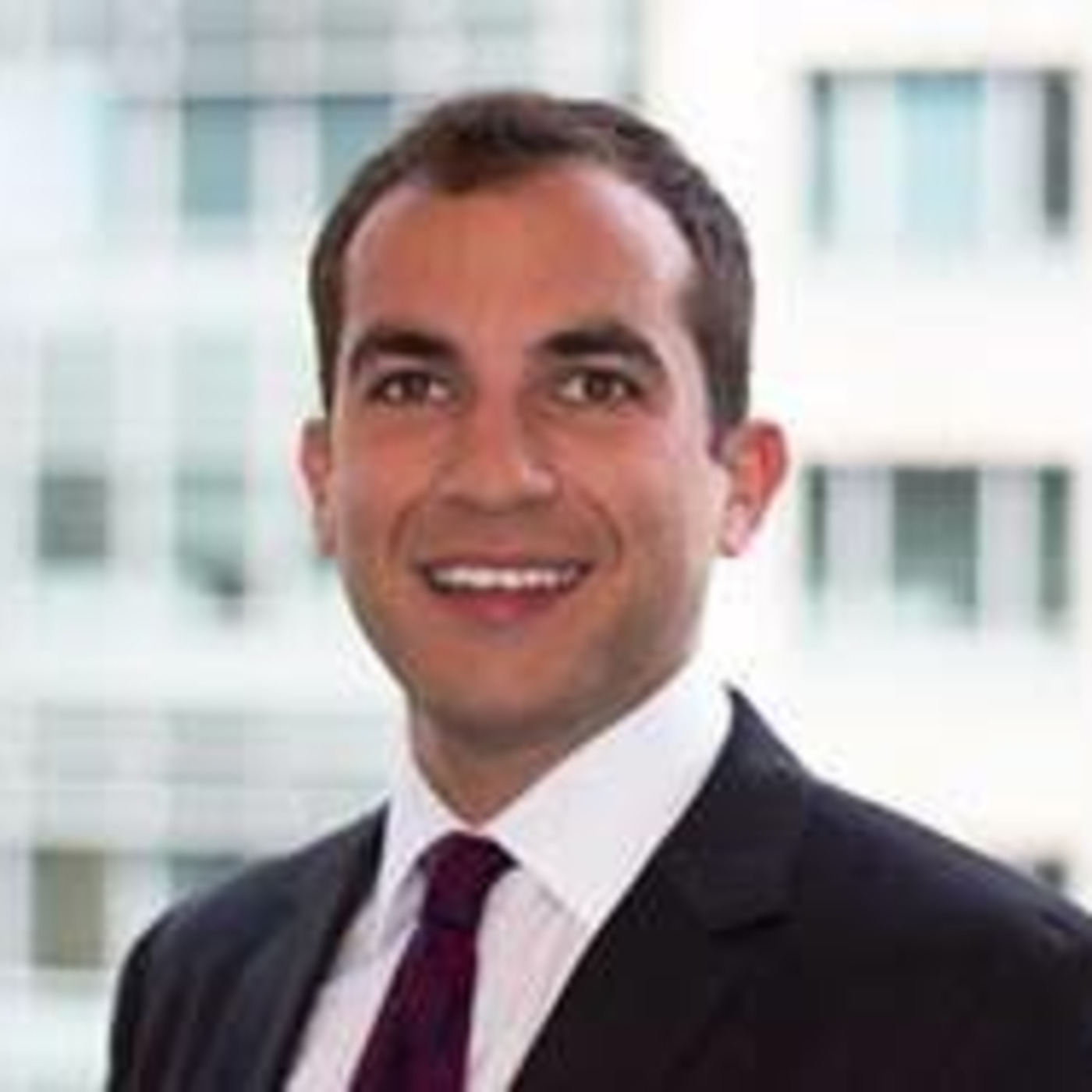
Aoifinn Devitt: I’m Aoifinn Devitt, and welcome to the 50 Faces Podcast, a podcast committed to revealing the richness and diversity of the world of investment, by focusing on its people and their stories. I’m joined today by Sam Garritano, who is Senior Vice President at Brookfield Asset Management, where he works as a portfolio manager in the infrastructure area and where Brookfield has built a global data center portfolio. He has spent his entire career in various roles in finance, including at BlackRock and Adams Street Partners. Welcome, Sam. Thanks for joining me today.
Sam Garetano: Thank you for having me. I’m really looking forward to our conversation today.
Aoifinn Devitt: Well, I don’t think we could have picked a better time to be speaking about data centers, given how much they are in the news. But before we launch into that, I’d love if you could just start with your background and career journey and tell us a little bit about where you grew up and how you came to enter the world of finance.
Sam Garetano: Yeah, I would say I probably didn’t have a traditional path to pursuing a career in finance or let’s say asset management. Growing up, I always wanted to work at ESPN, but unfortunately early on I realized that I was never going to be athletic enough to be a professional athlete. But as a kid, I always spent a lot of time listening to sports radio. Every year I’d read a sports almanac. Before the internet or now AI was readily available to get access to, you know, statistics, graphics, and just anything else you could really want for maybe fantasy sports at the time. And so I went to school actually to cover the business of sports. Really what I was looking for was universities that would allow me to pursue degrees in both journalism and business. I actually thought I was going to go to a Big Ten school in the Midwest, but the Dean of Communications at the time made a comment to me at Accepted Students Day that they weren’t like Syracuse, an underground tunnel to ESPN. And so I actually ended up going to Syracuse to study broadcast journalism and business. And what I thought I would be able to do was combine those degrees to analyze and report on the sports industry. At the time, I would just say that that industry wasn’t having the extreme growth that it has today, where you have private equity money now investing in the business of sports. But what I ultimately found after a couple years of having the opportunity to do, I’d say, both on-air and behind-the-scenes production was I came to the realization that a career in sports broadcasting meant that I couldn’t be a fan anymore. And so I quickly switched to becoming a finance and public relations double major because what I was able to find was the similarities between numbers, analysis, and kind of communication skills, whether it’s working with portfolio companies or investors today. And so ultimately, I decided to pursue a career in finance because I could also still be a fan of my favorite sports teams.
Aoifinn Devitt: What a fascinating background, and already I love the cross-disciplinary instincts there. Just out of curiosity, what are you a fan of today? Do you have any sports of choice?
Sam Garetano: I am a Yankees, Jets, Knicks, and Rangers fan. So I, I’m very much a, a New York sports team-based fan.
Aoifinn Devitt: And just before launching into the more traditional areas of finance that we will discuss here, do you think that that fascination for sports, for statistics, for changing trends gave you insights that you use today?
Sam Garetano: I would say it definitely does. I, I kind of always joke with friends if you think about, know, you I used to collect cards as a kid as, and it wasn’t about the photos on the front of the tiny pictures of men on or women on a piece of cardboard. It was about the statistics on the back. And it’s really kind of a grasp for analysis and kind of pulling together a narrative of how do you take a batting average and think about how do you use that to see where a player is going to go, whether to try to win an award or kind of in a pennant race to make the playoffs and kind of really bringing that together. But then also having kind of the communication skills to not just be in the weeds with the technical analysis, but to be able to kind of communicate what the investment thesis could be.
Aoifinn Devitt: I’m thinking of all other kinds of comparisons like talent spotting and playing the long game and watching talent develop, I suppose, as well, are also analogous to the investment world. And then taking it from your degree that you ended up with based on some of the filtering you went through and your role today at Brookfield, can you talk us through a little bit how you ended up in this area?
Sam Garetano: Yeah, I would say— Look, I started my career as a generalist across liquid and illiquid asset classes and many different types of products. I was very fortunate early on. I had the opportunity to become more specialized in alternatives. You know, at the beginning it was hedge funds, private equity, real estate, but I had actually never really thought much about infrastructure. And when Brookfield approached me, I was working at a private equity firm. It was the peak of the COVID-19 pandemic. And what really excited me about the opportunity to move into infrastructure was that When I was talking to Brookfield, all of their investments were deemed essential. The businesses that they invested in truly formed, you know, what we categorize as the backbone of the global economy. And I think until recently, until data centers were a buzzword or infrastructure was in vogue, I really don’t think most people understood what infrastructure investing really was because it was behind the scenes and everyone just really assumed it was toll roads, bridges, tunnels, and airports. But it’s much more than that. It’s really It’s the ports and rail lines that move people and goods. It’s the renewable power source that provides electricity to your home. It’s the utility company that transmits it there. You know, you could think of infrastructure as it’s everything behind the scenes that allows your phone to work. You don’t buy your cell phone or data plan from Brookfield, but it’s our towers that give your phone 5G coverage wherever you are in the world. It’s the fiber networks that connect the calls that we’re on all day and the data centers that are storing and processing our applications. And so What really excited me was that infrastructure is tangible physical structures. These are something in the ground that you can see and touch. And so in hindsight, I wish I could say that I knew that infrastructure was going to become so topical as it is today. But really what pulled me into the infrastructure arena was the opportunity to work at an industry leader like Brookfield that’s been an owner and operator of long-life real assets for over 125 years.
Aoifinn Devitt: And it’s, it’s interesting because you mentioned infrastructure not really being a known asset class and how much that’s evolved today. And I suppose some of the origins of that evolution may be hailed from high inflation times when infrastructure was seen as an inflation-participating asset or a hedge against inflation, as well as a source of income. And some of that may have been more relevant when interest rates were lower. How would you say infrastructure is kind of perceived today, given we have higher rates, although they may come down, and inflation maybe is receding as a concern?
Sam Garetano: Yeah, I would say There’s a reason why investors are increasingly allocating more and more to infrastructure. I’d say infrastructure has been around for hundreds of years. I’d say in terms of a fund structure where institutional or wealth investors have began investing maybe through funds and partnering with a manager like Brookfield, who still tries to be the largest investor in every deal we do, it didn’t really begin until 2009. And so a lot of the portfolio benefits that you described were probably more academic in nature. And if you think about what’s happened over the last 5 or 6 years, that was really the first true stress test for the asset class. We had a pandemic, we had rising rates, we had rising inflation, we’ve had wars, we’ve had geopolitics. There’s been a lot of volatility. And I’d say broadly, you know, particularly what we’ve seen at Brookfield is just very resilient valuations. And a lot of those academic portfolio benefits have played out, whether it be proving that inflation is a tailwind for infrastructure, that we can get the operating leverage, that our top-line revenues grow faster than maybe the cost of financing the assets, that we truly are investing in assets or projects that provide an essential service. You know, if we go into a recession, you’re still going to want 5G on your phone. You’re still going to need heat or power for your home. Our customers are typically B2B, not usually B2C. So, you know, many of us listening to the call, you would never be paying your utility bill to Brookfield. We’re working with large technology companies or investment-grade corporations or governments. And then really it’s the inflation protection mechanisms in many of the revenue frameworks of the assets we have. I’d say summarize that as, think of it as we have the legal right each year to increase our rate by the local CPI. And so that’s what typically allows us to protect our very high operating margins in an infrastructure investment and why you’ve had asset valuations and really a very positive experience for many investors in infrastructure, maybe versus some other asset classes. That could be more prone to cycles. Infrastructure is really about the consistency and long-term compounding of return.
Aoifinn Devitt: And some of the segments you mentioned earlier, such as, say, toll roads, airports, cell towers, I’d say they’re fairly well known and understood and almost identifiable, visceral. We know them when we see them. Data centers, clearly an emerging sector and definitely one getting a lot more attention given the arms race that we’re seeing in AI. How do you assess the opportunity set in data centers today, and how does Brookfield approach this?
Sam Garetano: Yeah, I would say if you take the words out of your question, it’s these days headlines about data centers are everywhere. I’d say digitalization of the economy now, including the AI revolution, really is what’s supporting that long-term demand for data centers. And we could talk a little bit about that more, but I’d just say, you know, taking a step back, like a data center is a simple structure. It’s a space that contains computers or other IT equipment. It can range from a small closet with a server in it to maybe a few rooms in an office building to today’s purpose-built data centers that house tens of thousands of computers to power internet services like apps, streaming video, cloud storage, and AI tools. So really, data centers are the new computer. What we’ve been seeing is that over time, the trend has been for data centers to grow larger and consume greater amounts of power. I, I like to use the term, you know, my son’s 3 and a half, he likes to play Hungry Hungry Hippos. The data centers are like Hungry Hungry Hippos, particularly for AI. They’ll take as much data and power as you can feed them. And so if you think about what we’ve seen over the last decade is 10 years ago, probably all data centers used 10 megawatts or fewer. The racks inside maybe used 1 kilowatt of power. Maybe to put that into comparison, that’s like running your dishwasher. In your home or your apartment. Now, a data center will often use 100 megawatts or more, and the racks inside use 10 kilowatts of power, which is, you know, about a tiny one-bedroom where I live in New York City. And a hyperscale data center, these are the large technology purpose-built data centers for Microsoft, Google, Amazon, the racks inside those may use 20 kilowatts or more. So think of that as a single-family home in maybe a suburb of New York City. And then you add in now, companies are building these large AI factories. These are beginning to physically look a lot more like airports than just warehouses. It’s probably unfair to compare a traditional data center from maybe 5 to 10 years ago that’s serving a web page with an AI factory of the future that’s managing over 100,000 GPU clusters. It’s kind of like comparing a go-kart and a Ferrari. They’re, they’re both vehicles, but you probably wouldn’t use them for the same thing. And so what we’re beginning to see is an evolution. The opportunity set is for these AI data center campuses. We’re talking about, I’d say shells, you know, 8 to 10 data center shells that are connected to start forming campuses that form over 1 gigawatt in power demand. And you’re beginning to see these kind of be built for AI training facilities. And then you’re just going to see more and more uptake in that. And so you’re just kind of seeing the long-term demand for more data centers for both cloud in kind of the everyday consumption when we’re, us as users are using AI, we’re using applications, but we’re also seeing it for training for these large language models. And then if AI plays out, you’ll begin to see it more location-based AI data centers for inference when we’re using it on our AI more on our phones today.
Aoifinn Devitt: And maybe can you kind of paint the picture for the global potential for these? And I’ve seen reports of some data centers being canceled perhaps because power could not be assured or could not be locked in. There would maybe a need to relocate. What are some of the constraints on the growth and where do you see opportunities being most secure, I suppose?
Sam Garetano: Yeah, so two ways I would think about it is today power is the biggest bottleneck to AI. I could talk about a few examples later of really where Brookfield’s seeing that as an opportunity set, but I would say the power problem is really the opportunity for a manager like Brookfield. There’s no such thing as a problem. That’s all opportunities for us. What we’re seeing though is you having differences by region here in the US. That’s where a lot of the AI buildout is happening. And so you’re seeing the US and China really being the poster child for countries where people are spending billions and billions of dollars. I’d say Europe doesn’t quite have the capital structure to do it. And so you’re seeing governments begin to think about how can they sponsor AI gigafactories to attract capital. You know, at Brookfield, we announced two sovereign AI partnerships this year. The first was with France, where we’ll invest €20 billion in developing AI hubs in northern France. And then a few months ago, we announced a €10 billion partnership with Sweden to build an AI you center, know, about an hour west of Stockholm to support the country’s national AI strategy. And so we’re seeing opportunities globally to support the large technology companies, or what I would call the hyperscalers, as well as this growing demand for sovereign AI, which is becoming more prevalent as countries begin seeing that they may not be able to rely on, on the US. And so from Brookfield, we think it is a global opportunity set, but where we spend a lot of time is making sure that we’re not speculatively building. We still put a lot of emphasis on location, that we can secure access to power, and that you can get a connection to the grid. The last thing I would just say is a lot of investors today are not talking about the grid. If you think about how the grid was wired, it assumed post-World War II and tens of megawatts, not tens of gigawatts, from the latest NVIDIA Blackwell chip. And so that’s why we also think transmission is a really key part of when you’re thinking about investing in data centers, not just power and the shell itself.
Aoifinn Devitt: Thank you to Baillie Gifford for sponsoring Series 4 of the 2025 50 Faces Podcast. I sat down with Matthew Coyle, Client Relationship Director at Baillie Gifford, and asked him whether he was excited about the opportunity set in global equities today.
Speaker C: Yeah, very much so. There’s a lot to be excited about. I think the way that we look at our investment opportunity set is really to think about human nature. It’s constantly evolving, and it’s that innovation that we thrive on when it comes to bottom-up stock picking. Great growth companies come in different forms, and we see opportunities spanning from space exploration to infrastructure projects. We’re also excited about the opportunities in emerging markets. I think more recently we’ve seen some trading partnerships reduce and others expand, and this creates opportunities for active stock pickers like us.
Aoifinn Devitt: And now back to the show. How about some of the economic backdrop? Do you see that the income that you could generate out of these is stable because the tenants are, are locked up for long periods, which are what taking the long view for? How does the interest rate backdrop being high today, but coming down, certainly looks like everywhere now, rates coming down, does that kind of improve the business case for some of these? And, and then finally, competition for these assets. We hear a lot about competition in the infrastructure space. Is there competition that you’re perceiving out there?
Sam Garetano: Yeah, so the first part of your question, I would say, kind of gets down to why we consider data centers to be infrastructure. You see infrastructure, real estate, you even have some private equity managers now playing in data centers. What I would just say is we’re not building speculatively. We put a lot of emphasis on the location. We only begin construction upon signing a take-or-pay or a pre-lease agreement with a customer. These today are often the hyperscalers. And so that really is matching our CapEx alongside contracted demand. And when you think about who these large technology companies are, they’re some of the highest quality counterparties you can have in the world today, and they’re entering into 10, 15, sometimes 20-year inflation-linked contracts. And these leases often have extensive contractual protections, including no termination rights. And so ultimately what we have as an investor and what we provide to our clients is you have a cash flow stream that’s underpinned by the strength of our tenant’s balance sheet combined with long-term leases, contractual inflation escalators, full energy cost pass-throughs. And that’s what allows us to provide that infrastructure, stable and predictable returns. When we think about the competition, I would just say it’s a data center valuation. There have been maybe some frothy processes. I’d say our playbook has been more to build versus than buy, where we already have those existing relationships with a lot of the, I’d say, large technology companies. And we’re thinking about how can we secure the power for them at the same time we begin the construction of the data center. And I think that’s how at Brookfield we think about differentiating ourselves, is we can provide the full integrated solution for both power, building the shell, and potentially in the future, also helping them with the components inside the data centers. Because I’d say you today, know, a lot of these large technology companies are probably spending 2 to 3 times as much as the chips, servers, racks, and the components on the inside as private capital is. And that’s not going to be sustainable. And so we’re beginning to see opportunities to kind of have more of that vertically integrated solution on a global basis as these technology companies really need to focus on AI, and they need to look to partners like Brookfield to kind of solve their infrastructure needs.
Aoifinn Devitt: Really interesting. So that may be a temporary phenomenon, do you think, as a reaction to maybe a, a race for space, that integration that we’re seeing right now?
Sam Garetano: I would say if you think about the large technology companies, they’ve always been their own infrastructure developers and operators. But if you, with the introduction of the exponential increases in data consumption and now AI, they’re increasingly looking to private capital to help them augment their existing capacity. But where we’re really seeing this kind of play out is where we have the intersection of our infrastructure, renewable power, and real estate businesses, where we can offer access to capital and integrated solutions. You know, an example might be is we announced a partnership with Google. I’d say this really reinforced our position as an energy solution partner of choice to global technology players because we signed a, I’d say, a first-of-its-kind agreement to deliver up to 3 gigawatts of hydroelectric capacity across the United States. You know, and that agreement follows our framework agreement with Microsoft that we signed last year to deliver over 10.5 gigawatts of renewable energy capacity. And so what this allows us to do is get very intimate knowledge of where they’re going to be looking for their future power needs. And so that helps us in kind of helping them secure power, but also where they might need data centers. And that’s what we mean by You know, these partnerships are ultimately a testament to our capabilities, but also demonstrate our credibility really with the largest buyers of power and data center users in the world.
Aoifinn Devitt: That’s a perfect segue to my next question, which was around Brookfield’s bringing together of the skill sets within the firm. And I suppose as a large diversified financial firm, how do you work together with, say, the private equity, real estate, private credit arms? And maybe can you just paint a picture for Brookfield’s size today and the relative size of those arms?
Sam Garetano: Yeah, so I’d say at Brookfield today, we manage over $1 trillion in assets under management. We’ve been investing since 1899, so over 125-year track record investing in infrastructure, renewable power and transition, private equity, real estate, and credit. I’d say increasingly what we’re finding is managing our business as a single unit of really thinking about how can we have a global sourcing model where We can leverage our access to capital by having investors invest alongside of us in the deals, our global reach with local boots on the ground in over 30 countries around the world, but also bringing our operating expertise and really being able to roll up our sleeves and kind of deliver projects on time, on budget to our counterparties. And really we continue to see that where some of the world’s, I’d say, best companies in the world continue to look to Brookfield to be their partner of choice, whether it’s Intel thinking about reshoring semiconductor production here in the US. It’s France or Sweden trying to solve their sovereign AI projects. It’s Deutsche Telekom, the parent company of T-Mobile here in the US, thinking about the carve-out, their crown jewel telecom towers. I’d say that heritage as an owner and operator is really what allows us to bring to bear the, the entire Brookfield platform when we think about working with corporations, governments, but also providing solutions to our investors.
Aoifinn Devitt: So it seems that the diversified financial firm of today of the size of Brookfield is kind of bridging private and public capital as well stepping into the role of banks at some time, as well as private capital financing. So do you have any sort of sense as to how these large diversified financial firms like Brookfield, how their role in the financial ecosystem is evolving?
Sam Garetano: Yeah, I’d say you probably know this better than I do. I’d say, you know, my observation has been increasingly our clients want to do more, but they want to do it with fewer managers. And so what they’re doing is they’re taking a more strategic approach to developing deeper partnerships, gaining better insights, and really how can we create greater value? And I think this trend is really centered around the integration of alternatives investing in portfolios today for clients, and it’s really across institutional wealth and many other channels. And so if you we, know, make an assumption that Brookfield’s approach is time-tested and works, investors like our track record, I think what it really comes down to for Brookfield is can we create the right solutions or structures to partner with clients so that they can continue to invest alongside of us at Brookfield, but really can get access to our leadership across different asset classes. And so if you take our leadership in real assets across infrastructure, power, real estate, these asset classes have long duration inflation-protected cash flows that could make a lot of sense for retirement products. And so I think for us it’s how do we take our existing investment capabilities and think about bundling them in ways that deliver the outcomes that our investors want.
Aoifinn Devitt: I completely agree about these smaller number of relationships that go deeper and are almost strategic partnerships, working and growing with the client and offering them solutions that, you know, change according to their changing needs. So very interesting to hear that our perspectives align there. I’d love to go back to some reflections now. You’ve had an interesting career arc. For sure, starting out with sports and its interest and then evolving into mainstream finance and now this rather more niche area, but not, not too niche, quite a broad one. Were there any setbacks or challenges along the way or any lessons learned from any mistakes?
Sam Garetano: Yeah, I would say two things that have probably been, I always have to constantly remind myself as I think about my career journey. I’d say the first is don’t complain about things outside of your control. And I’d probably pair that with Being uncomfortable is really where real growth happens. You know, what I have found as I’ve kind of moved through my career is that when you stop complaining maybe about things you can’t control, or as my father-in-law likes to say, no choice, no problem, and you kind of embrace the change or stop worrying about how your growth makes others feel, it kind of allows you to take a step back and really start using your energy towards both personal and professional growth or goals. And I find that to you be, know, a really good lesson learned for me. And something I’m always constantly reminding myself of.
Aoifinn Devitt: And it’s interesting, you, you started in a world of sports, which is filled with heroes, coaches, mentors. Have you had any of those yourself, whether in life in general or within your financial services career?
Sam Garetano: I was really fortunate to start my career at BlackRock. I was able to meet many colleagues who to this day remain very close friends, and I was able to find mentors that continue really to provide me with ongoing support. And if I think about the opportunity that I’ve had to have different roles at different firms across different asset classes, I’ve really gotten to work with a lot of different people and different leadership styles. And so when I think about my mentors today, I’d say it’s a diverse group of people that I can go to for questions, advice, or feedback. And I’d say most importantly, it’s a group that I believe genuinely is interested in seeing me succeed in my own journey, both personally and professionally.
Aoifinn Devitt: And my last question, you mentioned the no choice, no problem, which I love, but whether there’s any creed, motto, or advice you would maybe say to your younger self that sums up a bit of your journey, which as you said, was not a conventional one. Anything that you maybe could say to that young man who’s changing major or realigning your focus now?
Sam Garetano: Yeah, maybe it gets to a conversation we had a couple months when we first met was maybe two I had focused on is my first day at my analyst training at BlackRock. It didn’t really resonate when the vice chair of the firm said, if you’ve never missed a flight, you probably spend too much time in airports. Now, as a father of two young kids, my time is very valuable. I’d say to the horror of many of my colleagues, I live by that. And so I actually miss a couple flights a year. So I’m usually the person running last on the plane. But I’d say like the biggest advice I give to you people, know, yesterday I was having a conversation with one of the interns we have here at Brookfield is sometimes it’s better to figure out what you actually don’t want to do in your career. Don’t stress too much about what you want to do. Try to figure out what you don’t want to do. That way you’re always kind of spending your energy pursuing things that you actually are excited and interested in.
Aoifinn Devitt: That’s a really interesting concept. It reminds me of this idea of kind of red threads, green threads, you know, what are the things that really excite you and try to kind of optimize for more of those red threads, which is is the, the term given for that. Well, Sam, this has been such an interesting discussion. You are, I think, at the intersection of some of the most interesting innovation that we’re seeing in financial markets today. What’s happening within a very traditional sector. Infrastructure is something that we all can touch and feel, and it’s all part of our, as you said, the fabric and backbone of the lives we lead. So thank you for shining a light on, which is I think going to be an area that we speak more and more about, and for sharing your insights with us.
Sam Garetano: Thank you so much for having me on and really giving me the opportunity to talk about the gospel of infrastructure, because as I said in the beginning, I don’t think many people today realize, you know, if we do our job right at Brookfield, you, you don’t have to worry about your infrastructure. You don’t have to worry about how you have electricity in your home, how your phone has 5G.
Aoifinn Devitt: I love it. Literally the backbone of a portfolio. Thank you. I’m Aoifinn Devitt. Thank you for listening to the 50 Faces Podcast. If you liked what you heard and would like to tune in to hear more inspiring investors and their personal journeys, please subscribe on Apple Podcasts or wherever you get your podcasts. This podcast is for informational purposes only and should not be construed as investment advice, and all views are personal and should not be attributed to the organizations and affiliations of the host or any guest.
Aoifinn Devitt: Series 4 of the 50 Faces Podcast is sponsored by Baillie Gifford. Baillie Gifford is a long-term investment manager dedicated to discovering the innovations and changemakers that deliver exceptional growth opportunities for its clients.
Sam Garetano: A lot of investors today are not talking about the grid. If you think about how the grid was wired, it assumed post-World War II in tens of megawatts, not tens of gigawatts from the latest NVIDIA Blackwell chip. And so that’s why we also think transmission is a really key part of when you’re thinking about investing in data centers, not just power and the shell itself.
Aoifinn Devitt: I’m Aoifinn Devitt, and welcome to the 50 Faces Podcast, a podcast committed to revealing the richness and diversity of the world of investment, by focusing on its people and their stories. I’m joined today by Sam Garritano, who is Senior Vice President at Brookfield Asset Management, where he works as a portfolio manager in the infrastructure area and where Brookfield has built a global data center portfolio. He has spent his entire career in various roles in finance, including at BlackRock and Adams Street Partners. Welcome, Sam. Thanks for joining me today.
Sam Garetano: Thank you for having me. I’m really looking forward to our conversation today.
Aoifinn Devitt: Well, I don’t think we could have picked a better time to be speaking about data centers, given how much they are in the news. But before we launch into that, I’d love if you could just start with your background and career journey and tell us a little bit about where you grew up and how you came to enter the world of finance.
Sam Garetano: Yeah, I would say I probably didn’t have a traditional path to pursuing a career in finance or let’s say asset management. Growing up, I always wanted to work at ESPN, but unfortunately early on I realized that I was never going to be athletic enough to be a professional athlete. But as a kid, I always spent a lot of time listening to sports radio. Every year I’d read a sports almanac. Before the internet or now AI was readily available to get access to, you know, statistics, graphics, and just anything else you could really want for maybe fantasy sports at the time. And so I went to school actually to cover the business of sports. Really what I was looking for was universities that would allow me to pursue degrees in both journalism and business. I actually thought I was going to go to a Big Ten school in the Midwest, but the Dean of Communications at the time made a comment to me at Accepted Students Day that they weren’t like Syracuse, an underground tunnel to ESPN. And so I actually ended up going to Syracuse to study broadcast journalism and business. And what I thought I would be able to do was combine those degrees to analyze and report on the sports industry. At the time, I would just say that that industry wasn’t having the extreme growth that it has today, where you have private equity money now investing in the business of sports. But what I ultimately found after a couple years of having the opportunity to do, I’d say, both on-air and behind-the-scenes production was I came to the realization that a career in sports broadcasting meant that I couldn’t be a fan anymore. And so I quickly switched to becoming a finance and public relations double major because what I was able to find was the similarities between numbers, analysis, and kind of communication skills, whether it’s working with portfolio companies or investors today. And so ultimately, I decided to pursue a career in finance because I could also still be a fan of my favorite sports teams.
Aoifinn Devitt: What a fascinating background, and already I love the cross-disciplinary instincts there. Just out of curiosity, what are you a fan of today? Do you have any sports of choice?
Sam Garetano: I am a Yankees, Jets, Knicks, and Rangers fan. So I, I’m very much a, a New York sports team-based fan.
Aoifinn Devitt: And just before launching into the more traditional areas of finance that we will discuss here, do you think that that fascination for sports, for statistics, for changing trends gave you insights that you use today?
Sam Garetano: I would say it definitely does. I, I kind of always joke with friends if you think about, know, you I used to collect cards as a kid as, and it wasn’t about the photos on the front of the tiny pictures of men on or women on a piece of cardboard. It was about the statistics on the back. And it’s really kind of a grasp for analysis and kind of pulling together a narrative of how do you take a batting average and think about how do you use that to see where a player is going to go, whether to try to win an award or kind of in a pennant race to make the playoffs and kind of really bringing that together. But then also having kind of the communication skills to not just be in the weeds with the technical analysis, but to be able to kind of communicate what the investment thesis could be.
Aoifinn Devitt: I’m thinking of all other kinds of comparisons like talent spotting and playing the long game and watching talent develop, I suppose, as well, are also analogous to the investment world. And then taking it from your degree that you ended up with based on some of the filtering you went through and your role today at Brookfield, can you talk us through a little bit how you ended up in this area?
Sam Garetano: Yeah, I would say— Look, I started my career as a generalist across liquid and illiquid asset classes and many different types of products. I was very fortunate early on. I had the opportunity to become more specialized in alternatives. You know, at the beginning it was hedge funds, private equity, real estate, but I had actually never really thought much about infrastructure. And when Brookfield approached me, I was working at a private equity firm. It was the peak of the COVID-19 pandemic. And what really excited me about the opportunity to move into infrastructure was that When I was talking to Brookfield, all of their investments were deemed essential. The businesses that they invested in truly formed, you know, what we categorize as the backbone of the global economy. And I think until recently, until data centers were a buzzword or infrastructure was in vogue, I really don’t think most people understood what infrastructure investing really was because it was behind the scenes and everyone just really assumed it was toll roads, bridges, tunnels, and airports. But it’s much more than that. It’s really It’s the ports and rail lines that move people and goods. It’s the renewable power source that provides electricity to your home. It’s the utility company that transmits it there. You know, you could think of infrastructure as it’s everything behind the scenes that allows your phone to work. You don’t buy your cell phone or data plan from Brookfield, but it’s our towers that give your phone 5G coverage wherever you are in the world. It’s the fiber networks that connect the calls that we’re on all day and the data centers that are storing and processing our applications. And so What really excited me was that infrastructure is tangible physical structures. These are something in the ground that you can see and touch. And so in hindsight, I wish I could say that I knew that infrastructure was going to become so topical as it is today. But really what pulled me into the infrastructure arena was the opportunity to work at an industry leader like Brookfield that’s been an owner and operator of long-life real assets for over 125 years.
Aoifinn Devitt: And it’s, it’s interesting because you mentioned infrastructure not really being a known asset class and how much that’s evolved today. And I suppose some of the origins of that evolution may be hailed from high inflation times when infrastructure was seen as an inflation-participating asset or a hedge against inflation, as well as a source of income. And some of that may have been more relevant when interest rates were lower. How would you say infrastructure is kind of perceived today, given we have higher rates, although they may come down, and inflation maybe is receding as a concern?
Sam Garetano: Yeah, I would say There’s a reason why investors are increasingly allocating more and more to infrastructure. I’d say infrastructure has been around for hundreds of years. I’d say in terms of a fund structure where institutional or wealth investors have began investing maybe through funds and partnering with a manager like Brookfield, who still tries to be the largest investor in every deal we do, it didn’t really begin until 2009. And so a lot of the portfolio benefits that you described were probably more academic in nature. And if you think about what’s happened over the last 5 or 6 years, that was really the first true stress test for the asset class. We had a pandemic, we had rising rates, we had rising inflation, we’ve had wars, we’ve had geopolitics. There’s been a lot of volatility. And I’d say broadly, you know, particularly what we’ve seen at Brookfield is just very resilient valuations. And a lot of those academic portfolio benefits have played out, whether it be proving that inflation is a tailwind for infrastructure, that we can get the operating leverage, that our top-line revenues grow faster than maybe the cost of financing the assets, that we truly are investing in assets or projects that provide an essential service. You know, if we go into a recession, you’re still going to want 5G on your phone. You’re still going to need heat or power for your home. Our customers are typically B2B, not usually B2C. So, you know, many of us listening to the call, you would never be paying your utility bill to Brookfield. We’re working with large technology companies or investment-grade corporations or governments. And then really it’s the inflation protection mechanisms in many of the revenue frameworks of the assets we have. I’d say summarize that as, think of it as we have the legal right each year to increase our rate by the local CPI. And so that’s what typically allows us to protect our very high operating margins in an infrastructure investment and why you’ve had asset valuations and really a very positive experience for many investors in infrastructure, maybe versus some other asset classes. That could be more prone to cycles. Infrastructure is really about the consistency and long-term compounding of return.
Aoifinn Devitt: And some of the segments you mentioned earlier, such as, say, toll roads, airports, cell towers, I’d say they’re fairly well known and understood and almost identifiable, visceral. We know them when we see them. Data centers, clearly an emerging sector and definitely one getting a lot more attention given the arms race that we’re seeing in AI. How do you assess the opportunity set in data centers today, and how does Brookfield approach this?
Sam Garetano: Yeah, I would say if you take the words out of your question, it’s these days headlines about data centers are everywhere. I’d say digitalization of the economy now, including the AI revolution, really is what’s supporting that long-term demand for data centers. And we could talk a little bit about that more, but I’d just say, you know, taking a step back, like a data center is a simple structure. It’s a space that contains computers or other IT equipment. It can range from a small closet with a server in it to maybe a few rooms in an office building to today’s purpose-built data centers that house tens of thousands of computers to power internet services like apps, streaming video, cloud storage, and AI tools. So really, data centers are the new computer. What we’ve been seeing is that over time, the trend has been for data centers to grow larger and consume greater amounts of power. I, I like to use the term, you know, my son’s 3 and a half, he likes to play Hungry Hungry Hippos. The data centers are like Hungry Hungry Hippos, particularly for AI. They’ll take as much data and power as you can feed them. And so if you think about what we’ve seen over the last decade is 10 years ago, probably all data centers used 10 megawatts or fewer. The racks inside maybe used 1 kilowatt of power. Maybe to put that into comparison, that’s like running your dishwasher. In your home or your apartment. Now, a data center will often use 100 megawatts or more, and the racks inside use 10 kilowatts of power, which is, you know, about a tiny one-bedroom where I live in New York City. And a hyperscale data center, these are the large technology purpose-built data centers for Microsoft, Google, Amazon, the racks inside those may use 20 kilowatts or more. So think of that as a single-family home in maybe a suburb of New York City. And then you add in now, companies are building these large AI factories. These are beginning to physically look a lot more like airports than just warehouses. It’s probably unfair to compare a traditional data center from maybe 5 to 10 years ago that’s serving a web page with an AI factory of the future that’s managing over 100,000 GPU clusters. It’s kind of like comparing a go-kart and a Ferrari. They’re, they’re both vehicles, but you probably wouldn’t use them for the same thing. And so what we’re beginning to see is an evolution. The opportunity set is for these AI data center campuses. We’re talking about, I’d say shells, you know, 8 to 10 data center shells that are connected to start forming campuses that form over 1 gigawatt in power demand. And you’re beginning to see these kind of be built for AI training facilities. And then you’re just going to see more and more uptake in that. And so you’re just kind of seeing the long-term demand for more data centers for both cloud in kind of the everyday consumption when we’re, us as users are using AI, we’re using applications, but we’re also seeing it for training for these large language models. And then if AI plays out, you’ll begin to see it more location-based AI data centers for inference when we’re using it on our AI more on our phones today.
Aoifinn Devitt: And maybe can you kind of paint the picture for the global potential for these? And I’ve seen reports of some data centers being canceled perhaps because power could not be assured or could not be locked in. There would maybe a need to relocate. What are some of the constraints on the growth and where do you see opportunities being most secure, I suppose?
Sam Garetano: Yeah, so two ways I would think about it is today power is the biggest bottleneck to AI. I could talk about a few examples later of really where Brookfield’s seeing that as an opportunity set, but I would say the power problem is really the opportunity for a manager like Brookfield. There’s no such thing as a problem. That’s all opportunities for us. What we’re seeing though is you having differences by region here in the US. That’s where a lot of the AI buildout is happening. And so you’re seeing the US and China really being the poster child for countries where people are spending billions and billions of dollars. I’d say Europe doesn’t quite have the capital structure to do it. And so you’re seeing governments begin to think about how can they sponsor AI gigafactories to attract capital. You know, at Brookfield, we announced two sovereign AI partnerships this year. The first was with France, where we’ll invest €20 billion in developing AI hubs in northern France. And then a few months ago, we announced a €10 billion partnership with Sweden to build an AI you center, know, about an hour west of Stockholm to support the country’s national AI strategy. And so we’re seeing opportunities globally to support the large technology companies, or what I would call the hyperscalers, as well as this growing demand for sovereign AI, which is becoming more prevalent as countries begin seeing that they may not be able to rely on, on the US. And so from Brookfield, we think it is a global opportunity set, but where we spend a lot of time is making sure that we’re not speculatively building. We still put a lot of emphasis on location, that we can secure access to power, and that you can get a connection to the grid. The last thing I would just say is a lot of investors today are not talking about the grid. If you think about how the grid was wired, it assumed post-World War II and tens of megawatts, not tens of gigawatts, from the latest NVIDIA Blackwell chip. And so that’s why we also think transmission is a really key part of when you’re thinking about investing in data centers, not just power and the shell itself.
Aoifinn Devitt: Thank you to Baillie Gifford for sponsoring Series 4 of the 2025 50 Faces Podcast. I sat down with Matthew Coyle, Client Relationship Director at Baillie Gifford, and asked him whether he was excited about the opportunity set in global equities today.
Speaker C: Yeah, very much so. There’s a lot to be excited about. I think the way that we look at our investment opportunity set is really to think about human nature. It’s constantly evolving, and it’s that innovation that we thrive on when it comes to bottom-up stock picking. Great growth companies come in different forms, and we see opportunities spanning from space exploration to infrastructure projects. We’re also excited about the opportunities in emerging markets. I think more recently we’ve seen some trading partnerships reduce and others expand, and this creates opportunities for active stock pickers like us.
Aoifinn Devitt: And now back to the show. How about some of the economic backdrop? Do you see that the income that you could generate out of these is stable because the tenants are, are locked up for long periods, which are what taking the long view for? How does the interest rate backdrop being high today, but coming down, certainly looks like everywhere now, rates coming down, does that kind of improve the business case for some of these? And, and then finally, competition for these assets. We hear a lot about competition in the infrastructure space. Is there competition that you’re perceiving out there?
Sam Garetano: Yeah, so the first part of your question, I would say, kind of gets down to why we consider data centers to be infrastructure. You see infrastructure, real estate, you even have some private equity managers now playing in data centers. What I would just say is we’re not building speculatively. We put a lot of emphasis on the location. We only begin construction upon signing a take-or-pay or a pre-lease agreement with a customer. These today are often the hyperscalers. And so that really is matching our CapEx alongside contracted demand. And when you think about who these large technology companies are, they’re some of the highest quality counterparties you can have in the world today, and they’re entering into 10, 15, sometimes 20-year inflation-linked contracts. And these leases often have extensive contractual protections, including no termination rights. And so ultimately what we have as an investor and what we provide to our clients is you have a cash flow stream that’s underpinned by the strength of our tenant’s balance sheet combined with long-term leases, contractual inflation escalators, full energy cost pass-throughs. And that’s what allows us to provide that infrastructure, stable and predictable returns. When we think about the competition, I would just say it’s a data center valuation. There have been maybe some frothy processes. I’d say our playbook has been more to build versus than buy, where we already have those existing relationships with a lot of the, I’d say, large technology companies. And we’re thinking about how can we secure the power for them at the same time we begin the construction of the data center. And I think that’s how at Brookfield we think about differentiating ourselves, is we can provide the full integrated solution for both power, building the shell, and potentially in the future, also helping them with the components inside the data centers. Because I’d say you today, know, a lot of these large technology companies are probably spending 2 to 3 times as much as the chips, servers, racks, and the components on the inside as private capital is. And that’s not going to be sustainable. And so we’re beginning to see opportunities to kind of have more of that vertically integrated solution on a global basis as these technology companies really need to focus on AI, and they need to look to partners like Brookfield to kind of solve their infrastructure needs.
Aoifinn Devitt: Really interesting. So that may be a temporary phenomenon, do you think, as a reaction to maybe a, a race for space, that integration that we’re seeing right now?
Sam Garetano: I would say if you think about the large technology companies, they’ve always been their own infrastructure developers and operators. But if you, with the introduction of the exponential increases in data consumption and now AI, they’re increasingly looking to private capital to help them augment their existing capacity. But where we’re really seeing this kind of play out is where we have the intersection of our infrastructure, renewable power, and real estate businesses, where we can offer access to capital and integrated solutions. You know, an example might be is we announced a partnership with Google. I’d say this really reinforced our position as an energy solution partner of choice to global technology players because we signed a, I’d say, a first-of-its-kind agreement to deliver up to 3 gigawatts of hydroelectric capacity across the United States. You know, and that agreement follows our framework agreement with Microsoft that we signed last year to deliver over 10.5 gigawatts of renewable energy capacity. And so what this allows us to do is get very intimate knowledge of where they’re going to be looking for their future power needs. And so that helps us in kind of helping them secure power, but also where they might need data centers. And that’s what we mean by You know, these partnerships are ultimately a testament to our capabilities, but also demonstrate our credibility really with the largest buyers of power and data center users in the world.
Aoifinn Devitt: That’s a perfect segue to my next question, which was around Brookfield’s bringing together of the skill sets within the firm. And I suppose as a large diversified financial firm, how do you work together with, say, the private equity, real estate, private credit arms? And maybe can you just paint a picture for Brookfield’s size today and the relative size of those arms?
Sam Garetano: Yeah, so I’d say at Brookfield today, we manage over $1 trillion in assets under management. We’ve been investing since 1899, so over 125-year track record investing in infrastructure, renewable power and transition, private equity, real estate, and credit. I’d say increasingly what we’re finding is managing our business as a single unit of really thinking about how can we have a global sourcing model where We can leverage our access to capital by having investors invest alongside of us in the deals, our global reach with local boots on the ground in over 30 countries around the world, but also bringing our operating expertise and really being able to roll up our sleeves and kind of deliver projects on time, on budget to our counterparties. And really we continue to see that where some of the world’s, I’d say, best companies in the world continue to look to Brookfield to be their partner of choice, whether it’s Intel thinking about reshoring semiconductor production here in the US. It’s France or Sweden trying to solve their sovereign AI projects. It’s Deutsche Telekom, the parent company of T-Mobile here in the US, thinking about the carve-out, their crown jewel telecom towers. I’d say that heritage as an owner and operator is really what allows us to bring to bear the, the entire Brookfield platform when we think about working with corporations, governments, but also providing solutions to our investors.
Aoifinn Devitt: So it seems that the diversified financial firm of today of the size of Brookfield is kind of bridging private and public capital as well stepping into the role of banks at some time, as well as private capital financing. So do you have any sort of sense as to how these large diversified financial firms like Brookfield, how their role in the financial ecosystem is evolving?
Sam Garetano: Yeah, I’d say you probably know this better than I do. I’d say, you know, my observation has been increasingly our clients want to do more, but they want to do it with fewer managers. And so what they’re doing is they’re taking a more strategic approach to developing deeper partnerships, gaining better insights, and really how can we create greater value? And I think this trend is really centered around the integration of alternatives investing in portfolios today for clients, and it’s really across institutional wealth and many other channels. And so if you we, know, make an assumption that Brookfield’s approach is time-tested and works, investors like our track record, I think what it really comes down to for Brookfield is can we create the right solutions or structures to partner with clients so that they can continue to invest alongside of us at Brookfield, but really can get access to our leadership across different asset classes. And so if you take our leadership in real assets across infrastructure, power, real estate, these asset classes have long duration inflation-protected cash flows that could make a lot of sense for retirement products. And so I think for us it’s how do we take our existing investment capabilities and think about bundling them in ways that deliver the outcomes that our investors want.
Aoifinn Devitt: I completely agree about these smaller number of relationships that go deeper and are almost strategic partnerships, working and growing with the client and offering them solutions that, you know, change according to their changing needs. So very interesting to hear that our perspectives align there. I’d love to go back to some reflections now. You’ve had an interesting career arc. For sure, starting out with sports and its interest and then evolving into mainstream finance and now this rather more niche area, but not, not too niche, quite a broad one. Were there any setbacks or challenges along the way or any lessons learned from any mistakes?
Sam Garetano: Yeah, I would say two things that have probably been, I always have to constantly remind myself as I think about my career journey. I’d say the first is don’t complain about things outside of your control. And I’d probably pair that with Being uncomfortable is really where real growth happens. You know, what I have found as I’ve kind of moved through my career is that when you stop complaining maybe about things you can’t control, or as my father-in-law likes to say, no choice, no problem, and you kind of embrace the change or stop worrying about how your growth makes others feel, it kind of allows you to take a step back and really start using your energy towards both personal and professional growth or goals. And I find that to you be, know, a really good lesson learned for me. And something I’m always constantly reminding myself of.
Aoifinn Devitt: And it’s interesting, you, you started in a world of sports, which is filled with heroes, coaches, mentors. Have you had any of those yourself, whether in life in general or within your financial services career?
Sam Garetano: I was really fortunate to start my career at BlackRock. I was able to meet many colleagues who to this day remain very close friends, and I was able to find mentors that continue really to provide me with ongoing support. And if I think about the opportunity that I’ve had to have different roles at different firms across different asset classes, I’ve really gotten to work with a lot of different people and different leadership styles. And so when I think about my mentors today, I’d say it’s a diverse group of people that I can go to for questions, advice, or feedback. And I’d say most importantly, it’s a group that I believe genuinely is interested in seeing me succeed in my own journey, both personally and professionally.
Aoifinn Devitt: And my last question, you mentioned the no choice, no problem, which I love, but whether there’s any creed, motto, or advice you would maybe say to your younger self that sums up a bit of your journey, which as you said, was not a conventional one. Anything that you maybe could say to that young man who’s changing major or realigning your focus now?
Sam Garetano: Yeah, maybe it gets to a conversation we had a couple months when we first met was maybe two I had focused on is my first day at my analyst training at BlackRock. It didn’t really resonate when the vice chair of the firm said, if you’ve never missed a flight, you probably spend too much time in airports. Now, as a father of two young kids, my time is very valuable. I’d say to the horror of many of my colleagues, I live by that. And so I actually miss a couple flights a year. So I’m usually the person running last on the plane. But I’d say like the biggest advice I give to you people, know, yesterday I was having a conversation with one of the interns we have here at Brookfield is sometimes it’s better to figure out what you actually don’t want to do in your career. Don’t stress too much about what you want to do. Try to figure out what you don’t want to do. That way you’re always kind of spending your energy pursuing things that you actually are excited and interested in.
Aoifinn Devitt: That’s a really interesting concept. It reminds me of this idea of kind of red threads, green threads, you know, what are the things that really excite you and try to kind of optimize for more of those red threads, which is is the, the term given for that. Well, Sam, this has been such an interesting discussion. You are, I think, at the intersection of some of the most interesting innovation that we’re seeing in financial markets today. What’s happening within a very traditional sector. Infrastructure is something that we all can touch and feel, and it’s all part of our, as you said, the fabric and backbone of the lives we lead. So thank you for shining a light on, which is I think going to be an area that we speak more and more about, and for sharing your insights with us.
Sam Garetano: Thank you so much for having me on and really giving me the opportunity to talk about the gospel of infrastructure, because as I said in the beginning, I don’t think many people today realize, you know, if we do our job right at Brookfield, you, you don’t have to worry about your infrastructure. You don’t have to worry about how you have electricity in your home, how your phone has 5G.
Aoifinn Devitt: I love it. Literally the backbone of a portfolio. Thank you. I’m Aoifinn Devitt. Thank you for listening to the 50 Faces Podcast. If you liked what you heard and would like to tune in to hear more inspiring investors and their personal journeys, please subscribe on Apple Podcasts or wherever you get your podcasts. This podcast is for informational purposes only and should not be construed as investment advice, and all views are personal and should not be attributed to the organizations and affiliations of the host or any guest.