Aoifinn Devitt: Series 4 of the 50 Faces Podcast is sponsored by Baillie Gifford. Baillie Gifford is a long-term investment manager dedicated to discovering the innovations and changemakers that deliver exceptional growth opportunities for its clients.
Karl Scheer: It’s that you can get really smart and get yourself in trouble. Investing is incredibly hard. It’s a very difficult thing to be successful at because it is a vast market of things that can go in odd directions for basically longer than you can tolerate, as the old saying goes.
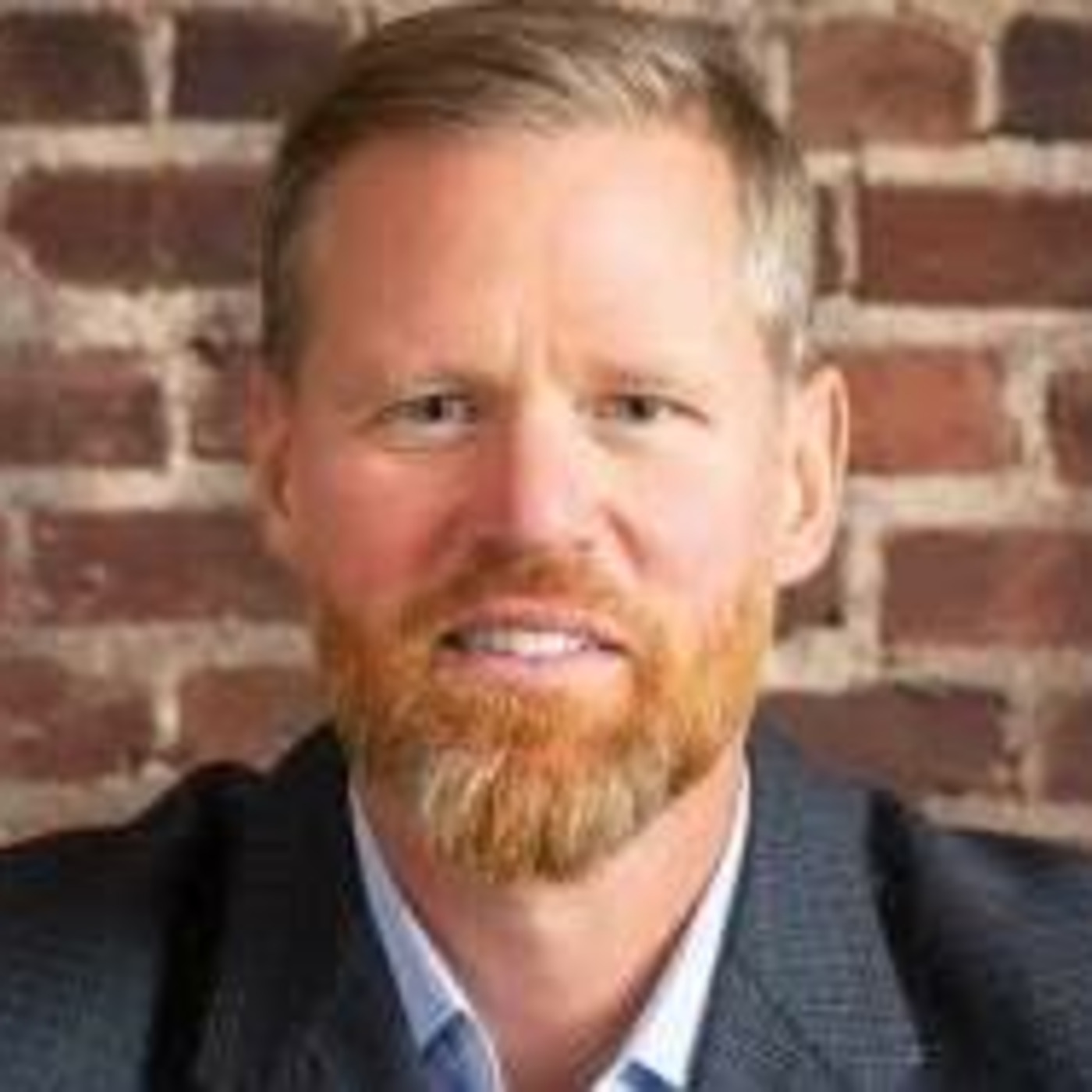
Aoifinn Devitt: I’m Aoifinn Devitt, and welcome to the 50 Faces podcast, a podcast committed to revealing the richness and diversity of the world of investment by focusing on its people and their stories. I’m joined today by Carl Scheer, who’s Chief Investment Officer at the University of Cincinnati, a role he’s held for over 13 years. He previously worked in a series of consulting and other financial roles. Welcome, Carl. Thanks for joining me today.
Karl Scheer: Thanks so much, Aoifinn. It’s great to be with you. And I like the way you say 13, but it’s almost been 14.
Speaker C: Excellent.
Aoifinn Devitt: Well, okay, almost 14, just like when you were saying the ages of our children. Moving on then. So we’ve already had, I think, the privilege of hearing your story on Ted Seides’ Capital Allocators podcast. It was there in some detail a few years ago, and I put a link to that in the show notes. And just in the interest of not repeating that story in which you describe your path through finance into the allocators’ seat. You talk about how you reshape the portfolio at University of Cincinnati. Let’s build on that and maybe both kind of take the timeframe from there, but also reflect a little bit on those rich experiences. And now that we’re at the almost 14-year mark, how do you think about maybe the earlier experiences you’ve had? And do you draw upon them in today’s role?
Karl Scheer: Absolutely. It’s been an absolutely incredible learning experience. I became a co-CIO in August of 2008. So I guess we’re going on 17 years across two different organizations and joined the University of Cincinnati in 2011. And there’s no line behind us. There’s no— nobody’s coming to help. It’s us or no one managing a pool of capital that matters to an awful lot of people. We have $1.7 billion at UC for— that’s comprised of 2,647 underlying commingled endowment funds. And not everybody knows this, but most endowment pools are comprised of a lot of funds like that. I think some may be as much as 10 times that in the biggest cases. Unlike those, we have only 23 that are undesignated, unrestricted. So the rest of them— and this is the main point I wanted to get to— the rest of them have been created by people, a family, an individual, usually to honor a human being that they loved and lost. And each of those has its own mission supporting a very specific scholarship, research program, professorship, or so forth. So those 2,647, only 23 of them go to the general budget. The rest are for a specific use and there are laws around what we can do and we have to honor that use. So when people say you should spend more on scholarships, that’s not necessarily possible in our endowment structure. So I just wanted to note that and give you a sense of what the size is. I mean, we’re also, call it, half illiquid privates, about 15% cash and fixed income, 35% public equity. And so we have over time— so here’s the key point. We have over time simplified what we have done. When I joined, there was a material hedge fund position. We had mostly active management across our public equities. We did a lot more diverse activities within our privates. Today, I think what we’ve realized is that given my colleagues and my experience in private equity, we’re pretty good at choosing small sort of fund 1, 2, or 3, kind of $300 to $600 million buyout and growth equity, not venture path, but growth equity funds. I think we have the tools in our tool chest to reliably avoid the worst performers there and, and choose some of the best performers. And that’s a wonderful place for us to focus. We have a tiny team. We can’t do everything. And I think a mistake earlier in my tenure here, earlier in my career, was to try to do more things than we should probably have been involved in. And so that’s one of the things that’s changed in the kind of 14 years or 18 years I’ve been here, been a CIO respectively. Is just trying to make sure you that, know, assess what you’re good at, what you can do reliably well. And you may not have any idea why it doesn’t work well, but the fact that it doesn’t work well is enough that you should probably stop doing it. So those are some principles we’ve used to perhaps be a little bit more focused in what we do than most, I think, teams.
Aoifinn Devitt: Really interesting. And there’s a few threads I’d like to just pull on there. So first is the 35% public equities. Given where we are today and the outperformance and the resilience of public equity and almost the stubborn resilience no matter what. Have there been times where you’ve re-underwritten that to say, is this the right level? Are we missing out by not being more exposed to public markets?
Karl Scheer: Well, certainly the last 3 years, ex post, we have missed out by not being more exposed to public markets. But if you look over a 5-year period, I think all of our private capital categories, which includes private equity, buyout growth, special situations, which is kind of event and credit in an illiquid structure, also a separate category of venture capital, And then a third category, which is real assets, including real estate, natural resources, and power and infrastructure. Those have outperformed over, I think, 5 and 10-year periods versus public equities. And I still think that there are persistent reasons why they should. And if they don’t, at least in the real asset case, we probably have some benefits that are not related to necessarily upside in terms of inflation hedging or inflation, just dynamics. And so the answer to your question is, yeah, over the 3-year period, it looks a little foolish. I don’t think you’re going to see that over the next 10 years. There’ll be times where it’s not true over the next 10 years.
Aoifinn Devitt: Absolutely. And I think that’s, again, just that re— I think it is important to do the re-underwriting part, going back in just to affirm. Ted Seides has been on this role recently, and many others, looking at private equity and reflecting on its recent performance, its distribution history, how much that’s fallen as a percentage on annual distributions. Have you perceived that, given the segments you focus on, any slowdown in distributions, and are you rethinking any aspects of that with that in mind?
Karl Scheer: The very small end of the buyout and growth market has been much more resilient in terms of distributions than the rest of our portfolio, and we adjusted pacing downward in 2020. So to start the story a little earlier, a few years before then, we wished to increase our allocation to private equity from— this is rough numbers, but call it 15% to 25%. And in so doing, we accelerated the pacing from kind of late ’17, ’18, ’19, and then the first half of 2020. And then we obviously pay very close attention to our unfunded commitments, which give you a good sound look at the future allocation to privates. And we decelerated very significantly in 2020 and have maintained a much slower pace since then. And so the great news is that our portfolio is actually cash flow positive. Unlike most of our peers, our portfolio generates more cash than it does in terms of distributions than it requires in terms of drawdowns. And so while the industry is suffering terribly from illiquidity, our portfolio has not exhibited those characteristics. It’s partially because of the pacing that we adjusted, and it’s also partially because the lower middle market is much less subject to broad private equity dynamics than most of those are driven by. Because when you talk about private equity, the vast, vast majority, probably 80%+ are in mega buyout funds. Those are very, very different animals. The market that they are operating in is very different. The types of companies, the way that they try to make money, those are very different critters than we’re investing in. So those comments are true for private equity writ large, but not for most of the things we’re investing in. It’s really hard, by the way, to continually source small early-stage managers because after about fund 3 or 4, they’ve usually either grown too large or become personally too wealthy to have the same dynamics that we originally invested them for. So it’s really hard to continue to fill that bucket, especially with a tiny little team like we have.
Aoifinn Devitt: That was actually my next question. It was around the evolution of your use of private assets. Have you seen fit to evolve maybe through different kinds of strategic partnerships, co-investment, evergreen funds, some of just, I suppose, the new ways that exposure is being built to private capital, or what are your thoughts on continuation vehicles and secondaries?
Karl Scheer: Yeah. So to start with, just the key there is sourcing, and it took us a long time to develop sourcing channels and sourcing opportunities so that we could build a whole portfolio of those small early funds. It took us, I think, almost a whole decade to do so. And now all of a sudden there’s been this tremendous diversification of the types of vehicles exactly to what you alluded to. There’s interval funds, other types of evergreen funds, continuation vehicles, co-investments and others, bridge funds. There’s a lot of different things being considered or executed out there, and we do continue to evolve. We want to be really good partners. So for the last 5 or 6 years, when co-investment has grown as a proportion of most people’s programs, we have stayed out of it. We don’t think we can usually react quickly enough to properly evaluate co-investments and then respond to them. We just think we’d be bad partners to our managers. We’re trying to figure out if there’s a way that we can be good partners and also participate in co-invests. And one of the reasons is that when you see a troubling period in an alternative investment category, like we’re experiencing now in private equity, typically what you’d hope to see is fees get cut and they are being, but by the mechanism of co-investments usually having low or no fees versus by the regular fund having reduced management fee or carry. We saw this in hedge funds. I guess 5 or 10 years ago, and we would’ve wished to see it today, but the co-investment approach has kind of changed that. So in order to get that fee break, you have to do the co-investments. When it comes to continuation vehicles, I think the data suggests that you should probably continue unless you desperately need the liquidity. That’s not necessarily as easy as it sounds in many cases. To the extent there’s a status quo option, we’re probably going to default to that going forward. If we need to take quick and decisive action, deciding to take capital or leave it to continue in the continuation vehicle, we will probably start with the size, continue with the fees, and then also look at how the company fits into the fund’s strategy and how fond we are of the fund. And then when it comes to bridge funds and interval funds, we have looked at one interval fund, but not spent enough time on it yet. That’s very new to us. We have evaluated a bridge fund. You know, those things come and go. We saw a lot of bridge funds in kind of 2000, 2001, 2002 with venture capital firms, and we’re just seeing a couple of them in buyout world. And those are going to be totally one-off, individual, one-by-one, bottom-up decisions. And of course, private equity, even though there’s vintage year and size and other huge influences, the most important thing is choosing individual managers one by one. By hand. And so we’re going to continue obviously to do that. It’s much more important now than it’s ever been, but we think that’ll continue to be the big opportunity in private equity. Not top-down, you should own the whole industry, but rather there are opportunities within it.
Aoifinn Devitt: It’s fascinating. And then just on the evolution theme, have you started looking at other asset classes? I’m going to mention the digital asset arena, which pops up from time to time with institutional investors, private credit, anything that you’ve started looking more at or shunning perhaps because you think it’s lost its appeal?
Karl Scheer: Yeah, I’ve always been somebody who didn’t feel bad about missing things. I feel much worse about having a bad thing than missing a good thing. And so I’ve always thought that gold was a very silly investment. And now suddenly gold looks a little less silly because of Bitcoin, only because it’s even sillier in my opinion. It could be a fabulous investment from the standpoint of returns. It is a technology looking for a solution, and the only thing it has solved so far is attempts to, uh, reduce crime. So we are not investors in blockchain technology. We’re not investors in NFTs. That looks silly. And now I think we would all agree it was, and there are other investment categories that we just don’t feel a need to be investors in. You gotta be a little careful with how clever you are because it’s easy to identify what should happen. It’s much harder to identify, and this is the only thing that matters, is what will happen. The gap between those two is where the smart people go to die. So you don’t want to be too clever about things like private credit. On the other hand, if you just do the math, it probably doesn’t fit in our portfolio. 40% of our portfolio is in illiquid privates, as I alluded to earlier. It’s going to be the rare case in which we think a private credit investment would have the investment return potential to make it into that portfolio. And I really worry about capital flow dynamics. I think a lot of money has gone there. The only reason why I would think private credit might be attractive today is that to the extent retail capital starts flowing into private credit, probably through these interval funds or other channels, Money coming into a strategy or a fund structure or a specific type of vehicle, that thing works really well while that money is coming in. When the capital flows plateau or reverse, it can be disastrous, as we’ve seen recently with things like B-REIT and other innovative structures. But that would be the big argument today for private credit and I guess also secondaries.
Aoifinn Devitt: Thank you to Baillie Gifford for sponsoring Series 4 of the 2025 50 Faces podcast. I sat down with Matthew Coyle, Client Relationship Director at Baillie Gifford, and asked him whether he found the clients’ needs have been changing over recent years when it comes to their equity manager.
Speaker C: Yeah, we’re definitely seeing some interesting trends. I would say increasingly clients are looking for long-term partnerships that go beyond a single portfolio, and we’re well placed in this regard. The two areas that stand out to me are an increasing demand for private equity capabilities to go along with our public market expertise, and also requests for more tailored investment solutions. We’ve been managing assets since 1908, and we’ve evolved with client demands over the course of the last 117 years. So this is simply the latest iteration of that evolution. I also think more broadly, as the nature of savings markets continues to evolve, we’re seeing more interest and demand from financial intermediaries and their clients, and this brings a demand for different vehicles such as ETFs, retail SME. So it’s a constant evolving evolution, and we’re really excited by that.
Aoifinn Devitt: And now back to the show. Absolutely. And you’ve spoken about your small team and some of the limits that you know that that puts on you. And how much would you say you’re thinking around governance? Evolved, say, in the last 5 years? Have you kind of hit on a good sort of rhythm of checks and balances or of discretion versus otherwise? And what would you say that is for you?
Karl Scheer: We’ve been exceedingly lucky. We inherited a wonderful governance structure with terrific human beings and great rules and very well-documented practices. We have a great culture with our investment committees, and that has all worked very, very well since even before we walked in the door. There hasn’t been a lot of evolution there, but we continue to be as transparent as we can be. My colleague Sam here says, don’t make them take all their medicine all at once. I like to start with everything that I’m not happy about. He’d like us to at least establish a balance between the appealing facts and the more frustrating things that are going on in the portfolio before diving into all frustrations. But aside from that, we, I think, have been very, very transparent. I mean, I’ve spent 14 years doing research on the portfolio, trying to better understand what works, what doesn’t work, why, what has caused good returns, what has caused troubling returns, where the mistakes have been, and how we can do better next time. And so I think we’ve gotten a lot better at it. And some of the investigations have resulted in an ability just to go back and play with, say, the spending policy and see what it would do to the size of the pool or the— we’re a commingled unitized pool like most endowments, so there’s a share price. What would the share price be had we had a 5.2% spending policy instead of what we actually had and so forth? So I think it’s been very productive. You might argue that a CIO should stay out of Excel because it’s probably not a great use of his or her time. But in my case, I think it’s actually been valuable to establish facts for what has happened and why.
Aoifinn Devitt: And I think stay in the weeds, a little bit in the weeds is never such a bad thing. And if you were on a It’s a bit like a panel— little smelling sheep. Yes. If you were on a panel now, I’d ask you the what keeps you up at night question, but what is at the forefront of your mind, of the average endowment CIO’s mind, especially in the university today, and what keeps you up at night given You said that your private equity holdings have been doing quite well and not necessarily affected by some of the industry-wide setbacks.
Karl Scheer: Well, for our small team, given what you just said, which is true, that we haven’t had either numerator effects from gigantic venture returns in kind of ’19 or ’20, nor denominator effects from ’21, ’22, we’ve had a stable portfolio. We’ve been fortunate to adjust ahead of time. So program is in great shape in that regard. And what keeps me up at night is just spinning plates. We have an awful lot of things to do. It’s hard to continue to source as assertively and, and actively as we’d like while also executing deals with a tiny team. So it’s more along the lines of keeping plates spinning rather than adjusting what we’re doing to new influences. I mean, the entrance of retail money into private equity could be very dramatic, could have a, a very material impact on the industry. So we’re gonna have to be careful and be on our front foot playing offense in that regard. But there’s not a lot of changes that need to happen for us to continue to survive and thrive.
Aoifinn Devitt: And it’s interesting you mentioned sourcing assertively and actively, and we’ve heard from other, say, private equity houses who are making much faster, I suppose, much more aggressive use of AI to help them read all the public statements or just really sort of sift through the universe. Have you been able to find ways to kind of, I suppose, shortcut some of that sourcing? Is it still hand-to-hand combat like it has been for decades or anything that’s helping you source the way you want to?
Karl Scheer: It is still hand-to-hand combat or hand-in-hand collaboration more frequently where we’re going to our most respected friends in the industry, talking with them about what they’re doing, bringing to them what we are doing, and collaborating with really brilliant people trying to solve the same problems. We are undertaking an AI project to try to sift through the offering documents that we have in our system. We have an awful lot of data. That we could apply AI to, to try to see trends, try to create a tool so that if a company comes on our radar screen, we can investigate if and when we have heard of that before. And so we are seeking to apply AI to the data set we have, but it’s not necessarily on the sourcing side. I’m not sure that’s where it’s going to be most active, at least in the near term.
Aoifinn Devitt: And this is then moving to the personal reflection section. So it’s been a few years since you chatted with TED. We’ve obviously been through COVID, we’ve been through this extraordinary market environment that we spoke about. Any reflections or highs and lows of the recent period that have caused you to stop and, and reflect?
Karl Scheer: Well, we try to be deliberate, intentional learners. So after just about after anything, so after we get out of investment and it was good, after we get out of investment, it was bad, we try to do an after-action report where we kind of reflect on what was our thinking going in? How did that relate to what actually occurred? What were things we didn’t expect to occur and kind of giving ourselves a bit of a grade on our personal performance? And then at the end of every year, I also do the same thing where I kind of write myself a letter that is a searching and fearless indexing of what I’ve done well and what I haven’t done well. And also going back and trying to reexamine prior years’ conclusions, trying to learn the right lessons in the broader context of time and kind of reexamining assumptions. So I try to be very deliberate about that. The big ones, I guess there are a couple that spring to mind. One I alluded to earlier, it’s that you can get really smart and get yourself in trouble. Investing is incredibly hard. It’s a very difficult thing to be successful at because it is a vast market of things that can go in odd directions for basically longer than you could tolerate, as the old saying goes. And we’ve seen it happen. And the best way to account for that is sizing. So that’s another huge takeaway from the good and the bad of the past 18 years is that usually your big mistakes would’ve been fine if they’d have been sized correctly. Oversizing things is something that we try to control. It’s been a repeated error that I’d like not to have to yell at myself in my year-end letter anymore about, but it is maybe an underappreciated risk control and also harder to do than you might expect.
Aoifinn Devitt: And I suppose the counterforce to that is always the drive to invest with conviction. And not have too many line items, especially you mentioned again that the small team, it’s difficult to keep track of multiple line items. So I suppose it is a difficult one to get right in terms of sizing.
Karl Scheer: Absolutely. If you’re in George Soros’s organization, I think he was one of the early ones or one of the most prominent people to say, basically, if you have an idea, you know, upsize it. If you’re in that organization, you probably have a different ability to investigate individual investments than you do here. We have a tiny team, not to harp on that, but we have 2 permanent investment professionals, a handful of really, really amazing support people. But one of those investment professionals is also the chief investment officer, which means he’s always talking to deans and presidents and doing extremely valuable things like talking to donors, but that takes away from investment time. So we have fewer than 2 permanent people here working on investments day after day. So we have to be pretty humble about what we know. We sort of joke that we’re looking through all our investments through 6 keyholes, so you only see a tiny sliver of the information that’s available, say, to them. And we try to get them to relate to, help us understand from that perspective what’s happening. Say if something goes wrong, we always say, “Please tell us the real story because we’re going to make up a much worse story than you’re going to tell us.” It’s hard to develop conviction in, say, a macro theme or a dislocation. It’s hard to develop conviction in those sorts of ideas. It’s much better for us to focus on what we’re good at, kind of stick to our knitting, as people say, and evaluate managers in this one area, do it day after day after day, and get very good at that and kind of not stray too far from that.
Aoifinn Devitt: And in the last few years, has there been any particular mentor or other person that has come into your orbit that has had an impression on you? Again, just not to completely revisit all the old ground, but just thinking in, say, the last 5 years Isaiah?
Karl Scheer: In the last 5 years, the most influential person in my orbit, as you say, is my colleague Sam Ekus. He joined from the University of Pittsburgh in 2012, I think. He and I have worked together now, so that would make it 13 years or so that we’ve worked together. That means that we have spent an awful lot of time together investigating each other’s different histories, experiences, preferences, and so forth. He’s a fabulous investor. We’re incredibly lucky to have him at UC, and I’m not afraid of learning a whole awful lot from a person that I hired. I don’t really look at it that way. I look like he joined But the point is that he’s an incredibly insightful person and I’ve gotten a lot better as an investor, I’d say over 12 years, not 5, but he’s really the new influence since I’ve been at UC that has been very, very positive.
Aoifinn Devitt: Fantastic. And any key words of wisdom? I’m personally very impressed at this annual letter. I think that shows incredible self-awareness and self-reflection, and often many of us do not take the time to do that. I’m not counting myself in that group, so I’m very impressed by that. Any wisdom or understanding or takeaway that you have to leave us with that maybe some of these reflections have led you to?
Karl Scheer: I guess if I were to talk to my younger self, it would probably be maybe in the hundreds. I don’t know. There’d be an awful lot of things that I would tell my younger self. Oh, do you remember that song? I don’t know, about 30 years ago by Baz Luhrmann where he said, like, know, you call your mom and don’t read beauty magazines. They’ll only make you feel ugly. Do you remember that one? I think it ended with, no, I’m serious about that sunscreen. It’d be more like that for me. There’d be a lot of things I’d probably say. And some of them already alluded to like what should happen versus what will happen. That’s a really important way of viewing the world. Sizing is critical. One of the things that I keep being shocked by is the endpoint sensitivity of data streams. If you look at even like a 100-year-long data stream, if you look at it in the, say, 97th year, you may get very different results than if you look at it in the 99th or 100th year. And just because something’s a long time doesn’t mean that it’s truth. When I joined the industry as a CIO, there was some received wisdom around equity risk factors like small cap outperforms, value outperforms, low vol outperforms. Those things have been wrong for the entire time that I’ve been a CIO. So while they have very robust data behind them, that hasn’t been helpful in almost 20 years. So you got to be pretty humble about what you can know in our role. Theoretically, we can invest in anything in the world, but that also creates a responsibility to have some view on just about everything in the world. A lot of things we say, we don’t need to invest in those to be successful, but even that requires some work, some knowledge, some perspective. I guess I’d end with, I’m serious about that passive indexing in public equity.
Aoifinn Devitt: Well, thank you so much, Carl. We didn’t do this live, but I did have the pleasure of visiting you in person at the University of Cincinnati.
Karl Scheer: Before you ran a which I can marathon, take.
Aoifinn Devitt: It was the day before, I believe, the Kentucky Horse Marathon. Yes. But it was such a warm welcome. And what really came across with visiting your office was just that sheer joy of representing an institution that you love. And everything came through from the crest on the wall to the more than decent snack selection, to just that sheer sense of unity and oneness that you bring with the institution behind you. And I think it’s important to check in here that, you know, we know that your work goes on 14 years on. I think it’s, as I said, very humbling to see just how aware you are in terms of the size of the organization and what you can hope to achieve and what you cannot, but what you can still hope to achieve by chipping away at your core competency. So thank you very much for coming here and checking in and sharing your insights with us.
Karl Scheer: It’s been a great pleasure, Aoifinn. Thank you so much.
Aoifinn Devitt: I’m Aoifinn Devitt. Thank you for listening to the 50 Faces Podcast. If you liked what you heard and would like to tune in to hear more inspiring investors and their personal journeys, Please subscribe on Apple Podcasts or wherever you get your podcasts. This podcast is for informational purposes only and should not be construed as investment advice, and all views are personal and should not be attributed to the organizations and affiliations of the host or any guest.
Aoifinn Devitt: Series 4 of the 50 Faces Podcast is sponsored by Baillie Gifford. Baillie Gifford is a long-term investment manager dedicated to discovering the innovations and changemakers that deliver exceptional growth opportunities for its clients.
Karl Scheer: It’s that you can get really smart and get yourself in trouble. Investing is incredibly hard. It’s a very difficult thing to be successful at because it is a vast market of things that can go in odd directions for basically longer than you can tolerate, as the old saying goes.
Aoifinn Devitt: I’m Aoifinn Devitt, and welcome to the 50 Faces podcast, a podcast committed to revealing the richness and diversity of the world of investment by focusing on its people and their stories. I’m joined today by Carl Scheer, who’s Chief Investment Officer at the University of Cincinnati, a role he’s held for over 13 years. He previously worked in a series of consulting and other financial roles. Welcome, Carl. Thanks for joining me today.
Karl Scheer: Thanks so much, Aoifinn. It’s great to be with you. And I like the way you say 13, but it’s almost been 14.
Speaker C: Excellent.
Aoifinn Devitt: Well, okay, almost 14, just like when you were saying the ages of our children. Moving on then. So we’ve already had, I think, the privilege of hearing your story on Ted Seides’ Capital Allocators podcast. It was there in some detail a few years ago, and I put a link to that in the show notes. And just in the interest of not repeating that story in which you describe your path through finance into the allocators’ seat. You talk about how you reshape the portfolio at University of Cincinnati. Let’s build on that and maybe both kind of take the timeframe from there, but also reflect a little bit on those rich experiences. And now that we’re at the almost 14-year mark, how do you think about maybe the earlier experiences you’ve had? And do you draw upon them in today’s role?
Karl Scheer: Absolutely. It’s been an absolutely incredible learning experience. I became a co-CIO in August of 2008. So I guess we’re going on 17 years across two different organizations and joined the University of Cincinnati in 2011. And there’s no line behind us. There’s no— nobody’s coming to help. It’s us or no one managing a pool of capital that matters to an awful lot of people. We have $1.7 billion at UC for— that’s comprised of 2,647 underlying commingled endowment funds. And not everybody knows this, but most endowment pools are comprised of a lot of funds like that. I think some may be as much as 10 times that in the biggest cases. Unlike those, we have only 23 that are undesignated, unrestricted. So the rest of them— and this is the main point I wanted to get to— the rest of them have been created by people, a family, an individual, usually to honor a human being that they loved and lost. And each of those has its own mission supporting a very specific scholarship, research program, professorship, or so forth. So those 2,647, only 23 of them go to the general budget. The rest are for a specific use and there are laws around what we can do and we have to honor that use. So when people say you should spend more on scholarships, that’s not necessarily possible in our endowment structure. So I just wanted to note that and give you a sense of what the size is. I mean, we’re also, call it, half illiquid privates, about 15% cash and fixed income, 35% public equity. And so we have over time— so here’s the key point. We have over time simplified what we have done. When I joined, there was a material hedge fund position. We had mostly active management across our public equities. We did a lot more diverse activities within our privates. Today, I think what we’ve realized is that given my colleagues and my experience in private equity, we’re pretty good at choosing small sort of fund 1, 2, or 3, kind of $300 to $600 million buyout and growth equity, not venture path, but growth equity funds. I think we have the tools in our tool chest to reliably avoid the worst performers there and, and choose some of the best performers. And that’s a wonderful place for us to focus. We have a tiny team. We can’t do everything. And I think a mistake earlier in my tenure here, earlier in my career, was to try to do more things than we should probably have been involved in. And so that’s one of the things that’s changed in the kind of 14 years or 18 years I’ve been here, been a CIO respectively. Is just trying to make sure you that, know, assess what you’re good at, what you can do reliably well. And you may not have any idea why it doesn’t work well, but the fact that it doesn’t work well is enough that you should probably stop doing it. So those are some principles we’ve used to perhaps be a little bit more focused in what we do than most, I think, teams.
Aoifinn Devitt: Really interesting. And there’s a few threads I’d like to just pull on there. So first is the 35% public equities. Given where we are today and the outperformance and the resilience of public equity and almost the stubborn resilience no matter what. Have there been times where you’ve re-underwritten that to say, is this the right level? Are we missing out by not being more exposed to public markets?
Karl Scheer: Well, certainly the last 3 years, ex post, we have missed out by not being more exposed to public markets. But if you look over a 5-year period, I think all of our private capital categories, which includes private equity, buyout growth, special situations, which is kind of event and credit in an illiquid structure, also a separate category of venture capital, And then a third category, which is real assets, including real estate, natural resources, and power and infrastructure. Those have outperformed over, I think, 5 and 10-year periods versus public equities. And I still think that there are persistent reasons why they should. And if they don’t, at least in the real asset case, we probably have some benefits that are not related to necessarily upside in terms of inflation hedging or inflation, just dynamics. And so the answer to your question is, yeah, over the 3-year period, it looks a little foolish. I don’t think you’re going to see that over the next 10 years. There’ll be times where it’s not true over the next 10 years.
Aoifinn Devitt: Absolutely. And I think that’s, again, just that re— I think it is important to do the re-underwriting part, going back in just to affirm. Ted Seides has been on this role recently, and many others, looking at private equity and reflecting on its recent performance, its distribution history, how much that’s fallen as a percentage on annual distributions. Have you perceived that, given the segments you focus on, any slowdown in distributions, and are you rethinking any aspects of that with that in mind?
Karl Scheer: The very small end of the buyout and growth market has been much more resilient in terms of distributions than the rest of our portfolio, and we adjusted pacing downward in 2020. So to start the story a little earlier, a few years before then, we wished to increase our allocation to private equity from— this is rough numbers, but call it 15% to 25%. And in so doing, we accelerated the pacing from kind of late ’17, ’18, ’19, and then the first half of 2020. And then we obviously pay very close attention to our unfunded commitments, which give you a good sound look at the future allocation to privates. And we decelerated very significantly in 2020 and have maintained a much slower pace since then. And so the great news is that our portfolio is actually cash flow positive. Unlike most of our peers, our portfolio generates more cash than it does in terms of distributions than it requires in terms of drawdowns. And so while the industry is suffering terribly from illiquidity, our portfolio has not exhibited those characteristics. It’s partially because of the pacing that we adjusted, and it’s also partially because the lower middle market is much less subject to broad private equity dynamics than most of those are driven by. Because when you talk about private equity, the vast, vast majority, probably 80%+ are in mega buyout funds. Those are very, very different animals. The market that they are operating in is very different. The types of companies, the way that they try to make money, those are very different critters than we’re investing in. So those comments are true for private equity writ large, but not for most of the things we’re investing in. It’s really hard, by the way, to continually source small early-stage managers because after about fund 3 or 4, they’ve usually either grown too large or become personally too wealthy to have the same dynamics that we originally invested them for. So it’s really hard to continue to fill that bucket, especially with a tiny little team like we have.
Aoifinn Devitt: That was actually my next question. It was around the evolution of your use of private assets. Have you seen fit to evolve maybe through different kinds of strategic partnerships, co-investment, evergreen funds, some of just, I suppose, the new ways that exposure is being built to private capital, or what are your thoughts on continuation vehicles and secondaries?
Karl Scheer: Yeah. So to start with, just the key there is sourcing, and it took us a long time to develop sourcing channels and sourcing opportunities so that we could build a whole portfolio of those small early funds. It took us, I think, almost a whole decade to do so. And now all of a sudden there’s been this tremendous diversification of the types of vehicles exactly to what you alluded to. There’s interval funds, other types of evergreen funds, continuation vehicles, co-investments and others, bridge funds. There’s a lot of different things being considered or executed out there, and we do continue to evolve. We want to be really good partners. So for the last 5 or 6 years, when co-investment has grown as a proportion of most people’s programs, we have stayed out of it. We don’t think we can usually react quickly enough to properly evaluate co-investments and then respond to them. We just think we’d be bad partners to our managers. We’re trying to figure out if there’s a way that we can be good partners and also participate in co-invests. And one of the reasons is that when you see a troubling period in an alternative investment category, like we’re experiencing now in private equity, typically what you’d hope to see is fees get cut and they are being, but by the mechanism of co-investments usually having low or no fees versus by the regular fund having reduced management fee or carry. We saw this in hedge funds. I guess 5 or 10 years ago, and we would’ve wished to see it today, but the co-investment approach has kind of changed that. So in order to get that fee break, you have to do the co-investments. When it comes to continuation vehicles, I think the data suggests that you should probably continue unless you desperately need the liquidity. That’s not necessarily as easy as it sounds in many cases. To the extent there’s a status quo option, we’re probably going to default to that going forward. If we need to take quick and decisive action, deciding to take capital or leave it to continue in the continuation vehicle, we will probably start with the size, continue with the fees, and then also look at how the company fits into the fund’s strategy and how fond we are of the fund. And then when it comes to bridge funds and interval funds, we have looked at one interval fund, but not spent enough time on it yet. That’s very new to us. We have evaluated a bridge fund. You know, those things come and go. We saw a lot of bridge funds in kind of 2000, 2001, 2002 with venture capital firms, and we’re just seeing a couple of them in buyout world. And those are going to be totally one-off, individual, one-by-one, bottom-up decisions. And of course, private equity, even though there’s vintage year and size and other huge influences, the most important thing is choosing individual managers one by one. By hand. And so we’re going to continue obviously to do that. It’s much more important now than it’s ever been, but we think that’ll continue to be the big opportunity in private equity. Not top-down, you should own the whole industry, but rather there are opportunities within it.
Aoifinn Devitt: It’s fascinating. And then just on the evolution theme, have you started looking at other asset classes? I’m going to mention the digital asset arena, which pops up from time to time with institutional investors, private credit, anything that you’ve started looking more at or shunning perhaps because you think it’s lost its appeal?
Karl Scheer: Yeah, I’ve always been somebody who didn’t feel bad about missing things. I feel much worse about having a bad thing than missing a good thing. And so I’ve always thought that gold was a very silly investment. And now suddenly gold looks a little less silly because of Bitcoin, only because it’s even sillier in my opinion. It could be a fabulous investment from the standpoint of returns. It is a technology looking for a solution, and the only thing it has solved so far is attempts to, uh, reduce crime. So we are not investors in blockchain technology. We’re not investors in NFTs. That looks silly. And now I think we would all agree it was, and there are other investment categories that we just don’t feel a need to be investors in. You gotta be a little careful with how clever you are because it’s easy to identify what should happen. It’s much harder to identify, and this is the only thing that matters, is what will happen. The gap between those two is where the smart people go to die. So you don’t want to be too clever about things like private credit. On the other hand, if you just do the math, it probably doesn’t fit in our portfolio. 40% of our portfolio is in illiquid privates, as I alluded to earlier. It’s going to be the rare case in which we think a private credit investment would have the investment return potential to make it into that portfolio. And I really worry about capital flow dynamics. I think a lot of money has gone there. The only reason why I would think private credit might be attractive today is that to the extent retail capital starts flowing into private credit, probably through these interval funds or other channels, Money coming into a strategy or a fund structure or a specific type of vehicle, that thing works really well while that money is coming in. When the capital flows plateau or reverse, it can be disastrous, as we’ve seen recently with things like B-REIT and other innovative structures. But that would be the big argument today for private credit and I guess also secondaries.
Aoifinn Devitt: Thank you to Baillie Gifford for sponsoring Series 4 of the 2025 50 Faces podcast. I sat down with Matthew Coyle, Client Relationship Director at Baillie Gifford, and asked him whether he found the clients’ needs have been changing over recent years when it comes to their equity manager.
Speaker C: Yeah, we’re definitely seeing some interesting trends. I would say increasingly clients are looking for long-term partnerships that go beyond a single portfolio, and we’re well placed in this regard. The two areas that stand out to me are an increasing demand for private equity capabilities to go along with our public market expertise, and also requests for more tailored investment solutions. We’ve been managing assets since 1908, and we’ve evolved with client demands over the course of the last 117 years. So this is simply the latest iteration of that evolution. I also think more broadly, as the nature of savings markets continues to evolve, we’re seeing more interest and demand from financial intermediaries and their clients, and this brings a demand for different vehicles such as ETFs, retail SME. So it’s a constant evolving evolution, and we’re really excited by that.
Aoifinn Devitt: And now back to the show. Absolutely. And you’ve spoken about your small team and some of the limits that you know that that puts on you. And how much would you say you’re thinking around governance? Evolved, say, in the last 5 years? Have you kind of hit on a good sort of rhythm of checks and balances or of discretion versus otherwise? And what would you say that is for you?
Karl Scheer: We’ve been exceedingly lucky. We inherited a wonderful governance structure with terrific human beings and great rules and very well-documented practices. We have a great culture with our investment committees, and that has all worked very, very well since even before we walked in the door. There hasn’t been a lot of evolution there, but we continue to be as transparent as we can be. My colleague Sam here says, don’t make them take all their medicine all at once. I like to start with everything that I’m not happy about. He’d like us to at least establish a balance between the appealing facts and the more frustrating things that are going on in the portfolio before diving into all frustrations. But aside from that, we, I think, have been very, very transparent. I mean, I’ve spent 14 years doing research on the portfolio, trying to better understand what works, what doesn’t work, why, what has caused good returns, what has caused troubling returns, where the mistakes have been, and how we can do better next time. And so I think we’ve gotten a lot better at it. And some of the investigations have resulted in an ability just to go back and play with, say, the spending policy and see what it would do to the size of the pool or the— we’re a commingled unitized pool like most endowments, so there’s a share price. What would the share price be had we had a 5.2% spending policy instead of what we actually had and so forth? So I think it’s been very productive. You might argue that a CIO should stay out of Excel because it’s probably not a great use of his or her time. But in my case, I think it’s actually been valuable to establish facts for what has happened and why.
Aoifinn Devitt: And I think stay in the weeds, a little bit in the weeds is never such a bad thing. And if you were on a It’s a bit like a panel— little smelling sheep. Yes. If you were on a panel now, I’d ask you the what keeps you up at night question, but what is at the forefront of your mind, of the average endowment CIO’s mind, especially in the university today, and what keeps you up at night given You said that your private equity holdings have been doing quite well and not necessarily affected by some of the industry-wide setbacks.
Karl Scheer: Well, for our small team, given what you just said, which is true, that we haven’t had either numerator effects from gigantic venture returns in kind of ’19 or ’20, nor denominator effects from ’21, ’22, we’ve had a stable portfolio. We’ve been fortunate to adjust ahead of time. So program is in great shape in that regard. And what keeps me up at night is just spinning plates. We have an awful lot of things to do. It’s hard to continue to source as assertively and, and actively as we’d like while also executing deals with a tiny team. So it’s more along the lines of keeping plates spinning rather than adjusting what we’re doing to new influences. I mean, the entrance of retail money into private equity could be very dramatic, could have a, a very material impact on the industry. So we’re gonna have to be careful and be on our front foot playing offense in that regard. But there’s not a lot of changes that need to happen for us to continue to survive and thrive.
Aoifinn Devitt: And it’s interesting you mentioned sourcing assertively and actively, and we’ve heard from other, say, private equity houses who are making much faster, I suppose, much more aggressive use of AI to help them read all the public statements or just really sort of sift through the universe. Have you been able to find ways to kind of, I suppose, shortcut some of that sourcing? Is it still hand-to-hand combat like it has been for decades or anything that’s helping you source the way you want to?
Karl Scheer: It is still hand-to-hand combat or hand-in-hand collaboration more frequently where we’re going to our most respected friends in the industry, talking with them about what they’re doing, bringing to them what we are doing, and collaborating with really brilliant people trying to solve the same problems. We are undertaking an AI project to try to sift through the offering documents that we have in our system. We have an awful lot of data. That we could apply AI to, to try to see trends, try to create a tool so that if a company comes on our radar screen, we can investigate if and when we have heard of that before. And so we are seeking to apply AI to the data set we have, but it’s not necessarily on the sourcing side. I’m not sure that’s where it’s going to be most active, at least in the near term.
Aoifinn Devitt: And this is then moving to the personal reflection section. So it’s been a few years since you chatted with TED. We’ve obviously been through COVID, we’ve been through this extraordinary market environment that we spoke about. Any reflections or highs and lows of the recent period that have caused you to stop and, and reflect?
Karl Scheer: Well, we try to be deliberate, intentional learners. So after just about after anything, so after we get out of investment and it was good, after we get out of investment, it was bad, we try to do an after-action report where we kind of reflect on what was our thinking going in? How did that relate to what actually occurred? What were things we didn’t expect to occur and kind of giving ourselves a bit of a grade on our personal performance? And then at the end of every year, I also do the same thing where I kind of write myself a letter that is a searching and fearless indexing of what I’ve done well and what I haven’t done well. And also going back and trying to reexamine prior years’ conclusions, trying to learn the right lessons in the broader context of time and kind of reexamining assumptions. So I try to be very deliberate about that. The big ones, I guess there are a couple that spring to mind. One I alluded to earlier, it’s that you can get really smart and get yourself in trouble. Investing is incredibly hard. It’s a very difficult thing to be successful at because it is a vast market of things that can go in odd directions for basically longer than you could tolerate, as the old saying goes. And we’ve seen it happen. And the best way to account for that is sizing. So that’s another huge takeaway from the good and the bad of the past 18 years is that usually your big mistakes would’ve been fine if they’d have been sized correctly. Oversizing things is something that we try to control. It’s been a repeated error that I’d like not to have to yell at myself in my year-end letter anymore about, but it is maybe an underappreciated risk control and also harder to do than you might expect.
Aoifinn Devitt: And I suppose the counterforce to that is always the drive to invest with conviction. And not have too many line items, especially you mentioned again that the small team, it’s difficult to keep track of multiple line items. So I suppose it is a difficult one to get right in terms of sizing.
Karl Scheer: Absolutely. If you’re in George Soros’s organization, I think he was one of the early ones or one of the most prominent people to say, basically, if you have an idea, you know, upsize it. If you’re in that organization, you probably have a different ability to investigate individual investments than you do here. We have a tiny team, not to harp on that, but we have 2 permanent investment professionals, a handful of really, really amazing support people. But one of those investment professionals is also the chief investment officer, which means he’s always talking to deans and presidents and doing extremely valuable things like talking to donors, but that takes away from investment time. So we have fewer than 2 permanent people here working on investments day after day. So we have to be pretty humble about what we know. We sort of joke that we’re looking through all our investments through 6 keyholes, so you only see a tiny sliver of the information that’s available, say, to them. And we try to get them to relate to, help us understand from that perspective what’s happening. Say if something goes wrong, we always say, “Please tell us the real story because we’re going to make up a much worse story than you’re going to tell us.” It’s hard to develop conviction in, say, a macro theme or a dislocation. It’s hard to develop conviction in those sorts of ideas. It’s much better for us to focus on what we’re good at, kind of stick to our knitting, as people say, and evaluate managers in this one area, do it day after day after day, and get very good at that and kind of not stray too far from that.
Aoifinn Devitt: And in the last few years, has there been any particular mentor or other person that has come into your orbit that has had an impression on you? Again, just not to completely revisit all the old ground, but just thinking in, say, the last 5 years Isaiah?
Karl Scheer: In the last 5 years, the most influential person in my orbit, as you say, is my colleague Sam Ekus. He joined from the University of Pittsburgh in 2012, I think. He and I have worked together now, so that would make it 13 years or so that we’ve worked together. That means that we have spent an awful lot of time together investigating each other’s different histories, experiences, preferences, and so forth. He’s a fabulous investor. We’re incredibly lucky to have him at UC, and I’m not afraid of learning a whole awful lot from a person that I hired. I don’t really look at it that way. I look like he joined But the point is that he’s an incredibly insightful person and I’ve gotten a lot better as an investor, I’d say over 12 years, not 5, but he’s really the new influence since I’ve been at UC that has been very, very positive.
Aoifinn Devitt: Fantastic. And any key words of wisdom? I’m personally very impressed at this annual letter. I think that shows incredible self-awareness and self-reflection, and often many of us do not take the time to do that. I’m not counting myself in that group, so I’m very impressed by that. Any wisdom or understanding or takeaway that you have to leave us with that maybe some of these reflections have led you to?
Karl Scheer: I guess if I were to talk to my younger self, it would probably be maybe in the hundreds. I don’t know. There’d be an awful lot of things that I would tell my younger self. Oh, do you remember that song? I don’t know, about 30 years ago by Baz Luhrmann where he said, like, know, you call your mom and don’t read beauty magazines. They’ll only make you feel ugly. Do you remember that one? I think it ended with, no, I’m serious about that sunscreen. It’d be more like that for me. There’d be a lot of things I’d probably say. And some of them already alluded to like what should happen versus what will happen. That’s a really important way of viewing the world. Sizing is critical. One of the things that I keep being shocked by is the endpoint sensitivity of data streams. If you look at even like a 100-year-long data stream, if you look at it in the, say, 97th year, you may get very different results than if you look at it in the 99th or 100th year. And just because something’s a long time doesn’t mean that it’s truth. When I joined the industry as a CIO, there was some received wisdom around equity risk factors like small cap outperforms, value outperforms, low vol outperforms. Those things have been wrong for the entire time that I’ve been a CIO. So while they have very robust data behind them, that hasn’t been helpful in almost 20 years. So you got to be pretty humble about what you can know in our role. Theoretically, we can invest in anything in the world, but that also creates a responsibility to have some view on just about everything in the world. A lot of things we say, we don’t need to invest in those to be successful, but even that requires some work, some knowledge, some perspective. I guess I’d end with, I’m serious about that passive indexing in public equity.
Aoifinn Devitt: Well, thank you so much, Carl. We didn’t do this live, but I did have the pleasure of visiting you in person at the University of Cincinnati.
Karl Scheer: Before you ran a which I can marathon, take.
Aoifinn Devitt: It was the day before, I believe, the Kentucky Horse Marathon. Yes. But it was such a warm welcome. And what really came across with visiting your office was just that sheer joy of representing an institution that you love. And everything came through from the crest on the wall to the more than decent snack selection, to just that sheer sense of unity and oneness that you bring with the institution behind you. And I think it’s important to check in here that, you know, we know that your work goes on 14 years on. I think it’s, as I said, very humbling to see just how aware you are in terms of the size of the organization and what you can hope to achieve and what you cannot, but what you can still hope to achieve by chipping away at your core competency. So thank you very much for coming here and checking in and sharing your insights with us.
Karl Scheer: It’s been a great pleasure, Aoifinn. Thank you so much.
Aoifinn Devitt: I’m Aoifinn Devitt. Thank you for listening to the 50 Faces Podcast. If you liked what you heard and would like to tune in to hear more inspiring investors and their personal journeys, Please subscribe on Apple Podcasts or wherever you get your podcasts. This podcast is for informational purposes only and should not be construed as investment advice, and all views are personal and should not be attributed to the organizations and affiliations of the host or any guest.