Aoifinn Devitt: Series 4 of the 50 Faces podcast is sponsored by Baillie Gifford. Baillie Gifford is a long-term investment manager dedicated to discovering the innovations and changemakers that deliver exceptional growth opportunities for its clients.
Karey Barker: We think there’s going to be a whole new wave of the way we do everything, the way we shop, the way we communicate. There hasn’t been a big digital consumer wave for quite a long time, really since the social media companies. We think there’s going to be major innovation in some areas like that, that you don’t think of as much. With AI. Healthcare, obviously everyone’s talking about drug discovery, but we think things like diagnostics and even administration, think of the paperwork, especially in the US that we deal with around a simple visit and it’s months of paperwork to get that visit paid for. We think there’s just so much innovation happening across different industries that have traditionally been venture. And you know, there’s a, a whole new wave of hard tech too with robotics and defense tech and space tech. And those are industries that also really haven’t been venture-related historically. So I think that’s what gets us excited is just the breadth of the innovation we’re seeing right now.
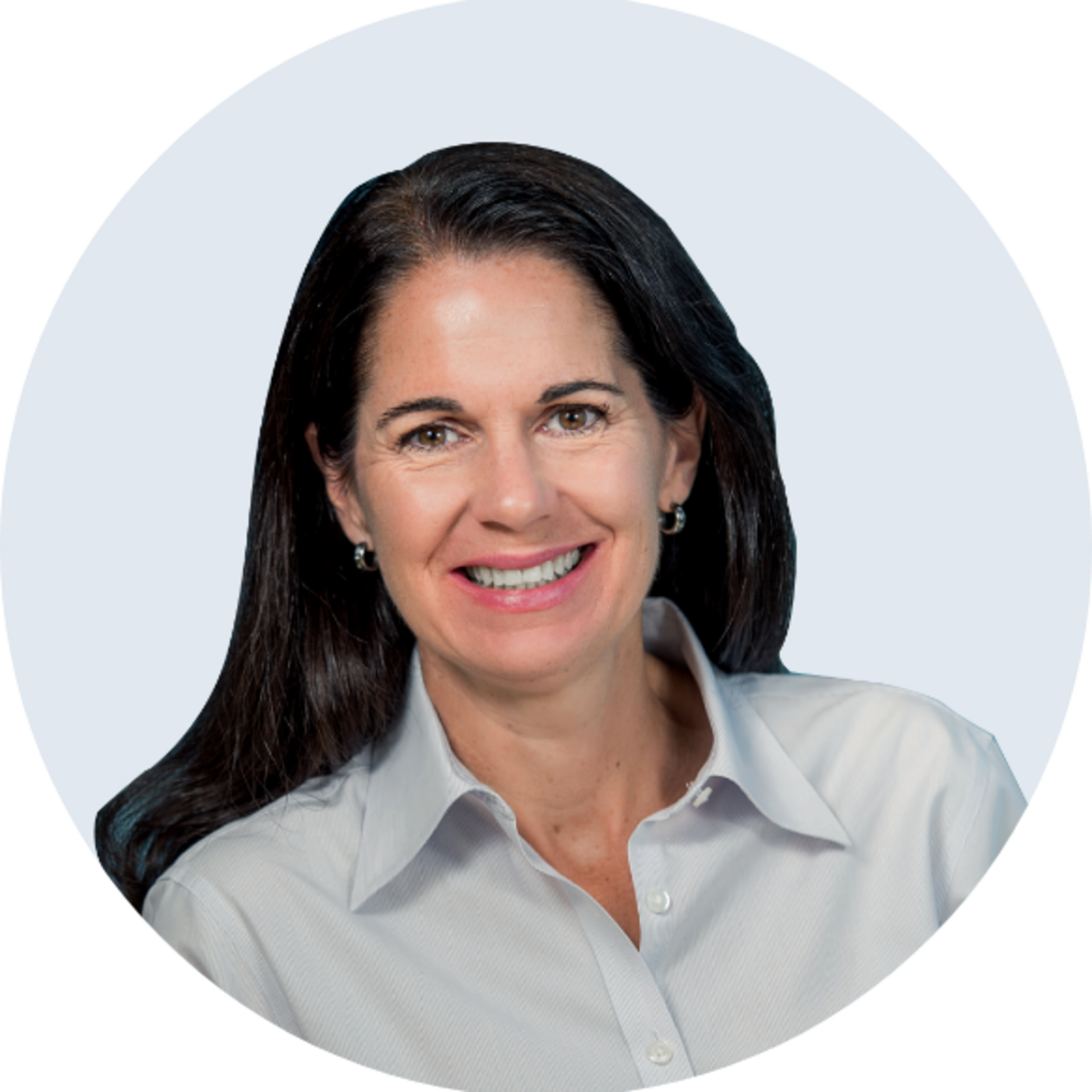
Aoifinn Devitt: I’m Aoifinn Devitt, and welcome to the 50 Faces podcast, which showcases inspiring professionals in the world of investment and beyond by focusing on people and their stories. I’m joined today by Carrie Barker, who is founder and managing partner of CrossCreek. She’s over 25 years of broad public and private investment experience. She previously served on the board of directors of Wasatch Global Investors and at Mednax, a health solutions partner, and is currently on the board of AROB Laboratories. Welcome, Carrie. Thanks for joining me today.
Karey Barker: Thank you. Appreciate the opportunity to speak with you today.
Aoifinn Devitt: Well, let’s start by talking about your background. Can you talk us through your career journey going right back to what you studied?
Karey Barker: Sure. Well, my whole career has been a history of surprises. I’m definitely not the kid that you would expect to become a professional investor. I’m originally from Idaho, and I had a very entrepreneurial family, small businesses and rental properties, but my parents didn’t attend college. I doubt they ever owned a stock. But I made it from Idaho down to the University of Utah and was struggling to figure out what I wanted to do and settled on a finance major. I was very, very lucky to meet Sam Stewart, who was an adjunct professor at the University of Utah and was the founder of Wasatch Global. And that was a small public money manager based in Salt Lake City. His class was really an internship where he was kind of getting free research from the students. We were getting credit and he was getting research. But at the end he told me, Carrie, you’re an investor and you should come work for me. And I had no idea what that meant, but it sounded fun. And I joined this small partnership and really worked with an incredible team of Sam and two other, frankly, kids that he had hired with no prior experience. And we delivered some really great returns, beating a lot of the big financial firms on the coast out of Salt Lake City. And we grew the firm. From about $90 million when I started to about $20 billion in assets under management when I left in 2013. And along the way, I launched a small venture strategy for Wasatch called Cross Creek. And due to a strange turn of events from regulatory changes, we had to spin that out. And I ended up buying the venture platform from Wasatch and, and having my own firm, which was scary, but turned out to be a life-changing event and, and really a lot of fun.
Aoifinn Devitt: Well, there’s the surprising turns answer right there, I guess, in terms of the regulatory surprise. I’d love to know, first of all, that segue into venture investing from public fund investing, not a typical one. And maybe what do you bring from the public fund world into your lens that you apply as a venture investor?
Karey Barker: Well, I was always investing in smaller public companies, high-growth companies. So you today, know, the markets have changed radically. Companies stay private a lot longer. So the late-stage private companies today look very similar to the micro and small-cap public companies that I grew up with. So the diligence on the companies, the market size, the competitors, the product, the management team, it’s all the same whether the company’s private or public. The big difference is the capital structure and the capital risks. Of course, venture is the alphabet soup you of, know, Series A, B, C, D, D1, you know, as well as all kinds of you other, know, debt securities and convertible notes, where as a public manager, I really only owned one thing, common stock. Sometimes the companies had debt and that was about it. And when a company runs out of money, it’s a very different situation for a private company than a public company. So I think most of the skills I learned as a public investor identifying a great company are the same, but identifying a great investment is where it becomes quite different.
Aoifinn Devitt: I suppose the ability to influence the outcome is different in a public company versus venture company. How much do you seek to influence the outcome in CrossCreet today?
Karey Barker: Well, that’s a very good point. I think that’s probably more true of early-stage venture investors. We’re a late-stage venture investor, so we’re investing in companies that are within 2 to 4 years of becoming public, and that’s our expertise. That’s where we can be value-added and helpful, is helping them prepare to become public. So we have some ability to help them and increase their odds of being a successful public company. But the traditional VC that’s investing very early and really helping the company in the very early strategic and key hires, that would be much more true of an early-stage investor, but not as much for us.
Aoifinn Devitt: And just thinking about the venture capital environment today, the lay of the land. So you mentioned this 2 to 4-year period perhaps before going public. With the exception of this, we’re recording this on July 25th, and this has been a good month, it seems, for IPOs. But with the exception of that, it hasn’t otherwise been a great time for IPOs. How do you see that that perhaps timeline is changing? Even the expectation of going public is changing, particularly for these late-stage companies that you’re interested in?
Karey Barker: Well, the IPO market has been, you know, there’s been a couple of glimmers of hope in the last few months, but it’s been a very rough couple of years with very few IPOs. There’s been a steady stream of biotech, Nothing big, but on the tech side, it’s been very hit and miss. I do think IPOs in general, well before these last few years, were happening much later in a company’s life cycle. It’s much more expensive and much riskier to be a public company than it used to be. So companies were waiting much longer, but many companies clearly would have liked to go public the last couple of years and were not able to just due to the IPO environment. It forces all these companies, you know, to look more at M&A. And, you know, whether it’s strategic M&A or a private equity recap, there’s been more and more of that happening. Although big tech in the US has been somewhat hand-tied by the DOJ not allowing big tech to acquire as freely as some VCs would hope. So both parts of the liquidity equation for venture has been constrained the last couple of years. And frankly, I think that’s a big concern for a lot of limited partners that haven’t been getting capital back. So we really do need to see the liquidity markets open up for venture.
Aoifinn Devitt: And we’ll certainly get to that when I ask you about the investors’ needs and the LPs’ needs, how they’re changing. Before that though, just staying on the venture landscape, you’re in Utah, I think probably the envy of many to be located there and enjoying the year-round delights that Utah has to offer. But also Silicon Slopes is something we’re hearing a lot about. We’re seeing a lot you of, know, construction and glittering buildings line Cotton Creek road there. What would you say excites you today? And tell us a little bit about Silicon Slopes.
Karey Barker: Well, Utah is definitely one of the, outside of Silicon Valley and the big markets, a very dynamic venture ecosystem. That said, we’re not focused on local investments. We’re investing primarily nationally, but even somewhat globally, but we are very lucky to live in an area where the venture ecosystem is strong. And we certainly don’t like to miss any of these late-stage companies that are in our backyard. And it’s interesting because there’s been so many other markets that have tried to rise, and it’s really unclear to me what drives it today with broad internet access, mobility, and frankly, COVID and the Zoom era got everyone a lot more comfortable investing in companies that were not in their backyard and, you know, made physical location less critical. Where companies can really be anywhere and the talent and the technology can come from anywhere. But still we get these locations, obviously Silicon Valley and places like Utah, where there’s just a little bit different culture. Maybe it’s a risk-taking culture of the entrepreneurs, maybe the experienced entrepreneurs that are willing to support them at the earliest days, local incubators. A lot of things still do make it the early stage location matter. I think at the later stage, location doesn’t matter much anymore. The best VCs around the planet will fly wherever the companies are when they get to a little later round.
Aoifinn Devitt: And moving to the LP perspective, I think you touched on it slightly before around the, just the different pace of return of distributions today. How would you find that LPs are thinking about venture today? Do you find there’s an enthusiasm that has always been there from certain LPs? Is some of that changing with I the, suppose, question mark over valuations and the IPO market? How would you take the temperature of the LPs right now?
Karey Barker: You know, I think it’s really mixed. I mean, everyone knows that there’s a huge tech cycle in front of us, and that could be a huge opportunity. Venture is driven by tech cycles, not macro. I mean, obviously it’s impacted by macroeconomic cycles, but much more driven by tech cycles. Whether it’s the, you know, back in the day it was PCs and then internet and then mobility. And obviously AI is this huge tech cycle that’s going to impact far more industries than any prior one. So there’s that excitement, but then there’s also two things holding LPs back. One is just the risk-free rates are quite high. So a lot of pension plans that have very set obligations can meet those obligations without taking risk. And some of these pension plans can lock in their long-term liabilities permanently with debt instruments, and they’re taking that option in some cases. And, you know, others that are definitely committed to a longer-term investment profile and equities, they just look at the lack of liquidity and the lack of predictability of that liquidity in venture versus public equities. And it’s giving some pause. And frankly, some are just very overweighted in venture because in ’21 and ’22, when the valuations ran up so much, those large net asset values they thought they were sitting on encouraged them to deploy additional capital in venture. They thought they would be funded with distributions. Obviously that didn’t play out, and now they just have way more commitments than, you know, their target allocation. So until we get some distributions, I think some of those LPs are, are gonna have difficulty backing all their existing managers and, and definitely not backing many new managers.
Aoifinn Devitt: And could you tell us a bit about what CrossCreek focuses on? I know you mentioned late-stage venture. Do you do co-investments as well? Do you mitigate the J-curve in any way?
Karey Barker: Yeah, we have a couple of different things that we invest in. So we invest in late-stage companies, and by that I mean really late-stage, like pre-IPO stage, venture-backed companies. And that’s where we really started when we were owned by Wasatch, because they were small-cap public investors and really looking to get to know these companies 2 to 4 years before they came public to make them better investors and frankly, to provide visibility on the competitors of their smaller public companies. So that’s where we started. We added to that a few years later, fund investments. So we invest in other venture funds, particularly early because our investments are late stage. So we invest early to give us visibility and access into what venture’s building that might become relevant to us in 5 or 10 years. And also particularly in sectors that we don’t invest directly. So we don’t make direct investments in biotech companies, for example, because it requires a very specialized team and knowledge base. So we do get our exposure to certain industries only through managers. And then the third thing, which is similar to the second, but Initially, we were investing in much more proven venture managers, and more recently we’ve started investing in proven investors in terms of people, but starting new funds. And so we’re seeing a lot of spinouts. Many venture firms have bloated, have gotten way too big to perform well, and the newer partners know it. They know that, you know, while there’s big AUM and big management fees, it’s very hard for them to have the returns. And so a lot of the top investors are spinning out and forming new firms, and we call them focus managers. And we use that because they’re not really emerging because these are proven investors starting new funds that are usually focused on a pretty narrow sector theme or geography. And so that’s the third thing that, that we invest in.
Aoifinn Devitt: And just on some of those themes, another venture investor a few seasons ago spoke about big swing innovation. And how excited he was about some of the big swing innovation he was seeing in AI and biotech and other areas. What excites you right now about some of the innovation you’re seeing at the late stages?
Karey Barker: It’s so interesting right now because venture’s traditionally been healthcare and tech software. Back in the day, there was some semiconductor, but that’s been a long time since many people were investing in those areas. I think the interesting thing about AI is it’s just impacting a much broader group of industries. We think it’s— I mean, consumers had some venture for a long time, but we think there’s going to be a whole new wave of the way we do everything, the way we shop, the way we communicate. There hasn’t been a big digital consumer wave for quite a long time, really, since the social media companies. We think there’s going to be major innovation in some areas like that that you don’t think of as much with AI. Healthcare, obviously everyone’s talking about drug discovery, but we think things like diagnostics and even administration, think of the paperwork, especially in the US that we deal with around a simple visit and it’s months of paperwork to get that visit paid for. We think there’s just so much innovation happening across different industries that have traditionally been venture. And, you know, there’s a whole new wave of hard tech too with robotics and defense tech and space tech. And those are industries that also really haven’t been venture-related historically. So I think that’s what gets us excited is just the breadth of the innovation we’re seeing right now.
Aoifinn Devitt: And that’s something I think that definitely doesn’t kind of bubble up to the soundbites that get written about the industry. Thank you to Baillie Gifford for sponsoring Series 4 of the 2025 50 Faces Podcast. I sat down with Matthew Coyle, Client Relationship Director at Baader Gifford, and asked him when Baader Gifford speaks about investing in sustainable companies, what sustainable means to them.
Speaker C: Yeah, so we do run some dedicated sustainable and impact investing strategies, but for all of our strategies, sustainability is one of a number of factors that we assess. So as long-term investors, we, we look for aligned management teams who are overseeing sensible business models. And that’s a really important consideration. Our typical holding period is well over 5 years, and in some cases, we’ve held companies since the 1990s. So it’s vital that we back companies that can thrive over the long term, rather than just trying to speculate over a short 6-month period.
Aoifinn Devitt: And now back to the show. If you were to think about the way venture is captured or is characterised, say in the financial press or just in the jargon as a whole? Is there anything that you think people overlook or underappreciate about this asset class?
Karey Barker: I do think that healthcare is an area that gets less broad media coverage around venture. And if you look, it’s a smaller piece of venture and most of the generalist funds aren’t participating for the same reasons we don’t participate. You need a specialized team, but those specialized teams that really do company formation meaning they find an asset usually at a university and they create a company and they bring products, typically drugs, to market. Those companies are extremely binary. Many of them don’t work, but the ones that do have really big returns. And I think that’s one area of venture that, again, we don’t invest directly, but we invest in managers and it’s some of our very top performing managers. It’s a very long maturation cycle. But very big outcomes when they get a win. So I think that’s one area of venture that a lot of people don’t talk about as much. When you think of venture, you think of tech, and it’s been a big innovator. And big pharma right now has a lot of drugs that have come off patent or are coming off patent, and they’re very hungry for new assets. And while tech M&A has been very slow, biotech M&A has actually been quite strong. So it’s also an area where the LPs that did choose to include biotech in their venture portfolios have seen liquidity when tech hasn’t been providing that. So I think that’s one area that’s been overlooked across the board.
Aoifinn Devitt: And just thinking about the kind of fund formation stage and the dynamics for that, you mentioned some of these focus funds. I’d say it’s a pattern that often gets repeated that some of the spinouts perhaps underestimate the challenge of raising capital, particularly in an environment like today. They maybe have ridden the coattails of a larger firm and its brand recognition. How do you kind of see, given we focus a lot about inclusion in this podcast and particularly within venture, the diversity and inclusion of, say, founders or other venture capitalists, how would you kind of characterize the environment today? Is capital equally accessible for all?
Karey Barker: I think it’s a barbell. I think for those that clearly have a proven track record, There are many funds out there. In fact, I think the best venture funds are the ones that could raise billions and choose not to. I mean, that’s the elite, and all the LPs want to be in those funds and can’t get in. Then there’s sort of the bloated funds which have done well but are raising so much capital that there’s a lot of skepticism if they can perform at the scale. And then there’s the new funds, and the new funds are really split between those very proven GPs that spin out and frankly don’t have a lot of trouble raising the capital if they’re raising a modest amount, say $200 million or less. If you’ve got a 20-year track record at a brand name VC right now, you spin out and raise a modest fund. Those funds have actually filled up very quickly and done well. But then there’s all the other new funds, which is usually operators that want to be VCs. Maybe they have an angel track record or they’re VCs with a mediocre or short, maybe good but short track record that are trying to raise their own funds. I think that group is really challenged right now because the LPs have very limited capital to back new managers. And so they’re only going to, I think, back sort of the elite spinouts or maybe specialty sectors if they really have an interest in defense tech is sort of a very new hot group. Maybe you can get funding in something like that because there’s not a lot of established managers. So it’s really a haves and have-nots out there. It can be extremely hard to raise a fund or extremely easy depending on where you sit.
Aoifinn Devitt: It’s interesting, given I sit in Europe a lot of the time, I’d say climate tech is an area that is attracting a lot of interest, particularly because in a way there are certain products now, climate opportunities funds, climate solutions funds that are being set up at the allocators and they need to find funds with which to populate that. So I’d say that that again is in response perhaps to investor demand, but definitely a hot area. I’d love to move to some reflections now. So looking back at your career, would you say— we talk a lot about mentorship on this podcast— did you have any particular mentors there that were influential on you?
Karey Barker: Absolutely. I mean, I would have to say that Sam Stewart, who is the professor that hired me when I was at the University of Utah, just had a huge influence on my career because I really didn’t have any knowledge or background of this industry. And so really identifying me and sort of turning me into an investor was something that I’ll never forget. It was interesting because after 2 years of being told that professional investing was pointless because markets were efficient, when I took Sam’s class, he was a PhD in finance from Stanford, and he basically told us that that was all bunk and that we could beat the market if we dug deep and focused on smaller, less efficient public companies. And that was just an aha moment for me where I wanted to hear that, I wanted to believe that, and he saw my curiosity curiosity and interest in investing and gave me an opportunity. So he’s probably the biggest influencer in my life, as well as my other initial partners at Wasatch that, you know, we kind of learned investing together.
Aoifinn Devitt: It does sound indeed that he was very pivotal. And I would imagine venture is also a place, it is, I think, notoriously full of highs and lows. I think that is almost the definition of venture investing, that there are the few wins, the very outsized wins accompanied by multiple losses Have you distilled from that experience any creed or motto or any wisdom that you apply now, whether in the investing world or elsewhere?
Karey Barker: I mean, it’s a good question. I think those ups and downs, you just have to have the right personality. I’m not sure it’s something you can learn or anything anyone can tell you or a motto’s going to get you through those ups and downs. And and it, it’s true of public growth investing as well, you know, ventures even more so. And one thing that Sam, I’ll just give him a lot of credit in this call, told me very early when I had made a, a big mistake and lost the firm some money, he said, Carrie, to be a successful investor, you only need to be right slightly more than half the time and you’ll beat the averages. And that was a critical moment for me to just understand that even the best investors, the Peter Lynch, the Warren Buffetts, whoever I was looking up to, that they were making mistakes too. You just had to be right you’re wrong.
Aoifinn Devitt: That’s great advice. And I think often we don’t have mentors that kind of say things as clearly as that. And I suppose it’s really useful that you’re repeating that here for the listeners. In terms of maybe learning how to— this kind of mental state, how to kind of perhaps put mind over matter or to overcome the voices in your head that would lead you to rumination or to regret, is it purely internal or do you think that executive coaching is needed and just multiple years of practice?
Karey Barker: I mean, I’ve never used coaching, so I don’t know if that would have helped. I mean, look, I think there’s some people that just aren’t going to be able to do that. So I think it’s partly self-recognition that if you’re the kind of person that really needs to be right, maybe another type of career would make sense. You have to determine if you’re the kind of person that can live with making a lot of mistakes, because that’s just the reality of what it is. And I’ve had some very good friends that just decided the business wasn’t for them because it was just too hard on them emotionally. The ups and downs of not just making mistakes, but also the markets. So sometimes when you’re just unlucky and we use a simple grid in our investments and our self-assessment where we say you can be right, you can be wrong, you can be lucky or you can be unlucky and you can have a great outcome and you have to admit that you were just lucky. I think some of the companies that benefited from COVID nobody projected that. You just got lucky and you have to admit that. There’s also times when you’re unlucky. Maybe you really make an investment because you’re investing in a fabulous CEO and really your thesis is a lot around that he’s built a similar business, he’s going to do it again, or she, and they have a life event, cancer, you know, and are not able to be. So maybe you just got unlucky. Maybe it was the right thesis, but you weren’t able to see it play out. So I think that embracing that and understanding the outcomes relative to that can be helpful. But there are some people, even if they really just got unlucky and they weren’t wrong, they, they still just can’t live with it. So I would say, sure, coaching, trying to get through it, but I think it’s also just self-awareness and whether or not you have the personality type that you can go home and have a good evening even when you had a terrible day at work.
Aoifinn Devitt: It’s interesting because I do think that perhaps just the hand-to-hand combat or just the cut and thrust of venture investing leads to a lot more self-awareness openness and authenticity around this kind of transparency about the lack of direct causation at times and the multicausal nature of many outcomes. And thank you, Carrie, for coming here. I think you are the epitome of this kind of self-awareness and transparency and insight. Thank you for coming here and sharing these insights with us.
Karey Barker: Yeah, thank you.
Aoifinn Devitt: I’m Aoifinn Devitt. Thank you for listening to the 50 Faces Podcast. If you liked what you heard and would like to tune in to hear more inspiring professionals and their stories, please subscribe on Apple Podcasts, wherever you get your podcasts. This podcast is for informational purposes only and should not be construed as investment advice, and all views are personal and should not be attributed to the organizations and affiliations of the host or any guest.
Aoifinn Devitt: Series 4 of the 50 Faces podcast is sponsored by Baillie Gifford. Baillie Gifford is a long-term investment manager dedicated to discovering the innovations and changemakers that deliver exceptional growth opportunities for its clients.
Karey Barker: We think there’s going to be a whole new wave of the way we do everything, the way we shop, the way we communicate. There hasn’t been a big digital consumer wave for quite a long time, really since the social media companies. We think there’s going to be major innovation in some areas like that, that you don’t think of as much. With AI. Healthcare, obviously everyone’s talking about drug discovery, but we think things like diagnostics and even administration, think of the paperwork, especially in the US that we deal with around a simple visit and it’s months of paperwork to get that visit paid for. We think there’s just so much innovation happening across different industries that have traditionally been venture. And you know, there’s a, a whole new wave of hard tech too with robotics and defense tech and space tech. And those are industries that also really haven’t been venture-related historically. So I think that’s what gets us excited is just the breadth of the innovation we’re seeing right now.
Aoifinn Devitt: I’m Aoifinn Devitt, and welcome to the 50 Faces podcast, which showcases inspiring professionals in the world of investment and beyond by focusing on people and their stories. I’m joined today by Carrie Barker, who is founder and managing partner of CrossCreek. She’s over 25 years of broad public and private investment experience. She previously served on the board of directors of Wasatch Global Investors and at Mednax, a health solutions partner, and is currently on the board of AROB Laboratories. Welcome, Carrie. Thanks for joining me today.
Karey Barker: Thank you. Appreciate the opportunity to speak with you today.
Aoifinn Devitt: Well, let’s start by talking about your background. Can you talk us through your career journey going right back to what you studied?
Karey Barker: Sure. Well, my whole career has been a history of surprises. I’m definitely not the kid that you would expect to become a professional investor. I’m originally from Idaho, and I had a very entrepreneurial family, small businesses and rental properties, but my parents didn’t attend college. I doubt they ever owned a stock. But I made it from Idaho down to the University of Utah and was struggling to figure out what I wanted to do and settled on a finance major. I was very, very lucky to meet Sam Stewart, who was an adjunct professor at the University of Utah and was the founder of Wasatch Global. And that was a small public money manager based in Salt Lake City. His class was really an internship where he was kind of getting free research from the students. We were getting credit and he was getting research. But at the end he told me, Carrie, you’re an investor and you should come work for me. And I had no idea what that meant, but it sounded fun. And I joined this small partnership and really worked with an incredible team of Sam and two other, frankly, kids that he had hired with no prior experience. And we delivered some really great returns, beating a lot of the big financial firms on the coast out of Salt Lake City. And we grew the firm. From about $90 million when I started to about $20 billion in assets under management when I left in 2013. And along the way, I launched a small venture strategy for Wasatch called Cross Creek. And due to a strange turn of events from regulatory changes, we had to spin that out. And I ended up buying the venture platform from Wasatch and, and having my own firm, which was scary, but turned out to be a life-changing event and, and really a lot of fun.
Aoifinn Devitt: Well, there’s the surprising turns answer right there, I guess, in terms of the regulatory surprise. I’d love to know, first of all, that segue into venture investing from public fund investing, not a typical one. And maybe what do you bring from the public fund world into your lens that you apply as a venture investor?
Karey Barker: Well, I was always investing in smaller public companies, high-growth companies. So you today, know, the markets have changed radically. Companies stay private a lot longer. So the late-stage private companies today look very similar to the micro and small-cap public companies that I grew up with. So the diligence on the companies, the market size, the competitors, the product, the management team, it’s all the same whether the company’s private or public. The big difference is the capital structure and the capital risks. Of course, venture is the alphabet soup you of, know, Series A, B, C, D, D1, you know, as well as all kinds of you other, know, debt securities and convertible notes, where as a public manager, I really only owned one thing, common stock. Sometimes the companies had debt and that was about it. And when a company runs out of money, it’s a very different situation for a private company than a public company. So I think most of the skills I learned as a public investor identifying a great company are the same, but identifying a great investment is where it becomes quite different.
Aoifinn Devitt: I suppose the ability to influence the outcome is different in a public company versus venture company. How much do you seek to influence the outcome in CrossCreet today?
Karey Barker: Well, that’s a very good point. I think that’s probably more true of early-stage venture investors. We’re a late-stage venture investor, so we’re investing in companies that are within 2 to 4 years of becoming public, and that’s our expertise. That’s where we can be value-added and helpful, is helping them prepare to become public. So we have some ability to help them and increase their odds of being a successful public company. But the traditional VC that’s investing very early and really helping the company in the very early strategic and key hires, that would be much more true of an early-stage investor, but not as much for us.
Aoifinn Devitt: And just thinking about the venture capital environment today, the lay of the land. So you mentioned this 2 to 4-year period perhaps before going public. With the exception of this, we’re recording this on July 25th, and this has been a good month, it seems, for IPOs. But with the exception of that, it hasn’t otherwise been a great time for IPOs. How do you see that that perhaps timeline is changing? Even the expectation of going public is changing, particularly for these late-stage companies that you’re interested in?
Karey Barker: Well, the IPO market has been, you know, there’s been a couple of glimmers of hope in the last few months, but it’s been a very rough couple of years with very few IPOs. There’s been a steady stream of biotech, Nothing big, but on the tech side, it’s been very hit and miss. I do think IPOs in general, well before these last few years, were happening much later in a company’s life cycle. It’s much more expensive and much riskier to be a public company than it used to be. So companies were waiting much longer, but many companies clearly would have liked to go public the last couple of years and were not able to just due to the IPO environment. It forces all these companies, you know, to look more at M&A. And, you know, whether it’s strategic M&A or a private equity recap, there’s been more and more of that happening. Although big tech in the US has been somewhat hand-tied by the DOJ not allowing big tech to acquire as freely as some VCs would hope. So both parts of the liquidity equation for venture has been constrained the last couple of years. And frankly, I think that’s a big concern for a lot of limited partners that haven’t been getting capital back. So we really do need to see the liquidity markets open up for venture.
Aoifinn Devitt: And we’ll certainly get to that when I ask you about the investors’ needs and the LPs’ needs, how they’re changing. Before that though, just staying on the venture landscape, you’re in Utah, I think probably the envy of many to be located there and enjoying the year-round delights that Utah has to offer. But also Silicon Slopes is something we’re hearing a lot about. We’re seeing a lot you of, know, construction and glittering buildings line Cotton Creek road there. What would you say excites you today? And tell us a little bit about Silicon Slopes.
Karey Barker: Well, Utah is definitely one of the, outside of Silicon Valley and the big markets, a very dynamic venture ecosystem. That said, we’re not focused on local investments. We’re investing primarily nationally, but even somewhat globally, but we are very lucky to live in an area where the venture ecosystem is strong. And we certainly don’t like to miss any of these late-stage companies that are in our backyard. And it’s interesting because there’s been so many other markets that have tried to rise, and it’s really unclear to me what drives it today with broad internet access, mobility, and frankly, COVID and the Zoom era got everyone a lot more comfortable investing in companies that were not in their backyard and, you know, made physical location less critical. Where companies can really be anywhere and the talent and the technology can come from anywhere. But still we get these locations, obviously Silicon Valley and places like Utah, where there’s just a little bit different culture. Maybe it’s a risk-taking culture of the entrepreneurs, maybe the experienced entrepreneurs that are willing to support them at the earliest days, local incubators. A lot of things still do make it the early stage location matter. I think at the later stage, location doesn’t matter much anymore. The best VCs around the planet will fly wherever the companies are when they get to a little later round.
Aoifinn Devitt: And moving to the LP perspective, I think you touched on it slightly before around the, just the different pace of return of distributions today. How would you find that LPs are thinking about venture today? Do you find there’s an enthusiasm that has always been there from certain LPs? Is some of that changing with I the, suppose, question mark over valuations and the IPO market? How would you take the temperature of the LPs right now?
Karey Barker: You know, I think it’s really mixed. I mean, everyone knows that there’s a huge tech cycle in front of us, and that could be a huge opportunity. Venture is driven by tech cycles, not macro. I mean, obviously it’s impacted by macroeconomic cycles, but much more driven by tech cycles. Whether it’s the, you know, back in the day it was PCs and then internet and then mobility. And obviously AI is this huge tech cycle that’s going to impact far more industries than any prior one. So there’s that excitement, but then there’s also two things holding LPs back. One is just the risk-free rates are quite high. So a lot of pension plans that have very set obligations can meet those obligations without taking risk. And some of these pension plans can lock in their long-term liabilities permanently with debt instruments, and they’re taking that option in some cases. And, you know, others that are definitely committed to a longer-term investment profile and equities, they just look at the lack of liquidity and the lack of predictability of that liquidity in venture versus public equities. And it’s giving some pause. And frankly, some are just very overweighted in venture because in ’21 and ’22, when the valuations ran up so much, those large net asset values they thought they were sitting on encouraged them to deploy additional capital in venture. They thought they would be funded with distributions. Obviously that didn’t play out, and now they just have way more commitments than, you know, their target allocation. So until we get some distributions, I think some of those LPs are, are gonna have difficulty backing all their existing managers and, and definitely not backing many new managers.
Aoifinn Devitt: And could you tell us a bit about what CrossCreek focuses on? I know you mentioned late-stage venture. Do you do co-investments as well? Do you mitigate the J-curve in any way?
Karey Barker: Yeah, we have a couple of different things that we invest in. So we invest in late-stage companies, and by that I mean really late-stage, like pre-IPO stage, venture-backed companies. And that’s where we really started when we were owned by Wasatch, because they were small-cap public investors and really looking to get to know these companies 2 to 4 years before they came public to make them better investors and frankly, to provide visibility on the competitors of their smaller public companies. So that’s where we started. We added to that a few years later, fund investments. So we invest in other venture funds, particularly early because our investments are late stage. So we invest early to give us visibility and access into what venture’s building that might become relevant to us in 5 or 10 years. And also particularly in sectors that we don’t invest directly. So we don’t make direct investments in biotech companies, for example, because it requires a very specialized team and knowledge base. So we do get our exposure to certain industries only through managers. And then the third thing, which is similar to the second, but Initially, we were investing in much more proven venture managers, and more recently we’ve started investing in proven investors in terms of people, but starting new funds. And so we’re seeing a lot of spinouts. Many venture firms have bloated, have gotten way too big to perform well, and the newer partners know it. They know that, you know, while there’s big AUM and big management fees, it’s very hard for them to have the returns. And so a lot of the top investors are spinning out and forming new firms, and we call them focus managers. And we use that because they’re not really emerging because these are proven investors starting new funds that are usually focused on a pretty narrow sector theme or geography. And so that’s the third thing that, that we invest in.
Aoifinn Devitt: And just on some of those themes, another venture investor a few seasons ago spoke about big swing innovation. And how excited he was about some of the big swing innovation he was seeing in AI and biotech and other areas. What excites you right now about some of the innovation you’re seeing at the late stages?
Karey Barker: It’s so interesting right now because venture’s traditionally been healthcare and tech software. Back in the day, there was some semiconductor, but that’s been a long time since many people were investing in those areas. I think the interesting thing about AI is it’s just impacting a much broader group of industries. We think it’s— I mean, consumers had some venture for a long time, but we think there’s going to be a whole new wave of the way we do everything, the way we shop, the way we communicate. There hasn’t been a big digital consumer wave for quite a long time, really, since the social media companies. We think there’s going to be major innovation in some areas like that that you don’t think of as much with AI. Healthcare, obviously everyone’s talking about drug discovery, but we think things like diagnostics and even administration, think of the paperwork, especially in the US that we deal with around a simple visit and it’s months of paperwork to get that visit paid for. We think there’s just so much innovation happening across different industries that have traditionally been venture. And, you know, there’s a whole new wave of hard tech too with robotics and defense tech and space tech. And those are industries that also really haven’t been venture-related historically. So I think that’s what gets us excited is just the breadth of the innovation we’re seeing right now.
Aoifinn Devitt: And that’s something I think that definitely doesn’t kind of bubble up to the soundbites that get written about the industry. Thank you to Baillie Gifford for sponsoring Series 4 of the 2025 50 Faces Podcast. I sat down with Matthew Coyle, Client Relationship Director at Baader Gifford, and asked him when Baader Gifford speaks about investing in sustainable companies, what sustainable means to them.
Speaker C: Yeah, so we do run some dedicated sustainable and impact investing strategies, but for all of our strategies, sustainability is one of a number of factors that we assess. So as long-term investors, we, we look for aligned management teams who are overseeing sensible business models. And that’s a really important consideration. Our typical holding period is well over 5 years, and in some cases, we’ve held companies since the 1990s. So it’s vital that we back companies that can thrive over the long term, rather than just trying to speculate over a short 6-month period.
Aoifinn Devitt: And now back to the show. If you were to think about the way venture is captured or is characterised, say in the financial press or just in the jargon as a whole? Is there anything that you think people overlook or underappreciate about this asset class?
Karey Barker: I do think that healthcare is an area that gets less broad media coverage around venture. And if you look, it’s a smaller piece of venture and most of the generalist funds aren’t participating for the same reasons we don’t participate. You need a specialized team, but those specialized teams that really do company formation meaning they find an asset usually at a university and they create a company and they bring products, typically drugs, to market. Those companies are extremely binary. Many of them don’t work, but the ones that do have really big returns. And I think that’s one area of venture that, again, we don’t invest directly, but we invest in managers and it’s some of our very top performing managers. It’s a very long maturation cycle. But very big outcomes when they get a win. So I think that’s one area of venture that a lot of people don’t talk about as much. When you think of venture, you think of tech, and it’s been a big innovator. And big pharma right now has a lot of drugs that have come off patent or are coming off patent, and they’re very hungry for new assets. And while tech M&A has been very slow, biotech M&A has actually been quite strong. So it’s also an area where the LPs that did choose to include biotech in their venture portfolios have seen liquidity when tech hasn’t been providing that. So I think that’s one area that’s been overlooked across the board.
Aoifinn Devitt: And just thinking about the kind of fund formation stage and the dynamics for that, you mentioned some of these focus funds. I’d say it’s a pattern that often gets repeated that some of the spinouts perhaps underestimate the challenge of raising capital, particularly in an environment like today. They maybe have ridden the coattails of a larger firm and its brand recognition. How do you kind of see, given we focus a lot about inclusion in this podcast and particularly within venture, the diversity and inclusion of, say, founders or other venture capitalists, how would you kind of characterize the environment today? Is capital equally accessible for all?
Karey Barker: I think it’s a barbell. I think for those that clearly have a proven track record, There are many funds out there. In fact, I think the best venture funds are the ones that could raise billions and choose not to. I mean, that’s the elite, and all the LPs want to be in those funds and can’t get in. Then there’s sort of the bloated funds which have done well but are raising so much capital that there’s a lot of skepticism if they can perform at the scale. And then there’s the new funds, and the new funds are really split between those very proven GPs that spin out and frankly don’t have a lot of trouble raising the capital if they’re raising a modest amount, say $200 million or less. If you’ve got a 20-year track record at a brand name VC right now, you spin out and raise a modest fund. Those funds have actually filled up very quickly and done well. But then there’s all the other new funds, which is usually operators that want to be VCs. Maybe they have an angel track record or they’re VCs with a mediocre or short, maybe good but short track record that are trying to raise their own funds. I think that group is really challenged right now because the LPs have very limited capital to back new managers. And so they’re only going to, I think, back sort of the elite spinouts or maybe specialty sectors if they really have an interest in defense tech is sort of a very new hot group. Maybe you can get funding in something like that because there’s not a lot of established managers. So it’s really a haves and have-nots out there. It can be extremely hard to raise a fund or extremely easy depending on where you sit.
Aoifinn Devitt: It’s interesting, given I sit in Europe a lot of the time, I’d say climate tech is an area that is attracting a lot of interest, particularly because in a way there are certain products now, climate opportunities funds, climate solutions funds that are being set up at the allocators and they need to find funds with which to populate that. So I’d say that that again is in response perhaps to investor demand, but definitely a hot area. I’d love to move to some reflections now. So looking back at your career, would you say— we talk a lot about mentorship on this podcast— did you have any particular mentors there that were influential on you?
Karey Barker: Absolutely. I mean, I would have to say that Sam Stewart, who is the professor that hired me when I was at the University of Utah, just had a huge influence on my career because I really didn’t have any knowledge or background of this industry. And so really identifying me and sort of turning me into an investor was something that I’ll never forget. It was interesting because after 2 years of being told that professional investing was pointless because markets were efficient, when I took Sam’s class, he was a PhD in finance from Stanford, and he basically told us that that was all bunk and that we could beat the market if we dug deep and focused on smaller, less efficient public companies. And that was just an aha moment for me where I wanted to hear that, I wanted to believe that, and he saw my curiosity curiosity and interest in investing and gave me an opportunity. So he’s probably the biggest influencer in my life, as well as my other initial partners at Wasatch that, you know, we kind of learned investing together.
Aoifinn Devitt: It does sound indeed that he was very pivotal. And I would imagine venture is also a place, it is, I think, notoriously full of highs and lows. I think that is almost the definition of venture investing, that there are the few wins, the very outsized wins accompanied by multiple losses Have you distilled from that experience any creed or motto or any wisdom that you apply now, whether in the investing world or elsewhere?
Karey Barker: I mean, it’s a good question. I think those ups and downs, you just have to have the right personality. I’m not sure it’s something you can learn or anything anyone can tell you or a motto’s going to get you through those ups and downs. And and it, it’s true of public growth investing as well, you know, ventures even more so. And one thing that Sam, I’ll just give him a lot of credit in this call, told me very early when I had made a, a big mistake and lost the firm some money, he said, Carrie, to be a successful investor, you only need to be right slightly more than half the time and you’ll beat the averages. And that was a critical moment for me to just understand that even the best investors, the Peter Lynch, the Warren Buffetts, whoever I was looking up to, that they were making mistakes too. You just had to be right you’re wrong.
Aoifinn Devitt: That’s great advice. And I think often we don’t have mentors that kind of say things as clearly as that. And I suppose it’s really useful that you’re repeating that here for the listeners. In terms of maybe learning how to— this kind of mental state, how to kind of perhaps put mind over matter or to overcome the voices in your head that would lead you to rumination or to regret, is it purely internal or do you think that executive coaching is needed and just multiple years of practice?
Karey Barker: I mean, I’ve never used coaching, so I don’t know if that would have helped. I mean, look, I think there’s some people that just aren’t going to be able to do that. So I think it’s partly self-recognition that if you’re the kind of person that really needs to be right, maybe another type of career would make sense. You have to determine if you’re the kind of person that can live with making a lot of mistakes, because that’s just the reality of what it is. And I’ve had some very good friends that just decided the business wasn’t for them because it was just too hard on them emotionally. The ups and downs of not just making mistakes, but also the markets. So sometimes when you’re just unlucky and we use a simple grid in our investments and our self-assessment where we say you can be right, you can be wrong, you can be lucky or you can be unlucky and you can have a great outcome and you have to admit that you were just lucky. I think some of the companies that benefited from COVID nobody projected that. You just got lucky and you have to admit that. There’s also times when you’re unlucky. Maybe you really make an investment because you’re investing in a fabulous CEO and really your thesis is a lot around that he’s built a similar business, he’s going to do it again, or she, and they have a life event, cancer, you know, and are not able to be. So maybe you just got unlucky. Maybe it was the right thesis, but you weren’t able to see it play out. So I think that embracing that and understanding the outcomes relative to that can be helpful. But there are some people, even if they really just got unlucky and they weren’t wrong, they, they still just can’t live with it. So I would say, sure, coaching, trying to get through it, but I think it’s also just self-awareness and whether or not you have the personality type that you can go home and have a good evening even when you had a terrible day at work.
Aoifinn Devitt: It’s interesting because I do think that perhaps just the hand-to-hand combat or just the cut and thrust of venture investing leads to a lot more self-awareness openness and authenticity around this kind of transparency about the lack of direct causation at times and the multicausal nature of many outcomes. And thank you, Carrie, for coming here. I think you are the epitome of this kind of self-awareness and transparency and insight. Thank you for coming here and sharing these insights with us.
Karey Barker: Yeah, thank you.
Aoifinn Devitt: I’m Aoifinn Devitt. Thank you for listening to the 50 Faces Podcast. If you liked what you heard and would like to tune in to hear more inspiring professionals and their stories, please subscribe on Apple Podcasts, wherever you get your podcasts. This podcast is for informational purposes only and should not be construed as investment advice, and all views are personal and should not be attributed to the organizations and affiliations of the host or any guest.