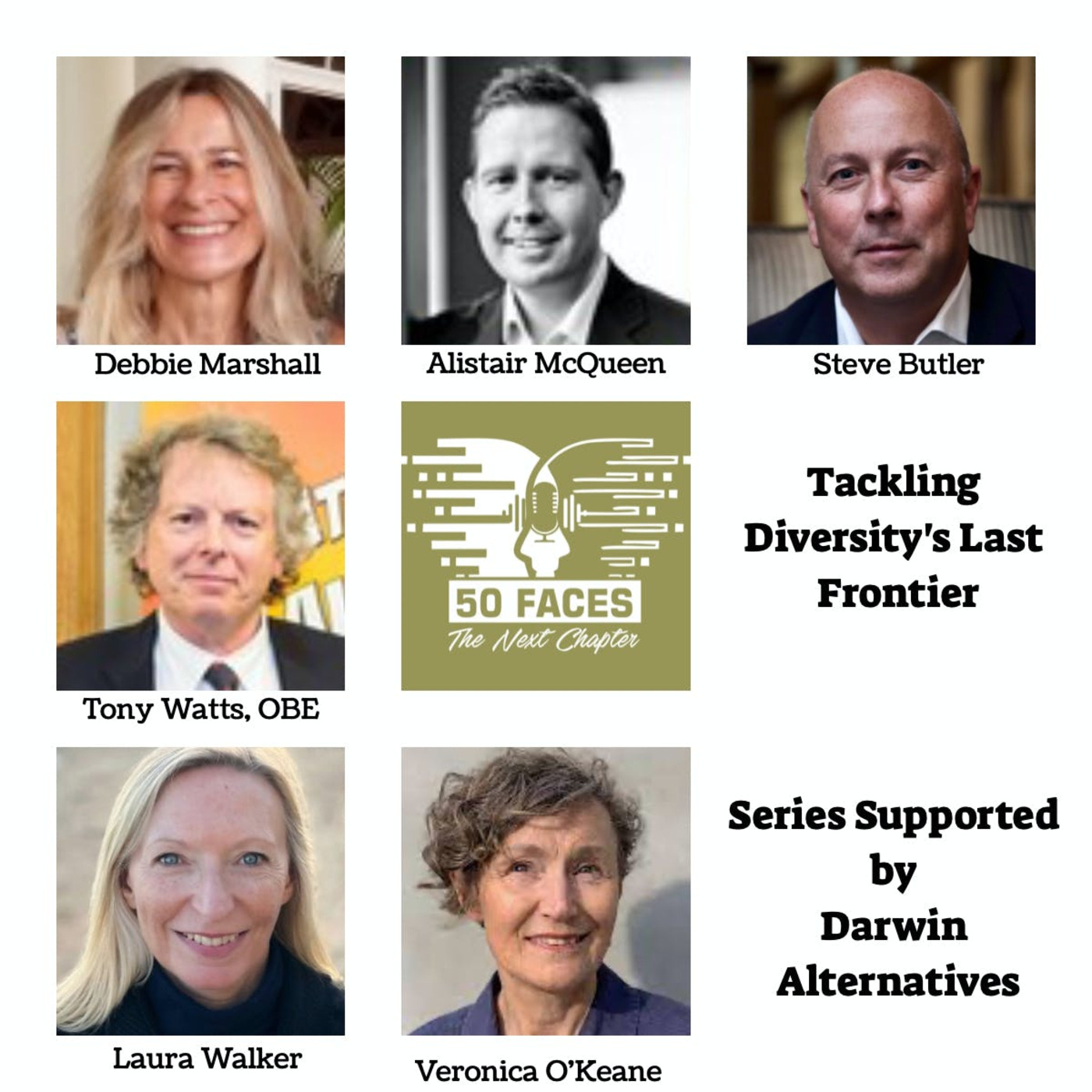
Steve Butler: Is age ever just a number? Last year we launched a podcast with Steve Butler of Pontal Southall Aspire, which shone a light on ageism as one of the last acceptable forms of discrimination. This received such a groundswell of a response that we wanted to dig deeper into this area to develop a special Next Chapter series about the problems of ageism the importance of having access to meaningful, productive work as we age, and some of the barriers, both invisible and visible, that exist in society to this. This focus series looks at the unique challenges of midlife and the growth of interest in the psychology of midlife and beyond. And we hear from Laura Walker, who focuses on this area.
Steve Butler: We are the linchpins of our society, our organizations, and our families. So we are between the the youth and the, and the older age. So the classic sandwich generation, um, comes to mind. So there’s a lot going on, but also we know a lot, we’ve grown a lot, we’ve gathered a lot of skills and experiences along the way. And and the, the research that does exist, which is generally not in the world of coaching but in other areas, points to the multi-directionality of the changes that we’re experiencing in midlife.
Steve Butler: We also look at the obsession with age and some of the deeply entrenched biases that exist around age in popular culture, hearing from Debbie Marshall.
Speaker C: Look at any newspaper article, the first thing it’ll always say is so-and-so, age 59, age 76, grandmother in her 80s. You know, always an age that’s attributed to a person before anything else is described about them. I think it’s just endemic really that age is just prevalent in, in terms of something that is either I don’t know, you’re labeled by it, aren’t you? You’re labeled by your age, and there is a lot of movement about to try and get rid of that.
Steve Butler: We look at some examples of outdated tropes.
Speaker C: If you take birthday cards, for example, for older people, there are some that are really quite offensive, literally treating older people as objects of amusement, and I really don’t think they’re funny at all, and nor do most people who receive them.
Steve Butler: Returning to Steve Butler, we discuss differences in recruiting habits.
Speaker D: So, for example, when you’re recruiting talent into the business, you’ll very easily recruit a graduate without any experience, but when you’re recruiting an older person, you’re being very critical about whether their experience kind of perfectly matches the role that you’re looking for. So I think it requires managers to be much more open-minded in the recruitment, looking at competencies rather than direct experiences, etc. Flexibility is a big part of it for both younger and older workers. I think we’re now entering a world of work where we don’t have to be in the office every day of the week. We can use different methods of working.
Steve Butler: We also look inside some firms which are getting ahead of the curve in embracing and retaining their workforce and hear from Alasdair MacQueen about the midlife review that is now offered to staff.
Speaker E: But when we started speaking to our own people, They were very quick to tell us, wait a minute, my life is way much more than just my money. My life is my career, and my life is my health and my well-being. So we put together a very simple annual checkup, an annual intervention for this population at a voluntary level. Come along if you wish to, where you will be supported, guided, and educated on how to take control of what we call the three Ws of your wealth, your work, and your wellbeing.
Steve Butler: We hear from the founder of Age Action Alliance, Tony Watts OBE, about what has been his life’s work.
Speaker F: I mean, for years was, I I’ve been arguing about making the most of older people’s talents because it’s more fulfilling for those people, but also because many of those people needed to work for longer. And now there’s a national imperative to try and keep these people in work. It’s this othering thing that goes on, you know, groups get othered, you know, so they get looked at differently because they’re not exactly the same as the people making the decisions. And I think there’s an assumption, I feel, that older people have got a sell-by date. I think within the diversity and inclusion area, not just within ageing, but all the other aspects of it as well, and what fascinates me is that everybody’s got something to bring to the party, everyone’s got something different.
Steve Butler: We examine the benefits of cognitive diversity that a diverse group of employees will bring, in particular some of the wisdom that comes from middle age and beyond.
Speaker G: I am a great believer in the ancient wisdom that older people have a wisdom that younger people do not have, and I guess that’s the wisdom that comes with longevity, that you can never make that artificial because a brain that has seen bad things happen, and of course bad things happen to all of us, and a brain that has known that you can get over that and you can get back to a point of being that might even be better than that, a brain that knows that, and a brain that also knows humility, that knows that even if you’re up there and you’ve achieved as much as you ever want to achieve, that that sense of achievement is not going to last. I think that wisdom is worth an awful lot.
Steve Butler: This is an area that currently sits in the shadows of the diversity debate, and we want to bring it out of there. Let’s ensure that all of us can look forward to a future of dignity, purpose, and security.
Speaker E: The embracing of diversity and my personal passion, age diversity, I believe it is the right thing to do for society, but, but for the economy, it’s the right thing to do. Whatever lens you look at it, whatever is your motivation. There’s a huge prize awaiting us if we can embrace age diversity.
Steve Butler: Tune in on Apple Podcasts, Spotify, or all podcast platforms from next week as we kick off the special series. This podcast series is brought to you with the kind support of Darwin Alternative Investment Management Limited. Which offers innovative, alpha-driven investment solutions that are uncorrelated with traditional asset classes and feature business areas which have not previously been considered by investment funds. The firm aims to create new opportunities for investors to further diversify their portfolios and achieve stable absolute returns.
Steve Butler: Is age ever just a number? Last year we launched a podcast with Steve Butler of Pontal Southall Aspire, which shone a light on ageism as one of the last acceptable forms of discrimination. This received such a groundswell of a response that we wanted to dig deeper into this area to develop a special Next Chapter series about the problems of ageism the importance of having access to meaningful, productive work as we age, and some of the barriers, both invisible and visible, that exist in society to this. This focus series looks at the unique challenges of midlife and the growth of interest in the psychology of midlife and beyond. And we hear from Laura Walker, who focuses on this area.
Steve Butler: We are the linchpins of our society, our organizations, and our families. So we are between the the youth and the, and the older age. So the classic sandwich generation, um, comes to mind. So there’s a lot going on, but also we know a lot, we’ve grown a lot, we’ve gathered a lot of skills and experiences along the way. And and the, the research that does exist, which is generally not in the world of coaching but in other areas, points to the multi-directionality of the changes that we’re experiencing in midlife.
Steve Butler: We also look at the obsession with age and some of the deeply entrenched biases that exist around age in popular culture, hearing from Debbie Marshall.
Speaker C: Look at any newspaper article, the first thing it’ll always say is so-and-so, age 59, age 76, grandmother in her 80s. You know, always an age that’s attributed to a person before anything else is described about them. I think it’s just endemic really that age is just prevalent in, in terms of something that is either I don’t know, you’re labeled by it, aren’t you? You’re labeled by your age, and there is a lot of movement about to try and get rid of that.
Steve Butler: We look at some examples of outdated tropes.
Speaker C: If you take birthday cards, for example, for older people, there are some that are really quite offensive, literally treating older people as objects of amusement, and I really don’t think they’re funny at all, and nor do most people who receive them.
Steve Butler: Returning to Steve Butler, we discuss differences in recruiting habits.
Speaker D: So, for example, when you’re recruiting talent into the business, you’ll very easily recruit a graduate without any experience, but when you’re recruiting an older person, you’re being very critical about whether their experience kind of perfectly matches the role that you’re looking for. So I think it requires managers to be much more open-minded in the recruitment, looking at competencies rather than direct experiences, etc. Flexibility is a big part of it for both younger and older workers. I think we’re now entering a world of work where we don’t have to be in the office every day of the week. We can use different methods of working.
Steve Butler: We also look inside some firms which are getting ahead of the curve in embracing and retaining their workforce and hear from Alasdair MacQueen about the midlife review that is now offered to staff.
Speaker E: But when we started speaking to our own people, They were very quick to tell us, wait a minute, my life is way much more than just my money. My life is my career, and my life is my health and my well-being. So we put together a very simple annual checkup, an annual intervention for this population at a voluntary level. Come along if you wish to, where you will be supported, guided, and educated on how to take control of what we call the three Ws of your wealth, your work, and your wellbeing.
Steve Butler: We hear from the founder of Age Action Alliance, Tony Watts OBE, about what has been his life’s work.
Speaker F: I mean, for years was, I I’ve been arguing about making the most of older people’s talents because it’s more fulfilling for those people, but also because many of those people needed to work for longer. And now there’s a national imperative to try and keep these people in work. It’s this othering thing that goes on, you know, groups get othered, you know, so they get looked at differently because they’re not exactly the same as the people making the decisions. And I think there’s an assumption, I feel, that older people have got a sell-by date. I think within the diversity and inclusion area, not just within ageing, but all the other aspects of it as well, and what fascinates me is that everybody’s got something to bring to the party, everyone’s got something different.
Steve Butler: We examine the benefits of cognitive diversity that a diverse group of employees will bring, in particular some of the wisdom that comes from middle age and beyond.
Speaker G: I am a great believer in the ancient wisdom that older people have a wisdom that younger people do not have, and I guess that’s the wisdom that comes with longevity, that you can never make that artificial because a brain that has seen bad things happen, and of course bad things happen to all of us, and a brain that has known that you can get over that and you can get back to a point of being that might even be better than that, a brain that knows that, and a brain that also knows humility, that knows that even if you’re up there and you’ve achieved as much as you ever want to achieve, that that sense of achievement is not going to last. I think that wisdom is worth an awful lot.
Steve Butler: This is an area that currently sits in the shadows of the diversity debate, and we want to bring it out of there. Let’s ensure that all of us can look forward to a future of dignity, purpose, and security.
Speaker E: The embracing of diversity and my personal passion, age diversity, I believe it is the right thing to do for society, but, but for the economy, it’s the right thing to do. Whatever lens you look at it, whatever is your motivation. There’s a huge prize awaiting us if we can embrace age diversity.
Steve Butler: Tune in on Apple Podcasts, Spotify, or all podcast platforms from next week as we kick off the special series. This podcast series is brought to you with the kind support of Darwin Alternative Investment Management Limited. Which offers innovative, alpha-driven investment solutions that are uncorrelated with traditional asset classes and feature business areas which have not previously been considered by investment funds. The firm aims to create new opportunities for investors to further diversify their portfolios and achieve stable absolute returns.