Aoifinn Devitt: This podcast was made possible by the kind support of Alvine Capital Management, a London-based specialist investment advisor and placement boutique.
Matt: I like to call people like myself that have a disability, those who are blind in this community, you know, persons of determination, not people with disabilities. However, from my experience, many people have looked at me as incapable, and it may be because certain things are harder for me, right? I don’t drive anymore. I walk now with a guide dog, used to be with a cane. And I think the stigma of being blind and not being capable, it’s just a barrier that’s hard to explain even for me. I finished my dissertation being blind. I wrote the first ESG investing textbook being blind. I’ve managed multi-billion dollar portfolios being blind, and now I’m leading a startup. But what I’ve experienced is the general sentiment around my disability is someone that would have a cognitive impact as well. However, that’s not the case. And I don’t know how to evolve society in the right direction, but I just do with one interaction at a time.
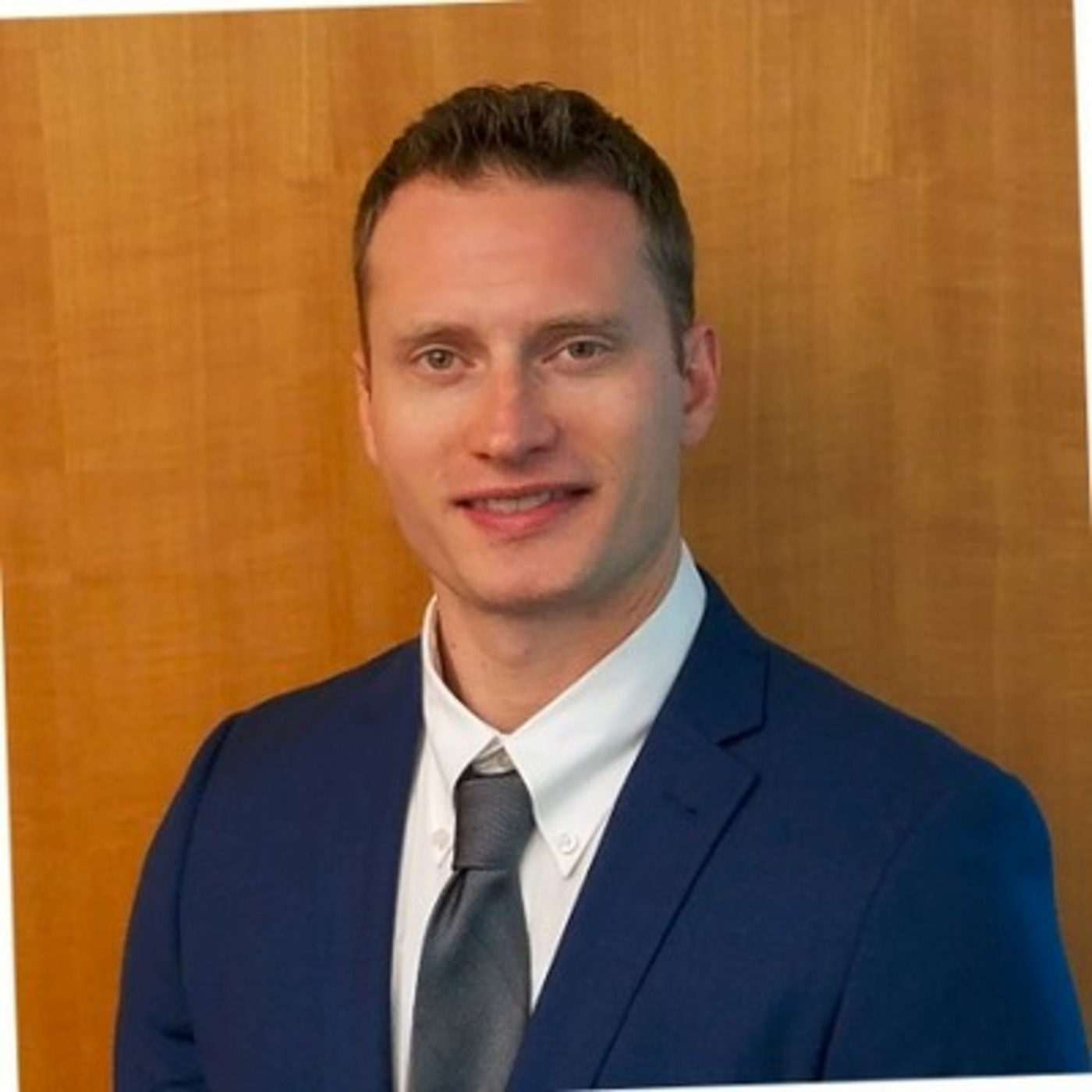
Aoifinn Devitt: I’m Aoifinn Devitt, and welcome to the 50 Faces Podcast., a podcast committed to revealing the richness and diversity of the world of investment by focusing on its people and their stories. I’m joined today by Matt Sherwood, who is co-founder and chief executive officer of WeVisit Media, a video streaming platform that leverages data and analytics for a more inclusive and profitable entertainment industry. We met while he worked as an asset allocator where he headed up public market investments for MMBB Financial Services. He has spent time as a guest lecturer at Columbia University, and is an appointed professor at the King’s College in New York and has authored a book on the topic of ESG integration. He is a board member of Guide Dog Foundation and American VetDogs and the Lavelle Fund. Welcome, Matt. Thanks for joining me today.
Matt: Thank you so much for having me, Aoifinn.
Aoifinn Devitt: Well, let’s start with your background and how you ended up pursuing a role in the investment world.
Matt: Yeah, so I would love to talk about that. I mean, it came from passion from being a young child. Even at the age of 10, I was reading books, Benjamin Graham books and books on investing in stocks, and tailored my education and pursuit of an MBA for that goal. Post-MBA, I went to work for Morgan Stanley.
Aoifinn Devitt: And just going back a little further, what part of the country did you grow up in? And did you always expect that you would study finance?
Matt: Yeah, so I grew up in upstate New York, in a small town called Hamilton, New York. And really on the outskirts of Hamilton, which was very country-oriented. Definitely there’s more cows than people. My graduating class for high school was 58. So it was very rural and grew up with a very hardworking family and worked on many farms throughout my childhood. So I had the passion, but I didn’t foresee it. When I went to school for my undergrad, I was really just pursuing different opportunities and actually was also double majoring in psychology. So I wasn’t set on pursuing business at a young age, but I did pivot to get that after, MBA you know, finished my undergrad.
Aoifinn Devitt: And just going through your career, at what stage did you lose your sight, and how did that affect then your career trajectory from there?
Matt: Yeah, so great question. I, I ended up— finished my undergrad in 3 years, went on to get an MBA, and out of my MBA went to Morgan Stanley. I was at Morgan Stanley for 8 months, and I got poached to a hedge fund to go work for a hedge fund And which was an incredible opportunity. I proved myself in a relatively short time period to get my own portfolio. And it was about a year after I had my own portfolio when the eyesight loss happened abruptly in August 2008. I played Division I football while in my having undergrad, gone— I did my undergrad in 3 years, but having several concussions along with an eye disease I was born with, I ended up having that catalyzed during August 2008. Waking up on August 13th with a dot on a mirror, and then the dot was on my hand. And by August 15th, 2 days later, I was legally blind.
Aoifinn Devitt: Extraordinary. And how did that then affect your ability to work? And can you just talk us through the time you took to adjust to your new circumstance?
Matt: Well, okay. At the time, my wife was pregnant and my goal was just to provide for my family and get back to work. It was also a very tumultuous time for the market. August 2008, so the volatility was extremely high, which was good for what I was doing relative to ADR or convertible arbitrage and certain strategies. My goal was just to get back to work and provide. And albeit happened fast, I went to the doctor that 15th on a Friday, learned I was legally blind. On that Monday, I got into an optic neurologist, a retina specialist, and I learned about software that was out there through someone that worked in the technology field. And a week to the day, I set up a flat-screen TV and converted it to a computer monitor and used Magnifying Glass Pro software to— and I had to manipulate the back end of the software, the engineer did that for me. And I was actually back at work one week to the day that I had the legal blindness diagnosis. Just to expand on that, Aoifinn, relative to the months after, I had great performance, actually. So it may have helped me be calculated and move slowly. Certainly work was a great escape to the emotional aspect of losing your eyesight. However, the firm didn’t do well throughout ’08. I was up 18% on my portfolio that year with some heavy shorts, but the firm did not do well and was getting ready to close shop. I left and looking for a job after in 2009, 2010, until I went to the Schoenfeld Group was quite difficult, but it wasn’t so much because of technology. Thankfully, I lost my eyesight in a day and age where technology replaces much of what you lost. However, it’s the perceptions of my abilities that I found to be most difficult to overcome.
Aoifinn Devitt: That’s an excellent point. I mean, you’ve had the benefit of basically before and after, and I suppose seeing how the perception has shifted. What do you think is wrong with the perception? What is being missed? Where is there perhaps a bias? And I would say that having a son with disability myself, I think it’s a general lowering of expectations, which can be quite a crutch to bear when you know what you’re capable of. How would you describe that general reception and I suppose some of the hindrances?
Matt: Yeah, it’s certainly sad that exists in society, but it is a construct that many people have developed through what they learn from their parents and from other people in society. But for me, the disability isn’t just a disadvantage, right? I like to call people like myself that have a disability, those who are blind in this community, you know, persons of determination, not people with disabilities. However, from my experience, many people have looked at me as incapable, and it may be because certain things are harder for me, right? I don’t drive anymore. I walk now with a guide dog, used to be with a cane, I think the stigma of being blind and not being capable, it’s just a barrier that’s hard to explain even for me. I finished my dissertation being blind. I wrote the first ESG investing textbook being blind. I managed multi-billion dollar portfolios being blind, and now I’m leading a startup. But what I’ve experienced is the general sentiment around my disability is someone that would have a cognitive impact as well. However, that’s not the case. And I don’t know how to evolve society in the right direction, but I just do with one interaction at a time.
Aoifinn Devitt: No, it’s helpful because I think there are two angles where I think some of your insights are extremely helpful. One is for other people with a similar situation who either have impaired sight or no sight and how they maybe perhaps should approach the work environment and also even the interview process. And then also from an employer’s standpoint, how they should approach it. There may be some practical questions that maybe employers don’t even want to ask. For example, you mentioned writing a book while legally blind. How do you read information? Is it through Braille? Is it through audio? How do you consume information?
Matt: Yeah, great question. Unfortunately, I don’t know Braille. I lost my eyesight in 2008, and technology has, and it continues to evolve to be so empowering. And for me, I’m able to listen I do have magnification software that I can really read one word at a time. And there’s some videos out there on the internet of how I actually view. Generally, I work long hours and towards the end of the day, my nose is dragging across the screen. But if I am using the little peripheral vision I have, I set it in contrast to be able to see. So instead of black and white, it’s white on black. And then, you know, listening. If you heard me listen to a PDF or an audiobook, It’s quite fast. Most people would probably not be able to comprehend, but I’ve learned to adapt and become very efficient that way. And it’s with these tools that I have through software that has added efficiency to my life, as well as the lack of being able to see has also taken a lot of distractions away as well.
Aoifinn Devitt: And as far as the employers themselves, our previous guests had talked about focusing on what a candidate can do and not on what they can’t do. That maybe is a way of reshaping the conversation around capability and perhaps some of the exceptional capability, digesting information very quickly, as you mentioned. Would you have any other recommendations about how the workplace can be more inclusive?
Matt: Yeah, well, I would certainly agree with the person you spoke to previously. It’s really about skill, right, and performance. I’m a very results-driven person. My team hears me say a mantra all the time: cash is king and results are king. And any candidate, regardless of a disability or not, it all comes down to performance. However, I’ve experienced even at, I’m not going to name the institution, but a massively large investment bank and at an interview, just shocking the lack of, I guess, sensitivity and understanding of focusing on performance and skill rather than focusing on, disability and how hard certain aspects would be and keeping up with hours. And for me, I know there’s other blind people that have relentless work ethics and are smart and work smart. And it’s difficult when you’re in a situation where, for lack of better words, you’re just dealing with someone who’s very ignorant. So I agree with that last person on your podcast that discussed focusing on what someone can do rather than challenges they can’t. And for me, it’s more about what about performance and skill.
Aoifinn Devitt: Absolutely. It seems also education perhaps will be necessary around the interview stage around the, to overcome bias. Do any of the groups, and I know you’re involved with some advocacy groups, you mentioned vet dogs and guide dogs, are any of these groups helpful in raising awareness and promoting more inclusion?
Matt: Yeah, well, certainly guide dogs, you know, I’m, Blessed the first 10 years of my career. I was in the hedge fund business, I managed a portfolio. At times I would speak to clients and investors and I did not want to have a guide dog. I wanted to have a cane because a cane I could fold up and put under me. I could fake eye contact the best that I can. And knowing the fact that it’s not my abilities that impact me, but it’s the perception of what those abilities may be, I felt that by pursuing any other assistance besides a cane could negatively impact my career. However, after an unfortunate event in November of, I believe, 2017, I ended up going and practicing to get a guide dog, really just to experience what it would be like. I’m a very efficient, I was a New York walker with a cane and did not wanna be slowed down. When I practiced with a guide dog, it was an amazing experience for me. And I felt it wasn’t about safety really at that time when I practiced with this first dog, it was about how much more efficient my life can be. And I’m blessed now to have my guide dog, Chris. I call him my black Lamborghini. He’s fast and he’s efficient and he keeps me safe and they’re so smart. So the Guide Dog Foundation, which was also a partner of the American Vet Dog Foundation. They do great work for advocating for those who are blind to get a guide dog and for advocating for guide dogs in the workplace. Only about 10% of those who are legally blind like myself have a guide dog. So that’s 10% that actually have a guide dog. So they’ve been doing great to educate all the public, but particularly employers. Lavelle Fund is an organization I serve on, on their investment committee. They do wonderful work. When we speak about education, they support probably right now 40 full-time scholarships, and they continue to support more scholarships, this fund. It’s a foundation that understands that education is so empowering to people who are blind. I took a couple PhD courses in quantitative methodologies before losing my eyesight, after my MBA, just really for training, but I went back to get my PhD because I knew it would help level the playing field. And help overcome the challenges of others’ perceptions.
Aoifinn Devitt: Well, that’s extraordinary, and I think it was actually only through seeing Chris that I even knew there was anything different about your sight, because everything about the way you, you conduct yourself at meetings, you would never know. And that’s another point actually that my previous guest mentioned, is that he was blind from birth. He actually wasn’t taught until much later in life about the importance of turning towards the person speaking, about the body language, and that actually very much helped him later because I think he hadn’t even been taught that at school. And that, I think that’s just all about— it just aids integration, it seems, when the person is looking at you when you’re speaking. And just that, that’s a behavior that’s perhaps more typical and therefore less friction is caused.
Matt: Yeah, absolutely. There’s a few tricks like that that you pick up while being blind, but it’s a wonderful thing when you have people that are aware of your disability and not look past because there’s been times when I’m not looking at someone the right way and they’ll snap their fingers rather than just saying, hey, you can look this way.
Aoifinn Devitt: So finally, I know that you said there have been some tremendous advances in software. Can you tell us a little bit about that from your vantage point?
Matt: Yeah, there’s two I would like to point out, and I want to do this just like when I point out the education as a level playing field, because there may be others that have a family member, friend, you know, or colleague that has a visual impairment. And I just really want to say the importance of education for this community. That said, education’s extremely important, employment’s extremely important to me, which if you think about the blind community in America, North America in general, only 20% are employed. That’s 1 out of every 5 person who is blind actually has a job. And this is an amazing workforce that is not being tapped into. —people who are in my shoes want to work. And out of that 20%, the median income’s, I think, $36,000. So it’s not a community that is flourishing economically by any sense. So to me, education helps find employment, but also software is extremely helpful, whether it’s on the job, for your life, or part of that education. And two advances in technology that I think are extremely powerful would be an app called Seeing AI, and this app is artificial intelligence. I’ve used it in the past for reading money or navigating in the streets, even to the point where you can scan documents with it. You can actually look at someone and take a picture and they’ll tell you the features of that individual, as well as Be My Eyes. And Be My Eyes is a really a peer-to-peer platform that allows you to FaceTime anyone. And it’s— there’s amazing volunteers on Be My Eyes that will take time out of their day to help someone, whether it’s picking out a suit and getting the right colors or you finding, know, a misplaced document. So I think those are two resources that are amazing and powerful. And for those that are not visually impaired that don’t mind donating their time, Be My Eyes is a great platform for them.
Aoifinn Devitt: Well, that’s extraordinary to hear. And I just wanted to also get you to look into a crystal ball here in terms of what the future may hold for technology. I’ve heard that virtual reality may also open at least experiences, certainly as well as people maybe perhaps describing the experience of going through the Amazon or being in an art gallery, particular art gallery. Are you looking forward to anything like that?
Matt: Yeah, I am. I think technology will continue to advance in that direction. Time will tell how much it could help those who are blind. I think there’s Medical Technology Foundation Fighting Blindness does a great job in investing in efforts to cure different hereditary disease and make an effort to cure blindness. So I think that would be the number one, but there’s also, there’s a lot out there. There’s technologies to help, you know, they always talk about having like a robot guide dog. So we will see, although a robot guide dog may not care about getting hit by a car, but certainly a real dog will. So some technologies I’m skeptical of, but I’m certainly happy that there are those in this world that are taking their time and resources into helping my community.
Aoifinn Devitt: Well, let’s move to talk about your current passion and We Visit Media. Can you tell us a little bit about that, how the business idea came about? And when you say you’re looking to get to a more inclusive entertainment industry, what do you mean by that?
Matt: Great question, and thank you for giving me the opportunity to talk about We Visit Media. We Visit Media, it came out of the desire to create a documentary, what my life would be transforming from someone who worked with a guide cane for a decade and then getting their first guide dog. I had that opportunity to train with a dog for that one day and realized this is for me. It added efficiencies to my life. And let’s face it, dogs are wonderful, especially the Labrador that I have. So it was an opportunity that I wanted to pursue, but I wanted to do it in the right way. I wanted to, if I was going to pursue telling the story of my experience going through the 3-week training at the Guide Dog Foundation and having the opportunity to get this dog, I wanted to make sure that it was an opportunity to have a professional quality product that would get distribution. Long story short, I never did the documentary because I developed such a passion for the research on the film and TV space. This is an asset class that was never meant to get as big as it is, an industry that’s really flourishing and major industry in 2025, could be a $2.3 trillion worldwide industry of both money created and money produced. But right now it’s an asset class that last year there was over $150 billion spent on original film and TV content. And this year alone on the distribution side with streaming services alone, we’ll spend over $115 billion to get content and acquisition. So if you think about these numbers, there’s $150 billion put in this asset class, original film and TV content, and then there’s the buyers of the asset class, which is particularly streaming, $115 billion spent It’s a major opportunity that I looked at as also a very inefficient market. 59% of films that are made don’t turn a profit. 96% of films that are in film festivals never have distribution. And I’ve also learned that although those who are historically underrepresented, underserved, so those who have been classified as, as minority status from an ethnicity standpoint, are 51% of the box office ticket buyers, yet they have less than 6% opportunities to capital to produce projects. Those who are visually impaired, it’s much less, and there’s quite a big gender gap as well. So for me, I, I really wanted to focus on the inclusion as well, but through the research and creating what is now WeVideo Media, I realized we can address the two major matching problems in the industry. Because there’s thousands and thousands of professional high-quality filmmakers out there. There’s millions of people that want to be closely associated to the film industry, for example, investing in it. And currently the system for these professional filmmakers is beg friends and family for money, somehow have a rich uncle or a great connection to private equity, which is usually not the case, or spend years knocking on studio doors and speaking with studios. WeVidit Media is working on creating a funding portal that will now allow anyone, even unaccredited investors, to finance films, but also do it in a way that really vets and issues equity and securities in these films in a proper governed way. So we’re actually creating the first stock exchange for the film and TV industry to finance these productions. And that’s the major matching technology that we’re able to solve for. And utilize. Relative to the other major problem that exists in the industry is distribution. And WeBitIt Media, separate from the funding portal, it’s not a, you know, broker-dealer service on the WeBitIt Media side, it’s completely different. However, we’ve learned that we can gain a lot of great self-reported data from individuals who have the same mission of diversity, equity, inclusion in this industry that we have, that want to share stories that are often stolen from them or not able to be shared. And by leveraging a great audience, a great viewing base that’s willing to self-report data on who they are and what they’re doing, we can actually use that to drive change and allow them to have a say in what gets produced. And not only what gets produced, but what gets distributed. This is a double benefit, right? Because this contribution now helps those streaming services and those distributors of content now be able to better serve their audiences they’re trying to meet. So whether they’re doing it for a subscription conversion motive or doing it for the ability to just better serve diverse backgrounds and be more inclusive, the result for us is a real benefit for the industry and for society. So that’s what WeVideo Media is solving for, the major problems we’re addressing. It’s both on the financing and the distribution side, But really at the core, it’s about diversity, being equitable, and being inclusive.
Aoifinn Devitt: And it certainly seems to chime with the other waves of democratization we’re seeing in alternatives, whether it be fractional ownership, tokenization, or just general better access to alternative sources of return. And that your mission certainly is something that we very much would respect and align with here at 50 Faces. So your background prior to this was as a hedge fund manager, and you’ve been passionate about data science for your entire career. How are you using those insights in your new role?
Matt: Yeah, well, that’s also part of the origin story of WeVidit Media. Much of my career was around looking at consumer sentiment data, insights I gained about consumers, as well as even like options pricing data to inform underlying securities movements. So we would look at what we can learn from consumer sentiment or different data points and touchpoints in that vein, as well as even options pricing to say what is a future path or probability of path of performance of a security or asset. For this, I’ve published in the Journal of Investing on risk capacity portfolio construction and targeted return portfolio construction. I actually created a new portfolio theory called skew risk portfolio theory, and really all about that sentiment and how it makes underlying decisions and really can predict future paths of success or failure. With that, we’ve really created a technology in WeVideo Media that helps to do the same for the film and TV space. If distributors know and have better insight on what people want to watch and what they’re demanding based on their reviews of a trailer video or even reviews of treatments or scripts, It gives them an idea of that consumer, and this way they can convert that consumer into a buying customer. So in much of what I did in my career as a hedge fund manager, looking at the derivatives market to inform underlying securities and make decisions on them, now I’m creating really an ecosystem around that for the film and TV space. By doing this, distribution will be better informed. These distributors and studios and production companies can monetize better. And for all of us in the audience and viewers, we can demand what content we want produced and have a world with even better content than exists now.
Aoifinn Devitt: I wanted to ask you about the return potential in that, because it’s all very well to have the mission, but it’s also— many investors want to see a return. What kind of return potential do you expect?
Matt: [Speaker:Ian_Cassel] Yeah. So let’s talk about that, separating WeBitIt Media from the funding portal and the ability to invest in these projects. This is a risky asset class and you’re going to have opportunities for tremendous upside, so venture capital-like returns, but there will be opportunities where people will take losses on investments. We want to be really clear on these risks because not every film is a 100x return. However, there are great opportunities out there. And what we can best do as an intermediary is use proper governance, work well with our qualified third party dealer and our third parties that really can govern our platform, regulators as well. We’re regulated. And for us, creating that opportunity that hasn’t existed is what I view as, as huge value to society. You mentioned the word democratization. This is a $150 billion asset class that no unaccredited investor has ever been able to invest in. If you wanted to finance films and find something you believe in, a story that you care about or talent that you really support, unfortunately, there’s plenty of platforms out to give them money, to donate money, and maybe you get a poster, great. You never had an opportunity to share in their success and have a return.. And this can be investing in a product that is produced and that could be acquired, can be an original product to someone else, but it gets acquired, or there could be a great royalty and distribution deal to that acquisition. So there is a way to have some distribution tails to that investment or a great exit after a produced product in a film market type setting.
Aoifinn Devitt: And let’s move now to talk back to some personal reflections. So we’ve talked about a setback and your extraordinary way that you have overcome that. So we don’t need to ask that question, but I would like to know if there were any key people in your career that really had an impression on you that you can talk about.
Matt: Yeah, certainly there were. When I first lost my eyesight, one of my good friends on the trading desk that, you know, I worked on a hedge fund at the time, Access Global, and he sat next to me on the desk, Justin Lee. He was incredibly supportive. And I think just from an emotional standpoint, that was amazing. When I think about people who have been impactful to me, maybe not so much in the career setting, Wall Street requires some sharp elbows, but there were colleagues that were incredibly supportive as well as those I served on boards with, those that gave me opportunities to show what I can do, even though they may have had a similar perception in the back of their mind of uncertainty. But then I’ve had friends and mentors that have just been extremely important to my life. My friend Joe gave me a lift when I needed one you when, know, I first lost my eyesight. I have a friend Eric in the same, same vein. I’m saying their names and not their last, so they will hear this. But there’s also services out there that I found to be very valuable, like Helen Keller, Rosanna Federa. Helen Keller was someone who made sure I got services even though I didn’t want to take away from any funding that they do for others, but I learned how to walk the right way with a cane. And New York State Commissioner of the Blind out of Hampton, they were phenomenal. They helped fund some of my education and my PhD work. So some people may not be in that career setting as an employer, as a boss or mentor, but it can be external that have made such a powerful change in my life. My faith also, plays a big role. Pastors in my church, and I’m a Christian, and my faith has also helped in this way.
Aoifinn Devitt: And on the topic of faith and any creed or motto, I’m going to take away what you said about the term persons of determination, which I think is an excellent mindset to have. Is there any other creed or motto that you live by, or any words of wisdom that you’ve kept with you?
Matt: There are many. If only you knew, Aoifinn, on a regular basis I come up with many sayings and quotes, but generally from other business leaders. And to me, it’s, you know, if I had to sum up what I think outside of my faith and what I think is most important, it’s just a positive attitude in life, right? For me, life’s really what you make of it. And a disability is not the be-all and end-all. It’s a challenge I’ll continue to overcome. I’ve overcame many challenges from my humble beginnings and childhood. And it’s a positive attitude and positive outlook in life that can help you overcome those challenges. You got to supplement that with a relentless hard and smart work ethic. But if you do so, people will look past your disability. I recently had an investor come into WeBitIt Media and very happy for the opportunity that he was entrusting me with. And he came to me because of the— and invested because of the vision in WeBitIt Media and not my personal vision. Of being blind. So I think having that positive attitude and outlook, that relentless work ethic, can overcome challenges, even if those challenges are others’ perceptions.
Aoifinn Devitt: Well, thank you so much, Matt. I usually like to sum up here with some words of my own, but really you have left me speechless. And the story of your resilience, of your, your vision, which is tremendous despite all we’ve talked about in circumstance, is just such an example of being a person of determination and what that means. And the way you have embraced life without skipping a beat, it seems, is just— there are very few words that I can add to that. So thank you for coming here and for sharing your insights with us.
Matt: Thank you so much for the opportunity, Aoifinn.
Aoifinn Devitt: I’m Aoifinn Devitt. Thank you for listening to the 50 Faces podcast. If you liked what you heard and would like to tune in to hear more inspiring investors on their personal journeys, please subscribe on Apple Podcasts or wherever you get your podcasts. You can find all of our content on the 50 Faces Hub, where you will find a library of role models, resources, and other solutions to enhance your here. This podcast is for informational purposes only and should not be construed as investment advice, and all views are personal and should not be attributed to the organizations and affiliations of the host or any guest.
Aoifinn Devitt: This podcast was made possible by the kind support of Alvine Capital Management, a London-based specialist investment advisor and placement boutique.
Matt: I like to call people like myself that have a disability, those who are blind in this community, you know, persons of determination, not people with disabilities. However, from my experience, many people have looked at me as incapable, and it may be because certain things are harder for me, right? I don’t drive anymore. I walk now with a guide dog, used to be with a cane. And I think the stigma of being blind and not being capable, it’s just a barrier that’s hard to explain even for me. I finished my dissertation being blind. I wrote the first ESG investing textbook being blind. I’ve managed multi-billion dollar portfolios being blind, and now I’m leading a startup. But what I’ve experienced is the general sentiment around my disability is someone that would have a cognitive impact as well. However, that’s not the case. And I don’t know how to evolve society in the right direction, but I just do with one interaction at a time.
Aoifinn Devitt: I’m Aoifinn Devitt, and welcome to the 50 Faces Podcast., a podcast committed to revealing the richness and diversity of the world of investment by focusing on its people and their stories. I’m joined today by Matt Sherwood, who is co-founder and chief executive officer of WeVisit Media, a video streaming platform that leverages data and analytics for a more inclusive and profitable entertainment industry. We met while he worked as an asset allocator where he headed up public market investments for MMBB Financial Services. He has spent time as a guest lecturer at Columbia University, and is an appointed professor at the King’s College in New York and has authored a book on the topic of ESG integration. He is a board member of Guide Dog Foundation and American VetDogs and the Lavelle Fund. Welcome, Matt. Thanks for joining me today.
Matt: Thank you so much for having me, Aoifinn.
Aoifinn Devitt: Well, let’s start with your background and how you ended up pursuing a role in the investment world.
Matt: Yeah, so I would love to talk about that. I mean, it came from passion from being a young child. Even at the age of 10, I was reading books, Benjamin Graham books and books on investing in stocks, and tailored my education and pursuit of an MBA for that goal. Post-MBA, I went to work for Morgan Stanley.
Aoifinn Devitt: And just going back a little further, what part of the country did you grow up in? And did you always expect that you would study finance?
Matt: Yeah, so I grew up in upstate New York, in a small town called Hamilton, New York. And really on the outskirts of Hamilton, which was very country-oriented. Definitely there’s more cows than people. My graduating class for high school was 58. So it was very rural and grew up with a very hardworking family and worked on many farms throughout my childhood. So I had the passion, but I didn’t foresee it. When I went to school for my undergrad, I was really just pursuing different opportunities and actually was also double majoring in psychology. So I wasn’t set on pursuing business at a young age, but I did pivot to get that after, MBA you know, finished my undergrad.
Aoifinn Devitt: And just going through your career, at what stage did you lose your sight, and how did that affect then your career trajectory from there?
Matt: Yeah, so great question. I, I ended up— finished my undergrad in 3 years, went on to get an MBA, and out of my MBA went to Morgan Stanley. I was at Morgan Stanley for 8 months, and I got poached to a hedge fund to go work for a hedge fund And which was an incredible opportunity. I proved myself in a relatively short time period to get my own portfolio. And it was about a year after I had my own portfolio when the eyesight loss happened abruptly in August 2008. I played Division I football while in my having undergrad, gone— I did my undergrad in 3 years, but having several concussions along with an eye disease I was born with, I ended up having that catalyzed during August 2008. Waking up on August 13th with a dot on a mirror, and then the dot was on my hand. And by August 15th, 2 days later, I was legally blind.
Aoifinn Devitt: Extraordinary. And how did that then affect your ability to work? And can you just talk us through the time you took to adjust to your new circumstance?
Matt: Well, okay. At the time, my wife was pregnant and my goal was just to provide for my family and get back to work. It was also a very tumultuous time for the market. August 2008, so the volatility was extremely high, which was good for what I was doing relative to ADR or convertible arbitrage and certain strategies. My goal was just to get back to work and provide. And albeit happened fast, I went to the doctor that 15th on a Friday, learned I was legally blind. On that Monday, I got into an optic neurologist, a retina specialist, and I learned about software that was out there through someone that worked in the technology field. And a week to the day, I set up a flat-screen TV and converted it to a computer monitor and used Magnifying Glass Pro software to— and I had to manipulate the back end of the software, the engineer did that for me. And I was actually back at work one week to the day that I had the legal blindness diagnosis. Just to expand on that, Aoifinn, relative to the months after, I had great performance, actually. So it may have helped me be calculated and move slowly. Certainly work was a great escape to the emotional aspect of losing your eyesight. However, the firm didn’t do well throughout ’08. I was up 18% on my portfolio that year with some heavy shorts, but the firm did not do well and was getting ready to close shop. I left and looking for a job after in 2009, 2010, until I went to the Schoenfeld Group was quite difficult, but it wasn’t so much because of technology. Thankfully, I lost my eyesight in a day and age where technology replaces much of what you lost. However, it’s the perceptions of my abilities that I found to be most difficult to overcome.
Aoifinn Devitt: That’s an excellent point. I mean, you’ve had the benefit of basically before and after, and I suppose seeing how the perception has shifted. What do you think is wrong with the perception? What is being missed? Where is there perhaps a bias? And I would say that having a son with disability myself, I think it’s a general lowering of expectations, which can be quite a crutch to bear when you know what you’re capable of. How would you describe that general reception and I suppose some of the hindrances?
Matt: Yeah, it’s certainly sad that exists in society, but it is a construct that many people have developed through what they learn from their parents and from other people in society. But for me, the disability isn’t just a disadvantage, right? I like to call people like myself that have a disability, those who are blind in this community, you know, persons of determination, not people with disabilities. However, from my experience, many people have looked at me as incapable, and it may be because certain things are harder for me, right? I don’t drive anymore. I walk now with a guide dog, used to be with a cane, I think the stigma of being blind and not being capable, it’s just a barrier that’s hard to explain even for me. I finished my dissertation being blind. I wrote the first ESG investing textbook being blind. I managed multi-billion dollar portfolios being blind, and now I’m leading a startup. But what I’ve experienced is the general sentiment around my disability is someone that would have a cognitive impact as well. However, that’s not the case. And I don’t know how to evolve society in the right direction, but I just do with one interaction at a time.
Aoifinn Devitt: No, it’s helpful because I think there are two angles where I think some of your insights are extremely helpful. One is for other people with a similar situation who either have impaired sight or no sight and how they maybe perhaps should approach the work environment and also even the interview process. And then also from an employer’s standpoint, how they should approach it. There may be some practical questions that maybe employers don’t even want to ask. For example, you mentioned writing a book while legally blind. How do you read information? Is it through Braille? Is it through audio? How do you consume information?
Matt: Yeah, great question. Unfortunately, I don’t know Braille. I lost my eyesight in 2008, and technology has, and it continues to evolve to be so empowering. And for me, I’m able to listen I do have magnification software that I can really read one word at a time. And there’s some videos out there on the internet of how I actually view. Generally, I work long hours and towards the end of the day, my nose is dragging across the screen. But if I am using the little peripheral vision I have, I set it in contrast to be able to see. So instead of black and white, it’s white on black. And then, you know, listening. If you heard me listen to a PDF or an audiobook, It’s quite fast. Most people would probably not be able to comprehend, but I’ve learned to adapt and become very efficient that way. And it’s with these tools that I have through software that has added efficiency to my life, as well as the lack of being able to see has also taken a lot of distractions away as well.
Aoifinn Devitt: And as far as the employers themselves, our previous guests had talked about focusing on what a candidate can do and not on what they can’t do. That maybe is a way of reshaping the conversation around capability and perhaps some of the exceptional capability, digesting information very quickly, as you mentioned. Would you have any other recommendations about how the workplace can be more inclusive?
Matt: Yeah, well, I would certainly agree with the person you spoke to previously. It’s really about skill, right, and performance. I’m a very results-driven person. My team hears me say a mantra all the time: cash is king and results are king. And any candidate, regardless of a disability or not, it all comes down to performance. However, I’ve experienced even at, I’m not going to name the institution, but a massively large investment bank and at an interview, just shocking the lack of, I guess, sensitivity and understanding of focusing on performance and skill rather than focusing on, disability and how hard certain aspects would be and keeping up with hours. And for me, I know there’s other blind people that have relentless work ethics and are smart and work smart. And it’s difficult when you’re in a situation where, for lack of better words, you’re just dealing with someone who’s very ignorant. So I agree with that last person on your podcast that discussed focusing on what someone can do rather than challenges they can’t. And for me, it’s more about what about performance and skill.
Aoifinn Devitt: Absolutely. It seems also education perhaps will be necessary around the interview stage around the, to overcome bias. Do any of the groups, and I know you’re involved with some advocacy groups, you mentioned vet dogs and guide dogs, are any of these groups helpful in raising awareness and promoting more inclusion?
Matt: Yeah, well, certainly guide dogs, you know, I’m, Blessed the first 10 years of my career. I was in the hedge fund business, I managed a portfolio. At times I would speak to clients and investors and I did not want to have a guide dog. I wanted to have a cane because a cane I could fold up and put under me. I could fake eye contact the best that I can. And knowing the fact that it’s not my abilities that impact me, but it’s the perception of what those abilities may be, I felt that by pursuing any other assistance besides a cane could negatively impact my career. However, after an unfortunate event in November of, I believe, 2017, I ended up going and practicing to get a guide dog, really just to experience what it would be like. I’m a very efficient, I was a New York walker with a cane and did not wanna be slowed down. When I practiced with a guide dog, it was an amazing experience for me. And I felt it wasn’t about safety really at that time when I practiced with this first dog, it was about how much more efficient my life can be. And I’m blessed now to have my guide dog, Chris. I call him my black Lamborghini. He’s fast and he’s efficient and he keeps me safe and they’re so smart. So the Guide Dog Foundation, which was also a partner of the American Vet Dog Foundation. They do great work for advocating for those who are blind to get a guide dog and for advocating for guide dogs in the workplace. Only about 10% of those who are legally blind like myself have a guide dog. So that’s 10% that actually have a guide dog. So they’ve been doing great to educate all the public, but particularly employers. Lavelle Fund is an organization I serve on, on their investment committee. They do wonderful work. When we speak about education, they support probably right now 40 full-time scholarships, and they continue to support more scholarships, this fund. It’s a foundation that understands that education is so empowering to people who are blind. I took a couple PhD courses in quantitative methodologies before losing my eyesight, after my MBA, just really for training, but I went back to get my PhD because I knew it would help level the playing field. And help overcome the challenges of others’ perceptions.
Aoifinn Devitt: Well, that’s extraordinary, and I think it was actually only through seeing Chris that I even knew there was anything different about your sight, because everything about the way you, you conduct yourself at meetings, you would never know. And that’s another point actually that my previous guest mentioned, is that he was blind from birth. He actually wasn’t taught until much later in life about the importance of turning towards the person speaking, about the body language, and that actually very much helped him later because I think he hadn’t even been taught that at school. And that, I think that’s just all about— it just aids integration, it seems, when the person is looking at you when you’re speaking. And just that, that’s a behavior that’s perhaps more typical and therefore less friction is caused.
Matt: Yeah, absolutely. There’s a few tricks like that that you pick up while being blind, but it’s a wonderful thing when you have people that are aware of your disability and not look past because there’s been times when I’m not looking at someone the right way and they’ll snap their fingers rather than just saying, hey, you can look this way.
Aoifinn Devitt: So finally, I know that you said there have been some tremendous advances in software. Can you tell us a little bit about that from your vantage point?
Matt: Yeah, there’s two I would like to point out, and I want to do this just like when I point out the education as a level playing field, because there may be others that have a family member, friend, you know, or colleague that has a visual impairment. And I just really want to say the importance of education for this community. That said, education’s extremely important, employment’s extremely important to me, which if you think about the blind community in America, North America in general, only 20% are employed. That’s 1 out of every 5 person who is blind actually has a job. And this is an amazing workforce that is not being tapped into. —people who are in my shoes want to work. And out of that 20%, the median income’s, I think, $36,000. So it’s not a community that is flourishing economically by any sense. So to me, education helps find employment, but also software is extremely helpful, whether it’s on the job, for your life, or part of that education. And two advances in technology that I think are extremely powerful would be an app called Seeing AI, and this app is artificial intelligence. I’ve used it in the past for reading money or navigating in the streets, even to the point where you can scan documents with it. You can actually look at someone and take a picture and they’ll tell you the features of that individual, as well as Be My Eyes. And Be My Eyes is a really a peer-to-peer platform that allows you to FaceTime anyone. And it’s— there’s amazing volunteers on Be My Eyes that will take time out of their day to help someone, whether it’s picking out a suit and getting the right colors or you finding, know, a misplaced document. So I think those are two resources that are amazing and powerful. And for those that are not visually impaired that don’t mind donating their time, Be My Eyes is a great platform for them.
Aoifinn Devitt: Well, that’s extraordinary to hear. And I just wanted to also get you to look into a crystal ball here in terms of what the future may hold for technology. I’ve heard that virtual reality may also open at least experiences, certainly as well as people maybe perhaps describing the experience of going through the Amazon or being in an art gallery, particular art gallery. Are you looking forward to anything like that?
Matt: Yeah, I am. I think technology will continue to advance in that direction. Time will tell how much it could help those who are blind. I think there’s Medical Technology Foundation Fighting Blindness does a great job in investing in efforts to cure different hereditary disease and make an effort to cure blindness. So I think that would be the number one, but there’s also, there’s a lot out there. There’s technologies to help, you know, they always talk about having like a robot guide dog. So we will see, although a robot guide dog may not care about getting hit by a car, but certainly a real dog will. So some technologies I’m skeptical of, but I’m certainly happy that there are those in this world that are taking their time and resources into helping my community.
Aoifinn Devitt: Well, let’s move to talk about your current passion and We Visit Media. Can you tell us a little bit about that, how the business idea came about? And when you say you’re looking to get to a more inclusive entertainment industry, what do you mean by that?
Matt: Great question, and thank you for giving me the opportunity to talk about We Visit Media. We Visit Media, it came out of the desire to create a documentary, what my life would be transforming from someone who worked with a guide cane for a decade and then getting their first guide dog. I had that opportunity to train with a dog for that one day and realized this is for me. It added efficiencies to my life. And let’s face it, dogs are wonderful, especially the Labrador that I have. So it was an opportunity that I wanted to pursue, but I wanted to do it in the right way. I wanted to, if I was going to pursue telling the story of my experience going through the 3-week training at the Guide Dog Foundation and having the opportunity to get this dog, I wanted to make sure that it was an opportunity to have a professional quality product that would get distribution. Long story short, I never did the documentary because I developed such a passion for the research on the film and TV space. This is an asset class that was never meant to get as big as it is, an industry that’s really flourishing and major industry in 2025, could be a $2.3 trillion worldwide industry of both money created and money produced. But right now it’s an asset class that last year there was over $150 billion spent on original film and TV content. And this year alone on the distribution side with streaming services alone, we’ll spend over $115 billion to get content and acquisition. So if you think about these numbers, there’s $150 billion put in this asset class, original film and TV content, and then there’s the buyers of the asset class, which is particularly streaming, $115 billion spent It’s a major opportunity that I looked at as also a very inefficient market. 59% of films that are made don’t turn a profit. 96% of films that are in film festivals never have distribution. And I’ve also learned that although those who are historically underrepresented, underserved, so those who have been classified as, as minority status from an ethnicity standpoint, are 51% of the box office ticket buyers, yet they have less than 6% opportunities to capital to produce projects. Those who are visually impaired, it’s much less, and there’s quite a big gender gap as well. So for me, I, I really wanted to focus on the inclusion as well, but through the research and creating what is now WeVideo Media, I realized we can address the two major matching problems in the industry. Because there’s thousands and thousands of professional high-quality filmmakers out there. There’s millions of people that want to be closely associated to the film industry, for example, investing in it. And currently the system for these professional filmmakers is beg friends and family for money, somehow have a rich uncle or a great connection to private equity, which is usually not the case, or spend years knocking on studio doors and speaking with studios. WeVidit Media is working on creating a funding portal that will now allow anyone, even unaccredited investors, to finance films, but also do it in a way that really vets and issues equity and securities in these films in a proper governed way. So we’re actually creating the first stock exchange for the film and TV industry to finance these productions. And that’s the major matching technology that we’re able to solve for. And utilize. Relative to the other major problem that exists in the industry is distribution. And WeBitIt Media, separate from the funding portal, it’s not a, you know, broker-dealer service on the WeBitIt Media side, it’s completely different. However, we’ve learned that we can gain a lot of great self-reported data from individuals who have the same mission of diversity, equity, inclusion in this industry that we have, that want to share stories that are often stolen from them or not able to be shared. And by leveraging a great audience, a great viewing base that’s willing to self-report data on who they are and what they’re doing, we can actually use that to drive change and allow them to have a say in what gets produced. And not only what gets produced, but what gets distributed. This is a double benefit, right? Because this contribution now helps those streaming services and those distributors of content now be able to better serve their audiences they’re trying to meet. So whether they’re doing it for a subscription conversion motive or doing it for the ability to just better serve diverse backgrounds and be more inclusive, the result for us is a real benefit for the industry and for society. So that’s what WeVideo Media is solving for, the major problems we’re addressing. It’s both on the financing and the distribution side, But really at the core, it’s about diversity, being equitable, and being inclusive.
Aoifinn Devitt: And it certainly seems to chime with the other waves of democratization we’re seeing in alternatives, whether it be fractional ownership, tokenization, or just general better access to alternative sources of return. And that your mission certainly is something that we very much would respect and align with here at 50 Faces. So your background prior to this was as a hedge fund manager, and you’ve been passionate about data science for your entire career. How are you using those insights in your new role?
Matt: Yeah, well, that’s also part of the origin story of WeVidit Media. Much of my career was around looking at consumer sentiment data, insights I gained about consumers, as well as even like options pricing data to inform underlying securities movements. So we would look at what we can learn from consumer sentiment or different data points and touchpoints in that vein, as well as even options pricing to say what is a future path or probability of path of performance of a security or asset. For this, I’ve published in the Journal of Investing on risk capacity portfolio construction and targeted return portfolio construction. I actually created a new portfolio theory called skew risk portfolio theory, and really all about that sentiment and how it makes underlying decisions and really can predict future paths of success or failure. With that, we’ve really created a technology in WeVideo Media that helps to do the same for the film and TV space. If distributors know and have better insight on what people want to watch and what they’re demanding based on their reviews of a trailer video or even reviews of treatments or scripts, It gives them an idea of that consumer, and this way they can convert that consumer into a buying customer. So in much of what I did in my career as a hedge fund manager, looking at the derivatives market to inform underlying securities and make decisions on them, now I’m creating really an ecosystem around that for the film and TV space. By doing this, distribution will be better informed. These distributors and studios and production companies can monetize better. And for all of us in the audience and viewers, we can demand what content we want produced and have a world with even better content than exists now.
Aoifinn Devitt: I wanted to ask you about the return potential in that, because it’s all very well to have the mission, but it’s also— many investors want to see a return. What kind of return potential do you expect?
Matt: [Speaker:Ian_Cassel] Yeah. So let’s talk about that, separating WeBitIt Media from the funding portal and the ability to invest in these projects. This is a risky asset class and you’re going to have opportunities for tremendous upside, so venture capital-like returns, but there will be opportunities where people will take losses on investments. We want to be really clear on these risks because not every film is a 100x return. However, there are great opportunities out there. And what we can best do as an intermediary is use proper governance, work well with our qualified third party dealer and our third parties that really can govern our platform, regulators as well. We’re regulated. And for us, creating that opportunity that hasn’t existed is what I view as, as huge value to society. You mentioned the word democratization. This is a $150 billion asset class that no unaccredited investor has ever been able to invest in. If you wanted to finance films and find something you believe in, a story that you care about or talent that you really support, unfortunately, there’s plenty of platforms out to give them money, to donate money, and maybe you get a poster, great. You never had an opportunity to share in their success and have a return.. And this can be investing in a product that is produced and that could be acquired, can be an original product to someone else, but it gets acquired, or there could be a great royalty and distribution deal to that acquisition. So there is a way to have some distribution tails to that investment or a great exit after a produced product in a film market type setting.
Aoifinn Devitt: And let’s move now to talk back to some personal reflections. So we’ve talked about a setback and your extraordinary way that you have overcome that. So we don’t need to ask that question, but I would like to know if there were any key people in your career that really had an impression on you that you can talk about.
Matt: Yeah, certainly there were. When I first lost my eyesight, one of my good friends on the trading desk that, you know, I worked on a hedge fund at the time, Access Global, and he sat next to me on the desk, Justin Lee. He was incredibly supportive. And I think just from an emotional standpoint, that was amazing. When I think about people who have been impactful to me, maybe not so much in the career setting, Wall Street requires some sharp elbows, but there were colleagues that were incredibly supportive as well as those I served on boards with, those that gave me opportunities to show what I can do, even though they may have had a similar perception in the back of their mind of uncertainty. But then I’ve had friends and mentors that have just been extremely important to my life. My friend Joe gave me a lift when I needed one you when, know, I first lost my eyesight. I have a friend Eric in the same, same vein. I’m saying their names and not their last, so they will hear this. But there’s also services out there that I found to be very valuable, like Helen Keller, Rosanna Federa. Helen Keller was someone who made sure I got services even though I didn’t want to take away from any funding that they do for others, but I learned how to walk the right way with a cane. And New York State Commissioner of the Blind out of Hampton, they were phenomenal. They helped fund some of my education and my PhD work. So some people may not be in that career setting as an employer, as a boss or mentor, but it can be external that have made such a powerful change in my life. My faith also, plays a big role. Pastors in my church, and I’m a Christian, and my faith has also helped in this way.
Aoifinn Devitt: And on the topic of faith and any creed or motto, I’m going to take away what you said about the term persons of determination, which I think is an excellent mindset to have. Is there any other creed or motto that you live by, or any words of wisdom that you’ve kept with you?
Matt: There are many. If only you knew, Aoifinn, on a regular basis I come up with many sayings and quotes, but generally from other business leaders. And to me, it’s, you know, if I had to sum up what I think outside of my faith and what I think is most important, it’s just a positive attitude in life, right? For me, life’s really what you make of it. And a disability is not the be-all and end-all. It’s a challenge I’ll continue to overcome. I’ve overcame many challenges from my humble beginnings and childhood. And it’s a positive attitude and positive outlook in life that can help you overcome those challenges. You got to supplement that with a relentless hard and smart work ethic. But if you do so, people will look past your disability. I recently had an investor come into WeBitIt Media and very happy for the opportunity that he was entrusting me with. And he came to me because of the— and invested because of the vision in WeBitIt Media and not my personal vision. Of being blind. So I think having that positive attitude and outlook, that relentless work ethic, can overcome challenges, even if those challenges are others’ perceptions.
Aoifinn Devitt: Well, thank you so much, Matt. I usually like to sum up here with some words of my own, but really you have left me speechless. And the story of your resilience, of your, your vision, which is tremendous despite all we’ve talked about in circumstance, is just such an example of being a person of determination and what that means. And the way you have embraced life without skipping a beat, it seems, is just— there are very few words that I can add to that. So thank you for coming here and for sharing your insights with us.
Matt: Thank you so much for the opportunity, Aoifinn.
Aoifinn Devitt: I’m Aoifinn Devitt. Thank you for listening to the 50 Faces podcast. If you liked what you heard and would like to tune in to hear more inspiring investors on their personal journeys, please subscribe on Apple Podcasts or wherever you get your podcasts. You can find all of our content on the 50 Faces Hub, where you will find a library of role models, resources, and other solutions to enhance your here. This podcast is for informational purposes only and should not be construed as investment advice, and all views are personal and should not be attributed to the organizations and affiliations of the host or any guest.