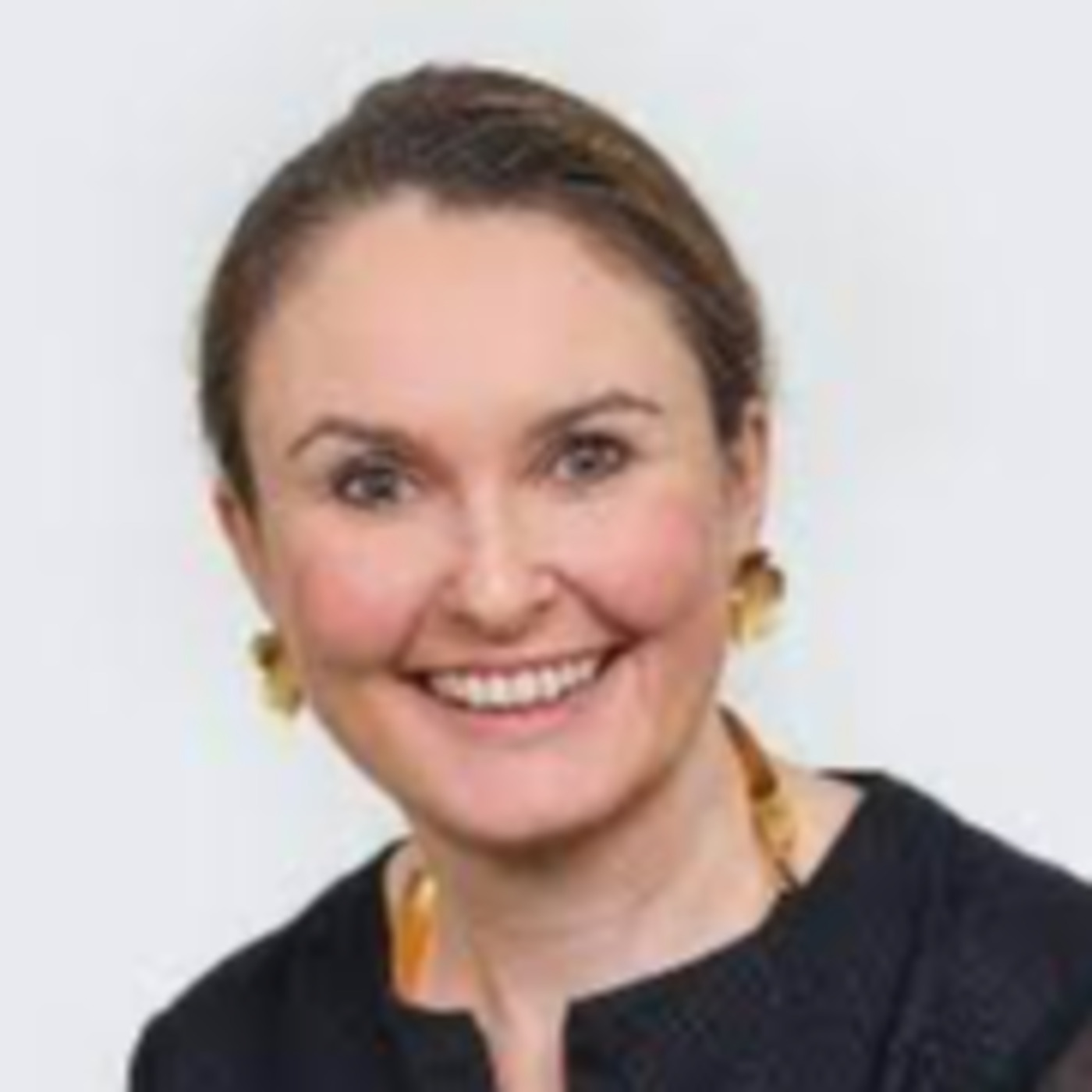
Aoifinn Devitt: Brought to you with the kind support of Federated Hermes Inc., a leading global investment manager. Guided by their conviction that responsible investing is the best way to create wealth over the long term, their investment solutions span equity, fixed income, alternative and private markets, multi-asset and liquidity strategies, and a range of separately managed accounts distributed through intermediaries worldwide. Just like every action has an equal and opposite reaction, our next guest has a unique solution. For how to solve some of the diversity problems in the financial services industry. Find out how next. I’m Aoifinn Devitt and welcome to the 50 Faces Podcast., a podcast committed to revealing the richness and diversity of the world of investment by focusing on its people and their stories. I’m joined today by Deirdre Cooper, who is co-head of thematic equity at Ninety One, and she has a particular focus on sustainable investing. She’s an advisory board member at the Imperial College Centre for Climate Finance and an advisory board member of Girls Who Invest. She previously founded the Clean Tech Group in Morgan Stanley, where she worked in M&A in London and Menlo Park. Welcome, Deirdre. Thanks for joining me today.
Deirdre Cooper: It’s a pleasure.
Aoifinn Devitt: Well, let’s start with where you grew up, what you studied, and how you came to enter the world of investing.
Deirdre Cooper: So I grew up in Limerick in the west of Ireland, very much in a family where nobody worked in the investment management industry. No one worked in finance. Where I am now is a very long way from where the journey started. I really like maths, so I did Maths Olympiad when I was a teenager, really enjoyed anything to do with numbers. And then when it went to making a decision as as to what to study at university. You have to remember this is Ireland in the early ’90s, which is a very, very different place to the Ireland of today. This is a country that still had very you high, know, teens unemployment, where we still had a lot of net migration. Again, not like today where Ireland’s in the opposite situation. So the decision as to what to study was very much informed by what was likely to lead to a job. And as a result, I studied actuarial science, which meant that I had a job offer before I even started on my university education. I was gonna go and work for an insurance company in the summer, you know, calculating life insurance premium. And I think it was a great degree. It was a really strong grounding in financial maths. I think I also realized very quickly, you know, sort of 1 or 2 months into my summer job, that I probably didn’t want to be an actuary. That’s challenging the math side of that is that I wanted a broader career. So post-university, I applied to investment banking without really having, to be perfectly honest, the foggiest notion what investment banks did. So I applied to Morgan Stanley and Goldman Sachs and went through a whole bunch of interviews sort of talking generalities about how I wanted to work for a global company and be challenged and ended up at Morgan Stanley in the M&A department.
Aoifinn Devitt: You should never underestimate those generalities, how they can get you through an interview.
Deirdre Cooper: I think I may have had a.
Aoifinn Devitt: Few of those myself. And it’s true, growing up in Ireland, we probably had a bit of similar vintage, there really wasn’t a great financial services industry backdrop there. And certainly there wasn’t the culture of knowing even what went on and the intricacies of some of those roles. But I do think thanks to the Milk Round and the vision, I suppose, of these firms that came to recruit from Irish universities, there’s a healthy diaspora there working in London and elsewhere, many of whom have now returned. So you were an early— I think.
Deirdre Cooper: That’S exactly right, and I always give that advice to young people who come from backgrounds where financial services are not an industry that they’re particularly familiar with. And I sort of tell people, those you don’t be intimidated. You probably, same as I did, showed up for your interviews at Morgan Stanley and Goldman Sachs with a whole bunch of English people from Oxford who were reading the FT since they were 10. They don’t sell a lot of FTs. They certainly didn’t sell a lot of FTs in Limerick in the late 1980s. And you realize very quickly that you’re probably just as able as they are once you start to learn the jargon. And I would say that to anyone who’s listening, who’s thinking, is finance a place I can work? I think it totally is, so long as you’re prepared to work hard, you’re intellectually curious, I’m willing to learn.
Aoifinn Devitt: Willing to learn, absolutely. And I think certainly it is an environment of constant change and learning. And you were an early entrant into the field of cleantech, like well before it became popular. Can you talk about how that came about?
Deirdre Cooper: Yes, I was at Morgan Stanley, first of all, in the general M&A group. So, so working on everything from— I worked on Seagram, the drinks company. I worked on some utilities. I worked on restructurings, on sell sides. And in 2000, I was just interested in exploring the world a little bit. So I moved to Morgan Stanley’s office in Menlo Park to join the tech team. So as you can imagine, 2000, the tech team were just desperate for people. Everyone was leaving for startups. They had more work than they needed, than they could possibly process. So I was in San Francisco, 2000, 2001. So saw the tech bubble burst. Again, it was a great experience working with all of these early stage companies that are really, have big, big dreams. And it also, I think that made me think a little bit about what next, because investment banking is an industry where it goes through booms and busts. You can lay off a lot of people at the bottom. Like there was one point in time where I shared an office with two other people and two of them lost their jobs. So I was sort of thinking about, well, if that was me, what would I do? And I thought, well, actually, I think I’d like to do something that’s, without wanting to be too sort of Pollyanna-ish about it, is more aligned with my personal values, something where I think I’m working towards something that I believe in. And that was incredibly vague. I had no idea what it was going to be. But I thought, you know what, if I applied to business school, that’s a great way. And, you know, investment banks are full of people who’ve been to business school. So you sort of see that path. And it’s a great place to think about what you want to do next. So I applied to Harvard Business School, to Stanford Business School, and was accepted at Harvard. You know, I had a funny experience when I did, because it was a little bit of a fallback plan in case Morgan Stanley laid me off. And my dad worked on an oil rig in the North Sea. And I rang him up and I said, I got into Harvard, but I don’t think I’ll go because I still have a job at Morgan Stanley. And actually they want me to move from tech to doing consumer because tech bubble had burst and whatever. And he was like, I think that’s very sensible. I wouldn’t be disappearing off. And then he called me back a couple of hours later and he said, can you send me your letter? Because my boss doesn’t believe that you got into Harvard Business School. He thinks it’s a different Harvard. So I sent it off to him and he had the letter. I think he had it on the wall in his office in the oil platform. And then we had a chat about it and we thought, actually, this is something you should do. And I probably would have gotten there anyway, But it certainly helped with the parents not telling me that this was a terrible idea. And then I thought, well, in the interim, I have sort of 6 months. I am really going to see what a mission-driven career looks like. So I had an old Morgan Stanley colleague who had a friend or cousin who ran a microfinance NGO in Lahore in Pakistan, and she needed some help building her financial models. So I sort of got on a plane, headed out to Pakistan to help her build the financial models to get funding from people like the World Bank. And that was also just a fascinating experience. So this would be 2003, so right at the beginning of the first Gulf War. So it was hard for the— I think the people in that part of the world to process what had happened, and they felt that their culture was a little bit under attack. So it was really interesting to experience that very much as an outsider. You know, there’s not a lot of foreigners in Lahore, not a lot of women in particular, so you’re invited everywhere. People were incredibly welcoming, and I think I learned a lot from that about just how different societies operate and how values are not the same around the world. You know, I remember, again, funny situation, telling my office mates I had a flat in London that I bought when I was renting it to my sister. And the entire office were talking about me as the most sort of nastiest person they’d ever come across. Cause I was charging my family member rent. And in London, obviously you can’t cover the mortgage. You know, she was working at JP Morgan. Someone’s got to pay the bills, but that wasn’t something that they would’ve done in their culture. So that was great. And then I went off to business school and worked in the summer at the UN doing an awards program for microentrepreneurs. So to help highlight great businesses, which is one of the issues with microfinance is developing businesses that can really have an economic multiplier. And then I went back to Morgan Stanley again to work really in sustainable finance, very broadly. So Morgan Stanley said, look, if you come back— I’d left a little bit later than typical, so they said, you can come back, we can be a vice president, which is 3 or 4 years ahead of MBA, and you can do sustainable finance. They even let me spend a day a week at a think tank in Bethel Green called the Young Foundation. So it was a very non-traditional banking role, and really, I think, said a lot for Morgan Stanley. They wanted to make that work for me. And started to think about all the different sustainable finance areas. So we did microfinance securitizations, we did lots of different things, and then cleantech was starting. So we agreed that Morgan Stanley should do something in the cleantech area and that I should start that within the investment bank. So thinking about advising companies, so not in asset management, in the investment bank, advising companies who wanted to go public and thinking about putting Morgan Stanley’s balance sheet to work. So private markets, growth equity investing. So that’s really how it all started.
Aoifinn Devitt: Well, we’re going to definitely go and talk a little bit more about the investing side, but I can’t let pass your discussion of working in microfinance in Lahore. What did you learn about, I suppose, microfinance impact, and maybe about emerging markets and the reality on the ground versus the perception from outside? Because I’m sure your experience there gave you some real insights.
Deirdre Cooper: Oh, absolutely. So I think the first thing you learn is impact’s really hard to measure. So that was one of the projects I was working on, is your funders really want to see all of this data, And that data is hard to collect. It’s also hard to figure out exactly which metric you should be targeting. So should it be number of loans? Should it be the amount of the loans? What you really want to see is that economic multiplier. You want to loan to women in communities, and you want to see those women ideally start a business that might eventually employ 1 or 2 other people. We’re not going to start Google, but we want a positive economic benefit. But tracking that’s really difficult. So I think the number one lesson, and this is something we’ve totally taken to heart in our sustainability business at 91, is that yes, you need metrics and you need things you can measure, but you have to review those in context. And the same is equally true where we are today. If the number of loans isn’t the best metric for microfinance business, because you might be loaning in an unsustainable way, the carbon footprint isn’t in its own right the only thing you should measure for a decarbonization equity strategy. You want to see it in the context of the company’s business model. And that’s something something that we do in a really in-depth way across the strategy. So we provide impact reporting on every single position and tell the story behind it. So we give you the data, but we also give you the tale behind the numbers.
Aoifinn Devitt: And now looking at an impact investing strategy, given that it’s hard to measure, what do you think of some of the products out there that are now being expressed as being impact strategies? Do you think that there’s an element of exaggeration going on, or perhaps a mislabeling, or how do you get to the bottom of that?
Deirdre Cooper: Look, I wouldn’t want to overly highlight exaggeration and mislabeling because I think that the first message we would give is the move towards sustainable investing is something we absolutely support. We think it’s really important. We think that capital allocators— if you go back to my journey saying I wanted to do something that had a purpose, you sort of learn more and more that allocating capital is a really, really important task. You know, we think about The climate problem in global climate finance in 2020 was about $630 billion. It needs to be about $4 to $5 trillion if we’re going to get to net zero. So the people who invest money have a really important role to play, and we want more of them to do it sustainably. So lots of people ask me, you know, is there too much money chasing green opportunities? It’s just funny that people still ask that. The problem is there’s not enough money. If there was too much money, we’d all be heading to net zero, and we’re nowhere near net zero, unfortunately. Having said that, do we have a very distinct approach, I think, to sustainability? We absolutely do. I think we have some really core principles that underpin our entire sustainable investing capability at 91. The first is that the sustainability research is integrated in the investment research. So we don’t have a separate ESG team that score things and then they give a universe to the investment team and then they go back to their job just as they did in the past. Our investment research is sustainability research. If you came to our team meetings, we spent as much time discussing the carbon footprint, discussing the culture, discussing how the company addresses all of its externalities, both positive and negative, as we do, you know, trying to forecast next year’s EPS. And in fact, we think there’ll be more long-term value creation, both alpha and impact, from doing that sustainability research than there is from forecasting next year’s EPS. It’s interesting. The first is a world of really imperfect data, and that’s where you really need fundamental investors on some of those challenges around maybe near-term earnings, etc. That’s where the quant process maybe does a better job than human beings. So we think there’s a huge opportunity in sustainability to generate alpha, but it needs to be integrated. And then anything that— the next point I would make on impact is that anything you report on, if it’s an output, it has to be an input. So you shouldn’t claim certain characteristics unless that’s an objective of your investment strategy. And that’s very much where the regulation is going, right? Under the EU regulation, you’re only a sustainable investment if the objective was sustainability. So if you happen to hold a stock in a generic strategy and the same stock in a sustainable strategy, it’s a sustainable investment if that was the reason you did it. And I think that’s And important. Then that means that the metrics that we demonstrate are the metrics that go into our investment process. And then the last point is probably the most important, and I sort of alluded to it earlier, and that’s just transparency, transparency, transparency. So we tell our investors every single holding, and we explain for every single holding what fits with the strategy. And I think that’s what, in our view, our clients who are individuals— there are everyone with the pension fund, their savings— they want to know, are the things that are in my environmental strategy or my sustainable equity strategy, are those companies aligned with what I would like to see, and can you explain to me why they are? And that’s something we take very, very seriously.
Aoifinn Devitt: I just want to probe on one of the points you mentioned, that the intentionality has to be there, that you cannot claim something to be sustainable unless that was the intention of the investment. Do you think that maybe has a shelf life, that logic? Because ultimately we’re hopefully heading towards a world where everything will be sustainable and that will be just a kind of a hygiene factor or one wouldn’t want to invest in anything that was not sustainable.
Deirdre Cooper: No, I don’t think that’s the case, actually, unfortunately. I think if you look at assets, certainly if you look at flows, there’s a great deal moving to sustainable strategies. But in terms of having that real sustainability element embedded in your investment process, that’s a tiny, tiny piece of the market, and it needs to be much, much bigger. And you have to have that intentionality. You know, no one would think about other strategies. So no one would invest in a manager who said, well, actually, this is a really interesting value fund, but value isn’t part of our screen, right? We wouldn’t do that on financial metrics. We wouldn’t say this is a quality strategy and where we’re going to tell you what the return on equity is relative to the market. But when we make our investments, we don’t look at return on equity, we focus on P/E multiples. You know, you’d be thrown out within seconds. So where sustainability needs to go is in exactly the same direction. And I think that’s where the most sophisticated investors and consultants are looking. If you want to claim certain attributes, then you need to prove that that’s a part of the process. And that’s something you look for when you review an investment.
Aoifinn Devitt: And you’re on the advisory board at the Imperial College Center for Climate Finance. Do you see that this is now becoming a mainstream academic pursuit, that increasingly people will be focusing on this from the outset of their education?
Deirdre Cooper: Absolutely. You know, and some of the work we’ve done at the Center for Climate Finance at Imperial, I think, has been really important in sort of moving us along on that journey. So one of the things that Charlie Donovan, who was the former director, he’s just moved on to a role at Washington State University. But one of the things he highlighted is that there was a lot of academic research in economics departments on climate. So all of those integrated assessment models that sit behind the IPCC reports and the Intergovernmental Panel on Climate Change reports that the central banks will use for climate stress testing, there’s a really long depth of research sitting there. There’s a lot less in finance departments. So he actually, together with the Prince of Wales, 2 or 3 years ago, convened a conference in London bringing together all the people in finance departments who were working on climate and sustainability issues to try to make that connection, to move the work from the economics department into the finance department, and then of course to move it into practitioners and have it actually influence asset allocation. And I think just like the practitioners are at the beginning of that journey, I think the academic research is also pretty much at the beginning but moving very quickly. So you’re seeing more and more research coming out of finance departments and thinking about sustainability issues. And we do a lot of work across our business with those academics, and we find that really useful. So for example, we had Imperial come in and train the entire investment staff at 91 on climate risk. So we very much see the next 20 years as different to the last 20 years, you know, ’91, and as a sort of corporate mission, we’re investing in a world of change. And we see that world changing and we think you need new skill sets to address that and you need to bring in different points of view to do that. So everyone spent 20 hours with climate finance professors trying to understand how to price this risk. We’ve also, within my team, spent a lot of time working with a professor at London Business School called Alex Edmonds, wrote a great book, I’ll give it a plug, called Grow the Pie. And we worked with Alex to understand company culture because we also think climate risk is something that’s understood. I think we are moving to more of a— we see this every day, right— a sort of employer of choice type world. Young people today want to work for companies that have a purpose, that are great employers. It’s a little bit more of a seller’s market. You know, you have a lot of choice now. We have a little bit of labor shortages. So those companies that have great cultures, we think, will really be the alpha generators of the So we future. Worked with Alex to develop a proprietary list of questions to ask companies to assess their culture on a number of different areas. So we look at ownership mindset, we look at trust, we look at recognition, and we look at support. So that is underpinning a strategy. It’s run by a great colleague of mine called Stephanie Niven, which is our global sustainable equity strategy, which has just launched. So we find those academic collaborations really helpful. And I think the academics like it as well. They like the practitioner point of view.
Aoifinn Devitt: Well, wonderful to have a plug for Alex, because he’s actually a guest on this podcast as well in the same series. So we did get a chance to discuss book. And small world indeed.
Deirdre Cooper: And you and I randomly worked together at Morgan Stanley about 20 years ago.
Aoifinn Devitt: That’s so funny. I think what’s wonderful and really notable about Alex is how commercial he is in his approach, and he really— that’s so essential to fuse the academic research and learning and insights with commercial application. I think without that, there will not be that same level of integration. So great to have a second plug for the book on this. The other thing I’ve also heard about is the concept of climate confidence. And you mentioned that in the context of your employees, but I’ve also seen it mentioned in the context of board members. I think this might be an area that’s been slightly overlooked because board members tend to be more senior in their tenure and their careers, maybe at the end of their executive careers. They now are the boards that are involved in overseeing and have the fiduciary duty to oversee some of this transformation. And there’s probably a good case for that education, that continuing education to be done at board member level, because of how will they get to the climate confidence or competence that’s required to really oversee those decisions appropriately. So maybe there’s a gap in the market there.
Deirdre Cooper: Yeah, no, I think that’s a great point. And it’s something that we look you at, know, for example, when you look at US boards versus European, they tend to have much longer tenures. So it’s a big engagement topic for us is talking to companies to really understand, has this board been refreshed? Does this board have the expertise to deal with, as I said, not just the last 20 years, but the next 20 years?
Aoifinn Devitt: And another aspect of ESG, of course, is diversity. And you’re a board member as well of Girls Who Invest. Can you just talk a little bit about what you’ve seen in the industry in terms of transformation in that respect, and in terms of diversity, and whether from your vantage point there you think that we’re moving in the right direction?
Deirdre Cooper: We are, but I think it’s slow. So I would encourage everyone, go have a look at the Girls Who Invest website. Less than 10% of the world’s investable capital today is run by women. If you go back to some of the comments I made earlier about how important and how influential the people are who direct capital. It’s just extraordinary that half the population is running less than 10% of those assets. So the mission at Girls Who Invest is to get that to 30%. And we often talk about this. Isn’t that too low? Why didn’t— the answer is, well, we’re starting at such a low base, we need to set ourselves reasonable goals. I think one of the things that Seema— and I know you had Seema on the podcast— realized was that there is a pipeline problem. So there aren’t enough young women entering the industry. So absolutely, there’s a later-stage glass ceiling and a I don’t think we want to deny that in any way, but the best thing we can do potentially is build that pipeline, have more and more of those young women realize that asset management, investment management is a really interesting career. It’s important, it’s hugely influential, it can have a purpose, it can be fulfilling. And I think there are often misperceptions from young women that this is a Wolf of Wall Street type environment, which really couldn’t be further from the truth. It’s sort of lots quite nerdy people, very intellectually curious, who like doing research. And I think once they realize that, you will bring more into the industry. But there’s a huge amount to be done. So something I’m really passionate about, you know, our own team and the sustainability team at 91 is an incredibly diverse team. Know, You it’s myself and Graham running the global environment strategy, Stephanie, as I said, running our global sustainable strategy with Juliana. There’s a theme here who runs our emerging markets sustainable equity strategy. And within the team, we also have huge regional diversity of backgrounds. We have an analyst who was born in Delhi, one who was born in Beijing, one who grew up partly in Nigeria as well as in the UK. And we genuinely believe that that diversity helps us to make better decisions, particularly when investing in decarbonization, which is a global challenge. So if you only came at that from a Western European or a North American perspective, you would miss most of that story. You need to have spent time in the rest of the world.
Aoifinn Devitt: And you mentioned the later stage glass ceiling. Can you talk a little bit about that and how to address it? Obviously, one way is role models, which is why we’re profiling you as an just, example, you know, because certainly those women coming into the pipeline need to see senior women succeeding and thriving in the world of finance. But what can we do about that late-level glass ceiling? Is that changing at all?
Deirdre Cooper: I think it is. I think there are lots of great role models out there. I think the other thing I would highlight is shared parental Parental leave. Leave. So that’s something at 91, both men and women have the same entitlement to parental leave because one of the issues that female fund managers have is the track record. So, you know, if you have a number of children and you go on maternity leave, and I think there probably is a sense sometimes that, you know, should I back this woman given her age, you know, is she going to disappear often? And I think when that becomes much less of a gender question, it’s simply everyone takes parental leave. And we’ve had a number of senior male professionals who’ve taken some parental leave. And I think if you could think of one thing people often ask you, men across the industry, what can I do to— I feel really strongly about diversity, you know, do you know any great women? I’d love to hire them. Everyone wants to hire great women. The one piece of advice I give them is make sure the men on your team take parental leave. So we need to start to look past gender.
Aoifinn Devitt: Absolutely. Very interesting insight there. Well, let’s turn back to some personal reflections. So you’ve had quite a long career at this stage. I’m sure working in the world of investment, you mentioned that volatility that you witnessed when your two officemates disappeared one day. That type of a backdrop certainly gives rise to some challenges and some setbacks. Have there been any that you have learned from that you can talk about?
Deirdre Cooper: Sure. I mean, look, I started at Ecofin in 2007, so very quickly wandered into a global financial crisis. And I think the most significant financial crisis arguably in history in the ’08 cycle. And we were investing just like we are now in the solution providers for decarbonization. And the biggest lesson learned through that experience is be aware of the things that are way outside of your area of expertise that can affect your investment performance. So I remember at the time, my colleague and I saying we felt a little bit like sort of orthopedic surgeons who were examining a patient who had a heart problem, because the only thing that mattered in ’08 was credit. You wanted to know what was going to happen to the global financial system. So it really didn’t matter that our wind turbine company made better wind turbines than everyone else and was likely to have better margins as a result and had better technology. It mattered if AIG was going to go bankrupt or not. That wasn’t our area of expertise, right? That required a certain amount of zooming out, a certain amount of understanding those risks that you simply can’t control and price. And I think that was a really good first lesson. And it’s something that we tried to do. We tried to think about those you know, areas things, where there will be unknown unknowns that we don’t want to price and then stay away from those areas.
Aoifinn Devitt: And certainly those lessons become embedded like a form of muscle memory. I think when we start to see new crises evolve, as they always do in markets, we start to kind of trigger the memories perhaps of how we reacted to the last time. So very interesting insight. And we’ve talked about mentors. Have you had a mentor yourself in your career, or maybe other key people who’ve really made an impact?
Deirdre Cooper: Look, I think one of the people, and unfortunately he passed away a couple of years ago now, but was a really important mentor to me when I finished business school, was Jeremy Haywood. So I joined Morgan Stanley to work for Jeremy. He had been Tony Blair’s principal private secretary before that, had moved to the private sector, and he and I were Morgan Stanley sustainability with that very broad remit. He then went back to government, was the head of the civil service under David Cameron, under Theresa May, and then died very, very sadly of cancer, but he was an incredible mentor to me, a very, very different person, first of all, to the kind of people I work for in investment banking. So Jeremy wanted to know everything about you. He wanted you to come to lunch and meet his kids. He wanted to know, you know, were you dating? That was not something that investment banking people did. You didn’t have a life, know, you they didn’t want to know what you did outside of the office. So I think that was important. He was a real team builder and I hadn’t had that experience before. So I learned a lot from that. Hopefully take that to the teams I manage now. That we all— and again, it’s about this different trend of employment. People are looking for employers that really care about them. The sort of model of Morgan Stanley circa 2000, I’m not sure you can do that anymore, and I don’t think I would want to do that. But it wasn’t until I met Jeremy that I understood what a sort of nurturing boss could be. And after he left, we spent a lot of time together. He really encouraged me to pursue the decarbonization sector, to sort of really put all my efforts in that direction. And I just learned an enormous amount from him as well as someone who was interested in solving problems. His approach was much less transactional than your typical banker. He was meeting his clients to try and figure out what can I do that can help you, what’s a creative way I can help solve this problem. And I think that’s a good way to approach many things, is to think about, you know, that’s the way we approach our product development in sustainability. We don’t think about it from a what’s the theme the market wants this year, or what’s the hot trend. We think about it, well, look, clearly there’s an issue with climate finance. I talked about it earlier. There isn’t enough being invested. How do we design a strategy that will help address that problem? So we’re only investing in companies that are the solution providers for climate change. We track their carbon avoided, we report on their carbon avoided. Those companies are having a positive impact, and then it’ll resonate commercially rather than trying to re-engineer it in the other way.
Aoifinn Devitt: Well, certainly it sounds like he had a life very well lived, and a character like that can be a mentor even when they’re not actively mentoring. Just simply being around someone like that can be very inspiring. So thank you for sharing that. When you think about any one piece of advice or word of wisdom or creed or motto, is there anything that comes to.
Deirdre Cooper: You.
Aoifinn Devitt: Mind?
Deirdre Cooper: Know, in terms of motto, people often ask, you know, what’s your favorite quote? And I’ve answered that before with Beckett’s quote from Endgame, which is, try again, fail again, fail better. And it’s been reinterpreted by the Instagram generation as a sort of growth mindset quote, which I really right? Like, And I tell teach I my kids that. And as an investment manager, that’s very much embedded in your experience, right? If your hit rate’s 60%, you’re doing a great job, which means 40% of the time you’re wrong. So you really need to, in this industry, be conscious of the fact you could always be wrong. And I think that’s really important. Continue to question your investment thesis. Know that you are going to fail multiple times, but hopefully you’ll have more successes than failures. And then I also kind of like the subtext, which was unfortunately Beckett’s message. And I hate ending on on a negative point, but Beckett’s message, his real message was very negative. It was, I don’t know if we can, if civilization can address all the problems that the world is throwing at it. And I think that message also resonates a bit when you work in climate finance, because this is hard. Where we are, it goes back to the, is there too much money chasing green stuff? No, no, there isn’t half enough. We need to do way, way more, multiple times more, or we would have that sort of bleak version of the quote. And I hope that’s not the right interpretation, even if it was the intended interpretation.
Aoifinn Devitt: Very interesting. Well, certainly many of these problems are bigger than us, and we would share some of that sort of sense of the enormity of the problem. Just refer some of the listeners to a podcast by Tim Hodgson of the Thinking Ahead Institute, who himself is immersed in these areas. And he did actually manage to find many strands of hope in certainly some of the innovation around the tech, like the climate tech that you’re in. So definitely a need to be mindful of both approaches. And my final question is around any advice you would have for your younger self. So looking back maybe to that young student entering the investment banking profession after studying actuarial science, is there anything that you know now that you wish you had known then?
Deirdre Cooper: Just— and this is to any sort of younger person listening, and I touched upon it earlier— is don’t be afraid to ask questions. One of the best pieces of advice I had when I was at Morgan Stanley was someone I worked for who said, make sure whatever meeting you go to, you say something. Because the investment banking is an apprenticeship business, so there’s a lot of times when as a junior analyst you come along and you’re there to bring the books, to take some notes, and then to prepare the presentations. You’re not really supposed to contribute, and you’re tired as well, you’ve been working super late, so you’re inclined to like take a little bit of a break. And this person told me, no, make sure, and then you really focus on the discussion because you have to get your comment in. And it’s a really tiny piece of advice, but I would tell everyone whatever meeting you go to, it’s a little bit like the Lean In story. You have to say something. You’re not going to be an idiot. You’re not going to dominate the conversation because you have to respect seniority and you are learning, but just make sure you make one contribution and then you’re going to think about it. You’re going to plan the night before, what is some insight I can bring? And you’ll learn from that. And before you know it, you’ll be making many, many more contributions. So it’s all about the baby steps to get to the big goals.
Aoifinn Devitt: I certainly remember that. And also just the the wonder of the reaction that you get when you do make that one comment from a junior seat. Certainly, there’s an element of shock involved many times. Well, thank you so much, Deirdre. Two words come to mind after our discussion here. One is breath, and the other is integration. It seems like you have fully integrated the mission towards sustainability into your career from the very beginning. You haven’t waited to a certain point to let that happen. And that’s very inspiring because when you started doing that, it was well before it was popular and common to do so. And also your point about parental leave, it really reminds me that we really all are in one system and that one action can have an impact somewhere in a maybe less obvious way. So that whole idea of integration of everything we do and the way we work and the way we motivate our colleagues has really come through here. So thank you for coming and for sharing your insights with us.
Deirdre Cooper: It’s a pleasure. I’ve really enjoyed it. Thank you so much.
Aoifinn Devitt: I’m Aoifinn Devitt. Thank you for listening to the 50 Faces Podcast. If you liked what you heard and would like to tune in to hear more inspiring investors and their personal stories, please subscribe on Apple Podcasts or wherever you get your podcasts. This podcast is for informational purposes only and should not be construed as investment advice, and all views are personal and should not be attributed to the organizations and affiliations of the host or any guest.
Aoifinn Devitt: Brought to you with the kind support of Federated Hermes Inc., a leading global investment manager. Guided by their conviction that responsible investing is the best way to create wealth over the long term, their investment solutions span equity, fixed income, alternative and private markets, multi-asset and liquidity strategies, and a range of separately managed accounts distributed through intermediaries worldwide. Just like every action has an equal and opposite reaction, our next guest has a unique solution. For how to solve some of the diversity problems in the financial services industry. Find out how next. I’m Aoifinn Devitt and welcome to the 50 Faces Podcast., a podcast committed to revealing the richness and diversity of the world of investment by focusing on its people and their stories. I’m joined today by Deirdre Cooper, who is co-head of thematic equity at Ninety One, and she has a particular focus on sustainable investing. She’s an advisory board member at the Imperial College Centre for Climate Finance and an advisory board member of Girls Who Invest. She previously founded the Clean Tech Group in Morgan Stanley, where she worked in M&A in London and Menlo Park. Welcome, Deirdre. Thanks for joining me today.
Deirdre Cooper: It’s a pleasure.
Aoifinn Devitt: Well, let’s start with where you grew up, what you studied, and how you came to enter the world of investing.
Deirdre Cooper: So I grew up in Limerick in the west of Ireland, very much in a family where nobody worked in the investment management industry. No one worked in finance. Where I am now is a very long way from where the journey started. I really like maths, so I did Maths Olympiad when I was a teenager, really enjoyed anything to do with numbers. And then when it went to making a decision as as to what to study at university. You have to remember this is Ireland in the early ’90s, which is a very, very different place to the Ireland of today. This is a country that still had very you high, know, teens unemployment, where we still had a lot of net migration. Again, not like today where Ireland’s in the opposite situation. So the decision as to what to study was very much informed by what was likely to lead to a job. And as a result, I studied actuarial science, which meant that I had a job offer before I even started on my university education. I was gonna go and work for an insurance company in the summer, you know, calculating life insurance premium. And I think it was a great degree. It was a really strong grounding in financial maths. I think I also realized very quickly, you know, sort of 1 or 2 months into my summer job, that I probably didn’t want to be an actuary. That’s challenging the math side of that is that I wanted a broader career. So post-university, I applied to investment banking without really having, to be perfectly honest, the foggiest notion what investment banks did. So I applied to Morgan Stanley and Goldman Sachs and went through a whole bunch of interviews sort of talking generalities about how I wanted to work for a global company and be challenged and ended up at Morgan Stanley in the M&A department.
Aoifinn Devitt: You should never underestimate those generalities, how they can get you through an interview.
Deirdre Cooper: I think I may have had a.
Aoifinn Devitt: Few of those myself. And it’s true, growing up in Ireland, we probably had a bit of similar vintage, there really wasn’t a great financial services industry backdrop there. And certainly there wasn’t the culture of knowing even what went on and the intricacies of some of those roles. But I do think thanks to the Milk Round and the vision, I suppose, of these firms that came to recruit from Irish universities, there’s a healthy diaspora there working in London and elsewhere, many of whom have now returned. So you were an early— I think.
Deirdre Cooper: That’S exactly right, and I always give that advice to young people who come from backgrounds where financial services are not an industry that they’re particularly familiar with. And I sort of tell people, those you don’t be intimidated. You probably, same as I did, showed up for your interviews at Morgan Stanley and Goldman Sachs with a whole bunch of English people from Oxford who were reading the FT since they were 10. They don’t sell a lot of FTs. They certainly didn’t sell a lot of FTs in Limerick in the late 1980s. And you realize very quickly that you’re probably just as able as they are once you start to learn the jargon. And I would say that to anyone who’s listening, who’s thinking, is finance a place I can work? I think it totally is, so long as you’re prepared to work hard, you’re intellectually curious, I’m willing to learn.
Aoifinn Devitt: Willing to learn, absolutely. And I think certainly it is an environment of constant change and learning. And you were an early entrant into the field of cleantech, like well before it became popular. Can you talk about how that came about?
Deirdre Cooper: Yes, I was at Morgan Stanley, first of all, in the general M&A group. So, so working on everything from— I worked on Seagram, the drinks company. I worked on some utilities. I worked on restructurings, on sell sides. And in 2000, I was just interested in exploring the world a little bit. So I moved to Morgan Stanley’s office in Menlo Park to join the tech team. So as you can imagine, 2000, the tech team were just desperate for people. Everyone was leaving for startups. They had more work than they needed, than they could possibly process. So I was in San Francisco, 2000, 2001. So saw the tech bubble burst. Again, it was a great experience working with all of these early stage companies that are really, have big, big dreams. And it also, I think that made me think a little bit about what next, because investment banking is an industry where it goes through booms and busts. You can lay off a lot of people at the bottom. Like there was one point in time where I shared an office with two other people and two of them lost their jobs. So I was sort of thinking about, well, if that was me, what would I do? And I thought, well, actually, I think I’d like to do something that’s, without wanting to be too sort of Pollyanna-ish about it, is more aligned with my personal values, something where I think I’m working towards something that I believe in. And that was incredibly vague. I had no idea what it was going to be. But I thought, you know what, if I applied to business school, that’s a great way. And, you know, investment banks are full of people who’ve been to business school. So you sort of see that path. And it’s a great place to think about what you want to do next. So I applied to Harvard Business School, to Stanford Business School, and was accepted at Harvard. You know, I had a funny experience when I did, because it was a little bit of a fallback plan in case Morgan Stanley laid me off. And my dad worked on an oil rig in the North Sea. And I rang him up and I said, I got into Harvard, but I don’t think I’ll go because I still have a job at Morgan Stanley. And actually they want me to move from tech to doing consumer because tech bubble had burst and whatever. And he was like, I think that’s very sensible. I wouldn’t be disappearing off. And then he called me back a couple of hours later and he said, can you send me your letter? Because my boss doesn’t believe that you got into Harvard Business School. He thinks it’s a different Harvard. So I sent it off to him and he had the letter. I think he had it on the wall in his office in the oil platform. And then we had a chat about it and we thought, actually, this is something you should do. And I probably would have gotten there anyway, But it certainly helped with the parents not telling me that this was a terrible idea. And then I thought, well, in the interim, I have sort of 6 months. I am really going to see what a mission-driven career looks like. So I had an old Morgan Stanley colleague who had a friend or cousin who ran a microfinance NGO in Lahore in Pakistan, and she needed some help building her financial models. So I sort of got on a plane, headed out to Pakistan to help her build the financial models to get funding from people like the World Bank. And that was also just a fascinating experience. So this would be 2003, so right at the beginning of the first Gulf War. So it was hard for the— I think the people in that part of the world to process what had happened, and they felt that their culture was a little bit under attack. So it was really interesting to experience that very much as an outsider. You know, there’s not a lot of foreigners in Lahore, not a lot of women in particular, so you’re invited everywhere. People were incredibly welcoming, and I think I learned a lot from that about just how different societies operate and how values are not the same around the world. You know, I remember, again, funny situation, telling my office mates I had a flat in London that I bought when I was renting it to my sister. And the entire office were talking about me as the most sort of nastiest person they’d ever come across. Cause I was charging my family member rent. And in London, obviously you can’t cover the mortgage. You know, she was working at JP Morgan. Someone’s got to pay the bills, but that wasn’t something that they would’ve done in their culture. So that was great. And then I went off to business school and worked in the summer at the UN doing an awards program for microentrepreneurs. So to help highlight great businesses, which is one of the issues with microfinance is developing businesses that can really have an economic multiplier. And then I went back to Morgan Stanley again to work really in sustainable finance, very broadly. So Morgan Stanley said, look, if you come back— I’d left a little bit later than typical, so they said, you can come back, we can be a vice president, which is 3 or 4 years ahead of MBA, and you can do sustainable finance. They even let me spend a day a week at a think tank in Bethel Green called the Young Foundation. So it was a very non-traditional banking role, and really, I think, said a lot for Morgan Stanley. They wanted to make that work for me. And started to think about all the different sustainable finance areas. So we did microfinance securitizations, we did lots of different things, and then cleantech was starting. So we agreed that Morgan Stanley should do something in the cleantech area and that I should start that within the investment bank. So thinking about advising companies, so not in asset management, in the investment bank, advising companies who wanted to go public and thinking about putting Morgan Stanley’s balance sheet to work. So private markets, growth equity investing. So that’s really how it all started.
Aoifinn Devitt: Well, we’re going to definitely go and talk a little bit more about the investing side, but I can’t let pass your discussion of working in microfinance in Lahore. What did you learn about, I suppose, microfinance impact, and maybe about emerging markets and the reality on the ground versus the perception from outside? Because I’m sure your experience there gave you some real insights.
Deirdre Cooper: Oh, absolutely. So I think the first thing you learn is impact’s really hard to measure. So that was one of the projects I was working on, is your funders really want to see all of this data, And that data is hard to collect. It’s also hard to figure out exactly which metric you should be targeting. So should it be number of loans? Should it be the amount of the loans? What you really want to see is that economic multiplier. You want to loan to women in communities, and you want to see those women ideally start a business that might eventually employ 1 or 2 other people. We’re not going to start Google, but we want a positive economic benefit. But tracking that’s really difficult. So I think the number one lesson, and this is something we’ve totally taken to heart in our sustainability business at 91, is that yes, you need metrics and you need things you can measure, but you have to review those in context. And the same is equally true where we are today. If the number of loans isn’t the best metric for microfinance business, because you might be loaning in an unsustainable way, the carbon footprint isn’t in its own right the only thing you should measure for a decarbonization equity strategy. You want to see it in the context of the company’s business model. And that’s something something that we do in a really in-depth way across the strategy. So we provide impact reporting on every single position and tell the story behind it. So we give you the data, but we also give you the tale behind the numbers.
Aoifinn Devitt: And now looking at an impact investing strategy, given that it’s hard to measure, what do you think of some of the products out there that are now being expressed as being impact strategies? Do you think that there’s an element of exaggeration going on, or perhaps a mislabeling, or how do you get to the bottom of that?
Deirdre Cooper: Look, I wouldn’t want to overly highlight exaggeration and mislabeling because I think that the first message we would give is the move towards sustainable investing is something we absolutely support. We think it’s really important. We think that capital allocators— if you go back to my journey saying I wanted to do something that had a purpose, you sort of learn more and more that allocating capital is a really, really important task. You know, we think about The climate problem in global climate finance in 2020 was about $630 billion. It needs to be about $4 to $5 trillion if we’re going to get to net zero. So the people who invest money have a really important role to play, and we want more of them to do it sustainably. So lots of people ask me, you know, is there too much money chasing green opportunities? It’s just funny that people still ask that. The problem is there’s not enough money. If there was too much money, we’d all be heading to net zero, and we’re nowhere near net zero, unfortunately. Having said that, do we have a very distinct approach, I think, to sustainability? We absolutely do. I think we have some really core principles that underpin our entire sustainable investing capability at 91. The first is that the sustainability research is integrated in the investment research. So we don’t have a separate ESG team that score things and then they give a universe to the investment team and then they go back to their job just as they did in the past. Our investment research is sustainability research. If you came to our team meetings, we spent as much time discussing the carbon footprint, discussing the culture, discussing how the company addresses all of its externalities, both positive and negative, as we do, you know, trying to forecast next year’s EPS. And in fact, we think there’ll be more long-term value creation, both alpha and impact, from doing that sustainability research than there is from forecasting next year’s EPS. It’s interesting. The first is a world of really imperfect data, and that’s where you really need fundamental investors on some of those challenges around maybe near-term earnings, etc. That’s where the quant process maybe does a better job than human beings. So we think there’s a huge opportunity in sustainability to generate alpha, but it needs to be integrated. And then anything that— the next point I would make on impact is that anything you report on, if it’s an output, it has to be an input. So you shouldn’t claim certain characteristics unless that’s an objective of your investment strategy. And that’s very much where the regulation is going, right? Under the EU regulation, you’re only a sustainable investment if the objective was sustainability. So if you happen to hold a stock in a generic strategy and the same stock in a sustainable strategy, it’s a sustainable investment if that was the reason you did it. And I think that’s And important. Then that means that the metrics that we demonstrate are the metrics that go into our investment process. And then the last point is probably the most important, and I sort of alluded to it earlier, and that’s just transparency, transparency, transparency. So we tell our investors every single holding, and we explain for every single holding what fits with the strategy. And I think that’s what, in our view, our clients who are individuals— there are everyone with the pension fund, their savings— they want to know, are the things that are in my environmental strategy or my sustainable equity strategy, are those companies aligned with what I would like to see, and can you explain to me why they are? And that’s something we take very, very seriously.
Aoifinn Devitt: I just want to probe on one of the points you mentioned, that the intentionality has to be there, that you cannot claim something to be sustainable unless that was the intention of the investment. Do you think that maybe has a shelf life, that logic? Because ultimately we’re hopefully heading towards a world where everything will be sustainable and that will be just a kind of a hygiene factor or one wouldn’t want to invest in anything that was not sustainable.
Deirdre Cooper: No, I don’t think that’s the case, actually, unfortunately. I think if you look at assets, certainly if you look at flows, there’s a great deal moving to sustainable strategies. But in terms of having that real sustainability element embedded in your investment process, that’s a tiny, tiny piece of the market, and it needs to be much, much bigger. And you have to have that intentionality. You know, no one would think about other strategies. So no one would invest in a manager who said, well, actually, this is a really interesting value fund, but value isn’t part of our screen, right? We wouldn’t do that on financial metrics. We wouldn’t say this is a quality strategy and where we’re going to tell you what the return on equity is relative to the market. But when we make our investments, we don’t look at return on equity, we focus on P/E multiples. You know, you’d be thrown out within seconds. So where sustainability needs to go is in exactly the same direction. And I think that’s where the most sophisticated investors and consultants are looking. If you want to claim certain attributes, then you need to prove that that’s a part of the process. And that’s something you look for when you review an investment.
Aoifinn Devitt: And you’re on the advisory board at the Imperial College Center for Climate Finance. Do you see that this is now becoming a mainstream academic pursuit, that increasingly people will be focusing on this from the outset of their education?
Deirdre Cooper: Absolutely. You know, and some of the work we’ve done at the Center for Climate Finance at Imperial, I think, has been really important in sort of moving us along on that journey. So one of the things that Charlie Donovan, who was the former director, he’s just moved on to a role at Washington State University. But one of the things he highlighted is that there was a lot of academic research in economics departments on climate. So all of those integrated assessment models that sit behind the IPCC reports and the Intergovernmental Panel on Climate Change reports that the central banks will use for climate stress testing, there’s a really long depth of research sitting there. There’s a lot less in finance departments. So he actually, together with the Prince of Wales, 2 or 3 years ago, convened a conference in London bringing together all the people in finance departments who were working on climate and sustainability issues to try to make that connection, to move the work from the economics department into the finance department, and then of course to move it into practitioners and have it actually influence asset allocation. And I think just like the practitioners are at the beginning of that journey, I think the academic research is also pretty much at the beginning but moving very quickly. So you’re seeing more and more research coming out of finance departments and thinking about sustainability issues. And we do a lot of work across our business with those academics, and we find that really useful. So for example, we had Imperial come in and train the entire investment staff at 91 on climate risk. So we very much see the next 20 years as different to the last 20 years, you know, ’91, and as a sort of corporate mission, we’re investing in a world of change. And we see that world changing and we think you need new skill sets to address that and you need to bring in different points of view to do that. So everyone spent 20 hours with climate finance professors trying to understand how to price this risk. We’ve also, within my team, spent a lot of time working with a professor at London Business School called Alex Edmonds, wrote a great book, I’ll give it a plug, called Grow the Pie. And we worked with Alex to understand company culture because we also think climate risk is something that’s understood. I think we are moving to more of a— we see this every day, right— a sort of employer of choice type world. Young people today want to work for companies that have a purpose, that are great employers. It’s a little bit more of a seller’s market. You know, you have a lot of choice now. We have a little bit of labor shortages. So those companies that have great cultures, we think, will really be the alpha generators of the So we future. Worked with Alex to develop a proprietary list of questions to ask companies to assess their culture on a number of different areas. So we look at ownership mindset, we look at trust, we look at recognition, and we look at support. So that is underpinning a strategy. It’s run by a great colleague of mine called Stephanie Niven, which is our global sustainable equity strategy, which has just launched. So we find those academic collaborations really helpful. And I think the academics like it as well. They like the practitioner point of view.
Aoifinn Devitt: Well, wonderful to have a plug for Alex, because he’s actually a guest on this podcast as well in the same series. So we did get a chance to discuss book. And small world indeed.
Deirdre Cooper: And you and I randomly worked together at Morgan Stanley about 20 years ago.
Aoifinn Devitt: That’s so funny. I think what’s wonderful and really notable about Alex is how commercial he is in his approach, and he really— that’s so essential to fuse the academic research and learning and insights with commercial application. I think without that, there will not be that same level of integration. So great to have a second plug for the book on this. The other thing I’ve also heard about is the concept of climate confidence. And you mentioned that in the context of your employees, but I’ve also seen it mentioned in the context of board members. I think this might be an area that’s been slightly overlooked because board members tend to be more senior in their tenure and their careers, maybe at the end of their executive careers. They now are the boards that are involved in overseeing and have the fiduciary duty to oversee some of this transformation. And there’s probably a good case for that education, that continuing education to be done at board member level, because of how will they get to the climate confidence or competence that’s required to really oversee those decisions appropriately. So maybe there’s a gap in the market there.
Deirdre Cooper: Yeah, no, I think that’s a great point. And it’s something that we look you at, know, for example, when you look at US boards versus European, they tend to have much longer tenures. So it’s a big engagement topic for us is talking to companies to really understand, has this board been refreshed? Does this board have the expertise to deal with, as I said, not just the last 20 years, but the next 20 years?
Aoifinn Devitt: And another aspect of ESG, of course, is diversity. And you’re a board member as well of Girls Who Invest. Can you just talk a little bit about what you’ve seen in the industry in terms of transformation in that respect, and in terms of diversity, and whether from your vantage point there you think that we’re moving in the right direction?
Deirdre Cooper: We are, but I think it’s slow. So I would encourage everyone, go have a look at the Girls Who Invest website. Less than 10% of the world’s investable capital today is run by women. If you go back to some of the comments I made earlier about how important and how influential the people are who direct capital. It’s just extraordinary that half the population is running less than 10% of those assets. So the mission at Girls Who Invest is to get that to 30%. And we often talk about this. Isn’t that too low? Why didn’t— the answer is, well, we’re starting at such a low base, we need to set ourselves reasonable goals. I think one of the things that Seema— and I know you had Seema on the podcast— realized was that there is a pipeline problem. So there aren’t enough young women entering the industry. So absolutely, there’s a later-stage glass ceiling and a I don’t think we want to deny that in any way, but the best thing we can do potentially is build that pipeline, have more and more of those young women realize that asset management, investment management is a really interesting career. It’s important, it’s hugely influential, it can have a purpose, it can be fulfilling. And I think there are often misperceptions from young women that this is a Wolf of Wall Street type environment, which really couldn’t be further from the truth. It’s sort of lots quite nerdy people, very intellectually curious, who like doing research. And I think once they realize that, you will bring more into the industry. But there’s a huge amount to be done. So something I’m really passionate about, you know, our own team and the sustainability team at 91 is an incredibly diverse team. Know, You it’s myself and Graham running the global environment strategy, Stephanie, as I said, running our global sustainable strategy with Juliana. There’s a theme here who runs our emerging markets sustainable equity strategy. And within the team, we also have huge regional diversity of backgrounds. We have an analyst who was born in Delhi, one who was born in Beijing, one who grew up partly in Nigeria as well as in the UK. And we genuinely believe that that diversity helps us to make better decisions, particularly when investing in decarbonization, which is a global challenge. So if you only came at that from a Western European or a North American perspective, you would miss most of that story. You need to have spent time in the rest of the world.
Aoifinn Devitt: And you mentioned the later stage glass ceiling. Can you talk a little bit about that and how to address it? Obviously, one way is role models, which is why we’re profiling you as an just, example, you know, because certainly those women coming into the pipeline need to see senior women succeeding and thriving in the world of finance. But what can we do about that late-level glass ceiling? Is that changing at all?
Deirdre Cooper: I think it is. I think there are lots of great role models out there. I think the other thing I would highlight is shared parental Parental leave. Leave. So that’s something at 91, both men and women have the same entitlement to parental leave because one of the issues that female fund managers have is the track record. So, you know, if you have a number of children and you go on maternity leave, and I think there probably is a sense sometimes that, you know, should I back this woman given her age, you know, is she going to disappear often? And I think when that becomes much less of a gender question, it’s simply everyone takes parental leave. And we’ve had a number of senior male professionals who’ve taken some parental leave. And I think if you could think of one thing people often ask you, men across the industry, what can I do to— I feel really strongly about diversity, you know, do you know any great women? I’d love to hire them. Everyone wants to hire great women. The one piece of advice I give them is make sure the men on your team take parental leave. So we need to start to look past gender.
Aoifinn Devitt: Absolutely. Very interesting insight there. Well, let’s turn back to some personal reflections. So you’ve had quite a long career at this stage. I’m sure working in the world of investment, you mentioned that volatility that you witnessed when your two officemates disappeared one day. That type of a backdrop certainly gives rise to some challenges and some setbacks. Have there been any that you have learned from that you can talk about?
Deirdre Cooper: Sure. I mean, look, I started at Ecofin in 2007, so very quickly wandered into a global financial crisis. And I think the most significant financial crisis arguably in history in the ’08 cycle. And we were investing just like we are now in the solution providers for decarbonization. And the biggest lesson learned through that experience is be aware of the things that are way outside of your area of expertise that can affect your investment performance. So I remember at the time, my colleague and I saying we felt a little bit like sort of orthopedic surgeons who were examining a patient who had a heart problem, because the only thing that mattered in ’08 was credit. You wanted to know what was going to happen to the global financial system. So it really didn’t matter that our wind turbine company made better wind turbines than everyone else and was likely to have better margins as a result and had better technology. It mattered if AIG was going to go bankrupt or not. That wasn’t our area of expertise, right? That required a certain amount of zooming out, a certain amount of understanding those risks that you simply can’t control and price. And I think that was a really good first lesson. And it’s something that we tried to do. We tried to think about those you know, areas things, where there will be unknown unknowns that we don’t want to price and then stay away from those areas.
Aoifinn Devitt: And certainly those lessons become embedded like a form of muscle memory. I think when we start to see new crises evolve, as they always do in markets, we start to kind of trigger the memories perhaps of how we reacted to the last time. So very interesting insight. And we’ve talked about mentors. Have you had a mentor yourself in your career, or maybe other key people who’ve really made an impact?
Deirdre Cooper: Look, I think one of the people, and unfortunately he passed away a couple of years ago now, but was a really important mentor to me when I finished business school, was Jeremy Haywood. So I joined Morgan Stanley to work for Jeremy. He had been Tony Blair’s principal private secretary before that, had moved to the private sector, and he and I were Morgan Stanley sustainability with that very broad remit. He then went back to government, was the head of the civil service under David Cameron, under Theresa May, and then died very, very sadly of cancer, but he was an incredible mentor to me, a very, very different person, first of all, to the kind of people I work for in investment banking. So Jeremy wanted to know everything about you. He wanted you to come to lunch and meet his kids. He wanted to know, you know, were you dating? That was not something that investment banking people did. You didn’t have a life, know, you they didn’t want to know what you did outside of the office. So I think that was important. He was a real team builder and I hadn’t had that experience before. So I learned a lot from that. Hopefully take that to the teams I manage now. That we all— and again, it’s about this different trend of employment. People are looking for employers that really care about them. The sort of model of Morgan Stanley circa 2000, I’m not sure you can do that anymore, and I don’t think I would want to do that. But it wasn’t until I met Jeremy that I understood what a sort of nurturing boss could be. And after he left, we spent a lot of time together. He really encouraged me to pursue the decarbonization sector, to sort of really put all my efforts in that direction. And I just learned an enormous amount from him as well as someone who was interested in solving problems. His approach was much less transactional than your typical banker. He was meeting his clients to try and figure out what can I do that can help you, what’s a creative way I can help solve this problem. And I think that’s a good way to approach many things, is to think about, you know, that’s the way we approach our product development in sustainability. We don’t think about it from a what’s the theme the market wants this year, or what’s the hot trend. We think about it, well, look, clearly there’s an issue with climate finance. I talked about it earlier. There isn’t enough being invested. How do we design a strategy that will help address that problem? So we’re only investing in companies that are the solution providers for climate change. We track their carbon avoided, we report on their carbon avoided. Those companies are having a positive impact, and then it’ll resonate commercially rather than trying to re-engineer it in the other way.
Aoifinn Devitt: Well, certainly it sounds like he had a life very well lived, and a character like that can be a mentor even when they’re not actively mentoring. Just simply being around someone like that can be very inspiring. So thank you for sharing that. When you think about any one piece of advice or word of wisdom or creed or motto, is there anything that comes to.
Deirdre Cooper: You.
Aoifinn Devitt: Mind?
Deirdre Cooper: Know, in terms of motto, people often ask, you know, what’s your favorite quote? And I’ve answered that before with Beckett’s quote from Endgame, which is, try again, fail again, fail better. And it’s been reinterpreted by the Instagram generation as a sort of growth mindset quote, which I really right? Like, And I tell teach I my kids that. And as an investment manager, that’s very much embedded in your experience, right? If your hit rate’s 60%, you’re doing a great job, which means 40% of the time you’re wrong. So you really need to, in this industry, be conscious of the fact you could always be wrong. And I think that’s really important. Continue to question your investment thesis. Know that you are going to fail multiple times, but hopefully you’ll have more successes than failures. And then I also kind of like the subtext, which was unfortunately Beckett’s message. And I hate ending on on a negative point, but Beckett’s message, his real message was very negative. It was, I don’t know if we can, if civilization can address all the problems that the world is throwing at it. And I think that message also resonates a bit when you work in climate finance, because this is hard. Where we are, it goes back to the, is there too much money chasing green stuff? No, no, there isn’t half enough. We need to do way, way more, multiple times more, or we would have that sort of bleak version of the quote. And I hope that’s not the right interpretation, even if it was the intended interpretation.
Aoifinn Devitt: Very interesting. Well, certainly many of these problems are bigger than us, and we would share some of that sort of sense of the enormity of the problem. Just refer some of the listeners to a podcast by Tim Hodgson of the Thinking Ahead Institute, who himself is immersed in these areas. And he did actually manage to find many strands of hope in certainly some of the innovation around the tech, like the climate tech that you’re in. So definitely a need to be mindful of both approaches. And my final question is around any advice you would have for your younger self. So looking back maybe to that young student entering the investment banking profession after studying actuarial science, is there anything that you know now that you wish you had known then?
Deirdre Cooper: Just— and this is to any sort of younger person listening, and I touched upon it earlier— is don’t be afraid to ask questions. One of the best pieces of advice I had when I was at Morgan Stanley was someone I worked for who said, make sure whatever meeting you go to, you say something. Because the investment banking is an apprenticeship business, so there’s a lot of times when as a junior analyst you come along and you’re there to bring the books, to take some notes, and then to prepare the presentations. You’re not really supposed to contribute, and you’re tired as well, you’ve been working super late, so you’re inclined to like take a little bit of a break. And this person told me, no, make sure, and then you really focus on the discussion because you have to get your comment in. And it’s a really tiny piece of advice, but I would tell everyone whatever meeting you go to, it’s a little bit like the Lean In story. You have to say something. You’re not going to be an idiot. You’re not going to dominate the conversation because you have to respect seniority and you are learning, but just make sure you make one contribution and then you’re going to think about it. You’re going to plan the night before, what is some insight I can bring? And you’ll learn from that. And before you know it, you’ll be making many, many more contributions. So it’s all about the baby steps to get to the big goals.
Aoifinn Devitt: I certainly remember that. And also just the the wonder of the reaction that you get when you do make that one comment from a junior seat. Certainly, there’s an element of shock involved many times. Well, thank you so much, Deirdre. Two words come to mind after our discussion here. One is breath, and the other is integration. It seems like you have fully integrated the mission towards sustainability into your career from the very beginning. You haven’t waited to a certain point to let that happen. And that’s very inspiring because when you started doing that, it was well before it was popular and common to do so. And also your point about parental leave, it really reminds me that we really all are in one system and that one action can have an impact somewhere in a maybe less obvious way. So that whole idea of integration of everything we do and the way we work and the way we motivate our colleagues has really come through here. So thank you for coming and for sharing your insights with us.
Deirdre Cooper: It’s a pleasure. I’ve really enjoyed it. Thank you so much.
Aoifinn Devitt: I’m Aoifinn Devitt. Thank you for listening to the 50 Faces Podcast. If you liked what you heard and would like to tune in to hear more inspiring investors and their personal stories, please subscribe on Apple Podcasts or wherever you get your podcasts. This podcast is for informational purposes only and should not be construed as investment advice, and all views are personal and should not be attributed to the organizations and affiliations of the host or any guest.