Aoifinn Devitt: Brought to you with the kind support of Federated Hermes Inc., a leading global investment manager. Guided by their conviction that responsible investing is the best way to create wealth over the long term, their investment solutions span equity, fixed income, alternative and private markets, multi-asset and liquidity strategies, and a range of separately managed accounts distributed through intermediaries worldwide.
LaRoy Brantley: The time to look to buy insurance for your home is not when the house is on fire. So I’m okay with the opportunity cost of leaving some money on the table, particularly when markets are doing well. I find that when you educate your clients, you may sound like Chicken Little, the sky is falling or whatever, but you have to keep in mind, as I said, these portfolios are supposed to exist into perpetuity, but it can take a market like the global financial crisis and the internet bubble to wipe out a lot of relative returns in addition to a lot of absolute market value. So my goal there is to prepare for bad stuff to happen and the whole discipline of rebalancing, taking away money from winners before the market takes it away.
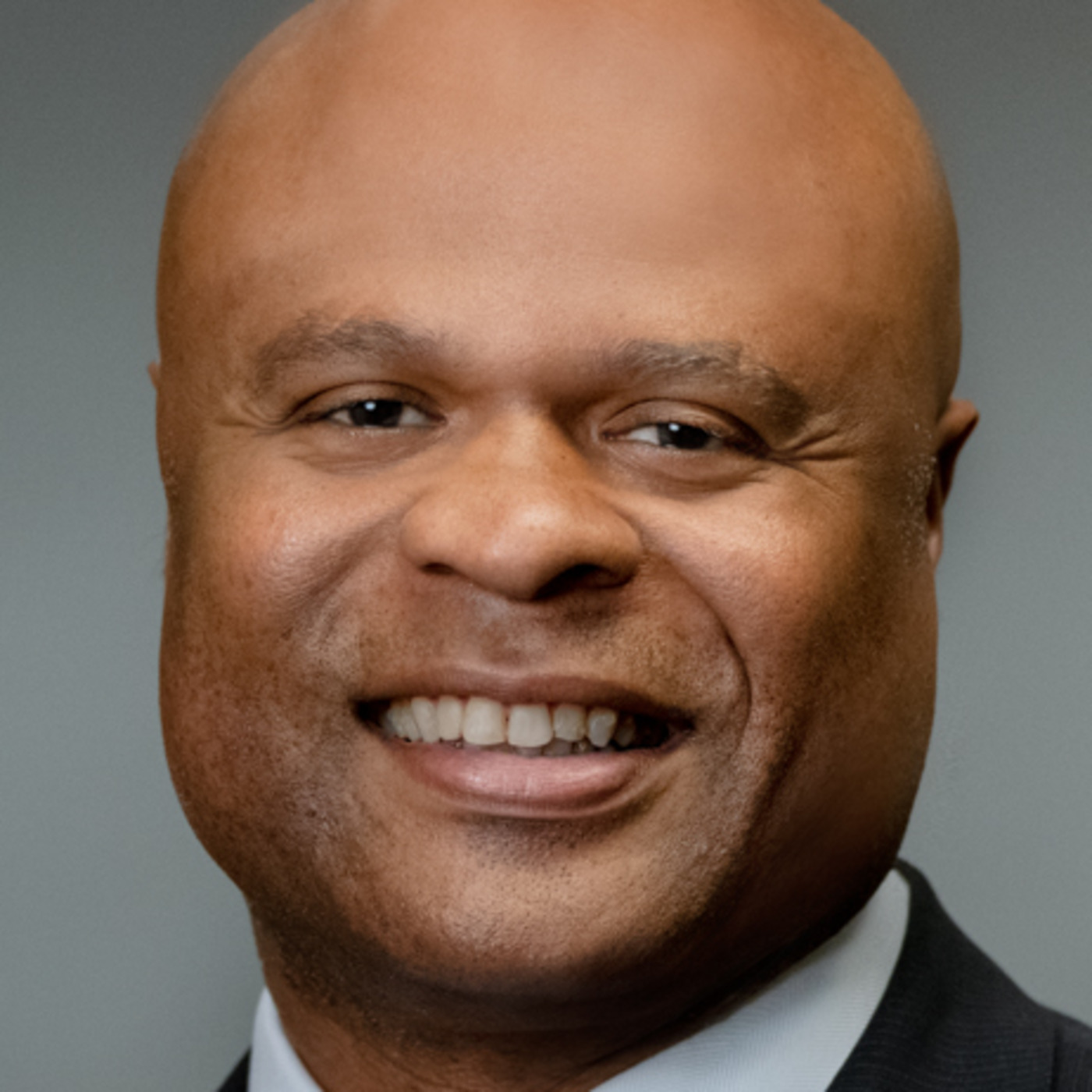
Aoifinn Devitt: I’m Aoifinn Devitt, and welcome to the 50 Faces Podcast, a podcast committed to revealing the richness and diversity of the world of investment by focusing on its people and their stories. I’m joined today by Leroy Brantley, who is a principal at Makita Investment Group. He has over 20 years’ experience in an investment consulting capacity, and we first met when we joined Cambridge Associates earlier in our careers. He has sat on public fund boards and has a particular focus on raising awareness of diverse investment managers. Welcome, Leroy. Thanks for joining me today.
LaRoy Brantley: Thank you, Aoifinn. I feel very flattered to be here, so thank you so much for having me.
Aoifinn Devitt: Well, it’s great to see you after all these years. Well, let’s start by talking about your background. Can you tell us where you grew up, what you studied, and how you came to enter the world of investing.
LaRoy Brantley: Oh wow, that’s going to be one of the most circuitous routes that you will probably hear from anyone that you’ve had on this podcast, in that I grew up in Georgia, so I moved up to Boston roughly halfway through 7th grade, and from there I did Boston Public Schools for a couple years and then went to an all-boys private school on the outskirts of Boston. Technically, it’s in Boston. School is called Roxbury Latin, founded in 1645. It has the bragging rights for being the oldest school in North America in continuous existence with that 1645 start point. And there I studied mostly languages. So I fell in love with languages there. I studied French and Latin for 4 years and Greek for 3 years. And then from there, you know, Roxbury Latin is a very small boy school, graduates about 50 boys a year. From there, I went to what felt like a smaller college, Amherst College. And there I studied classics and I became a classics major. Worked for a couple of years after studying in Italy and living in Italy. Worked for a couple of years at a law firm. Was convinced by my headmaster to come back and teach for 2 years. So I deferred law school acceptance. And ended up teaching for 7 years. And a very good friend of mine convinced me to come over and visit some business school classes at MIT. And I fell in love with that place very much, the smallness and the intimacy of both Roxbury Latin and Amherst College. I then went to MIT, probably the only classics major they probably had seen there since their beginning of their existence. And I had always been a tech nerd in addition to being a classics major. So there I focused on finance and tech, had 2 years at an investment bank during that, right at the height and collapse of the internet. So I came in there at ’99, worked for 2 years at a small growth-oriented firm, Adams Harkness and Hill. And as I said, the collapse of the internet bubble took down with it the semiconductor and semiconductor capital equipment, part of the industry that I focused on. And I had the unique opportunity to go and work at Cambridge Associates, and that, that was my foray into investment consulting. Did that for 15 years to the day at Cambridge Associates, and now I have been at Makita Investment Group for the last 5 years. So that’s how I got here. As I said, quite circuitous, but I’m here and it’s, it’s been a fun ride.
Aoifinn Devitt: That is wonderful. Well, you’re not, believe it or not, the first classics major to have featured on the podcast. There have been one or two others, but I asked that person, I’d love to ask you, but obviously there’s a great richness that comes from studying ancient civilizations, ancient power structures, which often are mirrored today. As well as, of course, the multicultural advantage of spending time abroad, learning different languages. What would you say were the skills or the learnings that you imported from there into the work you do today? And equally, I’d like to see what the teaching element, what difference that made as well.
LaRoy Brantley: Well, yeah, that’s interesting you put it that way. So I would say the greatest commonality is the attention to detail with classical languages, both Greek and Latin. You can have a noun that’s being modified by an adjective 3 lines down. So you have to know the rules of grammar, but you also have to know the exceptions as well. And that’s something that really plays into math and it definitely plays into investments. It’s the details. And that’s something when it’s coming down to manager selection, having a really well-formed conception of how a manager’s going to perform in certain markets and educating my clients on that. So the education part is actually something that has kept me in this. I deal mostly with clients who have committees that are people who volunteer, so they’re not in this part of the world every day. They’re essentially laypeople, and it’s my job to educate them. And that’s something I find incredibly stimulating, especially with all of the new ideas and concepts that come out. You have to be in a position where you can discern something that’s a very unique opportunity that’s on the rise or be able to tell that it’s a fad that doesn’t have any real foundation for a long-term play in a portfolio. So most of my portfolios are endowments and foundations. They’re supposed to be around long after we’re gone. And the job there is to make sure that they are, because as you know, the long term is made up of a lot of short-term. So the teaching part is something that keeps me fresh, keeps me excited, and hopefully my clients feel the same way. I’ve heard them say, oh, that’s how that works. I’ve always wondered what that word meant and how this played into what the endowment or the foundation would do in terms of performance. So that’s something I really treasure, and it’s something that’s kept me in this business for 20-plus years.
Aoifinn Devitt: And I know you have had some board positions as well. What have you tried to bring to those boards Have they been public boards or insurance company boards?
LaRoy Brantley: Right, so no insurance company boards. So I’ve never had a board that’s paid me money to have a seat at the table. So it’s mostly been schools and I’ve been involved with a rather sizable pension fund here in Boston, Mass Prem. We just crossed over the $100 billion mark. I think there’s one employee that’s been there longer than me. I’ve sat on that investment committee for 16-plus years, sat on the board there for 7 years at the outset of that 16 years. And for me, that means a lot because a lot of that money is for Mass State teachers. And these are people who’ve committed their lives to improving the lives of the youth, giving them direction. It’s something that resonates well with me, and it actually plays off into the other part of my world. I’ve sat on a board for a charter school for 10 years. Same element there. When we look at the underrepresented factor that we see in investments all the time, that big gap, that’s caused by opportunity, and it’s more often than not lack of education. So I’ve taken it upon myself because I was able to attend Roxbury Latin because of the generosity of the alumni. I went there on scholarship, and the same can be said for Amherst College. So I take very seriously the opportunity to be a trustee and a benefactor to those that follow me. And the old adage of time, talent, and treasure, that’s how I expend those three elements outside of work. And it’s something that’s important to me. And this isn’t public information, but I’ll be joining a college board in July that the president’s a former client. Of mine and she asked me to come on. So I’ll have more time to go back in. So actually the last 2 years have been years that I haven’t had that tie to education as a trustee. So it’ll be nice to go back into the arena in that way.
Aoifinn Devitt: Well, time, talent, and treasure. It sounds like something that will be etched above a Grecian temple. So thank you for leaving us with that, with that lovely trinity. Thinking about— you’re in the investment consulting business as a main focus. Do you have any core investment beliefs that you always convey to your clients, something that you’ve developed over the years? How do you coach them to approach the world of investing?
LaRoy Brantley: Right. The time to look to buy insurance for your home is not when the house is on fire. So I’m okay with the opportunity cost of leaving some money on the table. Particularly when markets are doing well. I find that when you educate your clients, you may sound like Chicken Little, the sky is falling, or whatever, but you have to keep in mind, as I said, these portfolios are supposed to exist into perpetuity. But it can take a market like the global financial crisis and the internet bubble to wipe out a lot of relative returns in addition to a lot of absolute market value. So my goal there is to prepare for bad stuff to happen. And the whole discipline of rebalancing, taking away money from winners before the market takes it away. And that’s hard. You’ve heard the whole saying, pulling your flowers and watering your weeds. That can be a really hard concept to teach lay folks because it has a sort of counterintuitive part to it. But when you have that as part of your teachings and as part of how you go about your business as a committee, because I always look at myself as a fiduciary as well, it makes it a lot easier for that to happen. And you get fewer phone calls when situations like March 2020 happens. And I got little resistance when I had some of my discretionary clients that said, hey, You may remember March was the first time we’ve had a bear market and a bull market within a 30-day period ever, the S&P 500. So there were some buying opportunities on the equity side. It was much like going back into the water back in the second quarter of 2009 when it still felt like there was some freefall to the equity market. So you have to have this discipline and set some preconceived benchmarks in order to help extend these portfolios to that ad infinitum sort of area and have them benefit, have them actually participate in the markets when they come back and they’re cheap. And that takes some intestinal fortitude, especially when folks feel that there’s no bottom to this and you’re throwing good money after bad. But that’s something that I’m okay with taking that professional risk with that the bottom could fall another couple of levels before it goes up.
Aoifinn Devitt: And another one of the causes that you’ve championed for many years now has been that of emerging managers. We’ve met on the circuit a few times discussing that topic. How would you say things have evolved in that respect? How’s the environment changed? Is it improving the way you’d like to see it improving? What more needs to be done for emerging managers?
LaRoy Brantley: My inception point for that was when I was at Cambridge, I had 3 clients that were HBCU, historically Black college and universities. And one of them had as part of their investment policy statement, sort of the precursor to the Rooney Rule that’s in the NFL. And you may have heard about that recently because there’s been a lot of, a lot of bad press on how that could possibly be a sham. In terms of getting qualified folks legitimate opportunities to interview for legitimate opportunities. So for me, it was a time— because, you know, when you’re interviewing managers for a position in a portfolio with an investment committee, it’s the committee that’s actually hiring them. They’re there from a consultant standpoint. They’re there because they there’s a recommendation from research and from years of following certain managers that you have a certain trust that they will be able to replicate the success that they’ve had as part of their investment history. So when they’re with the committee, I have to cede the floor. And there were some very uncomfortable questions. I’m taking back to 2003, 2004. So this isn’t now the George Floyd era where everyone’s trying to do what’s long overdue. But these were really hard questions that were being asked by these committee members. Many of them were alums of HBCUs saying, hey, looking through your pitch book, notice no one in here looks like me. So what are you guys doing about that? And you know what? I felt uncomfortable at first because they were there because I invited them there. But you know what? If they’re going to come and they want to invest money for a highly prestigious HBCU, they have to answer those questions. And now you flip the page forward now, and I’ll take you back to 2017 when I started testifying in Chicago for the Illinois Senate, their pension board there. I mean, that HBCU meeting I was telling you about, that was kids’ play. I mean, these guys, they’re coming in hard for the consultants. They’re not coming in for the money managers because that’s who they’re inviting in. I think one of the things I’ve learned over time is that there’s too much credit/blame given to consultants as gatekeepers, because as I just mentioned, we don’t hire anyone unless it’s a discretionary account, and then we’re really not a consultant, we’re a manager in that instance. So when you are seen as a gatekeeper and you have a very poor track record for even bringing diverse managers to the interview session, you’re going to take a beating on that front. But what I’ve noticed now is it’s a much clearer process in that there’s metrics, there are benchmarks, there are numbers, there are year-over-year results that are going into really defining your actions instead of your being able to come into this board and deliver a very eloquent speech on how all of these things are important. To you and other members of your firm, they want to see the numbers. Now, how many of these people have you put to work? And we’re not just talking index funds here. Anyone can hire a diverse index fund. We want to know managers in the more expensive part of the portfolio. So there’s been a shift. There’s been a shift from how much do these managers make up of the asset allocation or the allocation percentage to the fee percentage. We want to know, are these folks being paid in areas where they’re going to deliver alpha versus cheap beta to us? So it’s become, I think, the true gatekeepers there. They’ve really focused on more of the long-term part of the portfolio and not looking at how some firms have like taken the easy out with putting these managers and passive long-only equity and fixed income parts of the portfolio. So there’s a higher level of— with that transparency becomes a higher level of accountability. So I’d say that’s one of the main shifts that I’ve seen in this. And I can speak more candidly about this, and I have been for more than a decade about this, because of my training by those HBCU trustees were— they were right. They were right. Hey, the only way you’re going to inflict change or affect change will be through some uncomfortable situations. So if you have some discomfort here with answering about your lack of diversity or your lack of care on that part of what makes up the investment world, you don’t belong in this room. We don’t want you here and we don’t want you in our portfolio. So You’re seeing some real 180s from some of the bigger firms that have been non-diverse since their inception. So that change is coming.
Aoifinn Devitt: And it’s so interesting that you mentioned that discomfort. There was a great podcast with Justin Anekeze, who’s based in London, who does a lot of work on areas within firms, mentorship and bias training. And within a firm, there can be a lot of discomfort as well addressing these issues, especially in the aftermath of George Floyd’s killing and more, much more focus on that. And I think what he would say is don’t let the discomfort deter you from trying because often the intention is there and it may be clumsily executed. There will be discomfort. There will be perhaps statements that are not appropriate. But I think if the intention is there and we’re all kind of getting to the same place, I think that that’s where we’re in a positive place. So thank you for reiterating that.
LaRoy Brantley: And that’s part of coaching for me and being an advisor to young men. Is something because I really value the opportunity of mentoring the young. And folks that work for me will tell you, hopefully to a person, I’m very fair in how I go about mentoring or helping folks help me on accounts. And a big part of that is knowing when to cajole and knowing when to correct. And the correcting part can be very tricky. But in this industry, a lot of it’s very unlike investment banking, where investment banking is this whole you-eat-what-you-kill sort of deal. And there’s a scoreboard. You know what you’re bringing in and you know what you should have at the end of the year. Here it’s much more collegial. It’s much more of a thought process share. So everyone’s sort of kind and whatever, but You’re not gonna fix something that’s wrong by being overly kind and even more so by ignoring that it’s there and it needs to be corrected. So I’m kind of old school that way and I’m okay. And that same thing when I’m getting a review, it’s like, oh, you know, this is great. So what do I need to improve on? You can get to an area where that politeness works as a detractor to getting to where you need to go. But I do believe discomfort has its place in a constructive path to improvement. It has to be constructive.
Aoifinn Devitt: Well, much of that was spoken like an educator. And I want you to put your educator’s hat back on again. And this time to get your gradebook out. If you were to score our industry, score what you see, look around you, look at the diversity and not only in the ranks of the managers you work with, in the consulting ranks, Are there enough of the HBCU graduates ending up in the right positions? Is there enough of a diverse mix now? What score, what grade would you give our industry today?
LaRoy Brantley: I would say 75, maybe a C, C+, because there’s a recognition of what needs to be improved, whereas it was benevolent neglect was applied before. But this path as we’re on it now is something that’s very nascent. It’s definitely in its infancy in terms of an industry that’s been around for eons, and we’re just now starting to make it a mandate to effect these changes and cast a wider net. Once again, no one’s asking for this to be some sort of blind charity here. Everyone has a portfolio that they want. To make money. But when you’re not looking at the whole talent pool because these opportunities aren’t open to everyone, because you’ve already— and, you know, I can still remember being in a room with the trustee and we’re talking about bringing in someone, creating an interview process because they were telling me that they had already picked someone for the job. And I said, well, no, this is a unique opportunity for us to bring in someone from outside. That we may not even know exists, or they may not even know that they would like to come work for us. So we’re actually going to have to roll up our sleeves to make this opportunity known. And then we may have to interview scores more people, but that’s the work part of it. And what came out of that, there was another trustee in the room and she said, yeah, and that’s how systemic racism thrives. It thrives when there’s no transparent process at work. I said, huh, never looked at it that way. You can’t say, oh, we’ve already looked, there are no more talented people out there for work. No one that looks like that would want to come and work here. Yeah, if you’re going to say it like that, you’re right. But that whole need prerequisite of having a process, of having a transparent process and going through with that. That needs to be more there. And look, at my firm, we actually go and interview at schools outside of New England, like at HBCUs down south. We go down there because guess what? Not all of those kids are gonna have to come back from Virginia or come back from Atlanta or Florida to work in Boston and have no one here. Some of those kids are actually from Boston at those schools. So coming back home is not as big a disturbance in their lives. But we have to make these opportunities known. We have to get out there and, you know, investment consulting, I’ll tell you, I mean, anyone that in our age group that grew up saying they wanted to be an investment consultant is a liar because I didn’t even know this industry existed until 2002.
Aoifinn Devitt: So I think we both had that at the same time. Same for me.
LaRoy Brantley: Right, right, right. Isn’t that something?
Aoifinn Devitt: Yeah, we don’t do a good job of that here. Here. Well, let’s go back to some personal reflections now. Move away from the industry for a moment. And you’ve had a long career so far. Have there been setbacks and challenges along that route that you have learned lessons from that you can share?
LaRoy Brantley: Well, I’ve been here. We can touch back on something I just mentioned a short while ago. So, you know, I came in as a result of the internet bubble. Into this industry. And then, you know, ’02, I mean, things were not going well. I mean, the markets were still down a bunch. The Nasdaq had gone from 5,000 to, I think, 3,000 to 2,000 during that time. And, you know, S&P was down 40%, I think, in ’02. So it was nerve-wracking for me to come in at a period of time when client portfolios were still losing money. It’s like, oh my God, why would they keep us here? We’re losing their money. It’s like, no, no, no, this is where the benchmarks come in. On a relative basis, we’re actually saving them money by being in these types of portfolios that we have been advising. And I go back and I look at some of these numbers and how these growth managers essentially took over the world during the internet bubble. And the value managers, they’re up 10, 15% a year, and that meant nothing. It meant absolutely nothing when you’re going up against 50, 75, 100, and more than that per year. So I’ve learned the concept of relative performance and what that meant. And I learned the concept of patience, of dealing with how do you deliver news like that. And then when the global financial crisis happened, those portfolios had already been so greatly overvalued. The managers, the underlying asset classes in them. As I said, I had my clients, I had money out for 2 years. So of course, cash was creating a drag, but they were very happy and nervous about going back in, in ’09. But what I did learn was the patience, the patience of having these benchmarks, these preset benchmarks of knowing when to go back in, when something was cheap enough, when it made sense, when to take money away because it was overvalued. So, and that played huge, as I said, this past March, bringing my clients back into the equity markets before the end of the month. That was a great starting point and that helped. So I would say the patience part is one of the things I’ve learned. And I’ve also learned because I’ve had some important mentors in this industry, one thing you never do is chase performance. If you’re looking at what you’re doing quarter by quarter and you’re looking at this manager’s hot, I need to get some client money there. Yeah, that’s a road to disaster. And I will tell you, because if you’re performance chasing, that’s the mindset that you set. And it’s not about that. It’s about a long-term goal, achieving that without taking on undue volatility and avoiding some pitfalls just by thinking things through and figuring out if this is right for this group, if it’s right for this institution and being patient on that front as well.
Aoifinn Devitt: Well, thanks for that trip down memory lane. I think I had selectively forgotten some of the horrors of that internet boom and what it looked like. But yeah, I’m thinking I can’t get it off my mind now. But you’ve mentioned mentorship and, Clare, the mentorship that you do, the mentorship that you provide now and how important it is. Did you have a mentor? Were there any key people in your trajectory that you can mention? Right.
LaRoy Brantley: So if I were to look, there are two key people. One was my classics department head, Ned Leggin. He was the one who taught me how important it is that when something matters, to put in as much time as possible to getting it right and putting in a good work ethic. And that got me through 18 all-nighters my first semester at MIT. So that was very helpful. And he also, he was someone where mentoring really mattered to him. He taught at Roxbury Latin, I want to say 25, 30 years. I had him in both Greek and Latin. He was my lacrosse coach as well. And I had a lot of avenues to him. And to this day, we’re still friends. So he had an overwhelming effect on me in terms of work ethic, and things that I didn’t learn through college. I felt in a lot of ways teachers, because, you know, when you’re a student, you’re like, oh yeah, it’s easy being a teacher. You’re the one punishing us all with this work. Well, I learned on the flip side of that, someone has to correct all of that work and someone has to create these tests and exams. And there’s a lot that goes on behind the scenes. And I would say in the investment world, I don’t know if you crossed paths with him. I don’t— I think he was still there when you were there. Sandy Smith. Sandy Smith, when I came into this business, I had 3 clients with him and he taught me how to manage clients and how to manage expectations. And more importantly, he taught me how to listen. You know, you come out of a company where there’s a lot of work that goes into figuring out how stuff works, how stuff should work. There’s a lot of work that goes into evaluating managers and how they should fit in the portfolios. But you also have to recognize, as I mentioned before, it’s not your decision. You’re making a recommendation. He taught me how it was okay to get no as an answer and not take it personally. And that’s what it is. You’re, you’re making a recommendation. And to this day, when all three of our clients were in New York, And some of these folks were hedge fund managers too that sat on these committees that had the attention span of a gnat. So you had to keep them engaged and you also had to deal with the people in some instances that were writing very big checks for these institutions, going back to the time, talent, and treasure part. So with Sandy, I watched how he handled a room. You know, as I said, I came in after ’02 and I was with him on clients through the GFC. And when we had to go, and deliver some hard news to clients in terms of a lot of absolute market value being wiped out. But at the same time, there was a path that was always there to getting to the other side of that darkness. So he’s someone I always really respected as well. So those two gentlemen.
Aoifinn Devitt: Those apprenticeship moments are just so valuable. And I really don’t think we would be the professionals we are today without them. So I’ve also had many like that. And when you think about any words of wisdom maybe that any of these mentors shared with you or any creed or motto that you’ve developed for yourself, is there anything you can share there?
LaRoy Brantley: Well, you know, I looked at both of these people that I just mentioned to you. One thing they had in common was they were doing something that they loved doing. Sandy loves serving the ENF community. It was something that he, you know, his wife was a performer. We had Lincoln Center for performing arts, and he knew what went into where that money was going to be used. And Ed Ligon, that I just mentioned to you, he just had a joy of teaching. And he told me every year is a different year, even if you’re teaching the same subject matter, it’s a different year. And what matters is how you help that person’s life outside of what you’re teaching them in the books. And every year I walked away with the end of the school year with a treasure trove of experiences. And I tell you, when I got accepted to business school, I cried for 2 weeks when I gave my notice, you know, that spring. And I was thinking about rescinding and staying and teaching. So the thing that’s important is to have a passion for what you’re doing. I’ve had a number of opportunities where I could have gone into the dark world of investment instead of investment consulting. And I didn’t take it. Probably could have retired a lot earlier with 3 college kids, but it wasn’t something that resonated with me as well. So one of the things I would say is don’t chase money. The joy there is fleeting. And I’ve come to see that from folks that I’ve seen that have done that. And that’s one of the places of advice that may not have been directly given to me, but it’s definitely something that I instill to my sons and instill to people, younger people that I mentor and talk to and help them get through this path we call life, you know.
Aoifinn Devitt: It’s so true. They say that for material things, we adjust, you know, we kind of factor them in. Whereas something like passion, like you mentioned, when I think about it, the way you frame it, it really does regenerate. If you’re passionate about something, you never factor that in. That never gets discounted in. It’s always a fresh experience, which drives you. Very interesting to make that distinction. Well, thank you so much, Leroy. It’s been a real pleasure speaking with you. You mentioned time, talent, and treasure. Thank you for your time. Your talent is a treasure in the industry. It truly is. And it has been a treat to speak this time with you here. So, um, thank you for coming to share your insights with us.
LaRoy Brantley: Well, thank you so much, Aoifinn, and be safe. Be healthy and great happiness for you and your family in 2022.
Aoifinn Devitt: Thank you. I’m Aoifinn Devitt. Thank you for listening to the 50 Faces podcast. If you liked what you heard and would like to tune in to hear more inspiring investors and their personal journeys, please subscribe on Apple Podcasts or wherever you get your podcasts. This podcast is for informational purposes only and should not be construed as investment advice, and all views are personal and should not be attributed to the organization. Or affiliations of the host or any guest.
Aoifinn Devitt: Brought to you with the kind support of Federated Hermes Inc., a leading global investment manager. Guided by their conviction that responsible investing is the best way to create wealth over the long term, their investment solutions span equity, fixed income, alternative and private markets, multi-asset and liquidity strategies, and a range of separately managed accounts distributed through intermediaries worldwide.
LaRoy Brantley: The time to look to buy insurance for your home is not when the house is on fire. So I’m okay with the opportunity cost of leaving some money on the table, particularly when markets are doing well. I find that when you educate your clients, you may sound like Chicken Little, the sky is falling or whatever, but you have to keep in mind, as I said, these portfolios are supposed to exist into perpetuity, but it can take a market like the global financial crisis and the internet bubble to wipe out a lot of relative returns in addition to a lot of absolute market value. So my goal there is to prepare for bad stuff to happen and the whole discipline of rebalancing, taking away money from winners before the market takes it away.
Aoifinn Devitt: I’m Aoifinn Devitt, and welcome to the 50 Faces Podcast, a podcast committed to revealing the richness and diversity of the world of investment by focusing on its people and their stories. I’m joined today by Leroy Brantley, who is a principal at Makita Investment Group. He has over 20 years’ experience in an investment consulting capacity, and we first met when we joined Cambridge Associates earlier in our careers. He has sat on public fund boards and has a particular focus on raising awareness of diverse investment managers. Welcome, Leroy. Thanks for joining me today.
LaRoy Brantley: Thank you, Aoifinn. I feel very flattered to be here, so thank you so much for having me.
Aoifinn Devitt: Well, it’s great to see you after all these years. Well, let’s start by talking about your background. Can you tell us where you grew up, what you studied, and how you came to enter the world of investing.
LaRoy Brantley: Oh wow, that’s going to be one of the most circuitous routes that you will probably hear from anyone that you’ve had on this podcast, in that I grew up in Georgia, so I moved up to Boston roughly halfway through 7th grade, and from there I did Boston Public Schools for a couple years and then went to an all-boys private school on the outskirts of Boston. Technically, it’s in Boston. School is called Roxbury Latin, founded in 1645. It has the bragging rights for being the oldest school in North America in continuous existence with that 1645 start point. And there I studied mostly languages. So I fell in love with languages there. I studied French and Latin for 4 years and Greek for 3 years. And then from there, you know, Roxbury Latin is a very small boy school, graduates about 50 boys a year. From there, I went to what felt like a smaller college, Amherst College. And there I studied classics and I became a classics major. Worked for a couple of years after studying in Italy and living in Italy. Worked for a couple of years at a law firm. Was convinced by my headmaster to come back and teach for 2 years. So I deferred law school acceptance. And ended up teaching for 7 years. And a very good friend of mine convinced me to come over and visit some business school classes at MIT. And I fell in love with that place very much, the smallness and the intimacy of both Roxbury Latin and Amherst College. I then went to MIT, probably the only classics major they probably had seen there since their beginning of their existence. And I had always been a tech nerd in addition to being a classics major. So there I focused on finance and tech, had 2 years at an investment bank during that, right at the height and collapse of the internet. So I came in there at ’99, worked for 2 years at a small growth-oriented firm, Adams Harkness and Hill. And as I said, the collapse of the internet bubble took down with it the semiconductor and semiconductor capital equipment, part of the industry that I focused on. And I had the unique opportunity to go and work at Cambridge Associates, and that, that was my foray into investment consulting. Did that for 15 years to the day at Cambridge Associates, and now I have been at Makita Investment Group for the last 5 years. So that’s how I got here. As I said, quite circuitous, but I’m here and it’s, it’s been a fun ride.
Aoifinn Devitt: That is wonderful. Well, you’re not, believe it or not, the first classics major to have featured on the podcast. There have been one or two others, but I asked that person, I’d love to ask you, but obviously there’s a great richness that comes from studying ancient civilizations, ancient power structures, which often are mirrored today. As well as, of course, the multicultural advantage of spending time abroad, learning different languages. What would you say were the skills or the learnings that you imported from there into the work you do today? And equally, I’d like to see what the teaching element, what difference that made as well.
LaRoy Brantley: Well, yeah, that’s interesting you put it that way. So I would say the greatest commonality is the attention to detail with classical languages, both Greek and Latin. You can have a noun that’s being modified by an adjective 3 lines down. So you have to know the rules of grammar, but you also have to know the exceptions as well. And that’s something that really plays into math and it definitely plays into investments. It’s the details. And that’s something when it’s coming down to manager selection, having a really well-formed conception of how a manager’s going to perform in certain markets and educating my clients on that. So the education part is actually something that has kept me in this. I deal mostly with clients who have committees that are people who volunteer, so they’re not in this part of the world every day. They’re essentially laypeople, and it’s my job to educate them. And that’s something I find incredibly stimulating, especially with all of the new ideas and concepts that come out. You have to be in a position where you can discern something that’s a very unique opportunity that’s on the rise or be able to tell that it’s a fad that doesn’t have any real foundation for a long-term play in a portfolio. So most of my portfolios are endowments and foundations. They’re supposed to be around long after we’re gone. And the job there is to make sure that they are, because as you know, the long term is made up of a lot of short-term. So the teaching part is something that keeps me fresh, keeps me excited, and hopefully my clients feel the same way. I’ve heard them say, oh, that’s how that works. I’ve always wondered what that word meant and how this played into what the endowment or the foundation would do in terms of performance. So that’s something I really treasure, and it’s something that’s kept me in this business for 20-plus years.
Aoifinn Devitt: And I know you have had some board positions as well. What have you tried to bring to those boards Have they been public boards or insurance company boards?
LaRoy Brantley: Right, so no insurance company boards. So I’ve never had a board that’s paid me money to have a seat at the table. So it’s mostly been schools and I’ve been involved with a rather sizable pension fund here in Boston, Mass Prem. We just crossed over the $100 billion mark. I think there’s one employee that’s been there longer than me. I’ve sat on that investment committee for 16-plus years, sat on the board there for 7 years at the outset of that 16 years. And for me, that means a lot because a lot of that money is for Mass State teachers. And these are people who’ve committed their lives to improving the lives of the youth, giving them direction. It’s something that resonates well with me, and it actually plays off into the other part of my world. I’ve sat on a board for a charter school for 10 years. Same element there. When we look at the underrepresented factor that we see in investments all the time, that big gap, that’s caused by opportunity, and it’s more often than not lack of education. So I’ve taken it upon myself because I was able to attend Roxbury Latin because of the generosity of the alumni. I went there on scholarship, and the same can be said for Amherst College. So I take very seriously the opportunity to be a trustee and a benefactor to those that follow me. And the old adage of time, talent, and treasure, that’s how I expend those three elements outside of work. And it’s something that’s important to me. And this isn’t public information, but I’ll be joining a college board in July that the president’s a former client. Of mine and she asked me to come on. So I’ll have more time to go back in. So actually the last 2 years have been years that I haven’t had that tie to education as a trustee. So it’ll be nice to go back into the arena in that way.
Aoifinn Devitt: Well, time, talent, and treasure. It sounds like something that will be etched above a Grecian temple. So thank you for leaving us with that, with that lovely trinity. Thinking about— you’re in the investment consulting business as a main focus. Do you have any core investment beliefs that you always convey to your clients, something that you’ve developed over the years? How do you coach them to approach the world of investing?
LaRoy Brantley: Right. The time to look to buy insurance for your home is not when the house is on fire. So I’m okay with the opportunity cost of leaving some money on the table. Particularly when markets are doing well. I find that when you educate your clients, you may sound like Chicken Little, the sky is falling, or whatever, but you have to keep in mind, as I said, these portfolios are supposed to exist into perpetuity. But it can take a market like the global financial crisis and the internet bubble to wipe out a lot of relative returns in addition to a lot of absolute market value. So my goal there is to prepare for bad stuff to happen. And the whole discipline of rebalancing, taking away money from winners before the market takes it away. And that’s hard. You’ve heard the whole saying, pulling your flowers and watering your weeds. That can be a really hard concept to teach lay folks because it has a sort of counterintuitive part to it. But when you have that as part of your teachings and as part of how you go about your business as a committee, because I always look at myself as a fiduciary as well, it makes it a lot easier for that to happen. And you get fewer phone calls when situations like March 2020 happens. And I got little resistance when I had some of my discretionary clients that said, hey, You may remember March was the first time we’ve had a bear market and a bull market within a 30-day period ever, the S&P 500. So there were some buying opportunities on the equity side. It was much like going back into the water back in the second quarter of 2009 when it still felt like there was some freefall to the equity market. So you have to have this discipline and set some preconceived benchmarks in order to help extend these portfolios to that ad infinitum sort of area and have them benefit, have them actually participate in the markets when they come back and they’re cheap. And that takes some intestinal fortitude, especially when folks feel that there’s no bottom to this and you’re throwing good money after bad. But that’s something that I’m okay with taking that professional risk with that the bottom could fall another couple of levels before it goes up.
Aoifinn Devitt: And another one of the causes that you’ve championed for many years now has been that of emerging managers. We’ve met on the circuit a few times discussing that topic. How would you say things have evolved in that respect? How’s the environment changed? Is it improving the way you’d like to see it improving? What more needs to be done for emerging managers?
LaRoy Brantley: My inception point for that was when I was at Cambridge, I had 3 clients that were HBCU, historically Black college and universities. And one of them had as part of their investment policy statement, sort of the precursor to the Rooney Rule that’s in the NFL. And you may have heard about that recently because there’s been a lot of, a lot of bad press on how that could possibly be a sham. In terms of getting qualified folks legitimate opportunities to interview for legitimate opportunities. So for me, it was a time— because, you know, when you’re interviewing managers for a position in a portfolio with an investment committee, it’s the committee that’s actually hiring them. They’re there from a consultant standpoint. They’re there because they there’s a recommendation from research and from years of following certain managers that you have a certain trust that they will be able to replicate the success that they’ve had as part of their investment history. So when they’re with the committee, I have to cede the floor. And there were some very uncomfortable questions. I’m taking back to 2003, 2004. So this isn’t now the George Floyd era where everyone’s trying to do what’s long overdue. But these were really hard questions that were being asked by these committee members. Many of them were alums of HBCUs saying, hey, looking through your pitch book, notice no one in here looks like me. So what are you guys doing about that? And you know what? I felt uncomfortable at first because they were there because I invited them there. But you know what? If they’re going to come and they want to invest money for a highly prestigious HBCU, they have to answer those questions. And now you flip the page forward now, and I’ll take you back to 2017 when I started testifying in Chicago for the Illinois Senate, their pension board there. I mean, that HBCU meeting I was telling you about, that was kids’ play. I mean, these guys, they’re coming in hard for the consultants. They’re not coming in for the money managers because that’s who they’re inviting in. I think one of the things I’ve learned over time is that there’s too much credit/blame given to consultants as gatekeepers, because as I just mentioned, we don’t hire anyone unless it’s a discretionary account, and then we’re really not a consultant, we’re a manager in that instance. So when you are seen as a gatekeeper and you have a very poor track record for even bringing diverse managers to the interview session, you’re going to take a beating on that front. But what I’ve noticed now is it’s a much clearer process in that there’s metrics, there are benchmarks, there are numbers, there are year-over-year results that are going into really defining your actions instead of your being able to come into this board and deliver a very eloquent speech on how all of these things are important. To you and other members of your firm, they want to see the numbers. Now, how many of these people have you put to work? And we’re not just talking index funds here. Anyone can hire a diverse index fund. We want to know managers in the more expensive part of the portfolio. So there’s been a shift. There’s been a shift from how much do these managers make up of the asset allocation or the allocation percentage to the fee percentage. We want to know, are these folks being paid in areas where they’re going to deliver alpha versus cheap beta to us? So it’s become, I think, the true gatekeepers there. They’ve really focused on more of the long-term part of the portfolio and not looking at how some firms have like taken the easy out with putting these managers and passive long-only equity and fixed income parts of the portfolio. So there’s a higher level of— with that transparency becomes a higher level of accountability. So I’d say that’s one of the main shifts that I’ve seen in this. And I can speak more candidly about this, and I have been for more than a decade about this, because of my training by those HBCU trustees were— they were right. They were right. Hey, the only way you’re going to inflict change or affect change will be through some uncomfortable situations. So if you have some discomfort here with answering about your lack of diversity or your lack of care on that part of what makes up the investment world, you don’t belong in this room. We don’t want you here and we don’t want you in our portfolio. So You’re seeing some real 180s from some of the bigger firms that have been non-diverse since their inception. So that change is coming.
Aoifinn Devitt: And it’s so interesting that you mentioned that discomfort. There was a great podcast with Justin Anekeze, who’s based in London, who does a lot of work on areas within firms, mentorship and bias training. And within a firm, there can be a lot of discomfort as well addressing these issues, especially in the aftermath of George Floyd’s killing and more, much more focus on that. And I think what he would say is don’t let the discomfort deter you from trying because often the intention is there and it may be clumsily executed. There will be discomfort. There will be perhaps statements that are not appropriate. But I think if the intention is there and we’re all kind of getting to the same place, I think that that’s where we’re in a positive place. So thank you for reiterating that.
LaRoy Brantley: And that’s part of coaching for me and being an advisor to young men. Is something because I really value the opportunity of mentoring the young. And folks that work for me will tell you, hopefully to a person, I’m very fair in how I go about mentoring or helping folks help me on accounts. And a big part of that is knowing when to cajole and knowing when to correct. And the correcting part can be very tricky. But in this industry, a lot of it’s very unlike investment banking, where investment banking is this whole you-eat-what-you-kill sort of deal. And there’s a scoreboard. You know what you’re bringing in and you know what you should have at the end of the year. Here it’s much more collegial. It’s much more of a thought process share. So everyone’s sort of kind and whatever, but You’re not gonna fix something that’s wrong by being overly kind and even more so by ignoring that it’s there and it needs to be corrected. So I’m kind of old school that way and I’m okay. And that same thing when I’m getting a review, it’s like, oh, you know, this is great. So what do I need to improve on? You can get to an area where that politeness works as a detractor to getting to where you need to go. But I do believe discomfort has its place in a constructive path to improvement. It has to be constructive.
Aoifinn Devitt: Well, much of that was spoken like an educator. And I want you to put your educator’s hat back on again. And this time to get your gradebook out. If you were to score our industry, score what you see, look around you, look at the diversity and not only in the ranks of the managers you work with, in the consulting ranks, Are there enough of the HBCU graduates ending up in the right positions? Is there enough of a diverse mix now? What score, what grade would you give our industry today?
LaRoy Brantley: I would say 75, maybe a C, C+, because there’s a recognition of what needs to be improved, whereas it was benevolent neglect was applied before. But this path as we’re on it now is something that’s very nascent. It’s definitely in its infancy in terms of an industry that’s been around for eons, and we’re just now starting to make it a mandate to effect these changes and cast a wider net. Once again, no one’s asking for this to be some sort of blind charity here. Everyone has a portfolio that they want. To make money. But when you’re not looking at the whole talent pool because these opportunities aren’t open to everyone, because you’ve already— and, you know, I can still remember being in a room with the trustee and we’re talking about bringing in someone, creating an interview process because they were telling me that they had already picked someone for the job. And I said, well, no, this is a unique opportunity for us to bring in someone from outside. That we may not even know exists, or they may not even know that they would like to come work for us. So we’re actually going to have to roll up our sleeves to make this opportunity known. And then we may have to interview scores more people, but that’s the work part of it. And what came out of that, there was another trustee in the room and she said, yeah, and that’s how systemic racism thrives. It thrives when there’s no transparent process at work. I said, huh, never looked at it that way. You can’t say, oh, we’ve already looked, there are no more talented people out there for work. No one that looks like that would want to come and work here. Yeah, if you’re going to say it like that, you’re right. But that whole need prerequisite of having a process, of having a transparent process and going through with that. That needs to be more there. And look, at my firm, we actually go and interview at schools outside of New England, like at HBCUs down south. We go down there because guess what? Not all of those kids are gonna have to come back from Virginia or come back from Atlanta or Florida to work in Boston and have no one here. Some of those kids are actually from Boston at those schools. So coming back home is not as big a disturbance in their lives. But we have to make these opportunities known. We have to get out there and, you know, investment consulting, I’ll tell you, I mean, anyone that in our age group that grew up saying they wanted to be an investment consultant is a liar because I didn’t even know this industry existed until 2002.
Aoifinn Devitt: So I think we both had that at the same time. Same for me.
LaRoy Brantley: Right, right, right. Isn’t that something?
Aoifinn Devitt: Yeah, we don’t do a good job of that here. Here. Well, let’s go back to some personal reflections now. Move away from the industry for a moment. And you’ve had a long career so far. Have there been setbacks and challenges along that route that you have learned lessons from that you can share?
LaRoy Brantley: Well, I’ve been here. We can touch back on something I just mentioned a short while ago. So, you know, I came in as a result of the internet bubble. Into this industry. And then, you know, ’02, I mean, things were not going well. I mean, the markets were still down a bunch. The Nasdaq had gone from 5,000 to, I think, 3,000 to 2,000 during that time. And, you know, S&P was down 40%, I think, in ’02. So it was nerve-wracking for me to come in at a period of time when client portfolios were still losing money. It’s like, oh my God, why would they keep us here? We’re losing their money. It’s like, no, no, no, this is where the benchmarks come in. On a relative basis, we’re actually saving them money by being in these types of portfolios that we have been advising. And I go back and I look at some of these numbers and how these growth managers essentially took over the world during the internet bubble. And the value managers, they’re up 10, 15% a year, and that meant nothing. It meant absolutely nothing when you’re going up against 50, 75, 100, and more than that per year. So I’ve learned the concept of relative performance and what that meant. And I learned the concept of patience, of dealing with how do you deliver news like that. And then when the global financial crisis happened, those portfolios had already been so greatly overvalued. The managers, the underlying asset classes in them. As I said, I had my clients, I had money out for 2 years. So of course, cash was creating a drag, but they were very happy and nervous about going back in, in ’09. But what I did learn was the patience, the patience of having these benchmarks, these preset benchmarks of knowing when to go back in, when something was cheap enough, when it made sense, when to take money away because it was overvalued. So, and that played huge, as I said, this past March, bringing my clients back into the equity markets before the end of the month. That was a great starting point and that helped. So I would say the patience part is one of the things I’ve learned. And I’ve also learned because I’ve had some important mentors in this industry, one thing you never do is chase performance. If you’re looking at what you’re doing quarter by quarter and you’re looking at this manager’s hot, I need to get some client money there. Yeah, that’s a road to disaster. And I will tell you, because if you’re performance chasing, that’s the mindset that you set. And it’s not about that. It’s about a long-term goal, achieving that without taking on undue volatility and avoiding some pitfalls just by thinking things through and figuring out if this is right for this group, if it’s right for this institution and being patient on that front as well.
Aoifinn Devitt: Well, thanks for that trip down memory lane. I think I had selectively forgotten some of the horrors of that internet boom and what it looked like. But yeah, I’m thinking I can’t get it off my mind now. But you’ve mentioned mentorship and, Clare, the mentorship that you do, the mentorship that you provide now and how important it is. Did you have a mentor? Were there any key people in your trajectory that you can mention? Right.
LaRoy Brantley: So if I were to look, there are two key people. One was my classics department head, Ned Leggin. He was the one who taught me how important it is that when something matters, to put in as much time as possible to getting it right and putting in a good work ethic. And that got me through 18 all-nighters my first semester at MIT. So that was very helpful. And he also, he was someone where mentoring really mattered to him. He taught at Roxbury Latin, I want to say 25, 30 years. I had him in both Greek and Latin. He was my lacrosse coach as well. And I had a lot of avenues to him. And to this day, we’re still friends. So he had an overwhelming effect on me in terms of work ethic, and things that I didn’t learn through college. I felt in a lot of ways teachers, because, you know, when you’re a student, you’re like, oh yeah, it’s easy being a teacher. You’re the one punishing us all with this work. Well, I learned on the flip side of that, someone has to correct all of that work and someone has to create these tests and exams. And there’s a lot that goes on behind the scenes. And I would say in the investment world, I don’t know if you crossed paths with him. I don’t— I think he was still there when you were there. Sandy Smith. Sandy Smith, when I came into this business, I had 3 clients with him and he taught me how to manage clients and how to manage expectations. And more importantly, he taught me how to listen. You know, you come out of a company where there’s a lot of work that goes into figuring out how stuff works, how stuff should work. There’s a lot of work that goes into evaluating managers and how they should fit in the portfolios. But you also have to recognize, as I mentioned before, it’s not your decision. You’re making a recommendation. He taught me how it was okay to get no as an answer and not take it personally. And that’s what it is. You’re, you’re making a recommendation. And to this day, when all three of our clients were in New York, And some of these folks were hedge fund managers too that sat on these committees that had the attention span of a gnat. So you had to keep them engaged and you also had to deal with the people in some instances that were writing very big checks for these institutions, going back to the time, talent, and treasure part. So with Sandy, I watched how he handled a room. You know, as I said, I came in after ’02 and I was with him on clients through the GFC. And when we had to go, and deliver some hard news to clients in terms of a lot of absolute market value being wiped out. But at the same time, there was a path that was always there to getting to the other side of that darkness. So he’s someone I always really respected as well. So those two gentlemen.
Aoifinn Devitt: Those apprenticeship moments are just so valuable. And I really don’t think we would be the professionals we are today without them. So I’ve also had many like that. And when you think about any words of wisdom maybe that any of these mentors shared with you or any creed or motto that you’ve developed for yourself, is there anything you can share there?
LaRoy Brantley: Well, you know, I looked at both of these people that I just mentioned to you. One thing they had in common was they were doing something that they loved doing. Sandy loves serving the ENF community. It was something that he, you know, his wife was a performer. We had Lincoln Center for performing arts, and he knew what went into where that money was going to be used. And Ed Ligon, that I just mentioned to you, he just had a joy of teaching. And he told me every year is a different year, even if you’re teaching the same subject matter, it’s a different year. And what matters is how you help that person’s life outside of what you’re teaching them in the books. And every year I walked away with the end of the school year with a treasure trove of experiences. And I tell you, when I got accepted to business school, I cried for 2 weeks when I gave my notice, you know, that spring. And I was thinking about rescinding and staying and teaching. So the thing that’s important is to have a passion for what you’re doing. I’ve had a number of opportunities where I could have gone into the dark world of investment instead of investment consulting. And I didn’t take it. Probably could have retired a lot earlier with 3 college kids, but it wasn’t something that resonated with me as well. So one of the things I would say is don’t chase money. The joy there is fleeting. And I’ve come to see that from folks that I’ve seen that have done that. And that’s one of the places of advice that may not have been directly given to me, but it’s definitely something that I instill to my sons and instill to people, younger people that I mentor and talk to and help them get through this path we call life, you know.
Aoifinn Devitt: It’s so true. They say that for material things, we adjust, you know, we kind of factor them in. Whereas something like passion, like you mentioned, when I think about it, the way you frame it, it really does regenerate. If you’re passionate about something, you never factor that in. That never gets discounted in. It’s always a fresh experience, which drives you. Very interesting to make that distinction. Well, thank you so much, Leroy. It’s been a real pleasure speaking with you. You mentioned time, talent, and treasure. Thank you for your time. Your talent is a treasure in the industry. It truly is. And it has been a treat to speak this time with you here. So, um, thank you for coming to share your insights with us.
LaRoy Brantley: Well, thank you so much, Aoifinn, and be safe. Be healthy and great happiness for you and your family in 2022.
Aoifinn Devitt: Thank you. I’m Aoifinn Devitt. Thank you for listening to the 50 Faces podcast. If you liked what you heard and would like to tune in to hear more inspiring investors and their personal journeys, please subscribe on Apple Podcasts or wherever you get your podcasts. This podcast is for informational purposes only and should not be construed as investment advice, and all views are personal and should not be attributed to the organization. Or affiliations of the host or any guest.