Aoifinn Devitt: This podcast is brought to you by the kind support of the Active Share Podcast. What does a two-time world-winning coach, an MLB baseball team owner, top chef, and luxury fashion designer have in common? They’ve all been featured on the Active Share Podcast. If you’re seeking the less obvious and are curious about the ever-changing world and how it affects investing, the Active Share Podcast is for you. Hear thought-provoking conversations with thought leaders, company executives, and William Blair Investment Management’s own analysts and portfolio managers as they share unique perspectives on investing in a world that’s always evolving. Download the Active Share podcast on iTunes, Spotify, Google, Stitcher, and TuneIn.
Dr. Namukale Chintu: It felt like the first major setback in my life, but little did I know that I would get many, many more rejections after that. Many, many more rejections on jobs that I’d applied for, on pitches that I’d made. And so, like I said, I like to get failing as soon as I embark on a new project so that I can learn faster.
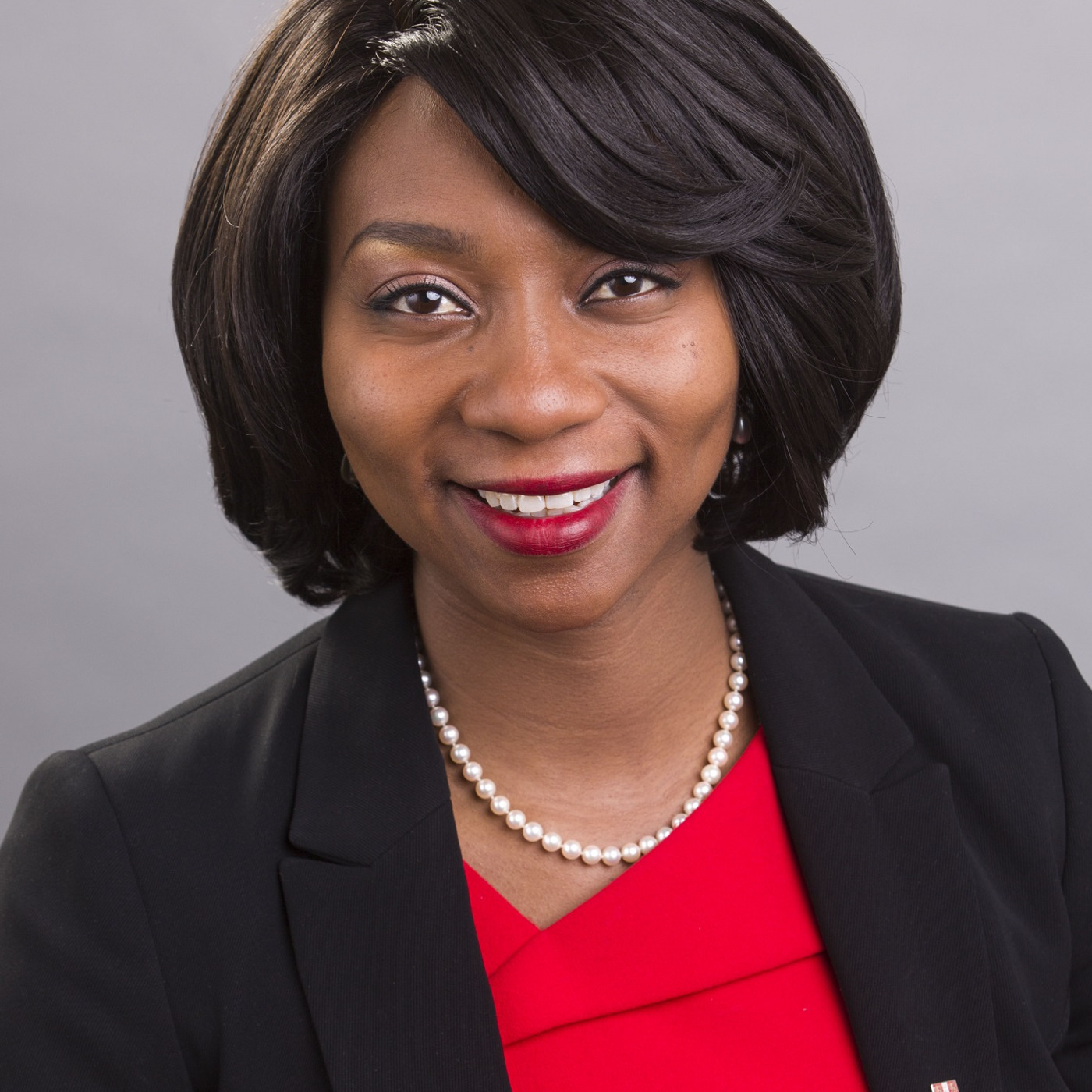
Aoifinn Devitt: I’m Aoifinn Devitt, and welcome to the 50 Faces Podcast, a podcast committed to revealing the richness and diversity of the world of investment by focusing on its people and their stories. I’m joined today by Dr. Namakale Chintu, who holds non-executive director roles, including roles at Invesco Limited and Arcadia Asset Management., as well as a number of advisory roles. She started her career in investment banking and held a series of executive director roles in proprietary capital and wealth management covering Africa. She’s the founder of Frontier Market Consultants. A former Rhodes Scholar, she is National Secretary for the Rhodes Scholarship in Zambia and is passionate about encouraging entrepreneurship and enabling diverse founders to thrive. Welcome, Nama Kali. Thanks for joining me today.
Dr. Namukale Chintu: Hi, Aoifinn. It’s a pleasure to be here, and thank you for having me.
Aoifinn Devitt: Well, great. But let’s start with your background and career journey. So where did you grow up? What did you study? And how did you come to enter the world of investment banking?
Dr. Namukale Chintu: So I was born and raised in Zambia from a family of 2 sisters, 1 brother, and loads of extended family. I studied economics at the University of Zambia and after that worked for the United Nations in coordinating UN support to the Zambian government. It’s funny because there were very limited career options for university graduates in Zambia at the time. So the ultimate dream for an economist was to either either work for the central bank or for the UN. So I was very pleased with my job after having done a fair amount of unpaid internships and lots of networking, the usual things that you try to sort of get ahead. However, I started experiencing a shift in my thinking. So from Economics 101, we learn about the circular flow of income and that governments tax corporations to finance their activities. Now, at the time, the Zambian government was primarily financed through budget support and not taxation. So I got curious about how companies made profits so that at any given tax rate, governments could increase revenues. So then I applied for and was awarded the Rhodes Scholarship to study Financial Economics and Management at the University of Oxford, learning about how equity could also mean company shares rather than just fairness in the context of economic development studies. And so while I was in Oxford, I thoroughly enjoyed corporate finance, capital markets, and econometrics, And eventually I got my first investment banking job as an intern at Morgan Stanley. I then went on to work for Lehman Brothers, Nomura International, Sumitomo Mitsui, UBS, and EFG. And in between, I also completed my PhD in international business at the University of Cambridge, and that focused on investing in Africa and what the drivers of returns were using different sources of capital, ranging from public to private equity, family businesses, and state-owned enterprises. So over time, I increasingly appreciated the idea that wealth creation should replace aid in economic growth and development. And I embraced this in all of the financial services roles that I took on. So I suppose my journey started out with curiosity, and I found myself in financial services thoroughly enjoying it.
Aoifinn Devitt: That’s really fascinating. We’ll definitely move to speak a little bit about that wealth creation aspect. But just going back to your experience as a Rhodes Scholar, how was that experience culturally and in terms of the topic that you’d chosen? It seems like you were a little bit ahead of your time in terms of focusing on the circular economy concept, as well as on more the stakeholder capitalism.
Dr. Namukale Chintu: Absolutely. I’ll talk a bit about the Rhodes Scholarship and then touch on capitalism. So the Rhodes Scholarship is the oldest. I think it was first awarded in 1902 and perhaps the most prestigious international scholarship program that enables outstanding young people from around the world to study at the University of Oxford. But it’s not so much the bursary that I want to talk about, it’s about the life-changing opportunity that it offers to exceptional young people with the potential to make a difference for good in this world. So essentially Rhodes Scholars are people who have a vision of how the world could be better and the energy to make a difference, whatever their sphere of interest or background. And the fellowship of Rhodes Scholars worldwide and across generations is very active with over 5,000 individuals having passed through the program. And I think the most famous Rhodes Scholar is Bill Clinton, who studied in Oxford in 1968. So the reason I wanted to talk about this is how it relates to my scholarship experience, because it’s inextricably linked to my Oxford experience, as well as what the scholarship offers. So having spent sort of many evenings at Rhodes House or in college or at the business school, at dinners and talks brought me in contact with remarkable individuals. I lived with a physicist, an engineer, and a public health specialist. I became friends with two lawyers, a pharmacologist, a software engineer, and an anthropologist. And I discovered the exhilaration of rowing and competed at collegiate levels. And so the friendships that I made in Oxford have evolved to becoming an extended family dotted around the world, and that’s the network that forms who I am today. And having that experience is actually what makes me passionate about being the National Secretary for the Rhodes Scholarship in Zambia. And each year we select two of the country’s most outstanding young people to study in Oxford, and it’s very rewarding that these young people get that opportunity. So connecting that also to my thoughts, so essentially when I got the Rhodes Scholarship, my passion was to understand the circular flow of income and how it applies to Zambia. But in that process of discovery and through meeting the different individuals I met at the business schools and the friendships and the networks that I made, I began to realize that you can still have an impact on that circular economy through different ways. And so applying a lot of those principles in investment banking, whether it was some of the capital markets work that I did or supporting some of my wealth management clients in structuring their wealth so that they could focus on their businesses and grow their businesses and and provide more jobs always meant that wealth creation and poverty reduction, or wealth creation and economic development, have to go hand in hand.
Aoifinn Devitt: Let’s move now to your experience on the wealth creation side, because you spent some time in the private wealth area focusing on Africa. Can you tell us a little bit about the trends and key developments in that area over recent years and what you see going forward?
Dr. Namukale Chintu: Sure. Africa’s seen a growth in high net worth individuals over the last 20 years. According to the latest Capgemini World Wealth Report, African high net worth individuals have a combined wealth of about $1.8 trillion, or about 2.2% of global wealth. So this isn’t very high, but it is a positive trajectory for Africa’s growth story, in which more and more Africans are building wealth on the back of Africa’s potential, including the demographic dividend, technology penetration, and natural resources. Obviously, the COVID pandemic has brought headwinds to this progress for obvious reasons, but at the same time, I feel that it presents opportunities for the economies to become more self-reliant and build more domestic-led wealth. And then when you sort of think about wealth in Africa, it’s obviously not evenly distributed across and within countries. Some countries already have multi-generational businesses and have become well established, like Kenya, Nigeria, South Africa, and families have set up sophisticated structures and family offices to manage their affairs. In other countries, we’re beginning to see first generation wealth that has started to consider having an investment portfolio, as well as the building blocks of a family office, including family governance, succession planning, and estate planning, and setting up trusts. So It’s a little bit of a mixed bag, but what you are seeing is that sort of diamond approach to Africa where you’ve got Egypt in the north, Nigeria and Ghana in the west, Kenya in the east, and South Africa in the south. Now, apart from the economic landscape, the regulatory landscape also plays an important role in investment strategies in Africa. Capital controls in some countries that are placed on individuals and local asset managers have served well in ensuring investments are made locally, which is fine. But if the countries have underdeveloped capital markets, this inadvertently imposes limited portfolio diversification options on investors. So nevertheless, despite these challenges, retail investors, obviously depending on their risk profile, will still think about wealth preservation. They will still think about diversification and growth within the context of the environment that they’re operating in. And institutional investors such as pension funds and insurance companies still have to continue to match their current assets and current liabilities within the context that they’re operating. So I’m quite hopeful about wealth management and the asset management industry developing and growing in Africa. It is very much contained at the moment, and a lot can be unlocked domestically, but I think we’re still a long way off to being able to externalize assets, particularly for asset managers.
Aoifinn Devitt: And one of the aspects about investing in Africa that I’ve noticed in my previous conversations has been the fact that because there has been perhaps a lag in some of these developments, that there now is the ability to leapfrog some of the developments in developed markets in terms of, say, ESG integration, that that can be now looked at from the outset, maybe when it comes to technology investing. What is your sense of the importance of ESG issues when you look across investing in Africa at the moment?
Dr. Namukale Chintu: I suppose sort of ESG generally, globally, has evolved from being a fad and subset of corporate social responsibility to permeating individuals and businesses at their very core. So it has evolved from being a cost item to a revenue item and can only be ignored at one’s peril. So it’s a topic that has to be addressed in all engagements, whether it’s sort of as entrepreneurs, as boards, as asset managers. Even obviously within the not-for-profit sector is quite important. But the trouble is, despite permeating our lives, ESG means different things to different people, and asset managers aren’t exempt. So while we’re all in agreement about the concept, we’re still grappling with translating the spirit of the law and the letter of the law, such as Articles 6, 8, and 9 of the UK Financial Regulations. But that’s okay, as long as we’re moving in the right direction. And if you then translate how that moves to Africa, there are a number of fundamental issues that would need to be addressed first. So first of all, you would need to have deeper capital markets for asset managers to be able to really sort of develop that asset class, particularly in the public markets, because you would have to have publicly listed companies in African countries that are ESG compliant. So can you imagine developing an ESG portfolio that way would be a bit of a mission, right? At the same time, a lot of institutional investors have deep enough pockets to obviously invest in more private markets through private equity. And I think that they’ve got the ability to drive the investment agenda for any of the companies that are operating in their portfolios. And there’s a huge opportunity for them to achieve the COP26 agenda through companies that are sort of leapfrogging beyond sort of industrialization and going straight ahead into the green economy. You’re seeing lots of startups today that are raising capital off Y Combinator and venture capital funds that fully sort of fit that description. And so from that perspective, there is that opportunity, but until we get to having advanced capital markets in Africa, then the public markets are going to still fall behind.
Aoifinn Devitt: It’s really interesting because actually a lot of my conversations have centered around the private equity opportunity in Africa. Given the lack of depth in the capital markets that you mentioned here and the fact that they have some way to go, do you think that makes the private equity opportunity relatively more attractive?
Dr. Namukale Chintu: Absolutely, it does make the private equity opportunity more attractive, particularly for longer-term investors like pension funds that are looking to match their assets and liabilities. But when you’re looking at shorter-term investors, when you’re looking at the retail investors who are getting to the tail end and waiting for their retirement and that sort of thing, then you have a lot more reliance on the capital markets. So in many ways, private equity has been pretty much the only longer-term viable option for institutional investors. And I think the issue there has been around building capacity and getting these institutional investors comfortable with the concept of private equity and investing in funds and funds of funds. Because I think traditionally a lot of these investors made their own direct investments into, say, for example, real estate assets that weren’t really yielding a high income, were neither yielding a high income nor capital returns. So at this point, it would be private equity that is the most viable option, particularly for long-term investors. Yes.
Aoifinn Devitt: It’s really interesting. So we touched on two topics in the previous discussion. One was around director roles and the other around entrepreneurship. So I’d like to go to both of those now. So you actually came to my attention when I saw the announcement of your appointment as a non-executive director at Invesco. Can you talk a little bit about your non-executive roles and what you seek to bring to them?
Dr. Namukale Chintu: Sure. Thanks, Aoifinn. So as you’ve mentioned correctly, I’m a non-executive director on the boards of three management companies, so Arcadia Asset Management, Invesco Asset Management, and Invesco UK. Now, What one brings to a NED role forms the foundation of what makes one a successful NED. And when you sort of think about it, or not when you think about it, NEDs are tasked with actively contributing to the company’s strategy and oversight of activities. They help the board provide the company with effective leadership, they ensure the continuing effectiveness of the executive directors and management, and ensure high standards of governance, financial and legal integrity, and regulatory compliance on the part of the company. So successful NEDs essentially complement the skills of the other executive members and of the existing board and have the necessary curiosity, tenacity, and courage to be able to support and constructively challenge the executives in meeting the board’s duties and obligations. So it really is everybody sort of pulling their weight on the board. You’ve got to be able to complement the other members of the board because one member might be quite good at audit, another one at risk, another one at investment, and essentially everyone brings something different to the table. It obviously sounds like I’m talking about a lot of challenge and oversight, but I think it’s important to stress that NEDs promote the success of the company, taking into account the interests of its shareholders employees, suppliers, and customers, as well as to the wider community and the environment. So it means that they must exercise independent judgment and they must bring that to the table. So it’s really about how can you help the company succeed, but prevent them from slipping into whatever negative territory it is and help them manage the risks that are inherent within the business.
Aoifinn Devitt: And of course, the other place where your breadth of experience comes in is working with entrepreneurs.. And this is an area I know that we both share a passion for. Can you just speak a little bit about that, the work you’re doing, where this passion came from, and how you seek to make an impact there?
Dr. Namukale Chintu: Sure. So I started informally advising entrepreneurs and founders in my network whilst I was at the business school in Oxford. And obviously I wasn’t thinking about what I was doing as advice at that time. Well, A, because, you know, I never got paid for it. And over the years, given my various roles in financial services, I realized that It takes a certain skill to convince an institutional investor or a wealthy family or wealthy individuals to give you a part of their hard-earned personal wealth or institutional assets to manage. And I had done that successfully over the years. So over time, my clients increasingly asked about where to find startup opportunities so that they could generate the tax efficiencies or the superior returns that investing in startups offers. So today, alongside my directorships and personal investments, I selectively advise entrepreneurs raised figures of capital. I’ve pretty much been pitching throughout my career. So first to get the Rhodes Scholarship to study in Oxford, and then with banks to close company transactions, and then with asset managers to get investors, and then with wealth managers to manage the portfolios of ultra-high-net-worth individuals, and now with entrepreneurs to help them get investment capital. And so over time, I realized that there is a huge difference between successful roadshows and pitches that convince investors and those that don’t necessarily cut it. And it’s not so binary. I mean, there’s a broad continuum as to where a startup is in its life cycle, the nature of the business, the industry that it’s operating in, for you to be able to think about what stage there are with regards to raising capital and what sort of capital they should raise. So I set up my own capital raising framework that I use in advising entrepreneurs and founders. And so far, it’s exhilarating, it’s fun, and it basically allows me to interact with a lot of amazing individuals.
Aoifinn Devitt: That’s so interesting. I remember somebody wise once said to me that everybody should cycle through a role in sales, or at least have exposure to how difficult it is, because essentially a lot of, so much of what we do is sales. And I think the way you crafted it as a pitch to get the Rhodes Scholarship, we are not only pitching pitching for business, but we’re also pitching for ourselves and our careers and our progression. So I do think that that skill set you develop is so critical to everyone at every part of their career. And I think it’s nice to think about it that way.
Dr. Namukale Chintu: Absolutely.
Aoifinn Devitt: So just now looking at the industry itself, you have come from Zambia to the UK and spent a lot of your career in the UK, as well as working in Africa, have quite a good sense as to the diversity of the finance industry. And we spoke earlier about ESG and obviously diversity is an aspect of that. Where do you think we are in terms of the current level of diversity in the industry, and how would you like to see it change going forward?
Dr. Namukale Chintu: So the current level of diversity across all attributes in the investment industry is appallingly low, and there are not enough women, there are not enough ethnic minorities, you name the list. There are not enough people with disabilities. And a lot of these low levels can be attributed to a whole host of factors, including outreach, recruitment processes, unconscious bias, and the list goes on. I’ll tell you a sort of funny story. When I was working at Lehman Brothers and I was working in equity derivatives, and I was a senior analyst doing my work, sort of working on the desk, and a guy walked up to me and he asked me where the envelopes were. And so, I didn’t think much of it. So, I was obviously being very helpful and I showed him where the envelopes were. And then a few weeks later, another guy came up to me and asked me where the paperclips were. And then all of a sudden, I began to realize that I think these people thought I was an assistant. And so, it’s those stories where people don’t expect to see a certain face doing a certain role. And I think that’s something that has to change over time. And obviously, when the third person came up to me, I realized I had to sort of nip it in the bud and say, ‘You better ask the assistants where the paperclips are, where the envelopes are.’ And, you know, you should have seen how red-faced the person was because obviously, they hadn’t realized the assumptions that they had made. And these were people sort of coming from across the floor, whereas everyone in my team and in the closer parts of the floor knew exactly what I was doing. And in fact, they nicknamed me the head of trading because I used to give the traders a hard time. So you can see how there’s a lot of dialogue that has to take place for things to change, and seeing a lot of the different types of faces that are represented in society in these roles is important. So I’m familiar with a number of initiatives that support women and ethnic minorities in financial services, such as 100 Women in Finance and 10,000 Black Interns, and I’m a member of Black Women in Asset Management. Now, I’m not familiar with the statistics on impact and what impact this has, but I do know that the first step in changing culture and practices is firm-wide engagement with the various groups involved. And it’s about having those conversations. It’s not easy, but the insights are worth every conversation in my view.
Aoifinn Devitt: Wonderful story about that. And also Black Women in Asset Management, another wonderful organization. With Jackie Taiwo, who is a person I know there. So I love to see the great things that they achieve. So looking back now, back to your own personal story, were there any key people along your journey that made an impact on you and how you see the world?
Dr. Namukale Chintu: My parents played a huge role in shaping my independence and ambition, I feel. My late father was a distinguished pediatrician and oncologist, and my mother is recognized as one of Zambia’s one of the first registered nurses with a successful career in public health. So self-improvement, reliance, and a culture of giving back were the mantras growing up for me. Apart from that, obviously, I’ve had a career mentor over a period of 20 years who sadly passed away last year, and I benefited immensely from their guidance and counsel. So it’s very important, I feel, to just have that person that you can constantly bounce ideas off and somebody that knows you to the core and inside and out, and almost sort of having a view to help you drive forward and help you develop. Over my professional career as well, I’ve had other mentors, colleagues, supporters, inspiring partners who have sparked my curiosity, challenged my assumptions, and pushed me beyond my limits. And I feel that everyone needs their board, everyone needs their shareholders, everyone needs their stakeholders to keep them accountable. And to help them develop. So think about it as Aoifinn Inc. Or Namakali Inc., right? Everybody has to have the people around them that help them get better, but also prevent them from making mistakes and help them manage through their professional development.
Aoifinn Devitt: Such an interesting concept, that idea of a personal board of directors. I love it. Just thinking about it now, obviously I thought about your role as a director. The key to being a successful director is holding companies to account. Forcing them to be accountable. And I think having people surround you that force you to be accountable, it’s not easy. It’s much easier for that board to be a group of yes people. But I think to actually to force people to make you better, I think that’s really interesting. And I’m curious because I also came from a medical family, whether there was an expectation that you would go into medicine, or was there very much a free rein given to you to choose whatever path you were interested in?
Dr. Namukale Chintu: Funnily enough, total expectation to go into medicine. But then there was this expectation that you were independent as well. So it’s almost like they created this Frankenstein where they’re saying, well, you’re going to go into medicine. And I said, well, I don’t want to. And they said, well, whatever you’re going to do, make sure you’re really good at it. And that’s the path that I sort of chose. So in many ways, it was eventually accepted when I decided that I was going to study economics and not medicine. And I think they began to see the passion that I had. And I think I always knew that I love to interact with people. And I like the numbers, and I like to think about how different mechanisms come together to produce something. So the strategic thinking aspect of it as well. And so I think my family’s been quite supportive. I think one of my happiest moments was a family embrace at my doctoral graduation, and also at my first degree graduation at the University of Zambia, when I was the first student to have graduated with a distinction in economics in over a decade. And that pretty much espouses what had been instilled in me. It’s like, well, if you’re going to go and do economics, be the best that you can be, basically.
Aoifinn Devitt: I love that. And one of the differences I always remember between medical background and a finance background is obviously medical backgrounds have their own challenges in their careers, but there’s not the same volatility. That there is in finance and economics. There doesn’t tend to be the same kind of expansion and contraction that goes on, or just the same variability, I suppose, in compensation. And I thought that was a little bit hard to understand. Just in that vein, given you’ve had a long career in finance so far, have there been any setbacks or challenges that you’ve learned from that you can speak to?
Dr. Namukale Chintu: Yeah, I’ve learned that all my setbacks, challenges, and mistakes were a necessary part of personal and professional growth. I’m grateful for the mistakes. In fact, I like to get failing as soon as I embark on a new project so I can learn faster. One of the things that I feel that was a setback actually was I’d applied for the Rhodes Scholarship and I didn’t get it the first time. And everybody sort of sees the final bit and they don’t necessarily see how hard you’ve worked to get to where you are getting to. So, it was very crushing not to get the Rhodes Scholarship the first time because I absolutely had worked extra hard. To try and get it. And in many ways, I felt that I had gotten ahead of myself when I look back now that I’m National Secretary and understand how the process works. And so I’d applied before I’d even completed my undergraduate degree, but that’s how much I believed in getting the scholarship is I thought I’d apply for it and then I’d finish my degree one day and the next day I would be in Oxford. And obviously I hadn’t taken into account the fact that I needed to actually demonstrate that I had gotten a good degree in economics to be able to get into Oxford. So, that was a setback because it meant getting yourself up, getting a letter of rejection, and getting yourself up again and putting yourself in the ring again. I think that was a setback for me that I learned from because it felt like the first major setback in my life. But little did I know that I would get many, many more rejections after that. Many, many more rejections on jobs that I’d applied for, on pitches that I’d made. And so, like I said, I like to get failing as soon as I embark on a new project so that I can learn faster. I mean, a few weeks ago, I took my son ice skating for the first time, and I told him the plan was to fall as many times as possible and have fun doing it, because that meant that he was getting closer to learning how to skate.
Aoifinn Devitt: I love that analogy. I’ve definitely heard about that being part of the skating 101, is learning how to fall.
Dr. Namukale Chintu: Yeah.
Aoifinn Devitt: And how to fall safely. And it’s true. I’ve heard also about building a rejection muscle almost to cope with that. And it’s true that the earlier that happens, the easier you can factor it in and roll with it and learn from it and get back on the horse, I suppose, in terms of your goals and applying. And I really like that. I don’t think we speak enough about that. We all assume that the career trajectories are straight line hockey sticks and all a series of successes. But I love that focus on on that, what you can learn from the failure. Now, moving to a few closing questions. In terms of any creed or motto or words of wisdom that you’ve learned along the way, is there anything you can share there?
Dr. Namukale Chintu: Sure. I think one of the things that I believe in is focus and do your best on what you have control over and don’t stress over what you cannot control. It’s the problem-solving principle that I’ve used throughout my work and how I see the world. And essentially, I mean, there’s so many things happening at the same time. But there are only so many things that you have control over and that you have the will to change, that you can will into existence practically. There are other things that you just can’t, and so it creates a lot of negative energy trying to stress over things that you’re not able to control.
Aoifinn Devitt: It’s really interesting. I spent some of my career working in emerging markets, and I do think that emerging markets as a backdrop, given there is a certain amount of volatility and perhaps unpredictability, around that, that, that gives you again, a better ability to kind of manage through uncertainty and also through things you can’t control. Do you think that being from Zambia has given you any particular skill or insight in that respect and being able to know what you can and can’t control and how to cope with that?
Dr. Namukale Chintu: I think so. I’ll give you sort of two points. Firstly, my Christian faith grounds me and says, put everything in God’s hands that you cannot control. And that the universe and God is going to fall and conspire itself in such a way that things will turn out the way they’ll turn out, and you have got no power over that necessarily. So this is Christian faith. But there’s another thing about coming from Zambia and having our Zambian culture and being grounded and growing up in a very big family where you don’t necessarily get what you want all the time. One anecdote that sits quite clearly in my mind, which is the first time I thought it must be Zambia that’s given me this, is when Lehman Brothers went bust and we were told to pack our boxes and vacate the building. A lot of people were quite hysterical and panicky and anxious about what was going to happen and really sort of thinking about their jobs. And for me, The first emotion that kicked in my mind was a memory of what had happened at the University of Zambia many years earlier, when the university abruptly closed and we were told to pack our bags and leave. And so I became accustomed to being told, you’ve got to pack up your bags and leave, and you didn’t have to sort of go through the motions of, why is this happening? What am I going to do next? And so I sort of calmly picked up my belongings and I left the building and said, well, this has happened and I had no control over it. And I think it was that sort of grounding. And it’s funny speaking to my family afterwards saying, it’s funny how the University of Zambia constant closures had prepared me for this moment.
Aoifinn Devitt: So interesting. Arguably, they may have prepared you for COVID closures as well. I think that’s right. I mean, certainly we’ve in the last few years been faced with the unthinkable many times. And it’s only when we think that it is no longer unthinkable, and I think that we can cope. So the breadth of experience is so key. I think that’s really interesting. My last question is around any advice you have for your younger self, maybe going back to that young student about to embark on going to Oxford, or even before that. Is there anything that you know now that perhaps you wish you had known then?
Dr. Namukale Chintu: Yes and no. So I think I’d give my younger self the practical application of the mantra that I just talked about. So essentially, I talked about focus and do your best on what you have control over. So I would ask my younger self, can you control your grades in school? Yes, you can. Then do your best. Can you control how fit you become? Yes. Then do your best. Can you control what people think of you? No. So don’t bother about them. I feel that my generation was lucky to grow up without the pressures of social media and constant benchmarking to perfection. But I think this advice is even more important for younger people growing up today because there’s a lot of pressure to be able to be seen to achieving a lot, to being perfect. And I think it’s resulted in a lot of mental health challenges for much younger people. And for them to be able to have a good balance between them believing that they are enough But also, apart from you being enough, have you extended yourself to the best of your abilities? And that’s what makes you enough. And I think we’re getting a little bit lost there with current generations that are achieving or seen to be achieving so much and others being seen to be left behind.
Aoifinn Devitt: Well, I absolutely love that. Well, thank you so much, Namakali. It’s been such a pleasure to speak with you. You really do embody the breadth and the brilliance that I associate with Rhodes Scholars. You’ve been the first Rhodes Scholar on my podcast, and I’m delighted to share that. And thank you so much for coming here and sharing your insights with us.
Dr. Namukale Chintu: Thank you, Aoifinn. It’s been a pleasure speaking with you, and I look forward to catching up with you again.
Aoifinn Devitt: I’m Aoifinn Devitt. Thank you for listening to the 50 Faces Podcast. If you liked what you heard and would like to tune in to hear more inspiring investors and their personal journeys, please subscribe on Apple Podcasts or wherever you get your podcasts. This podcast is for informational purposes only and should not be construed as investment advice, and all views are personal and should not be attributed to the organizations and affiliations of the host or any guest.
Aoifinn Devitt: This podcast is brought to you by the kind support of the Active Share Podcast. What does a two-time world-winning coach, an MLB baseball team owner, top chef, and luxury fashion designer have in common? They’ve all been featured on the Active Share Podcast. If you’re seeking the less obvious and are curious about the ever-changing world and how it affects investing, the Active Share Podcast is for you. Hear thought-provoking conversations with thought leaders, company executives, and William Blair Investment Management’s own analysts and portfolio managers as they share unique perspectives on investing in a world that’s always evolving. Download the Active Share podcast on iTunes, Spotify, Google, Stitcher, and TuneIn.
Dr. Namukale Chintu: It felt like the first major setback in my life, but little did I know that I would get many, many more rejections after that. Many, many more rejections on jobs that I’d applied for, on pitches that I’d made. And so, like I said, I like to get failing as soon as I embark on a new project so that I can learn faster.
Aoifinn Devitt: I’m Aoifinn Devitt, and welcome to the 50 Faces Podcast, a podcast committed to revealing the richness and diversity of the world of investment by focusing on its people and their stories. I’m joined today by Dr. Namakale Chintu, who holds non-executive director roles, including roles at Invesco Limited and Arcadia Asset Management., as well as a number of advisory roles. She started her career in investment banking and held a series of executive director roles in proprietary capital and wealth management covering Africa. She’s the founder of Frontier Market Consultants. A former Rhodes Scholar, she is National Secretary for the Rhodes Scholarship in Zambia and is passionate about encouraging entrepreneurship and enabling diverse founders to thrive. Welcome, Nama Kali. Thanks for joining me today.
Dr. Namukale Chintu: Hi, Aoifinn. It’s a pleasure to be here, and thank you for having me.
Aoifinn Devitt: Well, great. But let’s start with your background and career journey. So where did you grow up? What did you study? And how did you come to enter the world of investment banking?
Dr. Namukale Chintu: So I was born and raised in Zambia from a family of 2 sisters, 1 brother, and loads of extended family. I studied economics at the University of Zambia and after that worked for the United Nations in coordinating UN support to the Zambian government. It’s funny because there were very limited career options for university graduates in Zambia at the time. So the ultimate dream for an economist was to either either work for the central bank or for the UN. So I was very pleased with my job after having done a fair amount of unpaid internships and lots of networking, the usual things that you try to sort of get ahead. However, I started experiencing a shift in my thinking. So from Economics 101, we learn about the circular flow of income and that governments tax corporations to finance their activities. Now, at the time, the Zambian government was primarily financed through budget support and not taxation. So I got curious about how companies made profits so that at any given tax rate, governments could increase revenues. So then I applied for and was awarded the Rhodes Scholarship to study Financial Economics and Management at the University of Oxford, learning about how equity could also mean company shares rather than just fairness in the context of economic development studies. And so while I was in Oxford, I thoroughly enjoyed corporate finance, capital markets, and econometrics, And eventually I got my first investment banking job as an intern at Morgan Stanley. I then went on to work for Lehman Brothers, Nomura International, Sumitomo Mitsui, UBS, and EFG. And in between, I also completed my PhD in international business at the University of Cambridge, and that focused on investing in Africa and what the drivers of returns were using different sources of capital, ranging from public to private equity, family businesses, and state-owned enterprises. So over time, I increasingly appreciated the idea that wealth creation should replace aid in economic growth and development. And I embraced this in all of the financial services roles that I took on. So I suppose my journey started out with curiosity, and I found myself in financial services thoroughly enjoying it.
Aoifinn Devitt: That’s really fascinating. We’ll definitely move to speak a little bit about that wealth creation aspect. But just going back to your experience as a Rhodes Scholar, how was that experience culturally and in terms of the topic that you’d chosen? It seems like you were a little bit ahead of your time in terms of focusing on the circular economy concept, as well as on more the stakeholder capitalism.
Dr. Namukale Chintu: Absolutely. I’ll talk a bit about the Rhodes Scholarship and then touch on capitalism. So the Rhodes Scholarship is the oldest. I think it was first awarded in 1902 and perhaps the most prestigious international scholarship program that enables outstanding young people from around the world to study at the University of Oxford. But it’s not so much the bursary that I want to talk about, it’s about the life-changing opportunity that it offers to exceptional young people with the potential to make a difference for good in this world. So essentially Rhodes Scholars are people who have a vision of how the world could be better and the energy to make a difference, whatever their sphere of interest or background. And the fellowship of Rhodes Scholars worldwide and across generations is very active with over 5,000 individuals having passed through the program. And I think the most famous Rhodes Scholar is Bill Clinton, who studied in Oxford in 1968. So the reason I wanted to talk about this is how it relates to my scholarship experience, because it’s inextricably linked to my Oxford experience, as well as what the scholarship offers. So having spent sort of many evenings at Rhodes House or in college or at the business school, at dinners and talks brought me in contact with remarkable individuals. I lived with a physicist, an engineer, and a public health specialist. I became friends with two lawyers, a pharmacologist, a software engineer, and an anthropologist. And I discovered the exhilaration of rowing and competed at collegiate levels. And so the friendships that I made in Oxford have evolved to becoming an extended family dotted around the world, and that’s the network that forms who I am today. And having that experience is actually what makes me passionate about being the National Secretary for the Rhodes Scholarship in Zambia. And each year we select two of the country’s most outstanding young people to study in Oxford, and it’s very rewarding that these young people get that opportunity. So connecting that also to my thoughts, so essentially when I got the Rhodes Scholarship, my passion was to understand the circular flow of income and how it applies to Zambia. But in that process of discovery and through meeting the different individuals I met at the business schools and the friendships and the networks that I made, I began to realize that you can still have an impact on that circular economy through different ways. And so applying a lot of those principles in investment banking, whether it was some of the capital markets work that I did or supporting some of my wealth management clients in structuring their wealth so that they could focus on their businesses and grow their businesses and and provide more jobs always meant that wealth creation and poverty reduction, or wealth creation and economic development, have to go hand in hand.
Aoifinn Devitt: Let’s move now to your experience on the wealth creation side, because you spent some time in the private wealth area focusing on Africa. Can you tell us a little bit about the trends and key developments in that area over recent years and what you see going forward?
Dr. Namukale Chintu: Sure. Africa’s seen a growth in high net worth individuals over the last 20 years. According to the latest Capgemini World Wealth Report, African high net worth individuals have a combined wealth of about $1.8 trillion, or about 2.2% of global wealth. So this isn’t very high, but it is a positive trajectory for Africa’s growth story, in which more and more Africans are building wealth on the back of Africa’s potential, including the demographic dividend, technology penetration, and natural resources. Obviously, the COVID pandemic has brought headwinds to this progress for obvious reasons, but at the same time, I feel that it presents opportunities for the economies to become more self-reliant and build more domestic-led wealth. And then when you sort of think about wealth in Africa, it’s obviously not evenly distributed across and within countries. Some countries already have multi-generational businesses and have become well established, like Kenya, Nigeria, South Africa, and families have set up sophisticated structures and family offices to manage their affairs. In other countries, we’re beginning to see first generation wealth that has started to consider having an investment portfolio, as well as the building blocks of a family office, including family governance, succession planning, and estate planning, and setting up trusts. So It’s a little bit of a mixed bag, but what you are seeing is that sort of diamond approach to Africa where you’ve got Egypt in the north, Nigeria and Ghana in the west, Kenya in the east, and South Africa in the south. Now, apart from the economic landscape, the regulatory landscape also plays an important role in investment strategies in Africa. Capital controls in some countries that are placed on individuals and local asset managers have served well in ensuring investments are made locally, which is fine. But if the countries have underdeveloped capital markets, this inadvertently imposes limited portfolio diversification options on investors. So nevertheless, despite these challenges, retail investors, obviously depending on their risk profile, will still think about wealth preservation. They will still think about diversification and growth within the context of the environment that they’re operating in. And institutional investors such as pension funds and insurance companies still have to continue to match their current assets and current liabilities within the context that they’re operating. So I’m quite hopeful about wealth management and the asset management industry developing and growing in Africa. It is very much contained at the moment, and a lot can be unlocked domestically, but I think we’re still a long way off to being able to externalize assets, particularly for asset managers.
Aoifinn Devitt: And one of the aspects about investing in Africa that I’ve noticed in my previous conversations has been the fact that because there has been perhaps a lag in some of these developments, that there now is the ability to leapfrog some of the developments in developed markets in terms of, say, ESG integration, that that can be now looked at from the outset, maybe when it comes to technology investing. What is your sense of the importance of ESG issues when you look across investing in Africa at the moment?
Dr. Namukale Chintu: I suppose sort of ESG generally, globally, has evolved from being a fad and subset of corporate social responsibility to permeating individuals and businesses at their very core. So it has evolved from being a cost item to a revenue item and can only be ignored at one’s peril. So it’s a topic that has to be addressed in all engagements, whether it’s sort of as entrepreneurs, as boards, as asset managers. Even obviously within the not-for-profit sector is quite important. But the trouble is, despite permeating our lives, ESG means different things to different people, and asset managers aren’t exempt. So while we’re all in agreement about the concept, we’re still grappling with translating the spirit of the law and the letter of the law, such as Articles 6, 8, and 9 of the UK Financial Regulations. But that’s okay, as long as we’re moving in the right direction. And if you then translate how that moves to Africa, there are a number of fundamental issues that would need to be addressed first. So first of all, you would need to have deeper capital markets for asset managers to be able to really sort of develop that asset class, particularly in the public markets, because you would have to have publicly listed companies in African countries that are ESG compliant. So can you imagine developing an ESG portfolio that way would be a bit of a mission, right? At the same time, a lot of institutional investors have deep enough pockets to obviously invest in more private markets through private equity. And I think that they’ve got the ability to drive the investment agenda for any of the companies that are operating in their portfolios. And there’s a huge opportunity for them to achieve the COP26 agenda through companies that are sort of leapfrogging beyond sort of industrialization and going straight ahead into the green economy. You’re seeing lots of startups today that are raising capital off Y Combinator and venture capital funds that fully sort of fit that description. And so from that perspective, there is that opportunity, but until we get to having advanced capital markets in Africa, then the public markets are going to still fall behind.
Aoifinn Devitt: It’s really interesting because actually a lot of my conversations have centered around the private equity opportunity in Africa. Given the lack of depth in the capital markets that you mentioned here and the fact that they have some way to go, do you think that makes the private equity opportunity relatively more attractive?
Dr. Namukale Chintu: Absolutely, it does make the private equity opportunity more attractive, particularly for longer-term investors like pension funds that are looking to match their assets and liabilities. But when you’re looking at shorter-term investors, when you’re looking at the retail investors who are getting to the tail end and waiting for their retirement and that sort of thing, then you have a lot more reliance on the capital markets. So in many ways, private equity has been pretty much the only longer-term viable option for institutional investors. And I think the issue there has been around building capacity and getting these institutional investors comfortable with the concept of private equity and investing in funds and funds of funds. Because I think traditionally a lot of these investors made their own direct investments into, say, for example, real estate assets that weren’t really yielding a high income, were neither yielding a high income nor capital returns. So at this point, it would be private equity that is the most viable option, particularly for long-term investors. Yes.
Aoifinn Devitt: It’s really interesting. So we touched on two topics in the previous discussion. One was around director roles and the other around entrepreneurship. So I’d like to go to both of those now. So you actually came to my attention when I saw the announcement of your appointment as a non-executive director at Invesco. Can you talk a little bit about your non-executive roles and what you seek to bring to them?
Dr. Namukale Chintu: Sure. Thanks, Aoifinn. So as you’ve mentioned correctly, I’m a non-executive director on the boards of three management companies, so Arcadia Asset Management, Invesco Asset Management, and Invesco UK. Now, What one brings to a NED role forms the foundation of what makes one a successful NED. And when you sort of think about it, or not when you think about it, NEDs are tasked with actively contributing to the company’s strategy and oversight of activities. They help the board provide the company with effective leadership, they ensure the continuing effectiveness of the executive directors and management, and ensure high standards of governance, financial and legal integrity, and regulatory compliance on the part of the company. So successful NEDs essentially complement the skills of the other executive members and of the existing board and have the necessary curiosity, tenacity, and courage to be able to support and constructively challenge the executives in meeting the board’s duties and obligations. So it really is everybody sort of pulling their weight on the board. You’ve got to be able to complement the other members of the board because one member might be quite good at audit, another one at risk, another one at investment, and essentially everyone brings something different to the table. It obviously sounds like I’m talking about a lot of challenge and oversight, but I think it’s important to stress that NEDs promote the success of the company, taking into account the interests of its shareholders employees, suppliers, and customers, as well as to the wider community and the environment. So it means that they must exercise independent judgment and they must bring that to the table. So it’s really about how can you help the company succeed, but prevent them from slipping into whatever negative territory it is and help them manage the risks that are inherent within the business.
Aoifinn Devitt: And of course, the other place where your breadth of experience comes in is working with entrepreneurs.. And this is an area I know that we both share a passion for. Can you just speak a little bit about that, the work you’re doing, where this passion came from, and how you seek to make an impact there?
Dr. Namukale Chintu: Sure. So I started informally advising entrepreneurs and founders in my network whilst I was at the business school in Oxford. And obviously I wasn’t thinking about what I was doing as advice at that time. Well, A, because, you know, I never got paid for it. And over the years, given my various roles in financial services, I realized that It takes a certain skill to convince an institutional investor or a wealthy family or wealthy individuals to give you a part of their hard-earned personal wealth or institutional assets to manage. And I had done that successfully over the years. So over time, my clients increasingly asked about where to find startup opportunities so that they could generate the tax efficiencies or the superior returns that investing in startups offers. So today, alongside my directorships and personal investments, I selectively advise entrepreneurs raised figures of capital. I’ve pretty much been pitching throughout my career. So first to get the Rhodes Scholarship to study in Oxford, and then with banks to close company transactions, and then with asset managers to get investors, and then with wealth managers to manage the portfolios of ultra-high-net-worth individuals, and now with entrepreneurs to help them get investment capital. And so over time, I realized that there is a huge difference between successful roadshows and pitches that convince investors and those that don’t necessarily cut it. And it’s not so binary. I mean, there’s a broad continuum as to where a startup is in its life cycle, the nature of the business, the industry that it’s operating in, for you to be able to think about what stage there are with regards to raising capital and what sort of capital they should raise. So I set up my own capital raising framework that I use in advising entrepreneurs and founders. And so far, it’s exhilarating, it’s fun, and it basically allows me to interact with a lot of amazing individuals.
Aoifinn Devitt: That’s so interesting. I remember somebody wise once said to me that everybody should cycle through a role in sales, or at least have exposure to how difficult it is, because essentially a lot of, so much of what we do is sales. And I think the way you crafted it as a pitch to get the Rhodes Scholarship, we are not only pitching pitching for business, but we’re also pitching for ourselves and our careers and our progression. So I do think that that skill set you develop is so critical to everyone at every part of their career. And I think it’s nice to think about it that way.
Dr. Namukale Chintu: Absolutely.
Aoifinn Devitt: So just now looking at the industry itself, you have come from Zambia to the UK and spent a lot of your career in the UK, as well as working in Africa, have quite a good sense as to the diversity of the finance industry. And we spoke earlier about ESG and obviously diversity is an aspect of that. Where do you think we are in terms of the current level of diversity in the industry, and how would you like to see it change going forward?
Dr. Namukale Chintu: So the current level of diversity across all attributes in the investment industry is appallingly low, and there are not enough women, there are not enough ethnic minorities, you name the list. There are not enough people with disabilities. And a lot of these low levels can be attributed to a whole host of factors, including outreach, recruitment processes, unconscious bias, and the list goes on. I’ll tell you a sort of funny story. When I was working at Lehman Brothers and I was working in equity derivatives, and I was a senior analyst doing my work, sort of working on the desk, and a guy walked up to me and he asked me where the envelopes were. And so, I didn’t think much of it. So, I was obviously being very helpful and I showed him where the envelopes were. And then a few weeks later, another guy came up to me and asked me where the paperclips were. And then all of a sudden, I began to realize that I think these people thought I was an assistant. And so, it’s those stories where people don’t expect to see a certain face doing a certain role. And I think that’s something that has to change over time. And obviously, when the third person came up to me, I realized I had to sort of nip it in the bud and say, ‘You better ask the assistants where the paperclips are, where the envelopes are.’ And, you know, you should have seen how red-faced the person was because obviously, they hadn’t realized the assumptions that they had made. And these were people sort of coming from across the floor, whereas everyone in my team and in the closer parts of the floor knew exactly what I was doing. And in fact, they nicknamed me the head of trading because I used to give the traders a hard time. So you can see how there’s a lot of dialogue that has to take place for things to change, and seeing a lot of the different types of faces that are represented in society in these roles is important. So I’m familiar with a number of initiatives that support women and ethnic minorities in financial services, such as 100 Women in Finance and 10,000 Black Interns, and I’m a member of Black Women in Asset Management. Now, I’m not familiar with the statistics on impact and what impact this has, but I do know that the first step in changing culture and practices is firm-wide engagement with the various groups involved. And it’s about having those conversations. It’s not easy, but the insights are worth every conversation in my view.
Aoifinn Devitt: Wonderful story about that. And also Black Women in Asset Management, another wonderful organization. With Jackie Taiwo, who is a person I know there. So I love to see the great things that they achieve. So looking back now, back to your own personal story, were there any key people along your journey that made an impact on you and how you see the world?
Dr. Namukale Chintu: My parents played a huge role in shaping my independence and ambition, I feel. My late father was a distinguished pediatrician and oncologist, and my mother is recognized as one of Zambia’s one of the first registered nurses with a successful career in public health. So self-improvement, reliance, and a culture of giving back were the mantras growing up for me. Apart from that, obviously, I’ve had a career mentor over a period of 20 years who sadly passed away last year, and I benefited immensely from their guidance and counsel. So it’s very important, I feel, to just have that person that you can constantly bounce ideas off and somebody that knows you to the core and inside and out, and almost sort of having a view to help you drive forward and help you develop. Over my professional career as well, I’ve had other mentors, colleagues, supporters, inspiring partners who have sparked my curiosity, challenged my assumptions, and pushed me beyond my limits. And I feel that everyone needs their board, everyone needs their shareholders, everyone needs their stakeholders to keep them accountable. And to help them develop. So think about it as Aoifinn Inc. Or Namakali Inc., right? Everybody has to have the people around them that help them get better, but also prevent them from making mistakes and help them manage through their professional development.
Aoifinn Devitt: Such an interesting concept, that idea of a personal board of directors. I love it. Just thinking about it now, obviously I thought about your role as a director. The key to being a successful director is holding companies to account. Forcing them to be accountable. And I think having people surround you that force you to be accountable, it’s not easy. It’s much easier for that board to be a group of yes people. But I think to actually to force people to make you better, I think that’s really interesting. And I’m curious because I also came from a medical family, whether there was an expectation that you would go into medicine, or was there very much a free rein given to you to choose whatever path you were interested in?
Dr. Namukale Chintu: Funnily enough, total expectation to go into medicine. But then there was this expectation that you were independent as well. So it’s almost like they created this Frankenstein where they’re saying, well, you’re going to go into medicine. And I said, well, I don’t want to. And they said, well, whatever you’re going to do, make sure you’re really good at it. And that’s the path that I sort of chose. So in many ways, it was eventually accepted when I decided that I was going to study economics and not medicine. And I think they began to see the passion that I had. And I think I always knew that I love to interact with people. And I like the numbers, and I like to think about how different mechanisms come together to produce something. So the strategic thinking aspect of it as well. And so I think my family’s been quite supportive. I think one of my happiest moments was a family embrace at my doctoral graduation, and also at my first degree graduation at the University of Zambia, when I was the first student to have graduated with a distinction in economics in over a decade. And that pretty much espouses what had been instilled in me. It’s like, well, if you’re going to go and do economics, be the best that you can be, basically.
Aoifinn Devitt: I love that. And one of the differences I always remember between medical background and a finance background is obviously medical backgrounds have their own challenges in their careers, but there’s not the same volatility. That there is in finance and economics. There doesn’t tend to be the same kind of expansion and contraction that goes on, or just the same variability, I suppose, in compensation. And I thought that was a little bit hard to understand. Just in that vein, given you’ve had a long career in finance so far, have there been any setbacks or challenges that you’ve learned from that you can speak to?
Dr. Namukale Chintu: Yeah, I’ve learned that all my setbacks, challenges, and mistakes were a necessary part of personal and professional growth. I’m grateful for the mistakes. In fact, I like to get failing as soon as I embark on a new project so I can learn faster. One of the things that I feel that was a setback actually was I’d applied for the Rhodes Scholarship and I didn’t get it the first time. And everybody sort of sees the final bit and they don’t necessarily see how hard you’ve worked to get to where you are getting to. So, it was very crushing not to get the Rhodes Scholarship the first time because I absolutely had worked extra hard. To try and get it. And in many ways, I felt that I had gotten ahead of myself when I look back now that I’m National Secretary and understand how the process works. And so I’d applied before I’d even completed my undergraduate degree, but that’s how much I believed in getting the scholarship is I thought I’d apply for it and then I’d finish my degree one day and the next day I would be in Oxford. And obviously I hadn’t taken into account the fact that I needed to actually demonstrate that I had gotten a good degree in economics to be able to get into Oxford. So, that was a setback because it meant getting yourself up, getting a letter of rejection, and getting yourself up again and putting yourself in the ring again. I think that was a setback for me that I learned from because it felt like the first major setback in my life. But little did I know that I would get many, many more rejections after that. Many, many more rejections on jobs that I’d applied for, on pitches that I’d made. And so, like I said, I like to get failing as soon as I embark on a new project so that I can learn faster. I mean, a few weeks ago, I took my son ice skating for the first time, and I told him the plan was to fall as many times as possible and have fun doing it, because that meant that he was getting closer to learning how to skate.
Aoifinn Devitt: I love that analogy. I’ve definitely heard about that being part of the skating 101, is learning how to fall.
Dr. Namukale Chintu: Yeah.
Aoifinn Devitt: And how to fall safely. And it’s true. I’ve heard also about building a rejection muscle almost to cope with that. And it’s true that the earlier that happens, the easier you can factor it in and roll with it and learn from it and get back on the horse, I suppose, in terms of your goals and applying. And I really like that. I don’t think we speak enough about that. We all assume that the career trajectories are straight line hockey sticks and all a series of successes. But I love that focus on on that, what you can learn from the failure. Now, moving to a few closing questions. In terms of any creed or motto or words of wisdom that you’ve learned along the way, is there anything you can share there?
Dr. Namukale Chintu: Sure. I think one of the things that I believe in is focus and do your best on what you have control over and don’t stress over what you cannot control. It’s the problem-solving principle that I’ve used throughout my work and how I see the world. And essentially, I mean, there’s so many things happening at the same time. But there are only so many things that you have control over and that you have the will to change, that you can will into existence practically. There are other things that you just can’t, and so it creates a lot of negative energy trying to stress over things that you’re not able to control.
Aoifinn Devitt: It’s really interesting. I spent some of my career working in emerging markets, and I do think that emerging markets as a backdrop, given there is a certain amount of volatility and perhaps unpredictability, around that, that, that gives you again, a better ability to kind of manage through uncertainty and also through things you can’t control. Do you think that being from Zambia has given you any particular skill or insight in that respect and being able to know what you can and can’t control and how to cope with that?
Dr. Namukale Chintu: I think so. I’ll give you sort of two points. Firstly, my Christian faith grounds me and says, put everything in God’s hands that you cannot control. And that the universe and God is going to fall and conspire itself in such a way that things will turn out the way they’ll turn out, and you have got no power over that necessarily. So this is Christian faith. But there’s another thing about coming from Zambia and having our Zambian culture and being grounded and growing up in a very big family where you don’t necessarily get what you want all the time. One anecdote that sits quite clearly in my mind, which is the first time I thought it must be Zambia that’s given me this, is when Lehman Brothers went bust and we were told to pack our boxes and vacate the building. A lot of people were quite hysterical and panicky and anxious about what was going to happen and really sort of thinking about their jobs. And for me, The first emotion that kicked in my mind was a memory of what had happened at the University of Zambia many years earlier, when the university abruptly closed and we were told to pack our bags and leave. And so I became accustomed to being told, you’ve got to pack up your bags and leave, and you didn’t have to sort of go through the motions of, why is this happening? What am I going to do next? And so I sort of calmly picked up my belongings and I left the building and said, well, this has happened and I had no control over it. And I think it was that sort of grounding. And it’s funny speaking to my family afterwards saying, it’s funny how the University of Zambia constant closures had prepared me for this moment.
Aoifinn Devitt: So interesting. Arguably, they may have prepared you for COVID closures as well. I think that’s right. I mean, certainly we’ve in the last few years been faced with the unthinkable many times. And it’s only when we think that it is no longer unthinkable, and I think that we can cope. So the breadth of experience is so key. I think that’s really interesting. My last question is around any advice you have for your younger self, maybe going back to that young student about to embark on going to Oxford, or even before that. Is there anything that you know now that perhaps you wish you had known then?
Dr. Namukale Chintu: Yes and no. So I think I’d give my younger self the practical application of the mantra that I just talked about. So essentially, I talked about focus and do your best on what you have control over. So I would ask my younger self, can you control your grades in school? Yes, you can. Then do your best. Can you control how fit you become? Yes. Then do your best. Can you control what people think of you? No. So don’t bother about them. I feel that my generation was lucky to grow up without the pressures of social media and constant benchmarking to perfection. But I think this advice is even more important for younger people growing up today because there’s a lot of pressure to be able to be seen to achieving a lot, to being perfect. And I think it’s resulted in a lot of mental health challenges for much younger people. And for them to be able to have a good balance between them believing that they are enough But also, apart from you being enough, have you extended yourself to the best of your abilities? And that’s what makes you enough. And I think we’re getting a little bit lost there with current generations that are achieving or seen to be achieving so much and others being seen to be left behind.
Aoifinn Devitt: Well, I absolutely love that. Well, thank you so much, Namakali. It’s been such a pleasure to speak with you. You really do embody the breadth and the brilliance that I associate with Rhodes Scholars. You’ve been the first Rhodes Scholar on my podcast, and I’m delighted to share that. And thank you so much for coming here and sharing your insights with us.
Dr. Namukale Chintu: Thank you, Aoifinn. It’s been a pleasure speaking with you, and I look forward to catching up with you again.
Aoifinn Devitt: I’m Aoifinn Devitt. Thank you for listening to the 50 Faces Podcast. If you liked what you heard and would like to tune in to hear more inspiring investors and their personal journeys, please subscribe on Apple Podcasts or wherever you get your podcasts. This podcast is for informational purposes only and should not be construed as investment advice, and all views are personal and should not be attributed to the organizations and affiliations of the host or any guest.