Aoifinn Devitt: This podcast is brought to you by the kind support of the Active Share Podcast. What does a two-time world-winning coach and MLB baseball team owner, top chef, and luxury fashion designer have in common? They’ve all been featured on the Active Share Podcast. If you’re seeking the less obvious and are curious about the ever-changing world and how it affects investing, the Active Share Podcast is for you. Hear thought-provoking conversations with thought leaders, company executives, and William Blair Investment Management’s own analysts and portfolio managers as they share unique perspectives on investing in a world that’s always evolving. Download the Active Share podcast on iTunes, Spotify, Google, Stitcher, and TuneIn.
Marquette Chester: My biggest regrets and my highest achievements are always the same thing: people. I believe in people. I always have. People that I agree with, people I don’t agree with, I’ve always believed in people. And so those people provide me with the greatest joy, and they also afford me some of the greatest disappointments in my career. But I don’t let it get me too high and I don’t let it get me too low because none of us are perfect. And our job is to kind of continue to work through it.
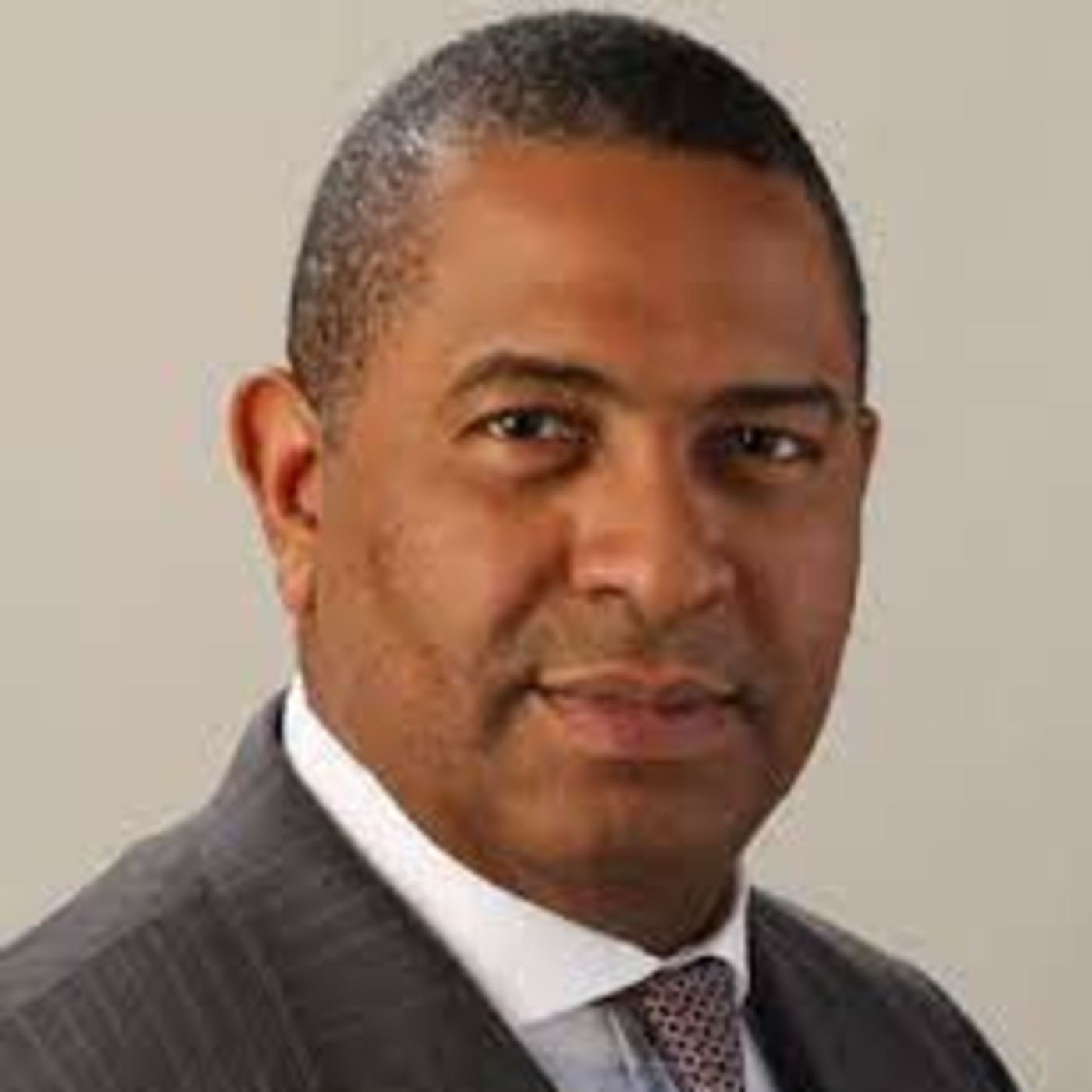
Aoifinn Devitt: I’m Aoifinn Devitt and welcome to the 50 Faces Podcast. A podcast committed to revealing the richness and diversity of the world of investment by focusing on its people and their stories. I’m joined today by Marquette Chester, who is Senior Managing Director and Head of Alternatives at Exponents Inc., based in Atlanta, Georgia. He previously spent over 20 years at Invesco, the last 11 years of which were as Managing Director within the private capital area. Welcome, Marquette. Thanks for joining me today.
Marquette Chester: Thank you, Yifan. I really appreciate it. It’s good to hear your voice. It’s good to reconnect.
Aoifinn Devitt: It certainly is. Well, I’ve never asked you this question, but we’re going to go right back to the very beginning. And where did you grow up and what did you study and how did investment come onto the horizon for you?
Marquette Chester: Well, thank you. I am an Atlanta-born and raised person. I went to public school here in Atlanta and then went off to Durham, North Carolina to attend Duke University. My family has its roots here in the state of Georgia, and so I tried for about 20 years to get back here after graduating from college, falling in love with the young lady that was from North Carolina. We had our first 2 children in North Carolina, and in 1992, we physically moved back to Atlanta. And so while we’ve always had home base here, we’ve moved around. I’ve moved around a lot. I’ve worked remotely for a large amount of my career, and for the last 15 years, of my career leading up to January 2020, I had a home in New York and a home here in Atlanta. But ever since then, I’ve made a promise to my wife and our children that Atlanta is home. Although what I’m doing now with Exponent is based out of Philadelphia, I am going to be kind of working here in my home for the foreseeable future. So it’s an exciting time, but Atlanta is home. And I’ve lived in a lot of different places and I’ve traveled the world, as you well know.
Aoifinn Devitt: And certainly you’re not alone in seeking out the lifestyle advantages of Atlanta. I know it’s had a surge of population recently, so obviously a sign of what it has to offer.
Marquette Chester: Too much traffic and the airport is getting too big, but that’s neither here nor there.
Aoifinn Devitt: Well, and going back to your own start in the world of investment, what did you study at university and what was your first role?
Marquette Chester: So I left Atlanta fully thinking of becoming an engineer of some kind. Really had the opportunity of having good grades in high school, decent test scores, and I played a sport. And so all of that opened up some opportunities for me in the late ’70s, early ’80s, and really did not have anything in mind about investments, candidly, because as a young man of the age of 18, I had never been introduced to investments. I grew up in a public housing facility here in Atlanta, actually the oldest one in the country, I had the fortune of having a parent who was very much committed to education, but did not have much education herself. But at the end of the day, I really did not get introduced to investments until, as strange as this may sound, until I was in college. And it was because I picked a school that was good academically and not that great when it came to football, but it was good enough for me to get an education. And I got exposed to working in finance and economics at Duke University. And long story short, that’s where I got the bug. And my first job out of college was at Merrill Lynch. I was going to be a registered investment advisor using today’s terms. And back in the early ’80s, that meant that you were going to sell to friends and family first and then build a book. And I didn’t have any friends or family with any disposable income to speak of. And I wound up getting involved in the institutional side in 1986. So that’s the Cliff Notes version of it. Not a path that anybody today would hopefully take, but it’s the path that I have taken and I’m very blessed to have been able to do it.
Aoifinn Devitt: Well, interesting. And it’s actually quite funny how that worked out to your advantage, because had you had maybe a friends and family circle, you may never have maybe reached the world of institutional investors because you would’ve been focused on that and may never have seen the success you’ve enjoyed So it’s funny how life works out, I suppose. One question I love to ask when I hear about someone who’s played sport at a competitive level is what kind of lessons have you taken from sport, whether it be the team dynamic or leaving it all on the field, that you have taken into your professional life?
Marquette Chester: The question kind of begs for a definition, and I always give this definition. I think I actually gave it yesterday during a talk with some of my colleagues. Everybody likes to talk about being a team player. And I think in the world of finance and investments, a team approach, if you will allow me a diversified team approach, I think is how we’re going to be successful going forward. But what does a team approach really mean? Because I like to use the analogy that Davis Cup tennis is a team sport, but then U.S. Football is also a team sport.. And Davis Cup tennis is really about what you do and what you do gets added or subtracted to the team score. Whereas in U.S. Football and to a certain extent in soccer or world football, it’s really about how the parts fit together to make for a really team experience. And my career, my investment career, candidly my personal life has always benefited from being more a part of a football team than a Davis Cup tennis team.
Aoifinn Devitt: Very interesting comparison of the two teams. And now just moving to your role at Exponential, can you just describe that a little bit in terms of the firm itself and what you focus on?
Marquette Chester: Sure. Exponential has more than a 25-year history. It was started by Tina Byles Williams, who at the time had just left the City of Philadelphia as its first Chief Investment Officer. During her tenure there, I am delighted to say that she was an advocate in the ’80s for diversity and inclusion. She was in fact one of the first institutional accounts that the firm that I was at in the mid-’80s we ever had. And I always appreciated her for that willingness to be a maverick, someone with vision, and be very clear about the expectation is performance, but the opportunity is to be able to come in and discuss what you do and who you are. She has transformed the business over the last 25+ years, and today it represents a $15 billion platform doing public securities on the fixed income side, public quantitative equity strategies on the equity side. There’s also an international and emerging markets platform that is based on kind of a manager of managers strategy with some ability to customize. And there are a number of other custom types of solutions that she’s created, along with a stellar team based in both Philadelphia and Durham, North Carolina. A couple of years ago in 2018, the firm did an acquisition in which it acquired a firm out of Durham, North Carolina by the name of Piedmont Advisors, which is where capabilities in core fixed income and quantitative equities were added. And at that point in time, along with the manager-to-manager platform, It represented kind of a sea change within the marketplace when it comes to diverse and women-owned businesses, at least in the Black and Latino environment, in that there really hadn’t been a successful transaction of two firms where one and one actually equal four or five. And in this case, they were about of equal size, and they have now grown at least $2 billion since the transaction. And through COVID, I would add. So there’s something to say that scale is important. There’s something to say about culture being important. And so that’s what Exponent is about. Very quickly, let me add that we had a discussion and Tina is very big about talking about being a solution provider to investors that invest with her. She kind of takes that philosophy that she had once as an allocator, and she appreciated firms that came in to do more than just talk about product. And I just said, “Well, I’m curious. I mean, I’m delighted to hear about this transition and this evolution within the firm, but you don’t have any alternatives. And how can you really be a solution provider in today’s times in asset management without having it?” And I’m not saying to the mutual exclusion of the publicly traded stuff, but you need to be able to do a broad array of activities. And my contention was not lost on her. I think she was a few steps ahead of me in thinking about it. And long story short, I retired in January of 2020 and was helping her and McCullough Williams and the rest of the team there in Philadelphia think through some ideas. And lo and behold, an opportunity created itself for me to come and help launch a private equity platform for Exponents. And I did that earlier last year. It’ll be a year this February.
Aoifinn Devitt: So like many people of your stature, it seems like the only thing you’ve not been successful at is retiring. It seems that the investment world is luring you back. I’d love to just dig into that a little bit. You’ve had a career, such a long career, and we’ll talk later about the highs and lows, but I’d love to hear about the transition you’ve seen in the industry over that time and what it is that you’ve seen to be consistently behind your success in building institutional businesses. What has been the edge that you’ve brought to the table?
Marquette Chester: I don’t know how many people you’ve interviewed on this podcast, can now say what I’m about to say. Might get edited out, I hope it doesn’t. I think the success in this business in the ’80s and in the 2020s and beyond is based on the ability to solve a problem. And I can remember the time, the first time that you and I met and you had a problem. Your problem was, I have limited capacity to put capital to work and I need to make sure that I’m getting an appropriate amount of return for the limited capital I have to allocate. And we talked about it and we found a way that wasn’t just a product. It wasn’t just, here’s a product, you can do this. We found a way to create a solution. And I think that at the end of the day, Aoifinn, that is what this business always has been about and is becoming more evident today. It’s the reason why you’re starting to see this morphing where either you have scale or you’re extremely boutique, and there really isn’t any room for anything that’s kind of in the middle. And so I think the success, the challenges, and the opportunities in my career that will approach 40 years pretty soon has been all about understanding what the problems and challenges are for the investor that you’re working with and trying to create a solution if you have the ability to do so.
Aoifinn Devitt: No, I love that. No editing will be applied to that. Great word. And actually, it’s a great segue to discussing the investment world at large, because now that you’re looking at perhaps problems that need to be solved today, how much does ESG factor into that? And I suppose from your perspective, how much is that on the minds of the institutions you’re working with?
Marquette Chester: Yeah, thoughtful question requires a thoughtful answer. For me, The S in ESG has been my life story, right? The ability to be the only in a room has been the trumpeting call for more than 75% of my career. I am delighted to say that that is falling away fast and quickly and is falling away dynamically. It’s not just that I’m not the only person of color in the room, but there are a variety of different types of colors in the room. And it’s not just about the physical color, but it’s about the backgrounds and the experiences of the people all focused on trying to provide a solution. I think that particularly in the public markets, the definition of ESG, what it means, how you’re going to measure it, how you’re going to monitor it, right, has developed much more than it has in the private markets. In the private markets is kind of a feast or famine role. It’s either because of younger, more dynamic, and more diverse investors where the ESG principles are front foot for them, in which they’re doing it within the construct of a private equity venture capital private markets solution, or you have the old curmudgeons like me who have been doing it the same way for so many number of years, but are now starting to have to consider What are the impacts of ESG on my portfolio? So I think that what ESG is doing is proliferating itself to not just being kind of something that you sit on the side and it’s really for this kind of unique bespoke group of people. I think that ESG has now evolved as a significant part of the discussion around solution. And on the public side, I think it has been better defined. And on the private side, it is being actively discussed.
Aoifinn Devitt: Well, it is certainly rising to the top of agendas from my perspective. So it’s great that it’s already in a significant part of the discussion from your standpoint too. Sticking with the S a little bit, it seems if I’m kind of picking up the mood music from your discussion a little bit, you seem quite optimistic about the direction of travel that the industry is going through now in terms of making itself more diverse. How far along would you say we are in that journey in terms of where we need to be? Yeah, I’ll ask that question first and then we’ll talk about what interventions maybe make a difference.
Marquette Chester: Yeah, well, the industry has changed a lot. The industry needs to change a lot more. In a business that we measure stuff by numbers, I really wish I could put a number on it, but I can’t. I just think it’s about what is fair and what makes sense, and probably more importantly, what is the most effective. As the marketplace has become more diverse, we’ve seen the market grow more dynamically. When the market was much more narrow, it tended to not be as robust as it is today. And so to a certain extent, be it a principle of capitalism or just the emotional spirit of the human genome, I think the more we allow ourselves to be tested by other people’s ideas and thoughts and create solutions from that, We have growth, we have innovation, we make a difference. And so I don’t know where to track where we are in that. I trust that the successes of the past will not intimidate those that are used to making all the decisions and cause them to do something that would stem or to stunt the growth that we’ve seen. But there’s no question, all I have to do is look at your podcast and just see the vast array of different shades, genders of people who are now effecting top type of returns within financial services. And it is in fact an indication of where I now call home for me at Exponential. It is an extremely diverse business. Yes, physically people are of color and they’re men and women, but there’s also a variety of different backgrounds that sometimes doesn’t naturally give to everybody being in a kumbaya moment. But ultimately, because of trust and respect, we build to that. And I think that that is something that the industry is trending towards. And I just hope that those that are used to being the ones with the answers all the time don’t cause it to have to hit any type of speed bump.
Aoifinn Devitt: I agree with you. And I do think that the industry is improving. I think what we need to get better at is making these more diverse aspects of the industry more visible. Because obviously the, for example, in the media and as spokespeople of firms, because then when we associate an investment spokesperson, we don’t necessarily associate them with just one type, that we have multiple representatives of that. So glad to hear you share my optimism there. You’ve had a long career and you mentioned close to 4 decades, and you don’t have a long career like that in investing through multiple market cycles. Without some notable highs or lows. Can you share maybe one or two of those with us?
Marquette Chester: Oh boy, I think let’s start out with some of the most challenging. Some of the most challenging times over my career have been when we are not at expectation, we’re not producing as we had indicated we would produce with a particular client, and you have to take the hard medicine of being able to say when— first you must listen to understand how they are absorbing what you’re doing, don’t make an assumption. But then once you listen and you know that we really aren’t achieving what we need to achieve, then have the humility to say, okay, what can we do that’s different? And I’ve had 2 or 3 phases, and none of these were easy, to be candid with you. One phase is that there really wasn’t anything more different we could do We were just in the wrong space in the marketplace, but we were doing exactly what we told that particular client we were going to do, or that investor we were going to do. Other times we’ve had things that have happened within our organization that were beyond my immediate control, but nonetheless shed some negative light on the investment or the portfolio of the business that we were managing. And then lastly, I’ve had the hard task of marshaling resources within my own organization to make changes because we were not meeting the goals that we had set forth for our client. And it was up to us to make that happen before they would make it happen. And again, none of those things are particularly easy to do, but it’s a natural course of being around long enough to see a variety of different market cycles. That which I’m the most excited about And candidly, at some point in time in my life, I had someone ask me, what is my biggest regret about the business? My biggest regrets and my highest achievements are always the same thing: people. I believe in people. I always have. People that I agree with, people that I don’t agree with, I’ve always believed in people. And so those people provide me with the greatest joy, and they also afford me some of the greatest disappointments in my career. But I don’t let it get me too high and I don’t let it get me too low because none of us are perfect and our job is to kind of continue to work through it. So I hope I answered the question. One is that I really believe the hardest thing in my career is not meeting the expectations of those people that are around me, whether on my team or my clients or the people that trust me to help them with the investments. And the greatest excitement, as well as some of the greatest disappointments, is my belief in people. People and seeing them achieve and do well, whether they be a client, whether they be a CIO, or whether they be a colleague, that has always been what makes me the most excited. And I oftentimes become disappointed because I believe in people, but it doesn’t keep me from doing it.
Aoifinn Devitt: Well said. And staying on the topic of people, I always like to ask whether there was any one or two people who had an influence on you and maybe the course of your career that you can mention. I know there’s probably a lot more than one or two, but let’s just select one or two.
Marquette Chester: Let me first say I am a product of women in my life, for lack of better terms. I was born to a mother who raised me as a single parent, who believed in me, supported me, guided me, disciplined me, gave me the belief that I could do whatever I thought I could do. And as someone who didn’t have a formal education, her vision well beyond anybody with a PhD, in my view. Next, I then met my girl, is what I call her. And my wife and I have been married for 34 years. We’ve been together for 42. That’s not easy dealing with me. I know it’s not. But she’s been a good counterbalance for me. And because of that, my daughter, our daughter, our sons, our family, the basis. And then oddly enough, even the young lady I’m working with now, Tina, has been enormously involved in my career, not so much by us doing a lot of work together like we’re doing now, but just the opportunity to create dynamic access points along the way as she grew her business, as I was growing my business and my career, always staying in touch. And the fact that we’ve known each other for 30-plus years is an indication of the fact that there’s something very dynamic about each of our careers and each of our personal lives. There have been some men, and the ones that stick out the most are Cicero Green, CIO of an insurance company that we manage money for. I used to have to go see him once a month, or— and it felt like it was once a day. It was the hardest, most challenging, taskmaster-oriented conversation ever. But at the end of the day, it made me better, and it made me better early. I was in my 20s. And I’ve taken those lessons throughout my entire life. The rest of the list, I won’t go through it, but the rest of the list are people that I’ve stood next to for at least 3 decades, maybe in some cases 4. Isaac Green, Charles Curry, Ken Lewis, these are guys that I went to college with that I’ve maintained a working relationship with within financial services now for more than 4 decades. And so it starts out with the ladies, as it should,, and it ends up with some folks that have been able to make sure I stay on track.
Aoifinn Devitt: Well, we do say ladies first, so thank you for adhering to that. So when it comes to wisdom too, I mean, these people you mentioned going right back to your own mother, to the influences in your life, and you’ve already shared some words of wisdom with us in terms of the importance of people and networking. Was there any maybe creed or motto that you’ve carried with you through your life?
Marquette Chester: If my sons hear this podcast, they’re gonna go, Boy, she shouldn’t have asked that question. Because I tell them all the time, you’ve got to have a plan. You’ve got to have something that you think out about what you’re going to do, how you’re going to do it. And if all you do is think about it and you don’t write it down, then you don’t really believe in it. And if you don’t think about it, write it down, and share it with somebody, then you’re not being held accountable. So got to have a plan. I also say that at the end of the day, you have to do the job. You can’t let the job do you. And I say that often, particularly to people who are trying to figure out how do I balance work and Because, family. You know, as someone that has had to sacrifice a lot over the last almost 4 decades, I am blessed and highly favored because of family. I don’t know that I never ever missed anything that was so important that my children would say to me, I really wish you were there. And that’s all because of a partnership. So you’ve got to be able to work, have a plan, work hard. You do the job, don’t let the job do you. And then finally, hold yourself accountable. Hold yourself to a standard higher than anybody else could ever hold you accountable for. Unfortunately, it doesn’t let you get too high, but it also keeps you from getting too low. I always thought it was a blessing, and now I have to be careful with my children and the people that work around me that are younger. Is that I never had a hurdle that anybody else gave me that was ever close to the hurdle I gave myself. And so I was always holding myself to a higher standard. Those are the things that have guided me throughout my life, professionally and personally.
Aoifinn Devitt: Well, thank you for sharing that. And before I move to my last question, I know that now that having not succeeded in really fully retiring or retiring at all, but you still have a lot of other interests that are close to your heart. Can you maybe speak about any of the organizations or charities that you’re involved with now?
Marquette Chester: I spent a number of years working with the National Association of Securities Professionals. It’s a trade organization focused on women and people of color in the financial services industry. I served on the board for more than 25 years. I was the chairman, I was the vice chairman. I ran a number of our pension conferences. I came to the conclusion that either it was time for me to go and I had done what I needed to do, or I was part of the problem and needed to leave. And either case, I stepped away a few years ago, still stay connected. I do get phone calls occasionally from people, but love how that organization has really evolved over time. I am a huge fan of Bob Green at the National Association of Investment Companies. Have known Bob for more than 20 years. Think the work that that organization is doing around diversity and inclusion within the private markets is very dynamic. And it’s very much about helping people get into the industry, but it’s also about making sure we sustain those folks that are there, that are in the industry. I think that it’s important to have a background that gives back to the community that you’re a part of, and I do that through the fraternity that I’m a part of, Omega Psi Phi. I’ve been a member now for 41 years, I’ll be 42 in March. And so we do a lot of stuff with community, we do a lot of stuff around healthcare, And that has been a big part of my life for a very, very long time. And then, look, I do what I’m asked to do. I’m very excited about helping the schools that our children have attended. I’m very excited about helping friends and family that take on their own particular initiatives because, as I said before, I’m a very big believer in people. And so if I’m involved in something, it’s normally because somebody has asked me to or that I have found a way to get involved with someone that I have a tremendous amount of respect for.
Aoifinn Devitt: Well, it was of course through some of those events, those NASP events, that we got to know each other personally. So socially, should I say, as opposed to professionally. So really appreciate your service there. My last question is any advice you would have for your younger self looking back to that football player? What do you know now that you wish you had known at that age?
Marquette Chester: That it was going to be harder than I thought it was going to be. That it was going to take longer than I thought it would take. That there was nothing that I was going to be able to fully control except what I do, what I’m responsible for. I think the younger me, you don’t know this, but the younger me was at the early days of institutional investment managers who were African American, male and/or female. My career started in 1985, ’86. There were fewer than 5, I think maybe even 3, African American or Latino-owned asset management shops. There was the great work of John Rogers and Ariel. There was the work that was taking place with Eddie Brown, him starting Brown Capital Management. It just really wasn’t that many of us. I was at NCM Capital along with Maceo Sloan and Isaac Green and others. And so I really thought that this was going to happen quick. And I really thought that by showing up and doing the job that you say you’re going to do, you will receive the appropriate respect, acknowledgement, and growth. But it was harder than that. And I’m okay with it because I think that we’re in the best place that we could be having worked really hard. But that would be the two things that I would say, that it’s going to take longer and it’s going to be harder than you think. And I’m not sure it would have changed anything I did. But that would be the only advice I would have to my younger self.
Aoifinn Devitt: Well, I’m going to take my presenter’s privilege to maybe add a little bit to that advice. It’s going to take longer, it’s going to be harder, but it will be worth it. And I think for sure, Marquette, it was very much worth it. And thank you so much for coming here, for sharing your wisdom with us, and for being such a champion of people that you are. It is very much appreciated, and our industry is richer for it. So thank you for coming here and sharing your insights with us.
Marquette Chester: Thank you very much. All the best to you and your listeners in 2022, and on to the next heel.
Aoifinn Devitt: Indeed. I’m Aoifinn Devitt. Thank you for listening to the 50 Faces Podcast. If you liked what you heard and would like to tune in to hear more inspiring investors and their personal journeys, please subscribe on Apple Podcasts, wherever you get your podcasts. This podcast is for informational purposes only and should not be construed as investment advice, and all views are personal and should not be attributed to to the organizations and affiliations of the host or any guest.
Aoifinn Devitt: This podcast is brought to you by the kind support of the Active Share Podcast. What does a two-time world-winning coach and MLB baseball team owner, top chef, and luxury fashion designer have in common? They’ve all been featured on the Active Share Podcast. If you’re seeking the less obvious and are curious about the ever-changing world and how it affects investing, the Active Share Podcast is for you. Hear thought-provoking conversations with thought leaders, company executives, and William Blair Investment Management’s own analysts and portfolio managers as they share unique perspectives on investing in a world that’s always evolving. Download the Active Share podcast on iTunes, Spotify, Google, Stitcher, and TuneIn.
Marquette Chester: My biggest regrets and my highest achievements are always the same thing: people. I believe in people. I always have. People that I agree with, people I don’t agree with, I’ve always believed in people. And so those people provide me with the greatest joy, and they also afford me some of the greatest disappointments in my career. But I don’t let it get me too high and I don’t let it get me too low because none of us are perfect. And our job is to kind of continue to work through it.
Aoifinn Devitt: I’m Aoifinn Devitt and welcome to the 50 Faces Podcast. A podcast committed to revealing the richness and diversity of the world of investment by focusing on its people and their stories. I’m joined today by Marquette Chester, who is Senior Managing Director and Head of Alternatives at Exponents Inc., based in Atlanta, Georgia. He previously spent over 20 years at Invesco, the last 11 years of which were as Managing Director within the private capital area. Welcome, Marquette. Thanks for joining me today.
Marquette Chester: Thank you, Yifan. I really appreciate it. It’s good to hear your voice. It’s good to reconnect.
Aoifinn Devitt: It certainly is. Well, I’ve never asked you this question, but we’re going to go right back to the very beginning. And where did you grow up and what did you study and how did investment come onto the horizon for you?
Marquette Chester: Well, thank you. I am an Atlanta-born and raised person. I went to public school here in Atlanta and then went off to Durham, North Carolina to attend Duke University. My family has its roots here in the state of Georgia, and so I tried for about 20 years to get back here after graduating from college, falling in love with the young lady that was from North Carolina. We had our first 2 children in North Carolina, and in 1992, we physically moved back to Atlanta. And so while we’ve always had home base here, we’ve moved around. I’ve moved around a lot. I’ve worked remotely for a large amount of my career, and for the last 15 years, of my career leading up to January 2020, I had a home in New York and a home here in Atlanta. But ever since then, I’ve made a promise to my wife and our children that Atlanta is home. Although what I’m doing now with Exponent is based out of Philadelphia, I am going to be kind of working here in my home for the foreseeable future. So it’s an exciting time, but Atlanta is home. And I’ve lived in a lot of different places and I’ve traveled the world, as you well know.
Aoifinn Devitt: And certainly you’re not alone in seeking out the lifestyle advantages of Atlanta. I know it’s had a surge of population recently, so obviously a sign of what it has to offer.
Marquette Chester: Too much traffic and the airport is getting too big, but that’s neither here nor there.
Aoifinn Devitt: Well, and going back to your own start in the world of investment, what did you study at university and what was your first role?
Marquette Chester: So I left Atlanta fully thinking of becoming an engineer of some kind. Really had the opportunity of having good grades in high school, decent test scores, and I played a sport. And so all of that opened up some opportunities for me in the late ’70s, early ’80s, and really did not have anything in mind about investments, candidly, because as a young man of the age of 18, I had never been introduced to investments. I grew up in a public housing facility here in Atlanta, actually the oldest one in the country, I had the fortune of having a parent who was very much committed to education, but did not have much education herself. But at the end of the day, I really did not get introduced to investments until, as strange as this may sound, until I was in college. And it was because I picked a school that was good academically and not that great when it came to football, but it was good enough for me to get an education. And I got exposed to working in finance and economics at Duke University. And long story short, that’s where I got the bug. And my first job out of college was at Merrill Lynch. I was going to be a registered investment advisor using today’s terms. And back in the early ’80s, that meant that you were going to sell to friends and family first and then build a book. And I didn’t have any friends or family with any disposable income to speak of. And I wound up getting involved in the institutional side in 1986. So that’s the Cliff Notes version of it. Not a path that anybody today would hopefully take, but it’s the path that I have taken and I’m very blessed to have been able to do it.
Aoifinn Devitt: Well, interesting. And it’s actually quite funny how that worked out to your advantage, because had you had maybe a friends and family circle, you may never have maybe reached the world of institutional investors because you would’ve been focused on that and may never have seen the success you’ve enjoyed So it’s funny how life works out, I suppose. One question I love to ask when I hear about someone who’s played sport at a competitive level is what kind of lessons have you taken from sport, whether it be the team dynamic or leaving it all on the field, that you have taken into your professional life?
Marquette Chester: The question kind of begs for a definition, and I always give this definition. I think I actually gave it yesterday during a talk with some of my colleagues. Everybody likes to talk about being a team player. And I think in the world of finance and investments, a team approach, if you will allow me a diversified team approach, I think is how we’re going to be successful going forward. But what does a team approach really mean? Because I like to use the analogy that Davis Cup tennis is a team sport, but then U.S. Football is also a team sport.. And Davis Cup tennis is really about what you do and what you do gets added or subtracted to the team score. Whereas in U.S. Football and to a certain extent in soccer or world football, it’s really about how the parts fit together to make for a really team experience. And my career, my investment career, candidly my personal life has always benefited from being more a part of a football team than a Davis Cup tennis team.
Aoifinn Devitt: Very interesting comparison of the two teams. And now just moving to your role at Exponential, can you just describe that a little bit in terms of the firm itself and what you focus on?
Marquette Chester: Sure. Exponential has more than a 25-year history. It was started by Tina Byles Williams, who at the time had just left the City of Philadelphia as its first Chief Investment Officer. During her tenure there, I am delighted to say that she was an advocate in the ’80s for diversity and inclusion. She was in fact one of the first institutional accounts that the firm that I was at in the mid-’80s we ever had. And I always appreciated her for that willingness to be a maverick, someone with vision, and be very clear about the expectation is performance, but the opportunity is to be able to come in and discuss what you do and who you are. She has transformed the business over the last 25+ years, and today it represents a $15 billion platform doing public securities on the fixed income side, public quantitative equity strategies on the equity side. There’s also an international and emerging markets platform that is based on kind of a manager of managers strategy with some ability to customize. And there are a number of other custom types of solutions that she’s created, along with a stellar team based in both Philadelphia and Durham, North Carolina. A couple of years ago in 2018, the firm did an acquisition in which it acquired a firm out of Durham, North Carolina by the name of Piedmont Advisors, which is where capabilities in core fixed income and quantitative equities were added. And at that point in time, along with the manager-to-manager platform, It represented kind of a sea change within the marketplace when it comes to diverse and women-owned businesses, at least in the Black and Latino environment, in that there really hadn’t been a successful transaction of two firms where one and one actually equal four or five. And in this case, they were about of equal size, and they have now grown at least $2 billion since the transaction. And through COVID, I would add. So there’s something to say that scale is important. There’s something to say about culture being important. And so that’s what Exponent is about. Very quickly, let me add that we had a discussion and Tina is very big about talking about being a solution provider to investors that invest with her. She kind of takes that philosophy that she had once as an allocator, and she appreciated firms that came in to do more than just talk about product. And I just said, “Well, I’m curious. I mean, I’m delighted to hear about this transition and this evolution within the firm, but you don’t have any alternatives. And how can you really be a solution provider in today’s times in asset management without having it?” And I’m not saying to the mutual exclusion of the publicly traded stuff, but you need to be able to do a broad array of activities. And my contention was not lost on her. I think she was a few steps ahead of me in thinking about it. And long story short, I retired in January of 2020 and was helping her and McCullough Williams and the rest of the team there in Philadelphia think through some ideas. And lo and behold, an opportunity created itself for me to come and help launch a private equity platform for Exponents. And I did that earlier last year. It’ll be a year this February.
Aoifinn Devitt: So like many people of your stature, it seems like the only thing you’ve not been successful at is retiring. It seems that the investment world is luring you back. I’d love to just dig into that a little bit. You’ve had a career, such a long career, and we’ll talk later about the highs and lows, but I’d love to hear about the transition you’ve seen in the industry over that time and what it is that you’ve seen to be consistently behind your success in building institutional businesses. What has been the edge that you’ve brought to the table?
Marquette Chester: I don’t know how many people you’ve interviewed on this podcast, can now say what I’m about to say. Might get edited out, I hope it doesn’t. I think the success in this business in the ’80s and in the 2020s and beyond is based on the ability to solve a problem. And I can remember the time, the first time that you and I met and you had a problem. Your problem was, I have limited capacity to put capital to work and I need to make sure that I’m getting an appropriate amount of return for the limited capital I have to allocate. And we talked about it and we found a way that wasn’t just a product. It wasn’t just, here’s a product, you can do this. We found a way to create a solution. And I think that at the end of the day, Aoifinn, that is what this business always has been about and is becoming more evident today. It’s the reason why you’re starting to see this morphing where either you have scale or you’re extremely boutique, and there really isn’t any room for anything that’s kind of in the middle. And so I think the success, the challenges, and the opportunities in my career that will approach 40 years pretty soon has been all about understanding what the problems and challenges are for the investor that you’re working with and trying to create a solution if you have the ability to do so.
Aoifinn Devitt: No, I love that. No editing will be applied to that. Great word. And actually, it’s a great segue to discussing the investment world at large, because now that you’re looking at perhaps problems that need to be solved today, how much does ESG factor into that? And I suppose from your perspective, how much is that on the minds of the institutions you’re working with?
Marquette Chester: Yeah, thoughtful question requires a thoughtful answer. For me, The S in ESG has been my life story, right? The ability to be the only in a room has been the trumpeting call for more than 75% of my career. I am delighted to say that that is falling away fast and quickly and is falling away dynamically. It’s not just that I’m not the only person of color in the room, but there are a variety of different types of colors in the room. And it’s not just about the physical color, but it’s about the backgrounds and the experiences of the people all focused on trying to provide a solution. I think that particularly in the public markets, the definition of ESG, what it means, how you’re going to measure it, how you’re going to monitor it, right, has developed much more than it has in the private markets. In the private markets is kind of a feast or famine role. It’s either because of younger, more dynamic, and more diverse investors where the ESG principles are front foot for them, in which they’re doing it within the construct of a private equity venture capital private markets solution, or you have the old curmudgeons like me who have been doing it the same way for so many number of years, but are now starting to have to consider What are the impacts of ESG on my portfolio? So I think that what ESG is doing is proliferating itself to not just being kind of something that you sit on the side and it’s really for this kind of unique bespoke group of people. I think that ESG has now evolved as a significant part of the discussion around solution. And on the public side, I think it has been better defined. And on the private side, it is being actively discussed.
Aoifinn Devitt: Well, it is certainly rising to the top of agendas from my perspective. So it’s great that it’s already in a significant part of the discussion from your standpoint too. Sticking with the S a little bit, it seems if I’m kind of picking up the mood music from your discussion a little bit, you seem quite optimistic about the direction of travel that the industry is going through now in terms of making itself more diverse. How far along would you say we are in that journey in terms of where we need to be? Yeah, I’ll ask that question first and then we’ll talk about what interventions maybe make a difference.
Marquette Chester: Yeah, well, the industry has changed a lot. The industry needs to change a lot more. In a business that we measure stuff by numbers, I really wish I could put a number on it, but I can’t. I just think it’s about what is fair and what makes sense, and probably more importantly, what is the most effective. As the marketplace has become more diverse, we’ve seen the market grow more dynamically. When the market was much more narrow, it tended to not be as robust as it is today. And so to a certain extent, be it a principle of capitalism or just the emotional spirit of the human genome, I think the more we allow ourselves to be tested by other people’s ideas and thoughts and create solutions from that, We have growth, we have innovation, we make a difference. And so I don’t know where to track where we are in that. I trust that the successes of the past will not intimidate those that are used to making all the decisions and cause them to do something that would stem or to stunt the growth that we’ve seen. But there’s no question, all I have to do is look at your podcast and just see the vast array of different shades, genders of people who are now effecting top type of returns within financial services. And it is in fact an indication of where I now call home for me at Exponential. It is an extremely diverse business. Yes, physically people are of color and they’re men and women, but there’s also a variety of different backgrounds that sometimes doesn’t naturally give to everybody being in a kumbaya moment. But ultimately, because of trust and respect, we build to that. And I think that that is something that the industry is trending towards. And I just hope that those that are used to being the ones with the answers all the time don’t cause it to have to hit any type of speed bump.
Aoifinn Devitt: I agree with you. And I do think that the industry is improving. I think what we need to get better at is making these more diverse aspects of the industry more visible. Because obviously the, for example, in the media and as spokespeople of firms, because then when we associate an investment spokesperson, we don’t necessarily associate them with just one type, that we have multiple representatives of that. So glad to hear you share my optimism there. You’ve had a long career and you mentioned close to 4 decades, and you don’t have a long career like that in investing through multiple market cycles. Without some notable highs or lows. Can you share maybe one or two of those with us?
Marquette Chester: Oh boy, I think let’s start out with some of the most challenging. Some of the most challenging times over my career have been when we are not at expectation, we’re not producing as we had indicated we would produce with a particular client, and you have to take the hard medicine of being able to say when— first you must listen to understand how they are absorbing what you’re doing, don’t make an assumption. But then once you listen and you know that we really aren’t achieving what we need to achieve, then have the humility to say, okay, what can we do that’s different? And I’ve had 2 or 3 phases, and none of these were easy, to be candid with you. One phase is that there really wasn’t anything more different we could do We were just in the wrong space in the marketplace, but we were doing exactly what we told that particular client we were going to do, or that investor we were going to do. Other times we’ve had things that have happened within our organization that were beyond my immediate control, but nonetheless shed some negative light on the investment or the portfolio of the business that we were managing. And then lastly, I’ve had the hard task of marshaling resources within my own organization to make changes because we were not meeting the goals that we had set forth for our client. And it was up to us to make that happen before they would make it happen. And again, none of those things are particularly easy to do, but it’s a natural course of being around long enough to see a variety of different market cycles. That which I’m the most excited about And candidly, at some point in time in my life, I had someone ask me, what is my biggest regret about the business? My biggest regrets and my highest achievements are always the same thing: people. I believe in people. I always have. People that I agree with, people that I don’t agree with, I’ve always believed in people. And so those people provide me with the greatest joy, and they also afford me some of the greatest disappointments in my career. But I don’t let it get me too high and I don’t let it get me too low because none of us are perfect and our job is to kind of continue to work through it. So I hope I answered the question. One is that I really believe the hardest thing in my career is not meeting the expectations of those people that are around me, whether on my team or my clients or the people that trust me to help them with the investments. And the greatest excitement, as well as some of the greatest disappointments, is my belief in people. People and seeing them achieve and do well, whether they be a client, whether they be a CIO, or whether they be a colleague, that has always been what makes me the most excited. And I oftentimes become disappointed because I believe in people, but it doesn’t keep me from doing it.
Aoifinn Devitt: Well said. And staying on the topic of people, I always like to ask whether there was any one or two people who had an influence on you and maybe the course of your career that you can mention. I know there’s probably a lot more than one or two, but let’s just select one or two.
Marquette Chester: Let me first say I am a product of women in my life, for lack of better terms. I was born to a mother who raised me as a single parent, who believed in me, supported me, guided me, disciplined me, gave me the belief that I could do whatever I thought I could do. And as someone who didn’t have a formal education, her vision well beyond anybody with a PhD, in my view. Next, I then met my girl, is what I call her. And my wife and I have been married for 34 years. We’ve been together for 42. That’s not easy dealing with me. I know it’s not. But she’s been a good counterbalance for me. And because of that, my daughter, our daughter, our sons, our family, the basis. And then oddly enough, even the young lady I’m working with now, Tina, has been enormously involved in my career, not so much by us doing a lot of work together like we’re doing now, but just the opportunity to create dynamic access points along the way as she grew her business, as I was growing my business and my career, always staying in touch. And the fact that we’ve known each other for 30-plus years is an indication of the fact that there’s something very dynamic about each of our careers and each of our personal lives. There have been some men, and the ones that stick out the most are Cicero Green, CIO of an insurance company that we manage money for. I used to have to go see him once a month, or— and it felt like it was once a day. It was the hardest, most challenging, taskmaster-oriented conversation ever. But at the end of the day, it made me better, and it made me better early. I was in my 20s. And I’ve taken those lessons throughout my entire life. The rest of the list, I won’t go through it, but the rest of the list are people that I’ve stood next to for at least 3 decades, maybe in some cases 4. Isaac Green, Charles Curry, Ken Lewis, these are guys that I went to college with that I’ve maintained a working relationship with within financial services now for more than 4 decades. And so it starts out with the ladies, as it should,, and it ends up with some folks that have been able to make sure I stay on track.
Aoifinn Devitt: Well, we do say ladies first, so thank you for adhering to that. So when it comes to wisdom too, I mean, these people you mentioned going right back to your own mother, to the influences in your life, and you’ve already shared some words of wisdom with us in terms of the importance of people and networking. Was there any maybe creed or motto that you’ve carried with you through your life?
Marquette Chester: If my sons hear this podcast, they’re gonna go, Boy, she shouldn’t have asked that question. Because I tell them all the time, you’ve got to have a plan. You’ve got to have something that you think out about what you’re going to do, how you’re going to do it. And if all you do is think about it and you don’t write it down, then you don’t really believe in it. And if you don’t think about it, write it down, and share it with somebody, then you’re not being held accountable. So got to have a plan. I also say that at the end of the day, you have to do the job. You can’t let the job do you. And I say that often, particularly to people who are trying to figure out how do I balance work and Because, family. You know, as someone that has had to sacrifice a lot over the last almost 4 decades, I am blessed and highly favored because of family. I don’t know that I never ever missed anything that was so important that my children would say to me, I really wish you were there. And that’s all because of a partnership. So you’ve got to be able to work, have a plan, work hard. You do the job, don’t let the job do you. And then finally, hold yourself accountable. Hold yourself to a standard higher than anybody else could ever hold you accountable for. Unfortunately, it doesn’t let you get too high, but it also keeps you from getting too low. I always thought it was a blessing, and now I have to be careful with my children and the people that work around me that are younger. Is that I never had a hurdle that anybody else gave me that was ever close to the hurdle I gave myself. And so I was always holding myself to a higher standard. Those are the things that have guided me throughout my life, professionally and personally.
Aoifinn Devitt: Well, thank you for sharing that. And before I move to my last question, I know that now that having not succeeded in really fully retiring or retiring at all, but you still have a lot of other interests that are close to your heart. Can you maybe speak about any of the organizations or charities that you’re involved with now?
Marquette Chester: I spent a number of years working with the National Association of Securities Professionals. It’s a trade organization focused on women and people of color in the financial services industry. I served on the board for more than 25 years. I was the chairman, I was the vice chairman. I ran a number of our pension conferences. I came to the conclusion that either it was time for me to go and I had done what I needed to do, or I was part of the problem and needed to leave. And either case, I stepped away a few years ago, still stay connected. I do get phone calls occasionally from people, but love how that organization has really evolved over time. I am a huge fan of Bob Green at the National Association of Investment Companies. Have known Bob for more than 20 years. Think the work that that organization is doing around diversity and inclusion within the private markets is very dynamic. And it’s very much about helping people get into the industry, but it’s also about making sure we sustain those folks that are there, that are in the industry. I think that it’s important to have a background that gives back to the community that you’re a part of, and I do that through the fraternity that I’m a part of, Omega Psi Phi. I’ve been a member now for 41 years, I’ll be 42 in March. And so we do a lot of stuff with community, we do a lot of stuff around healthcare, And that has been a big part of my life for a very, very long time. And then, look, I do what I’m asked to do. I’m very excited about helping the schools that our children have attended. I’m very excited about helping friends and family that take on their own particular initiatives because, as I said before, I’m a very big believer in people. And so if I’m involved in something, it’s normally because somebody has asked me to or that I have found a way to get involved with someone that I have a tremendous amount of respect for.
Aoifinn Devitt: Well, it was of course through some of those events, those NASP events, that we got to know each other personally. So socially, should I say, as opposed to professionally. So really appreciate your service there. My last question is any advice you would have for your younger self looking back to that football player? What do you know now that you wish you had known at that age?
Marquette Chester: That it was going to be harder than I thought it was going to be. That it was going to take longer than I thought it would take. That there was nothing that I was going to be able to fully control except what I do, what I’m responsible for. I think the younger me, you don’t know this, but the younger me was at the early days of institutional investment managers who were African American, male and/or female. My career started in 1985, ’86. There were fewer than 5, I think maybe even 3, African American or Latino-owned asset management shops. There was the great work of John Rogers and Ariel. There was the work that was taking place with Eddie Brown, him starting Brown Capital Management. It just really wasn’t that many of us. I was at NCM Capital along with Maceo Sloan and Isaac Green and others. And so I really thought that this was going to happen quick. And I really thought that by showing up and doing the job that you say you’re going to do, you will receive the appropriate respect, acknowledgement, and growth. But it was harder than that. And I’m okay with it because I think that we’re in the best place that we could be having worked really hard. But that would be the two things that I would say, that it’s going to take longer and it’s going to be harder than you think. And I’m not sure it would have changed anything I did. But that would be the only advice I would have to my younger self.
Aoifinn Devitt: Well, I’m going to take my presenter’s privilege to maybe add a little bit to that advice. It’s going to take longer, it’s going to be harder, but it will be worth it. And I think for sure, Marquette, it was very much worth it. And thank you so much for coming here, for sharing your wisdom with us, and for being such a champion of people that you are. It is very much appreciated, and our industry is richer for it. So thank you for coming here and sharing your insights with us.
Marquette Chester: Thank you very much. All the best to you and your listeners in 2022, and on to the next heel.
Aoifinn Devitt: Indeed. I’m Aoifinn Devitt. Thank you for listening to the 50 Faces Podcast. If you liked what you heard and would like to tune in to hear more inspiring investors and their personal journeys, please subscribe on Apple Podcasts, wherever you get your podcasts. This podcast is for informational purposes only and should not be construed as investment advice, and all views are personal and should not be attributed to to the organizations and affiliations of the host or any guest.