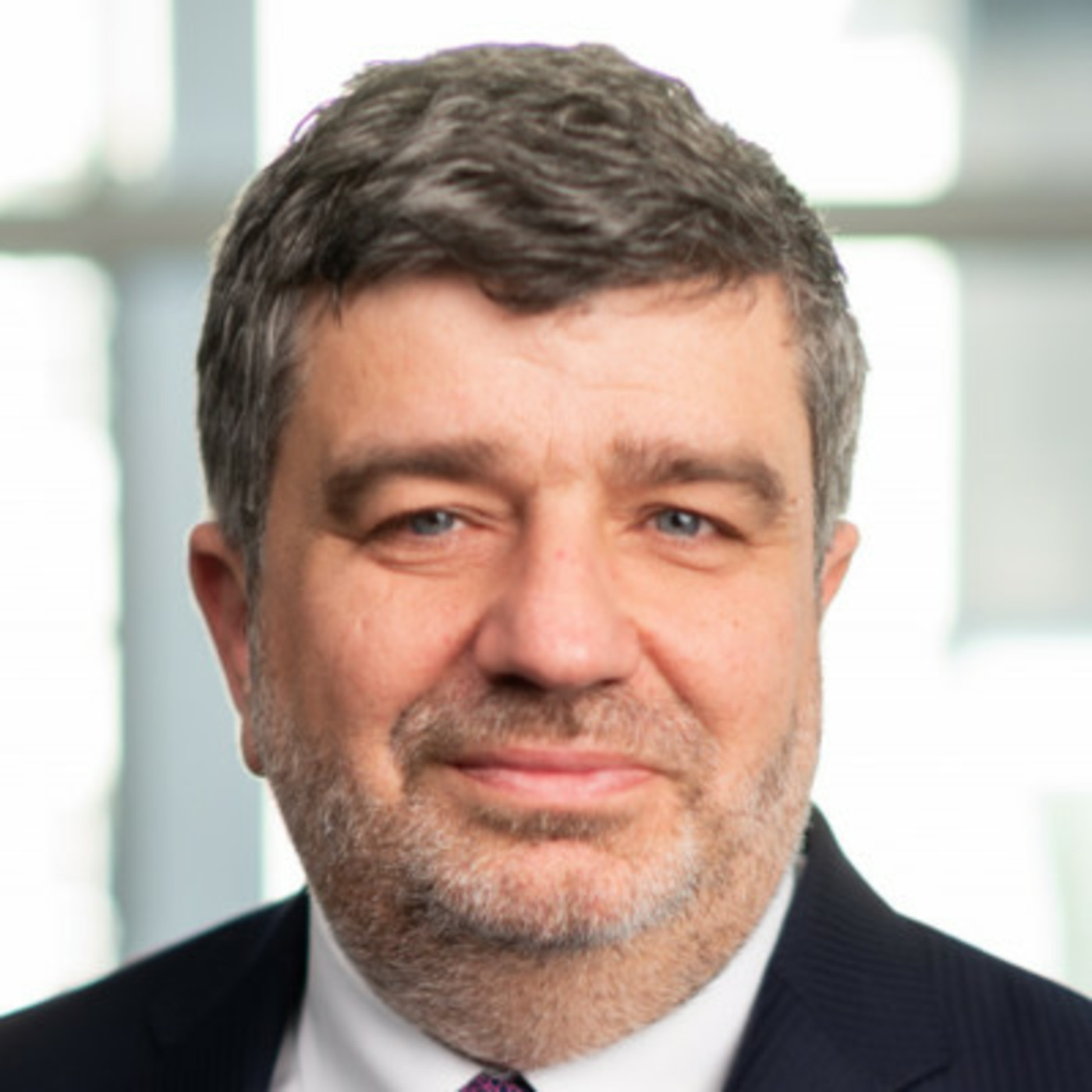
Stavros Siokas: Find out why starting a business takes double the time, double the money, and half the friends. Find out the role that trust plays, and find out how any one of us can make the biggest impact of all. In this podcast, I want to share some highlights from my discussion with Stavros Siokas, Managing Partner and Co-Founder of Astarte Partners. Stavros’s insights into the exhilaration and stress of startup life are presented in a raw, unvarnished way. Astarte Partners is an asset management firm with a global presence that is focused on identifying thematic real asset strategies that are usually difficult for investors to access. They identify the strategies and different teams that can deliver them and create asset management businesses. Stavros started his career with Salomon Brothers in New York City in the mid-’90s. Later, he was subsequently Managing Director of Citigroup, responsible for the global trading strategies across the firm and product solutions for all pension funds and insurance companies across the world. Please see the entire podcast on YouTube using the link in the show notes. But here are a few of my favorite excerpts. First, I asked Stavros about his upbringing in Greece and what it taught him.
Stavros: As you said at the beginning, I’m Greek. I grew up in Athens from a middle-class family. As a family, we faced a lot of challenges at the beginning because there were some health issues for my father. That was an amazing, difficult time, but an amazing educating time as well, because you realize what’s important in life. And what’s important in life is health and family. That pushed me into trying to achieve something better all the time. I learned from my grandfathers, which both of them were pilots for the Greek Air Force during World War II, that you can achieve whatever you want if you really work hard for it.
Stavros Siokas: We talked about his PhD in computer science and how it differed back then from the discipline it is today, how he ended up in banking, and then the decision to launch his own firm. I asked him about that and how he decided to weave in an element of impact too.
Stavros: It was not always in the cards. I always wanted to do something at one point of my career where I do something to improve things for the world. And after some time and many years of 25 years, 30 years basically into the industry, I became naive enough that I thought I could do it myself because you have to be a bit crazy, a little bit naive to start your own thing. And started, we I started 7 years ago. And we managed to grow it into an international business. Now we have presence from Sydney to Toronto and from Stockholm to Paraguay. So we became a global business. The whole thing started by trying to bring something into the asset management business, which is more fair, more aligned, but more important than anything else, has a real impact in the world. And having a real impact in the world is what drives us today. And I’ll give you one simple example. We’re the only I think private equity business, part of our carry, we give to non-privileged kids to get educated. We support women in Africa, women in India as part of our carry. As we are earning money, we give it back to society.
Stavros Siokas: We speak about what he has learned from that experience.
Stavros: If I knew what I know today, I wouldn’t start it. It was the most difficult thing I have ever done in my career. And a lot of people ask me, how does it feel? I say it takes double the time, double the money, half your friends. That’s what it takes to start a business like that. And as Warren Buffett said once, the definition of success to start a business like that is to stay solvent until you get lunch.
Stavros Siokas: We talk about the stress a startup environment can put on business relationships.
Stavros: Basically, when you work in a corporate environment and you work with someone next to him or her, It’s totally different when you are partners and you have to face pain together, when you have to see everyday life and everyone has to contribute in an environment that’s not a protective bubble. So not everyone can be an entrepreneur. Some people are great employees. Some people can afford risk and stomach risk. Some people cannot afford risk. So when you start working with different environments and different conditions, which is new to everyone, because a startup, because that’s what I started with in the beginning, is a totally new ecosystem. You don’t know how people react until you see them in specific conditions. I am different than I thought I was. People I started business working together, long-term friends, became different or are different. So until you really have shared things, built things, You really don’t know. It’s like a marriage life, correct? Until it evolves, you have to adjust or divorce.
Stavros Siokas: Astarte backs management teams and starts asset managers. I asked Stavros what they look for in a team and the role that trust plays.
Stavros: So capital raising is a challenge. And the other thing which is key is a good indication if a team is good or bad is if at the first close they bring at least one person who trusts them. Because no matter what, the first guys to invest in any fund are people who trust us or them. And it’s critical to see this small, large, doesn’t matter, ticket who confirms that someone believes in them from now.
Stavros Siokas: We dig into the array of investments offered by underlying Astarte Capital funds, in particular private debt, infrastructure, and timber investing. Let’s hear what Stavros had to say about timber investing, particularly now that it can offer potentially carbon credits.
Stavros: So first of all, I think timber as an investment is a great investment now for the simple reason, first of all, all commodities are going up, correct? So we need more commodities. And when you increase the population of the world, middle class across the world is becoming bigger and bigger and bigger. More people need commodities, especially wood-based products as we’re replacing plastic, correct? So we need more paper and everyone says we need more paper, more paper, but the only way you can get paper is either recycling it or producing through controlled environments or forests. So timber as timber for the production and development of paper and wood products is definitely a good investment. Okay, much better than before. The problem with forests is there are not many places in the world you can do that because there’s not a lot of space you can develop new forests where you have the water, you have the— so, of course, that matters. If you have a forest in Scotland, it doesn’t have the same impact as the forest in South America, correct? In Scotland, they grow 2 centimeters a year. In Uruguay, they grow 2 centimeters a day. So the difference in terms of what you can achieve is huge. So as timber has definitely value, Additive forestry, which means creating new forests, creates also new carbon credits. So you get an extra boost from the returns of the timber from the carbon credits. And what’s important with carbon credits, forests create the best quality carbon credits because they bring something new to the environment and they take pollution out. So I think as an investment, is going to be huge. Yesterday I saw 4 people announcing they’re starting new forestry businesses. We started 3 years ago, we have the first fund now getting deployed, and I believe it’s going to be huge strong interest.
Stavros Siokas: In our personal reflection section, we talked about what he took from his upbringing, and he mentions 2 family generations and what they taught him.
Stavros: The first person who really taught taught me a lot was my grandfather from my mother’s side. He, at the age of 6, he lost his parents from a genocide happening in the Black Sea. He had to walk alone from the Black Sea to Greece, and he joined the Greek Air Force at the age of 14 for the only reason they were offering him food. And he was one of the first pilots of the Greek Air Force during World War II. He was captured, he was sent to concentration camps, He escaped, he did all this. He never complained, never complained, always went for it, always challenged everything, created a beautiful family, he lived until his 90s. And he taught me that life is a parenthesis anyway, so enjoy every day and make the most of it. So that was the first person. The second people are my parents because they really taught me the value of education. It doesn’t matter how rich or how poor you are, The biggest education you can offer someone or to yourself is something that no one can take away from you.
Stavros Siokas: Education has been a theme that has given purpose to Stavros in life.
Stavros: If I can say one thing, the only thing I care in life is to give the ability to young people to get educated. So from the age of 22, when I started earning my first money, I give a significant portion of my income to educate people. I have educated 28 people Central University, because I think that’s almost the best thing you can leave behind as a legacy.
Stavros Siokas: What a powerful legacy. Tune in to the YouTube video in the show notes to hear all of Stavros’s story. This podcast is for informational purposes only and should not be construed as investment advice, and all views are personal and should not be attributed to the organizations and affiliations of the host or any guest.
Stavros Siokas: Find out why starting a business takes double the time, double the money, and half the friends. Find out the role that trust plays, and find out how any one of us can make the biggest impact of all. In this podcast, I want to share some highlights from my discussion with Stavros Siokas, Managing Partner and Co-Founder of Astarte Partners. Stavros’s insights into the exhilaration and stress of startup life are presented in a raw, unvarnished way. Astarte Partners is an asset management firm with a global presence that is focused on identifying thematic real asset strategies that are usually difficult for investors to access. They identify the strategies and different teams that can deliver them and create asset management businesses. Stavros started his career with Salomon Brothers in New York City in the mid-’90s. Later, he was subsequently Managing Director of Citigroup, responsible for the global trading strategies across the firm and product solutions for all pension funds and insurance companies across the world. Please see the entire podcast on YouTube using the link in the show notes. But here are a few of my favorite excerpts. First, I asked Stavros about his upbringing in Greece and what it taught him.
Stavros: As you said at the beginning, I’m Greek. I grew up in Athens from a middle-class family. As a family, we faced a lot of challenges at the beginning because there were some health issues for my father. That was an amazing, difficult time, but an amazing educating time as well, because you realize what’s important in life. And what’s important in life is health and family. That pushed me into trying to achieve something better all the time. I learned from my grandfathers, which both of them were pilots for the Greek Air Force during World War II, that you can achieve whatever you want if you really work hard for it.
Stavros Siokas: We talked about his PhD in computer science and how it differed back then from the discipline it is today, how he ended up in banking, and then the decision to launch his own firm. I asked him about that and how he decided to weave in an element of impact too.
Stavros: It was not always in the cards. I always wanted to do something at one point of my career where I do something to improve things for the world. And after some time and many years of 25 years, 30 years basically into the industry, I became naive enough that I thought I could do it myself because you have to be a bit crazy, a little bit naive to start your own thing. And started, we I started 7 years ago. And we managed to grow it into an international business. Now we have presence from Sydney to Toronto and from Stockholm to Paraguay. So we became a global business. The whole thing started by trying to bring something into the asset management business, which is more fair, more aligned, but more important than anything else, has a real impact in the world. And having a real impact in the world is what drives us today. And I’ll give you one simple example. We’re the only I think private equity business, part of our carry, we give to non-privileged kids to get educated. We support women in Africa, women in India as part of our carry. As we are earning money, we give it back to society.
Stavros Siokas: We speak about what he has learned from that experience.
Stavros: If I knew what I know today, I wouldn’t start it. It was the most difficult thing I have ever done in my career. And a lot of people ask me, how does it feel? I say it takes double the time, double the money, half your friends. That’s what it takes to start a business like that. And as Warren Buffett said once, the definition of success to start a business like that is to stay solvent until you get lunch.
Stavros Siokas: We talk about the stress a startup environment can put on business relationships.
Stavros: Basically, when you work in a corporate environment and you work with someone next to him or her, It’s totally different when you are partners and you have to face pain together, when you have to see everyday life and everyone has to contribute in an environment that’s not a protective bubble. So not everyone can be an entrepreneur. Some people are great employees. Some people can afford risk and stomach risk. Some people cannot afford risk. So when you start working with different environments and different conditions, which is new to everyone, because a startup, because that’s what I started with in the beginning, is a totally new ecosystem. You don’t know how people react until you see them in specific conditions. I am different than I thought I was. People I started business working together, long-term friends, became different or are different. So until you really have shared things, built things, You really don’t know. It’s like a marriage life, correct? Until it evolves, you have to adjust or divorce.
Stavros Siokas: Astarte backs management teams and starts asset managers. I asked Stavros what they look for in a team and the role that trust plays.
Stavros: So capital raising is a challenge. And the other thing which is key is a good indication if a team is good or bad is if at the first close they bring at least one person who trusts them. Because no matter what, the first guys to invest in any fund are people who trust us or them. And it’s critical to see this small, large, doesn’t matter, ticket who confirms that someone believes in them from now.
Stavros Siokas: We dig into the array of investments offered by underlying Astarte Capital funds, in particular private debt, infrastructure, and timber investing. Let’s hear what Stavros had to say about timber investing, particularly now that it can offer potentially carbon credits.
Stavros: So first of all, I think timber as an investment is a great investment now for the simple reason, first of all, all commodities are going up, correct? So we need more commodities. And when you increase the population of the world, middle class across the world is becoming bigger and bigger and bigger. More people need commodities, especially wood-based products as we’re replacing plastic, correct? So we need more paper and everyone says we need more paper, more paper, but the only way you can get paper is either recycling it or producing through controlled environments or forests. So timber as timber for the production and development of paper and wood products is definitely a good investment. Okay, much better than before. The problem with forests is there are not many places in the world you can do that because there’s not a lot of space you can develop new forests where you have the water, you have the— so, of course, that matters. If you have a forest in Scotland, it doesn’t have the same impact as the forest in South America, correct? In Scotland, they grow 2 centimeters a year. In Uruguay, they grow 2 centimeters a day. So the difference in terms of what you can achieve is huge. So as timber has definitely value, Additive forestry, which means creating new forests, creates also new carbon credits. So you get an extra boost from the returns of the timber from the carbon credits. And what’s important with carbon credits, forests create the best quality carbon credits because they bring something new to the environment and they take pollution out. So I think as an investment, is going to be huge. Yesterday I saw 4 people announcing they’re starting new forestry businesses. We started 3 years ago, we have the first fund now getting deployed, and I believe it’s going to be huge strong interest.
Stavros Siokas: In our personal reflection section, we talked about what he took from his upbringing, and he mentions 2 family generations and what they taught him.
Stavros: The first person who really taught taught me a lot was my grandfather from my mother’s side. He, at the age of 6, he lost his parents from a genocide happening in the Black Sea. He had to walk alone from the Black Sea to Greece, and he joined the Greek Air Force at the age of 14 for the only reason they were offering him food. And he was one of the first pilots of the Greek Air Force during World War II. He was captured, he was sent to concentration camps, He escaped, he did all this. He never complained, never complained, always went for it, always challenged everything, created a beautiful family, he lived until his 90s. And he taught me that life is a parenthesis anyway, so enjoy every day and make the most of it. So that was the first person. The second people are my parents because they really taught me the value of education. It doesn’t matter how rich or how poor you are, The biggest education you can offer someone or to yourself is something that no one can take away from you.
Stavros Siokas: Education has been a theme that has given purpose to Stavros in life.
Stavros: If I can say one thing, the only thing I care in life is to give the ability to young people to get educated. So from the age of 22, when I started earning my first money, I give a significant portion of my income to educate people. I have educated 28 people Central University, because I think that’s almost the best thing you can leave behind as a legacy.
Stavros Siokas: What a powerful legacy. Tune in to the YouTube video in the show notes to hear all of Stavros’s story. This podcast is for informational purposes only and should not be construed as investment advice, and all views are personal and should not be attributed to the organizations and affiliations of the host or any guest.