Aoifinn Devitt: The first series of 2022 is brought to you with the kind support of Herd Capital, a Chicago-based asset manager that invests in public equities in the technology, media, telecommunications, financial, and industrial sectors. The firm was founded in 2011 and manages assets via a long-short fund and a long-only fund.
Rachel Green: I was asked to take part in a graduate assessment center. And I got to the floor, I looked around, and I asked the head of HR at the time, I said, ‘Where are all the Black people?’ And she said, ‘We just can’t find them.’ And that was such an interesting moment to me because I had a real rush of emotion and I guess in some respects a real sense of confusion, I guess. I went back to my desk and I looked around and I realized, hey, I’m actually the only Black person in my team. I work in front office. I am one of 3 Black people on my floor. I am one of less than 30 in the entire company.
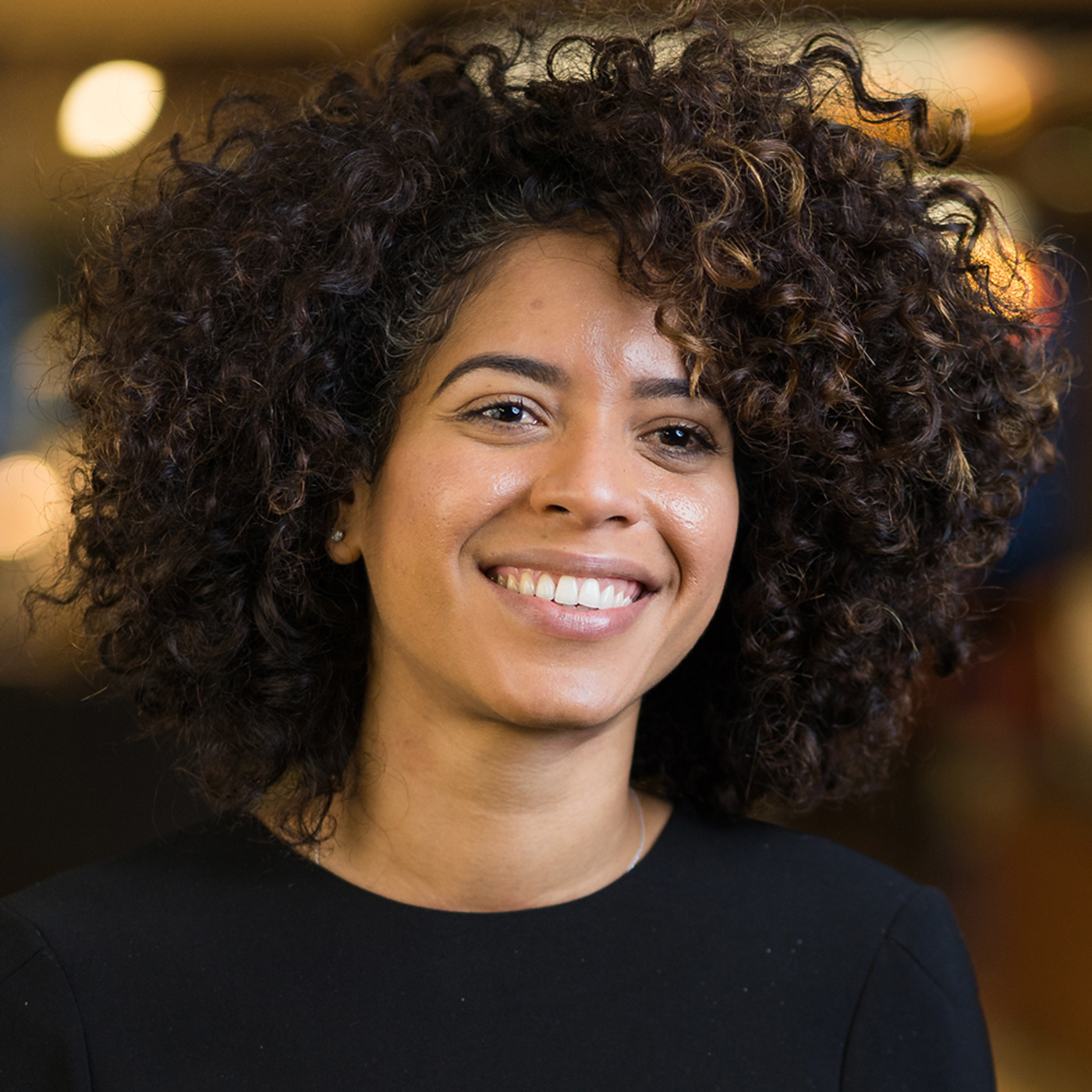
Aoifinn Devitt: I’m Aoifinn Devitt, and welcome to the 50 Faces Podcast, a podcast committed to revealing the richness and diversity of the world of investment by focusing on its people and their stories. I’m joined today by Rachel Green, who is Director of Institutional Sales at Nuveen. She started her career in risk management and moved into a sales role in 2014. She has been a prominent voice in the City of London on issues of diversity and inclusion and is the founder of the Skills Workshop to help women and young people understand their career options, share stories, and identify with others, as well as to create a sense of belonging. Welcome, Rachel. Thanks so much for joining me today.
Rachel Green: Thank you so much, Yvonne. I have to say, I really enjoy listening to other people’s stories, so I’m excited but also quite nervous about being featured here today.
Aoifinn Devitt: Great. Well, let’s kick off with your childhood, your early interests, and how ultimately finance came onto the horizon for you.
Rachel Green: Yeah, sure. I mean, let me just preface this and say that I’m also writing a book. And if you had asked me this question a few years ago, my answer probably would have been that I had a very uneventful childhood, and I kind of just floated through my life until the early 20s. But having gone through this tremendous sort of reflection, I appreciate that that is not quite true. So I was born in the Caribbean. I’ve got an accent, on a very, very tiny island called Dominica. Just sort of thinking back, my father is the son of a wealthy landowner. And I guess at some point in his life, he was gifted quite a lot of land. So we had a farm. And actually thinking about it, when we were young, he probably did quite a few things. He ran a nightclub, he dabbled in a bit of game fighting, and ultimately he sort of landed on this small-scale farm. And this is where the vast majority of my childhood sort of features. You know, I grew up at home on a farm. My mother worked predominantly in business administration across airlines and other NGOs of the island. I’m one of three. I’m actually the middle child of one of three girls. And I really mentioned this because this is important because growing up, I had a huge sense of individuality in a society where I wasn’t the firstborn child, so not old enough to take on the responsibility of doing things like child you rearing, know, when my parents were out, or cooking, or just general adulting, I guess, at a very young age. And of course, you know, on the other side, I wasn’t the baby, so I was kind of just left alone really with a lot of freedom and freedom to have imaginary friends and sort of figure things out on my own. And I guess in that respect, I was quite a cerebral sort of child. I was always thinking but never really knowing, I guess. But the most important thing, I guess, is that I had the curiosity to explore early parts of my early childhood, and I realized that my home environment had really shaped me quite you tremendously, know, dealing and understanding with the dynamic of my parents’ relationship. My father is an alcoholic, and as a result, my mother really suffered at the hands of that. And also reflected on the fact that my parents weren’t particularly educated. You know, my father, despite huge amounts of generational wealth, he couldn’t read and write, so could never really help us with schoolwork or exams or things like that. But we were expected to do the work and get really good grades because education was the key to sort of unlocking this successful future. But funnily enough, I don’t think I had any sight actually of what success actually looked like. And I think whilst I was at high school, Whilst everyone knew that they wanted to be doctors and lawyers, I said, hey, I can’t be a doctor and I don’t want to be a lawyer, so I’ll have the only other option that’s available to me, and that’s accountant. And that’s really the career path that I really pursued. So I left high school when I was at 17 and arrived in England. As far as I can recall, a very warm and sunny June afternoon, actually. My grandparents were part of the Windrush Generation, so my mother and all of her siblings were actually born in the UK. So in a you sense, know, we were quite lucky that we had British passports and the option to leave Dominica in search of a better life. So my sister before me, so that my elder sister came here when she was 17. I came here when I was 17, and actually my younger sister also followed as well. And if I just sort of fast forward to my days at college, I guess I studied IT, English, and sociology, all very random subjects, and went on to study business management at University of Westminster. A few years sort of floated by. I entered the world of audit and obviously pursuing the career of being an accountant. Absolutely hated it. I’m not going to lie. But on the plus side though, I really remember going to these site visits to complete these audits, but really loved the variety of the role and actually speaking to people whilst I was there. But absolutely, as a career, it wasn’t for me. So after several years, 3 or 4 years of complete misery, I just by chance, I spoke to a recruiter who knew that I was looking to leave my job. He was actually quite open-minded. He said, I know you’ve been looking for a new role. This option is pretty left field. It’s a 12-month maternity contract. You know that you will be unemployed after 12 months, it’s guaranteed, but this job will change your life, so take a risk. And it was a risk because I left a permanent role for a fixed-term contract, but at the time it was at a firm called Russell Investments, and that was my first crash landing into the world of asset management, purely by luck and by chance.
Aoifinn Devitt: I love that description as a crash landing, which I think probably is more common than we think. I also think it’s so important what you said about not knowing what success looks like, because I’m sure that’s something that many of young people, other young people, whether in the UK or elsewhere, also share, not having good examples. Looking at the investment world today, what is it that you like most about it? And maybe you can talk about what you like about the sales function as well.
Rachel Green: Yeah, of course. I mean, growing up, there wasn’t really much of a focus on financial literacy or investing or building wealth for me, to be honest. I never had any money, so it’s not really something that really crossed my mind, to be honest. But now coming into the industry, I’m really naturally curious about this world because investing is really an educational journey for me into the unknown, really. So you rightfully mentioned I work in sales. I really, really enjoy my job. I love the people aspect of it as well. But most importantly, I love the impact that we’re able to make as an industry. You know, I work on the institutional side of sales, which means working with large corporations, you know, their pension schemes, helping people to find a place to invest their money. And we’re talking about a lot of money. The minimum investment amount on our side of the world is £1 million. And it sounds like a tiny amount, but it’s a huge amount of money. And to me, of course, it’s a lot of money because also I don’t have £1 million as well, right? But what I think is particularly powerful, we’re investing these huge sums of money on behalf of other people, people like me and you, people who have real lives and real problems and who go to work every day to care for their kids and to put food on the table. And I had a really interesting experience with the CIO of a very large master trust in the UK the other day. We went to lunch and he said to me that the average pension of one of their members is £2,000 a year. And that was just absolutely shocking to me because it’s not a lot of money for someone to live on for the year. And I think as an industry, we have a lot to do. We’ve got a duty to not only invest these people’s money with the aim of making a solid financial return, but also to do so responsibly. And I think most importantly, what we’re seeing is that pension schemes and corporates are actually expecting more from the industry in where they put their money to work. They want to know that they’re not investing in assets that have a harmful effect on the environment. They want to know that their investing is contributing to the greater good of communities, creating jobs and creating better outcomes. And I think as a result, asset managers have no choice but to really adapt by building products that schemes want to invest in. And thankfully, we’re seeing that. We’re seeing a huge number of products that have an ESG-oriented approach and have an impact approach as well. So I love that, and that’s really good.
Aoifinn Devitt: I would imagine also from your vantage point within an asset manager, there are a lot of resources that need to be applied to putting those ESG aspects in place. So that of course then puts a strain perhaps on the ability to deliver value for money at times when there is a need to you take, know, expense to do that. But definitely the direction of travel. You spend a lot of time as an advocate for diversity and inclusion in the industry. What are your thoughts on the levels of diversity within asset management today?
Rachel Green: I absolutely do a lot of work in the DEI space, particularly around ethnicity and now social mobility. And that really came about because of an experience, even— well, actually it was two experiences, but I’ll tell you just about the one. I was working at a previous firm. I was quite recognized actually for thinking very differently, having an opinion, and I guess generally not being too shy with my perspective. And so I was asked to take part in a graduate assessment center. And I got to the floor and looked around, and I asked the head of HR at the time, I said, where are all the Black people? And she said, we just can’t find them. And that was such an interesting moment to me because I had a real rush of emotion. And I guess in some respects, a real sense of confusion, I guess. I went back to my desk and I looked around and I realized, hey, I’m actually the only Black person in my team. I work in front office. I am one of 3 Black people on my floor. I am one of less than 30 in the entire company. I went to industry events and just started realizing there were only a handful of Black people there. I went to a pitch and was often only the only Black person in the room. And interestingly, I started speaking to other people who were asking the same questions. And particularly at a time where it wasn’t really the done thing to talk about being Black in industry, we’re talking about 5, maybe 6 years ago now. At the time, we were still talking about gender and leveling the playing field for women in the industry. And now we’ve seen this huge shift after the murder of George Floyd, that organizations want to contribute to decreasing inequality. And on the flip side, we’re also seeing pressure from candidates themselves. They want to see people like them in firms that they’re interviewing with. They want to understand the culture of organizations, where they stand, where they really stand on D&I. I’m very fortunate to have conversations at all levels with the industry, with firms, with employees, with candidates, and with young people. And one thing is really clear, do we have a problem in industry? Yes, we absolutely do. Are we trying to find solutions? Yes, we are. Is it happening fast enough? In my view, no, absolutely not. But am I hopeful that there is an emphasis and we have the momentum to make real change at scale as well? Yes, I think we absolutely do.
Aoifinn Devitt: That’s so interesting. I can’t believe even 5 years ago this wasn’t talked about. It does seem like we’ve come a long way since then. Clearly much, much farther to go, but certainly there has been an awakening. Of recognition of that. Let’s move to talk about your vision behind the Skills Workshop, because I think this is extremely exciting and a very concrete contribution to moving this issue forward. Can you talk a little bit about that and how the launch has gone?
Rachel Green: Yeah, sure, no problem. So the Skills Workshop was an absolutely phenomenal and honestly such a life-changing experience. It was an idea that was picked up in my study last year during lockdown. Last year was quite a traumatic year, I think, for quite a lot of Black people. I mentioned the murder of George Floyd, but we also saw the Black Lives Movement coming to the floor, and we just saw a general appreciation for that. As a world, we needed to wake up to injustices and social inequality as well. And we saw this huge shift in our industry as well, which is great. And as a result, there were absolutely no shortages of initiatives for Black people across the industry, which, by the way, were absolutely incredible and mobilized so many people at scale. So kudos to everyone. I was very fortunate, I guess, last year to have a lot of time on my hands towards the latter end of the year. I had just resigned from my job, I was on gardening leave, I couldn’t travel because of the pandemic, so I spent a lot of my time talking to young people, trying to find them jobs, trying to open connections for them, and sort of just helping them along the way. And there were two themes that really consistently came out for me during that process. On the candidate side, a lot of them were saying, hey, I really want to apply to this industry and to these firms, but I don’t really know what they do. And having gone through the experience, not being very prepared, I don’t think this industry is for me, right? And then on the employer side, they were saying, we really want to hire these people, but they don’t know what we do and they can’t articulate their motivation for joining us. So it became very obvious very quickly that there was a gap in the experiences of the students and the expectation of the employers as well. And it’s that experience really that ultimately put people off from joining the industry because of, in my view, because of one of three things. So there’s this general lack of education and awareness of the industry, that it exists, of what we do, and of the variety of roles that you can do within the industry. The second thing I think is lack of financial literacy, right? A lot of people actually don’t come from wealth, and therefore they just don’t really understand basics. And I mean, I’m just mostly using my personal experience as well, right? Don’t really understand the basics of investing, different types of asset classes, the challenges and the trends in our industry and what we’re trying to achieve. And I guess the last thing is really around the lack of access to social capital and something that we’re hearing about quite a bit now, and a lot of emphasis is now put on social capital. It’s the connections, it’s the networks, it’s understanding how things are done in a particular way. Because if you think about being a young person, a graduate, I guess, having gone through a very academic process where you do your exams, you get a particular grade, and it’s a pure meritocracy. And then you come into the world of work and it’s not a meritocracy at all. It’s not about how well you do. It’s not about— well, to a large extent, it’s not about how well you do. It’s about perception. It’s about making sure that you’re known by the right people. It’s about sponsorship. It’s about networking. It’s about being mentored. There’s a whole complex sort of pot of things that contribute to people’s success, right? So, with that appreciation, The Skills Workshop was born, and it was really born out of the need to provide a solution. We’ve only just finished the program 2 weeks ago. We finished on the 18th of November, I think. It’s all a blur now. But in the end, we saw almost 8,000 students join us across 6 months. The program ran from June to November for 60 evening workshops, and they all are well executed, all by volunteers who were all very passionate about the aims of the program and who all believed in making an impact. We talk about the fact that there are 8,000 young people. If I think back to my journey and the fact that I had one experience from one person who changed my life and who helped to provide career direction. I just think about the fact that 8,000 people whose lives could potentially have been changed just by a session that they’ve attended or by someone that they’ve met or by a story that they’ve heard, and that really gives me goosebumps. It’s so powerful. I’m just really happy to have been able to contribute to that.
Aoifinn Devitt: That is absolutely extraordinary. 60 workshops. That to me, that number alone, because I know the work that goes into one and the organization and the preparation and gathering the volunteers, and you probably could have done this workshop with 6 and it would still have been impressive, but 60, that’s on another level entirely. So kudos to you and to the other volunteers. Just looking back at the workshop, obviously you’ve had many ways of addressing the problem, whether it be lack of information, lack of interview preparation, lack of confidence, lack of perhaps seeing role models. If you were to point to maybe any one thing or any one or two things that you think make the most difference in terms of an intervention, is there anything that you can point to?
Rachel Green: Oh gosh, is there one thing? I don’t think so. I think it’s a combination of several things, right? I think when you come from a particular demographic, and I count myself as part of that as well, and I have my own personal experience about that as well, but when you come from a particular demographic, there are certain things that you just don’t really know because you can’t rely on your parents, for example, to show you the way, or your immediate social circle to help you to navigate the world of work. So, we really focused on 3 areas. So, there was workplace confidence, there was financial literacy, as I mentioned, and there were virtual career fairs. So, those were the makeup of the 60 workshops. And I’ll tell you, you mentioned it, it was absolutely hard work. Yes, it was. I had 2 full-time jobs on the go at the same time. It was unbelievably incredible. But in terms of workplace confidence, so we focused on things like what do you wear to go to an interview and what is appropriate, what is the expectation? And how do you articulate yourself and how do you come across? And the fact that people make judgments about you even before you even open your mouth, right? How do you portray yourself? So it’s simple things like that, that it sounds very obvious to me and you because we know and we’re in the system and it’s easy to appreciate those things. But for young people who come into it absolutely blind with no navigation, no help at all, it can be really daunting. So there’s the, how do you portray yourself? Then there is the knowledge building part of it, which is the financial literacy. And then there is the access to opportunities. And that’s the virtual career fairs that we hosted, of which there were 41, I believe. So one firm every single night between 6:00 PM and 7:00 PM, they would talk about their firm, talk about the opportunities that they have within their firm, and literally tell the students how exactly what they need to do to get a job in the company. And I think that’s really impressive. And that share of information is just amazing because if you think about a young person coming into the process, absolutely daunted, not really knowing what to expect, and being given this information that other people actually have been privy to because they have connections or they have networks or they have a sense of how it works because they’ve gone through the process before, that’s really powerful. And that in itself boosts people’s confidence to be able to say, hey, I can tackle this. And there is a place for me in this industry and I do fit and I do have something of value to provide. So I think it’s a combination of a few things.
Aoifinn Devitt: Exactly, and I also think the fact that these firms are making the active effort, not just paying lip service to this notion of building a more diverse pipeline, but holding the career fair, making the effort, I think that speaks volumes as well. Moving now back to your personal story, from that first crash landing, it seems to have gone extremely well for you. Have there been any setbacks or challenges throughout your career that you’ve learned from that you can talk about?
Rachel Green: Oh goodness, I think the question is which one. I think just the general sense of not really knowing. So I’ll tell you the story of how I really stumbled into this industry. I think about 15 years ago, I realized that I had a very addictive personality. And so I was addicted to social media. I don’t have social media now, by the way, because I have such an addictive personality. We’re talking about the likes of Facebook, MySpace, mostly Facebook, because Instagram and TikTok didn’t really exist back then. And I love seeing what other people were up to and making this assumption and then forming this narrative about their lives. And I remember coming across profiles where people described their journey as graduating from the school of life. I can completely relate to that. And that’s whether it’s from an educational perspective or whether that’s from a career perspective, but just in general, the moment that I came here at 17, having gone through university stumbling into this industry and having the experiences of just purely just working and navigating the world of work has been really interesting. So I went to university, I graduated from University of Westminster, got a 2:1, but I didn’t really absorb university life because I worked full-time whilst I was at university and went to school full-time. So I didn’t really have the privilege of unpaid internships and going to networking events and exploring the city and having mentors. So my focus, at least during formal education, was really getting a degree and going to work because I had the responsibility now of taking care of my younger sister, who at that time came to join us. We had a flat and I had the role of making sure that all of the bills were paid and being able to really survive, right? I didn’t have the luxury of all of the development paths that most people have who don’t stumble into the industry. And if I had to pinpoint, I think one thing that fundamentally shaped my career of my entire experience is really my mindset. And it was that I needed to push through and to adapt, right? And whether that’s a university, whether that’s my career, and really that everything is temporary. So I have the mindset that you just keep going. I don’t have a fixed mindset. I have an absolutely phenomenal growth mindset. I break down and I change things about myself every single day. I’m very critical of myself, which is in a sense, it’s, it’s quite bad. But if you do it in a constructive way, it’s good because You understand the areas that you need to develop, and then you just work on them. So that’s the kind of mentality that I have. But, you know, everything is temporary. I remember going to work for 8 hours, coming back to the library to do a night shift, studying for an exam the next day. And that resilience and that grit really helped to form the foundations of how I navigate my career today. So those experiences that have really shaped me and helped to fundamentally shape the foundations of my life and how I approach things right now in my career.
Aoifinn Devitt: You’ve spoken a lot about people who have perhaps been a mentor to you, or at least influenced you. And now through the Skills Workshop, you of course are doing that for another generation. Have there been any key people that you can mention that had an impact on you and your career and life?
Rachel Green: There are two people, actually. I’ll tell you about the first one, and then the second one, maybe he’ll be a bit upset that I mentioned his name, but hey, we’re gonna live with that and take it, it’s fine. So the first person I’ll mention, and this happened at the very beginning of my career, so I had a particular lightbulb moment, and I mentioned how I moved from accounting into a role at Russell Investments. And it was at Russell Investments that I had my pure lightbulb moment, the moment that I knew exactly what I wanted to do in the industry. I’m a relatively social person, so when I join a new firm, I like to walk the floor, understand the personalities, see the different departments, and see how they all take on a life of their own, really. And at the time, I remember at this firm, Russell Investments, walking down to the distribution team, the sales team, and there’s always a buzz in the distribution team. Lots of people laughing and talking and just generally lots of noise. So I was really attracted to that, and I stopped on the side of the desks, participating in a bit of banter at the time. And to be honest, I don’t even remember what the conversation was even about. But one of the salespeople at the time, who actually I didn’t even know, who I later found out to be Gavin Lewis, who now works for BlackRock. He said at the time to me in a very nonchalant way— he had no idea who I was, he didn’t even know my name— he said, oh, you know, you’re in the wrong job, you should work in sales. And it was just such a passing comment on the back of maybe even a silly comment that I made that contributed to their banter in their team. And that one comment, that was it, that changed my life. That was my moment. I could finally put a finger on what I wanted to do. But given that I was in industry for only several months before, that one comment actually shaped the trajectory of my life. I also remember seeing him several years later and recalling the story to him, and he had absolutely no idea, no clue of the impact that he had, and no clue of how instrumental he was and how that comment absolutely changed my life. So, that was the first person, Gavin Lewis, and that really helped to shape the trajectory of my career. And I then had focus in terms of what I wanted to do, and I could spend time actually trying to navigate a path to that. And then the second person, and I’m going to laugh here because he probably doesn’t know any of this, so he’s going to be quite surprised, but Justin Onokesi, who I met maybe about 6 or 7 years ago now, whilst I was at a previous firm. And he was just someone I was really attracted to because I really appreciated his mindset around purpose and impact. And I remember meeting him once and he said to me, oh, you know, Rachel, what do you want to do? Ultimately, I just said, hey, I want to have a job and I want to be paid and I want to make money because finally now at 20, late 20s, I finally knew what I want to do. So I just want to focus on having a job. But he said, oh, you know, don’t you want to do something more powerful? And don’t you want to have impact and build a legacy? And it was only then that I started to think about— I feel like he planted the seed of purpose and giving back and impact and having an impact on other people’s lives. Because ultimately, regardless of the amount of money that you make and the amount of money that you have, I think it’s such an empty life if you’re not able to give back. And so I feel like he had such an impact on my life and helped me to focus on appreciating the issues in the industry, in the world, and using my experiences to help other people. So he’s been quite fundamental in my own development and in helping to shape a lot of the work that I do as well in the industry.
Aoifinn Devitt: Well, you’ve mentioned two of my favorite people there in the world of London investment management, two absolute legends. And Justin was actually a guest on this podcast, and he does embody, as you mentioned, impact, giving back, mentorship. And it would be remiss for me not to mention that he’s continuing to give back through his own podcast series, I think recently launched, called A Rolling Start, around the creation of role models. And I really look forward to seeing what he’s going to build there. So thanks, Rachel, for shouting out to Gavin and Justin there. How about some pieces of advice? I can only imagine you have given quite a lot of thought to either advice you’ve received or a creed or motto that guides you? Can you share anything there?
Rachel Green: I don’t particularly have a creed or motto. So a bit of pretext. So I’ve been married for about 3 years, and myself and my husband met at university when I was pretty young, I was 21 or 22. And now fast forward, I’m 36. So a long time, and we have grown and we’ve learned a lot about ourselves. And I’ve learned a lot about myself over the last sort of 15, 16 years. And one thing that I would probably stand by is the importance of partnership in relationships, in not just in romantic relationships, but in friendships, in family relationships as well. And the importance of interdependence. I think that’s really important as well. I think as a Black woman growing up, there’s a lot of expectation on Black women in particular. I mean, I can only really speak to that, but there’s a lot of expectation on Black women in particular to have a particular job, to raise children in a particular way, to have a particular standard of relationship, and therefore they go into relationships and they go into life thinking that everything is equal, right? And I certainly did. I felt that I wanted to be independent because I came from a large part of— from not having very much at all, right? So I had the expectation that everything that I did, my partner had to contribute exactly half, right? And then I met my husband, and he really helped to change my mindset around interdependence. So as much as I can do today, I can take on, but tomorrow I might not be able to do as much. So let’s say today I do 80% and you do 20%. Tomorrow I do 50 and you do 50. The next day, maybe you do 90, I do 10, right? And it’s this whole mindset around partnerships and being able to build really strong partnerships just on understanding, on communication, and on knowledge that everything is not equal all the time. I think that has really changed my perception of what I want for myself, especially having navigated my own parents’ relationship and coming to terms with all of the stuff that has happened there. That has been particularly interesting to me in terms of how I grew up and how I see things in the world.
Aoifinn Devitt: Well, that is a beautiful reminder of how much we are ultimately a product of the people around us. And I think it’s a beautiful place to bring the conversation to a close. Thank you so much, Rachel. You not only are a force in the industry, and a tremendous source of energy. You are a great example of how to translate that energy into tangible action without waiting. And I think the action that you’ve shown, but through your advocacy, as well as the extraordinary skills workshop, which we will link to in the show notes, is just a lesson and a real example to all of us. So thank you for coming and for sharing your insights with us.
Rachel Green: Thank you so much. And thank you so much for having me.
Aoifinn Devitt: I’m Aoifinn Devitt. Thank you for listening to the 50 Faces Podcast. If you liked what you heard and would like to tune in to hear more inspiring investors and their personal journeys, please subscribe on Apple Podcasts or wherever you get your podcasts. This podcast is for informational purposes only and should not be construed as investment advice, and all views are personal and should not be attributed to the organizations and affiliations of the host or any guest.
Aoifinn Devitt: The first series of 2022 is brought to you with the kind support of Herd Capital, a Chicago-based asset manager that invests in public equities in the technology, media, telecommunications, financial, and industrial sectors. The firm was founded in 2011 and manages assets via a long-short fund and a long-only fund.
Rachel Green: I was asked to take part in a graduate assessment center. And I got to the floor, I looked around, and I asked the head of HR at the time, I said, ‘Where are all the Black people?’ And she said, ‘We just can’t find them.’ And that was such an interesting moment to me because I had a real rush of emotion and I guess in some respects a real sense of confusion, I guess. I went back to my desk and I looked around and I realized, hey, I’m actually the only Black person in my team. I work in front office. I am one of 3 Black people on my floor. I am one of less than 30 in the entire company.
Aoifinn Devitt: I’m Aoifinn Devitt, and welcome to the 50 Faces Podcast, a podcast committed to revealing the richness and diversity of the world of investment by focusing on its people and their stories. I’m joined today by Rachel Green, who is Director of Institutional Sales at Nuveen. She started her career in risk management and moved into a sales role in 2014. She has been a prominent voice in the City of London on issues of diversity and inclusion and is the founder of the Skills Workshop to help women and young people understand their career options, share stories, and identify with others, as well as to create a sense of belonging. Welcome, Rachel. Thanks so much for joining me today.
Rachel Green: Thank you so much, Yvonne. I have to say, I really enjoy listening to other people’s stories, so I’m excited but also quite nervous about being featured here today.
Aoifinn Devitt: Great. Well, let’s kick off with your childhood, your early interests, and how ultimately finance came onto the horizon for you.
Rachel Green: Yeah, sure. I mean, let me just preface this and say that I’m also writing a book. And if you had asked me this question a few years ago, my answer probably would have been that I had a very uneventful childhood, and I kind of just floated through my life until the early 20s. But having gone through this tremendous sort of reflection, I appreciate that that is not quite true. So I was born in the Caribbean. I’ve got an accent, on a very, very tiny island called Dominica. Just sort of thinking back, my father is the son of a wealthy landowner. And I guess at some point in his life, he was gifted quite a lot of land. So we had a farm. And actually thinking about it, when we were young, he probably did quite a few things. He ran a nightclub, he dabbled in a bit of game fighting, and ultimately he sort of landed on this small-scale farm. And this is where the vast majority of my childhood sort of features. You know, I grew up at home on a farm. My mother worked predominantly in business administration across airlines and other NGOs of the island. I’m one of three. I’m actually the middle child of one of three girls. And I really mentioned this because this is important because growing up, I had a huge sense of individuality in a society where I wasn’t the firstborn child, so not old enough to take on the responsibility of doing things like child you rearing, know, when my parents were out, or cooking, or just general adulting, I guess, at a very young age. And of course, you know, on the other side, I wasn’t the baby, so I was kind of just left alone really with a lot of freedom and freedom to have imaginary friends and sort of figure things out on my own. And I guess in that respect, I was quite a cerebral sort of child. I was always thinking but never really knowing, I guess. But the most important thing, I guess, is that I had the curiosity to explore early parts of my early childhood, and I realized that my home environment had really shaped me quite you tremendously, know, dealing and understanding with the dynamic of my parents’ relationship. My father is an alcoholic, and as a result, my mother really suffered at the hands of that. And also reflected on the fact that my parents weren’t particularly educated. You know, my father, despite huge amounts of generational wealth, he couldn’t read and write, so could never really help us with schoolwork or exams or things like that. But we were expected to do the work and get really good grades because education was the key to sort of unlocking this successful future. But funnily enough, I don’t think I had any sight actually of what success actually looked like. And I think whilst I was at high school, Whilst everyone knew that they wanted to be doctors and lawyers, I said, hey, I can’t be a doctor and I don’t want to be a lawyer, so I’ll have the only other option that’s available to me, and that’s accountant. And that’s really the career path that I really pursued. So I left high school when I was at 17 and arrived in England. As far as I can recall, a very warm and sunny June afternoon, actually. My grandparents were part of the Windrush Generation, so my mother and all of her siblings were actually born in the UK. So in a you sense, know, we were quite lucky that we had British passports and the option to leave Dominica in search of a better life. So my sister before me, so that my elder sister came here when she was 17. I came here when I was 17, and actually my younger sister also followed as well. And if I just sort of fast forward to my days at college, I guess I studied IT, English, and sociology, all very random subjects, and went on to study business management at University of Westminster. A few years sort of floated by. I entered the world of audit and obviously pursuing the career of being an accountant. Absolutely hated it. I’m not going to lie. But on the plus side though, I really remember going to these site visits to complete these audits, but really loved the variety of the role and actually speaking to people whilst I was there. But absolutely, as a career, it wasn’t for me. So after several years, 3 or 4 years of complete misery, I just by chance, I spoke to a recruiter who knew that I was looking to leave my job. He was actually quite open-minded. He said, I know you’ve been looking for a new role. This option is pretty left field. It’s a 12-month maternity contract. You know that you will be unemployed after 12 months, it’s guaranteed, but this job will change your life, so take a risk. And it was a risk because I left a permanent role for a fixed-term contract, but at the time it was at a firm called Russell Investments, and that was my first crash landing into the world of asset management, purely by luck and by chance.
Aoifinn Devitt: I love that description as a crash landing, which I think probably is more common than we think. I also think it’s so important what you said about not knowing what success looks like, because I’m sure that’s something that many of young people, other young people, whether in the UK or elsewhere, also share, not having good examples. Looking at the investment world today, what is it that you like most about it? And maybe you can talk about what you like about the sales function as well.
Rachel Green: Yeah, of course. I mean, growing up, there wasn’t really much of a focus on financial literacy or investing or building wealth for me, to be honest. I never had any money, so it’s not really something that really crossed my mind, to be honest. But now coming into the industry, I’m really naturally curious about this world because investing is really an educational journey for me into the unknown, really. So you rightfully mentioned I work in sales. I really, really enjoy my job. I love the people aspect of it as well. But most importantly, I love the impact that we’re able to make as an industry. You know, I work on the institutional side of sales, which means working with large corporations, you know, their pension schemes, helping people to find a place to invest their money. And we’re talking about a lot of money. The minimum investment amount on our side of the world is £1 million. And it sounds like a tiny amount, but it’s a huge amount of money. And to me, of course, it’s a lot of money because also I don’t have £1 million as well, right? But what I think is particularly powerful, we’re investing these huge sums of money on behalf of other people, people like me and you, people who have real lives and real problems and who go to work every day to care for their kids and to put food on the table. And I had a really interesting experience with the CIO of a very large master trust in the UK the other day. We went to lunch and he said to me that the average pension of one of their members is £2,000 a year. And that was just absolutely shocking to me because it’s not a lot of money for someone to live on for the year. And I think as an industry, we have a lot to do. We’ve got a duty to not only invest these people’s money with the aim of making a solid financial return, but also to do so responsibly. And I think most importantly, what we’re seeing is that pension schemes and corporates are actually expecting more from the industry in where they put their money to work. They want to know that they’re not investing in assets that have a harmful effect on the environment. They want to know that their investing is contributing to the greater good of communities, creating jobs and creating better outcomes. And I think as a result, asset managers have no choice but to really adapt by building products that schemes want to invest in. And thankfully, we’re seeing that. We’re seeing a huge number of products that have an ESG-oriented approach and have an impact approach as well. So I love that, and that’s really good.
Aoifinn Devitt: I would imagine also from your vantage point within an asset manager, there are a lot of resources that need to be applied to putting those ESG aspects in place. So that of course then puts a strain perhaps on the ability to deliver value for money at times when there is a need to you take, know, expense to do that. But definitely the direction of travel. You spend a lot of time as an advocate for diversity and inclusion in the industry. What are your thoughts on the levels of diversity within asset management today?
Rachel Green: I absolutely do a lot of work in the DEI space, particularly around ethnicity and now social mobility. And that really came about because of an experience, even— well, actually it was two experiences, but I’ll tell you just about the one. I was working at a previous firm. I was quite recognized actually for thinking very differently, having an opinion, and I guess generally not being too shy with my perspective. And so I was asked to take part in a graduate assessment center. And I got to the floor and looked around, and I asked the head of HR at the time, I said, where are all the Black people? And she said, we just can’t find them. And that was such an interesting moment to me because I had a real rush of emotion. And I guess in some respects, a real sense of confusion, I guess. I went back to my desk and I looked around and I realized, hey, I’m actually the only Black person in my team. I work in front office. I am one of 3 Black people on my floor. I am one of less than 30 in the entire company. I went to industry events and just started realizing there were only a handful of Black people there. I went to a pitch and was often only the only Black person in the room. And interestingly, I started speaking to other people who were asking the same questions. And particularly at a time where it wasn’t really the done thing to talk about being Black in industry, we’re talking about 5, maybe 6 years ago now. At the time, we were still talking about gender and leveling the playing field for women in the industry. And now we’ve seen this huge shift after the murder of George Floyd, that organizations want to contribute to decreasing inequality. And on the flip side, we’re also seeing pressure from candidates themselves. They want to see people like them in firms that they’re interviewing with. They want to understand the culture of organizations, where they stand, where they really stand on D&I. I’m very fortunate to have conversations at all levels with the industry, with firms, with employees, with candidates, and with young people. And one thing is really clear, do we have a problem in industry? Yes, we absolutely do. Are we trying to find solutions? Yes, we are. Is it happening fast enough? In my view, no, absolutely not. But am I hopeful that there is an emphasis and we have the momentum to make real change at scale as well? Yes, I think we absolutely do.
Aoifinn Devitt: That’s so interesting. I can’t believe even 5 years ago this wasn’t talked about. It does seem like we’ve come a long way since then. Clearly much, much farther to go, but certainly there has been an awakening. Of recognition of that. Let’s move to talk about your vision behind the Skills Workshop, because I think this is extremely exciting and a very concrete contribution to moving this issue forward. Can you talk a little bit about that and how the launch has gone?
Rachel Green: Yeah, sure, no problem. So the Skills Workshop was an absolutely phenomenal and honestly such a life-changing experience. It was an idea that was picked up in my study last year during lockdown. Last year was quite a traumatic year, I think, for quite a lot of Black people. I mentioned the murder of George Floyd, but we also saw the Black Lives Movement coming to the floor, and we just saw a general appreciation for that. As a world, we needed to wake up to injustices and social inequality as well. And we saw this huge shift in our industry as well, which is great. And as a result, there were absolutely no shortages of initiatives for Black people across the industry, which, by the way, were absolutely incredible and mobilized so many people at scale. So kudos to everyone. I was very fortunate, I guess, last year to have a lot of time on my hands towards the latter end of the year. I had just resigned from my job, I was on gardening leave, I couldn’t travel because of the pandemic, so I spent a lot of my time talking to young people, trying to find them jobs, trying to open connections for them, and sort of just helping them along the way. And there were two themes that really consistently came out for me during that process. On the candidate side, a lot of them were saying, hey, I really want to apply to this industry and to these firms, but I don’t really know what they do. And having gone through the experience, not being very prepared, I don’t think this industry is for me, right? And then on the employer side, they were saying, we really want to hire these people, but they don’t know what we do and they can’t articulate their motivation for joining us. So it became very obvious very quickly that there was a gap in the experiences of the students and the expectation of the employers as well. And it’s that experience really that ultimately put people off from joining the industry because of, in my view, because of one of three things. So there’s this general lack of education and awareness of the industry, that it exists, of what we do, and of the variety of roles that you can do within the industry. The second thing I think is lack of financial literacy, right? A lot of people actually don’t come from wealth, and therefore they just don’t really understand basics. And I mean, I’m just mostly using my personal experience as well, right? Don’t really understand the basics of investing, different types of asset classes, the challenges and the trends in our industry and what we’re trying to achieve. And I guess the last thing is really around the lack of access to social capital and something that we’re hearing about quite a bit now, and a lot of emphasis is now put on social capital. It’s the connections, it’s the networks, it’s understanding how things are done in a particular way. Because if you think about being a young person, a graduate, I guess, having gone through a very academic process where you do your exams, you get a particular grade, and it’s a pure meritocracy. And then you come into the world of work and it’s not a meritocracy at all. It’s not about how well you do. It’s not about— well, to a large extent, it’s not about how well you do. It’s about perception. It’s about making sure that you’re known by the right people. It’s about sponsorship. It’s about networking. It’s about being mentored. There’s a whole complex sort of pot of things that contribute to people’s success, right? So, with that appreciation, The Skills Workshop was born, and it was really born out of the need to provide a solution. We’ve only just finished the program 2 weeks ago. We finished on the 18th of November, I think. It’s all a blur now. But in the end, we saw almost 8,000 students join us across 6 months. The program ran from June to November for 60 evening workshops, and they all are well executed, all by volunteers who were all very passionate about the aims of the program and who all believed in making an impact. We talk about the fact that there are 8,000 young people. If I think back to my journey and the fact that I had one experience from one person who changed my life and who helped to provide career direction. I just think about the fact that 8,000 people whose lives could potentially have been changed just by a session that they’ve attended or by someone that they’ve met or by a story that they’ve heard, and that really gives me goosebumps. It’s so powerful. I’m just really happy to have been able to contribute to that.
Aoifinn Devitt: That is absolutely extraordinary. 60 workshops. That to me, that number alone, because I know the work that goes into one and the organization and the preparation and gathering the volunteers, and you probably could have done this workshop with 6 and it would still have been impressive, but 60, that’s on another level entirely. So kudos to you and to the other volunteers. Just looking back at the workshop, obviously you’ve had many ways of addressing the problem, whether it be lack of information, lack of interview preparation, lack of confidence, lack of perhaps seeing role models. If you were to point to maybe any one thing or any one or two things that you think make the most difference in terms of an intervention, is there anything that you can point to?
Rachel Green: Oh gosh, is there one thing? I don’t think so. I think it’s a combination of several things, right? I think when you come from a particular demographic, and I count myself as part of that as well, and I have my own personal experience about that as well, but when you come from a particular demographic, there are certain things that you just don’t really know because you can’t rely on your parents, for example, to show you the way, or your immediate social circle to help you to navigate the world of work. So, we really focused on 3 areas. So, there was workplace confidence, there was financial literacy, as I mentioned, and there were virtual career fairs. So, those were the makeup of the 60 workshops. And I’ll tell you, you mentioned it, it was absolutely hard work. Yes, it was. I had 2 full-time jobs on the go at the same time. It was unbelievably incredible. But in terms of workplace confidence, so we focused on things like what do you wear to go to an interview and what is appropriate, what is the expectation? And how do you articulate yourself and how do you come across? And the fact that people make judgments about you even before you even open your mouth, right? How do you portray yourself? So it’s simple things like that, that it sounds very obvious to me and you because we know and we’re in the system and it’s easy to appreciate those things. But for young people who come into it absolutely blind with no navigation, no help at all, it can be really daunting. So there’s the, how do you portray yourself? Then there is the knowledge building part of it, which is the financial literacy. And then there is the access to opportunities. And that’s the virtual career fairs that we hosted, of which there were 41, I believe. So one firm every single night between 6:00 PM and 7:00 PM, they would talk about their firm, talk about the opportunities that they have within their firm, and literally tell the students how exactly what they need to do to get a job in the company. And I think that’s really impressive. And that share of information is just amazing because if you think about a young person coming into the process, absolutely daunted, not really knowing what to expect, and being given this information that other people actually have been privy to because they have connections or they have networks or they have a sense of how it works because they’ve gone through the process before, that’s really powerful. And that in itself boosts people’s confidence to be able to say, hey, I can tackle this. And there is a place for me in this industry and I do fit and I do have something of value to provide. So I think it’s a combination of a few things.
Aoifinn Devitt: Exactly, and I also think the fact that these firms are making the active effort, not just paying lip service to this notion of building a more diverse pipeline, but holding the career fair, making the effort, I think that speaks volumes as well. Moving now back to your personal story, from that first crash landing, it seems to have gone extremely well for you. Have there been any setbacks or challenges throughout your career that you’ve learned from that you can talk about?
Rachel Green: Oh goodness, I think the question is which one. I think just the general sense of not really knowing. So I’ll tell you the story of how I really stumbled into this industry. I think about 15 years ago, I realized that I had a very addictive personality. And so I was addicted to social media. I don’t have social media now, by the way, because I have such an addictive personality. We’re talking about the likes of Facebook, MySpace, mostly Facebook, because Instagram and TikTok didn’t really exist back then. And I love seeing what other people were up to and making this assumption and then forming this narrative about their lives. And I remember coming across profiles where people described their journey as graduating from the school of life. I can completely relate to that. And that’s whether it’s from an educational perspective or whether that’s from a career perspective, but just in general, the moment that I came here at 17, having gone through university stumbling into this industry and having the experiences of just purely just working and navigating the world of work has been really interesting. So I went to university, I graduated from University of Westminster, got a 2:1, but I didn’t really absorb university life because I worked full-time whilst I was at university and went to school full-time. So I didn’t really have the privilege of unpaid internships and going to networking events and exploring the city and having mentors. So my focus, at least during formal education, was really getting a degree and going to work because I had the responsibility now of taking care of my younger sister, who at that time came to join us. We had a flat and I had the role of making sure that all of the bills were paid and being able to really survive, right? I didn’t have the luxury of all of the development paths that most people have who don’t stumble into the industry. And if I had to pinpoint, I think one thing that fundamentally shaped my career of my entire experience is really my mindset. And it was that I needed to push through and to adapt, right? And whether that’s a university, whether that’s my career, and really that everything is temporary. So I have the mindset that you just keep going. I don’t have a fixed mindset. I have an absolutely phenomenal growth mindset. I break down and I change things about myself every single day. I’m very critical of myself, which is in a sense, it’s, it’s quite bad. But if you do it in a constructive way, it’s good because You understand the areas that you need to develop, and then you just work on them. So that’s the kind of mentality that I have. But, you know, everything is temporary. I remember going to work for 8 hours, coming back to the library to do a night shift, studying for an exam the next day. And that resilience and that grit really helped to form the foundations of how I navigate my career today. So those experiences that have really shaped me and helped to fundamentally shape the foundations of my life and how I approach things right now in my career.
Aoifinn Devitt: You’ve spoken a lot about people who have perhaps been a mentor to you, or at least influenced you. And now through the Skills Workshop, you of course are doing that for another generation. Have there been any key people that you can mention that had an impact on you and your career and life?
Rachel Green: There are two people, actually. I’ll tell you about the first one, and then the second one, maybe he’ll be a bit upset that I mentioned his name, but hey, we’re gonna live with that and take it, it’s fine. So the first person I’ll mention, and this happened at the very beginning of my career, so I had a particular lightbulb moment, and I mentioned how I moved from accounting into a role at Russell Investments. And it was at Russell Investments that I had my pure lightbulb moment, the moment that I knew exactly what I wanted to do in the industry. I’m a relatively social person, so when I join a new firm, I like to walk the floor, understand the personalities, see the different departments, and see how they all take on a life of their own, really. And at the time, I remember at this firm, Russell Investments, walking down to the distribution team, the sales team, and there’s always a buzz in the distribution team. Lots of people laughing and talking and just generally lots of noise. So I was really attracted to that, and I stopped on the side of the desks, participating in a bit of banter at the time. And to be honest, I don’t even remember what the conversation was even about. But one of the salespeople at the time, who actually I didn’t even know, who I later found out to be Gavin Lewis, who now works for BlackRock. He said at the time to me in a very nonchalant way— he had no idea who I was, he didn’t even know my name— he said, oh, you know, you’re in the wrong job, you should work in sales. And it was just such a passing comment on the back of maybe even a silly comment that I made that contributed to their banter in their team. And that one comment, that was it, that changed my life. That was my moment. I could finally put a finger on what I wanted to do. But given that I was in industry for only several months before, that one comment actually shaped the trajectory of my life. I also remember seeing him several years later and recalling the story to him, and he had absolutely no idea, no clue of the impact that he had, and no clue of how instrumental he was and how that comment absolutely changed my life. So, that was the first person, Gavin Lewis, and that really helped to shape the trajectory of my career. And I then had focus in terms of what I wanted to do, and I could spend time actually trying to navigate a path to that. And then the second person, and I’m going to laugh here because he probably doesn’t know any of this, so he’s going to be quite surprised, but Justin Onokesi, who I met maybe about 6 or 7 years ago now, whilst I was at a previous firm. And he was just someone I was really attracted to because I really appreciated his mindset around purpose and impact. And I remember meeting him once and he said to me, oh, you know, Rachel, what do you want to do? Ultimately, I just said, hey, I want to have a job and I want to be paid and I want to make money because finally now at 20, late 20s, I finally knew what I want to do. So I just want to focus on having a job. But he said, oh, you know, don’t you want to do something more powerful? And don’t you want to have impact and build a legacy? And it was only then that I started to think about— I feel like he planted the seed of purpose and giving back and impact and having an impact on other people’s lives. Because ultimately, regardless of the amount of money that you make and the amount of money that you have, I think it’s such an empty life if you’re not able to give back. And so I feel like he had such an impact on my life and helped me to focus on appreciating the issues in the industry, in the world, and using my experiences to help other people. So he’s been quite fundamental in my own development and in helping to shape a lot of the work that I do as well in the industry.
Aoifinn Devitt: Well, you’ve mentioned two of my favorite people there in the world of London investment management, two absolute legends. And Justin was actually a guest on this podcast, and he does embody, as you mentioned, impact, giving back, mentorship. And it would be remiss for me not to mention that he’s continuing to give back through his own podcast series, I think recently launched, called A Rolling Start, around the creation of role models. And I really look forward to seeing what he’s going to build there. So thanks, Rachel, for shouting out to Gavin and Justin there. How about some pieces of advice? I can only imagine you have given quite a lot of thought to either advice you’ve received or a creed or motto that guides you? Can you share anything there?
Rachel Green: I don’t particularly have a creed or motto. So a bit of pretext. So I’ve been married for about 3 years, and myself and my husband met at university when I was pretty young, I was 21 or 22. And now fast forward, I’m 36. So a long time, and we have grown and we’ve learned a lot about ourselves. And I’ve learned a lot about myself over the last sort of 15, 16 years. And one thing that I would probably stand by is the importance of partnership in relationships, in not just in romantic relationships, but in friendships, in family relationships as well. And the importance of interdependence. I think that’s really important as well. I think as a Black woman growing up, there’s a lot of expectation on Black women in particular. I mean, I can only really speak to that, but there’s a lot of expectation on Black women in particular to have a particular job, to raise children in a particular way, to have a particular standard of relationship, and therefore they go into relationships and they go into life thinking that everything is equal, right? And I certainly did. I felt that I wanted to be independent because I came from a large part of— from not having very much at all, right? So I had the expectation that everything that I did, my partner had to contribute exactly half, right? And then I met my husband, and he really helped to change my mindset around interdependence. So as much as I can do today, I can take on, but tomorrow I might not be able to do as much. So let’s say today I do 80% and you do 20%. Tomorrow I do 50 and you do 50. The next day, maybe you do 90, I do 10, right? And it’s this whole mindset around partnerships and being able to build really strong partnerships just on understanding, on communication, and on knowledge that everything is not equal all the time. I think that has really changed my perception of what I want for myself, especially having navigated my own parents’ relationship and coming to terms with all of the stuff that has happened there. That has been particularly interesting to me in terms of how I grew up and how I see things in the world.
Aoifinn Devitt: Well, that is a beautiful reminder of how much we are ultimately a product of the people around us. And I think it’s a beautiful place to bring the conversation to a close. Thank you so much, Rachel. You not only are a force in the industry, and a tremendous source of energy. You are a great example of how to translate that energy into tangible action without waiting. And I think the action that you’ve shown, but through your advocacy, as well as the extraordinary skills workshop, which we will link to in the show notes, is just a lesson and a real example to all of us. So thank you for coming and for sharing your insights with us.
Rachel Green: Thank you so much. And thank you so much for having me.
Aoifinn Devitt: I’m Aoifinn Devitt. Thank you for listening to the 50 Faces Podcast. If you liked what you heard and would like to tune in to hear more inspiring investors and their personal journeys, please subscribe on Apple Podcasts or wherever you get your podcasts. This podcast is for informational purposes only and should not be construed as investment advice, and all views are personal and should not be attributed to the organizations and affiliations of the host or any guest.