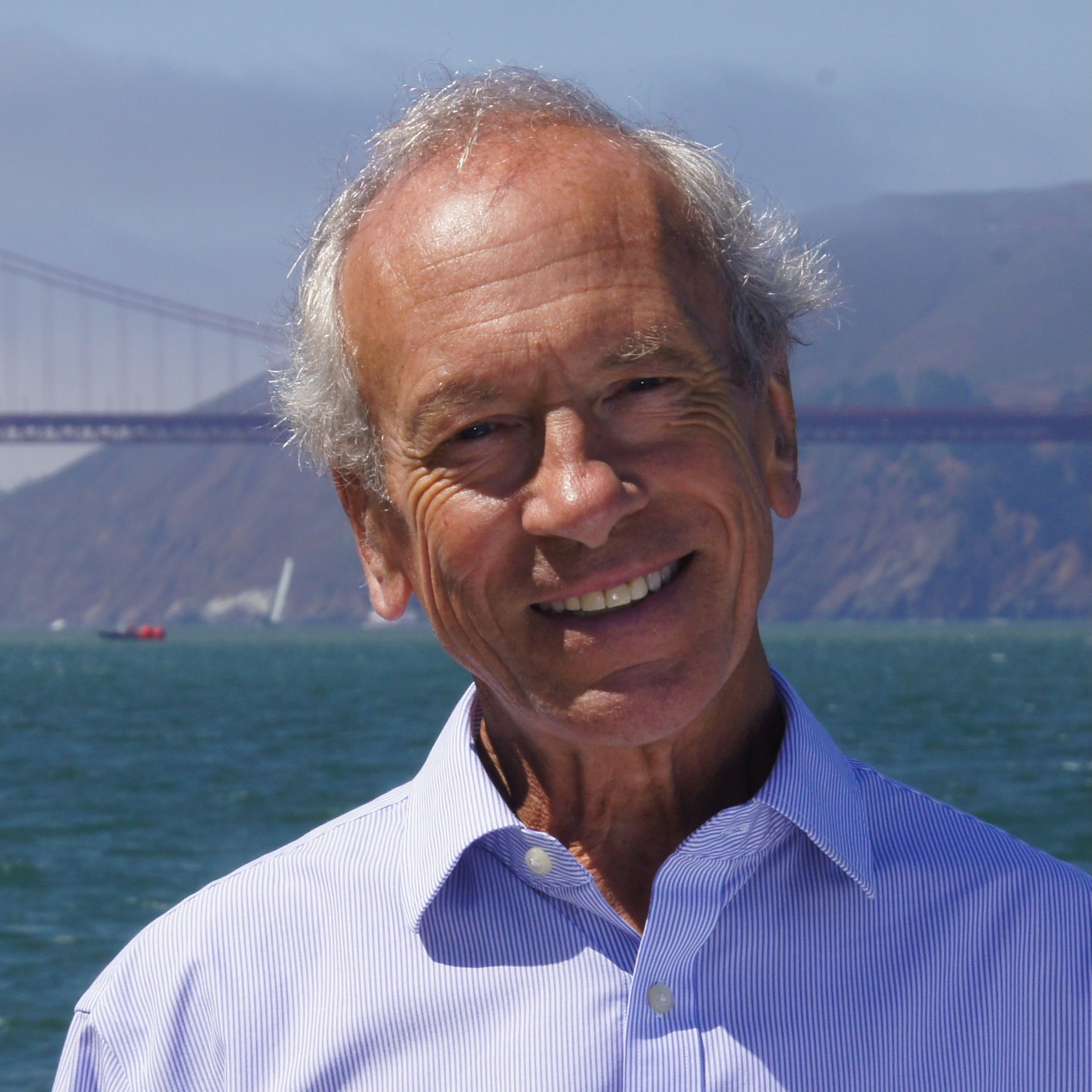
Aoifinn Devitt: The first series of 2022 is brought to you with the kind support of Herd Capital, a Chicago-based asset manager that invests in public equities in the technology, media, telecommunications, financial, and industrial sectors. The firm was founded in 2011 and manages assets via a long-short fund and a long-only fund. One time, decades ago, a debate raged within the private equity industry. The question was whether it would ever reach $100 million. Now, many hundreds of billions of dollars later, let’s hear from a veteran of the industry, both his hopes and his concerns about its future. I’m Aoifinn Devitt, and welcome to the 50 Faces Podcast, a podcast committed to revealing the richness and diversity of the world of investment by focusing on its people and their stories. I’m joined today by David Hutchings, who recently retired from Auburn Americas, where he was most recently partner emeritus, having spent over 14 years at the firm, where he founded the private equity research practice when he joined. He previously held a range of senior private equity roles in a career that has spanned over 50 years. Welcome, David. Thanks for joining me today.
David Hutchings: Well, thank you, Aoifinn. It’s a great pleasure. Congratulations on this whole sort of operation, and if I can contribute a little bit, I’m very happy to do so.
Aoifinn Devitt: Absolutely honored to have someone of your stature in private equity here. Well, let’s start where we always start, which is with your background and career journey. So where did you grow up? What did you study? And how did you come to enter the world of private equity ultimately?
David Hutchings: Well, there’s a longer story which we won’t get into today, but in my days, and things have changed obviously, at the age of 11, one was streamed. You were put into science, arts, classics, or something else. I was put into science because I was good at chemistry, but I wasn’t good at the maths. And in those days, you couldn’t get out. Now life gives lots of flexibility. So I did science O-levels, science A-levels, went to a university locally, which was the first one in Europe doing what we would call material science, then chemical physics, which is really interesting. The first semiconductors, the very first laser, 100-yard-long laser, right? First one in Europe. And there’s a longer story how that took me to, I guess, yeah, it’s probably relevant to what we might talk about. One day in February, I was sitting on a seawall, watching the seals and the herons, etc., in the snow, and wondering what to do in life. I knew that the research side that I’d been in wasn’t right. I wasn’t quite sure what to do. And suddenly there was a tap on my shoulder, which was a shock because there was nobody around, but one guy. Who I’d known distantly at university, Andrew. And we got to know each other and he helped me think about what I was planning to do and said, “Why don’t you go and do it?” And I hadn’t got a response. So I went and formed 3 small businesses and had a good time for a couple of years and then wanted to learn more about finance and accounting, et cetera. So I finished up at Cranfield Business School in the UK, which was at that time the only European post-experience business school. 1-year course, 48 weeks with 2 2-week holidays.. And you work through every weekend, so very intense. When I got there, I’d never heard of it before, but everybody was talking about ICFC, Industrial and Commercial Finance Corporation, which we would now call 3Is. That’s what it came— and it had been set up originally to finance small and medium-sized businesses in the UK. And I think quite literally, probably 80% of everybody on the course applied to 3Is on the milk run. And I didn’t. It didn’t interest me. I wanted to go back and run my own business. But they contacted me, and I went up to London and met with them. And I think I’m right in saying I’m the only person on the course they offered a job to. And I said then, look, I’ll work for you for a couple of years, and then I’m going to go and buy one of your companies, your investments, because I want to run a business. And that’s how I got into this business a long, long time ago, the early 1970s.
Aoifinn Devitt: Absolutely fascinating. So interesting to hear that even then, private equity and venture capital were hot tickets for those emerging from business school and equally elusive in terms of what it is that makes a candidate attractive to these companies. So you clearly, you think that they, well, seems they were attracted to your perhaps industry experience or your background. What do you think was more important in those days? Was it the operational experience or the financial training? Or was it just a curious mind that they were going to be able to train?
David Hutchings: Well, look, let me first of all say there was no such term as private equity then, nor even venture capital, quite frankly. It was industrial finance. We were doing mortgages with an equity option attached at a nominal cost at a P/E of 2. It’s unbelievable. No risk, right? And that was because though we were hearing about the LBO industry in the States, it was illegal to do a management buyout in the UK because of a little legal technicality called Section 54. We went to see Maggie Thatcher, talked to her about buyouts, which she thought would be really good medicine for the UK economy. She arranged to repeal Section 54. And the latter half of my time with ICS3Is, really, we were starting to do management buyouts, management buyouts with limited leverage. What appealed to me was the relationships. I realized early on, I’m not a great investor, quite frankly. And it’s important to recognize that sort of thing. You know, the thrill of going out and finding a deal and negotiating initiating that wasn’t for me. I like the relationships that these people, their businesses, and helping them understand where they were, how they got there, where they wanted to go, and advising them, etc. And this was a very fast-growing— there was clearly a real need for this business. So it started to grow very, very quickly, particularly towards the latter end of the ’70s. But it’s the relationship side that I really enjoyed.
Aoifinn Devitt: Well, I suppose that is one thing that has not changed, of course, about the business, how heavily relationships and networks feature So, let’s go back now to the investor perspective. So this wasn’t even really a category within the sphere of investing back then, even the types of deals weren’t well known. How long was it until these investments became sort of areas that institutions could get exposure to, before we had the first kind of private equity funds, buyout funds?
David Hutchings: Well, what happened was, the only real core, in Europe at least, of experience in any such industrial finance, or people started to call it development capital. Private equity came later on, very fledgling venture capital. The only core experience was ICFC. So very rapidly, the headhunters just pounced on ICFC. Huge numbers of people were headhunted out into institutions. I was headhunted into Midland, and very rapidly the whole marketplace was growing. But it was new, it was educational. We go to conferences, and it was all about what is a management buyout, how does it work, how would it exit, etc., etc. What’s in it for the management? What’s in it for the institution? So everybody was learning, and there were some early pension funds coming in there saying, yep, I think it sounds good. It was a great place to be throughout the late ’70s and the early ’80s, and it just kept on evolving, and it has ceased to do so. I could Just an anecdote, I can remember sitting in the mid-’80s at a conference where the debate was, would there ever be a £100 million fund? And the conference said, no, there never will be, it’s impossible, wouldn’t happen. Okay. Roger Brooke of Cando was sitting in the audience, of course he made it happen. So it was a fascinating place to be, wonderful place to be.
Aoifinn Devitt: Absolutely. And then fast forward from that to the late ’80s when we had the Barbarians at the Gate, I suppose, exposé, or perhaps a period of portraying private equity by about funds perhaps as not always that good for a company’s outcome. How did the industry fare in terms of investor perception around that time?
David Hutchings: Well, I think this industry, and I’m very pleased and proud to have been involved with it, I love it dearly, totally unbiased of course, but it’s never ceased to amaze me at how it has evolved and developed and grown and get to where it is now, which $7 billion, $8 billion, $1 trillion, trillion dollars. There’s always been elements of sort of a new fund, a new angle, a new strategy, a new way of doing things. And I’ve never— I suppose I’ve often thought it would never grow more or whatever, but it just keeps on growing. And I think it will continue to keep on growing in various ways, though I’ve got a few concerns there in some ways.
Aoifinn Devitt: You said you’ve always loved the industry. What is it that you’ve enjoyed making your career in private equity? What has been I suppose what you’ve loved most about it?
David Hutchings: I’ve enjoyed— it’s the relationships that mattered. Early in my time in Midland Bank, I moved from being an executive director doing deals to become deputy managing director. And I could chair the investment committee, I think, well, biased, but beautifully, because I could look at all angles of an investment, whereas people coming up with a deal obviously thinking very much about their own deal and pushing it forward. So standing back and then meeting the management when they came in, or we go out to meet them and listening about their plans and helping them think them through. I just thought this was a fabulous place to be. And I should say, you know, I sometimes think I’ve died and gone to heaven because here’s this industry you’ve got on the management side, the smartest, wonderful people by and large who are just absolutely outstanding to be with. And then the LPs are very dedicated, very, very focused indeed, and lovely people to work with and sit with these two communities of people. And help to make really great programs is a real privilege in some ways, very enjoyable.
Aoifinn Devitt: So now you’ve been— spent the last number of years as an advisor in private equity, and you did hint earlier about some of the concerns you might have about the size of the industry, its growth, its path forward from here. What was at the forefront of your mind, say, over the last 5 to 10 years, or maybe focusing more on the more recent period as an advisor in private equity?
David Hutchings: Yeah, there’s a couple of issues that Very much, I’ve been watching and still with me. I think one of the things is that I think too much sometimes investors are getting lost in the weeds of due diligence. Now due diligence is gigabytes of data and information and great of what sort bibles of— And due diligence is critical, has to be done, but it’s easy to get lost in it. And to me, it’s the selection of the managers, it’s the most critical thing of which due diligence should be part of the process, part of the support. And I think that’s an issue I’ve tried to help clients with many times. So yeah, you can always find something in due diligence which can get you a little bit upset, even on the best firm, but you’ve got to stand back and look at this. So an industry— and sorry, on the other side of that is that far too many managers you can see who, quite frankly, on any proper analysis, should never be trusted with any money again. They’ve done their bit, nothing’s changed. Raising several billion dollars. And that’s going to happen. It is a risk business and people forget that. But getting lost in the weeds of due diligence is a bit of a concern I have. And hopefully I’ve done my best historically to try and help investors sort of stand back and help them and think carefully about that. And the other thing is performance. And I’m not going to call time on this industry, far from it indeed, because it’s a wonderful industry. But if you look at long-term performance trends in this industry, 20 years, Public market equivalent against MSCI, the sort of thing that investment committees and boards can really get their minds around and understand. Fact is, over 20 years at the upper quartile, performance has just been gently declining. There is still nice alpha there, but it’s declining. And with the weight of money and weight of competition that’s come into the market in the last few years, I don’t see any reason why that decline won’t continue. I don’t know what’s going to happen to it, but there’s a time when this industry needs to sort of sit back, or it’s going to need to sit back and think about where it’s going, think about terms, think about performance, etc., etc. Whether that comes from the GP community or the LP community, more likely the LP and advisory community, I don’t know. But those trends of declining alpha generation are just very solidly consistent, and somewhere out there, there’s an adjustment to be made, right? This industry needs to come to realize that the majority of investments being made are generating beta and not alpha.
Aoifinn Devitt: And what are your thoughts— and that’s the other part of the evolution, and you mentioned the industry— is into the product being packaged in a way that it is accessible to smaller investors? And I know that you will probably have worked with many larger institutional investors. What are your thoughts on whether this area is suitable for all investors and particularly for smaller ones and in some of the structures that it gets packaged into.
David Hutchings: Yeah, I’m not entirely happy with sort of retail sales of private markets because in the end, this is a risk business. We’re in a sort of wonderful time at the moment for the industry, incredible amount happening, incredible amounts of money going out, great focus on tech, etc. And it’s going pretty swimmingly for a lot of people. We know this is a risk business. It will become cyclical, that things will change. So retail investors probably don’t understand that. I think they certainly don’t understand that. So I’m not entirely happy. It depends how it’s packaged, I’m sure. But the average person in the streets, I don’t think this is where they should be, actually, personally. Maybe that’s out of date and different, because in some ways, private markets is institutionalizing. Right. In a lot of ways, you can sit back and say this is becoming an institutional marketplace, not as much as mutual funds or something like that. But a lot of the trends are in that sort of direction for much of the marketplace. So maybe there’s a different sort of package product somewhere out in the future.
Aoifinn Devitt: And in recent years, ESG integration has become a buzzword of all investing, but in particularly the challenge, I suppose, of getting that ESG visibility in private markets is now more in focus than ever. Have you found that looking at ESG factors was a part of your process over recent years, and how is that changing?
David Hutchings: No, ESG is now absolutely mainstream, certainly in sort of Allborn, and I’m sure in other advisors, and great teams working on it. But in some ways, it’s always been there. And if you look at the basic principles of what private equity is and how it works, we’ve not got time to go into that, I’m sure. The principles of ESG fit with long-term company building, value creation, etc., etc. And there always have been. If you go back to the early 2000s, I had a huge UK pension fund building a huge private equity program for them, which has done incredibly well, I have to say. I’m very pleased to look back at that. And they were a bit ahead of the time. The board has set up a policy statement on SRI, socially responsible investing, which is precursor to ESG. And they required me to get every manager they signed up with to sign up to this SRI policy. And nobody pushed back against it. They all said, look, we do this, this happens to fit social responsibility, etc., is us. So everybody signed up to it quite happily. And I think just occasionally I’ve seen firms, usually in venture, who just will not sign an ESG policy. I won’t have one. Difficult to understand, not because they’re doing anything wrong. But to me, ESG’s time has come. It’s part of the whole fundamentals of the private market. So it’s just good to see it sort of worked out as a process.
Aoifinn Devitt: And I would argue it’s certainly a segment of the industry where there are the deep pockets in place to provide abundant ESG resource, because that can also often be one of the issues is that in order to get the disclosure standards and simply the due diligence in place that investors now demand, there’s a vast amount required in terms of resources I think the private equity businesses generally can afford it.
David Hutchings: Yeah. Yeah.
Aoifinn Devitt: My question about diversity is quite specific in the case of private equity, because you’ve obviously, you’ve watched it over 50 years. We’ve had a separate series focused on diverse founders and venture capitalists, and they would have observed that often the venture capital industry does not reflect the consumer that the underlying products perhaps invested in serve, that there is very little representation of women, people of color. And that has a knock-on effect in terms of there is essentially a closed group at times when there’s a desire for underrepresented groups to break in, because there isn’t the network, perhaps there isn’t the connection, and then it kind of self-perpetuates this lack of diversity. Do you think there is a lack of diversity in the industry, and is that a weakness?
David Hutchings: Well, I look at it, I suppose, at 3 levels. First of all, the advisor consulting level. In Cambridge Associates, 60% of staff, as I recall, were women. And awesome, absolutely wonderful at all levels as well. Very similar in Auburn as well. And indeed, diversity in Auburn— I don’t know about Cambridge nowadays— across people of color, LGBT, etc., etc., was excellent. And people were chosen on their abilities at all levels rather than anything else. And clients, pension fund managers, insurance managers, high net worths, etc., diversity was better, but still got some way to go. It’s improving. If you go to the GP community, and I could well be out of date, I think it’s got quite a way to go. My impression is there’s still a considerable number of male, white-dominated, rigid structures. And in the current marketplace, nobody can do much about it. You can just say, well, you may be doing great things, but we’re not going to be with you. But there’s a big queue of other investors that will come in. So I think There are changes, but I think it’s got quite a way to go in the industry. I’m probably wrong, but that’s certainly the perception I have.
Aoifinn Devitt: It’s completely spot on in terms of other conclusions from other guests, so that’s very interesting that you share that. So let’s get back to your personal story now. So one doesn’t have a 50-year career without some highs and lows. What did you learn from some of the setbacks, challenges, and even mistakes that you’ve had in your career so far?
David Hutchings: How long have you got? Yeah, there’s a number of things that sort of give me comfort now in sort of retirement and looking back at the industry. One is I can look back over particularly the last 20 years or so, more like 30 years, but 20 years of looking at institutional programs where I’ve had a very, very direct personal involvement with pension funds, sovereign wealth funds, etc. And I’m very pleased with the performance. Didn’t always get it right. And having thought about it over time, I don’t think there’s anything I can say that particularly gave rise to mistakes. It was just even the best firms sometimes slip up. Things happen. There are people, people unfortunately get ill, they die, and sometimes they do strange things. And industries change. It is a risk business. So no general issues come to mind there. Where I’ve had real challenges and setbacks, it’s typically been because some person or people came into the industry who were really not private markets orientated. They were short-term, very short-term objective people, right? And sorting out them and did huge damage to people in particular careers, etc. And sorting those out has been really difficult indeed. And I suppose in that context, I look at the industry at the moment and I see a lot of people being attracted into the industry. And I think some of them probably are very short-term in their objectives. And I’ve always felt if you want to screw around in the short term, go to Wall Street and fight your game with similar people. This is private markets as a very long-term franchise-building organization. So as soon as somebody comes and upsets that, it can get really difficult and really problematic and really painful. But those are the setbacks that I’ve seen. Yeah.
Aoifinn Devitt: And obviously another 50-year career with all the networks you’ve spoken about, you probably have been in touch with people who have influenced you or been a factor or a mentor for you in your career. Is there anyone that you can mention there?
David Hutchings: Yes. Andrew, Robert, and Karen. I mentioned sitting on a seawall in the snow and a guy tapped me on the shoulder. He remains my oldest friend on the planet and is always very good at helping me and other people, listening to them, helping them understand. And sort of the innermost thoughts, et cetera. And he’s always been very valuable at guiding me. And he’s the guy who had confidence in me originally to say, why don’t you go and do it? So yeah, Andrew is very much there. Robert Smith, now Lord Robert Smith in the UK, and justifiably so, wonderful individual. He was my second boss when I— in ICFC, 3Is, in Brighton office. And he picked me up by the scruff of the neck beat me up, sorted me out, gave me huge opportunities. He’s a person who shares everything. So we shared a lot of negotiations and deals and all sorts of situations, etc. If it hadn’t been for me, I don’t know where I’d be. He just sort of sorted me out, got me on the right road, and taught me lots about negotiation and relationships and all those sort of areas. So I really owe him huge amount. And Karen in life, my ex-wife of 30 years, who remains a very, very dear friend, I’m pleased to say. Always wonderful at bringing me down to earth, and you need somebody like that as well. So she’s been incredibly influential, quite apart from together creating the most wonderful pair of girls that we have, daughters.
Aoifinn Devitt: Well, that’s a wonderful set of memories there from those individuals. And in terms of any creed or motto, that you have let guide you through your life or any wisdom that you’ve carried with you? Is there anything that you can share with us there?
David Hutchings: I think there’s a couple of things there. First of all, there’s an old aphorism from somewhere which is luck is opportunity taken. And I’ve often found people— I’m asked to meet somebody because they’re wondering what to do and they’re thinking maybe about private equity or something like that, etc. They typically know what they want to do, but they haven’t faced up to it themselves. And the world’s full of people saying, all I need is a bit of luck. And what they need to do is reach out and grab one of the opportunities that’s floating by at the time. I’ve done that in the past. So luck is opportunity taken. That’s a little bit that always sits with me. I’m looking for it. Raise your eyes from the horizon and very often what you’re looking for is in front of you. And advice, I don’t know about advice, but one of the things that has gone all the way through my career is listening. There’s a line in a movie, I’m not sure what it is, but it always sticks with me. And lady, girl, I think it is, says, are you listening to me or are you waiting for me to stop speaking? Are you listening to me or are you waiting for me to stop speaking? And through a number of times, Robert Smith was very good. It is just wonderful ability to listen 100% to somebody and understand them. A negotiation course in Midland Bank really helped me get my mind around this, etc. We all think we’re good at listening. But actually, if you look at video recordings of meetings, etc., you realize that many people, they’re not listening. What they’re doing is they’re thinking about their reply. And if you’re thinking about your reply, you’re not listening. The brain cannot multitask. Look at the data, right? So learning very, very, very difficult skill to sometimes just say, I need to listen to this. I need to really understand what the person tried to say. And it pays hands down because the person you’re talking to— and this works at a personal level and at a corporate level— as soon as they realize that you are absolutely really and truly intent on understanding them rather than trying to put something over to them, they open up and they give you information you haven’t asked for. It makes a wonderful negotiation, I can tell you. So I think what I picked up was the difficulty of listening, really listening to what somebody’s saying, And I can’t do it all the time. I think some people are much better than others. Some people just, I think, have difficulty listening. But at times you need to say, this is a conversation and it could be personal, it could be corporate. Just that I really need to switch off everything else and focus, test my understanding, question them, etc., because this is really important. So listening is the word that sits with me.
Aoifinn Devitt: That’s so interesting. I also have a phrase I like, which is that attention is the sincerest form of flattery. And I do think that that is relevant. Who doesn’t like being flattered? So I think if you can give your attention to others, it will generally result in a much more fruitful relationship.
David Hutchings: That’s true. If you sat down, my days, with Robert Smith, you would just get warm feelings because he would just be waiting absolutely in your mind, interested, etc. And so you talked, right? Things you didn’t intend to say. I think it was a great saying.
Aoifinn Devitt: And it’s wonderful. And now I’m just thinking my last question, which would be, I’m thinking of that vignette of you sitting on that seawall and the snow and the tap on your shoulder. If you could now look back at that young man, is there anything besides the advice to listen, which has been very profound, anything that you would say to your younger self?
David Hutchings: It’s a difficult one, isn’t it? Words from the wise. I suppose it is just go with the gut feeling. That sea wall thing was about finding my gut feeling. It was there, and I’ve helped a lot of people find what they want to do. Yeah, I think just go with the gut feeling. There’s one situation that we haven’t got time to go into, which I let barriers get in the way and never took up. And if I’d taken that up, almost certainly I would have finished up in the United States at a very young age. Where I would be now, I don’t know. Don’t regret it, but it’s just interesting. If I’d gone with my gut feel, life would be very different one way or another. So I think looking inside yourself and going with that gut feel, it’s so often good. That’s about it. That’s a very difficult one to ask. It really is.
Aoifinn Devitt: It is. It’s, it’s my standard last question. Well, David, it’s been an absolute pleasure to speak with you. Out of that 50-year career, I think we’ve known each other for about 20 of it or slightly less. And you have always been an inspiration, your energy, your zest for your career, your clear love of what you do, and your ability to demonstrate that you act according to your own advice. You, you seize opportunities. I know that we didn’t even speak about your move to San Francisco from the UK. In this latest phase of your career. And I think that’s been just an inspiration. And I feel very privileged to have had this opportunity to share your thoughts on the private equity industry before we lose you from the industry full time. So thank you so much for coming and for sharing your insights with us.
David Hutchings: Well, thank you. Thanks for the opportunity. This is a great initiative and much appreciated.
Aoifinn Devitt: I’m Aoifinn Devitt. Thank you for listening to the 50 Faces podcast. If you liked what you heard and would like to tune in to hear more inspiring investors and their personal journeys, Please subscribe on Apple Podcasts or wherever you get your podcasts. This podcast is for informational purposes only and should not be construed as investment advice, and all views are personal and should not be attributed to the organizations and affiliations of the host or any guest.
Aoifinn Devitt: The first series of 2022 is brought to you with the kind support of Herd Capital, a Chicago-based asset manager that invests in public equities in the technology, media, telecommunications, financial, and industrial sectors. The firm was founded in 2011 and manages assets via a long-short fund and a long-only fund. One time, decades ago, a debate raged within the private equity industry. The question was whether it would ever reach $100 million. Now, many hundreds of billions of dollars later, let’s hear from a veteran of the industry, both his hopes and his concerns about its future. I’m Aoifinn Devitt, and welcome to the 50 Faces Podcast, a podcast committed to revealing the richness and diversity of the world of investment by focusing on its people and their stories. I’m joined today by David Hutchings, who recently retired from Auburn Americas, where he was most recently partner emeritus, having spent over 14 years at the firm, where he founded the private equity research practice when he joined. He previously held a range of senior private equity roles in a career that has spanned over 50 years. Welcome, David. Thanks for joining me today.
David Hutchings: Well, thank you, Aoifinn. It’s a great pleasure. Congratulations on this whole sort of operation, and if I can contribute a little bit, I’m very happy to do so.
Aoifinn Devitt: Absolutely honored to have someone of your stature in private equity here. Well, let’s start where we always start, which is with your background and career journey. So where did you grow up? What did you study? And how did you come to enter the world of private equity ultimately?
David Hutchings: Well, there’s a longer story which we won’t get into today, but in my days, and things have changed obviously, at the age of 11, one was streamed. You were put into science, arts, classics, or something else. I was put into science because I was good at chemistry, but I wasn’t good at the maths. And in those days, you couldn’t get out. Now life gives lots of flexibility. So I did science O-levels, science A-levels, went to a university locally, which was the first one in Europe doing what we would call material science, then chemical physics, which is really interesting. The first semiconductors, the very first laser, 100-yard-long laser, right? First one in Europe. And there’s a longer story how that took me to, I guess, yeah, it’s probably relevant to what we might talk about. One day in February, I was sitting on a seawall, watching the seals and the herons, etc., in the snow, and wondering what to do in life. I knew that the research side that I’d been in wasn’t right. I wasn’t quite sure what to do. And suddenly there was a tap on my shoulder, which was a shock because there was nobody around, but one guy. Who I’d known distantly at university, Andrew. And we got to know each other and he helped me think about what I was planning to do and said, “Why don’t you go and do it?” And I hadn’t got a response. So I went and formed 3 small businesses and had a good time for a couple of years and then wanted to learn more about finance and accounting, et cetera. So I finished up at Cranfield Business School in the UK, which was at that time the only European post-experience business school. 1-year course, 48 weeks with 2 2-week holidays.. And you work through every weekend, so very intense. When I got there, I’d never heard of it before, but everybody was talking about ICFC, Industrial and Commercial Finance Corporation, which we would now call 3Is. That’s what it came— and it had been set up originally to finance small and medium-sized businesses in the UK. And I think quite literally, probably 80% of everybody on the course applied to 3Is on the milk run. And I didn’t. It didn’t interest me. I wanted to go back and run my own business. But they contacted me, and I went up to London and met with them. And I think I’m right in saying I’m the only person on the course they offered a job to. And I said then, look, I’ll work for you for a couple of years, and then I’m going to go and buy one of your companies, your investments, because I want to run a business. And that’s how I got into this business a long, long time ago, the early 1970s.
Aoifinn Devitt: Absolutely fascinating. So interesting to hear that even then, private equity and venture capital were hot tickets for those emerging from business school and equally elusive in terms of what it is that makes a candidate attractive to these companies. So you clearly, you think that they, well, seems they were attracted to your perhaps industry experience or your background. What do you think was more important in those days? Was it the operational experience or the financial training? Or was it just a curious mind that they were going to be able to train?
David Hutchings: Well, look, let me first of all say there was no such term as private equity then, nor even venture capital, quite frankly. It was industrial finance. We were doing mortgages with an equity option attached at a nominal cost at a P/E of 2. It’s unbelievable. No risk, right? And that was because though we were hearing about the LBO industry in the States, it was illegal to do a management buyout in the UK because of a little legal technicality called Section 54. We went to see Maggie Thatcher, talked to her about buyouts, which she thought would be really good medicine for the UK economy. She arranged to repeal Section 54. And the latter half of my time with ICS3Is, really, we were starting to do management buyouts, management buyouts with limited leverage. What appealed to me was the relationships. I realized early on, I’m not a great investor, quite frankly. And it’s important to recognize that sort of thing. You know, the thrill of going out and finding a deal and negotiating initiating that wasn’t for me. I like the relationships that these people, their businesses, and helping them understand where they were, how they got there, where they wanted to go, and advising them, etc. And this was a very fast-growing— there was clearly a real need for this business. So it started to grow very, very quickly, particularly towards the latter end of the ’70s. But it’s the relationship side that I really enjoyed.
Aoifinn Devitt: Well, I suppose that is one thing that has not changed, of course, about the business, how heavily relationships and networks feature So, let’s go back now to the investor perspective. So this wasn’t even really a category within the sphere of investing back then, even the types of deals weren’t well known. How long was it until these investments became sort of areas that institutions could get exposure to, before we had the first kind of private equity funds, buyout funds?
David Hutchings: Well, what happened was, the only real core, in Europe at least, of experience in any such industrial finance, or people started to call it development capital. Private equity came later on, very fledgling venture capital. The only core experience was ICFC. So very rapidly, the headhunters just pounced on ICFC. Huge numbers of people were headhunted out into institutions. I was headhunted into Midland, and very rapidly the whole marketplace was growing. But it was new, it was educational. We go to conferences, and it was all about what is a management buyout, how does it work, how would it exit, etc., etc. What’s in it for the management? What’s in it for the institution? So everybody was learning, and there were some early pension funds coming in there saying, yep, I think it sounds good. It was a great place to be throughout the late ’70s and the early ’80s, and it just kept on evolving, and it has ceased to do so. I could Just an anecdote, I can remember sitting in the mid-’80s at a conference where the debate was, would there ever be a £100 million fund? And the conference said, no, there never will be, it’s impossible, wouldn’t happen. Okay. Roger Brooke of Cando was sitting in the audience, of course he made it happen. So it was a fascinating place to be, wonderful place to be.
Aoifinn Devitt: Absolutely. And then fast forward from that to the late ’80s when we had the Barbarians at the Gate, I suppose, exposé, or perhaps a period of portraying private equity by about funds perhaps as not always that good for a company’s outcome. How did the industry fare in terms of investor perception around that time?
David Hutchings: Well, I think this industry, and I’m very pleased and proud to have been involved with it, I love it dearly, totally unbiased of course, but it’s never ceased to amaze me at how it has evolved and developed and grown and get to where it is now, which $7 billion, $8 billion, $1 trillion, trillion dollars. There’s always been elements of sort of a new fund, a new angle, a new strategy, a new way of doing things. And I’ve never— I suppose I’ve often thought it would never grow more or whatever, but it just keeps on growing. And I think it will continue to keep on growing in various ways, though I’ve got a few concerns there in some ways.
Aoifinn Devitt: You said you’ve always loved the industry. What is it that you’ve enjoyed making your career in private equity? What has been I suppose what you’ve loved most about it?
David Hutchings: I’ve enjoyed— it’s the relationships that mattered. Early in my time in Midland Bank, I moved from being an executive director doing deals to become deputy managing director. And I could chair the investment committee, I think, well, biased, but beautifully, because I could look at all angles of an investment, whereas people coming up with a deal obviously thinking very much about their own deal and pushing it forward. So standing back and then meeting the management when they came in, or we go out to meet them and listening about their plans and helping them think them through. I just thought this was a fabulous place to be. And I should say, you know, I sometimes think I’ve died and gone to heaven because here’s this industry you’ve got on the management side, the smartest, wonderful people by and large who are just absolutely outstanding to be with. And then the LPs are very dedicated, very, very focused indeed, and lovely people to work with and sit with these two communities of people. And help to make really great programs is a real privilege in some ways, very enjoyable.
Aoifinn Devitt: So now you’ve been— spent the last number of years as an advisor in private equity, and you did hint earlier about some of the concerns you might have about the size of the industry, its growth, its path forward from here. What was at the forefront of your mind, say, over the last 5 to 10 years, or maybe focusing more on the more recent period as an advisor in private equity?
David Hutchings: Yeah, there’s a couple of issues that Very much, I’ve been watching and still with me. I think one of the things is that I think too much sometimes investors are getting lost in the weeds of due diligence. Now due diligence is gigabytes of data and information and great of what sort bibles of— And due diligence is critical, has to be done, but it’s easy to get lost in it. And to me, it’s the selection of the managers, it’s the most critical thing of which due diligence should be part of the process, part of the support. And I think that’s an issue I’ve tried to help clients with many times. So yeah, you can always find something in due diligence which can get you a little bit upset, even on the best firm, but you’ve got to stand back and look at this. So an industry— and sorry, on the other side of that is that far too many managers you can see who, quite frankly, on any proper analysis, should never be trusted with any money again. They’ve done their bit, nothing’s changed. Raising several billion dollars. And that’s going to happen. It is a risk business and people forget that. But getting lost in the weeds of due diligence is a bit of a concern I have. And hopefully I’ve done my best historically to try and help investors sort of stand back and help them and think carefully about that. And the other thing is performance. And I’m not going to call time on this industry, far from it indeed, because it’s a wonderful industry. But if you look at long-term performance trends in this industry, 20 years, Public market equivalent against MSCI, the sort of thing that investment committees and boards can really get their minds around and understand. Fact is, over 20 years at the upper quartile, performance has just been gently declining. There is still nice alpha there, but it’s declining. And with the weight of money and weight of competition that’s come into the market in the last few years, I don’t see any reason why that decline won’t continue. I don’t know what’s going to happen to it, but there’s a time when this industry needs to sort of sit back, or it’s going to need to sit back and think about where it’s going, think about terms, think about performance, etc., etc. Whether that comes from the GP community or the LP community, more likely the LP and advisory community, I don’t know. But those trends of declining alpha generation are just very solidly consistent, and somewhere out there, there’s an adjustment to be made, right? This industry needs to come to realize that the majority of investments being made are generating beta and not alpha.
Aoifinn Devitt: And what are your thoughts— and that’s the other part of the evolution, and you mentioned the industry— is into the product being packaged in a way that it is accessible to smaller investors? And I know that you will probably have worked with many larger institutional investors. What are your thoughts on whether this area is suitable for all investors and particularly for smaller ones and in some of the structures that it gets packaged into.
David Hutchings: Yeah, I’m not entirely happy with sort of retail sales of private markets because in the end, this is a risk business. We’re in a sort of wonderful time at the moment for the industry, incredible amount happening, incredible amounts of money going out, great focus on tech, etc. And it’s going pretty swimmingly for a lot of people. We know this is a risk business. It will become cyclical, that things will change. So retail investors probably don’t understand that. I think they certainly don’t understand that. So I’m not entirely happy. It depends how it’s packaged, I’m sure. But the average person in the streets, I don’t think this is where they should be, actually, personally. Maybe that’s out of date and different, because in some ways, private markets is institutionalizing. Right. In a lot of ways, you can sit back and say this is becoming an institutional marketplace, not as much as mutual funds or something like that. But a lot of the trends are in that sort of direction for much of the marketplace. So maybe there’s a different sort of package product somewhere out in the future.
Aoifinn Devitt: And in recent years, ESG integration has become a buzzword of all investing, but in particularly the challenge, I suppose, of getting that ESG visibility in private markets is now more in focus than ever. Have you found that looking at ESG factors was a part of your process over recent years, and how is that changing?
David Hutchings: No, ESG is now absolutely mainstream, certainly in sort of Allborn, and I’m sure in other advisors, and great teams working on it. But in some ways, it’s always been there. And if you look at the basic principles of what private equity is and how it works, we’ve not got time to go into that, I’m sure. The principles of ESG fit with long-term company building, value creation, etc., etc. And there always have been. If you go back to the early 2000s, I had a huge UK pension fund building a huge private equity program for them, which has done incredibly well, I have to say. I’m very pleased to look back at that. And they were a bit ahead of the time. The board has set up a policy statement on SRI, socially responsible investing, which is precursor to ESG. And they required me to get every manager they signed up with to sign up to this SRI policy. And nobody pushed back against it. They all said, look, we do this, this happens to fit social responsibility, etc., is us. So everybody signed up to it quite happily. And I think just occasionally I’ve seen firms, usually in venture, who just will not sign an ESG policy. I won’t have one. Difficult to understand, not because they’re doing anything wrong. But to me, ESG’s time has come. It’s part of the whole fundamentals of the private market. So it’s just good to see it sort of worked out as a process.
Aoifinn Devitt: And I would argue it’s certainly a segment of the industry where there are the deep pockets in place to provide abundant ESG resource, because that can also often be one of the issues is that in order to get the disclosure standards and simply the due diligence in place that investors now demand, there’s a vast amount required in terms of resources I think the private equity businesses generally can afford it.
David Hutchings: Yeah. Yeah.
Aoifinn Devitt: My question about diversity is quite specific in the case of private equity, because you’ve obviously, you’ve watched it over 50 years. We’ve had a separate series focused on diverse founders and venture capitalists, and they would have observed that often the venture capital industry does not reflect the consumer that the underlying products perhaps invested in serve, that there is very little representation of women, people of color. And that has a knock-on effect in terms of there is essentially a closed group at times when there’s a desire for underrepresented groups to break in, because there isn’t the network, perhaps there isn’t the connection, and then it kind of self-perpetuates this lack of diversity. Do you think there is a lack of diversity in the industry, and is that a weakness?
David Hutchings: Well, I look at it, I suppose, at 3 levels. First of all, the advisor consulting level. In Cambridge Associates, 60% of staff, as I recall, were women. And awesome, absolutely wonderful at all levels as well. Very similar in Auburn as well. And indeed, diversity in Auburn— I don’t know about Cambridge nowadays— across people of color, LGBT, etc., etc., was excellent. And people were chosen on their abilities at all levels rather than anything else. And clients, pension fund managers, insurance managers, high net worths, etc., diversity was better, but still got some way to go. It’s improving. If you go to the GP community, and I could well be out of date, I think it’s got quite a way to go. My impression is there’s still a considerable number of male, white-dominated, rigid structures. And in the current marketplace, nobody can do much about it. You can just say, well, you may be doing great things, but we’re not going to be with you. But there’s a big queue of other investors that will come in. So I think There are changes, but I think it’s got quite a way to go in the industry. I’m probably wrong, but that’s certainly the perception I have.
Aoifinn Devitt: It’s completely spot on in terms of other conclusions from other guests, so that’s very interesting that you share that. So let’s get back to your personal story now. So one doesn’t have a 50-year career without some highs and lows. What did you learn from some of the setbacks, challenges, and even mistakes that you’ve had in your career so far?
David Hutchings: How long have you got? Yeah, there’s a number of things that sort of give me comfort now in sort of retirement and looking back at the industry. One is I can look back over particularly the last 20 years or so, more like 30 years, but 20 years of looking at institutional programs where I’ve had a very, very direct personal involvement with pension funds, sovereign wealth funds, etc. And I’m very pleased with the performance. Didn’t always get it right. And having thought about it over time, I don’t think there’s anything I can say that particularly gave rise to mistakes. It was just even the best firms sometimes slip up. Things happen. There are people, people unfortunately get ill, they die, and sometimes they do strange things. And industries change. It is a risk business. So no general issues come to mind there. Where I’ve had real challenges and setbacks, it’s typically been because some person or people came into the industry who were really not private markets orientated. They were short-term, very short-term objective people, right? And sorting out them and did huge damage to people in particular careers, etc. And sorting those out has been really difficult indeed. And I suppose in that context, I look at the industry at the moment and I see a lot of people being attracted into the industry. And I think some of them probably are very short-term in their objectives. And I’ve always felt if you want to screw around in the short term, go to Wall Street and fight your game with similar people. This is private markets as a very long-term franchise-building organization. So as soon as somebody comes and upsets that, it can get really difficult and really problematic and really painful. But those are the setbacks that I’ve seen. Yeah.
Aoifinn Devitt: And obviously another 50-year career with all the networks you’ve spoken about, you probably have been in touch with people who have influenced you or been a factor or a mentor for you in your career. Is there anyone that you can mention there?
David Hutchings: Yes. Andrew, Robert, and Karen. I mentioned sitting on a seawall in the snow and a guy tapped me on the shoulder. He remains my oldest friend on the planet and is always very good at helping me and other people, listening to them, helping them understand. And sort of the innermost thoughts, et cetera. And he’s always been very valuable at guiding me. And he’s the guy who had confidence in me originally to say, why don’t you go and do it? So yeah, Andrew is very much there. Robert Smith, now Lord Robert Smith in the UK, and justifiably so, wonderful individual. He was my second boss when I— in ICFC, 3Is, in Brighton office. And he picked me up by the scruff of the neck beat me up, sorted me out, gave me huge opportunities. He’s a person who shares everything. So we shared a lot of negotiations and deals and all sorts of situations, etc. If it hadn’t been for me, I don’t know where I’d be. He just sort of sorted me out, got me on the right road, and taught me lots about negotiation and relationships and all those sort of areas. So I really owe him huge amount. And Karen in life, my ex-wife of 30 years, who remains a very, very dear friend, I’m pleased to say. Always wonderful at bringing me down to earth, and you need somebody like that as well. So she’s been incredibly influential, quite apart from together creating the most wonderful pair of girls that we have, daughters.
Aoifinn Devitt: Well, that’s a wonderful set of memories there from those individuals. And in terms of any creed or motto, that you have let guide you through your life or any wisdom that you’ve carried with you? Is there anything that you can share with us there?
David Hutchings: I think there’s a couple of things there. First of all, there’s an old aphorism from somewhere which is luck is opportunity taken. And I’ve often found people— I’m asked to meet somebody because they’re wondering what to do and they’re thinking maybe about private equity or something like that, etc. They typically know what they want to do, but they haven’t faced up to it themselves. And the world’s full of people saying, all I need is a bit of luck. And what they need to do is reach out and grab one of the opportunities that’s floating by at the time. I’ve done that in the past. So luck is opportunity taken. That’s a little bit that always sits with me. I’m looking for it. Raise your eyes from the horizon and very often what you’re looking for is in front of you. And advice, I don’t know about advice, but one of the things that has gone all the way through my career is listening. There’s a line in a movie, I’m not sure what it is, but it always sticks with me. And lady, girl, I think it is, says, are you listening to me or are you waiting for me to stop speaking? Are you listening to me or are you waiting for me to stop speaking? And through a number of times, Robert Smith was very good. It is just wonderful ability to listen 100% to somebody and understand them. A negotiation course in Midland Bank really helped me get my mind around this, etc. We all think we’re good at listening. But actually, if you look at video recordings of meetings, etc., you realize that many people, they’re not listening. What they’re doing is they’re thinking about their reply. And if you’re thinking about your reply, you’re not listening. The brain cannot multitask. Look at the data, right? So learning very, very, very difficult skill to sometimes just say, I need to listen to this. I need to really understand what the person tried to say. And it pays hands down because the person you’re talking to— and this works at a personal level and at a corporate level— as soon as they realize that you are absolutely really and truly intent on understanding them rather than trying to put something over to them, they open up and they give you information you haven’t asked for. It makes a wonderful negotiation, I can tell you. So I think what I picked up was the difficulty of listening, really listening to what somebody’s saying, And I can’t do it all the time. I think some people are much better than others. Some people just, I think, have difficulty listening. But at times you need to say, this is a conversation and it could be personal, it could be corporate. Just that I really need to switch off everything else and focus, test my understanding, question them, etc., because this is really important. So listening is the word that sits with me.
Aoifinn Devitt: That’s so interesting. I also have a phrase I like, which is that attention is the sincerest form of flattery. And I do think that that is relevant. Who doesn’t like being flattered? So I think if you can give your attention to others, it will generally result in a much more fruitful relationship.
David Hutchings: That’s true. If you sat down, my days, with Robert Smith, you would just get warm feelings because he would just be waiting absolutely in your mind, interested, etc. And so you talked, right? Things you didn’t intend to say. I think it was a great saying.
Aoifinn Devitt: And it’s wonderful. And now I’m just thinking my last question, which would be, I’m thinking of that vignette of you sitting on that seawall and the snow and the tap on your shoulder. If you could now look back at that young man, is there anything besides the advice to listen, which has been very profound, anything that you would say to your younger self?
David Hutchings: It’s a difficult one, isn’t it? Words from the wise. I suppose it is just go with the gut feeling. That sea wall thing was about finding my gut feeling. It was there, and I’ve helped a lot of people find what they want to do. Yeah, I think just go with the gut feeling. There’s one situation that we haven’t got time to go into, which I let barriers get in the way and never took up. And if I’d taken that up, almost certainly I would have finished up in the United States at a very young age. Where I would be now, I don’t know. Don’t regret it, but it’s just interesting. If I’d gone with my gut feel, life would be very different one way or another. So I think looking inside yourself and going with that gut feel, it’s so often good. That’s about it. That’s a very difficult one to ask. It really is.
Aoifinn Devitt: It is. It’s, it’s my standard last question. Well, David, it’s been an absolute pleasure to speak with you. Out of that 50-year career, I think we’ve known each other for about 20 of it or slightly less. And you have always been an inspiration, your energy, your zest for your career, your clear love of what you do, and your ability to demonstrate that you act according to your own advice. You, you seize opportunities. I know that we didn’t even speak about your move to San Francisco from the UK. In this latest phase of your career. And I think that’s been just an inspiration. And I feel very privileged to have had this opportunity to share your thoughts on the private equity industry before we lose you from the industry full time. So thank you so much for coming and for sharing your insights with us.
David Hutchings: Well, thank you. Thanks for the opportunity. This is a great initiative and much appreciated.
Aoifinn Devitt: I’m Aoifinn Devitt. Thank you for listening to the 50 Faces podcast. If you liked what you heard and would like to tune in to hear more inspiring investors and their personal journeys, Please subscribe on Apple Podcasts or wherever you get your podcasts. This podcast is for informational purposes only and should not be construed as investment advice, and all views are personal and should not be attributed to the organizations and affiliations of the host or any guest.