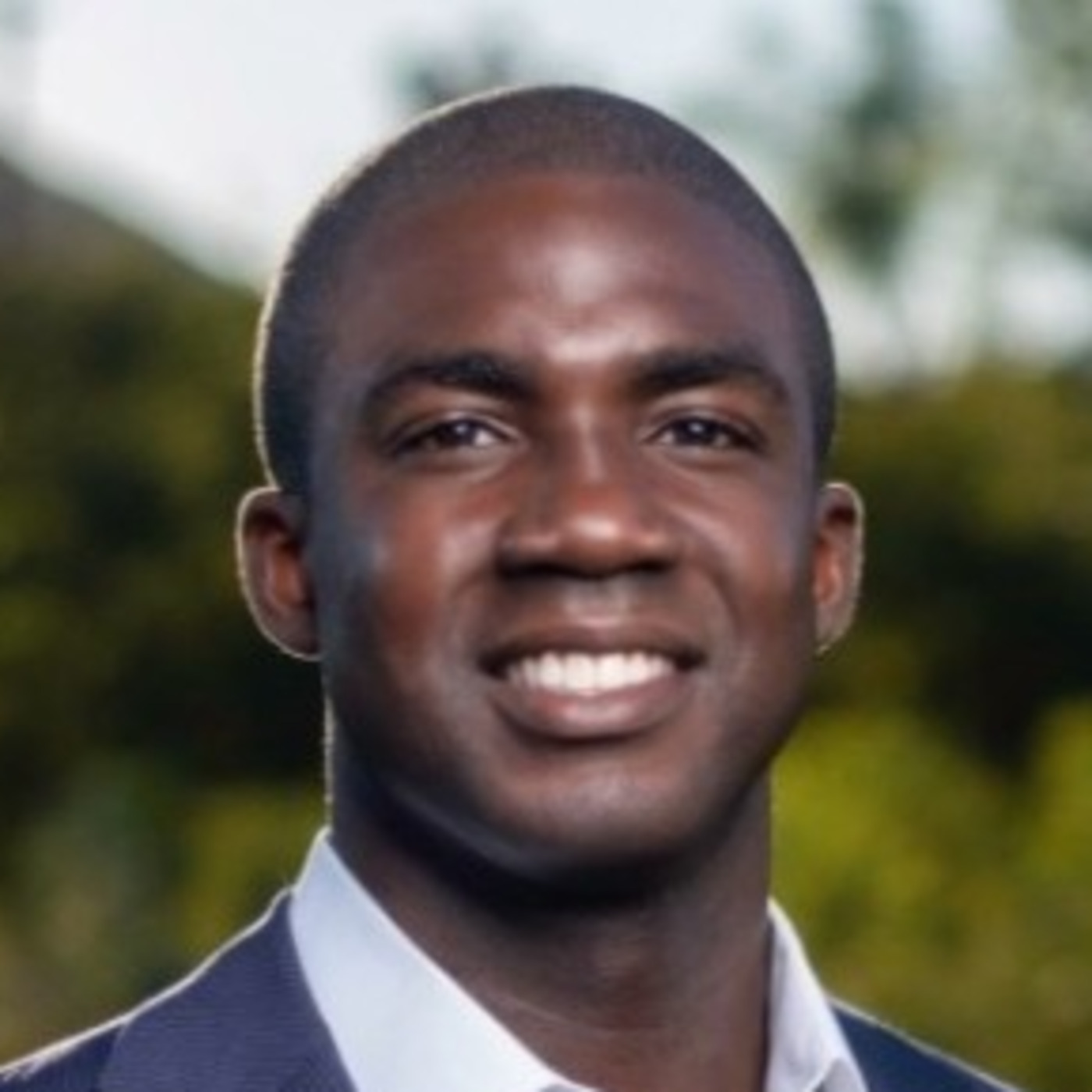
Aoifinn Devitt: Our next guest sees opportunity in ghost kitchens and self-storage and believes that the world of proptech is what will deliver the next frontier in real estate. Hear about his journey, his Ghanaian roots, and what it means to pass the shower test. I’m Aoifinn Devitt, and welcome to the 50 Faces Podcast, a podcast committed to revealing the richness and diversity of the world of investment by focusing on its people and and their stories. I’m joined today by Adam Demoyacourt, who is the founder and managing partner at Wilshire Lane Capital, a venture capital and private equity firm that focuses on prop tech solutions based in Los Angeles, California. Born in the US to a family originally from Ghana, Adam started out on Wall Street in investment banking and held a number of private equity and venture capital roles before founding Wilshire Lane. He also holds a number of board roles and is a board trustee of the education nonprofit Nine Dots. Welcome, Adam. Thanks for joining me today.
Adam: Aoifinn, it’s great to be here. Thank you for having me. I’m a big fan of what you’ve been doing with 50 Faces, and you’ve been doing really great work. So thanks for having me.
Aoifinn Devitt: Well, thank you so much for that. And well, let’s start where we always start, which is by talking about your background and your entry into the investment world. Where did that start?
Adam: So it all started in undergrad. So back at Harvard, I had an affinity to business, and that naturally led to an interest in finance. And so I was fortunate enough to have a job opportunity to work at Morgan Stanley coming right out of school. I worked at Morgan Stanley in the real estate group, which was unique back then because they had both a banking and a private equity side. And so I got to invest capital, institutional capital, directly out of college, but then also was advising a lot of the largest REITs on their capital structures and transactions. So that’s really where the start came from.
Aoifinn Devitt: And just before we move into where that start took you, I’d love to just go back to your roots a little. Your family originally came from Ghana. Was there any expectation in the house about a certain career direction you might take or any cultural norms that you took with you?
Adam: Yeah, it’s so funny. I think like descendants of West African immigrants, kind of like the stereotype is that if you can be a doctor or a lawyer, you’re, you’re, you’re A-okay. And so my, my parents’ education was always a big deal. My dad got his own PhD from the University of Southern California. And so education was really, really important. I think that once I, you know, was able— was fortunate enough to be able to go to the Ivy League, they were able to relax and they were kind enough to let me go into business and working on Wall Street. I think I you eventually, know, started to work with them and negotiate with them over time to allow me to increasingly take more and more risk in my career, which was nice.
Aoifinn Devitt: And you mentioned in your early days in finance working with REITs, and what then prompted the move to become an early-stage investor?
Adam: Yes. So it was a bit of a road. So first, I worked at Morgan Stanley in the banking group and then wanted to go directly to the buy side. So I was in more of a generalist role. I loved real estate, but I wanted to have the opportunity to look at other companies. I didn’t want to just value assets or portfolios of assets. I was interested in EBITDA and businesses that sold things and built things that are outside of the real estate industry. So I was fortunate enough to work at the Carlyle Group in their markets division, ultimately ended up working one of the long-short hedge funds that Carlyle had acquired called Emerging Sovereign Group. And so got to spend time there working in the public markets. And then after that, ended up going back to Harvard. So got my MBA from Harvard Business School and then really took a liking and had an affinity for early-stage investing. I just felt like the ability to build things and work with early-stage founders was just so exhilarating. And once I got into venture, starting in the business school days, I just never left.
Aoifinn Devitt: And you now at Wilshire Lane, could you talk a little bit about the work there? What exactly is prop tech and what’s your investment approach?
Adam: Yeah, so prop tech is short for property technology, and it’s really an industry that’s exploded in the past decade or so. And I think really kind of came to the forefront of people’s minds with Basically with Airbnb and WeWork, being able to see those companies essentially get to such large valuations, particularly Airbnb, which is north of a $100 billion valuation today, really I think started to get a lot of focus, both from institutional capital as well as talent, where similarly with fintech or biotech, I think previously generalist VCs felt that it was something that you can invest in from time to time, and you didn’t need specialization. But then obviously with fintech, you saw that you need more specialization. In biotech, for sure, you need specialization. And we’re now starting to see the same thing with proptech, where people who have experience, direct experience with the real estate industry and/or relationships with the real estate industry are able to create greater outcomes and have a competitive advantage when it comes to selection. And that’s exactly what we’re focused on with Wilshire Lane Capital. Me, as I mentioned, I started out in the real estate industry. So rather than me thinking about a lot of these concepts in an abstract notion, I’m able to know clearly, this is something the real estate industry would be interested in, or this is not when it comes to technology that they would adopt or use. And then similar at Whistling Capital, we’ve been fortunate enough to partner with a lot of private and nimble real estate firms that are willing to— they’re not the largest names or the biggest names, but they’re the type of firms that are able to do very unique things and will work on the behalf of startups to create direct partnerships and value-add situations. And so for us, we look to invest in categories where we can really start to create that value. Now, one of the first categories that we invested in coming out of the gates was ghost kitchens. And so ghost kitchens are basically delivery-only restaurants where you can’t sit down. And basically these hubs can sell, call it, 8 to 10 brands out of one kitchen. This wasn’t a pandemic thesis. We invested in this starting in end of 2018, beginning 2019. We saw the data, we saw the long-term secular trends, and ultimately the pandemic occurred and accelerated everything about 5 times or so. So that’s been a great outcome, but that’s just one example of how we find Visa using our adjacency to real estate, we’re able to find these great and attractive categories to invest in.
Aoifinn Devitt: Well, I’m always learning new terminology. Ghost kitchens is a new one for this podcast, so thank you for adding that to my lexicon. And as far as the Wilshire Lane thesis extending beyond the capital, do you provide incubation services, other kind of assistance to those companies that you provide capital to?
Adam: Yes, absolutely. So it’s a great question. So we are an early-stage focused venture fund, and, you know, that can mean a lot of things, but typically We’re investing in companies all the way from the beginning of their life cycle to the seed stage, and then also to the Series A stage predominantly. And then sometimes we’ll do later stage, like Series B+ investments, but rarely. And so yes, at the earliest, we will do incubation. So incubation strategies. And so that’s actually something that we did with a company called Stuff Storage. So S-T-U-F Storage with one F. And basically we saw an opportunity. We saw that there was a lot of vacancies in commercial real estate today, a lot of dead spaces that were not being utilized correctly. And so you had garages, you had basements, you had parking decks that were just sitting there vacant. And we had the idea that you could, with self-storage, that you could essentially monetize and turn these into self-storage facilities. And self-storage obviously has robust demand. I mean, occupancies in that industry are north of 95%. And so we were very pleased to see that when we converted these dead spaces and basements, into self-storage facilities, the demand was pretty robust. And their first facilities are now at, again, 95%+ occupancies. And we were fortunate enough to work with Katherine Lau, who’s the co-founder and CEO of that business and who I’d worked with at my time when she was working at Industrious. And now she’s the CEO of STUFF. And so that’s a perfect example. That was a company that did not exist and we simultaneously incubated it and invested in it. And then later stages, to your question, we may not always create companies, but if a company at the seed stage or Series A stage comes to us, we predominantly will look for an area where we can add value. We can either help them sell their technology to a real estate firm, or we can help them get more space vis-à-vis our partnerships with real estate firms. And so we’ll go to our partners and ask them what vacancies that they have, what spaces that they can make available to the startups, and we’ll create partnerships that way. So we really try to be and hands-on partner. And we will not invest in a company unless we see a clear-cut way that we can add value. We feel that capital by itself is just a commodity. And really when it comes to getting best-in-class deal flow, you have to be able to consistently add value.
Aoifinn Devitt: So interesting. And in that sector, I’ve also heard besides the staggering occupancy rates, say self-storage, that the margins are huge.
Adam: Yes. It’s a great business because, well, one, I think people are just notoriously bad at throwing things away or giving things away. People hold onto things that have personal value. And as a result, they’ll take it to self-storage facilities. And really from the self-storage provider, there’s only cost incurred on the front end. You basically have to go meet the customer, help them store their stuff. But then after that, you definitely don’t have to work with the customer again. It costs nothing to basically keep their stuff there month after month after month. So the margins actually end up being pretty strong. And then the average self-storage customer keeps their stuff in for about 14 to 15 months. So that’s pretty consistent cash flow that you’re receiving over a 14 to 15-month time period that you’re really incurring no cost to be able to satisfy that customer. It’s a really excellent business.
Aoifinn Devitt: And looking to the future now and your future plans, you recently announced a transaction with Nile Capital. And in fact, Mel Lindsey, who kindly introduced us, was a guest on one of our very first 50 Faces podcast series. So what are your plans now that this transaction has happened?
Adam: Yes. So our, our plans now are to proceed going forward. I think we’ve been fortunate enough, you know, investing in categories like ghost kitchens and self-storage that our performance has been very despite, strong you know, investing now, you know, for less than 3 years, we’re up multiples on the equity that we’ve deployed. And I think that the industry and the market is really starting to understand back in 2019, When we said we were going to find asset-level ways to create value for startups, people were wondering, “All right. Well, what exactly does that mean?” And now that we can point to these clear examples with ghost kitchens, for example, and also self-stores, the market is responding strongly. So we’re now going to be raising a larger third vehicle in order to continue investing in strategies like this. And yeah, the partnership with Nile has just been fantastic. I think I was actually introduced to Mel Lindsey through a mentor of mine, Jose Feliciano, who’s an extremely successful private equity investor with Clearlake Capital out here in Los Angeles. And he basically encouraged me to connect with Mel so that I could basically take the next step from just being a good investor to actually having an institutional quality business and organization. And that’s exactly what Niles helped me out with. For me, they helped take away all the things that are not related to investing, and help me out with that. So infrastructure, being able to help out with IT and security, being able to help out with distribution, just all the things that go into building an investment management that organization are, again, that are not related to investing. They basically help me out with those things, augment my abilities in those areas, and really allow me to focus on what I like and what I do best, which is finding great founders that are building huge solutions and great solutions in our PropTech category and working with them to create strong businesses.
Aoifinn Devitt: And some of the founders you mentioned were women there, and I’d just love to ask your impressions of the diversity, not only of the venture capital industry that you’re in, but in some of the sectors that your entrepreneurs and business owners and business starters are working in. What are your thoughts on that, and are there any barriers that some diverse founders face in your view?
Adam: Yes. So, you know, Aoifinn, thanks for asking on this. This is something that I feel very strongly about. In short, to answer your question, we are way, way behind, woefully behind in the venture capital and the technology industry as far as having diversity, right? I think that, you know, you pull up any, any article on the subject, you’ll see you that, know, there’s less than 5% of venture capital partners that are Black and brown. In fact, the percentage of women VCs is also too low compared to the prevalence in our society. Again, know, you when it comes to founders, you know, again, less than 10% of startup founders are Black and brown, and significantly less than 50% of Founders are women. And so this is something that me being— obviously being a Black investor in the PropTech space, definitely the only Black GP in the space, I’ve always felt a certain level of responsibility to be a part of solving the problem here and being a part of the solution. And so for us at Wilshire, look, our mandate is to generate the most amount of returns on our investor capital as possible. That is our primary goal. Is to generate returns for our investors. But I think as a secondary situation, yes, we think that diversity is a great way to help achieve that goal. And there’s been a lot of research from Harvard Business Review and McKinsey that shows that diverse teams generate better outcomes in the business industry. And so for us, we look for diverse teams. In our portfolio alone, 36% of our companies are led by women outright. And we’re proud about that number, but We want to push it up to 50% or even more. 29% of our companies have a Black founder on them, which, you know, even is even larger than the percentage that Black people exist in the United States. And 79% of our companies have an underrepresented minority or a female in the C-suite. For us, we see that as a strength. We’re not going and investing in these companies to do them a favor. We’re looking for these types of backgrounds because we think that, you know, one, there’s a mispricing from the market where these groups of people are not necessarily being appreciated at the value that probably that we think that they might be able to command. And then additionally, you know, we see that, you know, having, again, having these diverse teams that come from different backgrounds typically results in better and greater outcomes because a lot of these companies are serving pretty diverse customer sets, both from a gender and a race standpoint. And so if you’re serving diverse customer sets, I think also having diversity in your own team allows you to serve those customer sets well.
Aoifinn Devitt: That’s really remarkable, those statistics you gave us there, and I’ll make sure to capture those in in the, the show notes. I would like to ask you about what interventions you’ve seen that work and make an impact in addressing some of this imbalance. Is it some of the incubation programs or affinity groups or more diversity perhaps within venture, within the sources of capital?
Adam: David Sherman: I think first and foremost, the number one thing is that the numbers need to be tracked. I think going all the way up to the LPs, right? So a lot of institutions, pensions, and endowments, they also are receiving their capital from pretty diverse groups. I’m sure that those diverse groups would also like to see the capital that they’re putting into a pension or an endowment also be spread out pretty evenly throughout our society and the different groups of our society. It’s hard to know how that’s going if those things aren’t being tracked. And so I think that if those constituents that are part of those different pensions and endowments start to increasingly demand like, hey, we’d like to see the numbers, we’d like to see your breakdown of capital allocation by gender, how many female GPs are you allocating to? And we’d like to see it by race. And then I think that’ll allow a lot of these allocators to start to see themselves, like how are we performing according to these numbers. So I think that’s first and foremost. And then number 2, I think that then those allocators start to ask their GPs and their investors, hey, what percentage of your founders that you’ve invested in are female? What percentage of your founders are Latino? What percentage of your founders are Black? Then at that point, I think that increases that downward pressure as well. It’s like, okay, now if I’m giving you capital, I’d like to see you also have more diversity. And then Once it gets to the GPs or the investors like myself, I think there’s been— some people will say the typical, “I’d like to invest in more female founders, but I just don’t see them.” Well, that’s, in my opinion, that’s your fault. I think that from my standpoint, we’ve had no difficulty at all being able to invest in a strong cohort of female founders, especially in real estate and technology, which are typically male-dominated segments. And so I think it starts with raising your hand. I think as an investor, you come out very publicly like we have and said, we are looking for diverse founders or Black and brown founders. We are looking for female founders. You raise your hand publicly, you let it be known, you cut the check when you find the strong founders that come your way, I promise you, you’ll be soon overloaded with many other candidates that will soon find out about it and reach out to you. And so that’s— those are just some basic ideas on ways that I think that the industry can start to do better. And then obviously, like you said, in incubation, incubating stuff. The fact that Kat was a super strong female founder with a great experience coming from another successful real estate firm like Industrious, you know, made her an ideal candidate to back. And so I you think, know, it starts with tracking and then it follows with action.
Aoifinn Devitt: And let’s go further up the chain now into the pipeline and the education conundrum that we need to have more in the education pipeline. You’re involved in an education nonprofit, Nine Dots, Can you talk a little bit about what triggered that interest for you and what you focus on there?
Adam: Yeah, so, you know, Nine Dots, I joke around, but it’s in some ways it’s not joking at all. Nine Dots is basically the best thing I think that I’m a part of. I’m such a big fan of that organization. I’m so honored to be a board trustee and to work with them. And, you know, just for those that don’t know, Nine Dots is an organization, a nonprofit based here in Los Angeles. That focuses on providing subsidized computer science courses for the poorest students in the city, which happen to be predominantly children of color. And the way that 9Dots does this is that they essentially are— they provide programming that fits into the school’s curriculum. So a student that’s in elementary school or middle school, they’ll typically go to math, science, English, and then they’ll go into physical education, And Nine Dots slots in a course called technology that they can actually— that fits into the curriculum. And so the student doesn’t necessarily know that like this is— well, they do know that it’s a Nine Dots instructor, but it fits into their existing curriculum, just like physical education or math or science. As a result, it’s not an additional burden on the student, right? There’s a lot of computer science nonprofits that say, hey, you can come before school, or you can come after school, or you can come to summer camp. A lot of these students that come from the poorest situations, Their families can’t afford for them to spend extra time either through camp or after school or before school. They need them around. And so Nine Dots does it without being a burden. And for me, wanting to work with that organization really stemmed from a lot of what we were talking about before. When I saw two things in technology, one, just the sheer level of wealth creation that a lot of these fantastic companies could build like Facebook and Skype and in DoorDash, in Uber, in Airbnb, and seeing that the level of diversity that’s there, particularly the engineering talent, which are folks that end up getting a lot of equity in the businesses, just seeing again, these numbers from these groups that I’d mentioned before, 1%, 2%, 3%, just too low. And also seeing the number of founders that were coming my way at the other firms, venture firms I worked at, that were from diverse backgrounds and how low it was. When I When I would ask like, hey, why aren’t we seeing more female founders come through the door? Why aren’t we seeing more Black founders come through the door? A lot of it was pipeline. We’re just not seeing a lot. Like, we would love to invest in a Black founder, but we don’t see many that have technical talent. And not technical from the Wall Street way, like good at accounting, like technical as in like they can’t code. And so for me, I was like, okay, well, this sounds like a pipeline. Like, why don’t we go to the root? The root of the issue. And in asking around, I found out that, like, you know, in a lot of private schools and schools that help serve more affluent groups, computer science is actually a course or an extracurricular that’s provided. I know friends that have been part of private schools that got to learn computer science in middle school, in elementary school. And if you’re a child coming from a poor background, that’s just— you have no ability. That’s impossible. And so I wanted to look for an organization that could help solve that problem, and Nine Dots does that excellently. And so it’s really about boosting up that pipeline. And, you know, again, know, it’s the— you they don’t discriminate. It’s simply they’re just serving the poorest students, and those poor students now have computer science abilities. And, you know, what I’ve seen while sitting in my seat in venture capital is that if you have the ability to code, if you’re an engineer, you will always have a job in today’s economy. So I’m super excited about what they’re doing. And yeah, it’s directly related to what I do in my seat.
Aoifinn Devitt: That’s a very remarkable initiative. And you also mentioned some of the highs there, of some of the great success that we see in the world of technology. Given you’ve been immersed in this now for a number of years, what would you say are some of the highs and lows, or maybe any setbacks that you’ve had or seen in your career so far?
Adam: Yeah, so I think on some of the lows, I think that, you know, call it 2018, 2019, we were really starting to see a big wave of more support and financial backing for female founders, which was really heartening to see and extremely encouraging. I think something that was a low is that once the pandemic ensued in 2020, know, you a lot of research was done and publications came out that female funding actually started to decrease. It retracted. So, you know, I don’t know the reason, but if the reason is you that, know, when times get tough, you got to stick to what you know or stick to the typical pattern recognition, That’s something that you’d want to see reversed. So I’d love to see more female founder funding return back to what it was trending towards 2018, 2019. From my perspective, yeah, just talking about it in my career, I think that there were some of the steps that I took, and I think it’s particularly in going from the public markets to the private markets, stem from really just trying to identify a place of passion. I think when I was in the public markets, I wasn’t as passionate about the investment opportunities as I am now, particularly because I didn’t feel like I could really get in the trenches with founders or CEOs and really be hand in hand with them. And so I think it’s a sign that if you are basically looking for the right place for you in your career, really try to focus on an area where you have passion, focus on an area that really resonates with you and that type of job that you think about nonstop, because I think that’s the type of role that you will do a really excellent job with.
Aoifinn Devitt: And you’ve spoken a lot about the mentoring now that you’re doing, whether it’s through being a venture capitalist or through the education nonprofit. And you also mentioned one of your mentors. Were there any other key people who influenced you along your career, and in what way?
Adam: Yeah, so that’s one of the areas that I’ve been probably most fortunate in my life. I’ve just been, you know, I’ve had the pleasure of Having access to really great mentors and people who are not just great investors and business people, but also people who care and also care about doing the right things. Jose Feliciano, like you said, I already mentioned him and guiding me in the right way and building an institutional firm and really trying to follow his footsteps. But additionally, also early in my career, investors like Joseph Kusnin and also Tim Barraket being able to guide me and give me advice. Ed Mathias, who’s one of the earliest members of the Carlisle Group, who’s basically on the founding team. He’s somebody who went to Harvard Business School and took a liking to me and really has guided me and has kind of encouraged me to start my own thing, kind of going back to like a decade ago. And then also Hamid Moghadam as well, the CEO of Prologis. He’s a mentor of mine and he tells me stories of how he started out Prologis back to the A and B days. And obviously he’s a titan in the real estate industry. I consider him to be probably one of the best, if not the best real estate entrepreneur ever. So I’ve really been fortunate to not only just have the time from these people, but the fact that they’re willing to invest in me. And that really encourages me and part of the reason why I’m so focused on trying to help out other folks who maybe may not have as great of opportunities and also the next generation. And so hopefully I can be the type of person who is also providing my 2 cents to the next generation of founders and GPs as well.
Aoifinn Devitt: And what do you think about your interactions with some of those mentors? Was there any key word of wisdom or advice or any creed or motto that you now live by, even from your Ghanaian roots too? Maybe something from there.
Adam: Yeah, I think, you know, for my parents, do well in school was, uh, probably number one motto. And so I appreciate them for that. And then, you know, funny enough Basically all my investors, all these people who I mentioned, or sorry, all my mentors, all these people who I mentioned to you, the number one thing that they stress is make sure to focus on performance, make sure to do well, make sure we’re in the investment management space. So first and foremost, you will be judged on the returns that you generate for your investors. That comes first, not hype, not press, not other things. Focus on generating profits for your investors. All of them have made that clear. And that’s why that’s really front and center for what we do at Wilshire Lane Capital. And I think additionally, it’s really an emphasis and a focus on do the right thing. Sometimes in business, you’ll have choices where you do what— you have something available to you that’s expedient, or you have something available to you that’s the harder way. And a lot of times the harder way is the right way. And these people who I’ve mentioned have really stressed on me that be sure to go things about the harder way, if it is the right way. And then finally, be patient. Particularly in venture capital, we invest in companies and it takes 5 to 10 years sometimes before you see exits. And so it requires being patient, especially if you’re a type A person who likes to see results yesterday. It requires you to be patient and be very long-term focused in the way that you invest. Don’t invest in a company or strategy that’s just hot right now,, and you think, okay, like they’re going to have a good you 2022, know, look to invest in a company that you’re like, hey, like, look, by 2031, we feel that a lot of the industries and the segments and their customer set’s going to be even more attractive than it is now. And so those are just a few of the nuggets that the mentors who that I’ve— I’ve had the pleasure of being able to be connected to, those are the things that they’re constantly telling me. And, you know, I now at this point, that’s— those are core to our culture at Wilshire Lane Capital.
Aoifinn Devitt: Looking at where you are now embarking on this exciting new chapter as Nile Capital has come on board and you have the as a partnership to take you forward. Is there any advice you would give to your younger self looking back?
Adam: Yeah, I’d say be patient. If you know, if there, there’s any, any younger folks listening to this in the audience, I would say yes, be patient. I think that, you know, in today’s day and age, you’ll pull up press releases, you’ll see articles, and you feel like this overwhelming current where you’re like, hey, I need to be founder and CEO or general partner now. And so for me, I’m at this fortunate seat now and at this place at Wilshire Capital, but it was really built off the back of a lot of experiences and the opportunities to work at a lot of great firms, working at Morgan Stanley and the Carlyle Group and Andreessen Horowitz and Fifth Wall and going back to Harvard to get my MBA. And so it took time. I wouldn’t be ready to do this if I hadn’t gone through all those experiences. And so I think even though it’s easy to want to be in a rush, I would encourage my younger self or anybody who’s younger in their career out there to be patient. But also say, secondly, kind of related to what I was saying, like find your passion. Don’t optimize for the job that’s going to get you the biggest paycheck right now. Don’t optimize for the job that will get you the most glory or press or credit. Like focus on something where you have real passion. And I think if you can find something you have real passion, something that passes, you know, quote unquote, the shower test, which another mentor of mine, Rob Refkin from Compass, taught me. That if you’re thinking about your business, if you’re thinking about your company while you’re in the shower, then you’re going to have an advantage over the long term because you’re going to be competing against folks that stop thinking about their work when they go home every day. And if you’re thinking about it nonstop, that extra energy is going to compound over, you know, a 10, 20, or 30 or 40-year career and ultimately give you a long-term competitive advantage. And so the second piece, I’d say, find your passion, find something that you like thinking about when you’re not at work you And, know, the rest will work itself out. If you’re just great at your job, you know, then, you’ll, you’ll get the credit that you deserve and you’ll also economically be fine.
Aoifinn Devitt: I love that shower test. I definitely passed that test myself. And thank you for citing it as a virtue. I do I do know, know what you mean. Well, Adam, it’s been a pleasure speaking with you. The first Ghanaian guest on the series, Justine Eteh, her motto in life is lift as you climb. You also embody it extremely well because not only are you climbing, but you’re also ensuring that you lift up the next generation. And that is just so wonderful to see. So thank you so much for coming here and sharing your insights with us.
Adam: No, Aoifinn, this is really great. And thank you for all that you do with 50 Faces. I think that, you know, conversations like this need to be had. They’re a step towards a solution and, you know, creating a better society and you also, know, coming up with a better economy. And so Thank you for the work that you do. I have no doubt that, yeah, you passed the shower test with this as well because your passion comes through clearly. And I look forward to seeing what comes next with 50 Faces and look forward to staying in touch.
Aoifinn Devitt: Well, thank you so much. I’m Aoifinn Devitt. Thank you for listening to the 50 Faces Podcast. If you liked what you heard and would like to tune in to hear more inspiring investors and their personal journeys, please subscribe on Apple Podcasts or wherever you get your podcasts. This podcast is for informational purposes only and should not be construed as investment advice, and all views are personal and should not be attributed to the organizations and affiliations of the host or any guest.
Aoifinn Devitt: Our next guest sees opportunity in ghost kitchens and self-storage and believes that the world of proptech is what will deliver the next frontier in real estate. Hear about his journey, his Ghanaian roots, and what it means to pass the shower test. I’m Aoifinn Devitt, and welcome to the 50 Faces Podcast, a podcast committed to revealing the richness and diversity of the world of investment by focusing on its people and and their stories. I’m joined today by Adam Demoyacourt, who is the founder and managing partner at Wilshire Lane Capital, a venture capital and private equity firm that focuses on prop tech solutions based in Los Angeles, California. Born in the US to a family originally from Ghana, Adam started out on Wall Street in investment banking and held a number of private equity and venture capital roles before founding Wilshire Lane. He also holds a number of board roles and is a board trustee of the education nonprofit Nine Dots. Welcome, Adam. Thanks for joining me today.
Adam: Aoifinn, it’s great to be here. Thank you for having me. I’m a big fan of what you’ve been doing with 50 Faces, and you’ve been doing really great work. So thanks for having me.
Aoifinn Devitt: Well, thank you so much for that. And well, let’s start where we always start, which is by talking about your background and your entry into the investment world. Where did that start?
Adam: So it all started in undergrad. So back at Harvard, I had an affinity to business, and that naturally led to an interest in finance. And so I was fortunate enough to have a job opportunity to work at Morgan Stanley coming right out of school. I worked at Morgan Stanley in the real estate group, which was unique back then because they had both a banking and a private equity side. And so I got to invest capital, institutional capital, directly out of college, but then also was advising a lot of the largest REITs on their capital structures and transactions. So that’s really where the start came from.
Aoifinn Devitt: And just before we move into where that start took you, I’d love to just go back to your roots a little. Your family originally came from Ghana. Was there any expectation in the house about a certain career direction you might take or any cultural norms that you took with you?
Adam: Yeah, it’s so funny. I think like descendants of West African immigrants, kind of like the stereotype is that if you can be a doctor or a lawyer, you’re, you’re, you’re A-okay. And so my, my parents’ education was always a big deal. My dad got his own PhD from the University of Southern California. And so education was really, really important. I think that once I, you know, was able— was fortunate enough to be able to go to the Ivy League, they were able to relax and they were kind enough to let me go into business and working on Wall Street. I think I you eventually, know, started to work with them and negotiate with them over time to allow me to increasingly take more and more risk in my career, which was nice.
Aoifinn Devitt: And you mentioned in your early days in finance working with REITs, and what then prompted the move to become an early-stage investor?
Adam: Yes. So it was a bit of a road. So first, I worked at Morgan Stanley in the banking group and then wanted to go directly to the buy side. So I was in more of a generalist role. I loved real estate, but I wanted to have the opportunity to look at other companies. I didn’t want to just value assets or portfolios of assets. I was interested in EBITDA and businesses that sold things and built things that are outside of the real estate industry. So I was fortunate enough to work at the Carlyle Group in their markets division, ultimately ended up working one of the long-short hedge funds that Carlyle had acquired called Emerging Sovereign Group. And so got to spend time there working in the public markets. And then after that, ended up going back to Harvard. So got my MBA from Harvard Business School and then really took a liking and had an affinity for early-stage investing. I just felt like the ability to build things and work with early-stage founders was just so exhilarating. And once I got into venture, starting in the business school days, I just never left.
Aoifinn Devitt: And you now at Wilshire Lane, could you talk a little bit about the work there? What exactly is prop tech and what’s your investment approach?
Adam: Yeah, so prop tech is short for property technology, and it’s really an industry that’s exploded in the past decade or so. And I think really kind of came to the forefront of people’s minds with Basically with Airbnb and WeWork, being able to see those companies essentially get to such large valuations, particularly Airbnb, which is north of a $100 billion valuation today, really I think started to get a lot of focus, both from institutional capital as well as talent, where similarly with fintech or biotech, I think previously generalist VCs felt that it was something that you can invest in from time to time, and you didn’t need specialization. But then obviously with fintech, you saw that you need more specialization. In biotech, for sure, you need specialization. And we’re now starting to see the same thing with proptech, where people who have experience, direct experience with the real estate industry and/or relationships with the real estate industry are able to create greater outcomes and have a competitive advantage when it comes to selection. And that’s exactly what we’re focused on with Wilshire Lane Capital. Me, as I mentioned, I started out in the real estate industry. So rather than me thinking about a lot of these concepts in an abstract notion, I’m able to know clearly, this is something the real estate industry would be interested in, or this is not when it comes to technology that they would adopt or use. And then similar at Whistling Capital, we’ve been fortunate enough to partner with a lot of private and nimble real estate firms that are willing to— they’re not the largest names or the biggest names, but they’re the type of firms that are able to do very unique things and will work on the behalf of startups to create direct partnerships and value-add situations. And so for us, we look to invest in categories where we can really start to create that value. Now, one of the first categories that we invested in coming out of the gates was ghost kitchens. And so ghost kitchens are basically delivery-only restaurants where you can’t sit down. And basically these hubs can sell, call it, 8 to 10 brands out of one kitchen. This wasn’t a pandemic thesis. We invested in this starting in end of 2018, beginning 2019. We saw the data, we saw the long-term secular trends, and ultimately the pandemic occurred and accelerated everything about 5 times or so. So that’s been a great outcome, but that’s just one example of how we find Visa using our adjacency to real estate, we’re able to find these great and attractive categories to invest in.
Aoifinn Devitt: Well, I’m always learning new terminology. Ghost kitchens is a new one for this podcast, so thank you for adding that to my lexicon. And as far as the Wilshire Lane thesis extending beyond the capital, do you provide incubation services, other kind of assistance to those companies that you provide capital to?
Adam: Yes, absolutely. So it’s a great question. So we are an early-stage focused venture fund, and, you know, that can mean a lot of things, but typically We’re investing in companies all the way from the beginning of their life cycle to the seed stage, and then also to the Series A stage predominantly. And then sometimes we’ll do later stage, like Series B+ investments, but rarely. And so yes, at the earliest, we will do incubation. So incubation strategies. And so that’s actually something that we did with a company called Stuff Storage. So S-T-U-F Storage with one F. And basically we saw an opportunity. We saw that there was a lot of vacancies in commercial real estate today, a lot of dead spaces that were not being utilized correctly. And so you had garages, you had basements, you had parking decks that were just sitting there vacant. And we had the idea that you could, with self-storage, that you could essentially monetize and turn these into self-storage facilities. And self-storage obviously has robust demand. I mean, occupancies in that industry are north of 95%. And so we were very pleased to see that when we converted these dead spaces and basements, into self-storage facilities, the demand was pretty robust. And their first facilities are now at, again, 95%+ occupancies. And we were fortunate enough to work with Katherine Lau, who’s the co-founder and CEO of that business and who I’d worked with at my time when she was working at Industrious. And now she’s the CEO of STUFF. And so that’s a perfect example. That was a company that did not exist and we simultaneously incubated it and invested in it. And then later stages, to your question, we may not always create companies, but if a company at the seed stage or Series A stage comes to us, we predominantly will look for an area where we can add value. We can either help them sell their technology to a real estate firm, or we can help them get more space vis-à-vis our partnerships with real estate firms. And so we’ll go to our partners and ask them what vacancies that they have, what spaces that they can make available to the startups, and we’ll create partnerships that way. So we really try to be and hands-on partner. And we will not invest in a company unless we see a clear-cut way that we can add value. We feel that capital by itself is just a commodity. And really when it comes to getting best-in-class deal flow, you have to be able to consistently add value.
Aoifinn Devitt: So interesting. And in that sector, I’ve also heard besides the staggering occupancy rates, say self-storage, that the margins are huge.
Adam: Yes. It’s a great business because, well, one, I think people are just notoriously bad at throwing things away or giving things away. People hold onto things that have personal value. And as a result, they’ll take it to self-storage facilities. And really from the self-storage provider, there’s only cost incurred on the front end. You basically have to go meet the customer, help them store their stuff. But then after that, you definitely don’t have to work with the customer again. It costs nothing to basically keep their stuff there month after month after month. So the margins actually end up being pretty strong. And then the average self-storage customer keeps their stuff in for about 14 to 15 months. So that’s pretty consistent cash flow that you’re receiving over a 14 to 15-month time period that you’re really incurring no cost to be able to satisfy that customer. It’s a really excellent business.
Aoifinn Devitt: And looking to the future now and your future plans, you recently announced a transaction with Nile Capital. And in fact, Mel Lindsey, who kindly introduced us, was a guest on one of our very first 50 Faces podcast series. So what are your plans now that this transaction has happened?
Adam: Yes. So our, our plans now are to proceed going forward. I think we’ve been fortunate enough, you know, investing in categories like ghost kitchens and self-storage that our performance has been very despite, strong you know, investing now, you know, for less than 3 years, we’re up multiples on the equity that we’ve deployed. And I think that the industry and the market is really starting to understand back in 2019, When we said we were going to find asset-level ways to create value for startups, people were wondering, “All right. Well, what exactly does that mean?” And now that we can point to these clear examples with ghost kitchens, for example, and also self-stores, the market is responding strongly. So we’re now going to be raising a larger third vehicle in order to continue investing in strategies like this. And yeah, the partnership with Nile has just been fantastic. I think I was actually introduced to Mel Lindsey through a mentor of mine, Jose Feliciano, who’s an extremely successful private equity investor with Clearlake Capital out here in Los Angeles. And he basically encouraged me to connect with Mel so that I could basically take the next step from just being a good investor to actually having an institutional quality business and organization. And that’s exactly what Niles helped me out with. For me, they helped take away all the things that are not related to investing, and help me out with that. So infrastructure, being able to help out with IT and security, being able to help out with distribution, just all the things that go into building an investment management that organization are, again, that are not related to investing. They basically help me out with those things, augment my abilities in those areas, and really allow me to focus on what I like and what I do best, which is finding great founders that are building huge solutions and great solutions in our PropTech category and working with them to create strong businesses.
Aoifinn Devitt: And some of the founders you mentioned were women there, and I’d just love to ask your impressions of the diversity, not only of the venture capital industry that you’re in, but in some of the sectors that your entrepreneurs and business owners and business starters are working in. What are your thoughts on that, and are there any barriers that some diverse founders face in your view?
Adam: Yes. So, you know, Aoifinn, thanks for asking on this. This is something that I feel very strongly about. In short, to answer your question, we are way, way behind, woefully behind in the venture capital and the technology industry as far as having diversity, right? I think that, you know, you pull up any, any article on the subject, you’ll see you that, know, there’s less than 5% of venture capital partners that are Black and brown. In fact, the percentage of women VCs is also too low compared to the prevalence in our society. Again, know, you when it comes to founders, you know, again, less than 10% of startup founders are Black and brown, and significantly less than 50% of Founders are women. And so this is something that me being— obviously being a Black investor in the PropTech space, definitely the only Black GP in the space, I’ve always felt a certain level of responsibility to be a part of solving the problem here and being a part of the solution. And so for us at Wilshire, look, our mandate is to generate the most amount of returns on our investor capital as possible. That is our primary goal. Is to generate returns for our investors. But I think as a secondary situation, yes, we think that diversity is a great way to help achieve that goal. And there’s been a lot of research from Harvard Business Review and McKinsey that shows that diverse teams generate better outcomes in the business industry. And so for us, we look for diverse teams. In our portfolio alone, 36% of our companies are led by women outright. And we’re proud about that number, but We want to push it up to 50% or even more. 29% of our companies have a Black founder on them, which, you know, even is even larger than the percentage that Black people exist in the United States. And 79% of our companies have an underrepresented minority or a female in the C-suite. For us, we see that as a strength. We’re not going and investing in these companies to do them a favor. We’re looking for these types of backgrounds because we think that, you know, one, there’s a mispricing from the market where these groups of people are not necessarily being appreciated at the value that probably that we think that they might be able to command. And then additionally, you know, we see that, you know, having, again, having these diverse teams that come from different backgrounds typically results in better and greater outcomes because a lot of these companies are serving pretty diverse customer sets, both from a gender and a race standpoint. And so if you’re serving diverse customer sets, I think also having diversity in your own team allows you to serve those customer sets well.
Aoifinn Devitt: That’s really remarkable, those statistics you gave us there, and I’ll make sure to capture those in in the, the show notes. I would like to ask you about what interventions you’ve seen that work and make an impact in addressing some of this imbalance. Is it some of the incubation programs or affinity groups or more diversity perhaps within venture, within the sources of capital?
Adam: David Sherman: I think first and foremost, the number one thing is that the numbers need to be tracked. I think going all the way up to the LPs, right? So a lot of institutions, pensions, and endowments, they also are receiving their capital from pretty diverse groups. I’m sure that those diverse groups would also like to see the capital that they’re putting into a pension or an endowment also be spread out pretty evenly throughout our society and the different groups of our society. It’s hard to know how that’s going if those things aren’t being tracked. And so I think that if those constituents that are part of those different pensions and endowments start to increasingly demand like, hey, we’d like to see the numbers, we’d like to see your breakdown of capital allocation by gender, how many female GPs are you allocating to? And we’d like to see it by race. And then I think that’ll allow a lot of these allocators to start to see themselves, like how are we performing according to these numbers. So I think that’s first and foremost. And then number 2, I think that then those allocators start to ask their GPs and their investors, hey, what percentage of your founders that you’ve invested in are female? What percentage of your founders are Latino? What percentage of your founders are Black? Then at that point, I think that increases that downward pressure as well. It’s like, okay, now if I’m giving you capital, I’d like to see you also have more diversity. And then Once it gets to the GPs or the investors like myself, I think there’s been— some people will say the typical, “I’d like to invest in more female founders, but I just don’t see them.” Well, that’s, in my opinion, that’s your fault. I think that from my standpoint, we’ve had no difficulty at all being able to invest in a strong cohort of female founders, especially in real estate and technology, which are typically male-dominated segments. And so I think it starts with raising your hand. I think as an investor, you come out very publicly like we have and said, we are looking for diverse founders or Black and brown founders. We are looking for female founders. You raise your hand publicly, you let it be known, you cut the check when you find the strong founders that come your way, I promise you, you’ll be soon overloaded with many other candidates that will soon find out about it and reach out to you. And so that’s— those are just some basic ideas on ways that I think that the industry can start to do better. And then obviously, like you said, in incubation, incubating stuff. The fact that Kat was a super strong female founder with a great experience coming from another successful real estate firm like Industrious, you know, made her an ideal candidate to back. And so I you think, know, it starts with tracking and then it follows with action.
Aoifinn Devitt: And let’s go further up the chain now into the pipeline and the education conundrum that we need to have more in the education pipeline. You’re involved in an education nonprofit, Nine Dots, Can you talk a little bit about what triggered that interest for you and what you focus on there?
Adam: Yeah, so, you know, Nine Dots, I joke around, but it’s in some ways it’s not joking at all. Nine Dots is basically the best thing I think that I’m a part of. I’m such a big fan of that organization. I’m so honored to be a board trustee and to work with them. And, you know, just for those that don’t know, Nine Dots is an organization, a nonprofit based here in Los Angeles. That focuses on providing subsidized computer science courses for the poorest students in the city, which happen to be predominantly children of color. And the way that 9Dots does this is that they essentially are— they provide programming that fits into the school’s curriculum. So a student that’s in elementary school or middle school, they’ll typically go to math, science, English, and then they’ll go into physical education, And Nine Dots slots in a course called technology that they can actually— that fits into the curriculum. And so the student doesn’t necessarily know that like this is— well, they do know that it’s a Nine Dots instructor, but it fits into their existing curriculum, just like physical education or math or science. As a result, it’s not an additional burden on the student, right? There’s a lot of computer science nonprofits that say, hey, you can come before school, or you can come after school, or you can come to summer camp. A lot of these students that come from the poorest situations, Their families can’t afford for them to spend extra time either through camp or after school or before school. They need them around. And so Nine Dots does it without being a burden. And for me, wanting to work with that organization really stemmed from a lot of what we were talking about before. When I saw two things in technology, one, just the sheer level of wealth creation that a lot of these fantastic companies could build like Facebook and Skype and in DoorDash, in Uber, in Airbnb, and seeing that the level of diversity that’s there, particularly the engineering talent, which are folks that end up getting a lot of equity in the businesses, just seeing again, these numbers from these groups that I’d mentioned before, 1%, 2%, 3%, just too low. And also seeing the number of founders that were coming my way at the other firms, venture firms I worked at, that were from diverse backgrounds and how low it was. When I When I would ask like, hey, why aren’t we seeing more female founders come through the door? Why aren’t we seeing more Black founders come through the door? A lot of it was pipeline. We’re just not seeing a lot. Like, we would love to invest in a Black founder, but we don’t see many that have technical talent. And not technical from the Wall Street way, like good at accounting, like technical as in like they can’t code. And so for me, I was like, okay, well, this sounds like a pipeline. Like, why don’t we go to the root? The root of the issue. And in asking around, I found out that, like, you know, in a lot of private schools and schools that help serve more affluent groups, computer science is actually a course or an extracurricular that’s provided. I know friends that have been part of private schools that got to learn computer science in middle school, in elementary school. And if you’re a child coming from a poor background, that’s just— you have no ability. That’s impossible. And so I wanted to look for an organization that could help solve that problem, and Nine Dots does that excellently. And so it’s really about boosting up that pipeline. And, you know, again, know, it’s the— you they don’t discriminate. It’s simply they’re just serving the poorest students, and those poor students now have computer science abilities. And, you know, what I’ve seen while sitting in my seat in venture capital is that if you have the ability to code, if you’re an engineer, you will always have a job in today’s economy. So I’m super excited about what they’re doing. And yeah, it’s directly related to what I do in my seat.
Aoifinn Devitt: That’s a very remarkable initiative. And you also mentioned some of the highs there, of some of the great success that we see in the world of technology. Given you’ve been immersed in this now for a number of years, what would you say are some of the highs and lows, or maybe any setbacks that you’ve had or seen in your career so far?
Adam: Yeah, so I think on some of the lows, I think that, you know, call it 2018, 2019, we were really starting to see a big wave of more support and financial backing for female founders, which was really heartening to see and extremely encouraging. I think something that was a low is that once the pandemic ensued in 2020, know, you a lot of research was done and publications came out that female funding actually started to decrease. It retracted. So, you know, I don’t know the reason, but if the reason is you that, know, when times get tough, you got to stick to what you know or stick to the typical pattern recognition, That’s something that you’d want to see reversed. So I’d love to see more female founder funding return back to what it was trending towards 2018, 2019. From my perspective, yeah, just talking about it in my career, I think that there were some of the steps that I took, and I think it’s particularly in going from the public markets to the private markets, stem from really just trying to identify a place of passion. I think when I was in the public markets, I wasn’t as passionate about the investment opportunities as I am now, particularly because I didn’t feel like I could really get in the trenches with founders or CEOs and really be hand in hand with them. And so I think it’s a sign that if you are basically looking for the right place for you in your career, really try to focus on an area where you have passion, focus on an area that really resonates with you and that type of job that you think about nonstop, because I think that’s the type of role that you will do a really excellent job with.
Aoifinn Devitt: And you’ve spoken a lot about the mentoring now that you’re doing, whether it’s through being a venture capitalist or through the education nonprofit. And you also mentioned one of your mentors. Were there any other key people who influenced you along your career, and in what way?
Adam: Yeah, so that’s one of the areas that I’ve been probably most fortunate in my life. I’ve just been, you know, I’ve had the pleasure of Having access to really great mentors and people who are not just great investors and business people, but also people who care and also care about doing the right things. Jose Feliciano, like you said, I already mentioned him and guiding me in the right way and building an institutional firm and really trying to follow his footsteps. But additionally, also early in my career, investors like Joseph Kusnin and also Tim Barraket being able to guide me and give me advice. Ed Mathias, who’s one of the earliest members of the Carlisle Group, who’s basically on the founding team. He’s somebody who went to Harvard Business School and took a liking to me and really has guided me and has kind of encouraged me to start my own thing, kind of going back to like a decade ago. And then also Hamid Moghadam as well, the CEO of Prologis. He’s a mentor of mine and he tells me stories of how he started out Prologis back to the A and B days. And obviously he’s a titan in the real estate industry. I consider him to be probably one of the best, if not the best real estate entrepreneur ever. So I’ve really been fortunate to not only just have the time from these people, but the fact that they’re willing to invest in me. And that really encourages me and part of the reason why I’m so focused on trying to help out other folks who maybe may not have as great of opportunities and also the next generation. And so hopefully I can be the type of person who is also providing my 2 cents to the next generation of founders and GPs as well.
Aoifinn Devitt: And what do you think about your interactions with some of those mentors? Was there any key word of wisdom or advice or any creed or motto that you now live by, even from your Ghanaian roots too? Maybe something from there.
Adam: Yeah, I think, you know, for my parents, do well in school was, uh, probably number one motto. And so I appreciate them for that. And then, you know, funny enough Basically all my investors, all these people who I mentioned, or sorry, all my mentors, all these people who I mentioned to you, the number one thing that they stress is make sure to focus on performance, make sure to do well, make sure we’re in the investment management space. So first and foremost, you will be judged on the returns that you generate for your investors. That comes first, not hype, not press, not other things. Focus on generating profits for your investors. All of them have made that clear. And that’s why that’s really front and center for what we do at Wilshire Lane Capital. And I think additionally, it’s really an emphasis and a focus on do the right thing. Sometimes in business, you’ll have choices where you do what— you have something available to you that’s expedient, or you have something available to you that’s the harder way. And a lot of times the harder way is the right way. And these people who I’ve mentioned have really stressed on me that be sure to go things about the harder way, if it is the right way. And then finally, be patient. Particularly in venture capital, we invest in companies and it takes 5 to 10 years sometimes before you see exits. And so it requires being patient, especially if you’re a type A person who likes to see results yesterday. It requires you to be patient and be very long-term focused in the way that you invest. Don’t invest in a company or strategy that’s just hot right now,, and you think, okay, like they’re going to have a good you 2022, know, look to invest in a company that you’re like, hey, like, look, by 2031, we feel that a lot of the industries and the segments and their customer set’s going to be even more attractive than it is now. And so those are just a few of the nuggets that the mentors who that I’ve— I’ve had the pleasure of being able to be connected to, those are the things that they’re constantly telling me. And, you know, I now at this point, that’s— those are core to our culture at Wilshire Lane Capital.
Aoifinn Devitt: Looking at where you are now embarking on this exciting new chapter as Nile Capital has come on board and you have the as a partnership to take you forward. Is there any advice you would give to your younger self looking back?
Adam: Yeah, I’d say be patient. If you know, if there, there’s any, any younger folks listening to this in the audience, I would say yes, be patient. I think that, you know, in today’s day and age, you’ll pull up press releases, you’ll see articles, and you feel like this overwhelming current where you’re like, hey, I need to be founder and CEO or general partner now. And so for me, I’m at this fortunate seat now and at this place at Wilshire Capital, but it was really built off the back of a lot of experiences and the opportunities to work at a lot of great firms, working at Morgan Stanley and the Carlyle Group and Andreessen Horowitz and Fifth Wall and going back to Harvard to get my MBA. And so it took time. I wouldn’t be ready to do this if I hadn’t gone through all those experiences. And so I think even though it’s easy to want to be in a rush, I would encourage my younger self or anybody who’s younger in their career out there to be patient. But also say, secondly, kind of related to what I was saying, like find your passion. Don’t optimize for the job that’s going to get you the biggest paycheck right now. Don’t optimize for the job that will get you the most glory or press or credit. Like focus on something where you have real passion. And I think if you can find something you have real passion, something that passes, you know, quote unquote, the shower test, which another mentor of mine, Rob Refkin from Compass, taught me. That if you’re thinking about your business, if you’re thinking about your company while you’re in the shower, then you’re going to have an advantage over the long term because you’re going to be competing against folks that stop thinking about their work when they go home every day. And if you’re thinking about it nonstop, that extra energy is going to compound over, you know, a 10, 20, or 30 or 40-year career and ultimately give you a long-term competitive advantage. And so the second piece, I’d say, find your passion, find something that you like thinking about when you’re not at work you And, know, the rest will work itself out. If you’re just great at your job, you know, then, you’ll, you’ll get the credit that you deserve and you’ll also economically be fine.
Aoifinn Devitt: I love that shower test. I definitely passed that test myself. And thank you for citing it as a virtue. I do I do know, know what you mean. Well, Adam, it’s been a pleasure speaking with you. The first Ghanaian guest on the series, Justine Eteh, her motto in life is lift as you climb. You also embody it extremely well because not only are you climbing, but you’re also ensuring that you lift up the next generation. And that is just so wonderful to see. So thank you so much for coming here and sharing your insights with us.
Adam: No, Aoifinn, this is really great. And thank you for all that you do with 50 Faces. I think that, you know, conversations like this need to be had. They’re a step towards a solution and, you know, creating a better society and you also, know, coming up with a better economy. And so Thank you for the work that you do. I have no doubt that, yeah, you passed the shower test with this as well because your passion comes through clearly. And I look forward to seeing what comes next with 50 Faces and look forward to staying in touch.
Aoifinn Devitt: Well, thank you so much. I’m Aoifinn Devitt. Thank you for listening to the 50 Faces Podcast. If you liked what you heard and would like to tune in to hear more inspiring investors and their personal journeys, please subscribe on Apple Podcasts or wherever you get your podcasts. This podcast is for informational purposes only and should not be construed as investment advice, and all views are personal and should not be attributed to the organizations and affiliations of the host or any guest.