Aoifinn Devitt: This podcast is brought to you with the kind support of Plutus Capital, a female-run investment management firm based in Evanston, Illinois, which works with clients on a wide variety of mandates such as custom diversity solutions, manager due diligence, diversified hedge fund-to-fund allocations, and advisory services.
Tim Hodgson: I can remember as a young teenager, probably about 15, deciding that I would live without regret, and that for me meant making the best decision I could with the information I had at the time. If the information changed 30 seconds later, then that was just tough. I did my best. And so there was no need to spend time or energy on regret.
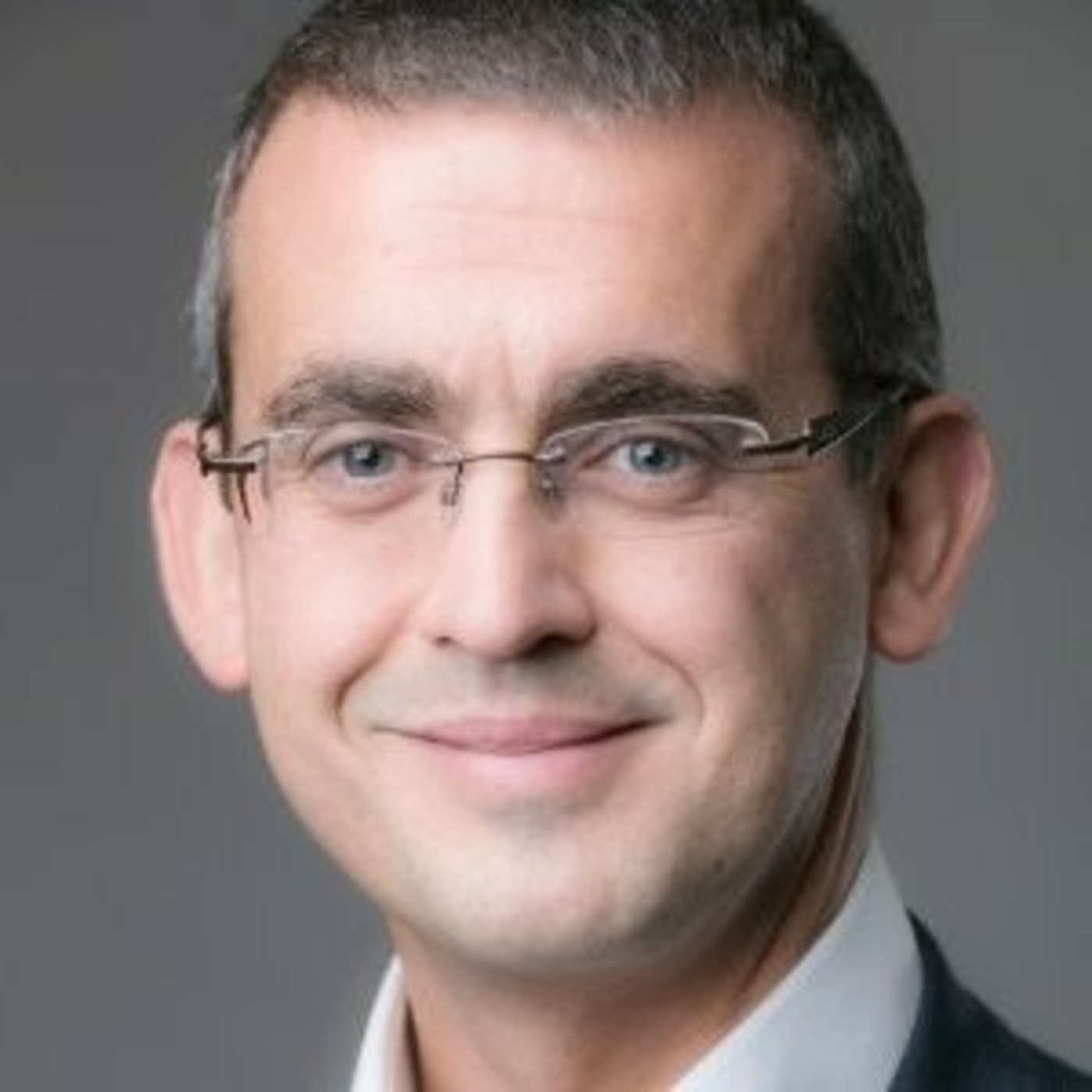
Aoifinn Devitt: I’m Aoifinn Devitt, and welcome to the 50 Faces Podcast, a podcast committed to revealing the richness and diversity of the world of investment by focusing on its people and their stories. I’m joined today by Tim Hodgson, who is co-head of the Thinking Ahead Institute at Willis Towers Watson. He previously worked as an investment consultant. Welcome, Tim. Thanks for joining me today.
Tim Hodgson: Thanks, Aoifinn.
Aoifinn Devitt: Well, let’s start by talking about your background and how you ended up in the investment world, because we have a lot to talk about when it comes to thinking ahead. But let’s kick back a little bit first.
Tim Hodgson: Well, I don’t think I did pursue a role in the investment world. I kind of stumbled into it. I was sponsored at university by Midland Bank, which was great because I could then walk into a job without having to do interviews, milk-round interviews, while studying for finals. And while kind of in the city, I put my CV out with a recruitment firm and ended up at a very small boutique investment consultant called Stanford Associates and, and just kind stumbled into the investment world and I’ve kind of been stumbling around within it ever since.
Aoifinn Devitt: Stumbling around, but still you’ve always had a vision for maybe the next step and thinking about the next step. Can you talk about a career break you took in order to ponder that and what you concluded at the end of it?
Tim Hodgson: Sure, Aoifinn, and I think you’re giving me far too much credit or forward planning when it comes to my own steps or own career. I would describe my path as kind of one that evolved. So for example, you know, the Thinking Ahead group is by far the best and longest job I’ve ever had, but it didn’t exist. It was never there to aim for, if you see what I mean. The career break, it was mainly about personal learning. So I have a personality flaw or characteristic that means self-restraint is something that I struggle with, and that kind of leads to kind of bust and got to the stage where there was so much exciting stuff to do at work, and there was kind of nothing in the system to protect me from myself, that it got to the stage where I wasn’t getting very much sleep because there was just so much to do. And kind of eventually I got to a point of, this isn’t working, and I went in and offered to resign. But it was suggested that I took a career break. Having established hedge fund research at what was then Watson Wyatt, I kind of assumed that after my break, I would go and join a hedge fund of funds and get overpaid. But I made the mistake of having dinner with Roger Irwin halfway through my break, told him the 8 things that were wrong with my job, and he said that he could fix every single one of them. So Going back to kind of like the personality challenge that I have of self-restraint, I decided to, at the tender age of 31, I decided to amortize my retirement. So to go back part-time. So that means I wasn’t going to maximize my earnings, but I would actually have much more time off while I was young, rather than kind of save it all up for my sixties. And that was, I think, a very in retrospect, a very inspired thinking-ahead decision to make for a 31-year-old. I got to see a lot of the world and it kind of allowed me to work really hard knowing that I could then have a block of time off.
Aoifinn Devitt: It’s interesting because I think we’re going to probably need to reckon with this type of decision-making today. I mean, we’ve heard about YOLO and a lot of young people after a year of staying home and working remotely deciding they only live once and want want to, to get out and travel. Equally, I’ve heard about other firms where there’s this concept of, you know, retire a little so they can even work at a reduced rate, maybe a 4-day week, and do some of the things today that they know, would, you would want to do in retirement. So while they’re still young enough and energetic enough to do them. So I do think we’re perhaps looking at a more flexible kind of future.
Tim Hodgson: Yeah. So maybe that’s my best piece of thinking ahead. I started that in 2001. I could work hard and then of kind spend 2 months of the year in the Southern Hemisphere. Got to the stage where Roger Irwin kind of gently commented on my return one time, maybe 2 months was a little bit too disruptive for me to be gone from the office. So, uh, only having a month off at a time, but doing that twice a year kind of isn’t too bad.
Aoifinn Devitt: I’m sure it actually sparks creativity and some lateral thinking as well when you get out.
Tim Hodgson: Yes. I mean, I mean, there are, there are people who are very disciplined about taking, you know, a year off every 7 years and kind of serial career adapters. So I think it does give space for creativity.
Aoifinn Devitt: And let’s move now to the Thinking Ahead Institute. So what was your vision when you founded that?
Tim Hodgson: So, so kind of the personal stuff was I’d been doing the Thinking Ahead group, so kind of R&D, small team thinking about the next investment problem for over 10 years. And on average, Aoifinn and I idea that we came up with was any good, on average, it would take about 5 years to be widely adopted. And of course, we’d moved on several times in the intervening period. So I found myself in the Dan Pink framework of the world, having lots of autonomy, having the opportunity, if I was able, to achieve some level of mastery over a new subject. But I was struggling with a sense of purpose, and that was because whatever good we were achieving was dissociated in time from being adopted, I guess. From a personal perspective, I was looking for a greater sense of purpose. That led me to look around at what could be the next challenge. It led me to the conclusion that at that stage, I think I’d been in investment for about 25 years. I believed that I had watched the investment industry morph from a profession to a business, very successful business, high profit margins, good quality product, but it then struck me that wages were quite high. In fact, after the global financial crisis, I think investment management overtook investment banking as even more remunerated than investment banking. So you had this strange situation where if you looked at food retail, very low-wage, low-margin business, look at football or soccer, egregiously high-wage— sorry, there’s a value judgment in there, isn’t there? Very high-wage, zero-margin business in Europe. And then you had investment, which was very high-wage, very high-margin. It was kind of inescapable logic to me that the customer was not getting as good a value proposition as they could if wages were lower or margins were lower. But our industry seemed quite anomalous. And then I kind of went, well, we already know that defined benefit pension funds are increasingly endangered and the future is defined contribution where the investment risk sits with the individual. It’s kind of like, oof, hang on a minute, people, our customer base who don’t have high degrees of financial education are going to have to navigate this investment industry that’s already well remunerated. What hope does the end saver have? And so the motivating question was, we need to do something about the investment industry for the benefit of the end saver. That was the idea that I took to the world, to asset owners and asset managers. I said, I perceive our industry, while it has many, many strengths, there are these long-term directional things going on. I would like to build a louder voice than a tiny team in some corner of the UK squeaking away. Calling out problems in the investment industry, if it were a bigger voice of big industry organizations, then maybe there was a better chance of doing something about it. So that was the genesis of the idea of the Thinking Ahead Institute, a global not-for-profit that was unashamedly aimed at the public good, and it kind of heavily relied on people wanting to join it who had enlightened self-interest.
Aoifinn Devitt: We have so much to unpack there, so let’s dig in a little bit to the public good. First of all, did you find that you gathered more voices? Do you find that there’s generally singing from the same song sheet, or do you have a lot of disparate voices? Maybe we can talk about a thematic way, start off with maybe industry diversity.
Tim Hodgson: So within our team, we talk about an idea whose time has come, and I think it is absolutely clear that diversity is an idea whose time has come. For the Thinking Ahead Institute, it was our very first roundtable meeting in March 2015 where we hosted this whole day of content. We had this fantastic high-quality discussion, you know, 30 to 35 people around a U-shaped table And it was kind of the wrap-up session, and one of the attendees kind of went, this has been a really fantastic day, it’s been a great conversation, I’m surprised that we’ve had the energy to keep going, but I just invite everybody to have a look around the table. It was kind of the same effect as dropping a hand grenade, where we all kind of went, oh, Oh, you’ve just called us, and you’re absolutely right. We were exclusively male, we were almost exclusively pale, and the age range wasn’t that massive. So the challenge was laid down right at the beginning that we should incorporate diversity within the Thinking Ahead Institute research agenda. And so we We started tentatively in April 2015. We picked up steam, we got more and more into the subject, and in 2016, we kind of— a lot of the focus of our roundtables in various cities was on diversity. You know, we had Laura Liswood, who wrote The Loudest Duck, as a speaker. We had Marg Franklin, who’s now president of the CFA. She wasn’t at the time, but she came to talk about women in the investment industry. We actually had Sarah Williamson, who’s now CEO of FCLT Global. She was at Wellington at the time. It was actually really powerful to assemble these really high-quality ladies. So for me, diversity, I’m not out there shouting about it, but it is absolutely core and something that I believe in the depths of my being. I think you’ve already interviewed on this podcast my co-head, Marissa, who is just a blast of fresh air. She is out there and she is talking about it. The only credit that I might claim is I saw something in Marissa when she applied for a role in the thinky-head industry that went, “She doesn’t quite fit, but you know what? There’s something here and we need it.”.
Aoifinn Devitt: Let’s go beyond diversity then into some of the other areas that you are most excited about, because you spoke about bringing the investment industry, I suppose, for the common good. And I’d be curious to know what is involved in that in your vision.
Tim Hodgson: I think you used the word excite. So something that truly excites me is kind of brand new, brand new from an early morning dog walk this morning when I happened to listen to, I think, the most recent Outrage and Optimism podcast. They were interviewing Jerome Foster, amazing, amazing teenager here. I think he’s 19 and in his first year at university, but the day he became 18, he was invited to join an advisory board for the White House. Can’t remember the exact name of the board, but in kind of environment or climate change space. And I don’t know if you know the podcast Christine Figueres, Paul Dickinson, Tom Rivett-Carnac. They kind of asked him because, I mean, stupidly young. He’s 19. He’s set up a virtual reality company. He’s a climate action activist. He’s now on the White House advisory board. I mean, it’s kind of mind-blowing. And they asked what he would be doing in 2030. And he said, I’ve kind of got no idea, but you know, I’ll, I hope I’ve moved on to the next problem. And they said, what do you mean? Know, You I thought you were in this climate thing. So he goes, no, no, climate will be done by 2030. We’ll have won that war. There’s more to it. So those of us of a certain age see the world quite linearly. You know, 10, 15 years ago, I had the privilege of coming across the Santa Fe Institute, and that introduced me to complexity science. And, and I’ve kind of been spending the last 10, 15 years trying to retrain myself in my thinking, see nonlinearities. You know, we’ve all had this massive global education in the power of exponentials living through COVID, and yet for us old folk, we’re constantly surprised by exponentials. The interviewee, I think his name is Jerome, was making the case that young people, that’s their normal. They find it really weird that people would think of the world as linear because posts go viral. What is going viral? It went exponentially large. And so he’s claiming that the young generation see the world in terms of exponentials? And actually, this is putting language on the way my thinking has been shifting. Could we be building sufficient momentum with regard to knowledge of, understanding of, action on climate that we actually tip the system? And if we fully grasp what tipping the system might mean, it means putting it onto a new exponential, not a linear pathway. So all of our 2050s, we’re all going, yes, it’s necessary and it’s going to be really hard work and somehow we’ve got to find the stamina to keep pressing for these linear gains year after year after year for 30 years into the future until we get to net zero by 2050. And he was inviting us to go, do you know what? If you tip the system and you get an exponential working in your favor, then we will be shocked and surprised by how much positive change can be delivered in a short period of time. So there will be problems with that because, because if you get that level of change going on, I don’t know if we will be able to think ahead anymore. I you think, know, you’re going to be struggling to stand at the front of that wave and to go as fast as the wave without falling over. You know, we might be trying to run as fast as we can, like the Red Queen races. Just to stand still. But that is an incredibly exciting thought that we could tip the system and the exponentials to kick in, in a positive way that we surprise ourselves with how much progress we make by 2030. It’s a scenario, but you asked an idea that I’m excited about, that would be one of them. Then in the background, I can’t get away from thinking about growth. I think I had an article in Top 1000 Funds probably back in 2017, which was probably called Limits to Growth. Know, You it was bothering me before then and it’s bothered me since, but the idea that you can have infinite growth on a finite planet just doesn’t sit well with me. I actually don’t see an absence of growth as a problem. You know, if you happen to like trees, then you can admire a magnificent full-grown tree. It’s not growing anymore, but it’s not over it. We don’t think less of it. It’s gone through its kind of sigmoidal growth curve, and now it’s full-sized. So why can’t an economy be full-sized and actually now is the plateau? The reason we don’t like it is because then we have to start thinking about the hard stuff like redistributing and issues like equality, whereas we kind of always rely on the Kuznets curves. You know, let’s just go for growth and the poor will get richer by trickle-down. So big things that I think we are going to have sort out in our future are things like growth, are things like capitalism. Capitalism is about generating a return on capital. That’s what our industry is built on. I think we will, and the young people will take us there, we will go to a circular economy. We will go we will go to, to a world that is different to the one that we’ve spent our adult lives building, living in, because it’s necessary to go to it. Not only has capitalism lifted hundreds of millions or billions of people out of abject poverty, it’s also brought us to the brink of catastrophe. So there’s deep things to think about there. So long and short of it is I think the investment industry will be poised for a period of massive transformational change. If growth is threatened, then we have to rethink our love of equities because equity is a leveraged position on growth. We might have to rethink what level of returns are appropriate. We’ll need to think about the difference between a kind of linear economy that we’ve currently got, which is, you know, dig it out the ground, bash it about, sell it, and then the user sends it to landfill. And we, the investment industry, kind of collect our rents through pushing ever more throughput through that linear system. If we do transition to a circular system where items stay in circulation for a lot longer, then there’s probably less rents to capture. So the world is probably more local. So do we actually need an investment industry that looks a bit more like microfinance and getting money into local good ideas, but it may be more debt-based than equity-based? Anyway, huge, huge questions, all beautifully interconnected. There’s lots to think about.
Aoifinn Devitt: Really interesting work, and also I think quite an optimistic takeaway I’m coming away with here, just given the potential for, I suppose, integrated thinking to lead us to make progress sooner than we, we expect, which is a nice counter-narrative.
Tim Hodgson: Yeah, so if you’re heavily in the camp of vested interests, then, then change is always threatening. But I honestly believe that we need to create a system that is better, and the bit The bit that we’re missing is the compelling narrative that describes how it’s better. I certainly haven’t got my head around that. Who dies with the most toys wins mentality is not part of a better world.
Aoifinn Devitt: Very interesting. Food for thought. So let’s just go back to your personal story. You’ve had quite a long career at this stage. Were there any key people who influenced you in your, your thinking or just in your life journey in general?
Tim Hodgson: It’s almost unfair to name individuals, but I guess I should. So I’d call out my parents, who gave me a very solid foundation and a very moral upbringing, and that is intrinsically embedded with who I am. There were some wonderful schoolmasters along the way who kind of believed in me and encouraged me, but I’ll call out Michael Kaczynski, or Professor Michael Kaczynski. My director of studies at university. So I kind of did sciences at school, so very logical. I I used, used to kind of choose types of questions. So if they were like 14 marks on offer because you had to describe something, it’s just like, no way, Jose, too much effort. Let’s do the kind of the series of 2 marks where you prove a case in stages. But he kind of took me from that and gave me a new way to think about the world. So very influential. Then I kind of have to mention Roger Irwin, who kind of took me on, and Roger and I have worked together probably for 23 years now. Haven’t always seen eye to eye, but we have always got through any disagreements that we might have. Our relationship has morphed. So very in the early stages, absolutely, Roger was just mentor guide, font of all wisdom, and he still is that, but hopefully I have slightly more wisdom of my own these days. When we are very complementary in our thinking, so when we’re kind of working on something together, it can be quite magical. But he is always, no matter how busy he is, willing to give time and consideration and listen and advice and perspective. So he Deserves a massive shout out. And then I’m going to go academic before industry, wider industry. So academics have been and are important in my life, but I’m going to call out Chris Woods. So as I say, I came across the Santa Fe Institute and I got to know him there. So he was a neuroscientist at Yale and then moved to the Santa Fe Institute. And there are many others who I met there, Don Farmer, David Krakauer, but Chris Woods was like father figure, believed passionately in my vision for the Thinking Ahead Institute. He actually put me on stage at their annual meeting as I was preparing to launch the Thinking Ahead Institute. So he kind of gave me that platform to kind of outline an analysis of the industry and how it could be better and the Thinking Ahead Institute. And Kenneth Arrow, know, you the Nobel laureate, world famous— I think he was 94 at the time— he was in the audience. So there have been some kind of extraordinary moments. But then I get to the investment industry, and it’s just been this deep, deep privilege. I’ve had the privilege of in-depth conversations with CIOs and CEOs, but also consultant relations people who care passionately and junior analysts who want to make a difference, whether in diversity or climate change, and just this beautiful mix of humanity. I’ve been impacted and influenced by pretty much everybody that I’ve met. I think that is one of the joys of our industry.
Aoifinn Devitt: I suppose the other joy is some of the wisdom that you get along the way. Was there any kind of— I know you seem to have spent a lot of time contemplating your role in the world and where you go from here, but is there any creed or motto that you could sort of center on that might maybe have guided you to the point you’re at now? Or any advice that you’ve heard?
Tim Hodgson: Yeah, the thing that’s kind of coming to me now, and I’ve no idea where it came from, it kind of comes from a long time ago in my life, and the origin I don’t know, but the advice was the person you want to be in 5 years’ time depends on the habits that you start tomorrow. And that to me was kind of revolutionary. I can’t wake up tomorrow a perfect version of myself, but I can wake up tomorrow and determine that I will start a new habit or a new way of being. So if I want to be known in 5 years’ time as a person of integrity, then, then I just need to get up today, tomorrow, and do the little step that I can to make sure that that gets built on day after day after day. So while I, I like the kind of visionary thinking thing, I also believe that a lot of personal change is done in the daily drudgery. And kind of, you mentioned the word creed, so I will just throw in that, you know, I am a Christian, and so I do live by that creed. What is the greatest commandment? To love the Lord your God with all your heart, your soul, your strength. And the second is like it, to love your neighbor as yourself. And so I have a vision that I have global neighbors. It’s not just the people whose houses I can see from my window. That kind of makes me care about sea level rise for farmers in Bangladesh or the Marshall Islands or the Maldives. It makes me concerned about droughts and crop failures in Africa, and I’m very kind of conscious of the privilege that I have.
Aoifinn Devitt: Beautiful reflection there. Staying on the topic of looking back, if you were to give advice to your younger self, would that have been it, or would there have been anything else?
Tim Hodgson: I’m going to be naughty, Aoifinn. So I wrote a paper, I think it was back in 2012, could have been 2013, which had the phrase within it, the irreversibility of time. So I kind of reject your premise that I can give advice to my younger self, but I know you’ve asked me to enter into the spirit of it, not the physics of it. I actually think I’m quite proud of my younger self, and my younger self was reasonably good at providing their own advice. So I can remember as a young teenager, probably about 15, deciding that I would live without regret. And that for me meant making the best decision I could with the information I had at the time. If the information changed 30 seconds later, then that was just tough. I did my best, and so there was no need to spend time or energy on regret. And then later, probably late 20s, but but I’m kind of guessing now. I’d kind of settled on a formulation that goes, you don’t get to play the hand you would like to hold, you have to play the cards you’re dealt. And that kind of means that sometimes you will get dealt a poor hand, and at that point, the best that you can do is to kind of minimize your losses and wait until better cards are kind of dealt in a future hand. And so I think I’m reasonably comfortable that my younger self was going to get there get my head sorted. And so if I do go back, I would kind of, I think I would just say, you’ve got this, go for it.
Aoifinn Devitt: I love that advice. Well, thank you so much, Tim. I, as a member of the investment industry, am so grateful that there is a group of people like yourself committed to ensuring that there’s a better future for all. It is immensely reassuring to know that this work is going on. And furthermore, that the early indications are that some of that work is showing positive indications, which is, I think, as I said, is a nice counter-narrative to some of the prophecies of doom that we seem to be absorbing every day. So thank you very much for coming here and sharing some of your vision and your insights with us.
Tim Hodgson: It’s been my pleasure. Thank you for the space and opportunity.
Aoifinn Devitt: I’m Aoifinn Devitt. Thank you for listening to the 50 Faces Podcast. If you liked what you heard and would like to tune in to hear more inspiring investors on their personal journeys, please subscribe on Apple Podcasts or wherever you get your podcasts. This podcast is for informational purposes only and should not be construed as investment advice, and all views are personal and should not be attributed to the organizations and affiliations of the host or any guest.
Aoifinn Devitt: This podcast is brought to you with the kind support of Plutus Capital, a female-run investment management firm based in Evanston, Illinois, which works with clients on a wide variety of mandates such as custom diversity solutions, manager due diligence, diversified hedge fund-to-fund allocations, and advisory services.
Tim Hodgson: I can remember as a young teenager, probably about 15, deciding that I would live without regret, and that for me meant making the best decision I could with the information I had at the time. If the information changed 30 seconds later, then that was just tough. I did my best. And so there was no need to spend time or energy on regret.
Aoifinn Devitt: I’m Aoifinn Devitt, and welcome to the 50 Faces Podcast, a podcast committed to revealing the richness and diversity of the world of investment by focusing on its people and their stories. I’m joined today by Tim Hodgson, who is co-head of the Thinking Ahead Institute at Willis Towers Watson. He previously worked as an investment consultant. Welcome, Tim. Thanks for joining me today.
Tim Hodgson: Thanks, Aoifinn.
Aoifinn Devitt: Well, let’s start by talking about your background and how you ended up in the investment world, because we have a lot to talk about when it comes to thinking ahead. But let’s kick back a little bit first.
Tim Hodgson: Well, I don’t think I did pursue a role in the investment world. I kind of stumbled into it. I was sponsored at university by Midland Bank, which was great because I could then walk into a job without having to do interviews, milk-round interviews, while studying for finals. And while kind of in the city, I put my CV out with a recruitment firm and ended up at a very small boutique investment consultant called Stanford Associates and, and just kind stumbled into the investment world and I’ve kind of been stumbling around within it ever since.
Aoifinn Devitt: Stumbling around, but still you’ve always had a vision for maybe the next step and thinking about the next step. Can you talk about a career break you took in order to ponder that and what you concluded at the end of it?
Tim Hodgson: Sure, Aoifinn, and I think you’re giving me far too much credit or forward planning when it comes to my own steps or own career. I would describe my path as kind of one that evolved. So for example, you know, the Thinking Ahead group is by far the best and longest job I’ve ever had, but it didn’t exist. It was never there to aim for, if you see what I mean. The career break, it was mainly about personal learning. So I have a personality flaw or characteristic that means self-restraint is something that I struggle with, and that kind of leads to kind of bust and got to the stage where there was so much exciting stuff to do at work, and there was kind of nothing in the system to protect me from myself, that it got to the stage where I wasn’t getting very much sleep because there was just so much to do. And kind of eventually I got to a point of, this isn’t working, and I went in and offered to resign. But it was suggested that I took a career break. Having established hedge fund research at what was then Watson Wyatt, I kind of assumed that after my break, I would go and join a hedge fund of funds and get overpaid. But I made the mistake of having dinner with Roger Irwin halfway through my break, told him the 8 things that were wrong with my job, and he said that he could fix every single one of them. So Going back to kind of like the personality challenge that I have of self-restraint, I decided to, at the tender age of 31, I decided to amortize my retirement. So to go back part-time. So that means I wasn’t going to maximize my earnings, but I would actually have much more time off while I was young, rather than kind of save it all up for my sixties. And that was, I think, a very in retrospect, a very inspired thinking-ahead decision to make for a 31-year-old. I got to see a lot of the world and it kind of allowed me to work really hard knowing that I could then have a block of time off.
Aoifinn Devitt: It’s interesting because I think we’re going to probably need to reckon with this type of decision-making today. I mean, we’ve heard about YOLO and a lot of young people after a year of staying home and working remotely deciding they only live once and want want to, to get out and travel. Equally, I’ve heard about other firms where there’s this concept of, you know, retire a little so they can even work at a reduced rate, maybe a 4-day week, and do some of the things today that they know, would, you would want to do in retirement. So while they’re still young enough and energetic enough to do them. So I do think we’re perhaps looking at a more flexible kind of future.
Tim Hodgson: Yeah. So maybe that’s my best piece of thinking ahead. I started that in 2001. I could work hard and then of kind spend 2 months of the year in the Southern Hemisphere. Got to the stage where Roger Irwin kind of gently commented on my return one time, maybe 2 months was a little bit too disruptive for me to be gone from the office. So, uh, only having a month off at a time, but doing that twice a year kind of isn’t too bad.
Aoifinn Devitt: I’m sure it actually sparks creativity and some lateral thinking as well when you get out.
Tim Hodgson: Yes. I mean, I mean, there are, there are people who are very disciplined about taking, you know, a year off every 7 years and kind of serial career adapters. So I think it does give space for creativity.
Aoifinn Devitt: And let’s move now to the Thinking Ahead Institute. So what was your vision when you founded that?
Tim Hodgson: So, so kind of the personal stuff was I’d been doing the Thinking Ahead group, so kind of R&D, small team thinking about the next investment problem for over 10 years. And on average, Aoifinn and I idea that we came up with was any good, on average, it would take about 5 years to be widely adopted. And of course, we’d moved on several times in the intervening period. So I found myself in the Dan Pink framework of the world, having lots of autonomy, having the opportunity, if I was able, to achieve some level of mastery over a new subject. But I was struggling with a sense of purpose, and that was because whatever good we were achieving was dissociated in time from being adopted, I guess. From a personal perspective, I was looking for a greater sense of purpose. That led me to look around at what could be the next challenge. It led me to the conclusion that at that stage, I think I’d been in investment for about 25 years. I believed that I had watched the investment industry morph from a profession to a business, very successful business, high profit margins, good quality product, but it then struck me that wages were quite high. In fact, after the global financial crisis, I think investment management overtook investment banking as even more remunerated than investment banking. So you had this strange situation where if you looked at food retail, very low-wage, low-margin business, look at football or soccer, egregiously high-wage— sorry, there’s a value judgment in there, isn’t there? Very high-wage, zero-margin business in Europe. And then you had investment, which was very high-wage, very high-margin. It was kind of inescapable logic to me that the customer was not getting as good a value proposition as they could if wages were lower or margins were lower. But our industry seemed quite anomalous. And then I kind of went, well, we already know that defined benefit pension funds are increasingly endangered and the future is defined contribution where the investment risk sits with the individual. It’s kind of like, oof, hang on a minute, people, our customer base who don’t have high degrees of financial education are going to have to navigate this investment industry that’s already well remunerated. What hope does the end saver have? And so the motivating question was, we need to do something about the investment industry for the benefit of the end saver. That was the idea that I took to the world, to asset owners and asset managers. I said, I perceive our industry, while it has many, many strengths, there are these long-term directional things going on. I would like to build a louder voice than a tiny team in some corner of the UK squeaking away. Calling out problems in the investment industry, if it were a bigger voice of big industry organizations, then maybe there was a better chance of doing something about it. So that was the genesis of the idea of the Thinking Ahead Institute, a global not-for-profit that was unashamedly aimed at the public good, and it kind of heavily relied on people wanting to join it who had enlightened self-interest.
Aoifinn Devitt: We have so much to unpack there, so let’s dig in a little bit to the public good. First of all, did you find that you gathered more voices? Do you find that there’s generally singing from the same song sheet, or do you have a lot of disparate voices? Maybe we can talk about a thematic way, start off with maybe industry diversity.
Tim Hodgson: So within our team, we talk about an idea whose time has come, and I think it is absolutely clear that diversity is an idea whose time has come. For the Thinking Ahead Institute, it was our very first roundtable meeting in March 2015 where we hosted this whole day of content. We had this fantastic high-quality discussion, you know, 30 to 35 people around a U-shaped table And it was kind of the wrap-up session, and one of the attendees kind of went, this has been a really fantastic day, it’s been a great conversation, I’m surprised that we’ve had the energy to keep going, but I just invite everybody to have a look around the table. It was kind of the same effect as dropping a hand grenade, where we all kind of went, oh, Oh, you’ve just called us, and you’re absolutely right. We were exclusively male, we were almost exclusively pale, and the age range wasn’t that massive. So the challenge was laid down right at the beginning that we should incorporate diversity within the Thinking Ahead Institute research agenda. And so we We started tentatively in April 2015. We picked up steam, we got more and more into the subject, and in 2016, we kind of— a lot of the focus of our roundtables in various cities was on diversity. You know, we had Laura Liswood, who wrote The Loudest Duck, as a speaker. We had Marg Franklin, who’s now president of the CFA. She wasn’t at the time, but she came to talk about women in the investment industry. We actually had Sarah Williamson, who’s now CEO of FCLT Global. She was at Wellington at the time. It was actually really powerful to assemble these really high-quality ladies. So for me, diversity, I’m not out there shouting about it, but it is absolutely core and something that I believe in the depths of my being. I think you’ve already interviewed on this podcast my co-head, Marissa, who is just a blast of fresh air. She is out there and she is talking about it. The only credit that I might claim is I saw something in Marissa when she applied for a role in the thinky-head industry that went, “She doesn’t quite fit, but you know what? There’s something here and we need it.”.
Aoifinn Devitt: Let’s go beyond diversity then into some of the other areas that you are most excited about, because you spoke about bringing the investment industry, I suppose, for the common good. And I’d be curious to know what is involved in that in your vision.
Tim Hodgson: I think you used the word excite. So something that truly excites me is kind of brand new, brand new from an early morning dog walk this morning when I happened to listen to, I think, the most recent Outrage and Optimism podcast. They were interviewing Jerome Foster, amazing, amazing teenager here. I think he’s 19 and in his first year at university, but the day he became 18, he was invited to join an advisory board for the White House. Can’t remember the exact name of the board, but in kind of environment or climate change space. And I don’t know if you know the podcast Christine Figueres, Paul Dickinson, Tom Rivett-Carnac. They kind of asked him because, I mean, stupidly young. He’s 19. He’s set up a virtual reality company. He’s a climate action activist. He’s now on the White House advisory board. I mean, it’s kind of mind-blowing. And they asked what he would be doing in 2030. And he said, I’ve kind of got no idea, but you know, I’ll, I hope I’ve moved on to the next problem. And they said, what do you mean? Know, You I thought you were in this climate thing. So he goes, no, no, climate will be done by 2030. We’ll have won that war. There’s more to it. So those of us of a certain age see the world quite linearly. You know, 10, 15 years ago, I had the privilege of coming across the Santa Fe Institute, and that introduced me to complexity science. And, and I’ve kind of been spending the last 10, 15 years trying to retrain myself in my thinking, see nonlinearities. You know, we’ve all had this massive global education in the power of exponentials living through COVID, and yet for us old folk, we’re constantly surprised by exponentials. The interviewee, I think his name is Jerome, was making the case that young people, that’s their normal. They find it really weird that people would think of the world as linear because posts go viral. What is going viral? It went exponentially large. And so he’s claiming that the young generation see the world in terms of exponentials? And actually, this is putting language on the way my thinking has been shifting. Could we be building sufficient momentum with regard to knowledge of, understanding of, action on climate that we actually tip the system? And if we fully grasp what tipping the system might mean, it means putting it onto a new exponential, not a linear pathway. So all of our 2050s, we’re all going, yes, it’s necessary and it’s going to be really hard work and somehow we’ve got to find the stamina to keep pressing for these linear gains year after year after year for 30 years into the future until we get to net zero by 2050. And he was inviting us to go, do you know what? If you tip the system and you get an exponential working in your favor, then we will be shocked and surprised by how much positive change can be delivered in a short period of time. So there will be problems with that because, because if you get that level of change going on, I don’t know if we will be able to think ahead anymore. I you think, know, you’re going to be struggling to stand at the front of that wave and to go as fast as the wave without falling over. You know, we might be trying to run as fast as we can, like the Red Queen races. Just to stand still. But that is an incredibly exciting thought that we could tip the system and the exponentials to kick in, in a positive way that we surprise ourselves with how much progress we make by 2030. It’s a scenario, but you asked an idea that I’m excited about, that would be one of them. Then in the background, I can’t get away from thinking about growth. I think I had an article in Top 1000 Funds probably back in 2017, which was probably called Limits to Growth. Know, You it was bothering me before then and it’s bothered me since, but the idea that you can have infinite growth on a finite planet just doesn’t sit well with me. I actually don’t see an absence of growth as a problem. You know, if you happen to like trees, then you can admire a magnificent full-grown tree. It’s not growing anymore, but it’s not over it. We don’t think less of it. It’s gone through its kind of sigmoidal growth curve, and now it’s full-sized. So why can’t an economy be full-sized and actually now is the plateau? The reason we don’t like it is because then we have to start thinking about the hard stuff like redistributing and issues like equality, whereas we kind of always rely on the Kuznets curves. You know, let’s just go for growth and the poor will get richer by trickle-down. So big things that I think we are going to have sort out in our future are things like growth, are things like capitalism. Capitalism is about generating a return on capital. That’s what our industry is built on. I think we will, and the young people will take us there, we will go to a circular economy. We will go we will go to, to a world that is different to the one that we’ve spent our adult lives building, living in, because it’s necessary to go to it. Not only has capitalism lifted hundreds of millions or billions of people out of abject poverty, it’s also brought us to the brink of catastrophe. So there’s deep things to think about there. So long and short of it is I think the investment industry will be poised for a period of massive transformational change. If growth is threatened, then we have to rethink our love of equities because equity is a leveraged position on growth. We might have to rethink what level of returns are appropriate. We’ll need to think about the difference between a kind of linear economy that we’ve currently got, which is, you know, dig it out the ground, bash it about, sell it, and then the user sends it to landfill. And we, the investment industry, kind of collect our rents through pushing ever more throughput through that linear system. If we do transition to a circular system where items stay in circulation for a lot longer, then there’s probably less rents to capture. So the world is probably more local. So do we actually need an investment industry that looks a bit more like microfinance and getting money into local good ideas, but it may be more debt-based than equity-based? Anyway, huge, huge questions, all beautifully interconnected. There’s lots to think about.
Aoifinn Devitt: Really interesting work, and also I think quite an optimistic takeaway I’m coming away with here, just given the potential for, I suppose, integrated thinking to lead us to make progress sooner than we, we expect, which is a nice counter-narrative.
Tim Hodgson: Yeah, so if you’re heavily in the camp of vested interests, then, then change is always threatening. But I honestly believe that we need to create a system that is better, and the bit The bit that we’re missing is the compelling narrative that describes how it’s better. I certainly haven’t got my head around that. Who dies with the most toys wins mentality is not part of a better world.
Aoifinn Devitt: Very interesting. Food for thought. So let’s just go back to your personal story. You’ve had quite a long career at this stage. Were there any key people who influenced you in your, your thinking or just in your life journey in general?
Tim Hodgson: It’s almost unfair to name individuals, but I guess I should. So I’d call out my parents, who gave me a very solid foundation and a very moral upbringing, and that is intrinsically embedded with who I am. There were some wonderful schoolmasters along the way who kind of believed in me and encouraged me, but I’ll call out Michael Kaczynski, or Professor Michael Kaczynski. My director of studies at university. So I kind of did sciences at school, so very logical. I I used, used to kind of choose types of questions. So if they were like 14 marks on offer because you had to describe something, it’s just like, no way, Jose, too much effort. Let’s do the kind of the series of 2 marks where you prove a case in stages. But he kind of took me from that and gave me a new way to think about the world. So very influential. Then I kind of have to mention Roger Irwin, who kind of took me on, and Roger and I have worked together probably for 23 years now. Haven’t always seen eye to eye, but we have always got through any disagreements that we might have. Our relationship has morphed. So very in the early stages, absolutely, Roger was just mentor guide, font of all wisdom, and he still is that, but hopefully I have slightly more wisdom of my own these days. When we are very complementary in our thinking, so when we’re kind of working on something together, it can be quite magical. But he is always, no matter how busy he is, willing to give time and consideration and listen and advice and perspective. So he Deserves a massive shout out. And then I’m going to go academic before industry, wider industry. So academics have been and are important in my life, but I’m going to call out Chris Woods. So as I say, I came across the Santa Fe Institute and I got to know him there. So he was a neuroscientist at Yale and then moved to the Santa Fe Institute. And there are many others who I met there, Don Farmer, David Krakauer, but Chris Woods was like father figure, believed passionately in my vision for the Thinking Ahead Institute. He actually put me on stage at their annual meeting as I was preparing to launch the Thinking Ahead Institute. So he kind of gave me that platform to kind of outline an analysis of the industry and how it could be better and the Thinking Ahead Institute. And Kenneth Arrow, know, you the Nobel laureate, world famous— I think he was 94 at the time— he was in the audience. So there have been some kind of extraordinary moments. But then I get to the investment industry, and it’s just been this deep, deep privilege. I’ve had the privilege of in-depth conversations with CIOs and CEOs, but also consultant relations people who care passionately and junior analysts who want to make a difference, whether in diversity or climate change, and just this beautiful mix of humanity. I’ve been impacted and influenced by pretty much everybody that I’ve met. I think that is one of the joys of our industry.
Aoifinn Devitt: I suppose the other joy is some of the wisdom that you get along the way. Was there any kind of— I know you seem to have spent a lot of time contemplating your role in the world and where you go from here, but is there any creed or motto that you could sort of center on that might maybe have guided you to the point you’re at now? Or any advice that you’ve heard?
Tim Hodgson: Yeah, the thing that’s kind of coming to me now, and I’ve no idea where it came from, it kind of comes from a long time ago in my life, and the origin I don’t know, but the advice was the person you want to be in 5 years’ time depends on the habits that you start tomorrow. And that to me was kind of revolutionary. I can’t wake up tomorrow a perfect version of myself, but I can wake up tomorrow and determine that I will start a new habit or a new way of being. So if I want to be known in 5 years’ time as a person of integrity, then, then I just need to get up today, tomorrow, and do the little step that I can to make sure that that gets built on day after day after day. So while I, I like the kind of visionary thinking thing, I also believe that a lot of personal change is done in the daily drudgery. And kind of, you mentioned the word creed, so I will just throw in that, you know, I am a Christian, and so I do live by that creed. What is the greatest commandment? To love the Lord your God with all your heart, your soul, your strength. And the second is like it, to love your neighbor as yourself. And so I have a vision that I have global neighbors. It’s not just the people whose houses I can see from my window. That kind of makes me care about sea level rise for farmers in Bangladesh or the Marshall Islands or the Maldives. It makes me concerned about droughts and crop failures in Africa, and I’m very kind of conscious of the privilege that I have.
Aoifinn Devitt: Beautiful reflection there. Staying on the topic of looking back, if you were to give advice to your younger self, would that have been it, or would there have been anything else?
Tim Hodgson: I’m going to be naughty, Aoifinn. So I wrote a paper, I think it was back in 2012, could have been 2013, which had the phrase within it, the irreversibility of time. So I kind of reject your premise that I can give advice to my younger self, but I know you’ve asked me to enter into the spirit of it, not the physics of it. I actually think I’m quite proud of my younger self, and my younger self was reasonably good at providing their own advice. So I can remember as a young teenager, probably about 15, deciding that I would live without regret. And that for me meant making the best decision I could with the information I had at the time. If the information changed 30 seconds later, then that was just tough. I did my best, and so there was no need to spend time or energy on regret. And then later, probably late 20s, but but I’m kind of guessing now. I’d kind of settled on a formulation that goes, you don’t get to play the hand you would like to hold, you have to play the cards you’re dealt. And that kind of means that sometimes you will get dealt a poor hand, and at that point, the best that you can do is to kind of minimize your losses and wait until better cards are kind of dealt in a future hand. And so I think I’m reasonably comfortable that my younger self was going to get there get my head sorted. And so if I do go back, I would kind of, I think I would just say, you’ve got this, go for it.
Aoifinn Devitt: I love that advice. Well, thank you so much, Tim. I, as a member of the investment industry, am so grateful that there is a group of people like yourself committed to ensuring that there’s a better future for all. It is immensely reassuring to know that this work is going on. And furthermore, that the early indications are that some of that work is showing positive indications, which is, I think, as I said, is a nice counter-narrative to some of the prophecies of doom that we seem to be absorbing every day. So thank you very much for coming here and sharing some of your vision and your insights with us.
Tim Hodgson: It’s been my pleasure. Thank you for the space and opportunity.
Aoifinn Devitt: I’m Aoifinn Devitt. Thank you for listening to the 50 Faces Podcast. If you liked what you heard and would like to tune in to hear more inspiring investors on their personal journeys, please subscribe on Apple Podcasts or wherever you get your podcasts. This podcast is for informational purposes only and should not be construed as investment advice, and all views are personal and should not be attributed to the organizations and affiliations of the host or any guest.