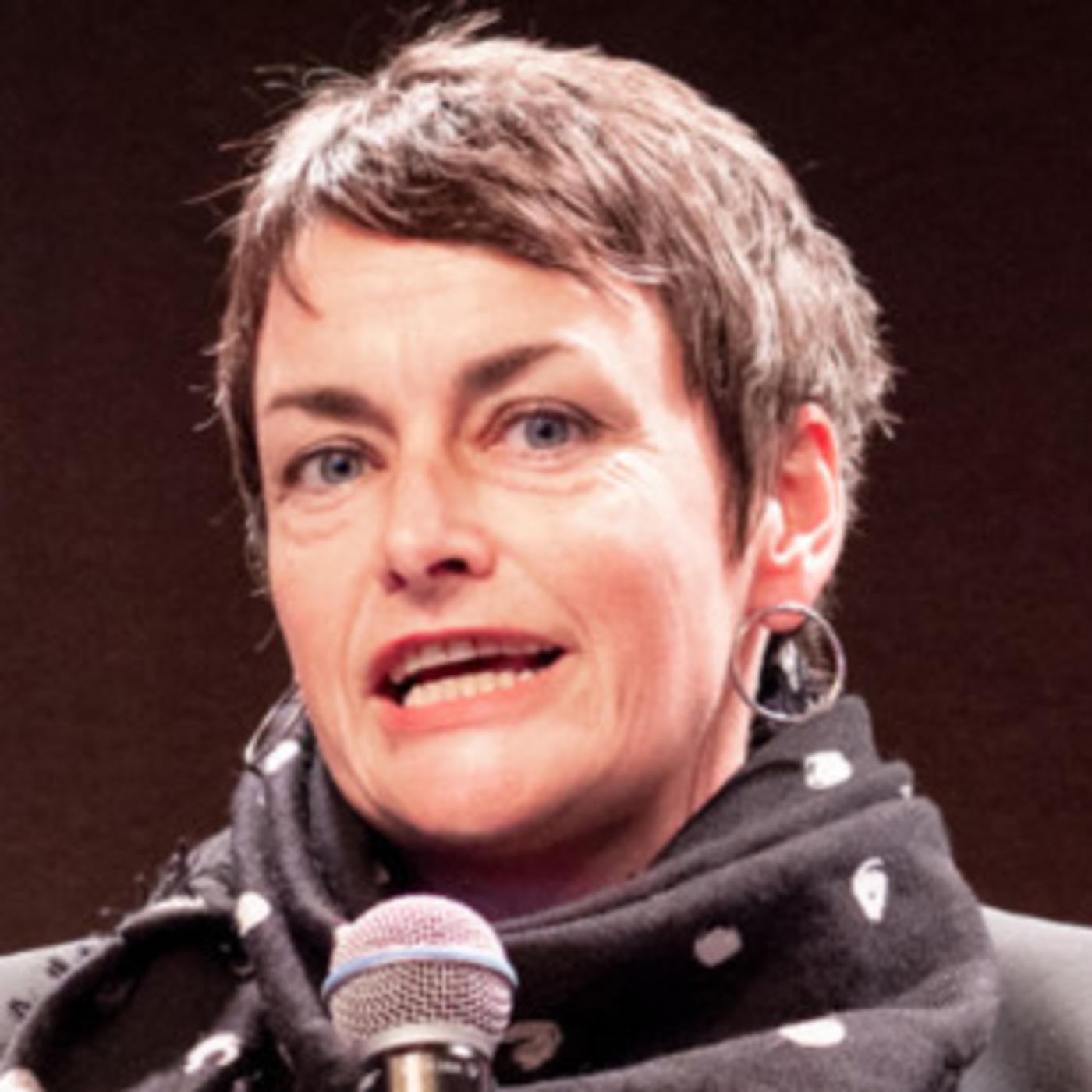
Aoifinn Devitt: This podcast is brought to you with the kind support of Plutus Capital, a female-run investment management firm based in Evanston, Illinois, which works with clients on a wide variety of mandates such as custom diversity solutions, manager due diligence, diversified hedge fund to fund allocations, and advisory services. The area of climate tech sits at the heart of the climate revolution and our plans to resolve some of the existential threats to our planet. Our next guest has a fund focused on it. Let’s hear her story. I’m Aoifinn Devitt, and welcome to the 50 Faces Podcast, a podcast committed to revealing the richness and diversity of the world of investment. By focusing on its people and their stories. I’m joined today by Pippa Gaulley, who invests in what she describes as deep science, hard tech innovations to accelerate the zero carbon transition. She is the founder and director of Zero Carbon Capital, a fund she founded in April 2019, and holds various non-executive director and mentor roles. She has extensive experience in tech and latterly in climate tech in particular. Welcome, Pippa. Thanks for joining me today.
Pippa: Thank you for inviting me on your podcast, Dafne.
Aoifinn Devitt: Well, let’s start by talking about your background, where you grew up and how you came to enter the world of tech and climate tech.
Pippa: Yeah, so I grew up in England, in Hampshire, and I went to a, you know, went to a good school, and this was in the ’80s. And I think in common with a lot of, you know, bright kids in that era, there was a lot of emphasis placed upon achievement and, you know, doing well. And, you know, fortunately I did, and I had the opportunity to go to Cambridge and read engineering. And, you know, that and we’ll come back to this, I think, a little bit later on, you know, that opened a lot of doors, I think, and met a lot of really fascinating people and gave a lot of opportunities. So, you know, I’d always wanted to make the world a better place. I’d always had this drive that I felt that that was the meaning to life and thought about it in terms of poverty alleviation. And, you know, as time progressed, realized that climate change is the biggest challenge that our generation faces and that fixing it is really our responsibility and to pass on a world that our kids and grandkids and future generations can live in. And really the ways in which it interacts with that kind of original drive around poverty alleviation are so, you know, complex and myriad, but that it’s very much going to impact the people with the fewest resources the most. So I came to investing after working in retail finance and working in digital tech for a few years, and then taking time out when our family was young I came to investing as an angel investor, so investing our own capital in early-stage companies that I thought could make a difference in this space. And I really came to that realization that I felt like that was the thing that I could do that would have the biggest impact on this challenge of climate change, was by finding and supporting early-stage technologies that had the potential to significantly accelerate the zero-carbon transition.
Aoifinn Devitt: Oh, that’s so much to unpack there. Certainly certainly around, we’ll come to later, what you look for as an angel investor. But just getting back to climate tech, so do you then, how do you define climate tech? And is tech really at the core of, you believe, our solutions to climate change and building resilience?
Pippa: Yes, so I believe it is. I think when we look at the problem of climate change, there’s two ways to think about how we’re going to fix this and really fix it in terms of getting to zero. We can go back to having an agrarian economy, or we lean into technology to fix the problems that technology have inadvertently created. And I think there’s a real clarity that comes from looking at the end solution, the end state that we need to be in as being zero emissions, because it really highlights how reducing emissions is not going to be enough. And so there’s a lot of very well-intentioned efforts out there, companies, charities, governments alike, who are trying to you do, know, 10% more efficient this, or, you know, collecting ocean plastic or, you know, rewilding this bit of land. And, you know, there are lots of solutions which sound appealing but will not get us to zero emissions and will not start to heal the planet. So, you know, we try and be very honest with ourselves in terms of how we’re looking at that end state. So like, will this technology genuinely move us, you know, accelerate our pace towards that end vision? And does it have a place in that world or is it more of a, translational technology. So, you know, we are firmly in the camp of needing to have more technology to fix the current problem that we are in. And that’s not to belittle, I think, how important things like rewilding and, you know, nature-based solutions are. I mean, when we look at like the ocean, that’s currently absorbing about two-thirds of the carbon dioxide that we’re pumping out. So without the sea, we’d be in a much worse state. But it’s— so we need to be aware of those natural sinks and also the natural sources of emissions like the land, but we must lean into technology to enhance them because on their own they’re not going to be enough to cope with the activities that we are pursuing.
Aoifinn Devitt: And do you think we will ever get to a zero-carbon world? How do you define that?
Pippa: Yeah, I mean, yes, I think we will, mostly because I’m an optimist and I think, you know, the alternative is really too awful to contemplate. So I think we have to, we just have to get on with it. So, you know, the net-zero world, to put it simply, is the emissions, the carbon carbon dioxide emissions that we are creating through our man-generated activities are balanced by all of the carbon sinks, which may be natural, as we said, like, you know, mangrove swamps, trees, the ocean, the soil, or they may be artificial. So there may be technologies that we’ve created to capture carbon or carbon dioxide equivalent from the atmosphere. So it is definitely possible. And, um, you know, a lot of people much smarter than me have written, you know, dozens of reports about all of the different ways in which we could achieve this. Reality If we’d started 20 years ago or even 30 years ago, this would have been a much easier problem to solve, but we’ve left it this late. So there is an urgency with which we now need to move to start avoiding the worst impacts of the temperature change, which has already started happening to the Earth. And there’s a certain amount of change now baked in, like even if we stopped emitting carbon dioxide and methane today, that would still have probably another degree’s worth of warming just baked into the natural cycles which we’ve affected. So we really do need to get on with this as quickly as we can. And that’s touching on what we were saying earlier, why we need to focus on technologies that will genuinely get us to zero as quickly as we can, not the kind of nice-to-have things that make people feel like they’re taking action.
Aoifinn Devitt: And speaking of those technologies, what are some of the technologies you’re most excited about at present?
Pippa: Yeah, so I think when we look at the next 30 years to 2050, we kind of divide it into like 3 decades, which we’re kind of in the first part of the first one. We have the technologies that we need now for halving emissions over the next 10 years. And that’s things like solar panels and wind turbines. So decarbonizing energy and electrifying as much as we can. So we have a lot of those technologies now and we just need to get on and start implementing them at a massive scale. Then we get to 2030 and we need to halve emissions again in the next 10 years. And then we’re starting to butt up against the limits of what we can do now. So, you know, for example, we don’t have technologies that can scale in a lot of the main areas of climate emissions that we’re going to be facing at that point. So today, about 26% of global emissions come from the way we use land, mostly from livestock, from cows burping, not to put too fine a point on it. So, you know, of course we could just stop eating beef tomorrow, but that’s probably— well, we know that’s not going to happen, right? So we need to start thinking about how we find alternative proteins alternative kinds of meat, alternative ways of farming, and how we change that land use back into something that is a carbon sink the way it used to be, rather than, you know, putting so much carbon back out into the atmosphere. So we’re excited about, you know, all of the technologies that are addressing some of those problems, like food and agriculture. We’re also looking at new technologies in spaces that will help us to finish that decarbonization of electricity. So for example, a hydrogen economy, which has a lot of potential in terms of decarbonizing heavy industry. And we’re very excited as well about carbon capture, which we touched on briefly before, but this kind of catch-all term for technologies which are sucking carbon out of the sky. And I was kind of— I was slow to the party on this one because I think initially when I started looking at climate technologies, I just was like, look, we just need to stop emitting. What are we doing? You know, why do we need to suck it out of the sky as well? But, you know, the reality is that, you know, again, even if we stopped emitting everything right now, we would need to remove carbon from the atmosphere as well to get back to what are considered to be safe levels to limit warming. So we know that we are going to have to do this, and the current solutions we have are too expensive, like chemically and financially, to scale properly. So that’s an area where we need some substantial innovation to bring the costs down. So those are 3 spaces that we’re really excited about at the moment: the kind of food and ag space, carbon capture, and the hydrogen economy. You know, there’s lots of other areas which are I perhaps, guess, less sexy, So, things like long-duration energy storage, uh, is something that is really critical as we move towards more and more renewables providing electricity, and grid hardware to help us manage those intermittent loads and generation capacity as well.
Aoifinn Devitt: Really fascinating. That brings me to the question about the work you do as an angel investor, or did as an angel investor. What were some of the aspects you were looking for in a founder when you were looking maybe to back them? And were there any red flags that would really turn you off? A potential investment.
Pippa: Yeah, so, when you’re looking at a founder as a small investor, whether it’s an angel or a small fund, for us, it was very important to try and find founders that were aligned with their visions and their values. So, like, why are they doing this company? And that gives you a lot of the kind of information about whether they’re going to stick with it when the going gets tough. And if they have to pivot the company, whether you’re still gonna be happy with what they’re doing and where they’re going. So we also really looked for that ambition, so that they felt like this is a company that could make a really big dent in the problem that they’re trying to solve. In this case, it was climate change. Because again, that’s because, you know, our kind of primary investing thesis is around the value creation will go lockstep with the carbon reduction, that that’s the key to making a very valuable company. So we’re looking for, you know, We’re not investing out of philanthropy, we’re investing in things that we think have the potential to bring big rewards, both to climate change and financially, because we know that only companies that can scale will have that big impact that we need. So, we’re looking for that vision or values alignment and that ambition. And people that we want to work with, I mean, you need to roll up your sleeves and get involved in a company and help them out. There’s going to be lots of meetings. It is a marriage, right? So, it has to be somebody that you want to work with, as well as that you you want to champion to other people. So, in terms of, uh, red flags, like, for us, and I think, you know, for most investors, like, the integrity is absolutely key. So, you know, we’ve— I’ve never invested in somebody that I thought would make a lot of money, but they wouldn’t have the impact that I wanted, or that I felt was hiding something from me during the due diligence process. And, you know, if I found out something that, that wasn’t disclosed, that I should have been You disclosed. Know, those are the times around which we’ve now walked away from a deal, even if I was excited about the technology, that I you felt, know, if they’re hiding things from me at this stage, then that’s not a good sign for how the relationship is going to unfold. So, you know, that comfort that they’re going to operate in the way that, you know, you would feel proud to be backing them under all conditions is an important asset.
Aoifinn Devitt: And now I suppose that the shoe is on the other foot, as you’re the founder of your own fund and you’re also raising capital for that. What has your experience been, and I’m I’m particularly interested in investor perception of this area of climate tech. You know, we hear a lot about certainly how much this is taking up in terms of investment committees and institutional investors, particularly in Europe and Australia, and probably less so in the US, but it’s moving that way. So there’s definitely an interest in it. Is there that level of knowledge that they’re interested in the climate tech? What’s the investor perspective and what’s your, just your general founder fundraising experience been so far?
Pippa: Yeah, it’s a really interesting question. I think we’re in a time of great change. So, you know, there are these enormous forces that are acting on our world, you know, with the growing realization about climate change and what its impacts are going to be and how that’s going to impact the entire financial world. And I think most investors, most people running companies are gradually coming around to those realizations, some faster than others, some sectors faster than others, some countries faster than others. So, You know, we— because, you know, I guess I’ve been living and breathing in this space for the last 6 years or so. There were things that seemed like completely self-evident to me, which I think are kind of gradually proliferating through to some of those bigger investors. And that is the kind of thing that I get excited about is when you see things like Larry Fink, the CEO of BlackRock, who controls something like $9 trillion of assets, when his annual letter to you investors, know, 3 years in a row is about climate change and about climate risk is investment risk. And when you have people with that sort of position of influence really hammering home that message. And then finally you start seeing that translated into action as well. So you get BlackRock supporting activist investors to take over, was it a third or a quarter of Exxon’s board seats? I mean, that’s phenomenal that they now have climate activists on the board of Exxon holding them to account. That is really phenomenal. And it’s that kind of, again, perhaps the less sexy end of, or the less obvious, or it’s perhaps not getting the headlines. Headlines for most of the world, but it’s those changes which are going to actually drive the kind of the mainstream action that we need to see. So, you know, people like Mark Carney working on the task force for the climate-related disclosures and the entire insurance industry whose job it is to make real today the risks of tomorrow and, you know, to deny financing on the basis of those risks, all of those actors are starting to translate these very real risks, these very real costs into mechanisms that we can understand today and start changing the way that we make decisions. It’s obviously, it’s all too slow and it’s all too late, but it is happening and it is coming, and that’s really what gives me hope. So the investment, I think it is starting to happen. There’s still way too many people who think that this is a, like, a concessionary area, like if they make the right decision based for climate change that they’re going to be giving up something rather than and realizing that it’s the cheapest way to deal with this problem is to address it now.
Aoifinn Devitt: Very interesting. Then now moving just as your experience as a founder and the kind of fundraising side, how has that been?
Pippa: Yes, so, you know, it was really tough. Raising our first fund was very tough. I wouldn’t really say it was because of being a woman. I think it was much more just being a first-time fund, and the investment community is very risk-averse, and they like to see track record. So I realized pretty early on that, like, IFAs would not touch a first-time fund, and a lot of investors wouldn’t touch it either. So, you know, we ended up raising the first fund really from a personal network, personal and professional network, people that were willing to take a bet on us. And now, you know, we’re starting to raise our second fund, and we, we have some track record to talk about, and we’ve executed, you know, well over the first fund, even though it’s been a challenging few years. So, you know, it already feels like those conversations are all much easier. So, you know, I think there’s a learning in that for me that, you know, yes, yes, I’m female, but I’m also, you know, white and pretty well-educated and have access to some of these networks. And there’s a huge amount of people out there who’d make fantastic investors or fund managers. And, you know, probably the idea doesn’t even occur to them. And even if it does, like, their route to get in there is going to be so much harder than the route that I was able to tread. So, you know, I think I think those of us who are in a position to try and raise up those who are coming from a harder place, I do think it’s an obligation on us to try and do that. You know, I think that I faced, know, you when I was fundraising, I definitely faced some sexist behavior and some very belittling comments that I don’t think would have been leveled at a man, but, you know, nothing really terrible. I guess I’m used to working in male-dominated industries, so it didn’t affect me too badly. But I know, you know, many stories of women out there who face that and much worse. I think, you know, something I’m aware of when I look at female entrepreneurs is that, you know, confidence in women can present differently than it does to men. And I think there’s an education piece in there that, yeah, investors need to, to perhaps adjust their expectations about what a confident, strong leader might look like coming from different backgrounds or you having, know, different traits. And I think that is an issue in the industry, that you have a lot you of, know, male entrepreneurs or male fund managers talking about how brilliant they are and what the returns they’re going to get, and, you know, just presenting as strong, confident people. And I think sometimes it’s harder for women to emulate that, and I’m not even sure they should. I think you have a lot of talk about, you know, kind of fixing female entrepreneurs, and it’s like, well, actually, how about we fix some of those male investors to have a broader mindset about what they’re looking for?
Aoifinn Devitt: I’d love to just ask, what was it? You said some belittling behavior. Did people think that this was just a side project for you, something months, like, that it wasn’t your full focus?
Pippa: You know, not naming any names, but, uh, you know, when I went to join an angel network in the UK when we first came— so I should have shared, we were, we were living in, um, California, as you mentioned. I moved back to the UK nearly 3 years ago, and I joined an angel group at that point, trying to find, you know, like-minded angel investors. And, you know, one of the first things I was asked was whether it was me doing the investing or whether it was my husband. And I was just so taken aback. I was just like, well, how can you even— my The fund isn’t even here. Know, like, You what are you talking about? You know, it just, it blew my mind that somebody would assume that. And actually, within the same group, when I started talking about raising a fund because we wanted to increase the impact that I was having, and at the start I was very much doing it on my own. My husband, who I now work with, was still working full-time and was supportive, very supportive, but wasn’t working with me. And, uh, definitely had some comments along the lines of, well, you know, I think it’s really wonderful what you’re doing, like, from your kind of spare bedroom on the South Coast, you know, trying to raise a fund, you know, good luck to you. And it was, it was very patronizing, so, you know, and very unsupportive. And I was very surprised coming from California where, you know, there’s definitely a different mindset around opportunity and positivity, and everybody was super supportive and raising each other up and, you know, very, you know, open and sharing. And, you know, there were definitely some parts of the UK financial services industry which are a little bit more zero-sum game in the way that they think about the world and a little bit more like, “I’m going to keep the deals close to my chest, and I’m not going to collaborate with you.” And, you know, we come across that, and we just, you know, don’t work with those people. There are plenty of people out there who get it and realize that, you know, we all need to be working together on this and that if we help each other, we’re going to have a bigger impact overall. So, you know, we seek those people out.
Aoifinn Devitt: It’s interesting. I just wanted to ask you about your experience coming from Silicon Valley, because obviously, there is a different mindset, perhaps, towards towards entrepreneurship, towards early failure, towards that, that type of innovation, but there still is a systemic problem around lacking a representation within technology, it seems. Any observations on that, just from your perspective, having worked there?
Pippa: Yeah, I mean, it is pretty shocking. There’s a stat that I came across recently that 81% of all UK VC deals have all-male teams on the company side. So, and that’s at all stages, it’s not just like at the super early stage. That’s It’s just absolutely shocking. And what the— it’s not just shocking from a moral perspective that there should be more equality of opportunity here, but it’s shocking because there are so many studies that show that gender-balanced teams outperform gender-biased teams. You know, funds with, you know, at least 30% women on their investment committee perform better. Companies with at least 30% women on their boards perform better. You know, there was study after study showing this. So, you know, I feel like if you had studies showing something like, people with surnames in the second half of the alphabet, if you manage to balance that out, then you’ll have a better performing company. If that was true, then investors would be all over it, right? They’d be correcting that bias, but they’re not. So, I just think that most investors are missing out here. This is a source of alpha. It’s not a source of weakness, and it’s not something— it is something that you should be doing because it’s the right thing to do, but it’s something that will give you performance as well. And I think The sooner that investors genuinely believe that, then that’s what we need for the mainstream to change. Yeah, there are tons of fantastic initiatives out there who are trying to focus on lifting up underrepresented founders and investors, but mostly on the founder side. Those are all really great and really needed, and hopefully will showcase how successful that kind of company can be. But like I said, we, we really need the And, mainstream. You know, I think sometimes we don’t do ourselves any favors I’ve, either here. You know, I’ve had, again, well-meaning women or people from, you know, more challenging backgrounds, saying things like, well, you know, I managed to make it, you know, so why do we still need to, you know, try and give a helping hand up to people? You know, there’s equality of opportunity. I just think, you know, if you come back to that stat that, you know, fewer than 1% of all VC deals have all-female teams, and just think, you know, there’s no possible way that there’s equality of opportunity and no bias going on there, right? It’s just, it’s kind of mind-boggling that anybody could think that. So, I think it’s incumbent, again, us all to try and cast that wider net and try to reduce the bias from our decision-making.
Aoifinn Devitt: And just going back to your personal story now, so you’ve probably been in a minority for most of your career, from engineering, right through to technology, to now being a founder. Have you had any key people, a mentor, a sponsor, or just other key people who’ve maybe had an impact on you throughout your journey?
Pippa: Ah, yes. Lots of people that have been really supportive. I think, you know, starting with my family, who my father in particular has got a very positive mindset. Which is, you know, very uplifting, and had this, you know, kind of fervent belief in engineers being able to do anything. And, you know, I think, you know, I’ve had a very wide-ranging career, and I think, you know, he’s right, that, you know, at heart, engineers are analysts who take a lot of information, some technical information, but also, you know, financial information, human information, and synthesize that to try and make a good decision. That skill set has been at the heart of all of the jobs that I’ve done. You know, I’ve also got an incredibly supportive husband who has supported my angel investing and now the fund, not just with our own capital but with his time connections as well, which is great because again, not everybody has that. And, you know, I think in particular, you know, I think I come across as quite a confident person, and I’m aware of, you know, the positives that I have going for me. But equally, you know, I think without him telling me every day that I’m brilliant and I can do it and, you know, go out there and smash it, I think I’d struggle. You know, there’s a lot of imposter syndrome and self-doubt, I think, especially returning to work after taking some time off with young children. I know that, you know, a lot of women struggle with, um, confidence going back into the workplace. I definitely did. So, you know, definitely supportive people around me. I had some really influential experiences as well. So, I went out to Africa with a group of friends when I was at Cambridge and built water pumps in, in Zimbabwe. And, you know, again, coming from a fairly protected upbringing living in the UK, just, you know, I think nothing can really prepare you for seeing the way that, you know, that’s the way that the majority of people in the world live. And, you know, it just puts so much into perspective. And that’s really stayed with me as well, I think, in terms of like wanting to, to try and, yeah, make the world a better place and try and equal up some of those inequalities.
Aoifinn Devitt: Absolutely. Was there any key piece of advice that you received or any creed or motto that you live I think, you.
Pippa: Know, some really clichéd ones like treating other people the way that you’d like to be treated. And I think another good one from my father, who is fond of saying, make the decision and then make the decision the right one. So, rather than agonizing over what is the right choice, because I think, you know, I can definitely get stuck in indecision, just to make a decision and get on with it. And you’ll never know whether the other decision was the right one, but, you know, just make the one that you’ve made the a great one.
Aoifinn Devitt: Absolutely. Now, my last question is around any advice you might have for your younger self. So, you know, there are a lot more perhaps female engineering students today, but is there anything that you know now, where you are in life, that you wish you had known back then?
Pippa: As I said, I was very focused on overachieving, as I think, you know, was definitely the mantra of the, the kind of ’80s and ’90s. And in that sort of very academic context, and I, I definitely felt the need to prove myself by, by doing well academically, but also I felt the need to do everything else as well, just as well as I possibly could. And I think I’d love to tell her younger self just to chill out a little bit and stop worrying about smashing everything and take the time to enjoy things a bit more. Take a few more risks and take time to find your fit, I think. I think I’ve got glimpses of that, but I was always kind of rushing off to the next thing. I’m always very admiring of young people who can manage to figure that out early in life, like, where is their tribe? Where are their like-minded souls? What is the thing that they need to be doing? Because I feel like I’m sort of settling in. Settling on that now, but it’s definitely been a zigzaggy journey.
Aoifinn Devitt: It’s really interesting. Well, thank you so much, Pippa. Thank you for what you’re doing to push this conversation further and for your— to taking the leap that you mentioned into raising your own fund and for putting zero carbon as a goal at the front and center where it should be of all of our investment objectives. And very best of luck with that fund. And thank you for coming here to share your insights with us.
Pippa: Thank you so much for your time as well and for your work with this podcast. It’s great to hear so many different stories.
Aoifinn Devitt: I’m Aoifinn and David, thank you for listening to the 50 Faces podcast. If you liked what you heard and would like to tune in to hear more inspiring investors and their personal journeys, please subscribe on Apple Podcasts or wherever you get your podcasts. This podcast is for informational purposes only and should not be construed as investment advice, and all views are personal and should not be attributed to the organizations and affiliations of the host or any guest.
Aoifinn Devitt: This podcast is brought to you with the kind support of Plutus Capital, a female-run investment management firm based in Evanston, Illinois, which works with clients on a wide variety of mandates such as custom diversity solutions, manager due diligence, diversified hedge fund to fund allocations, and advisory services. The area of climate tech sits at the heart of the climate revolution and our plans to resolve some of the existential threats to our planet. Our next guest has a fund focused on it. Let’s hear her story. I’m Aoifinn Devitt, and welcome to the 50 Faces Podcast, a podcast committed to revealing the richness and diversity of the world of investment. By focusing on its people and their stories. I’m joined today by Pippa Gaulley, who invests in what she describes as deep science, hard tech innovations to accelerate the zero carbon transition. She is the founder and director of Zero Carbon Capital, a fund she founded in April 2019, and holds various non-executive director and mentor roles. She has extensive experience in tech and latterly in climate tech in particular. Welcome, Pippa. Thanks for joining me today.
Pippa: Thank you for inviting me on your podcast, Dafne.
Aoifinn Devitt: Well, let’s start by talking about your background, where you grew up and how you came to enter the world of tech and climate tech.
Pippa: Yeah, so I grew up in England, in Hampshire, and I went to a, you know, went to a good school, and this was in the ’80s. And I think in common with a lot of, you know, bright kids in that era, there was a lot of emphasis placed upon achievement and, you know, doing well. And, you know, fortunately I did, and I had the opportunity to go to Cambridge and read engineering. And, you know, that and we’ll come back to this, I think, a little bit later on, you know, that opened a lot of doors, I think, and met a lot of really fascinating people and gave a lot of opportunities. So, you know, I’d always wanted to make the world a better place. I’d always had this drive that I felt that that was the meaning to life and thought about it in terms of poverty alleviation. And, you know, as time progressed, realized that climate change is the biggest challenge that our generation faces and that fixing it is really our responsibility and to pass on a world that our kids and grandkids and future generations can live in. And really the ways in which it interacts with that kind of original drive around poverty alleviation are so, you know, complex and myriad, but that it’s very much going to impact the people with the fewest resources the most. So I came to investing after working in retail finance and working in digital tech for a few years, and then taking time out when our family was young I came to investing as an angel investor, so investing our own capital in early-stage companies that I thought could make a difference in this space. And I really came to that realization that I felt like that was the thing that I could do that would have the biggest impact on this challenge of climate change, was by finding and supporting early-stage technologies that had the potential to significantly accelerate the zero-carbon transition.
Aoifinn Devitt: Oh, that’s so much to unpack there. Certainly certainly around, we’ll come to later, what you look for as an angel investor. But just getting back to climate tech, so do you then, how do you define climate tech? And is tech really at the core of, you believe, our solutions to climate change and building resilience?
Pippa: Yes, so I believe it is. I think when we look at the problem of climate change, there’s two ways to think about how we’re going to fix this and really fix it in terms of getting to zero. We can go back to having an agrarian economy, or we lean into technology to fix the problems that technology have inadvertently created. And I think there’s a real clarity that comes from looking at the end solution, the end state that we need to be in as being zero emissions, because it really highlights how reducing emissions is not going to be enough. And so there’s a lot of very well-intentioned efforts out there, companies, charities, governments alike, who are trying to you do, know, 10% more efficient this, or, you know, collecting ocean plastic or, you know, rewilding this bit of land. And, you know, there are lots of solutions which sound appealing but will not get us to zero emissions and will not start to heal the planet. So, you know, we try and be very honest with ourselves in terms of how we’re looking at that end state. So like, will this technology genuinely move us, you know, accelerate our pace towards that end vision? And does it have a place in that world or is it more of a, translational technology. So, you know, we are firmly in the camp of needing to have more technology to fix the current problem that we are in. And that’s not to belittle, I think, how important things like rewilding and, you know, nature-based solutions are. I mean, when we look at like the ocean, that’s currently absorbing about two-thirds of the carbon dioxide that we’re pumping out. So without the sea, we’d be in a much worse state. But it’s— so we need to be aware of those natural sinks and also the natural sources of emissions like the land, but we must lean into technology to enhance them because on their own they’re not going to be enough to cope with the activities that we are pursuing.
Aoifinn Devitt: And do you think we will ever get to a zero-carbon world? How do you define that?
Pippa: Yeah, I mean, yes, I think we will, mostly because I’m an optimist and I think, you know, the alternative is really too awful to contemplate. So I think we have to, we just have to get on with it. So, you know, the net-zero world, to put it simply, is the emissions, the carbon carbon dioxide emissions that we are creating through our man-generated activities are balanced by all of the carbon sinks, which may be natural, as we said, like, you know, mangrove swamps, trees, the ocean, the soil, or they may be artificial. So there may be technologies that we’ve created to capture carbon or carbon dioxide equivalent from the atmosphere. So it is definitely possible. And, um, you know, a lot of people much smarter than me have written, you know, dozens of reports about all of the different ways in which we could achieve this. Reality If we’d started 20 years ago or even 30 years ago, this would have been a much easier problem to solve, but we’ve left it this late. So there is an urgency with which we now need to move to start avoiding the worst impacts of the temperature change, which has already started happening to the Earth. And there’s a certain amount of change now baked in, like even if we stopped emitting carbon dioxide and methane today, that would still have probably another degree’s worth of warming just baked into the natural cycles which we’ve affected. So we really do need to get on with this as quickly as we can. And that’s touching on what we were saying earlier, why we need to focus on technologies that will genuinely get us to zero as quickly as we can, not the kind of nice-to-have things that make people feel like they’re taking action.
Aoifinn Devitt: And speaking of those technologies, what are some of the technologies you’re most excited about at present?
Pippa: Yeah, so I think when we look at the next 30 years to 2050, we kind of divide it into like 3 decades, which we’re kind of in the first part of the first one. We have the technologies that we need now for halving emissions over the next 10 years. And that’s things like solar panels and wind turbines. So decarbonizing energy and electrifying as much as we can. So we have a lot of those technologies now and we just need to get on and start implementing them at a massive scale. Then we get to 2030 and we need to halve emissions again in the next 10 years. And then we’re starting to butt up against the limits of what we can do now. So, you know, for example, we don’t have technologies that can scale in a lot of the main areas of climate emissions that we’re going to be facing at that point. So today, about 26% of global emissions come from the way we use land, mostly from livestock, from cows burping, not to put too fine a point on it. So, you know, of course we could just stop eating beef tomorrow, but that’s probably— well, we know that’s not going to happen, right? So we need to start thinking about how we find alternative proteins alternative kinds of meat, alternative ways of farming, and how we change that land use back into something that is a carbon sink the way it used to be, rather than, you know, putting so much carbon back out into the atmosphere. So we’re excited about, you know, all of the technologies that are addressing some of those problems, like food and agriculture. We’re also looking at new technologies in spaces that will help us to finish that decarbonization of electricity. So for example, a hydrogen economy, which has a lot of potential in terms of decarbonizing heavy industry. And we’re very excited as well about carbon capture, which we touched on briefly before, but this kind of catch-all term for technologies which are sucking carbon out of the sky. And I was kind of— I was slow to the party on this one because I think initially when I started looking at climate technologies, I just was like, look, we just need to stop emitting. What are we doing? You know, why do we need to suck it out of the sky as well? But, you know, the reality is that, you know, again, even if we stopped emitting everything right now, we would need to remove carbon from the atmosphere as well to get back to what are considered to be safe levels to limit warming. So we know that we are going to have to do this, and the current solutions we have are too expensive, like chemically and financially, to scale properly. So that’s an area where we need some substantial innovation to bring the costs down. So those are 3 spaces that we’re really excited about at the moment: the kind of food and ag space, carbon capture, and the hydrogen economy. You know, there’s lots of other areas which are I perhaps, guess, less sexy, So, things like long-duration energy storage, uh, is something that is really critical as we move towards more and more renewables providing electricity, and grid hardware to help us manage those intermittent loads and generation capacity as well.
Aoifinn Devitt: Really fascinating. That brings me to the question about the work you do as an angel investor, or did as an angel investor. What were some of the aspects you were looking for in a founder when you were looking maybe to back them? And were there any red flags that would really turn you off? A potential investment.
Pippa: Yeah, so, when you’re looking at a founder as a small investor, whether it’s an angel or a small fund, for us, it was very important to try and find founders that were aligned with their visions and their values. So, like, why are they doing this company? And that gives you a lot of the kind of information about whether they’re going to stick with it when the going gets tough. And if they have to pivot the company, whether you’re still gonna be happy with what they’re doing and where they’re going. So we also really looked for that ambition, so that they felt like this is a company that could make a really big dent in the problem that they’re trying to solve. In this case, it was climate change. Because again, that’s because, you know, our kind of primary investing thesis is around the value creation will go lockstep with the carbon reduction, that that’s the key to making a very valuable company. So we’re looking for, you know, We’re not investing out of philanthropy, we’re investing in things that we think have the potential to bring big rewards, both to climate change and financially, because we know that only companies that can scale will have that big impact that we need. So, we’re looking for that vision or values alignment and that ambition. And people that we want to work with, I mean, you need to roll up your sleeves and get involved in a company and help them out. There’s going to be lots of meetings. It is a marriage, right? So, it has to be somebody that you want to work with, as well as that you you want to champion to other people. So, in terms of, uh, red flags, like, for us, and I think, you know, for most investors, like, the integrity is absolutely key. So, you know, we’ve— I’ve never invested in somebody that I thought would make a lot of money, but they wouldn’t have the impact that I wanted, or that I felt was hiding something from me during the due diligence process. And, you know, if I found out something that, that wasn’t disclosed, that I should have been You disclosed. Know, those are the times around which we’ve now walked away from a deal, even if I was excited about the technology, that I you felt, know, if they’re hiding things from me at this stage, then that’s not a good sign for how the relationship is going to unfold. So, you know, that comfort that they’re going to operate in the way that, you know, you would feel proud to be backing them under all conditions is an important asset.
Aoifinn Devitt: And now I suppose that the shoe is on the other foot, as you’re the founder of your own fund and you’re also raising capital for that. What has your experience been, and I’m I’m particularly interested in investor perception of this area of climate tech. You know, we hear a lot about certainly how much this is taking up in terms of investment committees and institutional investors, particularly in Europe and Australia, and probably less so in the US, but it’s moving that way. So there’s definitely an interest in it. Is there that level of knowledge that they’re interested in the climate tech? What’s the investor perspective and what’s your, just your general founder fundraising experience been so far?
Pippa: Yeah, it’s a really interesting question. I think we’re in a time of great change. So, you know, there are these enormous forces that are acting on our world, you know, with the growing realization about climate change and what its impacts are going to be and how that’s going to impact the entire financial world. And I think most investors, most people running companies are gradually coming around to those realizations, some faster than others, some sectors faster than others, some countries faster than others. So, You know, we— because, you know, I guess I’ve been living and breathing in this space for the last 6 years or so. There were things that seemed like completely self-evident to me, which I think are kind of gradually proliferating through to some of those bigger investors. And that is the kind of thing that I get excited about is when you see things like Larry Fink, the CEO of BlackRock, who controls something like $9 trillion of assets, when his annual letter to you investors, know, 3 years in a row is about climate change and about climate risk is investment risk. And when you have people with that sort of position of influence really hammering home that message. And then finally you start seeing that translated into action as well. So you get BlackRock supporting activist investors to take over, was it a third or a quarter of Exxon’s board seats? I mean, that’s phenomenal that they now have climate activists on the board of Exxon holding them to account. That is really phenomenal. And it’s that kind of, again, perhaps the less sexy end of, or the less obvious, or it’s perhaps not getting the headlines. Headlines for most of the world, but it’s those changes which are going to actually drive the kind of the mainstream action that we need to see. So, you know, people like Mark Carney working on the task force for the climate-related disclosures and the entire insurance industry whose job it is to make real today the risks of tomorrow and, you know, to deny financing on the basis of those risks, all of those actors are starting to translate these very real risks, these very real costs into mechanisms that we can understand today and start changing the way that we make decisions. It’s obviously, it’s all too slow and it’s all too late, but it is happening and it is coming, and that’s really what gives me hope. So the investment, I think it is starting to happen. There’s still way too many people who think that this is a, like, a concessionary area, like if they make the right decision based for climate change that they’re going to be giving up something rather than and realizing that it’s the cheapest way to deal with this problem is to address it now.
Aoifinn Devitt: Very interesting. Then now moving just as your experience as a founder and the kind of fundraising side, how has that been?
Pippa: Yes, so, you know, it was really tough. Raising our first fund was very tough. I wouldn’t really say it was because of being a woman. I think it was much more just being a first-time fund, and the investment community is very risk-averse, and they like to see track record. So I realized pretty early on that, like, IFAs would not touch a first-time fund, and a lot of investors wouldn’t touch it either. So, you know, we ended up raising the first fund really from a personal network, personal and professional network, people that were willing to take a bet on us. And now, you know, we’re starting to raise our second fund, and we, we have some track record to talk about, and we’ve executed, you know, well over the first fund, even though it’s been a challenging few years. So, you know, it already feels like those conversations are all much easier. So, you know, I think there’s a learning in that for me that, you know, yes, yes, I’m female, but I’m also, you know, white and pretty well-educated and have access to some of these networks. And there’s a huge amount of people out there who’d make fantastic investors or fund managers. And, you know, probably the idea doesn’t even occur to them. And even if it does, like, their route to get in there is going to be so much harder than the route that I was able to tread. So, you know, I think I think those of us who are in a position to try and raise up those who are coming from a harder place, I do think it’s an obligation on us to try and do that. You know, I think that I faced, know, you when I was fundraising, I definitely faced some sexist behavior and some very belittling comments that I don’t think would have been leveled at a man, but, you know, nothing really terrible. I guess I’m used to working in male-dominated industries, so it didn’t affect me too badly. But I know, you know, many stories of women out there who face that and much worse. I think, you know, something I’m aware of when I look at female entrepreneurs is that, you know, confidence in women can present differently than it does to men. And I think there’s an education piece in there that, yeah, investors need to, to perhaps adjust their expectations about what a confident, strong leader might look like coming from different backgrounds or you having, know, different traits. And I think that is an issue in the industry, that you have a lot you of, know, male entrepreneurs or male fund managers talking about how brilliant they are and what the returns they’re going to get, and, you know, just presenting as strong, confident people. And I think sometimes it’s harder for women to emulate that, and I’m not even sure they should. I think you have a lot of talk about, you know, kind of fixing female entrepreneurs, and it’s like, well, actually, how about we fix some of those male investors to have a broader mindset about what they’re looking for?
Aoifinn Devitt: I’d love to just ask, what was it? You said some belittling behavior. Did people think that this was just a side project for you, something months, like, that it wasn’t your full focus?
Pippa: You know, not naming any names, but, uh, you know, when I went to join an angel network in the UK when we first came— so I should have shared, we were, we were living in, um, California, as you mentioned. I moved back to the UK nearly 3 years ago, and I joined an angel group at that point, trying to find, you know, like-minded angel investors. And, you know, one of the first things I was asked was whether it was me doing the investing or whether it was my husband. And I was just so taken aback. I was just like, well, how can you even— my The fund isn’t even here. Know, like, You what are you talking about? You know, it just, it blew my mind that somebody would assume that. And actually, within the same group, when I started talking about raising a fund because we wanted to increase the impact that I was having, and at the start I was very much doing it on my own. My husband, who I now work with, was still working full-time and was supportive, very supportive, but wasn’t working with me. And, uh, definitely had some comments along the lines of, well, you know, I think it’s really wonderful what you’re doing, like, from your kind of spare bedroom on the South Coast, you know, trying to raise a fund, you know, good luck to you. And it was, it was very patronizing, so, you know, and very unsupportive. And I was very surprised coming from California where, you know, there’s definitely a different mindset around opportunity and positivity, and everybody was super supportive and raising each other up and, you know, very, you know, open and sharing. And, you know, there were definitely some parts of the UK financial services industry which are a little bit more zero-sum game in the way that they think about the world and a little bit more like, “I’m going to keep the deals close to my chest, and I’m not going to collaborate with you.” And, you know, we come across that, and we just, you know, don’t work with those people. There are plenty of people out there who get it and realize that, you know, we all need to be working together on this and that if we help each other, we’re going to have a bigger impact overall. So, you know, we seek those people out.
Aoifinn Devitt: It’s interesting. I just wanted to ask you about your experience coming from Silicon Valley, because obviously, there is a different mindset, perhaps, towards towards entrepreneurship, towards early failure, towards that, that type of innovation, but there still is a systemic problem around lacking a representation within technology, it seems. Any observations on that, just from your perspective, having worked there?
Pippa: Yeah, I mean, it is pretty shocking. There’s a stat that I came across recently that 81% of all UK VC deals have all-male teams on the company side. So, and that’s at all stages, it’s not just like at the super early stage. That’s It’s just absolutely shocking. And what the— it’s not just shocking from a moral perspective that there should be more equality of opportunity here, but it’s shocking because there are so many studies that show that gender-balanced teams outperform gender-biased teams. You know, funds with, you know, at least 30% women on their investment committee perform better. Companies with at least 30% women on their boards perform better. You know, there was study after study showing this. So, you know, I feel like if you had studies showing something like, people with surnames in the second half of the alphabet, if you manage to balance that out, then you’ll have a better performing company. If that was true, then investors would be all over it, right? They’d be correcting that bias, but they’re not. So, I just think that most investors are missing out here. This is a source of alpha. It’s not a source of weakness, and it’s not something— it is something that you should be doing because it’s the right thing to do, but it’s something that will give you performance as well. And I think The sooner that investors genuinely believe that, then that’s what we need for the mainstream to change. Yeah, there are tons of fantastic initiatives out there who are trying to focus on lifting up underrepresented founders and investors, but mostly on the founder side. Those are all really great and really needed, and hopefully will showcase how successful that kind of company can be. But like I said, we, we really need the And, mainstream. You know, I think sometimes we don’t do ourselves any favors I’ve, either here. You know, I’ve had, again, well-meaning women or people from, you know, more challenging backgrounds, saying things like, well, you know, I managed to make it, you know, so why do we still need to, you know, try and give a helping hand up to people? You know, there’s equality of opportunity. I just think, you know, if you come back to that stat that, you know, fewer than 1% of all VC deals have all-female teams, and just think, you know, there’s no possible way that there’s equality of opportunity and no bias going on there, right? It’s just, it’s kind of mind-boggling that anybody could think that. So, I think it’s incumbent, again, us all to try and cast that wider net and try to reduce the bias from our decision-making.
Aoifinn Devitt: And just going back to your personal story now, so you’ve probably been in a minority for most of your career, from engineering, right through to technology, to now being a founder. Have you had any key people, a mentor, a sponsor, or just other key people who’ve maybe had an impact on you throughout your journey?
Pippa: Ah, yes. Lots of people that have been really supportive. I think, you know, starting with my family, who my father in particular has got a very positive mindset. Which is, you know, very uplifting, and had this, you know, kind of fervent belief in engineers being able to do anything. And, you know, I think, you know, I’ve had a very wide-ranging career, and I think, you know, he’s right, that, you know, at heart, engineers are analysts who take a lot of information, some technical information, but also, you know, financial information, human information, and synthesize that to try and make a good decision. That skill set has been at the heart of all of the jobs that I’ve done. You know, I’ve also got an incredibly supportive husband who has supported my angel investing and now the fund, not just with our own capital but with his time connections as well, which is great because again, not everybody has that. And, you know, I think in particular, you know, I think I come across as quite a confident person, and I’m aware of, you know, the positives that I have going for me. But equally, you know, I think without him telling me every day that I’m brilliant and I can do it and, you know, go out there and smash it, I think I’d struggle. You know, there’s a lot of imposter syndrome and self-doubt, I think, especially returning to work after taking some time off with young children. I know that, you know, a lot of women struggle with, um, confidence going back into the workplace. I definitely did. So, you know, definitely supportive people around me. I had some really influential experiences as well. So, I went out to Africa with a group of friends when I was at Cambridge and built water pumps in, in Zimbabwe. And, you know, again, coming from a fairly protected upbringing living in the UK, just, you know, I think nothing can really prepare you for seeing the way that, you know, that’s the way that the majority of people in the world live. And, you know, it just puts so much into perspective. And that’s really stayed with me as well, I think, in terms of like wanting to, to try and, yeah, make the world a better place and try and equal up some of those inequalities.
Aoifinn Devitt: Absolutely. Was there any key piece of advice that you received or any creed or motto that you live I think, you.
Pippa: Know, some really clichéd ones like treating other people the way that you’d like to be treated. And I think another good one from my father, who is fond of saying, make the decision and then make the decision the right one. So, rather than agonizing over what is the right choice, because I think, you know, I can definitely get stuck in indecision, just to make a decision and get on with it. And you’ll never know whether the other decision was the right one, but, you know, just make the one that you’ve made the a great one.
Aoifinn Devitt: Absolutely. Now, my last question is around any advice you might have for your younger self. So, you know, there are a lot more perhaps female engineering students today, but is there anything that you know now, where you are in life, that you wish you had known back then?
Pippa: As I said, I was very focused on overachieving, as I think, you know, was definitely the mantra of the, the kind of ’80s and ’90s. And in that sort of very academic context, and I, I definitely felt the need to prove myself by, by doing well academically, but also I felt the need to do everything else as well, just as well as I possibly could. And I think I’d love to tell her younger self just to chill out a little bit and stop worrying about smashing everything and take the time to enjoy things a bit more. Take a few more risks and take time to find your fit, I think. I think I’ve got glimpses of that, but I was always kind of rushing off to the next thing. I’m always very admiring of young people who can manage to figure that out early in life, like, where is their tribe? Where are their like-minded souls? What is the thing that they need to be doing? Because I feel like I’m sort of settling in. Settling on that now, but it’s definitely been a zigzaggy journey.
Aoifinn Devitt: It’s really interesting. Well, thank you so much, Pippa. Thank you for what you’re doing to push this conversation further and for your— to taking the leap that you mentioned into raising your own fund and for putting zero carbon as a goal at the front and center where it should be of all of our investment objectives. And very best of luck with that fund. And thank you for coming here to share your insights with us.
Pippa: Thank you so much for your time as well and for your work with this podcast. It’s great to hear so many different stories.
Aoifinn Devitt: I’m Aoifinn and David, thank you for listening to the 50 Faces podcast. If you liked what you heard and would like to tune in to hear more inspiring investors and their personal journeys, please subscribe on Apple Podcasts or wherever you get your podcasts. This podcast is for informational purposes only and should not be construed as investment advice, and all views are personal and should not be attributed to the organizations and affiliations of the host or any guest.