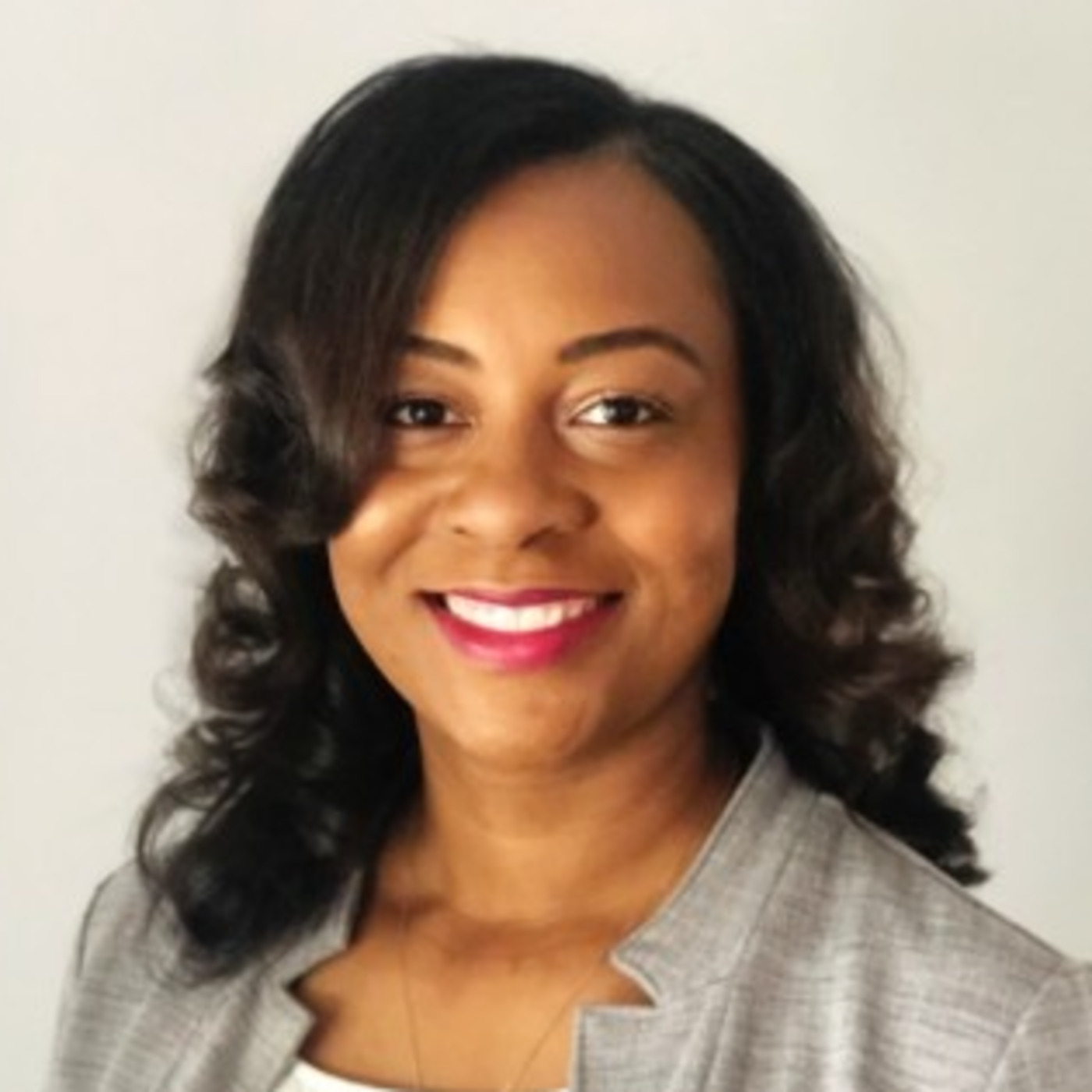
Aoifinn Devitt: Our next guest learned to sit next to the power and checked her own internal bias that stopped her from putting herself forward for new positions. Let’s hear how she climbed and is now leveraging her own social capital to support hundreds more. I’m Aoifinn Devitt, and welcome to the 50 Faces Podcast, a podcast committed to revealing the richness and diversity of the world of investment by focusing on its people and their stories. I’m joined today by Eloise Joseph, who is co-founder of the Greenwood Project, which is an organization that connects Latinx students with career opportunities in financial services and fintech. She previously held a series of roles in investment banks and other financial services firms, mainly in the trading support and compliance divisions. Welcome, Eloise. Thanks for joining me today.
Elois Joseph: Thank you so much for having me and giving me this opportunity to share my story.
Aoifinn Devitt: Well, let’s start with your own background and how you ended up pursuing a role in the trading industry.
Elois Joseph: It’s really interesting. I kind of just landed there. I had no previous plans. It’s not like I sought out a career in finance. It was 1997. The minimum wage was $4.25. I had left from working in fast food and I went to work at UPS. And UPS paid $8 an hour. And that was a lot of money at that time. And I was 18 years old. So I thought I had like struck gold, right? They went on a big strike in the spring. And one of the things with the strikes, with the union strikes, is that you just don’t cross the strike line. And I filled out applications at different companies. And one of the companies happened to be the Chicago Board Options Exchange. They called me the next day and asked me to come in to take a test. And I went in, I took the test, and before you know it, I was starting the upcoming week. So again, there was no previous knowledge of the financial services industry or the exchanges. I just applied, took the test, got the job, and that’s how I got my start.
Aoifinn Devitt: And you grew up in the South Side of Chicago, is that correct?
Elois Joseph: The West Side of Chicago.
Aoifinn Devitt: West Side, West Side. Was there journalism at some point in your career trajectory? I thought I saw that somewhere.
Elois Joseph: Absolutely. So after college, I went to Columbia College here in Chicago and majored in journalism.
Aoifinn Devitt: And did you spend much time working as a journalist or did you make your way back into finance?
Elois Joseph: No, actually, when I was in college, again, around the time that I was 18 years old, UPS was a part-time job. It’s only like 4 hours. So it allowed me time to also participate in class. And once they went on strike, I applied for the Chicago Board Options Exchange and I was able to go to school at night. So I was doing both school at night, who are working at the stock market during the day.
Aoifinn Devitt: Just going back then to your experience in areas such as trading that are typically male dominated, what was your experience like from the very beginning there?
Elois Joseph: Interestingly, I was so young and I don’t think we had this spotlight on the lack of women within the industry. So it was nothing that was even on my radar. Again, it was, I just knew that they were paying well. I had this opportunity and I wanted to be the best that I could be. As my career progressed— and again, I have over 20 years working in the financial space. So as time progressed, as I matured, as the media started to spotlight the lack of women within certain financial roles, then it became apparent to me, wow, I have been in a position where I’ve actually started a trend. So it was very, very interesting, very interesting. I had no idea at the time that I was blazing a trail.
Aoifinn Devitt: And given you’ve had such a long career in that area, what sort of differences or improvements, if any, have you seen over the course of that time in terms of representation by women, by people of color in this area?
Elois Joseph: Well, I can say as of recent, it’s definitely been more awareness around including more women and more people of color. I think it’s just the awareness. And I just want to say, when I applied at the CBO and any other company that I applied for, I never felt like I personally would not get the job because I was a woman or because I was a person of color. That never crossed my mind at the time. I just knew I had a certain skill set, and I was set out to try to land the job based on my skills. And 9 times out of 10, I actually landed the jobs that I applied to. Not to say that firms didn’t have diversity initiatives back then, because again, it wasn’t so highlighted. So I don’t know if it was a thing to try to attract more diverse talent. But definitely, there’s an initiative nowadays.
Aoifinn Devitt: What was it about the impact and focus of the Greenwood Project that really attracted you?
Elois Joseph: Interestingly, when my husband and I started the Greenwood Project, we just wanted to be those people who were able to reach out and connect academically ambitious students to opportunities in a world that they did not know existed. Like, for example, I grew up on the West Side of Chicago. The West Side of Chicago is— let’s see, how can I describe this? It’s an under-resourced area. It just is what it is, right? A lot of the neighborhood is at or below the national poverty line. I grew up in public housing. There were no traders, no brokers, no market makers, no financial engineers. Like, again, I had no idea this world existed. But again, I was a smart student from that area. And I knew that there are other smart people who are just in low-income areas, right? So if you don’t have that social capital or that know-how or even understand that a financial world exists simply because you can’t see it, then how do you know to go and apply to it? So Bavan and I just wanted to be that connector to bring academically ambitious students to have an opportunity to test drive the financial industry. At the time we started this, we had no idea it would grow to what it has become today.
Aoifinn Devitt: And do you find you have an equal number of men and women interested in this program when you start your outreach and start to make them aware of what’s available?
Elois Joseph: Almost equal. Definitely more males, but the women, we have no problem with attracting and retaining young ladies. But we also have a program called the Women of Wall Street, WOW. It’s not really a program, but it’s more of a panel that we hold, and we bring professional women in the financial sector to speak to other young ladies about different opportunities and roles that are available to them within the financial industry. So So that type of outreach and awareness has definitely done a great deal with leaving impressions on our young ladies’ lives.
Aoifinn Devitt: And I’m just trying to get into the shoes of some of these young women who are looking at a program like Greenwood. What do you think is on their mind as they look at this industry? Are they looking to see people who look like them or people maybe who can be sponsors or mentors to them to kind of advise them throughout their careers? Are they focused on perhaps what they can earn? Do they need assistance in knowing how to lobby for their true worth?
Elois Joseph: I think it’s a little bit of everything. Representation matters only because, like, one of our taglines is, “You can’t be what you can’t see.” So, if you can’t see it, you probably don’t know that it’s available to you. So, that helps, right? I didn’t see any Black women in a clerk role when I was on the trading floor. Let me just tell you about a little story, if I may. So, I started out working at the CBOE, and within a couple of weeks, I actually got promoted to go and work in the OEX from the equity division. And I was standing next to one of the market And if you stand next to me, I’m going to talk about everything, right? This trader and I had built a rapport, and he presented to me one day that his clerk was leaving. His clerk was a white male. A lot of people who held the clerk positions were white male, and a lot of the people of color typically held data entry type positions or support positions. So the trader asked if I knew someone who was interested in an opportunity to be a clerk. And I’d only worked at the CBO for like maybe 8 weeks at this point. And I started to think about any young white males that I knew that I could possibly tell them about this great opportunity to be a clerk. And I told him, I told the trader, I said, you know what, I need to go find someone for this job. And I’m thinking I need to go meet and introduce myself to a white male so I can tell him about this job. Again, this is 18-year-old Eloise. And the trader said to me, “Why not you?” And then it clicked, why not me? So I went home, I typed up my resume on my brand new electric typewriter and I got it into him and I interviewed and I earned the opportunity to be a clerk. That’s another supporting reason as to why representation matters. I didn’t even think I could be a clerk, silly me, right?
Aoifinn Devitt: It’s a great example also how we internalize some of these biases as well, or some of this representation problem. I think now we’re all beginning to realize the benefits of diversity, not just because because it makes companies stronger. Not just cognitive diversity, but diversity of backgrounds, experience, skill sets. Absolutely. So those students that you’ve seen really succeed, what are they bringing to their firms through the Greenwood Project and the programs that you think is really enriching those firms?
Elois Joseph: It’s bringing grit, it’s bringing drive, a desire to change the outcome of their lives. So they’re hungry, They want it. They work hard. A lot of them want to make better lives for themselves and for their families. They’re generally first-generation college students. So they have a lot of weight on their shoulders as trying to change the trajectory of the lives of their younger siblings. There’s just so much into that to where they want to succeed. And not only succeed, they want to excel.
Aoifinn Devitt: And what have you seen in particular that helps them thrive once they get in the door? And I’m thinking of groups like the WOW group you mentioned, affinity groups or mentorships or having a mentor. What have you seen that helps?
Elois Joseph: Definitely a mentor. Mentoring always helps. I place a lot of value in having a mentor. I also place a lot of value on employee resource groups as well. Definitely a network, and also the support of the Greenwood Project. So just having a strong support system.
Aoifinn Devitt: Yeah, it seems like a phenomenal program that you have in place and really just quite a staggering growth profile over the last few years. Just now looking at the work that still has to be done, if you were to look at, say, you know, where you started 20 or so years ago and now looking at the state of the financial services industry, the level of diversity in it, the important work that you’re doing, but probably you’re only scratching the surface of what needs to be done. What is your kind of assessment of the financial services industry today in terms of diversity, and where would you like it to get to?
Elois Joseph: I would like for companies to stop checking the box to say we have a woman or a Black woman or a Black woman of the LGBTQ. Like, stop checking the box and actually do the work, do the outreach, include people who you actually want to contribute and support within their careers. Provide the same level of support to an incoming person of color, an incoming LGBTQ, an incoming woman, as you would the support of your friend who you play golf with on the weekend. Provide that same type of support and network Also include those people of the women or the people of color or whoever, include them when you go out to your happy hours or even if you’re going to play golf on the weekend. That’s something that I noticed that may have happened to me and my peers within certain financial firms that they would be forgotten about when it was time to go out for a social event. And I think that’s just as important as letting a person know that they are valued and that you are really attempting to be inclusive as opposed to just checking the box.
Aoifinn Devitt: I think you make a very good point. I think the other point I’ve heard is we need to stop putting people into boxes too and stop assuming that all women maybe will bring the same to the table, or maybe that all Black women will really bring the same perspective to the table. I think that’s almost the flip side of checking the boxes, that we presume a certain face will give us a certain kind of diversity.
Elois Joseph: Absolutely. I agree 100%.
Aoifinn Devitt: So looking back now to your personal journey, were there any setbacks or challenges along this way that you learned lessons from?
Elois Joseph: Absolutely. Definitely a lot of challenges. Challenges as far as it relates to people who just have certain biases, and that definitely complicated a lot of things. If I could do things differently, I would definitely get myself out of those situations sooner or understand how to speak up about those situations sooner, as opposed to wondering if I speak up, would I be considered a troublemaker, so to speak. So those are some challenges that I think that financial companies should also consider as they are looking to push this initiative of being more inclusive and having more diversity.
Aoifinn Devitt: And then when you think about ways that you learn to cope with those situations, were there any key people for you in your career, or maybe just in your life in general, that have made an impression on you?
Elois Joseph: There’s definitely one woman who made an impression that I worked closely with, and I just admired how she navigated the room being a woman within the financial sector and having a voice and using her voice, totally admired that. But she was also very senior in her position to me. But in relation to me, she was very senior in her position. So definitely if she pointed something out or whenever she spoke, people listened. As far as me being such a junior, I don’t think I would have had the same weight had I voiced my opinion, even no matter how gentle it was. But definitely admired the way she just maneuvered in that male-dominated industry.
Aoifinn Devitt: Again, getting back to the reason why it’s so important to have representation, because how do we see examples of how to behave if there are no women in senior positions?
Elois Joseph: Exactly.
Aoifinn Devitt: Yeah, exactly. And then if you look at any key pieces of advice that you received or any creed or motto that you live by in your life, is there anything you can share there?
Elois Joseph: Yes. One day I listened to Mellody Hobson speak at a women’s forum, and something that she said stuck out to me, and it was, sit next to the power. And what that means, if you’re in a meeting with your peers and business associates, you need to sit next to the leader of that meeting, the leader of the team, the senior-most person. You need to sit right next to them just because it forces them to remember your name. They remember that they see you at every meeting and you’re sitting next to them. It forces you to be on their mind. And when you’re on a person’s mind, they tend not to forget about you, if that makes sense. That was a very, very powerful statement. Sit next to the power.
Aoifinn Devitt: That is so powerful. It also reminds me of the whole importance of visibility in order for someone just to be visible. And also equally, for one of the key ways to be visible is for women is to be spokesperson for their firms. So for them to be somebody who’s quoted maybe in the media, or them to be the person who represents the firm at an event, at a panel, maybe a conference. The only issue I’m seeing with that now is how do we solve that in today’s virtual times? There’s nowhere literally to sit next to the power. We’re all on a Zoom screen where everybody occupies the same box. I do wonder how this affects a young person’s ability to be visible just right now.
Elois Joseph: I definitely think it does introduce a new challenge, but asking great questions is another way that you increase your visibility.
Aoifinn Devitt: My last question is around any advice you would have for your younger self, looking maybe at that young student looking to apply to CBOE from UPS. Is there anything that you know now that you wish you had known then?
Elois Joseph: I wish I’d understood the power of a mentor, so I would have definitely found a mentor early on and definitely worked with them to help, basically help to develop me professionally and also personally, and to help me solidify a path based on my goals and careers. Like, I think I turned out quite well even though I didn’t have like a solid mentor. I always think about how much better off I possibly would be had I had someone who was invested in my professional growth and development.
Aoifinn Devitt: That’s a really interesting point. And actually, one of the points I have heard in this is if you look at even the language of mentoring is somewhat new. It may have occurred in the past, but it wasn’t as structured. And I think we didn’t talk about it as much as we do today. So I think that that may also have been a thing is that, you know, you wouldn’t even— didn’t even know back then to seek out mentors.
Elois Joseph: That’s an excellent point. That’s an excellent point because this was 20 years ago.
Aoifinn Devitt: Right, because I it was— would have been the same vintage, a little bit further back. And again, I didn’t really even have that concept. And I think you kind of naturally gravitated towards people who you admired and who you felt— I don’t think I was aware of the power concept either, certainly not sitting next to it. But I think we have better language now around these norms. And hopefully when you have language around something, you can actually try to put it in place. Thank you so much, Iloas. It’s been a pleasure speaking with you today. Thank you for sharing your insights with us.
Elois Joseph: Thank you so much for allowing me this great opportunity to share my story.
Aoifinn Devitt: I’m Aoifinn McDevitt. Thank you for listening to the 50 Faces podcast. If you liked what you heard and would like to tune in to hear more inspiring investors on their personal journeys, please subscribe on Apple Podcasts or wherever you get your podcasts. Series 4 is brought to you with the kind support of Federated Hermes Inc., a leading global investment manager. Guided by their conviction that responsible investing is the best way to create wealth over the long term, their investment solutions span equity, fixed income, alternative and private markets, multi-asset and liquidity strategies, and a range of separately managed accounts distributed through intermediaries worldwide. This podcast is for informational purposes only and should not be construed as investment advice, and all views are personal and should not be attributed to the organizations and affiliations of the host or any guest.
Aoifinn Devitt: Our next guest learned to sit next to the power and checked her own internal bias that stopped her from putting herself forward for new positions. Let’s hear how she climbed and is now leveraging her own social capital to support hundreds more. I’m Aoifinn Devitt, and welcome to the 50 Faces Podcast, a podcast committed to revealing the richness and diversity of the world of investment by focusing on its people and their stories. I’m joined today by Eloise Joseph, who is co-founder of the Greenwood Project, which is an organization that connects Latinx students with career opportunities in financial services and fintech. She previously held a series of roles in investment banks and other financial services firms, mainly in the trading support and compliance divisions. Welcome, Eloise. Thanks for joining me today.
Elois Joseph: Thank you so much for having me and giving me this opportunity to share my story.
Aoifinn Devitt: Well, let’s start with your own background and how you ended up pursuing a role in the trading industry.
Elois Joseph: It’s really interesting. I kind of just landed there. I had no previous plans. It’s not like I sought out a career in finance. It was 1997. The minimum wage was $4.25. I had left from working in fast food and I went to work at UPS. And UPS paid $8 an hour. And that was a lot of money at that time. And I was 18 years old. So I thought I had like struck gold, right? They went on a big strike in the spring. And one of the things with the strikes, with the union strikes, is that you just don’t cross the strike line. And I filled out applications at different companies. And one of the companies happened to be the Chicago Board Options Exchange. They called me the next day and asked me to come in to take a test. And I went in, I took the test, and before you know it, I was starting the upcoming week. So again, there was no previous knowledge of the financial services industry or the exchanges. I just applied, took the test, got the job, and that’s how I got my start.
Aoifinn Devitt: And you grew up in the South Side of Chicago, is that correct?
Elois Joseph: The West Side of Chicago.
Aoifinn Devitt: West Side, West Side. Was there journalism at some point in your career trajectory? I thought I saw that somewhere.
Elois Joseph: Absolutely. So after college, I went to Columbia College here in Chicago and majored in journalism.
Aoifinn Devitt: And did you spend much time working as a journalist or did you make your way back into finance?
Elois Joseph: No, actually, when I was in college, again, around the time that I was 18 years old, UPS was a part-time job. It’s only like 4 hours. So it allowed me time to also participate in class. And once they went on strike, I applied for the Chicago Board Options Exchange and I was able to go to school at night. So I was doing both school at night, who are working at the stock market during the day.
Aoifinn Devitt: Just going back then to your experience in areas such as trading that are typically male dominated, what was your experience like from the very beginning there?
Elois Joseph: Interestingly, I was so young and I don’t think we had this spotlight on the lack of women within the industry. So it was nothing that was even on my radar. Again, it was, I just knew that they were paying well. I had this opportunity and I wanted to be the best that I could be. As my career progressed— and again, I have over 20 years working in the financial space. So as time progressed, as I matured, as the media started to spotlight the lack of women within certain financial roles, then it became apparent to me, wow, I have been in a position where I’ve actually started a trend. So it was very, very interesting, very interesting. I had no idea at the time that I was blazing a trail.
Aoifinn Devitt: And given you’ve had such a long career in that area, what sort of differences or improvements, if any, have you seen over the course of that time in terms of representation by women, by people of color in this area?
Elois Joseph: Well, I can say as of recent, it’s definitely been more awareness around including more women and more people of color. I think it’s just the awareness. And I just want to say, when I applied at the CBO and any other company that I applied for, I never felt like I personally would not get the job because I was a woman or because I was a person of color. That never crossed my mind at the time. I just knew I had a certain skill set, and I was set out to try to land the job based on my skills. And 9 times out of 10, I actually landed the jobs that I applied to. Not to say that firms didn’t have diversity initiatives back then, because again, it wasn’t so highlighted. So I don’t know if it was a thing to try to attract more diverse talent. But definitely, there’s an initiative nowadays.
Aoifinn Devitt: What was it about the impact and focus of the Greenwood Project that really attracted you?
Elois Joseph: Interestingly, when my husband and I started the Greenwood Project, we just wanted to be those people who were able to reach out and connect academically ambitious students to opportunities in a world that they did not know existed. Like, for example, I grew up on the West Side of Chicago. The West Side of Chicago is— let’s see, how can I describe this? It’s an under-resourced area. It just is what it is, right? A lot of the neighborhood is at or below the national poverty line. I grew up in public housing. There were no traders, no brokers, no market makers, no financial engineers. Like, again, I had no idea this world existed. But again, I was a smart student from that area. And I knew that there are other smart people who are just in low-income areas, right? So if you don’t have that social capital or that know-how or even understand that a financial world exists simply because you can’t see it, then how do you know to go and apply to it? So Bavan and I just wanted to be that connector to bring academically ambitious students to have an opportunity to test drive the financial industry. At the time we started this, we had no idea it would grow to what it has become today.
Aoifinn Devitt: And do you find you have an equal number of men and women interested in this program when you start your outreach and start to make them aware of what’s available?
Elois Joseph: Almost equal. Definitely more males, but the women, we have no problem with attracting and retaining young ladies. But we also have a program called the Women of Wall Street, WOW. It’s not really a program, but it’s more of a panel that we hold, and we bring professional women in the financial sector to speak to other young ladies about different opportunities and roles that are available to them within the financial industry. So So that type of outreach and awareness has definitely done a great deal with leaving impressions on our young ladies’ lives.
Aoifinn Devitt: And I’m just trying to get into the shoes of some of these young women who are looking at a program like Greenwood. What do you think is on their mind as they look at this industry? Are they looking to see people who look like them or people maybe who can be sponsors or mentors to them to kind of advise them throughout their careers? Are they focused on perhaps what they can earn? Do they need assistance in knowing how to lobby for their true worth?
Elois Joseph: I think it’s a little bit of everything. Representation matters only because, like, one of our taglines is, “You can’t be what you can’t see.” So, if you can’t see it, you probably don’t know that it’s available to you. So, that helps, right? I didn’t see any Black women in a clerk role when I was on the trading floor. Let me just tell you about a little story, if I may. So, I started out working at the CBOE, and within a couple of weeks, I actually got promoted to go and work in the OEX from the equity division. And I was standing next to one of the market And if you stand next to me, I’m going to talk about everything, right? This trader and I had built a rapport, and he presented to me one day that his clerk was leaving. His clerk was a white male. A lot of people who held the clerk positions were white male, and a lot of the people of color typically held data entry type positions or support positions. So the trader asked if I knew someone who was interested in an opportunity to be a clerk. And I’d only worked at the CBO for like maybe 8 weeks at this point. And I started to think about any young white males that I knew that I could possibly tell them about this great opportunity to be a clerk. And I told him, I told the trader, I said, you know what, I need to go find someone for this job. And I’m thinking I need to go meet and introduce myself to a white male so I can tell him about this job. Again, this is 18-year-old Eloise. And the trader said to me, “Why not you?” And then it clicked, why not me? So I went home, I typed up my resume on my brand new electric typewriter and I got it into him and I interviewed and I earned the opportunity to be a clerk. That’s another supporting reason as to why representation matters. I didn’t even think I could be a clerk, silly me, right?
Aoifinn Devitt: It’s a great example also how we internalize some of these biases as well, or some of this representation problem. I think now we’re all beginning to realize the benefits of diversity, not just because because it makes companies stronger. Not just cognitive diversity, but diversity of backgrounds, experience, skill sets. Absolutely. So those students that you’ve seen really succeed, what are they bringing to their firms through the Greenwood Project and the programs that you think is really enriching those firms?
Elois Joseph: It’s bringing grit, it’s bringing drive, a desire to change the outcome of their lives. So they’re hungry, They want it. They work hard. A lot of them want to make better lives for themselves and for their families. They’re generally first-generation college students. So they have a lot of weight on their shoulders as trying to change the trajectory of the lives of their younger siblings. There’s just so much into that to where they want to succeed. And not only succeed, they want to excel.
Aoifinn Devitt: And what have you seen in particular that helps them thrive once they get in the door? And I’m thinking of groups like the WOW group you mentioned, affinity groups or mentorships or having a mentor. What have you seen that helps?
Elois Joseph: Definitely a mentor. Mentoring always helps. I place a lot of value in having a mentor. I also place a lot of value on employee resource groups as well. Definitely a network, and also the support of the Greenwood Project. So just having a strong support system.
Aoifinn Devitt: Yeah, it seems like a phenomenal program that you have in place and really just quite a staggering growth profile over the last few years. Just now looking at the work that still has to be done, if you were to look at, say, you know, where you started 20 or so years ago and now looking at the state of the financial services industry, the level of diversity in it, the important work that you’re doing, but probably you’re only scratching the surface of what needs to be done. What is your kind of assessment of the financial services industry today in terms of diversity, and where would you like it to get to?
Elois Joseph: I would like for companies to stop checking the box to say we have a woman or a Black woman or a Black woman of the LGBTQ. Like, stop checking the box and actually do the work, do the outreach, include people who you actually want to contribute and support within their careers. Provide the same level of support to an incoming person of color, an incoming LGBTQ, an incoming woman, as you would the support of your friend who you play golf with on the weekend. Provide that same type of support and network Also include those people of the women or the people of color or whoever, include them when you go out to your happy hours or even if you’re going to play golf on the weekend. That’s something that I noticed that may have happened to me and my peers within certain financial firms that they would be forgotten about when it was time to go out for a social event. And I think that’s just as important as letting a person know that they are valued and that you are really attempting to be inclusive as opposed to just checking the box.
Aoifinn Devitt: I think you make a very good point. I think the other point I’ve heard is we need to stop putting people into boxes too and stop assuming that all women maybe will bring the same to the table, or maybe that all Black women will really bring the same perspective to the table. I think that’s almost the flip side of checking the boxes, that we presume a certain face will give us a certain kind of diversity.
Elois Joseph: Absolutely. I agree 100%.
Aoifinn Devitt: So looking back now to your personal journey, were there any setbacks or challenges along this way that you learned lessons from?
Elois Joseph: Absolutely. Definitely a lot of challenges. Challenges as far as it relates to people who just have certain biases, and that definitely complicated a lot of things. If I could do things differently, I would definitely get myself out of those situations sooner or understand how to speak up about those situations sooner, as opposed to wondering if I speak up, would I be considered a troublemaker, so to speak. So those are some challenges that I think that financial companies should also consider as they are looking to push this initiative of being more inclusive and having more diversity.
Aoifinn Devitt: And then when you think about ways that you learn to cope with those situations, were there any key people for you in your career, or maybe just in your life in general, that have made an impression on you?
Elois Joseph: There’s definitely one woman who made an impression that I worked closely with, and I just admired how she navigated the room being a woman within the financial sector and having a voice and using her voice, totally admired that. But she was also very senior in her position to me. But in relation to me, she was very senior in her position. So definitely if she pointed something out or whenever she spoke, people listened. As far as me being such a junior, I don’t think I would have had the same weight had I voiced my opinion, even no matter how gentle it was. But definitely admired the way she just maneuvered in that male-dominated industry.
Aoifinn Devitt: Again, getting back to the reason why it’s so important to have representation, because how do we see examples of how to behave if there are no women in senior positions?
Elois Joseph: Exactly.
Aoifinn Devitt: Yeah, exactly. And then if you look at any key pieces of advice that you received or any creed or motto that you live by in your life, is there anything you can share there?
Elois Joseph: Yes. One day I listened to Mellody Hobson speak at a women’s forum, and something that she said stuck out to me, and it was, sit next to the power. And what that means, if you’re in a meeting with your peers and business associates, you need to sit next to the leader of that meeting, the leader of the team, the senior-most person. You need to sit right next to them just because it forces them to remember your name. They remember that they see you at every meeting and you’re sitting next to them. It forces you to be on their mind. And when you’re on a person’s mind, they tend not to forget about you, if that makes sense. That was a very, very powerful statement. Sit next to the power.
Aoifinn Devitt: That is so powerful. It also reminds me of the whole importance of visibility in order for someone just to be visible. And also equally, for one of the key ways to be visible is for women is to be spokesperson for their firms. So for them to be somebody who’s quoted maybe in the media, or them to be the person who represents the firm at an event, at a panel, maybe a conference. The only issue I’m seeing with that now is how do we solve that in today’s virtual times? There’s nowhere literally to sit next to the power. We’re all on a Zoom screen where everybody occupies the same box. I do wonder how this affects a young person’s ability to be visible just right now.
Elois Joseph: I definitely think it does introduce a new challenge, but asking great questions is another way that you increase your visibility.
Aoifinn Devitt: My last question is around any advice you would have for your younger self, looking maybe at that young student looking to apply to CBOE from UPS. Is there anything that you know now that you wish you had known then?
Elois Joseph: I wish I’d understood the power of a mentor, so I would have definitely found a mentor early on and definitely worked with them to help, basically help to develop me professionally and also personally, and to help me solidify a path based on my goals and careers. Like, I think I turned out quite well even though I didn’t have like a solid mentor. I always think about how much better off I possibly would be had I had someone who was invested in my professional growth and development.
Aoifinn Devitt: That’s a really interesting point. And actually, one of the points I have heard in this is if you look at even the language of mentoring is somewhat new. It may have occurred in the past, but it wasn’t as structured. And I think we didn’t talk about it as much as we do today. So I think that that may also have been a thing is that, you know, you wouldn’t even— didn’t even know back then to seek out mentors.
Elois Joseph: That’s an excellent point. That’s an excellent point because this was 20 years ago.
Aoifinn Devitt: Right, because I it was— would have been the same vintage, a little bit further back. And again, I didn’t really even have that concept. And I think you kind of naturally gravitated towards people who you admired and who you felt— I don’t think I was aware of the power concept either, certainly not sitting next to it. But I think we have better language now around these norms. And hopefully when you have language around something, you can actually try to put it in place. Thank you so much, Iloas. It’s been a pleasure speaking with you today. Thank you for sharing your insights with us.
Elois Joseph: Thank you so much for allowing me this great opportunity to share my story.
Aoifinn Devitt: I’m Aoifinn McDevitt. Thank you for listening to the 50 Faces podcast. If you liked what you heard and would like to tune in to hear more inspiring investors on their personal journeys, please subscribe on Apple Podcasts or wherever you get your podcasts. Series 4 is brought to you with the kind support of Federated Hermes Inc., a leading global investment manager. Guided by their conviction that responsible investing is the best way to create wealth over the long term, their investment solutions span equity, fixed income, alternative and private markets, multi-asset and liquidity strategies, and a range of separately managed accounts distributed through intermediaries worldwide. This podcast is for informational purposes only and should not be construed as investment advice, and all views are personal and should not be attributed to the organizations and affiliations of the host or any guest.