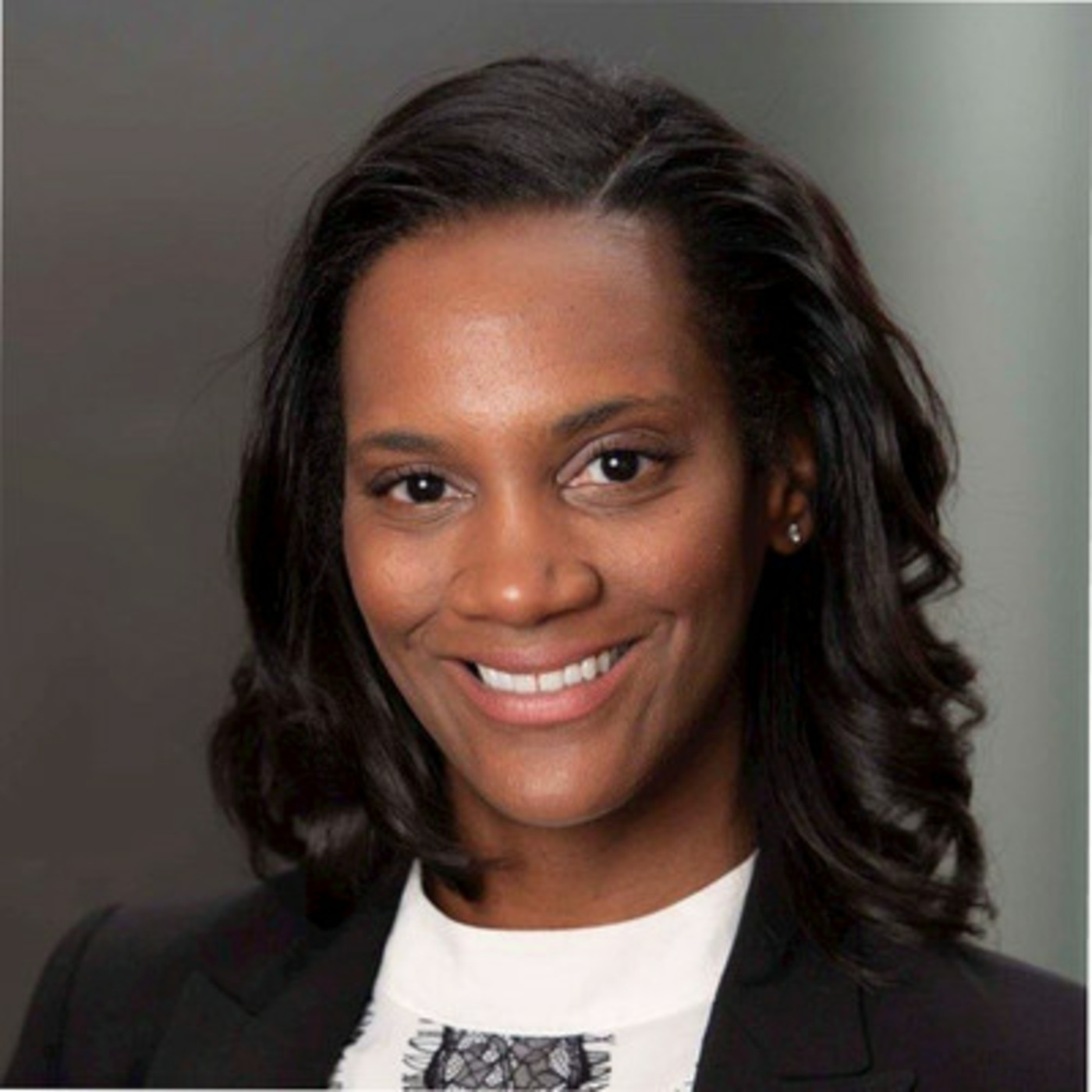
Aoifinn Devitt: Sometimes a career journey showcases the very best that our industry can do when it identifies talent, nurtures it, and challenges it to thrive. Let’s hear our next guest’s story. I’m Aoifinn Devitt, and welcome to the 50 Faces podcast. A podcast committed to revealing the richness and diversity of the world of investment by focusing on its people and their stories. I’m joined today by Jessica Portis, who is Head of Member Portfolio Management and Services at TIFF Investment Management. She previously had a long career in investment consulting, first at Summit and then Mercer. Welcome, Jessica. Thanks for joining me today.
Jessica Portis: Hi, Aoifinn. Thanks so much for having me. It’s a pleasure to be here.
Aoifinn Devitt: Can we start with your background and how you ended up pursuing a role in the investment world?
Jessica Portis: So it was sort of by accident. When I was in college, I actually wanted to go work for what was the Big Five at the time, an accounting firm. I was convinced that I was going to be an auditor or something along those lines, but ultimately I was part of an organization called Inroads. Inroads is a nonprofit organization that is really focused on getting minorities into business and industry type roles. And so I had an opportunity to participate in an internship through INROADS. Ultimately, I ended up at Summit Strategies Group. I was— I interviewed for their very first internship position. You know, they didn’t know what to do with an intern at the time. I wasn’t quite sure what the role was exactly, but hey, I was a college student looking for experience and money. And so ultimately, I took the position with them as an intern. And we had great success with me in the role. And so, they offered me a part-time position while I finished up school. And then I was offered a full-time position upon graduation. And so, I spent 15 years, as you said, at Summit Strategies Group in a variety of roles, worked my way up from being the intern to actually leading the consulting practice for summit before I departed to join Mercer.
Aoifinn Devitt: And is St. Louis or that area your hometown, or are you from close to there?
Jessica Portis: No, St. Louis is home, born and raised. Both my husband and my families are from here, and so we have an affinity for the area right now. At some point, maybe we’ll tackle other parts of the country.
Aoifinn Devitt: Well, I can’t deny the attraction of the Midwest, certainly having spent 12 years in Chicago myself. So just looking at that, that’s a long period of time in consulting, were there any kind of changes or any observations of how clients’ demands changed over the course of that time, or how did your— what you did as a service change?
Jessica Portis: There are a couple of things that come to mind. I would say first, the adoption of alternatives in client portfolios. So when I started in the industry, you know, a number of organizations dabbled, I would say, in alternatives, hedge funds, private equity, etc. And then it became a lot more mainstream, even across client type. So I would say historically, you know, endowments and foundations have been a bit more progressive in terms of using alternatives in their portfolios, but even public funds and corporate pensions were starting to use alternatives a bit more as time went on while I was at Summit. The second component was really around the adoption of OCIO delegated discretionary types of mandates. So in the early days, most of our relationships were advisory. Uh, by the time I left, a good chunk of them were delegated because investment committees were starting to recognize that they didn’t have the capacity to really perform all of the duties associated with running a portfolio, particularly a portfolio that was comprised of a lot of complex investment options. So I would say that during my time at Summit, more and more organizations were moving towards delegated, even at Mercer. And today I’m at an organization that solely does discretionary or OCIO for nonprofit organizations.
Aoifinn Devitt: That’s a perfect segue into my asking, can you describe your current role?
Jessica Portis: Sure. So I actually lead client service for TIF. So my job is really to ensure that we deliver on the commitments that we have to each of our clients. I work with a number of our large complex clients as well, helping them to really achieve their investment objectives. I’m not sure if people are familiar with TIF as an organization. Uh, TIF is actually a nonprofit. That is focused on helping organizations achieve or pursue investment excellence. So all we do, as I said, is OCIO for nonprofit organizations. It’s, it was established really as a cooperative type of organization. We just celebrated our 30th anniversary last month. But really the goal of TIF is to provide access to innovative investment opportunities and practices that are utilized by the larger endowments and foundations really to take that, those best practices, that pursuit of excellence, and construct portfolios for small to midsize nonprofit organizations.
Aoifinn Devitt: And I normally ask a question about setbacks and challenges over the course of a career, but from what you’ve described, there doesn’t seem to have been many. It seems that you had a great start. Maybe can we talk a little bit about that program that you mentioned that you joined that, that was, helped facilitate your internship? What kind of supports were provided in that program? How do you feel they were beneficial?
Jessica Portis: Sure. So there were two components. There was the internship, and then there was also sort of an educational component that was focused on really building or helping to shape the individual. And so we had to take courses on how to dress for success, what type of conversation should you be having at professional dinners or meetings. So they really wanted to make sure that not only did you have the work experience, but to ensure that you were well set up to be successful when you did ultimately land, land the role. From a sort of internship standpoint, you know, they really wanted to make sure that you were in a challenging role. And so although I did not have any investment experience, when I stepped into the role, I had an organization who was willing to support me in terms of learning. And so at the time, Summit Strategies Group immersed me into a lot of different projects, exposed me to investments sort of at a high level, and really gave me an opportunity to try a lot of different things. And I’m very appreciative of that opportunity. So I would say INROADS was, you know, did a really nice job in terms of trying to build the complete package within all of the individuals that they sponsored. I mean, high expectations in terms of grades and participation, that modeled that to who much is given, much is required. That was definitely part of the INROADS credo.
Aoifinn Devitt: That’s so powerful, I think, to have such high expectations and a requirement of challenge. Because I think if anything, that’s what’s probably missing for many people. They have what I call the tyranny of low expectations. Were there any key people or sponsors behind that program that really set its tone like that?
Jessica Portis: Yeah, so INROADS is a, you know, it’s a national program. I had an amazing advisor, it’s interestingly enough, maybe 18 months ago. I’d lost touch with her, but I ran into her at a Panera. She was always firm but always also very, very gentle in terms of guiding us. And so she made sure that we knew the expectations. There were oftentimes where we would have classes on Saturday mornings that we had to attend as part of the professional development, but she was just a great resource. And actually, I appreciate having a second shot at INROADS. Back in the day, their program actually began in high school. There were two components, the high school component and the college component. But because I was working to put myself through college, I actually didn’t participate in the early days, my early college days, INROADS. And so they had sent out a flyer. They were seeking additional accounting majors. And so I reached out to them and said, I know I didn’t continue the program in the capacity that you guys expected, due to these, you know, due to the circumstances that I had, but would love the opportunity to sort of reengage with you. And so I had an opportunity to go down and meet with them and ultimately became a success story for them. Our local newspaper did a little bit of a story about INROADS and featured me as a success story as part of the program. So definitely, you know, I’m very grateful for the opportunity that INROADS gave me. I would also say that I was very fortunate in my early days at Summit Strategies Group to have a mentor that I worked with, a gentleman by the name of Dan Holmes. We continued to remain in touch. He was really great in terms of giving me an opportunity to learn everything I could about investment consulting and how to, to really provide top-notch service to clients. So grateful for the friendship and mentorship that I had with Dan.
Aoifinn Devitt: That’s so great to hear those stories. What is it you like most about the investment world?
Jessica Portis: I guess for me, it’s, it’s really that every day is a new You challenge. Know, when you work with a wide variety of clients that each of them have very unique investment objectives and goals. And so really trying to take the opportunities that are in front of you and figure out which of those make the most sense to help each of those clients achieve their unique goals. So I love that. In the OCIO capacity, it’s really partnering with both our clients and the investment team to build that solution that, that makes sense for each of our clients. I enjoy being able to communicate exactly what we’re doing in portfolios, how we’re working towards those long-term objectives. And really, especially because I focus exclusively on nonprofits today, I love that when we are successful at helping our clients achieve their objectives and their goals, I know that they will be able to do more in their local communities. I know that they will be able to fulfill their mission to the highest level as a result of their investment portfolios generating the returns that they need.
Aoifinn Devitt: And within the investment world, as regards diversity, what are your observations on the level of representation? And over the course of your career, has anything improved in your eyes?
Jessica Portis: I guess I would start by saying that I strongly believe that women and minorities are still underrepresented within the investment industry. I think we have made progress. Over the last 20 years, but we definitely don’t have an appropriate level of representation across the investment industry. Even when I was going through the INROADS program years and years ago, everybody raised their hand to be part of marketing or they wanted to be part of the investment banking team, but there really weren’t people who wanted to go into asset management or those sorts of things that, that just wasn’t an opportunity set that, that many people of color found available to them. So yes, it has gotten a little bit better, but it is definitely not where it needs to be. I think there’s a lot of work that we can do as an industry. I always challenge my team and myself to make sure that we are recruiting from the broadest network that we possibly can. It’s very easy for individuals to hire people that they know, people who are part of their circle. And if we continue to do that, we won’t have a talent pool that is representative of our country. And, you know, we are a very diverse country and, you know, we really need to create opportunities for both women and people of color to be brought into this industry. And I think we have to do that in a lot of different ways. So, so the networking, the way we approach recruiting, I think we have to provide mentorships and sponsorships to individuals who may not historically have the background that we’re looking for, but who have the potential to rise to the occasion and really be meaningful contributors to the investment arena. So I definitely think that it requires a high level of what I’ll say is investment in air quotes for individuals in order to diversify the asset management industry.
Aoifinn Devitt: And one question I was going to ask you about was getting women into senior roles, because you’re in a senior role now and having recently taken on a new role. I suppose the question is around getting women into those roles sustainably, because I think the key thing is you want to get women into the roles but retain them in there and also ensure that they’re presented with sufficient challenges. Do you see any kind of barriers to women getting into these roles, maybe to progressing? Is anything, as you’ve looked both at the consulting industry as well as the asset management industry, that you’ve come away with?
Jessica Portis: So I think the biggest obstacle is women not being given the opportunity. Part of it, it goes back to that, you know, we tend to promote and to hire people that are in our networks, in our circles. And so how do we make sure that women and people of color are given those opportunities and how do they get a seat at the table? And I’ve been very fortunate over the course of my career to have not only a mentor, but a sponsor within an organization who, when I was unwilling or afraid to raise my hand for stretch roles, there was someone who was there to say, Jess, I really think that you would be good for this role. And I have full confidence that you, you know, will be successful in doing so. And I will stand by you and support you to ensure that you achieve the level of success that I know that you can. And so I think we need to do more of that as leaders, make sure that we’re bringing people along, that we are giving them the to opportunity to take on those stretch roles. I think that is the one thing that all of us can commit to doing is just making sure that we’re bringing other people along. To me, that’s the biggest priority. And then you talked a little bit about making sure that they stay in those roles long-term. And I think the key to that is being flexible, recognizing that not only am I an employee, but I’m also a wife. A mother, a child, and there are responsibilities that come along with those sort of titles that all of us have. And so being flexible in terms of work hours, giving people the autonomy to be able to get work done at different hours. I tend to be pretty productive and efficient. You know, I try to maximize my workday so that I have the time to spend with the kids in the evening. But that doesn’t mean that after I put them to bed that I’m not going to come back down to my computer and wrap up a big project or something that I’m working on. And so having an employer who, you know, values the contribution that I bring to the organization and recognizes that I may not be able to give 12 straight hours, but I will get the project done and it will be done in a timely fashion and well You done. Know, I appreciate having that flexibility and that is what has really kept me sort of loyal to organizations over time is having that flexibility.
Aoifinn Devitt: And just getting back to the inroads philosophy of challenge, I think when I ask about sustaining these roles, one thing I think is important is I think most women who’ve risen to these roles are women who like to challenge themselves, like to stretch themselves, like to grow continually. And I think that employers need to be mindful of that too, because it’s often these women are not content with a holding pattern. And, you know, equally, it’s a whole conundrum about applying for jobs, job descriptions. If you had everything it took to do the job, there wouldn’t be much challenge in there. So, I think there has to be a lot of management of senior female talent as well, maybe.
Jessica Portis: Absolutely. Creating different opportunities within an organization for your high performers is something that is really important. And so, although I spent 5 years at Mercer in between my Summit and TIFF days, I did a lot of different things within that 5-year. Time period. And so I’m, I’m very appreciative of the experience and the opportunity that I had there. Interestingly enough, you know, one of the twists and turns that occurred during that time period is that I actually worked with a team to acquire Summit Strategies Group and Pavilion Advisory Group. And so it was, was quite interesting to bring together Mercer Pavilion and, and Summit. And it was a good reminder that the importance of relationships, the importance of really making sure that you remain connected and in touch with, with people within this industry because you never know when you’re going to end up back together. So that was a stretch assignment that I participated in. I’d never been part of an acquisition. And so I appreciated being able to participate from the very beginning of that process, literally until the very end when we were bringing the organizations together and really creating one cohesive team.
Aoifinn Devitt: I think some very wise words there about this being a repeated game and not wanting to burn bridges when one leaves an organization. It is ultimately a small industry when you think about it.
Jessica Portis: As vast as it is, it is definitely still quite small. We’re all interconnected.
Aoifinn Devitt: Absolutely. So you’ve mentioned a number of people already in your personal journey, whether it be your mentor at Inroads or later on in the workplace, a mentor and a sponsor. Were there any one or two key people that really had a particular influence on you, maybe besides those?
Jessica Portis: You know, I’d have to say my mother. She’s an incredible woman. She is probably the hardest working person that I know. She grew up in the civil rights movement in Birmingham, Alabama. And, you know, just thinking about some of the things that she endured as a child and a young adult, and then just her positive outlook on life always is something that has stuck with me. And so, you know, my work ethic, the model that I live by, you know, a lot of that comes from her support along the way. She’s always believed in me. She’s always encouraged me. She’s always been, you know, there for me. And so she is absolutely someone who influenced me along the way. I’d also have to say, you know, in college I had a professor who is now a really good friend of mine who pushed me to speak up spend to more time around communication. So as I said, I was an accounting major, so loved numbers, loved calculations, things that were sort of very black and white. And I took— as a requirement, I had to take this, you know, sort of entry-level communications class, and I absolutely dreaded it. You know, the thought of having to get up in front of the class was just not something that appealed to me. And this professor, she’s like, I think you you will do great at this. And she, you know, coached me along the way and really helped me believe in my ability to overcome that fear of public speaking. And so I was very appreciative of that. And sort of post-school, we became very good friends. She’s, she’s my son’s godmother, and to this day is just someone who I have a lot of respect for and a lot of admiration in terms of her teaching style and her ability to help others sort of get past fears and things like that.
Aoifinn Devitt: Such a gift to have people like that in our lives. When you think about those people or others that you’ve spent time with, were there any key pieces of advice that you received or any creed or motto that you live by?
Jessica Portis: So in terms of the advice, I think the biggest one is work hard and say yes to opportunities. You know, from a work hard standpoint, if you’re putting in the effort, people are going to notice. And they’re going to come to you with additional opportunities. Hard work opens doors for individuals. And that’s, that’s, you know, a model that I want to instill in my children as well. But I think the other part of it is saying yes, even sometimes when you want to say no. So whether it was— I actually went to Mercer to join their consulting practice as a senior consultant and to help them really focus their efforts around healthcare.. And I was there for, gosh, it probably wasn’t even 3 months when they turned to me and said, you know, the woman who had recruited me, who I adore, she had decided to leave and join the asset management industry. And they turned to me and they said, Jess, you’re now going to lead the nonprofit practice. And I’m thinking, well, I’m the new girl. I’ve literally been here for 3 months. Am I qualified to lead this practice? And I had the head of our— at the time, he was head of our North American business, but he went on to be head of our global business. He turned to me and he said, “Yes, you are. And I have faith in you. I want to answer every single question that you have to make you feel comfortable in this role. But ultimately, we believe that you are the right person and the team has a lot of conviction in terms of your leadership as well.” And so I’m glad that I said yes to that opportunity. It gave me the sort of opened the door for me to learn a lot of different things. It gave me an opportunity to sort of lean into honing my leadership skills. And ultimately it gave me an opportunity to be mentored by Mercer’s global CEO, which I found to be a very, just a great experience. So my advice to people, work hard, say yes, even when you’re fearful. If others think that you are well qualified to do it, they obviously see something in you. You and, and believe that you can fulfill the responsibilities. And then the only other thing I would say is that things aren’t always going to be easy. And so the motto that I like to live by is that if it doesn’t challenge you, it doesn’t change you, it doesn’t stretch you, and you don’t grow. And so I try to take on stretch projects as often as possible so that I am challenged, so that I don’t get bored, and so that I can continue my own professional professional growth.
Aoifinn Devitt: It seems like even at a very young age, you, you had this kind of a, I suppose, a get-up-and-go attitude and, and an ambition. But if you were to give any advice to your younger self, is there anything that you would say?
Jessica Portis: I guess the advice that I would give is to take more risks, try new things when they come your way. I spent 15 years at Summit Strategies Group, and I probably could have stayed there forever, but one of the things that I said to myself at I’ve spent my entire professional career with this organization. I wanted to you see, know, what else was out there. And so I’m glad I ultimately took that risk and went to Mercer and had the ability to, you know, sort of grow as a leader. And if I wouldn’t have said yes, if I wouldn’t have taken that risk, I think I really would’ve missed out on being able to earn some of those leadership skills, as I said. So advice for my younger self is I probably should have leaned in a few more times and said yes along the way. Because I do think that that’s where those doors get open and those opportunities really come to the forefront. So that would be the one piece of advice that I would have for myself and all of the young people that are out there. And I would also say to take opportunities when they present themselves to have a bit of balance in your life. We have long careers in this industry. We work really hard. It can be exhausting sometimes. And so, you know, I was, One of the things that I did in between my time at Mercer and Summit was I took a couple of months off and I spent time with my family, with my kids, my husband. I remember vividly my son at the time, we were, we were headed on vacation and we were going through the security line at the airport and he said, Mom, where’s your laptop? Because we, you know, when you’re in this industry, you don’t go anywhere without your work laptop. And I said, you know, I looked at him and I said, buddy, this is just a vacation for us. We’re going to have a great time and really just focus on connecting as a family. So I encourage people along the way to try to, try to carve out time, whether it’s in between positions. When you’re starting out as a family, you know, take the maternity leave, take the paternity leave, really lean in on the family experience as well. It’s time that you can’t get back with your family. So I just encourage people to do that. As well.
Aoifinn Devitt: Well, that’s some— those are some wonderful words and thoughts to leave us with. And I have to say, having heard your story, it really is such an uplifting one that I think from the internship to the people who challenged you, to the people who’ve mentored you, to the opportunities you’ve been given, it really does showcase the very best of our industry. I’m delighted to be able to share this very positive experience. And thank you for sharing your insights with us.
Jessica Portis: Thank you for having me on today. I think this is a tremendous project that you’re working on and should hopefully provide a lot of inspiration inspiration to, to many. So thank you for including me as a guest.
Aoifinn Devitt: I’m Aoifinn Devitt. Thank you for listening to the 50 Faces Podcast. If you liked what you heard and would like to tune in to hear more inspiring investors and their personal journeys, please subscribe on Apple Podcasts or wherever you get your podcasts. Series 4 is brought to you with the kind support of Federated Hermes Inc., a leading global investment manager. Guided by their conviction that responsible investing is the best way to create wealth over the long term, Their investment solutions span equity, fixed income, alternative and private markets, multi-asset and liquidity strategies, and a range of separately managed accounts distributed through intermediaries worldwide. This podcast is for informational purposes only and should not be construed as investment advice, and all views are personal and should not be attributed to the organizations and affiliations of the host or any guest.
Aoifinn Devitt: Sometimes a career journey showcases the very best that our industry can do when it identifies talent, nurtures it, and challenges it to thrive. Let’s hear our next guest’s story. I’m Aoifinn Devitt, and welcome to the 50 Faces podcast. A podcast committed to revealing the richness and diversity of the world of investment by focusing on its people and their stories. I’m joined today by Jessica Portis, who is Head of Member Portfolio Management and Services at TIFF Investment Management. She previously had a long career in investment consulting, first at Summit and then Mercer. Welcome, Jessica. Thanks for joining me today.
Jessica Portis: Hi, Aoifinn. Thanks so much for having me. It’s a pleasure to be here.
Aoifinn Devitt: Can we start with your background and how you ended up pursuing a role in the investment world?
Jessica Portis: So it was sort of by accident. When I was in college, I actually wanted to go work for what was the Big Five at the time, an accounting firm. I was convinced that I was going to be an auditor or something along those lines, but ultimately I was part of an organization called Inroads. Inroads is a nonprofit organization that is really focused on getting minorities into business and industry type roles. And so I had an opportunity to participate in an internship through INROADS. Ultimately, I ended up at Summit Strategies Group. I was— I interviewed for their very first internship position. You know, they didn’t know what to do with an intern at the time. I wasn’t quite sure what the role was exactly, but hey, I was a college student looking for experience and money. And so ultimately, I took the position with them as an intern. And we had great success with me in the role. And so, they offered me a part-time position while I finished up school. And then I was offered a full-time position upon graduation. And so, I spent 15 years, as you said, at Summit Strategies Group in a variety of roles, worked my way up from being the intern to actually leading the consulting practice for summit before I departed to join Mercer.
Aoifinn Devitt: And is St. Louis or that area your hometown, or are you from close to there?
Jessica Portis: No, St. Louis is home, born and raised. Both my husband and my families are from here, and so we have an affinity for the area right now. At some point, maybe we’ll tackle other parts of the country.
Aoifinn Devitt: Well, I can’t deny the attraction of the Midwest, certainly having spent 12 years in Chicago myself. So just looking at that, that’s a long period of time in consulting, were there any kind of changes or any observations of how clients’ demands changed over the course of that time, or how did your— what you did as a service change?
Jessica Portis: There are a couple of things that come to mind. I would say first, the adoption of alternatives in client portfolios. So when I started in the industry, you know, a number of organizations dabbled, I would say, in alternatives, hedge funds, private equity, etc. And then it became a lot more mainstream, even across client type. So I would say historically, you know, endowments and foundations have been a bit more progressive in terms of using alternatives in their portfolios, but even public funds and corporate pensions were starting to use alternatives a bit more as time went on while I was at Summit. The second component was really around the adoption of OCIO delegated discretionary types of mandates. So in the early days, most of our relationships were advisory. Uh, by the time I left, a good chunk of them were delegated because investment committees were starting to recognize that they didn’t have the capacity to really perform all of the duties associated with running a portfolio, particularly a portfolio that was comprised of a lot of complex investment options. So I would say that during my time at Summit, more and more organizations were moving towards delegated, even at Mercer. And today I’m at an organization that solely does discretionary or OCIO for nonprofit organizations.
Aoifinn Devitt: That’s a perfect segue into my asking, can you describe your current role?
Jessica Portis: Sure. So I actually lead client service for TIF. So my job is really to ensure that we deliver on the commitments that we have to each of our clients. I work with a number of our large complex clients as well, helping them to really achieve their investment objectives. I’m not sure if people are familiar with TIF as an organization. Uh, TIF is actually a nonprofit. That is focused on helping organizations achieve or pursue investment excellence. So all we do, as I said, is OCIO for nonprofit organizations. It’s, it was established really as a cooperative type of organization. We just celebrated our 30th anniversary last month. But really the goal of TIF is to provide access to innovative investment opportunities and practices that are utilized by the larger endowments and foundations really to take that, those best practices, that pursuit of excellence, and construct portfolios for small to midsize nonprofit organizations.
Aoifinn Devitt: And I normally ask a question about setbacks and challenges over the course of a career, but from what you’ve described, there doesn’t seem to have been many. It seems that you had a great start. Maybe can we talk a little bit about that program that you mentioned that you joined that, that was, helped facilitate your internship? What kind of supports were provided in that program? How do you feel they were beneficial?
Jessica Portis: Sure. So there were two components. There was the internship, and then there was also sort of an educational component that was focused on really building or helping to shape the individual. And so we had to take courses on how to dress for success, what type of conversation should you be having at professional dinners or meetings. So they really wanted to make sure that not only did you have the work experience, but to ensure that you were well set up to be successful when you did ultimately land, land the role. From a sort of internship standpoint, you know, they really wanted to make sure that you were in a challenging role. And so although I did not have any investment experience, when I stepped into the role, I had an organization who was willing to support me in terms of learning. And so at the time, Summit Strategies Group immersed me into a lot of different projects, exposed me to investments sort of at a high level, and really gave me an opportunity to try a lot of different things. And I’m very appreciative of that opportunity. So I would say INROADS was, you know, did a really nice job in terms of trying to build the complete package within all of the individuals that they sponsored. I mean, high expectations in terms of grades and participation, that modeled that to who much is given, much is required. That was definitely part of the INROADS credo.
Aoifinn Devitt: That’s so powerful, I think, to have such high expectations and a requirement of challenge. Because I think if anything, that’s what’s probably missing for many people. They have what I call the tyranny of low expectations. Were there any key people or sponsors behind that program that really set its tone like that?
Jessica Portis: Yeah, so INROADS is a, you know, it’s a national program. I had an amazing advisor, it’s interestingly enough, maybe 18 months ago. I’d lost touch with her, but I ran into her at a Panera. She was always firm but always also very, very gentle in terms of guiding us. And so she made sure that we knew the expectations. There were oftentimes where we would have classes on Saturday mornings that we had to attend as part of the professional development, but she was just a great resource. And actually, I appreciate having a second shot at INROADS. Back in the day, their program actually began in high school. There were two components, the high school component and the college component. But because I was working to put myself through college, I actually didn’t participate in the early days, my early college days, INROADS. And so they had sent out a flyer. They were seeking additional accounting majors. And so I reached out to them and said, I know I didn’t continue the program in the capacity that you guys expected, due to these, you know, due to the circumstances that I had, but would love the opportunity to sort of reengage with you. And so I had an opportunity to go down and meet with them and ultimately became a success story for them. Our local newspaper did a little bit of a story about INROADS and featured me as a success story as part of the program. So definitely, you know, I’m very grateful for the opportunity that INROADS gave me. I would also say that I was very fortunate in my early days at Summit Strategies Group to have a mentor that I worked with, a gentleman by the name of Dan Holmes. We continued to remain in touch. He was really great in terms of giving me an opportunity to learn everything I could about investment consulting and how to, to really provide top-notch service to clients. So grateful for the friendship and mentorship that I had with Dan.
Aoifinn Devitt: That’s so great to hear those stories. What is it you like most about the investment world?
Jessica Portis: I guess for me, it’s, it’s really that every day is a new You challenge. Know, when you work with a wide variety of clients that each of them have very unique investment objectives and goals. And so really trying to take the opportunities that are in front of you and figure out which of those make the most sense to help each of those clients achieve their unique goals. So I love that. In the OCIO capacity, it’s really partnering with both our clients and the investment team to build that solution that, that makes sense for each of our clients. I enjoy being able to communicate exactly what we’re doing in portfolios, how we’re working towards those long-term objectives. And really, especially because I focus exclusively on nonprofits today, I love that when we are successful at helping our clients achieve their objectives and their goals, I know that they will be able to do more in their local communities. I know that they will be able to fulfill their mission to the highest level as a result of their investment portfolios generating the returns that they need.
Aoifinn Devitt: And within the investment world, as regards diversity, what are your observations on the level of representation? And over the course of your career, has anything improved in your eyes?
Jessica Portis: I guess I would start by saying that I strongly believe that women and minorities are still underrepresented within the investment industry. I think we have made progress. Over the last 20 years, but we definitely don’t have an appropriate level of representation across the investment industry. Even when I was going through the INROADS program years and years ago, everybody raised their hand to be part of marketing or they wanted to be part of the investment banking team, but there really weren’t people who wanted to go into asset management or those sorts of things that, that just wasn’t an opportunity set that, that many people of color found available to them. So yes, it has gotten a little bit better, but it is definitely not where it needs to be. I think there’s a lot of work that we can do as an industry. I always challenge my team and myself to make sure that we are recruiting from the broadest network that we possibly can. It’s very easy for individuals to hire people that they know, people who are part of their circle. And if we continue to do that, we won’t have a talent pool that is representative of our country. And, you know, we are a very diverse country and, you know, we really need to create opportunities for both women and people of color to be brought into this industry. And I think we have to do that in a lot of different ways. So, so the networking, the way we approach recruiting, I think we have to provide mentorships and sponsorships to individuals who may not historically have the background that we’re looking for, but who have the potential to rise to the occasion and really be meaningful contributors to the investment arena. So I definitely think that it requires a high level of what I’ll say is investment in air quotes for individuals in order to diversify the asset management industry.
Aoifinn Devitt: And one question I was going to ask you about was getting women into senior roles, because you’re in a senior role now and having recently taken on a new role. I suppose the question is around getting women into those roles sustainably, because I think the key thing is you want to get women into the roles but retain them in there and also ensure that they’re presented with sufficient challenges. Do you see any kind of barriers to women getting into these roles, maybe to progressing? Is anything, as you’ve looked both at the consulting industry as well as the asset management industry, that you’ve come away with?
Jessica Portis: So I think the biggest obstacle is women not being given the opportunity. Part of it, it goes back to that, you know, we tend to promote and to hire people that are in our networks, in our circles. And so how do we make sure that women and people of color are given those opportunities and how do they get a seat at the table? And I’ve been very fortunate over the course of my career to have not only a mentor, but a sponsor within an organization who, when I was unwilling or afraid to raise my hand for stretch roles, there was someone who was there to say, Jess, I really think that you would be good for this role. And I have full confidence that you, you know, will be successful in doing so. And I will stand by you and support you to ensure that you achieve the level of success that I know that you can. And so I think we need to do more of that as leaders, make sure that we’re bringing people along, that we are giving them the to opportunity to take on those stretch roles. I think that is the one thing that all of us can commit to doing is just making sure that we’re bringing other people along. To me, that’s the biggest priority. And then you talked a little bit about making sure that they stay in those roles long-term. And I think the key to that is being flexible, recognizing that not only am I an employee, but I’m also a wife. A mother, a child, and there are responsibilities that come along with those sort of titles that all of us have. And so being flexible in terms of work hours, giving people the autonomy to be able to get work done at different hours. I tend to be pretty productive and efficient. You know, I try to maximize my workday so that I have the time to spend with the kids in the evening. But that doesn’t mean that after I put them to bed that I’m not going to come back down to my computer and wrap up a big project or something that I’m working on. And so having an employer who, you know, values the contribution that I bring to the organization and recognizes that I may not be able to give 12 straight hours, but I will get the project done and it will be done in a timely fashion and well You done. Know, I appreciate having that flexibility and that is what has really kept me sort of loyal to organizations over time is having that flexibility.
Aoifinn Devitt: And just getting back to the inroads philosophy of challenge, I think when I ask about sustaining these roles, one thing I think is important is I think most women who’ve risen to these roles are women who like to challenge themselves, like to stretch themselves, like to grow continually. And I think that employers need to be mindful of that too, because it’s often these women are not content with a holding pattern. And, you know, equally, it’s a whole conundrum about applying for jobs, job descriptions. If you had everything it took to do the job, there wouldn’t be much challenge in there. So, I think there has to be a lot of management of senior female talent as well, maybe.
Jessica Portis: Absolutely. Creating different opportunities within an organization for your high performers is something that is really important. And so, although I spent 5 years at Mercer in between my Summit and TIFF days, I did a lot of different things within that 5-year. Time period. And so I’m, I’m very appreciative of the experience and the opportunity that I had there. Interestingly enough, you know, one of the twists and turns that occurred during that time period is that I actually worked with a team to acquire Summit Strategies Group and Pavilion Advisory Group. And so it was, was quite interesting to bring together Mercer Pavilion and, and Summit. And it was a good reminder that the importance of relationships, the importance of really making sure that you remain connected and in touch with, with people within this industry because you never know when you’re going to end up back together. So that was a stretch assignment that I participated in. I’d never been part of an acquisition. And so I appreciated being able to participate from the very beginning of that process, literally until the very end when we were bringing the organizations together and really creating one cohesive team.
Aoifinn Devitt: I think some very wise words there about this being a repeated game and not wanting to burn bridges when one leaves an organization. It is ultimately a small industry when you think about it.
Jessica Portis: As vast as it is, it is definitely still quite small. We’re all interconnected.
Aoifinn Devitt: Absolutely. So you’ve mentioned a number of people already in your personal journey, whether it be your mentor at Inroads or later on in the workplace, a mentor and a sponsor. Were there any one or two key people that really had a particular influence on you, maybe besides those?
Jessica Portis: You know, I’d have to say my mother. She’s an incredible woman. She is probably the hardest working person that I know. She grew up in the civil rights movement in Birmingham, Alabama. And, you know, just thinking about some of the things that she endured as a child and a young adult, and then just her positive outlook on life always is something that has stuck with me. And so, you know, my work ethic, the model that I live by, you know, a lot of that comes from her support along the way. She’s always believed in me. She’s always encouraged me. She’s always been, you know, there for me. And so she is absolutely someone who influenced me along the way. I’d also have to say, you know, in college I had a professor who is now a really good friend of mine who pushed me to speak up spend to more time around communication. So as I said, I was an accounting major, so loved numbers, loved calculations, things that were sort of very black and white. And I took— as a requirement, I had to take this, you know, sort of entry-level communications class, and I absolutely dreaded it. You know, the thought of having to get up in front of the class was just not something that appealed to me. And this professor, she’s like, I think you you will do great at this. And she, you know, coached me along the way and really helped me believe in my ability to overcome that fear of public speaking. And so I was very appreciative of that. And sort of post-school, we became very good friends. She’s, she’s my son’s godmother, and to this day is just someone who I have a lot of respect for and a lot of admiration in terms of her teaching style and her ability to help others sort of get past fears and things like that.
Aoifinn Devitt: Such a gift to have people like that in our lives. When you think about those people or others that you’ve spent time with, were there any key pieces of advice that you received or any creed or motto that you live by?
Jessica Portis: So in terms of the advice, I think the biggest one is work hard and say yes to opportunities. You know, from a work hard standpoint, if you’re putting in the effort, people are going to notice. And they’re going to come to you with additional opportunities. Hard work opens doors for individuals. And that’s, that’s, you know, a model that I want to instill in my children as well. But I think the other part of it is saying yes, even sometimes when you want to say no. So whether it was— I actually went to Mercer to join their consulting practice as a senior consultant and to help them really focus their efforts around healthcare.. And I was there for, gosh, it probably wasn’t even 3 months when they turned to me and said, you know, the woman who had recruited me, who I adore, she had decided to leave and join the asset management industry. And they turned to me and they said, Jess, you’re now going to lead the nonprofit practice. And I’m thinking, well, I’m the new girl. I’ve literally been here for 3 months. Am I qualified to lead this practice? And I had the head of our— at the time, he was head of our North American business, but he went on to be head of our global business. He turned to me and he said, “Yes, you are. And I have faith in you. I want to answer every single question that you have to make you feel comfortable in this role. But ultimately, we believe that you are the right person and the team has a lot of conviction in terms of your leadership as well.” And so I’m glad that I said yes to that opportunity. It gave me the sort of opened the door for me to learn a lot of different things. It gave me an opportunity to sort of lean into honing my leadership skills. And ultimately it gave me an opportunity to be mentored by Mercer’s global CEO, which I found to be a very, just a great experience. So my advice to people, work hard, say yes, even when you’re fearful. If others think that you are well qualified to do it, they obviously see something in you. You and, and believe that you can fulfill the responsibilities. And then the only other thing I would say is that things aren’t always going to be easy. And so the motto that I like to live by is that if it doesn’t challenge you, it doesn’t change you, it doesn’t stretch you, and you don’t grow. And so I try to take on stretch projects as often as possible so that I am challenged, so that I don’t get bored, and so that I can continue my own professional professional growth.
Aoifinn Devitt: It seems like even at a very young age, you, you had this kind of a, I suppose, a get-up-and-go attitude and, and an ambition. But if you were to give any advice to your younger self, is there anything that you would say?
Jessica Portis: I guess the advice that I would give is to take more risks, try new things when they come your way. I spent 15 years at Summit Strategies Group, and I probably could have stayed there forever, but one of the things that I said to myself at I’ve spent my entire professional career with this organization. I wanted to you see, know, what else was out there. And so I’m glad I ultimately took that risk and went to Mercer and had the ability to, you know, sort of grow as a leader. And if I wouldn’t have said yes, if I wouldn’t have taken that risk, I think I really would’ve missed out on being able to earn some of those leadership skills, as I said. So advice for my younger self is I probably should have leaned in a few more times and said yes along the way. Because I do think that that’s where those doors get open and those opportunities really come to the forefront. So that would be the one piece of advice that I would have for myself and all of the young people that are out there. And I would also say to take opportunities when they present themselves to have a bit of balance in your life. We have long careers in this industry. We work really hard. It can be exhausting sometimes. And so, you know, I was, One of the things that I did in between my time at Mercer and Summit was I took a couple of months off and I spent time with my family, with my kids, my husband. I remember vividly my son at the time, we were, we were headed on vacation and we were going through the security line at the airport and he said, Mom, where’s your laptop? Because we, you know, when you’re in this industry, you don’t go anywhere without your work laptop. And I said, you know, I looked at him and I said, buddy, this is just a vacation for us. We’re going to have a great time and really just focus on connecting as a family. So I encourage people along the way to try to, try to carve out time, whether it’s in between positions. When you’re starting out as a family, you know, take the maternity leave, take the paternity leave, really lean in on the family experience as well. It’s time that you can’t get back with your family. So I just encourage people to do that. As well.
Aoifinn Devitt: Well, that’s some— those are some wonderful words and thoughts to leave us with. And I have to say, having heard your story, it really is such an uplifting one that I think from the internship to the people who challenged you, to the people who’ve mentored you, to the opportunities you’ve been given, it really does showcase the very best of our industry. I’m delighted to be able to share this very positive experience. And thank you for sharing your insights with us.
Jessica Portis: Thank you for having me on today. I think this is a tremendous project that you’re working on and should hopefully provide a lot of inspiration inspiration to, to many. So thank you for including me as a guest.
Aoifinn Devitt: I’m Aoifinn Devitt. Thank you for listening to the 50 Faces Podcast. If you liked what you heard and would like to tune in to hear more inspiring investors and their personal journeys, please subscribe on Apple Podcasts or wherever you get your podcasts. Series 4 is brought to you with the kind support of Federated Hermes Inc., a leading global investment manager. Guided by their conviction that responsible investing is the best way to create wealth over the long term, Their investment solutions span equity, fixed income, alternative and private markets, multi-asset and liquidity strategies, and a range of separately managed accounts distributed through intermediaries worldwide. This podcast is for informational purposes only and should not be construed as investment advice, and all views are personal and should not be attributed to the organizations and affiliations of the host or any guest.