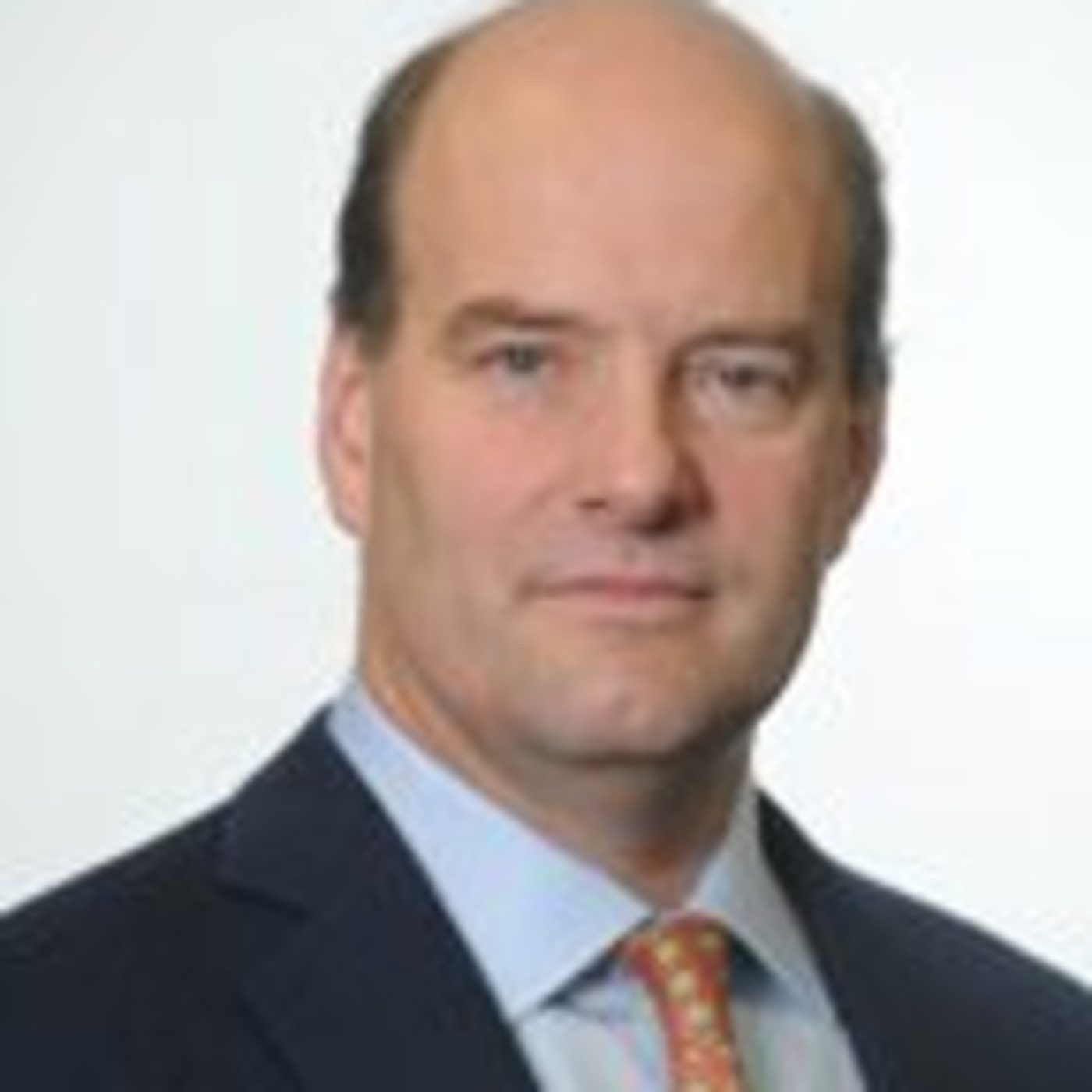
Aoifinn Devitt: Let’s hear how Tanzanian coffee led to a side interest which has now become a focus on investing in African SMEs and some of the ups and downs that come with that adventure. I’m Aoifinn Devitt, and welcome to the 50 Faces Podcast, a podcast committed to revealing the richness and diversity of the world of investment by focusing on its people and their stories. I’m joined today by Michael Timmerman, who is founder and managing partner at Mbuyu Capital Partners, which is an Africa-focused investment boutique focused on financial services and agriculture, as well as Equity for Africa and EFTA, both focused on equipment leasing in Tanzania. He previously held a series of CIO roles across various asset management businesses in the City of London, including Ignis Asset Management, where we met. Welcome, Michael. Thank you for joining me here.
73. Michiel Timmerman: Thank you, Aoifinn, for inviting me. It’s great to be joining the podcast, and I’m so privileged to be in the company of so many interesting speakers.
Aoifinn Devitt: Well, we’re delighted to have you. Look forward to hearing all about your investment strategy now. So let’s start with your journey into the investment world. You can go back to where you were born, where you grew up, and And what took you to Oxford to your DPhil?
73. Michiel Timmerman: I was born in the UK. My parents were Dutch. I lived in Belgium for 12 years, but for the last 40 years, I’ve been based in the UK. So I went to university there in London, and then later I did a DPhil, which is an Oxford PhD. And that was in physiology and biophysics respectively, which I think illustrates the journey of sort of discovery I’ve had ending up investing in Africa, which is a long way away from physiology in Oxford. As I was preparing for the podcast, I thought about sort of motivation, and that’s not really changed over the years. And that’s what led me to do a DPhil, but has also led me to where I am today from the investment career. And that’s really around intellectual curiosity, finding out new things, analysis, and numbers. And that’s really what took me from where I was and where I am today. So having finished my DPhil, I did some further academic research, but actually I decided I wanted to do something a bit more practical and immediate than fundamental research. So I left to go to the city and I joined a strategy consulting group at NatWest Bank, which was providing advice for top management at NatWest. And we had the benefit of many times working with big consultants like McKinsey and Bain on projects. And so that was a great training background. Around because you got to know the senior management very well, but also you worked with some outstanding consultants. And the last consulting project I did was for Coutts. Coutts is a private bank, which is owned by now West Bank, and they were revamping their sort of old style stockbroking investments where effectively you had a bunch of people in London picking stocks for individual clients. And you also had private bankers in Switzerland picking stocks for clients. And although the client had a very similar risk profile in both locations, you might have ended up with a very different portfolio. So the project was around introducing new methods, quantitative asset allocation, and also later on introducing alternative investments. Such as private equity to Coutts’ private clients. So that led me into the investing world. And the CEO at the time then asked me to join the company to implement that new investment process. And then in 1998, we moved into the alternatives business where I co-founded that business, where we started to invest in hedge funds and private equity for our clients. Portfolios. At that time, hedge funds were a niche, and they were limited to very high net worth individuals. There were almost no institutional investors. So that was another great voyage of discovery, going to various parts of the US in particular, in order to look and discover new fund managers and bring the best of those to our investment funds. So that was fascinating. We also launched the first private equity product working with Carlyle Group. And that was really the first time that private equity was brought to private clients who were able to write smaller tickets than usual. And so there we created a diversified portfolio of private equity funds to bring to the Coutts clients. So that was a, at that time, was very much a pioneering approach. And again, a fascinating voyage of discovery, as well as a need to really understand the strategies and to do the work and the numbers to create the product that was going to be lasting and perform.
Aoifinn Devitt: But just going back to your science roots, how do you draw on your science roots or your techniques of scientific analysis in the investing arena?
73. Michiel Timmerman: In the days when I was investing in funds, one of the things you really needed to understand when you’re investing in quantitative funds, which is really where managers use statistical techniques to analyze stock movements or commodity movements, you really needed to understand the maths and statistics to take a judgment on whether the approach the manager was taking was actually robust or whether you were just being spun a marketing story. So that’s at one level. And then at the other level, there is the, again, the more mathematical aspects of asset allocation and risk measurement and achieving portfolio diversification.. And that was obviously something we needed to apply when we constructed portfolios for clients, because what we were trying to do was to get away from the stories, which tended to be the old style of investing to a more rigorous quantitative way of understanding portfolio construction and risk allocation.
Aoifinn Devitt: It’s interesting because there’s been a lot of talk about sort of scientific methods, I think recently in the context of a pandemic, but certainly the basic approach of setting a hypothesis and then finding evidence to support or disprove that hypothesis. I think that approach in investing can be quite helpful as well, not to be so dogmatic about a point of view, to be kind of open to perhaps changing a view and looking at the evidence and seeing how that relates.
73. Michiel Timmerman: Yes, absolutely. And I’d say the investing world has moved a long way since the late ’90s to where we are today. The hugely popular sort of active beta index products are really pure quantitative products based on maths and statistical analysis. So I think the investing world has adopted a much more scientific approach about trying to generate alpha. Not everyone is equally good at it, and even the brightest quantitative minds in investments do learn new things because you have things such as regime shifts where really markets start to behave differently. And then as a consequence, the models which worked so well for many years suddenly stop working and the new lessons need to be incorporated. So I think people are now much more hypothesis-driven, have a much bigger content of scientific analysis. And you’ve also seen that in the large hedge funds. Where funds such as Citadel were very good at combining fundamental stock picking with rigorous quantitative risk control of portfolios. And that’s something which at the moment in the private equity world is used to a much lesser degree. It is still much more of a gut feel, picking good management type of investment approach than is applied to more liquid markets.
Aoifinn Devitt: I was just going to say it’s the classic kind of art versus science approach, perhaps, within private equity. But tied to that, just before we move on to talk about Africa, which I really want to spend a lot of time on, the product you mentioned where you put together for a private client base, private equity portfolios, is that still something that you think makes sense for private clients to have access to private equity in perhaps a pooled way or in a way that is suitable for that client size?
73. Michiel Timmerman: I think private equity is a great diversifier for portfolios. And in markets like Africa, it allows you to access companies which otherwise you would not be able to access through listed markets. And that’s even the case in Europe and the US, where the listed companies are only really the tip of the iceberg, as it were, in terms of investable opportunities. So in principle, private equity, I think, is a great product for private clients. The challenge is getting access and the cost of getting access. And yes, traditionally private equity funds would have a sort of minimum investment size of a million dollars plus, which is well out of the range for most clients because you would want a diversified portfolio of private equity investments. So I think a product whereby you’re able to collect assets from a large number of investors, make those private equity investments, and then allow people to invest with maybe $100,000 or $200,000 for diversified portfolio, I think is a very good way of adding value to private client portfolios. And that’s now moving into the sort of fintech world where there are one or two companies that are doing exactly this and are actually allowing investors to invest in a much smaller size than even $100,000. And similarly, at the sort of even more cutting edge, you’re seeing security token offerings where effectively you’re able to trade private equity exposure, which is a completely illiquid asset class, by trading security tokens. So there’s some quite exciting stuff going on in the private equity world at the moment to make access more democratic.
Aoifinn Devitt: Democratization of private equity indeed. Moving on now to your interest in investing in Africa. When did that first come about and what was it about the the SME sector in particular that led you to believe you could make an impact there?
73. Michiel Timmerman: My involvement in Africa was really because I was an accidental co-founder of a startup in Tanzania all the way back in 2005. So I visited friends in Moshi, which is in Tanzania at the foot of Mount Kilimanjaro, back in 1991. These friends were in the coffee business. Coffee is a very important part of Tanzanian economy and creates a lot of jobs and income for small farmers. They’d been doing some lending with their own money to some SMEs because basically the banks were completely uninterested in SMEs. Here in Europe, the banks get criticized for neglecting SMEs. In Africa, the banks are completely uninterested because they really focus on the large corporates and they can make nice returns. Collecting deposits at low interest rates and investing in local treasuries. We decided that we should look at how we might be able to bring money to, or investment to SMEs in Tanzania in order to give them that access to finance, which they really needed to grow their business and to create jobs. That was the motivation. I, with my two co-founders, started that business. Back in 2005, really as a sort of hobby impact investment. And that’s actually grown since. We did it with a local partner who’s a prominent business person in the Moshi region. And I started with him. I hired the first people and put the processes in place to start to really run a pilot to lend between $1,000 and $5,000. But rather than giving cash, we would buy the equipment. And provide that to the business, and they would then repay us on the back of the equipment revenues which were generated. That worked pretty well because it’s now a business with a $16 million balance sheet and it employs 70 people. We have 8 staff around the country. They’ve done over 1,500 leases since inception. The book is currently about 900 leases and has about 900 clients. Lending.
Aoifinn Devitt: Talk about the pull and the push element of an investment like that. And what I mean by that is, from an investor standpoint, why should they find that interesting? And then the pull side, do many investors grasp the opportunity in Africa? What do you feel in terms of investor sentiment?
73. Michiel Timmerman: The leasing business, EFTA, I would classify that as a deep impact investment. It’s a startup. And really, what it illustrates is the opportunity that exists. In Africa because there are vast parts of the economy where there’s little or no competition, and therefore the opportunity to start a new business with plenty of demand for the product. But the interesting anecdote about the EFTA business was that really what I was doing was sort of planning for failure, i.e., how do you prevent it, but not for success. So actually what that has meant is that I’ve remained involved in this business for the last 15 years. It has been and continues to be sort of a large part of my life because it takes time and it’s great to see it grow. And we actually raised $12 million from a number of investors, including KfW, which is part of the German government, last year to expand that business into Kenya. There we’ve hired 4 staff and again, we’re seeing many opportunities to fund SMEs and we have a particular focus on the agriculture sector. And we focus on SMEs because that’s the engine of the economy. And that’s the sector that creates the jobs and makes a difference to the people on the ground in these countries. US and European investors really overestimate the risks of investing in Africa. And they see Africa as a single country and consider it to be high risk. And obviously the reality is much more nuanced. In that there are 10 or 12 countries which are perfectly investable, provided you have good local knowledge. And at Mbuyo Capital, we focus on those countries. But obviously, good local knowledge is always important. Somehow, developed market investors sort of overlook the nuances in Africa, and also they don’t appear prepared to really make the investment to gain the local knowledge, which is what they would do in countries like France and Spain or Italy. We really see that as our job. And then equally, the US and European investors underestimate the returns available from Africa, and there is very little commercial capital going into the continent. And consequently, there is a strong pipeline of attractive investments. We’ve had a number of good co-investments with, with a very attractive sort of 50% level IRR when we’ve exited those investments. So there are certainly opportunities there.
Aoifinn Devitt: Very meaningful and tangible impact is definitely in evidence there. I would imagine you don’t spend this length of time investing in Africa without a few war stories or a few highs and lows, perhaps, of that experience. Can you share any of those?
73. Michiel Timmerman: At an operational level, it’s dealing with the authorities and the regulators, and in particular, the tax authorities. Pretty much in all African countries, The tax authorities are really difficult to deal with. They take a huge amount of time of the company. And there’s always a dance around tax authorities making a very big assessment of tax. And you then have to fight a significant battle to actually end up with a number which, which is sensible and you can be happy with. So if you think the tax authorities in the UK or the US are tough and hard to deal with, African tax authorities are much more difficult. Regulators can also be tough to deal with. So the leasing business is a regulated business. Most businesses are not regulated. The other sort of tough areas of investing in Africa is around the recruitment side. That is quite country-specific. So countries like Nigeria or Kenya are really good at— there’s a good supply of good quality candidates for a variety of roles. Other sort of countries like Tanzania or Malawi or Zambia, it’s much more difficult to find good quality people. And so here in the West, being able to find the right quality people is sort of more or less taken for granted, but it’s something you really have to think about in Africa because at the end of the day, the quality of the management is what can make or break a company. The other, I guess, tough aspects have been most recently around COVID. The fortunate thing is that Africa has suffered much less from COVID from a sort of disease and mortality point of view, but nevertheless the authorities have taken a lot of measures to prevent the spread of COVID and that has impacted— that’s hit businesses, particularly in the tourism sector, which has just fallen off a cliff. And for a number of countries like Kenya and Tanzania, is really, really important. But also just casual dining, restaurants, hotels have been really hard hit by COVID. Fortunately, we’ve had very few investments in that space, but that’s definitely been difficult. And then from our personal point of view, traveling to Africa is tough. We’d normally be there every 4 to 6 weeks. I’ve been to Kenya twice in the last 6 months, really for sort of essential reasons. Going back and forth is very hard work, but it’s feasible, but it does just slow down the rate at which things get done compared to previously.
Aoifinn Devitt: It seems there are some kind of pockets of surprise as well. I I mean, think you mentioned that the experience of getting a COVID test and getting a QR code uploaded when you were returning from Africa was actually extremely speedy and efficient, far more so than maybe in some other countries. So that, that, that would be a surprise, I suppose.
73. Michiel Timmerman: It is. And there are a number of areas, a lot of them to do with technology, where actually Africa is working very well. As, as you mentioned, when I came back from Nairobi the last time, I got a COVID test done in Nairobi. I got my results back 5 hours later. And the output from that test was automatically uploaded to an African Union portal. The certificate gets uploaded to that. You log into the portal. And there’s your certificate. It generates a QR code. When you go to the airport, you show the QR code and you go through. The great thing that does is also that it— in order to be able to use the portal as a provider, you need to get signed off as an official provider of COVID tests. And clearly, one of the risks you have here in Europe, where the whole thing is unregulated, and you really have no certainty that the provider of the COVID tests is actually a reputable and genuine institution. Using technology overcomes that risk. I mean, Africa has been leading the way in fintech. Safaricom back in 2005—Safaricom is Kenya’s largest mobile company—launched a service called M-Pesa, which allowed you to make payments using your phone instead of cash. And that, you don’t need a smartphone, and that whole system works over using text messages. Subsequently, that whole infrastructure has also spread to other countries in Africa and has really been the backbone also on the investment side for a lot of fintech development and, and is now used to deliver healthcare. It’s used to deliver insurance. You can borrow money using your mobile phone, again, not needing a smartphone. So there’s a lot of innovation going on in, in Africa, which many investors completely ignore or simply don’t realize. And we’re seeing increasing opportunities in that space.
Aoifinn Devitt: Absolutely fascinating area. And we could probably speak for a lot longer, but I just want to go back to some personal questions of your own journey. Looking back at your career and life so far, were there any key people that really made an impression on you and guided you along the way?
73. Michiel Timmerman: On the investment side, I would say my boss at Coutts at the time, back in 1998. He was a very seasoned investment professional. He had a maths PhD, but what he really sort of instilled was around investment responsibility, sticking to your principles when you’re making investments and taking a long view. I’ve seen sort of over the many years I’ve been involved in the investment world, people getting overexcited with particular themes and thinking the world has changed only to then find out a little bit later that the world hasn’t changed quite as as much as they thought it had. Similarly, in terms of the responsibility, it’s around talking to investors and clients and just being honest and open about what’s going on, bringing bad news if that’s necessary, and providing full explanations. So, um, and that’s very much been my investment philosophy and approach, which is to be honest, think about risks, don’t get carried away. But equally, don’t get panicked into making changes if you don’t have a good basis for making a new decision. I think on the Africa side, I’d say would be my two co-founders in the leasing business, because it helped to teach me how different different cultures were or are. And consequently, superficially, you might think, well, you can do something in a country in Africa in this way. Because this is how it’s done in the West. That doesn’t actually work that way. You really need to understand the people. You need to take the trouble to interact, socialize, and be open to learning about how different cultures work. And also not think, well, you’re right, because, because there are many different ways of solving the same problem. And just because it’s done in the West in one particular way doesn’t necessarily mean it’s the only way or even the best way of doing that. So getting that cultural understanding about how other people work and different countries work has been incredibly important to my ability to invest outside the sort of home markets of, of, of the UK and Europe and the US.
Aoifinn Devitt: Is there any creed or motto that you live by, maybe besides the way you approach your investments?
73. Michiel Timmerman: Career advice I give to my children is around when you think about what you want to do career-wise, my motto is to work with people you respect, do a job, and do a job you really enjoy. And provided you do those two, I think that means you will do your job well. And also it means you will end up in a good place because if you have the privilege and the good fortune to be able to make those choices, I think you’ll always end up in a place where you’re motivated. And consequently you perform.
Aoifinn Devitt: Well, thank you, Michael. Your intellectual curiosity really does distinguish you in the industry, and that is not only very impressive, but very stimulating for the rest of us. So thank you for shining a light on areas of investment in a region in the world that we may not otherwise have known much about. Thank you so much for coming here and sharing your insights with us.
73. Michiel Timmerman: Thank you very much. It’s been a real pleasure. Keep up the good work. I mean, the 50 Faces is, I think, is a unique initiative. It’s great to to see you bringing this out from investment professionals around the world. So thank you.
Aoifinn Devitt: I’m Aoifinn Devitt. Thank you for listening to the 50 Faces Podcast. If you liked what you heard and would like to tune in to hear more inspiring investors and their personal journeys, please subscribe on Apple Podcasts or wherever you get your podcasts. This podcast is for informational purposes only and should not be construed as investment advice, and all views are personal and should not be attributed to the organizations and affiliations of the host or any guest.
Aoifinn Devitt: Let’s hear how Tanzanian coffee led to a side interest which has now become a focus on investing in African SMEs and some of the ups and downs that come with that adventure. I’m Aoifinn Devitt, and welcome to the 50 Faces Podcast, a podcast committed to revealing the richness and diversity of the world of investment by focusing on its people and their stories. I’m joined today by Michael Timmerman, who is founder and managing partner at Mbuyu Capital Partners, which is an Africa-focused investment boutique focused on financial services and agriculture, as well as Equity for Africa and EFTA, both focused on equipment leasing in Tanzania. He previously held a series of CIO roles across various asset management businesses in the City of London, including Ignis Asset Management, where we met. Welcome, Michael. Thank you for joining me here.
73. Michiel Timmerman: Thank you, Aoifinn, for inviting me. It’s great to be joining the podcast, and I’m so privileged to be in the company of so many interesting speakers.
Aoifinn Devitt: Well, we’re delighted to have you. Look forward to hearing all about your investment strategy now. So let’s start with your journey into the investment world. You can go back to where you were born, where you grew up, and And what took you to Oxford to your DPhil?
73. Michiel Timmerman: I was born in the UK. My parents were Dutch. I lived in Belgium for 12 years, but for the last 40 years, I’ve been based in the UK. So I went to university there in London, and then later I did a DPhil, which is an Oxford PhD. And that was in physiology and biophysics respectively, which I think illustrates the journey of sort of discovery I’ve had ending up investing in Africa, which is a long way away from physiology in Oxford. As I was preparing for the podcast, I thought about sort of motivation, and that’s not really changed over the years. And that’s what led me to do a DPhil, but has also led me to where I am today from the investment career. And that’s really around intellectual curiosity, finding out new things, analysis, and numbers. And that’s really what took me from where I was and where I am today. So having finished my DPhil, I did some further academic research, but actually I decided I wanted to do something a bit more practical and immediate than fundamental research. So I left to go to the city and I joined a strategy consulting group at NatWest Bank, which was providing advice for top management at NatWest. And we had the benefit of many times working with big consultants like McKinsey and Bain on projects. And so that was a great training background. Around because you got to know the senior management very well, but also you worked with some outstanding consultants. And the last consulting project I did was for Coutts. Coutts is a private bank, which is owned by now West Bank, and they were revamping their sort of old style stockbroking investments where effectively you had a bunch of people in London picking stocks for individual clients. And you also had private bankers in Switzerland picking stocks for clients. And although the client had a very similar risk profile in both locations, you might have ended up with a very different portfolio. So the project was around introducing new methods, quantitative asset allocation, and also later on introducing alternative investments. Such as private equity to Coutts’ private clients. So that led me into the investing world. And the CEO at the time then asked me to join the company to implement that new investment process. And then in 1998, we moved into the alternatives business where I co-founded that business, where we started to invest in hedge funds and private equity for our clients. Portfolios. At that time, hedge funds were a niche, and they were limited to very high net worth individuals. There were almost no institutional investors. So that was another great voyage of discovery, going to various parts of the US in particular, in order to look and discover new fund managers and bring the best of those to our investment funds. So that was fascinating. We also launched the first private equity product working with Carlyle Group. And that was really the first time that private equity was brought to private clients who were able to write smaller tickets than usual. And so there we created a diversified portfolio of private equity funds to bring to the Coutts clients. So that was a, at that time, was very much a pioneering approach. And again, a fascinating voyage of discovery, as well as a need to really understand the strategies and to do the work and the numbers to create the product that was going to be lasting and perform.
Aoifinn Devitt: But just going back to your science roots, how do you draw on your science roots or your techniques of scientific analysis in the investing arena?
73. Michiel Timmerman: In the days when I was investing in funds, one of the things you really needed to understand when you’re investing in quantitative funds, which is really where managers use statistical techniques to analyze stock movements or commodity movements, you really needed to understand the maths and statistics to take a judgment on whether the approach the manager was taking was actually robust or whether you were just being spun a marketing story. So that’s at one level. And then at the other level, there is the, again, the more mathematical aspects of asset allocation and risk measurement and achieving portfolio diversification.. And that was obviously something we needed to apply when we constructed portfolios for clients, because what we were trying to do was to get away from the stories, which tended to be the old style of investing to a more rigorous quantitative way of understanding portfolio construction and risk allocation.
Aoifinn Devitt: It’s interesting because there’s been a lot of talk about sort of scientific methods, I think recently in the context of a pandemic, but certainly the basic approach of setting a hypothesis and then finding evidence to support or disprove that hypothesis. I think that approach in investing can be quite helpful as well, not to be so dogmatic about a point of view, to be kind of open to perhaps changing a view and looking at the evidence and seeing how that relates.
73. Michiel Timmerman: Yes, absolutely. And I’d say the investing world has moved a long way since the late ’90s to where we are today. The hugely popular sort of active beta index products are really pure quantitative products based on maths and statistical analysis. So I think the investing world has adopted a much more scientific approach about trying to generate alpha. Not everyone is equally good at it, and even the brightest quantitative minds in investments do learn new things because you have things such as regime shifts where really markets start to behave differently. And then as a consequence, the models which worked so well for many years suddenly stop working and the new lessons need to be incorporated. So I think people are now much more hypothesis-driven, have a much bigger content of scientific analysis. And you’ve also seen that in the large hedge funds. Where funds such as Citadel were very good at combining fundamental stock picking with rigorous quantitative risk control of portfolios. And that’s something which at the moment in the private equity world is used to a much lesser degree. It is still much more of a gut feel, picking good management type of investment approach than is applied to more liquid markets.
Aoifinn Devitt: I was just going to say it’s the classic kind of art versus science approach, perhaps, within private equity. But tied to that, just before we move on to talk about Africa, which I really want to spend a lot of time on, the product you mentioned where you put together for a private client base, private equity portfolios, is that still something that you think makes sense for private clients to have access to private equity in perhaps a pooled way or in a way that is suitable for that client size?
73. Michiel Timmerman: I think private equity is a great diversifier for portfolios. And in markets like Africa, it allows you to access companies which otherwise you would not be able to access through listed markets. And that’s even the case in Europe and the US, where the listed companies are only really the tip of the iceberg, as it were, in terms of investable opportunities. So in principle, private equity, I think, is a great product for private clients. The challenge is getting access and the cost of getting access. And yes, traditionally private equity funds would have a sort of minimum investment size of a million dollars plus, which is well out of the range for most clients because you would want a diversified portfolio of private equity investments. So I think a product whereby you’re able to collect assets from a large number of investors, make those private equity investments, and then allow people to invest with maybe $100,000 or $200,000 for diversified portfolio, I think is a very good way of adding value to private client portfolios. And that’s now moving into the sort of fintech world where there are one or two companies that are doing exactly this and are actually allowing investors to invest in a much smaller size than even $100,000. And similarly, at the sort of even more cutting edge, you’re seeing security token offerings where effectively you’re able to trade private equity exposure, which is a completely illiquid asset class, by trading security tokens. So there’s some quite exciting stuff going on in the private equity world at the moment to make access more democratic.
Aoifinn Devitt: Democratization of private equity indeed. Moving on now to your interest in investing in Africa. When did that first come about and what was it about the the SME sector in particular that led you to believe you could make an impact there?
73. Michiel Timmerman: My involvement in Africa was really because I was an accidental co-founder of a startup in Tanzania all the way back in 2005. So I visited friends in Moshi, which is in Tanzania at the foot of Mount Kilimanjaro, back in 1991. These friends were in the coffee business. Coffee is a very important part of Tanzanian economy and creates a lot of jobs and income for small farmers. They’d been doing some lending with their own money to some SMEs because basically the banks were completely uninterested in SMEs. Here in Europe, the banks get criticized for neglecting SMEs. In Africa, the banks are completely uninterested because they really focus on the large corporates and they can make nice returns. Collecting deposits at low interest rates and investing in local treasuries. We decided that we should look at how we might be able to bring money to, or investment to SMEs in Tanzania in order to give them that access to finance, which they really needed to grow their business and to create jobs. That was the motivation. I, with my two co-founders, started that business. Back in 2005, really as a sort of hobby impact investment. And that’s actually grown since. We did it with a local partner who’s a prominent business person in the Moshi region. And I started with him. I hired the first people and put the processes in place to start to really run a pilot to lend between $1,000 and $5,000. But rather than giving cash, we would buy the equipment. And provide that to the business, and they would then repay us on the back of the equipment revenues which were generated. That worked pretty well because it’s now a business with a $16 million balance sheet and it employs 70 people. We have 8 staff around the country. They’ve done over 1,500 leases since inception. The book is currently about 900 leases and has about 900 clients. Lending.
Aoifinn Devitt: Talk about the pull and the push element of an investment like that. And what I mean by that is, from an investor standpoint, why should they find that interesting? And then the pull side, do many investors grasp the opportunity in Africa? What do you feel in terms of investor sentiment?
73. Michiel Timmerman: The leasing business, EFTA, I would classify that as a deep impact investment. It’s a startup. And really, what it illustrates is the opportunity that exists. In Africa because there are vast parts of the economy where there’s little or no competition, and therefore the opportunity to start a new business with plenty of demand for the product. But the interesting anecdote about the EFTA business was that really what I was doing was sort of planning for failure, i.e., how do you prevent it, but not for success. So actually what that has meant is that I’ve remained involved in this business for the last 15 years. It has been and continues to be sort of a large part of my life because it takes time and it’s great to see it grow. And we actually raised $12 million from a number of investors, including KfW, which is part of the German government, last year to expand that business into Kenya. There we’ve hired 4 staff and again, we’re seeing many opportunities to fund SMEs and we have a particular focus on the agriculture sector. And we focus on SMEs because that’s the engine of the economy. And that’s the sector that creates the jobs and makes a difference to the people on the ground in these countries. US and European investors really overestimate the risks of investing in Africa. And they see Africa as a single country and consider it to be high risk. And obviously the reality is much more nuanced. In that there are 10 or 12 countries which are perfectly investable, provided you have good local knowledge. And at Mbuyo Capital, we focus on those countries. But obviously, good local knowledge is always important. Somehow, developed market investors sort of overlook the nuances in Africa, and also they don’t appear prepared to really make the investment to gain the local knowledge, which is what they would do in countries like France and Spain or Italy. We really see that as our job. And then equally, the US and European investors underestimate the returns available from Africa, and there is very little commercial capital going into the continent. And consequently, there is a strong pipeline of attractive investments. We’ve had a number of good co-investments with, with a very attractive sort of 50% level IRR when we’ve exited those investments. So there are certainly opportunities there.
Aoifinn Devitt: Very meaningful and tangible impact is definitely in evidence there. I would imagine you don’t spend this length of time investing in Africa without a few war stories or a few highs and lows, perhaps, of that experience. Can you share any of those?
73. Michiel Timmerman: At an operational level, it’s dealing with the authorities and the regulators, and in particular, the tax authorities. Pretty much in all African countries, The tax authorities are really difficult to deal with. They take a huge amount of time of the company. And there’s always a dance around tax authorities making a very big assessment of tax. And you then have to fight a significant battle to actually end up with a number which, which is sensible and you can be happy with. So if you think the tax authorities in the UK or the US are tough and hard to deal with, African tax authorities are much more difficult. Regulators can also be tough to deal with. So the leasing business is a regulated business. Most businesses are not regulated. The other sort of tough areas of investing in Africa is around the recruitment side. That is quite country-specific. So countries like Nigeria or Kenya are really good at— there’s a good supply of good quality candidates for a variety of roles. Other sort of countries like Tanzania or Malawi or Zambia, it’s much more difficult to find good quality people. And so here in the West, being able to find the right quality people is sort of more or less taken for granted, but it’s something you really have to think about in Africa because at the end of the day, the quality of the management is what can make or break a company. The other, I guess, tough aspects have been most recently around COVID. The fortunate thing is that Africa has suffered much less from COVID from a sort of disease and mortality point of view, but nevertheless the authorities have taken a lot of measures to prevent the spread of COVID and that has impacted— that’s hit businesses, particularly in the tourism sector, which has just fallen off a cliff. And for a number of countries like Kenya and Tanzania, is really, really important. But also just casual dining, restaurants, hotels have been really hard hit by COVID. Fortunately, we’ve had very few investments in that space, but that’s definitely been difficult. And then from our personal point of view, traveling to Africa is tough. We’d normally be there every 4 to 6 weeks. I’ve been to Kenya twice in the last 6 months, really for sort of essential reasons. Going back and forth is very hard work, but it’s feasible, but it does just slow down the rate at which things get done compared to previously.
Aoifinn Devitt: It seems there are some kind of pockets of surprise as well. I I mean, think you mentioned that the experience of getting a COVID test and getting a QR code uploaded when you were returning from Africa was actually extremely speedy and efficient, far more so than maybe in some other countries. So that, that, that would be a surprise, I suppose.
73. Michiel Timmerman: It is. And there are a number of areas, a lot of them to do with technology, where actually Africa is working very well. As, as you mentioned, when I came back from Nairobi the last time, I got a COVID test done in Nairobi. I got my results back 5 hours later. And the output from that test was automatically uploaded to an African Union portal. The certificate gets uploaded to that. You log into the portal. And there’s your certificate. It generates a QR code. When you go to the airport, you show the QR code and you go through. The great thing that does is also that it— in order to be able to use the portal as a provider, you need to get signed off as an official provider of COVID tests. And clearly, one of the risks you have here in Europe, where the whole thing is unregulated, and you really have no certainty that the provider of the COVID tests is actually a reputable and genuine institution. Using technology overcomes that risk. I mean, Africa has been leading the way in fintech. Safaricom back in 2005—Safaricom is Kenya’s largest mobile company—launched a service called M-Pesa, which allowed you to make payments using your phone instead of cash. And that, you don’t need a smartphone, and that whole system works over using text messages. Subsequently, that whole infrastructure has also spread to other countries in Africa and has really been the backbone also on the investment side for a lot of fintech development and, and is now used to deliver healthcare. It’s used to deliver insurance. You can borrow money using your mobile phone, again, not needing a smartphone. So there’s a lot of innovation going on in, in Africa, which many investors completely ignore or simply don’t realize. And we’re seeing increasing opportunities in that space.
Aoifinn Devitt: Absolutely fascinating area. And we could probably speak for a lot longer, but I just want to go back to some personal questions of your own journey. Looking back at your career and life so far, were there any key people that really made an impression on you and guided you along the way?
73. Michiel Timmerman: On the investment side, I would say my boss at Coutts at the time, back in 1998. He was a very seasoned investment professional. He had a maths PhD, but what he really sort of instilled was around investment responsibility, sticking to your principles when you’re making investments and taking a long view. I’ve seen sort of over the many years I’ve been involved in the investment world, people getting overexcited with particular themes and thinking the world has changed only to then find out a little bit later that the world hasn’t changed quite as as much as they thought it had. Similarly, in terms of the responsibility, it’s around talking to investors and clients and just being honest and open about what’s going on, bringing bad news if that’s necessary, and providing full explanations. So, um, and that’s very much been my investment philosophy and approach, which is to be honest, think about risks, don’t get carried away. But equally, don’t get panicked into making changes if you don’t have a good basis for making a new decision. I think on the Africa side, I’d say would be my two co-founders in the leasing business, because it helped to teach me how different different cultures were or are. And consequently, superficially, you might think, well, you can do something in a country in Africa in this way. Because this is how it’s done in the West. That doesn’t actually work that way. You really need to understand the people. You need to take the trouble to interact, socialize, and be open to learning about how different cultures work. And also not think, well, you’re right, because, because there are many different ways of solving the same problem. And just because it’s done in the West in one particular way doesn’t necessarily mean it’s the only way or even the best way of doing that. So getting that cultural understanding about how other people work and different countries work has been incredibly important to my ability to invest outside the sort of home markets of, of, of the UK and Europe and the US.
Aoifinn Devitt: Is there any creed or motto that you live by, maybe besides the way you approach your investments?
73. Michiel Timmerman: Career advice I give to my children is around when you think about what you want to do career-wise, my motto is to work with people you respect, do a job, and do a job you really enjoy. And provided you do those two, I think that means you will do your job well. And also it means you will end up in a good place because if you have the privilege and the good fortune to be able to make those choices, I think you’ll always end up in a place where you’re motivated. And consequently you perform.
Aoifinn Devitt: Well, thank you, Michael. Your intellectual curiosity really does distinguish you in the industry, and that is not only very impressive, but very stimulating for the rest of us. So thank you for shining a light on areas of investment in a region in the world that we may not otherwise have known much about. Thank you so much for coming here and sharing your insights with us.
73. Michiel Timmerman: Thank you very much. It’s been a real pleasure. Keep up the good work. I mean, the 50 Faces is, I think, is a unique initiative. It’s great to to see you bringing this out from investment professionals around the world. So thank you.
Aoifinn Devitt: I’m Aoifinn Devitt. Thank you for listening to the 50 Faces Podcast. If you liked what you heard and would like to tune in to hear more inspiring investors and their personal journeys, please subscribe on Apple Podcasts or wherever you get your podcasts. This podcast is for informational purposes only and should not be construed as investment advice, and all views are personal and should not be attributed to the organizations and affiliations of the host or any guest.