Aoifinn Devitt: This podcast was made possible by the kind support of Alvine Capital Management, a London-based specialist investment advisor and placement boutique.
William: You don’t start something and quit it.
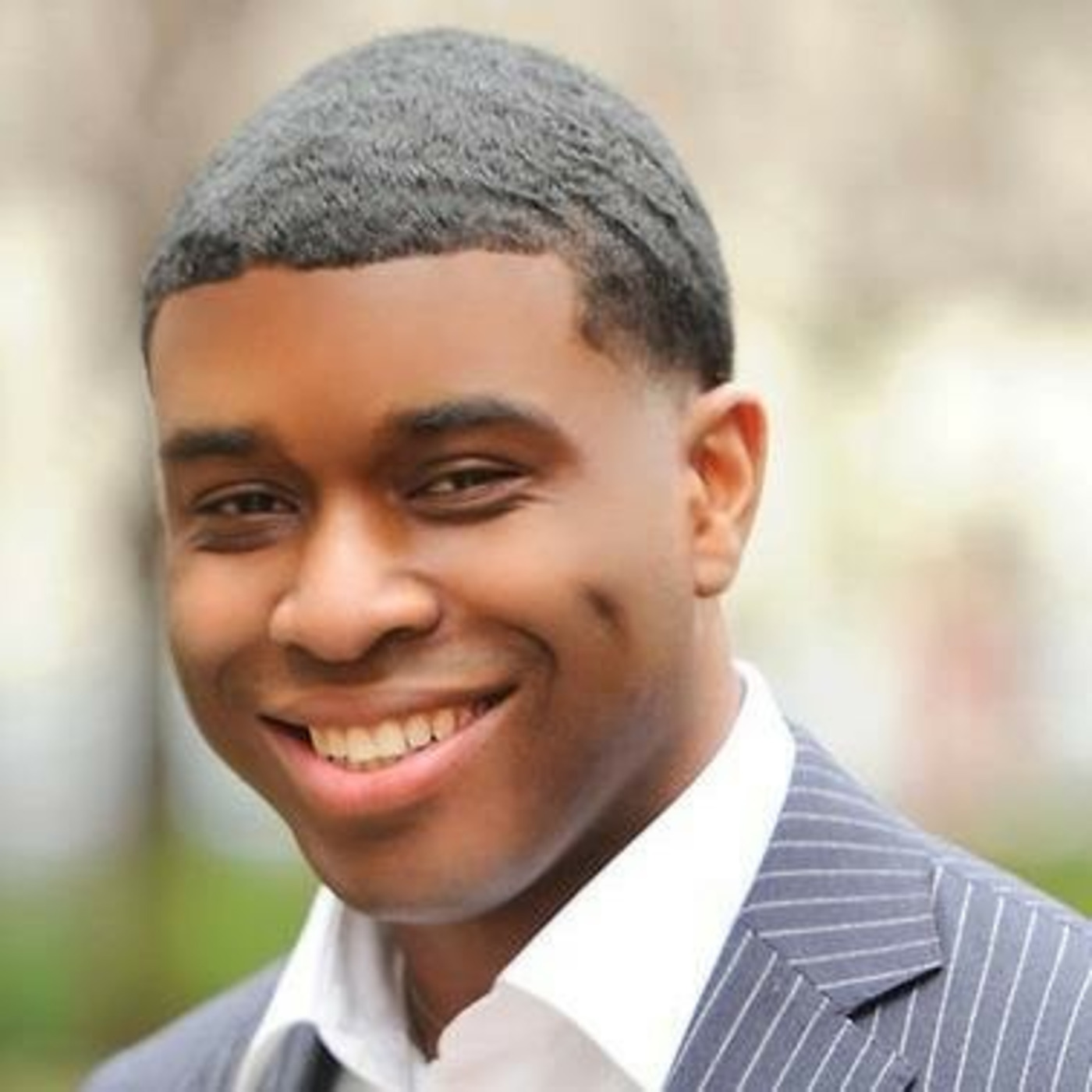
Aoifinn Devitt: Our next guest founded his hedge fund firm in his early 20s and is a self-described natural introvert. Let’s hear how a process that focuses on debates, not screens, and on scrutinizing what management does versus what they say have helped him to stay the course. I’m Aoifinn Devitt, and welcome to the 50 Faces Podcast, a podcast committed to revealing the richness and diversity of the world of investment by focusing on its people and their stories. I’m joined today by William Hurd, who is the founder and CIO of Hurd Capital, a Chicago-based hedge fund firm that he founded when he was in his 20s, and where he is distinguished by a high conviction concentrated investment style. He was recently named one of Fortune’s 40 Under 40 in the finance sector. Welcome, William. Thank you for joining me today.
William: Thank you, Aoifinn.
Aoifinn Devitt: Let’s start with talking about your background. Where did you grow up and what drove your interest in finance and investment?
William: Sure. So I grew up in Milwaukee, Wisconsin, oldest of 3 boys. I think what drove my initial interest was, you know, an experience I had at a bat mitzvah where someone sort of explained to me that stock certificate was ownership in a larger entity. And just being good at math, that didn’t make a whole lot of sense to me. So once I started to unpack that and ask questions, it became something that I gravitated toward early and have never really stopped thinking about since then.
Aoifinn Devitt: Did you then take that into studying finance or economics at university and moving into the traditional Wall Street-style firm?
William: Sure, so my path was a little different. I worked sort of high school all the way through college, you know, Monday, Wednesday, Friday, and I took a lot of econ, psychology classes in large part to understand like how people were thinking about the world and markets and then use that as sort of the basis for starting an applied investment management program that I thought combined both the behavioral elements of investing with sort of the finance aspects. So students were able to manage a piece of the endowment, and I thought that was a better way of learning the art of investing. From there, you know, through a series of internships, got to meet some folks on the buy side. Thought I originally be an investment banker, but was able to start my career at Stark, which at the time was a a multi-strat, learned everything from a creditor’s perspective and sort of with the lens of a credit analyst, and then sort of evolved into an equity investor as the firm grew into a multi-strat. So I think it was a combination of experiences as opposed to just like A, B, C, D, E, F, G, and the ultimate Z. It was basically like learning, thinking, and being decisive about like what made sense for me given what given that I knew that this is what I wanted to do from that point on.
Aoifinn Devitt: And when it came to your thought process behind setting up your own firm, can you just walk us through that? Because you did do that at quite a young age.
William: Yeah, so the thought process, I guess, like, it it was, was like investing. Like, I thought, like, my risk-reward sort of in life was better if I was able to start when the market was way, way down post the Great Financial Crisis. And then I think like the genesis for realizing that this was my moment in time or that this was a good place to start was, you know, I had taken a dual path to business school. I attended the University of Chicago, just didn’t finish. And I used that sort of experience sort of as a hedge, but more importantly, to apply some discipline and begin the process of capital formation and really trying to raise more money to invest. I knew that I didn’t want to switch careers. And again, like the risk reward, just given where the market was relative to the experience I had and what I wanted to do for the rest of my life, everything sort of just aligned. So raised $2 million, found marketing frustrating, and just really decided sort of once I got around $20 million that I’d protect the track record, take more of a milestone approach to building it, hiring, And that’s sort of the business plan that we’ve executed upon. And it’ll be, what, I think a decade in July of 2021. So no regrets, but certainly the path wasn’t linear.
Aoifinn Devitt: And when you talk about protecting capital, did you then close the fund at $20 million in order to consolidate? And as you said, really focus on getting a good track record with that capital?
William: So I didn’t close. I think I just wasn’t as aggressive in telling the story. I had a base of capital from some Chicago families, folks that knew one person that was on my board, Mr. Canning. And I think because of him, I was able to attract more assets. But I think being a natural introvert, for me, it was all about returns and meritocracy and less about the story. And I underestimated how that all fit into one situation for people. So I think I just did the thing that I probably the best at, and that was the investing. You know, that’s sort of how it all came about. But I did not close. It was more of a pause and sort of just focusing on the track record at that point.
Aoifinn Devitt: And obviously, there are barriers to entry when you have any startup situation. And I actually think they’ve probably risen over time as regulation has increased and just general, the minimum level of capital needed probably has increased. And you’ve probably seen that over the decade. What has been key for you maintaining your resolve to stay independent, to stay on your own? Has it been that the partners you have? Has it been just your own personality?
William: So I think it’s been a combination. I think like the people that were there early, you don’t want to let them down. They took a bet on you, and I think it’s natural to want to make sure that you prove them right. I think my parents instilled in me a great amount of determination. Like, when you say you’re gonna do something, you do it. And I also knew that in the context of both independence, autonomy, and ownership, and the opportunity to create wealth. Like, you know, I had a good start. Like, I was able to raise, you know, a good amount, I thought, you know, having not known a lot of those people that signed up day one. I had stable capital. So for me, I think to your point, obviously it’s gotten a lot harder, I guess, 10 years from that starting point, just given the regulation and all the things that I think allocators expect you to have, it certainly made it harder. But I think when you start off with a business plan and you’re able to have people challenging in real time, it keeps you focused on what’s in your control. And I knew the performance was. And also in my mind, I started the firm at a point in my life where I was young enough to really, really give it my undivided attention. I didn’t have any of the other sort of just things that come along with life, be it a family or kids or anything like that. So I just felt like I had a clear path that was more about executing and making sure that I put the time and attention into it. And again, like, you just don’t start something and quit it. That’s just sort of how I was raised.
Aoifinn Devitt: Thank you for that. And just moving to your investing style, I’ve read a few articles which speak about your focus on management. You’ve spoken before little more a bit about your study of psychology. And I know you’ve mentioned your focus on management’s say-do ratio. So, I guess, what they say versus what they do. Can you talk a little bit more about that and how you think that may have given you an edge in analysis?
William: Yeah, so the say-to-do ratio, I think, is basically like stepping back, right? And it’s like, if you assume that you’re CEO, the CFO, and the person, sort of the chief marketing officer, IR, it’s like, What’s within your control that you can quantify, articulate, and sort of repeat as it relates to like the strategy and like where a company is going? We have that in place before we allocate capital. Like literally what I’m doing is comparing it to what the management teams like actually do. The bigger the gap from what I believe makes logical fundamental sense relative to what the management team has said, that’s room for pause and like really sort of an intense underwriting or re-underwriting of like asking like, how and why did we get here? Are they making the right decisions going forward? So it’s sort of like my combination of the private equity approach to public markets. And what I’m trying to do is support like a fact pattern or strategy that management articulated relative to like what I would do. So it’s a pretty important piece of our process just because I think behaviorally like incentives are pretty well understood. But I think when it comes to the fundamentals, I mean, just given how like markets work, expectations are extremely important. And that’s where that say-to-do ratio sort of fits in to the fundamental work that we do on our side.
Aoifinn Devitt: And what happens when the plans and maybe the fact patterns get thrown out the window, such as in the aftermath of COVID Do you have to then kind of re-underwrite real time, kind of reassess expectations real time?
William: Yeah, so our process is driven by debates versus like screens. So all that means is I believe that situations that we’re in, the market’s trying to solve or get an answer to something. So in the case of like COVID, when it hit, management teams I think did the right thing in like taking sort of guidance out of the picture, therefore trying to lower expectations. But that also allowed us the opportunity to like step back and like compare sort of what management teams were doing versus other management teams with sort of like no guideposts. And really what you got to see was, I think the better management teams were very good at like framing what they believed to be the relevant issues that really mattered, like going forward, as opposed to those that weren’t as so good. They kept focusing on what they didn’t know. And I think those that inspired confidence were like, hey, like this is what we don’t know, but this is what we’re doing about what we do know. Thinking about those, thinking about COVID in hindsight, there were certainly like a lot of unknown unknowns, but I think as they got more information, they were like crystal clear and sort of framing it, quantifying it, and making sure that they were on the right side of expectations despite the anchoring effect of traditional guidance being gone. So 2020 was unique. We learned a lot. I think it made our investment process better.. And I think from an industry standpoint, it allows you the flexibility to like really think about managing teams and their strategies. Does it make sense like going forward or is it something that is it, or is a strategy that’s just not sustainable? So it was an interesting time, but I think we learned a lot and we typically have a bias for industrials, which allows you to put pieces together a little bit more efficiently. And I think as a result of that, We made some good decisions in the portfolio that will benefit folks for the long term.
Aoifinn Devitt: And I know you said you don’t look at screens and you’re not a top-down investor as such, but just say if you look at the arc of market movement in 2020, did that take you by surprise, the way markets continue to be strong despite some of the pain on Main Street?
William: Absolutely. Obviously, I think the Fed’s sort of voice in all the chaos certainly mattered. But we were surprised certainly just given the broader degree of multiple expansion that was caused or just as all asset classes were sort of kind of everything rose. It was an interesting time. It’ll be interesting to see how the Fed pivots their way out of this situation as fundamental frameworks and guidance comes back into the picture, how that all fits. Or how that all like will make for an interesting backdrop going forward. But I do feel good as a stock picker that despite everything rising, it seems while it’s early this year, there’s definitely more breadth. 5 stocks don’t seem to be leading like every single index, and fundamentals appear to have mattered a little bit more in this last earnings season. Versus some of the macro inputs. Exciting time.
Aoifinn Devitt: So you speak about your say-do ratio, and in investment we have a concept of the, the win-loss ratio. If you look back at some maybe investment mistakes that you’ve made, what have been some lessons learned, or ultimately for your team, that you’ve taken out of some investment mistakes?
William: So we’re big believers in like writing down as much as we can, studying and having like third parties, be it the two data scientist teams that we leverage in Kiskey and Novus, and then another partner we’ve added recently, Alpha Theory, that helps us go back, look at sizing before or after moments in time and over the long term. And again, it’s taking a data-driven approach, studying like good, the bad, different environments, really coming up with like frameworks to like think through things as opposed to like become paralyzed because something moves against you. I’m a big believer in sort of the, both the pre-mortem and a post-mortem analysis. I think writing things down, you understand if the other side really believes in like what they’re saying. When you force a person to write it down and when you can ask the other side internally, at least, and even externally, like, what’s the probability of X? I think that’s where you learn a lot from your process in hindsight. So I think those are all things that we try to blend in, but certainly the writing, the pre-mortem analysis, the good and bad. Third-party observations from the data teams that we’ve engaged. And then another part of our risk management process and the desire to get better is that Joe, my head of risk, and I have separate conversations with all three parties so that we’re armed and we can actively listen without sort of being focused on what feels good for the portfolio. We can go into what’s the data-driven solution to answering that question. And therefore, hopefully not making the same mistake again.
Aoifinn Devitt: And just in terms of your use of data through some of these providers, there’s been an explosion in, I suppose, the amount of data that’s available to analyze. Have you found that that’s enhanced your process, just having access to even more data?
William: I think it’s understanding what’s useful as opposed to like what’s just data. We always focus on what’s actionable. I typically start off most of my discussions with, forcing people to tell me what they want to do and then using the data to support that, as opposed to like sometimes you can be in a conversation, you’re looking for consensus as you’re talking about something. I believe when you’ve had the time to do the research, think independently, you should be able to start off with what you want to do and then use sort of the data to support that decision going forward. Again, I think we’re good listeners. We know we have frameworks to think about what are the key inputs into that framework.. And we know how to like stress test them consistently with the belief that if you have a framework and a process, you should be able to derive different use cases in different environments to do better and better and better, or to prevent the same mistakes being made time and time again. So be it your cell discipline or sizing, those are all sort of inputs or like lessons learned from some of the data tools that we built over time.
Aoifinn Devitt: And when you look back at your career and your journey so far, were there any key people who had an influence on you and in what way?
William: Yeah, so I mean, like my parents, grandparents, that determination. Markets are unique in the sense that it’s about a meritocracy. Every day you know what the score is. There’s no hiding. It’s math. I’ve always gravitated toward that sort of back pattern. The board members, Mr. Cannon in particular, You know, he’s extremely supportive, always made the time. I think I built a better business or something that can last because of his input early. Folks have supported me when just with their time. And again, just taking the time when they didn’t have to, to really help me think things through on the business side. You know, Robert, obviously an icon. I think certainly like embedded in me the desire to like think about everything twice and invest in a lot of our LPs. I think we’re fortunate to have a good group of partners that care about both the firm, their returns, like, and our success. I feel like it’s not— those feedback loops are constant, and they know that we care a lot about what goes into the process and getting better. But those would be sort of the four pillars of how I think about, like, my success. As a portfolio manager and human.
Aoifinn Devitt: And as far as any creed or motto that you let guide you through your life, is there anything that comes to mind?
William: Yeah, I mean, like, our logo is Nimble, Thoughtful, Deliberate. That’s my one stroke of marketing genius, I guess. But I think there’s this poem by D.H. Lawrence: I never saw a wild thing sorry for itself. A bird will drop frozen dead without never having known it. Markets provide that clarity. You can get so deep into, like, a situation you forget sometimes what you’re doing, but that’s why it’s not work. And I look at markets as like a giant puzzle. No day’s the same. And I love the fact in that chaos you find like pockets of like alpha, I guess. But more importantly, you see something that people might have missed or something that people have forgotten is more important in the details of doing the work. So I love markets for like providing that. For me. And I feel like that’s sort of a poem that I oftentimes think about as I’m doing research. I feel like I’m where I need to be and it’s in markets.
Aoifinn Devitt: And do you think just looking at the financial world, the investment world, that it offers the diversity that you think it should, that it is as diverse as it needs to be?
William: No, this would be the short answer. It can’t be. The math supports that, that can’t be the conclusion.
Aoifinn Devitt: No, I should say it’s interesting when you speak about your path into markets, it’s clear that you had, I suppose that your windows were opened in terms of enjoying math, looking at stock ownership, et cetera. And my perception when I work with a number of SAIS students, and I have had some students in breakout rooms here speaking about their perception of the investment industry, is that the investment industry does quite a bad job at making itself accessible. Doesn’t even reveal the I sheer, suppose, variety of roles that can be done in it. And I think it does a pretty bad sales job of itself, actually. And so you were lucky that you saw something that sparked your interest, but I think it’s not for everyone.
William: Yeah, I was lucky. I was extremely lucky. And I realized that, and that’s why we try to like do our best to create experiences and show kids that there is another— there is a different world. I remember the first time I went to New York, it was like a different country. I absolutely agree that I think it’s a matter of access and creating experiences and showing young kids that this is how the pieces fit together to pursue something in capital markets. And I also think it’s why it’s an industry where you have to opt into it. You have to be willing to put in the time early. And I was fortunate for someone to give me that exposure. And that’s literally why I worked from high school, from the moment I could, all the way through college to hang on to that experience and make the most of it. I absolutely agree with your assessment. We do our small part in trying to show folks that, or young kids particularly, that this career exists and what it requires. A lot of the experiences that young kids, particularly like in inner cities, like go through would make them amazing at this job. All the decisions they have to make, the reading, people, all those things I think behaviorally make a young person particularly, like I said, from a not so nice neighborhood, perhaps very good at this.
Aoifinn Devitt: That’s a really interesting observation because I think one might say someone is street smart, perhaps. But usually what being street smart means to me is a bit of skepticism, a bit of not believing the first thing you’re sold or the first thing you’re told. And it seems that in investment and analysis, especially credit analysis, a lot of skepticism is required. And probably that those are skills that actually we need to be— we need more of in the financial industry. My last question is around any advice you would have for your younger self. I don’t think you’re going back that far, but if you were, say, to go back to that college student in Milwaukee, what would you say to yourself? Is there anything you know now that you wish you had known then?
William: I mean, everything takes longer. I think you have to be extremely patient assuming this is a career you choose to embark upon. It’s certainly harder than it was 10 years ago. I think the earlier you can build sort of, you know, a depth of like self-awareness, I think like, and figure out what you’re really, really bad at and try to like build that up, the better you’ll be. And I’ve always been taught to do more listening than talking. Learning how to actively listen, I think, is a skill that I’m continuing to try to get better at. So those would be sort of That’s some of the advice that I give my younger self.
Aoifinn Devitt: Well, thank you so much for that. And I think a lot of what you said is some of, unfortunately, some of that depends on having both people who are actively willing to give feedback to young people, because often we can’t be reflective enough to see our flaws, but a little bit of engagement in terms of the people we work with can often be helpful on the feedback side. So I think that that’s a good reminder to those of us who are more senior to keep giving feedback down the chain. Well, thank you so much, William. You really are a breath of fresh air in the industry. Thank you for your honesty and for, for this for this very candid discussion and for sharing your insights here with us.
William: Yeah, and thank you. And it was a pleasure speaking with you today.
Aoifinn Devitt: I’m Aoifinn Devitt. Thank you for listening to the 50 Faces podcast. If you liked what you heard and would like to tune in to hear more inspiring investors and their personal journeys, please subscribe on Apple Podcasts or wherever you get your podcasts. This podcast is for informational purposes only and should not be construed as investment advice, and all views are personal and should not be attributed to the organizations and affiliations of the host or any guest.
Aoifinn Devitt: This podcast was made possible by the kind support of Alvine Capital Management, a London-based specialist investment advisor and placement boutique.
William: You don’t start something and quit it.
Aoifinn Devitt: Our next guest founded his hedge fund firm in his early 20s and is a self-described natural introvert. Let’s hear how a process that focuses on debates, not screens, and on scrutinizing what management does versus what they say have helped him to stay the course. I’m Aoifinn Devitt, and welcome to the 50 Faces Podcast, a podcast committed to revealing the richness and diversity of the world of investment by focusing on its people and their stories. I’m joined today by William Hurd, who is the founder and CIO of Hurd Capital, a Chicago-based hedge fund firm that he founded when he was in his 20s, and where he is distinguished by a high conviction concentrated investment style. He was recently named one of Fortune’s 40 Under 40 in the finance sector. Welcome, William. Thank you for joining me today.
William: Thank you, Aoifinn.
Aoifinn Devitt: Let’s start with talking about your background. Where did you grow up and what drove your interest in finance and investment?
William: Sure. So I grew up in Milwaukee, Wisconsin, oldest of 3 boys. I think what drove my initial interest was, you know, an experience I had at a bat mitzvah where someone sort of explained to me that stock certificate was ownership in a larger entity. And just being good at math, that didn’t make a whole lot of sense to me. So once I started to unpack that and ask questions, it became something that I gravitated toward early and have never really stopped thinking about since then.
Aoifinn Devitt: Did you then take that into studying finance or economics at university and moving into the traditional Wall Street-style firm?
William: Sure, so my path was a little different. I worked sort of high school all the way through college, you know, Monday, Wednesday, Friday, and I took a lot of econ, psychology classes in large part to understand like how people were thinking about the world and markets and then use that as sort of the basis for starting an applied investment management program that I thought combined both the behavioral elements of investing with sort of the finance aspects. So students were able to manage a piece of the endowment, and I thought that was a better way of learning the art of investing. From there, you know, through a series of internships, got to meet some folks on the buy side. Thought I originally be an investment banker, but was able to start my career at Stark, which at the time was a a multi-strat, learned everything from a creditor’s perspective and sort of with the lens of a credit analyst, and then sort of evolved into an equity investor as the firm grew into a multi-strat. So I think it was a combination of experiences as opposed to just like A, B, C, D, E, F, G, and the ultimate Z. It was basically like learning, thinking, and being decisive about like what made sense for me given what given that I knew that this is what I wanted to do from that point on.
Aoifinn Devitt: And when it came to your thought process behind setting up your own firm, can you just walk us through that? Because you did do that at quite a young age.
William: Yeah, so the thought process, I guess, like, it it was, was like investing. Like, I thought, like, my risk-reward sort of in life was better if I was able to start when the market was way, way down post the Great Financial Crisis. And then I think like the genesis for realizing that this was my moment in time or that this was a good place to start was, you know, I had taken a dual path to business school. I attended the University of Chicago, just didn’t finish. And I used that sort of experience sort of as a hedge, but more importantly, to apply some discipline and begin the process of capital formation and really trying to raise more money to invest. I knew that I didn’t want to switch careers. And again, like the risk reward, just given where the market was relative to the experience I had and what I wanted to do for the rest of my life, everything sort of just aligned. So raised $2 million, found marketing frustrating, and just really decided sort of once I got around $20 million that I’d protect the track record, take more of a milestone approach to building it, hiring, And that’s sort of the business plan that we’ve executed upon. And it’ll be, what, I think a decade in July of 2021. So no regrets, but certainly the path wasn’t linear.
Aoifinn Devitt: And when you talk about protecting capital, did you then close the fund at $20 million in order to consolidate? And as you said, really focus on getting a good track record with that capital?
William: So I didn’t close. I think I just wasn’t as aggressive in telling the story. I had a base of capital from some Chicago families, folks that knew one person that was on my board, Mr. Canning. And I think because of him, I was able to attract more assets. But I think being a natural introvert, for me, it was all about returns and meritocracy and less about the story. And I underestimated how that all fit into one situation for people. So I think I just did the thing that I probably the best at, and that was the investing. You know, that’s sort of how it all came about. But I did not close. It was more of a pause and sort of just focusing on the track record at that point.
Aoifinn Devitt: And obviously, there are barriers to entry when you have any startup situation. And I actually think they’ve probably risen over time as regulation has increased and just general, the minimum level of capital needed probably has increased. And you’ve probably seen that over the decade. What has been key for you maintaining your resolve to stay independent, to stay on your own? Has it been that the partners you have? Has it been just your own personality?
William: So I think it’s been a combination. I think like the people that were there early, you don’t want to let them down. They took a bet on you, and I think it’s natural to want to make sure that you prove them right. I think my parents instilled in me a great amount of determination. Like, when you say you’re gonna do something, you do it. And I also knew that in the context of both independence, autonomy, and ownership, and the opportunity to create wealth. Like, you know, I had a good start. Like, I was able to raise, you know, a good amount, I thought, you know, having not known a lot of those people that signed up day one. I had stable capital. So for me, I think to your point, obviously it’s gotten a lot harder, I guess, 10 years from that starting point, just given the regulation and all the things that I think allocators expect you to have, it certainly made it harder. But I think when you start off with a business plan and you’re able to have people challenging in real time, it keeps you focused on what’s in your control. And I knew the performance was. And also in my mind, I started the firm at a point in my life where I was young enough to really, really give it my undivided attention. I didn’t have any of the other sort of just things that come along with life, be it a family or kids or anything like that. So I just felt like I had a clear path that was more about executing and making sure that I put the time and attention into it. And again, like, you just don’t start something and quit it. That’s just sort of how I was raised.
Aoifinn Devitt: Thank you for that. And just moving to your investing style, I’ve read a few articles which speak about your focus on management. You’ve spoken before little more a bit about your study of psychology. And I know you’ve mentioned your focus on management’s say-do ratio. So, I guess, what they say versus what they do. Can you talk a little bit more about that and how you think that may have given you an edge in analysis?
William: Yeah, so the say-to-do ratio, I think, is basically like stepping back, right? And it’s like, if you assume that you’re CEO, the CFO, and the person, sort of the chief marketing officer, IR, it’s like, What’s within your control that you can quantify, articulate, and sort of repeat as it relates to like the strategy and like where a company is going? We have that in place before we allocate capital. Like literally what I’m doing is comparing it to what the management teams like actually do. The bigger the gap from what I believe makes logical fundamental sense relative to what the management team has said, that’s room for pause and like really sort of an intense underwriting or re-underwriting of like asking like, how and why did we get here? Are they making the right decisions going forward? So it’s sort of like my combination of the private equity approach to public markets. And what I’m trying to do is support like a fact pattern or strategy that management articulated relative to like what I would do. So it’s a pretty important piece of our process just because I think behaviorally like incentives are pretty well understood. But I think when it comes to the fundamentals, I mean, just given how like markets work, expectations are extremely important. And that’s where that say-to-do ratio sort of fits in to the fundamental work that we do on our side.
Aoifinn Devitt: And what happens when the plans and maybe the fact patterns get thrown out the window, such as in the aftermath of COVID Do you have to then kind of re-underwrite real time, kind of reassess expectations real time?
William: Yeah, so our process is driven by debates versus like screens. So all that means is I believe that situations that we’re in, the market’s trying to solve or get an answer to something. So in the case of like COVID, when it hit, management teams I think did the right thing in like taking sort of guidance out of the picture, therefore trying to lower expectations. But that also allowed us the opportunity to like step back and like compare sort of what management teams were doing versus other management teams with sort of like no guideposts. And really what you got to see was, I think the better management teams were very good at like framing what they believed to be the relevant issues that really mattered, like going forward, as opposed to those that weren’t as so good. They kept focusing on what they didn’t know. And I think those that inspired confidence were like, hey, like this is what we don’t know, but this is what we’re doing about what we do know. Thinking about those, thinking about COVID in hindsight, there were certainly like a lot of unknown unknowns, but I think as they got more information, they were like crystal clear and sort of framing it, quantifying it, and making sure that they were on the right side of expectations despite the anchoring effect of traditional guidance being gone. So 2020 was unique. We learned a lot. I think it made our investment process better.. And I think from an industry standpoint, it allows you the flexibility to like really think about managing teams and their strategies. Does it make sense like going forward or is it something that is it, or is a strategy that’s just not sustainable? So it was an interesting time, but I think we learned a lot and we typically have a bias for industrials, which allows you to put pieces together a little bit more efficiently. And I think as a result of that, We made some good decisions in the portfolio that will benefit folks for the long term.
Aoifinn Devitt: And I know you said you don’t look at screens and you’re not a top-down investor as such, but just say if you look at the arc of market movement in 2020, did that take you by surprise, the way markets continue to be strong despite some of the pain on Main Street?
William: Absolutely. Obviously, I think the Fed’s sort of voice in all the chaos certainly mattered. But we were surprised certainly just given the broader degree of multiple expansion that was caused or just as all asset classes were sort of kind of everything rose. It was an interesting time. It’ll be interesting to see how the Fed pivots their way out of this situation as fundamental frameworks and guidance comes back into the picture, how that all fits. Or how that all like will make for an interesting backdrop going forward. But I do feel good as a stock picker that despite everything rising, it seems while it’s early this year, there’s definitely more breadth. 5 stocks don’t seem to be leading like every single index, and fundamentals appear to have mattered a little bit more in this last earnings season. Versus some of the macro inputs. Exciting time.
Aoifinn Devitt: So you speak about your say-do ratio, and in investment we have a concept of the, the win-loss ratio. If you look back at some maybe investment mistakes that you’ve made, what have been some lessons learned, or ultimately for your team, that you’ve taken out of some investment mistakes?
William: So we’re big believers in like writing down as much as we can, studying and having like third parties, be it the two data scientist teams that we leverage in Kiskey and Novus, and then another partner we’ve added recently, Alpha Theory, that helps us go back, look at sizing before or after moments in time and over the long term. And again, it’s taking a data-driven approach, studying like good, the bad, different environments, really coming up with like frameworks to like think through things as opposed to like become paralyzed because something moves against you. I’m a big believer in sort of the, both the pre-mortem and a post-mortem analysis. I think writing things down, you understand if the other side really believes in like what they’re saying. When you force a person to write it down and when you can ask the other side internally, at least, and even externally, like, what’s the probability of X? I think that’s where you learn a lot from your process in hindsight. So I think those are all things that we try to blend in, but certainly the writing, the pre-mortem analysis, the good and bad. Third-party observations from the data teams that we’ve engaged. And then another part of our risk management process and the desire to get better is that Joe, my head of risk, and I have separate conversations with all three parties so that we’re armed and we can actively listen without sort of being focused on what feels good for the portfolio. We can go into what’s the data-driven solution to answering that question. And therefore, hopefully not making the same mistake again.
Aoifinn Devitt: And just in terms of your use of data through some of these providers, there’s been an explosion in, I suppose, the amount of data that’s available to analyze. Have you found that that’s enhanced your process, just having access to even more data?
William: I think it’s understanding what’s useful as opposed to like what’s just data. We always focus on what’s actionable. I typically start off most of my discussions with, forcing people to tell me what they want to do and then using the data to support that, as opposed to like sometimes you can be in a conversation, you’re looking for consensus as you’re talking about something. I believe when you’ve had the time to do the research, think independently, you should be able to start off with what you want to do and then use sort of the data to support that decision going forward. Again, I think we’re good listeners. We know we have frameworks to think about what are the key inputs into that framework.. And we know how to like stress test them consistently with the belief that if you have a framework and a process, you should be able to derive different use cases in different environments to do better and better and better, or to prevent the same mistakes being made time and time again. So be it your cell discipline or sizing, those are all sort of inputs or like lessons learned from some of the data tools that we built over time.
Aoifinn Devitt: And when you look back at your career and your journey so far, were there any key people who had an influence on you and in what way?
William: Yeah, so I mean, like my parents, grandparents, that determination. Markets are unique in the sense that it’s about a meritocracy. Every day you know what the score is. There’s no hiding. It’s math. I’ve always gravitated toward that sort of back pattern. The board members, Mr. Cannon in particular, You know, he’s extremely supportive, always made the time. I think I built a better business or something that can last because of his input early. Folks have supported me when just with their time. And again, just taking the time when they didn’t have to, to really help me think things through on the business side. You know, Robert, obviously an icon. I think certainly like embedded in me the desire to like think about everything twice and invest in a lot of our LPs. I think we’re fortunate to have a good group of partners that care about both the firm, their returns, like, and our success. I feel like it’s not— those feedback loops are constant, and they know that we care a lot about what goes into the process and getting better. But those would be sort of the four pillars of how I think about, like, my success. As a portfolio manager and human.
Aoifinn Devitt: And as far as any creed or motto that you let guide you through your life, is there anything that comes to mind?
William: Yeah, I mean, like, our logo is Nimble, Thoughtful, Deliberate. That’s my one stroke of marketing genius, I guess. But I think there’s this poem by D.H. Lawrence: I never saw a wild thing sorry for itself. A bird will drop frozen dead without never having known it. Markets provide that clarity. You can get so deep into, like, a situation you forget sometimes what you’re doing, but that’s why it’s not work. And I look at markets as like a giant puzzle. No day’s the same. And I love the fact in that chaos you find like pockets of like alpha, I guess. But more importantly, you see something that people might have missed or something that people have forgotten is more important in the details of doing the work. So I love markets for like providing that. For me. And I feel like that’s sort of a poem that I oftentimes think about as I’m doing research. I feel like I’m where I need to be and it’s in markets.
Aoifinn Devitt: And do you think just looking at the financial world, the investment world, that it offers the diversity that you think it should, that it is as diverse as it needs to be?
William: No, this would be the short answer. It can’t be. The math supports that, that can’t be the conclusion.
Aoifinn Devitt: No, I should say it’s interesting when you speak about your path into markets, it’s clear that you had, I suppose that your windows were opened in terms of enjoying math, looking at stock ownership, et cetera. And my perception when I work with a number of SAIS students, and I have had some students in breakout rooms here speaking about their perception of the investment industry, is that the investment industry does quite a bad job at making itself accessible. Doesn’t even reveal the I sheer, suppose, variety of roles that can be done in it. And I think it does a pretty bad sales job of itself, actually. And so you were lucky that you saw something that sparked your interest, but I think it’s not for everyone.
William: Yeah, I was lucky. I was extremely lucky. And I realized that, and that’s why we try to like do our best to create experiences and show kids that there is another— there is a different world. I remember the first time I went to New York, it was like a different country. I absolutely agree that I think it’s a matter of access and creating experiences and showing young kids that this is how the pieces fit together to pursue something in capital markets. And I also think it’s why it’s an industry where you have to opt into it. You have to be willing to put in the time early. And I was fortunate for someone to give me that exposure. And that’s literally why I worked from high school, from the moment I could, all the way through college to hang on to that experience and make the most of it. I absolutely agree with your assessment. We do our small part in trying to show folks that, or young kids particularly, that this career exists and what it requires. A lot of the experiences that young kids, particularly like in inner cities, like go through would make them amazing at this job. All the decisions they have to make, the reading, people, all those things I think behaviorally make a young person particularly, like I said, from a not so nice neighborhood, perhaps very good at this.
Aoifinn Devitt: That’s a really interesting observation because I think one might say someone is street smart, perhaps. But usually what being street smart means to me is a bit of skepticism, a bit of not believing the first thing you’re sold or the first thing you’re told. And it seems that in investment and analysis, especially credit analysis, a lot of skepticism is required. And probably that those are skills that actually we need to be— we need more of in the financial industry. My last question is around any advice you would have for your younger self. I don’t think you’re going back that far, but if you were, say, to go back to that college student in Milwaukee, what would you say to yourself? Is there anything you know now that you wish you had known then?
William: I mean, everything takes longer. I think you have to be extremely patient assuming this is a career you choose to embark upon. It’s certainly harder than it was 10 years ago. I think the earlier you can build sort of, you know, a depth of like self-awareness, I think like, and figure out what you’re really, really bad at and try to like build that up, the better you’ll be. And I’ve always been taught to do more listening than talking. Learning how to actively listen, I think, is a skill that I’m continuing to try to get better at. So those would be sort of That’s some of the advice that I give my younger self.
Aoifinn Devitt: Well, thank you so much for that. And I think a lot of what you said is some of, unfortunately, some of that depends on having both people who are actively willing to give feedback to young people, because often we can’t be reflective enough to see our flaws, but a little bit of engagement in terms of the people we work with can often be helpful on the feedback side. So I think that that’s a good reminder to those of us who are more senior to keep giving feedback down the chain. Well, thank you so much, William. You really are a breath of fresh air in the industry. Thank you for your honesty and for, for this for this very candid discussion and for sharing your insights here with us.
William: Yeah, and thank you. And it was a pleasure speaking with you today.
Aoifinn Devitt: I’m Aoifinn Devitt. Thank you for listening to the 50 Faces podcast. If you liked what you heard and would like to tune in to hear more inspiring investors and their personal journeys, please subscribe on Apple Podcasts or wherever you get your podcasts. This podcast is for informational purposes only and should not be construed as investment advice, and all views are personal and should not be attributed to the organizations and affiliations of the host or any guest.