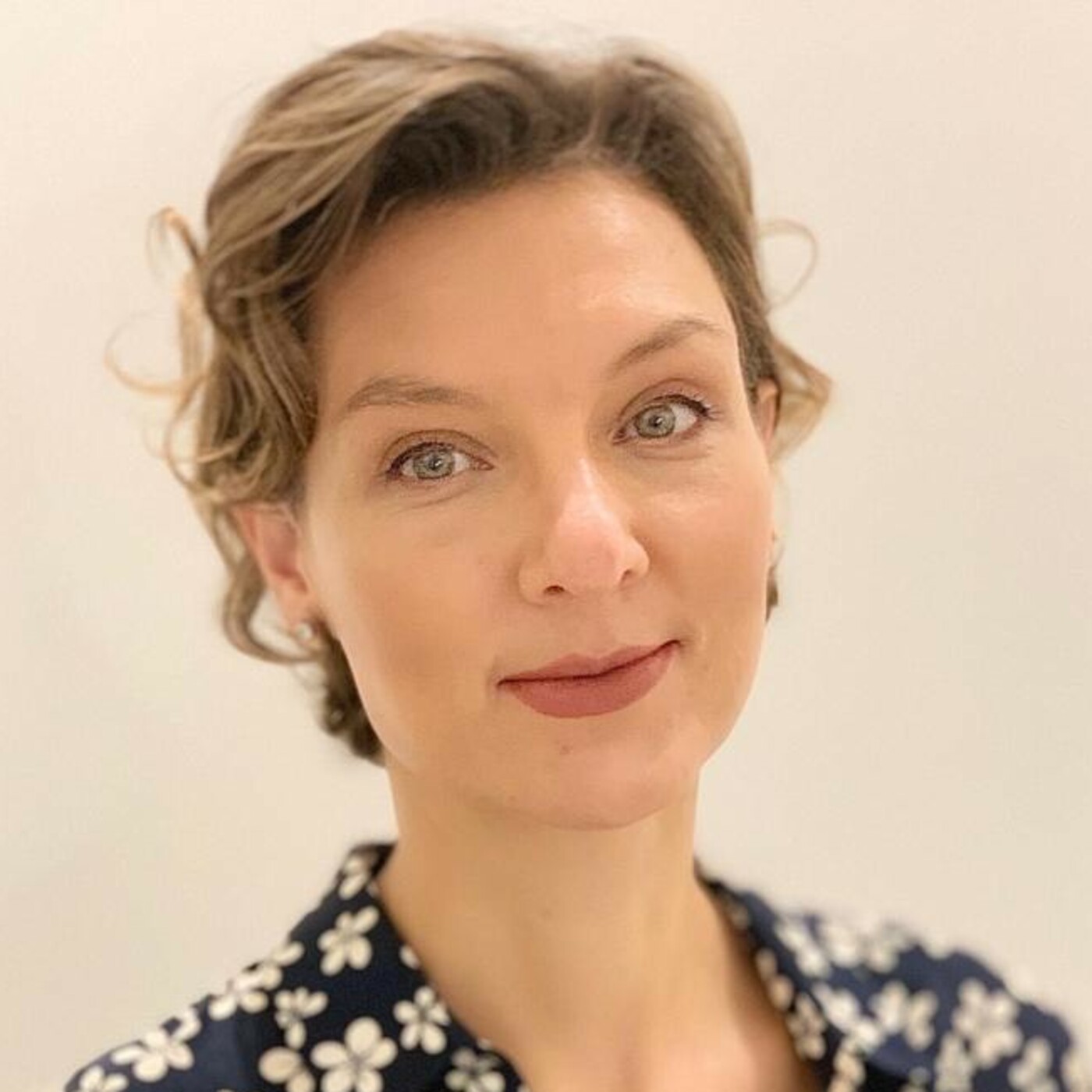
Aoifinn Devitt: In investment, is there really ever a truth, or is it just opinion? And what is the role of luck in all of this? Let’s find out next. I’m Aoifinn Devitt, and welcome to the 50 Faces Podcast, a podcast committed to revealing the richness and diversity of the world of investment by focusing on its people and their stories. I’m joined today by Xenia Diamond, who until recently was co-founder and chief executive of Merlin Advisors, a special situations advisory and investment firm. She was previously a partner of Cantab Capital, where she headed up the business development area for over 8 years. She started her career in asset management in research and and then held a series of business development roles at a range of asset managers. She has a PhD in linguistics and is currently chair of the board of trustees of the STEM Inclusion Foundation, a charity that aims to increase the number of girls that continue the study of maths and physics beyond GCSE. Welcome, Zhenia. Thank you for joining me today.
56. Genia Diamond: Thank you very much for inviting me, Yvonne. It’s a real pleasure.
Aoifinn Devitt: Can you talk about your journey into investment? And I’m particularly intrigued as you take us through your journey about how you transitioned from a doctorate in linguistics to a career in investment.
56. Genia Diamond: Okay, well, the first thing to say here is that I didn’t plan a career in investment at all. In fact, I planned a career in academia. So my first master’s was in linguistics from Moscow State University. Moscow is my hometown, as you probably can spot by my very Russian accent. PhD was to follow, as if you’re serious about academia, you have to do a PhD. Whilst doing my PhD thesis, I was already living in London and I was working, teaching, and lecturing, and quite a lot of my students were city guys. And as they were talking about what they did, I thought, oh, you know, that’s interesting, that’s exciting, that’s so different. And I didn’t exactly know what I wanted to do. I just got very interested in finance. So I thought, well, know, you then I’ll finish my PhD, which I did, and I’ll go and do an MBA course, which I did at Erasmus University in Rotterdam. And so that was sort of the next transition from linguistics into kind of more corporate world. The next step in this sort of serendipitous journey, if you wish, was an internship that I got on a trading floor at the Bank of New York and a subsequent one that I got at the Ivy Fund of hedge funds that Bank of New York at the time owned. And I loved both. And then I realized, okay, investments, this is where I wanna be. So I finished my MBA, and got an offer for a role of a senior researcher for PIMCO, fund of hedge funds. Now, PIMCO now is part of KKR Prisma, multi-billion-dollar powerhouse. When I joined, I was the fourth person in their London office. So to my utter delight, I was given, well, I guess enough rope to hang myself so I had a very broad range of responsibility within hedge fund research that I was originally hired to do. I had a chance to look at very different hedge fund strategies, different teams, and I loved this sort of learning curve that I had there. And there was this additional layer to this process. PIMCO at the time focused on investing in hedge funds very early, so they would often be day one or sort of day zero investor. And I was tasked with helping some of these kind of startup fund managers, quite a lot of them are now very successful brand names. So I was asked to help some of the startup managers we invested with, with their business strategy. And I loved that. Now the other thing that happened there, which again sort of steered my path in the career further was, you know, I’m told I have a sensibly friendly user interface. Interface. So Stephen Oxley, who was a partner in charge of the European office of PIMCO at the time, started getting me involved more and more on the client side. And you know, I, I love that even more. So what happened after were several roles that were already focused more on business development.
Aoifinn Devitt: One of the things I’m really interested in is how people’s education comes to bear later in their career. Like, what is it that they picked up? How did they learn to think earlier in their career that they now use later. I’m particularly intrigued by a PhD in linguistics. What aspects of that, if any, do you bring to bear, and how did that teach you how to think?
56. Genia Diamond: So it’s actually quite interesting. I get to talk about my PhD, especially recently, sort of almost considerably more than I would have expected. And I love that because I loved linguistics. I still keep the interest in that. But there is sometimes rather than specific knowledge, maybe I’ll start with a few sort of more general corollaries that tie my kind of past life and my present life. So yeah, fundamentally I like learning new things, just, you know, learning stuff. And I find that exciting. I love to be with people or in situations or, you know, have jobs where I can learn. That makes me happy. And fundamentally, if you do a PhD, if you continue your sort of career in education post the tertiary education, you need to love learning. I think that has been very helpful for developing a career in investments. Now, another point is that You have to be able to postpone rewards. To enjoy being an academic, and I started that path and go down there, you need to be long-term greedy. Now, of course, this is the phrase coined by Gus Levy at Goldman Sachs, but it very much applies to education and it very much applies to the investment career. Because in academia, if you’re doing things like doing a PhD, you have to put another a lot of work up front. You have to be tenacious. You have to, you know, embrace long hours, and you definitely need to do that in your investment career. You also come to the point where, you know, you need to be able to, you know, think kind of out of the box, be able to postulate your ideas, your hypothesis, and present them to people and, and try to convince people who are very often much smarter than you, right? In academia, again, it’s, it’s very relevant to the investment side. Now, if you now switch to the specific subject of my previous studies, which was linguistics, and of course linguistics, like maths, like astronomy, it’s, you know, huge area. Now, I specifically focused on the kind of socio side of that. And here, one thing which we probably all will know, and which I do carry from my kind of PhD days to now, is that over half of every message that we try to convey comes through how we do it. So to have this respect and appreciation of language nuances, the impact that your choice of words, that their connotations can have, the intonation, your body language, that is very, very important when you’re trying to lead, when you’re trying to persuade people, when you’re trying to show them your point of view. And to this, I will say that, you know, to be laconic, to be elegant and light-hearted where appropriate in, in your, you know, written or, you know, verbal message is very helpful when you’re trying to engage with people. So that’s definitely something that I sort of take from my past to present. And the very last thing that I will say too this is that when you do things like a PhD, as any former PhD student will tell you, researching things and writing up your thesis and coming up with new ideas, this is hard and this is fun. You know, you actually like doing it. What is the hardest part of any PhD thesis and what is absolutely not fun is getting the admin around it— quotes in the right format, validation of your quotes, publishing things at the right time and the right places, doing all the admin. But unless you do that well, all the fun things just won’t count. So being organized and sort of embracing the dull and admin style of work is definitely that, that, you know, I took from my past days into the present.
Aoifinn Devitt: So many great insights there. I’m a little bit cheered to hear I’m not the only one who finds the admin side, the quotes, the site checking, etc., quite tedious. It’s definitely not one of my strong points. And also just really interested in how that all ties that, you know, in terms of expression, the linguistics, and also your sense of delaying gratification, because I think that really feeds into my next question around the skills it takes to be a good developer of businesses, because obviously you will have to have a long-term time horizon as you build those relationships. And I consider you one of the giants, I think, in the London-based business development arena. I think you’re one of the best with that question. What skills do you think it takes when you’re building a business in asset management? And I particularly, I’d be interested in some of the skills such as ability to cope with rejection, thick skin, persistence, resilience.
56. Genia Diamond: Now, to start with, you’re far too kind and gracious, but you really made my day. Now, it’s a very important question. I you think, know, tenaciousness is important in every career and how you get there. But I mean, what are the specific things that I found helpful in business development and building asset management businesses that building development is a huge part of? Well, I think to start with, building a business, asset management business, and business development, marketing, investor relations is a huge part of this, of course. It is very much a team sport. Which is underpinned by a very laborious and thought-through, rigorous, systematic process. If you want to you raise, know, a few hundred million dollars, you can probably do it in an off-the-cuff, cavalier kind of fly-by-night way. If you want to raise billions of dollars, and build a brand and build a team and build a process that sort of survives you, you need to be prepared. You need to build a machine. You need to articulate this process and translate it into the culture that everyone around absorbs. You need to articulate it very well. That process needs to be disciplined. It needs to be responsible. So your engagement with clients needs to be sort of— everyone has to kind of sign up to that, as it were. Now, I don’t think that there is an easy recipe for this. I probably do you have, know, maybe more don’ts rather than dos here. But there’s one thing that I’m absolutely certain of, is that to be successful in this business development process, you fundamentally need to like people. Because how successful you are will depend on the relationships you build, you know, both within your organization, and I’m actually purposefully starting from here, and I’ll explain why in a moment. So, you know, relationships that you build within your organization, and of course the relationships that you build externally with, with your investors. Now, in my case, I, to a degree, I I find it easy. I really like people. Some of my best friends are people. I mean, jokes apart, no one will ever underplay the value of friendships and relationships, but what is very crystal clear is that not everyone can build those effectively. And I think here it almost sort of puts us to the kind of the next point is that to be very good at and successful at business development, you, in my experience, need to be very technical. You need to know your subject. As someone told me early on in my career, out of 10 questions asked by an investor, you need to be able to answer 9 very knowledgeably, right? And this is why I go back to my first point. You need to be very good at building relationships within your organization, because for you, for your team, to build this technical knowledge, you need the commitment from your investment team, from your operational partners, from, you know, your lawyers, other people within the firm. And this is hard you because, know, if you live on the trading floor, what you realize is that people are very busy, people are very stressed, people have their own agenda, and they need You need to kind of include them into your success. You need to explain to them why you need their time. You need to build a relationship with them. And of course, when you then extend it to building relationships with the investors, again, it’s a similar thing. You essentially need— people should view you as an asset and not as a liability, right? So on a personal level, I think that You know, to be successful here, you firstly, you need to be tactful. You need to be pleasant. I mean, people fundamentally need to want to spend time with you. You need to be persistent because ultimately, look, you’re doing a job. This is not, you know, mates going out for lunch. You need to have what you referred to earlier. You need to have thick skin and you need to be able to take no not personally, right? And that is very hard and very important, and you can’t just easily do that, but you need to remind yourself. And there will be days when you just you can’t, know, do cold calling, you you can’t, know, do emails, and you need to let yourself rest, right? And very, very importantly, you need to have a sense of humor, and you need to have a glass of wine with your friends every now and then, because let me tell you something, you have some absolutely will need it. It’s, it’s not an easy job. It’s a fun job. It’s very rewarding, but it’s not easy.
Aoifinn Devitt: So important, I think, to stress how much goes into it, because I think there is sometimes a perception that assets raise themselves and a lack of appreciation for what goes into it. And I’m sure in that long journey of building businesses, you’ve encountered some setbacks and challenges. Are there any that you learned from that you can share?
56. Genia Diamond: I think that as all of us, I think everyone’s career spans longer than I suppose I’d care to admit, we’ll have a few kind of meltdown moments. We’ll have a few tough points, personal, professional. I think what I’ve learned from them is don’t be afraid to look dumb and to ask a dumb question. It’s very hard, especially when you have partners meetings. And again, when you sort of live on a trading floor, it’s a very different kind of atmosphere, right? People like to toot their own horn. You don’t tend to admit to things you don’t understand, et cetera. But I think it is very, very important to ask a dumb question to experts, to not necessarily shake the status quo, but make everyone look at things twice. I think don’t try to not get bamboozled by people’s confidence, by jargon, by the sort of truths, because there aren’t really that many truths. Most of the things out there are subject of opinion. And the other thing that you learn in finance day in and day out, there is a huge element of luck in it. So let’s not forget about it, right? And I think with all of this in mind, ask a question. Yeah, so that’s, I think, what I’ve learned, as it were, from the challenging times in my career.
Aoifinn Devitt: And over and over again, you’ve come back to people, relationships. Have there been any key people who’ve influenced you throughout your career, or even before then, during your PhD in academia, or any key pieces of advice that you received that you still refer back to?
56. Genia Diamond: Well, I’ve been blessed. I’ve been surrounded by very kind, very smart, and very generous from the perspective of their advice people through my career. So I would, you know, literally it will take a while to kind of list all of them, but I’ll just maybe, you know, list a few of them. I think that first instance, you know, I grew up with my grandma. My most formative years I grew up with her, and she was an amazing lady way before her then, you time, know, for now you and, know, forever. And she once told me that everyone has something good about them, because I think maybe I quarreled with someone at school, whatnot. And she said, well, look, everyone has something good about them. You just have to look for that. And, you know, this is when— because sometimes at work situations you disagree. When you disagree, you tend to start disliking or wanting to dislike someone. When someone says no, you know, first thing is like, oh, you know, why me? And whatnot, it’s very easy to fall into this. Life is much easier if you like people, and virtually everyone has something good about them. And I found this very, very helpful and rewarding as a kind of, as a motto. Now it doesn’t mean that I like everyone because, yes, I do, I’m blessed, I have a lot of close friends, but not everyone is my friend. But it’s very rarely I would actively dislike someone, right? And it’s, my life is much, much and easier much nicer if you like people. And now if you look at the professional side, well, you know, my first job post-academia was at PIMCO. Jane Buchanan was the founder of PIMCO and Stephen Oxley, who was my direct report at the time, they’ve, I don’t know, I just learned a ton of stuff from them. I learned a ton of stuff from the traders I worked with, my investors, have been, I mean, people like yourself on both personal and professional level. And remember, you probably don’t remember this, but, you know, once when I was talking to you about balancing professional and personal life, which you were very good at, you told me, you know, I don’t sweat small things. And you probably didn’t think it was a huge piece of advice. It was very important for me because, you know, when people say you can have everything, you can’t. But important things you can have and you can balance personal and professional. And, you know, my 8 years at Kantab, Ewan Kirk and Eric Schleicher, the two founders of Kantab, had a huge impact on me personally, professionally. Both of them are inspiring people. They are very smart, both, you know, from the technical perspective, but they’re also very wise, and I learned a lot from them. And maybe the last person I’ll sort of end with, and I only worked with him on the touch points because he was my investor for a while, is Luke Ellis. I think he’s truly, a truly inspirational figure, ferociously sharp and so amazingly gracious and elegant and humorous. So I really, I hope there will be an opportunity for me to work with him again in some shape and form. So I think in our industry, there’s a lot of truly inspiring people.
Aoifinn Devitt: I can’t tell you how much joy it fills me when somebody shouts out to another podcast guest on a podcast. And Luke is in fact featuring in Series 4. Delighted to interview him. Yes. Yeah. And I completely agree. And thank you for sharing a grandmother story. Again, I have countless podcast guests who have shared grandmother stories. I think grandmothers seem to be the keepers of wisdom. No matter what country or what generation you’re in, which is wonderful. And moving now to the investment world, and you’ve spoken a lot about the people you’ve met and how stimulating you find it. And what do you like most about it, and what are your thoughts on the levels of diversity in it?
56. Genia Diamond: Well, as, as I’ve mentioned, I’ve specifically been blessed with having the pleasure of working with very smart, sharp, driven people. Now I think it’s probably— well, I mean, I’m sure other industries also have got, you know, good people working there, I think that is definitely a positive. What is a negative is that there isn’t enough diversity, and I’m talking about race, I’m talking about gender, and it becomes more and more acute as you sort of go up the ladder, as it were. And I think that there are initiatives, I think being more aware of this and talking about it more, Sometimes people say, oh, we shouldn’t be just talking about it. We should be doing things. Well, you first have to talk and then you also start thinking about it when you start doing things. But initiatives like the 100 Black Interns, right? Which a few of the people that both you and I know and like personal professional friends are part of. That’s amazing. I think various networks, podcasts like this, various initiatives like I think Man Group goes to and Reddington goes to school to tell people about what they do and how they do it to kind of increase people’s awareness and interest in finance. Now I’m the chair of a STEM foundation that encourages STEM studies amongst girls in this country. And, you know, a few of my trustees who are much smarter than myself have done work to see that if you intervene as it were in early days with girls at school, you might just have, you know, for those who like maths and physics, you might help them make these choices early on and then maybe continue studying this. So there’s various points of intervention. I think we need to be more conscious of this and start early. I think we also have to be more conscious of the fact that we might have enough enough girls early, for example, enough girls early, you know, joining the careers in, let’s say, finance, but not so many of them continue. And again, you know, I had lunch with Luke Ellis at Man Group a few months ago where he specifically, and I admired that, said that they’re very conscious of not going to the same pool of senior women and just, you know, shifting one from one role to the other. But they want to you promote, know, women from early days into further. And I think just focusing on that is very, very important. And the job is not done, I think not for a while, but I think we can do— I think that you there’s, know, a lot you of, know, senior female lawyers. You know, why can’t we you have, know, more people of different race? Why can’t we have more people, you know, more senior women in in finance. I think it is definitely doable, and we need to continue focusing on that.
Aoifinn Devitt: And I love the fact that the group you work with is the STEM Inclusion Foundation, that you’re chair of the board of trustees, because I think that word inclusion is so important. It’s one thing to get the women, the girls, to do math and physics beyond GCSE, but I think they have to feel they belong when they get there, and I think they have to feel they belong wherever else. So I think it’s that creation of a sense of belonging which is just as important as getting the numbers there. So that’s really important. Just my last question is around the advice you would have for your younger self. You can either go back to that kind of school level or to your studying linguistics. Is there anything that you know now that you wish you had known then?
56. Genia Diamond: I think that there’s maybe few points here. You know, one piece of advice I would have given myself then, I would give myself now, and I fear I wouldn’t listen to that piece of advice is slow down. Because it is important both professionally, emotionally, you know, doing too much at some point you burn out. And I had that in my career, but unfortunately I don’t always listen to myself. I think the thing that I I learned, and I touched upon that earlier, I think one shouldn’t underestimate the luck element in what we do. We should all count our blessings, whether we’re religious or not. We’re all very lucky people to be to be where, where we are. But I think we should remember that very often our successes have a big element of luck. Luck. And to bear this humbleness and not to get touched by the sound of our voice, and also to remind the partners around you who might get a little bit carried away because they’ve been very successful and things have been going their way, to remind them and yourself that, hey, you know, let’s not get too comfortable because finance is predominantly dominated by noise, right? With the, you know, very weak kind of positive signal that you could tease out of it. And that’s something that I come to appreciate kind of, you know, more and more as I go along.
Aoifinn Devitt: It makes me smile, your exhortation to yourself to slow down. To use a popular internet expression, I feel seen. I don’t think you’re any more likely to slow down than I am, but I think we probably just have to accept that about ourselves and accept the collateral damage. Well, thank you, Eugenia. It’s been such a pleasure to speak with you. You are such an inspiration, but most importantly, you have shared your story with such humility. So I really wanted to thank you for sharing your insights with us.
56. Genia Diamond: It’s a pleasure. Thank you so much for inviting me.
Aoifinn Devitt: I’m Aoifinn Devitt. Thank you for listening to the 50 Faces podcast. If you liked what you heard and would like to tune in to hear more inspiring investors and their personal journeys, journeys, please subscribe on Apple Podcasts or wherever you get your podcasts. This podcast is for informational purposes only and should not be construed as investment advice, and all views are personal and should not be attributed to the organizations and affiliations of the host or any guest.
Aoifinn Devitt: In investment, is there really ever a truth, or is it just opinion? And what is the role of luck in all of this? Let’s find out next. I’m Aoifinn Devitt, and welcome to the 50 Faces Podcast, a podcast committed to revealing the richness and diversity of the world of investment by focusing on its people and their stories. I’m joined today by Xenia Diamond, who until recently was co-founder and chief executive of Merlin Advisors, a special situations advisory and investment firm. She was previously a partner of Cantab Capital, where she headed up the business development area for over 8 years. She started her career in asset management in research and and then held a series of business development roles at a range of asset managers. She has a PhD in linguistics and is currently chair of the board of trustees of the STEM Inclusion Foundation, a charity that aims to increase the number of girls that continue the study of maths and physics beyond GCSE. Welcome, Zhenia. Thank you for joining me today.
56. Genia Diamond: Thank you very much for inviting me, Yvonne. It’s a real pleasure.
Aoifinn Devitt: Can you talk about your journey into investment? And I’m particularly intrigued as you take us through your journey about how you transitioned from a doctorate in linguistics to a career in investment.
56. Genia Diamond: Okay, well, the first thing to say here is that I didn’t plan a career in investment at all. In fact, I planned a career in academia. So my first master’s was in linguistics from Moscow State University. Moscow is my hometown, as you probably can spot by my very Russian accent. PhD was to follow, as if you’re serious about academia, you have to do a PhD. Whilst doing my PhD thesis, I was already living in London and I was working, teaching, and lecturing, and quite a lot of my students were city guys. And as they were talking about what they did, I thought, oh, you know, that’s interesting, that’s exciting, that’s so different. And I didn’t exactly know what I wanted to do. I just got very interested in finance. So I thought, well, know, you then I’ll finish my PhD, which I did, and I’ll go and do an MBA course, which I did at Erasmus University in Rotterdam. And so that was sort of the next transition from linguistics into kind of more corporate world. The next step in this sort of serendipitous journey, if you wish, was an internship that I got on a trading floor at the Bank of New York and a subsequent one that I got at the Ivy Fund of hedge funds that Bank of New York at the time owned. And I loved both. And then I realized, okay, investments, this is where I wanna be. So I finished my MBA, and got an offer for a role of a senior researcher for PIMCO, fund of hedge funds. Now, PIMCO now is part of KKR Prisma, multi-billion-dollar powerhouse. When I joined, I was the fourth person in their London office. So to my utter delight, I was given, well, I guess enough rope to hang myself so I had a very broad range of responsibility within hedge fund research that I was originally hired to do. I had a chance to look at very different hedge fund strategies, different teams, and I loved this sort of learning curve that I had there. And there was this additional layer to this process. PIMCO at the time focused on investing in hedge funds very early, so they would often be day one or sort of day zero investor. And I was tasked with helping some of these kind of startup fund managers, quite a lot of them are now very successful brand names. So I was asked to help some of the startup managers we invested with, with their business strategy. And I loved that. Now the other thing that happened there, which again sort of steered my path in the career further was, you know, I’m told I have a sensibly friendly user interface. Interface. So Stephen Oxley, who was a partner in charge of the European office of PIMCO at the time, started getting me involved more and more on the client side. And you know, I, I love that even more. So what happened after were several roles that were already focused more on business development.
Aoifinn Devitt: One of the things I’m really interested in is how people’s education comes to bear later in their career. Like, what is it that they picked up? How did they learn to think earlier in their career that they now use later. I’m particularly intrigued by a PhD in linguistics. What aspects of that, if any, do you bring to bear, and how did that teach you how to think?
56. Genia Diamond: So it’s actually quite interesting. I get to talk about my PhD, especially recently, sort of almost considerably more than I would have expected. And I love that because I loved linguistics. I still keep the interest in that. But there is sometimes rather than specific knowledge, maybe I’ll start with a few sort of more general corollaries that tie my kind of past life and my present life. So yeah, fundamentally I like learning new things, just, you know, learning stuff. And I find that exciting. I love to be with people or in situations or, you know, have jobs where I can learn. That makes me happy. And fundamentally, if you do a PhD, if you continue your sort of career in education post the tertiary education, you need to love learning. I think that has been very helpful for developing a career in investments. Now, another point is that You have to be able to postpone rewards. To enjoy being an academic, and I started that path and go down there, you need to be long-term greedy. Now, of course, this is the phrase coined by Gus Levy at Goldman Sachs, but it very much applies to education and it very much applies to the investment career. Because in academia, if you’re doing things like doing a PhD, you have to put another a lot of work up front. You have to be tenacious. You have to, you know, embrace long hours, and you definitely need to do that in your investment career. You also come to the point where, you know, you need to be able to, you know, think kind of out of the box, be able to postulate your ideas, your hypothesis, and present them to people and, and try to convince people who are very often much smarter than you, right? In academia, again, it’s, it’s very relevant to the investment side. Now, if you now switch to the specific subject of my previous studies, which was linguistics, and of course linguistics, like maths, like astronomy, it’s, you know, huge area. Now, I specifically focused on the kind of socio side of that. And here, one thing which we probably all will know, and which I do carry from my kind of PhD days to now, is that over half of every message that we try to convey comes through how we do it. So to have this respect and appreciation of language nuances, the impact that your choice of words, that their connotations can have, the intonation, your body language, that is very, very important when you’re trying to lead, when you’re trying to persuade people, when you’re trying to show them your point of view. And to this, I will say that, you know, to be laconic, to be elegant and light-hearted where appropriate in, in your, you know, written or, you know, verbal message is very helpful when you’re trying to engage with people. So that’s definitely something that I sort of take from my past to present. And the very last thing that I will say too this is that when you do things like a PhD, as any former PhD student will tell you, researching things and writing up your thesis and coming up with new ideas, this is hard and this is fun. You know, you actually like doing it. What is the hardest part of any PhD thesis and what is absolutely not fun is getting the admin around it— quotes in the right format, validation of your quotes, publishing things at the right time and the right places, doing all the admin. But unless you do that well, all the fun things just won’t count. So being organized and sort of embracing the dull and admin style of work is definitely that, that, you know, I took from my past days into the present.
Aoifinn Devitt: So many great insights there. I’m a little bit cheered to hear I’m not the only one who finds the admin side, the quotes, the site checking, etc., quite tedious. It’s definitely not one of my strong points. And also just really interested in how that all ties that, you know, in terms of expression, the linguistics, and also your sense of delaying gratification, because I think that really feeds into my next question around the skills it takes to be a good developer of businesses, because obviously you will have to have a long-term time horizon as you build those relationships. And I consider you one of the giants, I think, in the London-based business development arena. I think you’re one of the best with that question. What skills do you think it takes when you’re building a business in asset management? And I particularly, I’d be interested in some of the skills such as ability to cope with rejection, thick skin, persistence, resilience.
56. Genia Diamond: Now, to start with, you’re far too kind and gracious, but you really made my day. Now, it’s a very important question. I you think, know, tenaciousness is important in every career and how you get there. But I mean, what are the specific things that I found helpful in business development and building asset management businesses that building development is a huge part of? Well, I think to start with, building a business, asset management business, and business development, marketing, investor relations is a huge part of this, of course. It is very much a team sport. Which is underpinned by a very laborious and thought-through, rigorous, systematic process. If you want to you raise, know, a few hundred million dollars, you can probably do it in an off-the-cuff, cavalier kind of fly-by-night way. If you want to raise billions of dollars, and build a brand and build a team and build a process that sort of survives you, you need to be prepared. You need to build a machine. You need to articulate this process and translate it into the culture that everyone around absorbs. You need to articulate it very well. That process needs to be disciplined. It needs to be responsible. So your engagement with clients needs to be sort of— everyone has to kind of sign up to that, as it were. Now, I don’t think that there is an easy recipe for this. I probably do you have, know, maybe more don’ts rather than dos here. But there’s one thing that I’m absolutely certain of, is that to be successful in this business development process, you fundamentally need to like people. Because how successful you are will depend on the relationships you build, you know, both within your organization, and I’m actually purposefully starting from here, and I’ll explain why in a moment. So, you know, relationships that you build within your organization, and of course the relationships that you build externally with, with your investors. Now, in my case, I, to a degree, I I find it easy. I really like people. Some of my best friends are people. I mean, jokes apart, no one will ever underplay the value of friendships and relationships, but what is very crystal clear is that not everyone can build those effectively. And I think here it almost sort of puts us to the kind of the next point is that to be very good at and successful at business development, you, in my experience, need to be very technical. You need to know your subject. As someone told me early on in my career, out of 10 questions asked by an investor, you need to be able to answer 9 very knowledgeably, right? And this is why I go back to my first point. You need to be very good at building relationships within your organization, because for you, for your team, to build this technical knowledge, you need the commitment from your investment team, from your operational partners, from, you know, your lawyers, other people within the firm. And this is hard you because, know, if you live on the trading floor, what you realize is that people are very busy, people are very stressed, people have their own agenda, and they need You need to kind of include them into your success. You need to explain to them why you need their time. You need to build a relationship with them. And of course, when you then extend it to building relationships with the investors, again, it’s a similar thing. You essentially need— people should view you as an asset and not as a liability, right? So on a personal level, I think that You know, to be successful here, you firstly, you need to be tactful. You need to be pleasant. I mean, people fundamentally need to want to spend time with you. You need to be persistent because ultimately, look, you’re doing a job. This is not, you know, mates going out for lunch. You need to have what you referred to earlier. You need to have thick skin and you need to be able to take no not personally, right? And that is very hard and very important, and you can’t just easily do that, but you need to remind yourself. And there will be days when you just you can’t, know, do cold calling, you you can’t, know, do emails, and you need to let yourself rest, right? And very, very importantly, you need to have a sense of humor, and you need to have a glass of wine with your friends every now and then, because let me tell you something, you have some absolutely will need it. It’s, it’s not an easy job. It’s a fun job. It’s very rewarding, but it’s not easy.
Aoifinn Devitt: So important, I think, to stress how much goes into it, because I think there is sometimes a perception that assets raise themselves and a lack of appreciation for what goes into it. And I’m sure in that long journey of building businesses, you’ve encountered some setbacks and challenges. Are there any that you learned from that you can share?
56. Genia Diamond: I think that as all of us, I think everyone’s career spans longer than I suppose I’d care to admit, we’ll have a few kind of meltdown moments. We’ll have a few tough points, personal, professional. I think what I’ve learned from them is don’t be afraid to look dumb and to ask a dumb question. It’s very hard, especially when you have partners meetings. And again, when you sort of live on a trading floor, it’s a very different kind of atmosphere, right? People like to toot their own horn. You don’t tend to admit to things you don’t understand, et cetera. But I think it is very, very important to ask a dumb question to experts, to not necessarily shake the status quo, but make everyone look at things twice. I think don’t try to not get bamboozled by people’s confidence, by jargon, by the sort of truths, because there aren’t really that many truths. Most of the things out there are subject of opinion. And the other thing that you learn in finance day in and day out, there is a huge element of luck in it. So let’s not forget about it, right? And I think with all of this in mind, ask a question. Yeah, so that’s, I think, what I’ve learned, as it were, from the challenging times in my career.
Aoifinn Devitt: And over and over again, you’ve come back to people, relationships. Have there been any key people who’ve influenced you throughout your career, or even before then, during your PhD in academia, or any key pieces of advice that you received that you still refer back to?
56. Genia Diamond: Well, I’ve been blessed. I’ve been surrounded by very kind, very smart, and very generous from the perspective of their advice people through my career. So I would, you know, literally it will take a while to kind of list all of them, but I’ll just maybe, you know, list a few of them. I think that first instance, you know, I grew up with my grandma. My most formative years I grew up with her, and she was an amazing lady way before her then, you time, know, for now you and, know, forever. And she once told me that everyone has something good about them, because I think maybe I quarreled with someone at school, whatnot. And she said, well, look, everyone has something good about them. You just have to look for that. And, you know, this is when— because sometimes at work situations you disagree. When you disagree, you tend to start disliking or wanting to dislike someone. When someone says no, you know, first thing is like, oh, you know, why me? And whatnot, it’s very easy to fall into this. Life is much easier if you like people, and virtually everyone has something good about them. And I found this very, very helpful and rewarding as a kind of, as a motto. Now it doesn’t mean that I like everyone because, yes, I do, I’m blessed, I have a lot of close friends, but not everyone is my friend. But it’s very rarely I would actively dislike someone, right? And it’s, my life is much, much and easier much nicer if you like people. And now if you look at the professional side, well, you know, my first job post-academia was at PIMCO. Jane Buchanan was the founder of PIMCO and Stephen Oxley, who was my direct report at the time, they’ve, I don’t know, I just learned a ton of stuff from them. I learned a ton of stuff from the traders I worked with, my investors, have been, I mean, people like yourself on both personal and professional level. And remember, you probably don’t remember this, but, you know, once when I was talking to you about balancing professional and personal life, which you were very good at, you told me, you know, I don’t sweat small things. And you probably didn’t think it was a huge piece of advice. It was very important for me because, you know, when people say you can have everything, you can’t. But important things you can have and you can balance personal and professional. And, you know, my 8 years at Kantab, Ewan Kirk and Eric Schleicher, the two founders of Kantab, had a huge impact on me personally, professionally. Both of them are inspiring people. They are very smart, both, you know, from the technical perspective, but they’re also very wise, and I learned a lot from them. And maybe the last person I’ll sort of end with, and I only worked with him on the touch points because he was my investor for a while, is Luke Ellis. I think he’s truly, a truly inspirational figure, ferociously sharp and so amazingly gracious and elegant and humorous. So I really, I hope there will be an opportunity for me to work with him again in some shape and form. So I think in our industry, there’s a lot of truly inspiring people.
Aoifinn Devitt: I can’t tell you how much joy it fills me when somebody shouts out to another podcast guest on a podcast. And Luke is in fact featuring in Series 4. Delighted to interview him. Yes. Yeah. And I completely agree. And thank you for sharing a grandmother story. Again, I have countless podcast guests who have shared grandmother stories. I think grandmothers seem to be the keepers of wisdom. No matter what country or what generation you’re in, which is wonderful. And moving now to the investment world, and you’ve spoken a lot about the people you’ve met and how stimulating you find it. And what do you like most about it, and what are your thoughts on the levels of diversity in it?
56. Genia Diamond: Well, as, as I’ve mentioned, I’ve specifically been blessed with having the pleasure of working with very smart, sharp, driven people. Now I think it’s probably— well, I mean, I’m sure other industries also have got, you know, good people working there, I think that is definitely a positive. What is a negative is that there isn’t enough diversity, and I’m talking about race, I’m talking about gender, and it becomes more and more acute as you sort of go up the ladder, as it were. And I think that there are initiatives, I think being more aware of this and talking about it more, Sometimes people say, oh, we shouldn’t be just talking about it. We should be doing things. Well, you first have to talk and then you also start thinking about it when you start doing things. But initiatives like the 100 Black Interns, right? Which a few of the people that both you and I know and like personal professional friends are part of. That’s amazing. I think various networks, podcasts like this, various initiatives like I think Man Group goes to and Reddington goes to school to tell people about what they do and how they do it to kind of increase people’s awareness and interest in finance. Now I’m the chair of a STEM foundation that encourages STEM studies amongst girls in this country. And, you know, a few of my trustees who are much smarter than myself have done work to see that if you intervene as it were in early days with girls at school, you might just have, you know, for those who like maths and physics, you might help them make these choices early on and then maybe continue studying this. So there’s various points of intervention. I think we need to be more conscious of this and start early. I think we also have to be more conscious of the fact that we might have enough enough girls early, for example, enough girls early, you know, joining the careers in, let’s say, finance, but not so many of them continue. And again, you know, I had lunch with Luke Ellis at Man Group a few months ago where he specifically, and I admired that, said that they’re very conscious of not going to the same pool of senior women and just, you know, shifting one from one role to the other. But they want to you promote, know, women from early days into further. And I think just focusing on that is very, very important. And the job is not done, I think not for a while, but I think we can do— I think that you there’s, know, a lot you of, know, senior female lawyers. You know, why can’t we you have, know, more people of different race? Why can’t we have more people, you know, more senior women in in finance. I think it is definitely doable, and we need to continue focusing on that.
Aoifinn Devitt: And I love the fact that the group you work with is the STEM Inclusion Foundation, that you’re chair of the board of trustees, because I think that word inclusion is so important. It’s one thing to get the women, the girls, to do math and physics beyond GCSE, but I think they have to feel they belong when they get there, and I think they have to feel they belong wherever else. So I think it’s that creation of a sense of belonging which is just as important as getting the numbers there. So that’s really important. Just my last question is around the advice you would have for your younger self. You can either go back to that kind of school level or to your studying linguistics. Is there anything that you know now that you wish you had known then?
56. Genia Diamond: I think that there’s maybe few points here. You know, one piece of advice I would have given myself then, I would give myself now, and I fear I wouldn’t listen to that piece of advice is slow down. Because it is important both professionally, emotionally, you know, doing too much at some point you burn out. And I had that in my career, but unfortunately I don’t always listen to myself. I think the thing that I I learned, and I touched upon that earlier, I think one shouldn’t underestimate the luck element in what we do. We should all count our blessings, whether we’re religious or not. We’re all very lucky people to be to be where, where we are. But I think we should remember that very often our successes have a big element of luck. Luck. And to bear this humbleness and not to get touched by the sound of our voice, and also to remind the partners around you who might get a little bit carried away because they’ve been very successful and things have been going their way, to remind them and yourself that, hey, you know, let’s not get too comfortable because finance is predominantly dominated by noise, right? With the, you know, very weak kind of positive signal that you could tease out of it. And that’s something that I come to appreciate kind of, you know, more and more as I go along.
Aoifinn Devitt: It makes me smile, your exhortation to yourself to slow down. To use a popular internet expression, I feel seen. I don’t think you’re any more likely to slow down than I am, but I think we probably just have to accept that about ourselves and accept the collateral damage. Well, thank you, Eugenia. It’s been such a pleasure to speak with you. You are such an inspiration, but most importantly, you have shared your story with such humility. So I really wanted to thank you for sharing your insights with us.
56. Genia Diamond: It’s a pleasure. Thank you so much for inviting me.
Aoifinn Devitt: I’m Aoifinn Devitt. Thank you for listening to the 50 Faces podcast. If you liked what you heard and would like to tune in to hear more inspiring investors and their personal journeys, journeys, please subscribe on Apple Podcasts or wherever you get your podcasts. This podcast is for informational purposes only and should not be construed as investment advice, and all views are personal and should not be attributed to the organizations and affiliations of the host or any guest.