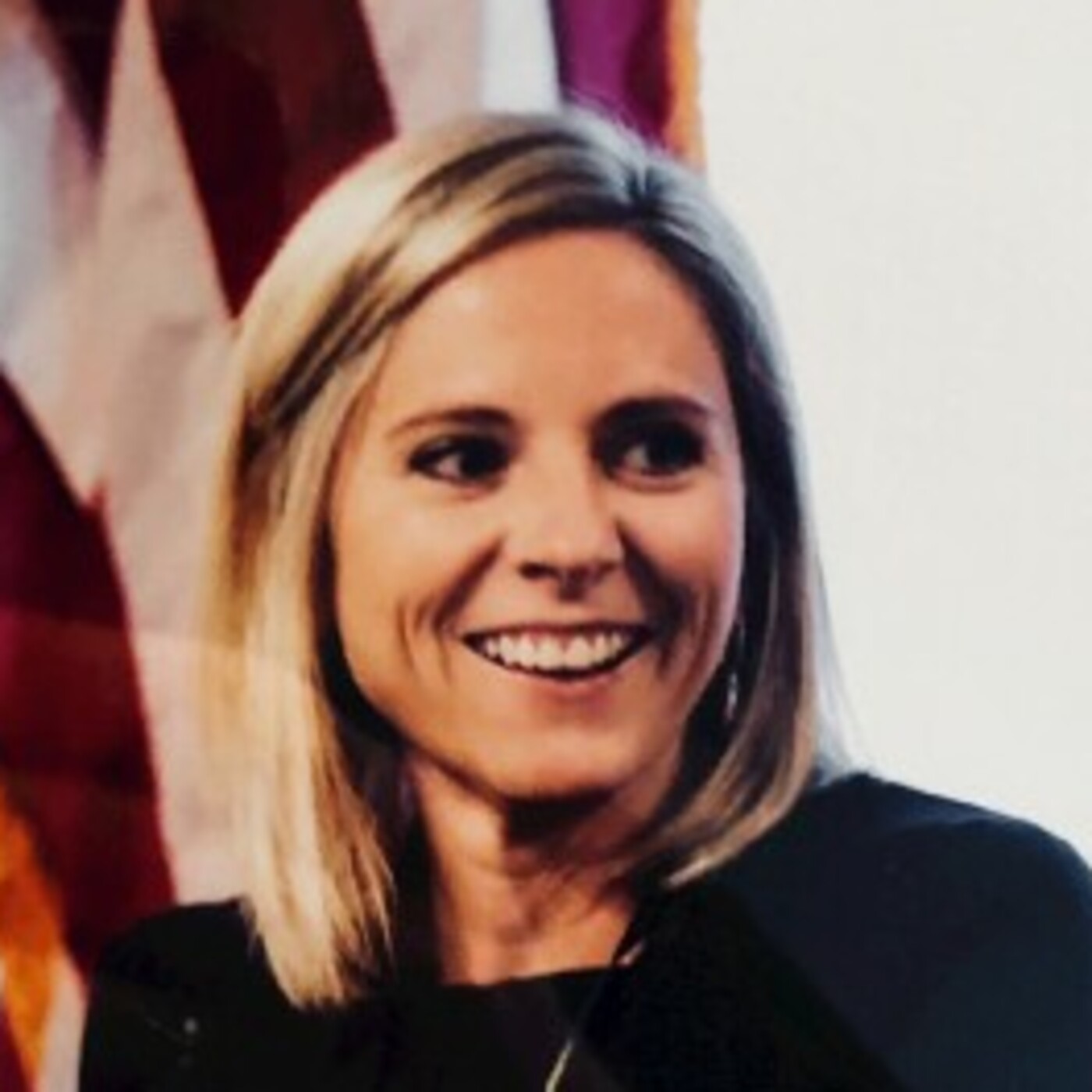
Aoifinn Devitt: Our next guest uses confidence intervals to check her conviction. Let’s hear how she uses these tools to make it happen in a public fun job based in paradise. I’m Aoifinn Devitt, and welcome to the 50 Faces Podcast, a podcast committed to revealing the richness and diversity of the world of investment by focusing on its people and their stories. I’m joined today by Elizabeth Burton, who is CIO at the Hawaii Employees Retirement System, a US public pensions plan with over $17 billion in assets under management. Before moving to Hawaii in 2018, she was managing director of the Quantitative Strategies Group at Maryland State Retirement and Pension System. Prior to that, she ran her own strategy consulting business and worked as an economist in portfolio management at a fund of hedge funds and as a fixed income securities trader. She’s a recipient of the CIO Magazine’s 2019 Innovation Award and was named as one of CIOs 40 Under 40 in 2017 and was recently appointed to the board of Kea. Welcome, Elizabeth. Thank you for joining me today.
Elizabeth Burton: Thank you for having me.
Aoifinn Devitt: Can we first start with speaking about your current role and then we’ll go back to talk about your journey into the role? Can you just tell us what you’re currently doing at the State of Hawaii, please?
Elizabeth Burton: Sure. So I’m the Chief Investment Officer, as you mentioned, for the State of Hawaii. We’re about an $18 billion public pension plan serving about 135,000 beneficiaries in the state, which actually turns out to be about 1 in 10 people in Hawaii. So it’s a pretty big deal locally to be part of that system and a great honor. And we are multi-asset and invested in all corners and all assets of the world with a really great smart team and a supportive infrastructure around us.
Aoifinn Devitt: And how did your journey into this role start? What did you study, for example, at college, and where did you go from there?
Elizabeth Burton: Not what you’d probably expect. I majored in French and double majored in French and politics. I wanted to be in government, so I guess I solved that part of the equation since I’m in government now. But I didn’t expect to go into finance. My dad was on Wall Street. He’s a professor of economics. My mom worked at EF Hutton back in the day. My husband’s in finance, my brother-in-law, my sister. So I didn’t want to do finance. I wanted to do something different. I always try to be someone who’s a little bit different. But it sort of turned out that I got my first real internship in college at a fund of funds in Santa Barbara. And at the time, I mostly went for location. But I learned something that I’ve mentioned before, I think, that to be in finance, I didn’t— I thought it was just about wanting to love the stock market. And to be honest, that’s not even what I feel currently. It’s more that I really love history and math. And when I interned there, I realized that the best possible role for someone who loves mathematics and history, which for me was political science, is a a career in finance. So that’s really what got me started. I’ve had a lot of twists and turns since then, but I would say when I was about 21, I sort of figured out, okay, this is the best way to achieve all the things I love in one fell swoop.
Aoifinn Devitt: And as a public fund CIO, what are the issues at the forefront of your mind currently?
Elizabeth Burton: Oh, well, you know, I worry about things that all CIOs probably worry about. Governments all over the United States are probably press for tax revenues. So I worry about our funding ratios and our ability to keep that up because everybody’s having trouble in these times. But I’m also worried about the fact that it’s harder to make a dollar these days. For the last couple decades, rates have steadily declined. But if you look at the target returns for pension funds, they haven’t declined by the same amount. I mean, you’ve got like an 800 basis point drop in the 30-year., but you don’t have an 800 basis point drop in the target return for pension funds. So, you know, the bull market that happened in equities the last couple decades is unlikely to continue. So I think all of us are kind of wondering, how do we hit our target returns without taking on too much unwanted additional risk?
Aoifinn Devitt: How much do ESG issues factor into your investment approach?
Elizabeth Burton: Yeah, it’s something that we’re working on currently. Figuring out what’s important to our board and to our retirees. Hawaii’s main natural resource is water, and that’s very important to us as an island. And a lot of things have actually changed from the E part of the equation in Hawaii since the shutdown. I mean, literally, you can see that the water has changed a different color. Some, some parts of the ESG equation are easier for us to quantify than others. The ones that can be easily identified through the programs and systems we already have in place, I think we’ll be able to make some progress on quickly. The other parts are a little bit more nuanced, and they probably differ from state to state. It’s one of those things that’s kind of hard to have a fast, quick and fast universal rule. So it’s something that we’re working on. But honestly, it’s very complicated, and it’s more complicated than most of the other kind of risks we manage. For example, I think it’s really hard to track liquidity risk, but this is also really difficult. It’s just a different kind of difficult.
Aoifinn Devitt: And when we look beyond the E in the ESG, I know that many of your other public fund brethren do have diversity programs in place, maybe an emerging manager program or a desire to have a particular diverse mix among their manager group. Is that something that you focus on at all?
Elizabeth Burton: So where we can add diversity, we are always striving for that. And in our internal investment committee, we do talk about the makeup of our managers and those that we allocate to. From a team perspective, I’ll point out that I think my personal team is one of the most diverse in the industry across all sorts of metrics. And so we certainly want diversity of thought and other metrics in our manager selection as well. We do not have any hard and fast mandates at the moment. We hope that we can get there sort of organically, kind of how our investment team grew to be super diverse organically too.
Aoifinn Devitt: And getting back to the investment belief point, and I’d love to tie this to some of your education. You mentioned your grounding in politics, how you liked history, and how much that bears on your love of investment. Are there any core investment beliefs that you’ve developed throughout your career and maybe now implement in your CIO role?
Elizabeth Burton: I think there’s a couple, and it’s sometimes these are personal, not necessarily for the fund, but one, I think keep it simple, stupid. It’s always kind of, um, worked out well. Uh, I’m a big believer in, um, you know, holding equities and kind of weathering the downturn if you can, but that doesn’t work for every fund. So that’s my personal belief. Uh, but, you know, funds have to differ on their, on their funding ratios and what they can kind of stomach. But the other thing that I, I, I don’t know if it’s a core belief, but everyone’s wrong in finance, um, and about half the time, right? So I like that because I always solve things for some sort of— so look, like, my favorite subject is statistics. And so when I was thinking about how I make investment decisions, I realized that I’m always solving for some sort of internal confidence interval. And so I recognize that I could be wrong, but the thought And then I likely am, right? But the thought process and the inputs that I put into this system in my mind to get to where I choose one side or the other, I’m basically solving for a 95% confidence level. So I’ll be wrong, but I’ve lowered the probability in my own mind. Now, it’s probably much higher, right? Because I have confirmation bias and all these other sorts of things happening in there. But I’m okay with that as long as I got to this to the point where I feel fairly confident about my decisions. I’m okay with being wrong because that certainly happens, and that’s actually what I love about finance. Everybody’s wrong at some point. It’s very humbling. It’s also very liberating because you can take these positions and do research, and, you know, someone else will probably find out some other little detail that was really critical you hadn’t thought of. But it’s, it’s wonderfully humbling and liberating at the same time, and I really like that.
Aoifinn Devitt: It’s a perfect segue to my next question, which is around mistakes or setbacks or challenges. But it’s interesting, the points you make about everyone being wrong at some point. My perception at least is that in finance, there’s not the same level of transparency, say, around mistakes that you might get in the aviation industry, where it’s critical as a matter of safety that there is full black box analysis and there’s not a great deal of blame being attributed because the key is to get to the bottom of why something happened. In your experience, you mentioned the comfort level about being wrong some of the time because it’s perfectly natural. Have there been any lessons learned by some either some mistakes or some setbacks or challenges?
Elizabeth Burton: Oh man, there’s probably so many that I don’t even remember them all. I’m sure in terms of mistakes with the plan or investing, honestly, it’s, you know, it’s a team effort. So it’s sort of like saying I’ll take ultimate responsibility, right? The, you know, the coach of the team usually takes responsibility for the losses, but it’s a culmination of a lot of little things, tiny little things that add up over the course of the game. Very rarely one foul or one missed shot that, that completely loses everything, right? Um, so I think in terms of mistakes earlier in my career, I didn’t delegate a whole lot. And I, I think that’s very common for people that, um, I think it’s really common for some people earlier in their careers to want to maintain all aspects of control over everything they’re doing. And I think mid-career that became big mistake for me and something that I realized when I came to Hawaii. And I often use this analogy with my husband in sports. So I’m a lot younger than a lot of the members of my team in Hawaii. And I have to delegate to them. One, because I don’t have the bandwidth. Two, because they’re smarter than me in a bunch of areas. And so even though— so it’s like, I liken this to football and I’m kind of going about this the wrong way, but I’m obsessed with football and my husband’s been watching it for 10 years longer than I had when we met. And he said, you know more about football than I do. And I was like, well, that’s not necessarily true. I can read all the stats and tell you what happened, but I wasn’t watching Lawrence Taylor play. You were there, you saw everything that happened. And that’s kind of what happens with my team. So they’ve seen things I haven’t seen. These are things I could read about and learn about, but they actually lived through prior crises. So I think that was one thing I had to learn, that you have to trust your people. And that you, you know, they’re, they’re, they’re, the smarter your people are, the better it is for you. And the more you can delegate to them and give them responsibility, the happier they’ll be. And that took me a long time to figure out. It shouldn’t have taken me that long, but I don’t think that that’s something that you actually learn in business school and earlier in your career. Like no one really tells you that until later, actually.
Aoifinn Devitt: I think there’s so much they don’t teach you in business school. Actually, a lot of it gets to these kind of sticky issues, like delegation, like mistakes, overcoming them. But I think what you say is really interesting because of where gets it to. The idea of risk-taking. I think one of the areas that certainly pension funds are facing now is they have to take risk. I mean, if they have to achieve these lofty rates of returns that you mentioned, they cannot shy away from taking risk, but there’s going to be an element of failure therein, just like in the areas like venture capital with the highest rates of return, ostensibly, there are going to be very high failure rates. Do you think that that has helped you learn to take risks um, some of that comfort level with that potentially being wrong some of the time?
Elizabeth Burton: It’s a really good question. I don’t know. I’ve thought about this a lot. I don’t know what does get me comfortable with it. I think I’m comfortable with my own thought process and getting data points. Like, I used to be an econometrician, so I’m used to gathering enough data to make a decision about it and then kind of stick with it. I also used to trade fixed income securities. It’s the same thing. You don’t have a ton of time. You kind of just have to make a decision and live with it. But I also think if you’re not willing to stick your neck out for something you believe in and possibly be wrong in investments, you may be in the wrong business if you’re at least in the active management side of the business. And I think I agree with some people, even passive is active in some respect. So I don’t necessarily agree with people that try to hide behind decisions they made or pass around the blame. I mean, I get that when something— I make a mistake, I’m going to wish that I had some sort of COVID but that doesn’t happen. And if you want a career where you have continual cover, then this probably isn’t it. That said, know, you I think it really matters on your client. We’re not trying to swing for the fences here at an employee’s retirement system. We’re trying to protect retirement. And so I have to make a different set of choices. And it just turns out that those are usually pretty risk-adjusted choices. But we do the best we can do and we’ll see what happens going forward. But if I made a mistake and I’m wrong about it, that’s kind of the path we chose.
Aoifinn Devitt: Right, and I think it’s also, as long as the process you followed was defensible, we all make mistakes, but at least if the process was watertight and I think robust, I think then it just goes with the territory. Looking back now at some key people, in your career that were really influential or had a lasting impact on you? Were there any that you can mention?
Elizabeth Burton: Sure. I mean, I have my immediate family, so definitely my dad, my sister, and my mom. You know, I didn’t actually change my last name. I have a lot of respect for my dad and I kind of respect his career. So in some ways, I kind of wanted to carry on that torch and same with my sister. But outside of immediate family members, Andy Palmer at Maryland State Retirement and Dana Johns were two She’s also at Maryland Retirement, two great mentors and advocates for me. And I really appreciate everything you’ve done for me. Earlier in my career, I also had a couple other people that were influential. Wycliff Donoseb, who basically taught me almost everything I know on risk analytics, and Mustafa Zaidi, who also taught me how to think about client needs at a different kind of perspective. I’ve had a lot of— so many, I feel like I go to— should when they go to the Oscars and they go on for 20 minutes about everybody in their life, there’s so many people. And I think some of them, I didn’t realize how helpful they were until a decade later. Like, one of your questions said, has anyone said anything to you that was a good piece of advice? And actually it was at my consulting job when I resigned that day. I wish they had told me this earlier, but the guy said, man, we’re sorry to lose you. Every time you get knocked down, you stand right back up. And I never thought of him. As someone that was influential in my life. I’ve thought about that, that he said that all the time since then, and that was like 15 years ago, 10 years ago.
Aoifinn Devitt: So it came on the way out the door, but yes, it’s certainly— and that was my next question. Thank you for anticipating that. And any other nuggets that, um, you’ve taken away, um, from, uh, either people, your colleagues, or people in other walks of life?
Elizabeth Burton: Yeah, so I, I am obsessed with sports, so most of my Mentors actually tend to be professional athletes, and one of them is Michael Jordan. And pretty much any quote by, by Michael Jordan, I, I could probably get on board with. I just think that he’s really inspirational, someone like that who gives 150% every day. I just don’t know that I’ve ever seen anyone like that. It’s amazing. But he said a couple things. He said, I can accept failure, but I can’t accept not trying. And then my favorite one, which is actually my husband asked if we live in a college dorm room because I have so many Michael Jordan posters. But it said, “Some people want it to happen. Some wish it could, would happen. Others make it happen.” So I played sports in college. So I think I just can relate to giving it all and leaving it on the field. And I have a lot of respect for people who who can, can do that every day. So I I think, think he’s really incredible. And I also respect that he has his own viewpoint about things and it may not be popular and he sticks with them. I feel like a lot of athletes are that way, so I tend to idolize athletes.
Aoifinn Devitt: That’s fantastic. I think we’re all drawing a lot on some of that excellence, especially in lower moments like we might be facing this summer and this year. Getting back to the investment world, what do you like most about the investment world?
Elizabeth Burton: And I think that I like the most that there— do you remember those commercials where the guy used to say, I’ve searched the internet, I’ve Googled everything, I’ve reached the end of the internet, I’ve seen everything. Everyone knows that’s impossible, right? I think it’s the same thing about investments. Because if you think about it, like anytime you get interviewed for something and someone says, what are you going to talk about? I’m always like, well, I don’t know. They could ask me what German bunds are doing, or they could ask me what I think about middle market lending in Ireland or Italy. Who knows, right? It could be anything. And I think that’s one of my favorite things about investments is that there are so many ways to slice the pie and you could be good at so many little niches in the market, and there’s, there’s so much to look at. And I’m always in awe of people who can pull up anecdotes on anything happening all over the world. I think that’s why I love macro managers, because I’m like, wow, they have their hands on the pulse of everything. At the end of the day, no one knows everything, but I, I think it’s just so interesting that there’s probably something for everybody in there. Like, probably people, you know, I I don’t— real estate’s not my favorite, but there are tons of people out there who know everything about real estate in Middle America. And I don’t know, I just say I love that there’s something for everybody out there and that you can be an expert in a ton of different spaces. And I just think that’s amazing. I mean, that’s true of medical profession too, right? I think, but I don’t know. That’s something I love about it. There’s just so many different paths and so many different places you can go and you’ve never met someone with the same opinion as you on any subject.
Aoifinn Devitt: It’s so true. I used to do some CNBC Squawk Box spots many years ago and I would never know what they were going to ask. And it could be something to do with the direction of a currency or would I buy this stock or what’s gold going to do? And my motto was always just, well, answer what I wanted to talk about, but somehow kind of work it in at the end of the day, but because it could be completely random and that was the only way I was going to sound smart on that. So just staying on the investment world, diversity, we’ve already touched a little bit about diversity that you build into your team that’s already there in many respects, sex as well as the cognitive diversity. Do you have any thoughts as a woman in finance on diversity within finance and how that has changed throughout your career?
Elizabeth Burton: You know, um, it’s interesting because, right, my sister’s whole career is kind of built around this subject, and I, I had really never talked about diversity until probably the last 5 or 6 years. I actually really, I guess, um, hadn’t occurred to me that even though at least from the man-woman perspective of diversity, that I was in the minority for a while. So it’s, I guess, because it just wasn’t something in my career people talked about a lot. Now it’s becoming more fluent in the conversation, which is great. And there’s a lot of different ways to participate. And I think that’s wonderful. And I’ve learned a lot through my sister and her business on how to reach different people. And I think the most important thing for getting diversity into this industry is kind of what I’ve been mentioning earlier. There’s no one route. I think I’ve heard people say, well, I didn’t grow up in a house where we talked about CNBC or Stockbox or Stockton Bond. I mean, that’s fine. I don’t actually, I’m not as obsessed with what happens in minute to minute in the stock market either, because I’m a long-term investor. There’s so many different avenues. You gotta find for the role you’re looking for, that’s, then you gotta go after the talent pool, right? So do you need someone who’s doing investment writing or operations or HR, or do you need someone who’s good at coding? And then go into those niches. So I think that it’s kind of strange to go after and say, we want people into finance. You should go out there and say, we want to recruit people into these specific roles. And hey, that may translate into finance. It’s almost like what happened in Silicon Valley, right? So they started tiring away talent from Wall Street. It wasn’t because Silicon Valley said, oh, we want a bunch of finance guys. No, they said, we want a bunch of mathematicians and quants. So I think that the finance industry kind of approaches it from a wonky sort of angle. Like you’ve got to go after the skill sets you want. And that’s how you get people to go into it. You go into the communities and you go, you reach out to your contacts and you say, hey, you got anyone who’s really excellent at writing or anyone who’s really excellent at speaking or anyone who’s really great with people. Instead of going up to random groups and saying, we want people in this really weird subject called finance, which could mean almost anything, right? Like whenever someone asks you what you do and you say, what do you say, right? I’m always like, I don’t know, who am I talking to? Am I in finance? My investments? Like, it’s not exactly clear, right? So I think we just got to go out about it a smarter way. We got to, you know, like, I don’t— so I’m trying to think of some of the writing colleges when I was applying. I think like Rhodes had a really good writing program. Like, well, if you want an investment writer, why don’t you go talk to Rhodes about like, who’s great in your writing curriculum. So I think that we’re just going about it a little bit of a weird way. If we want diversity, we’ve gotta, we’ve gotta speak to people’s interests.
Aoifinn Devitt: Right. And I’d like to just stop for a minute to, to speak about your sister’s conference series, Lindsay Burton and CAO, because I have found that so profoundly impactful and what a great gift she has given to other female investment professionals. I’ve been to a number of the events and they are liberating, they’re empowering, they’re motivating, and, and they’re a little bit of a safe space as well. You know, that I, I kind of feel myself relax there a little bit. Um, we can talk about some real real concerns. And I just think it is a profound gift. So I can’t wait till she gets them up and running again in person.
Elizabeth Burton: Yeah, though they are wonderful. You know what’s interesting is this— I was telling her this the other day— I can go into a conference in full in front of, um, like hundreds of men and have like no confidence issues. The first time I went to her events when there was all women, I was really nervous. And she said— she was like, That’s so interesting because I really hadn’t been anywhere since like college sports where it was all females and they— and all really successful, really smart ones. And I was a little bit intimidated. So, you know, I’ve gotten over that hurdle having gone to so many of her events now. But that’s really interesting, isn’t it, that you would think I would have felt more comfortable?
Aoifinn Devitt: Absolutely. So just coming to my last question, what advice would you have for your younger self, maybe for that French and politics college student. Is there anything that you know now that you wish you had known then?
Elizabeth Burton: Um, not to my graduate school self, but to my undergraduate school self, because I did this in grad school, but my undergraduate school self, I would have said, don’t worry about your grades. No one’s going to ask you about them in 10 years. And I would have said, take the hardest possible classes in the subjects you like the most, because you’ll never get that opportunity again. And I have a lot of regret of doing a lot of check-the-box coursework and not going after subjects I couldn’t get access to after that. Now things have changed a little bit. You can go online and get a bunch of that kind of stuff. But now I’m paying for it back then, still paying for it, but in a different respect. I would’ve said, don’t worry about it. Challenge yourself. Even if you— I also would’ve told myself your first job out of college really doesn’t matter. I mean, it does, but not really. You can always reinvent yourself. I still don’t know what I want to be when I grow up.
Aoifinn Devitt: All right. There are many bites of the apple, right? Well, thank you so much, Elisabeth. It’s been a real pleasure speaking with you today. And just getting back to your Michael Jordan quote, I think as a CIO, you really are making it happen. So, thank you for your service and for sharing your insights here with us.
Elizabeth Burton: Thank you so much. That’s a great compliment. I appreciate that. Thank you.
Aoifinn Devitt: I’m Ife Ndevitt. Thank you for listening to the 50 Faces Podcast. If you liked what you heard and would like to tune in to hear more inspiring investors and their personal journeys, please subscribe on Apple Podcasts or wherever you get your podcasts. This podcast is for informational purposes only and should not be construed as investment advice, and all views are personal and should not be attributed to the organizations and affiliations of the host or any guest.
Aoifinn Devitt: Our next guest uses confidence intervals to check her conviction. Let’s hear how she uses these tools to make it happen in a public fun job based in paradise. I’m Aoifinn Devitt, and welcome to the 50 Faces Podcast, a podcast committed to revealing the richness and diversity of the world of investment by focusing on its people and their stories. I’m joined today by Elizabeth Burton, who is CIO at the Hawaii Employees Retirement System, a US public pensions plan with over $17 billion in assets under management. Before moving to Hawaii in 2018, she was managing director of the Quantitative Strategies Group at Maryland State Retirement and Pension System. Prior to that, she ran her own strategy consulting business and worked as an economist in portfolio management at a fund of hedge funds and as a fixed income securities trader. She’s a recipient of the CIO Magazine’s 2019 Innovation Award and was named as one of CIOs 40 Under 40 in 2017 and was recently appointed to the board of Kea. Welcome, Elizabeth. Thank you for joining me today.
Elizabeth Burton: Thank you for having me.
Aoifinn Devitt: Can we first start with speaking about your current role and then we’ll go back to talk about your journey into the role? Can you just tell us what you’re currently doing at the State of Hawaii, please?
Elizabeth Burton: Sure. So I’m the Chief Investment Officer, as you mentioned, for the State of Hawaii. We’re about an $18 billion public pension plan serving about 135,000 beneficiaries in the state, which actually turns out to be about 1 in 10 people in Hawaii. So it’s a pretty big deal locally to be part of that system and a great honor. And we are multi-asset and invested in all corners and all assets of the world with a really great smart team and a supportive infrastructure around us.
Aoifinn Devitt: And how did your journey into this role start? What did you study, for example, at college, and where did you go from there?
Elizabeth Burton: Not what you’d probably expect. I majored in French and double majored in French and politics. I wanted to be in government, so I guess I solved that part of the equation since I’m in government now. But I didn’t expect to go into finance. My dad was on Wall Street. He’s a professor of economics. My mom worked at EF Hutton back in the day. My husband’s in finance, my brother-in-law, my sister. So I didn’t want to do finance. I wanted to do something different. I always try to be someone who’s a little bit different. But it sort of turned out that I got my first real internship in college at a fund of funds in Santa Barbara. And at the time, I mostly went for location. But I learned something that I’ve mentioned before, I think, that to be in finance, I didn’t— I thought it was just about wanting to love the stock market. And to be honest, that’s not even what I feel currently. It’s more that I really love history and math. And when I interned there, I realized that the best possible role for someone who loves mathematics and history, which for me was political science, is a a career in finance. So that’s really what got me started. I’ve had a lot of twists and turns since then, but I would say when I was about 21, I sort of figured out, okay, this is the best way to achieve all the things I love in one fell swoop.
Aoifinn Devitt: And as a public fund CIO, what are the issues at the forefront of your mind currently?
Elizabeth Burton: Oh, well, you know, I worry about things that all CIOs probably worry about. Governments all over the United States are probably press for tax revenues. So I worry about our funding ratios and our ability to keep that up because everybody’s having trouble in these times. But I’m also worried about the fact that it’s harder to make a dollar these days. For the last couple decades, rates have steadily declined. But if you look at the target returns for pension funds, they haven’t declined by the same amount. I mean, you’ve got like an 800 basis point drop in the 30-year., but you don’t have an 800 basis point drop in the target return for pension funds. So, you know, the bull market that happened in equities the last couple decades is unlikely to continue. So I think all of us are kind of wondering, how do we hit our target returns without taking on too much unwanted additional risk?
Aoifinn Devitt: How much do ESG issues factor into your investment approach?
Elizabeth Burton: Yeah, it’s something that we’re working on currently. Figuring out what’s important to our board and to our retirees. Hawaii’s main natural resource is water, and that’s very important to us as an island. And a lot of things have actually changed from the E part of the equation in Hawaii since the shutdown. I mean, literally, you can see that the water has changed a different color. Some, some parts of the ESG equation are easier for us to quantify than others. The ones that can be easily identified through the programs and systems we already have in place, I think we’ll be able to make some progress on quickly. The other parts are a little bit more nuanced, and they probably differ from state to state. It’s one of those things that’s kind of hard to have a fast, quick and fast universal rule. So it’s something that we’re working on. But honestly, it’s very complicated, and it’s more complicated than most of the other kind of risks we manage. For example, I think it’s really hard to track liquidity risk, but this is also really difficult. It’s just a different kind of difficult.
Aoifinn Devitt: And when we look beyond the E in the ESG, I know that many of your other public fund brethren do have diversity programs in place, maybe an emerging manager program or a desire to have a particular diverse mix among their manager group. Is that something that you focus on at all?
Elizabeth Burton: So where we can add diversity, we are always striving for that. And in our internal investment committee, we do talk about the makeup of our managers and those that we allocate to. From a team perspective, I’ll point out that I think my personal team is one of the most diverse in the industry across all sorts of metrics. And so we certainly want diversity of thought and other metrics in our manager selection as well. We do not have any hard and fast mandates at the moment. We hope that we can get there sort of organically, kind of how our investment team grew to be super diverse organically too.
Aoifinn Devitt: And getting back to the investment belief point, and I’d love to tie this to some of your education. You mentioned your grounding in politics, how you liked history, and how much that bears on your love of investment. Are there any core investment beliefs that you’ve developed throughout your career and maybe now implement in your CIO role?
Elizabeth Burton: I think there’s a couple, and it’s sometimes these are personal, not necessarily for the fund, but one, I think keep it simple, stupid. It’s always kind of, um, worked out well. Uh, I’m a big believer in, um, you know, holding equities and kind of weathering the downturn if you can, but that doesn’t work for every fund. So that’s my personal belief. Uh, but, you know, funds have to differ on their, on their funding ratios and what they can kind of stomach. But the other thing that I, I, I don’t know if it’s a core belief, but everyone’s wrong in finance, um, and about half the time, right? So I like that because I always solve things for some sort of— so look, like, my favorite subject is statistics. And so when I was thinking about how I make investment decisions, I realized that I’m always solving for some sort of internal confidence interval. And so I recognize that I could be wrong, but the thought And then I likely am, right? But the thought process and the inputs that I put into this system in my mind to get to where I choose one side or the other, I’m basically solving for a 95% confidence level. So I’ll be wrong, but I’ve lowered the probability in my own mind. Now, it’s probably much higher, right? Because I have confirmation bias and all these other sorts of things happening in there. But I’m okay with that as long as I got to this to the point where I feel fairly confident about my decisions. I’m okay with being wrong because that certainly happens, and that’s actually what I love about finance. Everybody’s wrong at some point. It’s very humbling. It’s also very liberating because you can take these positions and do research, and, you know, someone else will probably find out some other little detail that was really critical you hadn’t thought of. But it’s, it’s wonderfully humbling and liberating at the same time, and I really like that.
Aoifinn Devitt: It’s a perfect segue to my next question, which is around mistakes or setbacks or challenges. But it’s interesting, the points you make about everyone being wrong at some point. My perception at least is that in finance, there’s not the same level of transparency, say, around mistakes that you might get in the aviation industry, where it’s critical as a matter of safety that there is full black box analysis and there’s not a great deal of blame being attributed because the key is to get to the bottom of why something happened. In your experience, you mentioned the comfort level about being wrong some of the time because it’s perfectly natural. Have there been any lessons learned by some either some mistakes or some setbacks or challenges?
Elizabeth Burton: Oh man, there’s probably so many that I don’t even remember them all. I’m sure in terms of mistakes with the plan or investing, honestly, it’s, you know, it’s a team effort. So it’s sort of like saying I’ll take ultimate responsibility, right? The, you know, the coach of the team usually takes responsibility for the losses, but it’s a culmination of a lot of little things, tiny little things that add up over the course of the game. Very rarely one foul or one missed shot that, that completely loses everything, right? Um, so I think in terms of mistakes earlier in my career, I didn’t delegate a whole lot. And I, I think that’s very common for people that, um, I think it’s really common for some people earlier in their careers to want to maintain all aspects of control over everything they’re doing. And I think mid-career that became big mistake for me and something that I realized when I came to Hawaii. And I often use this analogy with my husband in sports. So I’m a lot younger than a lot of the members of my team in Hawaii. And I have to delegate to them. One, because I don’t have the bandwidth. Two, because they’re smarter than me in a bunch of areas. And so even though— so it’s like, I liken this to football and I’m kind of going about this the wrong way, but I’m obsessed with football and my husband’s been watching it for 10 years longer than I had when we met. And he said, you know more about football than I do. And I was like, well, that’s not necessarily true. I can read all the stats and tell you what happened, but I wasn’t watching Lawrence Taylor play. You were there, you saw everything that happened. And that’s kind of what happens with my team. So they’ve seen things I haven’t seen. These are things I could read about and learn about, but they actually lived through prior crises. So I think that was one thing I had to learn, that you have to trust your people. And that you, you know, they’re, they’re, they’re, the smarter your people are, the better it is for you. And the more you can delegate to them and give them responsibility, the happier they’ll be. And that took me a long time to figure out. It shouldn’t have taken me that long, but I don’t think that that’s something that you actually learn in business school and earlier in your career. Like no one really tells you that until later, actually.
Aoifinn Devitt: I think there’s so much they don’t teach you in business school. Actually, a lot of it gets to these kind of sticky issues, like delegation, like mistakes, overcoming them. But I think what you say is really interesting because of where gets it to. The idea of risk-taking. I think one of the areas that certainly pension funds are facing now is they have to take risk. I mean, if they have to achieve these lofty rates of returns that you mentioned, they cannot shy away from taking risk, but there’s going to be an element of failure therein, just like in the areas like venture capital with the highest rates of return, ostensibly, there are going to be very high failure rates. Do you think that that has helped you learn to take risks um, some of that comfort level with that potentially being wrong some of the time?
Elizabeth Burton: It’s a really good question. I don’t know. I’ve thought about this a lot. I don’t know what does get me comfortable with it. I think I’m comfortable with my own thought process and getting data points. Like, I used to be an econometrician, so I’m used to gathering enough data to make a decision about it and then kind of stick with it. I also used to trade fixed income securities. It’s the same thing. You don’t have a ton of time. You kind of just have to make a decision and live with it. But I also think if you’re not willing to stick your neck out for something you believe in and possibly be wrong in investments, you may be in the wrong business if you’re at least in the active management side of the business. And I think I agree with some people, even passive is active in some respect. So I don’t necessarily agree with people that try to hide behind decisions they made or pass around the blame. I mean, I get that when something— I make a mistake, I’m going to wish that I had some sort of COVID but that doesn’t happen. And if you want a career where you have continual cover, then this probably isn’t it. That said, know, you I think it really matters on your client. We’re not trying to swing for the fences here at an employee’s retirement system. We’re trying to protect retirement. And so I have to make a different set of choices. And it just turns out that those are usually pretty risk-adjusted choices. But we do the best we can do and we’ll see what happens going forward. But if I made a mistake and I’m wrong about it, that’s kind of the path we chose.
Aoifinn Devitt: Right, and I think it’s also, as long as the process you followed was defensible, we all make mistakes, but at least if the process was watertight and I think robust, I think then it just goes with the territory. Looking back now at some key people, in your career that were really influential or had a lasting impact on you? Were there any that you can mention?
Elizabeth Burton: Sure. I mean, I have my immediate family, so definitely my dad, my sister, and my mom. You know, I didn’t actually change my last name. I have a lot of respect for my dad and I kind of respect his career. So in some ways, I kind of wanted to carry on that torch and same with my sister. But outside of immediate family members, Andy Palmer at Maryland State Retirement and Dana Johns were two She’s also at Maryland Retirement, two great mentors and advocates for me. And I really appreciate everything you’ve done for me. Earlier in my career, I also had a couple other people that were influential. Wycliff Donoseb, who basically taught me almost everything I know on risk analytics, and Mustafa Zaidi, who also taught me how to think about client needs at a different kind of perspective. I’ve had a lot of— so many, I feel like I go to— should when they go to the Oscars and they go on for 20 minutes about everybody in their life, there’s so many people. And I think some of them, I didn’t realize how helpful they were until a decade later. Like, one of your questions said, has anyone said anything to you that was a good piece of advice? And actually it was at my consulting job when I resigned that day. I wish they had told me this earlier, but the guy said, man, we’re sorry to lose you. Every time you get knocked down, you stand right back up. And I never thought of him. As someone that was influential in my life. I’ve thought about that, that he said that all the time since then, and that was like 15 years ago, 10 years ago.
Aoifinn Devitt: So it came on the way out the door, but yes, it’s certainly— and that was my next question. Thank you for anticipating that. And any other nuggets that, um, you’ve taken away, um, from, uh, either people, your colleagues, or people in other walks of life?
Elizabeth Burton: Yeah, so I, I am obsessed with sports, so most of my Mentors actually tend to be professional athletes, and one of them is Michael Jordan. And pretty much any quote by, by Michael Jordan, I, I could probably get on board with. I just think that he’s really inspirational, someone like that who gives 150% every day. I just don’t know that I’ve ever seen anyone like that. It’s amazing. But he said a couple things. He said, I can accept failure, but I can’t accept not trying. And then my favorite one, which is actually my husband asked if we live in a college dorm room because I have so many Michael Jordan posters. But it said, “Some people want it to happen. Some wish it could, would happen. Others make it happen.” So I played sports in college. So I think I just can relate to giving it all and leaving it on the field. And I have a lot of respect for people who who can, can do that every day. So I I think, think he’s really incredible. And I also respect that he has his own viewpoint about things and it may not be popular and he sticks with them. I feel like a lot of athletes are that way, so I tend to idolize athletes.
Aoifinn Devitt: That’s fantastic. I think we’re all drawing a lot on some of that excellence, especially in lower moments like we might be facing this summer and this year. Getting back to the investment world, what do you like most about the investment world?
Elizabeth Burton: And I think that I like the most that there— do you remember those commercials where the guy used to say, I’ve searched the internet, I’ve Googled everything, I’ve reached the end of the internet, I’ve seen everything. Everyone knows that’s impossible, right? I think it’s the same thing about investments. Because if you think about it, like anytime you get interviewed for something and someone says, what are you going to talk about? I’m always like, well, I don’t know. They could ask me what German bunds are doing, or they could ask me what I think about middle market lending in Ireland or Italy. Who knows, right? It could be anything. And I think that’s one of my favorite things about investments is that there are so many ways to slice the pie and you could be good at so many little niches in the market, and there’s, there’s so much to look at. And I’m always in awe of people who can pull up anecdotes on anything happening all over the world. I think that’s why I love macro managers, because I’m like, wow, they have their hands on the pulse of everything. At the end of the day, no one knows everything, but I, I think it’s just so interesting that there’s probably something for everybody in there. Like, probably people, you know, I I don’t— real estate’s not my favorite, but there are tons of people out there who know everything about real estate in Middle America. And I don’t know, I just say I love that there’s something for everybody out there and that you can be an expert in a ton of different spaces. And I just think that’s amazing. I mean, that’s true of medical profession too, right? I think, but I don’t know. That’s something I love about it. There’s just so many different paths and so many different places you can go and you’ve never met someone with the same opinion as you on any subject.
Aoifinn Devitt: It’s so true. I used to do some CNBC Squawk Box spots many years ago and I would never know what they were going to ask. And it could be something to do with the direction of a currency or would I buy this stock or what’s gold going to do? And my motto was always just, well, answer what I wanted to talk about, but somehow kind of work it in at the end of the day, but because it could be completely random and that was the only way I was going to sound smart on that. So just staying on the investment world, diversity, we’ve already touched a little bit about diversity that you build into your team that’s already there in many respects, sex as well as the cognitive diversity. Do you have any thoughts as a woman in finance on diversity within finance and how that has changed throughout your career?
Elizabeth Burton: You know, um, it’s interesting because, right, my sister’s whole career is kind of built around this subject, and I, I had really never talked about diversity until probably the last 5 or 6 years. I actually really, I guess, um, hadn’t occurred to me that even though at least from the man-woman perspective of diversity, that I was in the minority for a while. So it’s, I guess, because it just wasn’t something in my career people talked about a lot. Now it’s becoming more fluent in the conversation, which is great. And there’s a lot of different ways to participate. And I think that’s wonderful. And I’ve learned a lot through my sister and her business on how to reach different people. And I think the most important thing for getting diversity into this industry is kind of what I’ve been mentioning earlier. There’s no one route. I think I’ve heard people say, well, I didn’t grow up in a house where we talked about CNBC or Stockbox or Stockton Bond. I mean, that’s fine. I don’t actually, I’m not as obsessed with what happens in minute to minute in the stock market either, because I’m a long-term investor. There’s so many different avenues. You gotta find for the role you’re looking for, that’s, then you gotta go after the talent pool, right? So do you need someone who’s doing investment writing or operations or HR, or do you need someone who’s good at coding? And then go into those niches. So I think that it’s kind of strange to go after and say, we want people into finance. You should go out there and say, we want to recruit people into these specific roles. And hey, that may translate into finance. It’s almost like what happened in Silicon Valley, right? So they started tiring away talent from Wall Street. It wasn’t because Silicon Valley said, oh, we want a bunch of finance guys. No, they said, we want a bunch of mathematicians and quants. So I think that the finance industry kind of approaches it from a wonky sort of angle. Like you’ve got to go after the skill sets you want. And that’s how you get people to go into it. You go into the communities and you go, you reach out to your contacts and you say, hey, you got anyone who’s really excellent at writing or anyone who’s really excellent at speaking or anyone who’s really great with people. Instead of going up to random groups and saying, we want people in this really weird subject called finance, which could mean almost anything, right? Like whenever someone asks you what you do and you say, what do you say, right? I’m always like, I don’t know, who am I talking to? Am I in finance? My investments? Like, it’s not exactly clear, right? So I think we just got to go out about it a smarter way. We got to, you know, like, I don’t— so I’m trying to think of some of the writing colleges when I was applying. I think like Rhodes had a really good writing program. Like, well, if you want an investment writer, why don’t you go talk to Rhodes about like, who’s great in your writing curriculum. So I think that we’re just going about it a little bit of a weird way. If we want diversity, we’ve gotta, we’ve gotta speak to people’s interests.
Aoifinn Devitt: Right. And I’d like to just stop for a minute to, to speak about your sister’s conference series, Lindsay Burton and CAO, because I have found that so profoundly impactful and what a great gift she has given to other female investment professionals. I’ve been to a number of the events and they are liberating, they’re empowering, they’re motivating, and, and they’re a little bit of a safe space as well. You know, that I, I kind of feel myself relax there a little bit. Um, we can talk about some real real concerns. And I just think it is a profound gift. So I can’t wait till she gets them up and running again in person.
Elizabeth Burton: Yeah, though they are wonderful. You know what’s interesting is this— I was telling her this the other day— I can go into a conference in full in front of, um, like hundreds of men and have like no confidence issues. The first time I went to her events when there was all women, I was really nervous. And she said— she was like, That’s so interesting because I really hadn’t been anywhere since like college sports where it was all females and they— and all really successful, really smart ones. And I was a little bit intimidated. So, you know, I’ve gotten over that hurdle having gone to so many of her events now. But that’s really interesting, isn’t it, that you would think I would have felt more comfortable?
Aoifinn Devitt: Absolutely. So just coming to my last question, what advice would you have for your younger self, maybe for that French and politics college student. Is there anything that you know now that you wish you had known then?
Elizabeth Burton: Um, not to my graduate school self, but to my undergraduate school self, because I did this in grad school, but my undergraduate school self, I would have said, don’t worry about your grades. No one’s going to ask you about them in 10 years. And I would have said, take the hardest possible classes in the subjects you like the most, because you’ll never get that opportunity again. And I have a lot of regret of doing a lot of check-the-box coursework and not going after subjects I couldn’t get access to after that. Now things have changed a little bit. You can go online and get a bunch of that kind of stuff. But now I’m paying for it back then, still paying for it, but in a different respect. I would’ve said, don’t worry about it. Challenge yourself. Even if you— I also would’ve told myself your first job out of college really doesn’t matter. I mean, it does, but not really. You can always reinvent yourself. I still don’t know what I want to be when I grow up.
Aoifinn Devitt: All right. There are many bites of the apple, right? Well, thank you so much, Elisabeth. It’s been a real pleasure speaking with you today. And just getting back to your Michael Jordan quote, I think as a CIO, you really are making it happen. So, thank you for your service and for sharing your insights here with us.
Elizabeth Burton: Thank you so much. That’s a great compliment. I appreciate that. Thank you.
Aoifinn Devitt: I’m Ife Ndevitt. Thank you for listening to the 50 Faces Podcast. If you liked what you heard and would like to tune in to hear more inspiring investors and their personal journeys, please subscribe on Apple Podcasts or wherever you get your podcasts. This podcast is for informational purposes only and should not be construed as investment advice, and all views are personal and should not be attributed to the organizations and affiliations of the host or any guest.