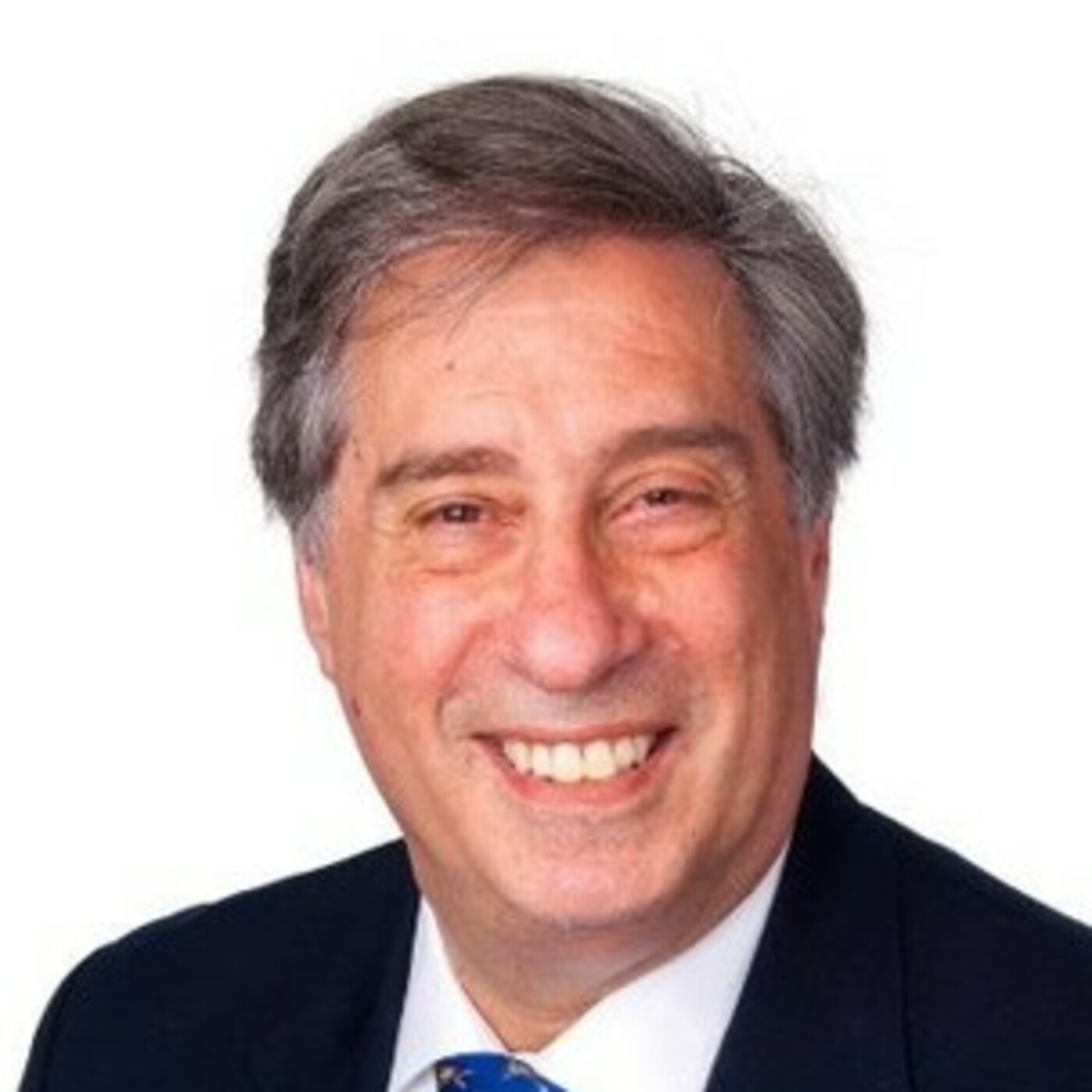
Aoifinn Devitt: Our next guest has been guided in his investment career by his deep spirituality. Let’s find out how setting intentions has led him to a holistic approach to his investments that embraces sustainability and responsibility. I’m Aoifinn Devitt, and welcome to the 50 Faces podcast, a podcast committed to revealing the richness and diversity of the world of investment by focusing on its people and their stories. I’m joined today by Gary Greenberg, who heads up the Emerging Markets Equity team at the International Business of Federated Hermes. He’s had the role of portfolio manager in the flagship fund for just over 9 years, and and passed the baton to his portfolio manager, Kunjal Gala, on September 1st of this year. He’s had a long career in investment. What has fascinated me most about Gary is his parallel focus on spirituality, which he has developed throughout his life. Welcome, Gary. Thank you for joining me today.
Gary Greenberg: Thanks for having me.
Aoifinn Devitt: Let’s talk about your journey into investment in terms of how that looked from the outside, um, in terms of what you actually did in your career to, to, to get into investing. But also I’m curious as to how that looked on the inside as well, in terms of the spiritual journey that got you here.
Gary Greenberg: Well, the way it started on the investment side, I inherited a little bit of money, $10,000 in 1981. And I asked a friend, in those days I barely knew what a broker was, much less knew any. So I asked a friend if they knew any brokers and one did. And so I asked him, please, I inherited this money, what should I do with it? And he said, well, you should put it in bonds. And I said, really? He goes, yeah, they’re yielding 16%. You’ll never see anything like this ever in your life. So being the very smart investor as I was back then, I proceeded to put the money into a 1980 Chevrolet Camaro, put mag wheels on it. And, uh, some extra muscle car stuff. And, uh, having been convinced to do this by a friend, we took it over to Switzerland to try to sell it for a major premium. Turned out we lost money on the deal, and buying a Bond in 1981 would have been probably the single best investment decision I ever made in my life. Um, so having started off on the wrong foot, then I continued to, uh to, uh, step, uh, basically on the wrong foot again. My father had been investing for a number of years and had been reasonably successful. He wasn’t a major investor, he was a university professor, but he was having fun with it. So then, uh, when I started working, I asked him— I had a little bit of money, probably less than I had before— and, uh, his broker suggested I put it into Baxter-Travenol, which which was a pharmaceutical healthcare medical supplies company, which proceeded to do absolutely nothing for the next 4 years. So my start as a personal investor was really inauspicious. But I think what triggered my interest in doing it professionally was just the fascinating complexity of it all. Where you look at what’s happening politically, economically, socially, where there is math involved and also just an understanding of trends of what people believe. And all of that seemed like— didn’t seem like work to me. It just seemed like fun. And it involved a lot of reading and a lot of thinking, which is what I love to do. So on the career path part. That was what made it interesting for me. How I got there was a different path. And the way I got there was that I had always been a very inquisitive person, very curious about the meaning of life, et cetera. I was lucky enough to have a rabbi in Sunday school, a literature teacher in high school, and a spiritualist preacher who happened to be the guy who ran the print shop at my high school, all of which who, in addition to teaching or just talking, were very patient with me and led me along in a way towards realization that there’s something deeper in life. And I pursued this. I pursued it through trying to meditate when I was about 17, failing miserably. But then with the whole counterculture movement of the late ’60s, I started exploring all sorts of things and Eastern mysticism came along as well. I had some spiritual experiences without drugs and got really fascinated by it all, started studying it in college because I figured, well, you know, if this is true that there is a higher deeper self, a higher, deeper force. Isn’t that more interesting than maybe just becoming an insurance actuary or being convenient insurance actuaries, but that or driving a truck, which were about the only jobs available in the middle 1970s when I was graduating. And so I pursued that and pursued it to really see if there was something universal about human experience that was positive. Very clear that there are a lot of negatives in human experience. And with a combination of experiences and a combination of meeting all sorts of interesting people across the United States and Europe, I developed a spiritual practice. And then at a certain point around 1980, I decided I wanted to do something with it. I thought I had exhausted the potential, but I thought it was time to do something positive and proactive. So I went back to university and took a master’s degree in finance and decided that I wanted to move money. I thought that might be the most effective thing to do, to move money towards places that needed it. Unfortunately, there weren’t too many asset managers in those days who wanted to pay me to do that. There was the Ford Foundation and a few international organizations, but I didn’t, uh, didn’t get hired by those. So I started off in regular old banking and then moved to brokerage, and then by 1989 I started my career in investment management. Again, not getting paid to invest responsibly, getting paid to invest profitably. And that’s when my investment career started.
Aoifinn Devitt: And it’s such a unique story, and I’d love to just see how you continue to infuse those two aspects of yourself. Do you find that this spirituality, this mindfulness is a good antidote to what some may see as a volatile, frenetic, perhaps sometimes hostile financial services industry? And then secondly, how do you infuse it in your investment style towards a responsible investing orientation?
Gary Greenberg: Yeah. Well, I have to say that the worldview comes first and my sense of who I am and what I’m here to do comes first. It’s not like, well, I’m an investor and I’m using a little bit of mindfulness to calm myself down, although I do use mindfulness to calm myself down. But it’s more of a sense of personal purpose. And I see my personal purpose is trying to help in some way. And, you know, things are complicated and you never really know what the effects of any particular action are going to be. But as an investor, I’m in service to my clients, my investors, trying to help them save some money for retirement, you know, get some return on their hard-earned savings. But also by investing money in companies, that’s having an effect. And the world is a pretty messed up place at the moment, and there’s still a lot of inequality, a lot of issues with climate change, with automation, jobs, sort of a despair that’s happening amongst large proportions of all the populations in the world. And I feel like to the extent I can, doing something that might make things a little bit better is something I need to do. And so I do have a daily practice. I get up in the morning and meditate. For half an hour to an hour. I do yoga a few times a week now and meditate in the evening. I try to be careful with what I say so that what I say is positive and encouraging rather than damaging other people. I think there’s enough to go around so that I’m not really trying to compete with any of my colleagues. I’m trying to have a good time with them and help when I can. And with— and managing down, I think, is a very important and missed aspect of being in business and/or in any organization. And that’s taking care of the people who are dependent on you, treating them well, treating them fairly, bringing them along. So I try to do all these things. And Responsible Investing, I feel lucky to have been able to work with at Hermes because Hermes has an ethos of trying to do the right thing. And certainly with all the power that money brings along with it, being responsible about it is, it’s not really a choice anymore. It’s something you sort of have to do. It’s like if you’re not being responsible with your investing and you’re investing in coal companies or, or companies that, you know, make cluster munitions or that cause addiction, that make their money off of addiction. What are you going to say to your kids when they ask you where did this money come from? What are you going to say to yourself when you’re 85 years old and looking back on it all? You have to live a life that you can be proud of. And, and I think that’s possible for people. I think it’s possible for everybody to try to do that. Maybe you’re not like Gandhi or Albert Einstein or whatever, but in your small way, if you can just try to make things a little bit better, I think that’s why we’re here. So that’s my philosophy.
Aoifinn Devitt: Thank you for that. And just technically, what’s your preferred approach when it comes to infusing your investment style with this this desire to be sustainable, to do the right thing? Is it through divestment, not owning positions at all?
Gary Greenberg: Well, I think some businesses, many businesses, it’s possible to engage with managements and boards, letting them know that the pressure that they feel to generate quarterly results and, uh, make money at all costs isn’t coming from us. I think it’s possible to— I mean, I know, I know management, some friends of mine are in senior management in American companies, for example, and they feel a lot of pressure from investors, uh, and a lot of fear from short sellers and fear of short sellers and fear of, uh, of private equity who could take their company over if performance doesn’t stay up. It can be a relief for them to hear that we’d actually support them. They don’t have to make their numbers on a quarterly basis, but to invest— for them to invest long-term. So it is possible for many businesses to take engagement and transform their businesses. And we see that in many cases. We see lip service as well, but we also see real cases of of change. And certainly in emerging markets, there is a lot of room for that change, and there’s a lot of take-up of our advice. In some cases, if you’ve got a company whose business it is to manufacture handguns, for example, or manufacture cigarettes, it’s unlikely that they will happily change their entire business structure in order to accommodate an investor who wants them to do the right thing. So we do avoid certain industries because we don’t think that engagement would really work in those cases. And in the cases where it’s on the borderline, we see if management is willing to really make those changes. And if they’re not, we will eventually divest, yes.
Aoifinn Devitt: And something else I know that we’ve talked about before, and maybe it relates to your spirituality, I know a lot of meditation may involve visualization of something that you either you want in the future or something that just something to visualize now. We’ve talked about visualizing something you wanted to achieve in the future or where you wanted to be in the future. Did you find that was helpful in developing your career path?
Gary Greenberg: Yes, very much, very much. There was a point where I was about, I think about 29 years old, 28, 29 years old, where I was pretty lost. I didn’t know what I wanted to do. I had no idea actually what I wanted to do with my life. And I met someone and they said, okay, well, let’s just think about your ideal situation, how you’d like to be in an ideal world, just dream. And so I did. I had a dream and I said what it was. And then they said, fine, okay, do you feel good about that? I said, I feel great about it. I’d love to be able to do that. And then we worked backwards from there, the various steps that were needed to get there all the way back to where I was that day. And it turned out going back to school was part of that, which I then did. And then my career took a lot of twists and turns from, from, from applying to schools when I was living in Miami to going to graduate school in Arizona to my first job in Chicago. To moving to Hong Kong to work for an investment bank there doing asset management, to New York working for VanEck, and then finally with Goldman Sachs to London, where I’ve stayed for the last 20 years. A lot of twists and turns, and it took a very long time, probably because I took a few years off after college, but it took a very long time to get to where I said to myself, my goodness, this is the dream I had. This is the vision. I’m living it. And it actually worked that way. So I’m a great believer in having a vision. I’m a great believer in having that vision as clear as possible. And then working backwards from there to what you need to do to get there.
Aoifinn Devitt: And you mentioned this path of twists and turns, and I’m sure there were many setbacks and challenges along the way. Were there any in particular that you took lessons from?
Gary Greenberg: Well, in the asset management industry, I think the most lessons I’ve learned ironically have not been from investing, about investing, but they’ve been about politics and in particular office politics. The transformation that I had to go through to be successful in an organization was the most profound. The transformation into becoming a good investor was a natural process, which, you know, you learn from your mistakes. Mistakes like holding on to stocks too long because of the ego idea of, I’m going to get this right even if it, you know, I have to wait 5 years for this thing to turn around. Mistakes like that. Not realizing that the opportunity cost both from a money point of view and also your attention is tremendous doing that. Things like not trusting my gut. And eventually you learn to trust your gut. You eventually learn that your gut has a lot of wisdom in it. It works best when it’s complemented by hardcore fundamental research and analysis. But those two things together can provide an unbeatable combination. So to summarize, I would say the political aspect of working in an organization is a tough thing for some people to learn. Took me a long time. Eventually I learned it. In terms of investing itself, you learn your lessons along the way. And a lot of times it’s just if something doesn’t feel right, It isn’t right and move on.
Aoifinn Devitt: It’s so interesting. And then as for that organizational behavior piece, the political aspect of working in an organization, do you think that can be learned anywhere else, like in an MBA class, in a book, or does it have to be learned on the ground in the organization?
Gary Greenberg: I think it can only be learned in an organization. But I think that with some— what can be helpful is coaching. And not just mentoring, because mentors don’t tend to coach as much as they might. Mentors tend to just give a little advice, be good listeners, once in a while say the right thing. But I think with coaching, one can take one’s experiences, make sense of them, reflect calmly on the various causes and conditions and then come to a better, more effective understanding of what’s going on, how one is acting, how one’s reacting, and how to get along.
Aoifinn Devitt: What is it that you like most about the investment world?
Gary Greenberg: I think what I like most about the investment world is its complexity. It’s like a living organism consisting of millions of people, influenced itself by millions more. Every day is new. It’s like a riddle or a puzzle that you have to figure out. And over time, you begin to be able to do that, which is really, really gratifying. So it’s super— it’s a super challenge because it’s so complex, but it’s also extremely gratifying to understand it and to get it right. When you do, and then to see that come out in hard, cold numbers. I got this right. That’s just a, it’s a fun game. And it it has, can have good consequences done correctly, done responsibly.
Aoifinn Devitt: And clearly you do a lot of self-analysis and you look throughout your career and seen a path. Is there any advice that you wish you had known back in your 20s that you know now?
Gary Greenberg: Yeah, I think what I would say to my younger self is relax, it’ll all work out. The anxiety and the worry doesn’t actually contribute and have a little more faith that everything will work out because it will. And I would also say to my younger self, self, your younger look, you’ve got the brains to make a success of this. Trust in that.
Aoifinn Devitt: Well, Gary, that’s a beautiful note on which to end it. And I wanted to say what an incredible calming force and anchor you have been for us at Federated Hermes over the years. I’ve been there certainly, and your spirituality has been a tremendous help, whether in a firm offsite or simply by having you on the floor. You seem seem to, um, to just, uh, have an aura about you which is, is incredibly impressive. So thank you for sharing your ideas and your thoughts here with us.
Gary Greenberg: Thank you, Aoifinn. It’s been a pleasure.
Aoifinn Devitt: I’m Aoifinn Devitt. Thank you for listening to the 50 Faces podcast. If you liked what you heard and would like to tune in to hear more inspiring investors and their personal journeys, please subscribe on Apple Podcasts or wherever you get your podcasts. This podcast is for informational purposes only and should not be construed as investment advice, and and all views are personal and should not be attributed to the organizations and affiliations of the host or any guest.
Aoifinn Devitt: Our next guest has been guided in his investment career by his deep spirituality. Let’s find out how setting intentions has led him to a holistic approach to his investments that embraces sustainability and responsibility. I’m Aoifinn Devitt, and welcome to the 50 Faces podcast, a podcast committed to revealing the richness and diversity of the world of investment by focusing on its people and their stories. I’m joined today by Gary Greenberg, who heads up the Emerging Markets Equity team at the International Business of Federated Hermes. He’s had the role of portfolio manager in the flagship fund for just over 9 years, and and passed the baton to his portfolio manager, Kunjal Gala, on September 1st of this year. He’s had a long career in investment. What has fascinated me most about Gary is his parallel focus on spirituality, which he has developed throughout his life. Welcome, Gary. Thank you for joining me today.
Gary Greenberg: Thanks for having me.
Aoifinn Devitt: Let’s talk about your journey into investment in terms of how that looked from the outside, um, in terms of what you actually did in your career to, to, to get into investing. But also I’m curious as to how that looked on the inside as well, in terms of the spiritual journey that got you here.
Gary Greenberg: Well, the way it started on the investment side, I inherited a little bit of money, $10,000 in 1981. And I asked a friend, in those days I barely knew what a broker was, much less knew any. So I asked a friend if they knew any brokers and one did. And so I asked him, please, I inherited this money, what should I do with it? And he said, well, you should put it in bonds. And I said, really? He goes, yeah, they’re yielding 16%. You’ll never see anything like this ever in your life. So being the very smart investor as I was back then, I proceeded to put the money into a 1980 Chevrolet Camaro, put mag wheels on it. And, uh, some extra muscle car stuff. And, uh, having been convinced to do this by a friend, we took it over to Switzerland to try to sell it for a major premium. Turned out we lost money on the deal, and buying a Bond in 1981 would have been probably the single best investment decision I ever made in my life. Um, so having started off on the wrong foot, then I continued to, uh to, uh, step, uh, basically on the wrong foot again. My father had been investing for a number of years and had been reasonably successful. He wasn’t a major investor, he was a university professor, but he was having fun with it. So then, uh, when I started working, I asked him— I had a little bit of money, probably less than I had before— and, uh, his broker suggested I put it into Baxter-Travenol, which which was a pharmaceutical healthcare medical supplies company, which proceeded to do absolutely nothing for the next 4 years. So my start as a personal investor was really inauspicious. But I think what triggered my interest in doing it professionally was just the fascinating complexity of it all. Where you look at what’s happening politically, economically, socially, where there is math involved and also just an understanding of trends of what people believe. And all of that seemed like— didn’t seem like work to me. It just seemed like fun. And it involved a lot of reading and a lot of thinking, which is what I love to do. So on the career path part. That was what made it interesting for me. How I got there was a different path. And the way I got there was that I had always been a very inquisitive person, very curious about the meaning of life, et cetera. I was lucky enough to have a rabbi in Sunday school, a literature teacher in high school, and a spiritualist preacher who happened to be the guy who ran the print shop at my high school, all of which who, in addition to teaching or just talking, were very patient with me and led me along in a way towards realization that there’s something deeper in life. And I pursued this. I pursued it through trying to meditate when I was about 17, failing miserably. But then with the whole counterculture movement of the late ’60s, I started exploring all sorts of things and Eastern mysticism came along as well. I had some spiritual experiences without drugs and got really fascinated by it all, started studying it in college because I figured, well, you know, if this is true that there is a higher deeper self, a higher, deeper force. Isn’t that more interesting than maybe just becoming an insurance actuary or being convenient insurance actuaries, but that or driving a truck, which were about the only jobs available in the middle 1970s when I was graduating. And so I pursued that and pursued it to really see if there was something universal about human experience that was positive. Very clear that there are a lot of negatives in human experience. And with a combination of experiences and a combination of meeting all sorts of interesting people across the United States and Europe, I developed a spiritual practice. And then at a certain point around 1980, I decided I wanted to do something with it. I thought I had exhausted the potential, but I thought it was time to do something positive and proactive. So I went back to university and took a master’s degree in finance and decided that I wanted to move money. I thought that might be the most effective thing to do, to move money towards places that needed it. Unfortunately, there weren’t too many asset managers in those days who wanted to pay me to do that. There was the Ford Foundation and a few international organizations, but I didn’t, uh, didn’t get hired by those. So I started off in regular old banking and then moved to brokerage, and then by 1989 I started my career in investment management. Again, not getting paid to invest responsibly, getting paid to invest profitably. And that’s when my investment career started.
Aoifinn Devitt: And it’s such a unique story, and I’d love to just see how you continue to infuse those two aspects of yourself. Do you find that this spirituality, this mindfulness is a good antidote to what some may see as a volatile, frenetic, perhaps sometimes hostile financial services industry? And then secondly, how do you infuse it in your investment style towards a responsible investing orientation?
Gary Greenberg: Yeah. Well, I have to say that the worldview comes first and my sense of who I am and what I’m here to do comes first. It’s not like, well, I’m an investor and I’m using a little bit of mindfulness to calm myself down, although I do use mindfulness to calm myself down. But it’s more of a sense of personal purpose. And I see my personal purpose is trying to help in some way. And, you know, things are complicated and you never really know what the effects of any particular action are going to be. But as an investor, I’m in service to my clients, my investors, trying to help them save some money for retirement, you know, get some return on their hard-earned savings. But also by investing money in companies, that’s having an effect. And the world is a pretty messed up place at the moment, and there’s still a lot of inequality, a lot of issues with climate change, with automation, jobs, sort of a despair that’s happening amongst large proportions of all the populations in the world. And I feel like to the extent I can, doing something that might make things a little bit better is something I need to do. And so I do have a daily practice. I get up in the morning and meditate. For half an hour to an hour. I do yoga a few times a week now and meditate in the evening. I try to be careful with what I say so that what I say is positive and encouraging rather than damaging other people. I think there’s enough to go around so that I’m not really trying to compete with any of my colleagues. I’m trying to have a good time with them and help when I can. And with— and managing down, I think, is a very important and missed aspect of being in business and/or in any organization. And that’s taking care of the people who are dependent on you, treating them well, treating them fairly, bringing them along. So I try to do all these things. And Responsible Investing, I feel lucky to have been able to work with at Hermes because Hermes has an ethos of trying to do the right thing. And certainly with all the power that money brings along with it, being responsible about it is, it’s not really a choice anymore. It’s something you sort of have to do. It’s like if you’re not being responsible with your investing and you’re investing in coal companies or, or companies that, you know, make cluster munitions or that cause addiction, that make their money off of addiction. What are you going to say to your kids when they ask you where did this money come from? What are you going to say to yourself when you’re 85 years old and looking back on it all? You have to live a life that you can be proud of. And, and I think that’s possible for people. I think it’s possible for everybody to try to do that. Maybe you’re not like Gandhi or Albert Einstein or whatever, but in your small way, if you can just try to make things a little bit better, I think that’s why we’re here. So that’s my philosophy.
Aoifinn Devitt: Thank you for that. And just technically, what’s your preferred approach when it comes to infusing your investment style with this this desire to be sustainable, to do the right thing? Is it through divestment, not owning positions at all?
Gary Greenberg: Well, I think some businesses, many businesses, it’s possible to engage with managements and boards, letting them know that the pressure that they feel to generate quarterly results and, uh, make money at all costs isn’t coming from us. I think it’s possible to— I mean, I know, I know management, some friends of mine are in senior management in American companies, for example, and they feel a lot of pressure from investors, uh, and a lot of fear from short sellers and fear of short sellers and fear of, uh, of private equity who could take their company over if performance doesn’t stay up. It can be a relief for them to hear that we’d actually support them. They don’t have to make their numbers on a quarterly basis, but to invest— for them to invest long-term. So it is possible for many businesses to take engagement and transform their businesses. And we see that in many cases. We see lip service as well, but we also see real cases of of change. And certainly in emerging markets, there is a lot of room for that change, and there’s a lot of take-up of our advice. In some cases, if you’ve got a company whose business it is to manufacture handguns, for example, or manufacture cigarettes, it’s unlikely that they will happily change their entire business structure in order to accommodate an investor who wants them to do the right thing. So we do avoid certain industries because we don’t think that engagement would really work in those cases. And in the cases where it’s on the borderline, we see if management is willing to really make those changes. And if they’re not, we will eventually divest, yes.
Aoifinn Devitt: And something else I know that we’ve talked about before, and maybe it relates to your spirituality, I know a lot of meditation may involve visualization of something that you either you want in the future or something that just something to visualize now. We’ve talked about visualizing something you wanted to achieve in the future or where you wanted to be in the future. Did you find that was helpful in developing your career path?
Gary Greenberg: Yes, very much, very much. There was a point where I was about, I think about 29 years old, 28, 29 years old, where I was pretty lost. I didn’t know what I wanted to do. I had no idea actually what I wanted to do with my life. And I met someone and they said, okay, well, let’s just think about your ideal situation, how you’d like to be in an ideal world, just dream. And so I did. I had a dream and I said what it was. And then they said, fine, okay, do you feel good about that? I said, I feel great about it. I’d love to be able to do that. And then we worked backwards from there, the various steps that were needed to get there all the way back to where I was that day. And it turned out going back to school was part of that, which I then did. And then my career took a lot of twists and turns from, from, from applying to schools when I was living in Miami to going to graduate school in Arizona to my first job in Chicago. To moving to Hong Kong to work for an investment bank there doing asset management, to New York working for VanEck, and then finally with Goldman Sachs to London, where I’ve stayed for the last 20 years. A lot of twists and turns, and it took a very long time, probably because I took a few years off after college, but it took a very long time to get to where I said to myself, my goodness, this is the dream I had. This is the vision. I’m living it. And it actually worked that way. So I’m a great believer in having a vision. I’m a great believer in having that vision as clear as possible. And then working backwards from there to what you need to do to get there.
Aoifinn Devitt: And you mentioned this path of twists and turns, and I’m sure there were many setbacks and challenges along the way. Were there any in particular that you took lessons from?
Gary Greenberg: Well, in the asset management industry, I think the most lessons I’ve learned ironically have not been from investing, about investing, but they’ve been about politics and in particular office politics. The transformation that I had to go through to be successful in an organization was the most profound. The transformation into becoming a good investor was a natural process, which, you know, you learn from your mistakes. Mistakes like holding on to stocks too long because of the ego idea of, I’m going to get this right even if it, you know, I have to wait 5 years for this thing to turn around. Mistakes like that. Not realizing that the opportunity cost both from a money point of view and also your attention is tremendous doing that. Things like not trusting my gut. And eventually you learn to trust your gut. You eventually learn that your gut has a lot of wisdom in it. It works best when it’s complemented by hardcore fundamental research and analysis. But those two things together can provide an unbeatable combination. So to summarize, I would say the political aspect of working in an organization is a tough thing for some people to learn. Took me a long time. Eventually I learned it. In terms of investing itself, you learn your lessons along the way. And a lot of times it’s just if something doesn’t feel right, It isn’t right and move on.
Aoifinn Devitt: It’s so interesting. And then as for that organizational behavior piece, the political aspect of working in an organization, do you think that can be learned anywhere else, like in an MBA class, in a book, or does it have to be learned on the ground in the organization?
Gary Greenberg: I think it can only be learned in an organization. But I think that with some— what can be helpful is coaching. And not just mentoring, because mentors don’t tend to coach as much as they might. Mentors tend to just give a little advice, be good listeners, once in a while say the right thing. But I think with coaching, one can take one’s experiences, make sense of them, reflect calmly on the various causes and conditions and then come to a better, more effective understanding of what’s going on, how one is acting, how one’s reacting, and how to get along.
Aoifinn Devitt: What is it that you like most about the investment world?
Gary Greenberg: I think what I like most about the investment world is its complexity. It’s like a living organism consisting of millions of people, influenced itself by millions more. Every day is new. It’s like a riddle or a puzzle that you have to figure out. And over time, you begin to be able to do that, which is really, really gratifying. So it’s super— it’s a super challenge because it’s so complex, but it’s also extremely gratifying to understand it and to get it right. When you do, and then to see that come out in hard, cold numbers. I got this right. That’s just a, it’s a fun game. And it it has, can have good consequences done correctly, done responsibly.
Aoifinn Devitt: And clearly you do a lot of self-analysis and you look throughout your career and seen a path. Is there any advice that you wish you had known back in your 20s that you know now?
Gary Greenberg: Yeah, I think what I would say to my younger self is relax, it’ll all work out. The anxiety and the worry doesn’t actually contribute and have a little more faith that everything will work out because it will. And I would also say to my younger self, self, your younger look, you’ve got the brains to make a success of this. Trust in that.
Aoifinn Devitt: Well, Gary, that’s a beautiful note on which to end it. And I wanted to say what an incredible calming force and anchor you have been for us at Federated Hermes over the years. I’ve been there certainly, and your spirituality has been a tremendous help, whether in a firm offsite or simply by having you on the floor. You seem seem to, um, to just, uh, have an aura about you which is, is incredibly impressive. So thank you for sharing your ideas and your thoughts here with us.
Gary Greenberg: Thank you, Aoifinn. It’s been a pleasure.
Aoifinn Devitt: I’m Aoifinn Devitt. Thank you for listening to the 50 Faces podcast. If you liked what you heard and would like to tune in to hear more inspiring investors and their personal journeys, please subscribe on Apple Podcasts or wherever you get your podcasts. This podcast is for informational purposes only and should not be construed as investment advice, and and all views are personal and should not be attributed to the organizations and affiliations of the host or any guest.