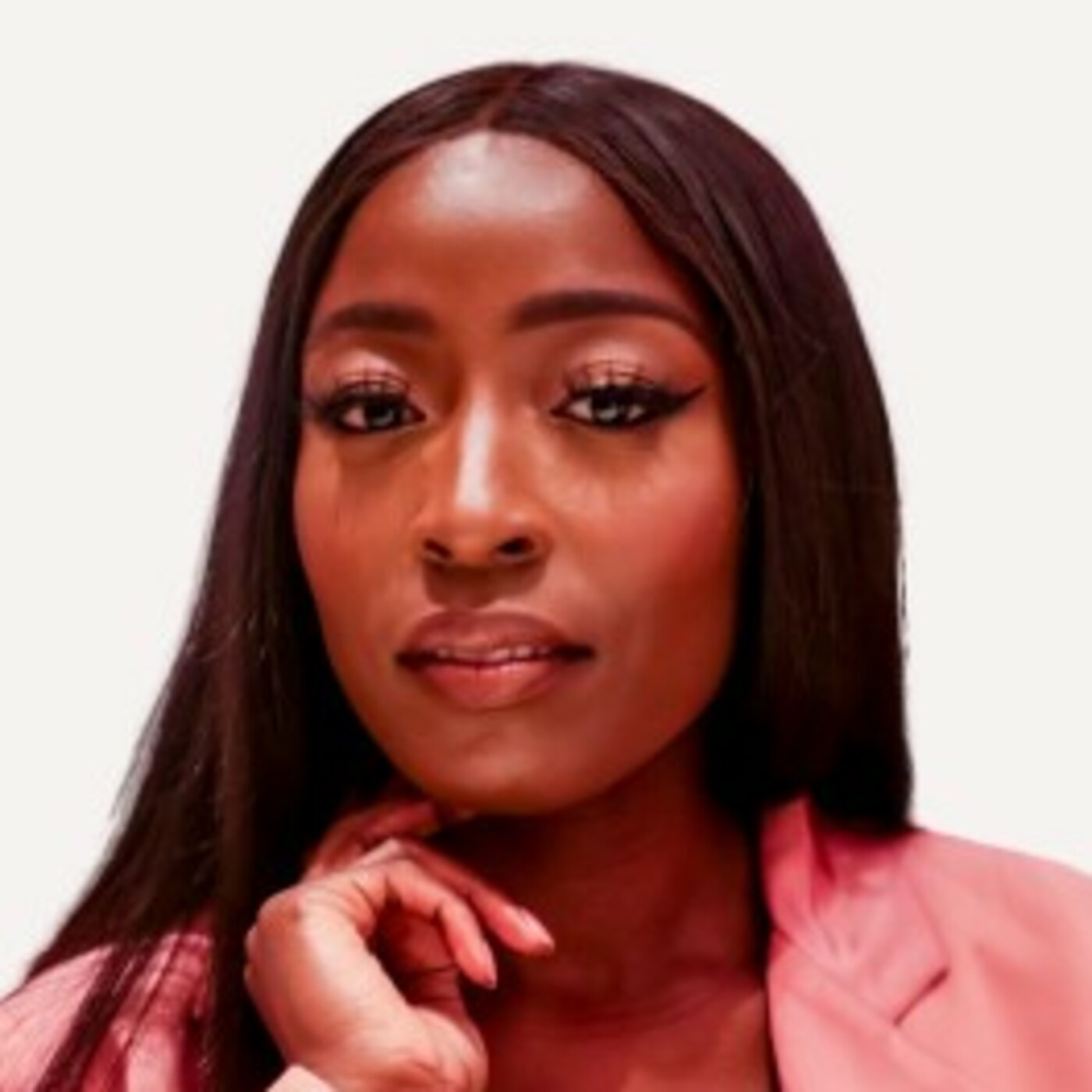
Aoifinn Devitt: Let’s find out how our next guest learned to not be defined by failure and an unexpected source of inspiration to overcome imposter syndrome. I’m Aoifinn Devitt, and welcome to the 50 Faces podcast, a podcast committed to revealing the richness and diversity of the world of investment by focusing on its people and their stories. I’m joined today by Yvonne Bajella, who is an investor in early-stage companies at Impact X Capital, which invests in startups across Europe, the Middle East, and Africa. She’s worked across the globe in investment banking, corporate venture capital, and in academia, and is a frequent speaker on the topics of entrepreneurship and female empowerment. She was listed as a member of the Forbes 30 Under 30. Welcome, Yvonne, thank you for joining me today.
Yvonne: Thank you so much for having me, it’s such a privilege to be joining you today.
Aoifinn Devitt: Let’s start with your journey into startup investing. Where did it start and did it take any surprising turns along the way?
Yvonne: So I always knew that I wanted to go into finance from a younger age. I was very good at maths from a young age and unlike most children that would spend their weekends playing out, I spent my weekends following markets and reading the Financial Times over the weekend with my dad. And so on leaving university, I did I didn’t really know about the world of venture capital because, you know, the venture capital industry is generally quite obscure. I was very fortunate to start my career at Goldman Sachs in banking. So I immediately became exposed to some of the deals taking place, such as, you know, the Facebook IPO. And that started to help me get an understanding of how some of these companies are, in a majority of cases, funded by venture capitalists in their very early stages. And then they grow on to be these multi-billion-dollar companies. And so that’s where I started to get an interest in venture capital. That banking wasn’t for me. So I remember telling my parents I wanted to leave, and obviously my dad was very horrified at the time. But I knew that, you know, I wanted to pursue a career in venture capital. So in summer of 2013, I actually spent the summer in Ghana, and I was providing pro bono advisory services to startups there. And it was very interesting, because at the time, a number of, you know, US venture capitalists were exploring the Africa startup ecosystem. And there started to be a lot of interest. And that’s where I really caught the entrepreneurship bug, I guess, and knew that, you know, venture capital was definitely the path I wanted to pursue. And so I was very fortunate to join a corporate venture capital arm of a Japanese investment company called Mitsui. And that was really my first step into the world of investments, direct investments. And I really, really enjoyed it there. And then fast forward today, I’m at Impact X.
Aoifinn Devitt: And before diving into a little bit about the dynamics of venture capital, just to trace back to your own journey into looking at your path in education, what did you study? And was there anything in particular that you found useful now in your day-to-day work?
Yvonne: Sure, so I studied economics and finance at university, and I think that definitely gave me that foundation in terms of how the global economy works, the impact that it has on various aspects of the economy, and so on. But in all honesty, I don’t necessarily think it’s applied directly to the world of venture capital. And then I’m saying that because there’s no one-size-fits-all approach to becoming a VC. I have friends that were former doctors, I have friends that are former marketeers and engineers that have broken into VC. And so I don’t necessarily think my education helped. I think it definitely did provide me with a good solid foundation into how the global economy works and so on. But in terms of VC itself, no. I would say that I was always, you know, quite intellectually curious growing up. And so the best education for me in terms of the world of VC has really been reading books, listening to podcasts by other veterans in the industry, and spending time with other startups as well.
Aoifinn Devitt: When it comes to what you look for in a startup, is there any one trait, either in a founder or one characteristic of a business model, that you’re looking to see?
Yvonne: Given the fact that we invest at the very early stages, for me, the key thing that I always look for is the entrepreneurs. So who is behind the team that is building the product or service? And the reason why that’s so important is because building a company at the very early stages is very, very tough. And so I want to ensure that the entrepreneur has the resilience. I want to know that they’re going to carry through the vision and not hang out throw out the towel when things get tough. And so I’m always looking to understand how obsessed the entrepreneur is with tackling the problem that they’re trying to solve. And does the company have a broader speaking, you know, solid team, as essentially it’s the team that’s going to get the product or service from being an idea and building out that vision. I’m also interested in what gives the team that competitive edge, why they’re going to win, and why now. Secondly to that, I’m always looking for validation. I think that you can have a great idea, you can think that it’s going to be groundbreaking, until customers actually give you feedback and say, this is something that we need or want, we don’t actually know that. It can’t be just the entrepreneur’s family, their mother saying that this is a good product. We need some external validation within the market.
Aoifinn Devitt: And when it comes to assistance that you might provide through Impact X, besides capital, do you provide advice, other kinds of that kind of incubation-style services that an entrepreneur might need?
Yvonne: Yeah, so as a venture capitalist, I always say that I always see myself as almost like an extension to the team, where if any help is required, then where possible, I would look to provide that support. And so some days I spend my time working with entrepreneurs, helping them build out their fundraising strategy and seeing who I can connect them to in terms of investors. Other times it’s, you know, helping with recruitment. So they’re looking for a new technical individual, And so again, that’s helping, tapping into my network, seeing whether there’s any potential candidates, or connect a number of recruiters. It really does vary, and that’s one thing that I really love about the job, is that no day is the same, and the work that we do just very much depends on the needs of the companies that we’re working with as well.
Aoifinn Devitt: And I suppose you’re quite different in that you’ve got such a global focus in your venture capital work. Is there any sector or region that really excites you right now, and why?
Yvonne: I think right now I’m really, really interested in companies that have you maybe, know, really figured out where the world is going. Like, no one can predict the future accurately. However, what I’m really excited about is companies that have seen opportunities that have emerged due to COVID-19, for example, or in the midst of this recession that we’re currently in, and are trying to tackle the problems that are emerging. I think they’re the companies that are going to do really well, as we saw in 2008, as we saw in the aftermath of the financial crisis. Some of the largest companies that we know of today, such as WhatsApp, Airbnb, emerged during that period. And so I think we’re going to see a similar thing today whereby a number of new problems are emerging, and there’s companies that are trying to tackle those. A great example is a supply chain company that I’ve been in conversations with. Supply chains have been disrupted globally due to the pandemic. And so seeing a startup being able to really leverage that and tackle that issue, I think puts them in a really good position for the post-pandemic world.
Aoifinn Devitt: And obviously, in a venture capital role, there are going to be a lot of hits and misses, sometimes a lot more misses than hits, if the statistics are anything to go by. What has this experience taught you in terms of taking risk, dealing with disappointment, dealing with failure, and how to assess risk in an investment context?
Yvonne: Yeah, so I guess for me, I always— the way in which I think of failure is it’s part of the business. And so I personally have always known not to fear failure. And the reason being is because you learn from it. So even if you do try something and you fail, it’s not the end of the world. You do go on and you can go on and learn from those mistakes and go on and build something better. And I guess having worked internationally, having worked in Israel, having worked with entrepreneurs in Kenya or in Nigeria, in Silicon Valley and so on, one thing that it’s really taught me is seeing entrepreneurs fail, rise up from those failures, and going on to do great things, it’s just showed me that failure is not the end. We’re not to be defined by our failures. And that’s something that I learned very early on in my career, to take risk, because without taking risks, there’s no great reward. And that’s my perspective on how I view things.
Aoifinn Devitt: And how about female and minority founders? I mean, minority, say, within the context of the US or here. Obviously, in Africa, they may not be a minority there. Is their experience different from the mainstream currently, do you think?
Yvonne: Absolutely. If you look at the past decade, the world of VC has accelerated very well. Over $1.5 trillion has been invested in venture capital deals, and most of that has come in the most recent years. But again, if you look at the data, for example, looking at Black founders more specifically, last year, the Atomico report, State of Europe report, highlighted the fact that less than 0.5% of venture capital went into Black entrepreneurs. Across Europe. And so what that does is highlight the clear systemic issues that exist within the venture capital ecosystem as we know it today. And the same applies to female founders, where the numbers are quite dire as well. But what I do believe is venture capital can be a major force for change, but it can’t be a major force for change if it’s not accessible for all. And we need to make sure that we’re building products and services that are accessible for all, which is why the way I see the issue that currently exists is The venture capital industry is known for being an old boys’ club because industry has historically been small, exclusive. As I mentioned earlier, it’s quite an obscure industry, and so many firms have less than 10 people. And across the industry, although this this is, is starting to change, the majority of the partners have traditionally been white male partners, and they tend to invest in people that come from their networks and so on. So if you’re not getting access to those networks, then essentially getting access to funding becomes very tough. Particularly in the industry whereby up until recently you couldn’t actually reach out to a venture capitalist firm just based on their website or just by getting an email because they wouldn’t actually advertise that. It would have to be through a warm introduction. So that comes back to the whole point about access. If you don’t have that access, then how are you actually going to get in front of a VC and raise that capital? And so that’s one of the key issues. From a pipeline perspective, I personally don’t believe that there’s an issue. I constantly come across incredible female entrepreneurs and entrepreneurs from various other backgrounds that are doing great things.
Aoifinn Devitt: And within the venture capital industry, you mentioned that female venture capitalists, Black venture capitalists, are in a minority. That said, is there any kind of affinity group or any kind of network within the industry of female venture capitalists, perhaps altogether, so you can share best practice, share ideas, and ultimately build a network there, because you may not have it, say, within an individual firm?
Yvonne: Yeah, so there’s a few groups, actually. So there’s, you know, Women in VC, which I’m a part of, and for minorities, there is a group actually that I’m also part of called 10×10 BC, and essentially it’s all the Black VCs here in the UK. And being part of those communities are great because we’re able to share deals, we’re able to you discuss, know, challenges within the ecosystem, and also address the access issue as well, collectively.
Aoifinn Devitt: Thank you for shining a light on that, because I don’t think that’s that well known, those networks within the very small network of venture capitalists itself, so that’s— it’s good to bring some visibility to that. Looking back at your own career, were there any key people— you already mentioned your father, and obviously you did early introduction to Financial Times, investing, economics— any key people that influenced you along the way, and in what way?
Yvonne: Yeah, so I guess, like, I would like to reiterate, you know, the significance that my dad did play along my career, giving me that solid foundation in finance, how markets operate. That led to me pursuing a career in finance, as I knew how money could play such an influential role in shaping economies and ecosystems. Systems. And growing up, I was determined to change the world from a financial perspective because of that. Someone who’s also influenced me is Serena Williams, and despite her being a sports star and more recently a venture capitalist, I love how multifaceted she is. And in spite of all the adversity that she’s faced and the fact that she has dealt with imposter syndrome, which is something that I very much dealt with early on in my career, knowing that someone that has achieved so much and arguably is the greatest tennis player of all time has dealt with that really gave me the confidence. And it helped me realize that it’s normal to have imposter syndrome, but it’s a matter of how you actually respond to it. And finally, another person I would say that’s, that’s been quite influential is Robert Smith. So he’s the founder of Vista Equity Partners over in the US, and he’s someone that has really demonstrated how through his career he’s a very, very successful investor, but at the same time he’s also a great philanthropist. And it’s great to see how he’s using his position to also make society and the world a better place.
Aoifinn Devitt: And I know you do a lot of that, in that you are seen as a sort of voice for entrepreneurship and female empowerment. Can you talk about some of the organizations you’re involved in besides Impact X?
Yvonne: Yeah, so there’s, there’s a number of organizations I support. I have worked with 50 in Tech, for example, which is an organization which is really trying to bridge the gap in terms of getting more females working in tech and also getting more females funded. So I work very closely with them. I’ve worked with a number of organizations such as Google and so on, really trying to address the gap again, and I guess get people to shift their thinking beyond just gender diversity as well.
Aoifinn Devitt: And when you look at any advice you’ve received in your career from mentors or co-workers or outside your professional development, Was there any one piece of advice that made an impact on you, or any creed or motto that you live by now?
Yvonne: Oh, I would say that, you know, the best advice I received during my time at university actually was from a friend, and it was that I shouldn’t be afraid to take risk and I should see things from a longer perspective. In university, as a student, you are sometimes— I guess you’re wondering what the world’s going to look like post-graduation and whether you’ll end up in the career that’s going to span 20, 30 years. And we live in a society today where people want answers, people want to have their whole future figured out, and things don’t happen so quickly. So for me, for example, I’ve gone into 3 different positions. I started out in banking, went into strategy consulting before breaking into VC. And it’s okay, like, we just have to learn to see our careers as a marathon and not a sprint, and we don’t have to have everything figured out. And it’s very similar to operating in the world of VC because venture capitalists are typically not expecting to generate a return for 5 to 10 years. And so I do think that that’s the best advice I received, that view things with a longer-term perspective, don’t just think about the, the short term.
Aoifinn Devitt: And what is it that you like most about the investment world?
Yvonne: I absolutely love the fact that I’m able to work with some of the most forward-thinking, intelligent people on a daily basis. So being able to invest in incredible companies led by absolutely visionary leaders that are going to potentially reshape their industries is a privilege that I don’t take lightly. Over the years, I’ve worked with many entrepreneurs that I’ve personally— I’ve learned so much from. And I always say, as an investor, you rarely know as much about the industry as the entrepreneurs that you’re working with do. And as I mentioned, I’m intellectually curious. I love the fact that I’m able to soak up so much information on different industries, whilst also playing a little part in helping that founder’s vision come to life.
Aoifinn Devitt: And in terms of— we already talked about the challenges faced by female and minority founders. What are your thoughts on the current levels of diversity in the investment world? Some of the recent statements that have been made by very large companies around their desire to change that and improve matters, and how do you see that it’s improving currently in terms of it being diverse?
Yvonne: Yeah, so I would say that change is happening, but it’s going to take some time for there to be a dramatic shift. I’m very glad that the conversations are taking place and more action is being taken, because I think ultimately how we solve this is firms need to be more proactive, first of all in terms of their hiring, and also in terms of them actually going out and trying to seek diverse pipeline. So not tapping into their usual networks. And so the whole Black Lives Matter movement has really shone a light on what more needs to be done. And so my hope is that in years to come, we’re no longer talking about more diversity being required, and that it’s, it’s become the norm.
Aoifinn Devitt: Well, thank you, Yvonne. It’s been a real pleasure speaking with you today, and thank you for your contribution to the conversation around entrepreneurship, female empowerment, and the possibilities within venture capital. Thank you for sharing your insights with us.
Yvonne: Thank you for having me.
Aoifinn Devitt: I’m Aoifinn Devitt. Thank you for listening to the 50 Faces podcast. If you liked what you heard and would like to tune in to hear more inspiring investors and their personal journeys, please subscribe on Apple Podcasts or wherever you get your podcasts. This podcast is for informational purposes only and should not be construed as investment advice, and all views are personal and should not be attributed to the organizations and affiliations of the host or any guest.
Aoifinn Devitt: Let’s find out how our next guest learned to not be defined by failure and an unexpected source of inspiration to overcome imposter syndrome. I’m Aoifinn Devitt, and welcome to the 50 Faces podcast, a podcast committed to revealing the richness and diversity of the world of investment by focusing on its people and their stories. I’m joined today by Yvonne Bajella, who is an investor in early-stage companies at Impact X Capital, which invests in startups across Europe, the Middle East, and Africa. She’s worked across the globe in investment banking, corporate venture capital, and in academia, and is a frequent speaker on the topics of entrepreneurship and female empowerment. She was listed as a member of the Forbes 30 Under 30. Welcome, Yvonne, thank you for joining me today.
Yvonne: Thank you so much for having me, it’s such a privilege to be joining you today.
Aoifinn Devitt: Let’s start with your journey into startup investing. Where did it start and did it take any surprising turns along the way?
Yvonne: So I always knew that I wanted to go into finance from a younger age. I was very good at maths from a young age and unlike most children that would spend their weekends playing out, I spent my weekends following markets and reading the Financial Times over the weekend with my dad. And so on leaving university, I did I didn’t really know about the world of venture capital because, you know, the venture capital industry is generally quite obscure. I was very fortunate to start my career at Goldman Sachs in banking. So I immediately became exposed to some of the deals taking place, such as, you know, the Facebook IPO. And that started to help me get an understanding of how some of these companies are, in a majority of cases, funded by venture capitalists in their very early stages. And then they grow on to be these multi-billion-dollar companies. And so that’s where I started to get an interest in venture capital. That banking wasn’t for me. So I remember telling my parents I wanted to leave, and obviously my dad was very horrified at the time. But I knew that, you know, I wanted to pursue a career in venture capital. So in summer of 2013, I actually spent the summer in Ghana, and I was providing pro bono advisory services to startups there. And it was very interesting, because at the time, a number of, you know, US venture capitalists were exploring the Africa startup ecosystem. And there started to be a lot of interest. And that’s where I really caught the entrepreneurship bug, I guess, and knew that, you know, venture capital was definitely the path I wanted to pursue. And so I was very fortunate to join a corporate venture capital arm of a Japanese investment company called Mitsui. And that was really my first step into the world of investments, direct investments. And I really, really enjoyed it there. And then fast forward today, I’m at Impact X.
Aoifinn Devitt: And before diving into a little bit about the dynamics of venture capital, just to trace back to your own journey into looking at your path in education, what did you study? And was there anything in particular that you found useful now in your day-to-day work?
Yvonne: Sure, so I studied economics and finance at university, and I think that definitely gave me that foundation in terms of how the global economy works, the impact that it has on various aspects of the economy, and so on. But in all honesty, I don’t necessarily think it’s applied directly to the world of venture capital. And then I’m saying that because there’s no one-size-fits-all approach to becoming a VC. I have friends that were former doctors, I have friends that are former marketeers and engineers that have broken into VC. And so I don’t necessarily think my education helped. I think it definitely did provide me with a good solid foundation into how the global economy works and so on. But in terms of VC itself, no. I would say that I was always, you know, quite intellectually curious growing up. And so the best education for me in terms of the world of VC has really been reading books, listening to podcasts by other veterans in the industry, and spending time with other startups as well.
Aoifinn Devitt: When it comes to what you look for in a startup, is there any one trait, either in a founder or one characteristic of a business model, that you’re looking to see?
Yvonne: Given the fact that we invest at the very early stages, for me, the key thing that I always look for is the entrepreneurs. So who is behind the team that is building the product or service? And the reason why that’s so important is because building a company at the very early stages is very, very tough. And so I want to ensure that the entrepreneur has the resilience. I want to know that they’re going to carry through the vision and not hang out throw out the towel when things get tough. And so I’m always looking to understand how obsessed the entrepreneur is with tackling the problem that they’re trying to solve. And does the company have a broader speaking, you know, solid team, as essentially it’s the team that’s going to get the product or service from being an idea and building out that vision. I’m also interested in what gives the team that competitive edge, why they’re going to win, and why now. Secondly to that, I’m always looking for validation. I think that you can have a great idea, you can think that it’s going to be groundbreaking, until customers actually give you feedback and say, this is something that we need or want, we don’t actually know that. It can’t be just the entrepreneur’s family, their mother saying that this is a good product. We need some external validation within the market.
Aoifinn Devitt: And when it comes to assistance that you might provide through Impact X, besides capital, do you provide advice, other kinds of that kind of incubation-style services that an entrepreneur might need?
Yvonne: Yeah, so as a venture capitalist, I always say that I always see myself as almost like an extension to the team, where if any help is required, then where possible, I would look to provide that support. And so some days I spend my time working with entrepreneurs, helping them build out their fundraising strategy and seeing who I can connect them to in terms of investors. Other times it’s, you know, helping with recruitment. So they’re looking for a new technical individual, And so again, that’s helping, tapping into my network, seeing whether there’s any potential candidates, or connect a number of recruiters. It really does vary, and that’s one thing that I really love about the job, is that no day is the same, and the work that we do just very much depends on the needs of the companies that we’re working with as well.
Aoifinn Devitt: And I suppose you’re quite different in that you’ve got such a global focus in your venture capital work. Is there any sector or region that really excites you right now, and why?
Yvonne: I think right now I’m really, really interested in companies that have you maybe, know, really figured out where the world is going. Like, no one can predict the future accurately. However, what I’m really excited about is companies that have seen opportunities that have emerged due to COVID-19, for example, or in the midst of this recession that we’re currently in, and are trying to tackle the problems that are emerging. I think they’re the companies that are going to do really well, as we saw in 2008, as we saw in the aftermath of the financial crisis. Some of the largest companies that we know of today, such as WhatsApp, Airbnb, emerged during that period. And so I think we’re going to see a similar thing today whereby a number of new problems are emerging, and there’s companies that are trying to tackle those. A great example is a supply chain company that I’ve been in conversations with. Supply chains have been disrupted globally due to the pandemic. And so seeing a startup being able to really leverage that and tackle that issue, I think puts them in a really good position for the post-pandemic world.
Aoifinn Devitt: And obviously, in a venture capital role, there are going to be a lot of hits and misses, sometimes a lot more misses than hits, if the statistics are anything to go by. What has this experience taught you in terms of taking risk, dealing with disappointment, dealing with failure, and how to assess risk in an investment context?
Yvonne: Yeah, so I guess for me, I always— the way in which I think of failure is it’s part of the business. And so I personally have always known not to fear failure. And the reason being is because you learn from it. So even if you do try something and you fail, it’s not the end of the world. You do go on and you can go on and learn from those mistakes and go on and build something better. And I guess having worked internationally, having worked in Israel, having worked with entrepreneurs in Kenya or in Nigeria, in Silicon Valley and so on, one thing that it’s really taught me is seeing entrepreneurs fail, rise up from those failures, and going on to do great things, it’s just showed me that failure is not the end. We’re not to be defined by our failures. And that’s something that I learned very early on in my career, to take risk, because without taking risks, there’s no great reward. And that’s my perspective on how I view things.
Aoifinn Devitt: And how about female and minority founders? I mean, minority, say, within the context of the US or here. Obviously, in Africa, they may not be a minority there. Is their experience different from the mainstream currently, do you think?
Yvonne: Absolutely. If you look at the past decade, the world of VC has accelerated very well. Over $1.5 trillion has been invested in venture capital deals, and most of that has come in the most recent years. But again, if you look at the data, for example, looking at Black founders more specifically, last year, the Atomico report, State of Europe report, highlighted the fact that less than 0.5% of venture capital went into Black entrepreneurs. Across Europe. And so what that does is highlight the clear systemic issues that exist within the venture capital ecosystem as we know it today. And the same applies to female founders, where the numbers are quite dire as well. But what I do believe is venture capital can be a major force for change, but it can’t be a major force for change if it’s not accessible for all. And we need to make sure that we’re building products and services that are accessible for all, which is why the way I see the issue that currently exists is The venture capital industry is known for being an old boys’ club because industry has historically been small, exclusive. As I mentioned earlier, it’s quite an obscure industry, and so many firms have less than 10 people. And across the industry, although this this is, is starting to change, the majority of the partners have traditionally been white male partners, and they tend to invest in people that come from their networks and so on. So if you’re not getting access to those networks, then essentially getting access to funding becomes very tough. Particularly in the industry whereby up until recently you couldn’t actually reach out to a venture capitalist firm just based on their website or just by getting an email because they wouldn’t actually advertise that. It would have to be through a warm introduction. So that comes back to the whole point about access. If you don’t have that access, then how are you actually going to get in front of a VC and raise that capital? And so that’s one of the key issues. From a pipeline perspective, I personally don’t believe that there’s an issue. I constantly come across incredible female entrepreneurs and entrepreneurs from various other backgrounds that are doing great things.
Aoifinn Devitt: And within the venture capital industry, you mentioned that female venture capitalists, Black venture capitalists, are in a minority. That said, is there any kind of affinity group or any kind of network within the industry of female venture capitalists, perhaps altogether, so you can share best practice, share ideas, and ultimately build a network there, because you may not have it, say, within an individual firm?
Yvonne: Yeah, so there’s a few groups, actually. So there’s, you know, Women in VC, which I’m a part of, and for minorities, there is a group actually that I’m also part of called 10×10 BC, and essentially it’s all the Black VCs here in the UK. And being part of those communities are great because we’re able to share deals, we’re able to you discuss, know, challenges within the ecosystem, and also address the access issue as well, collectively.
Aoifinn Devitt: Thank you for shining a light on that, because I don’t think that’s that well known, those networks within the very small network of venture capitalists itself, so that’s— it’s good to bring some visibility to that. Looking back at your own career, were there any key people— you already mentioned your father, and obviously you did early introduction to Financial Times, investing, economics— any key people that influenced you along the way, and in what way?
Yvonne: Yeah, so I guess, like, I would like to reiterate, you know, the significance that my dad did play along my career, giving me that solid foundation in finance, how markets operate. That led to me pursuing a career in finance, as I knew how money could play such an influential role in shaping economies and ecosystems. Systems. And growing up, I was determined to change the world from a financial perspective because of that. Someone who’s also influenced me is Serena Williams, and despite her being a sports star and more recently a venture capitalist, I love how multifaceted she is. And in spite of all the adversity that she’s faced and the fact that she has dealt with imposter syndrome, which is something that I very much dealt with early on in my career, knowing that someone that has achieved so much and arguably is the greatest tennis player of all time has dealt with that really gave me the confidence. And it helped me realize that it’s normal to have imposter syndrome, but it’s a matter of how you actually respond to it. And finally, another person I would say that’s, that’s been quite influential is Robert Smith. So he’s the founder of Vista Equity Partners over in the US, and he’s someone that has really demonstrated how through his career he’s a very, very successful investor, but at the same time he’s also a great philanthropist. And it’s great to see how he’s using his position to also make society and the world a better place.
Aoifinn Devitt: And I know you do a lot of that, in that you are seen as a sort of voice for entrepreneurship and female empowerment. Can you talk about some of the organizations you’re involved in besides Impact X?
Yvonne: Yeah, so there’s, there’s a number of organizations I support. I have worked with 50 in Tech, for example, which is an organization which is really trying to bridge the gap in terms of getting more females working in tech and also getting more females funded. So I work very closely with them. I’ve worked with a number of organizations such as Google and so on, really trying to address the gap again, and I guess get people to shift their thinking beyond just gender diversity as well.
Aoifinn Devitt: And when you look at any advice you’ve received in your career from mentors or co-workers or outside your professional development, Was there any one piece of advice that made an impact on you, or any creed or motto that you live by now?
Yvonne: Oh, I would say that, you know, the best advice I received during my time at university actually was from a friend, and it was that I shouldn’t be afraid to take risk and I should see things from a longer perspective. In university, as a student, you are sometimes— I guess you’re wondering what the world’s going to look like post-graduation and whether you’ll end up in the career that’s going to span 20, 30 years. And we live in a society today where people want answers, people want to have their whole future figured out, and things don’t happen so quickly. So for me, for example, I’ve gone into 3 different positions. I started out in banking, went into strategy consulting before breaking into VC. And it’s okay, like, we just have to learn to see our careers as a marathon and not a sprint, and we don’t have to have everything figured out. And it’s very similar to operating in the world of VC because venture capitalists are typically not expecting to generate a return for 5 to 10 years. And so I do think that that’s the best advice I received, that view things with a longer-term perspective, don’t just think about the, the short term.
Aoifinn Devitt: And what is it that you like most about the investment world?
Yvonne: I absolutely love the fact that I’m able to work with some of the most forward-thinking, intelligent people on a daily basis. So being able to invest in incredible companies led by absolutely visionary leaders that are going to potentially reshape their industries is a privilege that I don’t take lightly. Over the years, I’ve worked with many entrepreneurs that I’ve personally— I’ve learned so much from. And I always say, as an investor, you rarely know as much about the industry as the entrepreneurs that you’re working with do. And as I mentioned, I’m intellectually curious. I love the fact that I’m able to soak up so much information on different industries, whilst also playing a little part in helping that founder’s vision come to life.
Aoifinn Devitt: And in terms of— we already talked about the challenges faced by female and minority founders. What are your thoughts on the current levels of diversity in the investment world? Some of the recent statements that have been made by very large companies around their desire to change that and improve matters, and how do you see that it’s improving currently in terms of it being diverse?
Yvonne: Yeah, so I would say that change is happening, but it’s going to take some time for there to be a dramatic shift. I’m very glad that the conversations are taking place and more action is being taken, because I think ultimately how we solve this is firms need to be more proactive, first of all in terms of their hiring, and also in terms of them actually going out and trying to seek diverse pipeline. So not tapping into their usual networks. And so the whole Black Lives Matter movement has really shone a light on what more needs to be done. And so my hope is that in years to come, we’re no longer talking about more diversity being required, and that it’s, it’s become the norm.
Aoifinn Devitt: Well, thank you, Yvonne. It’s been a real pleasure speaking with you today, and thank you for your contribution to the conversation around entrepreneurship, female empowerment, and the possibilities within venture capital. Thank you for sharing your insights with us.
Yvonne: Thank you for having me.
Aoifinn Devitt: I’m Aoifinn Devitt. Thank you for listening to the 50 Faces podcast. If you liked what you heard and would like to tune in to hear more inspiring investors and their personal journeys, please subscribe on Apple Podcasts or wherever you get your podcasts. This podcast is for informational purposes only and should not be construed as investment advice, and all views are personal and should not be attributed to the organizations and affiliations of the host or any guest.