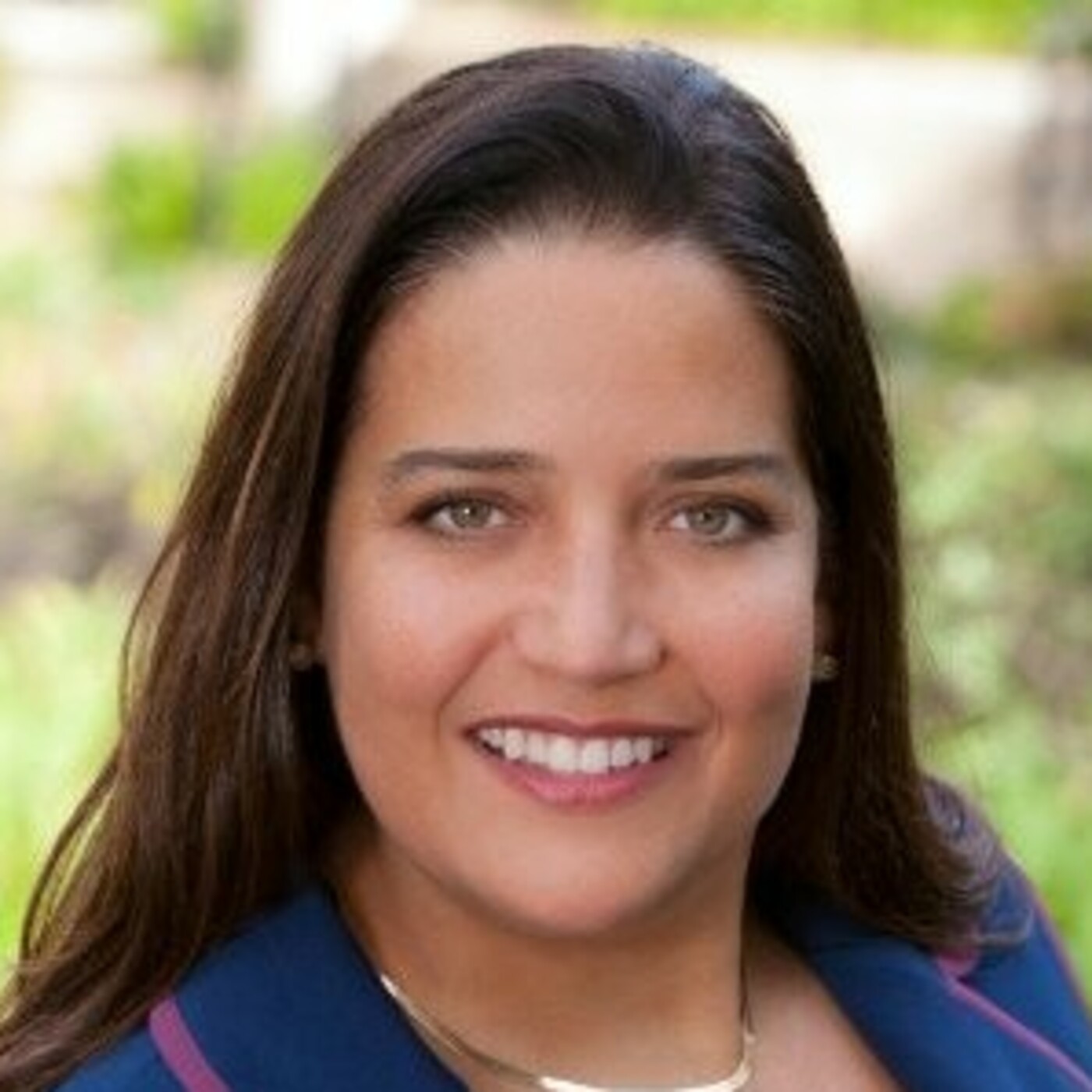
Aoifinn Devitt: Let’s find out how this founder of an investment firm works to achieve a win-win when building her business, how her aptitude to recognize patterns drives her love for the fragmented investment industry, and why she is optimistic about what the next decade holds. I’m Aoifinn Devitt, and welcome to the 50 Faces Podcast, a podcast committed to revealing the richness and diversity of the world of investment by focusing on its people and their stories. I’m joined today by Michelle Allen, who is President and Chief Investment Officer of Metis Global Partners, a firm she founded in November 2013. The firm, based in San Diego, is focused on global equity investment across the size spectrum from microcap to large cap. She previously spent time as an equity and research analyst at a range of asset management firms. Welcome, Michelle. Thank you for joining me today.
32. Machel Allen: Thanks, Yvonne. Happy to be here.
Aoifinn Devitt: Let’s start with talking about your career journey. How did it start and did it take any unusual turns along the way?
32. Machel Allen: Well, I started in the industry in the early ’90s, and I really stumbled into this industry. It was not a career plan of mine. In fact, I was in my early 20s and wasn’t quite sure what direction I wanted to take. I had just moved to Atlanta. I quickly hooked up with a placement company and they placed me with an organization called Wyatt Investment Consulting, which I knew nothing about what they did, but they needed someone who would help them populate their new “electronic manager database.” This was the first of the kind in the industry, so I’m dating myself, I’m quite sure, but my job at the time was to I received these packages from these investment managers and it had a paper copy of their answered questionnaire and then it had a 5.5-inch floppy disk and it was my job to put that disk in my computer and close the hatch and push the inner button and watch all the data populate on my MS-DOS screen and make sure that everything was populated correctly. It didn’t take long at all before I just got really interested in what that information was. What is an equity? What is fixed income? What is growth and value? Market caps and all of these things. Along the way, I effectively cultivated an early career as a manager research analyst at a consulting firm. And I always thought that was in hindsight, perfect hindsight, a great way to enter the industry because it gives you such a global view of all the moving parts of our industry. You can see all the different asset classes and the type of managers and the types of allocators and how all these pieces are used. So that was some of my early experience. And then I was, I was courted away to another consulting firm in town, which really expanded again one more time, my views and understanding and knowledge of the industry as I took on more traditional consulting roles. You know, this was also a, interestingly, and this played in later in my career, this was also a firm that was owned by a PhD mathematician. So there was a lot of model development, a lot of quantitative work, a lot of those risk models you see today out in the marketplace space we were actually developing organically in that firm. And so that’s where I really started to kind of wet my chops in the quantitative space and develop that toolkit. And while I was there, after a little bit of time there, I you realized, know, this is definitely the industry for me, but I really want to be on the buy side. I want to be an analyst. I want to be a PM. So I went back to graduate school and I was fortunate to go to a school that had a very focused investment program within their MBA program and finished that up and went to Wall Street, went to work for a big investment firm in Wall Street. That’s really where I had my first experiences investing, direct investing as opposed to just consulting role and was an analyst there, actually on their first international equity team. So that’s again, a foray into the global side for me. I also had the opportunity there to begin to do some product development work in concert with, with some of the ideas we had for, for new portfolios. And then finally, my last stop before starting my own firm was, you know, kind of moving back to the West Coast and joining Brandis Investment Partners. And, and that’s really where all of the pieces of my background, know, you valuation knowledge and expertise and quantitative capabilities really started to blend together product development. And at Brandis, I launched their quantitative research capabilities there, and it was a little bit different than your traditional quantitative, and I think that’s why I was a good fit for that was because it was really about, you know, kind of using quantitative capabilities in support of a very long-term valuation-oriented approach. So that just dovetailed very well, and ultimately that work manifested invested, the investment process that we use today at Metis. So kind of this windy road, but you had all these pieces that ultimately fit together and served the purpose of what I’m doing today. And I think, you know, you asked about surprises. I think that’s in hindsight, if there was one, I think that’s it, is how, you know, all of those pieces were so necessary to fit together for me to be able to do what I’m doing today.
Aoifinn Devitt: As an independent majority women-owned firm, you are in a distinct minority. Still within the asset management universe. Why do you think there are not more women-owned firms? And do you think that their experience is improving today versus, say, a decade ago?
32. Machel Allen: Well, I think there’s not more firms today because of the pipeline historically. I mean, I think that’s, that’s pretty simple math. There’s— I don’t think there is or should be any smoke or mystery there. There is a— we can look at the history of women ascending into senior levels of larger investment firms, which is really the fertile ground for folks to spin out and start their own firms and see that they just weren’t there. Very, very, very few of them. And that was for reasons that are now being, I think, acknowledged and discussed openly and I think increasingly acted on openly. And it’s not just because women weren’t in— invested interested in finance, for those of you thinking that’s the answer. But I think that’s why today we don’t have a lot of women investment firms. I think that coupled with the few that did come out, having the networks to access the capital requisite to get an institutional firm up and running and through breakeven, which is not a small amount of money, is an additional hurdle. And obviously, there’s conversations going on today in venture capital about the really disproportionate distribution of capital, venture capital or private equity, historically between women and men founders. So I think we know about all those things today, but that’s think why. I you asked the second part of that was, do I think it’s getting any better? Well, I think the kind of unveiling of the drivers of that, that’s been going on in recent times and seems to have accelerated some this year is a really important part of that getting better. And so yes, there’s definitely, the wheels are turning, and I think awareness and acknowledgement’s a big part of that. I’m really excited for the next 10 years because what I’m seeing when I look down the pipeline, both organically and also as organizations are trying to be really intentional about shifting it, is I’m seeing kind of a lot of the hurdles or boundaries that historically may have created some additional challenges for women to move naturally through a career path are starting to be smoothed out. You know, kind of the women that are in the 25 to 35-year-old range in this industry, which I interact with quite a bit, as much as I can, is just awesome. So I am very excited about that next generation of women professionals, and I don’t think we should be waiting 10 years. I think it’s happening now, but I like the direction things are going.
Aoifinn Devitt: That’s so exciting to hear. And obviously, taking the leap to set up your own firm is quite a big leap and not for everyone. Were there any key people who influenced you throughout your career whether in making that decision or just in other decisions that you made?
32. Machel Allen: Yes, there were. I mean, I don’t think we can ever underestimate the impact of folks that come in and out of our careers. But I think for me, there was a key person that’s been with me through my whole career. I think I was very fortunate at a young age to acquire a mentor. Her name was June Debedin. She was a true pioneer herself in the pension industry. She has this amazing career story that dates back to the ’70s. Was one of the early international pension consultants. And I think one of the things that she really impressed on me very early on as a young professional was that while my intellect and my ability to create differentiated work was going to be requisite, at the end of the day, this is a people industry, Michelle. I can still actually hear her in my voice, in my head saying And that. So, For all of the decisions, which inevitably every key decision in my career over the last almost 30 years, she’s always been one of the first phone calls I made. She would always direct me back to, you know, obviously the core decision issue that needed to be made, but also the importance of the relationships that would help facilitate those decisions and those goals and what would come out of them. And in fact, know, you fast forward to my firm launching, the ability for me to even find working capital to launch my firm was really a direct result of her example of her career long-term relationships. She connected me with her first mentor, a gentleman by the name of Wendell Stark, and who was actually the founder of Invesco. She had worked for him in the ’70s. And so you can just see how these chain links of these relationships through time, how they weave such an important component to actually being able to wed your capabilities with actually realizing them. And so Wendell actually became my operating capital partner, and just a great testament to the early lessons she was teaching me as well.
Aoifinn Devitt: So besides that then, was there any other piece of advice that you’ve received that’s made an impact on how you work or see the world?
32. Machel Allen: Yeah, I mean, I think that— well, I got one piece of advice that I use everywhere, but I think it’s It was more from— maybe it’s not just more for me personally, but I got this piece of advice from a woman that I worked with again as a younger professional. And I think I was lamenting about being frustrated about not being able to move something faster or project this or that. And she said, Michelle, your career is a marathon. It’s not a sprint. And it literally just stopped me in my tracks. And then I reflected on that and that has stayed with me forever. And truer words literally were never spoken. So I think that was a nice little sage piece of advice that I picked up along the way. But I think the— The biggest thing that’s probably affected the way that I approach how I work and I see the world is really more of a kind of a philosophical mindset that was instilled in me by those same formative people early in my career. And I think that’s just one of contrarianism. You know, I think I was trained both educationally and as a practitioner to kind of approach an opportunity set, whatever that is, through a contrarian lens, right? To not be going where everyone else is going, but to be looking in this other place that’s a little more neglected. And also to have a very behavioralist lens, right? Tying it back into people, that it’s really about people’s behavior, whether it’s in the market or whether it’s in the organization or whether it’s in the clients, wherever. And so I think that’s driven all elements of my career and probably my personal life too. And I think that definitely both led to the ability for me to launch a firm, kind of being focused in the areas where other people weren’t and seeing the opportunities there. And bring into their forefront. And, you know, hopefully that manifests itself explicitly in our process and our portfolios as well.
Aoifinn Devitt: And when you look back at your career and some of the turns, the surprising turns we talked about, were there any setbacks or challenges that led you to have any lessons learned?
32. Machel Allen: Yes. You know, I’ve had many, many setbacks and challenges in my career. You know, I think When I think back on kind of the form of them, I think most of them came in the form of being an only along the way. What that means, kind of an only. I think it came in a couple different flavors. You know, one, I’ve always been a bit of an apple cart turner. That’s just my nature. I’ve always been kind of drawn to and excited by asking the disruptive questions and, you know, is there a better way to do this? Is there a more innovative advantage? We had kind of looking at everything from every angle and really just saying, look, no sacred cows. There’s a better way. Great. And as you might imagine, working in large investment firms for an incumbent group who owns an existing process and is well compensated and secure in their existing process, that’s not always welcome. And then you kind of magnify that by the fact that during these periods of my career, the incumbent groups were typically pretty homogeneous. It was kind of an only in that room. And, you know, and as you might imagine, it could create a full range of setbacks and challenges for kind of a young woman that was seeking innovation and smart, ambitious, and all those things. So plenty of setbacks and challenges, and most of them were just kind of as I was kind of pushing the envelope and and trying to find new and better ways to do this. I think the big thing that I learned from those repeated ongoing setbacks and challenges in that particular area is that what was really important to find as quickly as possible and whenever as possible was that concept of the win-win. You gotta figure out what motivates the resistance in parties to open their minds to new ideas or new people, just new messengers. And addressing that win-win through your proposal as early as possible, right? So kind of reverse engineering. I think we all go into something that gets us excited, an idea or something we want to achieve, in the, “This is what I want, and this is why, and this is why it’s good,” right? I have come to realize, and I think it’s a— one of my core tools that I try to approach everything with is, You’ve got to kind of see the various participants and figure out what would motivate these other people, why it’s also good for them to follow this path. And if you can do that, you can tend to move through change and the discomfort of innovation, or just a different message or a face or whatever, a little more quickly.
Aoifinn Devitt: So interesting. I like the image of an apple cart upsetter. But also, I mean, isn’t there a phrase, I think, that said that well-behaved women rarely make history. I think that goes for any gender. I think it does require a little bit of a willingness to challenge the convention and the orthodoxy. I think also it really gets back to that original piece of advice around this being a people business. I mean, some of the techniques you’re mentioning are negotiation 101, like find out what’s motivating the other party. But I think sometimes rushing into the quantitative side of things and not appreciating the people can be overlooked often.
32. Machel Allen: I think that’s right. Yeah, I don’t think that can be understated. I really don’t. And I think that’s why I come back to that so often because we’re in an industry of smart people. You know, you’ve got to be smart and clever. You’ve got to have intellect just even to make it through the door in the industry. And so a lot of times I think, you know, we tend to want to lean on that part of our brains and ourselves. And that’ll get you the first half, but it won’t get you over the hurdle to the second half. That’s my experience.
Aoifinn Devitt: Besides some of these pieces of advice we’ve talked about, is there any creed or motto that you live by?
32. Machel Allen: Well, I think anybody that has known me and known my life, I think it’d be fair to say that persistence and resilience certainly exemplify my career and my larger life as a whole. You know, I’ve really always been drawn to— Michael Jordan made this comment, once a long time ago in an interview. Actually, it was a commercial. He turned it into a commercial, I think, and he said something like, I’ve missed 9,000 shots and I’ve lost 300 games and I’ve failed many, many, many times. He kind of paused and he said, and that’s why I succeed. And I think that again, in this industry, in particular time I was coming through the industry where maybe there were some additional hurdles for somebody like me, Persistence and resilience really were the things that got me through those really challenging times and just kind of adjusting, making adjustments when a failure happens, not seeing it as a failure but seeing it as an opportunity to make an adjustment and then to move forward with a more effective method.
Aoifinn Devitt: That’s so interesting. It reminds me of the definition of grit, which I think has become so commonplace in today’s discussions given what we’re all going through with the current setbacks. I think it’s about passion and perseverance towards long-term goals. So I think what what you’re you’re describing sounds very like that. So what do you like most about the investment world? And what do you think about the levels of diversity in it currently?
32. Machel Allen: Well, know, you what do I like best about the investment world? I mean, I guess there’s my own personal— the thing that is really appealing to me intellectually, and that’s always just been kind of this gravitation that I have, and I think a natural tendency to to look at disparate fragmented pieces of information, if you will, and see patterns in them. I love that process. I do it everywhere in my life. It’s not just in investments, but that’s always been the thing that has always drawn me. And so you can imagine a table with a bunch of broken fragmented pieces of tile and just looking at that pile and being able to see the patterns and the pictures manifest out of it and what it should look like when it’s all put back together. So that approach applied to understanding companies and their fragmented pieces or building models in the fragmented pieces of data. So that’s always what’s driven. That’s what I love about the investment industry. And there is just a nonstop supply, if you will, of fragmented pieces of tile laying around to explore and exploit. So I think that’s what I love personally about the industry. I think I also idealistically, we don’t always ascend to that, but I idealistically also like the ideal and the philosophy that the industry’s primary goal should be to create security for the underlying investors for the future, right? You think about retirement plans and boots on the ground and, you know, people that are working really the noble jobs in our industry and those retire— being a part of participating in those retirement plans and growing wealth for those people like that. Do I think that diversity is getting better in our industry? I think, again, looking back at these kind of generations that are kind of the 25 25 to 35-year-olds, yes, I see it. It’s very clear. And I like that. And I also, again, am very encouraged by some of the much more intentional awareness and movement that I’m beginning to see at the corporate level, both in investment firms and in companies. The proof is in the pudding. We’ll, you know, we’ll see where this goes, but I like the conversations I’m hearing right now. I like the kind of looking themselves in the mirror a little bit, and the discomfort, quite frankly, that is felt at the senior levels, and a little bit of a sense of urgency to make a shift because there’s a discomfort there. Whether that’s an external force or an internal force to me is irrelevant, as long as that force affects change.
Aoifinn Devitt: So just finally, our last question is around any advice you would have for your younger self. If you could look back to that young woman in Atlanta, or even before then, What advice, what wisdom do you have now that you wish you had known then?
32. Machel Allen: You know, I do think it, in perfect hindsight, I do think it was the importance of getting to the win-win as quickly as possible, as I mentioned before. I think that there’s a lot of time and energy burned early on in a process if you haven’t quickly identified the win-win. And I also think, and this is what, you know, when you’re farther into your career, that at least for myself, where I’m really seeing the fruits of that, is this approach, that approach, beyond just that a particular project or idea that you have, that approach actually creates organic— tends to create organic and very long-term allies. And in this industry, if you stay long enough, you know, there’ll be these really interesting intersections of people that come in and out of your theater where, you know, creating a win-win once can, can have, you know, unexpected positive ripples years, if not decades, down the road for you. And that’s been kind of the fun part of this part of my journey, building my firm is, you know, it really, you cannot build anything on your own. It truly takes, you know, just a huge cross-section of willing participants and folks that are on your side and want to see you succeed. And, you know, so you can kind of see all of those win-wins sewn into that fabric through time and how they they kind of cloak you when you need them most.
Aoifinn Devitt: That’s nice words to end on. Well, thank you, Michelle. It’s been a pleasure speaking with you today, and thank you for sharing your insights with us.
32. Machel Allen: Ah, it’s absolutely my pleasure. Thank you so much for having me.
Aoifinn Devitt: I’m Aoifinn Devitt. Thank you for listening to the 50 Faces Podcast. If you liked what you heard and would like to tune in to hear more inspiring investors and their personal journeys, please subscribe on Apple Podcasts or wherever you get your podcasts. This podcast is for informational purposes only and should not be construed as investment advice, and all views are personal and should not be attributed to the organizations and affiliations of the host or any guest.
Aoifinn Devitt: Let’s find out how this founder of an investment firm works to achieve a win-win when building her business, how her aptitude to recognize patterns drives her love for the fragmented investment industry, and why she is optimistic about what the next decade holds. I’m Aoifinn Devitt, and welcome to the 50 Faces Podcast, a podcast committed to revealing the richness and diversity of the world of investment by focusing on its people and their stories. I’m joined today by Michelle Allen, who is President and Chief Investment Officer of Metis Global Partners, a firm she founded in November 2013. The firm, based in San Diego, is focused on global equity investment across the size spectrum from microcap to large cap. She previously spent time as an equity and research analyst at a range of asset management firms. Welcome, Michelle. Thank you for joining me today.
32. Machel Allen: Thanks, Yvonne. Happy to be here.
Aoifinn Devitt: Let’s start with talking about your career journey. How did it start and did it take any unusual turns along the way?
32. Machel Allen: Well, I started in the industry in the early ’90s, and I really stumbled into this industry. It was not a career plan of mine. In fact, I was in my early 20s and wasn’t quite sure what direction I wanted to take. I had just moved to Atlanta. I quickly hooked up with a placement company and they placed me with an organization called Wyatt Investment Consulting, which I knew nothing about what they did, but they needed someone who would help them populate their new “electronic manager database.” This was the first of the kind in the industry, so I’m dating myself, I’m quite sure, but my job at the time was to I received these packages from these investment managers and it had a paper copy of their answered questionnaire and then it had a 5.5-inch floppy disk and it was my job to put that disk in my computer and close the hatch and push the inner button and watch all the data populate on my MS-DOS screen and make sure that everything was populated correctly. It didn’t take long at all before I just got really interested in what that information was. What is an equity? What is fixed income? What is growth and value? Market caps and all of these things. Along the way, I effectively cultivated an early career as a manager research analyst at a consulting firm. And I always thought that was in hindsight, perfect hindsight, a great way to enter the industry because it gives you such a global view of all the moving parts of our industry. You can see all the different asset classes and the type of managers and the types of allocators and how all these pieces are used. So that was some of my early experience. And then I was, I was courted away to another consulting firm in town, which really expanded again one more time, my views and understanding and knowledge of the industry as I took on more traditional consulting roles. You know, this was also a, interestingly, and this played in later in my career, this was also a firm that was owned by a PhD mathematician. So there was a lot of model development, a lot of quantitative work, a lot of those risk models you see today out in the marketplace space we were actually developing organically in that firm. And so that’s where I really started to kind of wet my chops in the quantitative space and develop that toolkit. And while I was there, after a little bit of time there, I you realized, know, this is definitely the industry for me, but I really want to be on the buy side. I want to be an analyst. I want to be a PM. So I went back to graduate school and I was fortunate to go to a school that had a very focused investment program within their MBA program and finished that up and went to Wall Street, went to work for a big investment firm in Wall Street. That’s really where I had my first experiences investing, direct investing as opposed to just consulting role and was an analyst there, actually on their first international equity team. So that’s again, a foray into the global side for me. I also had the opportunity there to begin to do some product development work in concert with, with some of the ideas we had for, for new portfolios. And then finally, my last stop before starting my own firm was, you know, kind of moving back to the West Coast and joining Brandis Investment Partners. And, and that’s really where all of the pieces of my background, know, you valuation knowledge and expertise and quantitative capabilities really started to blend together product development. And at Brandis, I launched their quantitative research capabilities there, and it was a little bit different than your traditional quantitative, and I think that’s why I was a good fit for that was because it was really about, you know, kind of using quantitative capabilities in support of a very long-term valuation-oriented approach. So that just dovetailed very well, and ultimately that work manifested invested, the investment process that we use today at Metis. So kind of this windy road, but you had all these pieces that ultimately fit together and served the purpose of what I’m doing today. And I think, you know, you asked about surprises. I think that’s in hindsight, if there was one, I think that’s it, is how, you know, all of those pieces were so necessary to fit together for me to be able to do what I’m doing today.
Aoifinn Devitt: As an independent majority women-owned firm, you are in a distinct minority. Still within the asset management universe. Why do you think there are not more women-owned firms? And do you think that their experience is improving today versus, say, a decade ago?
32. Machel Allen: Well, I think there’s not more firms today because of the pipeline historically. I mean, I think that’s, that’s pretty simple math. There’s— I don’t think there is or should be any smoke or mystery there. There is a— we can look at the history of women ascending into senior levels of larger investment firms, which is really the fertile ground for folks to spin out and start their own firms and see that they just weren’t there. Very, very, very few of them. And that was for reasons that are now being, I think, acknowledged and discussed openly and I think increasingly acted on openly. And it’s not just because women weren’t in— invested interested in finance, for those of you thinking that’s the answer. But I think that’s why today we don’t have a lot of women investment firms. I think that coupled with the few that did come out, having the networks to access the capital requisite to get an institutional firm up and running and through breakeven, which is not a small amount of money, is an additional hurdle. And obviously, there’s conversations going on today in venture capital about the really disproportionate distribution of capital, venture capital or private equity, historically between women and men founders. So I think we know about all those things today, but that’s think why. I you asked the second part of that was, do I think it’s getting any better? Well, I think the kind of unveiling of the drivers of that, that’s been going on in recent times and seems to have accelerated some this year is a really important part of that getting better. And so yes, there’s definitely, the wheels are turning, and I think awareness and acknowledgement’s a big part of that. I’m really excited for the next 10 years because what I’m seeing when I look down the pipeline, both organically and also as organizations are trying to be really intentional about shifting it, is I’m seeing kind of a lot of the hurdles or boundaries that historically may have created some additional challenges for women to move naturally through a career path are starting to be smoothed out. You know, kind of the women that are in the 25 to 35-year-old range in this industry, which I interact with quite a bit, as much as I can, is just awesome. So I am very excited about that next generation of women professionals, and I don’t think we should be waiting 10 years. I think it’s happening now, but I like the direction things are going.
Aoifinn Devitt: That’s so exciting to hear. And obviously, taking the leap to set up your own firm is quite a big leap and not for everyone. Were there any key people who influenced you throughout your career whether in making that decision or just in other decisions that you made?
32. Machel Allen: Yes, there were. I mean, I don’t think we can ever underestimate the impact of folks that come in and out of our careers. But I think for me, there was a key person that’s been with me through my whole career. I think I was very fortunate at a young age to acquire a mentor. Her name was June Debedin. She was a true pioneer herself in the pension industry. She has this amazing career story that dates back to the ’70s. Was one of the early international pension consultants. And I think one of the things that she really impressed on me very early on as a young professional was that while my intellect and my ability to create differentiated work was going to be requisite, at the end of the day, this is a people industry, Michelle. I can still actually hear her in my voice, in my head saying And that. So, For all of the decisions, which inevitably every key decision in my career over the last almost 30 years, she’s always been one of the first phone calls I made. She would always direct me back to, you know, obviously the core decision issue that needed to be made, but also the importance of the relationships that would help facilitate those decisions and those goals and what would come out of them. And in fact, know, you fast forward to my firm launching, the ability for me to even find working capital to launch my firm was really a direct result of her example of her career long-term relationships. She connected me with her first mentor, a gentleman by the name of Wendell Stark, and who was actually the founder of Invesco. She had worked for him in the ’70s. And so you can just see how these chain links of these relationships through time, how they weave such an important component to actually being able to wed your capabilities with actually realizing them. And so Wendell actually became my operating capital partner, and just a great testament to the early lessons she was teaching me as well.
Aoifinn Devitt: So besides that then, was there any other piece of advice that you’ve received that’s made an impact on how you work or see the world?
32. Machel Allen: Yeah, I mean, I think that— well, I got one piece of advice that I use everywhere, but I think it’s It was more from— maybe it’s not just more for me personally, but I got this piece of advice from a woman that I worked with again as a younger professional. And I think I was lamenting about being frustrated about not being able to move something faster or project this or that. And she said, Michelle, your career is a marathon. It’s not a sprint. And it literally just stopped me in my tracks. And then I reflected on that and that has stayed with me forever. And truer words literally were never spoken. So I think that was a nice little sage piece of advice that I picked up along the way. But I think the— The biggest thing that’s probably affected the way that I approach how I work and I see the world is really more of a kind of a philosophical mindset that was instilled in me by those same formative people early in my career. And I think that’s just one of contrarianism. You know, I think I was trained both educationally and as a practitioner to kind of approach an opportunity set, whatever that is, through a contrarian lens, right? To not be going where everyone else is going, but to be looking in this other place that’s a little more neglected. And also to have a very behavioralist lens, right? Tying it back into people, that it’s really about people’s behavior, whether it’s in the market or whether it’s in the organization or whether it’s in the clients, wherever. And so I think that’s driven all elements of my career and probably my personal life too. And I think that definitely both led to the ability for me to launch a firm, kind of being focused in the areas where other people weren’t and seeing the opportunities there. And bring into their forefront. And, you know, hopefully that manifests itself explicitly in our process and our portfolios as well.
Aoifinn Devitt: And when you look back at your career and some of the turns, the surprising turns we talked about, were there any setbacks or challenges that led you to have any lessons learned?
32. Machel Allen: Yes. You know, I’ve had many, many setbacks and challenges in my career. You know, I think When I think back on kind of the form of them, I think most of them came in the form of being an only along the way. What that means, kind of an only. I think it came in a couple different flavors. You know, one, I’ve always been a bit of an apple cart turner. That’s just my nature. I’ve always been kind of drawn to and excited by asking the disruptive questions and, you know, is there a better way to do this? Is there a more innovative advantage? We had kind of looking at everything from every angle and really just saying, look, no sacred cows. There’s a better way. Great. And as you might imagine, working in large investment firms for an incumbent group who owns an existing process and is well compensated and secure in their existing process, that’s not always welcome. And then you kind of magnify that by the fact that during these periods of my career, the incumbent groups were typically pretty homogeneous. It was kind of an only in that room. And, you know, and as you might imagine, it could create a full range of setbacks and challenges for kind of a young woman that was seeking innovation and smart, ambitious, and all those things. So plenty of setbacks and challenges, and most of them were just kind of as I was kind of pushing the envelope and and trying to find new and better ways to do this. I think the big thing that I learned from those repeated ongoing setbacks and challenges in that particular area is that what was really important to find as quickly as possible and whenever as possible was that concept of the win-win. You gotta figure out what motivates the resistance in parties to open their minds to new ideas or new people, just new messengers. And addressing that win-win through your proposal as early as possible, right? So kind of reverse engineering. I think we all go into something that gets us excited, an idea or something we want to achieve, in the, “This is what I want, and this is why, and this is why it’s good,” right? I have come to realize, and I think it’s a— one of my core tools that I try to approach everything with is, You’ve got to kind of see the various participants and figure out what would motivate these other people, why it’s also good for them to follow this path. And if you can do that, you can tend to move through change and the discomfort of innovation, or just a different message or a face or whatever, a little more quickly.
Aoifinn Devitt: So interesting. I like the image of an apple cart upsetter. But also, I mean, isn’t there a phrase, I think, that said that well-behaved women rarely make history. I think that goes for any gender. I think it does require a little bit of a willingness to challenge the convention and the orthodoxy. I think also it really gets back to that original piece of advice around this being a people business. I mean, some of the techniques you’re mentioning are negotiation 101, like find out what’s motivating the other party. But I think sometimes rushing into the quantitative side of things and not appreciating the people can be overlooked often.
32. Machel Allen: I think that’s right. Yeah, I don’t think that can be understated. I really don’t. And I think that’s why I come back to that so often because we’re in an industry of smart people. You know, you’ve got to be smart and clever. You’ve got to have intellect just even to make it through the door in the industry. And so a lot of times I think, you know, we tend to want to lean on that part of our brains and ourselves. And that’ll get you the first half, but it won’t get you over the hurdle to the second half. That’s my experience.
Aoifinn Devitt: Besides some of these pieces of advice we’ve talked about, is there any creed or motto that you live by?
32. Machel Allen: Well, I think anybody that has known me and known my life, I think it’d be fair to say that persistence and resilience certainly exemplify my career and my larger life as a whole. You know, I’ve really always been drawn to— Michael Jordan made this comment, once a long time ago in an interview. Actually, it was a commercial. He turned it into a commercial, I think, and he said something like, I’ve missed 9,000 shots and I’ve lost 300 games and I’ve failed many, many, many times. He kind of paused and he said, and that’s why I succeed. And I think that again, in this industry, in particular time I was coming through the industry where maybe there were some additional hurdles for somebody like me, Persistence and resilience really were the things that got me through those really challenging times and just kind of adjusting, making adjustments when a failure happens, not seeing it as a failure but seeing it as an opportunity to make an adjustment and then to move forward with a more effective method.
Aoifinn Devitt: That’s so interesting. It reminds me of the definition of grit, which I think has become so commonplace in today’s discussions given what we’re all going through with the current setbacks. I think it’s about passion and perseverance towards long-term goals. So I think what what you’re you’re describing sounds very like that. So what do you like most about the investment world? And what do you think about the levels of diversity in it currently?
32. Machel Allen: Well, know, you what do I like best about the investment world? I mean, I guess there’s my own personal— the thing that is really appealing to me intellectually, and that’s always just been kind of this gravitation that I have, and I think a natural tendency to to look at disparate fragmented pieces of information, if you will, and see patterns in them. I love that process. I do it everywhere in my life. It’s not just in investments, but that’s always been the thing that has always drawn me. And so you can imagine a table with a bunch of broken fragmented pieces of tile and just looking at that pile and being able to see the patterns and the pictures manifest out of it and what it should look like when it’s all put back together. So that approach applied to understanding companies and their fragmented pieces or building models in the fragmented pieces of data. So that’s always what’s driven. That’s what I love about the investment industry. And there is just a nonstop supply, if you will, of fragmented pieces of tile laying around to explore and exploit. So I think that’s what I love personally about the industry. I think I also idealistically, we don’t always ascend to that, but I idealistically also like the ideal and the philosophy that the industry’s primary goal should be to create security for the underlying investors for the future, right? You think about retirement plans and boots on the ground and, you know, people that are working really the noble jobs in our industry and those retire— being a part of participating in those retirement plans and growing wealth for those people like that. Do I think that diversity is getting better in our industry? I think, again, looking back at these kind of generations that are kind of the 25 25 to 35-year-olds, yes, I see it. It’s very clear. And I like that. And I also, again, am very encouraged by some of the much more intentional awareness and movement that I’m beginning to see at the corporate level, both in investment firms and in companies. The proof is in the pudding. We’ll, you know, we’ll see where this goes, but I like the conversations I’m hearing right now. I like the kind of looking themselves in the mirror a little bit, and the discomfort, quite frankly, that is felt at the senior levels, and a little bit of a sense of urgency to make a shift because there’s a discomfort there. Whether that’s an external force or an internal force to me is irrelevant, as long as that force affects change.
Aoifinn Devitt: So just finally, our last question is around any advice you would have for your younger self. If you could look back to that young woman in Atlanta, or even before then, What advice, what wisdom do you have now that you wish you had known then?
32. Machel Allen: You know, I do think it, in perfect hindsight, I do think it was the importance of getting to the win-win as quickly as possible, as I mentioned before. I think that there’s a lot of time and energy burned early on in a process if you haven’t quickly identified the win-win. And I also think, and this is what, you know, when you’re farther into your career, that at least for myself, where I’m really seeing the fruits of that, is this approach, that approach, beyond just that a particular project or idea that you have, that approach actually creates organic— tends to create organic and very long-term allies. And in this industry, if you stay long enough, you know, there’ll be these really interesting intersections of people that come in and out of your theater where, you know, creating a win-win once can, can have, you know, unexpected positive ripples years, if not decades, down the road for you. And that’s been kind of the fun part of this part of my journey, building my firm is, you know, it really, you cannot build anything on your own. It truly takes, you know, just a huge cross-section of willing participants and folks that are on your side and want to see you succeed. And, you know, so you can kind of see all of those win-wins sewn into that fabric through time and how they they kind of cloak you when you need them most.
Aoifinn Devitt: That’s nice words to end on. Well, thank you, Michelle. It’s been a pleasure speaking with you today, and thank you for sharing your insights with us.
32. Machel Allen: Ah, it’s absolutely my pleasure. Thank you so much for having me.
Aoifinn Devitt: I’m Aoifinn Devitt. Thank you for listening to the 50 Faces Podcast. If you liked what you heard and would like to tune in to hear more inspiring investors and their personal journeys, please subscribe on Apple Podcasts or wherever you get your podcasts. This podcast is for informational purposes only and should not be construed as investment advice, and all views are personal and should not be attributed to the organizations and affiliations of the host or any guest.