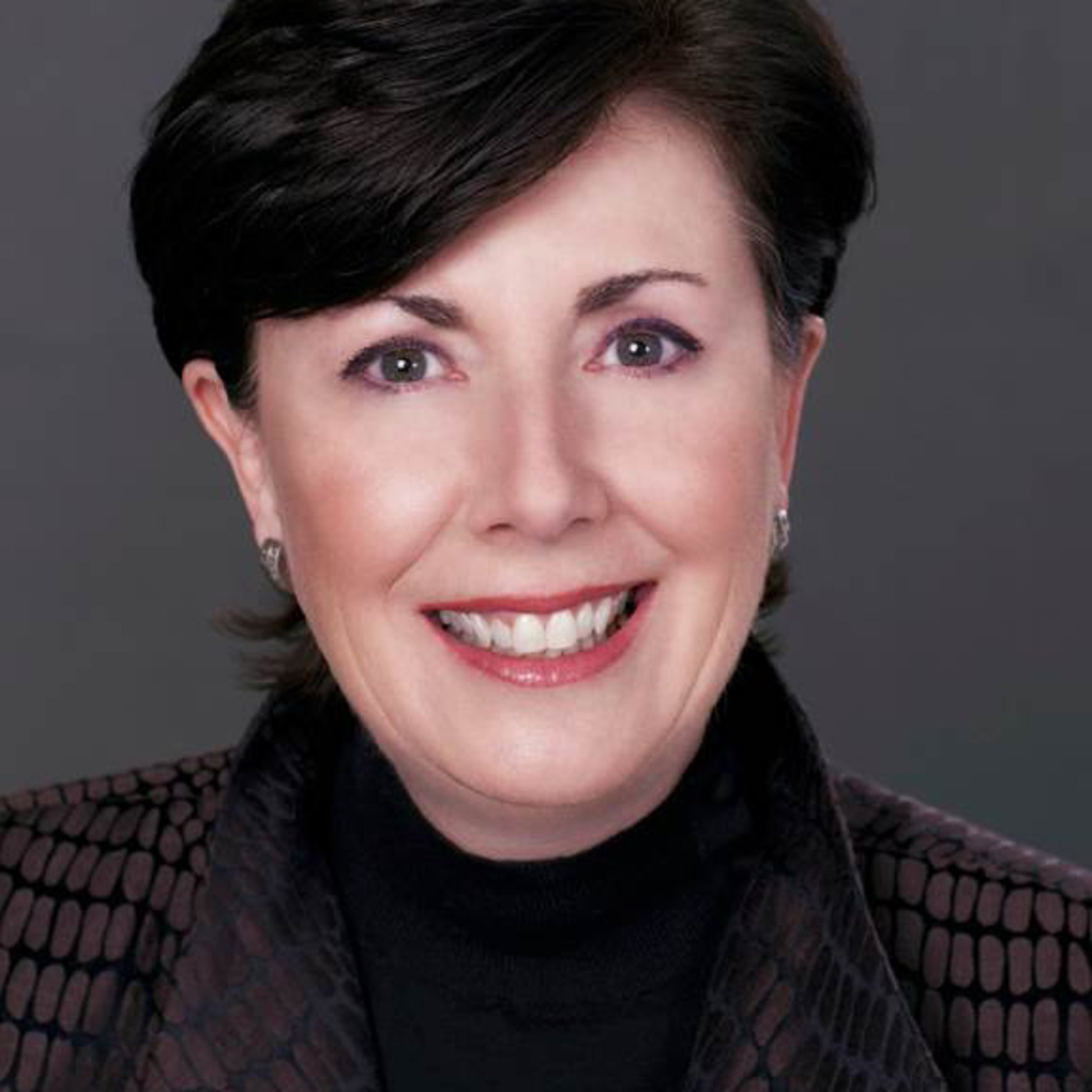
Aoifinn Devitt: What makes an effective board member and chairperson? And how can they really step up at a time of crisis? Let’s find out next. I’m Aoifinn Devitt, and welcome to the 50 Faces podcast, a podcast committed to revealing the richness and diversity of the world of investment by focusing on its people and their stories. I’m joined today by Roxanne Martino, who is managing partner at Ocean M19 Family Office in Chicago and has had a long career in asset management. She founded Aurora Investment Management in 1988, which provided hedge fund portfolio solutions to institutional investors for over 28 years. She’s co chairperson of the University of Chicago Booth School of Business Council, Chairperson of the boards of the Anne and Robert H. Lurie Children’s Hospital of Chicago and chair of its executive and governance committees, and holds a number of investment committee and board roles in educational institutions and charities. She’s a published author and a frequent commentator on investment matters in the media and on the conference circuit. Welcome Roxane. Thank you for joining me today.
26. Roxanne Martino: Well, thank you for having me.
Aoifinn Devitt: Can you tell us a bit about your current role as well as your whole career in investing?
26. Roxanne Martino: Oh, certainly. Right now I retired about five years ago and I am involved in the investments side of our family office. We’ve had a family office for about 25 years, but at the beginning it was more of an operational office. But since I retired and my husband is stepping away from his private equity firm, we’ve really developed it into an investment office for us. And so I’m busy mostly on the hedge fund side with my husband and my older son working on the private equity and the hedge fund side and also obviously working on the charitable and civic activities that I’ve been involved in. Really for the last 35 years, my career was largely in the hedge fund industry. I started my career in public accounting working for PwC as an auditor. My undergraduate degree was in accounting and I stayed there for seven years and after about five years I thought, well, I really want something that is more involved in the investment side. I had transitioned to the hedge fund side of the audit practice there and was intrigued with just all the trading strategies and everything that you needed to know in that business. And so I went back to the University of Chicago. I achieved my MBA at night and while there moved to an investment firm, Grosvenor Capital Management, that just focused on hedge fund investing. I stayed there for the next six and a half years, becoming a partner there and left to start what now? Or what was Aurora Investment Management at one of our clients actually And I stayed there for a number of years and then spun it out into our own business called Aurora Investment Management. And as you mentioned, eventually it became a very large firm. We managed about $14 billion, all invested in hedge funds.
Aoifinn Devitt: And in looking back at some of those paths you took in education and you transitioned from being an investor to actually to managing people, to being a leader, to building your own firm, where were the skills that you picked up along the way? And what do you think was most useful in terms of what you learned?
26. Roxanne Martino: Well, certainly going to the University of Chicago was extremely helpful with regard to portfolio management skills on the quantitative side. But I would say that what largely was most impactful in investing, even though the hedge fund industry is largely quantitative and extremely complex, in reality, those hedge funds are run by people that are making individual investment decisions. And often you had to apply common sense and your knowledge of human nature when looking at the different alternatives in the hedge fund sector. So it may be a wonderful trading strategy, and quantitatively, they may have been achieving great returns at low risk. But you really want to understand who is the person making those decisions for the firm and what are their motivations? And the most important thing you need to know is how will they operate when things go quite poorly. And so a lot of that is more common sense and your use of knowledge that you’ve gained on human nature.
Aoifinn Devitt: And turning to founding the firm and building IT to over $14 billion in assets under management. I think you shared with me once that the first billion took a lot longer than the second billion, and that often it is an interesting trajectory. What did you learn from that experience, firstly of building it, and then any challenges that you faced along the way?
26. Roxanne Martino: Yeah, yeah, I look like an overnight success, except for the fact that it took me 13 years to raise the first billion and 13 months to raise the second billion. So it wasn’t quite overnight. You know, you learn that you really need to develop a round base of skill sets. There were many skill sets that I didn’t have when I started. And as that business grew, you really had to develop them. And that was an exciting part of having a career and being an entrepreneur was the ability to always expand your skill sets and to learn more and more and more, whether it be about how to manage people, how to manage a business, how to relate to investing clients. All of those things were very important. And so I love the fact that I eventually went into a career path that could use all my skills and more. And I would say that you have to be open to learning New things, really, when you’re an entrepreneur, at the beginning you’re doing everything and then you are hiring people and trusting them to execute different parts of your business. All of those things do not come naturally. They are learned over time.
Aoifinn Devitt: And you’re somewhat in a minority being a female founder. There are still not many female founders of asset management firms. Do you think there are any particular challenges facing female founders, or is it just that there’s simply high barriers to entry across asset management?
26. Roxanne Martino: I would say that being an entrepreneur and trying to raise capital was challenging. As a woman, it didn’t take long for me to realize there were certain markets that were much more open to more diversity than other markets. And so after time, we started focusing on those markets that were very open to a diverse firm. And so I really just focused on those markets and didn’t, you know, really feel bad when I wasn’t gaining clients in some other markets. You can’t win them all in investment management. As far as your appeal to certain investor bases, I’ve always had the attitude that I had a skill within my firm. You know, my firm had something to offer investors. Not all investors really wanted that. And so over time, you can’t take it personally. You present the skills that you have and the track record that you have been able to achieve. You talk about the opportunity sets going forward. That will be appealing to some investors and it won’t be to others. And I never really took it personally.
Aoifinn Devitt: And just shifting gears to your current roles, you hold a number of board and chairperson roles. What makes an effective chairperson and board member in your view?
26. Roxanne Martino: Well, definitely thinking about what is the mission of the organization and then trying to achieve that mission in the most effective way that you can. And so I think it’s hard for some board members to put aside their personal needs when they start getting involved in an organization. I try to always remember the mission and then be helpful to achieve that mission. So I would say a board member that is that that’s motivated by the actual mission of the organization that makes the most effective board member. Also, I think it’s a challenge for many board members to understand the distinction between being on a board and being part of management. These are very different things. And often board members get so involved in this organization that they start leaning into management more than what their role is, which is above management. And so board training is always good with regard to this or even board reminders, which can be effective too.
Aoifinn Devitt: And how about the chairperson role? Often that’s a very specialist role that people Candidates are supposed to be chair ready when they even interview for that role. What do you try to bring as a chairperson?
26. Roxanne Martino: Well, again, I try to keep my eye on the mission and then look at whatever structure that we have currently and the personnel within those structures, be it the board structure or the management structure, and try to achieve the most we can in accordance with that mission, with the talent we have, with the resources that we have, and the time that people have to commit to it. It’s a delicate balance. I also really like to look at the skill sets of the people on the board and try to use their skill sets in the most appropriate way. Often I see board members not as engaged because perhaps their skill set is not aligned with where they’ve been assigned responsibilities on a board. And so I try to have dialogue with them to understand where their interests are and then understand what their skills are.
Aoifinn Devitt: And at a time like now, particularly the last six months. But a number of these institutions, such as educational institutions, hospitals, are probably facing a range of unique challenges. Does the role of the board change in that way? Do you have to maybe push in a little bit more to act as a lifeline or an emergency helpline for management that may be under pressure?
26. Roxanne Martino: You definitely have a different role in times that are quite unique and quite challenging, like it has been for both hospitals and for educational institutions. And so the time availability has to be quite high. It could be weekends, it can be nights. There were times where we really had to make some tough decisions as the magnitude of the impact of what was happening became visible to us. So it is. You have to be ready to assist in whatever way you can and use the skills that you have, and also call on other board members that may have resources, connections, or the skill set that management needs to make the next decision, or envision the array of options going forward that we may have, you know, depending on the outcome of a very unusual situation, it can be quite challenging at times. I’m happy to say it’s eased up a bit. As far as the hospital situation goes, I think there’s a much better understanding of how to treat this and some of the ramifications that it has and the limitations that you have to have within your institution. Education, on the other hand, is very challenged still. Educational delivery in a virtual setting is extremely difficult in higher learning, but we’re all learning to be effective at it. Everyone has to be, to keep everyone safe. And there’s been tons of strides forward with regard to that that have become very effective.
Aoifinn Devitt: And I’m particularly Interested because you work with a business school and surely one of the main attractions of an mba, whether it be a full time or an executive, is the network that you’re supposed to be now getting access to. How can these institutions replicate that network in the near term when it is a generally remote access that will be prevailing?
26. Roxanne Martino: Well, I think you really have to combine remote access with some in person but socially distanced activities. Certainly at the MBA level. These are all people that are adults often have substantial career achievements already by the time they start in the program. And so you really have to find a way to have camaraderie while keeping everyone very safe.
Aoifinn Devitt: It’s an interesting challenge for sure looking at your career. It’s been long, it’s been varied. Have there been any key people there who’ve influenced you along the way?
26. Roxanne Martino: Oh, certainly many. I would say early in my career, definitely my parents, to be honest with you. You know, early in my career, starting in the 70s, it was even more challenging than it is today for women. There was not much awareness of discrimination in any way. And I probably got the best advice ever from my father when I had a particularly challenging situation with a lack of promotion versus another colleague that was rated equally. And when I went to my parents house at that time, even though I was already married, I went there and I said, you know what happened? He said, well, don’t let this distract you from your goals. And I think that was really good advice both at the beginning. When I was young, I was probably 21 years old at the time, I was probably only working about 18 months. But it’s a good thing to think about as time goes on, things happen, things don’t go the way you think they’re going to go and you just try not to be distracted from your goals. And I think that’s very good. The other thing is certainly my husband, my husband has been. I’ve been married 42 years, we’ve been together 47. He is just my number one supporter without a doubt, has given me a lot of very good advice about decisions that had to be made. And he certainly has been my sounding board and continues to be my sounding board now. We have very different approaches to business. He founded and managed his private equity firm virtually at the same time that I was building my business. But they’re very different businesses and his skill set has been great as a sounding board for me to have for all these years. Really great.
Aoifinn Devitt: And is there any creed or motto that you live by in terms of taking all of this advice and Letting it guide you through your career.
26. Roxanne Martino: Well, certainly with regard to investing, it would be diversification. I look at very, very bright people all the time that just have not diversified their wealth. And so even if you know an area quite well and you’re quite convinced that it’s the place you should be, you need to diversify your personal net worth. Definitely. Also, I would say trust your common sense or some people say trust your gut. Over the years there’s been investments that look very, very good, but you just don’t feel right about it. There’s something just off about it. I would say remember that there’s a lot of ways to make money and you should move on. You should trust yourself, trust your insight, because there is probably something there. You can’t identify it now, but life is long and you may see it later and you’ll know that you made the right decision. You can always move on and find another investment. And that’s what you should do.
Aoifinn Devitt: And what is it that you like most about the investment world and do you think there’s enough diversity in it?
26. Roxanne Martino: I’ve always enjoyed investing because you really can never master everything. So there’s always something to learn, which is intriguing to me. More instruments, more trading strategies, different approaches to take on. And you meet so many interesting people that have a different view of the investment world. Some people have made a life of investing with a three month outlook and some people have a two year outlook. They could look at the same situation and see it very, very differently. All of that is just intriguing to me. The fact that you just can never know it all. I love that. Whether it’s diverse enough, it is not diverse enough in any way. There are so few women in investing. You know, my encouragement to anyone if you want to increase diversity of women or minorities is have an internship program and have a robust internship program at your firm. And then from that internship program, hire from that. We always had a very nice robust program, was very diverse. We hired many full time people over the years. From that program you get a really nice look. Sometimes it’s just a summer, sometimes it could be a year, it could be two or three summers. If you get people early enough in their careers, you have to have people coming up the ranks on a regular basis to have diversity at the top ranks. It is the only way that this works.
Aoifinn Devitt: And I’m interested in how you approach allocation. I mean, you’ve been an allocator of client capital for many years now you’re working in your own family office. When you think about who to allocate to. What are you looking for in those managers?
26. Roxanne Martino: Well, certainly first we look at the different trading strategies that are available and the opportunity sets that we are in, you know, what is the market we’re in and where should we be leaning in or leaning out of. And also, as I mentioned, diversity is very key. So once you establish how you want your capital to be allocated, then you look at the opportunities that there are to find talent in that. Once you find that opportunity set, we do a ton of quantitative work and then hone in on the people that we want to go visit and interview and do a lot of due diligence on. I tend to like individuals that have traded for a long period of time in their given trading strategy. It may be a new firm, but they may have substantial experience at an old firm, understanding how different or how similar it’ll be in the new firm, or it could be an established firm, and then understanding the circumstances that led to the returns that you’re looking at. And then as I mentioned, I like to interview people and understand their motivations, what they value, how they’re selecting their talent, how deep the talent pool is, how they compensate people. All of those things are extremely important for the longevity of their firm. We tend to be very long term investors. We often invest with people at the beginning of their independent career life and that has been an extremely successful strategy for us. But really understanding all of those things and then making a judgment after that.
Aoifinn Devitt: And just as we’re in a crisis time now and managers are going through some stress, if one was to test a piece of equipment, we would put it through a stress test. How do you stress test a manager before you invest and anticipating how they might say, deal with a circumstance like this?
26. Roxanne Martino: Well, if it’s a manager that’s been around for any time, you can usually look at what occurred within those time frames and talk to them about how they operated. Also, especially in the hedge fund industry, it’s a fairly small industry. Even though I know people think it’s huge, everyone traded somewhere else. We like to talk to people that they sat next to, that they traded with, that they worked with, and understand how they view their risk appetite or how they view their operation in times of stress. All of those things will really give you a picture of what the person might operate like in the future. Of course, it may be quite different. Circumstance often is. But you hope that you gain an understanding of how someone will operate.
Aoifinn Devitt: And just my last question, if I recall, I think you went to Notre Dame at a very young age. If you were to give advice to your younger self, something that you wish you had known then that you know now, what would that be?
26. Roxanne Martino: Oh, that’s a good question. I would say that if you’re in a situation at work where it is not ideal and perhaps toxic and could be impacting your health, that you should leap and you should look for other opportunities. I think often people get involved in an organization or in a situation that is not healthy, period, mentally or physically, and you kind of want to make it better. You try to make it better. And sometimes that’s not going to happen. Sometimes you just need to move on. And so I would say that look at a situation and change it.
Aoifinn Devitt: It’s very solid advice there. Well, thank you, Roxanne. It’s always a privilege to speak with you and thank you for sharing your insights with us.
26. Roxanne Martino: Well, thank you. It was very enjoyable chatting with you today.
Aoifinn Devitt: I’m Aoifinn Devitt. Thank you for listening to the 50 Faces podcast. If you liked what you heard and would like to tune in to hear more inspiring investors and their personal journeys, please subscribe on Apple Podcasts or wherever you get your podcasts. This podcast is for informational purposes only and should not be construed as investment advice and all views are personal and should not be attributed to the organizations and affiliations of the host or any guest.
26. Roxanne Martino: Sam.
Aoifinn Devitt: What makes an effective board member and chairperson? And how can they really step up at a time of crisis? Let’s find out next. I’m Aoifinn Devitt, and welcome to the 50 Faces podcast, a podcast committed to revealing the richness and diversity of the world of investment by focusing on its people and their stories. I’m joined today by Roxanne Martino, who is managing partner at Ocean M19 Family Office in Chicago and has had a long career in asset management. She founded Aurora Investment Management in 1988, which provided hedge fund portfolio solutions to institutional investors for over 28 years. She’s co chairperson of the University of Chicago Booth School of Business Council, Chairperson of the boards of the Anne and Robert H. Lurie Children’s Hospital of Chicago and chair of its executive and governance committees, and holds a number of investment committee and board roles in educational institutions and charities. She’s a published author and a frequent commentator on investment matters in the media and on the conference circuit. Welcome Roxane. Thank you for joining me today.
26. Roxanne Martino: Well, thank you for having me.
Aoifinn Devitt: Can you tell us a bit about your current role as well as your whole career in investing?
26. Roxanne Martino: Oh, certainly. Right now I retired about five years ago and I am involved in the investments side of our family office. We’ve had a family office for about 25 years, but at the beginning it was more of an operational office. But since I retired and my husband is stepping away from his private equity firm, we’ve really developed it into an investment office for us. And so I’m busy mostly on the hedge fund side with my husband and my older son working on the private equity and the hedge fund side and also obviously working on the charitable and civic activities that I’ve been involved in. Really for the last 35 years, my career was largely in the hedge fund industry. I started my career in public accounting working for PwC as an auditor. My undergraduate degree was in accounting and I stayed there for seven years and after about five years I thought, well, I really want something that is more involved in the investment side. I had transitioned to the hedge fund side of the audit practice there and was intrigued with just all the trading strategies and everything that you needed to know in that business. And so I went back to the University of Chicago. I achieved my MBA at night and while there moved to an investment firm, Grosvenor Capital Management, that just focused on hedge fund investing. I stayed there for the next six and a half years, becoming a partner there and left to start what now? Or what was Aurora Investment Management at one of our clients actually And I stayed there for a number of years and then spun it out into our own business called Aurora Investment Management. And as you mentioned, eventually it became a very large firm. We managed about $14 billion, all invested in hedge funds.
Aoifinn Devitt: And in looking back at some of those paths you took in education and you transitioned from being an investor to actually to managing people, to being a leader, to building your own firm, where were the skills that you picked up along the way? And what do you think was most useful in terms of what you learned?
26. Roxanne Martino: Well, certainly going to the University of Chicago was extremely helpful with regard to portfolio management skills on the quantitative side. But I would say that what largely was most impactful in investing, even though the hedge fund industry is largely quantitative and extremely complex, in reality, those hedge funds are run by people that are making individual investment decisions. And often you had to apply common sense and your knowledge of human nature when looking at the different alternatives in the hedge fund sector. So it may be a wonderful trading strategy, and quantitatively, they may have been achieving great returns at low risk. But you really want to understand who is the person making those decisions for the firm and what are their motivations? And the most important thing you need to know is how will they operate when things go quite poorly. And so a lot of that is more common sense and your use of knowledge that you’ve gained on human nature.
Aoifinn Devitt: And turning to founding the firm and building IT to over $14 billion in assets under management. I think you shared with me once that the first billion took a lot longer than the second billion, and that often it is an interesting trajectory. What did you learn from that experience, firstly of building it, and then any challenges that you faced along the way?
26. Roxanne Martino: Yeah, yeah, I look like an overnight success, except for the fact that it took me 13 years to raise the first billion and 13 months to raise the second billion. So it wasn’t quite overnight. You know, you learn that you really need to develop a round base of skill sets. There were many skill sets that I didn’t have when I started. And as that business grew, you really had to develop them. And that was an exciting part of having a career and being an entrepreneur was the ability to always expand your skill sets and to learn more and more and more, whether it be about how to manage people, how to manage a business, how to relate to investing clients. All of those things were very important. And so I love the fact that I eventually went into a career path that could use all my skills and more. And I would say that you have to be open to learning New things, really, when you’re an entrepreneur, at the beginning you’re doing everything and then you are hiring people and trusting them to execute different parts of your business. All of those things do not come naturally. They are learned over time.
Aoifinn Devitt: And you’re somewhat in a minority being a female founder. There are still not many female founders of asset management firms. Do you think there are any particular challenges facing female founders, or is it just that there’s simply high barriers to entry across asset management?
26. Roxanne Martino: I would say that being an entrepreneur and trying to raise capital was challenging. As a woman, it didn’t take long for me to realize there were certain markets that were much more open to more diversity than other markets. And so after time, we started focusing on those markets that were very open to a diverse firm. And so I really just focused on those markets and didn’t, you know, really feel bad when I wasn’t gaining clients in some other markets. You can’t win them all in investment management. As far as your appeal to certain investor bases, I’ve always had the attitude that I had a skill within my firm. You know, my firm had something to offer investors. Not all investors really wanted that. And so over time, you can’t take it personally. You present the skills that you have and the track record that you have been able to achieve. You talk about the opportunity sets going forward. That will be appealing to some investors and it won’t be to others. And I never really took it personally.
Aoifinn Devitt: And just shifting gears to your current roles, you hold a number of board and chairperson roles. What makes an effective chairperson and board member in your view?
26. Roxanne Martino: Well, definitely thinking about what is the mission of the organization and then trying to achieve that mission in the most effective way that you can. And so I think it’s hard for some board members to put aside their personal needs when they start getting involved in an organization. I try to always remember the mission and then be helpful to achieve that mission. So I would say a board member that is that that’s motivated by the actual mission of the organization that makes the most effective board member. Also, I think it’s a challenge for many board members to understand the distinction between being on a board and being part of management. These are very different things. And often board members get so involved in this organization that they start leaning into management more than what their role is, which is above management. And so board training is always good with regard to this or even board reminders, which can be effective too.
Aoifinn Devitt: And how about the chairperson role? Often that’s a very specialist role that people Candidates are supposed to be chair ready when they even interview for that role. What do you try to bring as a chairperson?
26. Roxanne Martino: Well, again, I try to keep my eye on the mission and then look at whatever structure that we have currently and the personnel within those structures, be it the board structure or the management structure, and try to achieve the most we can in accordance with that mission, with the talent we have, with the resources that we have, and the time that people have to commit to it. It’s a delicate balance. I also really like to look at the skill sets of the people on the board and try to use their skill sets in the most appropriate way. Often I see board members not as engaged because perhaps their skill set is not aligned with where they’ve been assigned responsibilities on a board. And so I try to have dialogue with them to understand where their interests are and then understand what their skills are.
Aoifinn Devitt: And at a time like now, particularly the last six months. But a number of these institutions, such as educational institutions, hospitals, are probably facing a range of unique challenges. Does the role of the board change in that way? Do you have to maybe push in a little bit more to act as a lifeline or an emergency helpline for management that may be under pressure?
26. Roxanne Martino: You definitely have a different role in times that are quite unique and quite challenging, like it has been for both hospitals and for educational institutions. And so the time availability has to be quite high. It could be weekends, it can be nights. There were times where we really had to make some tough decisions as the magnitude of the impact of what was happening became visible to us. So it is. You have to be ready to assist in whatever way you can and use the skills that you have, and also call on other board members that may have resources, connections, or the skill set that management needs to make the next decision, or envision the array of options going forward that we may have, you know, depending on the outcome of a very unusual situation, it can be quite challenging at times. I’m happy to say it’s eased up a bit. As far as the hospital situation goes, I think there’s a much better understanding of how to treat this and some of the ramifications that it has and the limitations that you have to have within your institution. Education, on the other hand, is very challenged still. Educational delivery in a virtual setting is extremely difficult in higher learning, but we’re all learning to be effective at it. Everyone has to be, to keep everyone safe. And there’s been tons of strides forward with regard to that that have become very effective.
Aoifinn Devitt: And I’m particularly Interested because you work with a business school and surely one of the main attractions of an mba, whether it be a full time or an executive, is the network that you’re supposed to be now getting access to. How can these institutions replicate that network in the near term when it is a generally remote access that will be prevailing?
26. Roxanne Martino: Well, I think you really have to combine remote access with some in person but socially distanced activities. Certainly at the MBA level. These are all people that are adults often have substantial career achievements already by the time they start in the program. And so you really have to find a way to have camaraderie while keeping everyone very safe.
Aoifinn Devitt: It’s an interesting challenge for sure looking at your career. It’s been long, it’s been varied. Have there been any key people there who’ve influenced you along the way?
26. Roxanne Martino: Oh, certainly many. I would say early in my career, definitely my parents, to be honest with you. You know, early in my career, starting in the 70s, it was even more challenging than it is today for women. There was not much awareness of discrimination in any way. And I probably got the best advice ever from my father when I had a particularly challenging situation with a lack of promotion versus another colleague that was rated equally. And when I went to my parents house at that time, even though I was already married, I went there and I said, you know what happened? He said, well, don’t let this distract you from your goals. And I think that was really good advice both at the beginning. When I was young, I was probably 21 years old at the time, I was probably only working about 18 months. But it’s a good thing to think about as time goes on, things happen, things don’t go the way you think they’re going to go and you just try not to be distracted from your goals. And I think that’s very good. The other thing is certainly my husband, my husband has been. I’ve been married 42 years, we’ve been together 47. He is just my number one supporter without a doubt, has given me a lot of very good advice about decisions that had to be made. And he certainly has been my sounding board and continues to be my sounding board now. We have very different approaches to business. He founded and managed his private equity firm virtually at the same time that I was building my business. But they’re very different businesses and his skill set has been great as a sounding board for me to have for all these years. Really great.
Aoifinn Devitt: And is there any creed or motto that you live by in terms of taking all of this advice and Letting it guide you through your career.
26. Roxanne Martino: Well, certainly with regard to investing, it would be diversification. I look at very, very bright people all the time that just have not diversified their wealth. And so even if you know an area quite well and you’re quite convinced that it’s the place you should be, you need to diversify your personal net worth. Definitely. Also, I would say trust your common sense or some people say trust your gut. Over the years there’s been investments that look very, very good, but you just don’t feel right about it. There’s something just off about it. I would say remember that there’s a lot of ways to make money and you should move on. You should trust yourself, trust your insight, because there is probably something there. You can’t identify it now, but life is long and you may see it later and you’ll know that you made the right decision. You can always move on and find another investment. And that’s what you should do.
Aoifinn Devitt: And what is it that you like most about the investment world and do you think there’s enough diversity in it?
26. Roxanne Martino: I’ve always enjoyed investing because you really can never master everything. So there’s always something to learn, which is intriguing to me. More instruments, more trading strategies, different approaches to take on. And you meet so many interesting people that have a different view of the investment world. Some people have made a life of investing with a three month outlook and some people have a two year outlook. They could look at the same situation and see it very, very differently. All of that is just intriguing to me. The fact that you just can never know it all. I love that. Whether it’s diverse enough, it is not diverse enough in any way. There are so few women in investing. You know, my encouragement to anyone if you want to increase diversity of women or minorities is have an internship program and have a robust internship program at your firm. And then from that internship program, hire from that. We always had a very nice robust program, was very diverse. We hired many full time people over the years. From that program you get a really nice look. Sometimes it’s just a summer, sometimes it could be a year, it could be two or three summers. If you get people early enough in their careers, you have to have people coming up the ranks on a regular basis to have diversity at the top ranks. It is the only way that this works.
Aoifinn Devitt: And I’m interested in how you approach allocation. I mean, you’ve been an allocator of client capital for many years now you’re working in your own family office. When you think about who to allocate to. What are you looking for in those managers?
26. Roxanne Martino: Well, certainly first we look at the different trading strategies that are available and the opportunity sets that we are in, you know, what is the market we’re in and where should we be leaning in or leaning out of. And also, as I mentioned, diversity is very key. So once you establish how you want your capital to be allocated, then you look at the opportunities that there are to find talent in that. Once you find that opportunity set, we do a ton of quantitative work and then hone in on the people that we want to go visit and interview and do a lot of due diligence on. I tend to like individuals that have traded for a long period of time in their given trading strategy. It may be a new firm, but they may have substantial experience at an old firm, understanding how different or how similar it’ll be in the new firm, or it could be an established firm, and then understanding the circumstances that led to the returns that you’re looking at. And then as I mentioned, I like to interview people and understand their motivations, what they value, how they’re selecting their talent, how deep the talent pool is, how they compensate people. All of those things are extremely important for the longevity of their firm. We tend to be very long term investors. We often invest with people at the beginning of their independent career life and that has been an extremely successful strategy for us. But really understanding all of those things and then making a judgment after that.
Aoifinn Devitt: And just as we’re in a crisis time now and managers are going through some stress, if one was to test a piece of equipment, we would put it through a stress test. How do you stress test a manager before you invest and anticipating how they might say, deal with a circumstance like this?
26. Roxanne Martino: Well, if it’s a manager that’s been around for any time, you can usually look at what occurred within those time frames and talk to them about how they operated. Also, especially in the hedge fund industry, it’s a fairly small industry. Even though I know people think it’s huge, everyone traded somewhere else. We like to talk to people that they sat next to, that they traded with, that they worked with, and understand how they view their risk appetite or how they view their operation in times of stress. All of those things will really give you a picture of what the person might operate like in the future. Of course, it may be quite different. Circumstance often is. But you hope that you gain an understanding of how someone will operate.
Aoifinn Devitt: And just my last question, if I recall, I think you went to Notre Dame at a very young age. If you were to give advice to your younger self, something that you wish you had known then that you know now, what would that be?
26. Roxanne Martino: Oh, that’s a good question. I would say that if you’re in a situation at work where it is not ideal and perhaps toxic and could be impacting your health, that you should leap and you should look for other opportunities. I think often people get involved in an organization or in a situation that is not healthy, period, mentally or physically, and you kind of want to make it better. You try to make it better. And sometimes that’s not going to happen. Sometimes you just need to move on. And so I would say that look at a situation and change it.
Aoifinn Devitt: It’s very solid advice there. Well, thank you, Roxanne. It’s always a privilege to speak with you and thank you for sharing your insights with us.
26. Roxanne Martino: Well, thank you. It was very enjoyable chatting with you today.
Aoifinn Devitt: I’m Aoifinn Devitt. Thank you for listening to the 50 Faces podcast. If you liked what you heard and would like to tune in to hear more inspiring investors and their personal journeys, please subscribe on Apple Podcasts or wherever you get your podcasts. This podcast is for informational purposes only and should not be construed as investment advice and all views are personal and should not be attributed to the organizations and affiliations of the host or any guest.
26. Roxanne Martino: Sam.