Aoifinn Devitt: As we near the end of 2020, we are well aware of the far-reaching effects of the coronavirus-related disruptions. As certain segments of the economy have been intermittently switched on and switched off, such as indoor dining, non-essential retail, cultural institutions, and transport capacity, Others, namely schools, have tended to be more stable. After the initial seismic disruption to schools and universities in March-April 2020, campuses have been in constant focus.
Speaker B: In the Boston area alone, Northeastern, Boston University, and the entire UMass system have now joined Harvard, MIT, Suffolk, and Emerson.
Speaker C: On the list of colleges preparing to.
Speaker B: Teach the rest of the spring semester online.
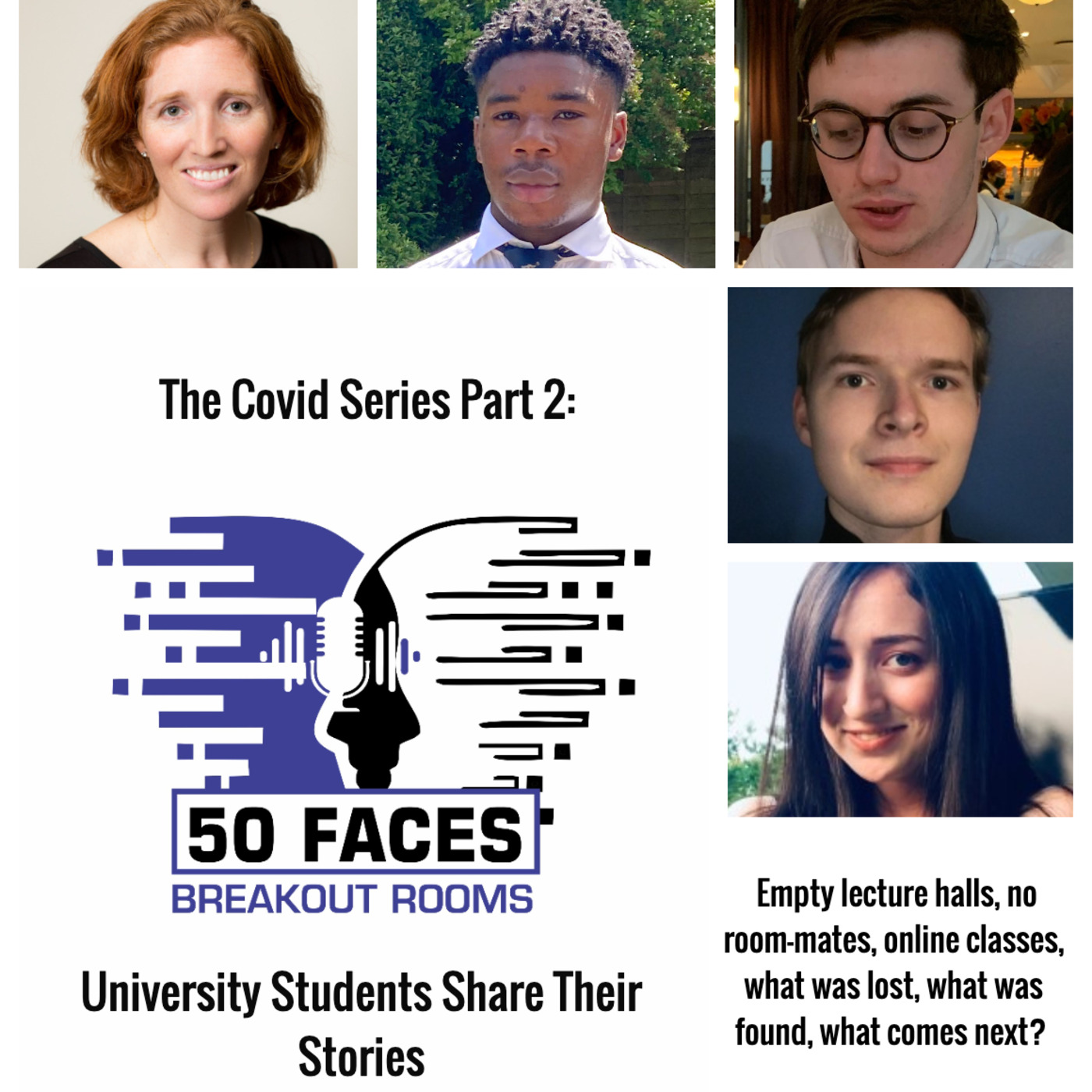
Aoifinn Devitt: As Ivy League campuses shut down in quick succession in the spring, The growing return to campus towns were hotly monitored in the autumn. College students were told not to return home for holidays, and in some cases they were even barricaded into their dorms. Student life does, however, go on, but not as many would have imagined it, and not as we ourselves would remember it. In this breakout room, I speak to 4 students, all close to the beginning of their university experiences. We speak about their experience of learning, of socialising, and of adjusting in in an age of COVID disruptions. We first hear from Zuriel.
Speaker D: I’m based in South London, I’m from South London, but I’m actually at university in Nottingham at the University of Nottingham and I’m studying politics at the minute, politics and international relations. But I do want to go into investment management when I do finish university.
Aoifinn Devitt: Staying in London, we speak with Alex.
Speaker B: My name is Alex McLaughlin and I’m currently studying English at Goldsmiths in South London.
Aoifinn Devitt: Then crossing the ocean to the Midwest, we speak with Simon.
Speaker E: My name is Simon Donoghue-Nosek. I’m an undergraduate student at Oberlin College in Ohio, which is a very small rural university. I study political science, language, and religion.
Aoifinn Devitt: And going up to Canada, we speak with Serka.
Speaker C: Hello, my name is Serka Chow, and I’m a second-year student studying at the University of Toronto in Scarborough.
Aoifinn Devitt: I wanted to hear from them what the initial lockdown and summer experience felt like.
Speaker D: Yeah, I remember being at university when it all began, and it was almost— everyone had that sense of disbelief. And then people started going home. And I remember being like one of the last people actually at university. So I live in a student area, which is Lenton in Nottingham. And I remember pretty much all my housemates went before me. I remember going out to the shop and actually going onto the street, and there were no cars. And this is a street where there are usually cars everywhere. A lot of noise, and it it was, was dead silent. It was actually a bit of a scary, a bit of a surreal experience because I remember it was almost like, is this an apocalypse? People were just scared and it was really weird. And obviously from there I went home and I guess we moved to online learning. There was a lot of work to still be done, so.
Aoifinn Devitt: Alex meanwhile lost out on part of his foundation course.
Speaker B: Last year I was doing a foundation course in drama at Central Saint Martins but it was only one year, so I only kind of lost, I think it was about half a term because of COVID but it still got cut short and it kind of screwed up kind of what I was planning to do over the summer because obviously like I’d taken a year because I just left school, so I kind of had plans to go traveling after the course had ended, and I think a lot of people had done that. I had a lot of friends that had kind of booked quite extensive traveling, you know, adventures. But they, like, my friend got stuck in India because they closed the borders.
Aoifinn Devitt: And he felt like the summer was like no other.
Speaker B: It didn’t really feel like a summer. It kind of stretched into some sort of weird period where, like, time didn’t really mean anything.
Aoifinn Devitt: Simon was in his final year of high school and lost his high school graduation.
Speaker E: Those first lockdowns hit in like, my, my final semester of high school, so Our last about third of the school year was moved online. This meant that I left my extracurriculars, athletics, work, a lot of the social activities that are traditionally organized through the school got shut down. So we closed out our year mostly with Zoom classes and tests and a lot of writing assignments. But for the most part, I found that students, including myself, were unengaged because we didn’t know when this was going to end or what form it was going to take at the start of the new year. As for the summer, you know, we did what we could. I normally work with a theater program, children’s camp, and that whole process was moved online. So that meant I was mostly doing tech support or just keeping Zoom calls running for dozens of students. I know a lot of other summer jobs were harder hit. And students couldn’t travel or visit university or friends. I know for students deciding on different schools, that was troublesome too because they couldn’t tour where they wanted. I was involved with many clubs and extracurriculars through the school, and we always had a sort of senior night or send-off for the older students who had run the club for the past year or two, and that was certainly something that we tried to find some version of with our— I run our, or ran our high school’s LGBT club, which obviously is a group of students who may not have as many interactions or as wide a social net as they would like in the rest of their life. So we tried to still host weekly online meetings, face calls with everyone, and we did have a little send-off ceremony towards the end of the year as students were getting ready for finals. I know, you know, there there weren’t— wasn’t a prom or the large sports games that are typical at the end of the year, so a lot of students did feel that they were missing something even as our graduation ceremony was live-streamed to our living rooms. For my university courses over the summer, It looked a lot like what we’d seen in high school, so Zoom classes and readings and writings and less face-to-face discussions. We had students all over the world calling in for these classes, which also made time zones quite difficult because people normally would all be on campus and together and in one zone, but I have friends who are 5, 8, or 13 hours separate. I have friends in in Guangzhou who are 13 hours away calling into class. So once we got things on campus, it was much more workable. Like, my school is quite small. It’s in a rural county. So community transmission was less of a risk. So with face masks, and we were lucky to have frequent testing and no big group activities, we were lucky enough to have in-person classes every day. For the first semester, at least.
Aoifinn Devitt: While Serka had experienced a dispersed campus already.
Speaker C: I just want to say, I think at least for my school, I think they’re doing the best they can given the situation. So I know some schools, especially in the US, I know they’ve all been going back and they’ve been going to class. I know for elementary, middle, and high school, at least they’re going to class and, you know, seeing their friends. But for me, it’s all online. So because like I said, it was mostly international. Most students are not even in Canada, they’re in their home countries. And it’s just basically Zoom or BB Collaborate, all my classes. Usually you don’t even see people’s faces, you just see like their profile picture or a black screen. And honestly, it wasn’t as bad as I thought it would be. Like, I think I’m still learning a lot and I’m still working and studying. And it’s almost kind of nice because you don’t really have to worry about getting up and going to class anymore, like socializing a ton. But then again, like, that’s also what I found out that I was missing out on. But anyway, it’s just weird because there’s there’s just, just something so odd about knowing people and like seeing people but not actually seeing them. So I feel like I’ve gotten to know my professors and my classmates, but I’ve never actually seen them in real life. So that’s a different experience as well as just I think people are less— I think they’re just not as focused as they were. At least that’s for my case, because I know I used to commit 100%, and now because everything’s on my computer, it’s kind of hard to get into the classroom environment. I do miss like going to class, like dressing up, like kind of just putting on a face and then like going to class and interacting with people, like raising your hand, like being in a huge lecture hall, because that’s kind of like the college experience, just being acting like an adult and having this new life. And just for that to be all taken away in an instant is like—.
Aoifinn Devitt: It’s quite clear that now for these students, the learning experience is differing.
Speaker B: I’ve only been into the actual university once to get my ID card, and that’s the only time I’ve gone into the campus. But there’s no real communal feeling at the moment. It’s kind of— I’ve met a lot of people in my halls. We kind of, you know, when the pubs are open, we could go to the pubs. But that’s kind of— essentially it. You kind of have to go out your way to socialize because you only meet the kind of same people. I feel like, you know, quite a large part of going to university is to meet lots of different people, to kind of, you know, go there and broaden your horizons and kind of experience new things. And yeah, there’s no real kind of communal ethos, if that makes sense. You can’t join any I don’t know, sports teams or anything. It’s, it’s kind of all done online, and you spend a lot of time just kind of in the same setting.
Aoifinn Devitt: Simon was one of the lucky ones. He is very aware of how lucky he is to be in a campus situation.
Speaker E: I’m certainly quite lucky to be able to be on campus and to be able to attend in-person classes. I know that now that we’re back home for the holiday season and all of our classes have moved online again, there certainly has been a drop in engagement and a drop in face-to-face time with classmates and with professors. So when we are in class discussing, doing readings, having debates, it feels like any other year normally would, save that we’re 6 feet apart and wearing masks and often outside. But for students who are restricted on travel, who can’t come to the States, who can’t be be on campus because of restrictions on how many students they’re allowing, it certainly has cut down on accessibility and the ability of students to have, again, those face-to-face interactions. I’m surrounded by such a wonderful group of educators, but it certainly has been a cutback on those late nights writing papers together or grabbing food after class. There are certainly some, some big drops in sort of the social side of education.
Aoifinn Devitt: I asked each of the students how these disruptions were affecting their mental health.
Speaker D: I think even myself, it’s been quite difficult. So I had to isolate for 2 weeks, for example, and obviously you’re just guessing up, you’re in your room and doing your work in your room, constantly in that space. And not to sound spoiled or anything, because obviously those who are going through hardships, this is a difficult time. It is obviously a difficult period, but I don’t think enough attention has been been paid to it. And I know people who have actually done 4 weeks of isolation, for example, because some— one of their housemates had it, they had to isolate, then they didn’t get it initially, and it was only after those 2 weeks that they then came back positive, and then they had to isolate again for an extra 2 weeks. And then you add that on to obviously the lockdown, people spent quite a lot of time just locked away in their rooms, and it does get repetitive, it does get difficult. You’re literally rolling out of your bed, go to your desk, do some work, and then you go back to bed. It’s very repetitive. It’s almost a prison lifestyle. I think to do that for much of the year is difficult on anyone, but as students, obviously your time at uni is quite short. It’s only 3 years, and obviously you want to live your life to the fullest. You want to enjoy university before you go out into the world and you have to start working a 9 to 5, and obviously not being able to do that is quite difficult. I know the people in the year above, they they were quite sad about not having their graduation ball, not having graduation, not being able to do those things that you’d normally be able to do, and I’m sure that’s quite difficult for them, and a lot of them look back now and it still eats away at them that they didn’t really get that final send-off and that real uni experience.
Speaker B: Quite a few people that I know have had issues, and like kind of as a result of this, as opposed to kind of an isolated incident, I think it kind of comes from what moving out of home is a stressful situation anyway, and because the support network— I think the university, well, at least Goldsmiths, I think is doing kind of all that it can, but it’s a thing of you don’t feel like there’s a support network there, and because it’s kind of all online, like you can ring up a number and you have, but like as opposed to kind of going into the universities, kind of going into lectures and then being aware of all this stuff that’s there for you so that, you know, if you feel homesick or you feel lonely, there’s lots of people there that can help you. They are still there, but it’s not as apparent to you. And also one thing I kind of struggled with at the beginning of kind of this, the term when you first start doing all these online lectures, because I’ve never done online lessons before, like my brothers who go to secondary school, they’re very accustomed to online lessons by now, but I’d never done them before. And it is very easy if you start kind of ignoring it. It’s very easy to just ignore the entire universe and just kind of go about your business. And I think that’s— yeah, basically it is very easy to feel isolated, I think is the point I’m trying to make. But yeah, the experience I’ve had is that I’m going from kind of a child that lives in his parents’ home to kind of a young adult trying, learning how to make it on their own, which means you’re kind of vulnerable anyway. And what’s great about that is you can go out and you can explore and do all these things. And the fact that we’re not allowed to do that is because, you know, all those people that are at risk from corona are now saying, you know, students are being very selfish going out and mingling. They got to do all of that, if that makes sense. They got to have that time in their lives. There was a thing in Manchester where they barricaded the people in their halls. They put fences up around the accommodation and they didn’t tell the students that they were doing that. And I just think it’s a very kind of great— I get what they’re trying to do, I get it’s in the, you know, in the sense of the greater good, but I feel like there should be more cooperation with students as opposed to kind of enforcing things on them. It’s not attacking, but it’s kind of we’re kind of a weak link that needs to be managed, managed. Yeah, then there’s not really kind of a safety net for, you know, the fallout in mental health and kind of people’s reactions to the situation. I had a friend who lives in Wales, and obviously the border shut kind of, I think it was October, which meant that she couldn’t see her parents for about 3 months. And she had already struggled with kind of issues because of, you know, the isolating effects of the restrictions and the fact that you can’t go out and meet people. You’re kind of stuck in this small room that you’ve never lived in before, but she was cut off from her family. And her home, which is— yeah, which would be very scary, I think.
Speaker E: Certainly, I think for a lot of students, this might be their first time really dealing with a large-scale tragedy and the confusion that comes along with it, the uncertainty, and that can certainly be off-putting to a lot of students who are away from home for the first time or traveling internationally or even across state lines. So I would like to see resources made much more available. Our university does have a small counseling center and free services available to students, which is wonderful, but I would like to see those advertised more with an email perhaps about where you can go to find those, or students within the student body, residential advisors and such, who make an effort to communicate that to any students they notice might be struggling.
Speaker C: From personal experience, I know mentally I wasn’t thriving at all, especially given the situation where I’m completely adrift. Like, right now I’m in Canada and none of my friends, none of my family live there. But yeah, especially because my cousin recently started at the same university and she had to completely miss out on prom and graduation. That was all virtual. And she’s basically just like staying in her room. Oh yeah, and also for students that live on campus or like in student dorms, they’re not allowed to have roommates because of COVID So now it’s just, they’re basically, basically like a prison cell, like, like for lack of a better term, just because you’re basically like in solitary confinement on a computer studying a ton. Like, how do they expect people to socialize and actually have a traditional college experience? If like that’s the new normal. They expect us to be like doing well with like, like we’re totally thriving, like we’re doing well in class, like we’re staying in shape, we’re like having a good social life. But that’s just not realistic to think about because given the circumstances, there’s there’s no, like, no way people can be like actually in a good space mentally with when they’re treated like prisoners and just like numbers.
Aoifinn Devitt: Zuriel used similar imagery.
Speaker D: Obviously, if you’re not able to leave your room for 2 weeks, it’s quite difficult, especially because you’re confined into what is effectively a box. It’s very similar to prison in that sense.
Aoifinn Devitt: For some, social media has been a refuge. It has also been problematic.
Speaker B: It can be quite depressing because you see kind of all these people voicing their— if that’s your only connection to people that you care about and then it can be quite draining and you can get quite absorbed by it and you find that, yeah, I don’t know, I feel like it’s been quite a negative impact on me while using it over lockdown.
Speaker C: Well, before, social media was known for just being a front people put up. So they’d be highlighting all their good moments, like, oh, I graduated, oh, like, I did this, like, I look great in this outfit. And that was always like bad on people’s mental health because they’re comparing their worst times to someone’s best times. But at least we have like the real world to remind us that this isn’t true. Like social media is like just that, that just showcases one thing, but the real world showcases everything. But like take away like the world as we know it and like we’re all in quarantine and lockdown. All we have is our social media. So for better or for worse, we do rely on it. Because yes, we’re seeing like all— yeah, we see how these influencers, they’re still partying and they’re still not social distancing and they’re having a great time. And like, we feel— and that doesn’t make us feel great at all because first of all, we’re not doing all that. And then it’s also just a slap in the face because they obviously don’t care and they’re supposed to be role models. And then I think also, especially with things just like body image, that Like, I don’t think— yeah, I think there’s a whole phenomenon that people have been like gaining weight since quarantine. Like they say it’s okay if your routine, if your body changes because like your routine’s changed. Like with everything going on in the world, like you survived a pandemic, it’s okay if you put on a few pounds. But of course, like still with people like going through the motions with like physical health, like mental health, and then you just see this perfect facade. That’s not like— that’s obviously not good. Be a good thing. But then again, social media also is the only way to connect with people, because there’s no other way to connect. It’s literally like the last resort. Like, we can’t go out and meet people anymore. We can just see what they did on their road trip or what they did in like quarantine. And so I think it’s kind of just, you have to take like the good and the bad. You can’t throw out the baby with the bathwater. Like, you need to have all the bad parts of social media, but then you also have to be reminded that you can stay in touch with people and like it’s at least like an outlet, so you’re not just like going stir crazy in your room.
Aoifinn Devitt: There are new norms for making friends and even dating.
Speaker E: For in-person, you know, you, you make your bubble and you stick to it. So at university, uh, I had a few friends and classmates who I would work together, or if you were dating someone, they would be in your bubble. Um, but there certainly was a cutback on how many new people you could meet. Going to parties, going to sporting events, going out on— our school’s near Cleveland, and there’s a shuttle service that runs there, so students would go to a museum downtown or to see a sports game, and that certainly has not been as accessible.
Aoifinn Devitt: For many, what surprised me though is that this has been an intense time of reflection and creativity.
Speaker D: I actually found that the COVID disruptions were quite useful I think most people would say that they obviously didn’t enjoy it, they didn’t like it, but for me personally, I think it gave me a bit of time to reflect on things, how I’d got to where I was. I think the word that I’d use to describe it is introspection, because it gave me some time to look at myself, reflect on how I’d got to where I was. Life moves so quickly, so fast, and obviously I’ve actually found that the COVID disruption was time to slow down, time to reflect. And actually look at where I wanted to go with my life, where I wanted to go, the next steps I wanted to take. So I actually enjoyed it. I think spending time with the family as well was really, really enjoyable actually. A time to just connect with the family. Obviously, when your parents are going to work 9 to 5, your sisters are going to school, you’re going to university, everyone’s just going in their own direction, and it was just time to come back together, I think, and really connect. I found it quite useful. In terms of work, it gave me time to really focus on my work and actually get some really good grades and do really well. Obviously at university, when you’ve got all the distractions, the clubbing, the partying, and I play a lot of sports, I play rugby at university, there’s just a lot going on. It can be quite difficult to really focus and stay focused. Obviously you live in a house with other people, they may want to go out, they may want to party, so it’s easy to get distracted, easy to get quite lost. So I think it just brought some focus, some structure back to my life as well.
Speaker B: Kind of the time to myself and kind of reflection and kind of it’s made me more aware of kind of flaws that I have because I’ve always been someone that’s quite eager to socialize and go out and the fact that I have to restrain myself and kind of stay inside has been like, it was a challenge but I’ve also found some peace in it and I feel, yeah, I feel like kind of accepting everyone’s had to do it, but accepting this massive thing that no one can change affects your life in such a major way and kind of acceptance of that and kind of, you know, not trying to break the rules around it. It’s— yeah, it’s— I found it quite maturing. I’m not sure my parents would agree. I made videos. I kind of— yeah, kind of towards the beginning of lockdown, I went a bit mad and I started making these like I’d come up with an idea and I’d kind of like a skit and I’d film it all by myself and like I’d play different characters and I’d send them to my friends. So that was something. And I’ve actually, because I want to go into that kind of industry, you know, film and acting, that was quite a— yeah, that was quite a nice medium to discover. You know, just the fact that I can do that on my own. I don’t need like a group of people to help me. What else have I been doing? I wrote about— oh, I’ve been getting very into like walking. Riding a bike. I kind of rediscovered the guitar. You kind of have to because there’s only so much Netflix you can watch.
Speaker C: So I used to always think like there’s always like a silver lining to everything. And I think with like the pandemic, that’s the hardest thing to wrap my head around because it’s so hard to find something positive. And yeah, I don’t think there’s any winners in this case. Like, I think I read somewhere that the only winners there are are like people’s pets because now their owners are home all the time. It is just a challenging situation we need to get through. And the only thing that’s keeping me optimistic was I recently read an article, like, saying about all the good things that are going to come out of the pandemic, which is like, there’s no more stigma around working from home because people have proven that actually works. And now people— now we can hope that people are getting more considerate of other people’s health. Like, they’ll be more, like, cautious of, like, washing their hands, like, not sneezing on other people. And they’ll be keeping their distance. So I think at least the only winner there is here is that people will be more caring and cautious in the future. I think if anything, COVID’s just taught me that people just need to start caring about other people other than themselves. They can’t be ignorant. They can’t be selfish. They can’t be just thinking about what applies to them. They have to be thinking about everything as a whole. Not even with COVID just with 2020 in general, like with the whole Black Lives Matter movement, with, yeah, just with like everything going on in the world. Like people, he’s like, yeah, well, COVID mostly. And then also like taking into things like Black Lives Matter. Like I think there’s just a whole message that what if 2020 is the year that’s just so uncomfortable, like so terrible that it pushes us to get us moving. Because the thing is we were never normal. We were never perfect. We were never like living like, well, we were all, we were just ignorant to all that. So, 2020 could really just like make sure that we never go back to that, you know, quote unquote normal, that we go into like a better place, like a newer, more improved normal.
Aoifinn Devitt: And finally, this podcast would not be complete without asking each of the students which they were most looking forward to doing and what they would do first when things start to normalize.
Speaker D: I think the first thing I’d probably want to do is go clubbing. But yeah, I’m looking forward to getting that social life back is something I’d really love to do. I’m a big rugby player, so I’d love to get back to playing sports, probably going back to a stadium as well, going back to watch some live sports, some football. Those are all things that, you know, I really miss. But obviously everyone’s in the same boat, I guess.
Speaker B: I live in London and this isn’t really a noble aspiration, but basically everyone that’s come to Goldsmiths didn’t live in London and they don’t know kind of nightlife, so I’m very looking forward to kind of showing the people clubs that I know and different bars and stuff. And also just traveling because, yeah, I don’t know, just kind of free. I definitely— yeah, also work. I need to get a job. So those— yeah, those are my three priorities: going out, traveling, and getting a job.
Speaker E: I certainly would hope to travel more to visit some of my friends, even just across state lines, maybe make up for some of those traditional youthful shenanigans that got missed in the transition from high school to university. So take a road trip up into northern Michigan or something like that. And, and yeah, hopefully by next summer we’ll be able to gather safely and do all of that fun outdoor traditional and sort of exciting events that we’ve missed. I certainly will be excited to see sporting events come back and to maybe attend some of those from my university or my city.
Speaker C: Like, one thing to keep in mind, it’s definitely not going to go all the way back to normal just like that because there’s going to be— they’re going to slowly open up everything. Like, things are slowly going to get back into like how it used to be. But yeah, like, there’s always going to be like restrictions. Like, you might have to get tested, you might have to like wear a mask, you might not be able to go with who you wanted to go. But yeah, I think definitely come the end of my school year, which is around like April, hopefully there’ll be vaccines will be more into in the picture because I think there’s like 3 vaccines out right now. Yeah, I definitely think I’d want to go back to the States and just see if I can like, I don’t know what places will be open right now because again, like workplace, like in jobs, they’re very limited. But yeah, just maybe even like travel to a few places as well. Again, which is pretty limited. But I know Europe had like— has like a green list and everything, so the travel ban isn’t as strict as it is in like North America.
Aoifinn Devitt: So travel, maybe some music festivals?
Speaker C: Well, I don’t know if music festivals will be a thing until for another couple years, but yeah, definitely. Yeah, music festivals, film festivals, concerts, clubs, like whenever. It’s just hard to imagine because it’s just so hard to imagine life before COVID It’s just really hard to picture life after. Like, I keep having to remind myself this is just something that’s gonna pass, like there’s gonna be an end to it all. But yeah, it’s just, yeah, hopefully that, but then again, I don’t know when that’s ever gonna happen.
Aoifinn Devitt: So thank you for listening to our breakout room. I hope you now have a little bit of insight into how students who are going through a formative time during this disruptive time are coping. Thank you for listening to the 50 Faces breakout room, and thank you to Zuriel, Alex, Simon, and and Circa for sharing their views with us. I’m Aoifinn Devitt. This podcast is for informational purposes only and should not be construed as investment advice, and all views are personal and should not be attributed to the organizations and affiliations of the host or any guest.
Aoifinn Devitt: As we near the end of 2020, we are well aware of the far-reaching effects of the coronavirus-related disruptions. As certain segments of the economy have been intermittently switched on and switched off, such as indoor dining, non-essential retail, cultural institutions, and transport capacity, Others, namely schools, have tended to be more stable. After the initial seismic disruption to schools and universities in March-April 2020, campuses have been in constant focus.
Speaker B: In the Boston area alone, Northeastern, Boston University, and the entire UMass system have now joined Harvard, MIT, Suffolk, and Emerson.
Speaker C: On the list of colleges preparing to.
Speaker B: Teach the rest of the spring semester online.
Aoifinn Devitt: As Ivy League campuses shut down in quick succession in the spring, The growing return to campus towns were hotly monitored in the autumn. College students were told not to return home for holidays, and in some cases they were even barricaded into their dorms. Student life does, however, go on, but not as many would have imagined it, and not as we ourselves would remember it. In this breakout room, I speak to 4 students, all close to the beginning of their university experiences. We speak about their experience of learning, of socialising, and of adjusting in in an age of COVID disruptions. We first hear from Zuriel.
Speaker D: I’m based in South London, I’m from South London, but I’m actually at university in Nottingham at the University of Nottingham and I’m studying politics at the minute, politics and international relations. But I do want to go into investment management when I do finish university.
Aoifinn Devitt: Staying in London, we speak with Alex.
Speaker B: My name is Alex McLaughlin and I’m currently studying English at Goldsmiths in South London.
Aoifinn Devitt: Then crossing the ocean to the Midwest, we speak with Simon.
Speaker E: My name is Simon Donoghue-Nosek. I’m an undergraduate student at Oberlin College in Ohio, which is a very small rural university. I study political science, language, and religion.
Aoifinn Devitt: And going up to Canada, we speak with Serka.
Speaker C: Hello, my name is Serka Chow, and I’m a second-year student studying at the University of Toronto in Scarborough.
Aoifinn Devitt: I wanted to hear from them what the initial lockdown and summer experience felt like.
Speaker D: Yeah, I remember being at university when it all began, and it was almost— everyone had that sense of disbelief. And then people started going home. And I remember being like one of the last people actually at university. So I live in a student area, which is Lenton in Nottingham. And I remember pretty much all my housemates went before me. I remember going out to the shop and actually going onto the street, and there were no cars. And this is a street where there are usually cars everywhere. A lot of noise, and it it was, was dead silent. It was actually a bit of a scary, a bit of a surreal experience because I remember it was almost like, is this an apocalypse? People were just scared and it was really weird. And obviously from there I went home and I guess we moved to online learning. There was a lot of work to still be done, so.
Aoifinn Devitt: Alex meanwhile lost out on part of his foundation course.
Speaker B: Last year I was doing a foundation course in drama at Central Saint Martins but it was only one year, so I only kind of lost, I think it was about half a term because of COVID but it still got cut short and it kind of screwed up kind of what I was planning to do over the summer because obviously like I’d taken a year because I just left school, so I kind of had plans to go traveling after the course had ended, and I think a lot of people had done that. I had a lot of friends that had kind of booked quite extensive traveling, you know, adventures. But they, like, my friend got stuck in India because they closed the borders.
Aoifinn Devitt: And he felt like the summer was like no other.
Speaker B: It didn’t really feel like a summer. It kind of stretched into some sort of weird period where, like, time didn’t really mean anything.
Aoifinn Devitt: Simon was in his final year of high school and lost his high school graduation.
Speaker E: Those first lockdowns hit in like, my, my final semester of high school, so Our last about third of the school year was moved online. This meant that I left my extracurriculars, athletics, work, a lot of the social activities that are traditionally organized through the school got shut down. So we closed out our year mostly with Zoom classes and tests and a lot of writing assignments. But for the most part, I found that students, including myself, were unengaged because we didn’t know when this was going to end or what form it was going to take at the start of the new year. As for the summer, you know, we did what we could. I normally work with a theater program, children’s camp, and that whole process was moved online. So that meant I was mostly doing tech support or just keeping Zoom calls running for dozens of students. I know a lot of other summer jobs were harder hit. And students couldn’t travel or visit university or friends. I know for students deciding on different schools, that was troublesome too because they couldn’t tour where they wanted. I was involved with many clubs and extracurriculars through the school, and we always had a sort of senior night or send-off for the older students who had run the club for the past year or two, and that was certainly something that we tried to find some version of with our— I run our, or ran our high school’s LGBT club, which obviously is a group of students who may not have as many interactions or as wide a social net as they would like in the rest of their life. So we tried to still host weekly online meetings, face calls with everyone, and we did have a little send-off ceremony towards the end of the year as students were getting ready for finals. I know, you know, there there weren’t— wasn’t a prom or the large sports games that are typical at the end of the year, so a lot of students did feel that they were missing something even as our graduation ceremony was live-streamed to our living rooms. For my university courses over the summer, It looked a lot like what we’d seen in high school, so Zoom classes and readings and writings and less face-to-face discussions. We had students all over the world calling in for these classes, which also made time zones quite difficult because people normally would all be on campus and together and in one zone, but I have friends who are 5, 8, or 13 hours separate. I have friends in in Guangzhou who are 13 hours away calling into class. So once we got things on campus, it was much more workable. Like, my school is quite small. It’s in a rural county. So community transmission was less of a risk. So with face masks, and we were lucky to have frequent testing and no big group activities, we were lucky enough to have in-person classes every day. For the first semester, at least.
Aoifinn Devitt: While Serka had experienced a dispersed campus already.
Speaker C: I just want to say, I think at least for my school, I think they’re doing the best they can given the situation. So I know some schools, especially in the US, I know they’ve all been going back and they’ve been going to class. I know for elementary, middle, and high school, at least they’re going to class and, you know, seeing their friends. But for me, it’s all online. So because like I said, it was mostly international. Most students are not even in Canada, they’re in their home countries. And it’s just basically Zoom or BB Collaborate, all my classes. Usually you don’t even see people’s faces, you just see like their profile picture or a black screen. And honestly, it wasn’t as bad as I thought it would be. Like, I think I’m still learning a lot and I’m still working and studying. And it’s almost kind of nice because you don’t really have to worry about getting up and going to class anymore, like socializing a ton. But then again, like, that’s also what I found out that I was missing out on. But anyway, it’s just weird because there’s there’s just, just something so odd about knowing people and like seeing people but not actually seeing them. So I feel like I’ve gotten to know my professors and my classmates, but I’ve never actually seen them in real life. So that’s a different experience as well as just I think people are less— I think they’re just not as focused as they were. At least that’s for my case, because I know I used to commit 100%, and now because everything’s on my computer, it’s kind of hard to get into the classroom environment. I do miss like going to class, like dressing up, like kind of just putting on a face and then like going to class and interacting with people, like raising your hand, like being in a huge lecture hall, because that’s kind of like the college experience, just being acting like an adult and having this new life. And just for that to be all taken away in an instant is like—.
Aoifinn Devitt: It’s quite clear that now for these students, the learning experience is differing.
Speaker B: I’ve only been into the actual university once to get my ID card, and that’s the only time I’ve gone into the campus. But there’s no real communal feeling at the moment. It’s kind of— I’ve met a lot of people in my halls. We kind of, you know, when the pubs are open, we could go to the pubs. But that’s kind of— essentially it. You kind of have to go out your way to socialize because you only meet the kind of same people. I feel like, you know, quite a large part of going to university is to meet lots of different people, to kind of, you know, go there and broaden your horizons and kind of experience new things. And yeah, there’s no real kind of communal ethos, if that makes sense. You can’t join any I don’t know, sports teams or anything. It’s, it’s kind of all done online, and you spend a lot of time just kind of in the same setting.
Aoifinn Devitt: Simon was one of the lucky ones. He is very aware of how lucky he is to be in a campus situation.
Speaker E: I’m certainly quite lucky to be able to be on campus and to be able to attend in-person classes. I know that now that we’re back home for the holiday season and all of our classes have moved online again, there certainly has been a drop in engagement and a drop in face-to-face time with classmates and with professors. So when we are in class discussing, doing readings, having debates, it feels like any other year normally would, save that we’re 6 feet apart and wearing masks and often outside. But for students who are restricted on travel, who can’t come to the States, who can’t be be on campus because of restrictions on how many students they’re allowing, it certainly has cut down on accessibility and the ability of students to have, again, those face-to-face interactions. I’m surrounded by such a wonderful group of educators, but it certainly has been a cutback on those late nights writing papers together or grabbing food after class. There are certainly some, some big drops in sort of the social side of education.
Aoifinn Devitt: I asked each of the students how these disruptions were affecting their mental health.
Speaker D: I think even myself, it’s been quite difficult. So I had to isolate for 2 weeks, for example, and obviously you’re just guessing up, you’re in your room and doing your work in your room, constantly in that space. And not to sound spoiled or anything, because obviously those who are going through hardships, this is a difficult time. It is obviously a difficult period, but I don’t think enough attention has been been paid to it. And I know people who have actually done 4 weeks of isolation, for example, because some— one of their housemates had it, they had to isolate, then they didn’t get it initially, and it was only after those 2 weeks that they then came back positive, and then they had to isolate again for an extra 2 weeks. And then you add that on to obviously the lockdown, people spent quite a lot of time just locked away in their rooms, and it does get repetitive, it does get difficult. You’re literally rolling out of your bed, go to your desk, do some work, and then you go back to bed. It’s very repetitive. It’s almost a prison lifestyle. I think to do that for much of the year is difficult on anyone, but as students, obviously your time at uni is quite short. It’s only 3 years, and obviously you want to live your life to the fullest. You want to enjoy university before you go out into the world and you have to start working a 9 to 5, and obviously not being able to do that is quite difficult. I know the people in the year above, they they were quite sad about not having their graduation ball, not having graduation, not being able to do those things that you’d normally be able to do, and I’m sure that’s quite difficult for them, and a lot of them look back now and it still eats away at them that they didn’t really get that final send-off and that real uni experience.
Speaker B: Quite a few people that I know have had issues, and like kind of as a result of this, as opposed to kind of an isolated incident, I think it kind of comes from what moving out of home is a stressful situation anyway, and because the support network— I think the university, well, at least Goldsmiths, I think is doing kind of all that it can, but it’s a thing of you don’t feel like there’s a support network there, and because it’s kind of all online, like you can ring up a number and you have, but like as opposed to kind of going into the universities, kind of going into lectures and then being aware of all this stuff that’s there for you so that, you know, if you feel homesick or you feel lonely, there’s lots of people there that can help you. They are still there, but it’s not as apparent to you. And also one thing I kind of struggled with at the beginning of kind of this, the term when you first start doing all these online lectures, because I’ve never done online lessons before, like my brothers who go to secondary school, they’re very accustomed to online lessons by now, but I’d never done them before. And it is very easy if you start kind of ignoring it. It’s very easy to just ignore the entire universe and just kind of go about your business. And I think that’s— yeah, basically it is very easy to feel isolated, I think is the point I’m trying to make. But yeah, the experience I’ve had is that I’m going from kind of a child that lives in his parents’ home to kind of a young adult trying, learning how to make it on their own, which means you’re kind of vulnerable anyway. And what’s great about that is you can go out and you can explore and do all these things. And the fact that we’re not allowed to do that is because, you know, all those people that are at risk from corona are now saying, you know, students are being very selfish going out and mingling. They got to do all of that, if that makes sense. They got to have that time in their lives. There was a thing in Manchester where they barricaded the people in their halls. They put fences up around the accommodation and they didn’t tell the students that they were doing that. And I just think it’s a very kind of great— I get what they’re trying to do, I get it’s in the, you know, in the sense of the greater good, but I feel like there should be more cooperation with students as opposed to kind of enforcing things on them. It’s not attacking, but it’s kind of we’re kind of a weak link that needs to be managed, managed. Yeah, then there’s not really kind of a safety net for, you know, the fallout in mental health and kind of people’s reactions to the situation. I had a friend who lives in Wales, and obviously the border shut kind of, I think it was October, which meant that she couldn’t see her parents for about 3 months. And she had already struggled with kind of issues because of, you know, the isolating effects of the restrictions and the fact that you can’t go out and meet people. You’re kind of stuck in this small room that you’ve never lived in before, but she was cut off from her family. And her home, which is— yeah, which would be very scary, I think.
Speaker E: Certainly, I think for a lot of students, this might be their first time really dealing with a large-scale tragedy and the confusion that comes along with it, the uncertainty, and that can certainly be off-putting to a lot of students who are away from home for the first time or traveling internationally or even across state lines. So I would like to see resources made much more available. Our university does have a small counseling center and free services available to students, which is wonderful, but I would like to see those advertised more with an email perhaps about where you can go to find those, or students within the student body, residential advisors and such, who make an effort to communicate that to any students they notice might be struggling.
Speaker C: From personal experience, I know mentally I wasn’t thriving at all, especially given the situation where I’m completely adrift. Like, right now I’m in Canada and none of my friends, none of my family live there. But yeah, especially because my cousin recently started at the same university and she had to completely miss out on prom and graduation. That was all virtual. And she’s basically just like staying in her room. Oh yeah, and also for students that live on campus or like in student dorms, they’re not allowed to have roommates because of COVID So now it’s just, they’re basically, basically like a prison cell, like, like for lack of a better term, just because you’re basically like in solitary confinement on a computer studying a ton. Like, how do they expect people to socialize and actually have a traditional college experience? If like that’s the new normal. They expect us to be like doing well with like, like we’re totally thriving, like we’re doing well in class, like we’re staying in shape, we’re like having a good social life. But that’s just not realistic to think about because given the circumstances, there’s there’s no, like, no way people can be like actually in a good space mentally with when they’re treated like prisoners and just like numbers.
Aoifinn Devitt: Zuriel used similar imagery.
Speaker D: Obviously, if you’re not able to leave your room for 2 weeks, it’s quite difficult, especially because you’re confined into what is effectively a box. It’s very similar to prison in that sense.
Aoifinn Devitt: For some, social media has been a refuge. It has also been problematic.
Speaker B: It can be quite depressing because you see kind of all these people voicing their— if that’s your only connection to people that you care about and then it can be quite draining and you can get quite absorbed by it and you find that, yeah, I don’t know, I feel like it’s been quite a negative impact on me while using it over lockdown.
Speaker C: Well, before, social media was known for just being a front people put up. So they’d be highlighting all their good moments, like, oh, I graduated, oh, like, I did this, like, I look great in this outfit. And that was always like bad on people’s mental health because they’re comparing their worst times to someone’s best times. But at least we have like the real world to remind us that this isn’t true. Like social media is like just that, that just showcases one thing, but the real world showcases everything. But like take away like the world as we know it and like we’re all in quarantine and lockdown. All we have is our social media. So for better or for worse, we do rely on it. Because yes, we’re seeing like all— yeah, we see how these influencers, they’re still partying and they’re still not social distancing and they’re having a great time. And like, we feel— and that doesn’t make us feel great at all because first of all, we’re not doing all that. And then it’s also just a slap in the face because they obviously don’t care and they’re supposed to be role models. And then I think also, especially with things just like body image, that Like, I don’t think— yeah, I think there’s a whole phenomenon that people have been like gaining weight since quarantine. Like they say it’s okay if your routine, if your body changes because like your routine’s changed. Like with everything going on in the world, like you survived a pandemic, it’s okay if you put on a few pounds. But of course, like still with people like going through the motions with like physical health, like mental health, and then you just see this perfect facade. That’s not like— that’s obviously not good. Be a good thing. But then again, social media also is the only way to connect with people, because there’s no other way to connect. It’s literally like the last resort. Like, we can’t go out and meet people anymore. We can just see what they did on their road trip or what they did in like quarantine. And so I think it’s kind of just, you have to take like the good and the bad. You can’t throw out the baby with the bathwater. Like, you need to have all the bad parts of social media, but then you also have to be reminded that you can stay in touch with people and like it’s at least like an outlet, so you’re not just like going stir crazy in your room.
Aoifinn Devitt: There are new norms for making friends and even dating.
Speaker E: For in-person, you know, you, you make your bubble and you stick to it. So at university, uh, I had a few friends and classmates who I would work together, or if you were dating someone, they would be in your bubble. Um, but there certainly was a cutback on how many new people you could meet. Going to parties, going to sporting events, going out on— our school’s near Cleveland, and there’s a shuttle service that runs there, so students would go to a museum downtown or to see a sports game, and that certainly has not been as accessible.
Aoifinn Devitt: For many, what surprised me though is that this has been an intense time of reflection and creativity.
Speaker D: I actually found that the COVID disruptions were quite useful I think most people would say that they obviously didn’t enjoy it, they didn’t like it, but for me personally, I think it gave me a bit of time to reflect on things, how I’d got to where I was. I think the word that I’d use to describe it is introspection, because it gave me some time to look at myself, reflect on how I’d got to where I was. Life moves so quickly, so fast, and obviously I’ve actually found that the COVID disruption was time to slow down, time to reflect. And actually look at where I wanted to go with my life, where I wanted to go, the next steps I wanted to take. So I actually enjoyed it. I think spending time with the family as well was really, really enjoyable actually. A time to just connect with the family. Obviously, when your parents are going to work 9 to 5, your sisters are going to school, you’re going to university, everyone’s just going in their own direction, and it was just time to come back together, I think, and really connect. I found it quite useful. In terms of work, it gave me time to really focus on my work and actually get some really good grades and do really well. Obviously at university, when you’ve got all the distractions, the clubbing, the partying, and I play a lot of sports, I play rugby at university, there’s just a lot going on. It can be quite difficult to really focus and stay focused. Obviously you live in a house with other people, they may want to go out, they may want to party, so it’s easy to get distracted, easy to get quite lost. So I think it just brought some focus, some structure back to my life as well.
Speaker B: Kind of the time to myself and kind of reflection and kind of it’s made me more aware of kind of flaws that I have because I’ve always been someone that’s quite eager to socialize and go out and the fact that I have to restrain myself and kind of stay inside has been like, it was a challenge but I’ve also found some peace in it and I feel, yeah, I feel like kind of accepting everyone’s had to do it, but accepting this massive thing that no one can change affects your life in such a major way and kind of acceptance of that and kind of, you know, not trying to break the rules around it. It’s— yeah, it’s— I found it quite maturing. I’m not sure my parents would agree. I made videos. I kind of— yeah, kind of towards the beginning of lockdown, I went a bit mad and I started making these like I’d come up with an idea and I’d kind of like a skit and I’d film it all by myself and like I’d play different characters and I’d send them to my friends. So that was something. And I’ve actually, because I want to go into that kind of industry, you know, film and acting, that was quite a— yeah, that was quite a nice medium to discover. You know, just the fact that I can do that on my own. I don’t need like a group of people to help me. What else have I been doing? I wrote about— oh, I’ve been getting very into like walking. Riding a bike. I kind of rediscovered the guitar. You kind of have to because there’s only so much Netflix you can watch.
Speaker C: So I used to always think like there’s always like a silver lining to everything. And I think with like the pandemic, that’s the hardest thing to wrap my head around because it’s so hard to find something positive. And yeah, I don’t think there’s any winners in this case. Like, I think I read somewhere that the only winners there are are like people’s pets because now their owners are home all the time. It is just a challenging situation we need to get through. And the only thing that’s keeping me optimistic was I recently read an article, like, saying about all the good things that are going to come out of the pandemic, which is like, there’s no more stigma around working from home because people have proven that actually works. And now people— now we can hope that people are getting more considerate of other people’s health. Like, they’ll be more, like, cautious of, like, washing their hands, like, not sneezing on other people. And they’ll be keeping their distance. So I think at least the only winner there is here is that people will be more caring and cautious in the future. I think if anything, COVID’s just taught me that people just need to start caring about other people other than themselves. They can’t be ignorant. They can’t be selfish. They can’t be just thinking about what applies to them. They have to be thinking about everything as a whole. Not even with COVID just with 2020 in general, like with the whole Black Lives Matter movement, with, yeah, just with like everything going on in the world. Like people, he’s like, yeah, well, COVID mostly. And then also like taking into things like Black Lives Matter. Like I think there’s just a whole message that what if 2020 is the year that’s just so uncomfortable, like so terrible that it pushes us to get us moving. Because the thing is we were never normal. We were never perfect. We were never like living like, well, we were all, we were just ignorant to all that. So, 2020 could really just like make sure that we never go back to that, you know, quote unquote normal, that we go into like a better place, like a newer, more improved normal.
Aoifinn Devitt: And finally, this podcast would not be complete without asking each of the students which they were most looking forward to doing and what they would do first when things start to normalize.
Speaker D: I think the first thing I’d probably want to do is go clubbing. But yeah, I’m looking forward to getting that social life back is something I’d really love to do. I’m a big rugby player, so I’d love to get back to playing sports, probably going back to a stadium as well, going back to watch some live sports, some football. Those are all things that, you know, I really miss. But obviously everyone’s in the same boat, I guess.
Speaker B: I live in London and this isn’t really a noble aspiration, but basically everyone that’s come to Goldsmiths didn’t live in London and they don’t know kind of nightlife, so I’m very looking forward to kind of showing the people clubs that I know and different bars and stuff. And also just traveling because, yeah, I don’t know, just kind of free. I definitely— yeah, also work. I need to get a job. So those— yeah, those are my three priorities: going out, traveling, and getting a job.
Speaker E: I certainly would hope to travel more to visit some of my friends, even just across state lines, maybe make up for some of those traditional youthful shenanigans that got missed in the transition from high school to university. So take a road trip up into northern Michigan or something like that. And, and yeah, hopefully by next summer we’ll be able to gather safely and do all of that fun outdoor traditional and sort of exciting events that we’ve missed. I certainly will be excited to see sporting events come back and to maybe attend some of those from my university or my city.
Speaker C: Like, one thing to keep in mind, it’s definitely not going to go all the way back to normal just like that because there’s going to be— they’re going to slowly open up everything. Like, things are slowly going to get back into like how it used to be. But yeah, like, there’s always going to be like restrictions. Like, you might have to get tested, you might have to like wear a mask, you might not be able to go with who you wanted to go. But yeah, I think definitely come the end of my school year, which is around like April, hopefully there’ll be vaccines will be more into in the picture because I think there’s like 3 vaccines out right now. Yeah, I definitely think I’d want to go back to the States and just see if I can like, I don’t know what places will be open right now because again, like workplace, like in jobs, they’re very limited. But yeah, just maybe even like travel to a few places as well. Again, which is pretty limited. But I know Europe had like— has like a green list and everything, so the travel ban isn’t as strict as it is in like North America.
Aoifinn Devitt: So travel, maybe some music festivals?
Speaker C: Well, I don’t know if music festivals will be a thing until for another couple years, but yeah, definitely. Yeah, music festivals, film festivals, concerts, clubs, like whenever. It’s just hard to imagine because it’s just so hard to imagine life before COVID It’s just really hard to picture life after. Like, I keep having to remind myself this is just something that’s gonna pass, like there’s gonna be an end to it all. But yeah, it’s just, yeah, hopefully that, but then again, I don’t know when that’s ever gonna happen.
Aoifinn Devitt: So thank you for listening to our breakout room. I hope you now have a little bit of insight into how students who are going through a formative time during this disruptive time are coping. Thank you for listening to the 50 Faces breakout room, and thank you to Zuriel, Alex, Simon, and and Circa for sharing their views with us. I’m Aoifinn Devitt. This podcast is for informational purposes only and should not be construed as investment advice, and all views are personal and should not be attributed to the organizations and affiliations of the host or any guest.