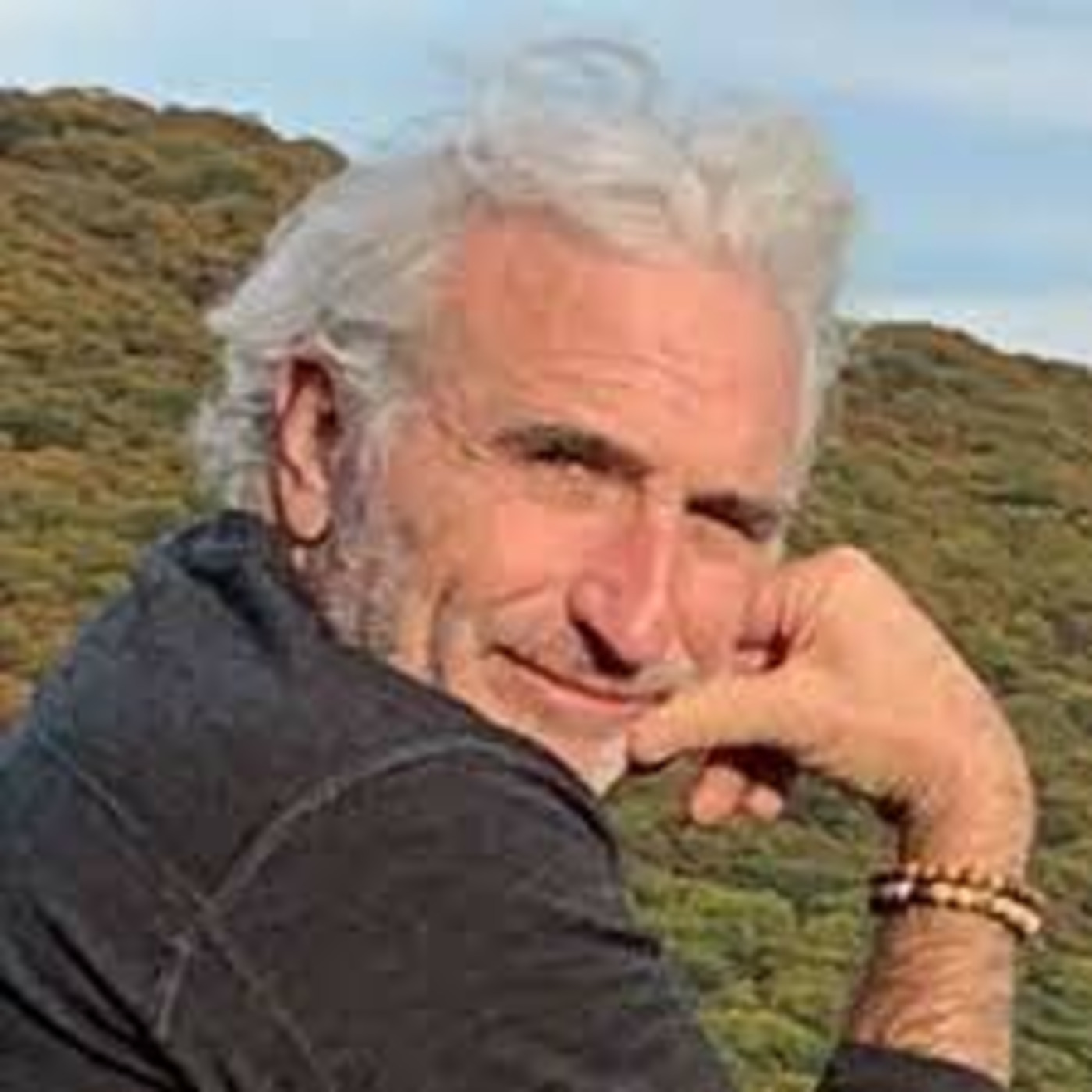
Aoifinn Devitt: The first time I experienced material financial conflagration was in the crash of ’87 when I was working at this first hedge fund that I worked at that was doing convertible securities and merger arbitrage. And in the beginning few times, right from ’87 to 2008, there were quite a few periods of great loss. And to me, you know, in terms of my last hedge fund, even in March of 2020, it was one of those periods where everything was just going down. There was no way to make money. And so ’87 was really hard. It was depressing. It was disorienting. But each time you go through an experience like that, if you figure out how to survive, if you realize that life goes on, that whatever you may have left is still worthwhile.
Howard: I’m Aoifinn Devitt, and welcome to the 50 Faces Podcast, a podcast committed to revealing the richness and diversity of the world of investment by focusing on its people and their stories. I’m joined today by Howard Fisher, who was the original founder of Basso Capital hedge fund and the co-founder of the Gratitude Railroad initiative in 2013. He’s now the chairman emeritus of Vasso Capital and chief evangelist at the Gratitude Railroad. The Gratitude Railroad is an initiative that unites 9 tracks or different concepts using capitalism to evolve a social or environmental problem. Welcome, Howard. Thanks for joining me today.
Aoifinn Devitt: Thank you very much for having me. I’m looking forward to the conversation.
Howard: Well, let’s start with a little bit about your background and career journey before we turn to the Gratitude Railroad. Can you tell us where you grew up, what you studied, and how you came to enter the world of investing and finance?
Aoifinn Devitt: I grew up in the town of Oceanside on Long Island, the South Shore of Long Island, outside New York City. And I had always been interested, I don’t know exactly why, in the world of finance because it was a way to gain wealth. And I was studying it. I read lots of books. I like to think I read every book on finance in my local library. I subscribed to Barron’s and Forbes and Fortune at a very young age. I had an uncle who I admired very much. Who was a, a business professor at Baruch College who told me that the Wharton School was the best business school in the country. So I endeavored and applied the early decision and went there in 1977, and I ended up studying accounting and finance. In the beginning of my career, I spent the first 4 or 5 years of my career in public and private accounting, first for PricewaterhouseCoopers and then for Salomon Brothers, accounting for their international business operations. And it was, it was an easy job for me to take in the beginning, but I had always longed to get into the world of finance. At some point, I guess in the early ’90s, I read an article in the Wall Street Journal about a new hedge fund being formed that was going to focus on risk arbitrage and convertible security hedging. One of the founding partners happened to be from my hometown of Oceanside, New York, and I reached out to him hoping that he would talk to me about giving me a job there. At the time, I was going to NYU at night for my MBA, which I never ended up completing. And I was motivated to figure out a way to get into the business of trading and investing, which is really where I had wanted to be before I went to Wharton and somehow made this divergence into accounting. He told me no, that he’s going to take his team with him from the firm he was at. But the next day he called me back and said, I’m not allowed to take those people with me. I’m happy to talk to you. I interviewed first with his partner who was going to run the risk arbitrage form area of the company. And I was reading a book on merger arbitrage by Ivan Boesky, and I was taking a course in merger arbitrage and risk arbitrage from Richard Perry. So I was well-versed in the subject. I knew a lot about it. I think that was very helpful in me being awarded the job. So I got this job in, again, it was early ’90s. To work for this gentleman from my hometown who was this convertible securities specialist. And that’s really where my career in finance started.
Howard: And let’s fast forward then to founding your own firm. Can you tell us the thought process behind that?
Aoifinn Devitt: Sure. I had a long career at that point in time in trading convertible securities on both the sell side and the buy side. At the time of the founding, just before the founding of Bassel Capital Management, I was the co-head of the convertible securities department at Smith Barney, and there was a bit of a— this is in 1994. There were some travails in the marketplace related to some global economic issues as well as some financial issues within. I think it was when, was it, Askins had a big mortgage failure and my book lost a lot of money. I was afraid that I was going to lose my job, which I did.. And coincidentally, AIG was looking for somebody to run a convertible securities hedge fund business for them. And I’d been contacted by somebody in the convertible securities business who knew that I was looking for work that said AIG was looking for somebody to do this. And so I ended up partnering with them to launch Basso Capital Management back then.
Howard: Say there were any lessons learned from the experience of actually turning around and now fundraising launching on your own, but raising the capital required, managing the firm. Can you take us through a little bit of that journey?
Aoifinn Devitt: Yeah, I know no one can see because this is a podcast, but I’m smiling and thinking about it. It was a big change. You know, one of the reasons that I was good to partner with AIG was that I believed that their name would help open doors to marketing the fund, but it proved to be a lot harder than I could have imagined. And I think it’s interesting, here it is 40 years later or 30 years later, how hard it still is to raise money for the hedge fund business unless you’re in a small, esteemed, anointed group that all of your listeners probably know well. And it really has been an ongoing learning process as to how to provide information to potential clients, provide the service that they want, and explain to them why what you’re doing for them is unique to you and executed in a manner that is thoughtful, honest, and authentic. And it was definitely a big learning experience, you know, going and knocking on doors and talking to people. I was not necessarily an extrovert, I don’t think, at the time. But as a result of all that work of putting myself out there, and, you know, as you can imagine, over the decades that I’ve been managing Basso Capital, I met with thousands of people. I’ve spoken in front of large groups. I’ve spoken in front of small groups, lots of one-on-one meetings, but it’s something I’ve come to really enjoy. I think the important part of it for me is I can sell myself when I truly believe the work that I’m doing and that I’m being brutally honest. And sometimes the brutal honesty has caused people not to want to invest with me, which is perfectly fine. It’s something that I’ve learned to accept.
Howard: And before going into your other passion here around the environment and sustainability, go back to the point about losing a lot of money in the convertible bond book and maybe how your attitude to risk, loss, capital preservation, how did that evolve? And did anyone train you in it per se, or was it really just the cut and thrust of being on the trading floor and living by your wits?
Aoifinn Devitt: That’s, that’s another really interesting question that brings up a lot of maybe not necessarily fond memories, but experiences. And I’m sure you’ve had this with many of the people you spoke to. The first time I experienced material financial conflagration was in the crash of ’87 when I was working at this first hedge fund that I worked at that was doing convertible securities and merger arbitrage. And in the beginning few times, right from ’87 to 2008, there were quite a few periods of great loss. And to me, you know, in terms of my last hedge fund, Even in March of 2020, it was one of those periods where everything was just going down. There was no way to make money. And so ’87 was really hard. It was depressing, it was disorienting. But each time you go through an experience like that, if you figure out how to survive, if you realize that life goes on, that whatever you may have left is still worthwhile— importantly for me along this journey is I have a beautiful wife who was always supporting and loving, especially in those time periods when it was really hard for me to deal with the consequences of the financial loss and the emotional loss that comes along with those kinds of circumstances. As I sat at the trading desk in March of 2020, when I was specializing exclusively in SPACs and thinking, Howard, you didn’t want to go through this again. You didn’t want to go through this again. But I did it really, I think, very comfortably. With much more comfort and aplomb than I ever had before because I’d been through it so many times. Markets go down, markets go up, and we all know, right? You know, maybe not easy to recognize those periods of where you really make your money. And if you stay calm and you stay unemotional and you do the right thing, sell what you need to sell, buy what’s appropriate to buy, you make it through and it turns out to be a rewarding experience.
Howard: But isn’t that the interesting point about our industry that people like yourselves maybe who’ve seen many cycles tend to retire or do something different, and the industry becomes very young without perhaps necessarily populated by individuals who’ve had that experience without that perspective. Do you see enough of that kind of mentorship down occurring from people like yourself who can see perhaps the perspective?
Aoifinn Devitt: My experience is not really relevant to that kind of conversation. Abbasso, most of its life, a relatively small firm, we really had more than 25 or 30 employees when myself and my 3 partners were sort of at the top. So I really can’t relate to how others might do that. I think it’s really interesting as we speak about business, and I think we’re seeing especially in the economics aside today, significant retirements among people in the baby boomer category. I think always young people think that they know more than everybody else, especially in the financial services industry. And there’s so much change with the technology and the way people trade and the way that people interact that there’s probably a lot less interest in mentorship, but it’s not something I’m really deeply aware of.
Howard: And let’s move now to your interest in the environment. When did this start? Was it something that was always of interest to you? Did it evolve over time? And maybe we can talk then about the origins of the Gratitude Railroad.
Aoifinn Devitt: Sure. So that’s a question that I’ve often wondered about myself. I’d like to think that I had some concern about the environment for a very long time. I know that my giving has had some slant towards the environment over time, but it’s clear in what you read and what you see over the last, really over the last 250 years, but for me personally, the last 20, 25 years has become increasingly evident that there is an issue that is greatly threatening life on the planet for all living things, whether it’s animal life, plant life, certainly human life. And that there is very clear evidence that what we have been doing in industrializing our environment and burning fossil fuels and disrespecting waste and farmland is damaging and impacting our quality of life and is increasingly getting worse. But what that really accelerated is to sort of segue into your next question. The financial crisis in 2008, while despite everything I said about managing through it and recovery, was especially challenging for me, and it was especially challenging to find a path of recovery for Basso. We went from $3 billion under management to $300 million under management. We went from 75 employees to 25 employees. And I was having a lack of success despite what I thought was a relatively skillful ability in marketing to bring the assets back up to a viable, interesting level. So I found out about this program at Harvard University called the Advanced Leadership Initiative, which is an opportunity for people at a later stage in their lives with passions about learning and service to go to a place like Harvard and take any class in any school of their choosing in which the professor would allow you to audit. I applied not expecting to get in. I got in, not sure I wanted to go. But literally from the moment I stepped on campus, I was in love with the program and the process and the opportunity to learn. And I ended up staying there for 3 semesters, 3 full semesters, the first 2 semesters I was up there relatively full-time with my wife, and I began to learn about various things. I took classes that taught me about the environment, they taught me about spirituality, they taught me about politics. And I was engaged with a wonderful group of fellows in my cohort year of 2013 who engaged in various missions of service and purpose and mission. And that deepened my interest in the environment, and importantly, the realization, along with the co-founder of Gratitude Railroad, Eric Jacobson, that capitalism, let’s call it consciously applied, has a very big role to play in it. Early in my time at Harvard, I went to a seminar that was led by the son of a friend of mine who also happened to be a friend of one of my sons, which is how I got to know him, which introduced the concept of grass-fed beef and rotational grazing, the work of Allan Savory. And that just really clicked with me that there was a way to raise cattle that was good for the environment, created healthier cattle, was better for the capital, and in theory could be very profitable. So that began to percolate in my mind— environmental service, economic viability, and good for people too. And so that journey has accelerated dramatically. And I think, you know, over the last— and I think I know, over the last 10 years, it’s an algorithmic progression every day, thinking about the role of business in making the environment better in a manner that’s economically viable and acceptable to most people who would touch that business.
Howard: And what would the different strands of this initiative be? At one point, you spoke about having tracks that may have evolved now. Can you speak about the different areas? I’m sure there’s overlapping and new areas emerging.
Aoifinn Devitt: Yeah. So, so the idea behind Gratitude Railroad was this, that one, that investing in viable, well-run, competitive businesses would provide most of the solutions to the problems we face. Another concept was that there were a lot of smart, passionate, interesting people involved in impact investing, but they didn’t necessarily have the kind of business experience that Eric and I had. And we wanted to bring what we were calling a Wall Street attitude to impact investing and then use that first of all to move capital, right? The most important thing, the essence of Gratitude Railroad and sort of the core thing following all the work is the investment has to come rather than be talked about. And we looked at a number of ways to do it. How do we engage people? So we have people who are engaged actively in our process, they participate like venture partners would at a typical venture capital firm or sort of a, a board member or a board observer or some kind of— you talk about mentorship. In this case, we’re mentoring, let’s call that ambitious, passionate business people who have a problem that they see and a solution that has a, a basis in business, but they’re not necessarily business people. So we wanna engage our community in doing that. So one track is around that engagement and enrichment, both of the business life and the life of the investor. We are focused, broadly speaking, on environmental issues. So we care deeply about the rise in the profitability of regenerative agriculture, of which rotational grass raising of grass-fed beef is a part of. But there are significant aspects within that. That’s an important part for us. Obviously, there is a, a need to change the way that we generate energy. So that’s an important part for us. So we’re always seeking businesses that are addressing these issues, the oceans and water, another area in which we invest. Importantly too, we believe that we need to move trillions of dollars into any one of these sectors, um, energy, transportation, food, agriculture. So we’re also interested in doing another sort of track if we want to use that word lightly in the conversations. How do we help build the impact infrastructure? So over time, we’ve helped to create a private equity fund, a public equity long-short fund. We’re invested in and big supporters of an advisory firm that’s also doing that. But I just want to get back to the areas that we invest in. In addition to the investing in climate, let’s call it writ large environment, which is about half our work. Half our work is what we might want to call social justice, which includes getting capital to women and BIPOC-led businesses, helping in areas and advising businesses in education, in healthcare, dealing with issues around people in and out of the prison system and things like that. So there are all these different ways to invest. We’re also very active in supporting building economies that support Native Americans, indigenous peoples who live in reservations and building businesses around them. So all these different ways, we have hundreds of people who are actively engaged, some of whom the environment doesn’t resonate, some of whom it’s only about Native Americans, some people it’s only gender lens issues, you know, You may know that something like 2 or 3% of venture capital goes to businesses founded or led by women. A similar amount goes to businesses founded or led by people of color. So different cohorts within the Gratitude Rebel community may focus on one of those, though many of them overlap.
Howard: Some really interesting questions. I’ve just got some follow-ups. So this is a capitalism initiative about engaging capitalism. Then when it comes to impact, are you looking to measure it in a concrete way? Say, for example, in some of these social justice initiatives where it’s not easily measurable? And how about the return expectations for investments that are so directed?
Aoifinn Devitt: Two great and important questions. I’ll start with the first one. Impact measurement, I think, is a very fraught issue. I think that it can be an important issue, especially for larger independent fiduciaries. Let’s start with Howard Fisher as an individual. For me and my investing, it’s very simple. I am only going to invest in businesses whose product or service is clearly identifiable as beneficial to, let’s just call it the environment or a social justice issue. And that the founder of that business truly believes it, that they’re not just playing a game because they think they have an economic opportunity. To take advantage of it. So for me, it’s just a clear— this business is good for the environment. Like I’ve invested in 3 very different kinds of composting businesses. There’s no doubt that composting waste rather than putting in a landfill or some other places is better for the environment. Avoiding the use of plastic with a reusable container is better for the environment. That being said, many of the businesses in which we invest, the funds in which we invest, to have impact reports. And there are various ways of measuring it. I have a personal aversion to something that comes out of a regulatory system. Most of it, I think, is sort of lowest common denominator negotiated between some form of government bureaucrat and a larger industry incumbent who’s looking to limit the benefits. There are things, you know, like a lot of people look at the UN SDGs. I think there’s something to be said about looking at the UN SDGs, Sustainable Development Goals, those who don’t know, and adhering to them and identifying them. I think there’s something to be said to reporting on the diversity of a leadership team or the staff of the company, including gender differentiations, whether it’s just male, female, or somebody who identifies as LGBTQ+ or something like that. There are certainly ways to measure carbon emissions avoided. For example, one of my favorite companies is a company called Recompose, which provides what we politely call natural organic reduction,, but in simple terms is human composting as opposed to alternative to cremation and burial. And it’s very easy to measure the carbon emissions avoided by composting relative to cremation. That’s a simple example, but we have many companies in our portfolio that will be able to report on carbon emissions avoided. And the same kind of thing, landfill waste avoided is another factor that some companies will report on. So there are plenty of ways to report on it, and we do provide that reporting. It’s essential and core to the values in the founding of Gratitude Railroad that we’re underwriting to what we would call market rate, competitive, non-concessional returns. Because the way we looked at it, and part of the thesis and the underpinnings in founding Gratitude Railroad, is there are 3 pools of capital in the world. The smallest is the philanthropic pool. Important, but bureaucratic, unsustainable. Again, do some great work, but charity is not going to change the world. The second biggest pool of capital in the world effectively is the, is in the government. And the government has its pros and its cons. It can be an amazing, important partner. I was listening to a presentation the other day by the CEO of a very important impact investment entity who claimed that we’re not going to get anywhere without the help of the government. You look at something like The Inflation Reduction Act IRA, there’s incredible subsidies for moving capital into the businesses that are truly going to be able to solve the environmental crisis we face. But most of the money in the world is in commerce. And the only way we’re going to attract the money from people who aren’t with the same belief set that I have and the Graduate Railroad community has is by being competitively profitable and proving through our work and through other people’s work that those businesses are viable and really will make a lot of money despite the fact they may happen to have some kind of, let’s call it, to segue to the next question, ESG aspect to them. Being the chief evangelist of Gratitude Railway, it just sort of, you asked that earlier question about how I learned about marketing, going from being an employee to marketing a fund and evangelizing is what I love to do. The work of Gratitude Railroad is important, the way that it not only provides me an intellectual challenge and an economic opportunity, but brings me joy and delight every single day. The founders that I speak to, the fund managers that I speak to, the philanthropists who are looking into the space, the other investors, the people of means. I find that my greatest challenge in speaking to people who are a little bit skeptical and sharing with them the joy of this work and the potential for this work and the importance of this work There’s so many people, I believe, of success, of means, who actually have good values, who somehow are able to segregate or choose to segregate their investment work from their charitable work. There are people there, it’s amazing to me, even foundations and nonprofits who engage in environmental work and social justice work, who look at their investments as a separate bucket. That’s so inconsistent, illogical, And at odds, you know, I love that engagement. So I know that there’s a significant conversation in the world about is ESG good, is it bad, does it limit things? It’s so sad that this has become politicized. Like the guy who’s running for president who was anti-ESG. Yeah, people like that who’ve made so much money, who can’t let go of a penny, who think that there’s some kind of insidious relationship between, I don’t know, politicians and the solar industry. We’re all just trying to do good for the world and for human beings and for people and living things. I haven’t really confronted it. I tend to, I obviously not travel in circles, but it is interesting. There are people that I speak to. Gratitude Railroad grows its community by hosting events in various places around the country. And we’re having a meeting on the West Coast next week and I invited a couple people to discuss one of our businesses, which is focused on gender lens and BIPOC-oriented investing. And somebody who I would consider a friend suggested they would never attend such a meeting. And I don’t know why that would be. And I know some people are lost causes, but it empowers me every day to continue to speak about this. And like, here’s another example that relates to an earlier conversation. Recompose, the company that provides human composting, When we invested, it was legal in one state. The most recent state it became legal in, the sixth state, was New York. But there were religious groups that were objecting to people having that option because they felt it was undignified for the human body. To me, an extension of the my body, my choice argument. And I, along with many others, worked really hard to campaign and create a letter-writing campaign to get Governor Hochul to sign the bill. Into action. And to me, I don’t understand why people would object to something like this, or why people would object to home composting, or why people would object to a circular economy. So my evangelizing is deeply embedded in me. And while there might be a headline about ESG is bad, it doesn’t really dissuade me. It’s pretty clear to me in the work that I see that the impact investing world, especially as it relates to climate-related venture capital, is still booming. So I’m heartened and warmed by the idea that many more people are recognizing every day the power of technology and changing in the way that we do things from norms again, like recompose offers is an answer and can be incredibly economically viable.
Howard: One point just to ask about is the impact washing, greenwashing, some of the charlatans that I suppose are now trafficking in this area as they’ve seen an uptick in investor interest, particularly in Europe. And some parts of the US. How do you impose standards, or what kind of rigor do you bring to scrutinizing some so-called impact?
Aoifinn Devitt: Yeah, that’s another really interesting and great question. On one hand, because I care so much, I want every single investment firm to keep the environment and social justice first and foremost in their mind as they invest. Obviously, we’ve got a significant problem because people can pollute and be prejudiced at will without any real penalties. Right? There’s no price on the diseconomies of a coal mine or utility that pollutes the waters by dumping its waste in the water or a factory that does that. So there’s very limited economic balance. And I think that’s unfair. For me, again, sort of similar to the idea that I don’t really care that much about impact measurement because I know when I see it., and I can choose to invest. I choose to invest for the most part with born-for-impact, authentic, mission-aligned managers. And to some extent, the infrastructure building goal of Gratitude Railroad is to bring those enterprises to the marketplace so we don’t have to think about greenwashing and impact washing and doing it just for marketing purposes. So for example, we’ve helped fund a company called Climate First Bank. Again, you don’t need an impact report on Climate First Bank assuming that the name of the bank is what they do, which I believe it is because I know the founder and some of the board members pretty well. So for me, and to some extent largely the group, the work of Gratitude Railroad is we don’t have to worry about impact washing or greenwashing because the people that we fund are actually clearly fundamentally aligned. And when you’re trying to transform an organization, well, some of the great work that, let’s say, Larry Fink is attempting to do or other companies that are attempting to do it, it’s really important that it’s embedded deeply in their values and that they understand that this is really important. So sure, there are lots of companies out there that are faking their way through it and walking their way through it. And there’s a lot of publications about that. I do believe that, you know, you talked about mentorship and the old people like me retiring. I do believe that a higher percentage of people, younger generations care deeply about this work and they will continue to force the conventional firms further along the line. So if they’re doing it on a greenwashing basis at first, but each step is still a step in that, you know, if you want to call it even that slippery slope of actually in a positive way of actually caring about the environment in their work. So my role is to bring new businesses to the marketplace, to hold the old ones accountable and challenge them and hope that as we continue to educate next generations actively and passively and through lived experience, that the world will begin to change.
Howard: We are now going to take a short break to speak with the sponsor of this series about what it is that makes them unique. I sat down with Tom Raber of Alvine Capital. So Alpine Capital has a unique business model that you call reverse inquiry. Can you tell us what reverse inquiry means?
Speaker C: When we were marketing or softly marketing funds, we realized that some institutional investors felt that they were being pushed and every call was the same as the one they just had. And we felt that we had to have another approach to institutional investors. And so we try to really go behind the scenes and ask them, what exactly are you looking for? If you had a dream scenario and you had an opening in your fund, what would you like to have and how would that fund look? And when we got investors to open up and explain to us what they wanted, we then took down all the information we needed and we went out into the market. It’s a pull sale rather than a push sale. You’re actually helping the investor finding something that’s better than they thought they were looking for in the first place.
Howard: In terms of your client base, so you work with a lot of Scandinavian and Northern European institutions. Is there anything on their mind today?
Speaker C: We opened an office in Stockholm last year. We have Nordic roots. We have obviously Nordic-speaking people in London as well. We’ve covered the region for many years. Yes, we know it very well. What are they looking for? What’s happening up in that part of the world is that they’re a leader in anything that’s ESG and impact. Some very large institutions have decided not to do anything at all unless it’s completely impact, completely green. Everyone is looking for good, well-performing private equity and private credit funds. And we’re fortunate that we’re working with both them of in both categories. At the moment, we have a very good selection there.
Howard: And now back to the show. One last question, just speaking of keeping old ones accountable, old businesses, the diversity of the investment industry is something that this podcast in particular is focused on, and that’s why we showcase perhaps less well-represented voices. What score would you give the investment industry? Do you see enough change over the course of your career? And where do you think we are today?
Aoifinn Devitt: Again, I’m not deeply engaged at this point with the conventional investment industry, but what I hear from friends and what I read, it’s changed a lot. I think there are far more women at senior levels, but my sense is, and what I read is, they’re not, generally speaking, moving to the top. I think people of color have a particularly hard time in moving ahead and in being comfortable in some of these environments where it’s not necessarily authentic and sincere. We’ve had businesses trying to hire people of color challenged in competing with the large firms that are trying to meet guidelines and requirements and wanting to report about their diversity, whether or not it’s authentic, and the people who we believe are really, really talented and what we’re trying to hire But will they have the same opportunities? I don’t know. Again, I think that even if the steps are tentative and timid and more about performance rather than sincerity, the more good people, whether they’re women or people of color or various other cohorts that are underrepresented and clearly are underrepresented at these firms, the more they show up every day, the more they outperform, the more they, they at least meet, if not exceed expectations. The more normal it will become. And that’s the important thing, that all these entities out there just normalize a much more diverse population and it won’t be something to speak about. And we all know how the world works. Generally speaking, you get a job by speaking to somebody that you know, that is a contact, it’s a friend of a friend, or like, listen, my first job in finance came from somebody from my hometown. My hometown was totally undiverse. But the more we bring other people in, the more they will have their own opportunities to help continue this diversity of growth.
Howard: Well, you’ve just stated our mission right there. It is to highlight less well-represented names so that we normalize them for our listeners and for young people in the industry, and also create a de facto kind of band of mentors who may not be physically close to you, but who you can listen to their story about their setbacks and challenges.
Aoifinn Devitt: Well, if I can help with that, whether it’s me or We have a lot of amazingly wonderful, successful, brilliant women and people of color in our community who would probably be happy to help you with that work if that’s of all of interest.
Howard: We will be following up. That’s a great offer. My last two closing questions just get around exactly that— key people. Any key people who influenced you in your career that you can mention with the caveat that this is not meant to be an exhaustive list?
Aoifinn Devitt: Yeah, that’s interesting. When I wrote a note about leaving the hedge fund business after 40 years, I thought about all the people who’ve touched me. And I think that we have the opportunity to learn from everybody above us, below us, equal to us, the people who serve us lunch, the people who drive us around town or whatever it might be. And I was thinking about as going through some complications that from time to time, you know, do I have a mentor? But I have to thank Dick Fite, who was the gentleman from my hometown who took a shot and taught me this business. And without him, I wouldn’t be in this world at all. So I’d probably still be an accountant someplace, even though I got fired from my public accounting job. So I think that’s a very important person. I think a really important person who really was transformative in my life, somewhat indirectly, is Rosabeth Moss Kanter. Rosabeth is the first or second tenured professor at Harvard Business School, and she created the program at Harvard, the Advanced Leadership Initiative, that completely transformed my life in so many incredibly important, beautiful, powerful ways that led to the creation of Gratitude Railroad and all the work that has come through there. And there are so many people to mention, but I think those are probably amongst the two most important. Of course, my wife, who’s been incredibly supportive of my transformation, actually very pleased as I went. They gave a speech a couple of months ago to a business school alumni group, and I called it From Gordon Gekko to the Dalai Lama. And before I got deeply embedded in the hedge fund business, I was probably a bit of a different person. And the business as it built to the peak in 2008 was transforming me into that kind of stereotypical hedge fund leader. And then the crisis in 2008 and the period after that and the transformation of my soul and my spirit, my beliefs as a result of going to Harvard in 2013. And the amazing people I’ve met, especially my co-founder of Gratitude Railroad, Eric Jacobson, have transformed me into a very different person. I’ll never be as spiritual and as open and as compassionate as the Dalai Lama, but that’s my goal to work on every day. So you can put the Dalai Lama in there too if you want.
Howard: Well, I mean, we all have inspiration from many, many different sources. And I think that notion of a transformation of your soul is a very evocative image. Thanks for sharing that. My last question is around any words of advice, whether from Dalai Lama or from other of these mentors or inspirational figures, or any creed or motto that you think sums up your purpose today.
Aoifinn Devitt: Yeah, well, again, there’s a lot to say there. I always caveat a conversation like that. It’s easy for me to say these things at age 64, financially comfortable, at a point of life of control and success. And an ability to do the things that I choose to do. I mean, it’s funny because my wife asked me the other day, what would you have done differently in your career at this point in time looking back? And, you know, on one hand, I don’t think there’s anything I really completely would have done differently. I am where I am right now as a result of all of those steps. What I would hope, which is I’ve learned late in life that maybe others would, is Don’t sacrifice your values. Don’t do things that you think are uncomfortable. Don’t pretend to be who you’re not. I think that’s really important. If you could be your authentic self every day, know, you the standard thing is follow your passion, and there’s certainly some value to that. Work isn’t always passionate. Sometimes you have to work really, really hard. A lot of times you have to work really hard, and it’s not fun to be in the office for 12 or 14 hours in a day, and some of that work is clearly drudgery. But if you can always be true to your authentic self, to think about the climate, to think about other human beings, not to be self-centered. Getting rich is an amazing, wonderful thing. There’s no doubt about it. And for many of us, and certainly for me in my journey early on, that was my only goal. And I don’t regret having done the things that I did. There’s nothing I did that I regretted from a moral or ethical basis. But I think, you know, in a world that we’re in today, where there’s so much challenge around the environment, there’s so much challenge around politics, there’s so much challenge around equality and social justice and economic mobility. If we all work together and thought about a bigger picture, right? You think about the diseconomies of prejudice, the diseconomies of pollution. If you just kept that in mind a little bit, I think you would be happier and the world would be a better place.
Howard: Well, that’s a perfect place to bring our discussion to an end. You call yourself an evangelist, and I think of that as somebody who preaches, and I don’t think there has been much preaching in this conversation, but there’s been a lot of translation of those areas that drive you into a language of commerce, language of capitalism that I think we all understand. So thank you for coming here and sharing your insights with us.
Aoifinn Devitt: Well, thank you, and I appreciate you saying it’s a translator rather than an evangelist. I like that a lot. Yes, you can’t evangelize this. You can only tell the people the stories and see if they resonate. So thank you very much. I really appreciate your time today.
Howard: I’m Aoifinn Devitt. Thank you for listening to the 50 Faces Podcast. If you liked what you heard and would like to tune in to hear more inspiring investors and their personal journeys, please subscribe on Apple Podcasts or wherever you get your podcasts. This podcast is for informational purposes only and should not be construed as investment advice, and all views are personal and should not be attributed to the organizations and affiliations of the host or any guest.
Aoifinn Devitt: The first time I experienced material financial conflagration was in the crash of ’87 when I was working at this first hedge fund that I worked at that was doing convertible securities and merger arbitrage. And in the beginning few times, right from ’87 to 2008, there were quite a few periods of great loss. And to me, you know, in terms of my last hedge fund, even in March of 2020, it was one of those periods where everything was just going down. There was no way to make money. And so ’87 was really hard. It was depressing. It was disorienting. But each time you go through an experience like that, if you figure out how to survive, if you realize that life goes on, that whatever you may have left is still worthwhile.
Howard: I’m Aoifinn Devitt, and welcome to the 50 Faces Podcast, a podcast committed to revealing the richness and diversity of the world of investment by focusing on its people and their stories. I’m joined today by Howard Fisher, who was the original founder of Basso Capital hedge fund and the co-founder of the Gratitude Railroad initiative in 2013. He’s now the chairman emeritus of Vasso Capital and chief evangelist at the Gratitude Railroad. The Gratitude Railroad is an initiative that unites 9 tracks or different concepts using capitalism to evolve a social or environmental problem. Welcome, Howard. Thanks for joining me today.
Aoifinn Devitt: Thank you very much for having me. I’m looking forward to the conversation.
Howard: Well, let’s start with a little bit about your background and career journey before we turn to the Gratitude Railroad. Can you tell us where you grew up, what you studied, and how you came to enter the world of investing and finance?
Aoifinn Devitt: I grew up in the town of Oceanside on Long Island, the South Shore of Long Island, outside New York City. And I had always been interested, I don’t know exactly why, in the world of finance because it was a way to gain wealth. And I was studying it. I read lots of books. I like to think I read every book on finance in my local library. I subscribed to Barron’s and Forbes and Fortune at a very young age. I had an uncle who I admired very much. Who was a, a business professor at Baruch College who told me that the Wharton School was the best business school in the country. So I endeavored and applied the early decision and went there in 1977, and I ended up studying accounting and finance. In the beginning of my career, I spent the first 4 or 5 years of my career in public and private accounting, first for PricewaterhouseCoopers and then for Salomon Brothers, accounting for their international business operations. And it was, it was an easy job for me to take in the beginning, but I had always longed to get into the world of finance. At some point, I guess in the early ’90s, I read an article in the Wall Street Journal about a new hedge fund being formed that was going to focus on risk arbitrage and convertible security hedging. One of the founding partners happened to be from my hometown of Oceanside, New York, and I reached out to him hoping that he would talk to me about giving me a job there. At the time, I was going to NYU at night for my MBA, which I never ended up completing. And I was motivated to figure out a way to get into the business of trading and investing, which is really where I had wanted to be before I went to Wharton and somehow made this divergence into accounting. He told me no, that he’s going to take his team with him from the firm he was at. But the next day he called me back and said, I’m not allowed to take those people with me. I’m happy to talk to you. I interviewed first with his partner who was going to run the risk arbitrage form area of the company. And I was reading a book on merger arbitrage by Ivan Boesky, and I was taking a course in merger arbitrage and risk arbitrage from Richard Perry. So I was well-versed in the subject. I knew a lot about it. I think that was very helpful in me being awarded the job. So I got this job in, again, it was early ’90s. To work for this gentleman from my hometown who was this convertible securities specialist. And that’s really where my career in finance started.
Howard: And let’s fast forward then to founding your own firm. Can you tell us the thought process behind that?
Aoifinn Devitt: Sure. I had a long career at that point in time in trading convertible securities on both the sell side and the buy side. At the time of the founding, just before the founding of Bassel Capital Management, I was the co-head of the convertible securities department at Smith Barney, and there was a bit of a— this is in 1994. There were some travails in the marketplace related to some global economic issues as well as some financial issues within. I think it was when, was it, Askins had a big mortgage failure and my book lost a lot of money. I was afraid that I was going to lose my job, which I did.. And coincidentally, AIG was looking for somebody to run a convertible securities hedge fund business for them. And I’d been contacted by somebody in the convertible securities business who knew that I was looking for work that said AIG was looking for somebody to do this. And so I ended up partnering with them to launch Basso Capital Management back then.
Howard: Say there were any lessons learned from the experience of actually turning around and now fundraising launching on your own, but raising the capital required, managing the firm. Can you take us through a little bit of that journey?
Aoifinn Devitt: Yeah, I know no one can see because this is a podcast, but I’m smiling and thinking about it. It was a big change. You know, one of the reasons that I was good to partner with AIG was that I believed that their name would help open doors to marketing the fund, but it proved to be a lot harder than I could have imagined. And I think it’s interesting, here it is 40 years later or 30 years later, how hard it still is to raise money for the hedge fund business unless you’re in a small, esteemed, anointed group that all of your listeners probably know well. And it really has been an ongoing learning process as to how to provide information to potential clients, provide the service that they want, and explain to them why what you’re doing for them is unique to you and executed in a manner that is thoughtful, honest, and authentic. And it was definitely a big learning experience, you know, going and knocking on doors and talking to people. I was not necessarily an extrovert, I don’t think, at the time. But as a result of all that work of putting myself out there, and, you know, as you can imagine, over the decades that I’ve been managing Basso Capital, I met with thousands of people. I’ve spoken in front of large groups. I’ve spoken in front of small groups, lots of one-on-one meetings, but it’s something I’ve come to really enjoy. I think the important part of it for me is I can sell myself when I truly believe the work that I’m doing and that I’m being brutally honest. And sometimes the brutal honesty has caused people not to want to invest with me, which is perfectly fine. It’s something that I’ve learned to accept.
Howard: And before going into your other passion here around the environment and sustainability, go back to the point about losing a lot of money in the convertible bond book and maybe how your attitude to risk, loss, capital preservation, how did that evolve? And did anyone train you in it per se, or was it really just the cut and thrust of being on the trading floor and living by your wits?
Aoifinn Devitt: That’s, that’s another really interesting question that brings up a lot of maybe not necessarily fond memories, but experiences. And I’m sure you’ve had this with many of the people you spoke to. The first time I experienced material financial conflagration was in the crash of ’87 when I was working at this first hedge fund that I worked at that was doing convertible securities and merger arbitrage. And in the beginning few times, right from ’87 to 2008, there were quite a few periods of great loss. And to me, you know, in terms of my last hedge fund, Even in March of 2020, it was one of those periods where everything was just going down. There was no way to make money. And so ’87 was really hard. It was depressing, it was disorienting. But each time you go through an experience like that, if you figure out how to survive, if you realize that life goes on, that whatever you may have left is still worthwhile— importantly for me along this journey is I have a beautiful wife who was always supporting and loving, especially in those time periods when it was really hard for me to deal with the consequences of the financial loss and the emotional loss that comes along with those kinds of circumstances. As I sat at the trading desk in March of 2020, when I was specializing exclusively in SPACs and thinking, Howard, you didn’t want to go through this again. You didn’t want to go through this again. But I did it really, I think, very comfortably. With much more comfort and aplomb than I ever had before because I’d been through it so many times. Markets go down, markets go up, and we all know, right? You know, maybe not easy to recognize those periods of where you really make your money. And if you stay calm and you stay unemotional and you do the right thing, sell what you need to sell, buy what’s appropriate to buy, you make it through and it turns out to be a rewarding experience.
Howard: But isn’t that the interesting point about our industry that people like yourselves maybe who’ve seen many cycles tend to retire or do something different, and the industry becomes very young without perhaps necessarily populated by individuals who’ve had that experience without that perspective. Do you see enough of that kind of mentorship down occurring from people like yourself who can see perhaps the perspective?
Aoifinn Devitt: My experience is not really relevant to that kind of conversation. Abbasso, most of its life, a relatively small firm, we really had more than 25 or 30 employees when myself and my 3 partners were sort of at the top. So I really can’t relate to how others might do that. I think it’s really interesting as we speak about business, and I think we’re seeing especially in the economics aside today, significant retirements among people in the baby boomer category. I think always young people think that they know more than everybody else, especially in the financial services industry. And there’s so much change with the technology and the way people trade and the way that people interact that there’s probably a lot less interest in mentorship, but it’s not something I’m really deeply aware of.
Howard: And let’s move now to your interest in the environment. When did this start? Was it something that was always of interest to you? Did it evolve over time? And maybe we can talk then about the origins of the Gratitude Railroad.
Aoifinn Devitt: Sure. So that’s a question that I’ve often wondered about myself. I’d like to think that I had some concern about the environment for a very long time. I know that my giving has had some slant towards the environment over time, but it’s clear in what you read and what you see over the last, really over the last 250 years, but for me personally, the last 20, 25 years has become increasingly evident that there is an issue that is greatly threatening life on the planet for all living things, whether it’s animal life, plant life, certainly human life. And that there is very clear evidence that what we have been doing in industrializing our environment and burning fossil fuels and disrespecting waste and farmland is damaging and impacting our quality of life and is increasingly getting worse. But what that really accelerated is to sort of segue into your next question. The financial crisis in 2008, while despite everything I said about managing through it and recovery, was especially challenging for me, and it was especially challenging to find a path of recovery for Basso. We went from $3 billion under management to $300 million under management. We went from 75 employees to 25 employees. And I was having a lack of success despite what I thought was a relatively skillful ability in marketing to bring the assets back up to a viable, interesting level. So I found out about this program at Harvard University called the Advanced Leadership Initiative, which is an opportunity for people at a later stage in their lives with passions about learning and service to go to a place like Harvard and take any class in any school of their choosing in which the professor would allow you to audit. I applied not expecting to get in. I got in, not sure I wanted to go. But literally from the moment I stepped on campus, I was in love with the program and the process and the opportunity to learn. And I ended up staying there for 3 semesters, 3 full semesters, the first 2 semesters I was up there relatively full-time with my wife, and I began to learn about various things. I took classes that taught me about the environment, they taught me about spirituality, they taught me about politics. And I was engaged with a wonderful group of fellows in my cohort year of 2013 who engaged in various missions of service and purpose and mission. And that deepened my interest in the environment, and importantly, the realization, along with the co-founder of Gratitude Railroad, Eric Jacobson, that capitalism, let’s call it consciously applied, has a very big role to play in it. Early in my time at Harvard, I went to a seminar that was led by the son of a friend of mine who also happened to be a friend of one of my sons, which is how I got to know him, which introduced the concept of grass-fed beef and rotational grazing, the work of Allan Savory. And that just really clicked with me that there was a way to raise cattle that was good for the environment, created healthier cattle, was better for the capital, and in theory could be very profitable. So that began to percolate in my mind— environmental service, economic viability, and good for people too. And so that journey has accelerated dramatically. And I think, you know, over the last— and I think I know, over the last 10 years, it’s an algorithmic progression every day, thinking about the role of business in making the environment better in a manner that’s economically viable and acceptable to most people who would touch that business.
Howard: And what would the different strands of this initiative be? At one point, you spoke about having tracks that may have evolved now. Can you speak about the different areas? I’m sure there’s overlapping and new areas emerging.
Aoifinn Devitt: Yeah. So, so the idea behind Gratitude Railroad was this, that one, that investing in viable, well-run, competitive businesses would provide most of the solutions to the problems we face. Another concept was that there were a lot of smart, passionate, interesting people involved in impact investing, but they didn’t necessarily have the kind of business experience that Eric and I had. And we wanted to bring what we were calling a Wall Street attitude to impact investing and then use that first of all to move capital, right? The most important thing, the essence of Gratitude Railroad and sort of the core thing following all the work is the investment has to come rather than be talked about. And we looked at a number of ways to do it. How do we engage people? So we have people who are engaged actively in our process, they participate like venture partners would at a typical venture capital firm or sort of a, a board member or a board observer or some kind of— you talk about mentorship. In this case, we’re mentoring, let’s call that ambitious, passionate business people who have a problem that they see and a solution that has a, a basis in business, but they’re not necessarily business people. So we wanna engage our community in doing that. So one track is around that engagement and enrichment, both of the business life and the life of the investor. We are focused, broadly speaking, on environmental issues. So we care deeply about the rise in the profitability of regenerative agriculture, of which rotational grass raising of grass-fed beef is a part of. But there are significant aspects within that. That’s an important part for us. Obviously, there is a, a need to change the way that we generate energy. So that’s an important part for us. So we’re always seeking businesses that are addressing these issues, the oceans and water, another area in which we invest. Importantly too, we believe that we need to move trillions of dollars into any one of these sectors, um, energy, transportation, food, agriculture. So we’re also interested in doing another sort of track if we want to use that word lightly in the conversations. How do we help build the impact infrastructure? So over time, we’ve helped to create a private equity fund, a public equity long-short fund. We’re invested in and big supporters of an advisory firm that’s also doing that. But I just want to get back to the areas that we invest in. In addition to the investing in climate, let’s call it writ large environment, which is about half our work. Half our work is what we might want to call social justice, which includes getting capital to women and BIPOC-led businesses, helping in areas and advising businesses in education, in healthcare, dealing with issues around people in and out of the prison system and things like that. So there are all these different ways to invest. We’re also very active in supporting building economies that support Native Americans, indigenous peoples who live in reservations and building businesses around them. So all these different ways, we have hundreds of people who are actively engaged, some of whom the environment doesn’t resonate, some of whom it’s only about Native Americans, some people it’s only gender lens issues, you know, You may know that something like 2 or 3% of venture capital goes to businesses founded or led by women. A similar amount goes to businesses founded or led by people of color. So different cohorts within the Gratitude Rebel community may focus on one of those, though many of them overlap.
Howard: Some really interesting questions. I’ve just got some follow-ups. So this is a capitalism initiative about engaging capitalism. Then when it comes to impact, are you looking to measure it in a concrete way? Say, for example, in some of these social justice initiatives where it’s not easily measurable? And how about the return expectations for investments that are so directed?
Aoifinn Devitt: Two great and important questions. I’ll start with the first one. Impact measurement, I think, is a very fraught issue. I think that it can be an important issue, especially for larger independent fiduciaries. Let’s start with Howard Fisher as an individual. For me and my investing, it’s very simple. I am only going to invest in businesses whose product or service is clearly identifiable as beneficial to, let’s just call it the environment or a social justice issue. And that the founder of that business truly believes it, that they’re not just playing a game because they think they have an economic opportunity. To take advantage of it. So for me, it’s just a clear— this business is good for the environment. Like I’ve invested in 3 very different kinds of composting businesses. There’s no doubt that composting waste rather than putting in a landfill or some other places is better for the environment. Avoiding the use of plastic with a reusable container is better for the environment. That being said, many of the businesses in which we invest, the funds in which we invest, to have impact reports. And there are various ways of measuring it. I have a personal aversion to something that comes out of a regulatory system. Most of it, I think, is sort of lowest common denominator negotiated between some form of government bureaucrat and a larger industry incumbent who’s looking to limit the benefits. There are things, you know, like a lot of people look at the UN SDGs. I think there’s something to be said about looking at the UN SDGs, Sustainable Development Goals, those who don’t know, and adhering to them and identifying them. I think there’s something to be said to reporting on the diversity of a leadership team or the staff of the company, including gender differentiations, whether it’s just male, female, or somebody who identifies as LGBTQ+ or something like that. There are certainly ways to measure carbon emissions avoided. For example, one of my favorite companies is a company called Recompose, which provides what we politely call natural organic reduction,, but in simple terms is human composting as opposed to alternative to cremation and burial. And it’s very easy to measure the carbon emissions avoided by composting relative to cremation. That’s a simple example, but we have many companies in our portfolio that will be able to report on carbon emissions avoided. And the same kind of thing, landfill waste avoided is another factor that some companies will report on. So there are plenty of ways to report on it, and we do provide that reporting. It’s essential and core to the values in the founding of Gratitude Railroad that we’re underwriting to what we would call market rate, competitive, non-concessional returns. Because the way we looked at it, and part of the thesis and the underpinnings in founding Gratitude Railroad, is there are 3 pools of capital in the world. The smallest is the philanthropic pool. Important, but bureaucratic, unsustainable. Again, do some great work, but charity is not going to change the world. The second biggest pool of capital in the world effectively is the, is in the government. And the government has its pros and its cons. It can be an amazing, important partner. I was listening to a presentation the other day by the CEO of a very important impact investment entity who claimed that we’re not going to get anywhere without the help of the government. You look at something like The Inflation Reduction Act IRA, there’s incredible subsidies for moving capital into the businesses that are truly going to be able to solve the environmental crisis we face. But most of the money in the world is in commerce. And the only way we’re going to attract the money from people who aren’t with the same belief set that I have and the Graduate Railroad community has is by being competitively profitable and proving through our work and through other people’s work that those businesses are viable and really will make a lot of money despite the fact they may happen to have some kind of, let’s call it, to segue to the next question, ESG aspect to them. Being the chief evangelist of Gratitude Railway, it just sort of, you asked that earlier question about how I learned about marketing, going from being an employee to marketing a fund and evangelizing is what I love to do. The work of Gratitude Railroad is important, the way that it not only provides me an intellectual challenge and an economic opportunity, but brings me joy and delight every single day. The founders that I speak to, the fund managers that I speak to, the philanthropists who are looking into the space, the other investors, the people of means. I find that my greatest challenge in speaking to people who are a little bit skeptical and sharing with them the joy of this work and the potential for this work and the importance of this work There’s so many people, I believe, of success, of means, who actually have good values, who somehow are able to segregate or choose to segregate their investment work from their charitable work. There are people there, it’s amazing to me, even foundations and nonprofits who engage in environmental work and social justice work, who look at their investments as a separate bucket. That’s so inconsistent, illogical, And at odds, you know, I love that engagement. So I know that there’s a significant conversation in the world about is ESG good, is it bad, does it limit things? It’s so sad that this has become politicized. Like the guy who’s running for president who was anti-ESG. Yeah, people like that who’ve made so much money, who can’t let go of a penny, who think that there’s some kind of insidious relationship between, I don’t know, politicians and the solar industry. We’re all just trying to do good for the world and for human beings and for people and living things. I haven’t really confronted it. I tend to, I obviously not travel in circles, but it is interesting. There are people that I speak to. Gratitude Railroad grows its community by hosting events in various places around the country. And we’re having a meeting on the West Coast next week and I invited a couple people to discuss one of our businesses, which is focused on gender lens and BIPOC-oriented investing. And somebody who I would consider a friend suggested they would never attend such a meeting. And I don’t know why that would be. And I know some people are lost causes, but it empowers me every day to continue to speak about this. And like, here’s another example that relates to an earlier conversation. Recompose, the company that provides human composting, When we invested, it was legal in one state. The most recent state it became legal in, the sixth state, was New York. But there were religious groups that were objecting to people having that option because they felt it was undignified for the human body. To me, an extension of the my body, my choice argument. And I, along with many others, worked really hard to campaign and create a letter-writing campaign to get Governor Hochul to sign the bill. Into action. And to me, I don’t understand why people would object to something like this, or why people would object to home composting, or why people would object to a circular economy. So my evangelizing is deeply embedded in me. And while there might be a headline about ESG is bad, it doesn’t really dissuade me. It’s pretty clear to me in the work that I see that the impact investing world, especially as it relates to climate-related venture capital, is still booming. So I’m heartened and warmed by the idea that many more people are recognizing every day the power of technology and changing in the way that we do things from norms again, like recompose offers is an answer and can be incredibly economically viable.
Howard: One point just to ask about is the impact washing, greenwashing, some of the charlatans that I suppose are now trafficking in this area as they’ve seen an uptick in investor interest, particularly in Europe. And some parts of the US. How do you impose standards, or what kind of rigor do you bring to scrutinizing some so-called impact?
Aoifinn Devitt: Yeah, that’s another really interesting and great question. On one hand, because I care so much, I want every single investment firm to keep the environment and social justice first and foremost in their mind as they invest. Obviously, we’ve got a significant problem because people can pollute and be prejudiced at will without any real penalties. Right? There’s no price on the diseconomies of a coal mine or utility that pollutes the waters by dumping its waste in the water or a factory that does that. So there’s very limited economic balance. And I think that’s unfair. For me, again, sort of similar to the idea that I don’t really care that much about impact measurement because I know when I see it., and I can choose to invest. I choose to invest for the most part with born-for-impact, authentic, mission-aligned managers. And to some extent, the infrastructure building goal of Gratitude Railroad is to bring those enterprises to the marketplace so we don’t have to think about greenwashing and impact washing and doing it just for marketing purposes. So for example, we’ve helped fund a company called Climate First Bank. Again, you don’t need an impact report on Climate First Bank assuming that the name of the bank is what they do, which I believe it is because I know the founder and some of the board members pretty well. So for me, and to some extent largely the group, the work of Gratitude Railroad is we don’t have to worry about impact washing or greenwashing because the people that we fund are actually clearly fundamentally aligned. And when you’re trying to transform an organization, well, some of the great work that, let’s say, Larry Fink is attempting to do or other companies that are attempting to do it, it’s really important that it’s embedded deeply in their values and that they understand that this is really important. So sure, there are lots of companies out there that are faking their way through it and walking their way through it. And there’s a lot of publications about that. I do believe that, you know, you talked about mentorship and the old people like me retiring. I do believe that a higher percentage of people, younger generations care deeply about this work and they will continue to force the conventional firms further along the line. So if they’re doing it on a greenwashing basis at first, but each step is still a step in that, you know, if you want to call it even that slippery slope of actually in a positive way of actually caring about the environment in their work. So my role is to bring new businesses to the marketplace, to hold the old ones accountable and challenge them and hope that as we continue to educate next generations actively and passively and through lived experience, that the world will begin to change.
Howard: We are now going to take a short break to speak with the sponsor of this series about what it is that makes them unique. I sat down with Tom Raber of Alvine Capital. So Alpine Capital has a unique business model that you call reverse inquiry. Can you tell us what reverse inquiry means?
Speaker C: When we were marketing or softly marketing funds, we realized that some institutional investors felt that they were being pushed and every call was the same as the one they just had. And we felt that we had to have another approach to institutional investors. And so we try to really go behind the scenes and ask them, what exactly are you looking for? If you had a dream scenario and you had an opening in your fund, what would you like to have and how would that fund look? And when we got investors to open up and explain to us what they wanted, we then took down all the information we needed and we went out into the market. It’s a pull sale rather than a push sale. You’re actually helping the investor finding something that’s better than they thought they were looking for in the first place.
Howard: In terms of your client base, so you work with a lot of Scandinavian and Northern European institutions. Is there anything on their mind today?
Speaker C: We opened an office in Stockholm last year. We have Nordic roots. We have obviously Nordic-speaking people in London as well. We’ve covered the region for many years. Yes, we know it very well. What are they looking for? What’s happening up in that part of the world is that they’re a leader in anything that’s ESG and impact. Some very large institutions have decided not to do anything at all unless it’s completely impact, completely green. Everyone is looking for good, well-performing private equity and private credit funds. And we’re fortunate that we’re working with both them of in both categories. At the moment, we have a very good selection there.
Howard: And now back to the show. One last question, just speaking of keeping old ones accountable, old businesses, the diversity of the investment industry is something that this podcast in particular is focused on, and that’s why we showcase perhaps less well-represented voices. What score would you give the investment industry? Do you see enough change over the course of your career? And where do you think we are today?
Aoifinn Devitt: Again, I’m not deeply engaged at this point with the conventional investment industry, but what I hear from friends and what I read, it’s changed a lot. I think there are far more women at senior levels, but my sense is, and what I read is, they’re not, generally speaking, moving to the top. I think people of color have a particularly hard time in moving ahead and in being comfortable in some of these environments where it’s not necessarily authentic and sincere. We’ve had businesses trying to hire people of color challenged in competing with the large firms that are trying to meet guidelines and requirements and wanting to report about their diversity, whether or not it’s authentic, and the people who we believe are really, really talented and what we’re trying to hire But will they have the same opportunities? I don’t know. Again, I think that even if the steps are tentative and timid and more about performance rather than sincerity, the more good people, whether they’re women or people of color or various other cohorts that are underrepresented and clearly are underrepresented at these firms, the more they show up every day, the more they outperform, the more they, they at least meet, if not exceed expectations. The more normal it will become. And that’s the important thing, that all these entities out there just normalize a much more diverse population and it won’t be something to speak about. And we all know how the world works. Generally speaking, you get a job by speaking to somebody that you know, that is a contact, it’s a friend of a friend, or like, listen, my first job in finance came from somebody from my hometown. My hometown was totally undiverse. But the more we bring other people in, the more they will have their own opportunities to help continue this diversity of growth.
Howard: Well, you’ve just stated our mission right there. It is to highlight less well-represented names so that we normalize them for our listeners and for young people in the industry, and also create a de facto kind of band of mentors who may not be physically close to you, but who you can listen to their story about their setbacks and challenges.
Aoifinn Devitt: Well, if I can help with that, whether it’s me or We have a lot of amazingly wonderful, successful, brilliant women and people of color in our community who would probably be happy to help you with that work if that’s of all of interest.
Howard: We will be following up. That’s a great offer. My last two closing questions just get around exactly that— key people. Any key people who influenced you in your career that you can mention with the caveat that this is not meant to be an exhaustive list?
Aoifinn Devitt: Yeah, that’s interesting. When I wrote a note about leaving the hedge fund business after 40 years, I thought about all the people who’ve touched me. And I think that we have the opportunity to learn from everybody above us, below us, equal to us, the people who serve us lunch, the people who drive us around town or whatever it might be. And I was thinking about as going through some complications that from time to time, you know, do I have a mentor? But I have to thank Dick Fite, who was the gentleman from my hometown who took a shot and taught me this business. And without him, I wouldn’t be in this world at all. So I’d probably still be an accountant someplace, even though I got fired from my public accounting job. So I think that’s a very important person. I think a really important person who really was transformative in my life, somewhat indirectly, is Rosabeth Moss Kanter. Rosabeth is the first or second tenured professor at Harvard Business School, and she created the program at Harvard, the Advanced Leadership Initiative, that completely transformed my life in so many incredibly important, beautiful, powerful ways that led to the creation of Gratitude Railroad and all the work that has come through there. And there are so many people to mention, but I think those are probably amongst the two most important. Of course, my wife, who’s been incredibly supportive of my transformation, actually very pleased as I went. They gave a speech a couple of months ago to a business school alumni group, and I called it From Gordon Gekko to the Dalai Lama. And before I got deeply embedded in the hedge fund business, I was probably a bit of a different person. And the business as it built to the peak in 2008 was transforming me into that kind of stereotypical hedge fund leader. And then the crisis in 2008 and the period after that and the transformation of my soul and my spirit, my beliefs as a result of going to Harvard in 2013. And the amazing people I’ve met, especially my co-founder of Gratitude Railroad, Eric Jacobson, have transformed me into a very different person. I’ll never be as spiritual and as open and as compassionate as the Dalai Lama, but that’s my goal to work on every day. So you can put the Dalai Lama in there too if you want.
Howard: Well, I mean, we all have inspiration from many, many different sources. And I think that notion of a transformation of your soul is a very evocative image. Thanks for sharing that. My last question is around any words of advice, whether from Dalai Lama or from other of these mentors or inspirational figures, or any creed or motto that you think sums up your purpose today.
Aoifinn Devitt: Yeah, well, again, there’s a lot to say there. I always caveat a conversation like that. It’s easy for me to say these things at age 64, financially comfortable, at a point of life of control and success. And an ability to do the things that I choose to do. I mean, it’s funny because my wife asked me the other day, what would you have done differently in your career at this point in time looking back? And, you know, on one hand, I don’t think there’s anything I really completely would have done differently. I am where I am right now as a result of all of those steps. What I would hope, which is I’ve learned late in life that maybe others would, is Don’t sacrifice your values. Don’t do things that you think are uncomfortable. Don’t pretend to be who you’re not. I think that’s really important. If you could be your authentic self every day, know, you the standard thing is follow your passion, and there’s certainly some value to that. Work isn’t always passionate. Sometimes you have to work really, really hard. A lot of times you have to work really hard, and it’s not fun to be in the office for 12 or 14 hours in a day, and some of that work is clearly drudgery. But if you can always be true to your authentic self, to think about the climate, to think about other human beings, not to be self-centered. Getting rich is an amazing, wonderful thing. There’s no doubt about it. And for many of us, and certainly for me in my journey early on, that was my only goal. And I don’t regret having done the things that I did. There’s nothing I did that I regretted from a moral or ethical basis. But I think, you know, in a world that we’re in today, where there’s so much challenge around the environment, there’s so much challenge around politics, there’s so much challenge around equality and social justice and economic mobility. If we all work together and thought about a bigger picture, right? You think about the diseconomies of prejudice, the diseconomies of pollution. If you just kept that in mind a little bit, I think you would be happier and the world would be a better place.
Howard: Well, that’s a perfect place to bring our discussion to an end. You call yourself an evangelist, and I think of that as somebody who preaches, and I don’t think there has been much preaching in this conversation, but there’s been a lot of translation of those areas that drive you into a language of commerce, language of capitalism that I think we all understand. So thank you for coming here and sharing your insights with us.
Aoifinn Devitt: Well, thank you, and I appreciate you saying it’s a translator rather than an evangelist. I like that a lot. Yes, you can’t evangelize this. You can only tell the people the stories and see if they resonate. So thank you very much. I really appreciate your time today.
Howard: I’m Aoifinn Devitt. Thank you for listening to the 50 Faces Podcast. If you liked what you heard and would like to tune in to hear more inspiring investors and their personal journeys, please subscribe on Apple Podcasts or wherever you get your podcasts. This podcast is for informational purposes only and should not be construed as investment advice, and all views are personal and should not be attributed to the organizations and affiliations of the host or any guest.