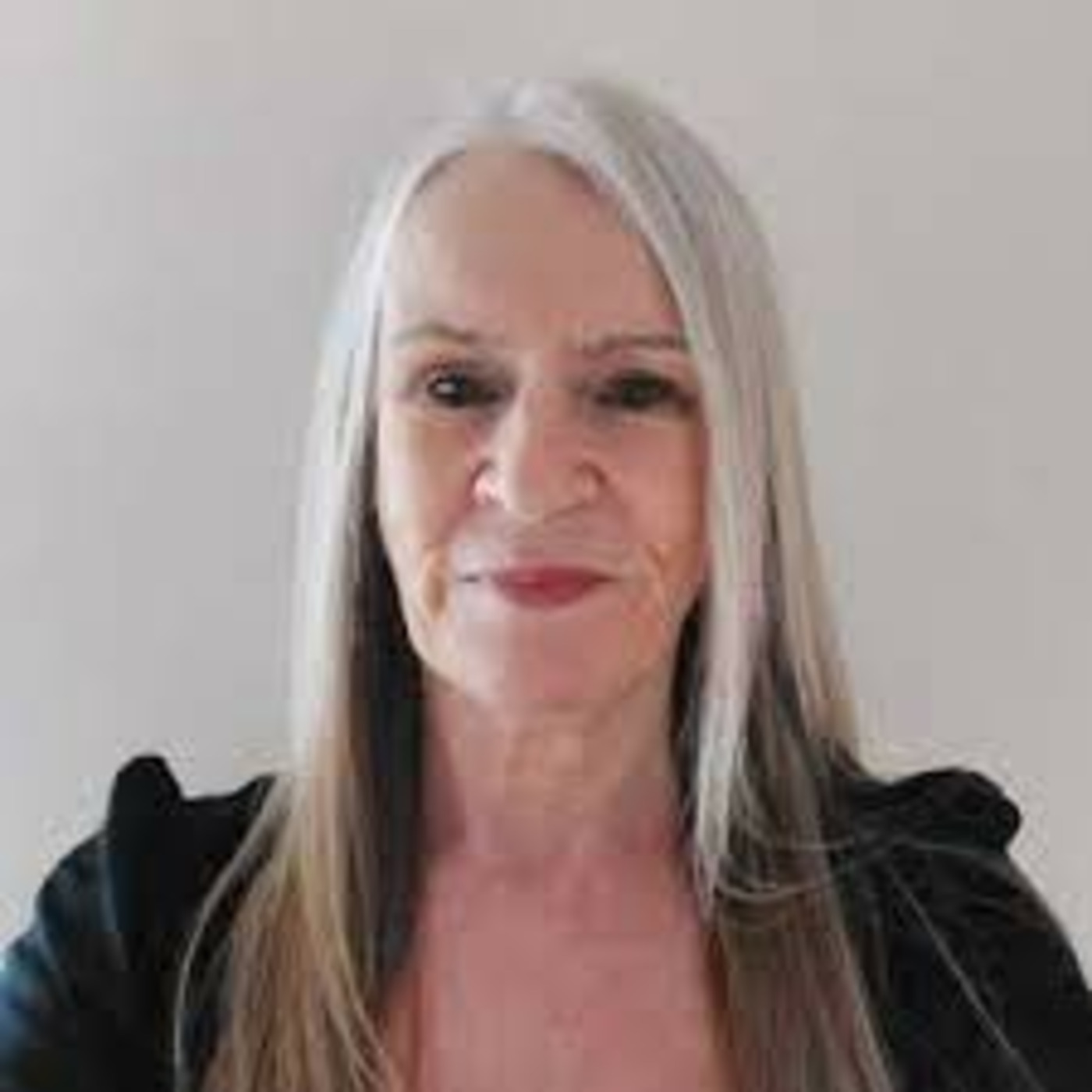
Aoifinn Devitt: Our next guest is an early adopter of alternative investment strategies from her stronghold of Flintshire in Wales. This podcast is part of a special collaboration between 50 Faces Productions and Crispin Derby Limited. In this series, as a special treat, we are featuring the music of one of our guests in the series, Julia Kwameah. You can find the link to Julia’s Spotify album in the show notes. I’m Aoifinn Devitt, and welcome to the 50 Faces Podcast., a podcast committed to revealing the richness and diversity of the world of investment by focusing on its people and their stories. I’m joined today by Debbie Fielder, who’s Deputy Head of Clwyd Pension Fund at Flintshire County Council, where she has spent over 27 years. She’s a leading voice on the LGPS investment circuit, having been an early adopter of broad diversification and a founding member of the Welsh Pensions Partnership. Welcome, Debbie. Thanks for joining me today.
S: Oh, thank you, Yvonne. Really pleased to be here.
Aoifinn Devitt: Well, let’s talk about your background and how you ended up pursuing a role in pensions. Can we start there?
S: Yeah, certainly. The quickest answer is unintentionally. I think you probably need to know a little bit about my history in my career. I was never setting out to be a career woman. The first 5 years I spent at British Telecom in the cash office I’m very much a finance background, really, really love figures. That’s my whole interest. And after 5 years, I actually left to have my first child, and I was going to be a full-time mum. There was no intention of me going back to work. And 2 years later, with 2 children under 2, I was absolutely tearing my hair out. So I thought, right, okay, we’ll look for a little part-time job. And I was very lucky that in 1989 I got a job with the local authority. Then, as luck would have it, 3 months later I’m expecting my third child and only just started part-time with the local authority. I didn’t start full-time with them until my youngest was in school. Back then I stayed in finance for 10 years, and I joined the pension section in 2000. It wasn’t just pensions, it was banking and treasury management, and it was the banking and treasury management that appealed to the role for me. I never really pursued any role, I just loved the figures and grew into that role gradually. I got involved in investments, but in very much a general way.
Aoifinn Devitt: And you have, as I said, you’ve been a thought leader in the diversification and embracing some quite complex strategies. So what was your learning curve like in terms of learning about investments? Did you learn by doing? Did you work with consultants? Any mentors in there that brought you on that learning curve?
S: Yeah, so I was very lucky that we were using an independent consultant at the time. His name was Bob Young, and prior to that, he was the Deputy Head of Finance within the pension fund. We slightly overlapped So in 2000, when he left, I’d been there for 4 months, so I only really knew him as a consultant. He was very much the guiding force behind private markets. So we’ve been invested in private markets for over 30 years. So when I joined the pension fund, as I say, I was really only looking at the financial side. Gradually they got me more and more involved with the investments, but very much in a general way. But private markets, even back then, they were the ones that interested me. And it was quite funny because when I went to one of my very first conferences, I didn’t really know a lot about alternatives. And I thought, right, I’m going to go to this workshop and I’m going to find out all about alternatives. And I sat in the workshop and they started to talk about all the different things that covered alternatives. And I was looking going, yeah, we do that, and we do that, and we do that. And so stupidly I switched off because I thought I’m not really going to learn that much more because they weren’t going into depth. And then all of a sudden somebody said, oh, and we’ve got an expert in our midst, it’s Debbie Fielder from the Clwyd Pension Fund. And all of a sudden I thought, uh-oh, maybe I should have been listening a little bit more. And that’s when I started to think or realise we were very different. I mean, I was new to pensions, I thought everybody did it that way, so I couldn’t understand when the gentleman sat next to me was saying they were only just thinking about investing in property. And property to me is mainstream investing anyway, I don’t consider it an alternative, but it was a steep learning curve. As I say, I can’t take any credit for it. It was all down to our independent consultant, but through him I got to go to all the private market meetings, meet all the managers, and I just think it brings things alive. So the rest of our portfolio, I think it’s quite staid and boring, although apologies to the managers out there that are running those for us, but the private markets are things that pique my interest. And currently we’ve got over 160 different live mandates as well, so there’s a lot of governance around it, there’s a lot to get your head around. 29% of our fund is in private markets, so to me it’s the area where I think we can make the most difference.
Aoifinn Devitt: Well, that’s interesting. I would think boring is generally good sometimes when it comes to the world of pensions. I’m sorry, no offense there, and then no problem there. And then When it comes to governance, that’s interesting, 160+ or so different line items and governance. How do you tackle that governance? How do you conduct oversight and manage a portfolio of that size?
S: So when we had our independent consultant, we would set time annually to go and meet with every one of our managers to have an update meeting with them to find out where they were at. During COVID it got a little bit more difficult, so we have been using our external mainstream consultant now to help us with that. But a couple of years ago, we appointed an investment graduate trainee, so he’s now tasked with getting to know all our private market managers. It’s quite funny because I know— I feel like I know them all personally because we’ve been— I don’t know, we’ve been in touch for over 20 years now with all the managers. They also, I found during COVID as well, they were very proactive. They were contacting me with everything that was going on. I didn’t have to contact them. So I think with our managers, we’ve got a really good two-way relationship.
Aoifinn Devitt: And moving on then from alternatives, can you say what’s on the top of your mind now, the forefront in your role at Flenshire?
S: There’s a professional forefront. Of my mind and there’s a personal. So on my personal mind, it’s retirement. I’ve planned with my team that I will be leaving the pension fund in June next year. So now less than 12 months. But before then, I’m just so worried. I’ve got so much I want to achieve in so little time. We’ve been so under-resourced. The main area, I’m getting my new team fully integrated. But as much as I can, I want to get place-based investing and impact in Wales within our fund. So that is what is keeping me going for the next 12 months. Everything else is in the pool now, so we just need to get a little bit more focused on our place-based and impact in Wales.
Aoifinn Devitt: Well, we’ll dig a little bit into place-based and impact in a second, but let’s just talk a little bit about pooling. Because you said everything’s in the pool, everything else is in the pool, and you’ve been a founding member of the Welsh Pensions Partnership. Can you talk a little bit about what pooling brings and means for Wales and for Flintshire and what excites you?
S: I wouldn’t exactly say that pooling and excitement are in the same sentence. If I can go back to when pooling first started, the 8 Welsh funds were tasked with joining together because of our geography and our culture. It’s not a secret that myself and our fund didn’t want to be a part of the Wales Pension Partnership. We found ourselves to be very different. As you’ve seen, our strategic allocation is miles away from the other Welsh funds, so we did actually speak to a couple of other pools as well who we thought were more like-minded. But as it was, we joined the WPP and we started to work collaboratively with the other 7 funds. I personally think that our pool is one of the best governed, one of the best run, one of the cheapest because of the way we do it, because we are renting an operator and we’ve got a manager of manager, we can more or less get whatever sub-fund we want. So for example, we all pooled global equity, but then a couple of years ago, our fund, who are heavily involved in ESG now, we’ve got a net zero target, we’re trying to do what we can where we can with the assets that we have. We decided that we wanted a sustainable active equity sub-fund, so we approached the pool and said, this is what we want. Now, we were the only fund at the time that wanted that, and we’ve only got at the time 10% in global equity, so quite a small amount. But the pool worked with us and they created a sustainable equity sub-fund, and now all 8 funds are invested in that sub-fund. It was the same with multi-asset credit. We were the only fund that had multi-asset credit. We didn’t know whether we would be able to take that into pool because it was such a small amount, but we got it and there are more funds invested in it now. So over the years we’ve got several working groups set up in the pool for private markets, of which we’re deemed to be at the forefront of that because of the amount that we’ve got. But we still work together to get what we want in the pool, and it’s the same with RI. We’ve got an RI subgroup, and we all take part in it. Each of the 8 Welsh pension funds all have a seat and an equal voice at the table. We meet so many times, it’s unbelievable. I remember when the government first said, oh, pooling, it’ll relieve all the pressure on the individual funds. We’ve got more work going on now as an oversight and contributing to the pooling process that I don’t know what they were thinking about, honestly.
Aoifinn Devitt: We’re going to take a short break to hear from the sponsor of this series, With Intelligence. I sat down with Kip McDaniel, President Americas of With Intelligence. I asked Kip, what were the key topics on allocators’ minds today?
Speaker C: There’s some universal stuff and there’s some topical stuff. In terms of topics, nothing is nearly as hot right now as private credit. That is coming up at almost every one of our events. You’re seeing a ton of launches in that space, a ton of fundraising activity in that space. In terms of more macro topics, there is a sense among the allocator community that there has never been more happening in the world than there is right now, whether it’s geopolitical, policy-wise, regulation-wise. There is a real sense that, you know, it might have seemed tense at the time, but we went through a 10-year period in the last decade that in retrospect, was quite calm. There wasn’t a whole lot that was going on. That sense has very much changed right now.
Aoifinn Devitt: And now back to the show. Well, I’d love to talk about the place-based and impact investing because again, you’re taking the lead there. Can you be specific about some of the opportunities you think are exciting to use that word again, or are perhaps most relevant to you as you look at this?
S: Yeah, place-based, I would say, is exciting. It’s one of my passions along with impact. To me, they both can go hand in hand. Impact obviously for us came first. We’ve been investing in mandates that would be considered impactful now since 2007. We were also early adopters of renewables. Place-based came around about 2016, where we started to speak to different managers and say, look, we’d love to invest in our area in North Wales, but specifically Wales. Managers were very open and transparent. Our little area of North Wales, there isn’t a lot of scope for investing in anything, so we worked with those managers. Originally, the first one we joined was a regional fund with Greater Manchester, who are just over the border, so it still seemed reasonable to do that. We also invested in a mandate with the Development Bank of Wales. They approached us to say they were launching this management succession fund. It was only a £25 million fund, and they wanted £10 million from Welsh pension funds if they could. The other monies were coming from themselves and the Welsh government. So we started conversations with them back then. It took us about 12 months to get comfortable because We were their first limited partner, so we helped shape their LPA, we helped shape their fee structure, we asked them to create an advisory board, and we committed £10 million to it. And that was our first Wales-only mandate. Following on from that, a couple of years ago, I was involved speaking to the Welsh Energy Service, and they were asking, look, can we have pension fund monies for projects in Wales? So I tried to explain, we can’t actually just hand over our money. We do have governance to think about. We’ve got our fiduciary duties. We need— because we are only a small fund, we need a manager in between us to make sure that everything we’re doing is correct. So we introduced the guys at Welsh Energy Service to some of our managers. So we introduced them to the Development Bank of Wales. We introduced them to Foresight, and we also introduced them to Capital Dynamics, who we’ve been investing with, oh, since the ’90s. So we’ve got a very, very long-term relationship with them. And gradually everyone came to an understanding that we couldn’t do it the way the Welsh Energy Service would have liked us to do it. So on the back of that, we were in discussions with Capital Dynamics, who said they could actually do a separate managed account for us in Wales. Where we can take projects to them, where they can do the due diligence, and if it is suitable to sit in with our portfolio, then they will do all the due diligence, they will do all the management of the projects and the oversight, and they would also bring projects to us. So we’ve got a £50 million separate managed account with Capital Dynamics to invest in direct clean energy projects in Wales. That to me was one of the most exciting things that I’ve ever achieved. I did get quite emotional about it. And following on from that, one of the projects they brought to us was too large for us and our £50 million, so we took it to the rest of the Welsh pension funds. And because of that, there’s another 6 pension funds investing alongside us. To invest in clean energy in Wales.
Aoifinn Devitt: And there goes the benefit effect of pooling. I think it’s clearly that effect of scale and being able to really team up with your capital. In terms of other type of impact, housing, any other areas on your radar screen in the year that you have left in terms of targeting?
S: Yeah, so once I got the clean energy separate managed account set up, I then didn’t take a breather and I started speaking to lots and lots of housing managers. Housing is probably one area we’ve never invested in, and for us in the past, it’s been about the returns. The returns— I expect a lot of return from my private market portfolio. I mean, on average, it’s 10 to 15%. The last 2 years, our impact and play space was +40% and last year it was +26%. So I don’t really want to put anything in there that’s going to be dragging down performance. But we can also look at it from the social and economic side for our local authorities. So I doubt I will get something in in the next 12 months, but I am working with our local authority with a couple of housing managers with the Good Economy to see what we can do either in our local area or in Wales. Because of all the private markets, I think the property— not just housing, all sorts of property in Wales— is quite high on the agenda of a lot of the Welsh pension funds. We would really love to do something.
Aoifinn Devitt: Let’s move to another aspect of some of the responsible investment policies often, which is around diversity and inclusion. And your experience in the investment industry has spanned a number of years. What were your thoughts on diversity in the industry? Are there many other women in your role? Have you encountered many women across the investment industry? What are your thoughts now with one year to go?
S: This is quite an interesting area because I have seen things change over the years, and I always think back to one of the very first LGC flagship conferences that I attended many, many years ago, and I think it was 99% male-oriented, definitely. In fact, somebody even commented to me they thought I was a client relationship manager for an investment management firm. There were a few in my role back then who are still here now as well and still going strong and making a big impact. But I think over time I have seen more and more females, not just in the LGPS but in the fund management industry as well. So I was at a Mercer Sustainable Conference earlier this year, and of the 6 people on the stage, the 5 LGPS were all females, and it was on International Women’s Day as well. So I did make a comment about that. The other thing that I find, and I don’t know whether it’s just me and the people that I’ve come across, but when I’m speaking to investment managers and I always ask to see their ESG lead, you know, head of sustainability, most of the roles at the moment, I think are with women, and there’s a lot of female voices out there on impact sustainability, RI, and that I think is a really good thing.
Aoifinn Devitt: It’s very true, and it’s interesting that some of those partnerships you forged are with women, because that’s, I think, perhaps our secret weapon, is to be able to sort of fast-track some of the networking by pairing up with some of these women who are making their way through the industry. So thank you for your contribution to that. Let’s go back to personal reflections now. So, 27 years and counting at Pinchurgh County Council. Have there been any setbacks or challenges in there, any mistakes maybe on the investment side or otherwise that you learned from?
S: I’m always learning. I class myself as a Jill of all trades and a mistress of none. I’m my own biggest critic. I’m constantly telling myself off and take ages to forget it. So if I make a mistake, I just can’t get over it and move on. I play it back all the time. In my personal life, I’ve made way too many mistakes to contemplate. Professional, we work as a team, so I don’t think I could say anything that is a big setback or challenge without involving the rest of the team. Yeah, I make my mistakes. If I make them, the one thing I always do is own up to them. We’ve made mistakes in private market selections, manager selections, but to me the whole point of diversity is to help with that. So because we’ve got 100 and over 160 mandates and they’re quite small, if some mistakes are made, then it’s not catastrophic. It’s not like investing in a listed equity manager who in 2007 lost us 50% of the fund, and we had 25% of the fund with that manager. But that’s not a mistake, that’s not an investment mistake, that’s just markets for you. I like to think that we select the best managers. Luckily for us now, pooling has taken that away from us, so We can put that down to the pool, monitor that. Highs, lows. Oh, highs, probably being asked to join Jamie Broderick’s panel at COP26. It wasn’t doing the panel, that wasn’t the high of my career. It was actually being asked to do it, that somebody believed in me enough to give me that opportunity. I get very, very nervous when I’m on stage. I shake, I forget words. So to put myself through that is quite an achievement. I’ve no mentors as such, plenty of managers who saw in me what I never saw in myself. They promoted me whether I wanted it or not, and my current manager of 23 years has probably been the biggest influence by letting me evolve as I have, not holding me back, promoting the fund as I’ve done.
Aoifinn Devitt: And I know that you wanted us to mention that the head of fund is the brains of the operation, but likes to hide his light under a bushel. So thank you for that. Well, my last question is around any words of advice or wisdom. You, I’m sure, will have gathered many over the course of your career. We’ve spoken about your openness to new ideas, to innovation as a creed or motto, perhaps even there. Anything you can leave with us as your last words here?
S: Yeah, I think there’s two things there. I don’t particularly have a creed, but I do think that when my children were younger, the advice that I would always say to them is treat everyone as you would like to be treated yourself. Sounds corny, but to us, we’re all someone’s parent, their child, their sibling, their friend. Be as honest and transparent as you can with investment colleagues, although I have had to apologise to a fair few on some occasions. And finally, I think my advice to my younger self would be: have confidence in yourself and your abilities, although I still try to tell myself that now. Listen to those who believe in you. And finally, don’t get a refund of your 5 years’ contributions to buy a touring caravan when you leave your first job. And don’t opt out of another 6 years of pension contributions because you think you’re only in the employment short term. Coming from someone who now works in the pensions industry, back then I didn’t have a clue.
Aoifinn Devitt: Well, thanks for sharing and for passing that on. It is— it could be very useful. Debbie, you’ve always set the bar so high, and you have, I think, been a thought leader and recognized as such, as appropriate. For many years in terms of pushing outside what many would consider a comfort zone for institutional investing and doing it with such grace and such charm. And it has been really a great leadership role in the industry. So enjoy the last year and thank you for coming here and sharing these words. You certainly will be missed, but we’re going to enjoy having you around for a little bit longer.
S: Thank you very much. Very kind words.
Aoifinn Devitt: I’m Aoifinn and David, thank you for listening to the 50 Faces podcast. If you liked what you heard and would like to tune in to hear more inspiring investors and their personal journeys, please subscribe on Apple Podcasts or wherever you get your podcasts. This podcast is for informational purposes only and should not be construed as investment advice, and all views are personal and should not be attributed to the organizations and affiliations of the host or any guests.
S: Even if summer, love, try to suit yourself and work to have good it’s health. Even.
Aoifinn Devitt: Though you know you’re keeping score.
S: And groping for more wealth, and your brain goes where your brain goes, give.
Aoifinn Devitt: In to the goddess.
Aoifinn Devitt: Our next guest is an early adopter of alternative investment strategies from her stronghold of Flintshire in Wales. This podcast is part of a special collaboration between 50 Faces Productions and Crispin Derby Limited. In this series, as a special treat, we are featuring the music of one of our guests in the series, Julia Kwameah. You can find the link to Julia’s Spotify album in the show notes. I’m Aoifinn Devitt, and welcome to the 50 Faces Podcast., a podcast committed to revealing the richness and diversity of the world of investment by focusing on its people and their stories. I’m joined today by Debbie Fielder, who’s Deputy Head of Clwyd Pension Fund at Flintshire County Council, where she has spent over 27 years. She’s a leading voice on the LGPS investment circuit, having been an early adopter of broad diversification and a founding member of the Welsh Pensions Partnership. Welcome, Debbie. Thanks for joining me today.
S: Oh, thank you, Yvonne. Really pleased to be here.
Aoifinn Devitt: Well, let’s talk about your background and how you ended up pursuing a role in pensions. Can we start there?
S: Yeah, certainly. The quickest answer is unintentionally. I think you probably need to know a little bit about my history in my career. I was never setting out to be a career woman. The first 5 years I spent at British Telecom in the cash office I’m very much a finance background, really, really love figures. That’s my whole interest. And after 5 years, I actually left to have my first child, and I was going to be a full-time mum. There was no intention of me going back to work. And 2 years later, with 2 children under 2, I was absolutely tearing my hair out. So I thought, right, okay, we’ll look for a little part-time job. And I was very lucky that in 1989 I got a job with the local authority. Then, as luck would have it, 3 months later I’m expecting my third child and only just started part-time with the local authority. I didn’t start full-time with them until my youngest was in school. Back then I stayed in finance for 10 years, and I joined the pension section in 2000. It wasn’t just pensions, it was banking and treasury management, and it was the banking and treasury management that appealed to the role for me. I never really pursued any role, I just loved the figures and grew into that role gradually. I got involved in investments, but in very much a general way.
Aoifinn Devitt: And you have, as I said, you’ve been a thought leader in the diversification and embracing some quite complex strategies. So what was your learning curve like in terms of learning about investments? Did you learn by doing? Did you work with consultants? Any mentors in there that brought you on that learning curve?
S: Yeah, so I was very lucky that we were using an independent consultant at the time. His name was Bob Young, and prior to that, he was the Deputy Head of Finance within the pension fund. We slightly overlapped So in 2000, when he left, I’d been there for 4 months, so I only really knew him as a consultant. He was very much the guiding force behind private markets. So we’ve been invested in private markets for over 30 years. So when I joined the pension fund, as I say, I was really only looking at the financial side. Gradually they got me more and more involved with the investments, but very much in a general way. But private markets, even back then, they were the ones that interested me. And it was quite funny because when I went to one of my very first conferences, I didn’t really know a lot about alternatives. And I thought, right, I’m going to go to this workshop and I’m going to find out all about alternatives. And I sat in the workshop and they started to talk about all the different things that covered alternatives. And I was looking going, yeah, we do that, and we do that, and we do that. And so stupidly I switched off because I thought I’m not really going to learn that much more because they weren’t going into depth. And then all of a sudden somebody said, oh, and we’ve got an expert in our midst, it’s Debbie Fielder from the Clwyd Pension Fund. And all of a sudden I thought, uh-oh, maybe I should have been listening a little bit more. And that’s when I started to think or realise we were very different. I mean, I was new to pensions, I thought everybody did it that way, so I couldn’t understand when the gentleman sat next to me was saying they were only just thinking about investing in property. And property to me is mainstream investing anyway, I don’t consider it an alternative, but it was a steep learning curve. As I say, I can’t take any credit for it. It was all down to our independent consultant, but through him I got to go to all the private market meetings, meet all the managers, and I just think it brings things alive. So the rest of our portfolio, I think it’s quite staid and boring, although apologies to the managers out there that are running those for us, but the private markets are things that pique my interest. And currently we’ve got over 160 different live mandates as well, so there’s a lot of governance around it, there’s a lot to get your head around. 29% of our fund is in private markets, so to me it’s the area where I think we can make the most difference.
Aoifinn Devitt: Well, that’s interesting. I would think boring is generally good sometimes when it comes to the world of pensions. I’m sorry, no offense there, and then no problem there. And then When it comes to governance, that’s interesting, 160+ or so different line items and governance. How do you tackle that governance? How do you conduct oversight and manage a portfolio of that size?
S: So when we had our independent consultant, we would set time annually to go and meet with every one of our managers to have an update meeting with them to find out where they were at. During COVID it got a little bit more difficult, so we have been using our external mainstream consultant now to help us with that. But a couple of years ago, we appointed an investment graduate trainee, so he’s now tasked with getting to know all our private market managers. It’s quite funny because I know— I feel like I know them all personally because we’ve been— I don’t know, we’ve been in touch for over 20 years now with all the managers. They also, I found during COVID as well, they were very proactive. They were contacting me with everything that was going on. I didn’t have to contact them. So I think with our managers, we’ve got a really good two-way relationship.
Aoifinn Devitt: And moving on then from alternatives, can you say what’s on the top of your mind now, the forefront in your role at Flenshire?
S: There’s a professional forefront. Of my mind and there’s a personal. So on my personal mind, it’s retirement. I’ve planned with my team that I will be leaving the pension fund in June next year. So now less than 12 months. But before then, I’m just so worried. I’ve got so much I want to achieve in so little time. We’ve been so under-resourced. The main area, I’m getting my new team fully integrated. But as much as I can, I want to get place-based investing and impact in Wales within our fund. So that is what is keeping me going for the next 12 months. Everything else is in the pool now, so we just need to get a little bit more focused on our place-based and impact in Wales.
Aoifinn Devitt: Well, we’ll dig a little bit into place-based and impact in a second, but let’s just talk a little bit about pooling. Because you said everything’s in the pool, everything else is in the pool, and you’ve been a founding member of the Welsh Pensions Partnership. Can you talk a little bit about what pooling brings and means for Wales and for Flintshire and what excites you?
S: I wouldn’t exactly say that pooling and excitement are in the same sentence. If I can go back to when pooling first started, the 8 Welsh funds were tasked with joining together because of our geography and our culture. It’s not a secret that myself and our fund didn’t want to be a part of the Wales Pension Partnership. We found ourselves to be very different. As you’ve seen, our strategic allocation is miles away from the other Welsh funds, so we did actually speak to a couple of other pools as well who we thought were more like-minded. But as it was, we joined the WPP and we started to work collaboratively with the other 7 funds. I personally think that our pool is one of the best governed, one of the best run, one of the cheapest because of the way we do it, because we are renting an operator and we’ve got a manager of manager, we can more or less get whatever sub-fund we want. So for example, we all pooled global equity, but then a couple of years ago, our fund, who are heavily involved in ESG now, we’ve got a net zero target, we’re trying to do what we can where we can with the assets that we have. We decided that we wanted a sustainable active equity sub-fund, so we approached the pool and said, this is what we want. Now, we were the only fund at the time that wanted that, and we’ve only got at the time 10% in global equity, so quite a small amount. But the pool worked with us and they created a sustainable equity sub-fund, and now all 8 funds are invested in that sub-fund. It was the same with multi-asset credit. We were the only fund that had multi-asset credit. We didn’t know whether we would be able to take that into pool because it was such a small amount, but we got it and there are more funds invested in it now. So over the years we’ve got several working groups set up in the pool for private markets, of which we’re deemed to be at the forefront of that because of the amount that we’ve got. But we still work together to get what we want in the pool, and it’s the same with RI. We’ve got an RI subgroup, and we all take part in it. Each of the 8 Welsh pension funds all have a seat and an equal voice at the table. We meet so many times, it’s unbelievable. I remember when the government first said, oh, pooling, it’ll relieve all the pressure on the individual funds. We’ve got more work going on now as an oversight and contributing to the pooling process that I don’t know what they were thinking about, honestly.
Aoifinn Devitt: We’re going to take a short break to hear from the sponsor of this series, With Intelligence. I sat down with Kip McDaniel, President Americas of With Intelligence. I asked Kip, what were the key topics on allocators’ minds today?
Speaker C: There’s some universal stuff and there’s some topical stuff. In terms of topics, nothing is nearly as hot right now as private credit. That is coming up at almost every one of our events. You’re seeing a ton of launches in that space, a ton of fundraising activity in that space. In terms of more macro topics, there is a sense among the allocator community that there has never been more happening in the world than there is right now, whether it’s geopolitical, policy-wise, regulation-wise. There is a real sense that, you know, it might have seemed tense at the time, but we went through a 10-year period in the last decade that in retrospect, was quite calm. There wasn’t a whole lot that was going on. That sense has very much changed right now.
Aoifinn Devitt: And now back to the show. Well, I’d love to talk about the place-based and impact investing because again, you’re taking the lead there. Can you be specific about some of the opportunities you think are exciting to use that word again, or are perhaps most relevant to you as you look at this?
S: Yeah, place-based, I would say, is exciting. It’s one of my passions along with impact. To me, they both can go hand in hand. Impact obviously for us came first. We’ve been investing in mandates that would be considered impactful now since 2007. We were also early adopters of renewables. Place-based came around about 2016, where we started to speak to different managers and say, look, we’d love to invest in our area in North Wales, but specifically Wales. Managers were very open and transparent. Our little area of North Wales, there isn’t a lot of scope for investing in anything, so we worked with those managers. Originally, the first one we joined was a regional fund with Greater Manchester, who are just over the border, so it still seemed reasonable to do that. We also invested in a mandate with the Development Bank of Wales. They approached us to say they were launching this management succession fund. It was only a £25 million fund, and they wanted £10 million from Welsh pension funds if they could. The other monies were coming from themselves and the Welsh government. So we started conversations with them back then. It took us about 12 months to get comfortable because We were their first limited partner, so we helped shape their LPA, we helped shape their fee structure, we asked them to create an advisory board, and we committed £10 million to it. And that was our first Wales-only mandate. Following on from that, a couple of years ago, I was involved speaking to the Welsh Energy Service, and they were asking, look, can we have pension fund monies for projects in Wales? So I tried to explain, we can’t actually just hand over our money. We do have governance to think about. We’ve got our fiduciary duties. We need— because we are only a small fund, we need a manager in between us to make sure that everything we’re doing is correct. So we introduced the guys at Welsh Energy Service to some of our managers. So we introduced them to the Development Bank of Wales. We introduced them to Foresight, and we also introduced them to Capital Dynamics, who we’ve been investing with, oh, since the ’90s. So we’ve got a very, very long-term relationship with them. And gradually everyone came to an understanding that we couldn’t do it the way the Welsh Energy Service would have liked us to do it. So on the back of that, we were in discussions with Capital Dynamics, who said they could actually do a separate managed account for us in Wales. Where we can take projects to them, where they can do the due diligence, and if it is suitable to sit in with our portfolio, then they will do all the due diligence, they will do all the management of the projects and the oversight, and they would also bring projects to us. So we’ve got a £50 million separate managed account with Capital Dynamics to invest in direct clean energy projects in Wales. That to me was one of the most exciting things that I’ve ever achieved. I did get quite emotional about it. And following on from that, one of the projects they brought to us was too large for us and our £50 million, so we took it to the rest of the Welsh pension funds. And because of that, there’s another 6 pension funds investing alongside us. To invest in clean energy in Wales.
Aoifinn Devitt: And there goes the benefit effect of pooling. I think it’s clearly that effect of scale and being able to really team up with your capital. In terms of other type of impact, housing, any other areas on your radar screen in the year that you have left in terms of targeting?
S: Yeah, so once I got the clean energy separate managed account set up, I then didn’t take a breather and I started speaking to lots and lots of housing managers. Housing is probably one area we’ve never invested in, and for us in the past, it’s been about the returns. The returns— I expect a lot of return from my private market portfolio. I mean, on average, it’s 10 to 15%. The last 2 years, our impact and play space was +40% and last year it was +26%. So I don’t really want to put anything in there that’s going to be dragging down performance. But we can also look at it from the social and economic side for our local authorities. So I doubt I will get something in in the next 12 months, but I am working with our local authority with a couple of housing managers with the Good Economy to see what we can do either in our local area or in Wales. Because of all the private markets, I think the property— not just housing, all sorts of property in Wales— is quite high on the agenda of a lot of the Welsh pension funds. We would really love to do something.
Aoifinn Devitt: Let’s move to another aspect of some of the responsible investment policies often, which is around diversity and inclusion. And your experience in the investment industry has spanned a number of years. What were your thoughts on diversity in the industry? Are there many other women in your role? Have you encountered many women across the investment industry? What are your thoughts now with one year to go?
S: This is quite an interesting area because I have seen things change over the years, and I always think back to one of the very first LGC flagship conferences that I attended many, many years ago, and I think it was 99% male-oriented, definitely. In fact, somebody even commented to me they thought I was a client relationship manager for an investment management firm. There were a few in my role back then who are still here now as well and still going strong and making a big impact. But I think over time I have seen more and more females, not just in the LGPS but in the fund management industry as well. So I was at a Mercer Sustainable Conference earlier this year, and of the 6 people on the stage, the 5 LGPS were all females, and it was on International Women’s Day as well. So I did make a comment about that. The other thing that I find, and I don’t know whether it’s just me and the people that I’ve come across, but when I’m speaking to investment managers and I always ask to see their ESG lead, you know, head of sustainability, most of the roles at the moment, I think are with women, and there’s a lot of female voices out there on impact sustainability, RI, and that I think is a really good thing.
Aoifinn Devitt: It’s very true, and it’s interesting that some of those partnerships you forged are with women, because that’s, I think, perhaps our secret weapon, is to be able to sort of fast-track some of the networking by pairing up with some of these women who are making their way through the industry. So thank you for your contribution to that. Let’s go back to personal reflections now. So, 27 years and counting at Pinchurgh County Council. Have there been any setbacks or challenges in there, any mistakes maybe on the investment side or otherwise that you learned from?
S: I’m always learning. I class myself as a Jill of all trades and a mistress of none. I’m my own biggest critic. I’m constantly telling myself off and take ages to forget it. So if I make a mistake, I just can’t get over it and move on. I play it back all the time. In my personal life, I’ve made way too many mistakes to contemplate. Professional, we work as a team, so I don’t think I could say anything that is a big setback or challenge without involving the rest of the team. Yeah, I make my mistakes. If I make them, the one thing I always do is own up to them. We’ve made mistakes in private market selections, manager selections, but to me the whole point of diversity is to help with that. So because we’ve got 100 and over 160 mandates and they’re quite small, if some mistakes are made, then it’s not catastrophic. It’s not like investing in a listed equity manager who in 2007 lost us 50% of the fund, and we had 25% of the fund with that manager. But that’s not a mistake, that’s not an investment mistake, that’s just markets for you. I like to think that we select the best managers. Luckily for us now, pooling has taken that away from us, so We can put that down to the pool, monitor that. Highs, lows. Oh, highs, probably being asked to join Jamie Broderick’s panel at COP26. It wasn’t doing the panel, that wasn’t the high of my career. It was actually being asked to do it, that somebody believed in me enough to give me that opportunity. I get very, very nervous when I’m on stage. I shake, I forget words. So to put myself through that is quite an achievement. I’ve no mentors as such, plenty of managers who saw in me what I never saw in myself. They promoted me whether I wanted it or not, and my current manager of 23 years has probably been the biggest influence by letting me evolve as I have, not holding me back, promoting the fund as I’ve done.
Aoifinn Devitt: And I know that you wanted us to mention that the head of fund is the brains of the operation, but likes to hide his light under a bushel. So thank you for that. Well, my last question is around any words of advice or wisdom. You, I’m sure, will have gathered many over the course of your career. We’ve spoken about your openness to new ideas, to innovation as a creed or motto, perhaps even there. Anything you can leave with us as your last words here?
S: Yeah, I think there’s two things there. I don’t particularly have a creed, but I do think that when my children were younger, the advice that I would always say to them is treat everyone as you would like to be treated yourself. Sounds corny, but to us, we’re all someone’s parent, their child, their sibling, their friend. Be as honest and transparent as you can with investment colleagues, although I have had to apologise to a fair few on some occasions. And finally, I think my advice to my younger self would be: have confidence in yourself and your abilities, although I still try to tell myself that now. Listen to those who believe in you. And finally, don’t get a refund of your 5 years’ contributions to buy a touring caravan when you leave your first job. And don’t opt out of another 6 years of pension contributions because you think you’re only in the employment short term. Coming from someone who now works in the pensions industry, back then I didn’t have a clue.
Aoifinn Devitt: Well, thanks for sharing and for passing that on. It is— it could be very useful. Debbie, you’ve always set the bar so high, and you have, I think, been a thought leader and recognized as such, as appropriate. For many years in terms of pushing outside what many would consider a comfort zone for institutional investing and doing it with such grace and such charm. And it has been really a great leadership role in the industry. So enjoy the last year and thank you for coming here and sharing these words. You certainly will be missed, but we’re going to enjoy having you around for a little bit longer.
S: Thank you very much. Very kind words.
Aoifinn Devitt: I’m Aoifinn and David, thank you for listening to the 50 Faces podcast. If you liked what you heard and would like to tune in to hear more inspiring investors and their personal journeys, please subscribe on Apple Podcasts or wherever you get your podcasts. This podcast is for informational purposes only and should not be construed as investment advice, and all views are personal and should not be attributed to the organizations and affiliations of the host or any guests.
S: Even if summer, love, try to suit yourself and work to have good it’s health. Even.
Aoifinn Devitt: Though you know you’re keeping score.
S: And groping for more wealth, and your brain goes where your brain goes, give.
Aoifinn Devitt: In to the goddess.