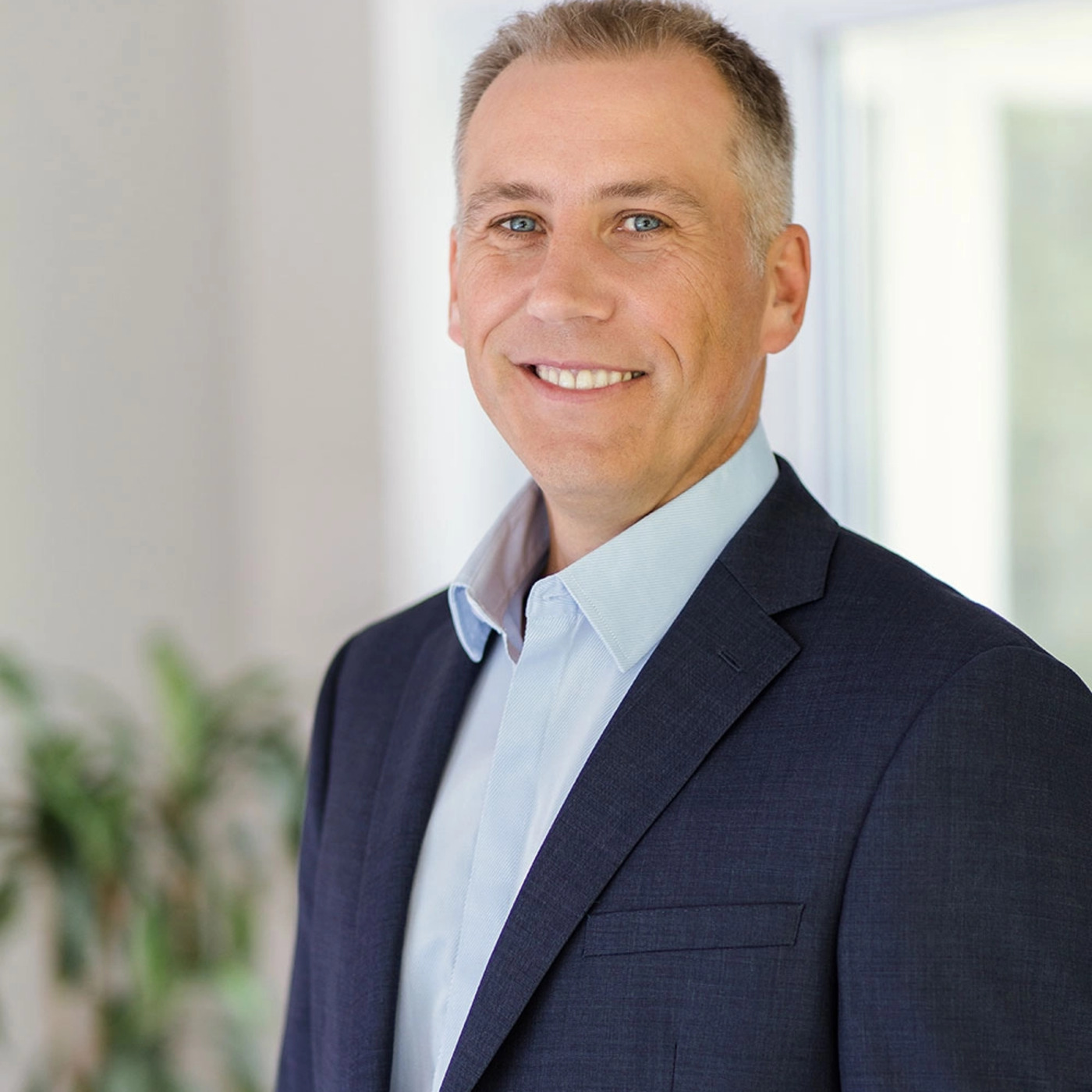
Aoifinn Devitt: Our next guest builds sustainable investment solutions and issues research on a range of topics from impact investing to net zero targets to nature-based solutions to the energy transition. Find out why some kinds of activism are likely to fade away and the social justice issues that will take on increasing importance to the way we live and the way we invest. In this series, as a special treat, we are featuring the music of one of our guests in the series, Julia Kwameah. You can find the link to Julia’s Spotify album them in the show notes. I’m Aoifinn Devitt, and welcome to the 50 Faces Podcast, a podcast committed to revealing the richness and diversity of the world of investment by focusing on its people and their stories. I’m joined today by François Bourdon, who is Managing Director of Nordisk Capital based in Montreal. He’s also managing partner in Sustainable Market Strategies, an independent investment strategy research service tracking global developments in ESG and impact investing worldwide. He was formerly chief investment officer at Fiera Capital. Welcome, François. Thanks for joining me today.
Francois Bourdon: Thank you, Arifin.
Aoifinn Devitt: Well, let’s start with your background and how you ended up pursuing a role in the investment world to start with.
Francois Bourdon: Yeah, I rarely get to talk about my origin story. So I grew up in a small rural town about 30 minutes from Montreal with less than 2,000 people. I was interested in sports, stats, science from a very young age. Actually, when I was 13, I knew about 90 to 100% of the names of the NFL players. So I was a big fan when nobody around here really liked that. After high school, I wanted to become an astronomer or an astronaut, so I studied a year in physics, but I’m a bit clumsy, so the experimentation part wasn’t So good on me. And it’s probably better that I did not become an astronaut because we would’ve spent money on a guy that’s a little bit clumsy. So I became an investment actuary. I worked for an insurance company for a while. I was in the guaranteed fund business. So I was a client of a money manager back then. And the boss of that firm said, well, you seem decently smart, that you’re a bit curious and you read all those classic investment books. Would you like to join us and do tactical asset allocation and build quant models? Because you’re, you’re an actuary. So that’s, that’s how I got into the investment world.
Aoifinn Devitt: Talk us through then the road from being an actuary to investing and Fiera in particular.
Francois Bourdon: Yeah, so, well, the actuarial gig got me to program and, and do quant modeling, and that’s what I got hired to do. So essentially, I was running a Canadian equity quant model. I was building a quant tactical asset allocation model and doing macro work. And then the firm that I was at, uh, was called Atlantis, was purchased by Fiera. So I was one of the original 40 employees, uh, of Fiera in 2003. That’s kind of the road that got me to, to Fiera, where I spent most of my career until 2020.
Aoifinn Devitt: And at what stage did the awakening around sustainable investing and some of the impact investing that you’re focused on now When did that occur?
Francois Bourdon: Yeah, we became UN PRI signatories in 2009, and I would say for the first couple of years it was more of a box-ticking exercise. But starting in 2013, 2014, that’s when I, I started to feel that there was a market there, there was a need for it. It was a lot more fun than just moving money around. You— I felt that I was contributing to my clients a little bit more. So around 2013, 2014, that’s where I started getting a lot more interested. But I really got into it around 2019 when we launched a multi-strategy impact fund, and that’s where I got the buy-in of a bunch of my colleagues, and that’s when I got really into it. And when I joined Sustainable Market Strategies later in 2020, I was still a novice, but now I’m somewhat of an expert.
Aoifinn Devitt: And just before we dig into some of the trends in those areas, what is the relationship between Nordisk, the work you do at Nordisk, and Sustainable Market Strategies today? How does their work complement each other?
Francois Bourdon: Yeah, so Sustainable Market Strategies is a research firm. So it started in 2018. It publishes a weekly sustainability-based research note. Generally a thematic note. So the link between SMS and Nordisk, essentially Nordisk uses the research. So SMS publishes that research, sells it to other money managers so that they move money. And the goal of the two firms are very similar. Essentially, we want money to move to address climate change and social inequalities. We think those are the problems of our time. So SMS produces research, Nordisk manages money in different formats, mainly in for equities right now, but our plans are to expand it to private assets, fixed income.
Aoifinn Devitt: So let’s go through some of the issues that you’re focused on in turn, because I’d love to know what you’re seeing in terms of key trends. And let’s start with impact investing.
Francois Bourdon: Yeah, I’m seeing a lot more interest, like there’s a lot of interest. I wouldn’t say a lot of interest, but a lot more interest by asset owners, and some are really starting to put it in their investment policies. So now they have target weights for deployment between ’25 and 2030. Generally, they start with private investments, but deploying is a little bit more complicated. So now we’re seeing more people devoting a portion of their assets, whether it’s 5 to 10%, into impact investing and often impact-aligned public markets. There’s even a few endowments that I’ve seen that are moving to 100% impact. Like, I think the date that I saw for one of them is 2028, 100% impact investing. So that’s probably at the higher end, but there is a definite need for the money to be invested in impact investments. So the asset owners are moving and the asset managers are following the asset owners essentially.
Aoifinn Devitt: But who gets to define impact in that case? I would presume it’s defined by the individual investors, say that foundation. They define the impact they want to achieve.
Francois Bourdon: Exactly. That’s like many of their personal definition, like GIN is a good source to have kind of a commonplace where the impact is defined. But yeah, it depends on what their target is. For foundations, many times it’s aligned with their foundational goals. We’re seeing also some pension funds moving in that direction, but at a slower pace. And sometimes, especially the university-based pension funds, it’s their clientele, the students and the teachers that are pushing them into that direction.
Aoifinn Devitt: And do you see this then also flow into impact measurement and impact reporting as a consequence of this impact investing?
Francois Bourdon: Definitely. One of the big things of sustainability as a whole is the measurement aspect. So it’s easy to say, I want to do this, I want to do that, but the measurement is where you can actually show. And there’s a lot of movement taking place. There’s no standard, so we’re doing our own. We think we’re doing the right thing. We’re following what we think is appropriate, but there’s no specific standards yet. So everybody’s doing their best. But definitely that’s a big issue for the asset owners to be able to show to their constituents that they’re doing it the right way.
Aoifinn Devitt: Then moving to net zero targets, this is something that is quite now commonplace in Europe to have a net zero target, not only at the institutional allocator side, but also requiring them of their asset managers, their service providers. How do you see that as evolving, the trends? And then second part is, well, how are we going to get there?
Francois Bourdon: And the second part’s the hard one. To me, at least from the people I talk to, there seems to be a pause on net zero targets. The asset owners that are moving to impact, they generally have a net zero target. Many money managers have said, oh, they’ve put their net zero targets, but they’ve stopped since the Vanguard episode. They realized how difficult it will be. The trick, like taking an old fund, add a few glossy reports and a bit of analysis and slapping an ESG label on it is not going to work for net zero because net zero is going to be measurable. So I think this has stopped the ones that were not really committed that just wanted to say I’m net zero for the publicity. So I think for net zero, only the really committed will be successful, and that’s asset owner and asset manager. So it hasn’t been as big of a move because it requires actual work to be done and changes. So net zero requires significant changes in the way that money has been managed.
Aoifinn Devitt: Let’s dig into that a little bit. So what kind of changes? I suppose let’s just first of all start at one side of the equation, I suppose the measurement of the carbon footprint of the emissions and then the offset or the way to bring that to zero because it can rarely go to zero on its own.
Francois Bourdon: The avoidance is one aspect of it. Many people or many funds They just want to continue to buy the names that they’ve been buying in the past. And if you want to get involved into net zero, you can avoid, but you can reduce by investing in companies that don’t emit, that are not really involved into the industrial world. So Apple or Meta or those kind of companies, or you can get a little bit dirtier and invest in companies that are avoiding emissions with their solutions. So that’s one aspect. There’s also the carbon offsets that are being used, whether the official ones or the voluntary ones. So that’s another one. But when you’re looking at it, if you’ve bought some carbon offsets in a forest and that forest burns, as we’ve seen this year, it gets to be a little bit more complicated. So I think many have realized the difficulty of achieving net zero, and some of them that were not really committed have just thrown the towel.
Aoifinn Devitt: And let’s go, because I think you touched on this already, some of the throwing in the towel may come from just that frustration or the difficulty in measurement or the lack of integrity maybe in some of the measurement standards or the metrics that we’re looking at. Given you’ve been a data junkie since your early teens, how would you say sustainability standards are evolving? Are they fit for purpose now?
Francois Bourdon: They’re improving. I think everyone’s kind of looking for a standardized approach that we would all fit in. The prescriptive European approach to me is likely to remain unique. The rest is probably going to fall on a spectrum. I think it’s going to be a slow grind across the world. The key, I think, like most things, is it needs to deliver in terms of performance. Personally, I— and our firm is dedicated to it— we believe that climate change It’s going to be a key driver for the next 10, 15 years, and the industrial transformation to reduce emissions is going to be necessary, and it’s very capital intensive. So the companies with the solutions are going to win, and that should provide support for an acceleration in the adoption of sustainability standards. If it continues to be companies that are producing cigarettes or that are, supporting gambling and things like that that are leading the markets. It’s, I think it’s going to be difficult to get a standardized approach. I think success of the performance of the strategies is going to bring the sustainability standards to a higher level, but I’m very optimistic that this is going to take place. Our two firms are dedicated to that.
Aoifinn Devitt: So it’s interesting that it I mostly, suppose, naturally does come back to investment success, and that’s ultimately the driver seeing, I suppose, the proof statement of these aspirations in hard concrete return terms will be what it takes to get widespread acceptance.
Francois Bourdon: Yeah, exactly.
Aoifinn Devitt: Going now to some of the backlash that we’ve already touched on, you mentioned throwing in the towel, some of the more altruistic motivations not being enough anymore to move the needle in this way. What do you think, maybe we can comment on the divergence around ESG and the term and the backlash and maybe a way forward that might be feasible?
Francois Bourdon: Yeah, well, I think the backlash against ESG is normal. We’ve been on 10 years of a one-way trend towards adoption. The fact that it’s becoming more meaningful warrants an opposition. Before, there didn’t need to be an opposition because it was so small. I think that’s pretty good. Again, I may be an optimist, but climate change and social inequalities are really strong forces, that’s going to probably overwhelm the backlash. We’re seeing it with the weather, the Inflation Reduction Act. It’s affecting positively red states more than blue states. So for example, Texas, they’re very well positioned for alternative energy. They’re very well positioned for a cleaner reindustrialization, and many other red states can bring in some more manufacturing locally to reduce emissions. So I think just the, the natural force is going to be a positive right now. The US and the world is very split along lines, and it generally takes a crisis to solve these things. We’re going to have the 2024 election. It’s probably going to be complicated. So the Republicans sometimes align themselves against ESG, but they certainly are not aligned against making money. So Texas is a good example. And I think naturally the goal is that ESG may suffer from the backlash, maybe may disappear as an acronym, but companies that create money and that create success are going to be the ones that are going to stay standing at the end. And this government support, whether it is from Republicans or Democrats through time, is going to change. I saw a study a couple years ago that looked at the belief in climate change by age. So for Democrats, it’s across the board, whether you’re old or young, but for Republicans, the people over 65, like it was under 50%. The people over 35, it was under 50%, but the people under 35, it was 57%. So climate change is a belief that is spanning across the aisle for Republicans and Democrats and is supported by younger people.
Aoifinn Devitt: We’re going to take a short break to hear from the sponsor of this series, With Intelligence. I sat down with Kip McDaniel, President Americas of With Intelligence. With Intelligence is extending its focus now to include the RIA market. I asked Kip what excited him about this market. There’s so much change. That means there’s a ton of things to write about, to provide intelligence and data on, a ton of reasons why RIAs need to meet with other RIAs and that managers want to meet with RIAs and vice versa. It is just without a doubt in the large-scale investing space, by far the most interesting and dynamic part of the market right now. And that is both good business and it’s fun to be a part of that. And now back to the show. So interesting. I wanna just now come to the social inequality point, ’cause I just recorded a podcast before this actually, where I spoke with David Kelly at JP Morgan, and he spoke about the persistent zero interest rate or very low interest rate situation as contributing to the wealth inequality. We’re out of that low interest rate phase now, but we’re living with dramatic inequality and worsening on a social basis. I cited some of the evidence of that, the rising homelessness problem, housing crisis around the world and other rising poverty levels and maternal mortality crisis in the US. So how can investing tackle that?
Francois Bourdon: The way that we’re doing it, and I’ll get back to the topic because it’s something that’s really close to heart for me, the way that we tackle it is through three elements. Debts of Despair, a book by Anne Case and Angus Deaton, showed that income education and healthcare were the three drivers of longevity for people. So we strongly believe that this is where the action is. So education, healthcare, and income. I think the most important focus at this point that we have considering the demographic aspect is on income. Companies that are able to breed loyalty from their employees are going to have a major advantage compared to others. And if I understand your comment earlier on David’s assessment of income inequality, what you seem to imply is that it’s going to continue. And my belief is that it’s not going to continue. We’ve kind of moved to the limit. The 2017 tax cuts were kind of the ultimate element that this is kind of the end. You can’t go much further. Along that spectrum, zero interest rates contributed. I’m a big fan of Neil Howe who wrote the recent book, The Fourth Turning Is Here. And throughout history, income inequality has been resolved by social crises. Sometimes it’s the government or the leaders that decide to give a little bit more. There’s another scholar that I like to listen to and watch and read his book. His name is Peter Turchin. And he talks about essentially the same elements throughout time. The income inequalities have been resolved through crisis, and in a few cases, about 20% of the cases, the elites were able to recognize that there was a problem and changed the path. Because the Rich Man North of Richmond song is a very interesting song. It’s a reflection of society in general, like the right wing is taking it to be there, but it applies to everybody. And I think it reflects the dynamics. It’s something like the 1970s, but in 1970, the inequalities were at their bottom and now they’re at the top. So it’s kind of a call to action. So the problem is probably going to resolve itself through some form of either generosity from the government or from the leaders or in a crisis. And the way to invest around it, is to be aware that a crisis could occur, a social crisis could occur. Or in our case, we’re currently concentrating on the companies that are breeding loyalty from their employees because in the US it’s special where there’s about one person between the age of 15 and 20 for one person between the age of 60 and 65. So newcomers are equal to retirees, but in the rest of the world, like Canada where I am, it’s around 1.3 retirees for incoming workers. And in Germany it’s 1.4, and in Japan it’s like 1.3. So companies breeding loyalty from their employees, it’s going to be a big winning strategy. And you see like the ESG movement is focusing on these things. So it’s a pretty interesting dynamic and contrary to climate change that will likely get resolved through progressive measures, the social inequalities will probably get resolved in a bang. So that’s kind of the way that I see the situation evolving.
Aoifinn Devitt: And some of the other aspects of inequality I mentioned earlier, like homelessness, for example, we do see a lot of social housing funds, say, being promoted for public funds to invest in, in the UK. There are other ways of achieving impact through this, whether not just homelessness, but also perhaps disabled adults, or being creative about how to find these solutions. There does, however, have to be a return baked into that because otherwise it’s difficult for a fiduciary to justify investing in that way. Do you see an evolution of products like that?
Francois Bourdon: Definitely. The key aspect is you need a concessionary actor. The requirement for housing, social housing, is great everywhere. And the developers that, that I see around here, they have a minimum of social housing that they need to do when they build something. They’re always staying at the minimum because they’re not making as much money by the door if they’re not building more pricey stuff. So you need a concessionary actor that oftentimes is the government, but sometimes is a foundation. I think that’s a critical— it’s like splitting the cash flow so that it’s attractive for the rest of the population, putting more money up. I’ve seen governments around the world using this approach of trying to multiply the money instead of giving away a million dollars. You’re better to say, I’m going to take first loss and we’re going to be able to raise $20 million because the bottom is going to be taken out for the risky part is taken out by the government. So we’re seeing a lot more of that. I think that’s a very promising aspect, social financing. Is going to be necessary. And again, I think it relates to the social inequalities that we’re seeing. The difference between the rich and poor is at a level that cannot be sustained. So there needs to be changes.
Aoifinn Devitt: And looking now at the world of engagement, because we’re talking about evolution and trends, and just this week, we’re recording this at the end of August, we heard BlackRock was backing off supporting some resolutions because they were seen as being too prescriptive. In the climate side and perhaps too much micromanagement of a company in its attempts and not commercial enough, perhaps. So how do you see engagement working so that it is effective and productive?
Francois Bourdon: Yeah, well, I think high-level engagement with publicity, like the splashy stuff that Engine No. 1 did with Exxon, is probably going to fall by the wayside. I think more constructive win-win dialogues looking to address real problems will improve. I think engagement will become more effective as climate change and social inequalities affect everyone. It’s difficult for a board member or for a CEO that gets a request from an investor to say that there’s no crazy weather. So the crazy weather is affecting everyone. Boards are becoming a little bit more receptive. So I think that’s probably going to be one aspect of it. And I spoke earlier about demography, the fact that we’re going to need more workers and they’re not coming by as easily. So CEOs will be more receptive to improving work conditions. We’re also, we’re seeing that, we’re hearing them talking about it now. The economy is slowing down, maybe not in the US, but elsewhere in the world. So that is putting less emphasis on employee retention and employee recruitment. Well, I think that those natural aspects are going to assert themselves and engagement will just be another driving force pushing in the right direction.
Aoifinn Devitt: And now finally, on the trend side, looking at the products and the products we’re going to see perhaps in the next product suite, and this echoes a little bit of our earlier discussion around the term ESG and the backlash. If maybe the term is no longer acceptable, but the product still makes sense because, as you mentioned, it’s tapping into something that is a commercial reality that has a return. How do you see labeling changing, and what do you see as being some of the most interesting products that will be rolled out in the next few years?
Francois Bourdon: I think sustainable strategies will, will have a tailwind as we grapple with climate change. Our firm is doing that, so I’m totally committed that I strongly believe in it. While the investment requirements to operate the industrial transformation towards more carbon efficiency is going to favor solution providers. So anything that has solutions is going to be attractive. One thing that I haven’t mentioned, but I think will affect product development in the future, over the last 20 to 25 years, we’ve been in a situation where there was excess capital. So the conundrum of Alan Greenspan in 2004 when there was too much money chasing too few investments, actually lasted until 2021 when baby boomers started retiring. So they’ve stopped gathering assets and now they’ve all retired or very close to it and they will spend. So, and that occurs at a time when the capital investment needs are great because deglobalization, the industrial transformation. So you have less money and more investment needs. So the labeling is going to become significantly more important, I believe. So you’re going to have a lot more sustainable products and companies that have solutions will be advantaged compared to the ones that have negative externalities. On the same vein, the fact that we’re going to be looking for more capital, the government in the United States is running a deficit of 7 to 10% of GDP, and we’re in an expansion. The debt is increasing. At some point, there’s not going to be people buying the bonds, or you’re going to have a lot of inflation if the central banks let that happen. So they’re going to need to get the money from somewhere. So like coal, oil for emissions, alcohol, sugar for health, water use, social media accesses, the government is going to get it. So having products that are labeled towards solutions, compared to products that are creating issues, I think it’s probably going to be the way to go. I suspect we’re going to have a lot more thematic investment. And in the private landscape, I think there’s going to be a ton of new innovation once we are able to digest this current period of too much money chasing too few goods. Private equity and private debt and all these new strategies over the last 20 years have gained a lot of credence, a lot of assets. They’re in the digestion phase, but I think a lot of innovation will come from those areas because you can run smaller funds dedicated to specific strategies. So I strongly believe that thematic investing and climate change-oriented solutions are going to be very, very popular in the future. And the funny thing is a lot of young people ask me for advice let’s say young teachers, they ask, okay, which ETF should I invest in? And they say, okay, I have this one, ESG aware and these things. And I’m looking at the underlying assets in there and it’s like, it’s ESG aware, but the difference between that fund and their regular index fund is about 15 basis points in fees and about 15 basis points of performance difference potential. So The labeling will probably change and people will look under the hood. Transparency is a big aspect. So product transparency, whether it is in public assets or public equities or public bonds, it’s already fairly transparent. But in private assets, I think this is going to change. Access to information. So we are in a transforming landscape. Being in, in the investment field to me has not been that exciting Over the last 10, 15 years, there’s a lot of changes going on.
Aoifinn Devitt: I know that’s really interesting. I suppose my next kind of thought, and that’s not necessarily a question to answer, but is to ponder, is if these more thematic-focused strategies emerge, institutional investors may have to think differently about how to access them because often they tend to invest in broad-based multi-strategy funds, but perhaps without single technology or single sector focus. There isn’t a bucket for that. We used to have fund of funds that would get to that and then they went out of favor. So I suppose maybe will the asset allocation buckets have to change to cope with some of these themes?
Francois Bourdon: Definitely.
Aoifinn Devitt: Yeah. I’d just like to go back to some reflections. So looking back at your career, were there any setbacks or challenges in there over the course of your investment career that you learned lessons from?
Francois Bourdon: Oh yeah, there were so many. The first setback, as I said earlier, I moved into the investment world from the insurance world. And my initial job was to build a quant model for Canadian equities and a quant model for asset allocation. And well, my two quant models did not work. So early in my career, in like 2005, both were shut down. So that was kind of a, a difficult period. That’s probably why I moved away from totally using just quant models. And in, in terms of mistakes, I’ve made them all, but the most important one, probably earlier in my career, is hubris. There’s a difference between conviction and ideology, and early in my career, I think I suffered from the ideology that I knew how the markets would behave. Like, a good manager probably has this right 52-53% of the time, and doesn’t get run over. So that’s, yeah, a few setbacks, a few learnings, a long career gets you that. But I’m happy to say that I’m still in the game, so it means that I wasn’t crushed completely.
Aoifinn Devitt: Speaking of being still in the game, you’ve mentioned a number of other people in the game who’ve written books that have inspired you, and we will put some of those in the show notes. Were there any people across the course of your career that were either mentors to you or that had a particular influence on how you saw the world?
Francois Bourdon: Yeah, the, the most important one has been Jean-Guy Desjardins, who has been the CEO of Fiera Capital. He’s been my mentor since 2003. He’s been a big influence. The way that he treated me, essentially, he provided a vision, gave me enough rope. He nurtured me when things were wrong, were not going my way, and he was really, really demanding when things were going well. So he was one of the most important ones. Another one at the beginning of my career when I was a product actuary was Barry Tycroft. He became my boss in a restructuring and he gave me a group of 12 very diverse people to manage. I had zero managerial experience. I was a numbers guy. So he told me, you learn best when you know least. That’s— those were the two most influential people that I would say. And as far as influence from market and society in general, I mentioned Neil Howe on the generational cycle. I’ve been following for a long time. Didier Sarnat on the herding behavior. So he’s an earthquake scientist that has published a few books that are very interesting. And Michael Lewis on the storytelling I love Michael Lewis. He’s very interesting and I love all his books. I’m a sports fan, so Moneyball is a classic for me.
Aoifinn Devitt: But it’s interesting ’cause you spoke about some of the flashy and sensationalism coming out of the investing world and making it more pedestrian, more accessible, perhaps more mundane. And I think that’s perhaps the key to people embracing it. And I think Michael Lewis does that very well with demystifying what goes on behind the veil of finance. So I think it’s quite kind of congruent with what we’ve been discussing. My last question is around any key words of advice you heard or would give your younger self, or any creed or motto that you live by.
Francois Bourdon: The one that I’m trying to live by, it’s not always easy, but I think that kindness is a universal language. That’s one that I think is the— like, being in the money management business is not the first thing that you hear about, but I think it’s important how you treat people. Another one, more technical, is to solve problems, do meaningful work with meaningful people, the Ray Dalio kind of view on life.
Aoifinn Devitt: Well, François, merci beaucoup. This was a wonderful discussion that has taken us, I think, into the very humane side of finance. And we’ve spoken about people throughout, from your last words of wisdom to the social inequality that investment can be used to address. And I think the ideology perhaps that does course through this industry spoken about debunking some of that and thinking about how to invest in a practical sense. So thank you so much for coming here and sharing your insights with us.
Francois Bourdon: Thank you very much.
Aoifinn Devitt: I’m Aoifinn Devitt. Thank you for listening to the 50 Faces podcast. If you liked what you heard and would like to tune in to hear more inspiring investors on their personal journeys, please subscribe on Apple Podcasts or wherever you get your podcasts. You can find all of our content on the 50 Faces Hub where you’ll find a library of role models, resources, and other solutions to enhance your career. This podcast is for informational purposes only and should not be construed as investment advice, and all views are personal and should not be attributed to the organizations and affiliations of the host or any guest.
Francois Bourdon: Some pattern of my life. It’s what I stay afraid of.
Aoifinn Devitt: Our next guest builds sustainable investment solutions and issues research on a range of topics from impact investing to net zero targets to nature-based solutions to the energy transition. Find out why some kinds of activism are likely to fade away and the social justice issues that will take on increasing importance to the way we live and the way we invest. In this series, as a special treat, we are featuring the music of one of our guests in the series, Julia Kwameah. You can find the link to Julia’s Spotify album them in the show notes. I’m Aoifinn Devitt, and welcome to the 50 Faces Podcast, a podcast committed to revealing the richness and diversity of the world of investment by focusing on its people and their stories. I’m joined today by François Bourdon, who is Managing Director of Nordisk Capital based in Montreal. He’s also managing partner in Sustainable Market Strategies, an independent investment strategy research service tracking global developments in ESG and impact investing worldwide. He was formerly chief investment officer at Fiera Capital. Welcome, François. Thanks for joining me today.
Francois Bourdon: Thank you, Arifin.
Aoifinn Devitt: Well, let’s start with your background and how you ended up pursuing a role in the investment world to start with.
Francois Bourdon: Yeah, I rarely get to talk about my origin story. So I grew up in a small rural town about 30 minutes from Montreal with less than 2,000 people. I was interested in sports, stats, science from a very young age. Actually, when I was 13, I knew about 90 to 100% of the names of the NFL players. So I was a big fan when nobody around here really liked that. After high school, I wanted to become an astronomer or an astronaut, so I studied a year in physics, but I’m a bit clumsy, so the experimentation part wasn’t So good on me. And it’s probably better that I did not become an astronaut because we would’ve spent money on a guy that’s a little bit clumsy. So I became an investment actuary. I worked for an insurance company for a while. I was in the guaranteed fund business. So I was a client of a money manager back then. And the boss of that firm said, well, you seem decently smart, that you’re a bit curious and you read all those classic investment books. Would you like to join us and do tactical asset allocation and build quant models? Because you’re, you’re an actuary. So that’s, that’s how I got into the investment world.
Aoifinn Devitt: Talk us through then the road from being an actuary to investing and Fiera in particular.
Francois Bourdon: Yeah, so, well, the actuarial gig got me to program and, and do quant modeling, and that’s what I got hired to do. So essentially, I was running a Canadian equity quant model. I was building a quant tactical asset allocation model and doing macro work. And then the firm that I was at, uh, was called Atlantis, was purchased by Fiera. So I was one of the original 40 employees, uh, of Fiera in 2003. That’s kind of the road that got me to, to Fiera, where I spent most of my career until 2020.
Aoifinn Devitt: And at what stage did the awakening around sustainable investing and some of the impact investing that you’re focused on now When did that occur?
Francois Bourdon: Yeah, we became UN PRI signatories in 2009, and I would say for the first couple of years it was more of a box-ticking exercise. But starting in 2013, 2014, that’s when I, I started to feel that there was a market there, there was a need for it. It was a lot more fun than just moving money around. You— I felt that I was contributing to my clients a little bit more. So around 2013, 2014, that’s where I started getting a lot more interested. But I really got into it around 2019 when we launched a multi-strategy impact fund, and that’s where I got the buy-in of a bunch of my colleagues, and that’s when I got really into it. And when I joined Sustainable Market Strategies later in 2020, I was still a novice, but now I’m somewhat of an expert.
Aoifinn Devitt: And just before we dig into some of the trends in those areas, what is the relationship between Nordisk, the work you do at Nordisk, and Sustainable Market Strategies today? How does their work complement each other?
Francois Bourdon: Yeah, so Sustainable Market Strategies is a research firm. So it started in 2018. It publishes a weekly sustainability-based research note. Generally a thematic note. So the link between SMS and Nordisk, essentially Nordisk uses the research. So SMS publishes that research, sells it to other money managers so that they move money. And the goal of the two firms are very similar. Essentially, we want money to move to address climate change and social inequalities. We think those are the problems of our time. So SMS produces research, Nordisk manages money in different formats, mainly in for equities right now, but our plans are to expand it to private assets, fixed income.
Aoifinn Devitt: So let’s go through some of the issues that you’re focused on in turn, because I’d love to know what you’re seeing in terms of key trends. And let’s start with impact investing.
Francois Bourdon: Yeah, I’m seeing a lot more interest, like there’s a lot of interest. I wouldn’t say a lot of interest, but a lot more interest by asset owners, and some are really starting to put it in their investment policies. So now they have target weights for deployment between ’25 and 2030. Generally, they start with private investments, but deploying is a little bit more complicated. So now we’re seeing more people devoting a portion of their assets, whether it’s 5 to 10%, into impact investing and often impact-aligned public markets. There’s even a few endowments that I’ve seen that are moving to 100% impact. Like, I think the date that I saw for one of them is 2028, 100% impact investing. So that’s probably at the higher end, but there is a definite need for the money to be invested in impact investments. So the asset owners are moving and the asset managers are following the asset owners essentially.
Aoifinn Devitt: But who gets to define impact in that case? I would presume it’s defined by the individual investors, say that foundation. They define the impact they want to achieve.
Francois Bourdon: Exactly. That’s like many of their personal definition, like GIN is a good source to have kind of a commonplace where the impact is defined. But yeah, it depends on what their target is. For foundations, many times it’s aligned with their foundational goals. We’re seeing also some pension funds moving in that direction, but at a slower pace. And sometimes, especially the university-based pension funds, it’s their clientele, the students and the teachers that are pushing them into that direction.
Aoifinn Devitt: And do you see this then also flow into impact measurement and impact reporting as a consequence of this impact investing?
Francois Bourdon: Definitely. One of the big things of sustainability as a whole is the measurement aspect. So it’s easy to say, I want to do this, I want to do that, but the measurement is where you can actually show. And there’s a lot of movement taking place. There’s no standard, so we’re doing our own. We think we’re doing the right thing. We’re following what we think is appropriate, but there’s no specific standards yet. So everybody’s doing their best. But definitely that’s a big issue for the asset owners to be able to show to their constituents that they’re doing it the right way.
Aoifinn Devitt: Then moving to net zero targets, this is something that is quite now commonplace in Europe to have a net zero target, not only at the institutional allocator side, but also requiring them of their asset managers, their service providers. How do you see that as evolving, the trends? And then second part is, well, how are we going to get there?
Francois Bourdon: And the second part’s the hard one. To me, at least from the people I talk to, there seems to be a pause on net zero targets. The asset owners that are moving to impact, they generally have a net zero target. Many money managers have said, oh, they’ve put their net zero targets, but they’ve stopped since the Vanguard episode. They realized how difficult it will be. The trick, like taking an old fund, add a few glossy reports and a bit of analysis and slapping an ESG label on it is not going to work for net zero because net zero is going to be measurable. So I think this has stopped the ones that were not really committed that just wanted to say I’m net zero for the publicity. So I think for net zero, only the really committed will be successful, and that’s asset owner and asset manager. So it hasn’t been as big of a move because it requires actual work to be done and changes. So net zero requires significant changes in the way that money has been managed.
Aoifinn Devitt: Let’s dig into that a little bit. So what kind of changes? I suppose let’s just first of all start at one side of the equation, I suppose the measurement of the carbon footprint of the emissions and then the offset or the way to bring that to zero because it can rarely go to zero on its own.
Francois Bourdon: The avoidance is one aspect of it. Many people or many funds They just want to continue to buy the names that they’ve been buying in the past. And if you want to get involved into net zero, you can avoid, but you can reduce by investing in companies that don’t emit, that are not really involved into the industrial world. So Apple or Meta or those kind of companies, or you can get a little bit dirtier and invest in companies that are avoiding emissions with their solutions. So that’s one aspect. There’s also the carbon offsets that are being used, whether the official ones or the voluntary ones. So that’s another one. But when you’re looking at it, if you’ve bought some carbon offsets in a forest and that forest burns, as we’ve seen this year, it gets to be a little bit more complicated. So I think many have realized the difficulty of achieving net zero, and some of them that were not really committed have just thrown the towel.
Aoifinn Devitt: And let’s go, because I think you touched on this already, some of the throwing in the towel may come from just that frustration or the difficulty in measurement or the lack of integrity maybe in some of the measurement standards or the metrics that we’re looking at. Given you’ve been a data junkie since your early teens, how would you say sustainability standards are evolving? Are they fit for purpose now?
Francois Bourdon: They’re improving. I think everyone’s kind of looking for a standardized approach that we would all fit in. The prescriptive European approach to me is likely to remain unique. The rest is probably going to fall on a spectrum. I think it’s going to be a slow grind across the world. The key, I think, like most things, is it needs to deliver in terms of performance. Personally, I— and our firm is dedicated to it— we believe that climate change It’s going to be a key driver for the next 10, 15 years, and the industrial transformation to reduce emissions is going to be necessary, and it’s very capital intensive. So the companies with the solutions are going to win, and that should provide support for an acceleration in the adoption of sustainability standards. If it continues to be companies that are producing cigarettes or that are, supporting gambling and things like that that are leading the markets. It’s, I think it’s going to be difficult to get a standardized approach. I think success of the performance of the strategies is going to bring the sustainability standards to a higher level, but I’m very optimistic that this is going to take place. Our two firms are dedicated to that.
Aoifinn Devitt: So it’s interesting that it I mostly, suppose, naturally does come back to investment success, and that’s ultimately the driver seeing, I suppose, the proof statement of these aspirations in hard concrete return terms will be what it takes to get widespread acceptance.
Francois Bourdon: Yeah, exactly.
Aoifinn Devitt: Going now to some of the backlash that we’ve already touched on, you mentioned throwing in the towel, some of the more altruistic motivations not being enough anymore to move the needle in this way. What do you think, maybe we can comment on the divergence around ESG and the term and the backlash and maybe a way forward that might be feasible?
Francois Bourdon: Yeah, well, I think the backlash against ESG is normal. We’ve been on 10 years of a one-way trend towards adoption. The fact that it’s becoming more meaningful warrants an opposition. Before, there didn’t need to be an opposition because it was so small. I think that’s pretty good. Again, I may be an optimist, but climate change and social inequalities are really strong forces, that’s going to probably overwhelm the backlash. We’re seeing it with the weather, the Inflation Reduction Act. It’s affecting positively red states more than blue states. So for example, Texas, they’re very well positioned for alternative energy. They’re very well positioned for a cleaner reindustrialization, and many other red states can bring in some more manufacturing locally to reduce emissions. So I think just the, the natural force is going to be a positive right now. The US and the world is very split along lines, and it generally takes a crisis to solve these things. We’re going to have the 2024 election. It’s probably going to be complicated. So the Republicans sometimes align themselves against ESG, but they certainly are not aligned against making money. So Texas is a good example. And I think naturally the goal is that ESG may suffer from the backlash, maybe may disappear as an acronym, but companies that create money and that create success are going to be the ones that are going to stay standing at the end. And this government support, whether it is from Republicans or Democrats through time, is going to change. I saw a study a couple years ago that looked at the belief in climate change by age. So for Democrats, it’s across the board, whether you’re old or young, but for Republicans, the people over 65, like it was under 50%. The people over 35, it was under 50%, but the people under 35, it was 57%. So climate change is a belief that is spanning across the aisle for Republicans and Democrats and is supported by younger people.
Aoifinn Devitt: We’re going to take a short break to hear from the sponsor of this series, With Intelligence. I sat down with Kip McDaniel, President Americas of With Intelligence. With Intelligence is extending its focus now to include the RIA market. I asked Kip what excited him about this market. There’s so much change. That means there’s a ton of things to write about, to provide intelligence and data on, a ton of reasons why RIAs need to meet with other RIAs and that managers want to meet with RIAs and vice versa. It is just without a doubt in the large-scale investing space, by far the most interesting and dynamic part of the market right now. And that is both good business and it’s fun to be a part of that. And now back to the show. So interesting. I wanna just now come to the social inequality point, ’cause I just recorded a podcast before this actually, where I spoke with David Kelly at JP Morgan, and he spoke about the persistent zero interest rate or very low interest rate situation as contributing to the wealth inequality. We’re out of that low interest rate phase now, but we’re living with dramatic inequality and worsening on a social basis. I cited some of the evidence of that, the rising homelessness problem, housing crisis around the world and other rising poverty levels and maternal mortality crisis in the US. So how can investing tackle that?
Francois Bourdon: The way that we’re doing it, and I’ll get back to the topic because it’s something that’s really close to heart for me, the way that we tackle it is through three elements. Debts of Despair, a book by Anne Case and Angus Deaton, showed that income education and healthcare were the three drivers of longevity for people. So we strongly believe that this is where the action is. So education, healthcare, and income. I think the most important focus at this point that we have considering the demographic aspect is on income. Companies that are able to breed loyalty from their employees are going to have a major advantage compared to others. And if I understand your comment earlier on David’s assessment of income inequality, what you seem to imply is that it’s going to continue. And my belief is that it’s not going to continue. We’ve kind of moved to the limit. The 2017 tax cuts were kind of the ultimate element that this is kind of the end. You can’t go much further. Along that spectrum, zero interest rates contributed. I’m a big fan of Neil Howe who wrote the recent book, The Fourth Turning Is Here. And throughout history, income inequality has been resolved by social crises. Sometimes it’s the government or the leaders that decide to give a little bit more. There’s another scholar that I like to listen to and watch and read his book. His name is Peter Turchin. And he talks about essentially the same elements throughout time. The income inequalities have been resolved through crisis, and in a few cases, about 20% of the cases, the elites were able to recognize that there was a problem and changed the path. Because the Rich Man North of Richmond song is a very interesting song. It’s a reflection of society in general, like the right wing is taking it to be there, but it applies to everybody. And I think it reflects the dynamics. It’s something like the 1970s, but in 1970, the inequalities were at their bottom and now they’re at the top. So it’s kind of a call to action. So the problem is probably going to resolve itself through some form of either generosity from the government or from the leaders or in a crisis. And the way to invest around it, is to be aware that a crisis could occur, a social crisis could occur. Or in our case, we’re currently concentrating on the companies that are breeding loyalty from their employees because in the US it’s special where there’s about one person between the age of 15 and 20 for one person between the age of 60 and 65. So newcomers are equal to retirees, but in the rest of the world, like Canada where I am, it’s around 1.3 retirees for incoming workers. And in Germany it’s 1.4, and in Japan it’s like 1.3. So companies breeding loyalty from their employees, it’s going to be a big winning strategy. And you see like the ESG movement is focusing on these things. So it’s a pretty interesting dynamic and contrary to climate change that will likely get resolved through progressive measures, the social inequalities will probably get resolved in a bang. So that’s kind of the way that I see the situation evolving.
Aoifinn Devitt: And some of the other aspects of inequality I mentioned earlier, like homelessness, for example, we do see a lot of social housing funds, say, being promoted for public funds to invest in, in the UK. There are other ways of achieving impact through this, whether not just homelessness, but also perhaps disabled adults, or being creative about how to find these solutions. There does, however, have to be a return baked into that because otherwise it’s difficult for a fiduciary to justify investing in that way. Do you see an evolution of products like that?
Francois Bourdon: Definitely. The key aspect is you need a concessionary actor. The requirement for housing, social housing, is great everywhere. And the developers that, that I see around here, they have a minimum of social housing that they need to do when they build something. They’re always staying at the minimum because they’re not making as much money by the door if they’re not building more pricey stuff. So you need a concessionary actor that oftentimes is the government, but sometimes is a foundation. I think that’s a critical— it’s like splitting the cash flow so that it’s attractive for the rest of the population, putting more money up. I’ve seen governments around the world using this approach of trying to multiply the money instead of giving away a million dollars. You’re better to say, I’m going to take first loss and we’re going to be able to raise $20 million because the bottom is going to be taken out for the risky part is taken out by the government. So we’re seeing a lot more of that. I think that’s a very promising aspect, social financing. Is going to be necessary. And again, I think it relates to the social inequalities that we’re seeing. The difference between the rich and poor is at a level that cannot be sustained. So there needs to be changes.
Aoifinn Devitt: And looking now at the world of engagement, because we’re talking about evolution and trends, and just this week, we’re recording this at the end of August, we heard BlackRock was backing off supporting some resolutions because they were seen as being too prescriptive. In the climate side and perhaps too much micromanagement of a company in its attempts and not commercial enough, perhaps. So how do you see engagement working so that it is effective and productive?
Francois Bourdon: Yeah, well, I think high-level engagement with publicity, like the splashy stuff that Engine No. 1 did with Exxon, is probably going to fall by the wayside. I think more constructive win-win dialogues looking to address real problems will improve. I think engagement will become more effective as climate change and social inequalities affect everyone. It’s difficult for a board member or for a CEO that gets a request from an investor to say that there’s no crazy weather. So the crazy weather is affecting everyone. Boards are becoming a little bit more receptive. So I think that’s probably going to be one aspect of it. And I spoke earlier about demography, the fact that we’re going to need more workers and they’re not coming by as easily. So CEOs will be more receptive to improving work conditions. We’re also, we’re seeing that, we’re hearing them talking about it now. The economy is slowing down, maybe not in the US, but elsewhere in the world. So that is putting less emphasis on employee retention and employee recruitment. Well, I think that those natural aspects are going to assert themselves and engagement will just be another driving force pushing in the right direction.
Aoifinn Devitt: And now finally, on the trend side, looking at the products and the products we’re going to see perhaps in the next product suite, and this echoes a little bit of our earlier discussion around the term ESG and the backlash. If maybe the term is no longer acceptable, but the product still makes sense because, as you mentioned, it’s tapping into something that is a commercial reality that has a return. How do you see labeling changing, and what do you see as being some of the most interesting products that will be rolled out in the next few years?
Francois Bourdon: I think sustainable strategies will, will have a tailwind as we grapple with climate change. Our firm is doing that, so I’m totally committed that I strongly believe in it. While the investment requirements to operate the industrial transformation towards more carbon efficiency is going to favor solution providers. So anything that has solutions is going to be attractive. One thing that I haven’t mentioned, but I think will affect product development in the future, over the last 20 to 25 years, we’ve been in a situation where there was excess capital. So the conundrum of Alan Greenspan in 2004 when there was too much money chasing too few investments, actually lasted until 2021 when baby boomers started retiring. So they’ve stopped gathering assets and now they’ve all retired or very close to it and they will spend. So, and that occurs at a time when the capital investment needs are great because deglobalization, the industrial transformation. So you have less money and more investment needs. So the labeling is going to become significantly more important, I believe. So you’re going to have a lot more sustainable products and companies that have solutions will be advantaged compared to the ones that have negative externalities. On the same vein, the fact that we’re going to be looking for more capital, the government in the United States is running a deficit of 7 to 10% of GDP, and we’re in an expansion. The debt is increasing. At some point, there’s not going to be people buying the bonds, or you’re going to have a lot of inflation if the central banks let that happen. So they’re going to need to get the money from somewhere. So like coal, oil for emissions, alcohol, sugar for health, water use, social media accesses, the government is going to get it. So having products that are labeled towards solutions, compared to products that are creating issues, I think it’s probably going to be the way to go. I suspect we’re going to have a lot more thematic investment. And in the private landscape, I think there’s going to be a ton of new innovation once we are able to digest this current period of too much money chasing too few goods. Private equity and private debt and all these new strategies over the last 20 years have gained a lot of credence, a lot of assets. They’re in the digestion phase, but I think a lot of innovation will come from those areas because you can run smaller funds dedicated to specific strategies. So I strongly believe that thematic investing and climate change-oriented solutions are going to be very, very popular in the future. And the funny thing is a lot of young people ask me for advice let’s say young teachers, they ask, okay, which ETF should I invest in? And they say, okay, I have this one, ESG aware and these things. And I’m looking at the underlying assets in there and it’s like, it’s ESG aware, but the difference between that fund and their regular index fund is about 15 basis points in fees and about 15 basis points of performance difference potential. So The labeling will probably change and people will look under the hood. Transparency is a big aspect. So product transparency, whether it is in public assets or public equities or public bonds, it’s already fairly transparent. But in private assets, I think this is going to change. Access to information. So we are in a transforming landscape. Being in, in the investment field to me has not been that exciting Over the last 10, 15 years, there’s a lot of changes going on.
Aoifinn Devitt: I know that’s really interesting. I suppose my next kind of thought, and that’s not necessarily a question to answer, but is to ponder, is if these more thematic-focused strategies emerge, institutional investors may have to think differently about how to access them because often they tend to invest in broad-based multi-strategy funds, but perhaps without single technology or single sector focus. There isn’t a bucket for that. We used to have fund of funds that would get to that and then they went out of favor. So I suppose maybe will the asset allocation buckets have to change to cope with some of these themes?
Francois Bourdon: Definitely.
Aoifinn Devitt: Yeah. I’d just like to go back to some reflections. So looking back at your career, were there any setbacks or challenges in there over the course of your investment career that you learned lessons from?
Francois Bourdon: Oh yeah, there were so many. The first setback, as I said earlier, I moved into the investment world from the insurance world. And my initial job was to build a quant model for Canadian equities and a quant model for asset allocation. And well, my two quant models did not work. So early in my career, in like 2005, both were shut down. So that was kind of a, a difficult period. That’s probably why I moved away from totally using just quant models. And in, in terms of mistakes, I’ve made them all, but the most important one, probably earlier in my career, is hubris. There’s a difference between conviction and ideology, and early in my career, I think I suffered from the ideology that I knew how the markets would behave. Like, a good manager probably has this right 52-53% of the time, and doesn’t get run over. So that’s, yeah, a few setbacks, a few learnings, a long career gets you that. But I’m happy to say that I’m still in the game, so it means that I wasn’t crushed completely.
Aoifinn Devitt: Speaking of being still in the game, you’ve mentioned a number of other people in the game who’ve written books that have inspired you, and we will put some of those in the show notes. Were there any people across the course of your career that were either mentors to you or that had a particular influence on how you saw the world?
Francois Bourdon: Yeah, the, the most important one has been Jean-Guy Desjardins, who has been the CEO of Fiera Capital. He’s been my mentor since 2003. He’s been a big influence. The way that he treated me, essentially, he provided a vision, gave me enough rope. He nurtured me when things were wrong, were not going my way, and he was really, really demanding when things were going well. So he was one of the most important ones. Another one at the beginning of my career when I was a product actuary was Barry Tycroft. He became my boss in a restructuring and he gave me a group of 12 very diverse people to manage. I had zero managerial experience. I was a numbers guy. So he told me, you learn best when you know least. That’s— those were the two most influential people that I would say. And as far as influence from market and society in general, I mentioned Neil Howe on the generational cycle. I’ve been following for a long time. Didier Sarnat on the herding behavior. So he’s an earthquake scientist that has published a few books that are very interesting. And Michael Lewis on the storytelling I love Michael Lewis. He’s very interesting and I love all his books. I’m a sports fan, so Moneyball is a classic for me.
Aoifinn Devitt: But it’s interesting ’cause you spoke about some of the flashy and sensationalism coming out of the investing world and making it more pedestrian, more accessible, perhaps more mundane. And I think that’s perhaps the key to people embracing it. And I think Michael Lewis does that very well with demystifying what goes on behind the veil of finance. So I think it’s quite kind of congruent with what we’ve been discussing. My last question is around any key words of advice you heard or would give your younger self, or any creed or motto that you live by.
Francois Bourdon: The one that I’m trying to live by, it’s not always easy, but I think that kindness is a universal language. That’s one that I think is the— like, being in the money management business is not the first thing that you hear about, but I think it’s important how you treat people. Another one, more technical, is to solve problems, do meaningful work with meaningful people, the Ray Dalio kind of view on life.
Aoifinn Devitt: Well, François, merci beaucoup. This was a wonderful discussion that has taken us, I think, into the very humane side of finance. And we’ve spoken about people throughout, from your last words of wisdom to the social inequality that investment can be used to address. And I think the ideology perhaps that does course through this industry spoken about debunking some of that and thinking about how to invest in a practical sense. So thank you so much for coming here and sharing your insights with us.
Francois Bourdon: Thank you very much.
Aoifinn Devitt: I’m Aoifinn Devitt. Thank you for listening to the 50 Faces podcast. If you liked what you heard and would like to tune in to hear more inspiring investors on their personal journeys, please subscribe on Apple Podcasts or wherever you get your podcasts. You can find all of our content on the 50 Faces Hub where you’ll find a library of role models, resources, and other solutions to enhance your career. This podcast is for informational purposes only and should not be construed as investment advice, and all views are personal and should not be attributed to the organizations and affiliations of the host or any guest.
Francois Bourdon: Some pattern of my life. It’s what I stay afraid of.