Aoifinn Devitt: The other piece of advice that I got, my dad was a, a blue collar construction manager at a public university, and he had a, a framed thing on his desk that I was sitting at one time late in his life, right before he passed away, that basically said something to the effect of, if you can make people feel good about themselves and about the contribution they’re making, they will achieve so much for you. Some of his workers would walk up to me and talk to me about how he changed their life and that sort of concept of making someone feel really good about their contribution to what they do for you and how much more they’ll do for you if they feel good about that contribution. That one’s always stuck with me as well.
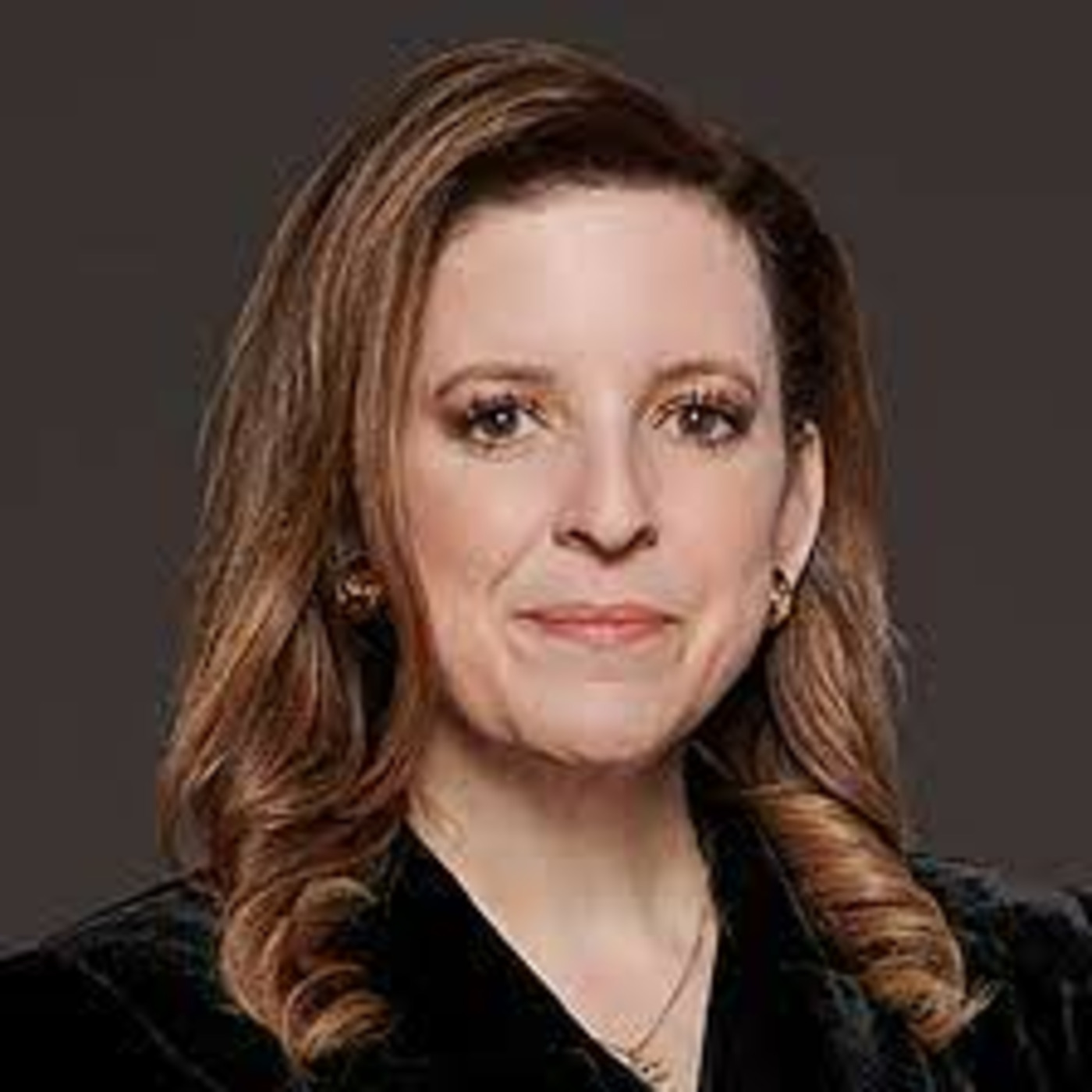
Melanie Pickett: In this series, as a special treat, we are featuring the music of one of our guests in the series, Julia Kwame. You can find the link to Julia’s Spotify album in the show notes. I’m Aoifinn Devitt, and welcome to the 50 Faces podcast, a podcast committed to revealing the richness and diversity of the world of investment by focusing on its people and their stories. I’m joined today by Melanie Pickett, who’s Executive VP and Head of Asset Owners Americas at Northern Trust, based in the Chicago area. She oversees the Alternative Asset Servicing Group and directs the firm’s strategy, growth, and delivery of all firm-wide products for asset owners and allocators in the Americas region. She was named 2021 Top 40 Women in FinTech and the 2021 Global Banking and Finance US Businesswoman of the Year. She previously was Chief Operating Officer and Managing Director of Emory Investment Management at Emory University, and prior to that spent over 10 years at Morgan Stanley. Welcome, Melanie. Thanks for joining me today.
Aoifinn Devitt: Thanks for having me.
Melanie Pickett: So where did you grow up? What did you study and how did you come to enter the world of investment?
Aoifinn Devitt: Yeah, I grew up in South Georgia, went to University of Georgia undergrad, and honestly spent, you know, most of my college time really thinking I was going to have a career in politics or law. At some point someone said to me, you know, if you’re going to go into law, you really need to think about M&A. And so you need to have some business experience first. And of course I had not taken one finance or business class the entire time I was in college, but I interviewed and, and landed a role at Bear Stearns focused on kind of sales and trading in the equity middle markets. My first day was Dow 10,000. It was the summer of IPOs. It was an incredible time to work in the market and things were just sort of off and running from there.
Melanie Pickett: It’s interesting because I went into corporate law without a shred of business experience, so I guess it depends on everybody else’s perspective there. Looking now to the businesses you’ve built, because I talked in the bio about the work you did at Emory University and the work you’ve been building at Northern Trust, can you think about takeaways from that? The stage you’re at today, looking back at the businesses you’ve built, what were some of the key takeaways professionally and developmentally? From some of that?
Aoifinn Devitt: Yeah, my, my first role at Northern, I came to Northern in fact to build a business that we call Front Office Solutions. The idea for that business, the inspiration really came from my time at Emory where I was unable to find in the marketplace a portfolio management software or an operational service that really met the needs that we had that were quite specific to multi-asset class investing across a portfolio that held a large concentration in alternatives. And so one of the key takeaways from building that business that we’ve built, which has been just an incredible opportunity, is that I was a client having joined Northern. I was a client trying to solve a problem that I had as a client. And so that research that we did with our clients, the conversations that we continue to try to have on a daily basis with our clients with respect to their largest problems, their largest opportunities, that is the most important basis for all of the decisions that we make and all of the products and services that we offer. And So trusting my instinct, having been a client and continuing to talk as much as possible to clients about what’s important to them, what’s on their mind is the key takeaway in, in being successful. Our clients have pivoted us, you know, a couple of different ways with respect to building out that front office solutions product. But I’m so happy that we listened to them and adapted when they needed us to adapt. That business is, is north of $450 billion on the platform now, having been live for about 4 years, and we’ve just got some of the most incredible clients that continue to drive that platform forward.
Melanie Pickett: And given you build this on dialogue with clients, listening, pivoting, adapting, providing solutions to problems which you may not know at the beginning of one year what’s going to emerge towards the end of the next, I would imagine that takes a certain amount of agility and the ability to divert resources to where you need them. What kind of autonomy have you found you need and how quickly do you feel that adaptation needs to happen?
Aoifinn Devitt: It has to happen pretty quickly, but also deliberately, I would say. So clients can also end up taking you in a number of different directions depending on you what, know, their specific need or challenges. And so it’s tempting to try to solve every need that a client has or respond to every idea that they have, but really making sure that we take a step back, understand the market at large, understand what will bring the broadest benefit to our clients and not get too distracted, but at the same you time, know, trying to be as responsive as possible. I was fortunate when I joined Northern in that we have an incredible human-centered research and design practice, and the work that I did alongside those designers with respect to thinking about how we design our services, how we design our technology, how we think about, you know, the questions that we ask our clients, the questions they’re trying to answer with their portfolio data, that human-centered research and design experience was the first time I had really witnessed a process like that. And it really made a meaningful impact in terms of how I think about all the decisions that we make going forward.
Melanie Pickett: And let’s go to that now, that human-centered design aspect, as well as other advances. What is, do you think, on the next frontier in terms of fintech? And how do you think that will change how asset owners behave?
Aoifinn Devitt: Yeah, I’m more excited than ever about our industry. You know, I think most of us that are in the asset owner space are really passionate about the missions of our clients, the missions of the institutions that they work for. I have been fairly candid about the fact that I was the beneficiary of a college scholarship. I’ve certainly had a number of family members who had healthcare, you know, serious healthcare issues and whose lives were saved at Emory prior to me working there. My parents were both public pensioners. So each of the clients that we support in the asset owner space really drive the investment industry, but also make a meaningful impact on the world. That we live in. And so that passion drives us, but also I think the way that the industry is changing continues to drive me and make me more excited. There is so much opportunity given how data-driven investment decisions are becoming. There’s so much opportunity to make a really meaningful impact to our clients’ performance by helping develop tools and capabilities that help them evolve with respect to the way that data is driving their decision-making. So We’re seeing asset allocation certainly change as a result to responding to that level of information that’s now available about portfolios, particularly in the world of alternatives where transparency and valuation and other aspects of that data were, were hard to obtain in the past. And so increasingly our clients are, are making this shift from, you know, strategic asset allocation to more of a, a factor-based or risk-budgeting-based view. And what’s most incredibly impactful for me when I think about that is that our clients will tell us that they think that that can add 50 to 150 bps of outperformance to their portfolio on an annual basis. That is significant capital that can be allocated to these really meaningful missions of our clients. And so I think it’s a really fascinating time to see technology converge with investing. Technology has always been part of my career and my background, and I’m just more excited than ever about how that’s changing the way that investing happens.
Melanie Pickett: And is the advent of AI having much of an impact on some of these tools? Is it helping us to maybe sift through the data? Because yes, you mentioned data, but there’s clearly a deluge of data now in some cases to almost being a point of overwhelming, perhaps with too much information. How is AI making that difference?
Aoifinn Devitt: I think it will have a big impact going forward. I would have told you that machine learning and AI over the last 5 years or so, despite having a lot of buzz, didn’t have a ton of practical implications. For our industry. But this rapid trajectory of capability that we’ve seen really just in the last 6 to 9 months around large language models is, I think, going to have an incredible impact. We are doing some testing at Northern Trust with those large language models, you know, with respect to, for example, sifting through all of the data that a client receives from their general partners and their alternative investments. And so whether it’s legal memoranda, whether it’s NAV information or capital call information, portfolio exposure information, that data was extremely hard to normalize and standardize for the purpose of decision-making. These large language models are proving to be incredibly successful at pulling that data out and pulling it out in an accurate fashion, which will really just leave our clients with so much more time to utilize and analyze the data versus trying to manage the data. And so that efficiency that they can gain from these technological advances, I think will be really impactful as well as the ability for us to scale our operation as well.
Melanie Pickett: And from my vantage point in Europe, I see a lot of demand for sustainability data to look through portfolios in that way. That’s a hot button item. The other one would be cybersecurity and knowing that this around the security of data, there’s a lot of stakeholder interest. In both of those issues. Are any of those progressing with the same pace for you from your vantage point?
Aoifinn Devitt: Both, frankly. So we just recently made an equity investment in a company called Novata, which is focused on creating a better source of ESG data in the private markets, particularly. It’s a GP-focused tool to help them collect information from their portfolio companies. But if you think about the challenge of limited partners being able to get ESG-related insights out of their portfolio, it has to come from the GPs. The GPs have to be able to collect, you know, high-quality data, but also be able to understand the context of that data with respect to the market that they’re investing in. So for example, if a limited partner were to go out and ask, as many of our clients do, ask each of their GPs how they’re doing with respect to diversity on boards of their portfolio companies, the number that you might get back from a GP is not meaningful on its own. It’s meaningful only in the context of how other GPs, how what other companies are doing on that same data point. And so Novata has an incredibly focused approach on, you know, identifying the metrics that matter to clients and to limited partners and making sure that that data will be collected in the most high-quality way and contextualized through benchmarking those data points across multiple types of investments and investors. So we’re particularly happy to partner with them because each of our clients look at ESG quite differently depending on their stakeholders and and how far, if at all, it’s embedded into their investment process. And so continuing to invest in tools that are focused on quality of the data and focused on the customization of that data to the client’s perspective and to the client’s lens of the world is really important to us. I think on the cyber front, you know, having the responsibility that we have as custodian, a safekeeper of our clients’ assets, having all of the regulatory eyes on us that we have, We obviously keep that responsibility first and foremost for our clients. I think the advent of fintechs and, you know, a lot of technology-based firms solving these problems for clients is really attractive, but they don’t necessarily have the same burden and responsibility of cybersecurity that we might have in a heavily regulated environment. It makes us move more slowly sometimes from a technology perspective because we have to satisfy so many stakeholders on that front, but clients trust us to make sure that we’re keeping all of their data and their assets safe. And so incredibly, it’s you know, important to our clients as well. If you tie this back to the large language model conversation as an example, I think that what we will do is, is not necessarily put our data out in the public sphere or use these models on public data, but really we’re developing internal models and internal data sets to use instead. And that will both satisfy our ability to take advantage of this technology, but also do it in a way that keeps our clients’ data completely safe.
Melanie Pickett: Clearly two very dynamic areas, probably likely to change very much in the future. And just building off that diversity discussion, so this podcast, we have a strong focus on diversity, seeking the viewpoints of women and other professionals who progress through the industry. You’ve been in the industry for many years. What would you say your own experience was in terms of watching the evolution of the industry? Has it become more diverse? What grade would you give it at this juncture?
Aoifinn Devitt: I don’t know that we’ve made a ton of progress. I think that the progress that I do see happens to be largely generational with respect to the attitudes of parties who have typically benefited from having more privilege. So I’ll use an example. If I look at the relationships that I see across people in their 60s, 50s, 40s, 30s, 20s, you know, all the different generations that we work for and that exist in my workforce, there very different dynamics and perspectives, even on a 10-year difference between ages. I think the most interesting thing when I look back at diversity in the industry is the advice I got very early on. I started my career really in earnest at Morgan Stanley, which had an incredibly respectful and diverse culture. But I had a, a male mentor at the time who said, don’t go to the women’s groups or the women’s conferences. You need to be in the room of the people whose minds need to be changed, not in the room where everyone is already at the same sort of mindset. And so the more that you are at the bar with the guys, you know, making an impact and having them sort of understand your strengths and your contribution, that’s how you’re going to get ahead. They are going to need to be the ones that sponsor you. That feedback or that suggestion at the time ended up really being a meaningful suggestion for me in my entire career because The advances that I do see happen when we have male allies in the organization, and changing their mindset about the capabilities of women is the way to solve that problem. I think that we have an incredible women in leadership group at Northern Trust, as do you most, know, organizations have these women’s councils. But sometimes I find that they’re overly focused on helping women improve in areas like negotiation or leadership or executive presence. I don’t know that we need as much focus on our deficiencies, right, as we need to be spending more time with men on how they can be better allies.
Melanie Pickett: It’s a really interesting perspective. I wonder whether that same advice applies today, given— are there minds that need to be changed today, or just minds that need to be reminded that there are the body of women in the workplace that are also visible, that should be visible and rising up? But it is— that’s a very interesting perspective. Besides, have you seen any role for some of the affinity groups or maybe groups that try to promote maybe a better pipeline, a better career coaching throughout the profession?
Aoifinn Devitt: Yeah, I mean, don’t get me wrong, I think the affinity groups are incredible resources. If I think about the Women in Leadership group at Northern as an example, it’s an incredible resource for women across the bank. It’s got subcommittees and task forces, and they put on incredible programming throughout the year. Super hyper-organized and high-performing affinity group. If we just let them run the firm instead, I often wonder how much benefit we could get from just letting them run the place, right? So the effort and the impact that they have by running their internal group is really an indication of how capable these women are, right? And so I am excited to just continue to watch their careers grow as they start to put some of those skill sets to work. In our leadership teams and in our organization. Just when I think back about the people and the men, frankly, as mentors who made the most impact on me as I grew up in the industry, it really was just about kind of giving me that confidence that my instincts were correct and I had everything that it took to become successful and to grow. It’s confidence and sort of eliminating that imposter noise that happens that I think is sometimes the most critical thing that we can do for women.
Melanie Pickett: We’re going to take a short break to hear from the sponsor of this series, With Intelligence. I sat down with Kip McDaniel, President Americas of With Intelligence. With Intelligence has a new retreat model that it has pioneered successfully. I asked him what this was and why it was appealing.
Speaker C: So the retreats came out of COVID in the sense that I and others were in the event business, and I can’t think of a worse business to be than in the event business in COVID. And we also thought the world is going to change. The habits coming out of COVID are not going to be the habits they were before COVID I estimated that allocated travel would be down 50%. I might have overestimated that even still. And so we knew we had to reinvent the conference or events business. So it wasn’t sitting in a ballroom for 3 days straight. And so what do you do coming out of COVID You make the events shorter, you make them outside of major cities. You make them so they’re much more interactive because I think people’s attention spans may have faltered a bit during COVID And so you, you mix it up a lot more. So we, we try to keep them shorter. We put in place activities so that managers and allocators can meet with peers and prospects and clients in a more organic way rather than sitting around a preset table with a topic that they have to discuss.
Melanie Pickett: And now back to the show. And given you look at the asset management industry across the board, from players to PMs, you look at institutional investors, you look at the fund providers, there’s still fewer female PMs, for example, or fund founders who get to the critical mass level. Do you have any indications to why that is, that we’re still not making many inroads at the leadership level?
Aoifinn Devitt: I mean, I think the talent acquisition pipeline is still really focused on acquiring talent from one’s own personal network. We would often, as I was doing operational due diligence of investment managers, which was an incredible part of my role at Emory, we would ask, how did you find this employee? How did you recruit that employee? And quite often it would be someone’s fraternity or someone’s son or someone’s alumni network. And so making sure that people in the investment industry are going outside of their network. People tend to recruit people that look like them, right? And so it’s interesting, we have an incredible family office on the front office solutions platform. And as most of our clients do, they routinely will poll their investment managers on ESG factors that are important to them. So we will commonly see LPs ask their GPs, how many women or people of color do you have on staff? How much equity do they own in the general partnership? What does your board composition look like? But one of the most interesting questions this family asks is, how many pitches did you take from people outside of your network. And so just understanding how they invest and where they take pitches from and how that influences their portfolio composition over time, I think is a really insightful thing to be asking their general partners. How many cold calls did you take versus just kind of sourcing through your network? I think the same thing happens with talent.
Melanie Pickett: That is a great question that I will add to my arsenal because it reveals, I think, the tendency towards confirmation bias as well. As well as an openness to innovation. Just wanted to ask about your board positions. I love to ask people who’ve been on multiple boards what they bring to the table as a board member and what it is to constitute an effective board member and chair.
Aoifinn Devitt: Yeah, I mean, the first board that I was on was a not-for-profit, and I think my inclination or my tendency was to act like I do at my job, jump in and start doing work and, you know, helping them. And certainly that’s needed at certain organizations of a specific stage. But really what was most impactful for me was to remind myself to take a step back. My role is really to ask questions to make sure that I’m rounding out the view and the thinking of the staff members, really providing perspective that maybe they don’t have. Anyone who’s ingrained in the day-to-day challenge in the weeds of a problem sometimes isn’t able to see outside of the specific problem they’ve been trying to solve. And so helping bring that outside perspective and helping them connect dots that maybe they’re not able to see because they’re so ingrained in the problem, I think, is probably the, the most value that I try to add.
Melanie Pickett: I always think it’s strange that there’s no kind of rule book or guidebook around being an effective board member. It’s sort of something that you have to pick up on your own, which is why I try to ask these questions around skill set, because it shouldn’t be something that you have to learn by doing. Exclusively. It’s nice for there to be some, some guidance there. So you’re— I listened to the podcast you did with Ted Seides. I can put a plug in it for it here. So where you have a very detailed trajectory of your career, so I won’t focus on that particularly here, but I would like to have you look back in terms of reflections. What would you say the high and low points of that were so far?
Aoifinn Devitt: Sure. I mean, so to start with the highs, it really always revolves around people, and I would say that manifest itself in two ways. One is having the ability to make a difference in someone’s confidence and someone’s career path. Their own ability to believe in what they’re able to achieve is one of my favorite moments within my career when I see that happen. I’ve got people that I’ve kept in touch with that were some of the very first people I managed when I was 23 years old. And routinely what I’ll hear from people is that I pushed them harder and gave them more chances than they thought they deserved at the time, but In each case, they were able to swim. And so I really valued those— that feedback that I get from people. I think the other thing is my absolute favorite part of any job that I’ve ever had is the ability to build a really high-performing team. There’s something magic that happens when that finally clicks and finally comes together. The leadership team that I have now at Northern Trust, we’ve assembled over the last 18 months. And there is so much trust and so much camaraderie and so much collective energy around the problems that we’re trying to solve for our clients. It’s really just at a point where I get to stand back and watch and enjoy this team run. And that’s hugely satisfying. When I think about the low points of my career, it really always revolves around something that I think is a double-edged sword for me, which is that I make very instinctive decisions and I’m quick to make decisions. And that helps in many cases. In other cases, some of the more disappointing or shameful moments have been where I didn’t take the time to slow down and listen and learn. I didn’t temper my reaction. In the heat of the moment. And so for me, it’s sort of making sure that I temper that immediate reaction that I typically have, even though sometimes that guides me really well as well.
Melanie Pickett: And in terms of that push and that challenge that you now throw down to others, was that done to you? Did you have key people who forced you out of your comfort zone, who challenged you, that you can mention here?
Aoifinn Devitt: Yeah, I think It was really a big part of Morgan Stanley’s culture was to give very large elements of responsibility or projects to really young professionals. And it was smart, right? We would work 100, 120 hours a week and we weren’t very expensive to the firm. And typically, you know, we would work extremely hard at the challenge that we were given. I think that that’s now just sort of in some of the decisions I make is always trying to give as much responsibility to people as early in their careers as possible. I had an employee recently quite tearfully say to me, I, I appreciate all the chances you ever took on me. And my response to him was, it didn’t feel like a chance at the time. Know, You I didn’t feel like I was doing you a favor or giving you a chance at the time. I wasn’t taking a risk on you. You had all the right ingredients to step up. You just didn’t have enough confidence in yourself to know that you could do that. So very early on, I had mentors and sponsors that really took a chance on me, called me to the carpet when I needed to be called to the carpet and when I needed to smooth out some of the behaviors or some of the instincts that I had, but really just continually believing in me and reminding me to push forward even if there were objections from others or if there were roadblocks in the way. If I think about those sponsors and mentors, and I was so lucky to have so many throughout my career, they were all patient and supportive. They were all vulnerable about their own mistakes and their own inadequacies. They all made me feel just more comfortable and more confident with the things that I was, I was maybe I doubting. Want to pick up on two.
Melanie Pickett: Things there, which I think are really interesting to look back on from a career development perspective, which is how are helpful to others perhaps going through the same thing. One is the 110-hour week slog, which many of us have done, and I think is perhaps becoming increasingly unpopular, but maybe it’s revisionist history or rose-tinted glasses, but I do like to think that that has a purpose. And the second is around— you mentioned smoothing out some edges and how that sits with the desire today to bring one’s whole authentic self to work. So maybe we could just start with those 100-hour weeks. Looking back, do you regret that? Do you think it’s a rite of passage? Do you think it’s the right training ground today?
Aoifinn Devitt: I had lunch with one of my interns recently, a group of my interns, and I was asking them what they would value the most as they think about selecting their role and their employer in the future. And work-life balance and hybrid work was one of the conversations that we had. I told the story about the amount of hours we used to work, and someone sort of innocently looked at me and said, well, how did you have a life? Building my career was my life. I don’t regret it at all because certainly at that stage of life, we had an incredible social bond and fabric amongst the people that were there in the middle of the night working. But I also look at it just mathematically, right? So if, if you’re working 6 to 7 hours a day or you’re working 10 to 12 hours a day, you’re almost getting double the right? Experience, In, in the years that you’re working because you’re getting that repetition and you’re getting just more work hours in. So I kind of always looked at it as I would come out the other side with more years of experience, frankly, in the way that those hours added up over time. As I’m older, obviously there’s a, a point of diminishing returns to my decision making and my ability to react and, lead if I’m overly tired. So I think there’s a place and a time in your career for that type of work, but I don’t regret it at all.
Melanie Pickett: So then you mentioned the mentors who helped you smooth out the rough edges, call you to the carpet, and maybe either slow down or rethink. Certainly your actions can be modified, but sometimes inherent traits or characteristics or style points can’t. There’s a tendency today to focus on authenticity. Bringing one’s whole self to work, one’s authentic self. That might be fine in theory, but within an organization, it doesn’t always work well. How do you sort of see that balance as being struck?
Aoifinn Devitt: Yeah, there’s a leadership expert out there, Randall Stutman, who coincidentally Ted Zides introduced me to. He has a website, Admired Leadership, and he starts every day with field notes. These field notes take about 30 to 60 seconds to read, and in fact, I forward them every day to all of the people in my organization that manage others. They’re really incredible way to start the day. But it’s a series of leadership behaviors that he focuses on. And I bring this up because one of the things that stands out most to me about the way that Randall looks at leadership is that the most incredible exceptional leaders are those that can achieve results, but also achieve followership amongst the people that, that work for them. And so I think that authenticity is a key ingredient in that followership. If people know that you are vulnerable, you make mistakes, you’re willing to admit when you don’t know the answer to a question, I think that it just creates a safer environment for people to contribute and to grow and to make mistakes and, and learn. And so I find that every day, somewhat obsessively, I’ll lay in bed at night and kind of replay the tapes like a sports team you would, know, what meetings did I have today? Where could I have responded better? Where did I not contribute enough or lead as well as I could have? What meetings do I have tomorrow? Can I get prepared for those in a different way? I kind of play those tapes in my head and really make sure that I earned my salary every day on both You fronts. Know, did I achieve results, but also did I take the actions that inspire confidence and integrity in the people that I lead? And did I earn their respect and the ability for them to follow me? In this you time, know, we are all struggling with a really difficult expense environment and difficult challenge over the last few years in terms of managing people, whether it was helping them navigate COVID and racial justice issues and political and war and strife across the world. We’re asking a lot of people right now, more than ever. And I think that in order to get people to take the hill with you, you really have to be able to lead with empathy and authenticity, or you’re just not going to get the followership that’s required to take the hill.
Melanie Pickett: It’s so interesting because I do a similar thing. I replay the tapes probably more than I preview the tapes, just probably my nature, but replaying the tapes. But I actually think it is, and I’ve just realized this now listening to you, I think it’s a craving for feedback. We perhaps everything we do, we’re sometimes it’s experimental, it’s, it’s a new response to a new situation. And as leaders, we don’t always get frequent feedback. And really replaying those tapes, I find I have to stop myself from replaying the entire situation to someone just which would probably bore them. Simply because I want their feedback as to what’s cross-checking whether what I did was the right response and could I have done differently. I think it’s a good reminder that not all leaders get the feedback they probably crave.
Aoifinn Devitt: Yeah, it’s fascinating. We have a partnership with another company, Accenture, that does behavioral coaching and data science for investment managers. But one of the interesting things that we’ve thought about as an investment thesis in that company is that in many professions you are coached your entire life. So if you think about sports and playing back the tape that is really to get very specific, detailed feedback on what you did well, what you didn’t do well. Musicians might have vocal coaches their entire life or acting coaches. We happen to work in an industry where that coaching and constant sort of monitoring and feedback on your performance in an aim to get better doesn’t necessarily exist. So I think that’s an insightful comment. You know, each of those moments that I’m playing back, it really is, you know, how could I have done better for my people and how could I have done better for the firm? But it is very feedback-oriented. And I, I think generationally, you know, we’re certainly seeing that younger generations require a lot more feedback and want a lot more feedback on their growth and development. And that’s changing the way that we have to manage.
Melanie Pickett: And speaking of that, mentors and sponsors certainly feature highly in this feedback conversation. Did you have any mentor or sponsor of your own?
Aoifinn Devitt: I’ve had some incredible leaders over the years. I wouldn’t say that I’ve had One, I’ve had very many, and each of them have taught me something different depending on the stage of life that I was in or the stage of my career. I worked at Morgan Stanley right when 9/11 happened, and I think a lot about the impact that that had on the culture and the way that I learned leadership. So at the time that I joined, we were really just trying to rebuild the firm together. Everyone was very head downplaying their own position, trusted the position of others. There wasn’t really an environment or an interest in politics or backstabbing or, you know, anything that kind of pervades more negative parts of a corporate culture. And I think a lot of that was just survival and trust and you gratitude, know, to be in the room with one another rebuilding the firm. And I wonder you sometimes, know, when I worked in environments or observed environments that weren’t as trusting or weren’t as focused on intellectual respect and you autonomy, know, for people, for leaders and peers. I often wonder, know, you did that happen at that moment in time because of 9/11, or was that always the case? And so you don’t want to have to have a crisis, right, in order to build bonds of trust on a team. You want to be able to build them outside of a crisis. But it’s important to kind of reflect on those moments where we— you don’t have a choice. You’re in the foxhole together and you have to trust one another. And so Some of those really impactful leadership moments for me came right post-9/11.
Melanie Pickett: It’s really interesting how these catalysts can spark sort a of a level setting and a rethink of our approach to our bonds, our work life and relationships. My last question is around words of wisdom, whether it comes from those daily musings that you cited that you distribute to your team or from some of the people who’ve worked with you, motivated you over the years. Any creed or motto that you live by?
Aoifinn Devitt: Yeah, I mean, we had these mantras or mottos early in my career that I— we never codified culture. I don’t ever you remember, know, seeing a PowerPoint on Morgan Stanley’s culture, but I do remember specific sayings that you would just hear and they would sort of generationally be passed down in the people that you worked for and the people that they worked for. And so certainly I have a couple of ones that guide me. The one that has been guiding me most lately as I reflect on talent and how we think about talent is the term A’s hire A’s and B’s hire C’s. And so as I think about raising the performance standard of those in our organization and making sure that we can adapt and evolve to our clients’ needs, it’s focusing on my managers. How are they thinking about evaluating and hiring talent? The only way that we achieve any results at Northern Trust is on the results of our people and their contribution and their ability to serve our clients. And so I’ve been thinking a lot about talent and A’s hire A’s, B’s hire C’s lately. The other piece of advice that I got, my dad was a blue-collar construction manager at a public university and he had a framed thing on his desk that I was sitting at one time late in his life right before he passed away. That basically said something to the effect of, if you can make people feel good about themselves and about the contribution they’re making, they will achieve so much for you. And it was more eloquently worded at the time. I can’t remember exactly what it said, but at his funeral, his retirement party, some of his workers would walk up to me and talk to me about how he changed their life. And that sort of concept of making someone feel really good about their contribution to what they do for you and how much more they’ll do for you if they feel good about that contribution, that one’s always stuck with me as well.
Melanie Pickett: Well, what a legacy for your father and what an aspiration for those of us here today to have that impact. Well, it’s clear that the world is changing and from a front office solutions standpoint, you’ve walked us through those changes in the minds of your clients, how you’re responding to adapt to those solutions. And clearly the role of a leader is changing too and needing to evolve to a changing workforce and to changing needs. And we need to adapt as people. And this has been a wonderful reflection on that and on the evolving role Thank you for sharing that with such humility and transparency and openness.
Aoifinn Devitt: Thank you for having me.
Melanie Pickett: I’m Aoifinn Devitt. Thank you for listening to the 50 Faces podcast. If you liked what you heard and would like to tune in to hear more inspiring investors on their personal journeys, please subscribe on Apple Podcasts or wherever you get your podcasts. This podcast is for informational purposes only and should not be construed as investment advice, and all views personal and should not be attributed to the organizations and affiliations of the host or any guest.
Aoifinn Devitt: Never going to say it again, never going to say it again, and I wonder how I’m ever going to say it again.
Aoifinn Devitt: The other piece of advice that I got, my dad was a, a blue collar construction manager at a public university, and he had a, a framed thing on his desk that I was sitting at one time late in his life, right before he passed away, that basically said something to the effect of, if you can make people feel good about themselves and about the contribution they’re making, they will achieve so much for you. Some of his workers would walk up to me and talk to me about how he changed their life and that sort of concept of making someone feel really good about their contribution to what they do for you and how much more they’ll do for you if they feel good about that contribution. That one’s always stuck with me as well.
Melanie Pickett: In this series, as a special treat, we are featuring the music of one of our guests in the series, Julia Kwame. You can find the link to Julia’s Spotify album in the show notes. I’m Aoifinn Devitt, and welcome to the 50 Faces podcast, a podcast committed to revealing the richness and diversity of the world of investment by focusing on its people and their stories. I’m joined today by Melanie Pickett, who’s Executive VP and Head of Asset Owners Americas at Northern Trust, based in the Chicago area. She oversees the Alternative Asset Servicing Group and directs the firm’s strategy, growth, and delivery of all firm-wide products for asset owners and allocators in the Americas region. She was named 2021 Top 40 Women in FinTech and the 2021 Global Banking and Finance US Businesswoman of the Year. She previously was Chief Operating Officer and Managing Director of Emory Investment Management at Emory University, and prior to that spent over 10 years at Morgan Stanley. Welcome, Melanie. Thanks for joining me today.
Aoifinn Devitt: Thanks for having me.
Melanie Pickett: So where did you grow up? What did you study and how did you come to enter the world of investment?
Aoifinn Devitt: Yeah, I grew up in South Georgia, went to University of Georgia undergrad, and honestly spent, you know, most of my college time really thinking I was going to have a career in politics or law. At some point someone said to me, you know, if you’re going to go into law, you really need to think about M&A. And so you need to have some business experience first. And of course I had not taken one finance or business class the entire time I was in college, but I interviewed and, and landed a role at Bear Stearns focused on kind of sales and trading in the equity middle markets. My first day was Dow 10,000. It was the summer of IPOs. It was an incredible time to work in the market and things were just sort of off and running from there.
Melanie Pickett: It’s interesting because I went into corporate law without a shred of business experience, so I guess it depends on everybody else’s perspective there. Looking now to the businesses you’ve built, because I talked in the bio about the work you did at Emory University and the work you’ve been building at Northern Trust, can you think about takeaways from that? The stage you’re at today, looking back at the businesses you’ve built, what were some of the key takeaways professionally and developmentally? From some of that?
Aoifinn Devitt: Yeah, my, my first role at Northern, I came to Northern in fact to build a business that we call Front Office Solutions. The idea for that business, the inspiration really came from my time at Emory where I was unable to find in the marketplace a portfolio management software or an operational service that really met the needs that we had that were quite specific to multi-asset class investing across a portfolio that held a large concentration in alternatives. And so one of the key takeaways from building that business that we’ve built, which has been just an incredible opportunity, is that I was a client having joined Northern. I was a client trying to solve a problem that I had as a client. And so that research that we did with our clients, the conversations that we continue to try to have on a daily basis with our clients with respect to their largest problems, their largest opportunities, that is the most important basis for all of the decisions that we make and all of the products and services that we offer. And So trusting my instinct, having been a client and continuing to talk as much as possible to clients about what’s important to them, what’s on their mind is the key takeaway in, in being successful. Our clients have pivoted us, you know, a couple of different ways with respect to building out that front office solutions product. But I’m so happy that we listened to them and adapted when they needed us to adapt. That business is, is north of $450 billion on the platform now, having been live for about 4 years, and we’ve just got some of the most incredible clients that continue to drive that platform forward.
Melanie Pickett: And given you build this on dialogue with clients, listening, pivoting, adapting, providing solutions to problems which you may not know at the beginning of one year what’s going to emerge towards the end of the next, I would imagine that takes a certain amount of agility and the ability to divert resources to where you need them. What kind of autonomy have you found you need and how quickly do you feel that adaptation needs to happen?
Aoifinn Devitt: It has to happen pretty quickly, but also deliberately, I would say. So clients can also end up taking you in a number of different directions depending on you what, know, their specific need or challenges. And so it’s tempting to try to solve every need that a client has or respond to every idea that they have, but really making sure that we take a step back, understand the market at large, understand what will bring the broadest benefit to our clients and not get too distracted, but at the same you time, know, trying to be as responsive as possible. I was fortunate when I joined Northern in that we have an incredible human-centered research and design practice, and the work that I did alongside those designers with respect to thinking about how we design our services, how we design our technology, how we think about, you know, the questions that we ask our clients, the questions they’re trying to answer with their portfolio data, that human-centered research and design experience was the first time I had really witnessed a process like that. And it really made a meaningful impact in terms of how I think about all the decisions that we make going forward.
Melanie Pickett: And let’s go to that now, that human-centered design aspect, as well as other advances. What is, do you think, on the next frontier in terms of fintech? And how do you think that will change how asset owners behave?
Aoifinn Devitt: Yeah, I’m more excited than ever about our industry. You know, I think most of us that are in the asset owner space are really passionate about the missions of our clients, the missions of the institutions that they work for. I have been fairly candid about the fact that I was the beneficiary of a college scholarship. I’ve certainly had a number of family members who had healthcare, you know, serious healthcare issues and whose lives were saved at Emory prior to me working there. My parents were both public pensioners. So each of the clients that we support in the asset owner space really drive the investment industry, but also make a meaningful impact on the world. That we live in. And so that passion drives us, but also I think the way that the industry is changing continues to drive me and make me more excited. There is so much opportunity given how data-driven investment decisions are becoming. There’s so much opportunity to make a really meaningful impact to our clients’ performance by helping develop tools and capabilities that help them evolve with respect to the way that data is driving their decision-making. So We’re seeing asset allocation certainly change as a result to responding to that level of information that’s now available about portfolios, particularly in the world of alternatives where transparency and valuation and other aspects of that data were, were hard to obtain in the past. And so increasingly our clients are, are making this shift from, you know, strategic asset allocation to more of a, a factor-based or risk-budgeting-based view. And what’s most incredibly impactful for me when I think about that is that our clients will tell us that they think that that can add 50 to 150 bps of outperformance to their portfolio on an annual basis. That is significant capital that can be allocated to these really meaningful missions of our clients. And so I think it’s a really fascinating time to see technology converge with investing. Technology has always been part of my career and my background, and I’m just more excited than ever about how that’s changing the way that investing happens.
Melanie Pickett: And is the advent of AI having much of an impact on some of these tools? Is it helping us to maybe sift through the data? Because yes, you mentioned data, but there’s clearly a deluge of data now in some cases to almost being a point of overwhelming, perhaps with too much information. How is AI making that difference?
Aoifinn Devitt: I think it will have a big impact going forward. I would have told you that machine learning and AI over the last 5 years or so, despite having a lot of buzz, didn’t have a ton of practical implications. For our industry. But this rapid trajectory of capability that we’ve seen really just in the last 6 to 9 months around large language models is, I think, going to have an incredible impact. We are doing some testing at Northern Trust with those large language models, you know, with respect to, for example, sifting through all of the data that a client receives from their general partners and their alternative investments. And so whether it’s legal memoranda, whether it’s NAV information or capital call information, portfolio exposure information, that data was extremely hard to normalize and standardize for the purpose of decision-making. These large language models are proving to be incredibly successful at pulling that data out and pulling it out in an accurate fashion, which will really just leave our clients with so much more time to utilize and analyze the data versus trying to manage the data. And so that efficiency that they can gain from these technological advances, I think will be really impactful as well as the ability for us to scale our operation as well.
Melanie Pickett: And from my vantage point in Europe, I see a lot of demand for sustainability data to look through portfolios in that way. That’s a hot button item. The other one would be cybersecurity and knowing that this around the security of data, there’s a lot of stakeholder interest. In both of those issues. Are any of those progressing with the same pace for you from your vantage point?
Aoifinn Devitt: Both, frankly. So we just recently made an equity investment in a company called Novata, which is focused on creating a better source of ESG data in the private markets, particularly. It’s a GP-focused tool to help them collect information from their portfolio companies. But if you think about the challenge of limited partners being able to get ESG-related insights out of their portfolio, it has to come from the GPs. The GPs have to be able to collect, you know, high-quality data, but also be able to understand the context of that data with respect to the market that they’re investing in. So for example, if a limited partner were to go out and ask, as many of our clients do, ask each of their GPs how they’re doing with respect to diversity on boards of their portfolio companies, the number that you might get back from a GP is not meaningful on its own. It’s meaningful only in the context of how other GPs, how what other companies are doing on that same data point. And so Novata has an incredibly focused approach on, you know, identifying the metrics that matter to clients and to limited partners and making sure that that data will be collected in the most high-quality way and contextualized through benchmarking those data points across multiple types of investments and investors. So we’re particularly happy to partner with them because each of our clients look at ESG quite differently depending on their stakeholders and and how far, if at all, it’s embedded into their investment process. And so continuing to invest in tools that are focused on quality of the data and focused on the customization of that data to the client’s perspective and to the client’s lens of the world is really important to us. I think on the cyber front, you know, having the responsibility that we have as custodian, a safekeeper of our clients’ assets, having all of the regulatory eyes on us that we have, We obviously keep that responsibility first and foremost for our clients. I think the advent of fintechs and, you know, a lot of technology-based firms solving these problems for clients is really attractive, but they don’t necessarily have the same burden and responsibility of cybersecurity that we might have in a heavily regulated environment. It makes us move more slowly sometimes from a technology perspective because we have to satisfy so many stakeholders on that front, but clients trust us to make sure that we’re keeping all of their data and their assets safe. And so incredibly, it’s you know, important to our clients as well. If you tie this back to the large language model conversation as an example, I think that what we will do is, is not necessarily put our data out in the public sphere or use these models on public data, but really we’re developing internal models and internal data sets to use instead. And that will both satisfy our ability to take advantage of this technology, but also do it in a way that keeps our clients’ data completely safe.
Melanie Pickett: Clearly two very dynamic areas, probably likely to change very much in the future. And just building off that diversity discussion, so this podcast, we have a strong focus on diversity, seeking the viewpoints of women and other professionals who progress through the industry. You’ve been in the industry for many years. What would you say your own experience was in terms of watching the evolution of the industry? Has it become more diverse? What grade would you give it at this juncture?
Aoifinn Devitt: I don’t know that we’ve made a ton of progress. I think that the progress that I do see happens to be largely generational with respect to the attitudes of parties who have typically benefited from having more privilege. So I’ll use an example. If I look at the relationships that I see across people in their 60s, 50s, 40s, 30s, 20s, you know, all the different generations that we work for and that exist in my workforce, there very different dynamics and perspectives, even on a 10-year difference between ages. I think the most interesting thing when I look back at diversity in the industry is the advice I got very early on. I started my career really in earnest at Morgan Stanley, which had an incredibly respectful and diverse culture. But I had a, a male mentor at the time who said, don’t go to the women’s groups or the women’s conferences. You need to be in the room of the people whose minds need to be changed, not in the room where everyone is already at the same sort of mindset. And so the more that you are at the bar with the guys, you know, making an impact and having them sort of understand your strengths and your contribution, that’s how you’re going to get ahead. They are going to need to be the ones that sponsor you. That feedback or that suggestion at the time ended up really being a meaningful suggestion for me in my entire career because The advances that I do see happen when we have male allies in the organization, and changing their mindset about the capabilities of women is the way to solve that problem. I think that we have an incredible women in leadership group at Northern Trust, as do you most, know, organizations have these women’s councils. But sometimes I find that they’re overly focused on helping women improve in areas like negotiation or leadership or executive presence. I don’t know that we need as much focus on our deficiencies, right, as we need to be spending more time with men on how they can be better allies.
Melanie Pickett: It’s a really interesting perspective. I wonder whether that same advice applies today, given— are there minds that need to be changed today, or just minds that need to be reminded that there are the body of women in the workplace that are also visible, that should be visible and rising up? But it is— that’s a very interesting perspective. Besides, have you seen any role for some of the affinity groups or maybe groups that try to promote maybe a better pipeline, a better career coaching throughout the profession?
Aoifinn Devitt: Yeah, I mean, don’t get me wrong, I think the affinity groups are incredible resources. If I think about the Women in Leadership group at Northern as an example, it’s an incredible resource for women across the bank. It’s got subcommittees and task forces, and they put on incredible programming throughout the year. Super hyper-organized and high-performing affinity group. If we just let them run the firm instead, I often wonder how much benefit we could get from just letting them run the place, right? So the effort and the impact that they have by running their internal group is really an indication of how capable these women are, right? And so I am excited to just continue to watch their careers grow as they start to put some of those skill sets to work. In our leadership teams and in our organization. Just when I think back about the people and the men, frankly, as mentors who made the most impact on me as I grew up in the industry, it really was just about kind of giving me that confidence that my instincts were correct and I had everything that it took to become successful and to grow. It’s confidence and sort of eliminating that imposter noise that happens that I think is sometimes the most critical thing that we can do for women.
Melanie Pickett: We’re going to take a short break to hear from the sponsor of this series, With Intelligence. I sat down with Kip McDaniel, President Americas of With Intelligence. With Intelligence has a new retreat model that it has pioneered successfully. I asked him what this was and why it was appealing.
Speaker C: So the retreats came out of COVID in the sense that I and others were in the event business, and I can’t think of a worse business to be than in the event business in COVID. And we also thought the world is going to change. The habits coming out of COVID are not going to be the habits they were before COVID I estimated that allocated travel would be down 50%. I might have overestimated that even still. And so we knew we had to reinvent the conference or events business. So it wasn’t sitting in a ballroom for 3 days straight. And so what do you do coming out of COVID You make the events shorter, you make them outside of major cities. You make them so they’re much more interactive because I think people’s attention spans may have faltered a bit during COVID And so you, you mix it up a lot more. So we, we try to keep them shorter. We put in place activities so that managers and allocators can meet with peers and prospects and clients in a more organic way rather than sitting around a preset table with a topic that they have to discuss.
Melanie Pickett: And now back to the show. And given you look at the asset management industry across the board, from players to PMs, you look at institutional investors, you look at the fund providers, there’s still fewer female PMs, for example, or fund founders who get to the critical mass level. Do you have any indications to why that is, that we’re still not making many inroads at the leadership level?
Aoifinn Devitt: I mean, I think the talent acquisition pipeline is still really focused on acquiring talent from one’s own personal network. We would often, as I was doing operational due diligence of investment managers, which was an incredible part of my role at Emory, we would ask, how did you find this employee? How did you recruit that employee? And quite often it would be someone’s fraternity or someone’s son or someone’s alumni network. And so making sure that people in the investment industry are going outside of their network. People tend to recruit people that look like them, right? And so it’s interesting, we have an incredible family office on the front office solutions platform. And as most of our clients do, they routinely will poll their investment managers on ESG factors that are important to them. So we will commonly see LPs ask their GPs, how many women or people of color do you have on staff? How much equity do they own in the general partnership? What does your board composition look like? But one of the most interesting questions this family asks is, how many pitches did you take from people outside of your network. And so just understanding how they invest and where they take pitches from and how that influences their portfolio composition over time, I think is a really insightful thing to be asking their general partners. How many cold calls did you take versus just kind of sourcing through your network? I think the same thing happens with talent.
Melanie Pickett: That is a great question that I will add to my arsenal because it reveals, I think, the tendency towards confirmation bias as well. As well as an openness to innovation. Just wanted to ask about your board positions. I love to ask people who’ve been on multiple boards what they bring to the table as a board member and what it is to constitute an effective board member and chair.
Aoifinn Devitt: Yeah, I mean, the first board that I was on was a not-for-profit, and I think my inclination or my tendency was to act like I do at my job, jump in and start doing work and, you know, helping them. And certainly that’s needed at certain organizations of a specific stage. But really what was most impactful for me was to remind myself to take a step back. My role is really to ask questions to make sure that I’m rounding out the view and the thinking of the staff members, really providing perspective that maybe they don’t have. Anyone who’s ingrained in the day-to-day challenge in the weeds of a problem sometimes isn’t able to see outside of the specific problem they’ve been trying to solve. And so helping bring that outside perspective and helping them connect dots that maybe they’re not able to see because they’re so ingrained in the problem, I think, is probably the, the most value that I try to add.
Melanie Pickett: I always think it’s strange that there’s no kind of rule book or guidebook around being an effective board member. It’s sort of something that you have to pick up on your own, which is why I try to ask these questions around skill set, because it shouldn’t be something that you have to learn by doing. Exclusively. It’s nice for there to be some, some guidance there. So you’re— I listened to the podcast you did with Ted Seides. I can put a plug in it for it here. So where you have a very detailed trajectory of your career, so I won’t focus on that particularly here, but I would like to have you look back in terms of reflections. What would you say the high and low points of that were so far?
Aoifinn Devitt: Sure. I mean, so to start with the highs, it really always revolves around people, and I would say that manifest itself in two ways. One is having the ability to make a difference in someone’s confidence and someone’s career path. Their own ability to believe in what they’re able to achieve is one of my favorite moments within my career when I see that happen. I’ve got people that I’ve kept in touch with that were some of the very first people I managed when I was 23 years old. And routinely what I’ll hear from people is that I pushed them harder and gave them more chances than they thought they deserved at the time, but In each case, they were able to swim. And so I really valued those— that feedback that I get from people. I think the other thing is my absolute favorite part of any job that I’ve ever had is the ability to build a really high-performing team. There’s something magic that happens when that finally clicks and finally comes together. The leadership team that I have now at Northern Trust, we’ve assembled over the last 18 months. And there is so much trust and so much camaraderie and so much collective energy around the problems that we’re trying to solve for our clients. It’s really just at a point where I get to stand back and watch and enjoy this team run. And that’s hugely satisfying. When I think about the low points of my career, it really always revolves around something that I think is a double-edged sword for me, which is that I make very instinctive decisions and I’m quick to make decisions. And that helps in many cases. In other cases, some of the more disappointing or shameful moments have been where I didn’t take the time to slow down and listen and learn. I didn’t temper my reaction. In the heat of the moment. And so for me, it’s sort of making sure that I temper that immediate reaction that I typically have, even though sometimes that guides me really well as well.
Melanie Pickett: And in terms of that push and that challenge that you now throw down to others, was that done to you? Did you have key people who forced you out of your comfort zone, who challenged you, that you can mention here?
Aoifinn Devitt: Yeah, I think It was really a big part of Morgan Stanley’s culture was to give very large elements of responsibility or projects to really young professionals. And it was smart, right? We would work 100, 120 hours a week and we weren’t very expensive to the firm. And typically, you know, we would work extremely hard at the challenge that we were given. I think that that’s now just sort of in some of the decisions I make is always trying to give as much responsibility to people as early in their careers as possible. I had an employee recently quite tearfully say to me, I, I appreciate all the chances you ever took on me. And my response to him was, it didn’t feel like a chance at the time. Know, You I didn’t feel like I was doing you a favor or giving you a chance at the time. I wasn’t taking a risk on you. You had all the right ingredients to step up. You just didn’t have enough confidence in yourself to know that you could do that. So very early on, I had mentors and sponsors that really took a chance on me, called me to the carpet when I needed to be called to the carpet and when I needed to smooth out some of the behaviors or some of the instincts that I had, but really just continually believing in me and reminding me to push forward even if there were objections from others or if there were roadblocks in the way. If I think about those sponsors and mentors, and I was so lucky to have so many throughout my career, they were all patient and supportive. They were all vulnerable about their own mistakes and their own inadequacies. They all made me feel just more comfortable and more confident with the things that I was, I was maybe I doubting. Want to pick up on two.
Melanie Pickett: Things there, which I think are really interesting to look back on from a career development perspective, which is how are helpful to others perhaps going through the same thing. One is the 110-hour week slog, which many of us have done, and I think is perhaps becoming increasingly unpopular, but maybe it’s revisionist history or rose-tinted glasses, but I do like to think that that has a purpose. And the second is around— you mentioned smoothing out some edges and how that sits with the desire today to bring one’s whole authentic self to work. So maybe we could just start with those 100-hour weeks. Looking back, do you regret that? Do you think it’s a rite of passage? Do you think it’s the right training ground today?
Aoifinn Devitt: I had lunch with one of my interns recently, a group of my interns, and I was asking them what they would value the most as they think about selecting their role and their employer in the future. And work-life balance and hybrid work was one of the conversations that we had. I told the story about the amount of hours we used to work, and someone sort of innocently looked at me and said, well, how did you have a life? Building my career was my life. I don’t regret it at all because certainly at that stage of life, we had an incredible social bond and fabric amongst the people that were there in the middle of the night working. But I also look at it just mathematically, right? So if, if you’re working 6 to 7 hours a day or you’re working 10 to 12 hours a day, you’re almost getting double the right? Experience, In, in the years that you’re working because you’re getting that repetition and you’re getting just more work hours in. So I kind of always looked at it as I would come out the other side with more years of experience, frankly, in the way that those hours added up over time. As I’m older, obviously there’s a, a point of diminishing returns to my decision making and my ability to react and, lead if I’m overly tired. So I think there’s a place and a time in your career for that type of work, but I don’t regret it at all.
Melanie Pickett: So then you mentioned the mentors who helped you smooth out the rough edges, call you to the carpet, and maybe either slow down or rethink. Certainly your actions can be modified, but sometimes inherent traits or characteristics or style points can’t. There’s a tendency today to focus on authenticity. Bringing one’s whole self to work, one’s authentic self. That might be fine in theory, but within an organization, it doesn’t always work well. How do you sort of see that balance as being struck?
Aoifinn Devitt: Yeah, there’s a leadership expert out there, Randall Stutman, who coincidentally Ted Zides introduced me to. He has a website, Admired Leadership, and he starts every day with field notes. These field notes take about 30 to 60 seconds to read, and in fact, I forward them every day to all of the people in my organization that manage others. They’re really incredible way to start the day. But it’s a series of leadership behaviors that he focuses on. And I bring this up because one of the things that stands out most to me about the way that Randall looks at leadership is that the most incredible exceptional leaders are those that can achieve results, but also achieve followership amongst the people that, that work for them. And so I think that authenticity is a key ingredient in that followership. If people know that you are vulnerable, you make mistakes, you’re willing to admit when you don’t know the answer to a question, I think that it just creates a safer environment for people to contribute and to grow and to make mistakes and, and learn. And so I find that every day, somewhat obsessively, I’ll lay in bed at night and kind of replay the tapes like a sports team you would, know, what meetings did I have today? Where could I have responded better? Where did I not contribute enough or lead as well as I could have? What meetings do I have tomorrow? Can I get prepared for those in a different way? I kind of play those tapes in my head and really make sure that I earned my salary every day on both You fronts. Know, did I achieve results, but also did I take the actions that inspire confidence and integrity in the people that I lead? And did I earn their respect and the ability for them to follow me? In this you time, know, we are all struggling with a really difficult expense environment and difficult challenge over the last few years in terms of managing people, whether it was helping them navigate COVID and racial justice issues and political and war and strife across the world. We’re asking a lot of people right now, more than ever. And I think that in order to get people to take the hill with you, you really have to be able to lead with empathy and authenticity, or you’re just not going to get the followership that’s required to take the hill.
Melanie Pickett: It’s so interesting because I do a similar thing. I replay the tapes probably more than I preview the tapes, just probably my nature, but replaying the tapes. But I actually think it is, and I’ve just realized this now listening to you, I think it’s a craving for feedback. We perhaps everything we do, we’re sometimes it’s experimental, it’s, it’s a new response to a new situation. And as leaders, we don’t always get frequent feedback. And really replaying those tapes, I find I have to stop myself from replaying the entire situation to someone just which would probably bore them. Simply because I want their feedback as to what’s cross-checking whether what I did was the right response and could I have done differently. I think it’s a good reminder that not all leaders get the feedback they probably crave.
Aoifinn Devitt: Yeah, it’s fascinating. We have a partnership with another company, Accenture, that does behavioral coaching and data science for investment managers. But one of the interesting things that we’ve thought about as an investment thesis in that company is that in many professions you are coached your entire life. So if you think about sports and playing back the tape that is really to get very specific, detailed feedback on what you did well, what you didn’t do well. Musicians might have vocal coaches their entire life or acting coaches. We happen to work in an industry where that coaching and constant sort of monitoring and feedback on your performance in an aim to get better doesn’t necessarily exist. So I think that’s an insightful comment. You know, each of those moments that I’m playing back, it really is, you know, how could I have done better for my people and how could I have done better for the firm? But it is very feedback-oriented. And I, I think generationally, you know, we’re certainly seeing that younger generations require a lot more feedback and want a lot more feedback on their growth and development. And that’s changing the way that we have to manage.
Melanie Pickett: And speaking of that, mentors and sponsors certainly feature highly in this feedback conversation. Did you have any mentor or sponsor of your own?
Aoifinn Devitt: I’ve had some incredible leaders over the years. I wouldn’t say that I’ve had One, I’ve had very many, and each of them have taught me something different depending on the stage of life that I was in or the stage of my career. I worked at Morgan Stanley right when 9/11 happened, and I think a lot about the impact that that had on the culture and the way that I learned leadership. So at the time that I joined, we were really just trying to rebuild the firm together. Everyone was very head downplaying their own position, trusted the position of others. There wasn’t really an environment or an interest in politics or backstabbing or, you know, anything that kind of pervades more negative parts of a corporate culture. And I think a lot of that was just survival and trust and you gratitude, know, to be in the room with one another rebuilding the firm. And I wonder you sometimes, know, when I worked in environments or observed environments that weren’t as trusting or weren’t as focused on intellectual respect and you autonomy, know, for people, for leaders and peers. I often wonder, know, you did that happen at that moment in time because of 9/11, or was that always the case? And so you don’t want to have to have a crisis, right, in order to build bonds of trust on a team. You want to be able to build them outside of a crisis. But it’s important to kind of reflect on those moments where we— you don’t have a choice. You’re in the foxhole together and you have to trust one another. And so Some of those really impactful leadership moments for me came right post-9/11.
Melanie Pickett: It’s really interesting how these catalysts can spark sort a of a level setting and a rethink of our approach to our bonds, our work life and relationships. My last question is around words of wisdom, whether it comes from those daily musings that you cited that you distribute to your team or from some of the people who’ve worked with you, motivated you over the years. Any creed or motto that you live by?
Aoifinn Devitt: Yeah, I mean, we had these mantras or mottos early in my career that I— we never codified culture. I don’t ever you remember, know, seeing a PowerPoint on Morgan Stanley’s culture, but I do remember specific sayings that you would just hear and they would sort of generationally be passed down in the people that you worked for and the people that they worked for. And so certainly I have a couple of ones that guide me. The one that has been guiding me most lately as I reflect on talent and how we think about talent is the term A’s hire A’s and B’s hire C’s. And so as I think about raising the performance standard of those in our organization and making sure that we can adapt and evolve to our clients’ needs, it’s focusing on my managers. How are they thinking about evaluating and hiring talent? The only way that we achieve any results at Northern Trust is on the results of our people and their contribution and their ability to serve our clients. And so I’ve been thinking a lot about talent and A’s hire A’s, B’s hire C’s lately. The other piece of advice that I got, my dad was a blue-collar construction manager at a public university and he had a framed thing on his desk that I was sitting at one time late in his life right before he passed away. That basically said something to the effect of, if you can make people feel good about themselves and about the contribution they’re making, they will achieve so much for you. And it was more eloquently worded at the time. I can’t remember exactly what it said, but at his funeral, his retirement party, some of his workers would walk up to me and talk to me about how he changed their life. And that sort of concept of making someone feel really good about their contribution to what they do for you and how much more they’ll do for you if they feel good about that contribution, that one’s always stuck with me as well.
Melanie Pickett: Well, what a legacy for your father and what an aspiration for those of us here today to have that impact. Well, it’s clear that the world is changing and from a front office solutions standpoint, you’ve walked us through those changes in the minds of your clients, how you’re responding to adapt to those solutions. And clearly the role of a leader is changing too and needing to evolve to a changing workforce and to changing needs. And we need to adapt as people. And this has been a wonderful reflection on that and on the evolving role Thank you for sharing that with such humility and transparency and openness.
Aoifinn Devitt: Thank you for having me.
Melanie Pickett: I’m Aoifinn Devitt. Thank you for listening to the 50 Faces podcast. If you liked what you heard and would like to tune in to hear more inspiring investors on their personal journeys, please subscribe on Apple Podcasts or wherever you get your podcasts. This podcast is for informational purposes only and should not be construed as investment advice, and all views personal and should not be attributed to the organizations and affiliations of the host or any guest.
Aoifinn Devitt: Never going to say it again, never going to say it again, and I wonder how I’m ever going to say it again.