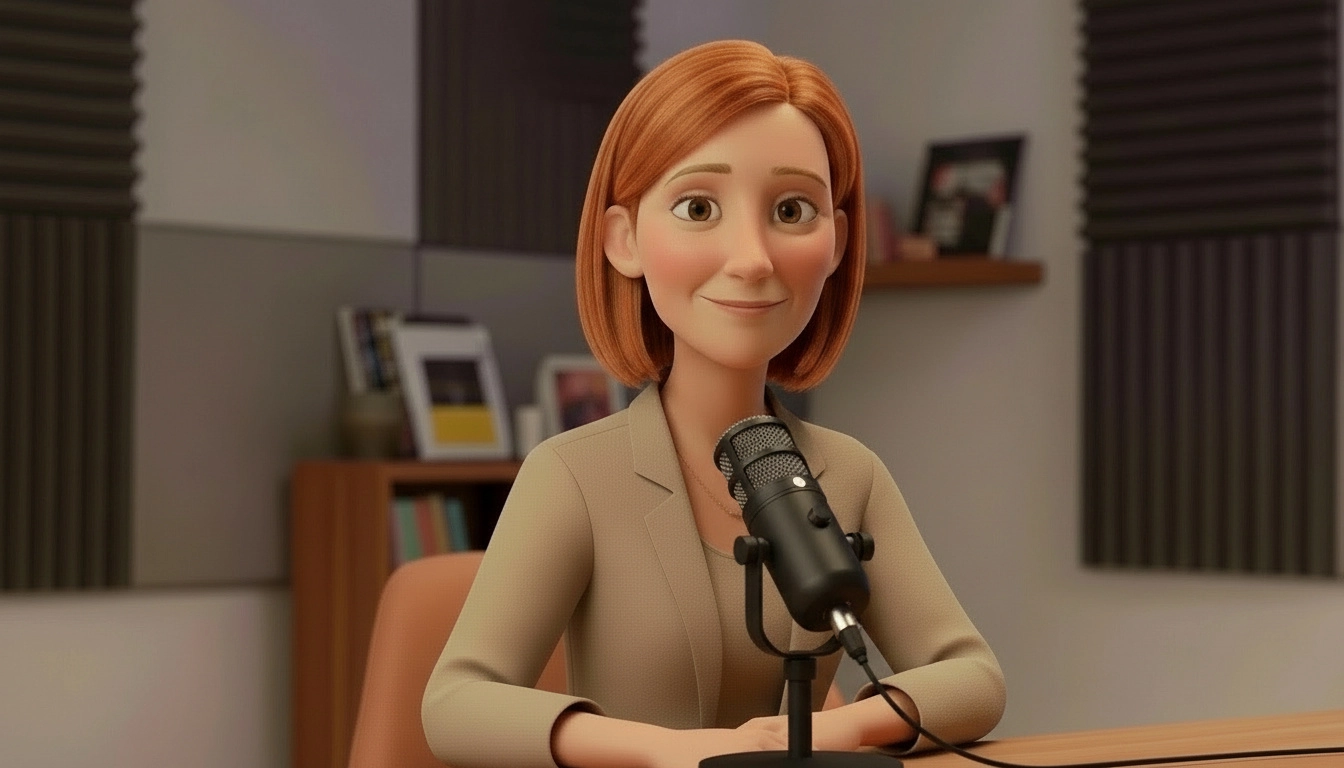
Aoifinn Devitt: I’m Aoifinn Devitt, and welcome to the 50 Faces Podcast, a podcast committed to revealing the richness and diversity of the world of investment by focusing on its people and their stories. I’m joined today by Julia Kwameah, who’s an associate at TKO Capital based in New York City. She’s trained as an actor, musician, and voiceover artist, and has released her first album, Feeling Good About Feeling Bad. We are featuring songs from this album on this entire Series 5 of 2023. She’s been creator in residence at Kickstarter, as well as a casting assistant, among other roles in the entertainment industry. She studied economics at Pepperdine University. Welcome, Julia. Thanks for joining me today.
Julia: Thank you, Yifan.
Aoifinn Devitt: Well, let’s start with your background and career journey. Where did you grow up? We know what you studied, but how did you come to enter the world of investing?
Julia: Aye, aye, aye. Well, I, you know, firstly, I should mention that I was born to a Ghanaian woman and a Ugandan father. And, uh, you know, as these countries are on the opposite ends of the spectrum of the continent Africa, uh, how do these people meet? Well, they met at a party, uh, on New Year’s Eve in DC. So I was born in Rockville, Maryland, and for about 3 years we lived there and moved to Sweden when my dad started working for a tech company called S3 Technologies. Uh, and then, you know, soon after that, like, our lives sort of bounced around a bit, and we moved to the desert of California, Apple Valley, um, to Connecticut for a year, New York upstate, uh, Fishkill, New York. That’s where I went to high school. And finally I decided to go back to California, but this time La La Land, and went to university at Pepperdine University.
Aoifinn Devitt: Well, California certainly had its impact on you in other areas as well, and with the entertainment. How did that start? How did your love of singing, being on the stage, acting— where did that start?
Julia: I, you know, I, I think all, all the time, like growing up, my mother would uh, read, read us stories, and, you know, we’d watch BBC, PBS, and watch whatever Shakespeare was happening. And she really immersed us in that world. Singing, she was always singing around the house. And, you know, I think going to different church or family members, you know, people are always singing around us. And you just start to do it. And then I just had more of a deeper interest in music. So I had my dad, I asked my dad for a keyboard when I think I was about maybe 6, 7, something like this. And he bought me this MIDI keyboard called the Miracle that basically was programmed to teach you theme songs from hit TV shows at the time. So for whatever reason, I knew the theme song for M*A*S*H, you know, all these like old ’70s TV shows that don’t exist anymore except for the rerun channel. But yeah, so. That sort of like sparked my brain and I eventually started taking classical piano lessons and continued from there. Acting, I was always creating stories with my siblings. There’s 4 of us and so I’d be the writer or director and then also play the starring role. My sisters and my brother would also contribute and then we’d put it up for my parents in whatever little salon or dining room we had at the time. So that— so the bug still is with me.
Aoifinn Devitt: Well, of course, that’s your prerogative as the director, to star yourself or to cast yourself in the starring role. And it sounds very much like the childhood of Steven Spielberg or some of the other greats who started on a shoestring. But yet you still studied economics, so you had one foot planted in— in this was a different world. How did that decision get made?
Julia: Oh my goodness, I mean, I still had African parents, you know, like there’s still a reality I had to live in. And I think that’s really— I knew that if I wanted to continue with the creative things, that would probably be a do that on your own time situation. And at the same time, economics was cool for me because I liked the weird science of it all, the weird maths of it all. And I’m always trying to ask why things are happening. So economics at that time, like, really exposed me to potential answers to these kind of questions. And I think also I was always watching my dad read different books on entrepreneurship, and, you know, he’s worked in the corporate world for 37 years, so I could see that there was an element of him that was always trying to break out and do his own thing. And it kind of instilled the breakout and do your own thing in me, probably a bit too soon, but, you know, maybe it’s never too soon. And he gave me a Robert Kiyosaki book, the Rich Dad Poor Dad thing, and I started reading that. And I’ve just been determined since then, probably since I was like 13, to just have my own business, start my own thing, and, you know, really build.
Aoifinn Devitt: And let’s talk about that journey just a little, the pre-TKO journey through the entertainment industry. Were there any ups and downs there and how did it form you?
Julia: Well, I think firstly you have to understand, like when I graduated school, it was 2008, like things, finance industry was rocky. So all my friends and I that thought we were sort of shoo-ins for whatever financial twinge job we were going to get, those dreams weren’t happening exactly. So it actually gave me— it opened up this portal of time for me to focus and study and immerse myself in the creative world that, you know, I desperately wanted to be a part of. Maybe not desperate, but I really wanted to be a part of it, you know. So I used that time to meet everyone I could in New York and take acting lessons and music. At that time, I wasn’t particularly training, but I was hanging out with enough musicians that I just started to write my own thing and trialed with a band. Then they all got married and had kids and had jobs, so they weren’t doing the band anymore. I just decided, all right, fine, I’ll do this on my own and just see what happens.
Aoifinn Devitt: And then you— sorry, no, I was just gonna say then you did have an accident that caused you to reset and rethink, I suppose, your objectives and maybe your course of your career. Can you talk a bit about that and, and what the reset looked like?
Julia: Yeah, I, I mean, so about 4 years ago, I, you know, I was in this taxi, I’ll call it an incident versus an accident, but I was in this incident that pretty much left the right side of my body paralyzed. And, you know, it’s one of these situations where you, you think to yourself, oh Jesus, how am I going to get out of this? You know, will I, will I move again? Will I work again? Will I, you know, will I even be able to go outside? Like, very simple things. Will I move my arm again? Right? And I think I, I started to You know, once you get over the angst, depression, anxiety, and all the other stuff, I started to really appreciate all the great things around me that I really, really overlooked and didn’t appreciate before because I was sort of in my own narrow world of like, okay, you’re going to make it as whatever you’re trying to make it as today. And I couldn’t really slow down and take the time for myself firstly. And even the people around me. So I think that, you know, in the 4 years that I’ve, you know, healed almost 100% successfully from that, I really do listen a bit differently, a little bit more. I pay attention to my surroundings. I talk to my flowers, you know, like I really am grateful for the sun because there are moments where you’re sitting in a hospital bed and you don’t feel the light of sun. Even on a gray day, you can still feel the sun through the clouds. And I wasn’t able to do that for a period of time. So I have a deep appreciation for my life in particular and for the lives and people around me and the world. Oh my God, I’ve become that person, you know. Like, I just— I do love life in this way that I, I have every intention of living it particularly the way I want, the way that I want to.
Aoifinn Devitt: It’s so interesting because you’re not the first person on this podcast who has come on and spoken about the actual, the odd benefit of maybe spending a lot of time in a hospital bed, whether it’s recovery from an illness, an accident like that. It has often caused a reset, caused a pause, caused contemplation. And I like to share those stories with others who are maybe going through it. Because I mean, certainly these are devastating blows, but they do build resilience and give us an opportunity that many people don’t have to actually take the time and appreciate the small things. So thank you for sharing that moment, I suppose, or moments in your life and the positive that can come from it. So let’s move.
Julia: Well, just, you know, as an aside, I think you use the word resilience and I think that word has been The underlying thematic of this whole thing, I think I’ve always been sort of a stick-to-it kind of person, resilient in ways, but to the degree that I’ve had to really just not— I mean, stare death down, that’s a bit morbid, but it is what it is— and really say to myself, no, we’re not doing this today, or Oh, my arms aren’t moving today. Well, guess what? We’re going to move tomorrow. And almost like Uma Thurman in Kill Bill, where she’s looking at her big toe and saying, wiggle my big toe. I mean, that’s kind of what it is. You have to train your mind. You have to be so mentally— I mean, you’re a bodybuilder, but with the mind, because otherwise anything anyone says, will literally break you down and you’ll accomplish nothing.
Aoifinn Devitt: It’s amazing to hear you say that. I’d love to now move to where life took you after that, to Keough and into the investment world.
Julia: Yes, yes, yes. I mean, so you can imagine a woman with sort of a not moving arm isn’t exactly being offered like many jobs. I was still really— I mean, I’ll be honest with you. There was a big part of me that was like, okay, I’ve survived this. Now I really have to be an actor. I really have to be a musician. Almost because I was still in this almost too anxious because there’s a part of my brain that was still kind of thinking, oh man, what if I don’t have another day left? I’ve calmed down a bit now, but I think I was ready to do anything for work just because I wanted to get back with people, just to take care of myself again. You know, I couldn’t— I, you know, I’d rather take care of myself than, you know, my parents do it for me. So I was working. What was I doing? Oh yeah. Oh my God. I made this like very horrid choice to attempt to work at a restaurant. And they, you know, they’re gracious enough to let me train for 3 weeks. But it was so absurd. Like, I couldn’t carry anything. You know, I could talk to people, but I didn’t memorize the menu. Like, everything just pointed to no, right? And I’ve done it before in the past. I just, I didn’t want to do it anymore. And I knew it wasn’t the role for me. And so I really was like, okay, fine. You’ve studied economics. Like, you know about the world. Like, let’s, let’s apply for entry-level jobs because I haven’t done it for the last 10 years. And there are a couple of companies that, you know, had me in the running for their temp assistant, whatever. And I decided to go with TKO over all the rest. You know, I think there’s something about— I mean, I’m attracted to them for this very simple reason. They are just like, you know, Mathieu and Antoine started a company when they were 28. And 30 respectively. And I, and I think I’m just so inspired when I see that, oh wow, it’s not like they were like 50 and then decided to, you know, create this, this ecosystem that I’m now a part of. They just, they went for it, you know. And, and I really look up to those kind of people in my life, like, you know, whether it’s, um, them or like Luigi, who’s this like great dancer who also suffered a car accident and healed his body through dance. I mean, amazing, you know, just people with this sort of fortitude and resilience in many different ways. And yeah, I think it’s a very long-winded answer, but I think my journey to TKO started as a temp receptionist for 3 weeks, which soon pivoted to the executive assistant for the CEO. And You know, and through that, I think Tim Grell, uh, saw that, you know, okay, you can probably do something else, and really encouraged me to develop and become part of the business development team, which I’m forever grateful. Of course, I was scared to death because I was like, oh my God, I don’t even know this world. I haven’t studied all this stuff, and I can be a bit neurotic about studying, but I just You know, it was a, it was a vote of confidence from him and the rest of the team and a leap of faith for me. So here we are.
Aoifinn Devitt: And we of course met at an event, an industry event, and you’re out meeting clients on the road like, like many in your role. And what are you hearing from clients and what are you focusing on at TKO in terms of a product suite?
Julia: Yeah, I mean, I think A few. I’ll probably merge a few things. I mean, I know climate ESG has been at the forefront, and you know, I think it’s— working on that effort since about, you know, 2018. And I think as far as what I’m focused on, it’s working with our decarbonization fund and our private debt secondaries team. Which I’m sure you’re aware, like everyone’s all about secondaries these days. So it’s cool for me to step in at this particular moment where some of the things that we’re working on you know, are, they’re topical. And yeah, I feel very fortunate that I get to hang around these people all day and learn from them and see what it’s all about.
Aoifinn Devitt: And one question I always love to ask when someone has come from an artistic background is what skills are you bringing from your performing, your voiceover work, your acting into the world of investing?
Julia: I love this question. I love it because quite frankly, there are some moments where I’m like, oh my God, this is the best acting job I’ve ever gotten. You know, I mean, I feel like there’s an element of memorization. So the hours, the hours, the countless hours I’ve spent memorizing Shakespeare haven’t gone in vain, you know, because there’s still, you have to be diligent and methodical and also remember, you know, not to, you can’t mentally tell yourself it’s not going to happen because, or I’m sorry, you can’t tell yourself that you have to do something because likely you won’t do it. I would get into that habit sometimes with monologues like, oh my God, I have to do this, I have to do this, I have to do this. Meanwhile, I’m just staring at a page, not actually memorizing anything. I think music, especially now that I’m back to taking my classical piano lessons, I have really, really taken to heart the lessons from Itzhak Perlman, who has an episode on MasterClass and it’s brilliant. I think everyone, I don’t care what field or industry you’re in, like just should watch it. There’s one segment where he speaks about learning a song, no matter the song, measure by measure. You know, it’s just 4 counts or 3 depending on whatever time you’re in. And it really, it simplifies it. You think, oh well, that’s how am I ever going to get to the end of the song? But by the time you learn that first measure and you have it, you have it in your bones, you have it in your nerves, you have it in your muscles. Then you can learn the second one, and then you start to realize or read the repetition in the song, and so then you know how to play those parts. So then you have the two sections down, but now you can go between sections and learn those measures so that you can learn how to like bridge the song together. I mean, I just— I’m still learning a lot about how to live life through music and acting. You know, there’s a permission artists give themselves. And I’m really attempting to do more of that. And I think I bring it to this business development role because I know, you know, I know, I know there’s an element of this where people are sort of nervous to talk to people or they’re not, or, you know, but I think at the end of the day, we’re all talking to people. And again, I’m interested in listening to others and, and hearing about how we associate. You know, I think that’s what humans can offer each other, and, and I’m attempting to do a better job of that myself.
Aoifinn Devitt: So, well, there aren’t many adults I come across who are going back to their classical piano lessons. I’m curious as to what’s driving that particular urge?
Julia: Oh my God, because I, you know, I, I really— I’ll tell you, so I, I mentioned earlier that we moved around a lot, and, and that really play— that impacted, you know, the friends I had or the, the, the classes I was able to stay in, and, you know, the schools, you know. I feel— I think I at one point went to 3 different middle schools, um, And I think I stopped playing maybe when I was around 12 or 13 because I just, I couldn’t, I was fed up, you know, I was just tired of like all the change all the time, just so much change, constant change. And I think I’m inspired now because I, you know, when anyone loses a certain capability that seems intrinsic, whether it’s mobility or eyesight or whatever, any of your senses. It feels— it’s odd. It’s an odd feeling, to say the least. The one thing I did not want to lose was that connection that I’ve always had with the piano. I asked my dad to bring a keyboard to the hospital, and I said, you know, every day I’m at least going to touch keys just to make sure my fingers remember. What the keyboard feels like, what a piano feels like. And I’ve been almost on this insane— like, I, you know, I want to play it to the best of my ability. I don’t know when that will be. I might be like 95, should I make it that age. And I don’t care. I’m just going to continue to play. And I think I decided to take lessons about 6 months ago with the wonderful woman Lydia, Tribeca Piano Academy. And I said to myself, I’m going to play the song that I stopped playing when I was 12, which is— oh gosh, it’s Minuet in G by Bach and from the Clavier Suite, not Anna Magdalena. But I decided to learn it and she really helped break bad habits that I had. And at the same time, this training of how to actually play the piano properly was helping me strengthen my arm, which has been, you know, weakened. I’ve been growing bicep muscles and things like that. And, and so, so mentally I’m like connecting all the dots of things that I love, you know. And, and so I’m gonna do it forever, you know. So finally, oh my God, we’re, we’re done. It’s 6 months and we have to play a recital. And I, you know, I wasn’t sure. I was like, am I going to make it? How am I going to get through this? Am I going to get too nervous? And we were playing at Steinway Hall, mind you. So, you know, it’s no small thing, but it was the best experience ever. It was the most cathartic experience ever where I really let go of like, you know, years of old baggage about playing the piano. And at the same time learned a different lesson that if I was actually going to play the piano in front of, what, the 50, 60 people that were there, I needed to know how to breathe firstly. And secondly, if I was going to let my nerves and all the anxiety get to me, then I’d never play the song. So it’s really, really taking lessons again has helped me to really center myself and calm my body and be more focused on whatever the task is at hand.
Aoifinn Devitt: It’s a good advertisement for that tactic, so thank you. Let’s talk now about diversity. You’ve worked— I think it’s interesting, I’d love to get your perspective. You’ve been in the entertainment industry, which probably has its own issues. You’ve now been in finance. I’d love to hear your impressions of diversity in finance and compare it maybe to the entertainment industry as well.
Julia: Aye. Aye, aye, Well, they’re working on it, you know. I— you hear lots of people, uh, putting their articles up and using the word sort of, you know, everywhere, saying that they’re promoting it for whatever reason they’re promoting it. It’s still— I mean, I, I will say it’s still a pretty— you rarely— I seldom see anyone that looks like me, um, at conferences sometimes, but, but not so much. I mean, I, I was talking to, um, one of the guys at, uh, what are they called? I forgot what they’re called. Oh my God, we’ll have to edit that because I, I do know the name.
Aoifinn Devitt: In any case, product specialist maybe, or—.
Julia: Yeah, uh, no, no, let me portfolio manager. He is—.
Aoifinn Devitt: We have time, no worries.
Julia: Okay. Ah, yes, yes, yes, I forgot, right? So yeah, I was speaking to Chris Finley from Linux Linux Park, uh, what are they, Linux Park, Linux Partners? Wow, I’m losing— yeah, yeah, okay, I’ll speak— I was speaking to, uh, Chris Finley from Linux Park, um, Inc., and, and, you know, their, their company outside of investing, um, sort of takes, uh, takes measurements, different diversity measurements, uh, for different companies, you if they so choose. And the one thing he mentioned to me was that, you know, Black women are the least visible in this finance industry. And that seems to be kind of prevalent across industries, maybe less so in acting these days because it’s been— there’s been such a push in Hollywood to hire diverse actresses, pay the same wages and all that stuff. But I mean, there’s still an issue because there’s that under— also that You can hire people, but what are you hiring them for? And I think it’s probably similar, and I’m no expert on, you know, the numbers on all this stuff, but like, it’s probably similar in this industry where you see probably more juniors, more executive assistants, more sort of back office roles, but seldom see people at the top. And when you do, you’re obsessed. Like, I had the luxury of meeting Angela Miller May at the conference that we were at, yeah, in Chicago. And she was lovely. She was running lunchtime for a day, and we’ve been in touch since. And I love seeing that because it gives me the hope, the ability to imagine that, ah, okay, yeah, maybe I can sit up there too. I mean, why not? I mean, that’s why— When people watch television, they imagine themselves acting in the same show. So it should be similar when you’re— no matter the industry you’re in. I also think another idea that I have, or, you know, we can complain about diversity all the time, but what are we doing to really promote it to, you know, people when they’re really young? You know, I think there’s an element of finance where if you’re exposed to your finance bro dad or your finance bro uncle or your finance bro cousin, or it’s in the family, you know, or it’s in the neighborhood. I mean, good God, you know, go to Westchester. But if you’re exposed to it in this way, yeah, naturally you’re going to think this is something that maybe you should do. And for those who are not exposed to it, how do we build programs for them to get exposure and for them to start seeing it as something a normal choice for them? Because it’s still a choice. You have to make the decision to do it. So, um, how does it become something that’s in their lexicon?
Aoifinn Devitt: So well said. And Angela Miller-May, of course, was the whole inspiration behind this podcast. You may not have known that, but she was guest number 3 and was the reason, um, I wanted to tell her story and others. So, uh, thank you for the shout out to Angela. Let’s go back now to some personal reflections. So you mentioned your parents, you mentioned some of the teachers that you worked with. Any key people who influenced you looking back now and your career and life so far?
Julia: Oh dear. I have to say, it really has been my acting teacher, Tony Greco. I mean, he’s one of these Oh man, such a— so firstly, Tony is a method acting teacher who studied with Lee Strasberg back in the day. And, you know, when I started his class, I knew nothing. I just came from studying economics. So my knowledge of plays was very limited, very limited. And first, you know, he encourages you to take the class and take it methodically so that you can learn all the lessons. Then he encourages you to read and he encourages you to ask questions and he encourages you to collaborate with your colleagues and don’t let fear get the best of you and get up, put a scene up, regardless whether you think you have the answer or you know what you’re doing or you have all the lines. I mean, learn the lines. I’ve been sitting at TKO for about 2 years and there are some lessons that maybe in class I didn’t understand, I didn’t get, you know, whether it was about collaboration or about diligence, timeliness. Oh my God, I remember there was one time, one session where I was just, I was working in a restaurant and was notoriously tired or hungover and would come into class late all the time. Like just me, and it would be like 3 minutes late, or just late enough that it wasn’t late, or I could make an excuse that it wasn’t late. And one day he pulled me aside and he said, he’s like, he’s like, Julia, you know, what if, what if this was Broadway and you were doing a show at 10 AM and you’re doing a show at 7 PM? You know, would you be late for that? And the quick answer is like, no, no, never, I would never. But He was like, yeah, you have to treat the places that you’re going with the same level of respect. Class is one of them because it did reflect what a Broadway, a week of Broadway looks like. Two shows a day for about 3 hours. You had to— I learned that I needed to respect that. If you’re late to a show on Broadway, guess who’s happy? The understudy. They’re ready to take your place. Someone’s always ready to take your place. I think that sort of work ethic has really helped me. I think there’s also an element of asking questions for sure, and that’s helped me especially in my career now. Also creativity, duh. I mean, that’s the whole thing. How are you going to put the story together?? Because it can’t just be saying the lines. It’s not linear in that way. Like, what elements of some moments in your life, you know, like what moments of— how are you maybe I gonna— don’t know, not inspire yourself, but what are you going to use? What elements are you going to use from yourself to really enliven the play? And I think I think that enlivening things like that, that I’m kind of obsessed with this now, and I don’t know how, you know, I can bring that to my job as a business development person, but I, you know, any way I can, I do.
Aoifinn Devitt: That’s so interesting. Um, I, first of all, I love your description of your acting coach. It reminds me of Michael Douglas in The Kominsky Method, which was such a A fantastic series. And I remember going to a play one time and just not really being that impressed. I couldn’t put my finger on why. And there was a man in the audience who was an acting coach and director. And I said to him, I said, he said, what do you think? I said, I’m not sure. I just— it’s not— I’m not— it’s not captivating me. And he said, it’s because the actors are not inhabiting the roles. And I thought that was exactly what was wrong with that particular play. And he identified it right away. I couldn’t articulate it. But I do think that inhabiting of roles, maybe that, you know, really getting into the, into the playing the part is, is maybe what we need to do more because it’s ultimately it’s bringing our whole selves into what we do.
Julia: Yes. Well, maybe it was Tony you met.
Aoifinn Devitt: Who knows? It was in London. But also, I do think that the— what you’re sort of giving a sense of is the discipline and just the sheer, I suppose, the harshness sometimes of the entertainment industry. It’s hard. And I don’t think we always give transplants from that industry perhaps the credit for what they’ve had to go through, the grueling day-to-day that many of us probably couldn’t take. So thanks for sharing that. My last question is around a creed or motto, a word of wisdom, whether it’s from Shakespeare, whether it’s from music. You mentioned the masterclass and Yitzhak Perlman. Anything you can leave us with in terms of words to live by?
Julia: Well, I actually— there’s this ’70s disco song that I listen to probably way too much. Actually, it’s never too much, but it’s, um, a song called Attitude, Belief, and Determination by Martin L. Dumas Jr. And, uh, I, you know, maybe I’ll see if I can play a little snippet right now because it’s so good. But I, whenever I need to like motivate myself again. This, this is what I, I play because those are sort of the three, the three pillars I kind of live by. You know, you have to have the right attitude, you have to believe in yourself, and you have to be determined if you’re going to achieve anything. I mean, I don’t know, I, I can’t predict the future on what my life is going to look like, right? I don’t— I didn’t know I was going to end up in the finance world at all. I don’t know whether I’m going to— what movies I’m going to book, or what one of my records will actually hit. I don’t know. But I still maintain these 3 things, these 3 principles for me about, well, firstly, myself and how to live my life. And all the rest will fall into place as it should, or as it will, or as I Hope— actually, I don’t hope for things. I have faith that it will.
Aoifinn Devitt: Take it away.
Julia: All right, let’s see.
Aoifinn Devitt: I’m not hearing. Are you playing something? Oh, I wasn’t sure if you were playing something that I couldn’t hear.
Julia: Hold on, it’s a disco song, long intro.
Aoifinn Devitt: It’s it’s okay, okay. I think we’d have to record that part separately. Sorry, I think we’d have to get the music separate as a separate recording because I can’t hear it through this. I’m hearing nothing. Um, it could be like this, all I hear is distortion. So, but oh no, that’s, that’s— we can get it separately and just drop it in.
Julia: Okay, perfect. I’ll send you this one.
Aoifinn Devitt: Sammy, Sammy, that’s hilarious. Okay, so I’m going to, I’m going to, I’m just going to wrap up now if that’s okay. Yeah. So, Juliette, thank you for the insights and thank you for the music, quite literally, not only here but in this entire series. We’ve been delighted to mix things up by featuring 5 of your songs. And thank you for the warmth and just vivacious personality that you bring to our industry. It’s been great to capture it For coming here. On and to share your story of resilience.
Julia: Thank you so much, Aoifinn.
Aoifinn Devitt: I’m Aoifinn Devitt. Thank you for listening to the 50 Faces Podcast. If you liked what you heard and would like to tune in to hear more inspiring investors and their personal journeys, please subscribe on Apple Podcasts or wherever you get your podcasts.
Julia: Ooh, sorry, one last thing.
Aoifinn Devitt: And has released her first album, Feel Good About Feel— sorry, Feel Good About Feeling Bad. I’m sorry. Okay, let me just— yeah, yeah.
Julia: Okay.
Aoifinn Devitt: She is trained as an actor, musician, and voiceover artist and has released her first album, Feel Good About Feeling Bad.
Aoifinn Devitt: I’m Aoifinn Devitt, and welcome to the 50 Faces Podcast, a podcast committed to revealing the richness and diversity of the world of investment by focusing on its people and their stories. I’m joined today by Julia Kwameah, who’s an associate at TKO Capital based in New York City. She’s trained as an actor, musician, and voiceover artist, and has released her first album, Feeling Good About Feeling Bad. We are featuring songs from this album on this entire Series 5 of 2023. She’s been creator in residence at Kickstarter, as well as a casting assistant, among other roles in the entertainment industry. She studied economics at Pepperdine University. Welcome, Julia. Thanks for joining me today.
Julia: Thank you, Yifan.
Aoifinn Devitt: Well, let’s start with your background and career journey. Where did you grow up? We know what you studied, but how did you come to enter the world of investing?
Julia: Aye, aye, aye. Well, I, you know, firstly, I should mention that I was born to a Ghanaian woman and a Ugandan father. And, uh, you know, as these countries are on the opposite ends of the spectrum of the continent Africa, uh, how do these people meet? Well, they met at a party, uh, on New Year’s Eve in DC. So I was born in Rockville, Maryland, and for about 3 years we lived there and moved to Sweden when my dad started working for a tech company called S3 Technologies. Uh, and then, you know, soon after that, like, our lives sort of bounced around a bit, and we moved to the desert of California, Apple Valley, um, to Connecticut for a year, New York upstate, uh, Fishkill, New York. That’s where I went to high school. And finally I decided to go back to California, but this time La La Land, and went to university at Pepperdine University.
Aoifinn Devitt: Well, California certainly had its impact on you in other areas as well, and with the entertainment. How did that start? How did your love of singing, being on the stage, acting— where did that start?
Julia: I, you know, I, I think all, all the time, like growing up, my mother would uh, read, read us stories, and, you know, we’d watch BBC, PBS, and watch whatever Shakespeare was happening. And she really immersed us in that world. Singing, she was always singing around the house. And, you know, I think going to different church or family members, you know, people are always singing around us. And you just start to do it. And then I just had more of a deeper interest in music. So I had my dad, I asked my dad for a keyboard when I think I was about maybe 6, 7, something like this. And he bought me this MIDI keyboard called the Miracle that basically was programmed to teach you theme songs from hit TV shows at the time. So for whatever reason, I knew the theme song for M*A*S*H, you know, all these like old ’70s TV shows that don’t exist anymore except for the rerun channel. But yeah, so. That sort of like sparked my brain and I eventually started taking classical piano lessons and continued from there. Acting, I was always creating stories with my siblings. There’s 4 of us and so I’d be the writer or director and then also play the starring role. My sisters and my brother would also contribute and then we’d put it up for my parents in whatever little salon or dining room we had at the time. So that— so the bug still is with me.
Aoifinn Devitt: Well, of course, that’s your prerogative as the director, to star yourself or to cast yourself in the starring role. And it sounds very much like the childhood of Steven Spielberg or some of the other greats who started on a shoestring. But yet you still studied economics, so you had one foot planted in— in this was a different world. How did that decision get made?
Julia: Oh my goodness, I mean, I still had African parents, you know, like there’s still a reality I had to live in. And I think that’s really— I knew that if I wanted to continue with the creative things, that would probably be a do that on your own time situation. And at the same time, economics was cool for me because I liked the weird science of it all, the weird maths of it all. And I’m always trying to ask why things are happening. So economics at that time, like, really exposed me to potential answers to these kind of questions. And I think also I was always watching my dad read different books on entrepreneurship, and, you know, he’s worked in the corporate world for 37 years, so I could see that there was an element of him that was always trying to break out and do his own thing. And it kind of instilled the breakout and do your own thing in me, probably a bit too soon, but, you know, maybe it’s never too soon. And he gave me a Robert Kiyosaki book, the Rich Dad Poor Dad thing, and I started reading that. And I’ve just been determined since then, probably since I was like 13, to just have my own business, start my own thing, and, you know, really build.
Aoifinn Devitt: And let’s talk about that journey just a little, the pre-TKO journey through the entertainment industry. Were there any ups and downs there and how did it form you?
Julia: Well, I think firstly you have to understand, like when I graduated school, it was 2008, like things, finance industry was rocky. So all my friends and I that thought we were sort of shoo-ins for whatever financial twinge job we were going to get, those dreams weren’t happening exactly. So it actually gave me— it opened up this portal of time for me to focus and study and immerse myself in the creative world that, you know, I desperately wanted to be a part of. Maybe not desperate, but I really wanted to be a part of it, you know. So I used that time to meet everyone I could in New York and take acting lessons and music. At that time, I wasn’t particularly training, but I was hanging out with enough musicians that I just started to write my own thing and trialed with a band. Then they all got married and had kids and had jobs, so they weren’t doing the band anymore. I just decided, all right, fine, I’ll do this on my own and just see what happens.
Aoifinn Devitt: And then you— sorry, no, I was just gonna say then you did have an accident that caused you to reset and rethink, I suppose, your objectives and maybe your course of your career. Can you talk a bit about that and, and what the reset looked like?
Julia: Yeah, I, I mean, so about 4 years ago, I, you know, I was in this taxi, I’ll call it an incident versus an accident, but I was in this incident that pretty much left the right side of my body paralyzed. And, you know, it’s one of these situations where you, you think to yourself, oh Jesus, how am I going to get out of this? You know, will I, will I move again? Will I work again? Will I, you know, will I even be able to go outside? Like, very simple things. Will I move my arm again? Right? And I think I, I started to You know, once you get over the angst, depression, anxiety, and all the other stuff, I started to really appreciate all the great things around me that I really, really overlooked and didn’t appreciate before because I was sort of in my own narrow world of like, okay, you’re going to make it as whatever you’re trying to make it as today. And I couldn’t really slow down and take the time for myself firstly. And even the people around me. So I think that, you know, in the 4 years that I’ve, you know, healed almost 100% successfully from that, I really do listen a bit differently, a little bit more. I pay attention to my surroundings. I talk to my flowers, you know, like I really am grateful for the sun because there are moments where you’re sitting in a hospital bed and you don’t feel the light of sun. Even on a gray day, you can still feel the sun through the clouds. And I wasn’t able to do that for a period of time. So I have a deep appreciation for my life in particular and for the lives and people around me and the world. Oh my God, I’ve become that person, you know. Like, I just— I do love life in this way that I, I have every intention of living it particularly the way I want, the way that I want to.
Aoifinn Devitt: It’s so interesting because you’re not the first person on this podcast who has come on and spoken about the actual, the odd benefit of maybe spending a lot of time in a hospital bed, whether it’s recovery from an illness, an accident like that. It has often caused a reset, caused a pause, caused contemplation. And I like to share those stories with others who are maybe going through it. Because I mean, certainly these are devastating blows, but they do build resilience and give us an opportunity that many people don’t have to actually take the time and appreciate the small things. So thank you for sharing that moment, I suppose, or moments in your life and the positive that can come from it. So let’s move.
Julia: Well, just, you know, as an aside, I think you use the word resilience and I think that word has been The underlying thematic of this whole thing, I think I’ve always been sort of a stick-to-it kind of person, resilient in ways, but to the degree that I’ve had to really just not— I mean, stare death down, that’s a bit morbid, but it is what it is— and really say to myself, no, we’re not doing this today, or Oh, my arms aren’t moving today. Well, guess what? We’re going to move tomorrow. And almost like Uma Thurman in Kill Bill, where she’s looking at her big toe and saying, wiggle my big toe. I mean, that’s kind of what it is. You have to train your mind. You have to be so mentally— I mean, you’re a bodybuilder, but with the mind, because otherwise anything anyone says, will literally break you down and you’ll accomplish nothing.
Aoifinn Devitt: It’s amazing to hear you say that. I’d love to now move to where life took you after that, to Keough and into the investment world.
Julia: Yes, yes, yes. I mean, so you can imagine a woman with sort of a not moving arm isn’t exactly being offered like many jobs. I was still really— I mean, I’ll be honest with you. There was a big part of me that was like, okay, I’ve survived this. Now I really have to be an actor. I really have to be a musician. Almost because I was still in this almost too anxious because there’s a part of my brain that was still kind of thinking, oh man, what if I don’t have another day left? I’ve calmed down a bit now, but I think I was ready to do anything for work just because I wanted to get back with people, just to take care of myself again. You know, I couldn’t— I, you know, I’d rather take care of myself than, you know, my parents do it for me. So I was working. What was I doing? Oh yeah. Oh my God. I made this like very horrid choice to attempt to work at a restaurant. And they, you know, they’re gracious enough to let me train for 3 weeks. But it was so absurd. Like, I couldn’t carry anything. You know, I could talk to people, but I didn’t memorize the menu. Like, everything just pointed to no, right? And I’ve done it before in the past. I just, I didn’t want to do it anymore. And I knew it wasn’t the role for me. And so I really was like, okay, fine. You’ve studied economics. Like, you know about the world. Like, let’s, let’s apply for entry-level jobs because I haven’t done it for the last 10 years. And there are a couple of companies that, you know, had me in the running for their temp assistant, whatever. And I decided to go with TKO over all the rest. You know, I think there’s something about— I mean, I’m attracted to them for this very simple reason. They are just like, you know, Mathieu and Antoine started a company when they were 28. And 30 respectively. And I, and I think I’m just so inspired when I see that, oh wow, it’s not like they were like 50 and then decided to, you know, create this, this ecosystem that I’m now a part of. They just, they went for it, you know. And, and I really look up to those kind of people in my life, like, you know, whether it’s, um, them or like Luigi, who’s this like great dancer who also suffered a car accident and healed his body through dance. I mean, amazing, you know, just people with this sort of fortitude and resilience in many different ways. And yeah, I think it’s a very long-winded answer, but I think my journey to TKO started as a temp receptionist for 3 weeks, which soon pivoted to the executive assistant for the CEO. And You know, and through that, I think Tim Grell, uh, saw that, you know, okay, you can probably do something else, and really encouraged me to develop and become part of the business development team, which I’m forever grateful. Of course, I was scared to death because I was like, oh my God, I don’t even know this world. I haven’t studied all this stuff, and I can be a bit neurotic about studying, but I just You know, it was a, it was a vote of confidence from him and the rest of the team and a leap of faith for me. So here we are.
Aoifinn Devitt: And we of course met at an event, an industry event, and you’re out meeting clients on the road like, like many in your role. And what are you hearing from clients and what are you focusing on at TKO in terms of a product suite?
Julia: Yeah, I mean, I think A few. I’ll probably merge a few things. I mean, I know climate ESG has been at the forefront, and you know, I think it’s— working on that effort since about, you know, 2018. And I think as far as what I’m focused on, it’s working with our decarbonization fund and our private debt secondaries team. Which I’m sure you’re aware, like everyone’s all about secondaries these days. So it’s cool for me to step in at this particular moment where some of the things that we’re working on you know, are, they’re topical. And yeah, I feel very fortunate that I get to hang around these people all day and learn from them and see what it’s all about.
Aoifinn Devitt: And one question I always love to ask when someone has come from an artistic background is what skills are you bringing from your performing, your voiceover work, your acting into the world of investing?
Julia: I love this question. I love it because quite frankly, there are some moments where I’m like, oh my God, this is the best acting job I’ve ever gotten. You know, I mean, I feel like there’s an element of memorization. So the hours, the hours, the countless hours I’ve spent memorizing Shakespeare haven’t gone in vain, you know, because there’s still, you have to be diligent and methodical and also remember, you know, not to, you can’t mentally tell yourself it’s not going to happen because, or I’m sorry, you can’t tell yourself that you have to do something because likely you won’t do it. I would get into that habit sometimes with monologues like, oh my God, I have to do this, I have to do this, I have to do this. Meanwhile, I’m just staring at a page, not actually memorizing anything. I think music, especially now that I’m back to taking my classical piano lessons, I have really, really taken to heart the lessons from Itzhak Perlman, who has an episode on MasterClass and it’s brilliant. I think everyone, I don’t care what field or industry you’re in, like just should watch it. There’s one segment where he speaks about learning a song, no matter the song, measure by measure. You know, it’s just 4 counts or 3 depending on whatever time you’re in. And it really, it simplifies it. You think, oh well, that’s how am I ever going to get to the end of the song? But by the time you learn that first measure and you have it, you have it in your bones, you have it in your nerves, you have it in your muscles. Then you can learn the second one, and then you start to realize or read the repetition in the song, and so then you know how to play those parts. So then you have the two sections down, but now you can go between sections and learn those measures so that you can learn how to like bridge the song together. I mean, I just— I’m still learning a lot about how to live life through music and acting. You know, there’s a permission artists give themselves. And I’m really attempting to do more of that. And I think I bring it to this business development role because I know, you know, I know, I know there’s an element of this where people are sort of nervous to talk to people or they’re not, or, you know, but I think at the end of the day, we’re all talking to people. And again, I’m interested in listening to others and, and hearing about how we associate. You know, I think that’s what humans can offer each other, and, and I’m attempting to do a better job of that myself.
Aoifinn Devitt: So, well, there aren’t many adults I come across who are going back to their classical piano lessons. I’m curious as to what’s driving that particular urge?
Julia: Oh my God, because I, you know, I, I really— I’ll tell you, so I, I mentioned earlier that we moved around a lot, and, and that really play— that impacted, you know, the friends I had or the, the, the classes I was able to stay in, and, you know, the schools, you know. I feel— I think I at one point went to 3 different middle schools, um, And I think I stopped playing maybe when I was around 12 or 13 because I just, I couldn’t, I was fed up, you know, I was just tired of like all the change all the time, just so much change, constant change. And I think I’m inspired now because I, you know, when anyone loses a certain capability that seems intrinsic, whether it’s mobility or eyesight or whatever, any of your senses. It feels— it’s odd. It’s an odd feeling, to say the least. The one thing I did not want to lose was that connection that I’ve always had with the piano. I asked my dad to bring a keyboard to the hospital, and I said, you know, every day I’m at least going to touch keys just to make sure my fingers remember. What the keyboard feels like, what a piano feels like. And I’ve been almost on this insane— like, I, you know, I want to play it to the best of my ability. I don’t know when that will be. I might be like 95, should I make it that age. And I don’t care. I’m just going to continue to play. And I think I decided to take lessons about 6 months ago with the wonderful woman Lydia, Tribeca Piano Academy. And I said to myself, I’m going to play the song that I stopped playing when I was 12, which is— oh gosh, it’s Minuet in G by Bach and from the Clavier Suite, not Anna Magdalena. But I decided to learn it and she really helped break bad habits that I had. And at the same time, this training of how to actually play the piano properly was helping me strengthen my arm, which has been, you know, weakened. I’ve been growing bicep muscles and things like that. And, and so, so mentally I’m like connecting all the dots of things that I love, you know. And, and so I’m gonna do it forever, you know. So finally, oh my God, we’re, we’re done. It’s 6 months and we have to play a recital. And I, you know, I wasn’t sure. I was like, am I going to make it? How am I going to get through this? Am I going to get too nervous? And we were playing at Steinway Hall, mind you. So, you know, it’s no small thing, but it was the best experience ever. It was the most cathartic experience ever where I really let go of like, you know, years of old baggage about playing the piano. And at the same time learned a different lesson that if I was actually going to play the piano in front of, what, the 50, 60 people that were there, I needed to know how to breathe firstly. And secondly, if I was going to let my nerves and all the anxiety get to me, then I’d never play the song. So it’s really, really taking lessons again has helped me to really center myself and calm my body and be more focused on whatever the task is at hand.
Aoifinn Devitt: It’s a good advertisement for that tactic, so thank you. Let’s talk now about diversity. You’ve worked— I think it’s interesting, I’d love to get your perspective. You’ve been in the entertainment industry, which probably has its own issues. You’ve now been in finance. I’d love to hear your impressions of diversity in finance and compare it maybe to the entertainment industry as well.
Julia: Aye. Aye, aye, Well, they’re working on it, you know. I— you hear lots of people, uh, putting their articles up and using the word sort of, you know, everywhere, saying that they’re promoting it for whatever reason they’re promoting it. It’s still— I mean, I, I will say it’s still a pretty— you rarely— I seldom see anyone that looks like me, um, at conferences sometimes, but, but not so much. I mean, I, I was talking to, um, one of the guys at, uh, what are they called? I forgot what they’re called. Oh my God, we’ll have to edit that because I, I do know the name.
Aoifinn Devitt: In any case, product specialist maybe, or—.
Julia: Yeah, uh, no, no, let me portfolio manager. He is—.
Aoifinn Devitt: We have time, no worries.
Julia: Okay. Ah, yes, yes, yes, I forgot, right? So yeah, I was speaking to Chris Finley from Linux Linux Park, uh, what are they, Linux Park, Linux Partners? Wow, I’m losing— yeah, yeah, okay, I’ll speak— I was speaking to, uh, Chris Finley from Linux Park, um, Inc., and, and, you know, their, their company outside of investing, um, sort of takes, uh, takes measurements, different diversity measurements, uh, for different companies, you if they so choose. And the one thing he mentioned to me was that, you know, Black women are the least visible in this finance industry. And that seems to be kind of prevalent across industries, maybe less so in acting these days because it’s been— there’s been such a push in Hollywood to hire diverse actresses, pay the same wages and all that stuff. But I mean, there’s still an issue because there’s that under— also that You can hire people, but what are you hiring them for? And I think it’s probably similar, and I’m no expert on, you know, the numbers on all this stuff, but like, it’s probably similar in this industry where you see probably more juniors, more executive assistants, more sort of back office roles, but seldom see people at the top. And when you do, you’re obsessed. Like, I had the luxury of meeting Angela Miller May at the conference that we were at, yeah, in Chicago. And she was lovely. She was running lunchtime for a day, and we’ve been in touch since. And I love seeing that because it gives me the hope, the ability to imagine that, ah, okay, yeah, maybe I can sit up there too. I mean, why not? I mean, that’s why— When people watch television, they imagine themselves acting in the same show. So it should be similar when you’re— no matter the industry you’re in. I also think another idea that I have, or, you know, we can complain about diversity all the time, but what are we doing to really promote it to, you know, people when they’re really young? You know, I think there’s an element of finance where if you’re exposed to your finance bro dad or your finance bro uncle or your finance bro cousin, or it’s in the family, you know, or it’s in the neighborhood. I mean, good God, you know, go to Westchester. But if you’re exposed to it in this way, yeah, naturally you’re going to think this is something that maybe you should do. And for those who are not exposed to it, how do we build programs for them to get exposure and for them to start seeing it as something a normal choice for them? Because it’s still a choice. You have to make the decision to do it. So, um, how does it become something that’s in their lexicon?
Aoifinn Devitt: So well said. And Angela Miller-May, of course, was the whole inspiration behind this podcast. You may not have known that, but she was guest number 3 and was the reason, um, I wanted to tell her story and others. So, uh, thank you for the shout out to Angela. Let’s go back now to some personal reflections. So you mentioned your parents, you mentioned some of the teachers that you worked with. Any key people who influenced you looking back now and your career and life so far?
Julia: Oh dear. I have to say, it really has been my acting teacher, Tony Greco. I mean, he’s one of these Oh man, such a— so firstly, Tony is a method acting teacher who studied with Lee Strasberg back in the day. And, you know, when I started his class, I knew nothing. I just came from studying economics. So my knowledge of plays was very limited, very limited. And first, you know, he encourages you to take the class and take it methodically so that you can learn all the lessons. Then he encourages you to read and he encourages you to ask questions and he encourages you to collaborate with your colleagues and don’t let fear get the best of you and get up, put a scene up, regardless whether you think you have the answer or you know what you’re doing or you have all the lines. I mean, learn the lines. I’ve been sitting at TKO for about 2 years and there are some lessons that maybe in class I didn’t understand, I didn’t get, you know, whether it was about collaboration or about diligence, timeliness. Oh my God, I remember there was one time, one session where I was just, I was working in a restaurant and was notoriously tired or hungover and would come into class late all the time. Like just me, and it would be like 3 minutes late, or just late enough that it wasn’t late, or I could make an excuse that it wasn’t late. And one day he pulled me aside and he said, he’s like, he’s like, Julia, you know, what if, what if this was Broadway and you were doing a show at 10 AM and you’re doing a show at 7 PM? You know, would you be late for that? And the quick answer is like, no, no, never, I would never. But He was like, yeah, you have to treat the places that you’re going with the same level of respect. Class is one of them because it did reflect what a Broadway, a week of Broadway looks like. Two shows a day for about 3 hours. You had to— I learned that I needed to respect that. If you’re late to a show on Broadway, guess who’s happy? The understudy. They’re ready to take your place. Someone’s always ready to take your place. I think that sort of work ethic has really helped me. I think there’s also an element of asking questions for sure, and that’s helped me especially in my career now. Also creativity, duh. I mean, that’s the whole thing. How are you going to put the story together?? Because it can’t just be saying the lines. It’s not linear in that way. Like, what elements of some moments in your life, you know, like what moments of— how are you maybe I gonna— don’t know, not inspire yourself, but what are you going to use? What elements are you going to use from yourself to really enliven the play? And I think I think that enlivening things like that, that I’m kind of obsessed with this now, and I don’t know how, you know, I can bring that to my job as a business development person, but I, you know, any way I can, I do.
Aoifinn Devitt: That’s so interesting. Um, I, first of all, I love your description of your acting coach. It reminds me of Michael Douglas in The Kominsky Method, which was such a A fantastic series. And I remember going to a play one time and just not really being that impressed. I couldn’t put my finger on why. And there was a man in the audience who was an acting coach and director. And I said to him, I said, he said, what do you think? I said, I’m not sure. I just— it’s not— I’m not— it’s not captivating me. And he said, it’s because the actors are not inhabiting the roles. And I thought that was exactly what was wrong with that particular play. And he identified it right away. I couldn’t articulate it. But I do think that inhabiting of roles, maybe that, you know, really getting into the, into the playing the part is, is maybe what we need to do more because it’s ultimately it’s bringing our whole selves into what we do.
Julia: Yes. Well, maybe it was Tony you met.
Aoifinn Devitt: Who knows? It was in London. But also, I do think that the— what you’re sort of giving a sense of is the discipline and just the sheer, I suppose, the harshness sometimes of the entertainment industry. It’s hard. And I don’t think we always give transplants from that industry perhaps the credit for what they’ve had to go through, the grueling day-to-day that many of us probably couldn’t take. So thanks for sharing that. My last question is around a creed or motto, a word of wisdom, whether it’s from Shakespeare, whether it’s from music. You mentioned the masterclass and Yitzhak Perlman. Anything you can leave us with in terms of words to live by?
Julia: Well, I actually— there’s this ’70s disco song that I listen to probably way too much. Actually, it’s never too much, but it’s, um, a song called Attitude, Belief, and Determination by Martin L. Dumas Jr. And, uh, I, you know, maybe I’ll see if I can play a little snippet right now because it’s so good. But I, whenever I need to like motivate myself again. This, this is what I, I play because those are sort of the three, the three pillars I kind of live by. You know, you have to have the right attitude, you have to believe in yourself, and you have to be determined if you’re going to achieve anything. I mean, I don’t know, I, I can’t predict the future on what my life is going to look like, right? I don’t— I didn’t know I was going to end up in the finance world at all. I don’t know whether I’m going to— what movies I’m going to book, or what one of my records will actually hit. I don’t know. But I still maintain these 3 things, these 3 principles for me about, well, firstly, myself and how to live my life. And all the rest will fall into place as it should, or as it will, or as I Hope— actually, I don’t hope for things. I have faith that it will.
Aoifinn Devitt: Take it away.
Julia: All right, let’s see.
Aoifinn Devitt: I’m not hearing. Are you playing something? Oh, I wasn’t sure if you were playing something that I couldn’t hear.
Julia: Hold on, it’s a disco song, long intro.
Aoifinn Devitt: It’s it’s okay, okay. I think we’d have to record that part separately. Sorry, I think we’d have to get the music separate as a separate recording because I can’t hear it through this. I’m hearing nothing. Um, it could be like this, all I hear is distortion. So, but oh no, that’s, that’s— we can get it separately and just drop it in.
Julia: Okay, perfect. I’ll send you this one.
Aoifinn Devitt: Sammy, Sammy, that’s hilarious. Okay, so I’m going to, I’m going to, I’m just going to wrap up now if that’s okay. Yeah. So, Juliette, thank you for the insights and thank you for the music, quite literally, not only here but in this entire series. We’ve been delighted to mix things up by featuring 5 of your songs. And thank you for the warmth and just vivacious personality that you bring to our industry. It’s been great to capture it For coming here. On and to share your story of resilience.
Julia: Thank you so much, Aoifinn.
Aoifinn Devitt: I’m Aoifinn Devitt. Thank you for listening to the 50 Faces Podcast. If you liked what you heard and would like to tune in to hear more inspiring investors and their personal journeys, please subscribe on Apple Podcasts or wherever you get your podcasts.
Julia: Ooh, sorry, one last thing.
Aoifinn Devitt: And has released her first album, Feel Good About Feel— sorry, Feel Good About Feeling Bad. I’m sorry. Okay, let me just— yeah, yeah.
Julia: Okay.
Aoifinn Devitt: She is trained as an actor, musician, and voiceover artist and has released her first album, Feel Good About Feeling Bad.