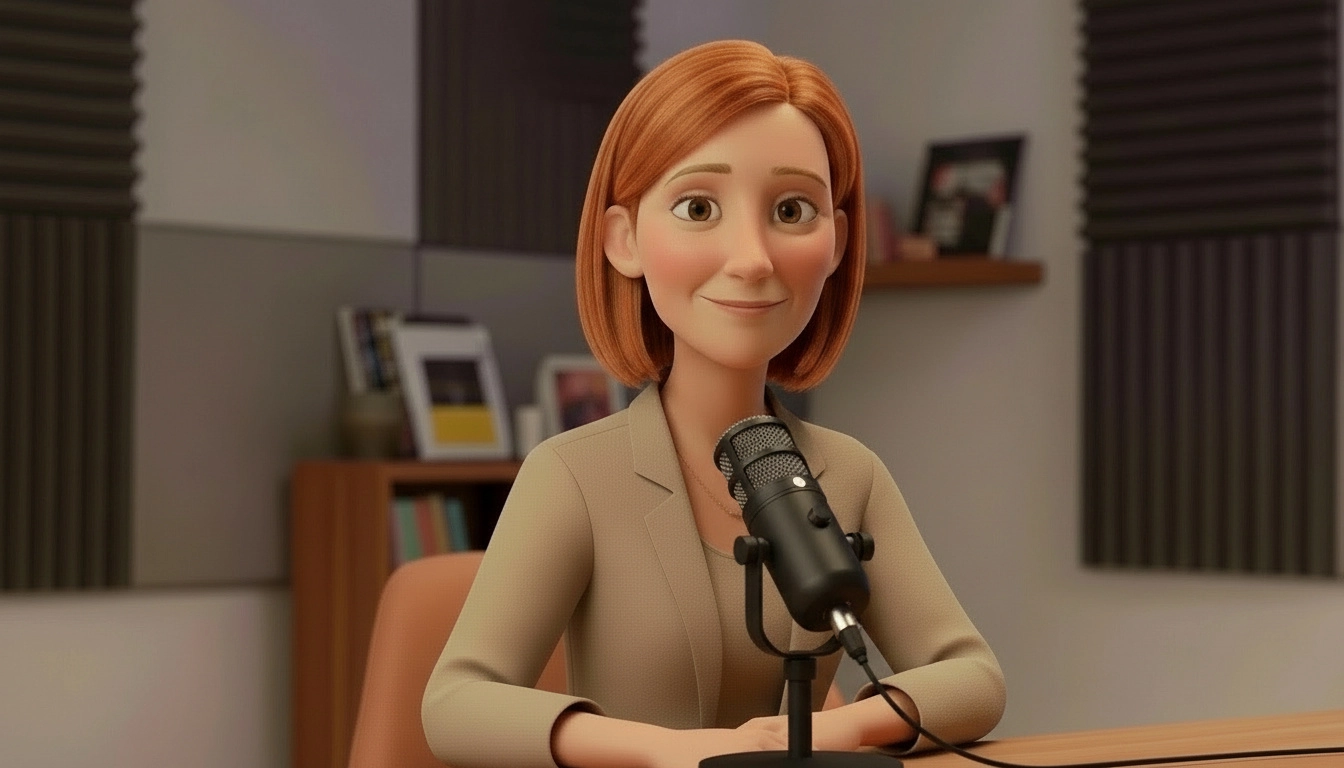
Aoifinn Devitt: Our next guest takes us on a tour from the old economy, the still critical sector of metals and mining, to the new one, the world of digital health. Tune in as we dig into the drivers of these sectors and discuss the importance of continuous learning to create the balance we all need. I’m Aoifinn Devitt, and welcome to the 50 Faces Podcast, a podcast committed to revealing the richness and diversity of the world of investment by focusing on its people and their stories. I’m joined today by Bruno Kaiser, who is CFO at Smile Digital Health, a digital health company based in Toronto. He previously spent over 30 years in a series of investment banking leadership roles, with a particular focus on the metals and mining sector. We were classmates at INSEAD from 1999 to 2000. Welcome, Bruda, thanks for joining me today.
Bruno Kaiser: Well, good morning, and how are you?
Aoifinn Devitt: Great. Well, let’s start with your background since we, we knew each other and I knew a little bit about the background back then, 20 or so years ago. But can you talk about where you grew up, what you studied, and how you came to enter the world of banking?
Bruno Kaiser: Absolutely happy to. So a lot of things, as is often in life, these things happen by chance as opposed to a detailed plan. I grew up in the East End of Toronto in Scarborough to my parents that were immigrated to Canada in the 1950s from Central Europe and did my high school years there. And upon graduating high school, I was a bit, you know, as one often is at age 18 or 19, I was wanting for some direction and I thought I needed to do something a little different. I bought into the belief at the time in Canada that one needed to be fluent in French in order to have a future. So I went to University of Strasbourg Pursued a humanities degree, and then from there I went to McGill University in Montreal with a Bachelor of Commerce in Accounting and Finance, and then worked for a number of years. And then subsequently, you and I met at INSEAD about 7 years after I graduated undergrad, went and pursued my MBA. I had a CFA designation at the time, and I got into investment banking because funny enough, when I was a teenager, I got a job as a courier for banks, walking around with bonds, basically moving them from bank to bank where they would physically sign them off to transfer ownership. And that was my exposure to the world of finance. And when I got to undergrad, I thought, well, the only thing I understand in life out there is finance. And concurrently, I was exploring getting into photography, and I thought, you know what, it just seems like a more certain future to be in finance. So I pursued the finance role because that’s what I had as a summer job, walking bonds around.
Aoifinn Devitt: And the sector of metals and mining, so that seems an area fairly dense in terms of scientific background. How did you gravitate towards that area?
Bruno Kaiser: Well, again, that was sort of luck of the draw. When I started, I started at a firm called Wood Gundy, which was taken over by a Canadian bank called CIBC. And the person that interviewed me— I started off in investment research, so doing analysis on companies to determine their share value— and the person that interviewed me to be his associate said, well, you speak a lot of languages and you like to travel, sounds like mining. I’m like, okay, so mining it is. I had a bit of a scientific leaning and bent, but no formal background in it at all. So I was tried by fire of the first number of years to get up to speed on mining, and it just became that. And Canada being a very resource-driven economy, that was a very fortuitous place to have landed because the business pace and the deal flow was astounding in the ’90s.
Aoifinn Devitt: And we’re going to speak a little later about how you transition from there to be a CFO at a company focused on digital health, that completely perhaps opposite end of the spectrum, old economy Totally helps. But let’s dig in first to the metals and mining sector because it gets a lot of both bad press as well as focus you given, know, the mining going on for some of the metals that are needed today in terms of lithium, etc. So what would you say the key trends were, the backdrop to the 20-plus years you spent focusing on this area? And what are we overlooking? What’s the inside track that we don’t know? And what’s happening, what’s emerging now as a trend?
Bruno Kaiser: So I think as an overarching key trend, there are a few things. One is, I really will endeavor not to get too technical, but almost any mined product is measured by the grade of the mineral or the metal that you’re trying to mine. And grade is the content per ton of rock in the ground. So in copper and metals, base metals, it’s measured in percent. So X percent of content per ton. And in precious metals, it’s grams per ton. The overarching theme since the beginning of time is that with time, the grade of that which is left in the earth diminishes because you’ve taken the easy stuff, right? So the Romans and prehistoric man would’ve mined visually. You see giant green streaks of rock, that’s double digits percentage of copper sitting there on the surface, and you mine that and eventually it becomes microscopic. You can’t see it, you have to analyze for it, you have to drill and you have to test for it. And the grades just keep declining because ’cause you keep mining and you find the easy stuff. As the grade declines, the cost per ton gets higher because you have to extract more tonnage in order to get the same amount of material. That is just a law of nature, so to speak. So you have that in conjunction with an ever-increasing demand for the product. So we need more and more of it, in particular as there’s a desire to move away from hydrocarbons. An overarching theme that I’ve been saying for some time, is that as you move away from oil and gas, you move towards mining. There is no in-between. There is simply no alternative. And so you have that backdrop with rising costs, declining availability of it. And then the other theme you asked about is with time, the permitting timeline to develop new mines gets longer and longer and longer every year. So it becomes harder to build and permit mines and harder to find them and find economic ones.
Aoifinn Devitt: And I suppose tied to that, because it’s harder to find and hard and takes longer to mine, we get some of these— I suppose when I mentioned we maybe misunderstand about the mining sector is its impact on the environment and perhaps the credentials of those companies in terms of their observance of these damages. You have, I think, a different insight based on your years of working with them.
Bruno Kaiser: Yes, absolutely. So a mining company, any mining company, just like any company, wants to stay in business as long as possible. And the asset for a mining company by definition are its mines. And the best thing you can have is a really long-life mine. So a mine that has resources and reserves that will last for years or decades. By definition, then you are embedded in a community for a long period of time. And in order to remain ingratiated and welcome in a community, you have to do well by the people there and obviously maintain it, be a good steward of it. That has always been in the self-serving interest of mining companies. And I think people lose sight of that because in order to find a mine, extract it, you need to have the local community on board. That simply has always been the case. And you’re not going to do that contemporaneously with so-called poisoning the environment or treating people poorly because you have to want to be there for decades. You’d be shooting yourself in the foot by creating your own problems out of the gate by being a poor steward of the environment or a poor socially governing body. And so my observation is long before the term ESG, and before that it was community social responsibility, CSR, you know, that was always in the interest of mining companies from my first exposure to them before those were social acronyms and buzzwords. I think that the problem is mining companies do a very, very, very poor job at self-promotion. And there are bodies out there that work against them. Sometimes it’s competitive, right? So you’ll have people wanting to throw wrenches into the wheels of competing mining companies, and they will put NGOs and environmental groups pit against them and will stir up things in the communities where I have seen in my almost 30 years of traveling around the world, every mining company I’ve been traveled with and seen, almost the first thing they do is they’ll establish a nursing station, a school, They clean up the water. They do things for the communities because what they want is everybody that could possibly want to work there, they want them on board. I’ve never seen an example firsthand where a company goes in and is a bad actor. Now, does it happen? Of course it happens because life, and there are bad people out there and there are bad examples. Not every company can be perfect, but it is not the rule of thumb that a mining company works against the people and the environment for sake of exploiting profit because they all know that’s the fastest way to shoot themselves in the foot.
Aoifinn Devitt: I just want to cover two areas just before we move on in terms of mining. One was just if you could just give us a very quick investment banker crash course in valuing these companies, given that they’re, as I said, often bracketed with old economy and maybe haven’t taken advantage of the same kind of surge of interest in growth stocks. And then the second point is you around, know, where is this sector moving to? Like what regions, what minerals are being mined, and what do you think will be the next 5 to 10 years as we look at it?
Bruno Kaiser: Mining companies are more often than not in some way or fashion valued off of cash flow. And that is in its highest level or most crude fashion, it’s a discounted cash flow. If you remember and smile back to your finance lesson, you can almost always determine what an estimated length of a mine is and what its average cost will be per extracted quantum per ton or per pound or per ounce. And then you make an assumption on the revenue per unit and then You discount those cash flows back. Now, the impact again on permitting is that pushes things out into the future, and the further things are out in the future, the less value it has in the present. So on aggregate, you know, if you do a sum of the parts of mines and mining companies, you will have a sum of the part of discounted cash flows and therefore an aggregate view of its net present value. And then it can be spun around in different ways, but it’s always typically some form of multiple of cash flow, multiple of Earnings before interest, taxes, and depreciation, or multiple discounted cash flow. So the struggle is obviously mining companies want to get as much cash out as quickly as possible, and the market wants to assess that risk appropriately. It’s an unknown in between, right? So what is the metal price going to be going forward? What are the timelines for bringing new projects on stream? Which again brings in the massive cost of uncertainty and permitting, because as soon as you throw years and years of uncertainty into the process from permitting, you start to degrade the value of the companies. And when you degrade the value of the companies, you reduce their access to capital. When you reduce their access to capital, it becomes difficult to build new mines, and then you get fewer resources going forward. So there’s this massive circular reference that can happen. And this all happens now at a time where, to your question about what is it that we’re looking forward to in the future, I think it’s obvious people want to, you know, as I said, shift away from hydrocarbons. That necessitates a massive scale, mind-blowing transformation of our global infrastructure. And I think that’s the missing link that people don’t give enough thought to. It is the level of electrification, regardless of the source of electricity, right? The original source, the level of electrification will mean an investment in new capital equipment, new transmission mechanisms, extra wiring, extra grid, everything. That’s all copper. Until we find a means of moving electricity around that isn’t copper, which to my knowledge we don’t have, it’s copper. And then obviously there are the means of creating the electricity and storing the electricity, which mostly gets thought of now in terms of battery metals, which is nickel, cobalt, graphite, lithium. Those are the typical metals involved in storage. So you have storage and you have transportation of electricity. That seems to be the future. I don’t see so much a problem with nickel. Copper can be problematic simply because when I spoke before about the declining grade, we are now talking about grades of copper of less than 0.5% per ton is what new mines are being found at. So you imagine you need to extract a ton of rock, pulverize it into pixie dust, and treat it to get 0.5% of copper out of that.
Aoifinn Devitt: What does this mean for pricing? Clearly, um, that is going to be a much more costly process.
Bruno Kaiser: Yeah, so by definition, the price has to go higher in order for companies to be able to make money. And then there’s this other self-circular reference because creating a mined product is highly energy intensive. So the two biggest costs determining an output of any metal is the grade and the energy cost, and then after that it would be human resources and cost of labor. So if you have rising energy costs, by definition, you’re going to have rising costs of the metal. And it either means that mines become uneconomic and you reduce supply and therefore increase the price, or you simply need to increase the price in order to be able to extract sufficient metal. Keep in mind that these companies are not making it out of thin air. Mother Nature has to deliver it to them in the economic availability via the grade. So as we create our own inflation in the price of energy, we create our own inflation in the price of the metals needed to transform our economies. And the— I’m going to make up a word here— the greenification of our economy is highly, highly, highly inflationary. It’s inflationary to the level that nobody has given a concept, given a thought to. Or not nobody, but most people don’t think about it. It’s going to be an absolute impossibility to transform our economies into green economies without insane inflation.
Aoifinn Devitt: And who will be the new power brokers of the next 5 to 10 years? I’m thinking more maybe in terms countries where— that have the bargaining power when it comes to the resources that we’re going to need for the technology that the future demands?
Bruno Kaiser: Yeah, so I think the technology to extract and develop mines resides still in the West, so to speak, and China obviously. But because I mentioned the difficulty in permitting, it’s insanely difficult to permit new mines in North America, or certainly in Europe, becoming far more difficult in South America. In Africa, it’s not so much the difficulty of permitting, but there’s the level of uncertainty, safety, and corruption that you have to deal with. So the grades of deposits, what Mother Nature still offers you, is highest perhaps overall in Africa, or maybe needless to say, overall in the least stable and least desirable countries to do business in, because by definition, people haven’t been there to extract them because of the difficulty of doing it. So it sits there and resides there. And what we’ve seen over the last 20 years, and this has played out on a geopolitical macro level, is China has gone around to all of these difficult countries, extended a lot of loans to them, ingratiated themselves with capital, but it’s capital with a hook. And so China is sitting now and trying to control on a global geopolitical level most of the interesting sources for these critical metals. That is mostly in Africa, frankly.
Aoifinn Devitt: Clearly a stage on which some interesting geopolitical moves will be played out in years to come. I’d like to move now from your shift from this kind of old economy, but still highly relevant sector into the world of digital health. How did that move come about?
Bruno Kaiser: Like so many things, complete fluke. I mean, I had it on my mind that I’d been in investment banking long enough and I wanted to make a transition out of it into an operating field, whatever that may be. And of course, naturally, I thought that would be in the form of management in an operating mining company. I had my eyes out for those opportunities should they come to pass. But actually, I practice karate and a dojo classmate, if you will, notified me of an opportunity with this company, Smile Digital Health, and said they were looking for a CFO. At the time, it was about 30 people and would I be interested? And I had a look at it and I thought, sure, I’ll, I’ll help the company out and maybe look at it on weekends. And because they didn’t have a CFO and it was just starting out, and then I realized this is just incredible. Like where the future is going here. This is the next iteration of creating the internet, but it’s for healthcare, and this company is sitting at the vanguard of it. And I just thought, I have to be part. So I took the leap of faith and joined.
Aoifinn Devitt: Tell us about the sector then, because what does digital health actually mean to you, and what are some of the areas that excite you about it?
Bruno Kaiser: The exciting thing about this, and this truly is on a global level, it doesn’t matter, there’s certain issues on any sub-regional level, but on a global level, the health industry, and that is everything from healthcare provision through the payment, i.e., insurers, governments, research, it is not really part of the internet. And the reason it is not part of the internet is because the data standards are not or have not been unified. So you can’t share information readily in the same context as you can move information around websites and servers using TCP/IP, that doesn’t exist for healthcare. There are multiple data standards out there. In the course of the last 7 years or so, there is a standard that has emerged that seems to have now established itself on an open systems basis by mutual agreement of all the players worldwide in the health industry to be the victor, and that is FHIR, F-H-I-R, Fast Healthcare Interoperability Resources. Smile happens to have been a company that decided to build its offering, its platform on the back of FHIR. It was borne out by our two founders that have their entire history of business being involved in healthcare on the software side in Ontario and Canada, which is a population base of about 15 million people. And they saw what Ontario was trying to do, but doing it with an imperfect product. They thought they could do better and they did. They came up with this clinical digital repository and did it on the back of FHIR. And we were early enough to have gotten out there with some of the biggest insurers and payers in the US. In 2018, there was an act called the CARES Act that was passed in the US that mandated that insurance companies that have Medicare and Medicaid members transmit their health records using FHIR. And so that provided a huge boost to the whole US industry to start shifting health data platform over to FHIR. And it’s a slow transition, but it is definitely happening and it’s now taken root worldwide. So we are moving towards finally digitizing the health industry in the same way that finance has been digitized. It’s just 25 years later.
Aoifinn Devitt: And who are some of the winners and losers going to be in this disruption that you’re mentioning?
Bruno Kaiser: The ultimate winner will be the patient, the yous and mes of the world, right? Because it will massively improve the quality, the speed, the integrity of our healthcare. When all of the information that is stuck in little islands becomes liberated and shared. Shared in the context of still having maintaining privacy and in the US HIPAA. So it’s not like it’s going to end you up, know, open to the world for the world to see your healthcare information. What it means is that information between various providers and insurance companies with your permission will be able to easily share your information so that you’re literally not walking around faxes and papers and files or USB chips, which is what it is right now. You can imagine that your cell phone will be a hub of your medical interaction in the future, and, and perhaps even more so with the advent of AI. The AI can’t do anything unless it has data, and the data will be liberated by FHIR. Winners will be the patients. The losers will be those that don’t move and adapt, and that could be healthcare providers, or insurance companies, but I think ultimately they’re all being pulled along. I think there are maybe some legacy software platforms that are still trying to put walled gardens around the data and prevent access to data. That happened with the development and the transformation of the internet. Know, You companies fall by the wayside.
Aoifinn Devitt: And from your vantage point, are there other trends that are taking root maybe faster than we might have anticipated, such as telehealth? You mentioned cell phones and people using perhaps their cell phones to monitor their insulin levels or in some way wearable technology. And just anything else that you think maybe we don’t appreciate the magnitude of how fast change is coming?
Bruno Kaiser: In pretty rapid succession, we are going to see healthcare move more towards the home, or let’s just say generically outside the hospital or the practitioner’s office. And the reason for that is, for hospitals, other than performing surgical procedures, going into a hospital is an expensive endeavor for the hospital. There’s one provider organization provided us with an acronym. I don’t remember the exact order, but it was basically like babies, blood, bones, guts, and brains. You know, if they’re dealing with that in a hospital, then it’s something that they can do, you know, with some margin. But if you go into an ER and you have a cough, that’s problematic for them. So with the pandemic, we saw a great rise in the use of telehealth. Now, what I would say is telehealth is the equivalent of using Zoom to interact with your bank teller, which nobody does. In fact, you haven’t really changed much. All you’ve done is, you know, eliminated the inconvenience of going into the practitioner’s office. What we’re going to see is with the surfacing and the availability of data, you will see that there are clinical decisions that can be made remotely or can be made digitally with a great degree of accuracy and speed. And lower cost. So that may mean having real-time laboratory or device-type monitoring uploaded using FHIR to a provider system. In real time, your insurance company can determine whether those procedures are used or not. There’ll be some sort of a clinical reasoning adjudication on what it is that’s required, perhaps instantly transmitting information to a pharmacy for you to get the drugs that way, or then the last step to go physically see a doctor if there’s a physical intervention that’s required. So these are things that we’ll probably see come to pass in the next 5, 6, 7 years.
Aoifinn Devitt: That’s really interesting. When we had our pre-discussion, you spoke about transitioning from the role of a banker into a CFO position and how sometimes bankers get pigeonholed by the industry, presuming that their skills are banking skills only. Given that we talk on this podcast a lot about diversity, cognitive diversity among them, what kind of experience do you think that this— is this still going on, that there’s still this pigeonholing going on? Is there an openness now to more transition between, say, industries?
Bruno Kaiser: I think that’s ultimately up to the individual. My approach to banking was always to think of my client’s problems as problems I had to help solve. And so I would embed myself with them at the strategic level rather than at the transactional level. And bankers are paid transactionally. And the question is, how do you get to that transaction? And my approach was always to sort of try and think along through issues with my client. And I think that helped prepare me for any transition out of banking. If you simply look at things in that narrow-minded deal-to-deal context, onto the next one type thing, I think that’s how bankers get pigeonholed. And I think that is probably inappropriate pigeonholing. Then it comes down to the individual to make themselves relevant. And you have to recognize as a banker what you are is a transaction cost. And do you want to be a transaction cost or do you want to be a value-added service and a trusted advisor? And I think that if you, look at things from the long-term perspective of being a trusted advisor and a long-term value-adding service. The transactions will happen, but you’re providing a greater service to your client along the way. And what you’re doing for yourself is you’re providing yourself with more tools in the toolkit to be more flexible in life.
Aoifinn Devitt: And it brings me back to our INSEAD days and the kind of management consulting route, which was definitely deep on industry knowledge, or the advisory piece is kind of a combination of those two. I just want to go back to some personal reflections. So you mentioned doing karate and your dojo, and I know that you also have a keen interest in music and guitars. What are some of the personal interests you hold alongside your professional ones?
Bruno Kaiser: Oh, I have too many. Yeah, so my interest in music and guitars, it’s personal, but it’s not for me because I couldn’t strum two strings together. But my son is a very prodigious musician, and I’m deeply passionate about woodworking, so I told him that I will feed him guitars. So I’ve started learning how to make guitars. I’ve made a couple so far, and I’m in the process of making another one, more complex semi-hollow body guitar for him. And I pursue a lot of other woodworking hobby or elements and design things on the side. And other things that I really love— I love to eat, but consequently that means you need to cook. And I love cooking, but I want to get to the best quality of ingredients. So I’ve, you know, had a hobby of making my own cured salumi and charcuterie. And, you know, I take that back to the element of providing my own meat. So I took up hunting about 12 years ago, and I don’t know, I just get obsessive about hobbies, and I go perhaps far too deep once I get into them. And if I don’t have those outlets, then I, I get mired in work, and my brain gets clogged up with things. And I, I need those other avenues of mental escape in order to be more productive in my work environment.
Aoifinn Devitt: And this takes me back to a typical reflection question I ask, which is looking back at your career, any setbacks and challenges perhaps that were in there? And maybe I think a young banker typically doesn’t have a breadth of interest, and maybe that’s possibly why they become pigeonholed or work too intensively. When you look back at your career, were there any notable learning moments there?
Bruno Kaiser: Yeah, I mean, obviously on a year-to-year basis, there are always going to be setbacks. I think that had I come to the realization earlier on that you need to be relevant to your client from a strategic basis and not from a transactional basis, that would’ve helped me both be a more effective banker earlier in my career and then also maybe surface more opportunities that I might’ve missed and not known I’d missed them over time. You know, a couple of other things that some very valuable people in my life taught me. I couldn’t peg exactly when in the course of my career. One is that everyone’s in sales. No matter what you do in life, you’re in sales. And I thought, what? I’m not in sales. I’m not. No, I actually am in sales. And you could be an actuary sitting in a cubicle and you’re in sales because what you’re producing as your work needs to be appreciated by someone. And it doesn’t necessarily always speak for itself. So you need to advocate for yourself. You need to sell yourself. You need to sell your work. You need to be relevant to people. And that as an overarching comment, that’s sales. And then the other thing is time kills all deals. That was a recent turn of phrase that I learned at Smile, but it definitely applies. And I noted it throughout my career. Anything that you put off just increases the probability of it not happening. And that’s not necessarily always a financial deal or a business deal, but decisions in life for your own personal advancement. Don’t put them off because the more you put them off, the more likely it is that they just won’t happen.
Aoifinn Devitt: I like that because it makes perfect sense. The more you leave it, the more uncertainty can then interfere with the probabilities. But it’s, it’s not something I’ve actually heard before. Speaking of going through life and hearing wisdom, were there any key people, mentors, or just inspiration that you drew upon so far?
Bruno Kaiser: There was an older gentleman I worked with early in my career. I you was, know, in my mid-20s. He was already 70-something and still— he was a retired musician. He was a horn player in a symphony and he became a technical analyst with a bank. So he you would, know, analyze charts. And as a result of his highly unorthodox background, his name was Horst Müller. He would listen to people and take in everything they said and translate it into what his area of specialty was, but not always from a technical perspective. So he was a very big believer in behavioral finance and recognizing that everything that you see is simply the culmination of people’s decisions. And so once you’re presented with a fact pattern, it’s a buildup of historical decisions. And that’s how he looked at charts. And I took that as saying, whatever I’m doing in life, there is always going to be another path forward on the one hand, because this man, you know, was a horn in player in a symphony, now he’s a bank technical analyst. I don’t think you could get two more different pathways in life. And secondly is to always sort of look at underlying causes of situations that you’re in at the present on the basis of the buildup of the past. And so far, I think those have proven to be two valuable things in life.
Aoifinn Devitt: So you’ve already given us a ton of wisdom here in describing some of the steps of your career, but is there any final words you want to leave us with? Anything perhaps that you would have for your younger self?
Bruno Kaiser: Yes. The other sort of sage saying I received from a gentleman, again, 50, 60 years older than me, he observed me being very down as a result of, let’s say, work politics and people I was working with and, you know, the sort of general ugliness of the bank I was at, at the time. And he just said to me, he said, Bruno, don’t let the bastards get you down. And he meant that overall in life. Afterwards, he explained that, you know, That is just constantly, you have to believe in yourself, drive forward, don’t make excuses for the situation you’re in, just don’t let the bastards get you down.
Aoifinn Devitt: Well, wise words that could probably be translated into every language and every work setting. So thank you so much, Bruno. You have always been incredibly generous and detail-oriented when I’ve asked you for advice. So I knew when I came to ask you about everything from metals and mining to digital health to reflections on your career to date that you would be equally detail-oriented and generous, and I wasn’t wrong. So thank you so much for coming here and sharing your insights with us.
Bruno Kaiser: Thank you very much. Very flattering and very happy to help.
Aoifinn Devitt: I’m Aoifinn Devitt. Thank you for listening to the 50 Faces Podcast. If you liked what you heard and would like to tune in to hear more inspiring investors and their personal journeys, please subscribe on Apple Podcasts or wherever you get your podcasts. This podcast is for informational purposes only and should not be construed as investment advice, and all views are personal and should not be attributed to to the organizations and affiliations of the host or any guest.
Aoifinn Devitt: Our next guest takes us on a tour from the old economy, the still critical sector of metals and mining, to the new one, the world of digital health. Tune in as we dig into the drivers of these sectors and discuss the importance of continuous learning to create the balance we all need. I’m Aoifinn Devitt, and welcome to the 50 Faces Podcast, a podcast committed to revealing the richness and diversity of the world of investment by focusing on its people and their stories. I’m joined today by Bruno Kaiser, who is CFO at Smile Digital Health, a digital health company based in Toronto. He previously spent over 30 years in a series of investment banking leadership roles, with a particular focus on the metals and mining sector. We were classmates at INSEAD from 1999 to 2000. Welcome, Bruda, thanks for joining me today.
Bruno Kaiser: Well, good morning, and how are you?
Aoifinn Devitt: Great. Well, let’s start with your background since we, we knew each other and I knew a little bit about the background back then, 20 or so years ago. But can you talk about where you grew up, what you studied, and how you came to enter the world of banking?
Bruno Kaiser: Absolutely happy to. So a lot of things, as is often in life, these things happen by chance as opposed to a detailed plan. I grew up in the East End of Toronto in Scarborough to my parents that were immigrated to Canada in the 1950s from Central Europe and did my high school years there. And upon graduating high school, I was a bit, you know, as one often is at age 18 or 19, I was wanting for some direction and I thought I needed to do something a little different. I bought into the belief at the time in Canada that one needed to be fluent in French in order to have a future. So I went to University of Strasbourg Pursued a humanities degree, and then from there I went to McGill University in Montreal with a Bachelor of Commerce in Accounting and Finance, and then worked for a number of years. And then subsequently, you and I met at INSEAD about 7 years after I graduated undergrad, went and pursued my MBA. I had a CFA designation at the time, and I got into investment banking because funny enough, when I was a teenager, I got a job as a courier for banks, walking around with bonds, basically moving them from bank to bank where they would physically sign them off to transfer ownership. And that was my exposure to the world of finance. And when I got to undergrad, I thought, well, the only thing I understand in life out there is finance. And concurrently, I was exploring getting into photography, and I thought, you know what, it just seems like a more certain future to be in finance. So I pursued the finance role because that’s what I had as a summer job, walking bonds around.
Aoifinn Devitt: And the sector of metals and mining, so that seems an area fairly dense in terms of scientific background. How did you gravitate towards that area?
Bruno Kaiser: Well, again, that was sort of luck of the draw. When I started, I started at a firm called Wood Gundy, which was taken over by a Canadian bank called CIBC. And the person that interviewed me— I started off in investment research, so doing analysis on companies to determine their share value— and the person that interviewed me to be his associate said, well, you speak a lot of languages and you like to travel, sounds like mining. I’m like, okay, so mining it is. I had a bit of a scientific leaning and bent, but no formal background in it at all. So I was tried by fire of the first number of years to get up to speed on mining, and it just became that. And Canada being a very resource-driven economy, that was a very fortuitous place to have landed because the business pace and the deal flow was astounding in the ’90s.
Aoifinn Devitt: And we’re going to speak a little later about how you transition from there to be a CFO at a company focused on digital health, that completely perhaps opposite end of the spectrum, old economy Totally helps. But let’s dig in first to the metals and mining sector because it gets a lot of both bad press as well as focus you given, know, the mining going on for some of the metals that are needed today in terms of lithium, etc. So what would you say the key trends were, the backdrop to the 20-plus years you spent focusing on this area? And what are we overlooking? What’s the inside track that we don’t know? And what’s happening, what’s emerging now as a trend?
Bruno Kaiser: So I think as an overarching key trend, there are a few things. One is, I really will endeavor not to get too technical, but almost any mined product is measured by the grade of the mineral or the metal that you’re trying to mine. And grade is the content per ton of rock in the ground. So in copper and metals, base metals, it’s measured in percent. So X percent of content per ton. And in precious metals, it’s grams per ton. The overarching theme since the beginning of time is that with time, the grade of that which is left in the earth diminishes because you’ve taken the easy stuff, right? So the Romans and prehistoric man would’ve mined visually. You see giant green streaks of rock, that’s double digits percentage of copper sitting there on the surface, and you mine that and eventually it becomes microscopic. You can’t see it, you have to analyze for it, you have to drill and you have to test for it. And the grades just keep declining because ’cause you keep mining and you find the easy stuff. As the grade declines, the cost per ton gets higher because you have to extract more tonnage in order to get the same amount of material. That is just a law of nature, so to speak. So you have that in conjunction with an ever-increasing demand for the product. So we need more and more of it, in particular as there’s a desire to move away from hydrocarbons. An overarching theme that I’ve been saying for some time, is that as you move away from oil and gas, you move towards mining. There is no in-between. There is simply no alternative. And so you have that backdrop with rising costs, declining availability of it. And then the other theme you asked about is with time, the permitting timeline to develop new mines gets longer and longer and longer every year. So it becomes harder to build and permit mines and harder to find them and find economic ones.
Aoifinn Devitt: And I suppose tied to that, because it’s harder to find and hard and takes longer to mine, we get some of these— I suppose when I mentioned we maybe misunderstand about the mining sector is its impact on the environment and perhaps the credentials of those companies in terms of their observance of these damages. You have, I think, a different insight based on your years of working with them.
Bruno Kaiser: Yes, absolutely. So a mining company, any mining company, just like any company, wants to stay in business as long as possible. And the asset for a mining company by definition are its mines. And the best thing you can have is a really long-life mine. So a mine that has resources and reserves that will last for years or decades. By definition, then you are embedded in a community for a long period of time. And in order to remain ingratiated and welcome in a community, you have to do well by the people there and obviously maintain it, be a good steward of it. That has always been in the self-serving interest of mining companies. And I think people lose sight of that because in order to find a mine, extract it, you need to have the local community on board. That simply has always been the case. And you’re not going to do that contemporaneously with so-called poisoning the environment or treating people poorly because you have to want to be there for decades. You’d be shooting yourself in the foot by creating your own problems out of the gate by being a poor steward of the environment or a poor socially governing body. And so my observation is long before the term ESG, and before that it was community social responsibility, CSR, you know, that was always in the interest of mining companies from my first exposure to them before those were social acronyms and buzzwords. I think that the problem is mining companies do a very, very, very poor job at self-promotion. And there are bodies out there that work against them. Sometimes it’s competitive, right? So you’ll have people wanting to throw wrenches into the wheels of competing mining companies, and they will put NGOs and environmental groups pit against them and will stir up things in the communities where I have seen in my almost 30 years of traveling around the world, every mining company I’ve been traveled with and seen, almost the first thing they do is they’ll establish a nursing station, a school, They clean up the water. They do things for the communities because what they want is everybody that could possibly want to work there, they want them on board. I’ve never seen an example firsthand where a company goes in and is a bad actor. Now, does it happen? Of course it happens because life, and there are bad people out there and there are bad examples. Not every company can be perfect, but it is not the rule of thumb that a mining company works against the people and the environment for sake of exploiting profit because they all know that’s the fastest way to shoot themselves in the foot.
Aoifinn Devitt: I just want to cover two areas just before we move on in terms of mining. One was just if you could just give us a very quick investment banker crash course in valuing these companies, given that they’re, as I said, often bracketed with old economy and maybe haven’t taken advantage of the same kind of surge of interest in growth stocks. And then the second point is you around, know, where is this sector moving to? Like what regions, what minerals are being mined, and what do you think will be the next 5 to 10 years as we look at it?
Bruno Kaiser: Mining companies are more often than not in some way or fashion valued off of cash flow. And that is in its highest level or most crude fashion, it’s a discounted cash flow. If you remember and smile back to your finance lesson, you can almost always determine what an estimated length of a mine is and what its average cost will be per extracted quantum per ton or per pound or per ounce. And then you make an assumption on the revenue per unit and then You discount those cash flows back. Now, the impact again on permitting is that pushes things out into the future, and the further things are out in the future, the less value it has in the present. So on aggregate, you know, if you do a sum of the parts of mines and mining companies, you will have a sum of the part of discounted cash flows and therefore an aggregate view of its net present value. And then it can be spun around in different ways, but it’s always typically some form of multiple of cash flow, multiple of Earnings before interest, taxes, and depreciation, or multiple discounted cash flow. So the struggle is obviously mining companies want to get as much cash out as quickly as possible, and the market wants to assess that risk appropriately. It’s an unknown in between, right? So what is the metal price going to be going forward? What are the timelines for bringing new projects on stream? Which again brings in the massive cost of uncertainty and permitting, because as soon as you throw years and years of uncertainty into the process from permitting, you start to degrade the value of the companies. And when you degrade the value of the companies, you reduce their access to capital. When you reduce their access to capital, it becomes difficult to build new mines, and then you get fewer resources going forward. So there’s this massive circular reference that can happen. And this all happens now at a time where, to your question about what is it that we’re looking forward to in the future, I think it’s obvious people want to, you know, as I said, shift away from hydrocarbons. That necessitates a massive scale, mind-blowing transformation of our global infrastructure. And I think that’s the missing link that people don’t give enough thought to. It is the level of electrification, regardless of the source of electricity, right? The original source, the level of electrification will mean an investment in new capital equipment, new transmission mechanisms, extra wiring, extra grid, everything. That’s all copper. Until we find a means of moving electricity around that isn’t copper, which to my knowledge we don’t have, it’s copper. And then obviously there are the means of creating the electricity and storing the electricity, which mostly gets thought of now in terms of battery metals, which is nickel, cobalt, graphite, lithium. Those are the typical metals involved in storage. So you have storage and you have transportation of electricity. That seems to be the future. I don’t see so much a problem with nickel. Copper can be problematic simply because when I spoke before about the declining grade, we are now talking about grades of copper of less than 0.5% per ton is what new mines are being found at. So you imagine you need to extract a ton of rock, pulverize it into pixie dust, and treat it to get 0.5% of copper out of that.
Aoifinn Devitt: What does this mean for pricing? Clearly, um, that is going to be a much more costly process.
Bruno Kaiser: Yeah, so by definition, the price has to go higher in order for companies to be able to make money. And then there’s this other self-circular reference because creating a mined product is highly energy intensive. So the two biggest costs determining an output of any metal is the grade and the energy cost, and then after that it would be human resources and cost of labor. So if you have rising energy costs, by definition, you’re going to have rising costs of the metal. And it either means that mines become uneconomic and you reduce supply and therefore increase the price, or you simply need to increase the price in order to be able to extract sufficient metal. Keep in mind that these companies are not making it out of thin air. Mother Nature has to deliver it to them in the economic availability via the grade. So as we create our own inflation in the price of energy, we create our own inflation in the price of the metals needed to transform our economies. And the— I’m going to make up a word here— the greenification of our economy is highly, highly, highly inflationary. It’s inflationary to the level that nobody has given a concept, given a thought to. Or not nobody, but most people don’t think about it. It’s going to be an absolute impossibility to transform our economies into green economies without insane inflation.
Aoifinn Devitt: And who will be the new power brokers of the next 5 to 10 years? I’m thinking more maybe in terms countries where— that have the bargaining power when it comes to the resources that we’re going to need for the technology that the future demands?
Bruno Kaiser: Yeah, so I think the technology to extract and develop mines resides still in the West, so to speak, and China obviously. But because I mentioned the difficulty in permitting, it’s insanely difficult to permit new mines in North America, or certainly in Europe, becoming far more difficult in South America. In Africa, it’s not so much the difficulty of permitting, but there’s the level of uncertainty, safety, and corruption that you have to deal with. So the grades of deposits, what Mother Nature still offers you, is highest perhaps overall in Africa, or maybe needless to say, overall in the least stable and least desirable countries to do business in, because by definition, people haven’t been there to extract them because of the difficulty of doing it. So it sits there and resides there. And what we’ve seen over the last 20 years, and this has played out on a geopolitical macro level, is China has gone around to all of these difficult countries, extended a lot of loans to them, ingratiated themselves with capital, but it’s capital with a hook. And so China is sitting now and trying to control on a global geopolitical level most of the interesting sources for these critical metals. That is mostly in Africa, frankly.
Aoifinn Devitt: Clearly a stage on which some interesting geopolitical moves will be played out in years to come. I’d like to move now from your shift from this kind of old economy, but still highly relevant sector into the world of digital health. How did that move come about?
Bruno Kaiser: Like so many things, complete fluke. I mean, I had it on my mind that I’d been in investment banking long enough and I wanted to make a transition out of it into an operating field, whatever that may be. And of course, naturally, I thought that would be in the form of management in an operating mining company. I had my eyes out for those opportunities should they come to pass. But actually, I practice karate and a dojo classmate, if you will, notified me of an opportunity with this company, Smile Digital Health, and said they were looking for a CFO. At the time, it was about 30 people and would I be interested? And I had a look at it and I thought, sure, I’ll, I’ll help the company out and maybe look at it on weekends. And because they didn’t have a CFO and it was just starting out, and then I realized this is just incredible. Like where the future is going here. This is the next iteration of creating the internet, but it’s for healthcare, and this company is sitting at the vanguard of it. And I just thought, I have to be part. So I took the leap of faith and joined.
Aoifinn Devitt: Tell us about the sector then, because what does digital health actually mean to you, and what are some of the areas that excite you about it?
Bruno Kaiser: The exciting thing about this, and this truly is on a global level, it doesn’t matter, there’s certain issues on any sub-regional level, but on a global level, the health industry, and that is everything from healthcare provision through the payment, i.e., insurers, governments, research, it is not really part of the internet. And the reason it is not part of the internet is because the data standards are not or have not been unified. So you can’t share information readily in the same context as you can move information around websites and servers using TCP/IP, that doesn’t exist for healthcare. There are multiple data standards out there. In the course of the last 7 years or so, there is a standard that has emerged that seems to have now established itself on an open systems basis by mutual agreement of all the players worldwide in the health industry to be the victor, and that is FHIR, F-H-I-R, Fast Healthcare Interoperability Resources. Smile happens to have been a company that decided to build its offering, its platform on the back of FHIR. It was borne out by our two founders that have their entire history of business being involved in healthcare on the software side in Ontario and Canada, which is a population base of about 15 million people. And they saw what Ontario was trying to do, but doing it with an imperfect product. They thought they could do better and they did. They came up with this clinical digital repository and did it on the back of FHIR. And we were early enough to have gotten out there with some of the biggest insurers and payers in the US. In 2018, there was an act called the CARES Act that was passed in the US that mandated that insurance companies that have Medicare and Medicaid members transmit their health records using FHIR. And so that provided a huge boost to the whole US industry to start shifting health data platform over to FHIR. And it’s a slow transition, but it is definitely happening and it’s now taken root worldwide. So we are moving towards finally digitizing the health industry in the same way that finance has been digitized. It’s just 25 years later.
Aoifinn Devitt: And who are some of the winners and losers going to be in this disruption that you’re mentioning?
Bruno Kaiser: The ultimate winner will be the patient, the yous and mes of the world, right? Because it will massively improve the quality, the speed, the integrity of our healthcare. When all of the information that is stuck in little islands becomes liberated and shared. Shared in the context of still having maintaining privacy and in the US HIPAA. So it’s not like it’s going to end you up, know, open to the world for the world to see your healthcare information. What it means is that information between various providers and insurance companies with your permission will be able to easily share your information so that you’re literally not walking around faxes and papers and files or USB chips, which is what it is right now. You can imagine that your cell phone will be a hub of your medical interaction in the future, and, and perhaps even more so with the advent of AI. The AI can’t do anything unless it has data, and the data will be liberated by FHIR. Winners will be the patients. The losers will be those that don’t move and adapt, and that could be healthcare providers, or insurance companies, but I think ultimately they’re all being pulled along. I think there are maybe some legacy software platforms that are still trying to put walled gardens around the data and prevent access to data. That happened with the development and the transformation of the internet. Know, You companies fall by the wayside.
Aoifinn Devitt: And from your vantage point, are there other trends that are taking root maybe faster than we might have anticipated, such as telehealth? You mentioned cell phones and people using perhaps their cell phones to monitor their insulin levels or in some way wearable technology. And just anything else that you think maybe we don’t appreciate the magnitude of how fast change is coming?
Bruno Kaiser: In pretty rapid succession, we are going to see healthcare move more towards the home, or let’s just say generically outside the hospital or the practitioner’s office. And the reason for that is, for hospitals, other than performing surgical procedures, going into a hospital is an expensive endeavor for the hospital. There’s one provider organization provided us with an acronym. I don’t remember the exact order, but it was basically like babies, blood, bones, guts, and brains. You know, if they’re dealing with that in a hospital, then it’s something that they can do, you know, with some margin. But if you go into an ER and you have a cough, that’s problematic for them. So with the pandemic, we saw a great rise in the use of telehealth. Now, what I would say is telehealth is the equivalent of using Zoom to interact with your bank teller, which nobody does. In fact, you haven’t really changed much. All you’ve done is, you know, eliminated the inconvenience of going into the practitioner’s office. What we’re going to see is with the surfacing and the availability of data, you will see that there are clinical decisions that can be made remotely or can be made digitally with a great degree of accuracy and speed. And lower cost. So that may mean having real-time laboratory or device-type monitoring uploaded using FHIR to a provider system. In real time, your insurance company can determine whether those procedures are used or not. There’ll be some sort of a clinical reasoning adjudication on what it is that’s required, perhaps instantly transmitting information to a pharmacy for you to get the drugs that way, or then the last step to go physically see a doctor if there’s a physical intervention that’s required. So these are things that we’ll probably see come to pass in the next 5, 6, 7 years.
Aoifinn Devitt: That’s really interesting. When we had our pre-discussion, you spoke about transitioning from the role of a banker into a CFO position and how sometimes bankers get pigeonholed by the industry, presuming that their skills are banking skills only. Given that we talk on this podcast a lot about diversity, cognitive diversity among them, what kind of experience do you think that this— is this still going on, that there’s still this pigeonholing going on? Is there an openness now to more transition between, say, industries?
Bruno Kaiser: I think that’s ultimately up to the individual. My approach to banking was always to think of my client’s problems as problems I had to help solve. And so I would embed myself with them at the strategic level rather than at the transactional level. And bankers are paid transactionally. And the question is, how do you get to that transaction? And my approach was always to sort of try and think along through issues with my client. And I think that helped prepare me for any transition out of banking. If you simply look at things in that narrow-minded deal-to-deal context, onto the next one type thing, I think that’s how bankers get pigeonholed. And I think that is probably inappropriate pigeonholing. Then it comes down to the individual to make themselves relevant. And you have to recognize as a banker what you are is a transaction cost. And do you want to be a transaction cost or do you want to be a value-added service and a trusted advisor? And I think that if you, look at things from the long-term perspective of being a trusted advisor and a long-term value-adding service. The transactions will happen, but you’re providing a greater service to your client along the way. And what you’re doing for yourself is you’re providing yourself with more tools in the toolkit to be more flexible in life.
Aoifinn Devitt: And it brings me back to our INSEAD days and the kind of management consulting route, which was definitely deep on industry knowledge, or the advisory piece is kind of a combination of those two. I just want to go back to some personal reflections. So you mentioned doing karate and your dojo, and I know that you also have a keen interest in music and guitars. What are some of the personal interests you hold alongside your professional ones?
Bruno Kaiser: Oh, I have too many. Yeah, so my interest in music and guitars, it’s personal, but it’s not for me because I couldn’t strum two strings together. But my son is a very prodigious musician, and I’m deeply passionate about woodworking, so I told him that I will feed him guitars. So I’ve started learning how to make guitars. I’ve made a couple so far, and I’m in the process of making another one, more complex semi-hollow body guitar for him. And I pursue a lot of other woodworking hobby or elements and design things on the side. And other things that I really love— I love to eat, but consequently that means you need to cook. And I love cooking, but I want to get to the best quality of ingredients. So I’ve, you know, had a hobby of making my own cured salumi and charcuterie. And, you know, I take that back to the element of providing my own meat. So I took up hunting about 12 years ago, and I don’t know, I just get obsessive about hobbies, and I go perhaps far too deep once I get into them. And if I don’t have those outlets, then I, I get mired in work, and my brain gets clogged up with things. And I, I need those other avenues of mental escape in order to be more productive in my work environment.
Aoifinn Devitt: And this takes me back to a typical reflection question I ask, which is looking back at your career, any setbacks and challenges perhaps that were in there? And maybe I think a young banker typically doesn’t have a breadth of interest, and maybe that’s possibly why they become pigeonholed or work too intensively. When you look back at your career, were there any notable learning moments there?
Bruno Kaiser: Yeah, I mean, obviously on a year-to-year basis, there are always going to be setbacks. I think that had I come to the realization earlier on that you need to be relevant to your client from a strategic basis and not from a transactional basis, that would’ve helped me both be a more effective banker earlier in my career and then also maybe surface more opportunities that I might’ve missed and not known I’d missed them over time. You know, a couple of other things that some very valuable people in my life taught me. I couldn’t peg exactly when in the course of my career. One is that everyone’s in sales. No matter what you do in life, you’re in sales. And I thought, what? I’m not in sales. I’m not. No, I actually am in sales. And you could be an actuary sitting in a cubicle and you’re in sales because what you’re producing as your work needs to be appreciated by someone. And it doesn’t necessarily always speak for itself. So you need to advocate for yourself. You need to sell yourself. You need to sell your work. You need to be relevant to people. And that as an overarching comment, that’s sales. And then the other thing is time kills all deals. That was a recent turn of phrase that I learned at Smile, but it definitely applies. And I noted it throughout my career. Anything that you put off just increases the probability of it not happening. And that’s not necessarily always a financial deal or a business deal, but decisions in life for your own personal advancement. Don’t put them off because the more you put them off, the more likely it is that they just won’t happen.
Aoifinn Devitt: I like that because it makes perfect sense. The more you leave it, the more uncertainty can then interfere with the probabilities. But it’s, it’s not something I’ve actually heard before. Speaking of going through life and hearing wisdom, were there any key people, mentors, or just inspiration that you drew upon so far?
Bruno Kaiser: There was an older gentleman I worked with early in my career. I you was, know, in my mid-20s. He was already 70-something and still— he was a retired musician. He was a horn player in a symphony and he became a technical analyst with a bank. So he you would, know, analyze charts. And as a result of his highly unorthodox background, his name was Horst Müller. He would listen to people and take in everything they said and translate it into what his area of specialty was, but not always from a technical perspective. So he was a very big believer in behavioral finance and recognizing that everything that you see is simply the culmination of people’s decisions. And so once you’re presented with a fact pattern, it’s a buildup of historical decisions. And that’s how he looked at charts. And I took that as saying, whatever I’m doing in life, there is always going to be another path forward on the one hand, because this man, you know, was a horn in player in a symphony, now he’s a bank technical analyst. I don’t think you could get two more different pathways in life. And secondly is to always sort of look at underlying causes of situations that you’re in at the present on the basis of the buildup of the past. And so far, I think those have proven to be two valuable things in life.
Aoifinn Devitt: So you’ve already given us a ton of wisdom here in describing some of the steps of your career, but is there any final words you want to leave us with? Anything perhaps that you would have for your younger self?
Bruno Kaiser: Yes. The other sort of sage saying I received from a gentleman, again, 50, 60 years older than me, he observed me being very down as a result of, let’s say, work politics and people I was working with and, you know, the sort of general ugliness of the bank I was at, at the time. And he just said to me, he said, Bruno, don’t let the bastards get you down. And he meant that overall in life. Afterwards, he explained that, you know, That is just constantly, you have to believe in yourself, drive forward, don’t make excuses for the situation you’re in, just don’t let the bastards get you down.
Aoifinn Devitt: Well, wise words that could probably be translated into every language and every work setting. So thank you so much, Bruno. You have always been incredibly generous and detail-oriented when I’ve asked you for advice. So I knew when I came to ask you about everything from metals and mining to digital health to reflections on your career to date that you would be equally detail-oriented and generous, and I wasn’t wrong. So thank you so much for coming here and sharing your insights with us.
Bruno Kaiser: Thank you very much. Very flattering and very happy to help.
Aoifinn Devitt: I’m Aoifinn Devitt. Thank you for listening to the 50 Faces Podcast. If you liked what you heard and would like to tune in to hear more inspiring investors and their personal journeys, please subscribe on Apple Podcasts or wherever you get your podcasts. This podcast is for informational purposes only and should not be construed as investment advice, and all views are personal and should not be attributed to to the organizations and affiliations of the host or any guest.