Aoifinn Devitt: Brought to you with the kind support of DLA Piper Ireland.
Linda Doyle: I’m embarking on a project which I’m calling the AI Empowered University, and how do we get ourselves to that point? I think you might be referring to— there was a time in our lives where I’m old enough where people were arguing about whether kids should have gotten calculators when they were in primary school because you’d never learn how to multiply and divide or whatever if you got a calculator. So you see this discussion all of the time, but I think For me, I have two hypotheses, and the first is I think you’re going to have to be even more an expert in the field that you’re in to use the generative AI kind of platforms well. And I think that’s a good thing. And the second thing is I would be hoping that we could use the generative AI platforms to make greater critical thinkers.
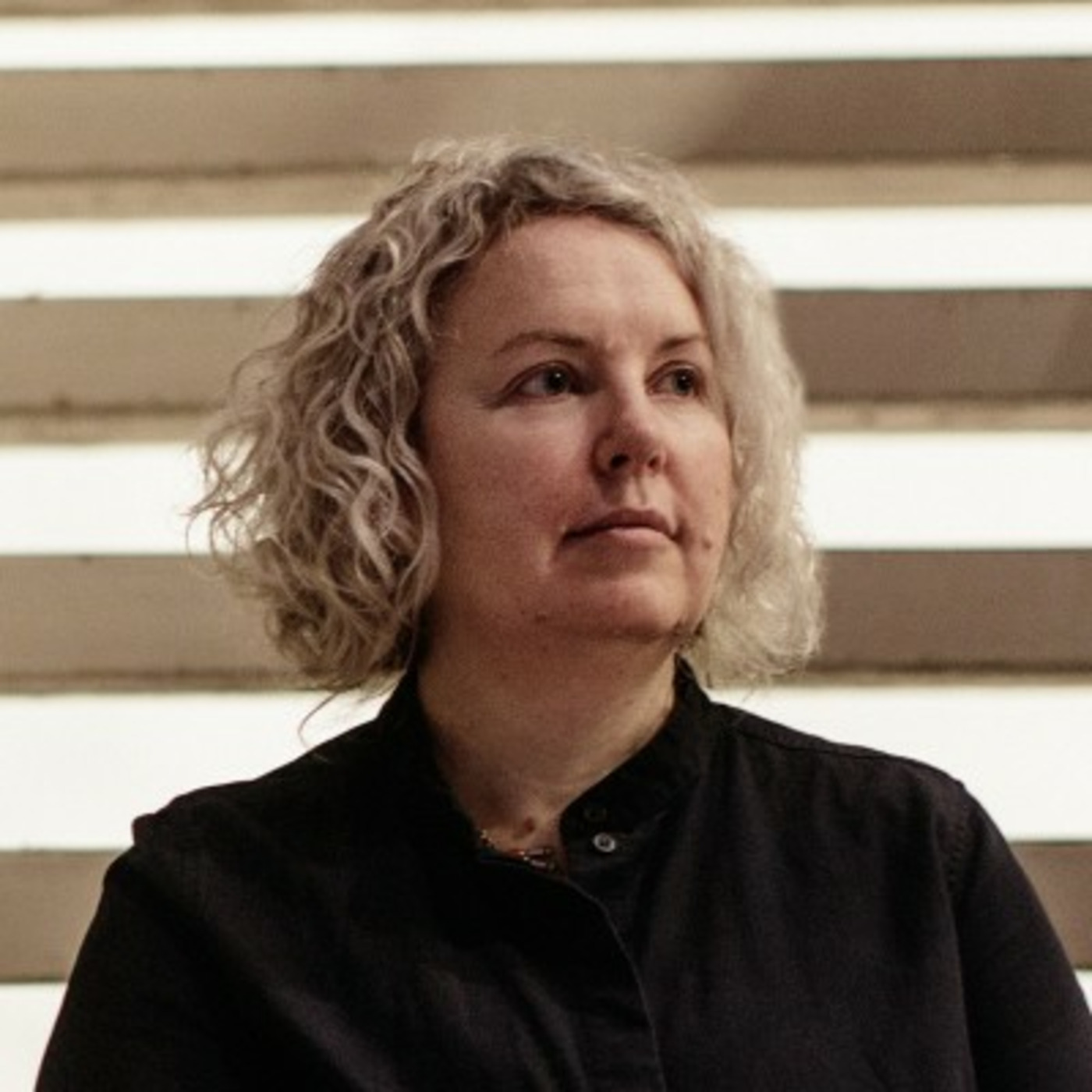
Aoifinn Devitt: I’m Aoifinn Devitt, and welcome to the 50 Faces podcast. In the spring of 2021, Trinity College Dublin held a historic Provost election which featured 3 female candidates for Provost. Linda Doyle was successful in the election and was officially installed as the 45th Provost of Trinity College Dublin in August 2021. She’s the first female Provost in the institution’s over 430-year history. Now, 2 years on, we wanted to check in with Linda as to how those first 2 years of her 10-year tenure have gone and to discuss her priorities and outlook for the next few years. Prior to being elected to Provost, she was Professor of Engineering and the Arts at Trinity College Dublin, a Fellow of the College, and her research had focused on themes of telecommunications and creative arts practices. Welcome, Linda. Thanks for joining me again.
Linda Doyle: Great to be here.
Aoifinn Devitt: Well, first of all, congratulations on your first two years, which started in the depths of COVID disruptions, and I’m sure have been very busy and eventful. How would you summarize the last 2 years and how they’ve gone?
Linda Doyle: So I first of all say they’ve gone in a blur because I can hardly believe 2 years have gone already. And I suppose they’ve just been jam-packed busy and, you know, with constant new and different challenges starting from the COVID times and up to now. So yes, a blur.
Aoifinn Devitt: I feel very lucky to have got on your calendar, but let’s kick off with that. So You started in 2021. The election itself was held in unprecedented circumstances. I’m sure COVID had affected logistics of that. Then you kicked off term in 2021, which was the beginning of return to campus. What were those sort of challenges and what were some of the decisions you made in terms of how to move forward?
Linda Doyle: The big challenge for COVID, even at that stage, even though campus was beginning to open again, and in September of that year we had— if anyone knows Trinity, there’s kind of an iconic front gate, the front arch was open for the first time in, you know, a couple of years because of But there COVID there was still caution. So we still had social distancing, and that really impacted our ability to teach face-to-face. And for people who don’t know, it’s a very old university with lots of old buildings, so the capacity of rooms was very limited. And I suppose there were maybe two big challenges. I think any decision you’d made during COVID half of the people thought it was a good decision and the other half of the people thought it was a terrible decision. So you were always navigating that tension. And the second thing is we decided at the time, even though we tried in the main to keep in lockstep with all of the other institutions, we were a bit more conservative in going back in those first few months. And anytime you’re not exactly aligned with everyone else, it makes you stand out and people comment because of that. So you start the role, you’re trying to get up and running, and then there is this COVID thing still happening and you’ve taken a particular set of decisions and you have to stick with them once you’ve taken them because you’ve embedded them in the timetable and other things. And there was a good challenge, I think, in sticking with those, keeping to the the advice best we had from an incredible bunch of health experts who got us through COVID in the university and were amazing and had gotten so many things right that sticking with them and at the same time then managing kind of wider public opinion and getting everything back, that was very difficult, I have to say.
Aoifinn Devitt: And once we move back to some form of business as usual, then we go back to all the existing challenges that are always there regardless of a pandemic disruption. What were some of those initial challenges coming out of COVID not just in terms of back to college, but just some of the, the other challenges that had not gone away?
Linda Doyle: The challenges, I suppose, remain the same. I mean, Trinity is a public university. Your audience may not, you know, probably come from all sorts of different backgrounds and different kinds of universities. And we get a certain amount of money from the state. We have to bring in other money ourselves through fees, through philanthropy, through commercial revenue. Over the decades, that amount of money from the state has reduced really, really significantly. So I suppose everything you’re doing is set in the context of incredible ideas, people who are really enthusiastic and ambitious, always wanting to do new and different things, and kind of a cake that has to be cut and sliced and not, not necessarily always big enough to go around. So that remains the same. And, you know, COVID had a very big impact on that, especially in terms of the commercial income. And there was a huge amount of incredibly good work done then, and as we came out of COVID to get that back up. But it remains an underlying challenge for us all the time. And then there were the challenges that I suppose universities have all of the time as well, or any institution had after COVID. I myself was in lots of different meetings and lots of different events and meeting people all the time, but there was kind of quite a lag before many people kind of got back to that level of sociability. And that’s really important for a university. So our students don’t just learn in class. It’s all about the wider atmosphere, the different things that can happen on campus, how they develop their skills in different places, and that kind of lifting off and kind of reigniting, that was a challenge. And then for me, because I was starting, I think there’s always a space where you’re finding your way. I have my own kind of leadership style, my own way of doing things, kind of finding my way with that, getting people used to that, bringing people on board with me, and then beginning to do the kind of things that I wanted to do in the university as well.
Aoifinn Devitt: I’d like to just pick up on that leadership style. In our first podcast, you spoke about leadership and viewing leadership as service rather than power. How did you translate that into being essentially in the leadership role? And how has that gone for you? What have you learned in that process?
Linda Doyle: Yeah, so I learned a lot of things. So I suppose my leadership style, I still completely hold to that. I feel myself in service of the university. I suppose everything I do, I try to kind of exemplify that. So maybe to add to that as well, I have a very collaborative style of leadership. I like working with other people. I’m not very hierarchical in, in how I go about things. And on top of that, Trinity is a very distributed organization with the kind of an ethos of that collaboration and an ethos of kind of democracy in how make decisions. So you’re kind of navigating all of that. For me, there’s big and small things that signal different ways. So where you sit at a table, how you address people, how you create a situation where people feel able to speak their mind— there was a lot of things like that. We have a board. I used to be the chair of the board for the first 2 years until legislation in Ireland changed, that I’m not chair of the board now. But the tone in which you set about the board, all of those things kind of mattered in kind of creating that style. And then also as well, I think it’s very important for people that you kind of are truthful with what kind of is working and not working. And I think that creates that style. And then maybe a final thing to add, I think it is very important— Trinity is amazing in all of the things that happen here, and our staff and students are always doing fantastic and different things. So I try as much as possible every week to make sure I do a variety of things with different staff interests, a variety of things with different student interests, and, you know, to kind of get out there as well. So to me, that kind of speaks to that service piece as well. I, I see myself there as being a leader, but also encouraging and I suppose supporting people in all of the things that they’re doing.
Aoifinn Devitt: And certainly watching your LinkedIn posts and also the COVID backlog, I suppose, of graduation ceremonies, etc., it was exhausting just to watch. But it did look like multiple opportunities to get yourself out there. It was a bit unfair of me perhaps to start with the challenges, but thank you for addressing that. I probably should have started with the achievements because there have been many. And I suppose the most emotional one for me as a female graduate of the university was seeing the 4 busts of women being unveiled in the Long Room for the first time. Women with achievements across the scientific and other fields. To see that was, was just so such an iconic development and led by yourself. What about that as an achievement and some of the other achievements that you’d like to note in your first 2 years?
Linda Doyle: When you’re the Provost or President of Trinity, you have a custodian role and, you know, we have a huge long history and I’m here for this 10-year period and things have set in motion before I came here too. So sometimes you’re in the right spot when they come to fruition. But I have to agree with you that that moment— so for people who don’t know, we have a very iconic library called the O’Library, and it has these beautiful arched ceilings, and you see all of these incredible old books, and there’s two rows of busts right down each side. And for as long as libraries existed, they’ve just been of men. We were, as you mentioned, we unveiled four women sculptures right in the middle of the library. And to be honest, it was really, really emotional for me as well. So I remember, you know, the way you can kind of intellectually know this is a good thing, and then you go along to the event and you’re amazed at the emotional nature of it. And the reason for that is, I suppose, the library is very symbolic of the past, of the long history that Trinity has, the proud history that it stands on. And then there’s this kind of, I suppose, whether you want to call it a cognitive dissonance or some kind of thing not quite right, that you’re here in that case in 2023, that case you’re there still, you know, in this modern age. And it’s the first time that sculptures of women going into that place and it kind of really, it was symbolic in doing that, but it also was a reminder that you have to constantly keep pressing. You know, the status quo settles in very easily, and you’re constantly kind of looking for these situations where things need to be inserted in and change needs to be made. So for me, that was a really, really kind of important, I suppose, symbolic step. But also, I suppose, at the moment, actually, there’s a very strong women leadership team in Trinity And there’s lots there’s of— some fantastic men and women in leadership roles. But I think it’s very clear if you look at the leadership team now in general, you can see a very big difference than you would have looked at it when you looked at it decades ago. And so you have the symbolic piece and then you have the kind of real piece in the university where there’s a big change in that front.
Aoifinn Devitt: And I’m sure there have been many other achievements which you’re just not mentioning there, but maybe that’ll be coming up in our move to looking ahead. In your third year now, we’re well into your third year. What’s at the forefront of your mind now? What are your that’s on your mind for the near term and the medium term?
Linda Doyle: So there is a huge amount of, like, I suppose if I was to summarize it, I draw actually a lot on Kate Raworth’s Doughnut Economics, some of the language that she uses from that. So for me, she talks about the human race thriving if there’s a kind of strong social foundation and we live within our ecological ceiling. And I think of a thriving university as something that kind of occupies that space. And essentially, if you have a really strong social foundation and all of that brings I’ll talk about some of the achievements we’ve had there as well. I think people can go on and do great things. You know, there’s a million great ideas here. I don’t need to— I have ideas I do myself, but I think that’s a really important thing. We don’t live within our ecological ceiling. We’re the same as many, many institutions around the world. And it’s a really, really big change if you want to take the planet seriously. So I brought in the first time ever a Vice President for Biodiversity and Climate Action. And that’s really important to us. I suppose the interplay between biodiversity and climate action and actually health more broadly. So our strategy in terms of, I suppose, sustainability touches on kind of becoming a nature-positive university, reaching net zero, and then having a complete and utter healthy population that exists within that. It’s hugely challenging. You have to think of every single thing you do through that lens. And I don’t know whether we’re there yet, but if you live especially in a university that has so many old buildings, that so many old ways of doing things, that’s a very big ask. So that social foundation and ecological ceiling for me are two really, really important things. And the thing I mentioned earlier, The funding of the university remains an incredible challenge, and a huge amount of my time has to be spent on either lobbying government and encouraging them to change policy and funding it, but also doing the other kind of fundraising things that we have to do. I would kind of put those pieces in place as a strong point, and maybe actually I could just unpack those a little bit for you to talk about some of the things. So when we think of the social foundation here, we think of things like, we’ll take simple things, accommodation in Ireland is a huge challenge. So what we want to do, it’s not like in North America, for example, it’s automatic a lot of the time that students get accommodation with university. It’s not that case here. So this year we brought two new— we brought a brand new building with 249 beds for students, Printing House Square it’s called, in Trinity. So that actually crossed the line and we opened it. And then we refurbished our oldest building, and our oldest building is called the Rubrics, and that’s also an accommodation building. And that building, despite being really, really old— 1703 it stems from— is now run with geothermal heating and incredibly well done in taking that sustainability piece account, as is the new building, very, very green. So there’s two ends of the spectrum and you’re thinking about the wellbeing and welfare of staff and kind of providing, and students, and students even more so in providing that. So there’s that side of that kind of social foundation that you contribute to. You can’t solve the whole thing, but that’s important. And then on the other side, to give you another example, the cost of living crisis that people would talk about a lot. We recognize that a lot of our PhDs, the kind of stipend levels that they’re on are challenging.. And we were the first university in Ireland to move to much better stipends for the stipends we control for our university. And as a result of that, put pressure on government, and government policy has changed in that line. And even though they’re not still as good as where we are, it’s moving in that direction for the funded PhDs through the Irish agencies that fund research. So there’s those kind of things in the social foundation. And then there is another piece that I think is really important, and these are just tiny examples of kind of a fabric in a university. You kind of have sometimes two organizations. You have the academics and you have the professional organization. And for me, it’s important that they work really strongly as a team. And somebody coming from another organization listening to this might go, what are you talking about? But ultimately, there’s kind of traditions in the academy where they sometimes can be quite separate. So there are some things that I’ve been doing that’s very much about building that social foundation. A very simple example is we give staff what we call an honorary master’s. For their service to the university. In the past, you had to be here 35 years if you were a certain kind of person, and you’d get it immediately if you were a professor. And now everyone gets it after 10 years. So the first time we changed that, we had 370 people on one Saturday, all being utterly delighted and proud to be part of Trinity and recognized in that way. And that kind of, I think, for me contributed to that spirit of We’re all working together to make this university brilliant. So there are kind of things on the social foundation just to talk about a bit, and I can talk about the ceiling as well if you want.
Aoifinn Devitt: Yeah, definitely. But before I move to that, Trinity in the community clearly has been a big focus as well. And I’m thinking of things like the Access Programme, that old adage that talent is universal, opportunity is not. Still, despite the Mark Zuckerbergs of this world without their third level qualifications, the third level qualification is a kind of now a basic stepping stone. To better earning, as well as the microcredentials. I know we’re going to do a separate podcast on that, but just maybe can you just touch on improvements to that kind of trinity in the community and access?
Linda Doyle: Yeah, that social foundation is very much about access as well as who gets to access education. And we now have 27% of students coming from what we would call non-traditional routes into Trinity. And to me, education is so transformative. You should have the best people from wherever. We also have some quite unusual courses. So we have a very unusual certificate for people with intellectual disabilities. It’s called TCPID. Incredible people who do amazing work. So we kind of, we do access that way. We also have a lot of programs where we recognize that maybe college isn’t, university isn’t the thing for people. So we have one of our colleagues in the department, the School of Education, runs a fantastic thing called Career Leap, where it helps, I would say, young people who finish school and don’t know how to get a job and help them get into it. And then we have a range of access, but that’s about coming to here for third level. And we’ve increased that a little bit as well because we’re involved in the Scholars at Risk Network. We have a sanctuary fund that was set up actually after Ukraine war began. We like to take a very wide view. We also use sport as a means of access. So we have an inclusivity officer in Trinity Sport, and we also, for example, we do things with sporting teams and other teams so people get exposure to the university and get to see if You know, you really need people to look at the university and say, well, I’m as entitled as anyone else to be here. If they have the academic skills, why shouldn’t they be able to be here? So we have, I think, a much more holistic and rounded view of access. And in fact, our Trinity Access program, which kind of started all of this off, is 30 years old this year. So we’re celebrating that, I think, with great pride and all that they’ve achieved.
Aoifinn Devitt: And also, I was delighted to see that microcredentials, you know, in terms of this continuing education, this commitment to not just being a one and done, but, you know, a lifelong journey of learning, which is a great role.
Linda Doyle: It is. Our VP, our Vice Provost, was looking as well. So we had a kind of what is the student broad program where you look and you see you kind of in Trinity in the main, you know, you have a 4-year undergraduate, you have a 4-year PhD, you have 1 to 2-year master’s. And people are really challenging that now and looking to see how can you continue to access education because over your lifetime you might have different careers, you might want to upskill in something So this notion of micro-credentials where you can do short, you can do short modules in and of themselves, and ultimately you could stack those micro-credentials together to get a master’s or something is a real kind of, I suppose, interest at the moment in Ireland and many places around the world. And we’re involved in a national pilot on that front and exploring that. And that also has an access element to it. Sometimes if you are not able to maybe do something all at once, you could do it in parts. But I would caution, for me, it’s really important that anyone who comes to a university has the full experience. So I see our students benefiting hugely from our clubs and societies, and I think sometimes actually if you come from socioeconomically disadvantaged backgrounds, those kind of things are even more important. So I wouldn’t like all axes to go to the microcredential, if you know what I mean. I think you still need to have the kind of supports for that full college experience.
Aoifinn Devitt: Let’s move to talk about the, the ceiling, because I know that you campaigned on a climate-first Trinity, and we’ve spoken about some of the steps you’ve taken already to ensure that that gets put in place, and also around some of the academic changes to the curriculum, the new cross-disciplinary courses that you’ve added. But over to you on the living within our ecological ceiling.
Linda Doyle: Yeah, so I mean, it challenges— when you’re a leader of a university, you want the university to be moving forward and doing many new things. And we’re a research-intensive university, and research is in our DNA and at our heart. We have huge ambitions to go even further than we are already, for example, in cancer, in sustainability, in social sciences, in all sorts of things. You’re kind of gauging, you’re kind of managing this whole thing. How do we grow? How do we evolve? And how do we do things? And yet how do we do it in a sustainable way? So one approach that we’re taking— so we have kind of an additional piece of land to the east of the main Trinity campus. So for anyone who knows the main Trinity campus, it’s that kind of iconic bit that people remember, would see a picture of. But we have Trinity distributed in multiple locations, and one of them is towards the east. And it was a kind of a place that was built in the— mainly in the 1980s or 1990s, a few older buildings there, but the kind of place that at the moment people feel like they’re banished to if we don’t have room in the main campus, they get banished down there. So we’ve decided— so once upon a time, there was a kind of going to knock the whole thing down and build a whole lot of kind of skyscraper-y things there. But we’ve decided to take a total refurbish and retrofit approach to it and use it in itself as a research project as we get better at understanding the circular economy in terms of operating like that, but also bringing some of the key research things that we do in— whether it’s material science, whether it’s biodiversity, whether it’s understanding climate, whether it’s poetry— that part of our campus It’s going to be retrofitted and refurbished, and one of the key things there is going to be no boundaries between disciplines. So every— so it’ll be for research innovators and cultural practitioners. Our drama academy, the Lirra, is down there as well. It’ll be for people from all of those backgrounds, no boundaries between disciplines. An engineer might be sitting next to a poet, might be sitting next to somebody from natural sciences, might be sitting next to an economist. All, as I said, focus on research innovation and cultural practice. With a kind of underlying— either you’re doing work about sustainability or you’re doing your work in a sustainable way, and the project in and of itself will be sustainable. So that’s a big departure for us, and we’re learning a lot, and it’s not necessarily cheaper to do things in a highly sustainable way. So it’s a very, very different way for us to do things. And we’re you baselining, know, the biodiversity or lack of it, and we’re baselining the social capital in the area, and we’re baselining a whole load of things, and then we’ll understand how we’re going to be contributing and growing that. And for people who are not familiar with Dublin, that’s in what we call the Silicon Docks area. So a lot of the big tech companies that people would be familiar with are kind of on one side of it. And then there’s other city center kind of communities on the other side of it. It’s in this really interesting place where you want to speak to both of those communities in doing this as well. So a door open for industry for all of the collaborations we do already and kind of bring that to the next level, but also this kind of engagement with the community as well.
Aoifinn Devitt: And of course, your roots have always been in cross-disciplinary areas with the engineering and the arts. So a very natural progression of your early insights there. And then specifically around new programs in the curriculum that you designed, what would some of those be?
Linda Doyle: Yeah, so we’ve taken the decision that ultimately we need to get to a place, and we’re not there yet, it’s fair to say, where we need to get to a place where it doesn’t matter what you’re teaching, there needs to be some sustainability in it. And that’s a huge big change. And there is loads of challenges because some courses are accredited courses by outside bodies and they’re already packed tight with material, and other people will say, well, you know, I’m teaching such and such a thing, what’s that got to do with it? So we have a program at the moment where our Vice President for Biodiversity and Climate Action has got a group of what we’re calling fellows who have come together from different disciplines, deeply analyzed our entire curriculum them and have designed programs that can be either taught in and of themselves or inserted into everything and anything. They’re also now beginning the process of training the trainer, if you know what I mean. So basically, if you have to— if you’re like, fine, you know, in some courses it kind of might be automatic, like if you’re doing engineering, there’s inevitably some parts of sustainability in it, but sometimes there isn’t. So it’ll be about kind of training the trainers. We have over the next number of years, we’re going to start with the kind of pushing the open door of people who want to do it gladly and work that right through the system. And it’s just bringing that wider understanding of biodiversity, climate action, and that health piece to everybody so that everybody can have some aspects of that in what they teach is ultimately where we’re going. And then along the way, we’ve kind of individual stand-alone modules that people can take to get to that place.
Aoifinn Devitt: And I know that this focus is not only, of course, on that side of the institution, but also the investment committee that we sit on. That I sit on with you, and we are looking at also implementing that sustainability focus across the endowment funds.
Linda Doyle: Yeah, I think so. And I mean, the main learning from that as well, and this is a challenge you have all the time, you know, you were asking me about the challenges. One of the challenges that I do find, and it kind of relates to the investment committee a bit, you kind of live your life much more in public than you ever did before, and that’s a big, big change. So it doesn’t matter whether it’s student newspapers or national newspapers, and I’m not saying that I’m that interesting a person or people want to know what you’re doing, but ultimately an awful lot of what you say and gets commented on, and students— and I love them for it— they take everything apart and dig into things in depth. But one of the things where we want to go as well is that it’s much more like, it’s very nuanced. And I don’t say that by ways of getting out of investing or not investing in something, but like, for example, on the investment committee, we had discussions about how by choosing a certain portfolio where you’re not, you know, you’re actively not investing in companies that have any oil holding or fossil fuel holding at all. You may also then knock out companies that are very, very proactive in that kind of leading change in the world and driving new technologies. So to me, what I— where I want to go with all of this is, is to hold on. You know, the world is so black and white now, and every topic is to hold on to that ability to be nuanced and for our students to have that critical thinking and understand kind of all of the trade-offs you’re making in any of these choices you’re taking.
Aoifinn Devitt: Again, any one of these topics, we could go for a whole podcast. But I do, just to wrap up, I want to take us to a that I topic I think you have some of the most evolved thinking that I’ve seen across the educational sphere on, which is AI and the use of that in education. We had a great discussion about this a few months ago, and it really inspired me to think about the positive effects of AI and how it can bring us all forward. Can you just bring us your thoughts on that today and what it means for education?
Linda Doyle: I’m glad you think my thinking is evolved. I’m not so sure that— I mean, I suppose maybe to put it in context, so we kind of started like many universities where your first kind of interaction with this in a kind of more mainstream way was whether or not students could cheat more effectively. It started into the ecosystem in a, you know, how can you give somebody an essay now when they can ask ChatGPT to write it and etc., etc. And, you know, there’s a movement across the world in recent decades away from the once-off exam to continuous assessment. So then everyone was kind of wringing their hands and looking and going, oh my God, can we now continue to do continuous assessment? Do we all have to swing back into the fact like you have a bit of paper and a pen and you’re in a room and you’ve no other technology to avail of. So I kind of started on that thing myself and then kind of came to the point that, okay, I see all of the challenges that exist with AI and I see all of the negative potential, but I also see the potential for the university to be much more empowered. So embarking on a project which I’m calling the AI Empowered University, and how do we get ourselves to that point? I think you might be referring to— there was a time in our lives where I’m old enough where people were arguing about whether kids should have been gotten calculators when they were in primary school because you’d never learn how to multiply and divide or whatever, you’ve got a calculator. So you see this discussion all of the time, but I think for me, I have two hypotheses. And the first is I think you’re going to have to be even more an expert in the field that you’re in to use the generative AI kind of platforms well. And I think that’s a good thing. And the second thing is I would be hoping that we could use generative AI platforms to make greater critical thinkers. And maybe just to add to that last piece, I find it kind of amazing that people will go, oh, I asked ChatGPT something and it lied, and in the next breath be sitting in front of a newspaper that’s clearly full of absolute loads of rubbish and lies and not have the same reaction to it. So if anything, if it were to bring people to ask the kind of questions— where did that come from? What influenced it? How do I check for the primary sources in this? How can I triangulate in different ways different sources of information? Or if it brings people to a point like, okay, I’m a computer programmer, I can use it to write programs for me, so now I develop other skills to be able to test those programs to be able to actually use my strengths in different ways. I think that would be really good. That’s where we’re trying to get in the university. And, you know, there’s plenty of examples of people using these things in good ways and there’s challenges in how the world uses it. But I think we’d be crazy not to prepare for that in every which way. And I think it’ll have more of an effect on us than kind of the changes that COVID brought about in teaching and learning.
Aoifinn Devitt: So we’ll watch the space for the AI-empowered update in a couple of years. Well, Linda, I hope this is the first of— let’s make it a commitment every 2 years we will try to catch up on your tenure. We’ve talked about the symbolism earlier of the Long Room, and I think your tenure is not just symbolic, it is truly an agent of change that I’m sitting here with today, and I couldn’t be more proud as a university graduate to have you at the helm. Thank you so much for coming here and sharing these insights with us.
Linda Doyle: Thank you, Aoifinn, that was great. I mean, this sounds like a mutual admiration society, but just to say, I mean, Trinity is very dependent on people like yourselves giving their their spare time, and that’s the reality of a public university. And we’re very, very, very lucky to have such amazing graduates like yourself, but also who have generosity that you have that make us better, question us and push us as well. So thank you very much.
Aoifinn Devitt: I’m Aoifinn Devitt. Thank you for listening to this special 50 Faces Focus podcast. If you liked what you heard and would like to tune in to hear more of our episodes, please go to 50faceshub.com. This podcast is for information only and should not be construed as investment or legal advice. All views are personal and should not be attributed to the organizations of the host or any guest.
Aoifinn Devitt: Brought to you with the kind support of DLA Piper Ireland.
Linda Doyle: I’m embarking on a project which I’m calling the AI Empowered University, and how do we get ourselves to that point? I think you might be referring to— there was a time in our lives where I’m old enough where people were arguing about whether kids should have gotten calculators when they were in primary school because you’d never learn how to multiply and divide or whatever if you got a calculator. So you see this discussion all of the time, but I think For me, I have two hypotheses, and the first is I think you’re going to have to be even more an expert in the field that you’re in to use the generative AI kind of platforms well. And I think that’s a good thing. And the second thing is I would be hoping that we could use the generative AI platforms to make greater critical thinkers.
Aoifinn Devitt: I’m Aoifinn Devitt, and welcome to the 50 Faces podcast. In the spring of 2021, Trinity College Dublin held a historic Provost election which featured 3 female candidates for Provost. Linda Doyle was successful in the election and was officially installed as the 45th Provost of Trinity College Dublin in August 2021. She’s the first female Provost in the institution’s over 430-year history. Now, 2 years on, we wanted to check in with Linda as to how those first 2 years of her 10-year tenure have gone and to discuss her priorities and outlook for the next few years. Prior to being elected to Provost, she was Professor of Engineering and the Arts at Trinity College Dublin, a Fellow of the College, and her research had focused on themes of telecommunications and creative arts practices. Welcome, Linda. Thanks for joining me again.
Linda Doyle: Great to be here.
Aoifinn Devitt: Well, first of all, congratulations on your first two years, which started in the depths of COVID disruptions, and I’m sure have been very busy and eventful. How would you summarize the last 2 years and how they’ve gone?
Linda Doyle: So I first of all say they’ve gone in a blur because I can hardly believe 2 years have gone already. And I suppose they’ve just been jam-packed busy and, you know, with constant new and different challenges starting from the COVID times and up to now. So yes, a blur.
Aoifinn Devitt: I feel very lucky to have got on your calendar, but let’s kick off with that. So You started in 2021. The election itself was held in unprecedented circumstances. I’m sure COVID had affected logistics of that. Then you kicked off term in 2021, which was the beginning of return to campus. What were those sort of challenges and what were some of the decisions you made in terms of how to move forward?
Linda Doyle: The big challenge for COVID, even at that stage, even though campus was beginning to open again, and in September of that year we had— if anyone knows Trinity, there’s kind of an iconic front gate, the front arch was open for the first time in, you know, a couple of years because of But there COVID there was still caution. So we still had social distancing, and that really impacted our ability to teach face-to-face. And for people who don’t know, it’s a very old university with lots of old buildings, so the capacity of rooms was very limited. And I suppose there were maybe two big challenges. I think any decision you’d made during COVID half of the people thought it was a good decision and the other half of the people thought it was a terrible decision. So you were always navigating that tension. And the second thing is we decided at the time, even though we tried in the main to keep in lockstep with all of the other institutions, we were a bit more conservative in going back in those first few months. And anytime you’re not exactly aligned with everyone else, it makes you stand out and people comment because of that. So you start the role, you’re trying to get up and running, and then there is this COVID thing still happening and you’ve taken a particular set of decisions and you have to stick with them once you’ve taken them because you’ve embedded them in the timetable and other things. And there was a good challenge, I think, in sticking with those, keeping to the the advice best we had from an incredible bunch of health experts who got us through COVID in the university and were amazing and had gotten so many things right that sticking with them and at the same time then managing kind of wider public opinion and getting everything back, that was very difficult, I have to say.
Aoifinn Devitt: And once we move back to some form of business as usual, then we go back to all the existing challenges that are always there regardless of a pandemic disruption. What were some of those initial challenges coming out of COVID not just in terms of back to college, but just some of the, the other challenges that had not gone away?
Linda Doyle: The challenges, I suppose, remain the same. I mean, Trinity is a public university. Your audience may not, you know, probably come from all sorts of different backgrounds and different kinds of universities. And we get a certain amount of money from the state. We have to bring in other money ourselves through fees, through philanthropy, through commercial revenue. Over the decades, that amount of money from the state has reduced really, really significantly. So I suppose everything you’re doing is set in the context of incredible ideas, people who are really enthusiastic and ambitious, always wanting to do new and different things, and kind of a cake that has to be cut and sliced and not, not necessarily always big enough to go around. So that remains the same. And, you know, COVID had a very big impact on that, especially in terms of the commercial income. And there was a huge amount of incredibly good work done then, and as we came out of COVID to get that back up. But it remains an underlying challenge for us all the time. And then there were the challenges that I suppose universities have all of the time as well, or any institution had after COVID. I myself was in lots of different meetings and lots of different events and meeting people all the time, but there was kind of quite a lag before many people kind of got back to that level of sociability. And that’s really important for a university. So our students don’t just learn in class. It’s all about the wider atmosphere, the different things that can happen on campus, how they develop their skills in different places, and that kind of lifting off and kind of reigniting, that was a challenge. And then for me, because I was starting, I think there’s always a space where you’re finding your way. I have my own kind of leadership style, my own way of doing things, kind of finding my way with that, getting people used to that, bringing people on board with me, and then beginning to do the kind of things that I wanted to do in the university as well.
Aoifinn Devitt: I’d like to just pick up on that leadership style. In our first podcast, you spoke about leadership and viewing leadership as service rather than power. How did you translate that into being essentially in the leadership role? And how has that gone for you? What have you learned in that process?
Linda Doyle: Yeah, so I learned a lot of things. So I suppose my leadership style, I still completely hold to that. I feel myself in service of the university. I suppose everything I do, I try to kind of exemplify that. So maybe to add to that as well, I have a very collaborative style of leadership. I like working with other people. I’m not very hierarchical in, in how I go about things. And on top of that, Trinity is a very distributed organization with the kind of an ethos of that collaboration and an ethos of kind of democracy in how make decisions. So you’re kind of navigating all of that. For me, there’s big and small things that signal different ways. So where you sit at a table, how you address people, how you create a situation where people feel able to speak their mind— there was a lot of things like that. We have a board. I used to be the chair of the board for the first 2 years until legislation in Ireland changed, that I’m not chair of the board now. But the tone in which you set about the board, all of those things kind of mattered in kind of creating that style. And then also as well, I think it’s very important for people that you kind of are truthful with what kind of is working and not working. And I think that creates that style. And then maybe a final thing to add, I think it is very important— Trinity is amazing in all of the things that happen here, and our staff and students are always doing fantastic and different things. So I try as much as possible every week to make sure I do a variety of things with different staff interests, a variety of things with different student interests, and, you know, to kind of get out there as well. So to me, that kind of speaks to that service piece as well. I, I see myself there as being a leader, but also encouraging and I suppose supporting people in all of the things that they’re doing.
Aoifinn Devitt: And certainly watching your LinkedIn posts and also the COVID backlog, I suppose, of graduation ceremonies, etc., it was exhausting just to watch. But it did look like multiple opportunities to get yourself out there. It was a bit unfair of me perhaps to start with the challenges, but thank you for addressing that. I probably should have started with the achievements because there have been many. And I suppose the most emotional one for me as a female graduate of the university was seeing the 4 busts of women being unveiled in the Long Room for the first time. Women with achievements across the scientific and other fields. To see that was, was just so such an iconic development and led by yourself. What about that as an achievement and some of the other achievements that you’d like to note in your first 2 years?
Linda Doyle: When you’re the Provost or President of Trinity, you have a custodian role and, you know, we have a huge long history and I’m here for this 10-year period and things have set in motion before I came here too. So sometimes you’re in the right spot when they come to fruition. But I have to agree with you that that moment— so for people who don’t know, we have a very iconic library called the O’Library, and it has these beautiful arched ceilings, and you see all of these incredible old books, and there’s two rows of busts right down each side. And for as long as libraries existed, they’ve just been of men. We were, as you mentioned, we unveiled four women sculptures right in the middle of the library. And to be honest, it was really, really emotional for me as well. So I remember, you know, the way you can kind of intellectually know this is a good thing, and then you go along to the event and you’re amazed at the emotional nature of it. And the reason for that is, I suppose, the library is very symbolic of the past, of the long history that Trinity has, the proud history that it stands on. And then there’s this kind of, I suppose, whether you want to call it a cognitive dissonance or some kind of thing not quite right, that you’re here in that case in 2023, that case you’re there still, you know, in this modern age. And it’s the first time that sculptures of women going into that place and it kind of really, it was symbolic in doing that, but it also was a reminder that you have to constantly keep pressing. You know, the status quo settles in very easily, and you’re constantly kind of looking for these situations where things need to be inserted in and change needs to be made. So for me, that was a really, really kind of important, I suppose, symbolic step. But also, I suppose, at the moment, actually, there’s a very strong women leadership team in Trinity And there’s lots there’s of— some fantastic men and women in leadership roles. But I think it’s very clear if you look at the leadership team now in general, you can see a very big difference than you would have looked at it when you looked at it decades ago. And so you have the symbolic piece and then you have the kind of real piece in the university where there’s a big change in that front.
Aoifinn Devitt: And I’m sure there have been many other achievements which you’re just not mentioning there, but maybe that’ll be coming up in our move to looking ahead. In your third year now, we’re well into your third year. What’s at the forefront of your mind now? What are your that’s on your mind for the near term and the medium term?
Linda Doyle: So there is a huge amount of, like, I suppose if I was to summarize it, I draw actually a lot on Kate Raworth’s Doughnut Economics, some of the language that she uses from that. So for me, she talks about the human race thriving if there’s a kind of strong social foundation and we live within our ecological ceiling. And I think of a thriving university as something that kind of occupies that space. And essentially, if you have a really strong social foundation and all of that brings I’ll talk about some of the achievements we’ve had there as well. I think people can go on and do great things. You know, there’s a million great ideas here. I don’t need to— I have ideas I do myself, but I think that’s a really important thing. We don’t live within our ecological ceiling. We’re the same as many, many institutions around the world. And it’s a really, really big change if you want to take the planet seriously. So I brought in the first time ever a Vice President for Biodiversity and Climate Action. And that’s really important to us. I suppose the interplay between biodiversity and climate action and actually health more broadly. So our strategy in terms of, I suppose, sustainability touches on kind of becoming a nature-positive university, reaching net zero, and then having a complete and utter healthy population that exists within that. It’s hugely challenging. You have to think of every single thing you do through that lens. And I don’t know whether we’re there yet, but if you live especially in a university that has so many old buildings, that so many old ways of doing things, that’s a very big ask. So that social foundation and ecological ceiling for me are two really, really important things. And the thing I mentioned earlier, The funding of the university remains an incredible challenge, and a huge amount of my time has to be spent on either lobbying government and encouraging them to change policy and funding it, but also doing the other kind of fundraising things that we have to do. I would kind of put those pieces in place as a strong point, and maybe actually I could just unpack those a little bit for you to talk about some of the things. So when we think of the social foundation here, we think of things like, we’ll take simple things, accommodation in Ireland is a huge challenge. So what we want to do, it’s not like in North America, for example, it’s automatic a lot of the time that students get accommodation with university. It’s not that case here. So this year we brought two new— we brought a brand new building with 249 beds for students, Printing House Square it’s called, in Trinity. So that actually crossed the line and we opened it. And then we refurbished our oldest building, and our oldest building is called the Rubrics, and that’s also an accommodation building. And that building, despite being really, really old— 1703 it stems from— is now run with geothermal heating and incredibly well done in taking that sustainability piece account, as is the new building, very, very green. So there’s two ends of the spectrum and you’re thinking about the wellbeing and welfare of staff and kind of providing, and students, and students even more so in providing that. So there’s that side of that kind of social foundation that you contribute to. You can’t solve the whole thing, but that’s important. And then on the other side, to give you another example, the cost of living crisis that people would talk about a lot. We recognize that a lot of our PhDs, the kind of stipend levels that they’re on are challenging.. And we were the first university in Ireland to move to much better stipends for the stipends we control for our university. And as a result of that, put pressure on government, and government policy has changed in that line. And even though they’re not still as good as where we are, it’s moving in that direction for the funded PhDs through the Irish agencies that fund research. So there’s those kind of things in the social foundation. And then there is another piece that I think is really important, and these are just tiny examples of kind of a fabric in a university. You kind of have sometimes two organizations. You have the academics and you have the professional organization. And for me, it’s important that they work really strongly as a team. And somebody coming from another organization listening to this might go, what are you talking about? But ultimately, there’s kind of traditions in the academy where they sometimes can be quite separate. So there are some things that I’ve been doing that’s very much about building that social foundation. A very simple example is we give staff what we call an honorary master’s. For their service to the university. In the past, you had to be here 35 years if you were a certain kind of person, and you’d get it immediately if you were a professor. And now everyone gets it after 10 years. So the first time we changed that, we had 370 people on one Saturday, all being utterly delighted and proud to be part of Trinity and recognized in that way. And that kind of, I think, for me contributed to that spirit of We’re all working together to make this university brilliant. So there are kind of things on the social foundation just to talk about a bit, and I can talk about the ceiling as well if you want.
Aoifinn Devitt: Yeah, definitely. But before I move to that, Trinity in the community clearly has been a big focus as well. And I’m thinking of things like the Access Programme, that old adage that talent is universal, opportunity is not. Still, despite the Mark Zuckerbergs of this world without their third level qualifications, the third level qualification is a kind of now a basic stepping stone. To better earning, as well as the microcredentials. I know we’re going to do a separate podcast on that, but just maybe can you just touch on improvements to that kind of trinity in the community and access?
Linda Doyle: Yeah, that social foundation is very much about access as well as who gets to access education. And we now have 27% of students coming from what we would call non-traditional routes into Trinity. And to me, education is so transformative. You should have the best people from wherever. We also have some quite unusual courses. So we have a very unusual certificate for people with intellectual disabilities. It’s called TCPID. Incredible people who do amazing work. So we kind of, we do access that way. We also have a lot of programs where we recognize that maybe college isn’t, university isn’t the thing for people. So we have one of our colleagues in the department, the School of Education, runs a fantastic thing called Career Leap, where it helps, I would say, young people who finish school and don’t know how to get a job and help them get into it. And then we have a range of access, but that’s about coming to here for third level. And we’ve increased that a little bit as well because we’re involved in the Scholars at Risk Network. We have a sanctuary fund that was set up actually after Ukraine war began. We like to take a very wide view. We also use sport as a means of access. So we have an inclusivity officer in Trinity Sport, and we also, for example, we do things with sporting teams and other teams so people get exposure to the university and get to see if You know, you really need people to look at the university and say, well, I’m as entitled as anyone else to be here. If they have the academic skills, why shouldn’t they be able to be here? So we have, I think, a much more holistic and rounded view of access. And in fact, our Trinity Access program, which kind of started all of this off, is 30 years old this year. So we’re celebrating that, I think, with great pride and all that they’ve achieved.
Aoifinn Devitt: And also, I was delighted to see that microcredentials, you know, in terms of this continuing education, this commitment to not just being a one and done, but, you know, a lifelong journey of learning, which is a great role.
Linda Doyle: It is. Our VP, our Vice Provost, was looking as well. So we had a kind of what is the student broad program where you look and you see you kind of in Trinity in the main, you know, you have a 4-year undergraduate, you have a 4-year PhD, you have 1 to 2-year master’s. And people are really challenging that now and looking to see how can you continue to access education because over your lifetime you might have different careers, you might want to upskill in something So this notion of micro-credentials where you can do short, you can do short modules in and of themselves, and ultimately you could stack those micro-credentials together to get a master’s or something is a real kind of, I suppose, interest at the moment in Ireland and many places around the world. And we’re involved in a national pilot on that front and exploring that. And that also has an access element to it. Sometimes if you are not able to maybe do something all at once, you could do it in parts. But I would caution, for me, it’s really important that anyone who comes to a university has the full experience. So I see our students benefiting hugely from our clubs and societies, and I think sometimes actually if you come from socioeconomically disadvantaged backgrounds, those kind of things are even more important. So I wouldn’t like all axes to go to the microcredential, if you know what I mean. I think you still need to have the kind of supports for that full college experience.
Aoifinn Devitt: Let’s move to talk about the, the ceiling, because I know that you campaigned on a climate-first Trinity, and we’ve spoken about some of the steps you’ve taken already to ensure that that gets put in place, and also around some of the academic changes to the curriculum, the new cross-disciplinary courses that you’ve added. But over to you on the living within our ecological ceiling.
Linda Doyle: Yeah, so I mean, it challenges— when you’re a leader of a university, you want the university to be moving forward and doing many new things. And we’re a research-intensive university, and research is in our DNA and at our heart. We have huge ambitions to go even further than we are already, for example, in cancer, in sustainability, in social sciences, in all sorts of things. You’re kind of gauging, you’re kind of managing this whole thing. How do we grow? How do we evolve? And how do we do things? And yet how do we do it in a sustainable way? So one approach that we’re taking— so we have kind of an additional piece of land to the east of the main Trinity campus. So for anyone who knows the main Trinity campus, it’s that kind of iconic bit that people remember, would see a picture of. But we have Trinity distributed in multiple locations, and one of them is towards the east. And it was a kind of a place that was built in the— mainly in the 1980s or 1990s, a few older buildings there, but the kind of place that at the moment people feel like they’re banished to if we don’t have room in the main campus, they get banished down there. So we’ve decided— so once upon a time, there was a kind of going to knock the whole thing down and build a whole lot of kind of skyscraper-y things there. But we’ve decided to take a total refurbish and retrofit approach to it and use it in itself as a research project as we get better at understanding the circular economy in terms of operating like that, but also bringing some of the key research things that we do in— whether it’s material science, whether it’s biodiversity, whether it’s understanding climate, whether it’s poetry— that part of our campus It’s going to be retrofitted and refurbished, and one of the key things there is going to be no boundaries between disciplines. So every— so it’ll be for research innovators and cultural practitioners. Our drama academy, the Lirra, is down there as well. It’ll be for people from all of those backgrounds, no boundaries between disciplines. An engineer might be sitting next to a poet, might be sitting next to somebody from natural sciences, might be sitting next to an economist. All, as I said, focus on research innovation and cultural practice. With a kind of underlying— either you’re doing work about sustainability or you’re doing your work in a sustainable way, and the project in and of itself will be sustainable. So that’s a big departure for us, and we’re learning a lot, and it’s not necessarily cheaper to do things in a highly sustainable way. So it’s a very, very different way for us to do things. And we’re you baselining, know, the biodiversity or lack of it, and we’re baselining the social capital in the area, and we’re baselining a whole load of things, and then we’ll understand how we’re going to be contributing and growing that. And for people who are not familiar with Dublin, that’s in what we call the Silicon Docks area. So a lot of the big tech companies that people would be familiar with are kind of on one side of it. And then there’s other city center kind of communities on the other side of it. It’s in this really interesting place where you want to speak to both of those communities in doing this as well. So a door open for industry for all of the collaborations we do already and kind of bring that to the next level, but also this kind of engagement with the community as well.
Aoifinn Devitt: And of course, your roots have always been in cross-disciplinary areas with the engineering and the arts. So a very natural progression of your early insights there. And then specifically around new programs in the curriculum that you designed, what would some of those be?
Linda Doyle: Yeah, so we’ve taken the decision that ultimately we need to get to a place, and we’re not there yet, it’s fair to say, where we need to get to a place where it doesn’t matter what you’re teaching, there needs to be some sustainability in it. And that’s a huge big change. And there is loads of challenges because some courses are accredited courses by outside bodies and they’re already packed tight with material, and other people will say, well, you know, I’m teaching such and such a thing, what’s that got to do with it? So we have a program at the moment where our Vice President for Biodiversity and Climate Action has got a group of what we’re calling fellows who have come together from different disciplines, deeply analyzed our entire curriculum them and have designed programs that can be either taught in and of themselves or inserted into everything and anything. They’re also now beginning the process of training the trainer, if you know what I mean. So basically, if you have to— if you’re like, fine, you know, in some courses it kind of might be automatic, like if you’re doing engineering, there’s inevitably some parts of sustainability in it, but sometimes there isn’t. So it’ll be about kind of training the trainers. We have over the next number of years, we’re going to start with the kind of pushing the open door of people who want to do it gladly and work that right through the system. And it’s just bringing that wider understanding of biodiversity, climate action, and that health piece to everybody so that everybody can have some aspects of that in what they teach is ultimately where we’re going. And then along the way, we’ve kind of individual stand-alone modules that people can take to get to that place.
Aoifinn Devitt: And I know that this focus is not only, of course, on that side of the institution, but also the investment committee that we sit on. That I sit on with you, and we are looking at also implementing that sustainability focus across the endowment funds.
Linda Doyle: Yeah, I think so. And I mean, the main learning from that as well, and this is a challenge you have all the time, you know, you were asking me about the challenges. One of the challenges that I do find, and it kind of relates to the investment committee a bit, you kind of live your life much more in public than you ever did before, and that’s a big, big change. So it doesn’t matter whether it’s student newspapers or national newspapers, and I’m not saying that I’m that interesting a person or people want to know what you’re doing, but ultimately an awful lot of what you say and gets commented on, and students— and I love them for it— they take everything apart and dig into things in depth. But one of the things where we want to go as well is that it’s much more like, it’s very nuanced. And I don’t say that by ways of getting out of investing or not investing in something, but like, for example, on the investment committee, we had discussions about how by choosing a certain portfolio where you’re not, you know, you’re actively not investing in companies that have any oil holding or fossil fuel holding at all. You may also then knock out companies that are very, very proactive in that kind of leading change in the world and driving new technologies. So to me, what I— where I want to go with all of this is, is to hold on. You know, the world is so black and white now, and every topic is to hold on to that ability to be nuanced and for our students to have that critical thinking and understand kind of all of the trade-offs you’re making in any of these choices you’re taking.
Aoifinn Devitt: Again, any one of these topics, we could go for a whole podcast. But I do, just to wrap up, I want to take us to a that I topic I think you have some of the most evolved thinking that I’ve seen across the educational sphere on, which is AI and the use of that in education. We had a great discussion about this a few months ago, and it really inspired me to think about the positive effects of AI and how it can bring us all forward. Can you just bring us your thoughts on that today and what it means for education?
Linda Doyle: I’m glad you think my thinking is evolved. I’m not so sure that— I mean, I suppose maybe to put it in context, so we kind of started like many universities where your first kind of interaction with this in a kind of more mainstream way was whether or not students could cheat more effectively. It started into the ecosystem in a, you know, how can you give somebody an essay now when they can ask ChatGPT to write it and etc., etc. And, you know, there’s a movement across the world in recent decades away from the once-off exam to continuous assessment. So then everyone was kind of wringing their hands and looking and going, oh my God, can we now continue to do continuous assessment? Do we all have to swing back into the fact like you have a bit of paper and a pen and you’re in a room and you’ve no other technology to avail of. So I kind of started on that thing myself and then kind of came to the point that, okay, I see all of the challenges that exist with AI and I see all of the negative potential, but I also see the potential for the university to be much more empowered. So embarking on a project which I’m calling the AI Empowered University, and how do we get ourselves to that point? I think you might be referring to— there was a time in our lives where I’m old enough where people were arguing about whether kids should have been gotten calculators when they were in primary school because you’d never learn how to multiply and divide or whatever, you’ve got a calculator. So you see this discussion all of the time, but I think for me, I have two hypotheses. And the first is I think you’re going to have to be even more an expert in the field that you’re in to use the generative AI kind of platforms well. And I think that’s a good thing. And the second thing is I would be hoping that we could use generative AI platforms to make greater critical thinkers. And maybe just to add to that last piece, I find it kind of amazing that people will go, oh, I asked ChatGPT something and it lied, and in the next breath be sitting in front of a newspaper that’s clearly full of absolute loads of rubbish and lies and not have the same reaction to it. So if anything, if it were to bring people to ask the kind of questions— where did that come from? What influenced it? How do I check for the primary sources in this? How can I triangulate in different ways different sources of information? Or if it brings people to a point like, okay, I’m a computer programmer, I can use it to write programs for me, so now I develop other skills to be able to test those programs to be able to actually use my strengths in different ways. I think that would be really good. That’s where we’re trying to get in the university. And, you know, there’s plenty of examples of people using these things in good ways and there’s challenges in how the world uses it. But I think we’d be crazy not to prepare for that in every which way. And I think it’ll have more of an effect on us than kind of the changes that COVID brought about in teaching and learning.
Aoifinn Devitt: So we’ll watch the space for the AI-empowered update in a couple of years. Well, Linda, I hope this is the first of— let’s make it a commitment every 2 years we will try to catch up on your tenure. We’ve talked about the symbolism earlier of the Long Room, and I think your tenure is not just symbolic, it is truly an agent of change that I’m sitting here with today, and I couldn’t be more proud as a university graduate to have you at the helm. Thank you so much for coming here and sharing these insights with us.
Linda Doyle: Thank you, Aoifinn, that was great. I mean, this sounds like a mutual admiration society, but just to say, I mean, Trinity is very dependent on people like yourselves giving their their spare time, and that’s the reality of a public university. And we’re very, very, very lucky to have such amazing graduates like yourself, but also who have generosity that you have that make us better, question us and push us as well. So thank you very much.
Aoifinn Devitt: I’m Aoifinn Devitt. Thank you for listening to this special 50 Faces Focus podcast. If you liked what you heard and would like to tune in to hear more of our episodes, please go to 50faceshub.com. This podcast is for information only and should not be construed as investment or legal advice. All views are personal and should not be attributed to the organizations of the host or any guest.