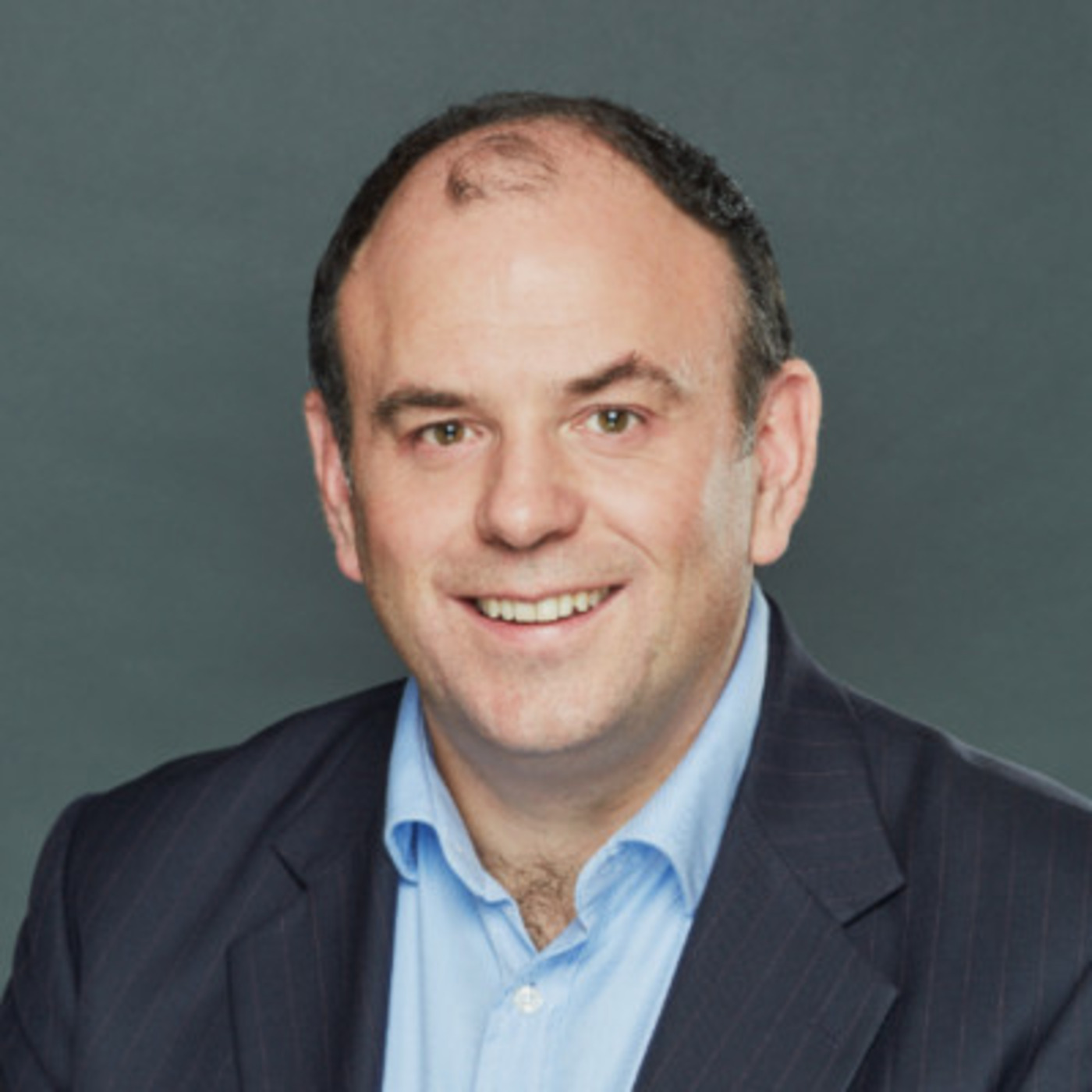
Aoifinn Devitt: I’m very conscious that, you know, you don’t come up with these ideas all on your own, and you don’t build things on your own. You never do. And actually, it’s way more satisfying to be able to do things with people and to be able to do things for people than the individual achievements and individual triumphs that you may have. None of them are ever much fun if you can’t share them with people. And being able to do things for people and be able to facilitate their growth and their success and them achieving.
David Carthy: Their potential Hear how our next guest used a values-driven approach focused on innovation, collaboration, and a global perspective to build a law firm branch from scratch, and how he ensured that diversity was part of the design. I’m Aoifinn Devitt, and welcome to this 50 Faces focus series, which showcases the richness and diversity of inspiring people in the law. I’m joined today by David Carthy, who is Managing Partner Ireland of DLA Piper. He was previously a partner at William Fry in Dublin, as well as President of the Irish Exporters Association. He previously spent over 7 years with the Ireland India Business Association, where he spent 5 years as Chairman. Welcome, David. Thanks for joining me today.
Aoifinn Devitt: It’s a pleasure.
David Carthy: Let’s start with your background. And of course, we know each other from Trinity College, so I have a little bit of that already. But would you start with where you were born, what your path to law was, and whether there were any surprising turns along the way?
Aoifinn Devitt: I was born in Dublin, so I went to school in Dublin, and I went to college in Dublin with Trinity. Background, none of my family had been in law. They had— my father’s an accountant, my mother ran a women’s dress store, so business, I suppose, was in the background. And I was the youngest in my family, and yeah, so that’s how I got to law. I did it as a general degree, and here I am 30 years later still doing it. So surprises happen.
David Carthy: I just want to ask a bit about the business history in your family there, because sometimes a lot of people on this podcast have either grown up with restaurants being run by the family or with stores being run. Did that form an important part of your childhood, spending time in that store, helping out in that store?
Aoifinn Devitt: No, absolutely. I think it always had an appreciation of where the money came from to give us the education and privileges that we had, and many of which my parents would not have had themselves when they were young. So it was an appreciation of that, probably an appreciation of hard work and seeing your parents work hard for it and seeing the ups and downs that go along with any sort of business enterprise. So yeah, definitely was there and, and definitely affected my view of the law as not being distinct from business but very much being part of and in service to.
David Carthy: Now I’ll segue, because we studied law together with some overlap in Trinity, a basic law degree I suppose, not particularly commercial in its practical orientation. But following that, what was your path into becoming a solicitor?
Aoifinn Devitt: The usual confusing decisions made by people in their 20s. So I did a master’s in a basic law degree in Trinity. I did a master’s in the University of Chicago, which was great, opened my mind, met a lot of people from around the world. Then I went back and I trained in London. So I joined a cohort training in Freshfields in London, which is like joining another sort of class for a few years, and I learned a lot of the basics there. So I did that, and then after a few years, about 4 or 5 years of that, I came back to Dublin and worked for William Fry. So, you know, a number of different decisions. I suppose I was always going to work in commercial law, as I said, Being close to having a basic skill like legal skill and being working in business generally, I suppose, was the goal to the extent I had a plan.
David Carthy: And was it always your plan to come back to Dublin having spent time in the US and London?
Aoifinn Devitt: Not necessarily. So I’m the youngest in my family. And so when I left home, all of us in terms of myself and my three other siblings were all working abroad in different places and moving around. And it wasn’t necessarily apparent at this stage. Three of us came back and my elder brother’s been in Boston for 40 years. So a typical Irish story to a sense of people traveling. So no, it wasn’t written in the stars. It just happened like that. And I suppose I’m very fortunate in my career that during my lifetime, Dublin and Ireland became much more globalized and much more part of the global economy. So that sort of international career, which I would have always been interested in, became possible in Dublin in a way that possibly it wasn’t in other European cities at the time.
David Carthy: And just before we move into your current role and the business building you’re doing there, you’ve always been quite unique in having a strong involvement in trade organizations throughout your legal career. When did this start and how do you think that enhanced your insights as a lawyer?
Aoifinn Devitt: I mean, look, I was always interested in travel, always interested in different cultures, different ways of doing things, very conscious of being involved in globally trading. It comes from being from a small island that is very globally connected. So yeah, being part of a local establishment had less interest for me than being part of something that was looking outward. I always felt like I had a lot in common with people who were getting on planes and trading and taking whatever goods or services they had and trying to trade globally. So, you know, working alongside them, whether it be India or the US or wherever, was something of interest. So I suppose with those interests in mind, I kind of fell into it, but it definitely did enhance my understanding of the clients I work with, enhanced the mindset, and you learn more people you’re dealing with or you’re exposed to, you learn more. So I suppose it outward looking perspective. Yeah, I suppose it was always there. There’s a tendency for all of us to draw the threads back in some sort of neat narrative about our careers. I’m not sure that’s necessarily true, but definitely that global perspective was probably always there.
David Carthy: Well, certainly, I think, contributes to the commercial sense and also probably a good networking opportunity for others to think about. And I think often these trade organizations are looking for involvement and people who are going to take a leadership role and take on some of those thankless tasks at times of running them. So, great insight.
Aoifinn Devitt: I mean, I would recommend it for others. I think it gives a different perspective. And if you stay just in your discipline, whether it’s law or something else, and just deal with people who do the same things every day, it will have a narrowing effect on your perspective, whereas the opposite could be true if you try something new and get involved.
David Carthy: Well, David, the reason I asked you on this podcast was I have watched in awe as you have built DLA Piper in Ireland from very, I’d say, modest beginnings into, I think, a powerhouse of the Irish legal commercial field there. So can you tell us a little bit about that? Was it your first time building a business from scratch, and how did you approach that? How does one approach building a branch office of a law firm?
Aoifinn Devitt: Absolutely. It was my first time doing it and is my first time doing it, and it takes so much energy I can’t imagine doing it again. The Irish legal market is relatively unique in the sense that it was dominated by local firms, local brands, people who largely went to school or college together and formed local organizations. And go back 20 or 30 years, and cities like Boston, Amsterdam, and Paris, and lots of other cities were dominated in the same way, in that way. But over the last 30 years, the increasing globalization and larger size professional services organizations has meant that if you want to get the same service, you go to the same brand no matter where you are. Big 4 accountancy firms is a leading example of that, but the law firms have been on that journey as well. So there was a sort of a timing where I felt that that was right, that was coming. I’d already seen what happened in other cities around the world. When it was coming to Ireland, I kind of always said to myself that I’d like to be part of that. And the opportunity came up. I worked with DLA Piper before. I was aware and I knew some people very well in the organization. So when they started looking at Ireland, I reached out to them to get involved. Now, in terms of building from scratch, yeah, it is, it’s an interesting thing as to how we go about it. DLA Piper had obviously done this before, most recently before my time, places like Luxembourg and South Africa. And I just spent a bit of time talking to them, particularly Johannes Haus in South Africa, about how to do it. And really what we decided to do is very much build a values-led organization. So you’re looking for as much diversity as you possibly can, but you want people to have the same sort of perspective, particularly around— I say 3 things I talk about in the you interview, know, having a global perspective, not just being happy to accept clients and money from all over the world, but actually really understanding how people in different parts of the world might approach the problem, what they have in common, what they don’t. Having people who are relatively bold in the sense of yes towards the entrepreneurial end, but also comfortable with change. We all have to change. There’s surprises in store for us every day of our life, and How we embrace them, how we pivot and react to them is really important as opposed to freezing with them. And the last was sort of being collaborative. And I think in all areas of life, no professionals ever self-identify as not being collaborative. But the truth is some people are an awful lot better than others. And some people are competitive by nature and never get around to the collaboration bit. Some people are insecure and never get around to the collaborative bit. So we really want people who have those things in common. And building on that from that perspective so that we were always building with the right sort of people who people would look at and say, not only do I think they’re good at what they do, but they also are people that I’d like to work with, meant that if you get the right decisions right, it starts to go in a domino effect. Now you can see how if you get some of the hires wrong, it goes the other way. So, so that meant a lot of pressure on the hires that done. And fortunately it’s worked well. And one of the things I learned is, you know, being able to talk about that values-led approach from the start. And also we use a degree of psychometrics because when I was interviewing at the start, it was just me and you second-guess yourself a bit. And so having a sort of a psychometric perspective as well, it sort of enhanced for everybody the fact that we were focusing on that sort of cultural fit bit. So that’s kind of how we built and we built person by person. So we now have just short of 110 people. It started with myself, just one. So that’s quite a degree of progress. But we have done ours one by one. It would have been tempting to take group, but then you’re taking a risk of culture changing, existing culture having already been established with a group of people, you inheriting that, that being different in different areas. And there are lots of organizations who, once you start that way, you never get it back. So I think we have a degree of cultural cohesion now. We have a younger collegiate group. We’re collegiate together, but we’re also collegiate with our international colleagues. And we didn’t inherit any business from anyone else from the group business, but we also didn’t inherit any cultural practices that were inconsistent. We didn’t inherit any flaws. We didn’t inherit any liabilities. So it’s worked well. That’s probably the best way I can draw it to understand it. So it’s still a challenge. I’m still learning. And we’re still making decisions where the effectiveness of it can’t be seen for several years afterwards. But that’s probably the best way to say that we were values-driven and there is a, I think a sporting phrase where somebody says having a no dickhead policy, it’s incredibly important. It doesn’t matter how wonderfully clever or how, what a fantastic set of commercial contacts or business people have. The most important thing is that we don’t hire something culturally inconsistent or just a person who isn’t admirable. Or you do your best to achieve this. I’m not saying we’re perfect in any way, but that enables you to keep building and starts to build up speed with building. Whereas if you go for a short-term fix, of somebody with a name or too much of a profile with some negatives attached, it not only may go wrong in itself, but it hinders a whole range of other people from joining you. You never get to judge the conversations that you don’t have. You just don’t get to have them. Hopefully that helps.
David Carthy: Really interesting. And that values-led approach, was that something that DLA Piper would have espoused elsewhere, or did you devise that?
Aoifinn Devitt: No, that was, that was the DLA would have, would have had that values-led approach. So about a year before I joined, they would have gone through a very extensive exercise consulting consulting with their teams and establishing a set of values that they would drive the business for and would be the touchstone for how we make decisions. And while none of us are perfect, it really has helped in terms of that collegiate approach. So as you build your team and if you’re consistently trying to build that along those lines and others are trying to do the same despite cultural differences in other countries and despite all sorts of personal differences that may arise, there is a degree of cohesion with that. Of course, there’s other ways to build teams, having everybody from the same country and having everybody from the same background. That builds a bit of cultural cohesion, but it doesn’t build the diversity that was going to help us build a global business. And that approach was never to interesting me. That approach is more prevalent in some work managers.
David Carthy: And would you say there were any missteps or any kind of, I suppose, rookie errors that may have occurred that you say, that’s a lesson learned, I’d advise the next person I advise on setting up a law firm not to do that?
Aoifinn Devitt: Nothing jumps out as huge, but you do learn a huge amount as you go along. Being able to communicate clearly a vision for the future and having people to buy into is something I’ve learned and got better at. Being able to alleviate people’s fears of something different, something new, is also something that I’ve got better at. I would say that some of my colleagues who joined early would probably say, yes, you’re right, David, you have got better at it. We saw earlier versions of you giving this pitch and it wasn’t quite as smooth, not quite as good. So I think you constantly learn. I mean, you know, I’ve done lots of interviews. I’ve worked with plenty of fine colleagues. I’ve learned from many of my international colleagues and anything I’ve done through my career. So you bear the influence of all sorts of things and you get better at telling where you’re, you know, so setting a confident vision that the people can buy into, but at the same time, understanding the fears that people may have in the short term of stepping that way and having them buy into the change in our competitive landscape that I believe in, that it has come to fruition. I got better at that, and I think undoubtedly have been missteps along the way.
David Carthy: And just building on that into maybe your leadership style today, obviously there are many books written about leadership styles and values driven, I think probably is going to be a huge part of that. Would you say there are other aspects? I mean, clearly with 110 people, you, you have to delegate. You can’t be in every area. Certainly there has to be a taking yourself out of the weeds aspect of this constant evolution. Feedback. How would you say your leadership style is expressed now?
Aoifinn Devitt: Well, I’m learning to take myself out of the weeds. I mean, taking yourself out of the right weeds and staying yourself involved in the right ones is a trial and error sort of thing. So now that we’ve grown to a business of, as I said, 110 people, it’s not possible. And so different structures arise, different delegation bits get delegated that didn’t get done before. So that’s a process that is ongoing. In terms of leadership style, I suppose one of the things is I didn’t start this current job until I was in my late 40s. So I had made many mistakes before. And one of the mistakes I would make is sort of having a view of the future and then working the quickest way to get there and realizing that others maybe didn’t see the future in quite the same way and maybe weren’t as prepared to work as quickly. So I have learned patience. I have learned how to collaborate more, and I have learned to set maybe, out, you know, a very US Californian approach, set out clearly what you think you’re going to do and then listen to what people say in return. And then by the time you’ve listened to a number of people, what you’re actually saying has changed to adapt and flow with their views as well. So I have no difficulty in doing that or realizing that you’ve got it wrong and changing. So I think I’ve got better at collaborating. So I would say a collaborative style in this business. Very early realized that just having it be a successful solo practitioner does not build a great business, and that you putting in a lot of hours and working to the highest standards and doing everything you can does not bring a good business. You have to actually have a consistent approach from a lot of people and that collaborative approach. So I would say collaborative, I’d hope, and I’d say sufficiently humble to change my views based on the evidence.
David Carthy: And just getting back to a point you made about not inheriting books of business, but inheriting values, that maybe goes against other models of building firms in branch offices. Clearly then you have a large team, all capable, all collegiate. All fired up and ready to go, but setting upon that business building stage, any kind of insights from that? And also, it’s interesting, I’m sure that also contributes to a more collegiate relationship perhaps with competitor law firms if there hasn’t been that business inheriting going on.
Aoifinn Devitt: Yeah, I mean, one of the things I realized, and you know, DLA has grown by merger from 2005 onwards, including greenfield. So they’ve probably tried every particular model of growing your business and collecting people together. And building teams. And one of the things I could see from that and other new entrants into the Irish market is that when people inherited a group from another firm, they’re forever known as the ex-group from such and such. And you’d hear where firms were, whole different floors in a firm would be, they came from there and they came from there. So even when people were trying their best to actually collaborate in the best way, the market and previous reflections and incarnations were how people came to know. In many ways, in pubs in Dublin, a pub can change its name 20 times and people of a certain generation still call it the first name because that’s what they remember it for. That was true of lawyers and that’s true of legal brands as well. So it was very important to me that we were from the start going to be DLA Piper and not anything else. And that greenfield setup, as I described, helped us do that because I could see that if people felt that you were— and the other thing is I was explaining to the Irish market that we were a global law firm. We weren’t an inherited group of local lawyers, and that’s been successfully done, which if you’ve taken a different approach by merger otherwise is much more challenging.
David Carthy: And another really notable part of how you’ve built DLA Piper Ireland is your focus on diversity from the very beginning. And I know that you have a very impressive female representation there. What has been your focus on diversity? How have you been intentional about it? And then maybe we can step back and look at the legal profession as a whole, but let’s focus on your approach first.
Aoifinn Devitt: Well, the first thing to say is that there’s plenty to be humble about. Our representation is not what we’d like it to be, and you can do an awful lot better. So that’s the first thing to say. But I suppose in looking at it, I would’ve always had a perspective that the best decisions as advisors are made by people from diverse backgrounds who don’t just instinctively think of the same cultural reference points as they try and understand or help with a problem. So there’s your professional ability, but there’s also your inherited experiences that go into it. And if your inherited experiences are as wide as possible, and you had different voices, then it was possible to have. So you wanted to have an open culture and you wanted to have diversity of thought. So the important thing is diversity of thought. So I had been, you know, in Ireland, if you look through its history, many of our work decisions, whether they’re made by the political class or the business or banking class, generally go back to a small number of people who, when you really look at it, all came from the same background, very often the same gender, the race, etc. And that leads to a sort of groupthink, and people are doing their best, but they still end up making the wrong decision because nobody came at it from another angle. And the ability to say no, wasn’t strong enough. So I had that perspective. So leave aside the sort of social justice perspective. The other obvious thing is that the clients you would be acting for were global in nature. And therefore, and Ireland was traditionally a very homogenous society, which is getting more ethnically and societally diverse now over the last 20 years, but traditionally hasn’t been. So you basically want to advise clients, you want to be like them. People need to see a mirror in the advisory thing. To the clients themselves. So all of those things, the business driver, the social justice driver, and the good decision-making driver where you have diversity of thought in your decision-making process, all led me to that view where diversity, I strongly believe diversity of thought drives better decision-making. Now, having said that, the first obvious thing that anybody notices about an organization, particularly the legal industry, is that at times, although at the bottom end of the pyramid in terms of people going into law, there’s a huge balance from a gender perspective. There isn’t at the top of the industry, and there’s many different reasons for that. But one of the reasons is that you would look at it and say, oh my God, this is so big, I can’t possibly do anything about it. So when you’re starting a law firm from scratch, it provides you the opportunity. I was not inheriting a different balance. So therefore I was going to be intentional about it from the start. Turns out it’s pretty hard and we’ll keep at it. But the goal here is for us to have a multinational background group of people clearly multi-gender, which sounds, you know, it should be the easiest, but because of the legal industry itself, there are some aspects that make it hard. And, you know, as much diversity of thought as possible. So we’re on that journey. And just like anything, it’s as much of a challenge and nobody’s ever cracked it and it is never achieved and ticked. That’s a long answer to a short question.
David Carthy: No, no, I notice it because I think when you look at the new announcements of partners being made and look at the stats, it does stand out. Have you attracted any industry attention because of the fact that it stands apart at this point with the diversity, particularly in your senior ranks?
Aoifinn Devitt: Yeah, it’s very welcome from a— when you’re pitching to multinational, even national decision makers, it’s very notable that the general counsel community is predominantly female. And it’s very notable that generally among the law firms is predominantly male. So there’s a mismatch there that needs to be affected. So we’ve got a little bit of attention, but as I said, this is a journey. We have a long way to go. I’m more interested in achieving commercial success, doing the right thing, and having others follow that example than trying to take out a stick and sort of wave it at other people, if you know what I mean. Hopefully the example of what we do and the example of the success we have acts as an example which in a small way filters through to the wider industry.
David Carthy: And when you and I graduated from Trinity, there weren’t really many global law firms with a footprint in Ireland. You had to go to London for that. Now that there are, there are a few. Do you offer incoming graduates an opportunity to do rotations through your other offices for them if they have these global values that you look for to actually realize them?
Aoifinn Devitt: I mean, look, it’s the most obvious thing people know of us. If they know one word about DLA Piper in Ireland, the word they’ll know is global. And therefore, yes, from a junior perspective or graduate perspective, they’re hugely interested in that. So the delivery of those Luckily, we have 99 offices around the world. We have, you know, we’re in 46 countries. So our ability to deliver on that promise is strong. So yeah, we are delivering on that and we have our first trainee crew coming through to qualification over the next 6 to 9 months and they’ll be offered jobs in Dublin and all over the world and they’re offered secondments and rotations in Dublin and all over the world. And at present we have somebody from Leeds and we have somebody from Hong Kong in the office, trainees from other offices. We’ve had people from Australia. We’ve had people from other countries, we’ve got 2 Germans, 2 Italians in the office. It’s that free flow which is really normal in other industries and in the legal industry it wasn’t. So one of the things you want to do is offer a global career in law from Dublin. That was not possible when you and I came out of college. You had to go to New York or London and typically you’d go, maybe you’d come back, but if you did come back, you’d have to fit back into a national structure that wasn’t global in nature and leave some of maybe the thoughts and new ideas behind, which is a frustration for people.
David Carthy: Yeah, it’s a completely different setup now. Finally, before you go on to some personal reflections, just would like to get your— I know you said you’re trying to pull yourself out of the weeds in certain areas, but where do you see the opportunity for the legal profession in Ireland for growth? I know that you’ve added almost a practice area by practice area, and you didn’t have a fund formation practice originally. Now you do. How would you say the legal landscape is evolving and what excites you?
Aoifinn Devitt: Well, it excites me about how much global business is being done through Dublin and how Ireland is in that succeeding thing. So that excites me. It excites me, as I said, to offer a global career wherever it is I’m working on from Dublin. That excites me. So I think there’s clear growth. We’ll build on our practice areas. We’ll also hire very much from a sector-driven approach. And that’s the other thing you get from a global perspective. If you want to, your problem is in its nature relatively unique and challenging, which tends to be the problems we get. You’re very interested in working with people who’ve seen this problem before. Those things typically aren’t all done in the same country, particularly if you’re a relatively small country like Ireland. So you’re doing the first, I don’t know, integrated ticketing plan for Metro or lottery, you can draw on the Australian or the UK or the US experience. That’s only going to help your decision-making process. So sector-driven approach, really important. And then the other thing is, you know, being a trusted advisor. The lawyer originally You know, back 100 years ago, there were no investment bankers, there was no Big Four, but there were lawyers. And over time, the lawyer moved out of the decision-making room and became the scribe or the advanced sort of documenter of decisions that other people made. It’s bringing the lawyer back to the center. So having government affairs advisors working alongside data analysts, working alongside expertise of all sorts of nature and being a trusted advisor and getting to the point for a client when they have a problem. Who’s your first call? Who’s your second call? And how broad an ability do people have to think to solve your problem? Or do you have to take narrow expertise and synthesize it all yourself because your advisors can’t do that for you?
David Carthy: Just moving to some personal reflections now. So we’ve looked back at the business building, at a career throughout different jurisdictions. Would you say, looking back either on your career or otherwise, there were any setbacks or challenges that you learned lessons from?
Aoifinn Devitt: Yeah, there was, and there have been. I mean, all of us in the legal industry struggle with a balance. It’s a very interesting and challenging job, but it doesn’t always come in the right proportion or at the right times. So you can end up working long hours or end up having a lot of something and then maybe less the next week. So that balance between all areas of your life is an important thing, and you learn to get better at that over time, but it’s always a challenge. And definitely at times I have a vision of the future and I have not been able to get that across enough to overcome people’s fears of whatever change may be involved in dealing with that. So I’d look at my time, my previous firm, William Fry, and say, yeah, the vision I have was an earlier vision of what I have now, but the ability to get that across, I was less able. And you learn, you learn from your setbacks.
David Carthy: It’s interesting because those are singularly, I think, skill sets that are not taught in law school, communication skills, but, you know, just people management, organizational skills. And we look at this continuing legal education concept. But it’s also completely absent in that respect. It’s, it’s legal, it’s not the other kind of management skills. And it’s interesting because finance can have that MBA kind of trajectory, which can ideally introduce some of those skills. But it’s interesting that in law they have to kind of be built either just from osmosis or the law.
Aoifinn Devitt: Yeah, learn you on the job.
David Carthy: Yeah, it seems that way. And you know, sometimes they remain absent. Speaking of taking care of mentors or key people, have there been any throughout your life professionally or personally that have left an impression on you and maybe changed your outlook?
Aoifinn Devitt: Yeah, I mean, I definitely from my time in William Fry, I’d cite Brendan Cahill. From my time in DLA Piper, Sandra Wallace, John Hayes, and my colleagues in Dublin who gave me the ultimate trust of agreeing to come aboard in a joint enterprise to drive this firm. Yeah, no, I’ve been very fortunate. I mean, one of the things is to be able to learn from all your experiences, but being open to learn. From them. I mean, if you’re too close to mindset, wonderful things and wonderful mentors can surround you, but you don’t notice and you don’t pick it up. So, so there are a couple of people on the legal side and certainly from a personal side, my wife is an academic PhD, Suzanne, my family, my parents, my brothers, my siblings. I was the youngest. So I got to see from the decisions they made and how they went about things. They all had an influence. So all of it is, all of it mixes together. So I’m very conscious that, you know, you know, come up with these ideas all on your own, and you don’t build things on your own. You never do. And actually, it’s way more satisfying to be able to do things with people and to be able to do things for people than the individual achievements and individual triumphs that you may have. None of them are ever much fun if you can’t share them with people. And being able to do things for people and be able to facilitate their growth and their success and them achieving their potential is hugely satisfying. So that’s the other thing you kind of learned. Once you’ve proved to yourself that you can do something, really the next challenge and far more satisfying is helping others to do it.
David Carthy: Well, thank you so much, David. One really remarkable aspect of how you’ve built DLA Piper Ireland is how you’ve made it look easy. And more important than that, you’ve made it look like a very enjoyable ride so far. And I know it’s been anything but easy. I’m sure it still has been enjoyable, but I think that’s because of your commercialism, your warmth, and just that humility that has come up time and time again. As we’ve discussed your techniques throughout this podcast. So thank you so much for coming here, for sharing your insights with us.
Aoifinn Devitt: Appreciate it. Thank you very much. Been very enjoyable.
David Carthy: I’m Aoifinn Devitt. Thank you for listening to our 50 Faces Focus Series. If you liked what you heard and would like to tune in to hear more inspiring lawyers and their stories, please subscribe on Apple Podcasts or wherever you get your podcasts. This podcast is for informational purposes only and should not be construed as investment advice, and all views are personal and should not be attributed to the organizations and affiliations of the host or any guest.
Aoifinn Devitt: I’m very conscious that, you know, you don’t come up with these ideas all on your own, and you don’t build things on your own. You never do. And actually, it’s way more satisfying to be able to do things with people and to be able to do things for people than the individual achievements and individual triumphs that you may have. None of them are ever much fun if you can’t share them with people. And being able to do things for people and be able to facilitate their growth and their success and them achieving.
David Carthy: Their potential Hear how our next guest used a values-driven approach focused on innovation, collaboration, and a global perspective to build a law firm branch from scratch, and how he ensured that diversity was part of the design. I’m Aoifinn Devitt, and welcome to this 50 Faces focus series, which showcases the richness and diversity of inspiring people in the law. I’m joined today by David Carthy, who is Managing Partner Ireland of DLA Piper. He was previously a partner at William Fry in Dublin, as well as President of the Irish Exporters Association. He previously spent over 7 years with the Ireland India Business Association, where he spent 5 years as Chairman. Welcome, David. Thanks for joining me today.
Aoifinn Devitt: It’s a pleasure.
David Carthy: Let’s start with your background. And of course, we know each other from Trinity College, so I have a little bit of that already. But would you start with where you were born, what your path to law was, and whether there were any surprising turns along the way?
Aoifinn Devitt: I was born in Dublin, so I went to school in Dublin, and I went to college in Dublin with Trinity. Background, none of my family had been in law. They had— my father’s an accountant, my mother ran a women’s dress store, so business, I suppose, was in the background. And I was the youngest in my family, and yeah, so that’s how I got to law. I did it as a general degree, and here I am 30 years later still doing it. So surprises happen.
David Carthy: I just want to ask a bit about the business history in your family there, because sometimes a lot of people on this podcast have either grown up with restaurants being run by the family or with stores being run. Did that form an important part of your childhood, spending time in that store, helping out in that store?
Aoifinn Devitt: No, absolutely. I think it always had an appreciation of where the money came from to give us the education and privileges that we had, and many of which my parents would not have had themselves when they were young. So it was an appreciation of that, probably an appreciation of hard work and seeing your parents work hard for it and seeing the ups and downs that go along with any sort of business enterprise. So yeah, definitely was there and, and definitely affected my view of the law as not being distinct from business but very much being part of and in service to.
David Carthy: Now I’ll segue, because we studied law together with some overlap in Trinity, a basic law degree I suppose, not particularly commercial in its practical orientation. But following that, what was your path into becoming a solicitor?
Aoifinn Devitt: The usual confusing decisions made by people in their 20s. So I did a master’s in a basic law degree in Trinity. I did a master’s in the University of Chicago, which was great, opened my mind, met a lot of people from around the world. Then I went back and I trained in London. So I joined a cohort training in Freshfields in London, which is like joining another sort of class for a few years, and I learned a lot of the basics there. So I did that, and then after a few years, about 4 or 5 years of that, I came back to Dublin and worked for William Fry. So, you know, a number of different decisions. I suppose I was always going to work in commercial law, as I said, Being close to having a basic skill like legal skill and being working in business generally, I suppose, was the goal to the extent I had a plan.
David Carthy: And was it always your plan to come back to Dublin having spent time in the US and London?
Aoifinn Devitt: Not necessarily. So I’m the youngest in my family. And so when I left home, all of us in terms of myself and my three other siblings were all working abroad in different places and moving around. And it wasn’t necessarily apparent at this stage. Three of us came back and my elder brother’s been in Boston for 40 years. So a typical Irish story to a sense of people traveling. So no, it wasn’t written in the stars. It just happened like that. And I suppose I’m very fortunate in my career that during my lifetime, Dublin and Ireland became much more globalized and much more part of the global economy. So that sort of international career, which I would have always been interested in, became possible in Dublin in a way that possibly it wasn’t in other European cities at the time.
David Carthy: And just before we move into your current role and the business building you’re doing there, you’ve always been quite unique in having a strong involvement in trade organizations throughout your legal career. When did this start and how do you think that enhanced your insights as a lawyer?
Aoifinn Devitt: I mean, look, I was always interested in travel, always interested in different cultures, different ways of doing things, very conscious of being involved in globally trading. It comes from being from a small island that is very globally connected. So yeah, being part of a local establishment had less interest for me than being part of something that was looking outward. I always felt like I had a lot in common with people who were getting on planes and trading and taking whatever goods or services they had and trying to trade globally. So, you know, working alongside them, whether it be India or the US or wherever, was something of interest. So I suppose with those interests in mind, I kind of fell into it, but it definitely did enhance my understanding of the clients I work with, enhanced the mindset, and you learn more people you’re dealing with or you’re exposed to, you learn more. So I suppose it outward looking perspective. Yeah, I suppose it was always there. There’s a tendency for all of us to draw the threads back in some sort of neat narrative about our careers. I’m not sure that’s necessarily true, but definitely that global perspective was probably always there.
David Carthy: Well, certainly, I think, contributes to the commercial sense and also probably a good networking opportunity for others to think about. And I think often these trade organizations are looking for involvement and people who are going to take a leadership role and take on some of those thankless tasks at times of running them. So, great insight.
Aoifinn Devitt: I mean, I would recommend it for others. I think it gives a different perspective. And if you stay just in your discipline, whether it’s law or something else, and just deal with people who do the same things every day, it will have a narrowing effect on your perspective, whereas the opposite could be true if you try something new and get involved.
David Carthy: Well, David, the reason I asked you on this podcast was I have watched in awe as you have built DLA Piper in Ireland from very, I’d say, modest beginnings into, I think, a powerhouse of the Irish legal commercial field there. So can you tell us a little bit about that? Was it your first time building a business from scratch, and how did you approach that? How does one approach building a branch office of a law firm?
Aoifinn Devitt: Absolutely. It was my first time doing it and is my first time doing it, and it takes so much energy I can’t imagine doing it again. The Irish legal market is relatively unique in the sense that it was dominated by local firms, local brands, people who largely went to school or college together and formed local organizations. And go back 20 or 30 years, and cities like Boston, Amsterdam, and Paris, and lots of other cities were dominated in the same way, in that way. But over the last 30 years, the increasing globalization and larger size professional services organizations has meant that if you want to get the same service, you go to the same brand no matter where you are. Big 4 accountancy firms is a leading example of that, but the law firms have been on that journey as well. So there was a sort of a timing where I felt that that was right, that was coming. I’d already seen what happened in other cities around the world. When it was coming to Ireland, I kind of always said to myself that I’d like to be part of that. And the opportunity came up. I worked with DLA Piper before. I was aware and I knew some people very well in the organization. So when they started looking at Ireland, I reached out to them to get involved. Now, in terms of building from scratch, yeah, it is, it’s an interesting thing as to how we go about it. DLA Piper had obviously done this before, most recently before my time, places like Luxembourg and South Africa. And I just spent a bit of time talking to them, particularly Johannes Haus in South Africa, about how to do it. And really what we decided to do is very much build a values-led organization. So you’re looking for as much diversity as you possibly can, but you want people to have the same sort of perspective, particularly around— I say 3 things I talk about in the you interview, know, having a global perspective, not just being happy to accept clients and money from all over the world, but actually really understanding how people in different parts of the world might approach the problem, what they have in common, what they don’t. Having people who are relatively bold in the sense of yes towards the entrepreneurial end, but also comfortable with change. We all have to change. There’s surprises in store for us every day of our life, and How we embrace them, how we pivot and react to them is really important as opposed to freezing with them. And the last was sort of being collaborative. And I think in all areas of life, no professionals ever self-identify as not being collaborative. But the truth is some people are an awful lot better than others. And some people are competitive by nature and never get around to the collaboration bit. Some people are insecure and never get around to the collaborative bit. So we really want people who have those things in common. And building on that from that perspective so that we were always building with the right sort of people who people would look at and say, not only do I think they’re good at what they do, but they also are people that I’d like to work with, meant that if you get the right decisions right, it starts to go in a domino effect. Now you can see how if you get some of the hires wrong, it goes the other way. So, so that meant a lot of pressure on the hires that done. And fortunately it’s worked well. And one of the things I learned is, you know, being able to talk about that values-led approach from the start. And also we use a degree of psychometrics because when I was interviewing at the start, it was just me and you second-guess yourself a bit. And so having a sort of a psychometric perspective as well, it sort of enhanced for everybody the fact that we were focusing on that sort of cultural fit bit. So that’s kind of how we built and we built person by person. So we now have just short of 110 people. It started with myself, just one. So that’s quite a degree of progress. But we have done ours one by one. It would have been tempting to take group, but then you’re taking a risk of culture changing, existing culture having already been established with a group of people, you inheriting that, that being different in different areas. And there are lots of organizations who, once you start that way, you never get it back. So I think we have a degree of cultural cohesion now. We have a younger collegiate group. We’re collegiate together, but we’re also collegiate with our international colleagues. And we didn’t inherit any business from anyone else from the group business, but we also didn’t inherit any cultural practices that were inconsistent. We didn’t inherit any flaws. We didn’t inherit any liabilities. So it’s worked well. That’s probably the best way I can draw it to understand it. So it’s still a challenge. I’m still learning. And we’re still making decisions where the effectiveness of it can’t be seen for several years afterwards. But that’s probably the best way to say that we were values-driven and there is a, I think a sporting phrase where somebody says having a no dickhead policy, it’s incredibly important. It doesn’t matter how wonderfully clever or how, what a fantastic set of commercial contacts or business people have. The most important thing is that we don’t hire something culturally inconsistent or just a person who isn’t admirable. Or you do your best to achieve this. I’m not saying we’re perfect in any way, but that enables you to keep building and starts to build up speed with building. Whereas if you go for a short-term fix, of somebody with a name or too much of a profile with some negatives attached, it not only may go wrong in itself, but it hinders a whole range of other people from joining you. You never get to judge the conversations that you don’t have. You just don’t get to have them. Hopefully that helps.
David Carthy: Really interesting. And that values-led approach, was that something that DLA Piper would have espoused elsewhere, or did you devise that?
Aoifinn Devitt: No, that was, that was the DLA would have, would have had that values-led approach. So about a year before I joined, they would have gone through a very extensive exercise consulting consulting with their teams and establishing a set of values that they would drive the business for and would be the touchstone for how we make decisions. And while none of us are perfect, it really has helped in terms of that collegiate approach. So as you build your team and if you’re consistently trying to build that along those lines and others are trying to do the same despite cultural differences in other countries and despite all sorts of personal differences that may arise, there is a degree of cohesion with that. Of course, there’s other ways to build teams, having everybody from the same country and having everybody from the same background. That builds a bit of cultural cohesion, but it doesn’t build the diversity that was going to help us build a global business. And that approach was never to interesting me. That approach is more prevalent in some work managers.
David Carthy: And would you say there were any missteps or any kind of, I suppose, rookie errors that may have occurred that you say, that’s a lesson learned, I’d advise the next person I advise on setting up a law firm not to do that?
Aoifinn Devitt: Nothing jumps out as huge, but you do learn a huge amount as you go along. Being able to communicate clearly a vision for the future and having people to buy into is something I’ve learned and got better at. Being able to alleviate people’s fears of something different, something new, is also something that I’ve got better at. I would say that some of my colleagues who joined early would probably say, yes, you’re right, David, you have got better at it. We saw earlier versions of you giving this pitch and it wasn’t quite as smooth, not quite as good. So I think you constantly learn. I mean, you know, I’ve done lots of interviews. I’ve worked with plenty of fine colleagues. I’ve learned from many of my international colleagues and anything I’ve done through my career. So you bear the influence of all sorts of things and you get better at telling where you’re, you know, so setting a confident vision that the people can buy into, but at the same time, understanding the fears that people may have in the short term of stepping that way and having them buy into the change in our competitive landscape that I believe in, that it has come to fruition. I got better at that, and I think undoubtedly have been missteps along the way.
David Carthy: And just building on that into maybe your leadership style today, obviously there are many books written about leadership styles and values driven, I think probably is going to be a huge part of that. Would you say there are other aspects? I mean, clearly with 110 people, you, you have to delegate. You can’t be in every area. Certainly there has to be a taking yourself out of the weeds aspect of this constant evolution. Feedback. How would you say your leadership style is expressed now?
Aoifinn Devitt: Well, I’m learning to take myself out of the weeds. I mean, taking yourself out of the right weeds and staying yourself involved in the right ones is a trial and error sort of thing. So now that we’ve grown to a business of, as I said, 110 people, it’s not possible. And so different structures arise, different delegation bits get delegated that didn’t get done before. So that’s a process that is ongoing. In terms of leadership style, I suppose one of the things is I didn’t start this current job until I was in my late 40s. So I had made many mistakes before. And one of the mistakes I would make is sort of having a view of the future and then working the quickest way to get there and realizing that others maybe didn’t see the future in quite the same way and maybe weren’t as prepared to work as quickly. So I have learned patience. I have learned how to collaborate more, and I have learned to set maybe, out, you know, a very US Californian approach, set out clearly what you think you’re going to do and then listen to what people say in return. And then by the time you’ve listened to a number of people, what you’re actually saying has changed to adapt and flow with their views as well. So I have no difficulty in doing that or realizing that you’ve got it wrong and changing. So I think I’ve got better at collaborating. So I would say a collaborative style in this business. Very early realized that just having it be a successful solo practitioner does not build a great business, and that you putting in a lot of hours and working to the highest standards and doing everything you can does not bring a good business. You have to actually have a consistent approach from a lot of people and that collaborative approach. So I would say collaborative, I’d hope, and I’d say sufficiently humble to change my views based on the evidence.
David Carthy: And just getting back to a point you made about not inheriting books of business, but inheriting values, that maybe goes against other models of building firms in branch offices. Clearly then you have a large team, all capable, all collegiate. All fired up and ready to go, but setting upon that business building stage, any kind of insights from that? And also, it’s interesting, I’m sure that also contributes to a more collegiate relationship perhaps with competitor law firms if there hasn’t been that business inheriting going on.
Aoifinn Devitt: Yeah, I mean, one of the things I realized, and you know, DLA has grown by merger from 2005 onwards, including greenfield. So they’ve probably tried every particular model of growing your business and collecting people together. And building teams. And one of the things I could see from that and other new entrants into the Irish market is that when people inherited a group from another firm, they’re forever known as the ex-group from such and such. And you’d hear where firms were, whole different floors in a firm would be, they came from there and they came from there. So even when people were trying their best to actually collaborate in the best way, the market and previous reflections and incarnations were how people came to know. In many ways, in pubs in Dublin, a pub can change its name 20 times and people of a certain generation still call it the first name because that’s what they remember it for. That was true of lawyers and that’s true of legal brands as well. So it was very important to me that we were from the start going to be DLA Piper and not anything else. And that greenfield setup, as I described, helped us do that because I could see that if people felt that you were— and the other thing is I was explaining to the Irish market that we were a global law firm. We weren’t an inherited group of local lawyers, and that’s been successfully done, which if you’ve taken a different approach by merger otherwise is much more challenging.
David Carthy: And another really notable part of how you’ve built DLA Piper Ireland is your focus on diversity from the very beginning. And I know that you have a very impressive female representation there. What has been your focus on diversity? How have you been intentional about it? And then maybe we can step back and look at the legal profession as a whole, but let’s focus on your approach first.
Aoifinn Devitt: Well, the first thing to say is that there’s plenty to be humble about. Our representation is not what we’d like it to be, and you can do an awful lot better. So that’s the first thing to say. But I suppose in looking at it, I would’ve always had a perspective that the best decisions as advisors are made by people from diverse backgrounds who don’t just instinctively think of the same cultural reference points as they try and understand or help with a problem. So there’s your professional ability, but there’s also your inherited experiences that go into it. And if your inherited experiences are as wide as possible, and you had different voices, then it was possible to have. So you wanted to have an open culture and you wanted to have diversity of thought. So the important thing is diversity of thought. So I had been, you know, in Ireland, if you look through its history, many of our work decisions, whether they’re made by the political class or the business or banking class, generally go back to a small number of people who, when you really look at it, all came from the same background, very often the same gender, the race, etc. And that leads to a sort of groupthink, and people are doing their best, but they still end up making the wrong decision because nobody came at it from another angle. And the ability to say no, wasn’t strong enough. So I had that perspective. So leave aside the sort of social justice perspective. The other obvious thing is that the clients you would be acting for were global in nature. And therefore, and Ireland was traditionally a very homogenous society, which is getting more ethnically and societally diverse now over the last 20 years, but traditionally hasn’t been. So you basically want to advise clients, you want to be like them. People need to see a mirror in the advisory thing. To the clients themselves. So all of those things, the business driver, the social justice driver, and the good decision-making driver where you have diversity of thought in your decision-making process, all led me to that view where diversity, I strongly believe diversity of thought drives better decision-making. Now, having said that, the first obvious thing that anybody notices about an organization, particularly the legal industry, is that at times, although at the bottom end of the pyramid in terms of people going into law, there’s a huge balance from a gender perspective. There isn’t at the top of the industry, and there’s many different reasons for that. But one of the reasons is that you would look at it and say, oh my God, this is so big, I can’t possibly do anything about it. So when you’re starting a law firm from scratch, it provides you the opportunity. I was not inheriting a different balance. So therefore I was going to be intentional about it from the start. Turns out it’s pretty hard and we’ll keep at it. But the goal here is for us to have a multinational background group of people clearly multi-gender, which sounds, you know, it should be the easiest, but because of the legal industry itself, there are some aspects that make it hard. And, you know, as much diversity of thought as possible. So we’re on that journey. And just like anything, it’s as much of a challenge and nobody’s ever cracked it and it is never achieved and ticked. That’s a long answer to a short question.
David Carthy: No, no, I notice it because I think when you look at the new announcements of partners being made and look at the stats, it does stand out. Have you attracted any industry attention because of the fact that it stands apart at this point with the diversity, particularly in your senior ranks?
Aoifinn Devitt: Yeah, it’s very welcome from a— when you’re pitching to multinational, even national decision makers, it’s very notable that the general counsel community is predominantly female. And it’s very notable that generally among the law firms is predominantly male. So there’s a mismatch there that needs to be affected. So we’ve got a little bit of attention, but as I said, this is a journey. We have a long way to go. I’m more interested in achieving commercial success, doing the right thing, and having others follow that example than trying to take out a stick and sort of wave it at other people, if you know what I mean. Hopefully the example of what we do and the example of the success we have acts as an example which in a small way filters through to the wider industry.
David Carthy: And when you and I graduated from Trinity, there weren’t really many global law firms with a footprint in Ireland. You had to go to London for that. Now that there are, there are a few. Do you offer incoming graduates an opportunity to do rotations through your other offices for them if they have these global values that you look for to actually realize them?
Aoifinn Devitt: I mean, look, it’s the most obvious thing people know of us. If they know one word about DLA Piper in Ireland, the word they’ll know is global. And therefore, yes, from a junior perspective or graduate perspective, they’re hugely interested in that. So the delivery of those Luckily, we have 99 offices around the world. We have, you know, we’re in 46 countries. So our ability to deliver on that promise is strong. So yeah, we are delivering on that and we have our first trainee crew coming through to qualification over the next 6 to 9 months and they’ll be offered jobs in Dublin and all over the world and they’re offered secondments and rotations in Dublin and all over the world. And at present we have somebody from Leeds and we have somebody from Hong Kong in the office, trainees from other offices. We’ve had people from Australia. We’ve had people from other countries, we’ve got 2 Germans, 2 Italians in the office. It’s that free flow which is really normal in other industries and in the legal industry it wasn’t. So one of the things you want to do is offer a global career in law from Dublin. That was not possible when you and I came out of college. You had to go to New York or London and typically you’d go, maybe you’d come back, but if you did come back, you’d have to fit back into a national structure that wasn’t global in nature and leave some of maybe the thoughts and new ideas behind, which is a frustration for people.
David Carthy: Yeah, it’s a completely different setup now. Finally, before you go on to some personal reflections, just would like to get your— I know you said you’re trying to pull yourself out of the weeds in certain areas, but where do you see the opportunity for the legal profession in Ireland for growth? I know that you’ve added almost a practice area by practice area, and you didn’t have a fund formation practice originally. Now you do. How would you say the legal landscape is evolving and what excites you?
Aoifinn Devitt: Well, it excites me about how much global business is being done through Dublin and how Ireland is in that succeeding thing. So that excites me. It excites me, as I said, to offer a global career wherever it is I’m working on from Dublin. That excites me. So I think there’s clear growth. We’ll build on our practice areas. We’ll also hire very much from a sector-driven approach. And that’s the other thing you get from a global perspective. If you want to, your problem is in its nature relatively unique and challenging, which tends to be the problems we get. You’re very interested in working with people who’ve seen this problem before. Those things typically aren’t all done in the same country, particularly if you’re a relatively small country like Ireland. So you’re doing the first, I don’t know, integrated ticketing plan for Metro or lottery, you can draw on the Australian or the UK or the US experience. That’s only going to help your decision-making process. So sector-driven approach, really important. And then the other thing is, you know, being a trusted advisor. The lawyer originally You know, back 100 years ago, there were no investment bankers, there was no Big Four, but there were lawyers. And over time, the lawyer moved out of the decision-making room and became the scribe or the advanced sort of documenter of decisions that other people made. It’s bringing the lawyer back to the center. So having government affairs advisors working alongside data analysts, working alongside expertise of all sorts of nature and being a trusted advisor and getting to the point for a client when they have a problem. Who’s your first call? Who’s your second call? And how broad an ability do people have to think to solve your problem? Or do you have to take narrow expertise and synthesize it all yourself because your advisors can’t do that for you?
David Carthy: Just moving to some personal reflections now. So we’ve looked back at the business building, at a career throughout different jurisdictions. Would you say, looking back either on your career or otherwise, there were any setbacks or challenges that you learned lessons from?
Aoifinn Devitt: Yeah, there was, and there have been. I mean, all of us in the legal industry struggle with a balance. It’s a very interesting and challenging job, but it doesn’t always come in the right proportion or at the right times. So you can end up working long hours or end up having a lot of something and then maybe less the next week. So that balance between all areas of your life is an important thing, and you learn to get better at that over time, but it’s always a challenge. And definitely at times I have a vision of the future and I have not been able to get that across enough to overcome people’s fears of whatever change may be involved in dealing with that. So I’d look at my time, my previous firm, William Fry, and say, yeah, the vision I have was an earlier vision of what I have now, but the ability to get that across, I was less able. And you learn, you learn from your setbacks.
David Carthy: It’s interesting because those are singularly, I think, skill sets that are not taught in law school, communication skills, but, you know, just people management, organizational skills. And we look at this continuing legal education concept. But it’s also completely absent in that respect. It’s, it’s legal, it’s not the other kind of management skills. And it’s interesting because finance can have that MBA kind of trajectory, which can ideally introduce some of those skills. But it’s interesting that in law they have to kind of be built either just from osmosis or the law.
Aoifinn Devitt: Yeah, learn you on the job.
David Carthy: Yeah, it seems that way. And you know, sometimes they remain absent. Speaking of taking care of mentors or key people, have there been any throughout your life professionally or personally that have left an impression on you and maybe changed your outlook?
Aoifinn Devitt: Yeah, I mean, I definitely from my time in William Fry, I’d cite Brendan Cahill. From my time in DLA Piper, Sandra Wallace, John Hayes, and my colleagues in Dublin who gave me the ultimate trust of agreeing to come aboard in a joint enterprise to drive this firm. Yeah, no, I’ve been very fortunate. I mean, one of the things is to be able to learn from all your experiences, but being open to learn. From them. I mean, if you’re too close to mindset, wonderful things and wonderful mentors can surround you, but you don’t notice and you don’t pick it up. So, so there are a couple of people on the legal side and certainly from a personal side, my wife is an academic PhD, Suzanne, my family, my parents, my brothers, my siblings. I was the youngest. So I got to see from the decisions they made and how they went about things. They all had an influence. So all of it is, all of it mixes together. So I’m very conscious that, you know, you know, come up with these ideas all on your own, and you don’t build things on your own. You never do. And actually, it’s way more satisfying to be able to do things with people and to be able to do things for people than the individual achievements and individual triumphs that you may have. None of them are ever much fun if you can’t share them with people. And being able to do things for people and be able to facilitate their growth and their success and them achieving their potential is hugely satisfying. So that’s the other thing you kind of learned. Once you’ve proved to yourself that you can do something, really the next challenge and far more satisfying is helping others to do it.
David Carthy: Well, thank you so much, David. One really remarkable aspect of how you’ve built DLA Piper Ireland is how you’ve made it look easy. And more important than that, you’ve made it look like a very enjoyable ride so far. And I know it’s been anything but easy. I’m sure it still has been enjoyable, but I think that’s because of your commercialism, your warmth, and just that humility that has come up time and time again. As we’ve discussed your techniques throughout this podcast. So thank you so much for coming here, for sharing your insights with us.
Aoifinn Devitt: Appreciate it. Thank you very much. Been very enjoyable.
David Carthy: I’m Aoifinn Devitt. Thank you for listening to our 50 Faces Focus Series. If you liked what you heard and would like to tune in to hear more inspiring lawyers and their stories, please subscribe on Apple Podcasts or wherever you get your podcasts. This podcast is for informational purposes only and should not be construed as investment advice, and all views are personal and should not be attributed to the organizations and affiliations of the host or any guest.