Aoifinn Devitt: If somebody has an interest in an area, whether it’s the law, whether it’s some other area that they’re particularly interested in, give it a try, examine it. Don’t let people say blind people can’t do something. You only know you can’t do something when you’ve tried and you actually can’t do something. Try and influence other people.
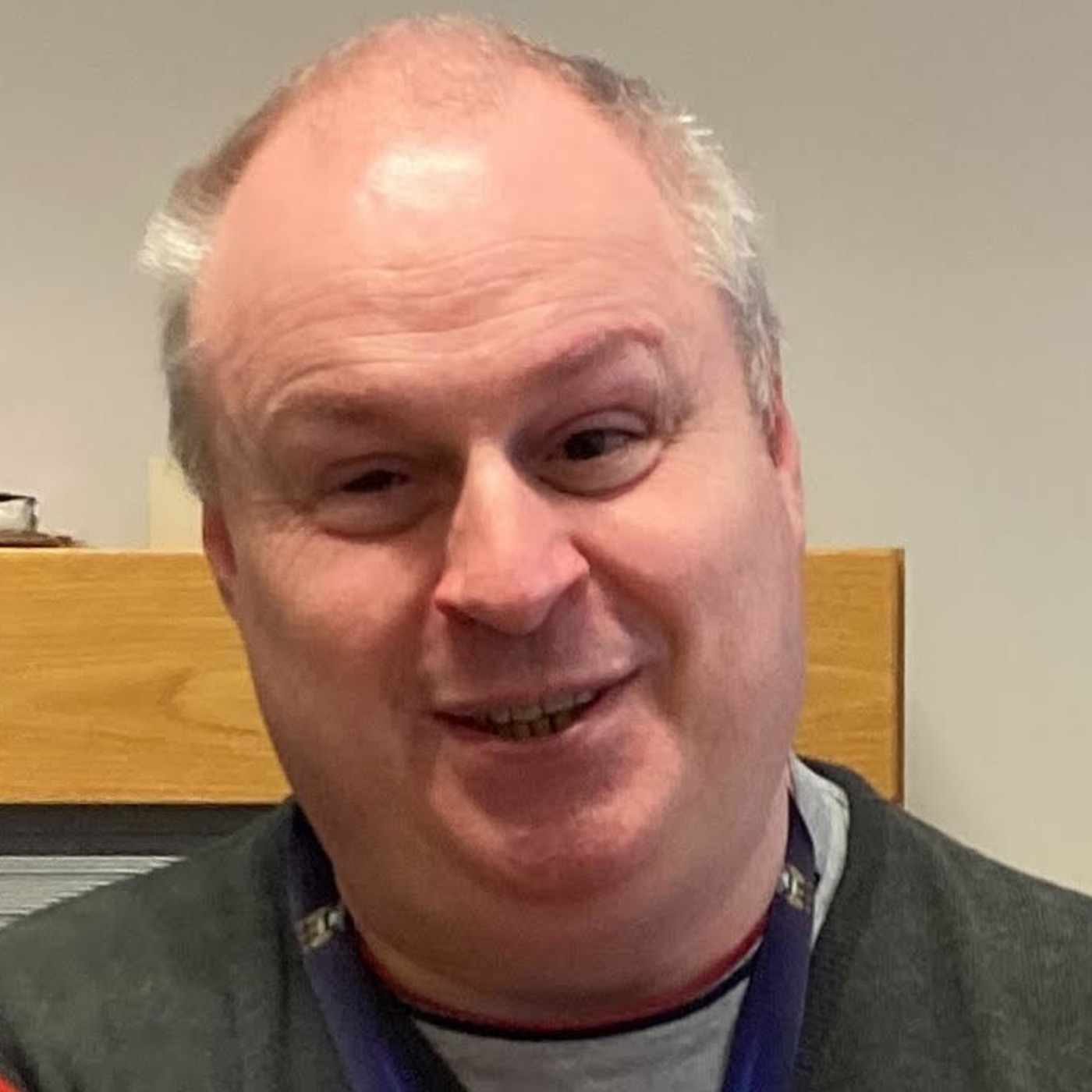
Richard Daly: I’m Aoifinn Devitt, and welcome to the 50 Faces Focus Podcast., a podcast committed to revealing inspiring people in the law. I’m joined today by Richard Daly. Richard was a classmate of mine at Trinity College Dublin who graduated in 1995 with an LLB. He is now an executive officer in the Irish Department of Defence where he works in the Legislative Instrument Department. Welcome, Richard. Thanks for joining me today.
Aoifinn Devitt: Thank you, Aoifinn, and thank you for having me.
Richard Daly: Well, Richard, let’s just start with you describing your current role. We’ve been law school classmates, obviously, so we go back a long way.
Aoifinn Devitt: Yes, indeed we do. We started in Trinity in 1991 together and graduated in ’95, and my current role, Aoifinn, is I’m an EO, an executive officer it’s called, in the public service here in Ireland in the Department of Defence, and I’m working in the legislation area.
Richard Daly: And let’s go back into your journey into this role, and maybe we can go right back to the very beginning because you are completely blind. Can you tell us a little bit about your education in the early years and how you came to Trinity?
Aoifinn Devitt: Yeah, okay. So I was born blind. I was born in 1967. I have no shame in saying that. I went to school in St. Joseph’s School for Boys in Drumcondra in Dublin, which is on the north side of Dublin. And I was there until I was 19 years of age. And after that, I didn’t have enough points for Trinity in the Leaving Cert, but I was always interested in the law. And I was inspired in that regard by a civics teacher called Mr. Woods, who instilled a great interest of the law in us, and it stuck with me. So I went to the Regional College in Waterford and did a legal studies certificate. And then I did a business diploma.
Richard Daly: And can you talk through just the education process for you at that time? I know when we met in Trinity, we had a process of converting a lot of the legal documents into Braille. There was a lot of scanning going on, used to record our lectures. How did the technology, I suppose, evolve during your early education?
Aoifinn Devitt: Okay, yes, so early education, Aoifinn, it was completely Braille. There was no recording, there was no scanning. It was everything— if something wasn’t in Braille, either had to get some kind soul to read it out for me, or I had to write it out in Braille if you could get somebody even to sit there and dictate it to me. But as time went on, as you said, I used to record the lectures in Trinity. I still put the notes into Braille, but I then got a machine which was called an M-Print. So for example, when the exams came around, it wasn’t a computer, but it was a printer that was attached to a Braille machine, and it used to convert the Braille that I was writing into text so that the lecturers could grade the exams or the essays.
Richard Daly: When it came to then thinking beyond Trinity and applying to the workplace, what kind of options did you have at that time and what did you pursue?
Aoifinn Devitt: Okay, when I left Trinity, I mean, I was thinking would it be Blackhall Place for solicitor or barrister, but I guess I sort of underestimated the problems that existed, and what I mean by that, Aoifinn, is that a lot of the legal procedural work, if you like, was paper-based, and to a person who’s totally blind like I am, If stuff can’t be scanned or made legible in some way, then obviously you’re going to run into difficulties. So I tried obtaining work in solicitor’s firms, and I basically spoke to several people, went for several interviews, but just was proving difficult to find some niche where I could sort of fit into. Then I was involved in local politics for a while here in my local area, and then I applied for the public service here in Ireland, and I was taken into the Department of Agriculture. I started to work there then, and I worked in what was then called Personnel, now called HR, and then I worked in the legal services area in agriculture doing secondary legislation. So I will say that since about 2008 to now, I’ve been using my legal qualifications that I obtained.
Richard Daly: And how has technology enabled that? Because obviously we’ve been out of college now for over 25 years. How has that changed now in terms of how accessible the profession is.
Aoifinn Devitt: Okay, well, technology has changed in leaps and bounds. In 1995, I mean, I’d never used a PC, and about 3 or 4 years later, I was using a DOS PC for a while and then went on to the dizzy heights of Windows 95 and have come up through the Windows version since. So technology now has made a huge difference. I mean, even everyday things, for example, years ago, even reading a newspaper for a blind person wasn’t something that you could do. You had to get somebody to do it for you. Now you can do all this sort of stuff online yourself.
Richard Daly: And obviously you’ve been fortunate in your workplace that accommodations have been made and the work is entirely accessible to you. Do you think that all workplaces are as accessible currently? And thinking about maybe the public sector and the private sector.
Aoifinn Devitt: I’d like to say I do, Aoifinn, and I don’t wish to sound negative, and a lot of workplaces are, and a lot of people make a lot of efforts to make workplaces accessible, but a lot of blind people— I can only speak on behalf of people who are blind because it’s something that I have experience of— A lot of blind people in all countries still find it very difficult to obtain work. Now, obviously, they’re not all interested in the legal area, but it’s still very difficult. There’s still a lot of attitudes there that, well, how will a blind person do this job? And instead of saying, how will a blind person do this job, why not ask a blind person how they’ll do the job? And maybe you’ll get further then by discussing things and saying, okay, well, X works, Y didn’t work, but you’ll always have trial and error. And unfortunately, sometimes there’s a bit more error than trial, but you will get there if you persevere with it.
Richard Daly: And this whole podcast series focuses on diversity and inclusion, and inclusion being a very important part of that. And it would seem that with some of these leaps that you mentioned in technology, that, that inclusion piece should be a lot easier, and that perhaps it’s the mindsets that need to change and some of the preconceptions. Are there groups that you’re aware of that are pushing to change some of these preconceptions and to advocate on behalf of blind people, deaf people, etc., in the workplace?
Aoifinn Devitt: Yeah, I mean, there are organizations here in Ireland. I know of the National Council for the Blind of Ireland, and they lobby on behalf of blind people, and they sort of, if somebody comes to them and asks them about issues, they will educate people, for want of a better phrase, even on how a blind person could do a certain job and be upfront about what blind people can’t do. I mean, there’s no good handing a blind person a 100-page handwritten file because even modern scanners can’t read handwriting yet, for example. So, you know, whereas it’s important to stress positives and what blind people can do, it’s also important to be realistic and say that there are certain things still that can’t be done.
Richard Daly: And one of the issues often when it comes to making a more diverse profession is the pipeline. To your knowledge, what would the average experience be now of going through third-level education the way you did, but with the technology that’s on offer? Do you feel that the students perhaps coming out of St. Joseph’s today have a greater set of opportunities perhaps now?
Aoifinn Devitt: I do, Aoifinn. Now, I don’t know any of them directly now. I’m a bit too old for them to be listening to, but a lot of the younger boys and the girls who come from schools for the blind, for the girls too, opportunities certainly would be there. They certainly would be there because the technology is there now, computer technology of all sorts. IPhones, for example, they have the voiceover on them now, so the technology is there. So like the opportunities are there, but it’s still Requires a lot of hard work though to get people to understand, even though attitudes are beginning to change. You know yourself that any worthwhile change, it takes time to achieve.
Richard Daly: Exactly, and also mentors and advocates and allies willing to work, I think, and push for that change by your side because obviously there will never be enough perhaps people in your situation to create a lobby. And just on that note, throughout your career, did you have mentors or guides that worked with you that influenced the way you approached your path?
Aoifinn Devitt: Yeah, funny you ask me that. When I was in Watford College, as I said to you earlier, I did a legal studies certificate and a business law diploma. One of the lecturers there was a man named Tony Scott, and Tony was the one really who said to me, you really should go on to a university and do the full law degree, he said to me, because you have a great aptitude for the law. Like, I was in a class of about 90 people and finished in the top 10 on the certificate and diploma side of the— so he was the one who really said to me, you can do it, because Let’s be honest about it, even back then, I was nervous. I think, how would I manage to do a full law degree? Go to somewhere like Trinity College Dublin, where the best of the best go? And I thought, would I be able to? And he said, well, you won’t know until you try. And that would be my sort of motto now as well to people. Try something. There’s no shame in failing at something. There’s absolutely no shame in saying, well, you know what? I did my absolute best. And unfortunately, my best wasn’t good enough. Or there’s no shame in saying, well, I can’t do it now, but maybe in 6 months or a year, I can have another go.
Richard Daly: And have there been any highs and lows throughout your career that you can mention? Obviously getting into Trinity, I’m sure, was a high. You graduated there, we had a great experience. Anything that you’re looking back that really stands out?
Aoifinn Devitt: Yeah, I mean, I suppose a low would be that it was very difficult to obtain employment, having worked so hard to get a law degree and having worked hard along with everybody else who got a law degree. Nobody ever got a law degree from doing nothing. So having worked so hard to get a law degree, finding it difficult to obtain employment was a low, even. I won’t lie, times were tough for a while, but you just had to keep battling away and keep going. And eventually another path opened for me, you know, that I kind of pushed the door open, if you like, and now have gone down this path. So we’re kind of back on a high again now. Like, I have a good job, there are career prospects, there are opportunities for promotion, and the work I’m doing is directly related to my law degree, and it’s valued within the section that I work in.
Richard Daly: And when you think about any creed or motto that you live by, or any words of advice perhaps, besides what Tony Scott said, that you have come back to throughout your life? Is there anything that you can share there?
Aoifinn Devitt: Yeah, I mean, I was born and raised Catholic, but I haven’t practiced for a number of years, so I’m not a religious person. But one sort of phrase, I suppose, from that time that stuck with me is, “Do unto others as you’d have done unto you.” So I try to treat people in the same way that I’d like to be respected, and I like to give people respect. Look, I’m not saying it always works out, Aoifinn, but sometimes you’ve said or done things that maybe you wish you hadn’t done, but just sort of do unto others as you’d have done unto you, I guess.
Richard Daly: And it seems that some of the challenges you spoke about perhaps are still being faced today. Just for our listeners, are there any groups or affinity groups perhaps that our listeners who want to change the balance of their organization, want to make them more accessible, are there groups that they can reach out to to learn how to do that? Because I think it is a learning curve, but it’s one that’s certainly worthwhile.
Aoifinn Devitt: I don’t know of any specific groups here in Ireland, I’ll be honest, even because I’m the only blind person who works. So I’ve started doing this as an I sort of make this up as I go along, for want of a better phrase, and we kind of adapt things and whatever. But I know, for example, the National Council for the Blind, like I mentioned earlier, I know in the US, for example, the American Council for the Blind and the Federation for the Blind, they do good work, I think, in the area of awareness and trying to change attitudes. But to me, the only way attitudes really change is when you work alongside your sighted peers or whatever, and people will say, yeah, okay, so Richard is blind. But after a while, people have said to me, and I don’t think it’s been said patronizing or in any way to be soft-soaping or anything, people say they actually forget that. They just see me as a fellow colleague who knows the work.
Richard Daly: Absolutely. That’s certainly something I’ve experienced. And it seems that— I’ve talked before about how neurodiversity in the workplace is an area that is most often overlooked. Where we speak a lot about gender equity as well as perhaps racial diversity, we don’t speak enough about different approaches to work. And certainly the inclusion piece, I think, can often get overlooked, perhaps because the numbers aren’t as large. In your case, blind people or deaf people, they aren’t as visible in terms of the numbers within that mix. So thank you very much for the— helping us to raise awareness of that. And when you look back, maybe at any advice you would want to give your younger self, anything you know now that perhaps you wish you had known when we met, when you were in your 20s?
Aoifinn Devitt: Just something that occurred to me, Aoifinn, was that when we were growing up, blind people weren’t taught, for example, to face the person as if you’re looking at the person. And in an age where body language and contact is so important, that was something that certainly should be borne in mind by people. It’s something that we weren’t taught, and it is something that’s taught now, as far as I’m aware. But blind people should be aware of their surroundings, facing the person that they’re speaking to, engaging with them and the person who is actually listening to them, then they’ll feel more engaged as well. And I’ve been told this at several interviews that I went to, that people commented on how I actually turned to face them and that they were actually engaged by what I was saying.
Richard Daly: And that wasn’t something that you were taught back during your school years? It just wasn’t something that was considered important?
Aoifinn Devitt: No, this was something that sort of only came up after. In fact, it would have been after I left school that people would have said, Rich, if you don’t mind me suggesting, sort of thing. People meaning well and, oh, I hope I’m not offending you. But no, any advice or— it’s not criticism, it’s constructive advice, we’ll say, even. So certainly it’s something that I would emphasize to younger blind people. If it’s something that they’re not being taught now in whatever part of the world they’re listening to this podcast from, it’s very important that you turn towards the person that you’re speaking to. If you’re being interviewed, for example, and there are 3 people, you can hear where the voices are, so you can turn to the left or right or stay centered as appropriate.
Richard Daly: Very interesting. Do you happen to have any statistics on the number of blind people there are in the world?
Aoifinn Devitt: I don’t even— the only statistic that I have, and it’s a very loose one, and it may even be slightly out of date now, I know that of the adult blind population, people over the age of 18, I understand that 70% of them are still not in work. And I’m told that it’s the same way in the US. It’s definitely that way here. It could even be slightly higher, but I don’t know the number of blind people around the world. I only know that it’s increasing because of things like diabetes and issues like that, but blind people being able to access employment, to me, I can’t stress enough, I think that’s the most— the day I got my first week’s pay when I joined the public service, the week I got my first— I got paid by check back then before it used to go into the bank. First couple of weeks I was on a paycheck, and when the lady was handing out the checks and I got my first— that I earned my first salary week, I actually sort of nearly swelled up with pride. It was a great feeling. And this is a feeling that I’m sure everybody feels that when you earn your first week’s, you think, wow, I earned my first week’s wages.
Richard Daly: I can certainly identify with that feeling. And is there anything else that you’d like to share of your reflections?
Aoifinn Devitt: Yeah, I guess I wish I’d known that technology might, if not hold me back, certainly would impede me in the early days of my career. Because like I said, it was difficult. But like I said, things have improved so much now technology-wise that Most things that I don’t really have many regrets in life. Maybe I should have stayed out of a few more bars when I was younger even, but never mind. But no, I have to say I’m not one for regrets really. So most of the things I wouldn’t particularly say, like I said, the technology side, I didn’t realize at the time how big an issue that was going to be when I left Trinity University. But like I said, things have improved now. So rather than looking back at what I might do different, I like to sort of look forward and what can I do different to make my job better or easier or make other people’s jobs easier in future.
Richard Daly: Well, thank you so much, Richard. It’s been a pleasure to reconnect here. From my perspective, you seem to have an extremely full college experience, and it was your kindness and your generosity that really struck me. And I think you’ve been extremely kind and forthright here about sharing your experience, because as I mentioned, we don’t have enough examples of these trajectories in the legal career in order that can actually enable us to make it better for the next generation. And I’m hoping that some of the wisdom you shared here will be actually something that can be acted upon in the future.
Aoifinn Devitt: Well, certainly, if— and like I said, at the risk of repeating myself, and I don’t wish to bore people, but really, if somebody has an interest in an area, whether it’s the law, whether it’s some other area that they’re particularly interested in, give it a try, examine it. Don’t let people say blind people can’t do something. You only know you can’t do something when you’ve tried and you actually can’t do something. Try and influence other people because like by you, I don’t like to use the word ambassador for blind people, but unfortunately if I do a good job, people will think that, oh, blind people are great at this. Now that isn’t fair because every person is different, as you know, but certainly because there are so few people with disabilities in the workplace, I think certainly for our generation, being a kind of ambassador, if you like, or trying to put the best foot forward and say to people, look, look what I can do. Okay, there are things I can’t do. There are lots of things I’ll never be able to. I’ll never be able to drive a car. But there are lots of things I can do, so let’s concentrate on what can be done rather than what can’t be done.
Richard Daly: I’m Aoifinn Devitt. Thank you for listening to the 50 Faces podcast. If you liked what you heard and would like to tune in to hear from more inspiring people in law and their life journeys, please subscribe on Apple Podcasts or wherever you get your podcasts. This podcast is for informational informational purposes only and should not be construed as investment advice, and all views are personal and should not be attributed to the organizations and affiliations of the host or any guest.
Aoifinn Devitt: If somebody has an interest in an area, whether it’s the law, whether it’s some other area that they’re particularly interested in, give it a try, examine it. Don’t let people say blind people can’t do something. You only know you can’t do something when you’ve tried and you actually can’t do something. Try and influence other people.
Richard Daly: I’m Aoifinn Devitt, and welcome to the 50 Faces Focus Podcast., a podcast committed to revealing inspiring people in the law. I’m joined today by Richard Daly. Richard was a classmate of mine at Trinity College Dublin who graduated in 1995 with an LLB. He is now an executive officer in the Irish Department of Defence where he works in the Legislative Instrument Department. Welcome, Richard. Thanks for joining me today.
Aoifinn Devitt: Thank you, Aoifinn, and thank you for having me.
Richard Daly: Well, Richard, let’s just start with you describing your current role. We’ve been law school classmates, obviously, so we go back a long way.
Aoifinn Devitt: Yes, indeed we do. We started in Trinity in 1991 together and graduated in ’95, and my current role, Aoifinn, is I’m an EO, an executive officer it’s called, in the public service here in Ireland in the Department of Defence, and I’m working in the legislation area.
Richard Daly: And let’s go back into your journey into this role, and maybe we can go right back to the very beginning because you are completely blind. Can you tell us a little bit about your education in the early years and how you came to Trinity?
Aoifinn Devitt: Yeah, okay. So I was born blind. I was born in 1967. I have no shame in saying that. I went to school in St. Joseph’s School for Boys in Drumcondra in Dublin, which is on the north side of Dublin. And I was there until I was 19 years of age. And after that, I didn’t have enough points for Trinity in the Leaving Cert, but I was always interested in the law. And I was inspired in that regard by a civics teacher called Mr. Woods, who instilled a great interest of the law in us, and it stuck with me. So I went to the Regional College in Waterford and did a legal studies certificate. And then I did a business diploma.
Richard Daly: And can you talk through just the education process for you at that time? I know when we met in Trinity, we had a process of converting a lot of the legal documents into Braille. There was a lot of scanning going on, used to record our lectures. How did the technology, I suppose, evolve during your early education?
Aoifinn Devitt: Okay, yes, so early education, Aoifinn, it was completely Braille. There was no recording, there was no scanning. It was everything— if something wasn’t in Braille, either had to get some kind soul to read it out for me, or I had to write it out in Braille if you could get somebody even to sit there and dictate it to me. But as time went on, as you said, I used to record the lectures in Trinity. I still put the notes into Braille, but I then got a machine which was called an M-Print. So for example, when the exams came around, it wasn’t a computer, but it was a printer that was attached to a Braille machine, and it used to convert the Braille that I was writing into text so that the lecturers could grade the exams or the essays.
Richard Daly: When it came to then thinking beyond Trinity and applying to the workplace, what kind of options did you have at that time and what did you pursue?
Aoifinn Devitt: Okay, when I left Trinity, I mean, I was thinking would it be Blackhall Place for solicitor or barrister, but I guess I sort of underestimated the problems that existed, and what I mean by that, Aoifinn, is that a lot of the legal procedural work, if you like, was paper-based, and to a person who’s totally blind like I am, If stuff can’t be scanned or made legible in some way, then obviously you’re going to run into difficulties. So I tried obtaining work in solicitor’s firms, and I basically spoke to several people, went for several interviews, but just was proving difficult to find some niche where I could sort of fit into. Then I was involved in local politics for a while here in my local area, and then I applied for the public service here in Ireland, and I was taken into the Department of Agriculture. I started to work there then, and I worked in what was then called Personnel, now called HR, and then I worked in the legal services area in agriculture doing secondary legislation. So I will say that since about 2008 to now, I’ve been using my legal qualifications that I obtained.
Richard Daly: And how has technology enabled that? Because obviously we’ve been out of college now for over 25 years. How has that changed now in terms of how accessible the profession is.
Aoifinn Devitt: Okay, well, technology has changed in leaps and bounds. In 1995, I mean, I’d never used a PC, and about 3 or 4 years later, I was using a DOS PC for a while and then went on to the dizzy heights of Windows 95 and have come up through the Windows version since. So technology now has made a huge difference. I mean, even everyday things, for example, years ago, even reading a newspaper for a blind person wasn’t something that you could do. You had to get somebody to do it for you. Now you can do all this sort of stuff online yourself.
Richard Daly: And obviously you’ve been fortunate in your workplace that accommodations have been made and the work is entirely accessible to you. Do you think that all workplaces are as accessible currently? And thinking about maybe the public sector and the private sector.
Aoifinn Devitt: I’d like to say I do, Aoifinn, and I don’t wish to sound negative, and a lot of workplaces are, and a lot of people make a lot of efforts to make workplaces accessible, but a lot of blind people— I can only speak on behalf of people who are blind because it’s something that I have experience of— A lot of blind people in all countries still find it very difficult to obtain work. Now, obviously, they’re not all interested in the legal area, but it’s still very difficult. There’s still a lot of attitudes there that, well, how will a blind person do this job? And instead of saying, how will a blind person do this job, why not ask a blind person how they’ll do the job? And maybe you’ll get further then by discussing things and saying, okay, well, X works, Y didn’t work, but you’ll always have trial and error. And unfortunately, sometimes there’s a bit more error than trial, but you will get there if you persevere with it.
Richard Daly: And this whole podcast series focuses on diversity and inclusion, and inclusion being a very important part of that. And it would seem that with some of these leaps that you mentioned in technology, that, that inclusion piece should be a lot easier, and that perhaps it’s the mindsets that need to change and some of the preconceptions. Are there groups that you’re aware of that are pushing to change some of these preconceptions and to advocate on behalf of blind people, deaf people, etc., in the workplace?
Aoifinn Devitt: Yeah, I mean, there are organizations here in Ireland. I know of the National Council for the Blind of Ireland, and they lobby on behalf of blind people, and they sort of, if somebody comes to them and asks them about issues, they will educate people, for want of a better phrase, even on how a blind person could do a certain job and be upfront about what blind people can’t do. I mean, there’s no good handing a blind person a 100-page handwritten file because even modern scanners can’t read handwriting yet, for example. So, you know, whereas it’s important to stress positives and what blind people can do, it’s also important to be realistic and say that there are certain things still that can’t be done.
Richard Daly: And one of the issues often when it comes to making a more diverse profession is the pipeline. To your knowledge, what would the average experience be now of going through third-level education the way you did, but with the technology that’s on offer? Do you feel that the students perhaps coming out of St. Joseph’s today have a greater set of opportunities perhaps now?
Aoifinn Devitt: I do, Aoifinn. Now, I don’t know any of them directly now. I’m a bit too old for them to be listening to, but a lot of the younger boys and the girls who come from schools for the blind, for the girls too, opportunities certainly would be there. They certainly would be there because the technology is there now, computer technology of all sorts. IPhones, for example, they have the voiceover on them now, so the technology is there. So like the opportunities are there, but it’s still Requires a lot of hard work though to get people to understand, even though attitudes are beginning to change. You know yourself that any worthwhile change, it takes time to achieve.
Richard Daly: Exactly, and also mentors and advocates and allies willing to work, I think, and push for that change by your side because obviously there will never be enough perhaps people in your situation to create a lobby. And just on that note, throughout your career, did you have mentors or guides that worked with you that influenced the way you approached your path?
Aoifinn Devitt: Yeah, funny you ask me that. When I was in Watford College, as I said to you earlier, I did a legal studies certificate and a business law diploma. One of the lecturers there was a man named Tony Scott, and Tony was the one really who said to me, you really should go on to a university and do the full law degree, he said to me, because you have a great aptitude for the law. Like, I was in a class of about 90 people and finished in the top 10 on the certificate and diploma side of the— so he was the one who really said to me, you can do it, because Let’s be honest about it, even back then, I was nervous. I think, how would I manage to do a full law degree? Go to somewhere like Trinity College Dublin, where the best of the best go? And I thought, would I be able to? And he said, well, you won’t know until you try. And that would be my sort of motto now as well to people. Try something. There’s no shame in failing at something. There’s absolutely no shame in saying, well, you know what? I did my absolute best. And unfortunately, my best wasn’t good enough. Or there’s no shame in saying, well, I can’t do it now, but maybe in 6 months or a year, I can have another go.
Richard Daly: And have there been any highs and lows throughout your career that you can mention? Obviously getting into Trinity, I’m sure, was a high. You graduated there, we had a great experience. Anything that you’re looking back that really stands out?
Aoifinn Devitt: Yeah, I mean, I suppose a low would be that it was very difficult to obtain employment, having worked so hard to get a law degree and having worked hard along with everybody else who got a law degree. Nobody ever got a law degree from doing nothing. So having worked so hard to get a law degree, finding it difficult to obtain employment was a low, even. I won’t lie, times were tough for a while, but you just had to keep battling away and keep going. And eventually another path opened for me, you know, that I kind of pushed the door open, if you like, and now have gone down this path. So we’re kind of back on a high again now. Like, I have a good job, there are career prospects, there are opportunities for promotion, and the work I’m doing is directly related to my law degree, and it’s valued within the section that I work in.
Richard Daly: And when you think about any creed or motto that you live by, or any words of advice perhaps, besides what Tony Scott said, that you have come back to throughout your life? Is there anything that you can share there?
Aoifinn Devitt: Yeah, I mean, I was born and raised Catholic, but I haven’t practiced for a number of years, so I’m not a religious person. But one sort of phrase, I suppose, from that time that stuck with me is, “Do unto others as you’d have done unto you.” So I try to treat people in the same way that I’d like to be respected, and I like to give people respect. Look, I’m not saying it always works out, Aoifinn, but sometimes you’ve said or done things that maybe you wish you hadn’t done, but just sort of do unto others as you’d have done unto you, I guess.
Richard Daly: And it seems that some of the challenges you spoke about perhaps are still being faced today. Just for our listeners, are there any groups or affinity groups perhaps that our listeners who want to change the balance of their organization, want to make them more accessible, are there groups that they can reach out to to learn how to do that? Because I think it is a learning curve, but it’s one that’s certainly worthwhile.
Aoifinn Devitt: I don’t know of any specific groups here in Ireland, I’ll be honest, even because I’m the only blind person who works. So I’ve started doing this as an I sort of make this up as I go along, for want of a better phrase, and we kind of adapt things and whatever. But I know, for example, the National Council for the Blind, like I mentioned earlier, I know in the US, for example, the American Council for the Blind and the Federation for the Blind, they do good work, I think, in the area of awareness and trying to change attitudes. But to me, the only way attitudes really change is when you work alongside your sighted peers or whatever, and people will say, yeah, okay, so Richard is blind. But after a while, people have said to me, and I don’t think it’s been said patronizing or in any way to be soft-soaping or anything, people say they actually forget that. They just see me as a fellow colleague who knows the work.
Richard Daly: Absolutely. That’s certainly something I’ve experienced. And it seems that— I’ve talked before about how neurodiversity in the workplace is an area that is most often overlooked. Where we speak a lot about gender equity as well as perhaps racial diversity, we don’t speak enough about different approaches to work. And certainly the inclusion piece, I think, can often get overlooked, perhaps because the numbers aren’t as large. In your case, blind people or deaf people, they aren’t as visible in terms of the numbers within that mix. So thank you very much for the— helping us to raise awareness of that. And when you look back, maybe at any advice you would want to give your younger self, anything you know now that perhaps you wish you had known when we met, when you were in your 20s?
Aoifinn Devitt: Just something that occurred to me, Aoifinn, was that when we were growing up, blind people weren’t taught, for example, to face the person as if you’re looking at the person. And in an age where body language and contact is so important, that was something that certainly should be borne in mind by people. It’s something that we weren’t taught, and it is something that’s taught now, as far as I’m aware. But blind people should be aware of their surroundings, facing the person that they’re speaking to, engaging with them and the person who is actually listening to them, then they’ll feel more engaged as well. And I’ve been told this at several interviews that I went to, that people commented on how I actually turned to face them and that they were actually engaged by what I was saying.
Richard Daly: And that wasn’t something that you were taught back during your school years? It just wasn’t something that was considered important?
Aoifinn Devitt: No, this was something that sort of only came up after. In fact, it would have been after I left school that people would have said, Rich, if you don’t mind me suggesting, sort of thing. People meaning well and, oh, I hope I’m not offending you. But no, any advice or— it’s not criticism, it’s constructive advice, we’ll say, even. So certainly it’s something that I would emphasize to younger blind people. If it’s something that they’re not being taught now in whatever part of the world they’re listening to this podcast from, it’s very important that you turn towards the person that you’re speaking to. If you’re being interviewed, for example, and there are 3 people, you can hear where the voices are, so you can turn to the left or right or stay centered as appropriate.
Richard Daly: Very interesting. Do you happen to have any statistics on the number of blind people there are in the world?
Aoifinn Devitt: I don’t even— the only statistic that I have, and it’s a very loose one, and it may even be slightly out of date now, I know that of the adult blind population, people over the age of 18, I understand that 70% of them are still not in work. And I’m told that it’s the same way in the US. It’s definitely that way here. It could even be slightly higher, but I don’t know the number of blind people around the world. I only know that it’s increasing because of things like diabetes and issues like that, but blind people being able to access employment, to me, I can’t stress enough, I think that’s the most— the day I got my first week’s pay when I joined the public service, the week I got my first— I got paid by check back then before it used to go into the bank. First couple of weeks I was on a paycheck, and when the lady was handing out the checks and I got my first— that I earned my first salary week, I actually sort of nearly swelled up with pride. It was a great feeling. And this is a feeling that I’m sure everybody feels that when you earn your first week’s, you think, wow, I earned my first week’s wages.
Richard Daly: I can certainly identify with that feeling. And is there anything else that you’d like to share of your reflections?
Aoifinn Devitt: Yeah, I guess I wish I’d known that technology might, if not hold me back, certainly would impede me in the early days of my career. Because like I said, it was difficult. But like I said, things have improved so much now technology-wise that Most things that I don’t really have many regrets in life. Maybe I should have stayed out of a few more bars when I was younger even, but never mind. But no, I have to say I’m not one for regrets really. So most of the things I wouldn’t particularly say, like I said, the technology side, I didn’t realize at the time how big an issue that was going to be when I left Trinity University. But like I said, things have improved now. So rather than looking back at what I might do different, I like to sort of look forward and what can I do different to make my job better or easier or make other people’s jobs easier in future.
Richard Daly: Well, thank you so much, Richard. It’s been a pleasure to reconnect here. From my perspective, you seem to have an extremely full college experience, and it was your kindness and your generosity that really struck me. And I think you’ve been extremely kind and forthright here about sharing your experience, because as I mentioned, we don’t have enough examples of these trajectories in the legal career in order that can actually enable us to make it better for the next generation. And I’m hoping that some of the wisdom you shared here will be actually something that can be acted upon in the future.
Aoifinn Devitt: Well, certainly, if— and like I said, at the risk of repeating myself, and I don’t wish to bore people, but really, if somebody has an interest in an area, whether it’s the law, whether it’s some other area that they’re particularly interested in, give it a try, examine it. Don’t let people say blind people can’t do something. You only know you can’t do something when you’ve tried and you actually can’t do something. Try and influence other people because like by you, I don’t like to use the word ambassador for blind people, but unfortunately if I do a good job, people will think that, oh, blind people are great at this. Now that isn’t fair because every person is different, as you know, but certainly because there are so few people with disabilities in the workplace, I think certainly for our generation, being a kind of ambassador, if you like, or trying to put the best foot forward and say to people, look, look what I can do. Okay, there are things I can’t do. There are lots of things I’ll never be able to. I’ll never be able to drive a car. But there are lots of things I can do, so let’s concentrate on what can be done rather than what can’t be done.
Richard Daly: I’m Aoifinn Devitt. Thank you for listening to the 50 Faces podcast. If you liked what you heard and would like to tune in to hear from more inspiring people in law and their life journeys, please subscribe on Apple Podcasts or wherever you get your podcasts. This podcast is for informational informational purposes only and should not be construed as investment advice, and all views are personal and should not be attributed to the organizations and affiliations of the host or any guest.