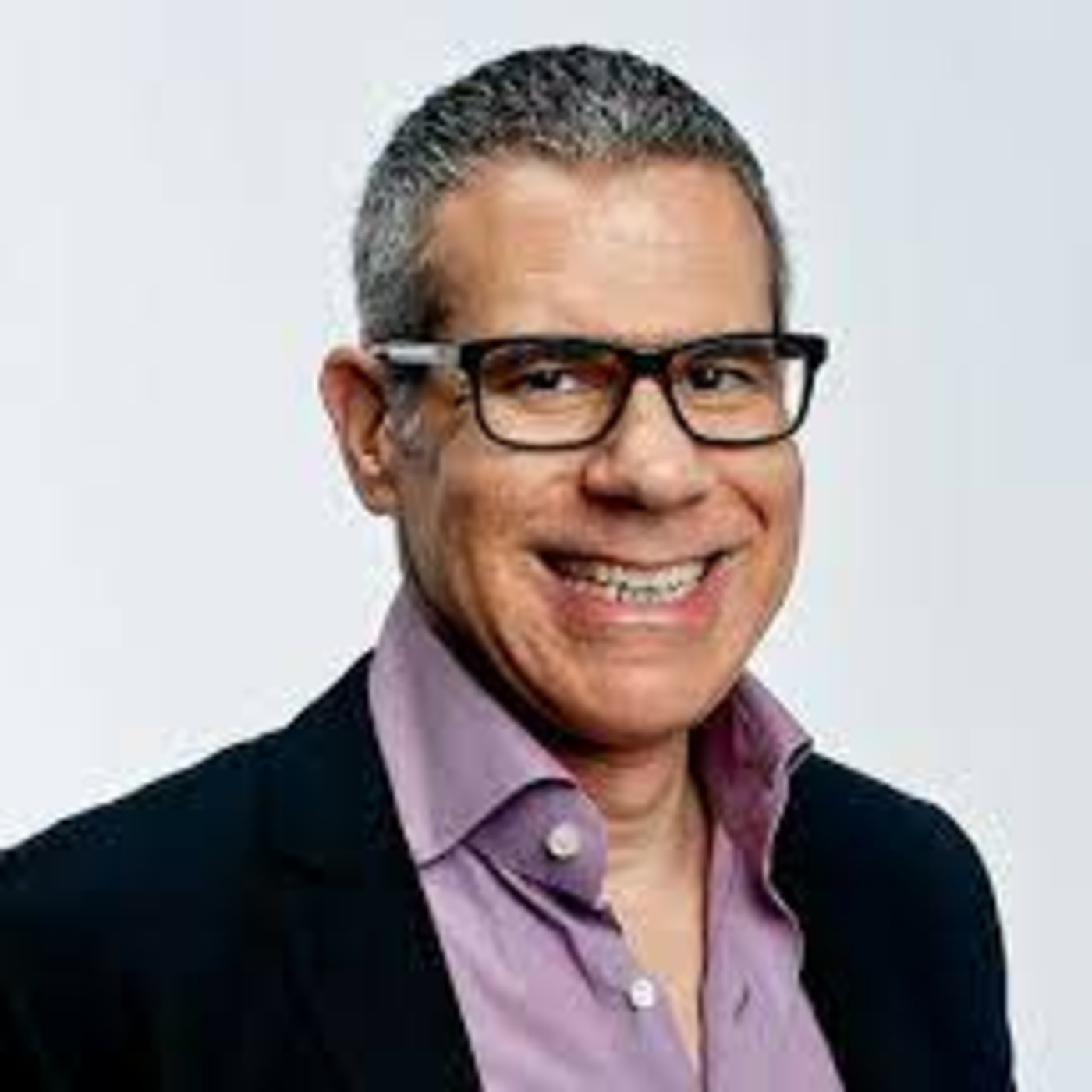
Aoifinn Devitt: This podcast was made possible by the kind support of Guylaine Charle and Charle Law PLLC, a law firm representing clients in the negotiation of a wide range of financial trading agreements based in New York City. Our next guest has been curious for his whole life. Curious as to the history of his small upstate New York birthplace. Curious as to how liberal-leaning history professors in Georgetown would challenge his beliefs. And curious as to what a stint in the Peace Corps would bring. Let’s hear how this curiosity took him from New York City to Paris to now 18 years in Bucharest, Romania, and the leadership of his law firm. I’m Aoifinn Devitt, and welcome to this 50 Faces focus series, which showcases the richness and diversity of inspiring people in the law. I’m joined today by Peri Zizi, who is a managing partner at Dentons based in Bucharest, Romania. And he has worked in corporate law since the mid-1990s when we met as officemates in a Midtown Manhattan law firm, Debevoise Plimpton. He is the president, founder, and board member of the Romanian Diversity Chamber of Commerce. Welcome, Perry. Thanks for joining me today.
Perry: Thank you for having me.
Aoifinn Devitt: Let’s start talking about your background, where you grew up, and your early interests, and ultimately what drove you to go into law.
Perry: Yes, well, I grew up in a small town in upstate New York called Oriskany, 2,000 residents, very, very small town sandwiched between the larger cities of Rome and Utica. Larger meaning 40,000 and 60,000 people. So it was a very, uh, bucolic part of the state, quite beautiful in fact. I was interested early on in community. Everything about my town fascinated me, and I’m not sure why. I remember for one of my Boy Scouts, my Cub Scout projects, I drew a map of the town with all the road names, and I rode my bicycle all over town to find out the names of these streets. This was of course well before the internet, and we had no map that I found of the town, so I mapped it out myself. I was a member of the Oriskany Historical Society, which largely focused on the famous Battle of Oriskany, which is characterized as the turning point of the American Revolution. The Americans lost but slowed down the British advance long enough to make a critical difference in the war effort.
Aoifinn Devitt: So those early interests in community and in history, what did you then move on to what did you study when you went to undergrad?
Perry: Well, I did go away for undergrad to Georgetown University, which was quite a long way from Morristown in many ways. And I studied government as my major, which is known as political science in a lot of other schools, and largely because my interest in politics, which, if I can rewind a moment, I worked in Republican politics and in the Utica area, Oneida County, since I was 16, I guess, after attending a Washington Workshops Congressional Seminar in Washington, D.C., which really hooked me on the city and hooked me on politics. And I was definitely a Reagan Republican. I would say Libertarian Republican, but still very much a Reagan supporter and worked in Republican politics, Georgetown, until I left Washington. I was actually named a committeeman for the District of Columbia, which is the equivalent of a state committeeman. So, you know, more on that later and how the Republican Party left me, as Reagan said about the Democratic Party. But I studied, as I was saying, government, but my minor was history. And I found it an interesting combination because at least at Georgetown, the government professors tended to be more conservative, history professors tend to be more liberal. And I always tried to go out of my way to take the most liberal professors I could find on topics like Central America that would have inflamed conservative passions, just to understand what the arguments and what the positions meant. I didn’t like to dismiss arguments out of hand. I think it It really in many ways changed my own perspective, which is good, but it got me to understand my own positions that I held more thoroughly.
Aoifinn Devitt: That’s so interesting. Clearly at an early stage, you were pushing yourself out of your comfort zone in terms of your opinions. And we had many chats during our times as officemates in New York, and one of the themes that came up over and over again was your time in the Peace Corps and the impression that made on you. Can you tell us about that? Why you decided to pursue that, what you did, and the impression it had on you.
Perry: Yeah, a lot of reasons why I went to the Peace Corps. Primarily, I wanted to devote a large block of time to community service, and this was a great way to do it. I was really burned out on school and did not want to go to law school right away, which was ultimately the plan. Plus, I wanted to do something just completely different, and this was absolutely different. I was— ultimately, when I applied to Peace Corps, I had the opportunity to rank my choices of geographical region, and I think I chose Latin America as my first choice, Southeast Asia second choice, Sub-Saharan Africa as the third choice, and Asia Pacific— the Pacific, rather— as the fourth choice. At the time, which I didn’t know when I applied, Peace Corps was usually offering last choice to applicants to test their commitment. So I got offered Palau, where I had zero interest in going to, but I went because, in fact, I was committed, and I’m glad I went. In many ways, Being in Palau was like being in Ariskede, a very, very small community, a country of 16,000 people, the whole country. And the community where I was assigned to work in youth development and to teach English as a second language was only 1,000 people. So it was comfortable in a lot of ways I never expected, yet of course so different that it challenged my perspective. And yes, we did speak a lot about Palau. It was just a few years after I’d gotten back, and in particular being in a pressure cooker like in Manhattan, so many times when there were demands on time and demands on your intellect and coming up with solutions quickly, I often stepped back and asked myself, what would I do if I were in Palau? And it was something my former fellow Peace Corps volunteers, I think, did almost universally. It was a question we asked ourselves when we found ourselves in difficult situations. And being in Palau, I would say, and what that meant was really putting things in perspective, stepping back, not getting upset, shouting at people for no reason, keeping a sense of composure and calm and perspective.
Aoifinn Devitt: Clearly, that drove taste a for adventure, I would imagine. Let’s talk about what took you from ultimately law school into a law firm in New York, then on to Paris, and now Romania.
Perry: Well, yeah, interesting question, which was not on your list precisely, but we’ll tackle it anyway because it does tie into my original plans. I had wanted to go to law school. Not to practice law. I never planned to practice law. I wanted a law degree because, at least in the U.S., it’s sort of the key to many different professions. And for me, I wanted to go into politics. That is, until I went to Peace Corps. And while in Peace Corps, I really just— I just developed a different perspective and realized I wanted to be more, I would say, true to myself. And a perception of politicians is always projecting an image they believe other people wanted to see. No longer appealed to me. I still follow politics, obviously, and you know I’m passionate about it. I think we’ve had many interesting discussions, but actually to be in politics, especially these days, I think would be absolutely not what I would be interested in. So Peace Corps led me to question what I was going to do. I still had been admitted to Columbia Law School, went to Columbia, got my degree. I really didn’t know what I was going to do. I ended up having a mountain of debt, as many U.S. Law school graduates get, and had to pay that debt off. So I took a job in a big law firm. As the years went by, I realized that I actually liked practicing law, and the more and more autonomy I got, the more I liked it. The worst thing as a first-year associate was being called on a Friday at 5 o’clock and told you needed to stay over the weekend suddenly, and there go your weekend plans, which was quite often. When you get more senior, of course, you have more control over your time, you have more control over the pace of the transaction. And I’d actually liked it. I had to admit at one point I enjoyed it. So there was my decision to remain in the law. And ultimately I decided to leave New York because I just was kind of burned out on living in Manhattan after 8 years, law school plus Debevoise, and decided to move to Paris. Well, Debevoise sent me to London for a period of time, as you may remember. And that’s where I met my future husband. And it turns out he was French. So everything sort of worked out. And the greater good of the universe, I guess.
Aoifinn Devitt: And then Paris to Romania, that’s not usually on the circuit. Where did that come in?
Perry: Well, you know, they call Bucharest a little Paris, or is it they call Paris big Bucharest? I can’t remember. I think it’s little Paris. So it was not too far out of reach. I had been working on some transactions in Moldova, in Montenegro, while I was in Paris. And got a taste for the region. When an offer came along to be based in Bucharest at the time when Romania was starting to look more interesting to foreign investors, and I was also expected to be covering the region, I thought it was a great opportunity, so I took it in 2003. I’ve been here 18 years now.
Aoifinn Devitt: And what’s your main practice area now?
Perry: Right now I’m head of corporate, so I’m mostly doing corporate M&A and real estate M&A. I have moved away from banking, but you know, as a resident expat in an office in a country like Romania, you tend to have to do whatever comes across your desk. So I have a US client that asks me, who asks me to help on a dispute with a local joint venture partner. I’m usually stepping into that as well. So we’re not as specialized as New York, Paris, London. On the other hand, we are moving toward more specialization. So, you know, I would, I think the days of every lawyer doing everything are ending. And, you know, within 5, 6 years, I think we’ll see more lawyers who are only doing real estate or only doing finance or only doing corporate, which is definitely not the case now here in Romania.
Aoifinn Devitt: And as you know, I work— spent some time working in Hong Kong, and when you move from New York City to Hong Kong or the emerging market arena, there is definitely a much greater necessity of innovating, not operating with precedent, maybe being a bit more commercial in one’s approach, because it’s not really— there’s not cookie-cutter anything. And do you find that in Romania? And did you find that when you first arrived that you were dealing with some uncharted territory in some respects?
Perry: Oh, for sure, you hit the nail on the head. And it’s interesting because I had the same discussion with someone just a few days ago. We’re working on a large acquisition now, and we face issues with some of the counterparties, uh, taking what I would call a not commercial view on a transaction that’s a bit complicated given the target.
Aoifinn Devitt: And just moving back to your personal story, so this podcast series has a large focus on minority voices. And we started out by examining diversity in the investment profession. How well do you think the legal profession is doing in encouraging diversity within its ranks? And maybe you can give your own impressions of perhaps change in that respect as a member of the LGBT community.
Perry: Yes, well, I think the easiest to look at first is women’s advancement. Because there’s been a bit more focus on that for quite some time, as you know. And I think you probably remember at Debevoise, there were folks like Debbie Stiles were seen as role models, and there weren’t that many women partners. Unfortunately, I don’t think we’ve done much better. If you look at some of the recent surveys, in fact, there was one that came out, looking for it now, showing leading firms in the 25 to 30% range. You know, after, honestly, after 25 years when we started, 26 years. Is that acceptable? I can’t imagine, because even then we were not where we needed to be in terms of women partners. Other categories, I mean, obviously I’m not in the States now, so I’m not really at the end of— I don’t have a front row seat in the Black Lives Matter movement, and I don’t have a sense for how law firms in the States are reacting to it. But, you know, in Europe, because of GDPR, we have some issues with actually collecting data about LGBT, and I would even say Roma. So to measure where you are and where you need to get, it becomes a bit harder. And I don’t know you know, that, any law firms I can think of, at least on the continent, have particular goals for a number of LGBT or other minority partners. Certainly women, but that’s where it stops.
Aoifinn Devitt: And have you seen any particular methods or interventions work better than others? And I’m thinking affinity groups, whether in the legal community, maybe locally, or even within a firm, such as a network. Maybe a greater kind of celebration of certain days, like say Pride Month within a firm, or, you know, just seminars, anti-bias training? Has anything like that worked in your view?
Perry: I think those are all tools that work to some degree, and it really also depends on the buy-in of management, doesn’t it? Because if it’s a half-hearted attempt to tick the box, it’s not going to be much different, is it? But clearly, and you pointed out, I think outreach to students, that’s important. I actually met a very young trainee just last week who has completely, completely different worldview on diversity than some of the older folks you deal with in the profession. And I think that’s coming, and students that we hire want to know what we’re doing, and not just, you know, in Germany or France, but in a lot of our jurisdictions. And they’re going to be attracted— the best talent will be attracted to law firms that are more open to diversity.
Aoifinn Devitt: And I know you’ve commented on the impact of the pandemic and how you actually believe this will enhance diversity because it will enhance the ability of employees to work remotely, maybe integrate that with their family lives. What are your thoughts on that?
Perry: Well, indeed, we actually just hired a very talented lawyer who was out on maternity leave for a couple of years. She found it difficult to identify a law firm that would actually support the schedule she needs with her child. With the use of technology, particularly Zoom and other medium, We have no issue having male or female attorneys work at home to take care of kids. It’s worked pretty well. And so we told her, no issue on our side. We can have flexible schedules as long as you get your work done and you can arrange with the folks with whom you work to be available at various times. We’re flexible. I don’t think that was really the case a couple of years ago. We’ve moved to a point where people like that and persons with disabilities who may physically find it difficult to get into the office are able to work at a distance. I think that’s great.
Aoifinn Devitt: You know, it’s interesting also speaking about the different groups and progress made throughout, say, the legal profession over the last 20, 25 years, in our case getting closer to 30, um, since we’ve been in it. But one of the areas I would say that there has been the most obvious change of opinion or just change of level of discussion has been in the LGBT area. I think women’s rights and issues were kind of quite clear back in 1995. We knew we had to do more to improve ethnic diversity back in ’95, but I’m not sure there was as much discussion around LGBT issues then. Would you say you’ve seen a change over the course of that time?
Perry: Oh, for sure. I mean, in some ways it’s not even a question anymore. The global head of our TMT practice is LGBT. We have LGBT leaders at various levels of the firm, and honestly, it never comes up as controversial or an issue, I would say, in most of our offices. I mean, probably some offices I don’t really deal with much that where this is still problematic because we’re the largest law firm in the world and we’re in so many countries that, you know, where there’s still some cultural resistance, you know, this is, you know, at least for the moment, this is how it is. But yeah, I don’t think these days, I think the progress has been tremendous. You were, you know, I remember back in 1995, kind of, it was a lot of mostly whispers in the hallway of who was and who wasn’t. There was, you know, sort of an informal group, but it was not very visible. And these days, as you said, you have law firms sponsoring Pride. We sponsored Pride the last time it took place in Bucharest in 2019. Our law firm sponsors it in Amsterdam and Warsaw and other places with no compunction, no hesitation.
Aoifinn Devitt: And just tied to that, what are you focusing on in your role with the Romania Diversity Chamber of Commerce? I know you were a founder there.
Perry: Yes, well, the Diversity Chamber of Commerce was formed autumn of last year. After some discussion with stakeholders over a couple of years. If I can back up and explain how we formed— when I took over managing— as managing partner of Bucharest office, we signed the Diversity Charter, which as you know is a European Union effort to roll out a set of principles in each country that will be adhered to by companies, governmental agencies, NGOs. We signed, very happy to sign, but we thought, okay, what’s next? We had a nice press release, we had some publicity, but that was just for us, the starting point. It wasn’t the end point. And this— a lot of other companies with whom we spoke felt the same way. So we thought, a lot of NGOs out there that are helping Roma children or persons with disabilities get access to transportation, we thought, why don’t we, you know, as business people, do something that we know best, which is to set up a chamber of commerce? And ultimately, like as with any chamber of commerce, one of the main goals is to help members do more business, make more money. Economic empowerment is a very important part of why a lot of minority-owned or led businesses don’t have a seat at the table and are not able to do business with large multinationals. So our initial 4 pillars are Roma, LGBT, women, and persons with disabilities. We have plans to trainings, mixers, certification program for supply chains so that multinationals that have requirement to buy, procure a certain percentage of goods or services from companies owned by women or LGBT or other groups, will know that the companies they’re dealing with are actually meeting the requirements of their program. In Romania, companies presently don’t implement the diversity supply chain because there’s nobody certified, and we like to fulfill that goal working with some of our members to create the certification program.
Aoifinn Devitt: That’s fantastic work there. Congratulations on that. Going back to your personal career again, can we speak about any key people who have influenced you along your journey and how?
Perry: Well, my parents certainly put up with me for 54 years, many travels, and my plans that they never would have foreseen, even starting with going away to a university and then going into Peace Corps. So they have you been, know, largely understanding and ultimately come around to support me on everything. So they’ve definitely been You know, without them, I certainly wouldn’t be where I am now. A couple of other personalities I guess I would mention. One is a man named Bob Healy, who was a very good friend, and he was a pharmacist in a town near where we lived, but lived in Oriskany, the same town I lived. He and his wife Rose were lovely people, good friends, and it was Bob who got me really involved in philately, which is stamp collecting. And through stamp collecting, it also opened my— opened the door to travel in an exotic world outside of Oriskany. Bob and his wife used to go to Switzerland occasionally. I love looking at their photos and hearing about their trip. Yet coupled with that, Bob was also involved in the Oriskany Historical Society and loved local history. So it was this love of what was around him in the local, but this curiosity of the greater world outside as well, that definitely influenced me. Another person I would say who was was still— actually still living is my high school English teacher, Fran Conway, who taught me in the 11th and 12th grade. And she just had a love of education, which has never died in me, and I’ve tried to instill in my own children. Yet she also always had this resistance to the sometimes suffocating bureaucracy of the public school system in New York. She didn’t just kind of tick the box and do what she was told. You always sensed that she was a little edgy and resisted, uh, being told to do something. I remember, in fact, know, you I don’t necessarily agree, but I remember when we would say the Pledge of Allegiance each morning in school, sometimes at the end when we would say, “And liberty and justice for all,” she would say, which, “Almost,” you know, was her way of sort of tweaking those in authority, but, you know, made her political point.
Aoifinn Devitt: That’s wonderful. A rebel, clearly, and probably still. In terms of any advice that maybe you received from any of these people, or any creed or motto that you live by and how you see the Is world? There anything you can say?
Perry: You know, there are a lot of mottos, a lot of creeds that I would say have influenced me. To choose one and only one, I would have to go back to a book that Mrs. Conway had us read, which was To Kill a Mockingbird. And there was a quote from there, it was something like, “You never understand another person until you see things from their viewpoint, until you walk it, get into their skin and walk around in And, it.” you know, I think you probably see now from what we’ve discussed how I’ve always tried to challenge my perspectives and explore the wide world and understand it, that influenced me a lot and still does. And it influences me in negotiations too, even something as mundane as negotiating a contract, because if you don’t really understand what the other side is trying to get at, trying to achieve on a particular clause, you can end up going— and you know well— you can end up going round and round on discussions that are ultimately meaningless. So I always try to tease out what the business concern is to try to find a reasonable solution that’s workable to both sides.
Aoifinn Devitt: I love that, Farran, and also just how it can be used in your business setting as well as just in life. And in order— I’m sure it promotes empathy. My last question is around any advice you might have for your younger self, for that young student perhaps either entering or exiting Georgetown. Is there anything you know now that you wish you had known then?
Perry: My younger self? Wait, I thought I was young. What are you saying?
Aoifinn Devitt: Age is a state of mind.
Perry: Yeah, one of my teachers in high school used to say this, uh, Charlene Purnett, who’s still a dear friend. She was head of the gifted and talented program. She said, you know, I just don’t feel like an adult still. She said, and I’m 50 years old. And sometimes I feel that way too. I suspect you do too, which is good. I think being young at heart is ultimately the key to longevity. It’s knock on wood, right? You know, I guess what would I say to my younger self? I think of that scene, you know, from Back to the Future when Biff goes back and smacks the younger Biff on the head. It was one of the Back to the Future movies. I don’t think I would smack myself in the head with a newspaper like that, but I would say, look, life does not turn out the way you think it will, and that’s fine.
Aoifinn Devitt: Wonderful words to end by. Well, thank you, Perry. It’s been, as I expected, a great pleasure speaking with you today. Your irrepressible curiosity for life has been contagious and has been since we met in that office in 1995, as well as just your love of life and your, your very fun approach to it. So thank you very much for sharing your story and your insights with us.
Perry: You’re quite welcome. It was a pleasure, and I hope this is inspirational in some way.
Aoifinn Devitt: I’m Aoifinn Devitt. Thank you for listening to our 50 Faces Focus Series. If you liked what you heard and would like to tune in to hear more inspiring lawyers and their stories, Please subscribe on Apple Podcasts or wherever you get your podcasts. This podcast is for information only and should not be construed as investment or legal advice. All views are personal and should not be attributed to the organizations of the host or any guest.
Aoifinn Devitt: This podcast was made possible by the kind support of Guylaine Charle and Charle Law PLLC, a law firm representing clients in the negotiation of a wide range of financial trading agreements based in New York City. Our next guest has been curious for his whole life. Curious as to the history of his small upstate New York birthplace. Curious as to how liberal-leaning history professors in Georgetown would challenge his beliefs. And curious as to what a stint in the Peace Corps would bring. Let’s hear how this curiosity took him from New York City to Paris to now 18 years in Bucharest, Romania, and the leadership of his law firm. I’m Aoifinn Devitt, and welcome to this 50 Faces focus series, which showcases the richness and diversity of inspiring people in the law. I’m joined today by Peri Zizi, who is a managing partner at Dentons based in Bucharest, Romania. And he has worked in corporate law since the mid-1990s when we met as officemates in a Midtown Manhattan law firm, Debevoise Plimpton. He is the president, founder, and board member of the Romanian Diversity Chamber of Commerce. Welcome, Perry. Thanks for joining me today.
Perry: Thank you for having me.
Aoifinn Devitt: Let’s start talking about your background, where you grew up, and your early interests, and ultimately what drove you to go into law.
Perry: Yes, well, I grew up in a small town in upstate New York called Oriskany, 2,000 residents, very, very small town sandwiched between the larger cities of Rome and Utica. Larger meaning 40,000 and 60,000 people. So it was a very, uh, bucolic part of the state, quite beautiful in fact. I was interested early on in community. Everything about my town fascinated me, and I’m not sure why. I remember for one of my Boy Scouts, my Cub Scout projects, I drew a map of the town with all the road names, and I rode my bicycle all over town to find out the names of these streets. This was of course well before the internet, and we had no map that I found of the town, so I mapped it out myself. I was a member of the Oriskany Historical Society, which largely focused on the famous Battle of Oriskany, which is characterized as the turning point of the American Revolution. The Americans lost but slowed down the British advance long enough to make a critical difference in the war effort.
Aoifinn Devitt: So those early interests in community and in history, what did you then move on to what did you study when you went to undergrad?
Perry: Well, I did go away for undergrad to Georgetown University, which was quite a long way from Morristown in many ways. And I studied government as my major, which is known as political science in a lot of other schools, and largely because my interest in politics, which, if I can rewind a moment, I worked in Republican politics and in the Utica area, Oneida County, since I was 16, I guess, after attending a Washington Workshops Congressional Seminar in Washington, D.C., which really hooked me on the city and hooked me on politics. And I was definitely a Reagan Republican. I would say Libertarian Republican, but still very much a Reagan supporter and worked in Republican politics, Georgetown, until I left Washington. I was actually named a committeeman for the District of Columbia, which is the equivalent of a state committeeman. So, you know, more on that later and how the Republican Party left me, as Reagan said about the Democratic Party. But I studied, as I was saying, government, but my minor was history. And I found it an interesting combination because at least at Georgetown, the government professors tended to be more conservative, history professors tend to be more liberal. And I always tried to go out of my way to take the most liberal professors I could find on topics like Central America that would have inflamed conservative passions, just to understand what the arguments and what the positions meant. I didn’t like to dismiss arguments out of hand. I think it It really in many ways changed my own perspective, which is good, but it got me to understand my own positions that I held more thoroughly.
Aoifinn Devitt: That’s so interesting. Clearly at an early stage, you were pushing yourself out of your comfort zone in terms of your opinions. And we had many chats during our times as officemates in New York, and one of the themes that came up over and over again was your time in the Peace Corps and the impression that made on you. Can you tell us about that? Why you decided to pursue that, what you did, and the impression it had on you.
Perry: Yeah, a lot of reasons why I went to the Peace Corps. Primarily, I wanted to devote a large block of time to community service, and this was a great way to do it. I was really burned out on school and did not want to go to law school right away, which was ultimately the plan. Plus, I wanted to do something just completely different, and this was absolutely different. I was— ultimately, when I applied to Peace Corps, I had the opportunity to rank my choices of geographical region, and I think I chose Latin America as my first choice, Southeast Asia second choice, Sub-Saharan Africa as the third choice, and Asia Pacific— the Pacific, rather— as the fourth choice. At the time, which I didn’t know when I applied, Peace Corps was usually offering last choice to applicants to test their commitment. So I got offered Palau, where I had zero interest in going to, but I went because, in fact, I was committed, and I’m glad I went. In many ways, Being in Palau was like being in Ariskede, a very, very small community, a country of 16,000 people, the whole country. And the community where I was assigned to work in youth development and to teach English as a second language was only 1,000 people. So it was comfortable in a lot of ways I never expected, yet of course so different that it challenged my perspective. And yes, we did speak a lot about Palau. It was just a few years after I’d gotten back, and in particular being in a pressure cooker like in Manhattan, so many times when there were demands on time and demands on your intellect and coming up with solutions quickly, I often stepped back and asked myself, what would I do if I were in Palau? And it was something my former fellow Peace Corps volunteers, I think, did almost universally. It was a question we asked ourselves when we found ourselves in difficult situations. And being in Palau, I would say, and what that meant was really putting things in perspective, stepping back, not getting upset, shouting at people for no reason, keeping a sense of composure and calm and perspective.
Aoifinn Devitt: Clearly, that drove taste a for adventure, I would imagine. Let’s talk about what took you from ultimately law school into a law firm in New York, then on to Paris, and now Romania.
Perry: Well, yeah, interesting question, which was not on your list precisely, but we’ll tackle it anyway because it does tie into my original plans. I had wanted to go to law school. Not to practice law. I never planned to practice law. I wanted a law degree because, at least in the U.S., it’s sort of the key to many different professions. And for me, I wanted to go into politics. That is, until I went to Peace Corps. And while in Peace Corps, I really just— I just developed a different perspective and realized I wanted to be more, I would say, true to myself. And a perception of politicians is always projecting an image they believe other people wanted to see. No longer appealed to me. I still follow politics, obviously, and you know I’m passionate about it. I think we’ve had many interesting discussions, but actually to be in politics, especially these days, I think would be absolutely not what I would be interested in. So Peace Corps led me to question what I was going to do. I still had been admitted to Columbia Law School, went to Columbia, got my degree. I really didn’t know what I was going to do. I ended up having a mountain of debt, as many U.S. Law school graduates get, and had to pay that debt off. So I took a job in a big law firm. As the years went by, I realized that I actually liked practicing law, and the more and more autonomy I got, the more I liked it. The worst thing as a first-year associate was being called on a Friday at 5 o’clock and told you needed to stay over the weekend suddenly, and there go your weekend plans, which was quite often. When you get more senior, of course, you have more control over your time, you have more control over the pace of the transaction. And I’d actually liked it. I had to admit at one point I enjoyed it. So there was my decision to remain in the law. And ultimately I decided to leave New York because I just was kind of burned out on living in Manhattan after 8 years, law school plus Debevoise, and decided to move to Paris. Well, Debevoise sent me to London for a period of time, as you may remember. And that’s where I met my future husband. And it turns out he was French. So everything sort of worked out. And the greater good of the universe, I guess.
Aoifinn Devitt: And then Paris to Romania, that’s not usually on the circuit. Where did that come in?
Perry: Well, you know, they call Bucharest a little Paris, or is it they call Paris big Bucharest? I can’t remember. I think it’s little Paris. So it was not too far out of reach. I had been working on some transactions in Moldova, in Montenegro, while I was in Paris. And got a taste for the region. When an offer came along to be based in Bucharest at the time when Romania was starting to look more interesting to foreign investors, and I was also expected to be covering the region, I thought it was a great opportunity, so I took it in 2003. I’ve been here 18 years now.
Aoifinn Devitt: And what’s your main practice area now?
Perry: Right now I’m head of corporate, so I’m mostly doing corporate M&A and real estate M&A. I have moved away from banking, but you know, as a resident expat in an office in a country like Romania, you tend to have to do whatever comes across your desk. So I have a US client that asks me, who asks me to help on a dispute with a local joint venture partner. I’m usually stepping into that as well. So we’re not as specialized as New York, Paris, London. On the other hand, we are moving toward more specialization. So, you know, I would, I think the days of every lawyer doing everything are ending. And, you know, within 5, 6 years, I think we’ll see more lawyers who are only doing real estate or only doing finance or only doing corporate, which is definitely not the case now here in Romania.
Aoifinn Devitt: And as you know, I work— spent some time working in Hong Kong, and when you move from New York City to Hong Kong or the emerging market arena, there is definitely a much greater necessity of innovating, not operating with precedent, maybe being a bit more commercial in one’s approach, because it’s not really— there’s not cookie-cutter anything. And do you find that in Romania? And did you find that when you first arrived that you were dealing with some uncharted territory in some respects?
Perry: Oh, for sure, you hit the nail on the head. And it’s interesting because I had the same discussion with someone just a few days ago. We’re working on a large acquisition now, and we face issues with some of the counterparties, uh, taking what I would call a not commercial view on a transaction that’s a bit complicated given the target.
Aoifinn Devitt: And just moving back to your personal story, so this podcast series has a large focus on minority voices. And we started out by examining diversity in the investment profession. How well do you think the legal profession is doing in encouraging diversity within its ranks? And maybe you can give your own impressions of perhaps change in that respect as a member of the LGBT community.
Perry: Yes, well, I think the easiest to look at first is women’s advancement. Because there’s been a bit more focus on that for quite some time, as you know. And I think you probably remember at Debevoise, there were folks like Debbie Stiles were seen as role models, and there weren’t that many women partners. Unfortunately, I don’t think we’ve done much better. If you look at some of the recent surveys, in fact, there was one that came out, looking for it now, showing leading firms in the 25 to 30% range. You know, after, honestly, after 25 years when we started, 26 years. Is that acceptable? I can’t imagine, because even then we were not where we needed to be in terms of women partners. Other categories, I mean, obviously I’m not in the States now, so I’m not really at the end of— I don’t have a front row seat in the Black Lives Matter movement, and I don’t have a sense for how law firms in the States are reacting to it. But, you know, in Europe, because of GDPR, we have some issues with actually collecting data about LGBT, and I would even say Roma. So to measure where you are and where you need to get, it becomes a bit harder. And I don’t know you know, that, any law firms I can think of, at least on the continent, have particular goals for a number of LGBT or other minority partners. Certainly women, but that’s where it stops.
Aoifinn Devitt: And have you seen any particular methods or interventions work better than others? And I’m thinking affinity groups, whether in the legal community, maybe locally, or even within a firm, such as a network. Maybe a greater kind of celebration of certain days, like say Pride Month within a firm, or, you know, just seminars, anti-bias training? Has anything like that worked in your view?
Perry: I think those are all tools that work to some degree, and it really also depends on the buy-in of management, doesn’t it? Because if it’s a half-hearted attempt to tick the box, it’s not going to be much different, is it? But clearly, and you pointed out, I think outreach to students, that’s important. I actually met a very young trainee just last week who has completely, completely different worldview on diversity than some of the older folks you deal with in the profession. And I think that’s coming, and students that we hire want to know what we’re doing, and not just, you know, in Germany or France, but in a lot of our jurisdictions. And they’re going to be attracted— the best talent will be attracted to law firms that are more open to diversity.
Aoifinn Devitt: And I know you’ve commented on the impact of the pandemic and how you actually believe this will enhance diversity because it will enhance the ability of employees to work remotely, maybe integrate that with their family lives. What are your thoughts on that?
Perry: Well, indeed, we actually just hired a very talented lawyer who was out on maternity leave for a couple of years. She found it difficult to identify a law firm that would actually support the schedule she needs with her child. With the use of technology, particularly Zoom and other medium, We have no issue having male or female attorneys work at home to take care of kids. It’s worked pretty well. And so we told her, no issue on our side. We can have flexible schedules as long as you get your work done and you can arrange with the folks with whom you work to be available at various times. We’re flexible. I don’t think that was really the case a couple of years ago. We’ve moved to a point where people like that and persons with disabilities who may physically find it difficult to get into the office are able to work at a distance. I think that’s great.
Aoifinn Devitt: You know, it’s interesting also speaking about the different groups and progress made throughout, say, the legal profession over the last 20, 25 years, in our case getting closer to 30, um, since we’ve been in it. But one of the areas I would say that there has been the most obvious change of opinion or just change of level of discussion has been in the LGBT area. I think women’s rights and issues were kind of quite clear back in 1995. We knew we had to do more to improve ethnic diversity back in ’95, but I’m not sure there was as much discussion around LGBT issues then. Would you say you’ve seen a change over the course of that time?
Perry: Oh, for sure. I mean, in some ways it’s not even a question anymore. The global head of our TMT practice is LGBT. We have LGBT leaders at various levels of the firm, and honestly, it never comes up as controversial or an issue, I would say, in most of our offices. I mean, probably some offices I don’t really deal with much that where this is still problematic because we’re the largest law firm in the world and we’re in so many countries that, you know, where there’s still some cultural resistance, you know, this is, you know, at least for the moment, this is how it is. But yeah, I don’t think these days, I think the progress has been tremendous. You were, you know, I remember back in 1995, kind of, it was a lot of mostly whispers in the hallway of who was and who wasn’t. There was, you know, sort of an informal group, but it was not very visible. And these days, as you said, you have law firms sponsoring Pride. We sponsored Pride the last time it took place in Bucharest in 2019. Our law firm sponsors it in Amsterdam and Warsaw and other places with no compunction, no hesitation.
Aoifinn Devitt: And just tied to that, what are you focusing on in your role with the Romania Diversity Chamber of Commerce? I know you were a founder there.
Perry: Yes, well, the Diversity Chamber of Commerce was formed autumn of last year. After some discussion with stakeholders over a couple of years. If I can back up and explain how we formed— when I took over managing— as managing partner of Bucharest office, we signed the Diversity Charter, which as you know is a European Union effort to roll out a set of principles in each country that will be adhered to by companies, governmental agencies, NGOs. We signed, very happy to sign, but we thought, okay, what’s next? We had a nice press release, we had some publicity, but that was just for us, the starting point. It wasn’t the end point. And this— a lot of other companies with whom we spoke felt the same way. So we thought, a lot of NGOs out there that are helping Roma children or persons with disabilities get access to transportation, we thought, why don’t we, you know, as business people, do something that we know best, which is to set up a chamber of commerce? And ultimately, like as with any chamber of commerce, one of the main goals is to help members do more business, make more money. Economic empowerment is a very important part of why a lot of minority-owned or led businesses don’t have a seat at the table and are not able to do business with large multinationals. So our initial 4 pillars are Roma, LGBT, women, and persons with disabilities. We have plans to trainings, mixers, certification program for supply chains so that multinationals that have requirement to buy, procure a certain percentage of goods or services from companies owned by women or LGBT or other groups, will know that the companies they’re dealing with are actually meeting the requirements of their program. In Romania, companies presently don’t implement the diversity supply chain because there’s nobody certified, and we like to fulfill that goal working with some of our members to create the certification program.
Aoifinn Devitt: That’s fantastic work there. Congratulations on that. Going back to your personal career again, can we speak about any key people who have influenced you along your journey and how?
Perry: Well, my parents certainly put up with me for 54 years, many travels, and my plans that they never would have foreseen, even starting with going away to a university and then going into Peace Corps. So they have you been, know, largely understanding and ultimately come around to support me on everything. So they’ve definitely been You know, without them, I certainly wouldn’t be where I am now. A couple of other personalities I guess I would mention. One is a man named Bob Healy, who was a very good friend, and he was a pharmacist in a town near where we lived, but lived in Oriskany, the same town I lived. He and his wife Rose were lovely people, good friends, and it was Bob who got me really involved in philately, which is stamp collecting. And through stamp collecting, it also opened my— opened the door to travel in an exotic world outside of Oriskany. Bob and his wife used to go to Switzerland occasionally. I love looking at their photos and hearing about their trip. Yet coupled with that, Bob was also involved in the Oriskany Historical Society and loved local history. So it was this love of what was around him in the local, but this curiosity of the greater world outside as well, that definitely influenced me. Another person I would say who was was still— actually still living is my high school English teacher, Fran Conway, who taught me in the 11th and 12th grade. And she just had a love of education, which has never died in me, and I’ve tried to instill in my own children. Yet she also always had this resistance to the sometimes suffocating bureaucracy of the public school system in New York. She didn’t just kind of tick the box and do what she was told. You always sensed that she was a little edgy and resisted, uh, being told to do something. I remember, in fact, know, you I don’t necessarily agree, but I remember when we would say the Pledge of Allegiance each morning in school, sometimes at the end when we would say, “And liberty and justice for all,” she would say, which, “Almost,” you know, was her way of sort of tweaking those in authority, but, you know, made her political point.
Aoifinn Devitt: That’s wonderful. A rebel, clearly, and probably still. In terms of any advice that maybe you received from any of these people, or any creed or motto that you live by and how you see the Is world? There anything you can say?
Perry: You know, there are a lot of mottos, a lot of creeds that I would say have influenced me. To choose one and only one, I would have to go back to a book that Mrs. Conway had us read, which was To Kill a Mockingbird. And there was a quote from there, it was something like, “You never understand another person until you see things from their viewpoint, until you walk it, get into their skin and walk around in And, it.” you know, I think you probably see now from what we’ve discussed how I’ve always tried to challenge my perspectives and explore the wide world and understand it, that influenced me a lot and still does. And it influences me in negotiations too, even something as mundane as negotiating a contract, because if you don’t really understand what the other side is trying to get at, trying to achieve on a particular clause, you can end up going— and you know well— you can end up going round and round on discussions that are ultimately meaningless. So I always try to tease out what the business concern is to try to find a reasonable solution that’s workable to both sides.
Aoifinn Devitt: I love that, Farran, and also just how it can be used in your business setting as well as just in life. And in order— I’m sure it promotes empathy. My last question is around any advice you might have for your younger self, for that young student perhaps either entering or exiting Georgetown. Is there anything you know now that you wish you had known then?
Perry: My younger self? Wait, I thought I was young. What are you saying?
Aoifinn Devitt: Age is a state of mind.
Perry: Yeah, one of my teachers in high school used to say this, uh, Charlene Purnett, who’s still a dear friend. She was head of the gifted and talented program. She said, you know, I just don’t feel like an adult still. She said, and I’m 50 years old. And sometimes I feel that way too. I suspect you do too, which is good. I think being young at heart is ultimately the key to longevity. It’s knock on wood, right? You know, I guess what would I say to my younger self? I think of that scene, you know, from Back to the Future when Biff goes back and smacks the younger Biff on the head. It was one of the Back to the Future movies. I don’t think I would smack myself in the head with a newspaper like that, but I would say, look, life does not turn out the way you think it will, and that’s fine.
Aoifinn Devitt: Wonderful words to end by. Well, thank you, Perry. It’s been, as I expected, a great pleasure speaking with you today. Your irrepressible curiosity for life has been contagious and has been since we met in that office in 1995, as well as just your love of life and your, your very fun approach to it. So thank you very much for sharing your story and your insights with us.
Perry: You’re quite welcome. It was a pleasure, and I hope this is inspirational in some way.
Aoifinn Devitt: I’m Aoifinn Devitt. Thank you for listening to our 50 Faces Focus Series. If you liked what you heard and would like to tune in to hear more inspiring lawyers and their stories, Please subscribe on Apple Podcasts or wherever you get your podcasts. This podcast is for information only and should not be construed as investment or legal advice. All views are personal and should not be attributed to the organizations of the host or any guest.