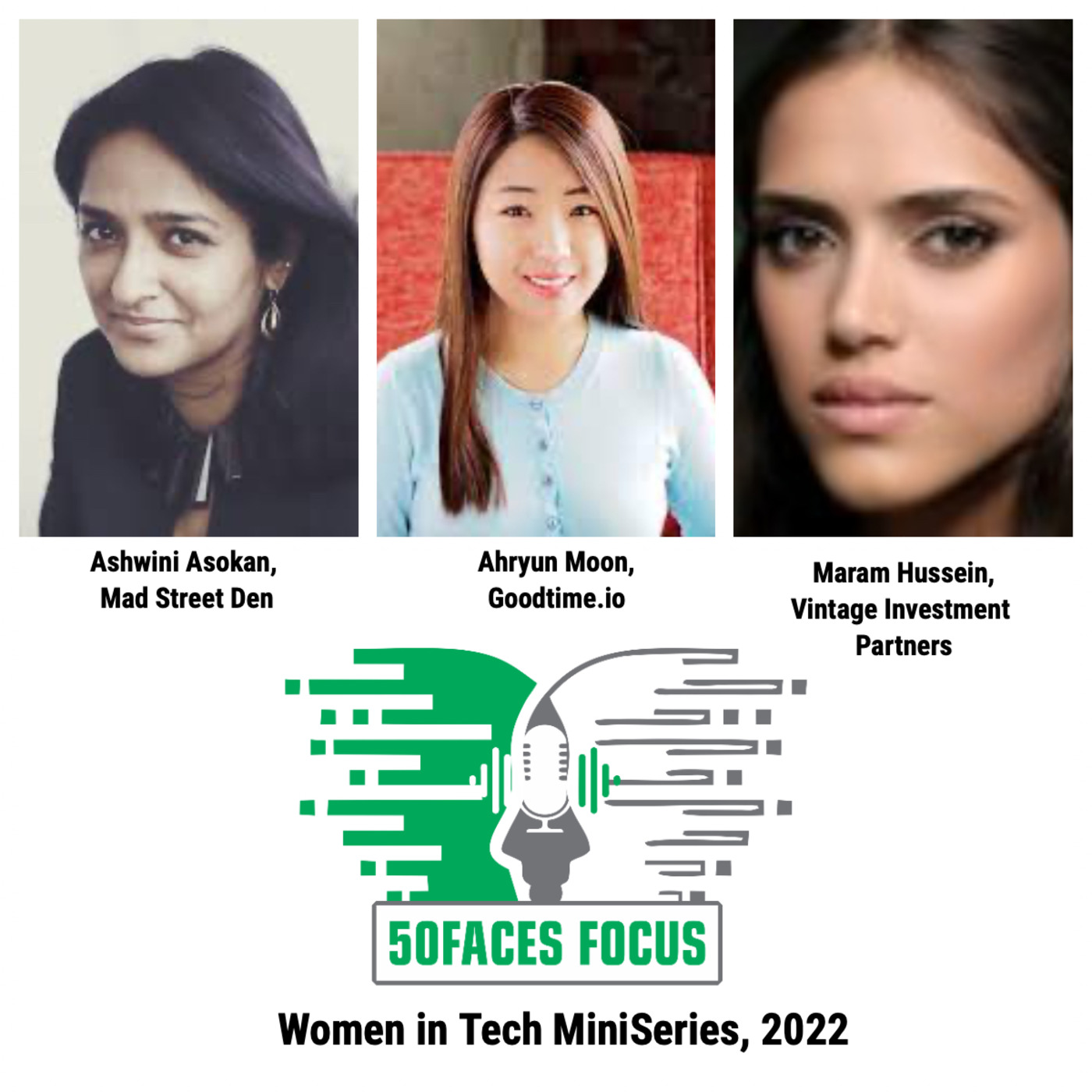
Speaker A: It has been a while since our initial Women in Tech miniseries turned into three. The stories from the Israeli women that we featured who’ve built careers in tech and beyond just kept coming. Now we are taking this to the next level. In 2023, we are going global, profiling women in tech careers all over the world. Comparing and contrasting their experiences and hearing their vision for growth, innovation, and change in this always dynamic area. We will examine where we are doing well to create equal opportunities and where we can do better. As a teaser of what is to come, we are delighted to launch a mini-series featuring 3 women in startups around the world. From networking to AI to scheduling, we hear from Maram Hussein, now based in California, about the lack of role models that she encountered when she started her career in Israel.
Global Women in Tech: I really was looking for someone like Arab, to be more specific, like to explain to me the obstacles and like to understand what can be the career path that I should expect. Okay, if I get, if I like accept this opportunity, what’s next? What’s the advancement in career? And literally there was, I couldn’t find any, like I guess one or two in the industry who are Arabs. So along the way, I felt like really lonely. I didn’t have any role models to look up to. And there are many talented people in this industry, but I wanted someone who maybe had to overcome the same obstacles that I need to overcome, and I didn’t find any.
Speaker A: She channeled this experience into setting up her own initiative to integrate more Arabs into consulting firms and venture capital firms. Ashwini Asokan is the founder of Mad Street Den. An AI company which powers retail, education, healthcare, media, finance, and more using its image recognition platforms. She describes how integrating AI with an understanding of anthropology, how we as humans think and behave, is so key to humanizing its applications.
Speaker C: It’s not the numbers that predict what’s coming up always, it’s insights into human behavior that can help you predict where the world is headed. She asks, how do we bring more people into building AI, and how do we fix it all the way from the beginning so that those narratives and those interests are not just constantly aligning to a few, and they’re aligning to a lot more.
Speaker A: Aria Moon is a founder who perceived deficiency in the scheduling tools that recruiters used and launched her own startup, goodtime.io, to remedy it. She started her career in tech attending hackathons and discovered her entrepreneurial instincts. We talk about her experience not only as an entrepreneur, but as one part of a couplepreneur. And how going all remote worked for her business. Capital raising is a complex matter, and Arianne shares what is perhaps a dirty little secret of the industry.
Speaker D: There’s a female founder discount. What that means is typically if you’re a female founder, you don’t get as high of a valuation for your company, or you don’t get as much money than your male counterpart. The reason for that, who knows, right? It may be the way female founders pitch, Maybe the way male founders pitch, maybe the difference between those two, or maybe unconscious bias of venture capitalists that are majority male. But regardless of the reason, that is the reality. As a female founder, if you haven’t raised a lot of money, or you’ve raised money but you diluted more of your company, therefore you’re not able to really take the secondary financing, you’re not able to invest that money back into other female founders.
Speaker A: So join us for the Global Women in Tech miniseries from later this week. You can find all of our podcasts on the 50 Faces Hub, Apple Podcasts, Spotify, or wherever you get your podcasts.
Speaker A: It has been a while since our initial Women in Tech miniseries turned into three. The stories from the Israeli women that we featured who’ve built careers in tech and beyond just kept coming. Now we are taking this to the next level. In 2023, we are going global, profiling women in tech careers all over the world. Comparing and contrasting their experiences and hearing their vision for growth, innovation, and change in this always dynamic area. We will examine where we are doing well to create equal opportunities and where we can do better. As a teaser of what is to come, we are delighted to launch a mini-series featuring 3 women in startups around the world. From networking to AI to scheduling, we hear from Maram Hussein, now based in California, about the lack of role models that she encountered when she started her career in Israel.
Global Women in Tech: I really was looking for someone like Arab, to be more specific, like to explain to me the obstacles and like to understand what can be the career path that I should expect. Okay, if I get, if I like accept this opportunity, what’s next? What’s the advancement in career? And literally there was, I couldn’t find any, like I guess one or two in the industry who are Arabs. So along the way, I felt like really lonely. I didn’t have any role models to look up to. And there are many talented people in this industry, but I wanted someone who maybe had to overcome the same obstacles that I need to overcome, and I didn’t find any.
Speaker A: She channeled this experience into setting up her own initiative to integrate more Arabs into consulting firms and venture capital firms. Ashwini Asokan is the founder of Mad Street Den. An AI company which powers retail, education, healthcare, media, finance, and more using its image recognition platforms. She describes how integrating AI with an understanding of anthropology, how we as humans think and behave, is so key to humanizing its applications.
Speaker C: It’s not the numbers that predict what’s coming up always, it’s insights into human behavior that can help you predict where the world is headed. She asks, how do we bring more people into building AI, and how do we fix it all the way from the beginning so that those narratives and those interests are not just constantly aligning to a few, and they’re aligning to a lot more.
Speaker A: Aria Moon is a founder who perceived deficiency in the scheduling tools that recruiters used and launched her own startup, goodtime.io, to remedy it. She started her career in tech attending hackathons and discovered her entrepreneurial instincts. We talk about her experience not only as an entrepreneur, but as one part of a couplepreneur. And how going all remote worked for her business. Capital raising is a complex matter, and Arianne shares what is perhaps a dirty little secret of the industry.
Speaker D: There’s a female founder discount. What that means is typically if you’re a female founder, you don’t get as high of a valuation for your company, or you don’t get as much money than your male counterpart. The reason for that, who knows, right? It may be the way female founders pitch, Maybe the way male founders pitch, maybe the difference between those two, or maybe unconscious bias of venture capitalists that are majority male. But regardless of the reason, that is the reality. As a female founder, if you haven’t raised a lot of money, or you’ve raised money but you diluted more of your company, therefore you’re not able to really take the secondary financing, you’re not able to invest that money back into other female founders.
Speaker A: So join us for the Global Women in Tech miniseries from later this week. You can find all of our podcasts on the 50 Faces Hub, Apple Podcasts, Spotify, or wherever you get your podcasts.