Aoifinn Devitt: Social sciences are often dubbed as the soft sciences or something you do after the fact. It’s great storytelling. It’s not just that, it’s actually discovery and it’s discovery at levels of society and humankind that gives meaning to a lot of things that are put into just numbers. I used to be in the National Cadet Corps in India. Why do I bring this story up? Because when we used to practice shooting, They used to say when you’re looking at your target, if you focus on the bird that flies by, or if you focus on something that is distracting you that gets in your way, chances are you’re going to miss. Almost certain that you’re going to miss. As women, we’ve got to learn how to build muscle, how to build strength, how to not get distracted by the constant setbacks. It’s okay to fail, but we’ve got to keep failing up. We got to keep figuring out how every failure propels us to the level next and not lose focus of where we get to go. Change always happens slowly in the beginning, and then it all happens all at once. And I don’t know that we have the luxury to lose hope or faith or stop struggling.
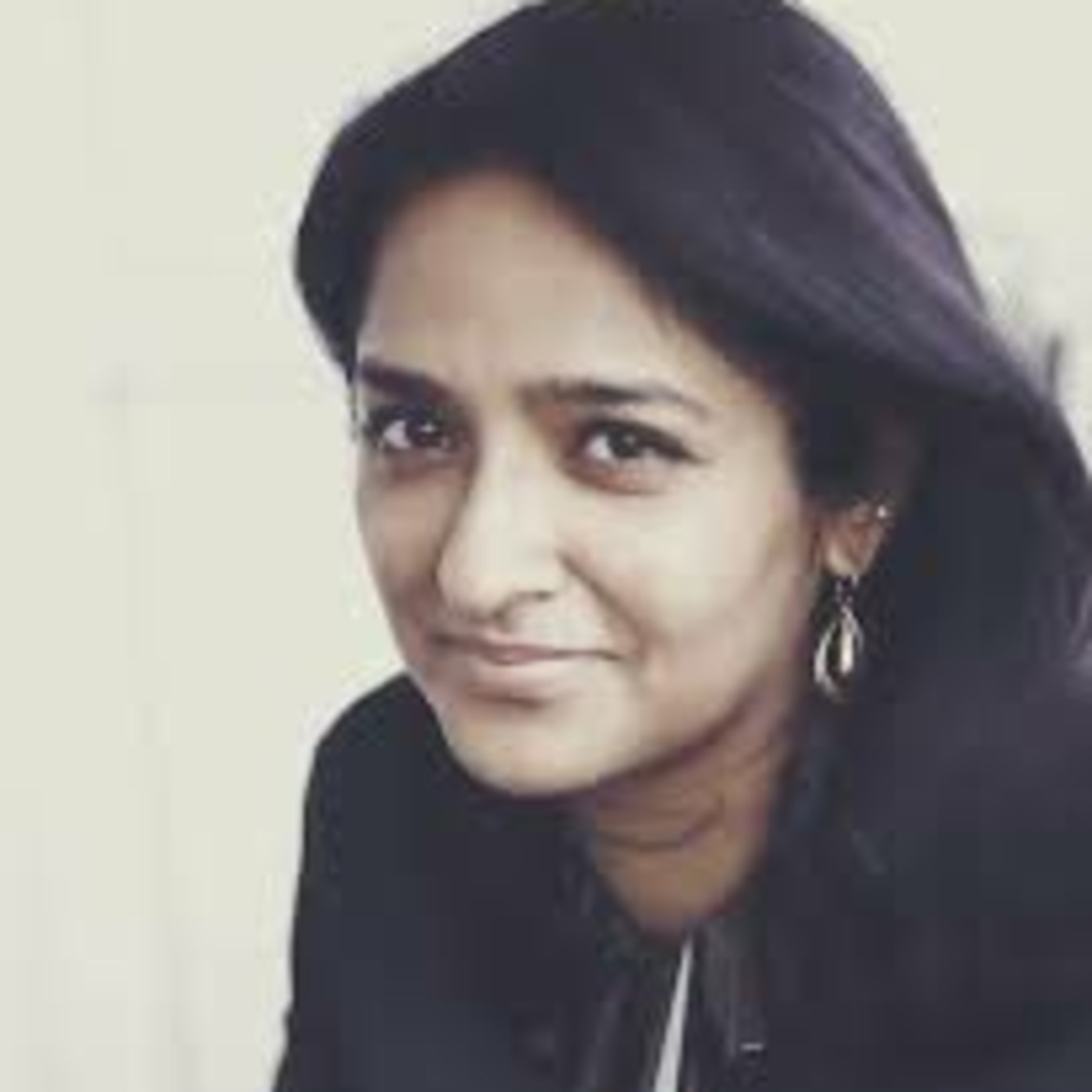
Ashwini Asokan: I’m Aoifinn Devitt, and welcome to the 50 Faces podcast, a podcast committed to revealing the richness and diversity of the world of investment by focusing on its people and their stories. I’m joined today by Ashwini Asokan, who is the founder and CEO of Mad Street Den, an artificial intelligence company powering retail, education, healthcare, media, finance, and more with its image recognition platforms. VU.AI, and Bloxed.AI. Headquartered in the Bay Area, California, the company has offices around the globe. Ashwini previously worked at Intel, where she led IXR’s mobile portfolio, which explored the future of mobile technology and designed compelling mobile experiences that people will love. Welcome, Ashwini. Thanks for joining me today.
Aoifinn Devitt: Thanks for having me, Yifan.
Ashwini Asokan: Well, let’s start with talking about your background and career journey. Where did you grow up? What did you study? And how did you come to enter the world of tech?
Aoifinn Devitt: I grew up in Chennai, which is in the south of India. I was here till I was almost 20 and then went on to do my grad school in the US. I actually never imagined being in the world of tech. My story is one such story. I come from a family of academicians, so my brother is a PhD postdoc professor, my sister-in-law is a PhD postdoc, both my sister-in-laws, my My husband is a PhD postdoc. One is a neuroscientist, the other one is a gene therapist, the other one is a physicist. There’s a toxicologist. And so everybody in my family has heavy, heavy scientific research and academia backgrounds. I was the only odd one out, the rebel in the family from the get-go. I was an artist. I was a dancer, a classical Indian dancer, and a musician. And while I did do my undergrad degree, my bachelor’s in visual communication, I always knew I was gonna be an artist and a dancer, and that’s what my career was gonna be about. I had no plans of being in tech of any kind. So it was very interesting that around 2021, I just decided to go to the US to do my grad school more So because my then boyfriend fiancé went to the US to do his PhD and I was like, all right, I’m not gonna be here all alone by myself. And I was at the end of that big dream of being an artist and I wanted something completely different. I didn’t know what it was. So I kind of applied to Carnegie Mellon to do my degree in design and I got rejected by every university because I was barely 20 and they were like, you’re not old enough to apply for a master’s program. CMU let me in though, and that was fantastic. If at all I had to get that admission from one college and it turned out to be CMU, I mean, I was obviously over the moon. And even then I hadn’t yet dotted lined to the tech side of things. I was very much still exploring design, product design, but slowly started that part of my world introduced me to technology, right? I had actually no expectations for where that degree was going to take me. Kind of threw myself into a bit of a wild, let me see where this goes kind of a journey. And it took me to some wonderful places. I spent a bit of time with the robotics department there, discovered robotics, discovered HCI, discovered the world of human-computer interaction and all the different ways in which that could kind of shape where I guess all of us are headed. And that whole 2 years at CMU pretty much, I think, opened my mind to all the different ways in which I could explore a career in the future. And it is at that point that I ended up meeting my boss from Intel. She was this anthropologist at Intel who was setting up this very large multidisciplinary function and unit that was going to help Intel understand how to become a platform company, help them reimagine the future of smart TV, the future of smart tablets, smartphones. And this was like early 2000s. And all my peers at CMU, I think almost everyone was either going to like YouTube or Twitter or Google, and they didn’t really get why I would go to a place like Intel. And for me, I think at that point I was just absolutely fascinated by the intersection of sociology, anthropology, design, and technology. And I rejected a bunch of far higher paying jobs in favor of the one that I got from Intel. Mainly because I was just ridiculously fascinated with the idea of exploring what it would mean to build technology and build technology businesses by truly understanding how humans live with technology and kind of deriving how to design the future using that, right? And so did a big transition from arts to design to product design to all things technology and AI.
Ashwini Asokan: I just would love to ask a little bit about your arts background because I’m always fascinated by how artists especially dancers who focus on choreography and bringing the whole together, how you think that may have affected your approach to tech and business.
Aoifinn Devitt: Oh, very much, right? I think very, very much. I think there is an insane amount of rigor and science and discipline in the arts that I would argue like my entire life, so many of the threads of the ways that I’ve kind of lived by come from my early rigor in the arts. You show up every day, you learn the foundation, you gotta get the grammar right, you gotta get your vocabulary right, and you don’t get to start writing a book or putting together stuff or choreographing until you truly understand, until you truly, truly understand the art in its very, very clinical form, right? And so while everybody associates art with creativity and freedom and the ability to do what I think for me, I also went to a ridiculously rigorous school, one of the top 3 in India. And it was basically wake up at 4:30 in the morning, go for practice till 8 o’clock, and then go straight from there to school, middle school, high school, and then come back straight back to class. And then sit there and do my homework, study for my tests, and then dance till like 11 PM at night and then come back home for like a 4-hour, 5-hour sleep, right? So ridiculous amount of rigor in my early days, but the ability to create came from that intimate knowledge of the art and of that grammar, of that vocabulary, of learning to put together those things into almost beautiful poetry. And you don’t get there, you don’t get the license to create until you’ve put in the time and until you’ve learned the basics and the foundation. Art for me has just taught me all of that discipline. It’s taught me the ability to create. It’s taught me the ability to be free and to make my own choices. But those choices come from intense, intense rigor and discipline. And so I would say that that theme kind of stuck through my life.
Ashwini Asokan: I can imagine. And now I’d love to talk about the anthropology aspect because you mentioned that as being one of the reasons you were so attracted to Intel. Can you talk about what the insight from anthropologists can teach us about how we use tech and maybe just give us some insight there?
Aoifinn Devitt: Yeah, yeah, I think Genevieve would say these things, right? When I first met Genevieve, Dr. Genevieve Bell is, like I said, she was a professor at Stanford of anthropology, came over to the other side of the corporate world industry to kind of help technology companies really, really rethink how they should be thinking about the future of tech. And today she has her own university out in Australia. And a lot of her teachings, the way she lived, the way she built out those organizations and spit it in a place like Intel, right? And I’m talking 20 years ago. And in a place like Intel, which is— I say a place like Intel because it’s as hardcore manufacturing hardware tech as tech gets, right? It’s not software. Software, it gets more creative. Hardware doesn’t get as creative as software. And it’s silicon. It’s at the ingredient component level. And she was in there telling them things like, If you really go out there, you can’t sell chips to smart TV companies or to TV companies the way we’ve been selling to computers because smart TVs are lifestyle goods. TVs are lifestyle goods. Phones are lifestyle goods. Cars are lifestyle stuff. It’s not like computer. It’s not like you’re going in there to do work, which is what computers were associated with for much of the ’90s and the ’80s, right? And it required a fundamental shift in thinking of you cannot build a business without truly understanding that culture has changed, people have changed, society has changed. And she used to go around the world studying people from across different countries and truly help businesses understand you cannot build a business that does this anymore. You’ve got to rethink the very fundamental— and that’s what anthropology and sociology and all of these disciplines do, right? They help you understand it’s not statistics, it’s not data on scale. But data on scale often hides the most interesting, amazing nuggets and anecdotes that trigger kind of entire movements, right? It’s not the numbers that predict what’s coming up always. It’s insights into human behavior that can help you predict where the world is headed. And then you corroborate and you build models around with numbers, right? And what she did and what she taught us and what I still very much take with me into this company that I’m running is that at the end of the day, it’s all about the people on the other side. You could do whatever you want, but if you don’t understand people on scale in the form of systems, their motivations, their intentions, how do you persuade them? How do you talk to them? What motivates them? There is nothing to be done. There is nothing to be done anywhere in the world. And I think the kind of things that, that particular discipline and the related disciplines, whether it’s design research or adjacent disciplines, help you discover in the world It’s eye-opening, right? They give you frameworks to think that computer scientists don’t give you, that the programmers sitting out there don’t. And I think social sciences are often dubbed as the soft sciences or something you do after the fact. It’s great storytelling. It’s not just that, it’s actually discovery and it’s discovery at levels of society and humankind that gives meaning to a lot of things that are put into just numbers.
Ashwini Asokan: It’s really interesting. We’re certainly going to get to Mad Street Den in a minute, just in terms of how you approach that company. But I’d love to ask, let’s take a concrete example. You worked in mobile technology at Intel. Why would you say, say, the adoption of, say, mobile payments has been so successful in Africa? Kenya would be a great example, whereas maybe in Europe it’s getting more traction, maybe parts of the US it hasn’t really had the same advances. Is there any evidence you can point to as to why, say, adoption rates are different globally?
Aoifinn Devitt: Yeah, I mean, let’s take India. I mean, like, India is one of those places where it’s probably the farthest ahead when it comes to payments and payments innovation and innovation in the financial sector. I would say it puts every other country to shame at this point, especially the last 5 years of what’s happened in the payments industry here versus globally, right? The government has basically helped create this kind of unified infrastructure where all your banking needs. Like everybody just went from paper and money to everything digital, right? It’s so funny because we have this joke that was literally circulating in my cousin’s WhatsApp group just like a couple of days ago when one of them was found. I mean, somebody took a picture of him. You know, you have these street vendors that bring peanuts and groundnuts. They ring a bell and it’s kind of like the ice cream guy from the ’50s and ’60s in the US. But here it’s the nuts, right? Like they bring around different types of nuts on this mobile thingy that they’re pushing around and you pay them 10 rupees or 20 rupees, which is, let me see, which is like 20 cents, which is like a quarter, right? Roughly is what you pay. And we literally had my cousin use Google Pay to transfer literally like a quarter dollar, right? To the vendor who was pushing that. And nobody wants to deal with money. And you say, why? You ask why? Well, credit cards were not a thing in this country, right? In most places, when you start to take a deep, deep look, it’s about penetration. It’s about why would somebody want to deal with credit cards when all they want is instant access to money? Especially you’re talking about 70, 80% of the country, not necessarily in a financially great place, and they’re not banking. They don’t have bank accounts. You can try to push all the credit cards you want to them. You can push all the different fantastic portals you want to them, no one’s gonna get on it because they’re dealing with cash. But everybody has a mobile phone. So building an infrastructure where people can just use their mobile phone to do banking instead of having to deal with large banks where you’ve got people suited up and booted up and you’ve got entire norms and societal norms around what it means to go out there and bank. And you’ve got poor people, people in the rural communities who are completely, I don’t know, left off the grid from that entire infrastructure. It’s very clear who’s okay to come into a bank, who’s not. There’s all these kinds of unwritten, unset rules and who gets the loan, who does not get the loan, who has a credit history, none of that, none of that. The best way to kind of equal all of that, put everybody on par, is to kind of move it on to the mobile phone, right? And so there’s history there. The reason it’s worked in a country like this is because people have just skipped entire generations of technology, just completely leapfrogged. And it worked because everybody has a phone. You can be as poor as you want and you’ll have a phone because you’re doing all your— whether it’s TV or music or any kind of entertainment, any kind of need, your business, everything is run off of that one thing. And the price is so low and you have free internet, free 4G, right? So the infrastructure really comes along at one point when you’re willing to make the investments to skip all these linear steps and to truly understand the people in a particular way and what’s affordable, not affordable, what kind of society it is. And then the adoption really takes off and the technology really pays off. In the US, on the other hand, one of the biggest things that we constantly see is that there are very large corporations who are invested in holding onto the status quo a certain way or the other, right? Very, very large telcos. You still wonder, why am I sitting on this phone here talking to someone in tech support more often than not sitting in India, and you’re just waiting for like 3 hours on the phone to get something. None of that anymore, right? So I think different countries skip different types of technologies, and this is why understanding the people and the society and what drives them is important, because who you’re innovating for and what your interest is as a business pretty much dictates what your choices are gonna be.
Ashwini Asokan: Really interesting perspective. I’m sure it’s some of the same vested interests maybe are behind the adoption of AI, and I’d love to dig in now a little bit to what excites you about AI and some of the views you have that you have in the video where you refer to AI as brains, bots, and bullshit. Can you tell us all about what.
Aoifinn Devitt: You mean by that? Yeah, yeah, that was definitely one of my more favorite events that I’d been to. I think there has been so much noise around all things AI in the last 5 to 6 years. Everybody wants to do it, Everybody wants to be a part of it. Everybody wants to invest in it. Everybody wants to use it. There’s just been a ridiculous amount of hype, I think, around all things AI, and it’s exciting. And I think it’s very obvious why it’s exciting. People want to be building AI because it can change the way humanity lives in very, very deep and very, very permanent ways. I think popular culture tells us that life will never be the same again, and that is very true. But I also believe that there are a lot of problems with the way some of those narratives go, right? And the reason for it is, as a woman in AI, as a woman in tech, I’m very, very aware and have lived through all kinds of biases. And for me, it’s very important, especially being someone in AI, I’m constantly thinking about, okay, what kind of stories are being said about AI? Who are saying those stories? What did they have? What are their vested interests in saying the story a certain way over another way, right? And these questions are always on top of my mind, right? And for me, the idea that there are so many narratives out there about AI and it’s a question of control, it’s a question of power, it’s a question of who is going to own most of this. Is it going to be the big FAANG companies? Is it going to be, up-and-coming startups. I think the story of AI is one of power. It’s kind of like oil. It is a lot of power. And so I think for me, constantly asking the question of how much of this is just people wanting to have a share of that future versus who is saying that story and why are they saying it and how are they saying it? What are they building? Who is building? I think these are all very, very important questions for me as I think through the future of AI.. And the power, the people or the companies that hold the key to continuing to build AI futures, the kind of power they have, like me including, my teams including, it’s huge. It’s inordinate and it can go unchecked. And so for me, that talk, Brains, Bots and Bullshit, was very much about asking the question of who is building AI, right? And how do we bring more people into building AI? And how do we fix it all the way from the beginning so that those narratives and those interests are not just constantly aligning to a few and they’re aligning to a lot more.
Ashwini Asokan: I really love that as a reminder to question some of the narrative when something looks like it is kind of a foregone conclusion in terms of AI. And I also, I was glad you touched on that topic of bias because I think that has been disturbing how sometimes AI can actually compound biases because of what it is that has been feeding into it. And we’ve seen this in recruiting. I think already. I’d love to move on now to Mad Street Den, and can you tell us a little bit about the company, the idea, the vision, and the process of establishing the company?
Aoifinn Devitt: Sure. So Mad Street Den was born— me and my co-founders have had been talking about this for a very long time. We knew we wanted to build this company out, and both my co-founders are neuroscientists by background, and they’d been coming at this through very, very different lens of what it means to build silicon chips that emulate the brain, software that emulates the brain. They are two of the biggest pioneers in the industry, people who’ve been working on this stuff for a lot longer than a lot of the folks we hear today and who’ve been doing a lot of this research for decades now. And they were coming at it with very different questions than I was coming at it, right? And we got talking about it. What does it mean to build a more generalizable form of intelligence?, right? Not something that is narrow, that just solves a handful of problems, but something that behaves more like the human brain and is able to solve a much wider range of problems. What should the architecture of this platform be? How would we build? So we got talking about a lot of this and our journey, we were really motivated at building this more generalizable engine and platform that would go out there and solve problems relating to a variety of functions in every business, right? Whether it’s healthcare industry, retail, pharma, finance, insurance, how do you have systems that think more broadly about problems that businesses have and just don’t get stuck in this rut of I need more data, I need more data, I need more data, right? And that is the kind of company that we went on to build is with that proprietary platform called Blocks. Blox.ai, and we decided we’d start our journey with our stack first in the retail industry. And the brand that we operate in the retail industry is View.ai. So we took our platform to market with the promise of 3 things, right? One, we would clean data, organize data, all your inventory data, all your content data, we would tag it, organize all of it, and then we would basically push that into different functions across your business. We would be able to automate different workflows and then finally ensure that we are powering end-to-end customer experiences with the same AI. If you really squint and see, right, if you really, really squint and see, every business has something it needs to sell. So it has content, services, or products which need to be organized, which is our first pillar. Every business has customers, so it has someone to sell that stuff to. And so there’s customer data and as a result, customer experiences that need to be automated, personalized for creating very superior customer experiences. And the third, in order to make all of this happen, you’ve got to build a team, you’ve got to have processes, and a lot of it is manual today. And most people have no business sitting and doing this stuff manually. And you can help recreate what it means to do work a certain way if you’re putting and applying automation in a meaningful way using AI, right? So these were the three pillars that pretty much defined our thesis for our platform is we will go automate workflow processes in a meaningful way to make work better. We will organize every organization’s data, and we will create superior customer experiences, right? And you can think of any organization, and these three pillars would apply to it regardless of the industry, right? And so for us, it was like building this kind of generalizable brain that is able to apply intelligence in a more meaningful way, understanding the context of the business without it just being like a little point solution targeted at one part of the organization. And we think this is what is required to bring about meaningful change in the industry or across industries in the world today.
Ashwini Asokan: Well, that’s certainly great to, I think, present a counter or a solution to that drowning in data problem because there is certainly, it seems, excessive data, but equally a sense that we never have enough either. So I think helping to navigate that is key. And in terms of your experience as an entrepreneur, when it came to the fundraising, Did you look for venture capital funding? And just more broadly, how do you see the position of female founders in the industry when it comes to getting VC funding?
Aoifinn Devitt: Yeah, well, this is a topic that’s fairly close to my heart. Yes, we’ve raised quite a bit of venture funding as a company. We are funded by Sequoia, we are funded by Falcon Edge, and a lot of other really good funds out there. And My fundraising journey is a bit of an interesting one in the sense that I didn’t very actively go out there and raise venture funding in the first few stages and rounds of the company. And we were very thankful in having people that found us and came to us as part of our Series A, B, C, the pre-seed rounds. But, and it was here, we’re talking early 2012, ’13, ’14, ’15, ’16 kind of timeframe. For me, I would say thinking back to that time, 2016, I would say when we first went to market and the kind of fundraise we did then versus today, a lot has changed. A lot has changed, right? I am a very prolific angel investor today and I write a lot of checks and I am constantly finding women in the pipeline, right? That was not the case in 2016. 14, 15, 16 timeframe. And it was definitely not the case in B2B, forget B2C. I’m simply just— B2B was just like, you just didn’t find women in these categories. And so I think you cannot even compare 2022 to like 5, 6 years ago. It’s day and night in terms of finding women who are starting up companies across different segments, different sectors, and raising money. I think there’s plenty of early-stage capital today for women in ways that I can’t even begin to describe. We can’t say the same about growth stage. I think there is no money for women in the growth stage, and I think the bar is way higher. The ability to prove— they just have to go, I think, 10x more than what we’re seeing with the guys out there to be able to prove. So I do think that We’ve made an incredible amount of progress in early-stage funding for women, and it’s just wonderful. As someone who’s been able to have an opportunity to fund so many women in the last few years, for me, it’s just been eye-opening to see the number of women who have joined this. But the numbers just speak for themselves, right? I think there’s been way more capital raised as well, and not a whole lot of it has gone to women. And so the other side of the story is that, yes, there are way more women, but then as a percentage of the money that’s kind of gone out, Clearly we have not made a whole lot of progress, right? So I think there’s pluses and minuses to what has happened in the last few years. And for me, I think I’m just really hoping that— I don’t think this is just a pipe problem. Let me start off there. I do not think this is just a pipe problem. I think this is a systematic bias problem, but I’m hoping that just having more women in the funnel is slowly also going to help. Change the demographic and the kind of people that investors encounter and provide some relief to all the bias we’ve been seeing over the years.
Ashwini Asokan: It’s so interesting in terms of— you mentioned the lack of the percentage going to growth equity as being very small, but yet overall amounts going to growth equity as being— as growing. Do you think that comes down to the— there being a lack of female professionals at the venture capital side? And equally, another founder on this series has talked about a female founder discount, that she perceives that when it comes to raising capital, it’s just a discount built in. And she said that that also leads then to this cascading effect. Because there’s a discount, female founders have to give up more of their companies, which may ultimately lead to less successful companies down the line.
Aoifinn Devitt: 100%. I 100% agree with that. Just undoubtedly agree with that. Yeah. And it’s hard. It is hard. I think we are still asking this question of ourselves as a society. How do you help people understand bias? I think that is what it comes down to. I’ve been incredibly lucky to have some really amazing investors in my journey who’ve been very, very close to me and who’ve taken the time to have these conversations with me about gender and bias. And I can tell you that most of them don’t see it, or they see it and they’re incredibly well-intentioned, incredibly well-intentioned, because unlike a lot of other people, they’re not just sitting back and saying, you do the work and come back and tell me what’s wrong. And no, they’re doing the work to understand what’s wrong, but it is what it is. And I think you’re just very early on in my career. This is one of the things that I think Genevieve as a person, as a boss, she just changed my life and opened my eyes in ways that I don’t even think I can begin telling, you know, or explaining. But one of the thing she told me while I was in Tel was that you own your career. And she was like, you can make anything off it, anything off it. You can make whatever you want as long as you understand that you own it and you are going to have to make some choices, live with those choices, work with those choices, and keep fighting. And I think I have been really blessed by women who’ve just It gets tiring. There’s no doubt it gets tiring. It gets incredibly tiring to just constantly keep fighting this fight. It gets incredibly lonely. I think a lot of people who get in our way are other women as well. And I think that today is nothing like 5, 6 years ago. I feel like the group of women that are out there, we’re going through this, we’re sitting together. I think it’s wonderful, the camaraderie over the years, but it wasn’t always like this. And to your question about VCs, there aren’t enough number of women VCs out there at all. And there’s just so much work to be done, Iffan, and I think that’s really just it, right? And there’s a lot of progress. And I think if we’re constantly staring at the amount of work that needs to be done or how much of a setback we’ve had, it makes it harder to get out of bed, right? And at some point you do turn around and go, actually, that’s not the case. Things have gotten so much better and we have so much more to go. For me, the only worry is, is I start to look at the women who are falling off the workforce. That is the number that’s worrying me incredibly right now, because who’s going to be left there to keep fighting this fight? And are we going to lose all the progress we’ve made over the last few years? Those are the questions that honestly I’m more interested in. It’s like, what if we get tired fighting this fight? I think that is a topic that definitely keeps me up at night.
Ashwini Asokan: No, it’s an excellent point. It occurs to me too. And I think the staying power, resilience, stamina. Those are all things that I think we need to focus on building. But one of the other missing parts, maybe, when it comes to female founders, this what you might call colloquially bottle or confidence, or kind of almost like brazen confidence. And we’ve seen that in, in other founders. We’ve seen that certainly in male founders. And one that shall remain nameless that recently raised $350 million from a well-known French capitalist. How do you build that confidence, that sheer resilient confidence that maybe is what venture capitalists are attracted to.
Aoifinn Devitt: I said this recently someplace else, and I’ll say this, right? I used to be in the equivalent of the school and the undergrad army. It’s called the National Cadet Corps in India. Why do I bring this story up? Because when we used to practice shooting, and this was in the shooting range, and this was literally part of that whole drill of learning to be a part of that student army thingy that we used to get trained in, they used to say when you’re looking at your target, if you focus on the bird that flies by or if you focus on something that is distracting you that gets in your way, chances are you’re going to miss, almost certain that you’re going to miss, right? For me, that is a really important thing that has stayed with me for a very long time. And it kind of goes back to that initial conversation that I was having with you around dance and art and what art taught me. And more than creativity, art taught me discipline. And I think that we have got to learn as women, we just have to learn this is the world we’ve been served up. And I think it’s exactly what you just said, right? Like we’ve got to learn how to build muscle, how to build strength, how to not get distracted by the constant setbacks. And it requires a kind of training and a kind of, oh my God, I could write a book about the things people have told me since I started building this company. Horrible things, right? Absolutely horrible things. All kinds of VCs, analysts, all kinds of experiences. And I think dwelling on any of that doesn’t get any of us anywhere, right? People are people. We live with family. We know how family can be. And people are just people. They’re flawed and they do crap. And this is no different. And I think resilience and the ability to focus on the bigger goal and to fail, but it’s okay. Keep picking yourself up over and over again. And men keep failing up. I’m sure we can learn a thing or two from there. It’s okay to fail, but we’ve gotta keep failing up. We gotta keep figuring out how every failure propels us to the next level and not lose focus of where we get to go. And I think it’s not important to constantly keep with the status quo or just play games by the rules of other people. You can create your own rules. But learning to play in this world and being a close community. And I’m increasingly seeing this happen more and more, more women investing, more women founding, more women being there for each other, supporting more women succeeding. It’s happening. And I think it is going to happen. You know how they say change always happens slowly in the beginning and then it all happens all at once. And I don’t know that we have the luxury to lose hope or faith. Or stop struggling.
Ashwini Asokan: Do you have any last kind of advice for your younger self, maybe, that we could throw in?
Aoifinn Devitt: Advice for my younger self? Have more protein. I know that sounds like a ridiculous thing to say, but I think what you put in your mouth is a metaphor for what you feed your body and your mind and your soul. And I’m one of those people, like, I’ve done a lot of physical training all my life by being a dancer and I just think at the end of the day, your state of mind comes down to stamina, your ability to, like, talk to yourself, get yourself over the ledge every time you’re close to the end. And I think when I say protein, it’s also a little bit of a metaphor, right? Both literally and figuratively. How do you feed yourself all that protein, right? To me, that’s probably what I would say. I would’ve probably spent a bit more time consciously feeding myself more different types of protein growing up, both literally and figuratively. And I think we grow up with such low esteem, and there’s not always someone who’s talking you out of it. I was very lucky to have parents who invested the time and effort in making sure I had a very solid self-esteem. And even for me, I would say, yeah, I would very easily allow myself to let people tell me stories about myself and who I could be. And just thinking back, I go, yeah, all those cycles of wasted brain space and time. Like, if we just fed ourselves the right protein and the right kind of thoughts and focus, I think we can just skip all those cycles of overthinking that we do growing up.
Ashwini Asokan: Well, I absolutely love that metaphor because I think it reaches into so many parts of our life and that the people we encounter and take advice from, to the books we read, to just the work that we do, as well as quite literally needing that fuel in order to make us at our best. And I also love your reflection on how sometimes we can spend our time railing against what’s wrong, but essentially we need to play the cards we’re dealt because we have probably limited time in our own lifespans to accomplish what we want to. So it’s about, again, focusing on that protein and less of the empty carbs, I suppose, in terms of fighting the fight and focusing what we have. So, no, I absolutely love that. Thank you so much, Yasmeen. This has been incredibly insightful. You’ve brought us clearly a lot of the brains of AI, helped us to be wary of the bots and skeptical of the bullshit. So I think you’ve definitely captured it all in this conversation. And thanks for your honesty in discussing the plight of a female founder, some of the optimism that we can hopefully see in some quarters, and also an awareness of the work that needs to be done. So thank you for coming here and sharing your insights with us.
Aoifinn Devitt: Thanks for having me, Aoifinn.
Ashwini Asokan: I’m Aoifinn Devitt. Thank you for listening to the 50 Faces podcast. If you liked what you heard and would like to tune in to hear more inspiring professionals and their personal journeys, please subscribe on Apple Podcasts or wherever you get your podcasts. This podcast is for informational purposes only and should not be construed as investment advice, and all views are personal and should not be attributed to the organizations and affiliations of the host or any guest.
Aoifinn Devitt: Social sciences are often dubbed as the soft sciences or something you do after the fact. It’s great storytelling. It’s not just that, it’s actually discovery and it’s discovery at levels of society and humankind that gives meaning to a lot of things that are put into just numbers. I used to be in the National Cadet Corps in India. Why do I bring this story up? Because when we used to practice shooting, They used to say when you’re looking at your target, if you focus on the bird that flies by, or if you focus on something that is distracting you that gets in your way, chances are you’re going to miss. Almost certain that you’re going to miss. As women, we’ve got to learn how to build muscle, how to build strength, how to not get distracted by the constant setbacks. It’s okay to fail, but we’ve got to keep failing up. We got to keep figuring out how every failure propels us to the level next and not lose focus of where we get to go. Change always happens slowly in the beginning, and then it all happens all at once. And I don’t know that we have the luxury to lose hope or faith or stop struggling.
Ashwini Asokan: I’m Aoifinn Devitt, and welcome to the 50 Faces podcast, a podcast committed to revealing the richness and diversity of the world of investment by focusing on its people and their stories. I’m joined today by Ashwini Asokan, who is the founder and CEO of Mad Street Den, an artificial intelligence company powering retail, education, healthcare, media, finance, and more with its image recognition platforms. VU.AI, and Bloxed.AI. Headquartered in the Bay Area, California, the company has offices around the globe. Ashwini previously worked at Intel, where she led IXR’s mobile portfolio, which explored the future of mobile technology and designed compelling mobile experiences that people will love. Welcome, Ashwini. Thanks for joining me today.
Aoifinn Devitt: Thanks for having me, Yifan.
Ashwini Asokan: Well, let’s start with talking about your background and career journey. Where did you grow up? What did you study? And how did you come to enter the world of tech?
Aoifinn Devitt: I grew up in Chennai, which is in the south of India. I was here till I was almost 20 and then went on to do my grad school in the US. I actually never imagined being in the world of tech. My story is one such story. I come from a family of academicians, so my brother is a PhD postdoc professor, my sister-in-law is a PhD postdoc, both my sister-in-laws, my My husband is a PhD postdoc. One is a neuroscientist, the other one is a gene therapist, the other one is a physicist. There’s a toxicologist. And so everybody in my family has heavy, heavy scientific research and academia backgrounds. I was the only odd one out, the rebel in the family from the get-go. I was an artist. I was a dancer, a classical Indian dancer, and a musician. And while I did do my undergrad degree, my bachelor’s in visual communication, I always knew I was gonna be an artist and a dancer, and that’s what my career was gonna be about. I had no plans of being in tech of any kind. So it was very interesting that around 2021, I just decided to go to the US to do my grad school more So because my then boyfriend fiancé went to the US to do his PhD and I was like, all right, I’m not gonna be here all alone by myself. And I was at the end of that big dream of being an artist and I wanted something completely different. I didn’t know what it was. So I kind of applied to Carnegie Mellon to do my degree in design and I got rejected by every university because I was barely 20 and they were like, you’re not old enough to apply for a master’s program. CMU let me in though, and that was fantastic. If at all I had to get that admission from one college and it turned out to be CMU, I mean, I was obviously over the moon. And even then I hadn’t yet dotted lined to the tech side of things. I was very much still exploring design, product design, but slowly started that part of my world introduced me to technology, right? I had actually no expectations for where that degree was going to take me. Kind of threw myself into a bit of a wild, let me see where this goes kind of a journey. And it took me to some wonderful places. I spent a bit of time with the robotics department there, discovered robotics, discovered HCI, discovered the world of human-computer interaction and all the different ways in which that could kind of shape where I guess all of us are headed. And that whole 2 years at CMU pretty much, I think, opened my mind to all the different ways in which I could explore a career in the future. And it is at that point that I ended up meeting my boss from Intel. She was this anthropologist at Intel who was setting up this very large multidisciplinary function and unit that was going to help Intel understand how to become a platform company, help them reimagine the future of smart TV, the future of smart tablets, smartphones. And this was like early 2000s. And all my peers at CMU, I think almost everyone was either going to like YouTube or Twitter or Google, and they didn’t really get why I would go to a place like Intel. And for me, I think at that point I was just absolutely fascinated by the intersection of sociology, anthropology, design, and technology. And I rejected a bunch of far higher paying jobs in favor of the one that I got from Intel. Mainly because I was just ridiculously fascinated with the idea of exploring what it would mean to build technology and build technology businesses by truly understanding how humans live with technology and kind of deriving how to design the future using that, right? And so did a big transition from arts to design to product design to all things technology and AI.
Ashwini Asokan: I just would love to ask a little bit about your arts background because I’m always fascinated by how artists especially dancers who focus on choreography and bringing the whole together, how you think that may have affected your approach to tech and business.
Aoifinn Devitt: Oh, very much, right? I think very, very much. I think there is an insane amount of rigor and science and discipline in the arts that I would argue like my entire life, so many of the threads of the ways that I’ve kind of lived by come from my early rigor in the arts. You show up every day, you learn the foundation, you gotta get the grammar right, you gotta get your vocabulary right, and you don’t get to start writing a book or putting together stuff or choreographing until you truly understand, until you truly, truly understand the art in its very, very clinical form, right? And so while everybody associates art with creativity and freedom and the ability to do what I think for me, I also went to a ridiculously rigorous school, one of the top 3 in India. And it was basically wake up at 4:30 in the morning, go for practice till 8 o’clock, and then go straight from there to school, middle school, high school, and then come back straight back to class. And then sit there and do my homework, study for my tests, and then dance till like 11 PM at night and then come back home for like a 4-hour, 5-hour sleep, right? So ridiculous amount of rigor in my early days, but the ability to create came from that intimate knowledge of the art and of that grammar, of that vocabulary, of learning to put together those things into almost beautiful poetry. And you don’t get there, you don’t get the license to create until you’ve put in the time and until you’ve learned the basics and the foundation. Art for me has just taught me all of that discipline. It’s taught me the ability to create. It’s taught me the ability to be free and to make my own choices. But those choices come from intense, intense rigor and discipline. And so I would say that that theme kind of stuck through my life.
Ashwini Asokan: I can imagine. And now I’d love to talk about the anthropology aspect because you mentioned that as being one of the reasons you were so attracted to Intel. Can you talk about what the insight from anthropologists can teach us about how we use tech and maybe just give us some insight there?
Aoifinn Devitt: Yeah, yeah, I think Genevieve would say these things, right? When I first met Genevieve, Dr. Genevieve Bell is, like I said, she was a professor at Stanford of anthropology, came over to the other side of the corporate world industry to kind of help technology companies really, really rethink how they should be thinking about the future of tech. And today she has her own university out in Australia. And a lot of her teachings, the way she lived, the way she built out those organizations and spit it in a place like Intel, right? And I’m talking 20 years ago. And in a place like Intel, which is— I say a place like Intel because it’s as hardcore manufacturing hardware tech as tech gets, right? It’s not software. Software, it gets more creative. Hardware doesn’t get as creative as software. And it’s silicon. It’s at the ingredient component level. And she was in there telling them things like, If you really go out there, you can’t sell chips to smart TV companies or to TV companies the way we’ve been selling to computers because smart TVs are lifestyle goods. TVs are lifestyle goods. Phones are lifestyle goods. Cars are lifestyle stuff. It’s not like computer. It’s not like you’re going in there to do work, which is what computers were associated with for much of the ’90s and the ’80s, right? And it required a fundamental shift in thinking of you cannot build a business without truly understanding that culture has changed, people have changed, society has changed. And she used to go around the world studying people from across different countries and truly help businesses understand you cannot build a business that does this anymore. You’ve got to rethink the very fundamental— and that’s what anthropology and sociology and all of these disciplines do, right? They help you understand it’s not statistics, it’s not data on scale. But data on scale often hides the most interesting, amazing nuggets and anecdotes that trigger kind of entire movements, right? It’s not the numbers that predict what’s coming up always. It’s insights into human behavior that can help you predict where the world is headed. And then you corroborate and you build models around with numbers, right? And what she did and what she taught us and what I still very much take with me into this company that I’m running is that at the end of the day, it’s all about the people on the other side. You could do whatever you want, but if you don’t understand people on scale in the form of systems, their motivations, their intentions, how do you persuade them? How do you talk to them? What motivates them? There is nothing to be done. There is nothing to be done anywhere in the world. And I think the kind of things that, that particular discipline and the related disciplines, whether it’s design research or adjacent disciplines, help you discover in the world It’s eye-opening, right? They give you frameworks to think that computer scientists don’t give you, that the programmers sitting out there don’t. And I think social sciences are often dubbed as the soft sciences or something you do after the fact. It’s great storytelling. It’s not just that, it’s actually discovery and it’s discovery at levels of society and humankind that gives meaning to a lot of things that are put into just numbers.
Ashwini Asokan: It’s really interesting. We’re certainly going to get to Mad Street Den in a minute, just in terms of how you approach that company. But I’d love to ask, let’s take a concrete example. You worked in mobile technology at Intel. Why would you say, say, the adoption of, say, mobile payments has been so successful in Africa? Kenya would be a great example, whereas maybe in Europe it’s getting more traction, maybe parts of the US it hasn’t really had the same advances. Is there any evidence you can point to as to why, say, adoption rates are different globally?
Aoifinn Devitt: Yeah, I mean, let’s take India. I mean, like, India is one of those places where it’s probably the farthest ahead when it comes to payments and payments innovation and innovation in the financial sector. I would say it puts every other country to shame at this point, especially the last 5 years of what’s happened in the payments industry here versus globally, right? The government has basically helped create this kind of unified infrastructure where all your banking needs. Like everybody just went from paper and money to everything digital, right? It’s so funny because we have this joke that was literally circulating in my cousin’s WhatsApp group just like a couple of days ago when one of them was found. I mean, somebody took a picture of him. You know, you have these street vendors that bring peanuts and groundnuts. They ring a bell and it’s kind of like the ice cream guy from the ’50s and ’60s in the US. But here it’s the nuts, right? Like they bring around different types of nuts on this mobile thingy that they’re pushing around and you pay them 10 rupees or 20 rupees, which is, let me see, which is like 20 cents, which is like a quarter, right? Roughly is what you pay. And we literally had my cousin use Google Pay to transfer literally like a quarter dollar, right? To the vendor who was pushing that. And nobody wants to deal with money. And you say, why? You ask why? Well, credit cards were not a thing in this country, right? In most places, when you start to take a deep, deep look, it’s about penetration. It’s about why would somebody want to deal with credit cards when all they want is instant access to money? Especially you’re talking about 70, 80% of the country, not necessarily in a financially great place, and they’re not banking. They don’t have bank accounts. You can try to push all the credit cards you want to them. You can push all the different fantastic portals you want to them, no one’s gonna get on it because they’re dealing with cash. But everybody has a mobile phone. So building an infrastructure where people can just use their mobile phone to do banking instead of having to deal with large banks where you’ve got people suited up and booted up and you’ve got entire norms and societal norms around what it means to go out there and bank. And you’ve got poor people, people in the rural communities who are completely, I don’t know, left off the grid from that entire infrastructure. It’s very clear who’s okay to come into a bank, who’s not. There’s all these kinds of unwritten, unset rules and who gets the loan, who does not get the loan, who has a credit history, none of that, none of that. The best way to kind of equal all of that, put everybody on par, is to kind of move it on to the mobile phone, right? And so there’s history there. The reason it’s worked in a country like this is because people have just skipped entire generations of technology, just completely leapfrogged. And it worked because everybody has a phone. You can be as poor as you want and you’ll have a phone because you’re doing all your— whether it’s TV or music or any kind of entertainment, any kind of need, your business, everything is run off of that one thing. And the price is so low and you have free internet, free 4G, right? So the infrastructure really comes along at one point when you’re willing to make the investments to skip all these linear steps and to truly understand the people in a particular way and what’s affordable, not affordable, what kind of society it is. And then the adoption really takes off and the technology really pays off. In the US, on the other hand, one of the biggest things that we constantly see is that there are very large corporations who are invested in holding onto the status quo a certain way or the other, right? Very, very large telcos. You still wonder, why am I sitting on this phone here talking to someone in tech support more often than not sitting in India, and you’re just waiting for like 3 hours on the phone to get something. None of that anymore, right? So I think different countries skip different types of technologies, and this is why understanding the people and the society and what drives them is important, because who you’re innovating for and what your interest is as a business pretty much dictates what your choices are gonna be.
Ashwini Asokan: Really interesting perspective. I’m sure it’s some of the same vested interests maybe are behind the adoption of AI, and I’d love to dig in now a little bit to what excites you about AI and some of the views you have that you have in the video where you refer to AI as brains, bots, and bullshit. Can you tell us all about what.
Aoifinn Devitt: You mean by that? Yeah, yeah, that was definitely one of my more favorite events that I’d been to. I think there has been so much noise around all things AI in the last 5 to 6 years. Everybody wants to do it, Everybody wants to be a part of it. Everybody wants to invest in it. Everybody wants to use it. There’s just been a ridiculous amount of hype, I think, around all things AI, and it’s exciting. And I think it’s very obvious why it’s exciting. People want to be building AI because it can change the way humanity lives in very, very deep and very, very permanent ways. I think popular culture tells us that life will never be the same again, and that is very true. But I also believe that there are a lot of problems with the way some of those narratives go, right? And the reason for it is, as a woman in AI, as a woman in tech, I’m very, very aware and have lived through all kinds of biases. And for me, it’s very important, especially being someone in AI, I’m constantly thinking about, okay, what kind of stories are being said about AI? Who are saying those stories? What did they have? What are their vested interests in saying the story a certain way over another way, right? And these questions are always on top of my mind, right? And for me, the idea that there are so many narratives out there about AI and it’s a question of control, it’s a question of power, it’s a question of who is going to own most of this. Is it going to be the big FAANG companies? Is it going to be, up-and-coming startups. I think the story of AI is one of power. It’s kind of like oil. It is a lot of power. And so I think for me, constantly asking the question of how much of this is just people wanting to have a share of that future versus who is saying that story and why are they saying it and how are they saying it? What are they building? Who is building? I think these are all very, very important questions for me as I think through the future of AI.. And the power, the people or the companies that hold the key to continuing to build AI futures, the kind of power they have, like me including, my teams including, it’s huge. It’s inordinate and it can go unchecked. And so for me, that talk, Brains, Bots and Bullshit, was very much about asking the question of who is building AI, right? And how do we bring more people into building AI? And how do we fix it all the way from the beginning so that those narratives and those interests are not just constantly aligning to a few and they’re aligning to a lot more.
Ashwini Asokan: I really love that as a reminder to question some of the narrative when something looks like it is kind of a foregone conclusion in terms of AI. And I also, I was glad you touched on that topic of bias because I think that has been disturbing how sometimes AI can actually compound biases because of what it is that has been feeding into it. And we’ve seen this in recruiting. I think already. I’d love to move on now to Mad Street Den, and can you tell us a little bit about the company, the idea, the vision, and the process of establishing the company?
Aoifinn Devitt: Sure. So Mad Street Den was born— me and my co-founders have had been talking about this for a very long time. We knew we wanted to build this company out, and both my co-founders are neuroscientists by background, and they’d been coming at this through very, very different lens of what it means to build silicon chips that emulate the brain, software that emulates the brain. They are two of the biggest pioneers in the industry, people who’ve been working on this stuff for a lot longer than a lot of the folks we hear today and who’ve been doing a lot of this research for decades now. And they were coming at it with very different questions than I was coming at it, right? And we got talking about it. What does it mean to build a more generalizable form of intelligence?, right? Not something that is narrow, that just solves a handful of problems, but something that behaves more like the human brain and is able to solve a much wider range of problems. What should the architecture of this platform be? How would we build? So we got talking about a lot of this and our journey, we were really motivated at building this more generalizable engine and platform that would go out there and solve problems relating to a variety of functions in every business, right? Whether it’s healthcare industry, retail, pharma, finance, insurance, how do you have systems that think more broadly about problems that businesses have and just don’t get stuck in this rut of I need more data, I need more data, I need more data, right? And that is the kind of company that we went on to build is with that proprietary platform called Blocks. Blox.ai, and we decided we’d start our journey with our stack first in the retail industry. And the brand that we operate in the retail industry is View.ai. So we took our platform to market with the promise of 3 things, right? One, we would clean data, organize data, all your inventory data, all your content data, we would tag it, organize all of it, and then we would basically push that into different functions across your business. We would be able to automate different workflows and then finally ensure that we are powering end-to-end customer experiences with the same AI. If you really squint and see, right, if you really, really squint and see, every business has something it needs to sell. So it has content, services, or products which need to be organized, which is our first pillar. Every business has customers, so it has someone to sell that stuff to. And so there’s customer data and as a result, customer experiences that need to be automated, personalized for creating very superior customer experiences. And the third, in order to make all of this happen, you’ve got to build a team, you’ve got to have processes, and a lot of it is manual today. And most people have no business sitting and doing this stuff manually. And you can help recreate what it means to do work a certain way if you’re putting and applying automation in a meaningful way using AI, right? So these were the three pillars that pretty much defined our thesis for our platform is we will go automate workflow processes in a meaningful way to make work better. We will organize every organization’s data, and we will create superior customer experiences, right? And you can think of any organization, and these three pillars would apply to it regardless of the industry, right? And so for us, it was like building this kind of generalizable brain that is able to apply intelligence in a more meaningful way, understanding the context of the business without it just being like a little point solution targeted at one part of the organization. And we think this is what is required to bring about meaningful change in the industry or across industries in the world today.
Ashwini Asokan: Well, that’s certainly great to, I think, present a counter or a solution to that drowning in data problem because there is certainly, it seems, excessive data, but equally a sense that we never have enough either. So I think helping to navigate that is key. And in terms of your experience as an entrepreneur, when it came to the fundraising, Did you look for venture capital funding? And just more broadly, how do you see the position of female founders in the industry when it comes to getting VC funding?
Aoifinn Devitt: Yeah, well, this is a topic that’s fairly close to my heart. Yes, we’ve raised quite a bit of venture funding as a company. We are funded by Sequoia, we are funded by Falcon Edge, and a lot of other really good funds out there. And My fundraising journey is a bit of an interesting one in the sense that I didn’t very actively go out there and raise venture funding in the first few stages and rounds of the company. And we were very thankful in having people that found us and came to us as part of our Series A, B, C, the pre-seed rounds. But, and it was here, we’re talking early 2012, ’13, ’14, ’15, ’16 kind of timeframe. For me, I would say thinking back to that time, 2016, I would say when we first went to market and the kind of fundraise we did then versus today, a lot has changed. A lot has changed, right? I am a very prolific angel investor today and I write a lot of checks and I am constantly finding women in the pipeline, right? That was not the case in 2016. 14, 15, 16 timeframe. And it was definitely not the case in B2B, forget B2C. I’m simply just— B2B was just like, you just didn’t find women in these categories. And so I think you cannot even compare 2022 to like 5, 6 years ago. It’s day and night in terms of finding women who are starting up companies across different segments, different sectors, and raising money. I think there’s plenty of early-stage capital today for women in ways that I can’t even begin to describe. We can’t say the same about growth stage. I think there is no money for women in the growth stage, and I think the bar is way higher. The ability to prove— they just have to go, I think, 10x more than what we’re seeing with the guys out there to be able to prove. So I do think that We’ve made an incredible amount of progress in early-stage funding for women, and it’s just wonderful. As someone who’s been able to have an opportunity to fund so many women in the last few years, for me, it’s just been eye-opening to see the number of women who have joined this. But the numbers just speak for themselves, right? I think there’s been way more capital raised as well, and not a whole lot of it has gone to women. And so the other side of the story is that, yes, there are way more women, but then as a percentage of the money that’s kind of gone out, Clearly we have not made a whole lot of progress, right? So I think there’s pluses and minuses to what has happened in the last few years. And for me, I think I’m just really hoping that— I don’t think this is just a pipe problem. Let me start off there. I do not think this is just a pipe problem. I think this is a systematic bias problem, but I’m hoping that just having more women in the funnel is slowly also going to help. Change the demographic and the kind of people that investors encounter and provide some relief to all the bias we’ve been seeing over the years.
Ashwini Asokan: It’s so interesting in terms of— you mentioned the lack of the percentage going to growth equity as being very small, but yet overall amounts going to growth equity as being— as growing. Do you think that comes down to the— there being a lack of female professionals at the venture capital side? And equally, another founder on this series has talked about a female founder discount, that she perceives that when it comes to raising capital, it’s just a discount built in. And she said that that also leads then to this cascading effect. Because there’s a discount, female founders have to give up more of their companies, which may ultimately lead to less successful companies down the line.
Aoifinn Devitt: 100%. I 100% agree with that. Just undoubtedly agree with that. Yeah. And it’s hard. It is hard. I think we are still asking this question of ourselves as a society. How do you help people understand bias? I think that is what it comes down to. I’ve been incredibly lucky to have some really amazing investors in my journey who’ve been very, very close to me and who’ve taken the time to have these conversations with me about gender and bias. And I can tell you that most of them don’t see it, or they see it and they’re incredibly well-intentioned, incredibly well-intentioned, because unlike a lot of other people, they’re not just sitting back and saying, you do the work and come back and tell me what’s wrong. And no, they’re doing the work to understand what’s wrong, but it is what it is. And I think you’re just very early on in my career. This is one of the things that I think Genevieve as a person, as a boss, she just changed my life and opened my eyes in ways that I don’t even think I can begin telling, you know, or explaining. But one of the thing she told me while I was in Tel was that you own your career. And she was like, you can make anything off it, anything off it. You can make whatever you want as long as you understand that you own it and you are going to have to make some choices, live with those choices, work with those choices, and keep fighting. And I think I have been really blessed by women who’ve just It gets tiring. There’s no doubt it gets tiring. It gets incredibly tiring to just constantly keep fighting this fight. It gets incredibly lonely. I think a lot of people who get in our way are other women as well. And I think that today is nothing like 5, 6 years ago. I feel like the group of women that are out there, we’re going through this, we’re sitting together. I think it’s wonderful, the camaraderie over the years, but it wasn’t always like this. And to your question about VCs, there aren’t enough number of women VCs out there at all. And there’s just so much work to be done, Iffan, and I think that’s really just it, right? And there’s a lot of progress. And I think if we’re constantly staring at the amount of work that needs to be done or how much of a setback we’ve had, it makes it harder to get out of bed, right? And at some point you do turn around and go, actually, that’s not the case. Things have gotten so much better and we have so much more to go. For me, the only worry is, is I start to look at the women who are falling off the workforce. That is the number that’s worrying me incredibly right now, because who’s going to be left there to keep fighting this fight? And are we going to lose all the progress we’ve made over the last few years? Those are the questions that honestly I’m more interested in. It’s like, what if we get tired fighting this fight? I think that is a topic that definitely keeps me up at night.
Ashwini Asokan: No, it’s an excellent point. It occurs to me too. And I think the staying power, resilience, stamina. Those are all things that I think we need to focus on building. But one of the other missing parts, maybe, when it comes to female founders, this what you might call colloquially bottle or confidence, or kind of almost like brazen confidence. And we’ve seen that in, in other founders. We’ve seen that certainly in male founders. And one that shall remain nameless that recently raised $350 million from a well-known French capitalist. How do you build that confidence, that sheer resilient confidence that maybe is what venture capitalists are attracted to.
Aoifinn Devitt: I said this recently someplace else, and I’ll say this, right? I used to be in the equivalent of the school and the undergrad army. It’s called the National Cadet Corps in India. Why do I bring this story up? Because when we used to practice shooting, and this was in the shooting range, and this was literally part of that whole drill of learning to be a part of that student army thingy that we used to get trained in, they used to say when you’re looking at your target, if you focus on the bird that flies by or if you focus on something that is distracting you that gets in your way, chances are you’re going to miss, almost certain that you’re going to miss, right? For me, that is a really important thing that has stayed with me for a very long time. And it kind of goes back to that initial conversation that I was having with you around dance and art and what art taught me. And more than creativity, art taught me discipline. And I think that we have got to learn as women, we just have to learn this is the world we’ve been served up. And I think it’s exactly what you just said, right? Like we’ve got to learn how to build muscle, how to build strength, how to not get distracted by the constant setbacks. And it requires a kind of training and a kind of, oh my God, I could write a book about the things people have told me since I started building this company. Horrible things, right? Absolutely horrible things. All kinds of VCs, analysts, all kinds of experiences. And I think dwelling on any of that doesn’t get any of us anywhere, right? People are people. We live with family. We know how family can be. And people are just people. They’re flawed and they do crap. And this is no different. And I think resilience and the ability to focus on the bigger goal and to fail, but it’s okay. Keep picking yourself up over and over again. And men keep failing up. I’m sure we can learn a thing or two from there. It’s okay to fail, but we’ve gotta keep failing up. We gotta keep figuring out how every failure propels us to the next level and not lose focus of where we get to go. And I think it’s not important to constantly keep with the status quo or just play games by the rules of other people. You can create your own rules. But learning to play in this world and being a close community. And I’m increasingly seeing this happen more and more, more women investing, more women founding, more women being there for each other, supporting more women succeeding. It’s happening. And I think it is going to happen. You know how they say change always happens slowly in the beginning and then it all happens all at once. And I don’t know that we have the luxury to lose hope or faith. Or stop struggling.
Ashwini Asokan: Do you have any last kind of advice for your younger self, maybe, that we could throw in?
Aoifinn Devitt: Advice for my younger self? Have more protein. I know that sounds like a ridiculous thing to say, but I think what you put in your mouth is a metaphor for what you feed your body and your mind and your soul. And I’m one of those people, like, I’ve done a lot of physical training all my life by being a dancer and I just think at the end of the day, your state of mind comes down to stamina, your ability to, like, talk to yourself, get yourself over the ledge every time you’re close to the end. And I think when I say protein, it’s also a little bit of a metaphor, right? Both literally and figuratively. How do you feed yourself all that protein, right? To me, that’s probably what I would say. I would’ve probably spent a bit more time consciously feeding myself more different types of protein growing up, both literally and figuratively. And I think we grow up with such low esteem, and there’s not always someone who’s talking you out of it. I was very lucky to have parents who invested the time and effort in making sure I had a very solid self-esteem. And even for me, I would say, yeah, I would very easily allow myself to let people tell me stories about myself and who I could be. And just thinking back, I go, yeah, all those cycles of wasted brain space and time. Like, if we just fed ourselves the right protein and the right kind of thoughts and focus, I think we can just skip all those cycles of overthinking that we do growing up.
Ashwini Asokan: Well, I absolutely love that metaphor because I think it reaches into so many parts of our life and that the people we encounter and take advice from, to the books we read, to just the work that we do, as well as quite literally needing that fuel in order to make us at our best. And I also love your reflection on how sometimes we can spend our time railing against what’s wrong, but essentially we need to play the cards we’re dealt because we have probably limited time in our own lifespans to accomplish what we want to. So it’s about, again, focusing on that protein and less of the empty carbs, I suppose, in terms of fighting the fight and focusing what we have. So, no, I absolutely love that. Thank you so much, Yasmeen. This has been incredibly insightful. You’ve brought us clearly a lot of the brains of AI, helped us to be wary of the bots and skeptical of the bullshit. So I think you’ve definitely captured it all in this conversation. And thanks for your honesty in discussing the plight of a female founder, some of the optimism that we can hopefully see in some quarters, and also an awareness of the work that needs to be done. So thank you for coming here and sharing your insights with us.
Aoifinn Devitt: Thanks for having me, Aoifinn.
Ashwini Asokan: I’m Aoifinn Devitt. Thank you for listening to the 50 Faces podcast. If you liked what you heard and would like to tune in to hear more inspiring professionals and their personal journeys, please subscribe on Apple Podcasts or wherever you get your podcasts. This podcast is for informational purposes only and should not be construed as investment advice, and all views are personal and should not be attributed to the organizations and affiliations of the host or any guest.