Maeve Mc: This podcast was made possible by the kind support of Emmanuel Arbib of IAM Capital, a global alternative investment group based in London, as well as the individuals Alyssa Beyer and Avatel Oyskild.
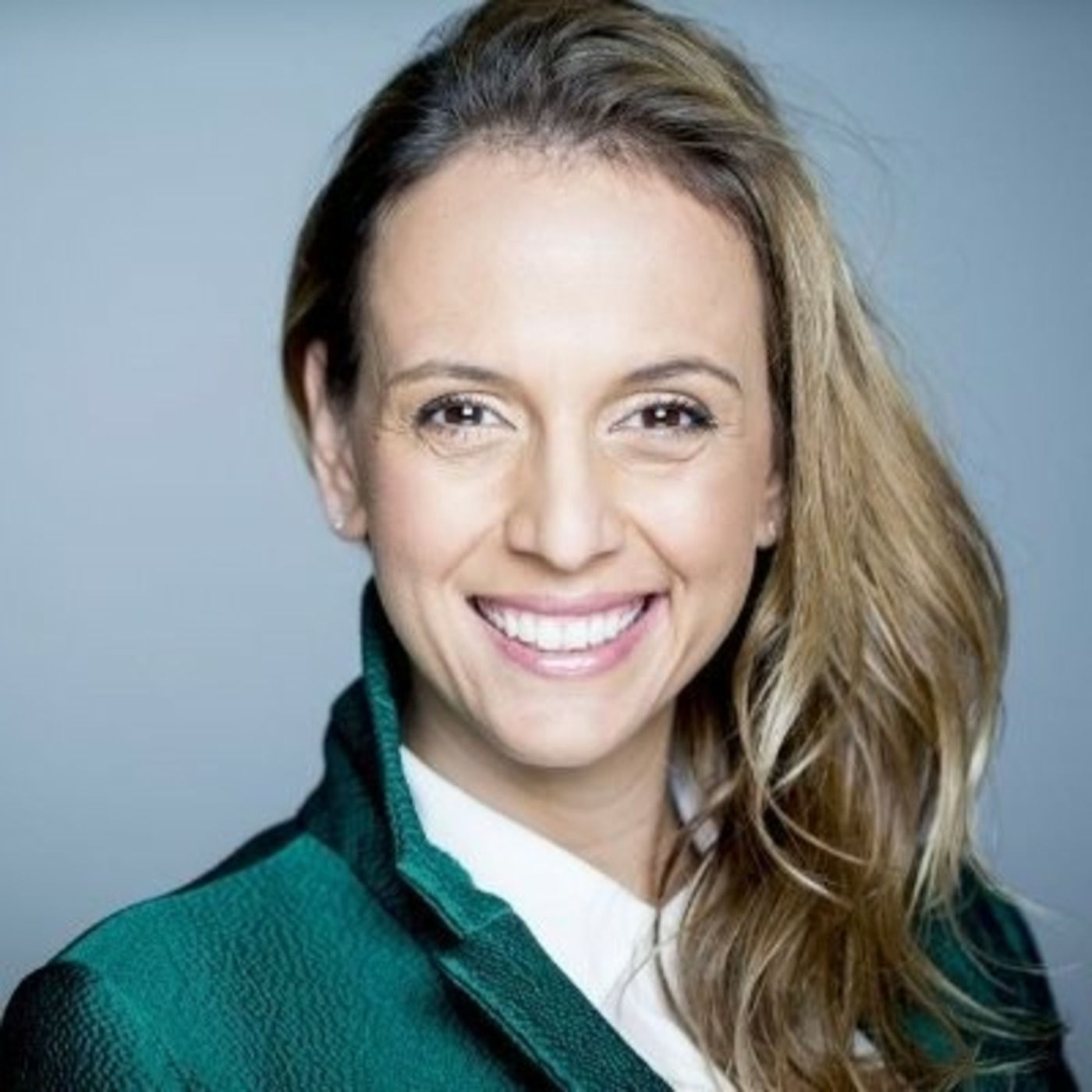
Adi: How finding the right narrative can make a success story out of any outcome. I’m Maeve McCullen, and welcome to this 50 Faces Focus series, which showcases inspiring inspiring Israeli women in tech and beyond. I’m joined today by Adi Ekaus-Barzilai. Adi is the co-founder and CEO of Didadu, a company that is reinventing the classic board game experience for kids aged 5 through 11. Before that, Adi was the co-founder and CEO of Real Face, a company that specialized in facial recognition technology. In 2017, Real Face was acquired by Apple. Adi was a competitive chess player in college and is currently in the process of setting up a nonprofit in New York to encourage girls to play and compete in chess. Thanks so much for joining me today, Edie. I really appreciate it.
Maeve Mc: Thank you. I’m really excited to be here and honored, actually.
Adi: Well, thank you so much for joining us. So before you co-founded Realface, you worked in business development and marketing. What inspired you to take the plunge and set up your own business?
Maeve Mc: I think it’s always been a dream of mine to be an entrepreneur. And with a lot of things in life, I think I was just scared of doing it. So it took me a longer, a lot longer time from my ideation process to the actual starting of the company. I actually had the idea in 2011 for Pickies, which then pivoted into Real Face. But the idea came up in 2011. I actually wrote a patent for it and we only founded the company in 2014. And I think the reason it took me all these years was mostly because I was afraid and, you know, I was just, I was just afraid to fail. Which is something that bothers me a lot, I think, as a person, as a female probably. Now I’m seeing it as a mother of 4 girls as well.
Adi: So when you say you were afraid to fail, so that basically just stopped you from even pursuing this dream for a long time. What does failure mean to you?
Maeve Mc: I think it was the idea— I think it was a combination of many things, but mostly I had a good job. I was making a very nice salary. I enjoyed it. And I had a work-life balance that allowed me to be with my kids enough. And I was in a good place in my life. And I think that making that plunge into being entrepreneur was something I was super afraid about and was concentrated mostly on where things could go wrong instead of where things could go right. And it’s really something that I actually researched later in life. And I think it’s something that women, since this is the subject of the conversation, I think men are just a lot braver than us in that sense that women mostly think about the failures and men think about the success in many ways. I’m hoping it’s changing and evolving and the whole girl brand, I think, and the woman brand is evolving, especially these years. And bravery is much more a part of it. But I think as a girl, you’re kind of taught not to fail when we grew up, I think, in the ’80s. So I think it’s a lot about that.
Adi: So why do you think men don’t fear failure as much?
Maeve Mc: I think it’s something in the way that men and women are brought up separately. So I think In the sense that women are always taught to be careful. There’s a lot of research that’s actually been done in this subject. There was a study involving a playground fire pole in which the researchers saw that little girls were very likely to be warned from both their mother and their father about the dangers. I don’t know if you heard about this. It’s a very— it’s actually a super interesting research that they did. And if the little girl still wanted to go into the playground and play on the pole, then the parents were likely to assist her. And, you know, like, oh, go there, go there, you know, to really help her in the process. And yet, if you ask what happened to the little boys, they were actually encouraged to play, and the parents offered guidance on how to use it on their own. And I think, you know, when you think about that and the message that it’s portraying to our girls and to our boys, it’s, you know, that girls are fragile and fearful and need more help, while boys are strong and brave and gutsy. And I think that’s something that I’m taking and thinking of myself as a mother of girls, you know, I want to tell them to take risks. And to make their own decisions and understand that, yes, they might fall down, you know, but 99.9% of the time nothing’s really going to happen to them. And it’s okay to fall and it’s okay to fail, by the way, as long as you know how to get up and start again.
Adi: You know, everyone keeps talking about failing better lately. What do you think about that?
Maeve Mc: I actually didn’t make it up, but I’ve heard it somewhere and I call it failing forward. It’s kind of saying, okay, I remember, you know, when we started Real Face, I didn’t know how to do anything of the list of things we had to do. You know, if it was how to make a pay stub, like how do you build, how do you get an employee out of Israel? All these things that we really, I think my partner and I really didn’t know how to do. I mean, I did my master’s in business, but still it was, it’s all theory. And then suddenly you’re standing in front of a checklist of so many things you don’t know how to do. And I think at a point it was just like, accepting that there’s a lot of things I don’t know how to do. I’ll probably, you know, it’s okay. And then really for me, it was asking for help and understanding that, you know, we just need to take really good people that’ll know how to do these things and completely trusting them. So I’m, I think I’m a very, I’m not a micromanager at all. So I think that the trick was, especially when you’re building your own startup, you know, really taking amazing people on your team and saying to them, you know how to do this, so you tell us what we need to do in this field, whatever field it is. And I think trusting your team and trusting the people around you and not micromanaging them really worked well for me, for us as a team.
Adi: And so actually, just when you co-founded Realface, like, did you know the person you had, or you started it with, or did you sort of seek them out when you realized what, what you wanted to do?
Maeve Mc: The story of Real Face is actually quite a funny one. So I had the idea that I talked about a lot, and we were at a dinner, my husband and I, with my best friend and her husband. And again, I was talking about this idea that I had, and he’s like, you know, I think that’s a great idea. And then we had another dinner, and again, he’s like, you know, I really think that’s a great idea. Why aren’t you doing this? And I’m like, I don’t know. And he’s like, what if, you know, what if we did this together? Let’s have coffee next week. And from there, I think once somebody believed in me enough to actually say, let’s do this together, I think my whole perspective on it changed. And he became my co-founder, Aviv, who in this whole situation, again, it’s my best friend’s husband, which is a very complex thing to manage. And we’re still best friends. And he’s one of my very, very good friends today. And I think that shows a lot that we survived founding a company, you know, selling that company, really going through that whole process. And so that, that was a very— I feel very, very lucky that he was my co-founder. I couldn’t have done anything without him being there next to me. And I think the most important thing, and I always talk about this if somebody asks me, it’s, you know, finding a co-founder that you trust and that shares the same value system as you do. And in that perspective, I, I see— I feel very, very lucky because especially people think, oh, you know, your company got acquired, that was— that’s probably so easy. But actually, the process of getting acquired is a very complex one. And it’s a place where people find out, you know, your values, your value system is really tested in that place. And I think for me, having his support throughout this process and the both of us doing it together, I think just changed everything. So it was— it was— I felt very, very lucky for both him and Gidi, who was our third co-founder that joined out a little later in the process.
Adi: So you mentioned the process of being acquired. I know you were acquired by Apple. Can you kind of talk about the process of what that was like? It sounds like there were some highs and lows during, during it.
Maeve Mc: I always say that I think the process of acquisition is a process where you understand that basically your dream is, is dead, right? In a sense. So there’s, I think for us, when we built Realface, the idea wasn’t to be acquired. The idea was to really build a company that we could work in 20 years from now. And it’s something we said, by the way, from day one, and we meant it until the end. But I think there’s something about that process of being acquired where you’re like, okay, this is basically— especially being acquired by a very, very large company. For us, especially when we finalized the product and what we were trying to do in Realface and being in a process with a large company like that really explained to us that it’s kind of a do-or-die process. You know, once, once you’re approached by a very large company, once you’re in contact with them, you understand that maybe they might be working on something that’s close to that. So it was kind of a do or die in that sense. It’s a very stressful process. You want to succeed in it. What is success in it? You know, what is a good outcome? What does it mean to the employees? What does it mean to the team, to yourself? It’s just a lot of moving pieces. That all have to somehow enter the same car and drive in the same lane in order to finish this race, if that makes sense.
Adi: No, it does make sense. And it actually— what’s also really interesting is the point you make that you create this company because you want to build something. And then in a way, when it gets acquired, that’s the end of your dream with this company. Something you mentioned when talking about your co-founder, which I thought was really interesting, you mentioned core values and how important that was. That you kind of both have the same value system. Can you, can you talk a little bit about what you mean by that?
Maeve Mc: That actually connects to your previous point as well. When you’re building something, are you building a company just to make money out of it and sell it? You know, that’s one way of building a company. Or are you building a company that you want to work in from now on, in a sense? So it’s— and I think these are two very different perspectives of building a company. And I think for Aviv and for me and with Gidi, you know, we really wanted to build a company that we were looking at in the long run. We wanted our employees to be happy. We wanted— there were a lot of things that in this process, when you think about it, what it is that you want, what it is that you want for your team, what it is that you want for yourself and the next steps. And really what I think we did really well as a founding team was Okay, this is us, this is what we want, this is where we’re at. So it’s what you want, and then there’s where you’re at, which usually are not, you know, in reality, they’re usually not the same thing. And then really trying to maximize what it is that you’re going through and trying to stay loyal to your value system. And I think that’s something that we did well in that process, or at least, you know, the fact that we’re still best friends, you know, and when we could you meet, know, the world was in a pandemic, Aviv and our families, these are still the people that we like to hang out with the most. And we didn’t end this in like, you know, ah. So I think really being loyal to your value system, to what it means to be a good employer, a good employee, and really working around that, I think that’s where we found truth in that sense.
Adi: So when it was all over, Was there a sense, because you had, you know, this had been something you’d been dreaming about for ages before you actually started the business, and was it actually bittersweet then when it was gone?
Maeve Mc: I think at the stage where we were in the process and we were on our way to, when we understood there might be other larger companies in the market working on similar ideas, I think for us at that stage, our understanding was that we better pivot again completely as a company or get acquired. So it was sweet in the sense that, okay, we did get acquired. You know, there was a success story behind this. That’s the reason we’re talking. You wouldn’t have heard about us if we were the company that closed after.
Adi: That’s very true.
Maeve Mc: Face recognition app on their phones. So I don’t know if it was bittersweet in that sense because there was an understanding that, okay, this idea can’t continue living on as this idea. So in that sense, it was sweet because yes, we were able to get acquired. It was a success story for us in a sense. And I think that was very, very sweet. But yes, it was bitter that, you know, this company and this thing that we built is now dead in a sense. And that was sad for me. But I think what that gave me was a sense that, wow, maybe we could actually do this again. Maybe we can build something bigger and better that makes the world a better place next time. So I think it’s bitter and optimistic sweetness, which I think for an entrepreneur, optimism is probably the most important characteristic.
Adi: That’s funny. I’ve heard, I heard that just recently and I hadn’t actually thought about that. How important, so would you say optimism is one of the most important things if you want to be an entrepreneur?
Maeve Mc: Oh yes. I mean, I was full of self-doubt. I still am full of self-doubt. It’s kind of a feature of mine. And I think that when you’re full of self-doubt and the world, by the way, has 98% of startups fail or 95%, you know, there’s like a threshold of years that startups exist and their failure rate. And you see that, okay, then, you know, most of the chances are you’re gonna fail. So why raise money, spend it, and then throw it away? In a sense. And I think that if you’re not optimistic, that, hey, I could do this differently, we can actually make something better, we can make something— it’s going to be okay, kind of that thought, it’s going to be okay, it’s going to be okay. I think keeping that, those pink glasses, which again, by the way, as a person, I’m a very optimistic person, that’s what helped me as an entrepreneur. And I, and I keep on hearing this from all entrepreneurs, you know, if you don’t have that optimistic sense of you and you’re just looking at statistics and failure rates, why would you, why would you do it? There’s no reason to do it.
Adi: No, that makes sense. But also, it seems just mentally and emotionally, if you kept thinking you were going to fail, it would be, it would be so hard to do it every day.
Maeve Mc: So hard. And I think that even when you have self-doubt like myself, what really worked well for me was, okay, there’s this really group of talented people around us that we somehow convinced to join us. So maybe, you know, that, that’s a good sign. Like everything is, oh, that’s a good sign. That’s a good sign. And we really had some crazy, I think we talked about this, that we had a signed share purchase agreement, the signed SPA, that the money never came through from a Chinese VC, which almost killed us as a company. If you can’t, after that process, say, okay, we’re going to be okay, even though there was, you know, we just threw out term sheets from VCs that were, you know, it was, it was the whole process was very hard. But for us saying as a team, okay, we’re gonna be okay, we’re gonna get over this, let’s see where we can get the money. Like really putting on those pink glasses every time there’s a big failure. And I don’t think there’s companies, well, there probably are, but I haven’t really heard of a lot of companies that don’t have these, you know, roller coasters of the down part as well. And you really have to understand that there’s gonna be an up coming.
Adi: So when you’re talking about funding for your startups, have you found that hard? Do you think it makes a difference if you’re a woman to get— is it harder to get funding?
Maeve Mc: A, I hate fundraising. It’s probably my— I mean, I love talking about the company, I love explaining why the company we’re trying to build is something amazing, but the whole fundraising process is like a long-lasting audition that you’re failing in all the time. And especially with my characteristic, as I think it has to do with me being a female, but not I like every time I would get a no, which is probably 9 out of 10 meetings, you get a no, even more than that, then I would like cry. It would even make my self-doubt stronger. And, you know, going through that process for me personally was very hard. I’m a true believer in being authentic as well. Like we got asked once in a this meeting, was again, this was much many years before people thought of face recognition as a measurement for authentication. This was when we were using our thumbs and our, you know, fingerprints to authenticate. And we were bringing this idea that, you know, why don’t you authenticate with your camera on your face? And if we got people, if we got the VCs to believe that part, then, you know, the second question would be— and I got, we got asked this question, you know, okay, let’s say you’re right and this is the future authentication. What are the chances that you would be acquired by Apple or Samsung? And I got asked this and as the CEO, I answered, you know, the few times we got asked, I was like, there’s statistically no chance. You know, that’s the truth. Like the fact that a small Israeli startup would be acquired by one of these companies is nonexistent. But, you know, I do believe that we have an exceptional technology team and we will do our best to overcome this. But I don’t think I was great in that. I probably should have said, oh yeah, you know, but that’s not who I am or what I am as a fundraiser. I hope I’ll be better next time. I always say that. I think— I hope my biggest advice is when I talk to young entrepreneurs is don’t be emotional about it. I was super emotional about fundraising. It was, I felt like, and especially as a CEO, you know, that’s your job to fund the company. And whenever I failed, I was like, I would, again, as I said before, I’m sorry, like I would move to crying, which is probably a very unprofessional and not only unprofessional, it just doesn’t get you anywhere. You know, it doesn’t help you. You can’t really talk to anybody when you’re crying. It’s just very unproductive.
Adi: It’s also exhausting.
Maeve Mc: There’s nothing good about it. Nothing. Again, I’m all pro crying when crying is needed, but not from this. My biggest hope for myself and dream for myself is to be a non-emotional fundraiser next time I raise for the new company I’m building. That’s my dream.
Adi: So when you talk about not doing it so emotionally next time, are you talking about with your current company, Dee.Da.Doo?
Maeve Mc: Yes, yes, yes. In general, by the way, you asked me about being a woman. So I really answer that in two ways. I think there is— yes, whenever I would come into the room, nobody assumed— Adi is a female and male name in Hebrew, so you could use it. So everybody assumed my co-founders were always the CEOs. Nobody ever looked at them and said— looked at me and said, oh, Adi, nice to meet you. They never thought I was the one talking to them through emails. They always assume the man in the room. So that, I mean, yes, I’m always assumed to be the marketing person, which I am the marketing person as well. But I’m always assumed to be something from the assistant to the marketing to— I’m never assumed to be the CEO when I enter the room with a group of men. But on the other hand, I think it’s a minority play. And as a marketer, I think being a woman in this field, it’s an advantage too. I think I got invited to talk at more events because I am a woman. I’m invited to this podcast because I’m a woman. You’re doing this podcast on on women. So I think in a way I leveraged this minority play in my advantage to be the chess captain for my university in Israel. I don’t think I was the best chess player on the team. I think I was just the only one that was a female and had been.
Adi: You were the only one.
Maeve Mc: I was the only girl. Yeah, I was the only girl on the chess team as well. I think that as a woman, when you enter the room and you are the only woman in the room, yes, on one hand, you probably won’t assume to be the CEO or anything, but that’s fine. But stand up for what we are. And then I think we leave We can change that, you know, as long as there’s going to be more and more women in our room. And continuing our conversation from earlier, my daughters go to school here and they talked to scientists this week that landed the rover on Mars. Anecdotally, they talked to the— they were on a Zoom call with a scientist and I asked them, oh, that’s so cool. And I assumed they were talking to two men as well because I was brought up that way. They’re like, yeah, Mom, they were such cool girls. This is what they say to me. They were such cool— and they were talking to two women scientists that landed the rover on the moon.
Adi: Wow.
Maeve Mc: Which, that was just mind-blowing for me that it wasn’t even a big deal for them. That just made sense to them. For me, that was a big deal. So I’m hoping that, yes, they are growing up in a different world.
Adi: Yeah, that is the hope.
Maeve Mc: In an optimistically beautiful world, there’s girls play soccer, boys can dance. Everything is for everyone, I hope.
Adi: Yeah, I know. Definitely, there are glimpses that it’s going that way. So I feel optimistic about it.
Maeve Mc: Yes, me too. When I studied computer science, we were, I think, like 10 or 15 girls out of a class of 120. So it is what it is.
Adi: Yeah. And those numbers aren’t getting— they’re improving, but it’s still not 50/50.
Maeve Mc: Well, there’s a lot of research, by the way, done on that subject. At the 5th grade level, girls routinely outperform boys in math and science. And yet later in life, girls just lose their confidence. In that setting and in that place. There is a lot to be said about how we can change that. And I know this is not the subject of conversation, but it is something that I’m, as a mother of girls, I’m really trying to see how to push more girls. Even though as a CEO, by the way, I sadly only had men on our team. I did not have one woman except me.
Adi: Why was that?
Maeve Mc: I think as a CEO, I failed in bringing more diversity. We were short on time always. And it was the people that sent in the CVs were men. Or even if they’re, you know, we took the best person for each job. And sadly, every time it was not sadly, but I would like that 50% of the times it would be a woman and 50% of the time would be a man. But 100% of the time it was a man. And I didn’t feel like I was, no, no, we’re not going to, you know, we’re not going to take him because he’s like, that didn’t seem like the right thing to do. But to be frank, I think it’s out of my lack of focus on that. I think as a CEO, if you put more focus on diversity and really growing the team in a better way, we could have done a much better job. So I take full responsibility on that and I promise to do it better next time.
Adi: Well, I mean, that’s really cool that you actually can see that. So are there any key people who influenced you in your career, in your life so far? And if so, in what way?
Maeve Mc: My father. And mother, but mostly my father, who became an entrepreneur at a very late age in his life, I think was a very big inspiration to me about braveness. And it’s one thing being an entrepreneur before you have kids, you have no responsibility. But my father actually became an entrepreneur at a very— at a later— when he was in his 40s with 3 kids and a big mortgage on a house without a safety net. And I think seeing him make that plunge as a teenager was amazing for me, and seeing him succeed later on was extremely inspirational. I think that’s the biggest influence I had on wanting to be an entrepreneur. And by the way, all of us, we’re all entrepreneurs. So my brother and sister are both founders and CEOs of companies as well. Oh wow.
Adi: So he had that effect— seeing him had that effect on all of you?
Maeve Mc: I truly think so. And the support of our amazing mother, who’s an amazing person, but I think really him in that sense of like, he was brave, he did it, he did it without a safety net. So it’s possible.
Adi: And going back to the optimism, do you think you all share that optimism?
Maeve Mc: 100%, yes. That is for my mother too, by the way.
Adi: Oh, she has it too? Okay, that’s, that’s amazing. So actually, I had a question though about your— you mentioned self-doubt when you talked about fundraising, and I was wondering how the self-doubt worked with the optimism?
Maeve Mc: Optimism is about the world and self-doubt is about my abilities. Those are two different things. I think the world is a great place. I think my abilities are mediocre.
Adi: Ah, okay. I see the distinction. Okay. So how do you work with the self-doubt?
Maeve Mc: It’s a constant battle. I think for me, what works really well is surrounding myself with people that are much smarter than me, letting them do whatever it is they need to do. So it’s not telling people what to do, but learning from people all the time. And really having a team that’s much smarter than you helps.
Adi: Which is what you mentioned, what is what you felt like made Real Face work really well.
Maeve Mc: Yes.
Adi: And so with your new company, are you in the process of hiring now, or what stage are you with it?
Maeve Mc: So we were in the process of fundraising and then COVID hit us here in New York super hard, especially my family. We all had COVID in the beginning of this. And then, you know, the schools closed and I was pregnant with our fourth daughter. So I really took almost a year off, I think now. And now we’re back to fundraising and really establishing the— so it’s, it’s, it’s where we’re searching for the initial team and fundraising at the same time.
Adi: God, I’m sorry to hear you had COVID. Are you all— no lingering aftereffects, I hope?
Maeve Mc: Wood, Knock on no lingering aftereffects, no.
Adi: What advice would you give your younger self when starting out? Is there anything that you know now that you wish you’d known then?
Maeve Mc: I have a lot of advice to give my younger self. I think the biggest thing is somebody— it’s a piece of advice that a friend gave me when we moved to the US with Real Face, and I think it was don’t forget to make a success story out of it. And I think in that way, you know, we all have a narrative to the company and we all build companies. And it’s really that understanding when you’re growing it that you want to make a success story out of it and you need to find a way to make a success story out of it. And maybe it’s not the initial success story that you were out for, like, oh, I want to build a company that’s going to last for 20, 30, 40, 50, 100 years. And we’ll all work in it together and live happily ever after. But understand, okay, this company needs to be acquired. Let’s find the best acquirer and move from there. The best piece of advice I would give my younger self is remember to create a success story and remember you might have to change that success story as you go. Being agile to the situation around you, to where the company is, what it— what its potential is, and creating the success story within that new range and limits that it is, I think, was the best piece of advice I got.
Adi: It is really interesting. Would that even mean if the company was, say, not doing well or failed, that they would still suggest within that narrative that you still sort of create a success story because you tried and you learned something? Exactly. So could it— okay.
Maeve Mc: It could be any way. Look, in life in general, and this is what marketing I think is all about, is creating that right narrative, right? Creating a narrative that follows who you are as a person, that follows who— what the company is. I think that’s great branding today, or great marketing today. It’s about the narrative. It’s about the story. It’s not just the product, right? And I think that really whatever happens, even within failure— okay, so our success story was we got all of our employees a job and everybody’s now doing what they wanted to do, and we gave the money that we had to whatever. It doesn’t matter. I think it’s trying to do the best thing within the situation that you’re creating and then tell a story that adapts to that thing and tell it out to the world and to your employees and to everybody, not sulking on your own, “Oh, we’re doing so bad.” Absolutely.
Adi: Absolutely. That’s sound advice, I have to say. I think it works for everything, not only business.
Maeve Mc: I agree. I 100% agree. And it’s the narrative. Again, I think narratives go in your personal life, they go in your professional life, and they most of all go in companies and brands. And really knowing how to manage that narrative and how to leverage on that narrative is something that’s super important and not, I think, discussed enough in today’s world. So create a successful narrative.
Adi: I love it. Okay, so do you— what are your future goals?
Maeve Mc: To really make an impact and, and a change and do good in the next company we build. So I think it’s doing something in education technology or kids technology and creating a way for more kids to love numbers, math, and the world of STEM. For me, that’s a true passion in life. I think hearing kids say, oh, I— or adults, by the way, say, I hate math or I hate numbers. I think it’s like saying I hate reading or I hate writing. I think that’s a skill set that’s just as equal as each one of them since we have numbers everywhere, whether it’s taxes or bills or anything we pay. So I think really doing something in that world of education technology is where I hope I can make an impact in, even if it’s a small one. So if it’s Chess Girls or Dida Doo or anything within that world of using classic board games to make kids love math and science is where I hope to make a difference. And being a good person and hope my family is healthy and everybody I love is healthy. That’s it.
Adi: That’s a lot. I like that. I like actually that you say that— what you said about that math should be kind of like reading. The way people talk about math, it’s like it’s something, some mysterious thing, and no one would say that about reading.
Maeve Mc: Exactly. And I think it’s all about the way that math was presented to us as kids.
Adi: Absolutely.
Maeve Mc: I think when, when you’re taught as an audience and there’s a group of people that this way that they’re taught math, it works for them. I was one of those, but, you know, it’s a luck thing. So I could understand the way that my teacher taught me math, but my friends didn’t. And it doesn’t mean they don’t like math. It just means that they were taught math in a way that’s not adapted to them.
Adi: Yeah, I totally agree.
Maeve Mc: Yeah, so that’s the world that I’m mostly passionate about, and that’s the place where I want to make a difference.
Adi: Well, good luck with your new company. It sounds amazing. And the Chess Girls too. And thank you so much for joining us today. It was really great talking to you.
Maeve Mc: Thank you. Thank you for having me.
Adi: I’m Maeve McCullen. Thanks for listening to our 50 Faces Focus series. If you like what you heard and would like to tune in to hear more inspiring Israeli women in tech Beyond, please subscribe on Apple Podcasts or wherever you get your podcasts.
Maeve Mc: This podcast is for informational purposes only and should not be construed as investment advice, and all views are personal and should not be attributed to the organizations and affiliations of the host or any guest.
Maeve Mc: This podcast was made possible by the kind support of Emmanuel Arbib of IAM Capital, a global alternative investment group based in London, as well as the individuals Alyssa Beyer and Avatel Oyskild.
Adi: How finding the right narrative can make a success story out of any outcome. I’m Maeve McCullen, and welcome to this 50 Faces Focus series, which showcases inspiring inspiring Israeli women in tech and beyond. I’m joined today by Adi Ekaus-Barzilai. Adi is the co-founder and CEO of Didadu, a company that is reinventing the classic board game experience for kids aged 5 through 11. Before that, Adi was the co-founder and CEO of Real Face, a company that specialized in facial recognition technology. In 2017, Real Face was acquired by Apple. Adi was a competitive chess player in college and is currently in the process of setting up a nonprofit in New York to encourage girls to play and compete in chess. Thanks so much for joining me today, Edie. I really appreciate it.
Maeve Mc: Thank you. I’m really excited to be here and honored, actually.
Adi: Well, thank you so much for joining us. So before you co-founded Realface, you worked in business development and marketing. What inspired you to take the plunge and set up your own business?
Maeve Mc: I think it’s always been a dream of mine to be an entrepreneur. And with a lot of things in life, I think I was just scared of doing it. So it took me a longer, a lot longer time from my ideation process to the actual starting of the company. I actually had the idea in 2011 for Pickies, which then pivoted into Real Face. But the idea came up in 2011. I actually wrote a patent for it and we only founded the company in 2014. And I think the reason it took me all these years was mostly because I was afraid and, you know, I was just, I was just afraid to fail. Which is something that bothers me a lot, I think, as a person, as a female probably. Now I’m seeing it as a mother of 4 girls as well.
Adi: So when you say you were afraid to fail, so that basically just stopped you from even pursuing this dream for a long time. What does failure mean to you?
Maeve Mc: I think it was the idea— I think it was a combination of many things, but mostly I had a good job. I was making a very nice salary. I enjoyed it. And I had a work-life balance that allowed me to be with my kids enough. And I was in a good place in my life. And I think that making that plunge into being entrepreneur was something I was super afraid about and was concentrated mostly on where things could go wrong instead of where things could go right. And it’s really something that I actually researched later in life. And I think it’s something that women, since this is the subject of the conversation, I think men are just a lot braver than us in that sense that women mostly think about the failures and men think about the success in many ways. I’m hoping it’s changing and evolving and the whole girl brand, I think, and the woman brand is evolving, especially these years. And bravery is much more a part of it. But I think as a girl, you’re kind of taught not to fail when we grew up, I think, in the ’80s. So I think it’s a lot about that.
Adi: So why do you think men don’t fear failure as much?
Maeve Mc: I think it’s something in the way that men and women are brought up separately. So I think In the sense that women are always taught to be careful. There’s a lot of research that’s actually been done in this subject. There was a study involving a playground fire pole in which the researchers saw that little girls were very likely to be warned from both their mother and their father about the dangers. I don’t know if you heard about this. It’s a very— it’s actually a super interesting research that they did. And if the little girl still wanted to go into the playground and play on the pole, then the parents were likely to assist her. And, you know, like, oh, go there, go there, you know, to really help her in the process. And yet, if you ask what happened to the little boys, they were actually encouraged to play, and the parents offered guidance on how to use it on their own. And I think, you know, when you think about that and the message that it’s portraying to our girls and to our boys, it’s, you know, that girls are fragile and fearful and need more help, while boys are strong and brave and gutsy. And I think that’s something that I’m taking and thinking of myself as a mother of girls, you know, I want to tell them to take risks. And to make their own decisions and understand that, yes, they might fall down, you know, but 99.9% of the time nothing’s really going to happen to them. And it’s okay to fall and it’s okay to fail, by the way, as long as you know how to get up and start again.
Adi: You know, everyone keeps talking about failing better lately. What do you think about that?
Maeve Mc: I actually didn’t make it up, but I’ve heard it somewhere and I call it failing forward. It’s kind of saying, okay, I remember, you know, when we started Real Face, I didn’t know how to do anything of the list of things we had to do. You know, if it was how to make a pay stub, like how do you build, how do you get an employee out of Israel? All these things that we really, I think my partner and I really didn’t know how to do. I mean, I did my master’s in business, but still it was, it’s all theory. And then suddenly you’re standing in front of a checklist of so many things you don’t know how to do. And I think at a point it was just like, accepting that there’s a lot of things I don’t know how to do. I’ll probably, you know, it’s okay. And then really for me, it was asking for help and understanding that, you know, we just need to take really good people that’ll know how to do these things and completely trusting them. So I’m, I think I’m a very, I’m not a micromanager at all. So I think that the trick was, especially when you’re building your own startup, you know, really taking amazing people on your team and saying to them, you know how to do this, so you tell us what we need to do in this field, whatever field it is. And I think trusting your team and trusting the people around you and not micromanaging them really worked well for me, for us as a team.
Adi: And so actually, just when you co-founded Realface, like, did you know the person you had, or you started it with, or did you sort of seek them out when you realized what, what you wanted to do?
Maeve Mc: The story of Real Face is actually quite a funny one. So I had the idea that I talked about a lot, and we were at a dinner, my husband and I, with my best friend and her husband. And again, I was talking about this idea that I had, and he’s like, you know, I think that’s a great idea. And then we had another dinner, and again, he’s like, you know, I really think that’s a great idea. Why aren’t you doing this? And I’m like, I don’t know. And he’s like, what if, you know, what if we did this together? Let’s have coffee next week. And from there, I think once somebody believed in me enough to actually say, let’s do this together, I think my whole perspective on it changed. And he became my co-founder, Aviv, who in this whole situation, again, it’s my best friend’s husband, which is a very complex thing to manage. And we’re still best friends. And he’s one of my very, very good friends today. And I think that shows a lot that we survived founding a company, you know, selling that company, really going through that whole process. And so that, that was a very— I feel very, very lucky that he was my co-founder. I couldn’t have done anything without him being there next to me. And I think the most important thing, and I always talk about this if somebody asks me, it’s, you know, finding a co-founder that you trust and that shares the same value system as you do. And in that perspective, I, I see— I feel very, very lucky because especially people think, oh, you know, your company got acquired, that was— that’s probably so easy. But actually, the process of getting acquired is a very complex one. And it’s a place where people find out, you know, your values, your value system is really tested in that place. And I think for me, having his support throughout this process and the both of us doing it together, I think just changed everything. So it was— it was— I felt very, very lucky for both him and Gidi, who was our third co-founder that joined out a little later in the process.
Adi: So you mentioned the process of being acquired. I know you were acquired by Apple. Can you kind of talk about the process of what that was like? It sounds like there were some highs and lows during, during it.
Maeve Mc: I always say that I think the process of acquisition is a process where you understand that basically your dream is, is dead, right? In a sense. So there’s, I think for us, when we built Realface, the idea wasn’t to be acquired. The idea was to really build a company that we could work in 20 years from now. And it’s something we said, by the way, from day one, and we meant it until the end. But I think there’s something about that process of being acquired where you’re like, okay, this is basically— especially being acquired by a very, very large company. For us, especially when we finalized the product and what we were trying to do in Realface and being in a process with a large company like that really explained to us that it’s kind of a do-or-die process. You know, once, once you’re approached by a very large company, once you’re in contact with them, you understand that maybe they might be working on something that’s close to that. So it was kind of a do or die in that sense. It’s a very stressful process. You want to succeed in it. What is success in it? You know, what is a good outcome? What does it mean to the employees? What does it mean to the team, to yourself? It’s just a lot of moving pieces. That all have to somehow enter the same car and drive in the same lane in order to finish this race, if that makes sense.
Adi: No, it does make sense. And it actually— what’s also really interesting is the point you make that you create this company because you want to build something. And then in a way, when it gets acquired, that’s the end of your dream with this company. Something you mentioned when talking about your co-founder, which I thought was really interesting, you mentioned core values and how important that was. That you kind of both have the same value system. Can you, can you talk a little bit about what you mean by that?
Maeve Mc: That actually connects to your previous point as well. When you’re building something, are you building a company just to make money out of it and sell it? You know, that’s one way of building a company. Or are you building a company that you want to work in from now on, in a sense? So it’s— and I think these are two very different perspectives of building a company. And I think for Aviv and for me and with Gidi, you know, we really wanted to build a company that we were looking at in the long run. We wanted our employees to be happy. We wanted— there were a lot of things that in this process, when you think about it, what it is that you want, what it is that you want for your team, what it is that you want for yourself and the next steps. And really what I think we did really well as a founding team was Okay, this is us, this is what we want, this is where we’re at. So it’s what you want, and then there’s where you’re at, which usually are not, you know, in reality, they’re usually not the same thing. And then really trying to maximize what it is that you’re going through and trying to stay loyal to your value system. And I think that’s something that we did well in that process, or at least, you know, the fact that we’re still best friends, you know, and when we could you meet, know, the world was in a pandemic, Aviv and our families, these are still the people that we like to hang out with the most. And we didn’t end this in like, you know, ah. So I think really being loyal to your value system, to what it means to be a good employer, a good employee, and really working around that, I think that’s where we found truth in that sense.
Adi: So when it was all over, Was there a sense, because you had, you know, this had been something you’d been dreaming about for ages before you actually started the business, and was it actually bittersweet then when it was gone?
Maeve Mc: I think at the stage where we were in the process and we were on our way to, when we understood there might be other larger companies in the market working on similar ideas, I think for us at that stage, our understanding was that we better pivot again completely as a company or get acquired. So it was sweet in the sense that, okay, we did get acquired. You know, there was a success story behind this. That’s the reason we’re talking. You wouldn’t have heard about us if we were the company that closed after.
Adi: That’s very true.
Maeve Mc: Face recognition app on their phones. So I don’t know if it was bittersweet in that sense because there was an understanding that, okay, this idea can’t continue living on as this idea. So in that sense, it was sweet because yes, we were able to get acquired. It was a success story for us in a sense. And I think that was very, very sweet. But yes, it was bitter that, you know, this company and this thing that we built is now dead in a sense. And that was sad for me. But I think what that gave me was a sense that, wow, maybe we could actually do this again. Maybe we can build something bigger and better that makes the world a better place next time. So I think it’s bitter and optimistic sweetness, which I think for an entrepreneur, optimism is probably the most important characteristic.
Adi: That’s funny. I’ve heard, I heard that just recently and I hadn’t actually thought about that. How important, so would you say optimism is one of the most important things if you want to be an entrepreneur?
Maeve Mc: Oh yes. I mean, I was full of self-doubt. I still am full of self-doubt. It’s kind of a feature of mine. And I think that when you’re full of self-doubt and the world, by the way, has 98% of startups fail or 95%, you know, there’s like a threshold of years that startups exist and their failure rate. And you see that, okay, then, you know, most of the chances are you’re gonna fail. So why raise money, spend it, and then throw it away? In a sense. And I think that if you’re not optimistic, that, hey, I could do this differently, we can actually make something better, we can make something— it’s going to be okay, kind of that thought, it’s going to be okay, it’s going to be okay. I think keeping that, those pink glasses, which again, by the way, as a person, I’m a very optimistic person, that’s what helped me as an entrepreneur. And I, and I keep on hearing this from all entrepreneurs, you know, if you don’t have that optimistic sense of you and you’re just looking at statistics and failure rates, why would you, why would you do it? There’s no reason to do it.
Adi: No, that makes sense. But also, it seems just mentally and emotionally, if you kept thinking you were going to fail, it would be, it would be so hard to do it every day.
Maeve Mc: So hard. And I think that even when you have self-doubt like myself, what really worked well for me was, okay, there’s this really group of talented people around us that we somehow convinced to join us. So maybe, you know, that, that’s a good sign. Like everything is, oh, that’s a good sign. That’s a good sign. And we really had some crazy, I think we talked about this, that we had a signed share purchase agreement, the signed SPA, that the money never came through from a Chinese VC, which almost killed us as a company. If you can’t, after that process, say, okay, we’re going to be okay, even though there was, you know, we just threw out term sheets from VCs that were, you know, it was, it was the whole process was very hard. But for us saying as a team, okay, we’re gonna be okay, we’re gonna get over this, let’s see where we can get the money. Like really putting on those pink glasses every time there’s a big failure. And I don’t think there’s companies, well, there probably are, but I haven’t really heard of a lot of companies that don’t have these, you know, roller coasters of the down part as well. And you really have to understand that there’s gonna be an up coming.
Adi: So when you’re talking about funding for your startups, have you found that hard? Do you think it makes a difference if you’re a woman to get— is it harder to get funding?
Maeve Mc: A, I hate fundraising. It’s probably my— I mean, I love talking about the company, I love explaining why the company we’re trying to build is something amazing, but the whole fundraising process is like a long-lasting audition that you’re failing in all the time. And especially with my characteristic, as I think it has to do with me being a female, but not I like every time I would get a no, which is probably 9 out of 10 meetings, you get a no, even more than that, then I would like cry. It would even make my self-doubt stronger. And, you know, going through that process for me personally was very hard. I’m a true believer in being authentic as well. Like we got asked once in a this meeting, was again, this was much many years before people thought of face recognition as a measurement for authentication. This was when we were using our thumbs and our, you know, fingerprints to authenticate. And we were bringing this idea that, you know, why don’t you authenticate with your camera on your face? And if we got people, if we got the VCs to believe that part, then, you know, the second question would be— and I got, we got asked this question, you know, okay, let’s say you’re right and this is the future authentication. What are the chances that you would be acquired by Apple or Samsung? And I got asked this and as the CEO, I answered, you know, the few times we got asked, I was like, there’s statistically no chance. You know, that’s the truth. Like the fact that a small Israeli startup would be acquired by one of these companies is nonexistent. But, you know, I do believe that we have an exceptional technology team and we will do our best to overcome this. But I don’t think I was great in that. I probably should have said, oh yeah, you know, but that’s not who I am or what I am as a fundraiser. I hope I’ll be better next time. I always say that. I think— I hope my biggest advice is when I talk to young entrepreneurs is don’t be emotional about it. I was super emotional about fundraising. It was, I felt like, and especially as a CEO, you know, that’s your job to fund the company. And whenever I failed, I was like, I would, again, as I said before, I’m sorry, like I would move to crying, which is probably a very unprofessional and not only unprofessional, it just doesn’t get you anywhere. You know, it doesn’t help you. You can’t really talk to anybody when you’re crying. It’s just very unproductive.
Adi: It’s also exhausting.
Maeve Mc: There’s nothing good about it. Nothing. Again, I’m all pro crying when crying is needed, but not from this. My biggest hope for myself and dream for myself is to be a non-emotional fundraiser next time I raise for the new company I’m building. That’s my dream.
Adi: So when you talk about not doing it so emotionally next time, are you talking about with your current company, Dee.Da.Doo?
Maeve Mc: Yes, yes, yes. In general, by the way, you asked me about being a woman. So I really answer that in two ways. I think there is— yes, whenever I would come into the room, nobody assumed— Adi is a female and male name in Hebrew, so you could use it. So everybody assumed my co-founders were always the CEOs. Nobody ever looked at them and said— looked at me and said, oh, Adi, nice to meet you. They never thought I was the one talking to them through emails. They always assume the man in the room. So that, I mean, yes, I’m always assumed to be the marketing person, which I am the marketing person as well. But I’m always assumed to be something from the assistant to the marketing to— I’m never assumed to be the CEO when I enter the room with a group of men. But on the other hand, I think it’s a minority play. And as a marketer, I think being a woman in this field, it’s an advantage too. I think I got invited to talk at more events because I am a woman. I’m invited to this podcast because I’m a woman. You’re doing this podcast on on women. So I think in a way I leveraged this minority play in my advantage to be the chess captain for my university in Israel. I don’t think I was the best chess player on the team. I think I was just the only one that was a female and had been.
Adi: You were the only one.
Maeve Mc: I was the only girl. Yeah, I was the only girl on the chess team as well. I think that as a woman, when you enter the room and you are the only woman in the room, yes, on one hand, you probably won’t assume to be the CEO or anything, but that’s fine. But stand up for what we are. And then I think we leave We can change that, you know, as long as there’s going to be more and more women in our room. And continuing our conversation from earlier, my daughters go to school here and they talked to scientists this week that landed the rover on Mars. Anecdotally, they talked to the— they were on a Zoom call with a scientist and I asked them, oh, that’s so cool. And I assumed they were talking to two men as well because I was brought up that way. They’re like, yeah, Mom, they were such cool girls. This is what they say to me. They were such cool— and they were talking to two women scientists that landed the rover on the moon.
Adi: Wow.
Maeve Mc: Which, that was just mind-blowing for me that it wasn’t even a big deal for them. That just made sense to them. For me, that was a big deal. So I’m hoping that, yes, they are growing up in a different world.
Adi: Yeah, that is the hope.
Maeve Mc: In an optimistically beautiful world, there’s girls play soccer, boys can dance. Everything is for everyone, I hope.
Adi: Yeah, I know. Definitely, there are glimpses that it’s going that way. So I feel optimistic about it.
Maeve Mc: Yes, me too. When I studied computer science, we were, I think, like 10 or 15 girls out of a class of 120. So it is what it is.
Adi: Yeah. And those numbers aren’t getting— they’re improving, but it’s still not 50/50.
Maeve Mc: Well, there’s a lot of research, by the way, done on that subject. At the 5th grade level, girls routinely outperform boys in math and science. And yet later in life, girls just lose their confidence. In that setting and in that place. There is a lot to be said about how we can change that. And I know this is not the subject of conversation, but it is something that I’m, as a mother of girls, I’m really trying to see how to push more girls. Even though as a CEO, by the way, I sadly only had men on our team. I did not have one woman except me.
Adi: Why was that?
Maeve Mc: I think as a CEO, I failed in bringing more diversity. We were short on time always. And it was the people that sent in the CVs were men. Or even if they’re, you know, we took the best person for each job. And sadly, every time it was not sadly, but I would like that 50% of the times it would be a woman and 50% of the time would be a man. But 100% of the time it was a man. And I didn’t feel like I was, no, no, we’re not going to, you know, we’re not going to take him because he’s like, that didn’t seem like the right thing to do. But to be frank, I think it’s out of my lack of focus on that. I think as a CEO, if you put more focus on diversity and really growing the team in a better way, we could have done a much better job. So I take full responsibility on that and I promise to do it better next time.
Adi: Well, I mean, that’s really cool that you actually can see that. So are there any key people who influenced you in your career, in your life so far? And if so, in what way?
Maeve Mc: My father. And mother, but mostly my father, who became an entrepreneur at a very late age in his life, I think was a very big inspiration to me about braveness. And it’s one thing being an entrepreneur before you have kids, you have no responsibility. But my father actually became an entrepreneur at a very— at a later— when he was in his 40s with 3 kids and a big mortgage on a house without a safety net. And I think seeing him make that plunge as a teenager was amazing for me, and seeing him succeed later on was extremely inspirational. I think that’s the biggest influence I had on wanting to be an entrepreneur. And by the way, all of us, we’re all entrepreneurs. So my brother and sister are both founders and CEOs of companies as well. Oh wow.
Adi: So he had that effect— seeing him had that effect on all of you?
Maeve Mc: I truly think so. And the support of our amazing mother, who’s an amazing person, but I think really him in that sense of like, he was brave, he did it, he did it without a safety net. So it’s possible.
Adi: And going back to the optimism, do you think you all share that optimism?
Maeve Mc: 100%, yes. That is for my mother too, by the way.
Adi: Oh, she has it too? Okay, that’s, that’s amazing. So actually, I had a question though about your— you mentioned self-doubt when you talked about fundraising, and I was wondering how the self-doubt worked with the optimism?
Maeve Mc: Optimism is about the world and self-doubt is about my abilities. Those are two different things. I think the world is a great place. I think my abilities are mediocre.
Adi: Ah, okay. I see the distinction. Okay. So how do you work with the self-doubt?
Maeve Mc: It’s a constant battle. I think for me, what works really well is surrounding myself with people that are much smarter than me, letting them do whatever it is they need to do. So it’s not telling people what to do, but learning from people all the time. And really having a team that’s much smarter than you helps.
Adi: Which is what you mentioned, what is what you felt like made Real Face work really well.
Maeve Mc: Yes.
Adi: And so with your new company, are you in the process of hiring now, or what stage are you with it?
Maeve Mc: So we were in the process of fundraising and then COVID hit us here in New York super hard, especially my family. We all had COVID in the beginning of this. And then, you know, the schools closed and I was pregnant with our fourth daughter. So I really took almost a year off, I think now. And now we’re back to fundraising and really establishing the— so it’s, it’s, it’s where we’re searching for the initial team and fundraising at the same time.
Adi: God, I’m sorry to hear you had COVID. Are you all— no lingering aftereffects, I hope?
Maeve Mc: Wood, Knock on no lingering aftereffects, no.
Adi: What advice would you give your younger self when starting out? Is there anything that you know now that you wish you’d known then?
Maeve Mc: I have a lot of advice to give my younger self. I think the biggest thing is somebody— it’s a piece of advice that a friend gave me when we moved to the US with Real Face, and I think it was don’t forget to make a success story out of it. And I think in that way, you know, we all have a narrative to the company and we all build companies. And it’s really that understanding when you’re growing it that you want to make a success story out of it and you need to find a way to make a success story out of it. And maybe it’s not the initial success story that you were out for, like, oh, I want to build a company that’s going to last for 20, 30, 40, 50, 100 years. And we’ll all work in it together and live happily ever after. But understand, okay, this company needs to be acquired. Let’s find the best acquirer and move from there. The best piece of advice I would give my younger self is remember to create a success story and remember you might have to change that success story as you go. Being agile to the situation around you, to where the company is, what it— what its potential is, and creating the success story within that new range and limits that it is, I think, was the best piece of advice I got.
Adi: It is really interesting. Would that even mean if the company was, say, not doing well or failed, that they would still suggest within that narrative that you still sort of create a success story because you tried and you learned something? Exactly. So could it— okay.
Maeve Mc: It could be any way. Look, in life in general, and this is what marketing I think is all about, is creating that right narrative, right? Creating a narrative that follows who you are as a person, that follows who— what the company is. I think that’s great branding today, or great marketing today. It’s about the narrative. It’s about the story. It’s not just the product, right? And I think that really whatever happens, even within failure— okay, so our success story was we got all of our employees a job and everybody’s now doing what they wanted to do, and we gave the money that we had to whatever. It doesn’t matter. I think it’s trying to do the best thing within the situation that you’re creating and then tell a story that adapts to that thing and tell it out to the world and to your employees and to everybody, not sulking on your own, “Oh, we’re doing so bad.” Absolutely.
Adi: Absolutely. That’s sound advice, I have to say. I think it works for everything, not only business.
Maeve Mc: I agree. I 100% agree. And it’s the narrative. Again, I think narratives go in your personal life, they go in your professional life, and they most of all go in companies and brands. And really knowing how to manage that narrative and how to leverage on that narrative is something that’s super important and not, I think, discussed enough in today’s world. So create a successful narrative.
Adi: I love it. Okay, so do you— what are your future goals?
Maeve Mc: To really make an impact and, and a change and do good in the next company we build. So I think it’s doing something in education technology or kids technology and creating a way for more kids to love numbers, math, and the world of STEM. For me, that’s a true passion in life. I think hearing kids say, oh, I— or adults, by the way, say, I hate math or I hate numbers. I think it’s like saying I hate reading or I hate writing. I think that’s a skill set that’s just as equal as each one of them since we have numbers everywhere, whether it’s taxes or bills or anything we pay. So I think really doing something in that world of education technology is where I hope I can make an impact in, even if it’s a small one. So if it’s Chess Girls or Dida Doo or anything within that world of using classic board games to make kids love math and science is where I hope to make a difference. And being a good person and hope my family is healthy and everybody I love is healthy. That’s it.
Adi: That’s a lot. I like that. I like actually that you say that— what you said about that math should be kind of like reading. The way people talk about math, it’s like it’s something, some mysterious thing, and no one would say that about reading.
Maeve Mc: Exactly. And I think it’s all about the way that math was presented to us as kids.
Adi: Absolutely.
Maeve Mc: I think when, when you’re taught as an audience and there’s a group of people that this way that they’re taught math, it works for them. I was one of those, but, you know, it’s a luck thing. So I could understand the way that my teacher taught me math, but my friends didn’t. And it doesn’t mean they don’t like math. It just means that they were taught math in a way that’s not adapted to them.
Adi: Yeah, I totally agree.
Maeve Mc: Yeah, so that’s the world that I’m mostly passionate about, and that’s the place where I want to make a difference.
Adi: Well, good luck with your new company. It sounds amazing. And the Chess Girls too. And thank you so much for joining us today. It was really great talking to you.
Maeve Mc: Thank you. Thank you for having me.
Adi: I’m Maeve McCullen. Thanks for listening to our 50 Faces Focus series. If you like what you heard and would like to tune in to hear more inspiring Israeli women in tech Beyond, please subscribe on Apple Podcasts or wherever you get your podcasts.
Maeve Mc: This podcast is for informational purposes only and should not be construed as investment advice, and all views are personal and should not be attributed to the organizations and affiliations of the host or any guest.