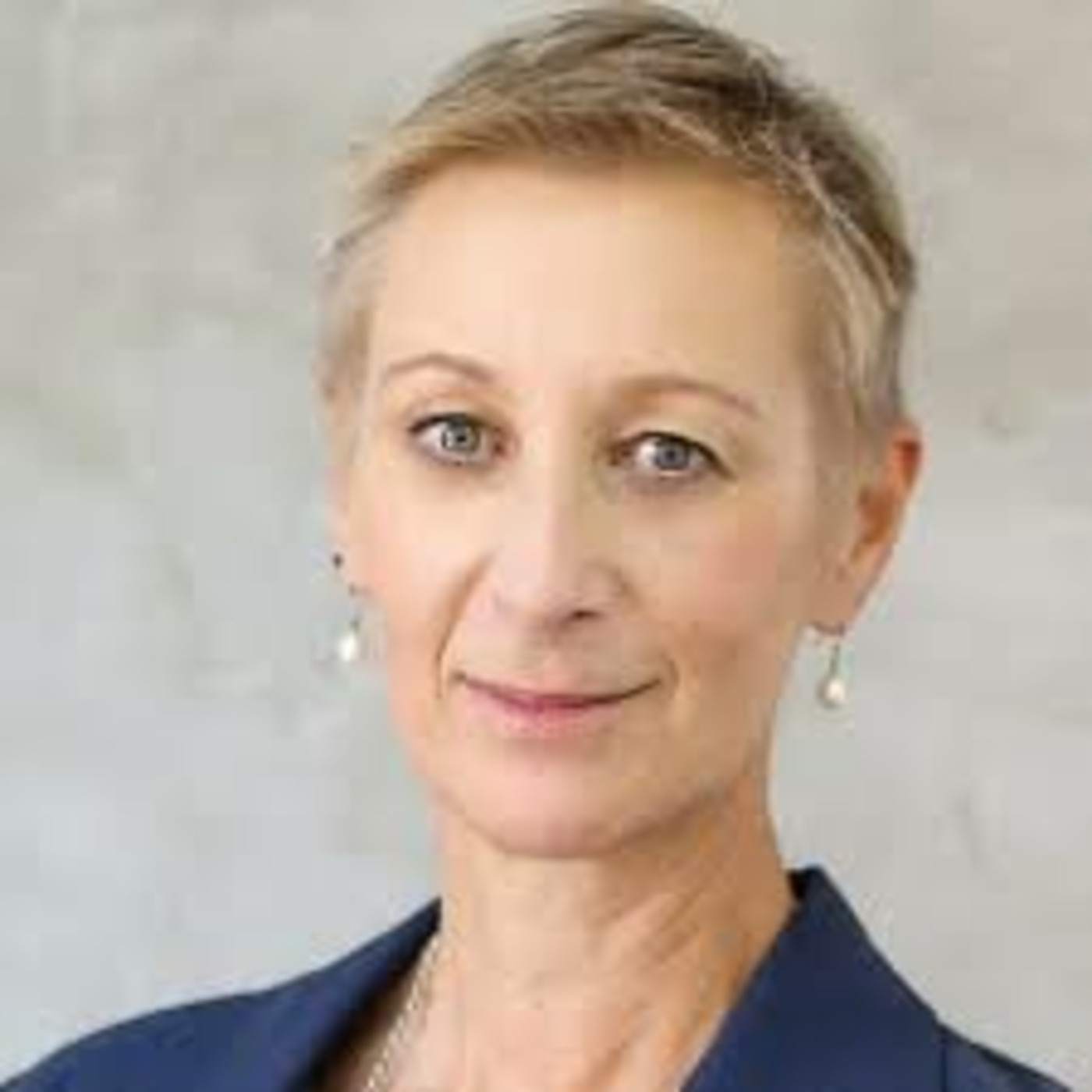
Aoifinn Devitt: Why is visibility at work so central to achieving our career goals? And what is it that sits at the edge of a comfort zone? Is it always magic or sometimes terror? Let’s find out next. I’m Aoifinn Devitt, and welcome to this 50 Faces focus series, which showcases inspiring Israeli women in tech and beyond. I’m joined today by Helen Gottstein, who is the founder of Loud and Clear Training, a communication and presentation strategy business where she serves global clients from her Israel base. She’s had a long career in training women to get heard, inclusion and diversity training, and presentation skills. Today, she shares her tips both as a founder and as a women’s advocate. Welcome, Helen. It’s great to see you again, and thank you for joining me today.
Helen Gottstein: Eifan, it’s wonderful to be here. I love your description of me. So that’s a great beginning.
Aoifinn Devitt: Certainly is. Part of what fascinates me most about you is your career journey. Let’s talk about your career journey, going right back to where you grew up and your time in theater and drama.
Helen Gottstein: Terrific. So your podcast is for women in Israel in tech and beyond. I think I fall into the beyond section. So I work with women in tech, but I am not a techie myself. So my background is in education. I have a background in theatre and literature. So knowing how to stage something, knowing how to create a text with drama, knowing how to build something to a climax, knowing how to structure text as well as know how to organise the text, create a story that will play well for all the time that’s available, understanding, you know, different elements of register, Part of that comes from the world of theatre and part of that comes from the world of literature, and both have come together to serve me as a person who’s interested in helping people get heard and be worth listening to. And I have a particular interest in helping women get heard because we are not yet at a point where the playing field is a fair playing field. We continue to have so many cases of overt bias But a great deal of bias is also unconscious and is no less damaging, even if it’s less violent.
Aoifinn Devitt: And just before we get into some of these principles that you’re teaching and your learnings from them, how did your own career take its turn into training? Can you just talk us a little bit through that?
Helen Gottstein: Well, I grew up as a Jewish young person in Australia. I joined a Jewish youth movement, and in that framework, like, was like a social club with principles for kids from the Jewish community. And part of what you gain there are the skills of working with a group, how to present an idea, how to carry an idea, how to set a goal for an educational activity and see it delivered, and then evaluate to what degree you were or were not successful in delivering that idea. Moving into education, those same principles continue to serve me because as a teacher, you have to be really, really clear about What is the goal that I’m setting for this lesson? What steps do I need to take in order to achieve those goals? So for me, the step from youth movement to teaching, to being in a goal-oriented, results-oriented field is a pretty direct evolution.
Aoifinn Devitt: You said you became a feminist at the age of 19. Can you talk a little bit about that? Because my next question, which you can also answer, is do you think we’ve come far enough in the eyes of your 19-year-old self?
Helen Gottstein: I gained a feminist consciousness after I read a book that I came across called The Female Eunuch by Germaine Greer. It was a book that blew my mind. It systematically went through all parts of the female body and talked about how each part has been controlled, subverted, oppressed throughout history, how the female form is used against women Everything from hair to weight, the whole gamut. It was just astonishing to me, like, to hear social critique in such a strong, clear voice that I literally saw playing out in front of me every day. Today I am a user of an entertainment platform called Netflix, and when I open my user to, like, watch a movie and I’m taking time off We continue to see on our screens today, most films have a white, able-bodied, straight young man as the main lead, and the women continue to be in supporting roles around that. It’s still the dominant form. So you can have entire films where women have no roles at all. It’s about— what came up on my feed just recently was something, a film called Blowback or something about firefighters breaking into a building. I don’t know. The screenshot to promote this is of what, 5 men standing together? Like, could you imagine such a photograph with 5 women? Even if you had 5 women, it doesn’t resonate with us in the same way because the cultural coding, even of an image of 5 women together, is different because we view women as having different status, different power, different relevance. It becomes a chick flick instead of a movie for the mainstream. It becomes for women rather than for the mainstream. And for me, very, very encouraging encouraging, seeing as I’ve now moved on to talk about film rather than literature. For me, very, very encouraging and also exceptional was this recent Netflix miniseries called The Queen’s Gambit, which took the world by storm. And there was an article that I read in the New York Times that said, why did this capture the public imagination to such a degree? It became the most watched thing on any streaming platform in like tens of percentages. What was it about The Queen’s Gambit that captured our imaginations to such a degree? And the writer posited that it was because it showed us what a meritocracy could look like. And in particular, she remarked on the moment where the little girl in the orphanage goes down into the basement, and there she’s met by an elder man. And as she’s walking into that basement, I thought, oh no, here it comes, she’s going to be assaulted. Because you don’t see a little girl walk into a dangerous hidden space in a movie unless something dreadful is going to happen to her, right? And instead, she was tolerated and then recognized and then boosted, much like a male child might be. And it was this extraordinary moment of seeing what a meritocracy could look like if girls were treated the same as boys in the public space. And that’s what was extraordinary about The Queen’s Gambit.
Aoifinn Devitt: That’s a fascinating segue actually into my question around your experience now in working with women in tech in Israel or observing that. You talked about the possibilities of a true meritocracy. What are your impressions of the current situation around women in tech in Israel today?
Helen Gottstein: I think that we are seeing a blossoming, an explosion of women getting organized in Israel. Women are increasingly conscious that they are a tiny minority in the tech space. Many, many, many women continue to find themselves as the only woman in the room, the only woman on the team, sometimes the only woman in a department. And women are getting organized. Women are saying, I need support, I want support, I desire support, there is support out there if I just look for it. For a moment, we see Women in Tech, Tech Women, FemTech, we’ve got TechFem. It’s all going on because we continue to see today that despite women entering the workforce in many fields at often equal numbers, the higher they go up the ranks, the fewer and fewer women there are at higher levels in most tech businesses, in most tech industries. Even if there are relatively equal numbers, relatively proportionate numbers at the entry level, the departure point comes at the point of the first promotion. And then the gap continues to widen as careers advance. So, women are getting organized all over. The Ship Shop. And it’s a great thing because what it tells us is women becoming conscious of being the only woman in the room. There are forums that will support them and that women still need a kind of safe space at some level, a place where we can share whatever’s going on, share strategies and resources to contend with whatever we’re contending with in the workplace. It may not be overt bias. It may be no bias at all. But how to contend with a space where you’re the only representative, where no one else looks like you. And for women of color, how much more so. Women of color so often find themselves in boardrooms where no one else looks like them.
Aoifinn Devitt: You have a wonderful phrase which you shared with me, which is visibility equals career. Why is it so difficult for some women to get the visibility that they need? Has the pandemic altered these dynamics?
Helen Gottstein: As we say in Hebrew, cow, cow will go para para, cow, cow. I don’t know why we count in cows. Perhaps one day I will learn the truth about that expression. Visibility equals careers. Forbes magazine says that the best way to build a career in a company is to volunteer to speak on behalf of the company. It’s an instant way for your profile, for your capacity, for your competence to be delivered publicly and for the company to have an opportunity to recognize how much you know, how much you can do, and how effectively you can speak about the value of the company. So, visibility equals career. That’s not me, that’s Forbes magazine. And has the pandemic impacted how visible women are? I think that many of the dynamics that we see in the boardroom or in regular meeting space continue to play out in virtual meetings, where supposedly everybody’s in their equal space, everybody’s got the same shaped square, there is no table where some people are closer to the head of the table or further away, but we are nevertheless very conscious of status, experience, gender, confidence. All of those things continue to play out no matter where you’re speaking. And I’d say in some aspects, some of those phenomena are made even more extreme because when we’re in a virtual meeting, many, many people don’t turn their cameras on. So if you’re a presenter and you’ve got your camera on, or you’re a presenter and you’ve got your camera off, and people who might not behave like this face-to-face always feel greatly greater freedom when their anonymity is increased. So, women find themselves being shouted at online by multiple people in meetings that they’re attending or multiple people in meetings they’re running because the attendees’ cameras are off. So, the self-consciousness drops. I don’t know if you’ve ever had this experience, but many people scream at service providers on the telephone in ways they would never do face-to-face. And they allow themselves to do it because the degree of their anonymity is higher. You can’t see me. You don’t know where I am. You don’t know what I look like. I have greater freedom to act however I want because you can’t see me. There’s less accountability. I think we see that play out also in the virtual space. I’ll share that that’s one of the reasons that at the moment I’ve got a session called Increasing Inclusion in Virtual Meetings in order to address exactly this. And for me, it goes further than making sure that everybody gets heard who wants to get heard, although that’s a pretty good starting point, we could say. It’s also putting in place structures so that as a group facilitator, as someone who is leading a meeting, you know how to ask people to open their mics. Do you know how to use the chat? You know how to have somebody who’s a timekeeper. You know how to hand out roles to various people to increase responsibility for the shared space. Including having somebody who’s in charge of social interaction, not just a timekeeper, but somebody whose job it is to notice how long people are speaking for, how frequently people are speaking, and if there are 3 or 4 people who haven’t spoken up at all, also to notice that. And if relevant, to call people who are always the first and second and third and fourth speaker, the first one who always speaks, to say, look, let’s make sure that everybody gets heard who wants to be heard. What are the obstacles out there for women, I think, was one of the triple-whipple-bangers that you asked earlier. And I’ll say this, I think that everybody has some degree of sexism. Everyone. We’ve all absorbed it. So, there are real obstacles out there in the world that are external to us and not connected to us and not our responsibility. It is not yet an equal playing field. But we have also internalised that same sexism. We are sexist towards ourselves and we’re sexist towards other women as well. Now, that’s not our fault. We have absorbed it. You can hear women say things like, well, I wouldn’t really want to have another woman as a boss. Have you ever had a woman as a boss? Well, yeah, I had one. And therefore, like, it’s not a case. It’s not an anecdote. It’s a societal phenomenon. So many women say this. But they’ve never actually had any female bosses at all. It’s the kind of sexism that we’ve just absorbed unconsciously, that we’re not responsible for. We didn’t choose to become sexist, like we didn’t choose to become homophobic and racist. We just absorbed it. Nevertheless, it’s our responsibility to try to step up and say, I do have bias. What am I going to do about it? I do have bias. How can I address it? We all have bias. How can we institute changes in our organizations and companies in order to work towards a more equal playing field? In my book, it’s not enough to say, you know, we’ve got diversity, look at the colors and the genders of the people in the room. That photographs really well. That’s about optics, right? That’s about what looks really great for our PC investors or our PC applications who want to join our company. But it’s not actually about inclusion. Inclusion is how you set up systems inside the company so that stuff runs differently. That’s inclusion. It creates a need for meetings to be run differently, for responsibilities to be shared differently, for timeout and consistency and evaluation to be set up differently. Structures like that.
Aoifinn Devitt: What are your thoughts on the very common nowadays anti-bias training that’s going on within companies? Does that work?
Helen Gottstein: I think nothing works when it’s a one-off event. That’s exposure. That somebody has a list and they put a check mark next to, well, we did an event for Women’s Day. Now we did an event for Martin Luther King Day. Check. We’re no longer racist because look, we did an event for Martin Luther King Day. We don’t have to think about it for another year, thank goodness. Anti-bias training works when it’s a serious process that is integrated in an ongoing way into the structures of a company. The way to evaluate the success of an event on International Women’s Day is to ask yourself, what’s different in our company one year after last International Women’s Day? What has changed from the C-suite down? That’s the way to evaluate the success of your anti-bias training.
Aoifinn Devitt: Very interesting. Clearly grounding it in data. So now just getting into some more of these nuggets of wisdom. I’ve loved following you on LinkedIn. You frequently grace us with some nuggets of wisdom there. One recent one I remember was around a podcast and why you shouldn’t just say, well, I was honored to speak finally with this esteemed person. And if you want people to listen to your podcast, you have to let them know what’s in it for them. What are they going to gain? Do you have any one or two other nuggets of wisdom that you’ve recently shared on LinkedIn that have really resonated with your audience?
Helen Gottstein: I’ll tell you what works for me and what I know works for audiences, which is if you invite somebody for a podcast, you would want to do exactly what you did this morning, which is give somebody a brief introduction and then just get on with it. What you don’t want is the first 10 minutes of a podcast to be dedicated to somebody’s bio or all the things that they’ve done. That’s not why somebody is tuning in. That’s not why somebody is giving you their precious attention. People listen in order to gain content. In fact, the speaker is almost irrelevant. You’re merely a mouthpiece of the value that you deliver. Your value comes from the value you deliver. So one second of bio so that people know approximately who they’re listening to and begin giving content. That’s the only thing that’s going to keep somebody with you.
Aoifinn Devitt: Absolutely. I agree with that. And I think that, you know, whereas bios can sometimes be interesting when they are the source of, say, insights or approach to life, or maybe lessons learned, I do agree that it is the content, is the transferable skills, wisdom, etc., that really is what will resonate most. And what you want ideally is for a podcast to be generalizable. As a founder, have you found any particular challenges in being a female founder, or did you think that it’s really just being a founder can be tough anyway, regardless of gender?
Helen Gottstein: So for me, what comes up is something that runs really, really deep for me into the whole question of ambition and how far anybody really wants to go. I have a number of male colleagues, in contrast to many of my women colleagues, who see themselves as institutions, who have opened training schools in their own names, For example. And it’s kind of like, I don’t know if it goes to ego or vision or status or sense of self-importance. Who are the people who open training schools in their own names to train others in that method that they’ve developed? And I would posit that the tools of becoming an effective public speaking coach are pretty well known, pretty obvious. You need to know how to package a story. You need to know how to avoid jargon. You need to know how to coax somebody to edit what is irrelevant, drive towards the main ideas, structure them well, and deliver them with passion. And have a punchy punchline if you can throw that in as well. That’s pretty much public speaking in a nutshell. You heard it here. It won’t be helpful because that’s all there is. You can read it everywhere. Like, so why would I establish a public speaking school in my own name? For me, that goes to the heart of your question of like, as a founder, what does that mean to me? How big do I think I want to go? Should I create the Helen Gottstein School of Public Speaking Training? You know, can you get a certificate in the Helen Gottstein approach? I don’t know that I think that I have anything that’s so above and beyond what so many other excellent trainers out there are doing. For me, it’s more a matter of attitude to self. Perhaps that’s misguided. Perhaps it’s just me thinking small about the skill set that I’ve worked so hard to acquire. I certainly know that it’s possible that what I just said is a result of internalized bias on my own part. I certainly know theoretically that women consistently devalue the knowledge that they’ve acquired as being obvious. And if I know it, then everybody else must know it.. And I literally just did that live on your podcast. And secondly, I know from the venture capital firms that I work with that many female entrepreneurs who come to pitch at venture capital firms are unsuccessful because they’re not thinking big enough. They come to venture capital firms and they say, well, we want $100,000 because we want to create something minute and really small in a crowded market. And a venture capital firm, it’s not interesting to us. It’s not exciting. It’s not grand enough. We’re looking for somebody who will come in here and say all of those passé terms, perhaps in better, more up-to-date, refreshing language than cutting edge or disruptive, but people who have like a clear vision of something they truly wish to change in a sphere that has not experienced deep change and sees enormous potential if they could carry out that deep change.
Aoifinn Devitt: Well, I think what you revealed is a fascinating problem, conundrum perhaps, that females face, not just founders, but in professionals overall. One is a deficit in confidence if they’re not aiming big enough. But that also relates to risk-taking because aiming big is inherently taking a risk because you could not deliver. You could fall flat on your face. I think that’s probably two areas where women are definitely behind men in terms of risk-taking and confidence. And it’s fascinating, I think, to articulate it as you have, because it really is— that’s where we need to do the work, not just with ourselves, but with the next generation.
Helen Gottstein: And also with ourselves, because the best gift that we can give the next generation is to model ourselves as risk-takers. I love that you said that. There’s clear research that shows patterns of investment, that the women are far more risk-averse than men, far more risk-averse. They’re more risk-averse in terms of the jobs that they take, in how far they’re willing to go out on a limb in a position, and certainly in terms of where they put their money. So risk-taking is a huge issue for women, and I love that you said that. As somebody who consistently contends with the edge of my fear, like, how far can I go? What risk am I willing to take? It’s really a great subject. I love that you raised it. I’ll share an insight that I loved from a book called Playing Big by Tara Moore. She talks about the fear factor as being one that comes up as soon as a person knows they’re about to go bigger. The sense of fear arises when we are stepping out of our comfort zone and going bigger. So the the more we’re going out of our comfort zone, the greater the fear. And comfort zones are essential because it’s where we rest. It’s where we can feel okay. But I also see how quickly a comfort zone can expand. I’ll share that this morning I was on a LinkedIn Live. It’s my third one ever. And I had to do all of these tech things with a platform called StreamYard. Today I had my virtual assistant responding to messages as me whilst the live was playing out on LinkedIn. And it was so much fun that it was so much easier this third time. The first time it was terrifying. The second time I left with a migraine. And today I’m being interviewed on another thing in the afternoon with you. It’s extraordinary what happens when we expand our comfort zone. And the way to do it is actually quite painful. I’ll share with you, it’s painful to stretch out of your comfort zone. It’s painful. It hurts.
Aoifinn Devitt: I love it because you’re going to be the sixth in the series, and our first guest of the series, Eleanor Swery, her whole life motto is getting outside her comfort zone because that’s where the magic happens. And that’s her LinkedIn backdrop, and that’s a motto that she lives by. So it is wonderful to tie together those unifying thoughts. So thank you for that.
Helen Gottstein: Hey, Eleanor, what up, sister? I feel so differently that I think like it’s not where the magic happens, it’s where the terror happens. It’s also where you get to feel proud of yourself. Both things are true. So Eleanor, I’m with you on that one.
Aoifinn Devitt: Um, we’ll go just back for a few questions to your personal journey. Were there any key people who influenced you along your career and how?
Helen Gottstein: People who have supported me along the way. I am a person who has really relied on help from so many other people to get where I am today. There’s an expression that I hear often used by Americans of being a self-made man. Sorry, was I coughing? Self-made man, pulled myself up by my bootstraps. And I did everything on my own. I’m like, no, you didn’t. No, no, you didn’t. You were not your first customer. You didn’t feed yourself. You didn’t tie your first pair of shoes. Somebody else did those things for you. Somebody else extended trust. Somebody else supported you. Somebody else gave you emotional nurture. All of those things help us move forward. I experience myself as one of the most blessed people people that I know. I am incredibly blessed in so, so, so, so many levels. So who have I learned from? I’ve learned from moments of encouragement by other women entrepreneurs. I’ve learned from offering support to other women. I’ve learned from getting support from male colleagues. I’ve learned from giving support to other male I’ve learned from expanding my connections. I’ve learned from having truly humbling moments of absolute public train wreckiness. I see myself— like, part of my self-definition is I would say that I am both willing to be a leader in the fields that I’m working in, as well as be a learner in every field that I’m working in. I’ll share that I’ve never been as outspoken about my own personal agenda as I have been with you here today. Never. I’ve never articulated in any other forum with the same kind of consistent, punchy clarity the principles that I live by, how I view bias. Even this for me is stepping out of my comfort zone. And you might be like, well, Helen, give me a break. Everybody’s talking about this stuff. You’re just catching up to the tidal wave that’s moving through the world. And I’m like, Okay, for you it’s obvious. For me, it’s still not obvious that I can say these things out loud and not just not be punished, but be welcomed. So that’s a learning for me. Where am I learning? I’m learning from you right now. Look how gracefully you’re hosting me. Look how wonderfully you’ve prepared these serious questions that have given me the opportunity to speak about things that are in my heart. That makes you a serious professional in my book. It means I’ll be able to refer people to you in the future. I’m learning from you right now about respect for guests and respect for audience. Beautiful.
Aoifinn Devitt: Well, thank you for those very kind words. We’re certainly honored that you came out of your comfort zone to speak with us here. Do you have any advice for your younger self? Is there anything that you know now that you wish you had known as that 19-year-old young feminist?
Helen Gottstein: I would tell my 19-year-old self about an experience I had at the age of 40 when I went to a climbing wall for the first time. And as I climbed that wall, I realized there is no strategy to get to the top. The only thing you can do is put one hand in front of the other and take yourself a little bit further. And each time, take yourself a little bit further. You can’t go from A to Z. You can only go from A to A.001 to A.0012. You can only go a tiny, tiny step every time, but in the end, you’ll climb higher up that wall.
Aoifinn Devitt: Well, that’s wonderful. And in reciprocity, I’ll share what I learned when I first went climbing, which was in Hong Kong, climbing, uh, one of those limestone walls in Shek Kow. And my coach told me to trust your equipment is the single most important thing in climbing is to trust that that rope’s gonna hold, that the layer is going to be trustworthy. And I think in the context of life, your equipment is you, right? So there’s an element of trusting in yourself as well. So thank you for that insight. Well, it’s been a real pleasure speaking with you today, seeing you here. Thank you so much for sharing your insights with us, Helen.
Helen Gottstein: Thank you so much for hosting me. It’s been a pleasure. And I won’t say a pleasure and an honor. I’ll say I’m really, really glad to have the opportunity to share an agenda I care passionately about. And thank you for honoring the agenda that we share.
Aoifinn Devitt: Thank you. I’m Aoifinn Devitt. Thank you for listening to our 50 Faces Focus Series. If you liked what you heard and would like to tune in to hear more inspiring Israeli women in tech and beyond, please subscribe on Apple Podcasts or wherever you get your podcast. This podcast series was made possible by the kind support of Elisa Bayer and Avital Oyskild. This podcast is for informational purposes only and should not be construed as investment advice, and all views are personal and should not be attributed to the organizations and affiliations of the host or any guest.
Aoifinn Devitt: Why is visibility at work so central to achieving our career goals? And what is it that sits at the edge of a comfort zone? Is it always magic or sometimes terror? Let’s find out next. I’m Aoifinn Devitt, and welcome to this 50 Faces focus series, which showcases inspiring Israeli women in tech and beyond. I’m joined today by Helen Gottstein, who is the founder of Loud and Clear Training, a communication and presentation strategy business where she serves global clients from her Israel base. She’s had a long career in training women to get heard, inclusion and diversity training, and presentation skills. Today, she shares her tips both as a founder and as a women’s advocate. Welcome, Helen. It’s great to see you again, and thank you for joining me today.
Helen Gottstein: Eifan, it’s wonderful to be here. I love your description of me. So that’s a great beginning.
Aoifinn Devitt: Certainly is. Part of what fascinates me most about you is your career journey. Let’s talk about your career journey, going right back to where you grew up and your time in theater and drama.
Helen Gottstein: Terrific. So your podcast is for women in Israel in tech and beyond. I think I fall into the beyond section. So I work with women in tech, but I am not a techie myself. So my background is in education. I have a background in theatre and literature. So knowing how to stage something, knowing how to create a text with drama, knowing how to build something to a climax, knowing how to structure text as well as know how to organise the text, create a story that will play well for all the time that’s available, understanding, you know, different elements of register, Part of that comes from the world of theatre and part of that comes from the world of literature, and both have come together to serve me as a person who’s interested in helping people get heard and be worth listening to. And I have a particular interest in helping women get heard because we are not yet at a point where the playing field is a fair playing field. We continue to have so many cases of overt bias But a great deal of bias is also unconscious and is no less damaging, even if it’s less violent.
Aoifinn Devitt: And just before we get into some of these principles that you’re teaching and your learnings from them, how did your own career take its turn into training? Can you just talk us a little bit through that?
Helen Gottstein: Well, I grew up as a Jewish young person in Australia. I joined a Jewish youth movement, and in that framework, like, was like a social club with principles for kids from the Jewish community. And part of what you gain there are the skills of working with a group, how to present an idea, how to carry an idea, how to set a goal for an educational activity and see it delivered, and then evaluate to what degree you were or were not successful in delivering that idea. Moving into education, those same principles continue to serve me because as a teacher, you have to be really, really clear about What is the goal that I’m setting for this lesson? What steps do I need to take in order to achieve those goals? So for me, the step from youth movement to teaching, to being in a goal-oriented, results-oriented field is a pretty direct evolution.
Aoifinn Devitt: You said you became a feminist at the age of 19. Can you talk a little bit about that? Because my next question, which you can also answer, is do you think we’ve come far enough in the eyes of your 19-year-old self?
Helen Gottstein: I gained a feminist consciousness after I read a book that I came across called The Female Eunuch by Germaine Greer. It was a book that blew my mind. It systematically went through all parts of the female body and talked about how each part has been controlled, subverted, oppressed throughout history, how the female form is used against women Everything from hair to weight, the whole gamut. It was just astonishing to me, like, to hear social critique in such a strong, clear voice that I literally saw playing out in front of me every day. Today I am a user of an entertainment platform called Netflix, and when I open my user to, like, watch a movie and I’m taking time off We continue to see on our screens today, most films have a white, able-bodied, straight young man as the main lead, and the women continue to be in supporting roles around that. It’s still the dominant form. So you can have entire films where women have no roles at all. It’s about— what came up on my feed just recently was something, a film called Blowback or something about firefighters breaking into a building. I don’t know. The screenshot to promote this is of what, 5 men standing together? Like, could you imagine such a photograph with 5 women? Even if you had 5 women, it doesn’t resonate with us in the same way because the cultural coding, even of an image of 5 women together, is different because we view women as having different status, different power, different relevance. It becomes a chick flick instead of a movie for the mainstream. It becomes for women rather than for the mainstream. And for me, very, very encouraging encouraging, seeing as I’ve now moved on to talk about film rather than literature. For me, very, very encouraging and also exceptional was this recent Netflix miniseries called The Queen’s Gambit, which took the world by storm. And there was an article that I read in the New York Times that said, why did this capture the public imagination to such a degree? It became the most watched thing on any streaming platform in like tens of percentages. What was it about The Queen’s Gambit that captured our imaginations to such a degree? And the writer posited that it was because it showed us what a meritocracy could look like. And in particular, she remarked on the moment where the little girl in the orphanage goes down into the basement, and there she’s met by an elder man. And as she’s walking into that basement, I thought, oh no, here it comes, she’s going to be assaulted. Because you don’t see a little girl walk into a dangerous hidden space in a movie unless something dreadful is going to happen to her, right? And instead, she was tolerated and then recognized and then boosted, much like a male child might be. And it was this extraordinary moment of seeing what a meritocracy could look like if girls were treated the same as boys in the public space. And that’s what was extraordinary about The Queen’s Gambit.
Aoifinn Devitt: That’s a fascinating segue actually into my question around your experience now in working with women in tech in Israel or observing that. You talked about the possibilities of a true meritocracy. What are your impressions of the current situation around women in tech in Israel today?
Helen Gottstein: I think that we are seeing a blossoming, an explosion of women getting organized in Israel. Women are increasingly conscious that they are a tiny minority in the tech space. Many, many, many women continue to find themselves as the only woman in the room, the only woman on the team, sometimes the only woman in a department. And women are getting organized. Women are saying, I need support, I want support, I desire support, there is support out there if I just look for it. For a moment, we see Women in Tech, Tech Women, FemTech, we’ve got TechFem. It’s all going on because we continue to see today that despite women entering the workforce in many fields at often equal numbers, the higher they go up the ranks, the fewer and fewer women there are at higher levels in most tech businesses, in most tech industries. Even if there are relatively equal numbers, relatively proportionate numbers at the entry level, the departure point comes at the point of the first promotion. And then the gap continues to widen as careers advance. So, women are getting organized all over. The Ship Shop. And it’s a great thing because what it tells us is women becoming conscious of being the only woman in the room. There are forums that will support them and that women still need a kind of safe space at some level, a place where we can share whatever’s going on, share strategies and resources to contend with whatever we’re contending with in the workplace. It may not be overt bias. It may be no bias at all. But how to contend with a space where you’re the only representative, where no one else looks like you. And for women of color, how much more so. Women of color so often find themselves in boardrooms where no one else looks like them.
Aoifinn Devitt: You have a wonderful phrase which you shared with me, which is visibility equals career. Why is it so difficult for some women to get the visibility that they need? Has the pandemic altered these dynamics?
Helen Gottstein: As we say in Hebrew, cow, cow will go para para, cow, cow. I don’t know why we count in cows. Perhaps one day I will learn the truth about that expression. Visibility equals careers. Forbes magazine says that the best way to build a career in a company is to volunteer to speak on behalf of the company. It’s an instant way for your profile, for your capacity, for your competence to be delivered publicly and for the company to have an opportunity to recognize how much you know, how much you can do, and how effectively you can speak about the value of the company. So, visibility equals career. That’s not me, that’s Forbes magazine. And has the pandemic impacted how visible women are? I think that many of the dynamics that we see in the boardroom or in regular meeting space continue to play out in virtual meetings, where supposedly everybody’s in their equal space, everybody’s got the same shaped square, there is no table where some people are closer to the head of the table or further away, but we are nevertheless very conscious of status, experience, gender, confidence. All of those things continue to play out no matter where you’re speaking. And I’d say in some aspects, some of those phenomena are made even more extreme because when we’re in a virtual meeting, many, many people don’t turn their cameras on. So if you’re a presenter and you’ve got your camera on, or you’re a presenter and you’ve got your camera off, and people who might not behave like this face-to-face always feel greatly greater freedom when their anonymity is increased. So, women find themselves being shouted at online by multiple people in meetings that they’re attending or multiple people in meetings they’re running because the attendees’ cameras are off. So, the self-consciousness drops. I don’t know if you’ve ever had this experience, but many people scream at service providers on the telephone in ways they would never do face-to-face. And they allow themselves to do it because the degree of their anonymity is higher. You can’t see me. You don’t know where I am. You don’t know what I look like. I have greater freedom to act however I want because you can’t see me. There’s less accountability. I think we see that play out also in the virtual space. I’ll share that that’s one of the reasons that at the moment I’ve got a session called Increasing Inclusion in Virtual Meetings in order to address exactly this. And for me, it goes further than making sure that everybody gets heard who wants to get heard, although that’s a pretty good starting point, we could say. It’s also putting in place structures so that as a group facilitator, as someone who is leading a meeting, you know how to ask people to open their mics. Do you know how to use the chat? You know how to have somebody who’s a timekeeper. You know how to hand out roles to various people to increase responsibility for the shared space. Including having somebody who’s in charge of social interaction, not just a timekeeper, but somebody whose job it is to notice how long people are speaking for, how frequently people are speaking, and if there are 3 or 4 people who haven’t spoken up at all, also to notice that. And if relevant, to call people who are always the first and second and third and fourth speaker, the first one who always speaks, to say, look, let’s make sure that everybody gets heard who wants to be heard. What are the obstacles out there for women, I think, was one of the triple-whipple-bangers that you asked earlier. And I’ll say this, I think that everybody has some degree of sexism. Everyone. We’ve all absorbed it. So, there are real obstacles out there in the world that are external to us and not connected to us and not our responsibility. It is not yet an equal playing field. But we have also internalised that same sexism. We are sexist towards ourselves and we’re sexist towards other women as well. Now, that’s not our fault. We have absorbed it. You can hear women say things like, well, I wouldn’t really want to have another woman as a boss. Have you ever had a woman as a boss? Well, yeah, I had one. And therefore, like, it’s not a case. It’s not an anecdote. It’s a societal phenomenon. So many women say this. But they’ve never actually had any female bosses at all. It’s the kind of sexism that we’ve just absorbed unconsciously, that we’re not responsible for. We didn’t choose to become sexist, like we didn’t choose to become homophobic and racist. We just absorbed it. Nevertheless, it’s our responsibility to try to step up and say, I do have bias. What am I going to do about it? I do have bias. How can I address it? We all have bias. How can we institute changes in our organizations and companies in order to work towards a more equal playing field? In my book, it’s not enough to say, you know, we’ve got diversity, look at the colors and the genders of the people in the room. That photographs really well. That’s about optics, right? That’s about what looks really great for our PC investors or our PC applications who want to join our company. But it’s not actually about inclusion. Inclusion is how you set up systems inside the company so that stuff runs differently. That’s inclusion. It creates a need for meetings to be run differently, for responsibilities to be shared differently, for timeout and consistency and evaluation to be set up differently. Structures like that.
Aoifinn Devitt: What are your thoughts on the very common nowadays anti-bias training that’s going on within companies? Does that work?
Helen Gottstein: I think nothing works when it’s a one-off event. That’s exposure. That somebody has a list and they put a check mark next to, well, we did an event for Women’s Day. Now we did an event for Martin Luther King Day. Check. We’re no longer racist because look, we did an event for Martin Luther King Day. We don’t have to think about it for another year, thank goodness. Anti-bias training works when it’s a serious process that is integrated in an ongoing way into the structures of a company. The way to evaluate the success of an event on International Women’s Day is to ask yourself, what’s different in our company one year after last International Women’s Day? What has changed from the C-suite down? That’s the way to evaluate the success of your anti-bias training.
Aoifinn Devitt: Very interesting. Clearly grounding it in data. So now just getting into some more of these nuggets of wisdom. I’ve loved following you on LinkedIn. You frequently grace us with some nuggets of wisdom there. One recent one I remember was around a podcast and why you shouldn’t just say, well, I was honored to speak finally with this esteemed person. And if you want people to listen to your podcast, you have to let them know what’s in it for them. What are they going to gain? Do you have any one or two other nuggets of wisdom that you’ve recently shared on LinkedIn that have really resonated with your audience?
Helen Gottstein: I’ll tell you what works for me and what I know works for audiences, which is if you invite somebody for a podcast, you would want to do exactly what you did this morning, which is give somebody a brief introduction and then just get on with it. What you don’t want is the first 10 minutes of a podcast to be dedicated to somebody’s bio or all the things that they’ve done. That’s not why somebody is tuning in. That’s not why somebody is giving you their precious attention. People listen in order to gain content. In fact, the speaker is almost irrelevant. You’re merely a mouthpiece of the value that you deliver. Your value comes from the value you deliver. So one second of bio so that people know approximately who they’re listening to and begin giving content. That’s the only thing that’s going to keep somebody with you.
Aoifinn Devitt: Absolutely. I agree with that. And I think that, you know, whereas bios can sometimes be interesting when they are the source of, say, insights or approach to life, or maybe lessons learned, I do agree that it is the content, is the transferable skills, wisdom, etc., that really is what will resonate most. And what you want ideally is for a podcast to be generalizable. As a founder, have you found any particular challenges in being a female founder, or did you think that it’s really just being a founder can be tough anyway, regardless of gender?
Helen Gottstein: So for me, what comes up is something that runs really, really deep for me into the whole question of ambition and how far anybody really wants to go. I have a number of male colleagues, in contrast to many of my women colleagues, who see themselves as institutions, who have opened training schools in their own names, For example. And it’s kind of like, I don’t know if it goes to ego or vision or status or sense of self-importance. Who are the people who open training schools in their own names to train others in that method that they’ve developed? And I would posit that the tools of becoming an effective public speaking coach are pretty well known, pretty obvious. You need to know how to package a story. You need to know how to avoid jargon. You need to know how to coax somebody to edit what is irrelevant, drive towards the main ideas, structure them well, and deliver them with passion. And have a punchy punchline if you can throw that in as well. That’s pretty much public speaking in a nutshell. You heard it here. It won’t be helpful because that’s all there is. You can read it everywhere. Like, so why would I establish a public speaking school in my own name? For me, that goes to the heart of your question of like, as a founder, what does that mean to me? How big do I think I want to go? Should I create the Helen Gottstein School of Public Speaking Training? You know, can you get a certificate in the Helen Gottstein approach? I don’t know that I think that I have anything that’s so above and beyond what so many other excellent trainers out there are doing. For me, it’s more a matter of attitude to self. Perhaps that’s misguided. Perhaps it’s just me thinking small about the skill set that I’ve worked so hard to acquire. I certainly know that it’s possible that what I just said is a result of internalized bias on my own part. I certainly know theoretically that women consistently devalue the knowledge that they’ve acquired as being obvious. And if I know it, then everybody else must know it.. And I literally just did that live on your podcast. And secondly, I know from the venture capital firms that I work with that many female entrepreneurs who come to pitch at venture capital firms are unsuccessful because they’re not thinking big enough. They come to venture capital firms and they say, well, we want $100,000 because we want to create something minute and really small in a crowded market. And a venture capital firm, it’s not interesting to us. It’s not exciting. It’s not grand enough. We’re looking for somebody who will come in here and say all of those passé terms, perhaps in better, more up-to-date, refreshing language than cutting edge or disruptive, but people who have like a clear vision of something they truly wish to change in a sphere that has not experienced deep change and sees enormous potential if they could carry out that deep change.
Aoifinn Devitt: Well, I think what you revealed is a fascinating problem, conundrum perhaps, that females face, not just founders, but in professionals overall. One is a deficit in confidence if they’re not aiming big enough. But that also relates to risk-taking because aiming big is inherently taking a risk because you could not deliver. You could fall flat on your face. I think that’s probably two areas where women are definitely behind men in terms of risk-taking and confidence. And it’s fascinating, I think, to articulate it as you have, because it really is— that’s where we need to do the work, not just with ourselves, but with the next generation.
Helen Gottstein: And also with ourselves, because the best gift that we can give the next generation is to model ourselves as risk-takers. I love that you said that. There’s clear research that shows patterns of investment, that the women are far more risk-averse than men, far more risk-averse. They’re more risk-averse in terms of the jobs that they take, in how far they’re willing to go out on a limb in a position, and certainly in terms of where they put their money. So risk-taking is a huge issue for women, and I love that you said that. As somebody who consistently contends with the edge of my fear, like, how far can I go? What risk am I willing to take? It’s really a great subject. I love that you raised it. I’ll share an insight that I loved from a book called Playing Big by Tara Moore. She talks about the fear factor as being one that comes up as soon as a person knows they’re about to go bigger. The sense of fear arises when we are stepping out of our comfort zone and going bigger. So the the more we’re going out of our comfort zone, the greater the fear. And comfort zones are essential because it’s where we rest. It’s where we can feel okay. But I also see how quickly a comfort zone can expand. I’ll share that this morning I was on a LinkedIn Live. It’s my third one ever. And I had to do all of these tech things with a platform called StreamYard. Today I had my virtual assistant responding to messages as me whilst the live was playing out on LinkedIn. And it was so much fun that it was so much easier this third time. The first time it was terrifying. The second time I left with a migraine. And today I’m being interviewed on another thing in the afternoon with you. It’s extraordinary what happens when we expand our comfort zone. And the way to do it is actually quite painful. I’ll share with you, it’s painful to stretch out of your comfort zone. It’s painful. It hurts.
Aoifinn Devitt: I love it because you’re going to be the sixth in the series, and our first guest of the series, Eleanor Swery, her whole life motto is getting outside her comfort zone because that’s where the magic happens. And that’s her LinkedIn backdrop, and that’s a motto that she lives by. So it is wonderful to tie together those unifying thoughts. So thank you for that.
Helen Gottstein: Hey, Eleanor, what up, sister? I feel so differently that I think like it’s not where the magic happens, it’s where the terror happens. It’s also where you get to feel proud of yourself. Both things are true. So Eleanor, I’m with you on that one.
Aoifinn Devitt: Um, we’ll go just back for a few questions to your personal journey. Were there any key people who influenced you along your career and how?
Helen Gottstein: People who have supported me along the way. I am a person who has really relied on help from so many other people to get where I am today. There’s an expression that I hear often used by Americans of being a self-made man. Sorry, was I coughing? Self-made man, pulled myself up by my bootstraps. And I did everything on my own. I’m like, no, you didn’t. No, no, you didn’t. You were not your first customer. You didn’t feed yourself. You didn’t tie your first pair of shoes. Somebody else did those things for you. Somebody else extended trust. Somebody else supported you. Somebody else gave you emotional nurture. All of those things help us move forward. I experience myself as one of the most blessed people people that I know. I am incredibly blessed in so, so, so, so many levels. So who have I learned from? I’ve learned from moments of encouragement by other women entrepreneurs. I’ve learned from offering support to other women. I’ve learned from getting support from male colleagues. I’ve learned from giving support to other male I’ve learned from expanding my connections. I’ve learned from having truly humbling moments of absolute public train wreckiness. I see myself— like, part of my self-definition is I would say that I am both willing to be a leader in the fields that I’m working in, as well as be a learner in every field that I’m working in. I’ll share that I’ve never been as outspoken about my own personal agenda as I have been with you here today. Never. I’ve never articulated in any other forum with the same kind of consistent, punchy clarity the principles that I live by, how I view bias. Even this for me is stepping out of my comfort zone. And you might be like, well, Helen, give me a break. Everybody’s talking about this stuff. You’re just catching up to the tidal wave that’s moving through the world. And I’m like, Okay, for you it’s obvious. For me, it’s still not obvious that I can say these things out loud and not just not be punished, but be welcomed. So that’s a learning for me. Where am I learning? I’m learning from you right now. Look how gracefully you’re hosting me. Look how wonderfully you’ve prepared these serious questions that have given me the opportunity to speak about things that are in my heart. That makes you a serious professional in my book. It means I’ll be able to refer people to you in the future. I’m learning from you right now about respect for guests and respect for audience. Beautiful.
Aoifinn Devitt: Well, thank you for those very kind words. We’re certainly honored that you came out of your comfort zone to speak with us here. Do you have any advice for your younger self? Is there anything that you know now that you wish you had known as that 19-year-old young feminist?
Helen Gottstein: I would tell my 19-year-old self about an experience I had at the age of 40 when I went to a climbing wall for the first time. And as I climbed that wall, I realized there is no strategy to get to the top. The only thing you can do is put one hand in front of the other and take yourself a little bit further. And each time, take yourself a little bit further. You can’t go from A to Z. You can only go from A to A.001 to A.0012. You can only go a tiny, tiny step every time, but in the end, you’ll climb higher up that wall.
Aoifinn Devitt: Well, that’s wonderful. And in reciprocity, I’ll share what I learned when I first went climbing, which was in Hong Kong, climbing, uh, one of those limestone walls in Shek Kow. And my coach told me to trust your equipment is the single most important thing in climbing is to trust that that rope’s gonna hold, that the layer is going to be trustworthy. And I think in the context of life, your equipment is you, right? So there’s an element of trusting in yourself as well. So thank you for that insight. Well, it’s been a real pleasure speaking with you today, seeing you here. Thank you so much for sharing your insights with us, Helen.
Helen Gottstein: Thank you so much for hosting me. It’s been a pleasure. And I won’t say a pleasure and an honor. I’ll say I’m really, really glad to have the opportunity to share an agenda I care passionately about. And thank you for honoring the agenda that we share.
Aoifinn Devitt: Thank you. I’m Aoifinn Devitt. Thank you for listening to our 50 Faces Focus Series. If you liked what you heard and would like to tune in to hear more inspiring Israeli women in tech and beyond, please subscribe on Apple Podcasts or wherever you get your podcast. This podcast series was made possible by the kind support of Elisa Bayer and Avital Oyskild. This podcast is for informational purposes only and should not be construed as investment advice, and all views are personal and should not be attributed to the organizations and affiliations of the host or any guest.