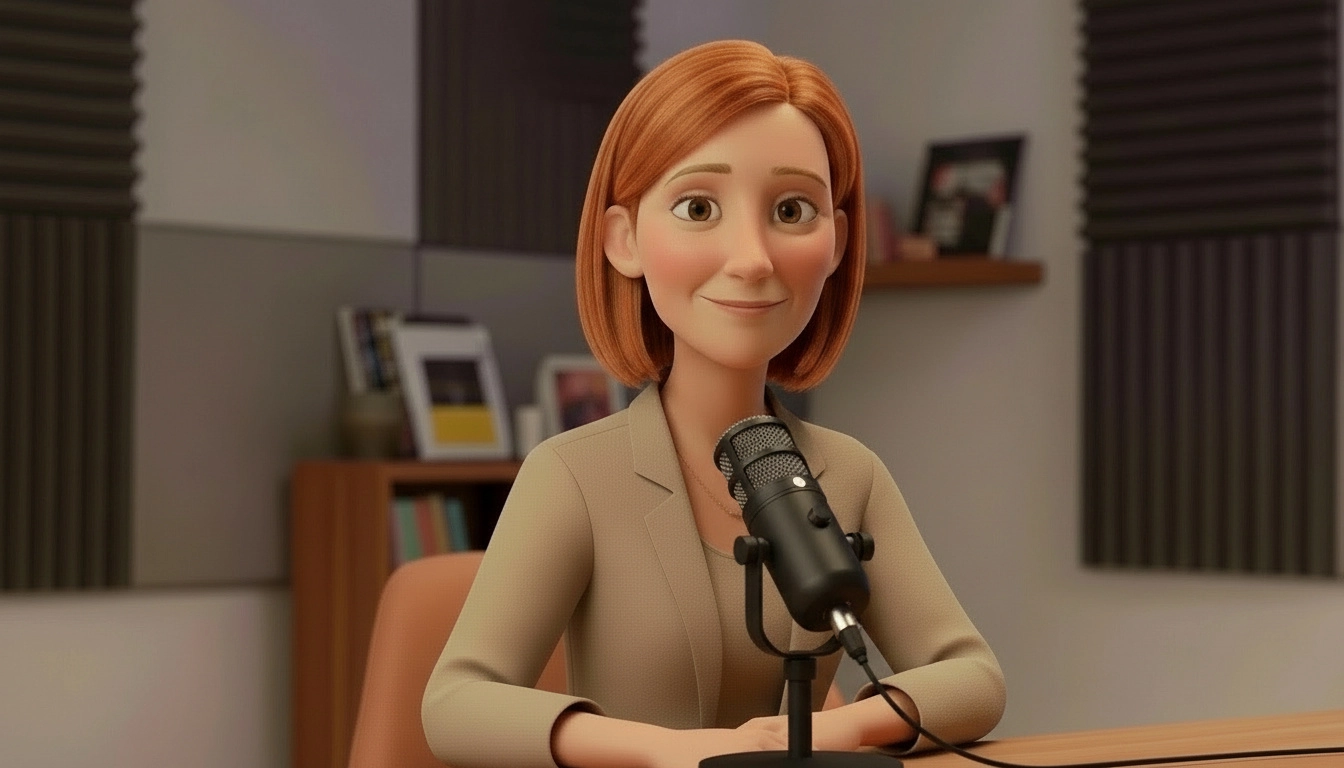
Maeve Mc: How social media helped a religious UX designer establish her career. I’m Maeve McCullen, and welcome to this 50 Faces Focus series, which showcases inspiring Israeli women in tech and beyond. I’m joined today by Miriam Isaac, a freelance UX designer and consultant who has worked with a range of companies across the US and Israel. She has worked as both a graphic and web designer for over 10 years and has a particular interest in mentoring young women within the religious religious community who want to enter the design arena and in directing them to where they can learn the skills required. Miriam was born in London and moved to Israel when she was 18 years old. Welcome, Miriam. Thanks so much for joining me today.
Miriam Isaac: Hi, Maeve. Thank you so much for having me, and that was such a wonderful introduction. Thank you so much. And yeah, doing great here in sunny Israel.
Maeve Mc: Ah, you’re so lucky. It’s, it’s raining in Berlin. So you’ve had quite a unique career journey. Can you talk us through that?
Miriam Isaac: Sure thing. I began designing and building websites for small businesses, eventually got picked up by a startup here in Beit Shemesh, found myself within a couple of years managing a multidisciplinary UX team. Turns out I’d honed into the key opportunity at that time, which was the beginning of the digital revolution. After some time, we were acquired by a Fortune 200 company, and with that came a change in leadership and culture. I had to leave the org and have been working as a UX designer in different ways for different companies ever since. Okay.
Maeve Mc: So what inspired you to take the plunge? Like what inspired you to get into design in the first place?
Miriam Isaac: So my husband was what we call here in learning, which means he sits and learns Talmud all day in a yeshiva or what one might call a seminary. It’s something a lot of young religious couples do in Israel when they first get married. However, it’s quite a strenuous lifestyle and I felt like I needed to start working as my family was growing. I was always very interested in art and being creative and I took a graphic design course and a web design course in Jerusalem for— that was geared for religious women in a religious environment.
Maeve Mc: Ah, okay. And just to go back a little earlier, so you moved to Israel when you were 18. Did you find— was that a difficult shift to move from London to Israel, or how did you find that? How was that for you?
Miriam Isaac: Yeah, it was definitely a bit of a culture shock. It’s funny because I had been in seminary for 2 years in Israel, but moving here as a married adult was, was a bit difficult. As I said, we were living a quite low-key lifestyle where we weren’t really earning much, and it was— it definitely came with a lot of challenges, and it’d been quite surprising, and I felt like I needed to do something to empower myself. Graphic design was always a— was a creative career that was acceptable for religious women to do, as opposed to— I was once interested in fashion, but I was like geared away from that and more encouraged to go into graphic design. And yeah, and it’s amazing to see what’s happening with it today because that’s, you know, the total opposite.
Maeve Mc: It’s the total opposite in what way do you mean?
Miriam Isaac: I was kind of like geared away from fashion, a fashion design. Yeah. Because that was more seen as a career and going out to work and having— going up the ladder, whereas graphic design was seen as something you could do as working from home. And yeah, and it’s interesting how I entered the workplace and kind of became that career woman in the end.
Maeve Mc: And how does the religious community perceive your career?
Miriam Isaac: Yeah, it’s definitely a mixed bag of beans. There’s So, we need to— so, often in my career, there’s different kinds of responses from— I was once going on a work trip abroad, and I got questions like, “How can you leave your kids? How can you travel and have children?” And I’m like, “Well, I have a husband.” And to, like, men at work saying things to me like, “You should go home and read your ketubah to your husband. The ketubah is a marriage contract which says that a husband must provide for his wife. It’s a Jewish law contract. So I definitely— but then on the other side, I also get a lot of religious women coming to me looking for advice on how they can empower themselves in their own marriage and how they can, you know, and looking to me to help them in their in their career, in job opportunities and career opportunities. I think in the Jewish community, it’s okay for women to get a job but not to have a career, which is so problematic in so many ways.
Maeve Mc: So what’s the distinction between having a job and a career?
Miriam Isaac: It just makes sense that, like, it’s allowed until, like, a certain point, until you earn a certain amount of money. But if you earn too much money, it’s now a career and you’re now not doing it for— it’s now not honourable to do it for your family family, or to do it for— or there’s, um, an idea of supporting your husband in learning. But if your job becomes too much of a thing, then that is no longer an honorable task, because now apparently, because now you’re successful, it’s taking away from your family life. When— whereas before, when it was a job, it was honorable and you were sacrificing for your family. You see what I’m saying?
Maeve Mc: Oh, absolutely. That’s such an interesting distinction. That the idea is one is honorable and then some, the other is something that is bad. Yeah.
Miriam Isaac: So I was just like, yes, as soon as like you become a VP or a director or you have a business that’s taking off, then it’s, oh no, no, it’s too much.
Maeve Mc: Wow. That’s so interesting. So the, where you are right now is that you’re, it must be seen as you have a career. So you get quite a lot of pushback now, or have people come to accept it more?
Miriam Isaac: A mixture of pushback but also acceptance. And also I find that I do, do a lot of work within the religious community helping women get jobs, which is seen as honorable. So it’s kind of crazy how you kind of have to go into this place where people are against you, but then eventually you come out the other side where you’re able to— when you hire religious women or when you help religious women or mentor them, then it’s okay again.
Maeve Mc: That sounds like it’s a, you know, it’s a balancing act all the time to sort of keep— do you definitely— do you always have a feeling that you have to keep sort of the religious community happy in order to keep your career going? Or do you feel like even if the religious community were unhappy with your choices that you would still feel comfortable continuing with your career?
Miriam Isaac: I feel at this point, at my age, I feel comfortable and happy with where I am. I think earlier on I was very— I would be less likely to talk about it more openly. And also in the workplace, I would experience a lot of discrimination. And, you know, it’s kind of trying to like hide myself. But nowadays I see like, no, this is my path. And I see that it’s so important for, for young religious women, or for religious women in general at any age, to see a woman in a wig or headscarf dressed modestly being successful in the workplace or running a business, so that they can do it too and they can provide their families with a better lifestyle as well.
Maeve Mc: Do you find that being on social media helps other women connect with you?
Miriam Isaac: I definitely get a lot of phone calls from women all around the world who, they go on my Instagram and they’ll be scrolling and they’ll be seeing a woman in a wig and dressed modestly and going, wow, she’s religious and she’s a UX designer. And, you know, they contact me and they can’t, they can’t believe it. And I’ve encouraged many to, and many women will come back to me like a year later or 6 months later like, Miriam, I just started a course in UX design, or Miriam, I’m going to join your course, or Miriam, I’ve just got a job. And it’s amazing. And I mean, I sometimes still like, I couldn’t even fathom what has happened that’s happened or understand it to a certain degree. But it’s, it’s overwhelming.
Maeve Mc: It sounds like for you, social media has really helped you not only inspire other women, but find work outside of the religious community.
Miriam Isaac: Yeah, yeah. This is really key and so important because I think I’ve seen this also from other minorities on social media who also say similar things to me about how they’ve come to social media to establish themselves to get paid better, to find better clients, to be heard more. And I found that when clients do come to me, they’re already sold on the concept of UX design. They’ve already read about my processes. They’ve already seen my work and know what my values are. And they hire me as an expert. And in these relationships, I feel heard and respected. This is different to like, you know, being inside of a company where I feel as a woman, or, and a religious woman, you’re always working to prove yourself and you’re always working like against the grain, whereas when people come to you, it’s a different footing, um, from that experience inside of working inside a company.
Maeve Mc: You’ve mentioned facing discrimination within the workplace or problems getting hired, which is what led you to social media. Can you talk about that a little?
Miriam Isaac: Yeah, for sure. I, I found that I was able to get the interviews quite easily, also that I was referred quite easily, and also I’d be referred by even like physios as well. And I would go in and interview, and then I would hear back so much different types of feedback that kind of contradicted each other, and it kind of felt a myth a little bit. Like, I’m here on social media putting out these posts, people are, you know, it was very validating after many years of also working in-house and not feeling heard and feeling misjudged or feeling whatever people, you know, or like a man saying what I had said in the meeting and him being heard, but, you know, me not being listened to. The classic.
Maeve Mc: That is the classic. It’s so crazy. You’re like, what? And then you look crazy if you make the point of saying, but I said that.
Miriam Isaac: Exactly. And then I spoke to someone in HR in Tel Aviv and they told me, look, they’ll happily interview you, whatever it is. But if you’re hearing things like you’re not the right fit for us culturally, and that’s the kind of feedback I was hearing, and I just was like, you know what? I got really in a, in a bad sort of place, and I just— and but work was coming to me through my Instagram, and I was like, you know what, this, this God has, you know, sent, sending me a clear path to go this way, and it’s been a lot better this way, and I see that this is the path for me to go on.
Maeve Mc: So have you found, like, when you mentioned that God sort of showed you this, was it— have you found that, like, your religion has really sort of helped you in those difficult times when you felt a little, because it sounds like you’re saying you kind of felt a little lost after going to these interviews and constantly, you know, people obviously like your work, but they weren’t hiring you. Did you find that was sort of your faith was what helped you get through?
Miriam Isaac: Yes. And I I think, think we buy into this, you know, story of if only we work so hard, you know, and do so much and then we’ll be hired and then we’ll be, you know, promoted and then we’ll be, will be successful. And when that doesn’t work, it can feel like, where’s all this hard work gone? You know, why am I also not— this narrative is not working for me. And I do find feeling— having a higher power, having someone I can turn to and know, you know, has my best interests at heart and believe that the next page is the page for me, and the next, you know, turning the next, you know, as they say, like a door closes, a window opens. And knowing that I just have to take it one day at a time is something that is key, you know, and having that is key.
Maeve Mc: Yeah, I mean, it sounds like it just really helps sort of, you know, give you a foundation, you know, instead of sort of slipping into sort of fear, which can really paralyze in a.
Miriam Isaac: Way, which is really cool.
Maeve Mc: Do you feel like there were any along in your journey so far, have you felt like there are any key people who have influenced you in your career and in what way?
Miriam Isaac: Yes, I would say that DJ Medina has been instrumental and highly influential in my career. He is a product design leader here in Tel Aviv in Israel, and he recently hired me to work on one of his client projects. And before this point, I’d been interviewing in Tel Aviv, I was struggling, and I’d called Didi for some advice, and he turned around and said, hey, I have this position open, do you want to come work with me? And I said, yeah, of course. And I was able to get in on a second startup in Tel Aviv because Didi used to be religious, actually, and he totally got me. And he’s just been an incredible mentor. Oh, wow.
Maeve Mc: That’s— yeah, it’s amazing. I feel like we all need those people along the way, you know, who kind of will support us and, you know, in the next day and the next step. And I guess that, that sort of also is inspiring for you to work with other women as well, doing the same thing for them. So is there any piece of advice that you’ve received that has made an impact on how you and work and how you see the world?
Miriam Isaac: Yeah, yeah. I don’t know who told me this, but asking for help is so important. And this can apply for anything from work to child raising to relationships. People are always, you know, far more helpful than we realize and very understanding. And, you know, like, no one is expecting us to do it alone. And as women, we have to feel more comfortable with saying, hey, I’m trying to figure X out but getting stuck. Do you have any advice for me?
Maeve Mc: Yeah, I know, I totally agree. And I think it’s hard sometimes to ask for help. I don’t know if you’ve ever found that, but it’s sort of to learn to do that. And the first thing is to ask, but then also to accept the help. I I don’t, don’t know if you’ve ever experienced that feeling.
Miriam Isaac: Yeah, no, I think as women, we tend to like not be able to ask for help. We tend to try and be more independent. But I find that as soon as I’ve, I’ve, you know, open myself up for that, it’s been amazing also to feel like I’m not alone in this. Other people are also struggling, or other people have their challenges. And I think that also helps a lot with imposter syndrome as well. So asking for help, it’s just, it’s so important. And we have to be so comfortable in doing it. But also, I want to note the framing. It’s not, can you help me? As women, we need to be careful not to look helpless. And I think that’s something that holds us back.
Maeve Mc: Absolutely, absolutely. I totally agree. Yeah.
Miriam Isaac: Yeah. I think asking like, what do you advise, is far more empowering and will elicit a better response.
Maeve Mc: You mentioned imposter syndrome. I know that’s something a lot of us can relate to. Have you found it’s diminished the more you’ve achieved?
Miriam Isaac: You know what’s funny, Maeve? I never really experienced imposter syndrome before I did social media. I always felt like I was equipped smart enough to do the tasks that I was hired to do and always felt very confident in doing the tasks and doing the work I was doing and managing a team as well. And then I came to social media and I started posting and it, and it exploded in, in a way that I was not expecting at all. And I kind of became this person that people were coming to for advice on so many different interviewing on different podcasts and, and, you know, shows and just being featured in lists. And I got terrible imposter syndrome. I was like, oh my God, I don’t know what I’m doing. Oh, I don’t know. Am I saying the right thing? Oh, did I advise— also giving advice to people that I didn’t necessarily, like, know so much. So therefore I didn’t feel like, do I really know what to say here? Do I know the right thing for this person?
Maeve Mc: Does it ever get overwhelming having all these people reaching out to you?
Miriam Isaac: It’s definitely a little bit overwhelming, but I don’t want to discourage anyone from reaching out and contacting me because it’s super important for women to know that they can be in touch with me and I will respond back. It might not be straight away. It might be in 3 days’ time. I’ve learned learned not— I’ve not to be reactive. I learned to like, okay, I was set a certain amount of time for social media a week, and at that time I will cover all my responses or my emailing or, you know, whatever it is, and set certain times to post or not to post. And that’s really important. Yeah, for sure. It can be— it could be overwhelming, but in a good way.
Maeve Mc: And do you have sort of any advice for, you know, other women feeling that, like what you would recommend when they’re feeling like they’re not being heard.
Miriam Isaac: Or.
Maeve Mc: They’Re feeling stifled or feeling, you know, sort of insecure in their job?
Miriam Isaac: It’s such a difficult one, Maeve, because there’s only so much that you— we as a woman can do about this. There’s only so much we could do because it’s really a societal issue where unfortunately, for whatever reason, men aren’t prone to listen to women, you know. And so often, like, I know when I— so often I’ll be talking and I just know this person’s not listening. And he’s like, yes, what did you say? It’s really difficult. But I think women should once again know they’re not alone in this, that it’s normal. It’s 100% normal. You’re not alone. You’re not crazy. You’re not mad. Your opinions are valued. And, you know, it is important. It’s important also to empower yourself with other women and kind of, you know, what’s the word for it? Not empower, but like ally with other women and repeat what they just said and help them be heard and have that alliance with other women that you work with in the company of being heard. Like, say, for example, your coworker says something and for some reason it’s just not heard. So you go, hey, you know, Sarah made this really good point. Just wondering, wanted to repeat it because I thought it was so important. You know, saying things like that and having that. It’s so important for women because unfortunately we’re also primed to compete, which is actually from the patriarchy. And it’s so hard for me to talk about this. But because I’ll be honest with you, I’m a religious woman, so for many years I did, like, buy— not buy in, I don’t know, buy into this or believed it. Or like, and it took me— I read two key books this year called one by Florence Given, I forgot, Women Don’t Owe You Pretty, I think, and one called Fight Like a Girl. And it came— I just came to realize, wow, like, I’ve been like influenced by the patriarchy.
Maeve Mc: Wow. Uh, that’s huge. I mean, I feel that’s, I mean, so this year has been a really transformative year for you, it sounds like.
Miriam Isaac: Yes. Yes. Yes.
Maeve Mc: Is is there, there something that was a catalyst for that or it was just more like a gradual that you came to it over years of sort of thinking about these things?
Miriam Isaac: It’s a combination of like, and then getting to like a tipping point of, I think also the pandemic, you you have to stay know, at home, like we’ve been home more, been listening to a lot of books as I work alone in my room and my little laptop.
Maeve Mc: Something we can all identify with.
Miriam Isaac: I think the self-reflection, not being inside, I think when you’re inside of a company, it’s so much political stuff goes on, drama goes on, and, and, and you think, you know, and there’s all these— I think it’s been a great year of reflection and looking back at interactions and different things that have happened and different, also different ways that women respond to things and men respond to things and, and having that retrospective in a way, you know. Yes, that’s what I say, it’s so important for women not to be jealous of each other and to build each other up. Because we only have each other. Like, the men don’t understand this and they’ll never understand it, and that’s okay because they’re not— they’re not women and they’re not going to get it on a certain level. They’re just not going to get it, do you know what I mean?
Maeve Mc: Oh, absolutely. I completely get what you mean. Yeah.
Miriam Isaac: And it’s so important for us to realize how we’ve been conditioned by the patriarchy to their benefit.
Maeve Mc: Absolutely.
Miriam Isaac: And it’s very hard for me to say as a religious woman because I, I promise you, Maeve, I, I believed in this. I was never a feminist, I’m telling you. I I was, would say I am a religious woman and I really like— it’s so hard for me. This is so difficult.
Maeve Mc: I mean, it’s different, but I was, you know, raised as a Catholic. It is sometimes you can really feel at odds with religion and women and how women are treated within religion. And of course, each religion, it’s different, and I’m not saying it’s the same, but there are parallels that what you’re talking about that I completely get, I completely empathize with, because I know it feels like when you— within religion, women are presented in a certain way, and then as a woman in the, in the world as you go through it, you start seeing, oh, wait a second, this isn’t a very helpful way. You know, not that your faith can get in the way of that, but more that sometimes the teachings become a little bit at odds. Is that what you mean?
Miriam Isaac: Yes, yes. And I think that’s really, really so hard to separate that and understand that and like not to throw away the baby with the bathwater. Yeah, oh yeah, this as well. I was very confused with the rhetoric that we— that is in the, in the Bible of the women and the very strong women that exist in the Bible. And also the fact that God did actually tell Abraham to listen to Sarah. Like, we have it in the Bible, like, man listen to woman. Oh yes. But what I see in the Jewish community on a day-to-day practical basis is, no, we don’t have strong women in the public like we do in the Bible. And that, you know, it doesn’t sit well with me. And those women that do go out, like myself, on Instagram, we are subject to a lot of heavy criticism. You know, there was an article in this religious magazine that I read. I like to read, it’s got good stories, I relate to it, I like to keep in touch with the Jewish community. And, um, and there was a whole article about religious women going on Instagram to— who are making businesses, right, on small businesses to help, you know, support themselves. And there was a whole debate around, is this modest, you know, is this okay, um, is this really— are they doing it for their families, are they doing it for themselves, you know? And I was like, oh, it’s so frustrating because I’m like, oh my gosh, these women have to work to support their families. You’re not— also, these magazines don’t feature pictures of women in their magazines because it’s not modest.
Maeve Mc: Ah, okay.
Miriam Isaac: And this is key because we don’t have representation of business women leaders in Judaism. We have— there are rabbis’ wives that are well known, but it’s so important that these women have come on Instagram As religious women, you know, most are doing things like, you know, kosher recipes, and they have businesses where they sell cookbooks and, or fashion, modest fashion. But I am one of the only ones that are like kind of in tech. And it’s very— it is, I’ve been told, it is different and unique, but it’s so important because I need other women to see a woman who looks like them in tech, because we don’t get that in our own community. We don’t get that. We don’t get pictures of ourselves in these magazines, you know, and they need to see it. We know for minorities, representation is so important and we don’t get it. And it makes me really sad.
Maeve Mc: Oh no, it is. It’s so true. You know, I feel like it’s hard to grasp that idea of that if you don’t see it, if you’re not represented, then it doesn’t occur to you to do it. You know, and it’s such a simple thing, but it’s so important. So did you find it hard then? Were you worried about then initially when you decided to go on social media what the response would be?
Miriam Isaac: I didn’t talk about it. I was, I was scared of antisemitism, um, scared of those kind of comments and stuff like that. And, and, but Really, the design community has been extraordinary, which has been amazing. I’ve even worked with really well-known brands in the design community now, and I just tweeted to one of them who featured me in like, a, a Design Monday along other well-known designers, and I said it’s so important, and I commended them for, like, because they also featured a lot of people in the Black community and a lot of other designers who may be on the fringes, and they reached reached out specifically to these designers to be featured, and I told them it’s so important for me and the Jewish community and for religious women that you’ve done this, and I want to say thank you. And because it’s— that has a lot of impact.
Maeve Mc: Yes, I mean, it’s, it’s amazing. I mean, I’m really blown away actually listening to you talk about how much social media has changed your life. And, you know, because we talked about this before, but how, you know, so much now everyone’s talking about what’s wrong with social media, you know, because of all the hate speech, because of all these negative things. But in fact, it’s so, it’s so cool to hear, to hear your side of it, which is that actually it’s allowed you to, it sounds like it’s really allowed you to grow.
Miriam Isaac: Yeah, and you know what, I think it’s so important that minorities do speak up. I know, of course, what’s been happening recently in America and other countries around the world is just horrific, but this— and it’s, you know, we definitely have to be careful. And it’s so important, also mental health-wise, for social media, but it’s also important to highlight the minorities whose voices have been raised during— because of social media in a way they would have never achieved without it. And that’s important once again, not to throw away the baby with the bathwater.
Maeve Mc: Absolutely. And so I guess just thinking about a few last things, do you think within the tech world in Israel, do you feel overall that women are well represented or do you think that it could still be more inclusive? And, and what kind of— how do you think it could be more inclusive?
Miriam Isaac: In Israel in general, women are represented well. Religious women or Haredi women are not at all. Okay. And we’re a rarity. And others do Wiccan high tech, and we all know who they are because they’re so rare. Okay. We need to have more networking groups that are appropriate to us, like events with kosher food and not set at 6 PM after work. As well, society needs to be more open to hiring and mentoring religious women. I think religious women are a very hard-working, honest, tenacious group, and I, like, I promise anyone that hires one would not regret it.
Maeve Mc: Okay, yeah. So like, what advice would you give to your younger self? You know, is there anything that you know now that you wish you’d known then? I mean, I know you said, of course, ask for help. Is there anything else that you would, you would say?
Miriam Isaac: Yeah, I would say to be patient, but also to speak up more and set boundaries. I feel as women, we are conditioned to be people pleasers from a young age, and this can hinder our performance at work. Of course, at first, every employer loves a people pleaser. They get the most done, they’re given more work to do, and they are promoted very fast. However, this can also lead to resentment and feeling unappreciated, which also happens to be the main grievance I hear from women. It’s important to understand that an employer can never give back to a people pleaser in a way that they gave, and they’re not supposed to either. And it’s just really important for us women to understand because we are innate givers.
Maeve Mc: I know. How do we stop that? Any ideas how to stop being people pleasers?
Miriam Isaac: Set boundaries, you know. It’s really important. Also, self-awareness is so important as well. Um, just being aware of— and also, you know, as I said, like, talking to other people, seeing how other people work and how they set boundaries, especially the men. I find that men set boundaries very well. You know, they leave work when they leave work. And, you know, it’s so good because it really leads to resentment. I see in women who they burn out really fast, and it’s because of our people-pleasing nature. And it’s such a hard balance to achieve because women, we are conditioned to be nice. You know, when we set boundaries, we’re like called names. You know, so, so I, you know, I see a lot on TikTok is, is women coming on and giving advice in this, in this way as well, like talking about being a people pleaser at work, how to set boundaries well, how to write, write that in an email, or how to like say that in a way that’s, or that’s in the like professional, non guilt manner.
Maeve Mc: Yeah, no, it’s, it’s hard. It’s hard to change the way you’ve been raised.
Miriam Isaac: Yeah, I’m definitely a recovering people pleaser.
Maeve Mc: And so lastly, what are your future goals?
Miriam Isaac: Oh, I I would, would love to one day run a UX studio and for it to be a place where minorities can feel heard appreciated and can enjoy a proper work-life balance. Okay, well, cool.
Maeve Mc: Well, thank you so much, Miriam. This has been so great, and it’s really cool to hear your journey and finding your voice. And, uh, yeah, so thank you so much for taking the time.
Miriam Isaac: Thank you so much, Maeve. I really appreciate it. This has also been me, like, really retrospective for me. And thank you for giving me a voice on here and bringing Thank you so much. I really appreciate it.
Maeve Mc: I’m Maeve McCullen. Thank you for listening to our 50 Faces focus series. If you like what you heard and want to hear more inspiring Israeli women in tech and beyond, please subscribe on Apple Podcasts or wherever you get your podcasts. This podcast series was made possible by the kind support of Elisa Bayer and Avital Oisgeld. This podcast is for informational purposes only.
Miriam Isaac: And should not be construed as investment.
Maeve Mc: Advice, and all views are personal and.
Miriam Isaac: Should not be attributed to the organizations and affiliations of the host or any guest.
Maeve Mc: How social media helped a religious UX designer establish her career. I’m Maeve McCullen, and welcome to this 50 Faces Focus series, which showcases inspiring Israeli women in tech and beyond. I’m joined today by Miriam Isaac, a freelance UX designer and consultant who has worked with a range of companies across the US and Israel. She has worked as both a graphic and web designer for over 10 years and has a particular interest in mentoring young women within the religious religious community who want to enter the design arena and in directing them to where they can learn the skills required. Miriam was born in London and moved to Israel when she was 18 years old. Welcome, Miriam. Thanks so much for joining me today.
Miriam Isaac: Hi, Maeve. Thank you so much for having me, and that was such a wonderful introduction. Thank you so much. And yeah, doing great here in sunny Israel.
Maeve Mc: Ah, you’re so lucky. It’s, it’s raining in Berlin. So you’ve had quite a unique career journey. Can you talk us through that?
Miriam Isaac: Sure thing. I began designing and building websites for small businesses, eventually got picked up by a startup here in Beit Shemesh, found myself within a couple of years managing a multidisciplinary UX team. Turns out I’d honed into the key opportunity at that time, which was the beginning of the digital revolution. After some time, we were acquired by a Fortune 200 company, and with that came a change in leadership and culture. I had to leave the org and have been working as a UX designer in different ways for different companies ever since. Okay.
Maeve Mc: So what inspired you to take the plunge? Like what inspired you to get into design in the first place?
Miriam Isaac: So my husband was what we call here in learning, which means he sits and learns Talmud all day in a yeshiva or what one might call a seminary. It’s something a lot of young religious couples do in Israel when they first get married. However, it’s quite a strenuous lifestyle and I felt like I needed to start working as my family was growing. I was always very interested in art and being creative and I took a graphic design course and a web design course in Jerusalem for— that was geared for religious women in a religious environment.
Maeve Mc: Ah, okay. And just to go back a little earlier, so you moved to Israel when you were 18. Did you find— was that a difficult shift to move from London to Israel, or how did you find that? How was that for you?
Miriam Isaac: Yeah, it was definitely a bit of a culture shock. It’s funny because I had been in seminary for 2 years in Israel, but moving here as a married adult was, was a bit difficult. As I said, we were living a quite low-key lifestyle where we weren’t really earning much, and it was— it definitely came with a lot of challenges, and it’d been quite surprising, and I felt like I needed to do something to empower myself. Graphic design was always a— was a creative career that was acceptable for religious women to do, as opposed to— I was once interested in fashion, but I was like geared away from that and more encouraged to go into graphic design. And yeah, and it’s amazing to see what’s happening with it today because that’s, you know, the total opposite.
Maeve Mc: It’s the total opposite in what way do you mean?
Miriam Isaac: I was kind of like geared away from fashion, a fashion design. Yeah. Because that was more seen as a career and going out to work and having— going up the ladder, whereas graphic design was seen as something you could do as working from home. And yeah, and it’s interesting how I entered the workplace and kind of became that career woman in the end.
Maeve Mc: And how does the religious community perceive your career?
Miriam Isaac: Yeah, it’s definitely a mixed bag of beans. There’s So, we need to— so, often in my career, there’s different kinds of responses from— I was once going on a work trip abroad, and I got questions like, “How can you leave your kids? How can you travel and have children?” And I’m like, “Well, I have a husband.” And to, like, men at work saying things to me like, “You should go home and read your ketubah to your husband. The ketubah is a marriage contract which says that a husband must provide for his wife. It’s a Jewish law contract. So I definitely— but then on the other side, I also get a lot of religious women coming to me looking for advice on how they can empower themselves in their own marriage and how they can, you know, and looking to me to help them in their in their career, in job opportunities and career opportunities. I think in the Jewish community, it’s okay for women to get a job but not to have a career, which is so problematic in so many ways.
Maeve Mc: So what’s the distinction between having a job and a career?
Miriam Isaac: It just makes sense that, like, it’s allowed until, like, a certain point, until you earn a certain amount of money. But if you earn too much money, it’s now a career and you’re now not doing it for— it’s now not honourable to do it for your family family, or to do it for— or there’s, um, an idea of supporting your husband in learning. But if your job becomes too much of a thing, then that is no longer an honorable task, because now apparently, because now you’re successful, it’s taking away from your family life. When— whereas before, when it was a job, it was honorable and you were sacrificing for your family. You see what I’m saying?
Maeve Mc: Oh, absolutely. That’s such an interesting distinction. That the idea is one is honorable and then some, the other is something that is bad. Yeah.
Miriam Isaac: So I was just like, yes, as soon as like you become a VP or a director or you have a business that’s taking off, then it’s, oh no, no, it’s too much.
Maeve Mc: Wow. That’s so interesting. So the, where you are right now is that you’re, it must be seen as you have a career. So you get quite a lot of pushback now, or have people come to accept it more?
Miriam Isaac: A mixture of pushback but also acceptance. And also I find that I do, do a lot of work within the religious community helping women get jobs, which is seen as honorable. So it’s kind of crazy how you kind of have to go into this place where people are against you, but then eventually you come out the other side where you’re able to— when you hire religious women or when you help religious women or mentor them, then it’s okay again.
Maeve Mc: That sounds like it’s a, you know, it’s a balancing act all the time to sort of keep— do you definitely— do you always have a feeling that you have to keep sort of the religious community happy in order to keep your career going? Or do you feel like even if the religious community were unhappy with your choices that you would still feel comfortable continuing with your career?
Miriam Isaac: I feel at this point, at my age, I feel comfortable and happy with where I am. I think earlier on I was very— I would be less likely to talk about it more openly. And also in the workplace, I would experience a lot of discrimination. And, you know, it’s kind of trying to like hide myself. But nowadays I see like, no, this is my path. And I see that it’s so important for, for young religious women, or for religious women in general at any age, to see a woman in a wig or headscarf dressed modestly being successful in the workplace or running a business, so that they can do it too and they can provide their families with a better lifestyle as well.
Maeve Mc: Do you find that being on social media helps other women connect with you?
Miriam Isaac: I definitely get a lot of phone calls from women all around the world who, they go on my Instagram and they’ll be scrolling and they’ll be seeing a woman in a wig and dressed modestly and going, wow, she’s religious and she’s a UX designer. And, you know, they contact me and they can’t, they can’t believe it. And I’ve encouraged many to, and many women will come back to me like a year later or 6 months later like, Miriam, I just started a course in UX design, or Miriam, I’m going to join your course, or Miriam, I’ve just got a job. And it’s amazing. And I mean, I sometimes still like, I couldn’t even fathom what has happened that’s happened or understand it to a certain degree. But it’s, it’s overwhelming.
Maeve Mc: It sounds like for you, social media has really helped you not only inspire other women, but find work outside of the religious community.
Miriam Isaac: Yeah, yeah. This is really key and so important because I think I’ve seen this also from other minorities on social media who also say similar things to me about how they’ve come to social media to establish themselves to get paid better, to find better clients, to be heard more. And I found that when clients do come to me, they’re already sold on the concept of UX design. They’ve already read about my processes. They’ve already seen my work and know what my values are. And they hire me as an expert. And in these relationships, I feel heard and respected. This is different to like, you know, being inside of a company where I feel as a woman, or, and a religious woman, you’re always working to prove yourself and you’re always working like against the grain, whereas when people come to you, it’s a different footing, um, from that experience inside of working inside a company.
Maeve Mc: You’ve mentioned facing discrimination within the workplace or problems getting hired, which is what led you to social media. Can you talk about that a little?
Miriam Isaac: Yeah, for sure. I, I found that I was able to get the interviews quite easily, also that I was referred quite easily, and also I’d be referred by even like physios as well. And I would go in and interview, and then I would hear back so much different types of feedback that kind of contradicted each other, and it kind of felt a myth a little bit. Like, I’m here on social media putting out these posts, people are, you know, it was very validating after many years of also working in-house and not feeling heard and feeling misjudged or feeling whatever people, you know, or like a man saying what I had said in the meeting and him being heard, but, you know, me not being listened to. The classic.
Maeve Mc: That is the classic. It’s so crazy. You’re like, what? And then you look crazy if you make the point of saying, but I said that.
Miriam Isaac: Exactly. And then I spoke to someone in HR in Tel Aviv and they told me, look, they’ll happily interview you, whatever it is. But if you’re hearing things like you’re not the right fit for us culturally, and that’s the kind of feedback I was hearing, and I just was like, you know what? I got really in a, in a bad sort of place, and I just— and but work was coming to me through my Instagram, and I was like, you know what, this, this God has, you know, sent, sending me a clear path to go this way, and it’s been a lot better this way, and I see that this is the path for me to go on.
Maeve Mc: So have you found, like, when you mentioned that God sort of showed you this, was it— have you found that, like, your religion has really sort of helped you in those difficult times when you felt a little, because it sounds like you’re saying you kind of felt a little lost after going to these interviews and constantly, you know, people obviously like your work, but they weren’t hiring you. Did you find that was sort of your faith was what helped you get through?
Miriam Isaac: Yes. And I I think, think we buy into this, you know, story of if only we work so hard, you know, and do so much and then we’ll be hired and then we’ll be, you know, promoted and then we’ll be, will be successful. And when that doesn’t work, it can feel like, where’s all this hard work gone? You know, why am I also not— this narrative is not working for me. And I do find feeling— having a higher power, having someone I can turn to and know, you know, has my best interests at heart and believe that the next page is the page for me, and the next, you know, turning the next, you know, as they say, like a door closes, a window opens. And knowing that I just have to take it one day at a time is something that is key, you know, and having that is key.
Maeve Mc: Yeah, I mean, it sounds like it just really helps sort of, you know, give you a foundation, you know, instead of sort of slipping into sort of fear, which can really paralyze in a.
Miriam Isaac: Way, which is really cool.
Maeve Mc: Do you feel like there were any along in your journey so far, have you felt like there are any key people who have influenced you in your career and in what way?
Miriam Isaac: Yes, I would say that DJ Medina has been instrumental and highly influential in my career. He is a product design leader here in Tel Aviv in Israel, and he recently hired me to work on one of his client projects. And before this point, I’d been interviewing in Tel Aviv, I was struggling, and I’d called Didi for some advice, and he turned around and said, hey, I have this position open, do you want to come work with me? And I said, yeah, of course. And I was able to get in on a second startup in Tel Aviv because Didi used to be religious, actually, and he totally got me. And he’s just been an incredible mentor. Oh, wow.
Maeve Mc: That’s— yeah, it’s amazing. I feel like we all need those people along the way, you know, who kind of will support us and, you know, in the next day and the next step. And I guess that, that sort of also is inspiring for you to work with other women as well, doing the same thing for them. So is there any piece of advice that you’ve received that has made an impact on how you and work and how you see the world?
Miriam Isaac: Yeah, yeah. I don’t know who told me this, but asking for help is so important. And this can apply for anything from work to child raising to relationships. People are always, you know, far more helpful than we realize and very understanding. And, you know, like, no one is expecting us to do it alone. And as women, we have to feel more comfortable with saying, hey, I’m trying to figure X out but getting stuck. Do you have any advice for me?
Maeve Mc: Yeah, I know, I totally agree. And I think it’s hard sometimes to ask for help. I don’t know if you’ve ever found that, but it’s sort of to learn to do that. And the first thing is to ask, but then also to accept the help. I I don’t, don’t know if you’ve ever experienced that feeling.
Miriam Isaac: Yeah, no, I think as women, we tend to like not be able to ask for help. We tend to try and be more independent. But I find that as soon as I’ve, I’ve, you know, open myself up for that, it’s been amazing also to feel like I’m not alone in this. Other people are also struggling, or other people have their challenges. And I think that also helps a lot with imposter syndrome as well. So asking for help, it’s just, it’s so important. And we have to be so comfortable in doing it. But also, I want to note the framing. It’s not, can you help me? As women, we need to be careful not to look helpless. And I think that’s something that holds us back.
Maeve Mc: Absolutely, absolutely. I totally agree. Yeah.
Miriam Isaac: Yeah. I think asking like, what do you advise, is far more empowering and will elicit a better response.
Maeve Mc: You mentioned imposter syndrome. I know that’s something a lot of us can relate to. Have you found it’s diminished the more you’ve achieved?
Miriam Isaac: You know what’s funny, Maeve? I never really experienced imposter syndrome before I did social media. I always felt like I was equipped smart enough to do the tasks that I was hired to do and always felt very confident in doing the tasks and doing the work I was doing and managing a team as well. And then I came to social media and I started posting and it, and it exploded in, in a way that I was not expecting at all. And I kind of became this person that people were coming to for advice on so many different interviewing on different podcasts and, and, you know, shows and just being featured in lists. And I got terrible imposter syndrome. I was like, oh my God, I don’t know what I’m doing. Oh, I don’t know. Am I saying the right thing? Oh, did I advise— also giving advice to people that I didn’t necessarily, like, know so much. So therefore I didn’t feel like, do I really know what to say here? Do I know the right thing for this person?
Maeve Mc: Does it ever get overwhelming having all these people reaching out to you?
Miriam Isaac: It’s definitely a little bit overwhelming, but I don’t want to discourage anyone from reaching out and contacting me because it’s super important for women to know that they can be in touch with me and I will respond back. It might not be straight away. It might be in 3 days’ time. I’ve learned learned not— I’ve not to be reactive. I learned to like, okay, I was set a certain amount of time for social media a week, and at that time I will cover all my responses or my emailing or, you know, whatever it is, and set certain times to post or not to post. And that’s really important. Yeah, for sure. It can be— it could be overwhelming, but in a good way.
Maeve Mc: And do you have sort of any advice for, you know, other women feeling that, like what you would recommend when they’re feeling like they’re not being heard.
Miriam Isaac: Or.
Maeve Mc: They’Re feeling stifled or feeling, you know, sort of insecure in their job?
Miriam Isaac: It’s such a difficult one, Maeve, because there’s only so much that you— we as a woman can do about this. There’s only so much we could do because it’s really a societal issue where unfortunately, for whatever reason, men aren’t prone to listen to women, you know. And so often, like, I know when I— so often I’ll be talking and I just know this person’s not listening. And he’s like, yes, what did you say? It’s really difficult. But I think women should once again know they’re not alone in this, that it’s normal. It’s 100% normal. You’re not alone. You’re not crazy. You’re not mad. Your opinions are valued. And, you know, it is important. It’s important also to empower yourself with other women and kind of, you know, what’s the word for it? Not empower, but like ally with other women and repeat what they just said and help them be heard and have that alliance with other women that you work with in the company of being heard. Like, say, for example, your coworker says something and for some reason it’s just not heard. So you go, hey, you know, Sarah made this really good point. Just wondering, wanted to repeat it because I thought it was so important. You know, saying things like that and having that. It’s so important for women because unfortunately we’re also primed to compete, which is actually from the patriarchy. And it’s so hard for me to talk about this. But because I’ll be honest with you, I’m a religious woman, so for many years I did, like, buy— not buy in, I don’t know, buy into this or believed it. Or like, and it took me— I read two key books this year called one by Florence Given, I forgot, Women Don’t Owe You Pretty, I think, and one called Fight Like a Girl. And it came— I just came to realize, wow, like, I’ve been like influenced by the patriarchy.
Maeve Mc: Wow. Uh, that’s huge. I mean, I feel that’s, I mean, so this year has been a really transformative year for you, it sounds like.
Miriam Isaac: Yes. Yes. Yes.
Maeve Mc: Is is there, there something that was a catalyst for that or it was just more like a gradual that you came to it over years of sort of thinking about these things?
Miriam Isaac: It’s a combination of like, and then getting to like a tipping point of, I think also the pandemic, you you have to stay know, at home, like we’ve been home more, been listening to a lot of books as I work alone in my room and my little laptop.
Maeve Mc: Something we can all identify with.
Miriam Isaac: I think the self-reflection, not being inside, I think when you’re inside of a company, it’s so much political stuff goes on, drama goes on, and, and, and you think, you know, and there’s all these— I think it’s been a great year of reflection and looking back at interactions and different things that have happened and different, also different ways that women respond to things and men respond to things and, and having that retrospective in a way, you know. Yes, that’s what I say, it’s so important for women not to be jealous of each other and to build each other up. Because we only have each other. Like, the men don’t understand this and they’ll never understand it, and that’s okay because they’re not— they’re not women and they’re not going to get it on a certain level. They’re just not going to get it, do you know what I mean?
Maeve Mc: Oh, absolutely. I completely get what you mean. Yeah.
Miriam Isaac: And it’s so important for us to realize how we’ve been conditioned by the patriarchy to their benefit.
Maeve Mc: Absolutely.
Miriam Isaac: And it’s very hard for me to say as a religious woman because I, I promise you, Maeve, I, I believed in this. I was never a feminist, I’m telling you. I I was, would say I am a religious woman and I really like— it’s so hard for me. This is so difficult.
Maeve Mc: I mean, it’s different, but I was, you know, raised as a Catholic. It is sometimes you can really feel at odds with religion and women and how women are treated within religion. And of course, each religion, it’s different, and I’m not saying it’s the same, but there are parallels that what you’re talking about that I completely get, I completely empathize with, because I know it feels like when you— within religion, women are presented in a certain way, and then as a woman in the, in the world as you go through it, you start seeing, oh, wait a second, this isn’t a very helpful way. You know, not that your faith can get in the way of that, but more that sometimes the teachings become a little bit at odds. Is that what you mean?
Miriam Isaac: Yes, yes. And I think that’s really, really so hard to separate that and understand that and like not to throw away the baby with the bathwater. Yeah, oh yeah, this as well. I was very confused with the rhetoric that we— that is in the, in the Bible of the women and the very strong women that exist in the Bible. And also the fact that God did actually tell Abraham to listen to Sarah. Like, we have it in the Bible, like, man listen to woman. Oh yes. But what I see in the Jewish community on a day-to-day practical basis is, no, we don’t have strong women in the public like we do in the Bible. And that, you know, it doesn’t sit well with me. And those women that do go out, like myself, on Instagram, we are subject to a lot of heavy criticism. You know, there was an article in this religious magazine that I read. I like to read, it’s got good stories, I relate to it, I like to keep in touch with the Jewish community. And, um, and there was a whole article about religious women going on Instagram to— who are making businesses, right, on small businesses to help, you know, support themselves. And there was a whole debate around, is this modest, you know, is this okay, um, is this really— are they doing it for their families, are they doing it for themselves, you know? And I was like, oh, it’s so frustrating because I’m like, oh my gosh, these women have to work to support their families. You’re not— also, these magazines don’t feature pictures of women in their magazines because it’s not modest.
Maeve Mc: Ah, okay.
Miriam Isaac: And this is key because we don’t have representation of business women leaders in Judaism. We have— there are rabbis’ wives that are well known, but it’s so important that these women have come on Instagram As religious women, you know, most are doing things like, you know, kosher recipes, and they have businesses where they sell cookbooks and, or fashion, modest fashion. But I am one of the only ones that are like kind of in tech. And it’s very— it is, I’ve been told, it is different and unique, but it’s so important because I need other women to see a woman who looks like them in tech, because we don’t get that in our own community. We don’t get that. We don’t get pictures of ourselves in these magazines, you know, and they need to see it. We know for minorities, representation is so important and we don’t get it. And it makes me really sad.
Maeve Mc: Oh no, it is. It’s so true. You know, I feel like it’s hard to grasp that idea of that if you don’t see it, if you’re not represented, then it doesn’t occur to you to do it. You know, and it’s such a simple thing, but it’s so important. So did you find it hard then? Were you worried about then initially when you decided to go on social media what the response would be?
Miriam Isaac: I didn’t talk about it. I was, I was scared of antisemitism, um, scared of those kind of comments and stuff like that. And, and, but Really, the design community has been extraordinary, which has been amazing. I’ve even worked with really well-known brands in the design community now, and I just tweeted to one of them who featured me in like, a, a Design Monday along other well-known designers, and I said it’s so important, and I commended them for, like, because they also featured a lot of people in the Black community and a lot of other designers who may be on the fringes, and they reached reached out specifically to these designers to be featured, and I told them it’s so important for me and the Jewish community and for religious women that you’ve done this, and I want to say thank you. And because it’s— that has a lot of impact.
Maeve Mc: Yes, I mean, it’s, it’s amazing. I mean, I’m really blown away actually listening to you talk about how much social media has changed your life. And, you know, because we talked about this before, but how, you know, so much now everyone’s talking about what’s wrong with social media, you know, because of all the hate speech, because of all these negative things. But in fact, it’s so, it’s so cool to hear, to hear your side of it, which is that actually it’s allowed you to, it sounds like it’s really allowed you to grow.
Miriam Isaac: Yeah, and you know what, I think it’s so important that minorities do speak up. I know, of course, what’s been happening recently in America and other countries around the world is just horrific, but this— and it’s, you know, we definitely have to be careful. And it’s so important, also mental health-wise, for social media, but it’s also important to highlight the minorities whose voices have been raised during— because of social media in a way they would have never achieved without it. And that’s important once again, not to throw away the baby with the bathwater.
Maeve Mc: Absolutely. And so I guess just thinking about a few last things, do you think within the tech world in Israel, do you feel overall that women are well represented or do you think that it could still be more inclusive? And, and what kind of— how do you think it could be more inclusive?
Miriam Isaac: In Israel in general, women are represented well. Religious women or Haredi women are not at all. Okay. And we’re a rarity. And others do Wiccan high tech, and we all know who they are because they’re so rare. Okay. We need to have more networking groups that are appropriate to us, like events with kosher food and not set at 6 PM after work. As well, society needs to be more open to hiring and mentoring religious women. I think religious women are a very hard-working, honest, tenacious group, and I, like, I promise anyone that hires one would not regret it.
Maeve Mc: Okay, yeah. So like, what advice would you give to your younger self? You know, is there anything that you know now that you wish you’d known then? I mean, I know you said, of course, ask for help. Is there anything else that you would, you would say?
Miriam Isaac: Yeah, I would say to be patient, but also to speak up more and set boundaries. I feel as women, we are conditioned to be people pleasers from a young age, and this can hinder our performance at work. Of course, at first, every employer loves a people pleaser. They get the most done, they’re given more work to do, and they are promoted very fast. However, this can also lead to resentment and feeling unappreciated, which also happens to be the main grievance I hear from women. It’s important to understand that an employer can never give back to a people pleaser in a way that they gave, and they’re not supposed to either. And it’s just really important for us women to understand because we are innate givers.
Maeve Mc: I know. How do we stop that? Any ideas how to stop being people pleasers?
Miriam Isaac: Set boundaries, you know. It’s really important. Also, self-awareness is so important as well. Um, just being aware of— and also, you know, as I said, like, talking to other people, seeing how other people work and how they set boundaries, especially the men. I find that men set boundaries very well. You know, they leave work when they leave work. And, you know, it’s so good because it really leads to resentment. I see in women who they burn out really fast, and it’s because of our people-pleasing nature. And it’s such a hard balance to achieve because women, we are conditioned to be nice. You know, when we set boundaries, we’re like called names. You know, so, so I, you know, I see a lot on TikTok is, is women coming on and giving advice in this, in this way as well, like talking about being a people pleaser at work, how to set boundaries well, how to write, write that in an email, or how to like say that in a way that’s, or that’s in the like professional, non guilt manner.
Maeve Mc: Yeah, no, it’s, it’s hard. It’s hard to change the way you’ve been raised.
Miriam Isaac: Yeah, I’m definitely a recovering people pleaser.
Maeve Mc: And so lastly, what are your future goals?
Miriam Isaac: Oh, I I would, would love to one day run a UX studio and for it to be a place where minorities can feel heard appreciated and can enjoy a proper work-life balance. Okay, well, cool.
Maeve Mc: Well, thank you so much, Miriam. This has been so great, and it’s really cool to hear your journey and finding your voice. And, uh, yeah, so thank you so much for taking the time.
Miriam Isaac: Thank you so much, Maeve. I really appreciate it. This has also been me, like, really retrospective for me. And thank you for giving me a voice on here and bringing Thank you so much. I really appreciate it.
Maeve Mc: I’m Maeve McCullen. Thank you for listening to our 50 Faces focus series. If you like what you heard and want to hear more inspiring Israeli women in tech and beyond, please subscribe on Apple Podcasts or wherever you get your podcasts. This podcast series was made possible by the kind support of Elisa Bayer and Avital Oisgeld. This podcast is for informational purposes only.
Miriam Isaac: And should not be construed as investment.
Maeve Mc: Advice, and all views are personal and.
Miriam Isaac: Should not be attributed to the organizations and affiliations of the host or any guest.