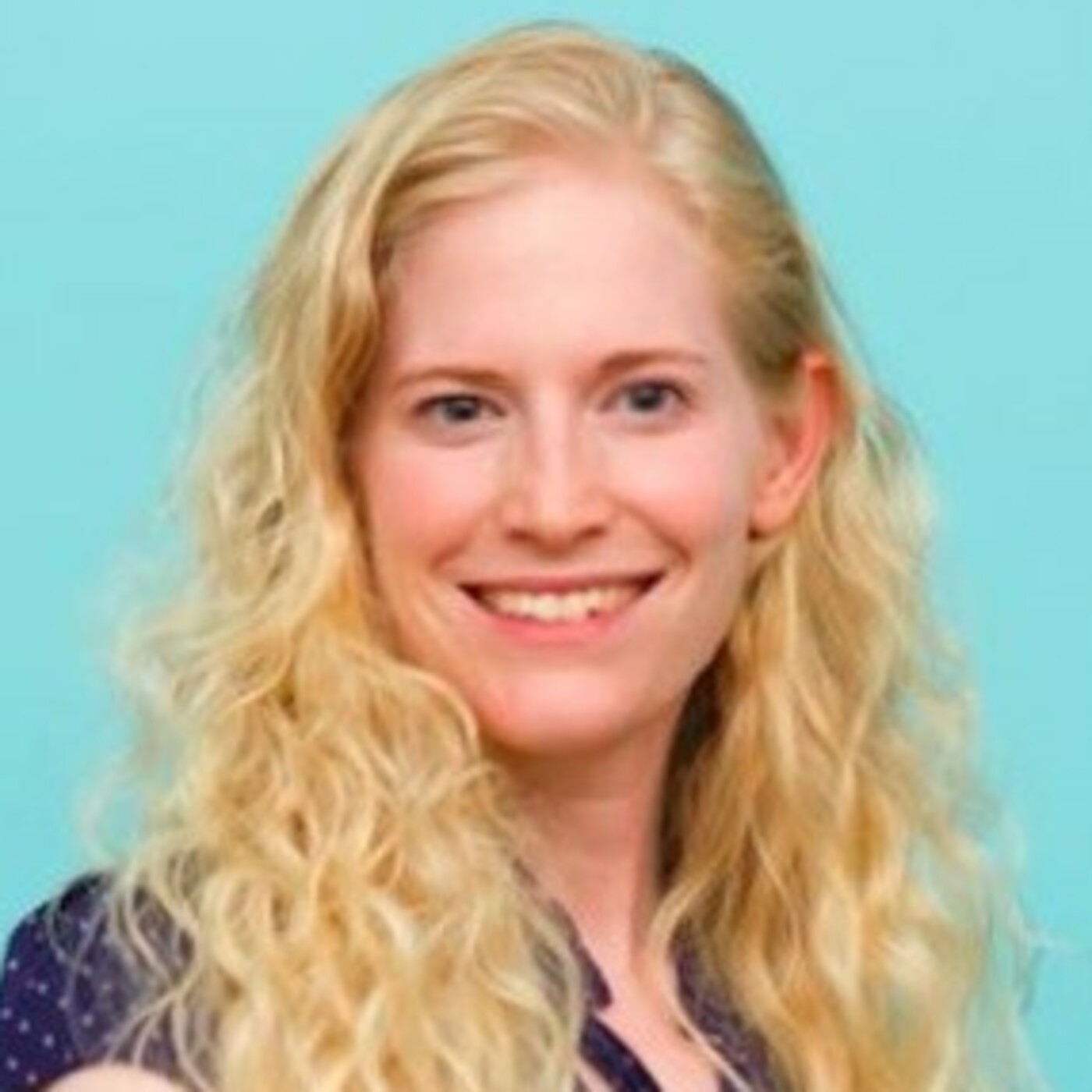
Aoifinn Devitt: The path of an entrepreneur is fraught with challenges as well as excitement and opportunity. Are things different for female entrepreneurs? And if so, why is that? Let’s find out how our next guest is helping some to find their community and their voice. I’m Aoifinn Devitt, and welcome to this 50 Faces focus series. Which showcases inspiring Israeli women in tech and beyond. I’m joined today by Avigail Levine, who is Head of Marketing and Ecosystem Relations at Samsung Next TLV in Tel Aviv. She originally studied law and spent the first years of her career in legal roles and moved into the tech industry in 2013, where she has held a series of roles including Head of Portfolio Development at a venture capital fund. She’s a co-founder and advisor at Restart, whose goal is to help wounded soldiers reintegrate into real life after a life-changing event. She’s also a fellow podcaster at Ma Batafkid, where she broadcasts about non-techie roles in the startup ecosystem. Welcome, Abigail. Thank you for joining me today.
Avigail Levine: Thank you for hosting.
Aoifinn Devitt: Let’s talk through your career journey, as I also started in law myself, and it’s interesting how many of us have started there and ended up somewhere else. You can go back to write what you studied at university and maybe talk about any surprising turns your career took along the way.
Avigail Levine: Sure. And if you hear a little bit of background noise, it’s my little baby that I had 2 weeks ago. So I hope it won’t interrupt our conversation. So I studied law and Middle Eastern studies at the Hebrew University. I was looking to go into the diplomatic world and public policy, but I realized it wasn’t for me. I was looking to be more on the doing side rather than the advising side. Of things. When you work as a lawyer, many times as an external lawyer and not an in-house, many times you’re there only after all the commercial agreements are finalized. And all you need to do is just to draft them in a legal way and not leave any loopholes in the agreement, but you’re not involved in how things will be built. And I was really looking to be more proactive. So I was looking for a way out of the legal world and having no networks outside the legal world was really hard. All my friends were people that were lawyers themselves, mainly in big firms. And I just didn’t have any social network of people that I could reach out to and say, you know, like, is there another, like, an interesting job? Where are you working? Like, I just didn’t know where to turn. And that was a really hard time. I remember looking for a job for over a year and something. And eventually I was interviewed to a few positions, but they were very, very junior. And And it was really hard to break into a new industry without having connections, especially in Israel. I don’t know what it’s like elsewhere, but in Israel, it’s very, very hard. And eventually, a few friends— it was funny because a few friends sent me this open position at a new venture capital fund that was just opened. One of the partners was looking for an assistant, and they told me, like, he’s a really great guy. You should apply for this position. Position. Venture capital world was really— I was really fascinated by it. I didn’t know it well enough, but this was an interesting opportunity. So I applied and somehow I got the position, which I was really lucky. To be honest, I was hesitant about taking it. I was afraid after working for 5 years as a lawyer and having, like, having, you know, access to senior level people and advising them. Now, working as an assistant was somewhat scary for me in terms of going back in my career a couple of years, but eventually I decided to jump into this opportunity and see what it turns out to be. And I’m very, very happy I did that. Moving into the VC world really exposed me to this network that I was out of. And gave me access again to new people and new opportunities that I did not know that existed. And I think that’s where there was like a switch in my mindset in terms of like, there are so many opportunities for people out there, but they just don’t know about them. And we should do something in order to provide access to more people into this amazing network. And I really think that working in the Israeli tech ecosystem is amazing. We have so many interesting opportunities. So many growth opportunities. The salaries are much better than in other industries. And I made it a mission for myself to provide access to other people. So I was working very closely with a partner. His name is Eden Shochat. He’s very well known in Israel and worldwide. He’s built a few companies and then he started this really successful venture capital fund together with Michael Eisenberg. And the opportunity there was that we were 5 people in the fund. So you got to do a lot of everything. I got to sit on companies’ boards, startup boards, and learn from the founders, learn from their experience. I did a lot of research about trends, about people. I did a lot of community building. So the philosophy of the fund is building a community of entrepreneurs that help each other. And not just— I think until 2012 in Israel, the atmosphere with the VC was that You you know, knock on the doors of VCs and ask for money. And I think somewhere around 2012, the balance has shifted a little bit, and VCs started to understand the importance of really providing value to entrepreneurs and really being out there for them. There has been a shift in the VC industry in Israel from focusing on the investors and their power, so to say, the conversation shifted more to the founders and how we help founders build amazing companies. And VCs, and I think we were the leading VC in this aspect, VC started to focus on how they can help founders and how they can be more accessible to founders. So, that was very important to Eden, and he started thinking about what kind of value we can provide to founders. And since I’m a very community-oriented person and I really like to help other people, it was very natural to me. To actually build these programs around kind of education for founders and bringing the experience and the knowledge of founders who’ve built stuff already, whether it’s founders from Israel or from the States, and bringing it to the local ecosystem and sharing it. So I was building many, many programs, sharing knowledge about how to build startups, how to build products, how to build your marketing plan, sales, like all around, how to go about fundraising. I remember a very important session we had about options for employees and how they should negotiate them and all sorts of things. And I was facilitating a lot of knowledge sharing. So that kind of became my full role at the fund. And after 2 years, the partners asked me if I wanted to lead all the marketing and brand for the fund in Israel. And that was a really cool opportunity for me to continue my growth. And I did that for another, like, 2 and a half years. It’s a long career journey, I’m sorry.
Aoifinn Devitt: No, it’s so interesting, and I was going to comment that I had exactly the same experience as a lawyer. My fear of being pigeonholed despite having had much intersection with the financial world. It was incredibly difficult to make the leap into it. I think people presume that lawyers don’t have the business savvy to do that. I had to do an MBA to make the leap myself. And I’d like to really ask you about some of those aspects of creating an ecosystem, because you did mention the lack of a network that you had initially and how that held you back, you felt. And now that you are helping other founders create a network, what kind of networks are you helping to create? And how about the skill of networking? How are you helping founders to secure that skill?
Avigail Levine: So when I was at Aleph, I was really focused mainly on founders. Today I’m focusing on other services circles, but I’m happy to share what I did there. So, first of all, we’ve built an app called Karma for founders to help other founders and to share knowledge. So, it was in the early days of Facebook in Israel, I would say, there weren’t so many communities on Facebook or on other platforms. So, we were kind of the first there to have built this app. And it was mainly dedicated for founders. We had whitelisted people. You can’t just join. We had, we like, we checked your experience and background to make sure that, that you’re really a founder and not a service provider or somebody, a salesperson. And the idea was to build a close network of people that can ask questions freely, also anonymously, that was another option, and to get insights from other founders about those questions. And it was really successful at the time. It was really helpful for founders because there was no other platform that they could ask anonymous questions and also have like a genuine discussion. So that was one network. And then we tried to share the knowledge that was there outside this closed network with other people as well, by sharing some of the discussions, obviously without like mentioning names and stuff, but sharing the discussions and the answers that people gave. Another thing that I did was really building these workshops for founders where I brought in other founders or other executives that had experience in specific, not even in specific field, but managed to execute something in a unique way and organize these closed workshops again for founders, very small, like 40, 50 people sitting in the room and sharing specific case studies, not talking about a high-level philosophy, but really a case study of how I cracked and this or that problem. And bringing all the founders together in one room, in like, in that, the office of a venture capital, that was really unique back at 2013, It 2014. Wasn’t— you didn’t see it elsewhere. And the thought about, like, today for us it’s very obvious, like, ah, this is how it works. But back then it was, wow, like, I can just talk to a partner and build a relationship with a partner who’s never going to invest in my company but can really advise me on a certain issue or problem that I have. Like, that was super, super unique back at the time. We managed to close the gap between founders and investors, and it’s not so much about, I don’t know, power or prestige. It’s more about like, what is the value you’re bringing to the table? And I’m very happy we’re in a different place these days. So, I was really busy with connecting founders around problems that they have so they can share and can help each other. It was really— I saw the fruits of my efforts and people always like gave me feedback and came back to me you saying, know, this was super helpful. Even one person told me that he moved to Israel thanks to Karma because he saw how much support he was getting, so much support on the platform. And he said he was really hesitant about coming back to Israel and when he saw how much support he was getting, he felt more comfortable moving back to Israel after so many years abroad. So that was like, wow, that was like amazing feedback to get from a platform that we were managing. So these are the examples of things that I was working on back in like 2014, ’15, ’16. So what I do today at Samsung Next, Samsung Next, I’ll start with that. First of all, it’s It’s an innovation arm of Samsung focused on software and services solutions. Unlike other innovation arms of Samsung, which are focused on hardware, we are focused on how to integrate software solutions into the hardware offering of Samsung. What I do at Samsung Next is both focus on employer branding and getting awareness for our activity here in Israel, and also do a lot of community work around investments I’m privileged enough to be working in a place that lets me just be creative and try to be helpful to the community and do things that really make a difference. So, for example, again, if we’re talking about enablement and empowerment, I started a podcast course for women, but not only. We also have men in technology and entrepreneurship because I recognize that, like in everything else in tech, we don’t see many women starting their own podcast. It was before I started my own podcast, so it was funny. These days, I’m working more on providing more access to employees that are looking, that are in my position a few years ago and don’t know how to break into the tech ecosystem by like opening the jargon and talking about the ways to get in. And I’m doing it both by giving talks about the Israeli tech ecosystem and how it’s built and what you need to understand in order to get into and find a job. And also by the podcast that we’re running, I’m running together with Simona Valsky, who’s working for Wix, who also had a similar transition as me. She was actually working in diplomacy for a couple of years, and then she found a role in Microsoft. And since then, she’s been in the ecosystem. And we started a podcast together like half a year ago when we saw the need for people to find a job in this hard time. And every week we interview a different role, a non-techie role in the tech ecosystem, and talk to the people about their job and what does the day-to-day look like and where to find these positions and what do you need in order to work in that specific position. We’re trying to really break it down and make it understandable for the people coming from the outside. And what we found surprising is that we have many listeners that are already in the tech ecosystem, but they want to do a career change and they don’t know into what, and they’re listening to our podcast and get some inspiration about the different paths they can take. So that’s another way of opening up a network, a closed network, and providing access to people. And again, I’m very happy to say that many, many people turn to us and tell us how helpful they find the podcast. So that’s really, really— for me, it’s so great to hear and to understand that I’m really helping people. Right.
Aoifinn Devitt: And I will certainly hope that they can cross-refer to that podcast as a source, as well as listening to this one. Let’s look at female entrepreneurs in Israel. You spoke a little bit before about the maybe differences in the networks available to some females, and they may not have had the same old boys club type of exposure that maybe male entrepreneurs have had. What’s your experience of the differences in the experience that female entrepreneurs have? And how do you think that’s changing?
Avigail Levine: Wow, such a hard question. I don’t think that this old boys club is intentional. I think it just happens because it’s friends and friends of friends. And I see it all the time. That it’s very natural for men to just be networking very freely and very naturally without even thinking that they’re only men in the room. It’s so— and it happens all the time. And I see it a lot. They just don’t realize. It’s not like they create— I’m on many, many women-only groups or Facebook communities. And there are so many of them. And they’re always like, we’re only women and they have to state it. And I think it happens. I’m always asking myself, I wonder if there’s so many men-only groups that I’m not part of, but then I realized that they don’t create those groups. They happen naturally. They don’t have to say it’s men only. It just happens. So it’s something I’ve noticed recently, just trying to think about what’s not working. It’s much harder for female entrepreneurs, much, much harder. You don’t see many. And those, you see the kind of, it’s like super, like, it’s a unicorn. It’s like unique that gets so much attention about how does this happen? Which again, I find a bit ridiculous. I think there are a few problems in that aspect. One is again, the social group that like women many times have like more women friends than men. And since there are less female investors. And since like the female circles of entrepreneurs is smaller, we have to talk about field of interest. You can see many women building startups around female problems, whether it’s cosmetics, whether it’s female health, whether it is shopping. And until quite recently, these fields weren’t very popular among VC investors. They were looking to invest in cyber, in AI, and stuff like that. So, it was much harder for these female founders to raise money. So, that’s one issue. We can see a shift there as well. Many VCs now are looking into consumer-related startups and not only cyber, only AI, and like deep tech. That’s on the one side. And then, the other side, you can see more women going into those fields, like the cyber, the AI. So, this is changing a little bit. And I think the social group has to do a lot. With that challenge as well. Like I said, I see their interaction between male investors and entrepreneurs and male entrepreneurs, and it’s so different from female entrepreneurs and the chitchat and how they feel comfortable or don’t feel comfortable. I just see it. Like, I sit in deal flow meetings and I hear the conversation and it’s just different. And I think that’s a challenge. I don’t have a solution to that, to how to break this inconvenience or how to break this friendship-like approach. Is that clear enough what I’m saying?
Aoifinn Devitt: Yeah, absolutely. I think it is. That is the problem. It is intractable at times. You know, we don’t exactly know what it is. We can’t put our fingers on it, but we know something is different. We know there are challenges. We know the experience of raising money is not the same.
Avigail Levine: And it’s not only that, they’re becoming friends of the entrepreneurs. You know, they’re becoming buddies. And it doesn’t really happen with female entrepreneurs, or it happens very rarely. And when you are an investor, you go into a long-term relationship with a founder, a very long-term. It can be even 10 years sometimes that you work closely with a founder, and you’re looking to work with people that you like, or the people that are similar to you, or people that you can talk to. You won’t want to invest in somebody’s so different, or you have nothing to talk— like, you don’t feel like you can relate to. It’s a very personal business. It’s a long-term relationship, and you’re looking to work with people that you like and you can relate to. And I think there is a gap here between men who feel comfortable with women versus men who feel comfortable with men. And that’s part of the problem why you see less investment in women’s startups. And you see, because they’re not their peer group, they’re not the people they hang out with. It’s not the people that they go and drink whiskey with. And that’s a problem that should be solved somehow. I’m not really sure how, to be honest. And I’m not sure that the MeToo era that we went through, like a year and a half ago, really helped this situation. It might deter investors from investing in female founders because of being afraid of the consequences that might come up from meeting female investors. You see much less women taking initiatives and founding companies. And I think it’s part of their— it’s not fair to say the nature, but I see people like women are more risk-averse. I know maybe it’s not very politically correct to say, but you see it in practice. So that’s something we did mention. It’s not fair to say, you know, it’s only to blame the men for having like just their own clubs and stuff. It’s also like the women’s responsibility to start companies. And that’s something— and to start companies and also to start venture capital funds. You don’t see many women actually going and raising money. You just don’t see that. So, it’s not it’s not only— only the men’s fault in a way. It’s also our responsibility to be more proactive if you want to see more female founders actually being You funded. Know, less female founders means less female founders being funded.
Aoifinn Devitt: That’s why the ecosystem you mentioned is so important, because I think when there is an ecosystem in place that enables women to flourish and to have supports, mentorship circles, as well as just other supports that is perhaps to going provide some buffer and some of a cocoon factor to allow them to take these risks. Are there other ways that you think that women can be encouraged to take risks? Does this have to start at the school and university level?
Avigail Levine: I think it’s the education that begins at home. Like, what kind of stories do you tell? Girls versus boys, what kind of games they play, what kind of education you give them about their possibilities in the future. It begins at home and then school. It’s not even university, it’s much before. Do you push them to learn literature or to learn engineering? It’s not only— I think you can be also an excellent writer. I think like being and excelling in what you’re doing is not necessarily only in tech, it’s in everything. And pushing to the limits and challenging yourself There is a whole conversation about pushing women to becoming engineers. I don’t think the issue is about women becoming engineers. I think the issue is about women becoming— going into senior-level positions, because I’m sure if you look, you can find many, many female engineers. It’s not the issue. The issue is the higher level. It’s funny because yesterday I posted a question on, again, a female forum about, like, do we see any change having all these female forums and communities and support for women, do you actually see change in how much they’re getting paid in senior-level positions? And since yesterday, I’m being bombarded with many answers, and a friend of mine from a big corporation told me, our company is doing a lot to get more women in, but you see them still in entry-level position, and when you go into senior-level positions, you just don’t see any women. So I think a lot has to do with empowerment, both and education for women, and also education for men about how they relate to women and how they position them and frame them and where they see their growth and how they relate to them. It’s not only doing all the empowerment for women all the time and all these female groups, which are amazing, but they’re just not enough. So it doesn’t matter how much we’ll try to solve our own problem. At the end of the day, the decisions are made in the— unfortunately saying, in the men level position, and they’re at the end of the day, they’re making the decisions. If we don’t have an honest conversation, open conversation, that this is something that should be changed, it wouldn’t change. It’s not something that can happen only from our side. It needs to be an open conversation, an inclusive conversation, both for men and women. And it starts from the house. It starts in the corona time. You can see how many women lost their positions because again, taking care of the kids that are stuck at home, for some reason, people see it still as the role of the woman. And when she has to take care of both of that and to finish different tasks at the workplace, and she can’t have it all, she can’t do it all. And it’s basically impossible. And so many women lost their jobs these days, and that’s very unfortunate. So again, it has to be an open conversation. There has to be a mindful decision also of men who are in executive positions, that they want to change the reality. And if this wouldn’t happen, we wouldn’t— I don’t think we’ll see a change.
Aoifinn Devitt: But looking back at your own life, you clearly believe in the value of mentorship. Who were some of the key people who influenced you in your career and in life so far, and in what way?
Avigail Levine: So unfortunately, personally, I never had a mentor, and I think that is something that should be change, like looking, like advising myself a few years back, this is something that I would have told myself, find a mentor. It’s really hard to find a mentor because you’re looking for different answers in different stages of your career. So it’s like, it’s not necessarily one person, maybe it should be a few people. I look up to people that I find inspiring, mainly people I used to work with, and I really liked their work habits. Or the way that they approach work and life in general. So the people I work with at Aleph, I really look up to them. Before that, I was working with a few people in the government that I was really appreciative of the way they built their career. So I mainly look from the side. I don’t have like one person. I also read a lot of biographies of leading tech entrepreneurs, and I find that very inspiring. Inspiring. But for me personally, I really try to find my own way by trying and testing and seeing what is working for me. And I don’t recommend it to other people. I think you can really have shortcuts by really talking to people and just asking them for advice. And this is one of the reasons that I opened the podcast. I really get a lot of inspiration from learning from other people’s paths and having this opportunity to ask them the questions that are bothering me and getting like real answers from them, for me, is really inspiring and I learn a lot from it. And again, I really recommend approaching people that you see that have an interesting career and just asking them how they got to the place they’re at and not being shy about it.
Aoifinn Devitt: That’s certainly the path we take in this podcast too, because really the story of what made people who they are, I think, is, um, you really can reveal a lot about how they practice in business and just how to engage with them in business. So I think it really does round out the picture. When you look at some of these pieces of advice, whether you hear them on the podcast or whether they’ve been passed down from some of your work colleagues, is there any one that you have absorbed and integrated into your own life or any creed or motto that you live by?
Avigail Levine: Yeah. So first thing that I’ve learned is the importance of building processes. Both for work and for personal life. And for me, at work, it really helps building a process for everything. And once you’ve done it once, you build a process and then it can be replicated, not only by yourself, but other people. So, for example, I went now on maternity leave and it was really easy for me to share the knowledge with somebody who’s coming to fill in for me while I’m gone, because I had everything already organized all the information, all the process, and it wasn’t really hard for me to share that. So I think that’s both very important for the organization and for the persona. So that’s one thing. Another thing that I’ve learned again from Aleph Partners, doing things in a different way rather than better. They have a motto saying different is better than better. And I really identify with that motto, just trying to do everything like everyone else. But better than everyone else is not leaving a mark, but trying to find a different approach. It’s so important also in marketing what I’m doing, because people remember the different things you do. They don’t remember, “I had another webinar and it was just, I don’t know, better speakers.” Nobody will remember that. But if you had it in a different way, then people will remember. And especially now during corona, that there’s so much information out there and so many events online. And you just, like, I got Zoom fatigue when I was, in April already. Like, if people are getting Zoom fatigue now, like, in April, I was like, how can people sit in front of a computer for so many hours and watch webinars? Like, I didn’t understand. So I said, you know, I’m out of this game. I’ll find other marketing tactics for the next year rather than try to compete with all these webinars out there. And I think this method really works for me, always trying to find like a different way to approach things. So this is something I really recommend to other people all the time.
Aoifinn Devitt: Just my last question before we go to some of the resources that you’ve created. You are the co-founder of a charity, RESTART, and can you talk a little bit about that? What motivated you to start that? And maybe some of the life lessons that you’ve learned from the work you do with wounded soldiers?
Avigail Levine: It’s funny because it all goes back to my experience of going into tech. So in 2014, it was a little bit after Operation Protective Edge. That was an army operation where Israel went into Gaza to clear things up a bit because of so many missiles that were launched against Israel for many, many years. Many soldiers were wounded in that operation, and a friend of mine was volunteering with them, visiting them at the hospital. And she told me how it’s hard for all these soldiers after they finish their recovery process. It’s hard for them to get back into normal life because they kind of missed a few years in their life. And while their friends moved on, like finished the army service, went to their big trip after the army service, and then went going to university, these soldiers, they kind of stuck in the same place for many years. And they also never really recover from the wound. So she was like, she was telling me, what can we do about it? And I said, you know, seeing the entrepreneurial world and I see how many opportunities people have in doing something that they like, why don’t we get them exposed to this amazing technology and entrepreneurship world? And we started off with a few workshops of like of building stuff, of making, like building stuff, building robots, building drones, 3D printing, all that stuff. So we did a few workshops around that and all the people that we invited, all the wounded soldiers got really excited about that. And we started doing more workshops about entrepreneurship, about networking, about creativity, like all sorts of random skills to just give them knowledge and content, and then the period that they’re not really doing anything. And they started getting really excited about it. And gradually we got more and more people involved, and we built a real mentorship program where, where these wounded soldiers come in for like 4 months and work with a mentor from the industry. It can be CEO of a company, it can be a tech entrepreneur, it can be all sorts of people. We try to match them with with their future selves, with people they look up to or fields they are interested to explore more and give them the opportunity to get in touch with people that they would never otherwise. And it helps them both in terms of really understanding or getting a sense of what they want to do next in their life. Maybe sometimes it gives them shortcuts to the work market and getting them job opportunities in different companies, even not necessarily if they have the relevant background, giving them the shortcuts into these opportunities. And we’re also doing, once a year, we have a makeathon where we build physical solutions for their everyday challenges. So it can be if it’s somebody that lost his arm or she lost her arm and she wants to put on makeup. Did you ever try to put on makeup with one arm? It’s really hard. No. So, or somebody who wants to go back to dancing,, but he or she is sitting in a wheelchair or going back to riding bicycle. So, we get really experienced engineers and entrepreneurs for 3 days to build solutions for these needs. And it’s an incredible event, fulfilling. You see the result, not only because they have a solution that they can actually use afterwards, it’s so empowering for them. If it’s people like we have For example, we have one lady injured during her army service, and since then she has been on a wheelchair. But before she was injured, she really liked to surf. And for 10 years she didn’t surf because she didn’t have any way to do it. And on the Makeathon, they built a special surfboard for her that she can surf while laying on the surfboard. And she was so touched by it, and it impacted her so much that she opened her own NGO building surfboards for people that can’t really surf anymore because they’re disabled. And that’s like a gift that keeps on giving. It’s an amazing thing. So, what brought me to start this thing is, again, the enablement and the connecting between people and opportunities. And I’m really happy that we started this. Today, the organization called Restart, it’s managed by somebody who actually participated in our first Makeathon. He’s also an Army veteran that was severely injured during Protective Edge. It’s just amazing to see this organization continue to grow, and I invite people to check their website, restartglobal.org, and to see all our activities and to get involved, whether you’re techie or not, or if you would like to mentor one of the injured soldiers. So that’s about Restart.
Aoifinn Devitt: And on the topic of resources, that sounds like a wonderful organization. On the topic of resources, can you tell us also the names of some of these forums that you mentioned that are available to females in tech? And also just to note, your podcast, Ma Batav Kid, is a Hebrew podcast focused on non-techie roles, as you mentioned.
Avigail Levine: Yeah. So the forums are Israeli forums, so they’re in Hebrew. So it’s for your Hebrew-speaking audience. One is called Forum Nashim Batasya. Forum for Women in the Industry. It’s a pretty random name, but it has over 70,000 women only from the various industries, not only tech. But they’re— what they’re trying to do is get more women in senior roles in Israel in different industries again. So the whole discussions there are about how to find the relevant positions, how to go through an interview. Like, they’re asking very, very relevant questions there. And also they joke posting that they’re allowed to put are jobs with that are paid over 25,000 shekels. So they’re looking like they want to allow, they want to provide access to only senior level roles. That’s part of their agenda and that’s super important. Another one is We Act, which there you have only, you have both women and men, both from Israel and abroad discussing again, how we change the position of women in technology and investments, et cetera. My podcast is called Mabat of Kidd, What’s in the Role? And as you said, we interview non-techie positions because we feel that people that already have tech background would find it really easy to find a good job. There’s a lot of demand for people with a technological background, but for people who don’t have a tech background and that are looking to get into the industry, it’s much, much, much, much harder. So that’s the mission that we try and achieve.
Aoifinn Devitt: Exactly. And then on the resource side as well, finally, you mentioned getting a lot of inspiration and enjoying reading biographies of tech founders. Is there any one or two favorites that you can give to our listeners as recommendations?
Avigail Levine: Yeah, books that I found really inspiring are Zero to One by Peter Thiel, which is super interesting, and I learned so much about how to build a startup and how to look at this world and analyze it. And another inspiring book is Ben Horowitz from Andreessen Horowitz. It’s called The Hard Things About Hard Things. And it’s also a great book, highly recommended.
Aoifinn Devitt: Well, that’s wonderful food for thought and great list of resources there. So thank you so much, Abigail. It’s been a real pleasure speaking with you. Thank you for all that you’re doing to be a catalyst for change and community in the tech arena. Thank you also to the lovely Neta, who we heard earlier on. It’s been a pleasure speaking with you. Thank you.
Avigail Levine: Thank you for the opportunity.
Aoifinn Devitt: I’m Aoifinn Devitt. Thank you for listening to our 50 Faces Focus Series. If you liked what you heard and would like to tune in to hear more inspiring Israeli women in tech and beyond, please subscribe on Apple Podcasts, wherever you get your podcasts. This podcast series was made possible by the kind support of Alisa Bayer and Avatel Oisgeild. This podcast is for informational purposes only and should not be construed as investment advice, and all views are personal and should not be attributed to the organizations and affiliations of the host or any guest.
Aoifinn Devitt: The path of an entrepreneur is fraught with challenges as well as excitement and opportunity. Are things different for female entrepreneurs? And if so, why is that? Let’s find out how our next guest is helping some to find their community and their voice. I’m Aoifinn Devitt, and welcome to this 50 Faces focus series. Which showcases inspiring Israeli women in tech and beyond. I’m joined today by Avigail Levine, who is Head of Marketing and Ecosystem Relations at Samsung Next TLV in Tel Aviv. She originally studied law and spent the first years of her career in legal roles and moved into the tech industry in 2013, where she has held a series of roles including Head of Portfolio Development at a venture capital fund. She’s a co-founder and advisor at Restart, whose goal is to help wounded soldiers reintegrate into real life after a life-changing event. She’s also a fellow podcaster at Ma Batafkid, where she broadcasts about non-techie roles in the startup ecosystem. Welcome, Abigail. Thank you for joining me today.
Avigail Levine: Thank you for hosting.
Aoifinn Devitt: Let’s talk through your career journey, as I also started in law myself, and it’s interesting how many of us have started there and ended up somewhere else. You can go back to write what you studied at university and maybe talk about any surprising turns your career took along the way.
Avigail Levine: Sure. And if you hear a little bit of background noise, it’s my little baby that I had 2 weeks ago. So I hope it won’t interrupt our conversation. So I studied law and Middle Eastern studies at the Hebrew University. I was looking to go into the diplomatic world and public policy, but I realized it wasn’t for me. I was looking to be more on the doing side rather than the advising side. Of things. When you work as a lawyer, many times as an external lawyer and not an in-house, many times you’re there only after all the commercial agreements are finalized. And all you need to do is just to draft them in a legal way and not leave any loopholes in the agreement, but you’re not involved in how things will be built. And I was really looking to be more proactive. So I was looking for a way out of the legal world and having no networks outside the legal world was really hard. All my friends were people that were lawyers themselves, mainly in big firms. And I just didn’t have any social network of people that I could reach out to and say, you know, like, is there another, like, an interesting job? Where are you working? Like, I just didn’t know where to turn. And that was a really hard time. I remember looking for a job for over a year and something. And eventually I was interviewed to a few positions, but they were very, very junior. And And it was really hard to break into a new industry without having connections, especially in Israel. I don’t know what it’s like elsewhere, but in Israel, it’s very, very hard. And eventually, a few friends— it was funny because a few friends sent me this open position at a new venture capital fund that was just opened. One of the partners was looking for an assistant, and they told me, like, he’s a really great guy. You should apply for this position. Position. Venture capital world was really— I was really fascinated by it. I didn’t know it well enough, but this was an interesting opportunity. So I applied and somehow I got the position, which I was really lucky. To be honest, I was hesitant about taking it. I was afraid after working for 5 years as a lawyer and having, like, having, you know, access to senior level people and advising them. Now, working as an assistant was somewhat scary for me in terms of going back in my career a couple of years, but eventually I decided to jump into this opportunity and see what it turns out to be. And I’m very, very happy I did that. Moving into the VC world really exposed me to this network that I was out of. And gave me access again to new people and new opportunities that I did not know that existed. And I think that’s where there was like a switch in my mindset in terms of like, there are so many opportunities for people out there, but they just don’t know about them. And we should do something in order to provide access to more people into this amazing network. And I really think that working in the Israeli tech ecosystem is amazing. We have so many interesting opportunities. So many growth opportunities. The salaries are much better than in other industries. And I made it a mission for myself to provide access to other people. So I was working very closely with a partner. His name is Eden Shochat. He’s very well known in Israel and worldwide. He’s built a few companies and then he started this really successful venture capital fund together with Michael Eisenberg. And the opportunity there was that we were 5 people in the fund. So you got to do a lot of everything. I got to sit on companies’ boards, startup boards, and learn from the founders, learn from their experience. I did a lot of research about trends, about people. I did a lot of community building. So the philosophy of the fund is building a community of entrepreneurs that help each other. And not just— I think until 2012 in Israel, the atmosphere with the VC was that You you know, knock on the doors of VCs and ask for money. And I think somewhere around 2012, the balance has shifted a little bit, and VCs started to understand the importance of really providing value to entrepreneurs and really being out there for them. There has been a shift in the VC industry in Israel from focusing on the investors and their power, so to say, the conversation shifted more to the founders and how we help founders build amazing companies. And VCs, and I think we were the leading VC in this aspect, VC started to focus on how they can help founders and how they can be more accessible to founders. So, that was very important to Eden, and he started thinking about what kind of value we can provide to founders. And since I’m a very community-oriented person and I really like to help other people, it was very natural to me. To actually build these programs around kind of education for founders and bringing the experience and the knowledge of founders who’ve built stuff already, whether it’s founders from Israel or from the States, and bringing it to the local ecosystem and sharing it. So I was building many, many programs, sharing knowledge about how to build startups, how to build products, how to build your marketing plan, sales, like all around, how to go about fundraising. I remember a very important session we had about options for employees and how they should negotiate them and all sorts of things. And I was facilitating a lot of knowledge sharing. So that kind of became my full role at the fund. And after 2 years, the partners asked me if I wanted to lead all the marketing and brand for the fund in Israel. And that was a really cool opportunity for me to continue my growth. And I did that for another, like, 2 and a half years. It’s a long career journey, I’m sorry.
Aoifinn Devitt: No, it’s so interesting, and I was going to comment that I had exactly the same experience as a lawyer. My fear of being pigeonholed despite having had much intersection with the financial world. It was incredibly difficult to make the leap into it. I think people presume that lawyers don’t have the business savvy to do that. I had to do an MBA to make the leap myself. And I’d like to really ask you about some of those aspects of creating an ecosystem, because you did mention the lack of a network that you had initially and how that held you back, you felt. And now that you are helping other founders create a network, what kind of networks are you helping to create? And how about the skill of networking? How are you helping founders to secure that skill?
Avigail Levine: So when I was at Aleph, I was really focused mainly on founders. Today I’m focusing on other services circles, but I’m happy to share what I did there. So, first of all, we’ve built an app called Karma for founders to help other founders and to share knowledge. So, it was in the early days of Facebook in Israel, I would say, there weren’t so many communities on Facebook or on other platforms. So, we were kind of the first there to have built this app. And it was mainly dedicated for founders. We had whitelisted people. You can’t just join. We had, we like, we checked your experience and background to make sure that, that you’re really a founder and not a service provider or somebody, a salesperson. And the idea was to build a close network of people that can ask questions freely, also anonymously, that was another option, and to get insights from other founders about those questions. And it was really successful at the time. It was really helpful for founders because there was no other platform that they could ask anonymous questions and also have like a genuine discussion. So that was one network. And then we tried to share the knowledge that was there outside this closed network with other people as well, by sharing some of the discussions, obviously without like mentioning names and stuff, but sharing the discussions and the answers that people gave. Another thing that I did was really building these workshops for founders where I brought in other founders or other executives that had experience in specific, not even in specific field, but managed to execute something in a unique way and organize these closed workshops again for founders, very small, like 40, 50 people sitting in the room and sharing specific case studies, not talking about a high-level philosophy, but really a case study of how I cracked and this or that problem. And bringing all the founders together in one room, in like, in that, the office of a venture capital, that was really unique back at 2013, It 2014. Wasn’t— you didn’t see it elsewhere. And the thought about, like, today for us it’s very obvious, like, ah, this is how it works. But back then it was, wow, like, I can just talk to a partner and build a relationship with a partner who’s never going to invest in my company but can really advise me on a certain issue or problem that I have. Like, that was super, super unique back at the time. We managed to close the gap between founders and investors, and it’s not so much about, I don’t know, power or prestige. It’s more about like, what is the value you’re bringing to the table? And I’m very happy we’re in a different place these days. So, I was really busy with connecting founders around problems that they have so they can share and can help each other. It was really— I saw the fruits of my efforts and people always like gave me feedback and came back to me you saying, know, this was super helpful. Even one person told me that he moved to Israel thanks to Karma because he saw how much support he was getting, so much support on the platform. And he said he was really hesitant about coming back to Israel and when he saw how much support he was getting, he felt more comfortable moving back to Israel after so many years abroad. So that was like, wow, that was like amazing feedback to get from a platform that we were managing. So these are the examples of things that I was working on back in like 2014, ’15, ’16. So what I do today at Samsung Next, Samsung Next, I’ll start with that. First of all, it’s It’s an innovation arm of Samsung focused on software and services solutions. Unlike other innovation arms of Samsung, which are focused on hardware, we are focused on how to integrate software solutions into the hardware offering of Samsung. What I do at Samsung Next is both focus on employer branding and getting awareness for our activity here in Israel, and also do a lot of community work around investments I’m privileged enough to be working in a place that lets me just be creative and try to be helpful to the community and do things that really make a difference. So, for example, again, if we’re talking about enablement and empowerment, I started a podcast course for women, but not only. We also have men in technology and entrepreneurship because I recognize that, like in everything else in tech, we don’t see many women starting their own podcast. It was before I started my own podcast, so it was funny. These days, I’m working more on providing more access to employees that are looking, that are in my position a few years ago and don’t know how to break into the tech ecosystem by like opening the jargon and talking about the ways to get in. And I’m doing it both by giving talks about the Israeli tech ecosystem and how it’s built and what you need to understand in order to get into and find a job. And also by the podcast that we’re running, I’m running together with Simona Valsky, who’s working for Wix, who also had a similar transition as me. She was actually working in diplomacy for a couple of years, and then she found a role in Microsoft. And since then, she’s been in the ecosystem. And we started a podcast together like half a year ago when we saw the need for people to find a job in this hard time. And every week we interview a different role, a non-techie role in the tech ecosystem, and talk to the people about their job and what does the day-to-day look like and where to find these positions and what do you need in order to work in that specific position. We’re trying to really break it down and make it understandable for the people coming from the outside. And what we found surprising is that we have many listeners that are already in the tech ecosystem, but they want to do a career change and they don’t know into what, and they’re listening to our podcast and get some inspiration about the different paths they can take. So that’s another way of opening up a network, a closed network, and providing access to people. And again, I’m very happy to say that many, many people turn to us and tell us how helpful they find the podcast. So that’s really, really— for me, it’s so great to hear and to understand that I’m really helping people. Right.
Aoifinn Devitt: And I will certainly hope that they can cross-refer to that podcast as a source, as well as listening to this one. Let’s look at female entrepreneurs in Israel. You spoke a little bit before about the maybe differences in the networks available to some females, and they may not have had the same old boys club type of exposure that maybe male entrepreneurs have had. What’s your experience of the differences in the experience that female entrepreneurs have? And how do you think that’s changing?
Avigail Levine: Wow, such a hard question. I don’t think that this old boys club is intentional. I think it just happens because it’s friends and friends of friends. And I see it all the time. That it’s very natural for men to just be networking very freely and very naturally without even thinking that they’re only men in the room. It’s so— and it happens all the time. And I see it a lot. They just don’t realize. It’s not like they create— I’m on many, many women-only groups or Facebook communities. And there are so many of them. And they’re always like, we’re only women and they have to state it. And I think it happens. I’m always asking myself, I wonder if there’s so many men-only groups that I’m not part of, but then I realized that they don’t create those groups. They happen naturally. They don’t have to say it’s men only. It just happens. So it’s something I’ve noticed recently, just trying to think about what’s not working. It’s much harder for female entrepreneurs, much, much harder. You don’t see many. And those, you see the kind of, it’s like super, like, it’s a unicorn. It’s like unique that gets so much attention about how does this happen? Which again, I find a bit ridiculous. I think there are a few problems in that aspect. One is again, the social group that like women many times have like more women friends than men. And since there are less female investors. And since like the female circles of entrepreneurs is smaller, we have to talk about field of interest. You can see many women building startups around female problems, whether it’s cosmetics, whether it’s female health, whether it is shopping. And until quite recently, these fields weren’t very popular among VC investors. They were looking to invest in cyber, in AI, and stuff like that. So, it was much harder for these female founders to raise money. So, that’s one issue. We can see a shift there as well. Many VCs now are looking into consumer-related startups and not only cyber, only AI, and like deep tech. That’s on the one side. And then, the other side, you can see more women going into those fields, like the cyber, the AI. So, this is changing a little bit. And I think the social group has to do a lot. With that challenge as well. Like I said, I see their interaction between male investors and entrepreneurs and male entrepreneurs, and it’s so different from female entrepreneurs and the chitchat and how they feel comfortable or don’t feel comfortable. I just see it. Like, I sit in deal flow meetings and I hear the conversation and it’s just different. And I think that’s a challenge. I don’t have a solution to that, to how to break this inconvenience or how to break this friendship-like approach. Is that clear enough what I’m saying?
Aoifinn Devitt: Yeah, absolutely. I think it is. That is the problem. It is intractable at times. You know, we don’t exactly know what it is. We can’t put our fingers on it, but we know something is different. We know there are challenges. We know the experience of raising money is not the same.
Avigail Levine: And it’s not only that, they’re becoming friends of the entrepreneurs. You know, they’re becoming buddies. And it doesn’t really happen with female entrepreneurs, or it happens very rarely. And when you are an investor, you go into a long-term relationship with a founder, a very long-term. It can be even 10 years sometimes that you work closely with a founder, and you’re looking to work with people that you like, or the people that are similar to you, or people that you can talk to. You won’t want to invest in somebody’s so different, or you have nothing to talk— like, you don’t feel like you can relate to. It’s a very personal business. It’s a long-term relationship, and you’re looking to work with people that you like and you can relate to. And I think there is a gap here between men who feel comfortable with women versus men who feel comfortable with men. And that’s part of the problem why you see less investment in women’s startups. And you see, because they’re not their peer group, they’re not the people they hang out with. It’s not the people that they go and drink whiskey with. And that’s a problem that should be solved somehow. I’m not really sure how, to be honest. And I’m not sure that the MeToo era that we went through, like a year and a half ago, really helped this situation. It might deter investors from investing in female founders because of being afraid of the consequences that might come up from meeting female investors. You see much less women taking initiatives and founding companies. And I think it’s part of their— it’s not fair to say the nature, but I see people like women are more risk-averse. I know maybe it’s not very politically correct to say, but you see it in practice. So that’s something we did mention. It’s not fair to say, you know, it’s only to blame the men for having like just their own clubs and stuff. It’s also like the women’s responsibility to start companies. And that’s something— and to start companies and also to start venture capital funds. You don’t see many women actually going and raising money. You just don’t see that. So, it’s not it’s not only— only the men’s fault in a way. It’s also our responsibility to be more proactive if you want to see more female founders actually being You funded. Know, less female founders means less female founders being funded.
Aoifinn Devitt: That’s why the ecosystem you mentioned is so important, because I think when there is an ecosystem in place that enables women to flourish and to have supports, mentorship circles, as well as just other supports that is perhaps to going provide some buffer and some of a cocoon factor to allow them to take these risks. Are there other ways that you think that women can be encouraged to take risks? Does this have to start at the school and university level?
Avigail Levine: I think it’s the education that begins at home. Like, what kind of stories do you tell? Girls versus boys, what kind of games they play, what kind of education you give them about their possibilities in the future. It begins at home and then school. It’s not even university, it’s much before. Do you push them to learn literature or to learn engineering? It’s not only— I think you can be also an excellent writer. I think like being and excelling in what you’re doing is not necessarily only in tech, it’s in everything. And pushing to the limits and challenging yourself There is a whole conversation about pushing women to becoming engineers. I don’t think the issue is about women becoming engineers. I think the issue is about women becoming— going into senior-level positions, because I’m sure if you look, you can find many, many female engineers. It’s not the issue. The issue is the higher level. It’s funny because yesterday I posted a question on, again, a female forum about, like, do we see any change having all these female forums and communities and support for women, do you actually see change in how much they’re getting paid in senior-level positions? And since yesterday, I’m being bombarded with many answers, and a friend of mine from a big corporation told me, our company is doing a lot to get more women in, but you see them still in entry-level position, and when you go into senior-level positions, you just don’t see any women. So I think a lot has to do with empowerment, both and education for women, and also education for men about how they relate to women and how they position them and frame them and where they see their growth and how they relate to them. It’s not only doing all the empowerment for women all the time and all these female groups, which are amazing, but they’re just not enough. So it doesn’t matter how much we’ll try to solve our own problem. At the end of the day, the decisions are made in the— unfortunately saying, in the men level position, and they’re at the end of the day, they’re making the decisions. If we don’t have an honest conversation, open conversation, that this is something that should be changed, it wouldn’t change. It’s not something that can happen only from our side. It needs to be an open conversation, an inclusive conversation, both for men and women. And it starts from the house. It starts in the corona time. You can see how many women lost their positions because again, taking care of the kids that are stuck at home, for some reason, people see it still as the role of the woman. And when she has to take care of both of that and to finish different tasks at the workplace, and she can’t have it all, she can’t do it all. And it’s basically impossible. And so many women lost their jobs these days, and that’s very unfortunate. So again, it has to be an open conversation. There has to be a mindful decision also of men who are in executive positions, that they want to change the reality. And if this wouldn’t happen, we wouldn’t— I don’t think we’ll see a change.
Aoifinn Devitt: But looking back at your own life, you clearly believe in the value of mentorship. Who were some of the key people who influenced you in your career and in life so far, and in what way?
Avigail Levine: So unfortunately, personally, I never had a mentor, and I think that is something that should be change, like looking, like advising myself a few years back, this is something that I would have told myself, find a mentor. It’s really hard to find a mentor because you’re looking for different answers in different stages of your career. So it’s like, it’s not necessarily one person, maybe it should be a few people. I look up to people that I find inspiring, mainly people I used to work with, and I really liked their work habits. Or the way that they approach work and life in general. So the people I work with at Aleph, I really look up to them. Before that, I was working with a few people in the government that I was really appreciative of the way they built their career. So I mainly look from the side. I don’t have like one person. I also read a lot of biographies of leading tech entrepreneurs, and I find that very inspiring. Inspiring. But for me personally, I really try to find my own way by trying and testing and seeing what is working for me. And I don’t recommend it to other people. I think you can really have shortcuts by really talking to people and just asking them for advice. And this is one of the reasons that I opened the podcast. I really get a lot of inspiration from learning from other people’s paths and having this opportunity to ask them the questions that are bothering me and getting like real answers from them, for me, is really inspiring and I learn a lot from it. And again, I really recommend approaching people that you see that have an interesting career and just asking them how they got to the place they’re at and not being shy about it.
Aoifinn Devitt: That’s certainly the path we take in this podcast too, because really the story of what made people who they are, I think, is, um, you really can reveal a lot about how they practice in business and just how to engage with them in business. So I think it really does round out the picture. When you look at some of these pieces of advice, whether you hear them on the podcast or whether they’ve been passed down from some of your work colleagues, is there any one that you have absorbed and integrated into your own life or any creed or motto that you live by?
Avigail Levine: Yeah. So first thing that I’ve learned is the importance of building processes. Both for work and for personal life. And for me, at work, it really helps building a process for everything. And once you’ve done it once, you build a process and then it can be replicated, not only by yourself, but other people. So, for example, I went now on maternity leave and it was really easy for me to share the knowledge with somebody who’s coming to fill in for me while I’m gone, because I had everything already organized all the information, all the process, and it wasn’t really hard for me to share that. So I think that’s both very important for the organization and for the persona. So that’s one thing. Another thing that I’ve learned again from Aleph Partners, doing things in a different way rather than better. They have a motto saying different is better than better. And I really identify with that motto, just trying to do everything like everyone else. But better than everyone else is not leaving a mark, but trying to find a different approach. It’s so important also in marketing what I’m doing, because people remember the different things you do. They don’t remember, “I had another webinar and it was just, I don’t know, better speakers.” Nobody will remember that. But if you had it in a different way, then people will remember. And especially now during corona, that there’s so much information out there and so many events online. And you just, like, I got Zoom fatigue when I was, in April already. Like, if people are getting Zoom fatigue now, like, in April, I was like, how can people sit in front of a computer for so many hours and watch webinars? Like, I didn’t understand. So I said, you know, I’m out of this game. I’ll find other marketing tactics for the next year rather than try to compete with all these webinars out there. And I think this method really works for me, always trying to find like a different way to approach things. So this is something I really recommend to other people all the time.
Aoifinn Devitt: Just my last question before we go to some of the resources that you’ve created. You are the co-founder of a charity, RESTART, and can you talk a little bit about that? What motivated you to start that? And maybe some of the life lessons that you’ve learned from the work you do with wounded soldiers?
Avigail Levine: It’s funny because it all goes back to my experience of going into tech. So in 2014, it was a little bit after Operation Protective Edge. That was an army operation where Israel went into Gaza to clear things up a bit because of so many missiles that were launched against Israel for many, many years. Many soldiers were wounded in that operation, and a friend of mine was volunteering with them, visiting them at the hospital. And she told me how it’s hard for all these soldiers after they finish their recovery process. It’s hard for them to get back into normal life because they kind of missed a few years in their life. And while their friends moved on, like finished the army service, went to their big trip after the army service, and then went going to university, these soldiers, they kind of stuck in the same place for many years. And they also never really recover from the wound. So she was like, she was telling me, what can we do about it? And I said, you know, seeing the entrepreneurial world and I see how many opportunities people have in doing something that they like, why don’t we get them exposed to this amazing technology and entrepreneurship world? And we started off with a few workshops of like of building stuff, of making, like building stuff, building robots, building drones, 3D printing, all that stuff. So we did a few workshops around that and all the people that we invited, all the wounded soldiers got really excited about that. And we started doing more workshops about entrepreneurship, about networking, about creativity, like all sorts of random skills to just give them knowledge and content, and then the period that they’re not really doing anything. And they started getting really excited about it. And gradually we got more and more people involved, and we built a real mentorship program where, where these wounded soldiers come in for like 4 months and work with a mentor from the industry. It can be CEO of a company, it can be a tech entrepreneur, it can be all sorts of people. We try to match them with with their future selves, with people they look up to or fields they are interested to explore more and give them the opportunity to get in touch with people that they would never otherwise. And it helps them both in terms of really understanding or getting a sense of what they want to do next in their life. Maybe sometimes it gives them shortcuts to the work market and getting them job opportunities in different companies, even not necessarily if they have the relevant background, giving them the shortcuts into these opportunities. And we’re also doing, once a year, we have a makeathon where we build physical solutions for their everyday challenges. So it can be if it’s somebody that lost his arm or she lost her arm and she wants to put on makeup. Did you ever try to put on makeup with one arm? It’s really hard. No. So, or somebody who wants to go back to dancing,, but he or she is sitting in a wheelchair or going back to riding bicycle. So, we get really experienced engineers and entrepreneurs for 3 days to build solutions for these needs. And it’s an incredible event, fulfilling. You see the result, not only because they have a solution that they can actually use afterwards, it’s so empowering for them. If it’s people like we have For example, we have one lady injured during her army service, and since then she has been on a wheelchair. But before she was injured, she really liked to surf. And for 10 years she didn’t surf because she didn’t have any way to do it. And on the Makeathon, they built a special surfboard for her that she can surf while laying on the surfboard. And she was so touched by it, and it impacted her so much that she opened her own NGO building surfboards for people that can’t really surf anymore because they’re disabled. And that’s like a gift that keeps on giving. It’s an amazing thing. So, what brought me to start this thing is, again, the enablement and the connecting between people and opportunities. And I’m really happy that we started this. Today, the organization called Restart, it’s managed by somebody who actually participated in our first Makeathon. He’s also an Army veteran that was severely injured during Protective Edge. It’s just amazing to see this organization continue to grow, and I invite people to check their website, restartglobal.org, and to see all our activities and to get involved, whether you’re techie or not, or if you would like to mentor one of the injured soldiers. So that’s about Restart.
Aoifinn Devitt: And on the topic of resources, that sounds like a wonderful organization. On the topic of resources, can you tell us also the names of some of these forums that you mentioned that are available to females in tech? And also just to note, your podcast, Ma Batav Kid, is a Hebrew podcast focused on non-techie roles, as you mentioned.
Avigail Levine: Yeah. So the forums are Israeli forums, so they’re in Hebrew. So it’s for your Hebrew-speaking audience. One is called Forum Nashim Batasya. Forum for Women in the Industry. It’s a pretty random name, but it has over 70,000 women only from the various industries, not only tech. But they’re— what they’re trying to do is get more women in senior roles in Israel in different industries again. So the whole discussions there are about how to find the relevant positions, how to go through an interview. Like, they’re asking very, very relevant questions there. And also they joke posting that they’re allowed to put are jobs with that are paid over 25,000 shekels. So they’re looking like they want to allow, they want to provide access to only senior level roles. That’s part of their agenda and that’s super important. Another one is We Act, which there you have only, you have both women and men, both from Israel and abroad discussing again, how we change the position of women in technology and investments, et cetera. My podcast is called Mabat of Kidd, What’s in the Role? And as you said, we interview non-techie positions because we feel that people that already have tech background would find it really easy to find a good job. There’s a lot of demand for people with a technological background, but for people who don’t have a tech background and that are looking to get into the industry, it’s much, much, much, much harder. So that’s the mission that we try and achieve.
Aoifinn Devitt: Exactly. And then on the resource side as well, finally, you mentioned getting a lot of inspiration and enjoying reading biographies of tech founders. Is there any one or two favorites that you can give to our listeners as recommendations?
Avigail Levine: Yeah, books that I found really inspiring are Zero to One by Peter Thiel, which is super interesting, and I learned so much about how to build a startup and how to look at this world and analyze it. And another inspiring book is Ben Horowitz from Andreessen Horowitz. It’s called The Hard Things About Hard Things. And it’s also a great book, highly recommended.
Aoifinn Devitt: Well, that’s wonderful food for thought and great list of resources there. So thank you so much, Abigail. It’s been a real pleasure speaking with you. Thank you for all that you’re doing to be a catalyst for change and community in the tech arena. Thank you also to the lovely Neta, who we heard earlier on. It’s been a pleasure speaking with you. Thank you.
Avigail Levine: Thank you for the opportunity.
Aoifinn Devitt: I’m Aoifinn Devitt. Thank you for listening to our 50 Faces Focus Series. If you liked what you heard and would like to tune in to hear more inspiring Israeli women in tech and beyond, please subscribe on Apple Podcasts, wherever you get your podcasts. This podcast series was made possible by the kind support of Alisa Bayer and Avatel Oisgeild. This podcast is for informational purposes only and should not be construed as investment advice, and all views are personal and should not be attributed to the organizations and affiliations of the host or any guest.