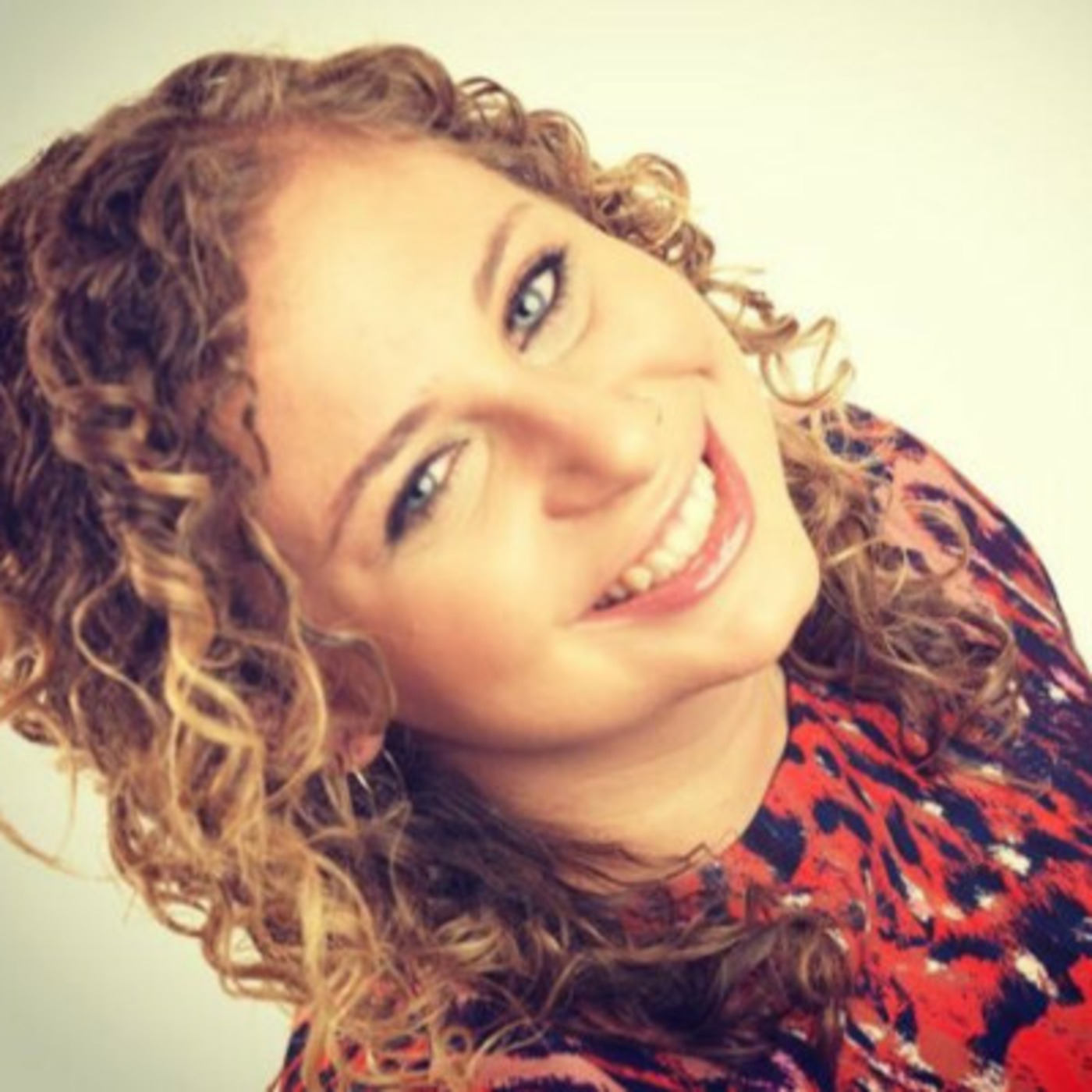
Aoifinn Devitt: Can anyone learn the art of networking? And how has this essential skill been transformed in COVID times? What does it take to be a LinkedIn queen? Let’s find out next. I’m Aoifinn Devitt, and welcome to this 50 Faces focus series, which showcases inspiring Israeli women in tech and beyond. I’m joined today by Helena Baker, who describes herself as a pro schmoozer and LinkedIn queen. She grew up in London and has a background in journalism and copywriting, and since moving to Israel in 2019, has founded the English Speaking Network, one of Israel’s premier networking groups. Welcome, Helena. Thank you for joining me today.
Helena Baker: Thank you for having me.
Aoifinn Devitt: Let’s start with your career journey and how it took you from the UK to Israel. Can you talk us through that, please?
Helena Baker: Absolutely. So going back a little bit, I guess I’m from Manchester originally. I moved to London for university and then got a job working for a charity called the Union of Jewish Students. Which helps your students, I guess, does what it says on the tin. And there I really discovered a passion for writing. I did a lot of the marketing there. I started writing my own blog, which got in the Huffington Post, and I really developed a love for writing and really wanted to pursue that. So I got a job after UGS, a fantastic job at a brilliant company that sadly went under about a week after I signed my contract, which was a bit of a shock. So I decided to go freelance, and I was then freelance about 4 or 5 years in London, which was amazing and hard at the same time. I really decided to move to Israel just because I was ready for a change. And I kind of thought that it wouldn’t be that difficult. You know, I was freelance anyway. I had grown up going to Israel my whole life. And I kind of thought, well, my Hebrew is good enough, which it was not, but I did believe that at the time. So I moved to Israel 2 years ago, really with the hope of networking in Israel and really growing my network here to kind of get more Israeli clients and obviously earn in shekel. What I found when I actually moved to Israel was that the networking scene here was not was very different from what I was used to in England. And I really wanted to network with English speakers in a really dedicated and clear way, because in England, that’s really how I’d grown my copywriting business through networking almost exclusively. So when I arrived in Israel, I decided to create my own networking group, English Speaking Networking. I started it in September 2019 and then Corona hit. So it’s been an interesting year, but we now have 4 branches and almost 70 members, just shy of 70 members now.
Aoifinn Devitt: In terms of the cultural divides or anything you had to bridge when moving from the UK to Israel, obviously you came at a time which was ultimately struck by coronavirus, so it did have some practical challenges, but were there any particular cultural divides that you had to bridge in those early days?
Helena Baker: Absolutely, yeah. I mean, like I said, when I made Aliyah, I was under the mistaken assumption that would be fairly easy. It was not, to say the least. In terms of culture, I mean, firstly, the language I think is the hardest, and I think that’s a huge a huge bridge. If you don’t speak the language, it’s very hard to express yourself. It can be very frustrating at times, and that really emphasizes a cultural block. Now my Hebrew is decent and I’m at least able to communicate, and I think that really helps. I also think in a slightly weird way, corona has also helped because it evens the playing field. Everywhere is very difficult at the moment, so the fact that not allowed I’m is kind of less relevant now. It’s dwarfed by this far bigger entity.— which is an interesting dynamic. What I really found, to be honest, the main cultural divide for me and why I created ESM was the networking. Because networking in Israel and networking in Hebrew is a very, very different beast. The Israelis are— and this isn’t a negative— they’re just much more pushy. I wouldn’t say aggressive necessarily, but more so than Brits, let’s say. We’re trained to be polite and well-mannered and everything’s, you know, “Oh, if you’d like to send me some business, that would be lovely.” The Israelis aren’t like that at all, and that was a huge cultural shock for me, and why I really found, you know, Israeli networking not to be something that I could handle, because it was just such a huge cultural gulf, I would say, in terms of the networking here.
Aoifinn Devitt: And you seem to have realized the benefits of networking from a very early stage in your career. You mentioned in your copywriting business, growing it through networking. That seems to be a skill that many people underestimate the importance of, and kind of come to it a little later, mid-career. Why did you— do you think that you realized the benefits so early on?
Helena Baker: Yeah, it’s interesting, and people have asked me that a lot, I’m trying to remember like the first networking meeting I ever got invited to, and I don’t know how I got there. But for me, as a 22-year-old starting a copywriting business, you know, I had no contacts. I had no friends who were yet ready to pass me work because they were all very low ranking in their businesses themselves. I really needed to find a way to grow my business. And for me, the only thing that really seemed to be working was networking. And what I think is very good about networking is that it’s either free, so you’ll do it with friends and family, or it’s very affordable normally. You know, it’s a very affordable marketing tool as opposed to say LinkedIn ads or Facebook ads. So for a 22-year-old newbie copywriter, it was kind of the best way to grow my business. And it also works with my personality. You know, I’m fairly extroverted. I enjoy meeting new people. I was networking in England, say 5 or 6 times a week, but I was going to kind of dedicated networking meetings. And I think it’s important to remember that there are those, but even if you’re employed or looking to advance in your career within a company framework, networking can still be phenomenally important. And through things like LinkedIn, which I think we’ll mention later, but also, you know, through friends, family, through asking them for contacts. Maybe if you’re looking to get into a certain company, you know, networking can be done around dinner, it can be done over WhatsApp. It’s not just limited to these structured events that personally work for me.
Aoifinn Devitt: Because you call yourself a professional schmoozer, not everybody maybe would think of themselves as a natural schmoozer. Do you think it’s something that anyone can learn, or is it something they kind of adapt to their own skill set and strengths?
Helena Baker: It’s really interesting you ask that because it’s something that I’m really dealing with at the moment. For me, networking came very easily, I must say, and I’m very lucky for that. But, you know, I run a networking group now and I have, you know, a lot of members, and I see that for some of them it’s extremely difficult to network. They just, for whatever reason, it doesn’t necessarily work with their personality. And for them, it is harder work. There’s no two ways about it. You know, they have to learn to schmooze and learn to just be having formal chats. And I think anyone can learn it. I don’t think it comes easily to everybody, which is something I only learned fairly recently. But even those members it is harder for, they are still, you know, networking is still working for them. And I think just by virtue of being in the room and announcing yourself and making it clear what you’re looking for, that in itself can sometimes just be enough. But yeah, I definitely don’t think it comes to everyone naturally, but it’s definitely something that can be learned.
Aoifinn Devitt: You talked about the differences in this corona era where much networking has moved online. Do you think it’s as effective today? And how have we substituted essentially some of the the skills and events and techniques that would have been done person to person, how are they being done online?
Helena Baker: Okay, so there’s a lot of prongs to that question, and the first one is, so for example, I pivoted and moved all my meetings online, and I now charge less for those meetings. I don’t think that they are as powerful as face-to-face networking. I think that when, please God, we’re after this, the whole corona situation, we’re able to network, people are going to be hungry and desperate for it, because it really isn’t the same online. That being said, people are still getting business online and it’s still working and the business has grown hugely during the online transition period. So it definitely does work. I have to be honest, I don’t think it’s quite as effective or quite as fun also. I think networking should and can be very enjoyable. But it definitely works and it’s all we have right now. And the importance right now is to keep people safe and secure. So that’s kind of that. I definitely think that in terms of LinkedIn and the power of LinkedIn, it’s really important during this time to really be focusing on that. Following people, connecting with people, liking posts, posting yourself. I mean, it’s a whole talk in and of itself. But I think the power of LinkedIn has never been more important than it is at this stage. And whilst there used to be all these casual networking meetings, evenings, you know, for this sort of business or that sort of category. And those have completely disappeared now because they were free and no one’s going to do those. It’s too much effort to do them online. It’s too hard to get people to them. So you really need to be replacing those more casual free events with LinkedIn, which is really just a powerful tool that goes hand in hand with face-to-face networking. And at the moment, I think, is the replacement during this time.
Aoifinn Devitt: It’s interesting because I have become a bit of an accidental LinkedIn— I wouldn’t say expert, but I’m certainly a little more knowledgeable. But it came by accident as I posted posts of the podcast. I kind of figured out what was making certain posts get 10,000 views and certain posts maybe only get 300. I’m sure there are better ways to approach LinkedIn than by accident as I did. Are there any particular techniques that you found are particularly effective to grow an audience or just expand maybe the number of views?
Helena Baker: Yeah. Okay. So the first thing I always say is if you are looking to get into LinkedIn, it can feel very daunting to just start posting. You know, you get nervous people will judge you. You’re nervous that it won’t work. So what I would say to people is spend half an hour, 3 times a week going through LinkedIn and just commenting on other people’s posts and connecting with those people who are of interest, who perhaps commented on the same post as you, that in your industry, and getting a feel for the platform and how it works. Because there isn’t necessarily a formula for LinkedIn, but there are clearly posts that work, there’s clearly posts that don’t. So I think just spending time on it, but being actively in that. So like I say, liking, sending message requests to other people, but saying, I really enjoyed this post that you did. Just starting to interact with the platform. Do that maybe for a month or however long it takes you to feel comfortable. And then you do really need to start posting. Now I’m posting posts every day, which most people don’t do, but it works for me and my business. In terms of posting, you will start off with very, very few views. That’s how it will go. You’ll start off with 200-300 views, and that’s okay. Because it will grow. But you just have to be ready to really— and the truth with LinkedIn, I personally think, is a lot of it’s trial and error. So like you said, you learned from posting what times worked, what sorts of posts worked, if it was better with images, if it was without. And there’s a few kind of LinkedIn laws, let’s say, that generally do work. So emojis normally are very helpful. Images sometimes are actually less helpful. It depends. But it really is understanding your audience and what they are enjoying. So it really is trialing and erroring, and it’s not being put off when your first post doesn’t get, you know, 40 likes and 12 comments, because that’s unlikely to happen. You know, it really is having a strategy, thinking about your content, about the value that it adds, and waiting slowly for that to develop. I now, you know, get 3,000-4,000 views on most of my posts, but when I first started on LinkedIn, that was absolutely not the case. So I really think it’s just about letting it grow naturally, but also making sure to connect with people, making sure to be active on LinkedIn. LinkedIn, you have to have the whole gamut of using LinkedIn. You can’t just be posting, you can’t just be liking, you can’t just be commenting. You have to be doing all of those. Things to really make it work for you.
Aoifinn Devitt: Because you’re in the networking business, it seems to me also that— and the people you’re connected with and the people you tag maybe, and these power users— that it can be quite effective as kind of a teamwork episode, that the more people you tag, the more people comment. And if they’re very, say, super users, it might go farther as well. Have you found that?
Helena Baker: So in terms of super users, which is something we’ve discussed before— and for people who aren’t sure what that means, it’s when someone with a huge following likes your post.. And I know that you’ve had lots of success with that. I’ve heard varying degrees whether that really works or not. It’s certainly worth a try. What I would say in terms of tagging people is that yes, absolutely. If it is relevant to the post, then yes, tag them. What happens to me a lot, and what happens, I know, to a lot of LinkedIn users, particularly those who are more well-known, let’s say, is that people tag them in posts that we don’t know that person. I’m not sure why they’re tagging me. They’re really just doing it so that I like it as a super user, let’s say. And I think that is not great. It can seem a little bit spammy. And there’s some really bad LinkedIn etiquette that I see quite a lot, particularly in Israel, because I don’t think people here are so clear how to use it. And I would only tag people if it’s really relevant for them and for the post. Yeah, I wouldn’t just start, which happens a lot, tagging 10, 15 people because you want them to see it. You know, they’ll see it because it’s good, valuable content that’s interesting. Don’t just tag them in the hope that they’ll like it and it will move up the algorithms, because that’s just going to annoy people. I also get a lot of people sending group messages on LinkedIn, so adding lots of people to a group who don’t know each other and sending a blog post and saying, please this. You know, that is really behavior that should not be happening on LinkedIn. LinkedIn is similar to networking. You want to be building genuine, authentic, and real relationships.
Aoifinn Devitt: Let’s pivot now to your experience as a female founder and as a networker who works with, I’m sure, many females in your network. Have you experienced any particular challenges as a female founder over the course of your career?
Helena Baker: Okay, so it’s kind of two answers to that. And one is, obviously, when I was a copywriter, I was very young when I was a copywriter. You know, I really started at 22, and networking groups particularly in London. It’s less true in Israel, and Israel networking is a much younger game. But in London in general, the networking scene is older. So I absolutely received a lot of kind of metaphorical pats on the head, metaphorical, “That’s very sweet. That’s very cute. Oh, you must do social media because you’re young.” And that was quite infuriating, I have to say. And I experienced quite a lot of that in London, and it was definitely a challenge. It’s not the reason I moved by any stretch, but certainly, obviously, once I moved, it kind of became irrelevant. But it was quite infuriating in London. In Israel, networking is much a younger person’s game. We have a range of ages at ESM, but most networking events in Tel Aviv, people are average age, let’s say, in their 30s, maybe 40s. That’s just kind of the way it works. So that was less of an issue once I was here. As a female founder, I have to be honest, I don’t think that it’s affected me particularly. What I will say is that I think as women in general, we are absolutely kind of told to be nice and for everybody to like us. And particularly raised in the Jewish religion, the focus is very much on being nice and warm and friendly. So eventually, you will find yourself a nice man and get married and have more children. So I think that as a business owner, it was hard for me to kind of say, place boundaries, be more strict, say, you know, if I needed to not tell people off, if I needed to be clear on something, it was much harder for me because I was raised— and I think this is exclusive to women, though perhaps I am wrong— I was raised to kind of be always focused on being nice rather than being strong and serious. Those were not adjectives that were kind of used, that were encouraged. Particularly in my community, and perhaps for women as large. So I think that those intrinsic social norms made it harder for me to really have that hard edge you do need as a founder. You know, you do have to have a thick skin, and I think it made it a little bit hard. I think I’ve improved a lot. I think I’m not quite where I need to be, but I think that was hard. But in terms of the community, I don’t think I’ve faced any particular issues so far. That being said, the demographic in Israel, particularly people I network with, is much younger, and I think that will always make a difference.
Aoifinn Devitt: In terms of representation of women in tech in Israel in general, because you intersect very closely with the tech world, do you feel they’re well represented, say, even relative to the global situation, what you saw in the UK and maybe the US?
Helena Baker: I actually think yes, they are. I mean, again, I’m not in tech, so I don’t want to speak for that entire community. What I’ve experienced is that women in tech are very well represented, and there’s lots of, you know, groups as well that really advocate for them. There’s a group called Women in Tech in Israel. You know, there’s lots of— and particularly, I went to a lot of networking groups back in the day when that was still a thing that really were focused on women and pushing them up. And I definitely think in Israel, it’s a very different kettle of fish from England. Though in England, I really was not involved in the tech world. In Tel Aviv, where I live, if you are in business, you will be involved in the tech world because it’s such a big player here. So there’s no real way to avoid it. And I definitely thought that the representation of women was commendable in this country, absolutely.
Aoifinn Devitt: And I think it’s interesting. And this is why I was so happy to have this conversation about networking, because I think networking is so key. Key to actually improving and maintaining that representation, because it does, I think, just, just create communities of like-minded individuals who I think then can support each other as they move through the ranks. So definitely networking is an important part of the puzzle there. So looking back at your own career so far, obviously you’re in the kind of early stages, early to mid stages still. Who are some of the key people who influenced you you so far and in what way?
Helena Baker: It is a little difficult for me to answer that. And the reason is, is because what I do, my niche is extremely niche. You know, there is not that many networking groups in the way that I have. And there is not certainly not that many women-owned networking groups. And I cannot lie and say, you know, I look up to so-and-so women and think— I never kind of was like that. I never had a particular idol in mind. There are some incredible women in business who, and I have to say, these people met with me when I made Alia, when I moved to Israel. Excuse me, medallia is the Hebrew word for it, when I was a nobody really. I mean, now thank God I have a name in the Israeli world. But there is an incredible copywriter called Michal Eskovitz, who is known across the world for her tremendous talent. And she met with me. I traveled to see her and we had a coffee, and she was incredible. There is another person called Sivan Felder, who also met with me. And there is also Miriam Isaac, who is tremendously big on Instagram. And again, not only met with me, but spoke at my networking events. These are women, and I would not I just think that their warmth and generosity and kind spirit was incredible in meeting with me when I really was not yet known in the Olim world at all. And I have to say, there’s a few— I wouldn’t say you, but there’s a few titans, let’s say, in the tech world, and some men I’m saying, and some are incredible as well and have been warm and giving in at their time, and some have been a little bit more difficult, I think. And I’ve really seen some of the biggest names of the women in Israel are hugely warm and open to helping Olim 100%. And that was really inspiring for me when I made Alia. And definitely showed me that it was kind of possible to grow within this world because particularly particularly the, the women were so open and giving of their time.
Aoifinn Devitt: Absolutely. And in terms of any advice you received, and this could be back in your growing up in school or, you know, as a child or in your career that made an impact on how you see the world, is there anything or any creed or motto that you live by?
Helena Baker: If I’m honest, no. But what I will say is that I’ve been in therapy on and off for many, many years. Obviously, that’s focused far more on my personal life, but that has definitely leaked into my professional life. And I’m a big advocate of mental health. And being kind to yourself. And I think there’s also— and for me, I was really very much a workaholic when I first started my business and was just working all hours of the day. For me, with therapy, it was really understanding that, you know, you’ve got to be kind to yourself, you’ve got to look after yourself because no one else will, and you don’t need to work every hour of the day. I mean, I think more and more we’re seeing people being open and honest about the fact that they do take time off and they don’t want to burn out. And I also think I see some incredible— and a lot of these women I mentioned before have kids, And I think what’s amazing is they start a business whilst looking after their kids and they’re able to balance that effectively. And I think for me, therapy has been a huge motivator in really helping me have a far more balanced and healthy life. So I wouldn’t say there’s been a creed, but I have for years been working hard to get myself in a far more emotionally healthy place.
Aoifinn Devitt: And that obviously is an essential foundation for a crisis like we still find ourselves in today. So I think definitely it’s important to reiterate the importance of that. One of the questions I always ask people ask my guests at the end is the question of what they— anything they know now that they wish they had known, maybe emerging from college or their younger self. One of the key things is usually to network more. It doesn’t seem like you would need to give that advice to yourself, but was there any— is there anything that you wish you had known maybe as you just emerged into your career that you know now?
Helena Baker: That’s a very, very good question. I think caring less about what people think think I is really, really important. It sounds so cliché, but I do think it’s about finding out who you really are and what your needs are and making sure that those are satisfied. And if you do start a business, know that it’s going to be extremely hard the first year and that every single day you want to give up. I think if you’re looking to start any form of business, whether freelance or a bigger entity, at least the first year, if not the first two, there won’t be a day that you don’t regret what you did, I think, because it’s extremely hard. Extremely, extremely hard.
Aoifinn Devitt: Well, that’s a wonderful, hopeful way to end the podcast. Thank you, Helena. It’s been a pleasure speaking with you. And thank you for all that you’re doing to show the way for what can be quite a difficult challenge for many people networking, especially now. And I think that you’re very kind of easy and prescriptive, I suppose, template for how this can be done is extremely helpful. So thank you for sharing your insights with us.
Helena Baker: Thank you. I appreciate it. Thank you for asking me. I appreciate being on the podcast.
Aoifinn Devitt: I’m Aoifinn Devitt. Thank you for listening to our 50 Faces Focus Series. If you liked what you heard and would like to tune in to hear more inspiring Israeli women in tech and beyond, please subscribe on Apple Podcasts or wherever you get your podcasts.
Speaker C: This podcast series was made possible by the kind support of Elisa Bayer and Avital Oisgeld. This podcast is for informational purposes only and should not be construed as investment advice, and all views are personal and should not be attributed to the organization. And affiliations of the host or any guest.
Aoifinn Devitt: Can anyone learn the art of networking? And how has this essential skill been transformed in COVID times? What does it take to be a LinkedIn queen? Let’s find out next. I’m Aoifinn Devitt, and welcome to this 50 Faces focus series, which showcases inspiring Israeli women in tech and beyond. I’m joined today by Helena Baker, who describes herself as a pro schmoozer and LinkedIn queen. She grew up in London and has a background in journalism and copywriting, and since moving to Israel in 2019, has founded the English Speaking Network, one of Israel’s premier networking groups. Welcome, Helena. Thank you for joining me today.
Helena Baker: Thank you for having me.
Aoifinn Devitt: Let’s start with your career journey and how it took you from the UK to Israel. Can you talk us through that, please?
Helena Baker: Absolutely. So going back a little bit, I guess I’m from Manchester originally. I moved to London for university and then got a job working for a charity called the Union of Jewish Students. Which helps your students, I guess, does what it says on the tin. And there I really discovered a passion for writing. I did a lot of the marketing there. I started writing my own blog, which got in the Huffington Post, and I really developed a love for writing and really wanted to pursue that. So I got a job after UGS, a fantastic job at a brilliant company that sadly went under about a week after I signed my contract, which was a bit of a shock. So I decided to go freelance, and I was then freelance about 4 or 5 years in London, which was amazing and hard at the same time. I really decided to move to Israel just because I was ready for a change. And I kind of thought that it wouldn’t be that difficult. You know, I was freelance anyway. I had grown up going to Israel my whole life. And I kind of thought, well, my Hebrew is good enough, which it was not, but I did believe that at the time. So I moved to Israel 2 years ago, really with the hope of networking in Israel and really growing my network here to kind of get more Israeli clients and obviously earn in shekel. What I found when I actually moved to Israel was that the networking scene here was not was very different from what I was used to in England. And I really wanted to network with English speakers in a really dedicated and clear way, because in England, that’s really how I’d grown my copywriting business through networking almost exclusively. So when I arrived in Israel, I decided to create my own networking group, English Speaking Networking. I started it in September 2019 and then Corona hit. So it’s been an interesting year, but we now have 4 branches and almost 70 members, just shy of 70 members now.
Aoifinn Devitt: In terms of the cultural divides or anything you had to bridge when moving from the UK to Israel, obviously you came at a time which was ultimately struck by coronavirus, so it did have some practical challenges, but were there any particular cultural divides that you had to bridge in those early days?
Helena Baker: Absolutely, yeah. I mean, like I said, when I made Aliyah, I was under the mistaken assumption that would be fairly easy. It was not, to say the least. In terms of culture, I mean, firstly, the language I think is the hardest, and I think that’s a huge a huge bridge. If you don’t speak the language, it’s very hard to express yourself. It can be very frustrating at times, and that really emphasizes a cultural block. Now my Hebrew is decent and I’m at least able to communicate, and I think that really helps. I also think in a slightly weird way, corona has also helped because it evens the playing field. Everywhere is very difficult at the moment, so the fact that not allowed I’m is kind of less relevant now. It’s dwarfed by this far bigger entity.— which is an interesting dynamic. What I really found, to be honest, the main cultural divide for me and why I created ESM was the networking. Because networking in Israel and networking in Hebrew is a very, very different beast. The Israelis are— and this isn’t a negative— they’re just much more pushy. I wouldn’t say aggressive necessarily, but more so than Brits, let’s say. We’re trained to be polite and well-mannered and everything’s, you know, “Oh, if you’d like to send me some business, that would be lovely.” The Israelis aren’t like that at all, and that was a huge cultural shock for me, and why I really found, you know, Israeli networking not to be something that I could handle, because it was just such a huge cultural gulf, I would say, in terms of the networking here.
Aoifinn Devitt: And you seem to have realized the benefits of networking from a very early stage in your career. You mentioned in your copywriting business, growing it through networking. That seems to be a skill that many people underestimate the importance of, and kind of come to it a little later, mid-career. Why did you— do you think that you realized the benefits so early on?
Helena Baker: Yeah, it’s interesting, and people have asked me that a lot, I’m trying to remember like the first networking meeting I ever got invited to, and I don’t know how I got there. But for me, as a 22-year-old starting a copywriting business, you know, I had no contacts. I had no friends who were yet ready to pass me work because they were all very low ranking in their businesses themselves. I really needed to find a way to grow my business. And for me, the only thing that really seemed to be working was networking. And what I think is very good about networking is that it’s either free, so you’ll do it with friends and family, or it’s very affordable normally. You know, it’s a very affordable marketing tool as opposed to say LinkedIn ads or Facebook ads. So for a 22-year-old newbie copywriter, it was kind of the best way to grow my business. And it also works with my personality. You know, I’m fairly extroverted. I enjoy meeting new people. I was networking in England, say 5 or 6 times a week, but I was going to kind of dedicated networking meetings. And I think it’s important to remember that there are those, but even if you’re employed or looking to advance in your career within a company framework, networking can still be phenomenally important. And through things like LinkedIn, which I think we’ll mention later, but also, you know, through friends, family, through asking them for contacts. Maybe if you’re looking to get into a certain company, you know, networking can be done around dinner, it can be done over WhatsApp. It’s not just limited to these structured events that personally work for me.
Aoifinn Devitt: Because you call yourself a professional schmoozer, not everybody maybe would think of themselves as a natural schmoozer. Do you think it’s something that anyone can learn, or is it something they kind of adapt to their own skill set and strengths?
Helena Baker: It’s really interesting you ask that because it’s something that I’m really dealing with at the moment. For me, networking came very easily, I must say, and I’m very lucky for that. But, you know, I run a networking group now and I have, you know, a lot of members, and I see that for some of them it’s extremely difficult to network. They just, for whatever reason, it doesn’t necessarily work with their personality. And for them, it is harder work. There’s no two ways about it. You know, they have to learn to schmooze and learn to just be having formal chats. And I think anyone can learn it. I don’t think it comes easily to everybody, which is something I only learned fairly recently. But even those members it is harder for, they are still, you know, networking is still working for them. And I think just by virtue of being in the room and announcing yourself and making it clear what you’re looking for, that in itself can sometimes just be enough. But yeah, I definitely don’t think it comes to everyone naturally, but it’s definitely something that can be learned.
Aoifinn Devitt: You talked about the differences in this corona era where much networking has moved online. Do you think it’s as effective today? And how have we substituted essentially some of the the skills and events and techniques that would have been done person to person, how are they being done online?
Helena Baker: Okay, so there’s a lot of prongs to that question, and the first one is, so for example, I pivoted and moved all my meetings online, and I now charge less for those meetings. I don’t think that they are as powerful as face-to-face networking. I think that when, please God, we’re after this, the whole corona situation, we’re able to network, people are going to be hungry and desperate for it, because it really isn’t the same online. That being said, people are still getting business online and it’s still working and the business has grown hugely during the online transition period. So it definitely does work. I have to be honest, I don’t think it’s quite as effective or quite as fun also. I think networking should and can be very enjoyable. But it definitely works and it’s all we have right now. And the importance right now is to keep people safe and secure. So that’s kind of that. I definitely think that in terms of LinkedIn and the power of LinkedIn, it’s really important during this time to really be focusing on that. Following people, connecting with people, liking posts, posting yourself. I mean, it’s a whole talk in and of itself. But I think the power of LinkedIn has never been more important than it is at this stage. And whilst there used to be all these casual networking meetings, evenings, you know, for this sort of business or that sort of category. And those have completely disappeared now because they were free and no one’s going to do those. It’s too much effort to do them online. It’s too hard to get people to them. So you really need to be replacing those more casual free events with LinkedIn, which is really just a powerful tool that goes hand in hand with face-to-face networking. And at the moment, I think, is the replacement during this time.
Aoifinn Devitt: It’s interesting because I have become a bit of an accidental LinkedIn— I wouldn’t say expert, but I’m certainly a little more knowledgeable. But it came by accident as I posted posts of the podcast. I kind of figured out what was making certain posts get 10,000 views and certain posts maybe only get 300. I’m sure there are better ways to approach LinkedIn than by accident as I did. Are there any particular techniques that you found are particularly effective to grow an audience or just expand maybe the number of views?
Helena Baker: Yeah. Okay. So the first thing I always say is if you are looking to get into LinkedIn, it can feel very daunting to just start posting. You know, you get nervous people will judge you. You’re nervous that it won’t work. So what I would say to people is spend half an hour, 3 times a week going through LinkedIn and just commenting on other people’s posts and connecting with those people who are of interest, who perhaps commented on the same post as you, that in your industry, and getting a feel for the platform and how it works. Because there isn’t necessarily a formula for LinkedIn, but there are clearly posts that work, there’s clearly posts that don’t. So I think just spending time on it, but being actively in that. So like I say, liking, sending message requests to other people, but saying, I really enjoyed this post that you did. Just starting to interact with the platform. Do that maybe for a month or however long it takes you to feel comfortable. And then you do really need to start posting. Now I’m posting posts every day, which most people don’t do, but it works for me and my business. In terms of posting, you will start off with very, very few views. That’s how it will go. You’ll start off with 200-300 views, and that’s okay. Because it will grow. But you just have to be ready to really— and the truth with LinkedIn, I personally think, is a lot of it’s trial and error. So like you said, you learned from posting what times worked, what sorts of posts worked, if it was better with images, if it was without. And there’s a few kind of LinkedIn laws, let’s say, that generally do work. So emojis normally are very helpful. Images sometimes are actually less helpful. It depends. But it really is understanding your audience and what they are enjoying. So it really is trialing and erroring, and it’s not being put off when your first post doesn’t get, you know, 40 likes and 12 comments, because that’s unlikely to happen. You know, it really is having a strategy, thinking about your content, about the value that it adds, and waiting slowly for that to develop. I now, you know, get 3,000-4,000 views on most of my posts, but when I first started on LinkedIn, that was absolutely not the case. So I really think it’s just about letting it grow naturally, but also making sure to connect with people, making sure to be active on LinkedIn. LinkedIn, you have to have the whole gamut of using LinkedIn. You can’t just be posting, you can’t just be liking, you can’t just be commenting. You have to be doing all of those. Things to really make it work for you.
Aoifinn Devitt: Because you’re in the networking business, it seems to me also that— and the people you’re connected with and the people you tag maybe, and these power users— that it can be quite effective as kind of a teamwork episode, that the more people you tag, the more people comment. And if they’re very, say, super users, it might go farther as well. Have you found that?
Helena Baker: So in terms of super users, which is something we’ve discussed before— and for people who aren’t sure what that means, it’s when someone with a huge following likes your post.. And I know that you’ve had lots of success with that. I’ve heard varying degrees whether that really works or not. It’s certainly worth a try. What I would say in terms of tagging people is that yes, absolutely. If it is relevant to the post, then yes, tag them. What happens to me a lot, and what happens, I know, to a lot of LinkedIn users, particularly those who are more well-known, let’s say, is that people tag them in posts that we don’t know that person. I’m not sure why they’re tagging me. They’re really just doing it so that I like it as a super user, let’s say. And I think that is not great. It can seem a little bit spammy. And there’s some really bad LinkedIn etiquette that I see quite a lot, particularly in Israel, because I don’t think people here are so clear how to use it. And I would only tag people if it’s really relevant for them and for the post. Yeah, I wouldn’t just start, which happens a lot, tagging 10, 15 people because you want them to see it. You know, they’ll see it because it’s good, valuable content that’s interesting. Don’t just tag them in the hope that they’ll like it and it will move up the algorithms, because that’s just going to annoy people. I also get a lot of people sending group messages on LinkedIn, so adding lots of people to a group who don’t know each other and sending a blog post and saying, please this. You know, that is really behavior that should not be happening on LinkedIn. LinkedIn is similar to networking. You want to be building genuine, authentic, and real relationships.
Aoifinn Devitt: Let’s pivot now to your experience as a female founder and as a networker who works with, I’m sure, many females in your network. Have you experienced any particular challenges as a female founder over the course of your career?
Helena Baker: Okay, so it’s kind of two answers to that. And one is, obviously, when I was a copywriter, I was very young when I was a copywriter. You know, I really started at 22, and networking groups particularly in London. It’s less true in Israel, and Israel networking is a much younger game. But in London in general, the networking scene is older. So I absolutely received a lot of kind of metaphorical pats on the head, metaphorical, “That’s very sweet. That’s very cute. Oh, you must do social media because you’re young.” And that was quite infuriating, I have to say. And I experienced quite a lot of that in London, and it was definitely a challenge. It’s not the reason I moved by any stretch, but certainly, obviously, once I moved, it kind of became irrelevant. But it was quite infuriating in London. In Israel, networking is much a younger person’s game. We have a range of ages at ESM, but most networking events in Tel Aviv, people are average age, let’s say, in their 30s, maybe 40s. That’s just kind of the way it works. So that was less of an issue once I was here. As a female founder, I have to be honest, I don’t think that it’s affected me particularly. What I will say is that I think as women in general, we are absolutely kind of told to be nice and for everybody to like us. And particularly raised in the Jewish religion, the focus is very much on being nice and warm and friendly. So eventually, you will find yourself a nice man and get married and have more children. So I think that as a business owner, it was hard for me to kind of say, place boundaries, be more strict, say, you know, if I needed to not tell people off, if I needed to be clear on something, it was much harder for me because I was raised— and I think this is exclusive to women, though perhaps I am wrong— I was raised to kind of be always focused on being nice rather than being strong and serious. Those were not adjectives that were kind of used, that were encouraged. Particularly in my community, and perhaps for women as large. So I think that those intrinsic social norms made it harder for me to really have that hard edge you do need as a founder. You know, you do have to have a thick skin, and I think it made it a little bit hard. I think I’ve improved a lot. I think I’m not quite where I need to be, but I think that was hard. But in terms of the community, I don’t think I’ve faced any particular issues so far. That being said, the demographic in Israel, particularly people I network with, is much younger, and I think that will always make a difference.
Aoifinn Devitt: In terms of representation of women in tech in Israel in general, because you intersect very closely with the tech world, do you feel they’re well represented, say, even relative to the global situation, what you saw in the UK and maybe the US?
Helena Baker: I actually think yes, they are. I mean, again, I’m not in tech, so I don’t want to speak for that entire community. What I’ve experienced is that women in tech are very well represented, and there’s lots of, you know, groups as well that really advocate for them. There’s a group called Women in Tech in Israel. You know, there’s lots of— and particularly, I went to a lot of networking groups back in the day when that was still a thing that really were focused on women and pushing them up. And I definitely think in Israel, it’s a very different kettle of fish from England. Though in England, I really was not involved in the tech world. In Tel Aviv, where I live, if you are in business, you will be involved in the tech world because it’s such a big player here. So there’s no real way to avoid it. And I definitely thought that the representation of women was commendable in this country, absolutely.
Aoifinn Devitt: And I think it’s interesting. And this is why I was so happy to have this conversation about networking, because I think networking is so key. Key to actually improving and maintaining that representation, because it does, I think, just, just create communities of like-minded individuals who I think then can support each other as they move through the ranks. So definitely networking is an important part of the puzzle there. So looking back at your own career so far, obviously you’re in the kind of early stages, early to mid stages still. Who are some of the key people who influenced you you so far and in what way?
Helena Baker: It is a little difficult for me to answer that. And the reason is, is because what I do, my niche is extremely niche. You know, there is not that many networking groups in the way that I have. And there is not certainly not that many women-owned networking groups. And I cannot lie and say, you know, I look up to so-and-so women and think— I never kind of was like that. I never had a particular idol in mind. There are some incredible women in business who, and I have to say, these people met with me when I made Alia, when I moved to Israel. Excuse me, medallia is the Hebrew word for it, when I was a nobody really. I mean, now thank God I have a name in the Israeli world. But there is an incredible copywriter called Michal Eskovitz, who is known across the world for her tremendous talent. And she met with me. I traveled to see her and we had a coffee, and she was incredible. There is another person called Sivan Felder, who also met with me. And there is also Miriam Isaac, who is tremendously big on Instagram. And again, not only met with me, but spoke at my networking events. These are women, and I would not I just think that their warmth and generosity and kind spirit was incredible in meeting with me when I really was not yet known in the Olim world at all. And I have to say, there’s a few— I wouldn’t say you, but there’s a few titans, let’s say, in the tech world, and some men I’m saying, and some are incredible as well and have been warm and giving in at their time, and some have been a little bit more difficult, I think. And I’ve really seen some of the biggest names of the women in Israel are hugely warm and open to helping Olim 100%. And that was really inspiring for me when I made Alia. And definitely showed me that it was kind of possible to grow within this world because particularly particularly the, the women were so open and giving of their time.
Aoifinn Devitt: Absolutely. And in terms of any advice you received, and this could be back in your growing up in school or, you know, as a child or in your career that made an impact on how you see the world, is there anything or any creed or motto that you live by?
Helena Baker: If I’m honest, no. But what I will say is that I’ve been in therapy on and off for many, many years. Obviously, that’s focused far more on my personal life, but that has definitely leaked into my professional life. And I’m a big advocate of mental health. And being kind to yourself. And I think there’s also— and for me, I was really very much a workaholic when I first started my business and was just working all hours of the day. For me, with therapy, it was really understanding that, you know, you’ve got to be kind to yourself, you’ve got to look after yourself because no one else will, and you don’t need to work every hour of the day. I mean, I think more and more we’re seeing people being open and honest about the fact that they do take time off and they don’t want to burn out. And I also think I see some incredible— and a lot of these women I mentioned before have kids, And I think what’s amazing is they start a business whilst looking after their kids and they’re able to balance that effectively. And I think for me, therapy has been a huge motivator in really helping me have a far more balanced and healthy life. So I wouldn’t say there’s been a creed, but I have for years been working hard to get myself in a far more emotionally healthy place.
Aoifinn Devitt: And that obviously is an essential foundation for a crisis like we still find ourselves in today. So I think definitely it’s important to reiterate the importance of that. One of the questions I always ask people ask my guests at the end is the question of what they— anything they know now that they wish they had known, maybe emerging from college or their younger self. One of the key things is usually to network more. It doesn’t seem like you would need to give that advice to yourself, but was there any— is there anything that you wish you had known maybe as you just emerged into your career that you know now?
Helena Baker: That’s a very, very good question. I think caring less about what people think think I is really, really important. It sounds so cliché, but I do think it’s about finding out who you really are and what your needs are and making sure that those are satisfied. And if you do start a business, know that it’s going to be extremely hard the first year and that every single day you want to give up. I think if you’re looking to start any form of business, whether freelance or a bigger entity, at least the first year, if not the first two, there won’t be a day that you don’t regret what you did, I think, because it’s extremely hard. Extremely, extremely hard.
Aoifinn Devitt: Well, that’s a wonderful, hopeful way to end the podcast. Thank you, Helena. It’s been a pleasure speaking with you. And thank you for all that you’re doing to show the way for what can be quite a difficult challenge for many people networking, especially now. And I think that you’re very kind of easy and prescriptive, I suppose, template for how this can be done is extremely helpful. So thank you for sharing your insights with us.
Helena Baker: Thank you. I appreciate it. Thank you for asking me. I appreciate being on the podcast.
Aoifinn Devitt: I’m Aoifinn Devitt. Thank you for listening to our 50 Faces Focus Series. If you liked what you heard and would like to tune in to hear more inspiring Israeli women in tech and beyond, please subscribe on Apple Podcasts or wherever you get your podcasts.
Speaker C: This podcast series was made possible by the kind support of Elisa Bayer and Avital Oisgeld. This podcast is for informational purposes only and should not be construed as investment advice, and all views are personal and should not be attributed to the organization. And affiliations of the host or any guest.