Aoifinn Devitt: This Pride series in 2025 is kindly supported by Latimer Partners LLC.
Rob Smith: And I can’t help but think, building on that, like Cyndi Lauper’s song True Colors, which is kind of a bit of a pride anthem as well. But to think about, you get to see a company’s real true colors come out during the month of rainbows. It’s interesting, isn’t it? And we get to see who the real supporters are and the other actors who were just playing the part before.
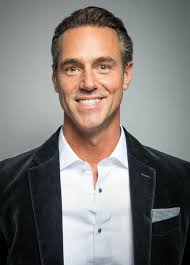
Aoifinn Devitt: I’m Aoifinn Devitt, and welcome to this 50 Faces Focus Series in which we are celebrating LGBTQ+ professionals in a special series for Pride Month 2025. I’m joined today by Rob Smith, who is founder and CEO of The Fluid Project, a brand that recognizes the shifting attitude of Gen Z and young millennials, merging fashion with community and education. He has served on boards for over a decade and currently serves on the board of directors for Steve Madden, following a career in marketing in which he held a series of executive roles. He chairs the development committee for the LGBTQ board of directors, is a TEDx speaker, and is currently working on his first book. Welcome, Rob. Thanks for joining me today.
Rob Smith: Thank you so much for having me.
Aoifinn Devitt: How’s it going? Well, let’s start by talking— it’s going well. Thank you very much. I’m so excited to capture this here. Love to start by talking about your background. Could you tell us where you grew up and what your early interests were?
Rob Smith: Of course. I grew up in Detroit, Michigan, actually then the suburbs of Detroit. My interests were, gosh, as a young kid, I liked art, I liked music, I liked anything my sister liked. Basically, I would help her pick out her Christmas presents. I’d make strong recommendations for what she should get because I couldn’t get the dolls that she got, the dolls that I wanted. So my brothers were very active in sports. My dad was an athlete too. That bug didn’t hit me till later in my life. But yeah, I was a little creative kid and not a very popular kid at that. I would say it was an interesting childhood, but I definitely knew I was different than the other boys because I guess I didn’t know what the word was, but I guess I would say gay. Yeah.
Aoifinn Devitt: I will say—
Rob Smith: But then I ended up going to high school and playing sports and I became the person that I think everybody thought I was supposed to be. And life started getting better. Then I became a frat guy and life changed. And I am my whole self now. A whole person.
Aoifinn Devitt: Well, we’ll certainly get into that, and I can see that not only have you come into your whole self, you’re allowing others to do that as a key part of your purpose, which is just so wonderful to ensure that that effect has leverage. Then moving from high school into your career, so marketing, could you just take us through some of the executive roles you held before you moved into a portfolio career?
Rob Smith: Yeah, yeah, it’s marketing and merchandising is essentially where I spend my time. So my first job was at a company called Berdines. And Burdines is the Florida department store. And that was really nice moving from Michigan to Florida and enjoying that life for 10 years. I moved pretty quickly up in the company in the merchandising space, and then I moved to San Francisco and LA for Macy’s West. Then I moved to Macy’s East in New York City and then Macy’s Corporate. And that was a fun journey, almost 25 years with Macy’s, and then I moved to Victoria’s Secret and worked in the direct-to-consumer space. You remember the catalogs, the good old days. And then I moved to a company called Hedda Brands, and I was the chief product officer for Levi’s and Nike Kids globally, which was really cool. And then I started Fluid. That’s been my journey, my professional journey anyways.
Aoifinn Devitt: And in terms of the board roles, how did you end up pursuing board roles as part of a portfolio career?
Rob Smith: Actually, when I was pursuing the board role, Steve asked me to join the board. I had known Steve for years and it was an honor and really just becoming a board member and understanding the responsibility of a board member. It’s a fabulous career. It allows me, especially now as an entrepreneur, it allows me to continue to work my corporate muscles because sometimes as an entrepreneur, you have a small team and a small business and this Certainly Steve Madden is a big business, and it’s a different way to show up as well. You’re asking questions, you’re guiding, you’re not doing the work. And I’m continuing to pursue other board opportunities if they arise. And I really like being involved in the board community. There are a bunch of smart people, and there is a community of board members that I really enjoy.
Aoifinn Devitt: And let’s jump into the Fluid Project now. So you mentioned your entrepreneurial existence today. Can you tell us all about that, from the vision to the execution?
Rob Smith: Yeah, Fluid started off with me merging my profession, which is retail and fashion, which I mentioned, with my passion, which is social justice, and especially around, but not exclusively, the LGBTQ space. And it’s a merging of the two. Fluid has a mission statement to challenge boundaries with humanity. We say just because things are one way does not mean there’s a better way. And how can we find a better way, bringing more people along and doing it with kindness and humanity versus meanness or malice? And that’s the goal. We try to find a place for everyone, regardless of your gender, your race, your body size, your orientation, your nationality, your faith, your age. We try to find a place for everyone within Fluid. And Fluid shows up in 3 different ways. There’s the Fluid Project, which is our fashion brand, which includes apparel accessories. Oh my gosh, scents, undergarments, denim. It goes on and on. And Fluid’s in about 10,000 points of distribution this year, which is really exciting. And then there is Get Fluid, which is gender expansive training. So we are educational and strategic advising team of people that work with corporations to help them really understand who the LGBTQ customers and employees are and how to retain and recruit the best employees, especially now with adult Gen Z’s, 25% identify as LGBTQ, which is, which is wild. It’s already, and now 10% of the overall US population. So it’s an important customer to understand or demographic to understand. And then finally, the Fluid Foundation, which is our nonprofit, and we’ve raised over $1 million in the last 3 years with corporations And we regift that money into grassroots organizations across the country, the frontline workers who are doing the real work in their communities, and we support them with gifts. And so that’s Fluid.
Aoifinn Devitt: That’s great. And I always like to ask, you know, what some other brands maybe underestimate or overlook when they’re targeting consumers, maybe some of the missteps they make because they don’t fully understand the consumer. It seems like some of the— you mentioned just changing attitudes of Gen Z. You’re very much tapping into that. What would you say that other brands perhaps are missing about this?
Rob Smith: Well, young brands, I think, are tapped into it. They can do better probably if they listen to their employees. I think more mature brands are a little reluctant and hesitant to understand Gen Z because they’ve got 5 generations to deal with. But Gen Z is fascinating. They’re really value-driven. They do their research. They know where companies and leaders stand. On issues, and especially social issues, that they’re demanding that their CEOs have a point of view about issues. I think that’s really tricky. And one of the things we try to do with Get Fluid is to help companies show up with authenticity, with integrity, and doing it through their values of their company. Every company has values. So if we go through that lens of your values, you start to understand why it’s important to support groups that sometimes people turn their back on, including people of color, queer people. Yeah, it’s really interesting to see how companies are navigating this new environment that we’re in. There’s something really interesting. So a couple of years ago, there’s a phrase, rainbow washing. Have you heard of rainbow washing? Yeah. A lot of companies were jumping into the queer dollar, which is $1.5 trillion in the United States and wanted a piece of it. And people started to get a little kind of icked out, I guess, in the way some corporations were showing up. It just wasn’t authentic. And now we’re in a new era where companies are hesitant and reluctant to support the LGBTQ community. And so now we’re seeing this shift to corporations moving from rainbow washing to actually real courage and leadership by supporting and standing with LGBTQ folks, especially publicly. So it’s really interesting time right now to see how companies are navigating this new norm that we’re in. I call it norm. I don’t know if it’s a norm, if it’s normal or not, but it’s our reality.
Aoifinn Devitt: So interesting. And when we set up an organization like that, that you’re mentioning, which is very purpose-driven, very mission-driven, usually a lot of it stems from one’s own personal experience. And you already mentioned knowing something was different when you were growing up. Can you talk a little bit about your coming out experience and particularly how that was in the professional world?
Rob Smith: Yeah, it was 1990, maybe ’89, ’90. I was living in Miami and I began the process of coming out as a young adult at maybe 21, 22 years old. And it was an interesting time to come out. I was really in a really fun place in South Beach as it was really becoming this new, exciting, electric place for people to be. There were models there and there was all these like beautiful people showing up. And along with that creativity was like a large population of gay men and women. And it was fun to be a part of that. And so that queer community was very strong there. The challenge was it was also really the peak of HIV and AIDS. So to come out was liberating, but there was a limit to how much fun you could have. Like, it was like, you know, when it came to the fear of contracting HIV and AIDS and seeing people dying around you. And so it was exciting and terrifying at the same time and certainly was terrifying for my family who was concerned that I would get swept into this epidemic. So yeah, it was an interesting time. But that said, corporately, I was really well received, both personally by my family, professionally by my colleagues. I didn’t lose a friend. If anything, it just allowed me to show up at work as my authentic self, not hiding anything, I was a better friend, a better colleague because I was able to be who I really was.
Aoifinn Devitt: And maybe retail and marketing was a particularly inviting or welcoming industry for that, because if I recall around about that time, there were many other industries that would’ve been far less welcoming, maybe more buttoned up. I think there was still an era of whispering in corridors, et cetera. Over the course of your career, how have you seen the inclusive nature of professional workplaces change and improve? Has it been a one-way trajectory or are we now seeing a bit of a rolling back of that?
Rob Smith: Well, it’s a good question. I do want to go back and say that, you know, coming out, I didn’t really have— other than the head of visual, there was nobody else who was openly gay in our company. And I was one of the very first. And so in some ways being a trailblazer and then, you know, more and more people started to come out. But yeah, it was just the visual team and maybe some of the marketing team, but it was not as much as you would have thought, as I would have thought too. In this creative space. How have things changed? I think that coming out as gay is not as much of a big deal. I say that at the same time, 40% of people who go to work hide their identities. And so, meaning sexual orientation or transgender folks. So there’s still a big number of people who are hiding their identity. Well, we think it’s totally normal, and in our— maybe in bubbles like New York and LA, in San Francisco, it is normal. But outside of that, there’s still people who fear losing their job, being ridiculed, or anything else. It’s sad, especially around gay and lesbian. Trans is a different issue. We’re seeing what’s happening right now with the trans community that’s really challenging for them to live with their rights with dignity. And that’s being attacked every single day. So I’m doing what I can to help support the entire community, but especially the trans community.
Aoifinn Devitt: And one of the impressions I have is, you know, you’re a board director, is that there’s still not that much representation at that level, at director level. I know there are groups that are dedicated to, I suppose, providing support and network for LGBTQ+ board directors and Ozzy Gramado-Mesa. I’m going to get his name wrong. Ozzy. I think he was one of the very first.
Rob Smith: Yeah, yeah, yeah. And Ozzie leads, if folks don’t know, the Latin Corporation of Association Directors, LCAD, I think it’s called. Ozzie is also a board member with me on the Association of LGBTQ+ Corporate Directors. And yes, I mean, if you think about it, if you think about, and I don’t know if people agree with goals like 50% of board members should be female. I mean, that’s a good goal because 50% of the population is. And how do you build a pipeline that that happens? The same thing with both Black population, brown population, Asian population is still underrepresented. The highest like delta between the representation on boards and the board population or the US population is LGBTQ members. So right now, less than 1% of board directors identify as LGBTQ with 10% of the US population. So it’s tenfold between the board representation and US population.
Aoifinn Devitt: And I think that then is happening in every level in terms of representation, role models, different industries, just not having a large number of senior people, as you mentioned, having one. I think in some professions there may still be a kind of equally narrow funnel, at least of role models. And then just in terms of other gestures and I suppose inclusive actions that make a difference, when you speak to other members of the community, is there anything in particular that you find happens in the workplace that improves their sense of well-being, their sense of being welcome and included.
Rob Smith: Yep. Well, I do want to circle back to the board conversation. And a lot of folks think, well, gosh, Rob, just because you’re gay doesn’t mean you deserve a board role. And I say, you’re right. It starts with excellence. With your experience and your excellence, as you become a board candidate. And then to put in a board a group of people with diverse ideas, diverse experiences, Diverse points of view creates healthy conversation, creates innovation, and minimizes risks. And companies that have diverse boards have better results, 15% better than their competitors. So it’s about a business case because certainly, you know, if you think, go back and think about the summer of 2020 and folks were trying to figure out how to deal with the murder of George Floyd and everything happening. Imagine if you had the benefit of having a person of color, a Black person on your board, you could have an interesting conversation with someone with a lived experience. Otherwise, you’re just guessing and trying to do the right thing without being informed with a board director. And board directors have a big impact on the company and the company’s direction and the decisions the company makes, protecting the company from bad decisions. So it’s a business case. So I just wanted to go back and answer that and kind of build on that.
Aoifinn Devitt: That’s a fair point. And it’s kind of surprising that more consumer goods or consumer-facing companies don’t do this, given this trend you mentioned, particularly in Gen Z. They need to reflect their consumers’ wants and needs, or at least be preempting where those needs and wants are moving to. So it is a real miss. And then it’s just in terms of the original question then around gestures in the workplace, I’m thinking this is, we’re coming up in the month of June, we’re publishing this in the month of June, it used to be the time of rainbow lanyards, Pride parades, changing corporate logos, be interesting to see how much of that takes place this year. But what would you say in terms of like, does that matter? And these small gestures, are they important in their own way?
Rob Smith: They do matter. They do matter to an employee who sees their company standing with them and with unwavering support. It matters both with internal education and activations. It matters if a company’s willing to march down a street and standing in a parade or a march to show their solidarity and support. It matters that a company puts money back into the community to support the community, especially in this case, the queer community, and gives back and donates and participates and volunteers. All of that matters. It does matter. And there’s been performative actors for sure in this space who have done it just, you know, ’cause it’s the thing to do. I think those performative players have fallen out of favor. We’ve seen that their support has been wavering. You know, there are the very quick companies like the tractor company and Tractor Supply Company and other companies that just abandoned DEI as soon as it was an option. I don’t think they were in it to win in the first place. There’s other companies been doing this work for decades that continue to do the work and will continue to stand firm in their values and in their support. So it does matter. I’d say in some ways it matters now more than ever. Or at least in the last 30 years, it matters a lot. And I look forward to seeing, and I know many other folks in our community too look forward to seeing, which companies are standing up and showing their support both internally to their employees and externally to their consumers. And people will respond to that positively too and negatively. You’ll see boycotts continue to happen. You’ll see companies continue to do very well. Who are standing firm. I like watching that. I like seeing it happen.
Aoifinn Devitt: It’s interesting. I have kind of mixed feelings. I always have a kind of structural bias towards being positive. And I think the fact that you said some of the performative inclusion has fallen away and some of the rainbow washing has fallen away because it’s not beneficial any longer, in a way that allows the authentic allies to shine through. And maybe it also draws out from the background some of the allies who might have blended in because there was so much performance going on. So I think in a way, at least, it’s possible to see who really cares at this juncture. And even though there may not be as many as it looked initially, at least in a way, the tide has gone out, to quote Warren Buffett and distort it somewhat, and we see who’s been swimming naked. So there’s now a clarity, and we can rebuild from here.
Rob Smith: I love that. And I can’t help but think, building on that, like with Cyndi Lauper’s song True Colors, which is kind of a bit of a pride anthem as well, but to think about you get to see a company’s real true colors come out during the month of rainbows, it’s interesting, isn’t it? And we get to see who the real supporters are and the other actors who were just playing the part before.
Aoifinn Devitt: Well, speaking of the true heroes and the actors, looking at your own personal story, just going back to some reflections now, were there any key people, mentors, guides throughout your life story or career that were particularly influential on you?
Rob Smith: Oh, there’s so many. There’s so many. Professionally, there’s so many. Of the people who I worked for. I can name them, but there’s too many and I’ll miss someone. I would say that personally, there’s one player, David Mixner, who is an LGBTQ activist. I have a poster of him in my office right here looking at me. He just passed away last year after an incredible life of over 50 years of social justice, from marching with Martin Luther King Jr. To leading anti-war movements, anti-nuclear movements, to really standing and fighting for HIV and AIDS, fighting against Don’t Ask, Don’t Tell, and really just committed his entire life to social justice. And he’s a real hero. He continued to reinforce my commitment and determination to make a change and what one person can do. He taught me that, and I learned so much from him. So I’m deeply grateful for this man and what not just he taught me, but he taught so many other people as well that we live, we live with his voice in our head. So I encourage everyone search David Mixner, an author, an activist, a mentor, and one of my best friends.
Aoifinn Devitt: Well, such a lovely shout out there. And it just reminded me of Mark Segal, who was one of the guests last year, another legend in the space and one of the original founders of the Gay Liberation Front, a lifelong activist and advocate. And he created the gay youth program and was involved in Stonewall, and just a wonderful discussion. He’s now in his 70s. So, it is some real legends there. And speaking of voices in your head, my last question is around any creed or motto that you live by, or gem of wisdom or advice that you would have for your younger self.
Rob Smith: Yeah, I wish— I mean, I wish I could tell my younger self— First of all, so much of what I do now is— for my younger self is to make my younger self proud to do the work that I do. I think about what little Rob would say if he saw big Rob in action. I think he’d say, I’m proud of you. And that’s what I’d want him to say. And so a lot of what I do is with him in mind, and him meaning not just little me, but there’s a million little mes. And how can I be supportive for so many people who feel lost and unseen to see them, to hear them, to affirm them. That’s what I do. So I guess what I would say to my younger self that I say to a lot of people is you’re going to get everything you want, but it’s never going to happen when you want it, and it’s going to be bigger than you could ever dream because the potential, the future is unlimited. And to live in abundance versus scarcity, to be grateful every day for everything you have, Don’t take anything for granted and make the best of this life because it’s remarkable. It’s a remarkable life every one of us can lead.
Aoifinn Devitt: Well, those are beautiful, uplifting words on which to end this. And I think that’s the first time I’ve actually heard a guest— and there have been 400 guests throughout the series, 400-plus— refer back to their younger self as somebody that holds them accountable. And that’s really remarkable because I think we tend to think that that person’s left behind. But, you know, by remembering that person and who— what that person would want to see, I think we can pay it forward to the next generation. And that’s clearly what you’re doing through the Fluid Project. And you are, I would say, for most of us, living the dream right now. I think some of your board role is probably one that many would give an arm and a leg to do. So thank you for sharing your insights from that and from the Fluid Project and from the rest of your career journey here with us.
Rob Smith: Thank you for the opportunity. I really appreciate it.
Aoifinn Devitt: I’m Aoifinn Devitt. Thank you for listening to the 50 Faces Focus Series. If you liked what you heard and would like to tune in to hear from more inspiring professionals and their stories, please subscribe on Apple Podcasts or wherever you get your podcasts. This podcast is for informational purposes only and should not be construed as investment advice, and all views are personal and should not be attributed to the organizations and affiliations of the host or any guest.
Aoifinn Devitt: This Pride series in 2025 is kindly supported by Latimer Partners LLC.
Rob Smith: And I can’t help but think, building on that, like Cyndi Lauper’s song True Colors, which is kind of a bit of a pride anthem as well. But to think about, you get to see a company’s real true colors come out during the month of rainbows. It’s interesting, isn’t it? And we get to see who the real supporters are and the other actors who were just playing the part before.
Aoifinn Devitt: I’m Aoifinn Devitt, and welcome to this 50 Faces Focus Series in which we are celebrating LGBTQ+ professionals in a special series for Pride Month 2025. I’m joined today by Rob Smith, who is founder and CEO of The Fluid Project, a brand that recognizes the shifting attitude of Gen Z and young millennials, merging fashion with community and education. He has served on boards for over a decade and currently serves on the board of directors for Steve Madden, following a career in marketing in which he held a series of executive roles. He chairs the development committee for the LGBTQ board of directors, is a TEDx speaker, and is currently working on his first book. Welcome, Rob. Thanks for joining me today.
Rob Smith: Thank you so much for having me.
Aoifinn Devitt: How’s it going? Well, let’s start by talking— it’s going well. Thank you very much. I’m so excited to capture this here. Love to start by talking about your background. Could you tell us where you grew up and what your early interests were?
Rob Smith: Of course. I grew up in Detroit, Michigan, actually then the suburbs of Detroit. My interests were, gosh, as a young kid, I liked art, I liked music, I liked anything my sister liked. Basically, I would help her pick out her Christmas presents. I’d make strong recommendations for what she should get because I couldn’t get the dolls that she got, the dolls that I wanted. So my brothers were very active in sports. My dad was an athlete too. That bug didn’t hit me till later in my life. But yeah, I was a little creative kid and not a very popular kid at that. I would say it was an interesting childhood, but I definitely knew I was different than the other boys because I guess I didn’t know what the word was, but I guess I would say gay. Yeah.
Aoifinn Devitt: I will say—
Rob Smith: But then I ended up going to high school and playing sports and I became the person that I think everybody thought I was supposed to be. And life started getting better. Then I became a frat guy and life changed. And I am my whole self now. A whole person.
Aoifinn Devitt: Well, we’ll certainly get into that, and I can see that not only have you come into your whole self, you’re allowing others to do that as a key part of your purpose, which is just so wonderful to ensure that that effect has leverage. Then moving from high school into your career, so marketing, could you just take us through some of the executive roles you held before you moved into a portfolio career?
Rob Smith: Yeah, yeah, it’s marketing and merchandising is essentially where I spend my time. So my first job was at a company called Berdines. And Burdines is the Florida department store. And that was really nice moving from Michigan to Florida and enjoying that life for 10 years. I moved pretty quickly up in the company in the merchandising space, and then I moved to San Francisco and LA for Macy’s West. Then I moved to Macy’s East in New York City and then Macy’s Corporate. And that was a fun journey, almost 25 years with Macy’s, and then I moved to Victoria’s Secret and worked in the direct-to-consumer space. You remember the catalogs, the good old days. And then I moved to a company called Hedda Brands, and I was the chief product officer for Levi’s and Nike Kids globally, which was really cool. And then I started Fluid. That’s been my journey, my professional journey anyways.
Aoifinn Devitt: And in terms of the board roles, how did you end up pursuing board roles as part of a portfolio career?
Rob Smith: Actually, when I was pursuing the board role, Steve asked me to join the board. I had known Steve for years and it was an honor and really just becoming a board member and understanding the responsibility of a board member. It’s a fabulous career. It allows me, especially now as an entrepreneur, it allows me to continue to work my corporate muscles because sometimes as an entrepreneur, you have a small team and a small business and this Certainly Steve Madden is a big business, and it’s a different way to show up as well. You’re asking questions, you’re guiding, you’re not doing the work. And I’m continuing to pursue other board opportunities if they arise. And I really like being involved in the board community. There are a bunch of smart people, and there is a community of board members that I really enjoy.
Aoifinn Devitt: And let’s jump into the Fluid Project now. So you mentioned your entrepreneurial existence today. Can you tell us all about that, from the vision to the execution?
Rob Smith: Yeah, Fluid started off with me merging my profession, which is retail and fashion, which I mentioned, with my passion, which is social justice, and especially around, but not exclusively, the LGBTQ space. And it’s a merging of the two. Fluid has a mission statement to challenge boundaries with humanity. We say just because things are one way does not mean there’s a better way. And how can we find a better way, bringing more people along and doing it with kindness and humanity versus meanness or malice? And that’s the goal. We try to find a place for everyone, regardless of your gender, your race, your body size, your orientation, your nationality, your faith, your age. We try to find a place for everyone within Fluid. And Fluid shows up in 3 different ways. There’s the Fluid Project, which is our fashion brand, which includes apparel accessories. Oh my gosh, scents, undergarments, denim. It goes on and on. And Fluid’s in about 10,000 points of distribution this year, which is really exciting. And then there is Get Fluid, which is gender expansive training. So we are educational and strategic advising team of people that work with corporations to help them really understand who the LGBTQ customers and employees are and how to retain and recruit the best employees, especially now with adult Gen Z’s, 25% identify as LGBTQ, which is, which is wild. It’s already, and now 10% of the overall US population. So it’s an important customer to understand or demographic to understand. And then finally, the Fluid Foundation, which is our nonprofit, and we’ve raised over $1 million in the last 3 years with corporations And we regift that money into grassroots organizations across the country, the frontline workers who are doing the real work in their communities, and we support them with gifts. And so that’s Fluid.
Aoifinn Devitt: That’s great. And I always like to ask, you know, what some other brands maybe underestimate or overlook when they’re targeting consumers, maybe some of the missteps they make because they don’t fully understand the consumer. It seems like some of the— you mentioned just changing attitudes of Gen Z. You’re very much tapping into that. What would you say that other brands perhaps are missing about this?
Rob Smith: Well, young brands, I think, are tapped into it. They can do better probably if they listen to their employees. I think more mature brands are a little reluctant and hesitant to understand Gen Z because they’ve got 5 generations to deal with. But Gen Z is fascinating. They’re really value-driven. They do their research. They know where companies and leaders stand. On issues, and especially social issues, that they’re demanding that their CEOs have a point of view about issues. I think that’s really tricky. And one of the things we try to do with Get Fluid is to help companies show up with authenticity, with integrity, and doing it through their values of their company. Every company has values. So if we go through that lens of your values, you start to understand why it’s important to support groups that sometimes people turn their back on, including people of color, queer people. Yeah, it’s really interesting to see how companies are navigating this new environment that we’re in. There’s something really interesting. So a couple of years ago, there’s a phrase, rainbow washing. Have you heard of rainbow washing? Yeah. A lot of companies were jumping into the queer dollar, which is $1.5 trillion in the United States and wanted a piece of it. And people started to get a little kind of icked out, I guess, in the way some corporations were showing up. It just wasn’t authentic. And now we’re in a new era where companies are hesitant and reluctant to support the LGBTQ community. And so now we’re seeing this shift to corporations moving from rainbow washing to actually real courage and leadership by supporting and standing with LGBTQ folks, especially publicly. So it’s really interesting time right now to see how companies are navigating this new norm that we’re in. I call it norm. I don’t know if it’s a norm, if it’s normal or not, but it’s our reality.
Aoifinn Devitt: So interesting. And when we set up an organization like that, that you’re mentioning, which is very purpose-driven, very mission-driven, usually a lot of it stems from one’s own personal experience. And you already mentioned knowing something was different when you were growing up. Can you talk a little bit about your coming out experience and particularly how that was in the professional world?
Rob Smith: Yeah, it was 1990, maybe ’89, ’90. I was living in Miami and I began the process of coming out as a young adult at maybe 21, 22 years old. And it was an interesting time to come out. I was really in a really fun place in South Beach as it was really becoming this new, exciting, electric place for people to be. There were models there and there was all these like beautiful people showing up. And along with that creativity was like a large population of gay men and women. And it was fun to be a part of that. And so that queer community was very strong there. The challenge was it was also really the peak of HIV and AIDS. So to come out was liberating, but there was a limit to how much fun you could have. Like, it was like, you know, when it came to the fear of contracting HIV and AIDS and seeing people dying around you. And so it was exciting and terrifying at the same time and certainly was terrifying for my family who was concerned that I would get swept into this epidemic. So yeah, it was an interesting time. But that said, corporately, I was really well received, both personally by my family, professionally by my colleagues. I didn’t lose a friend. If anything, it just allowed me to show up at work as my authentic self, not hiding anything, I was a better friend, a better colleague because I was able to be who I really was.
Aoifinn Devitt: And maybe retail and marketing was a particularly inviting or welcoming industry for that, because if I recall around about that time, there were many other industries that would’ve been far less welcoming, maybe more buttoned up. I think there was still an era of whispering in corridors, et cetera. Over the course of your career, how have you seen the inclusive nature of professional workplaces change and improve? Has it been a one-way trajectory or are we now seeing a bit of a rolling back of that?
Rob Smith: Well, it’s a good question. I do want to go back and say that, you know, coming out, I didn’t really have— other than the head of visual, there was nobody else who was openly gay in our company. And I was one of the very first. And so in some ways being a trailblazer and then, you know, more and more people started to come out. But yeah, it was just the visual team and maybe some of the marketing team, but it was not as much as you would have thought, as I would have thought too. In this creative space. How have things changed? I think that coming out as gay is not as much of a big deal. I say that at the same time, 40% of people who go to work hide their identities. And so, meaning sexual orientation or transgender folks. So there’s still a big number of people who are hiding their identity. Well, we think it’s totally normal, and in our— maybe in bubbles like New York and LA, in San Francisco, it is normal. But outside of that, there’s still people who fear losing their job, being ridiculed, or anything else. It’s sad, especially around gay and lesbian. Trans is a different issue. We’re seeing what’s happening right now with the trans community that’s really challenging for them to live with their rights with dignity. And that’s being attacked every single day. So I’m doing what I can to help support the entire community, but especially the trans community.
Aoifinn Devitt: And one of the impressions I have is, you know, you’re a board director, is that there’s still not that much representation at that level, at director level. I know there are groups that are dedicated to, I suppose, providing support and network for LGBTQ+ board directors and Ozzy Gramado-Mesa. I’m going to get his name wrong. Ozzy. I think he was one of the very first.
Rob Smith: Yeah, yeah, yeah. And Ozzie leads, if folks don’t know, the Latin Corporation of Association Directors, LCAD, I think it’s called. Ozzie is also a board member with me on the Association of LGBTQ+ Corporate Directors. And yes, I mean, if you think about it, if you think about, and I don’t know if people agree with goals like 50% of board members should be female. I mean, that’s a good goal because 50% of the population is. And how do you build a pipeline that that happens? The same thing with both Black population, brown population, Asian population is still underrepresented. The highest like delta between the representation on boards and the board population or the US population is LGBTQ members. So right now, less than 1% of board directors identify as LGBTQ with 10% of the US population. So it’s tenfold between the board representation and US population.
Aoifinn Devitt: And I think that then is happening in every level in terms of representation, role models, different industries, just not having a large number of senior people, as you mentioned, having one. I think in some professions there may still be a kind of equally narrow funnel, at least of role models. And then just in terms of other gestures and I suppose inclusive actions that make a difference, when you speak to other members of the community, is there anything in particular that you find happens in the workplace that improves their sense of well-being, their sense of being welcome and included.
Rob Smith: Yep. Well, I do want to circle back to the board conversation. And a lot of folks think, well, gosh, Rob, just because you’re gay doesn’t mean you deserve a board role. And I say, you’re right. It starts with excellence. With your experience and your excellence, as you become a board candidate. And then to put in a board a group of people with diverse ideas, diverse experiences, Diverse points of view creates healthy conversation, creates innovation, and minimizes risks. And companies that have diverse boards have better results, 15% better than their competitors. So it’s about a business case because certainly, you know, if you think, go back and think about the summer of 2020 and folks were trying to figure out how to deal with the murder of George Floyd and everything happening. Imagine if you had the benefit of having a person of color, a Black person on your board, you could have an interesting conversation with someone with a lived experience. Otherwise, you’re just guessing and trying to do the right thing without being informed with a board director. And board directors have a big impact on the company and the company’s direction and the decisions the company makes, protecting the company from bad decisions. So it’s a business case. So I just wanted to go back and answer that and kind of build on that.
Aoifinn Devitt: That’s a fair point. And it’s kind of surprising that more consumer goods or consumer-facing companies don’t do this, given this trend you mentioned, particularly in Gen Z. They need to reflect their consumers’ wants and needs, or at least be preempting where those needs and wants are moving to. So it is a real miss. And then it’s just in terms of the original question then around gestures in the workplace, I’m thinking this is, we’re coming up in the month of June, we’re publishing this in the month of June, it used to be the time of rainbow lanyards, Pride parades, changing corporate logos, be interesting to see how much of that takes place this year. But what would you say in terms of like, does that matter? And these small gestures, are they important in their own way?
Rob Smith: They do matter. They do matter to an employee who sees their company standing with them and with unwavering support. It matters both with internal education and activations. It matters if a company’s willing to march down a street and standing in a parade or a march to show their solidarity and support. It matters that a company puts money back into the community to support the community, especially in this case, the queer community, and gives back and donates and participates and volunteers. All of that matters. It does matter. And there’s been performative actors for sure in this space who have done it just, you know, ’cause it’s the thing to do. I think those performative players have fallen out of favor. We’ve seen that their support has been wavering. You know, there are the very quick companies like the tractor company and Tractor Supply Company and other companies that just abandoned DEI as soon as it was an option. I don’t think they were in it to win in the first place. There’s other companies been doing this work for decades that continue to do the work and will continue to stand firm in their values and in their support. So it does matter. I’d say in some ways it matters now more than ever. Or at least in the last 30 years, it matters a lot. And I look forward to seeing, and I know many other folks in our community too look forward to seeing, which companies are standing up and showing their support both internally to their employees and externally to their consumers. And people will respond to that positively too and negatively. You’ll see boycotts continue to happen. You’ll see companies continue to do very well. Who are standing firm. I like watching that. I like seeing it happen.
Aoifinn Devitt: It’s interesting. I have kind of mixed feelings. I always have a kind of structural bias towards being positive. And I think the fact that you said some of the performative inclusion has fallen away and some of the rainbow washing has fallen away because it’s not beneficial any longer, in a way that allows the authentic allies to shine through. And maybe it also draws out from the background some of the allies who might have blended in because there was so much performance going on. So I think in a way, at least, it’s possible to see who really cares at this juncture. And even though there may not be as many as it looked initially, at least in a way, the tide has gone out, to quote Warren Buffett and distort it somewhat, and we see who’s been swimming naked. So there’s now a clarity, and we can rebuild from here.
Rob Smith: I love that. And I can’t help but think, building on that, like with Cyndi Lauper’s song True Colors, which is kind of a bit of a pride anthem as well, but to think about you get to see a company’s real true colors come out during the month of rainbows, it’s interesting, isn’t it? And we get to see who the real supporters are and the other actors who were just playing the part before.
Aoifinn Devitt: Well, speaking of the true heroes and the actors, looking at your own personal story, just going back to some reflections now, were there any key people, mentors, guides throughout your life story or career that were particularly influential on you?
Rob Smith: Oh, there’s so many. There’s so many. Professionally, there’s so many. Of the people who I worked for. I can name them, but there’s too many and I’ll miss someone. I would say that personally, there’s one player, David Mixner, who is an LGBTQ activist. I have a poster of him in my office right here looking at me. He just passed away last year after an incredible life of over 50 years of social justice, from marching with Martin Luther King Jr. To leading anti-war movements, anti-nuclear movements, to really standing and fighting for HIV and AIDS, fighting against Don’t Ask, Don’t Tell, and really just committed his entire life to social justice. And he’s a real hero. He continued to reinforce my commitment and determination to make a change and what one person can do. He taught me that, and I learned so much from him. So I’m deeply grateful for this man and what not just he taught me, but he taught so many other people as well that we live, we live with his voice in our head. So I encourage everyone search David Mixner, an author, an activist, a mentor, and one of my best friends.
Aoifinn Devitt: Well, such a lovely shout out there. And it just reminded me of Mark Segal, who was one of the guests last year, another legend in the space and one of the original founders of the Gay Liberation Front, a lifelong activist and advocate. And he created the gay youth program and was involved in Stonewall, and just a wonderful discussion. He’s now in his 70s. So, it is some real legends there. And speaking of voices in your head, my last question is around any creed or motto that you live by, or gem of wisdom or advice that you would have for your younger self.
Rob Smith: Yeah, I wish— I mean, I wish I could tell my younger self— First of all, so much of what I do now is— for my younger self is to make my younger self proud to do the work that I do. I think about what little Rob would say if he saw big Rob in action. I think he’d say, I’m proud of you. And that’s what I’d want him to say. And so a lot of what I do is with him in mind, and him meaning not just little me, but there’s a million little mes. And how can I be supportive for so many people who feel lost and unseen to see them, to hear them, to affirm them. That’s what I do. So I guess what I would say to my younger self that I say to a lot of people is you’re going to get everything you want, but it’s never going to happen when you want it, and it’s going to be bigger than you could ever dream because the potential, the future is unlimited. And to live in abundance versus scarcity, to be grateful every day for everything you have, Don’t take anything for granted and make the best of this life because it’s remarkable. It’s a remarkable life every one of us can lead.
Aoifinn Devitt: Well, those are beautiful, uplifting words on which to end this. And I think that’s the first time I’ve actually heard a guest— and there have been 400 guests throughout the series, 400-plus— refer back to their younger self as somebody that holds them accountable. And that’s really remarkable because I think we tend to think that that person’s left behind. But, you know, by remembering that person and who— what that person would want to see, I think we can pay it forward to the next generation. And that’s clearly what you’re doing through the Fluid Project. And you are, I would say, for most of us, living the dream right now. I think some of your board role is probably one that many would give an arm and a leg to do. So thank you for sharing your insights from that and from the Fluid Project and from the rest of your career journey here with us.
Rob Smith: Thank you for the opportunity. I really appreciate it.
Aoifinn Devitt: I’m Aoifinn Devitt. Thank you for listening to the 50 Faces Focus Series. If you liked what you heard and would like to tune in to hear from more inspiring professionals and their stories, please subscribe on Apple Podcasts or wherever you get your podcasts. This podcast is for informational purposes only and should not be construed as investment advice, and all views are personal and should not be attributed to the organizations and affiliations of the host or any guest.