Aoifinn Devitt: This Pride series in 2025 is kindly supported by Latimer Partners, LLC.
Taryn Talley: Validity comes from within. Okay, so like you’ll come out to family members who do not accept you, right? They see you as this person that they’ve known all their life. They’re unwilling to change. Some are just outwardly hateful, right? Don’t pull your validity from them. Pull your validity from yourself that you are here, you are who you are, your feelings are what they are. Right? And they are valid. And just, I want you to hold that close to your heart, right? Because it’s important to know that as much as the outside world influences how we feel and how we think, I know that, like, for me, I’m valid. And it doesn’t matter if I’m traveling to Utah or Texas or wherever, you know, and they hate me. I mean, I’ve actually had somebody push me in the back getting on an airplane, like push me into a seat. Like I was nothing and I’m not small. Like I’m 6’1″ and somebody came up and shoved me. I’ve been in experiences like that in LA. It’s like you’ll deal with that stuff, right? But being your authentic self is so much more powerful than the hate that they give you. And your validity comes from within. Like, never forget that.
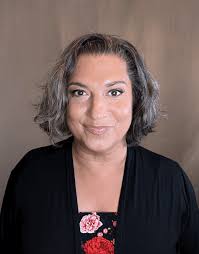
Aoifinn Devitt: I’m Aoifinn Devitt, and welcome to this 50 Faces Focus Series in which we are celebrating LGBTQ+ professionals in a special series for Pride Month 2025. I’m joined today by Taryn Talley, who is a marketer with over 20 years of experience who is currently head of marketing at an agency, Position 2. She’s had numerous marketing roles across the digital and traditional spectrums. Welcome, Taryn. Thanks for joining me today.
Taryn Talley: Totally glad to be here.
Aoifinn Devitt: Well, let’s start by talking a bit about your background. Can you start with where you grew up, what you studied, and what your early interests were?
Taryn Talley: Yeah, so I’m a kind of a lifelong East Coaster until I wasn’t. So born and raised around the Philly metro area. For me, my early interest led into my college education and then my early career. So I always loved art. So I was one of those really quiet students that I just like to build my worlds and I would use clay or drawings. And I remember my mom always saying that I was pretty advanced for a third grader. So, you know, I always had art in the background. And that kind of led me to, you know, go and kind of continue through that all the way to graduating through high school. And then I went to art school at Kutztown University. So just getting a degree in design. And that’s really what got me started in my career that I was able to transition over to marketing a few years later.
Aoifinn Devitt: We’ve had a lot of marketing experts on the Pride series in particular, and I love to ask about, you know, core beliefs or values. Because so much of marketing is storytelling. I know we’ve had a lot of words of wisdom scattered around about what you should and should not do. What would you say are some of your core values when it comes to marketing?
Taryn Talley: For me, I believe— and I actually said this in 2019 at a conference, I was on a panel and they were asking me what the future of marketing was, right? So I mean, it’s really easy to say, well, it’s personalization at scale, or blah blah blah, right? Some other thing, or, you know, a new platform that’s coming out. But For me, it was intentional inclusion, right? So, and this maybe is flavored by being a trans woman, but some of the most authentic marketing I’ve seen has been inclusive of historically marginalized communities, right? So I remember early on in my design career, there was always that kind of, it was, I hate to use this word, but it was like the diversity mindset. I need one person like this, I need one person like this, I need one person like this. That’s not intentional. Right? Like what we’re doing right now is intentional. It’s promoting the stories, right? And the journey of people that are in a historically marginalized community. So like that kind of authenticity, intentional inclusion is really what I think marketers should be focusing on and with a strong leaning on authenticity.
Aoifinn Devitt: And when you look at what succeeds and what doesn’t, and I’m thinking of, you know, Super Bowl ads and other campaigns, And it’s sometimes hard to pinpoint why something succeeds and why something flops. Have you been able to see any common trends or strands through some of the successful marketing campaigns?
Taryn Talley: Well, I mean, I think some of the campaigns that really resonate with me have been some of the recent, like, PrEP medications and HIV medications, right? So I don’t know how familiar the audience would be, but I forget what the drug’s name is, but I know the commercials. And I remember seeing the first commercial and trans woman of color, Latina, just enjoying life, going out with girlfriends and enjoying. And the series of commercials went through there to when she got married, right? And I felt like a marketing message like that of intentional inclusion was so beautiful. Like you have success, like ultimately success in marketing is eyeballs and revenue. I mean, it’s as simple as that, right? If you’re not making money, what are you doing? And if people aren’t looking at it, what are you doing? For me, some of the successful marketing touches me here, right? So I can’t tell you the name of the drug, but I can tell you the experience and the journey I watched of this woman in the commercial and how it resonated with me. And there’s a similar one in India for Starbucks also, you know, it resonated as well. Do these things get eyeballs? For sure. Do they generate revenue? I don’t know, but I know that I was touched by the messaging, right? The authenticity of what they’re doing.
Aoifinn Devitt: And just the last topic on that, the digital world. So marketing in the digital world, I guess more delivered by, you know, cell phone apps, Facebook, other digital platforms. Is anything different there in terms of the ability to tailor? Maybe does AI help to, you know, make multiple versions, say, of a different message?
Taryn Talley: I mean, a lot of marketers are integrating AI. I mean, I’ve integrated AI into my workflows, right? It’s how I write. So I do a lot of content marketing too, and a lot of research on different techniques and, you know, whatever I need, you know, I’ll go— I’m a Gemini user, so I just pop over to Gemini and get my answers. I think for me, social media is very positive and very strong, you know, and I feel like that’s a good platform that you can really kind of define your personal brand. Your marketing brand. It’s where people engage. It’s where you inspire employees to take action on your content and promote it. So I feel like digital platforms still have a really— it has a place, right? And it’s only going to continue to grow, especially with video. Like LinkedIn, for example, they’re prioritizing a 9 by 16 format video. So it’s in the app. There’s a video button. So if you’re not utilizing video for your personal brand or for your brand, you know, you’re missing out on a key function. Right. And I think that was kind of inspired by— I’m going to say it like this because I always get chuckles when I do the tickety-tock. So like you get that video marketing and it’s, it’s a way to showcase you. Right. And sometimes it’s hard to get messages through just on an image and a print message. So it’s like doing video kind of really creates this world that you can use to get your message across.
Aoifinn Devitt: Let’s talk then about your personal experience in the LGBTQ+ community. So you spoke about being a trans woman and how maybe did that experience affect your career or how did you come out and at what stage of your career?
Taryn Talley: Yeah, so I think I had probably about, I wanna say it was maybe 20, so I’ve been doing my career of creative and marketing for about 29 years. So I came out at 50, so I was really late in the game. So like, I was like one of those people, like, towards, you know, when you finally work through all the things you have to work through and you get there. I think for me, it hasn’t really had a negative impact. I mean, there have been challenges on the job and some hurdles that I’ve had to do that I didn’t have to do before. So as somebody who’s mixed, you know, kind of European, African, and Indigenous, I always had some level of weird kind of racism that I had to deal with. But I also have the privilege of maleness because I was assigned male at birth. I think being a brown trans woman, there were some times that I felt like either I was a diversity hire to kind of get some press, or I was somebody who just was disrespected or not respected enough for who I am. So I have had some challenges in the career where I dealt with some kind of low-key racism to high-key racism. Now I deal with that kind of little bit of misogyny and stuff like that. So it’s been a challenge and a hurdle. But I think for me to overcome that, what’s really important is the joy I feel. So living in my authenticity and being my authentic self every damn day kind of gets me through those hurdles, right? Because beforehand, before I came out, before I transitioned, I had everything that most people would want in their lives and none of it was satisfying, right? Because I wasn’t my authentic self. I felt like every day I had to strap on the mask. Right? That wasn’t me. You know, and of course dealing with the stuff I just mentioned, you know, and coming out and being happy and being joyful. And some people call it trans joy, but it’s just regular old joy. And that gets you through so much for me.
Aoifinn Devitt: I’d love to then ask about the process of coming out at 50 in work. How did that process go? And I suppose reactions to that. And one thing that’s come up when I’ve interviewed other trans women, been fascinating, is just how they’ve been the same person doing the same job essentially. And how they started to appreciate the female experience when they were executing their same skillset as a woman because they felt that they now understood why they were maybe not getting the respect or the airtime or some, maybe the other type of aspect that they had got previously. Have you experienced something like that?
Taryn Talley: Yes, for me it’s like coming out. So I didn’t announce it to my employer in 2018 when I came out. I came out out in public, right? I was out on social media in 2013. So I kind of built up a large presence on Twitter pre-Musk. So I started with electrolysis and hormones, and I was at a tech company in San Jose, and I had team members of mine that reported to me commenting on my body changes, right? And prior to coming out and moving to the West Coast and transitioning, sometimes that mask I had to wear would slide down, and I would show pieces of my authentic self and just get looks like people like, You know, like, that’s not what I would expect. But, you know, for me, like, coming out and doing it, I kind of felt like I need to get another job. Like, I just didn’t feel like it was somewhere— like, when they’re saying stuff like that or kind of derogatory statements, not knowing the background of somebody, it just felt really kind of hurtful. So I moved on to another opportunity. That’s where I kind of felt like maybe a hire to fix a problem which they had a couple of years before. It was relatively visible on social media. And then just running into some straight up trans misogyny at another company. And the current company I’m at has been incredibly kind and inclusive. And I remember we were talking about building this event up and CEO wanted to invite this one person. And I know from a person who knew them that they were incredibly transphobic. I offered this to them. I said, listen, you can kind of disown me and just be like, I’m just event staff, right? And not acknowledge me. And invite her, or, you know, you can kind of not invite her. It’s up to you. I said, I don’t want to keep business, so whatever you want to do, I’ll just deal with, right? And he turned around to me, he’s like, oh, hell no. Yeah, she’s off. She’s not coming. Like, I’m not going to have anybody disparage anyone on my team. So he’s like, thanks for the offer, but yeah, we’re going to stand by you. And that to me was like being seen and just recognized and somebody prioritizing me. That, after some of the stuff I’ve had over the years prior, was just very validating.
Aoifinn Devitt: I can imagine that’s a wonderful story. That is the kind of gesture that could be the gift that keeps giving in that you can draw on it again and again, maybe at low points when you see you don’t get the support perhaps that you would need. How about the kind of the mindset? I mean, we’re now in the USA, not perhaps the most welcoming mindset out there. What mindset do you have to have? And maybe, ’cause I think there will be people listening who are going through this at a younger age, maybe without the confidence in your career that you had at 50, without the self-assuredness, without the awareness of their own authenticity. Any kind of tips in terms of mindset for that resilience, that kind of self-presence?
Taryn Talley: Yeah, validity comes from within, okay? So like you’ll come out to family members who do not accept you. They see you as this person that they’ve known all their life. They’re unwilling to change. Some are just outwardly hateful, right? Don’t pull your validity from them. Pull your validity from yourself, that you are here, you are who you are, your feelings are what they are, right? And they are valid. And just, I want you to hold that close to your heart, right? Because it’s important to know that as much as the outside world influences how we feel, feel and how we think. I know that, like, for me, I’m valid. And it doesn’t matter if I’m traveling to Utah or Texas or wherever, you know, and they hate me. I mean, I’ve actually had somebody push me in the back getting on an airplane, like, push me into a seat like I was nothing. And I’m not small. Like, I’m 6’1″ and somebody came up and shoved me. I’ve been in experiences like that in LA. It’s like, you’ll deal with that stuff, right? But being your authentic self is so much more powerful than the hate that they give you. And your validity comes from within. Like, never forget that, right? So even when I got shoved in the back, intentionally abused, right, by people for just being me and occupying a space, not even them saying a word to me, right? I can get past that because I know what I have cannot be destroyed or taken away from me. And hold that close to your heart.
Aoifinn Devitt: That is so powerful. And then just in terms of gestures that make a difference in the workplace, so we spoke about your boss standing up for you, protecting his team against a force from the outside that would make his team feel excluded. How about other gestures in the workplace? And I’m thinking of, you know, whether it’s unisex bathrooms or having a rainbow lanyard or a trans flag on the lanyard. I mean, are these gestures some people may think of as being insignificant, but often they subconsciously make a difference. Anything that you’ve seen that is particularly good?
Taryn Talley: Yeah, I mean, to be honest, when I see somebody with their pronouns, like I have in my name, next to my name, that to me is like a key sign, like you understand and you hold these identities as valid in your mindset and that you’re, you know, most likely an ally, right? Seeing a lanyard or something like that. Yeah, that could be too, right? Or seeing a sign like, I just posted on Instagram, I stopped by some of my friends’ shop in Campbell and she has a sign on the back of her store, like, right? That’s like, we respect preferred pronouns and everybody in the store. And she’s had guys come in and challenge that. And she said to me just yesterday, she’s like, listen, I know that maybe one day somebody’s going to come in here and hurt me because I have that sign. But she’s like, I’m damned to hell if I’m going to take that down because what I believe is stronger than their hate. And it’s like the signs like that that really help point the way for us, right? And for me, unisex bathrooms are a whole different thing. I have a healthy fear of cisgender white women in bathrooms because even in this building, so I work in a mixed-tenant building and I’ve been in the bathroom and I’ve had some women just do some really mean things to me. That’s the outliers of maybe 5% of them. 95% of them are like, oh my God, what is that lipstick you have on? I love your shoes. I can’t believe you wear these shoes so well. I love your outfit. Or how are you doing in your job and what’s going on? If they don’t see me for a couple of weeks, they’re like, oh my God, I was worried about you. There’s just that outpouring. I get 5% of people that maybe are not accepting and kind. I get 95% of people who are just reaffirming and caring and hugging me in the bathroom. Supporting me. And those are the times that get you through.
Aoifinn Devitt: And I’d love to talk about your own unique origin story because you shared a little bit of that with me in the prep call, and I think it was extremely powerful and grounding and gave a kind of a spiritual security, I thought, that to you perhaps. And also I could feel it when it was conveyed to me, the story around your Native American heritage and some of the leaders in that community that you’ve drawn on. For strength.
Taryn Talley: Yeah. So mixed Shipponee. Shipponee’s based in North Carolina. It’s a tribe. I was able to join. So about, I think it was 2008, 2009, getting therapy, unpacking a lot, right? And just really working towards that authenticity. So about 2010, 2009, 2010, I never thought I’d have an opportunity to transition even later in life, right? I just thought that door was shut to me. I’m just going to have to wear this mask for the rest of my life. So I had lost my job during the Great Recession, and I immediately started with an Army induction. So like joining the US Army, and I wanted a combat role. And of course, there were all the stipulations and stuff. You got to have this kind of score and this and that. I achieved everything, right? So then I had met during that time I was going through, I had met a Cherokee Indian, Little Bear. So John Little Bear, I was helping him on a fundraiser raising money for a medical procedure in which he was dying of a liver disorder. And afterward I asked him, you know, so he got better, he healed. I asked him, I would love to, because I never was raised with any tribal identity. So I asked him if he could maybe recommend a tribal community in the area that I could kind of go to and just learn the ways and just, you know, be kind of communing with the community. And just learning from them. And he gave me two options. He said one is pro-Two Spirit, led by a Two Spirit, which is a blanket term about 35 years old that covers multiple different variations of sexuality and gender. So one was led by Two Spirits, but the other was not pro-Two Spirit. So it was more of a kind of a conservative viewpoint, or what I like to call as an anti-traditionalist Native viewpoint. So colonized to kind of despise something that was accepted in our culture for centuries. So fast forward a little bit. So I joined the Two-Spirit community and Little Bear had told me he wanted to spirit walk on my army journey. So I said, okay. So he spirit walked and basically that’s active dreaming and you’re going through a path and you’re, you’re guiding your dreams and understanding what’s ahead of you. And he came back from that and he was like, yeah, I forbid you from serving in the Army. No more of our people for a white man’s oil. You’re going to have to move forward, pass up. So I didn’t really like it. Like, I was not happy with that. But in the community, I already started learning to obey our elders, right? And to understand what they’re teaching us and what they’re saying and take that to heart, right? Because there is purpose and there is wisdom behind that from their own experiences. So I asked him, so I countered and I was like, can you put me out on a vision quest? And that is simply put in English, a vision quest, right? So we chose like November, I think it was 2011, and I went through it. It was 3 days in the woods, just blankets, a drum, the pipe, water, no food. It was November, so it was about 25 degrees Fahrenheit. And I sat out there with blankets just praying and meditating and You know, like every day chewing the bear root, which suppresses hunger and everything. So I was like, just on that third day, I was getting weak. And I started on a sweat, did the humblation, and then they pulled me with grass ropes and like kind of, cause I’m still in the spirit world, right? And when they come get me, I do that half sweat lodge afterward. And in it, they were asking me what did I learn from the spirit world? And, you know, one of them was my spirit animal, which is a red-tailed hawk circling me above when I was out there in the woods. And then I learned to learn the ways of my people before I learned the ways of others. And my third point was, if you’re going to live this life, I have to live it with the authenticity that is within me, right? And I have to bring that out. And then 2011, like November 2011, is like when I knew that I have to take this path. And that’s kind of what set me on the path. So sometimes I’ve done this on previous posts from 2020 and 2021, but Literally, I tell them my Native culture and identity saved my life and put me on the path that I am today.
Aoifinn Devitt: Such a great story, just in terms of that ancient wisdom that is so grounding. And my next question is, they’re usually around key people who have influenced you in your career or life, and I’m guessing that spiritual leader was one of them. Was there anyone else that you could mention that had a particular impact on you?
Taryn Talley: Yeah, I’d say my brothers, you know, Little Bear and Jimmy, right? Just teaching me the ways and just allowing me to be part of that community and learning. I mean, I’ve had amazing leaders in my career that just really supported me as a marketer, as a designer, and kind of formed me as a leader, right? And how to lead with effectiveness and efficiency. And of course, also what I’ve learned in those Inipis, the sweat lodges with Jimmy, about what a leader truly is, right? And I think I got better as a leader after hitting that in NEPI and just being able to put into practice what he said, right? And what I’ll share with y’all is he said with our people, right? So he was Lakota, Little Bear is Cherokee, I’m Shabboni. So it’s a mixed tribal community and he was teaching the Lakota way, but he said our people don’t hang signs out, right? That are medicine man, medicine woman, healer, leader, tribal chief, like, The people know who the leaders are. And it’s not through words or marketing. It’s through the actions of those people. They know who heals the community. They know who leads the community. They know who has the best interest, right? And those are the people that they turn to in those times that they need it. Understanding that helped me be a better leader, right? Because it wasn’t about the praise or the money. It was about taking care of the people. And of course, Jimmy is also a Redtail Hawk spirit. And he said to me, he’s like, do you know what that means? And I was like, I don’t. So tell me. And he goes, we are the far striker. We are the protector and the eye of the people, right? We have to keep them from harm and to keep an eye on them and watch them. And integrating that into that leadership definitely made me a better leader.
Aoifinn Devitt: Words to live by. Very powerful words. My last question is around any advice you might have or any creed or motto, whether from that red-tailed hawk elsewhere, anything you can leave us with in terms of a gem of wisdom?
Taryn Talley: There’s a lot of little things that I have in my mind, right, that get me through. From Lattice, from just from Voltaire, there’s all these little sayings that we have, right, that we pick up and it gets us through those days. But I’d say for me, it’s like, if you are going to live this life, live it authentically, right? You will find your people. You will connect with your people. You will get by, and the road isn’t easy. It is really, really difficult at times. But know that you have community, you have elders, you have people looking out for you, right? There are people that are standing for the community and for you. You’re not alone.
Aoifinn Devitt: Well, what a beautiful place to leave it. Taryn, you are a force. You are a leader in every way, and you provide, I think, the message that is absolutely the right message at the right time. And I think that I know there will be many listeners who come back and listen to this message over and over again, because seeing someone like yourself leading with authenticity, and I think it’s no surprise that we talked earlier about your marketing skills, because marketing’s about communication and connection. And this podcast has provided a direct connection to that source of strength that I think you’re sharing now with the listeners. So thank you so much for coming here and sharing your insights with us.
Taryn Talley: Absolutely. And thank you for a platform to share the journey and to just share the story with others.
Aoifinn Devitt: I’m Aoifinn Devitt. Thank you for listening to our 50 Faces Focus Series. If you liked what you heard and would like to tune in to hear more inspiring professionals and their stories, please subscribe on Apple Podcasts or wherever you get your podcasts. This podcast is for informational purposes only and should not be construed as investment advice, and all views are personal and should not be attributed to the organization and affiliations of the host or any guest.
Aoifinn Devitt: This Pride series in 2025 is kindly supported by Latimer Partners, LLC.
Taryn Talley: Validity comes from within. Okay, so like you’ll come out to family members who do not accept you, right? They see you as this person that they’ve known all their life. They’re unwilling to change. Some are just outwardly hateful, right? Don’t pull your validity from them. Pull your validity from yourself that you are here, you are who you are, your feelings are what they are. Right? And they are valid. And just, I want you to hold that close to your heart, right? Because it’s important to know that as much as the outside world influences how we feel and how we think, I know that, like, for me, I’m valid. And it doesn’t matter if I’m traveling to Utah or Texas or wherever, you know, and they hate me. I mean, I’ve actually had somebody push me in the back getting on an airplane, like push me into a seat. Like I was nothing and I’m not small. Like I’m 6’1″ and somebody came up and shoved me. I’ve been in experiences like that in LA. It’s like you’ll deal with that stuff, right? But being your authentic self is so much more powerful than the hate that they give you. And your validity comes from within. Like, never forget that.
Aoifinn Devitt: I’m Aoifinn Devitt, and welcome to this 50 Faces Focus Series in which we are celebrating LGBTQ+ professionals in a special series for Pride Month 2025. I’m joined today by Taryn Talley, who is a marketer with over 20 years of experience who is currently head of marketing at an agency, Position 2. She’s had numerous marketing roles across the digital and traditional spectrums. Welcome, Taryn. Thanks for joining me today.
Taryn Talley: Totally glad to be here.
Aoifinn Devitt: Well, let’s start by talking a bit about your background. Can you start with where you grew up, what you studied, and what your early interests were?
Taryn Talley: Yeah, so I’m a kind of a lifelong East Coaster until I wasn’t. So born and raised around the Philly metro area. For me, my early interest led into my college education and then my early career. So I always loved art. So I was one of those really quiet students that I just like to build my worlds and I would use clay or drawings. And I remember my mom always saying that I was pretty advanced for a third grader. So, you know, I always had art in the background. And that kind of led me to, you know, go and kind of continue through that all the way to graduating through high school. And then I went to art school at Kutztown University. So just getting a degree in design. And that’s really what got me started in my career that I was able to transition over to marketing a few years later.
Aoifinn Devitt: We’ve had a lot of marketing experts on the Pride series in particular, and I love to ask about, you know, core beliefs or values. Because so much of marketing is storytelling. I know we’ve had a lot of words of wisdom scattered around about what you should and should not do. What would you say are some of your core values when it comes to marketing?
Taryn Talley: For me, I believe— and I actually said this in 2019 at a conference, I was on a panel and they were asking me what the future of marketing was, right? So I mean, it’s really easy to say, well, it’s personalization at scale, or blah blah blah, right? Some other thing, or, you know, a new platform that’s coming out. But For me, it was intentional inclusion, right? So, and this maybe is flavored by being a trans woman, but some of the most authentic marketing I’ve seen has been inclusive of historically marginalized communities, right? So I remember early on in my design career, there was always that kind of, it was, I hate to use this word, but it was like the diversity mindset. I need one person like this, I need one person like this, I need one person like this. That’s not intentional. Right? Like what we’re doing right now is intentional. It’s promoting the stories, right? And the journey of people that are in a historically marginalized community. So like that kind of authenticity, intentional inclusion is really what I think marketers should be focusing on and with a strong leaning on authenticity.
Aoifinn Devitt: And when you look at what succeeds and what doesn’t, and I’m thinking of, you know, Super Bowl ads and other campaigns, And it’s sometimes hard to pinpoint why something succeeds and why something flops. Have you been able to see any common trends or strands through some of the successful marketing campaigns?
Taryn Talley: Well, I mean, I think some of the campaigns that really resonate with me have been some of the recent, like, PrEP medications and HIV medications, right? So I don’t know how familiar the audience would be, but I forget what the drug’s name is, but I know the commercials. And I remember seeing the first commercial and trans woman of color, Latina, just enjoying life, going out with girlfriends and enjoying. And the series of commercials went through there to when she got married, right? And I felt like a marketing message like that of intentional inclusion was so beautiful. Like you have success, like ultimately success in marketing is eyeballs and revenue. I mean, it’s as simple as that, right? If you’re not making money, what are you doing? And if people aren’t looking at it, what are you doing? For me, some of the successful marketing touches me here, right? So I can’t tell you the name of the drug, but I can tell you the experience and the journey I watched of this woman in the commercial and how it resonated with me. And there’s a similar one in India for Starbucks also, you know, it resonated as well. Do these things get eyeballs? For sure. Do they generate revenue? I don’t know, but I know that I was touched by the messaging, right? The authenticity of what they’re doing.
Aoifinn Devitt: And just the last topic on that, the digital world. So marketing in the digital world, I guess more delivered by, you know, cell phone apps, Facebook, other digital platforms. Is anything different there in terms of the ability to tailor? Maybe does AI help to, you know, make multiple versions, say, of a different message?
Taryn Talley: I mean, a lot of marketers are integrating AI. I mean, I’ve integrated AI into my workflows, right? It’s how I write. So I do a lot of content marketing too, and a lot of research on different techniques and, you know, whatever I need, you know, I’ll go— I’m a Gemini user, so I just pop over to Gemini and get my answers. I think for me, social media is very positive and very strong, you know, and I feel like that’s a good platform that you can really kind of define your personal brand. Your marketing brand. It’s where people engage. It’s where you inspire employees to take action on your content and promote it. So I feel like digital platforms still have a really— it has a place, right? And it’s only going to continue to grow, especially with video. Like LinkedIn, for example, they’re prioritizing a 9 by 16 format video. So it’s in the app. There’s a video button. So if you’re not utilizing video for your personal brand or for your brand, you know, you’re missing out on a key function. Right. And I think that was kind of inspired by— I’m going to say it like this because I always get chuckles when I do the tickety-tock. So like you get that video marketing and it’s, it’s a way to showcase you. Right. And sometimes it’s hard to get messages through just on an image and a print message. So it’s like doing video kind of really creates this world that you can use to get your message across.
Aoifinn Devitt: Let’s talk then about your personal experience in the LGBTQ+ community. So you spoke about being a trans woman and how maybe did that experience affect your career or how did you come out and at what stage of your career?
Taryn Talley: Yeah, so I think I had probably about, I wanna say it was maybe 20, so I’ve been doing my career of creative and marketing for about 29 years. So I came out at 50, so I was really late in the game. So like, I was like one of those people, like, towards, you know, when you finally work through all the things you have to work through and you get there. I think for me, it hasn’t really had a negative impact. I mean, there have been challenges on the job and some hurdles that I’ve had to do that I didn’t have to do before. So as somebody who’s mixed, you know, kind of European, African, and Indigenous, I always had some level of weird kind of racism that I had to deal with. But I also have the privilege of maleness because I was assigned male at birth. I think being a brown trans woman, there were some times that I felt like either I was a diversity hire to kind of get some press, or I was somebody who just was disrespected or not respected enough for who I am. So I have had some challenges in the career where I dealt with some kind of low-key racism to high-key racism. Now I deal with that kind of little bit of misogyny and stuff like that. So it’s been a challenge and a hurdle. But I think for me to overcome that, what’s really important is the joy I feel. So living in my authenticity and being my authentic self every damn day kind of gets me through those hurdles, right? Because beforehand, before I came out, before I transitioned, I had everything that most people would want in their lives and none of it was satisfying, right? Because I wasn’t my authentic self. I felt like every day I had to strap on the mask. Right? That wasn’t me. You know, and of course dealing with the stuff I just mentioned, you know, and coming out and being happy and being joyful. And some people call it trans joy, but it’s just regular old joy. And that gets you through so much for me.
Aoifinn Devitt: I’d love to then ask about the process of coming out at 50 in work. How did that process go? And I suppose reactions to that. And one thing that’s come up when I’ve interviewed other trans women, been fascinating, is just how they’ve been the same person doing the same job essentially. And how they started to appreciate the female experience when they were executing their same skillset as a woman because they felt that they now understood why they were maybe not getting the respect or the airtime or some, maybe the other type of aspect that they had got previously. Have you experienced something like that?
Taryn Talley: Yes, for me it’s like coming out. So I didn’t announce it to my employer in 2018 when I came out. I came out out in public, right? I was out on social media in 2013. So I kind of built up a large presence on Twitter pre-Musk. So I started with electrolysis and hormones, and I was at a tech company in San Jose, and I had team members of mine that reported to me commenting on my body changes, right? And prior to coming out and moving to the West Coast and transitioning, sometimes that mask I had to wear would slide down, and I would show pieces of my authentic self and just get looks like people like, You know, like, that’s not what I would expect. But, you know, for me, like, coming out and doing it, I kind of felt like I need to get another job. Like, I just didn’t feel like it was somewhere— like, when they’re saying stuff like that or kind of derogatory statements, not knowing the background of somebody, it just felt really kind of hurtful. So I moved on to another opportunity. That’s where I kind of felt like maybe a hire to fix a problem which they had a couple of years before. It was relatively visible on social media. And then just running into some straight up trans misogyny at another company. And the current company I’m at has been incredibly kind and inclusive. And I remember we were talking about building this event up and CEO wanted to invite this one person. And I know from a person who knew them that they were incredibly transphobic. I offered this to them. I said, listen, you can kind of disown me and just be like, I’m just event staff, right? And not acknowledge me. And invite her, or, you know, you can kind of not invite her. It’s up to you. I said, I don’t want to keep business, so whatever you want to do, I’ll just deal with, right? And he turned around to me, he’s like, oh, hell no. Yeah, she’s off. She’s not coming. Like, I’m not going to have anybody disparage anyone on my team. So he’s like, thanks for the offer, but yeah, we’re going to stand by you. And that to me was like being seen and just recognized and somebody prioritizing me. That, after some of the stuff I’ve had over the years prior, was just very validating.
Aoifinn Devitt: I can imagine that’s a wonderful story. That is the kind of gesture that could be the gift that keeps giving in that you can draw on it again and again, maybe at low points when you see you don’t get the support perhaps that you would need. How about the kind of the mindset? I mean, we’re now in the USA, not perhaps the most welcoming mindset out there. What mindset do you have to have? And maybe, ’cause I think there will be people listening who are going through this at a younger age, maybe without the confidence in your career that you had at 50, without the self-assuredness, without the awareness of their own authenticity. Any kind of tips in terms of mindset for that resilience, that kind of self-presence?
Taryn Talley: Yeah, validity comes from within, okay? So like you’ll come out to family members who do not accept you. They see you as this person that they’ve known all their life. They’re unwilling to change. Some are just outwardly hateful, right? Don’t pull your validity from them. Pull your validity from yourself, that you are here, you are who you are, your feelings are what they are, right? And they are valid. And just, I want you to hold that close to your heart, right? Because it’s important to know that as much as the outside world influences how we feel, feel and how we think. I know that, like, for me, I’m valid. And it doesn’t matter if I’m traveling to Utah or Texas or wherever, you know, and they hate me. I mean, I’ve actually had somebody push me in the back getting on an airplane, like, push me into a seat like I was nothing. And I’m not small. Like, I’m 6’1″ and somebody came up and shoved me. I’ve been in experiences like that in LA. It’s like, you’ll deal with that stuff, right? But being your authentic self is so much more powerful than the hate that they give you. And your validity comes from within. Like, never forget that, right? So even when I got shoved in the back, intentionally abused, right, by people for just being me and occupying a space, not even them saying a word to me, right? I can get past that because I know what I have cannot be destroyed or taken away from me. And hold that close to your heart.
Aoifinn Devitt: That is so powerful. And then just in terms of gestures that make a difference in the workplace, so we spoke about your boss standing up for you, protecting his team against a force from the outside that would make his team feel excluded. How about other gestures in the workplace? And I’m thinking of, you know, whether it’s unisex bathrooms or having a rainbow lanyard or a trans flag on the lanyard. I mean, are these gestures some people may think of as being insignificant, but often they subconsciously make a difference. Anything that you’ve seen that is particularly good?
Taryn Talley: Yeah, I mean, to be honest, when I see somebody with their pronouns, like I have in my name, next to my name, that to me is like a key sign, like you understand and you hold these identities as valid in your mindset and that you’re, you know, most likely an ally, right? Seeing a lanyard or something like that. Yeah, that could be too, right? Or seeing a sign like, I just posted on Instagram, I stopped by some of my friends’ shop in Campbell and she has a sign on the back of her store, like, right? That’s like, we respect preferred pronouns and everybody in the store. And she’s had guys come in and challenge that. And she said to me just yesterday, she’s like, listen, I know that maybe one day somebody’s going to come in here and hurt me because I have that sign. But she’s like, I’m damned to hell if I’m going to take that down because what I believe is stronger than their hate. And it’s like the signs like that that really help point the way for us, right? And for me, unisex bathrooms are a whole different thing. I have a healthy fear of cisgender white women in bathrooms because even in this building, so I work in a mixed-tenant building and I’ve been in the bathroom and I’ve had some women just do some really mean things to me. That’s the outliers of maybe 5% of them. 95% of them are like, oh my God, what is that lipstick you have on? I love your shoes. I can’t believe you wear these shoes so well. I love your outfit. Or how are you doing in your job and what’s going on? If they don’t see me for a couple of weeks, they’re like, oh my God, I was worried about you. There’s just that outpouring. I get 5% of people that maybe are not accepting and kind. I get 95% of people who are just reaffirming and caring and hugging me in the bathroom. Supporting me. And those are the times that get you through.
Aoifinn Devitt: And I’d love to talk about your own unique origin story because you shared a little bit of that with me in the prep call, and I think it was extremely powerful and grounding and gave a kind of a spiritual security, I thought, that to you perhaps. And also I could feel it when it was conveyed to me, the story around your Native American heritage and some of the leaders in that community that you’ve drawn on. For strength.
Taryn Talley: Yeah. So mixed Shipponee. Shipponee’s based in North Carolina. It’s a tribe. I was able to join. So about, I think it was 2008, 2009, getting therapy, unpacking a lot, right? And just really working towards that authenticity. So about 2010, 2009, 2010, I never thought I’d have an opportunity to transition even later in life, right? I just thought that door was shut to me. I’m just going to have to wear this mask for the rest of my life. So I had lost my job during the Great Recession, and I immediately started with an Army induction. So like joining the US Army, and I wanted a combat role. And of course, there were all the stipulations and stuff. You got to have this kind of score and this and that. I achieved everything, right? So then I had met during that time I was going through, I had met a Cherokee Indian, Little Bear. So John Little Bear, I was helping him on a fundraiser raising money for a medical procedure in which he was dying of a liver disorder. And afterward I asked him, you know, so he got better, he healed. I asked him, I would love to, because I never was raised with any tribal identity. So I asked him if he could maybe recommend a tribal community in the area that I could kind of go to and just learn the ways and just, you know, be kind of communing with the community. And just learning from them. And he gave me two options. He said one is pro-Two Spirit, led by a Two Spirit, which is a blanket term about 35 years old that covers multiple different variations of sexuality and gender. So one was led by Two Spirits, but the other was not pro-Two Spirit. So it was more of a kind of a conservative viewpoint, or what I like to call as an anti-traditionalist Native viewpoint. So colonized to kind of despise something that was accepted in our culture for centuries. So fast forward a little bit. So I joined the Two-Spirit community and Little Bear had told me he wanted to spirit walk on my army journey. So I said, okay. So he spirit walked and basically that’s active dreaming and you’re going through a path and you’re, you’re guiding your dreams and understanding what’s ahead of you. And he came back from that and he was like, yeah, I forbid you from serving in the Army. No more of our people for a white man’s oil. You’re going to have to move forward, pass up. So I didn’t really like it. Like, I was not happy with that. But in the community, I already started learning to obey our elders, right? And to understand what they’re teaching us and what they’re saying and take that to heart, right? Because there is purpose and there is wisdom behind that from their own experiences. So I asked him, so I countered and I was like, can you put me out on a vision quest? And that is simply put in English, a vision quest, right? So we chose like November, I think it was 2011, and I went through it. It was 3 days in the woods, just blankets, a drum, the pipe, water, no food. It was November, so it was about 25 degrees Fahrenheit. And I sat out there with blankets just praying and meditating and You know, like every day chewing the bear root, which suppresses hunger and everything. So I was like, just on that third day, I was getting weak. And I started on a sweat, did the humblation, and then they pulled me with grass ropes and like kind of, cause I’m still in the spirit world, right? And when they come get me, I do that half sweat lodge afterward. And in it, they were asking me what did I learn from the spirit world? And, you know, one of them was my spirit animal, which is a red-tailed hawk circling me above when I was out there in the woods. And then I learned to learn the ways of my people before I learned the ways of others. And my third point was, if you’re going to live this life, I have to live it with the authenticity that is within me, right? And I have to bring that out. And then 2011, like November 2011, is like when I knew that I have to take this path. And that’s kind of what set me on the path. So sometimes I’ve done this on previous posts from 2020 and 2021, but Literally, I tell them my Native culture and identity saved my life and put me on the path that I am today.
Aoifinn Devitt: Such a great story, just in terms of that ancient wisdom that is so grounding. And my next question is, they’re usually around key people who have influenced you in your career or life, and I’m guessing that spiritual leader was one of them. Was there anyone else that you could mention that had a particular impact on you?
Taryn Talley: Yeah, I’d say my brothers, you know, Little Bear and Jimmy, right? Just teaching me the ways and just allowing me to be part of that community and learning. I mean, I’ve had amazing leaders in my career that just really supported me as a marketer, as a designer, and kind of formed me as a leader, right? And how to lead with effectiveness and efficiency. And of course, also what I’ve learned in those Inipis, the sweat lodges with Jimmy, about what a leader truly is, right? And I think I got better as a leader after hitting that in NEPI and just being able to put into practice what he said, right? And what I’ll share with y’all is he said with our people, right? So he was Lakota, Little Bear is Cherokee, I’m Shabboni. So it’s a mixed tribal community and he was teaching the Lakota way, but he said our people don’t hang signs out, right? That are medicine man, medicine woman, healer, leader, tribal chief, like, The people know who the leaders are. And it’s not through words or marketing. It’s through the actions of those people. They know who heals the community. They know who leads the community. They know who has the best interest, right? And those are the people that they turn to in those times that they need it. Understanding that helped me be a better leader, right? Because it wasn’t about the praise or the money. It was about taking care of the people. And of course, Jimmy is also a Redtail Hawk spirit. And he said to me, he’s like, do you know what that means? And I was like, I don’t. So tell me. And he goes, we are the far striker. We are the protector and the eye of the people, right? We have to keep them from harm and to keep an eye on them and watch them. And integrating that into that leadership definitely made me a better leader.
Aoifinn Devitt: Words to live by. Very powerful words. My last question is around any advice you might have or any creed or motto, whether from that red-tailed hawk elsewhere, anything you can leave us with in terms of a gem of wisdom?
Taryn Talley: There’s a lot of little things that I have in my mind, right, that get me through. From Lattice, from just from Voltaire, there’s all these little sayings that we have, right, that we pick up and it gets us through those days. But I’d say for me, it’s like, if you are going to live this life, live it authentically, right? You will find your people. You will connect with your people. You will get by, and the road isn’t easy. It is really, really difficult at times. But know that you have community, you have elders, you have people looking out for you, right? There are people that are standing for the community and for you. You’re not alone.
Aoifinn Devitt: Well, what a beautiful place to leave it. Taryn, you are a force. You are a leader in every way, and you provide, I think, the message that is absolutely the right message at the right time. And I think that I know there will be many listeners who come back and listen to this message over and over again, because seeing someone like yourself leading with authenticity, and I think it’s no surprise that we talked earlier about your marketing skills, because marketing’s about communication and connection. And this podcast has provided a direct connection to that source of strength that I think you’re sharing now with the listeners. So thank you so much for coming here and sharing your insights with us.
Taryn Talley: Absolutely. And thank you for a platform to share the journey and to just share the story with others.
Aoifinn Devitt: I’m Aoifinn Devitt. Thank you for listening to our 50 Faces Focus Series. If you liked what you heard and would like to tune in to hear more inspiring professionals and their stories, please subscribe on Apple Podcasts or wherever you get your podcasts. This podcast is for informational purposes only and should not be construed as investment advice, and all views are personal and should not be attributed to the organization and affiliations of the host or any guest.