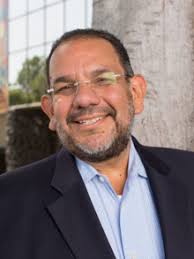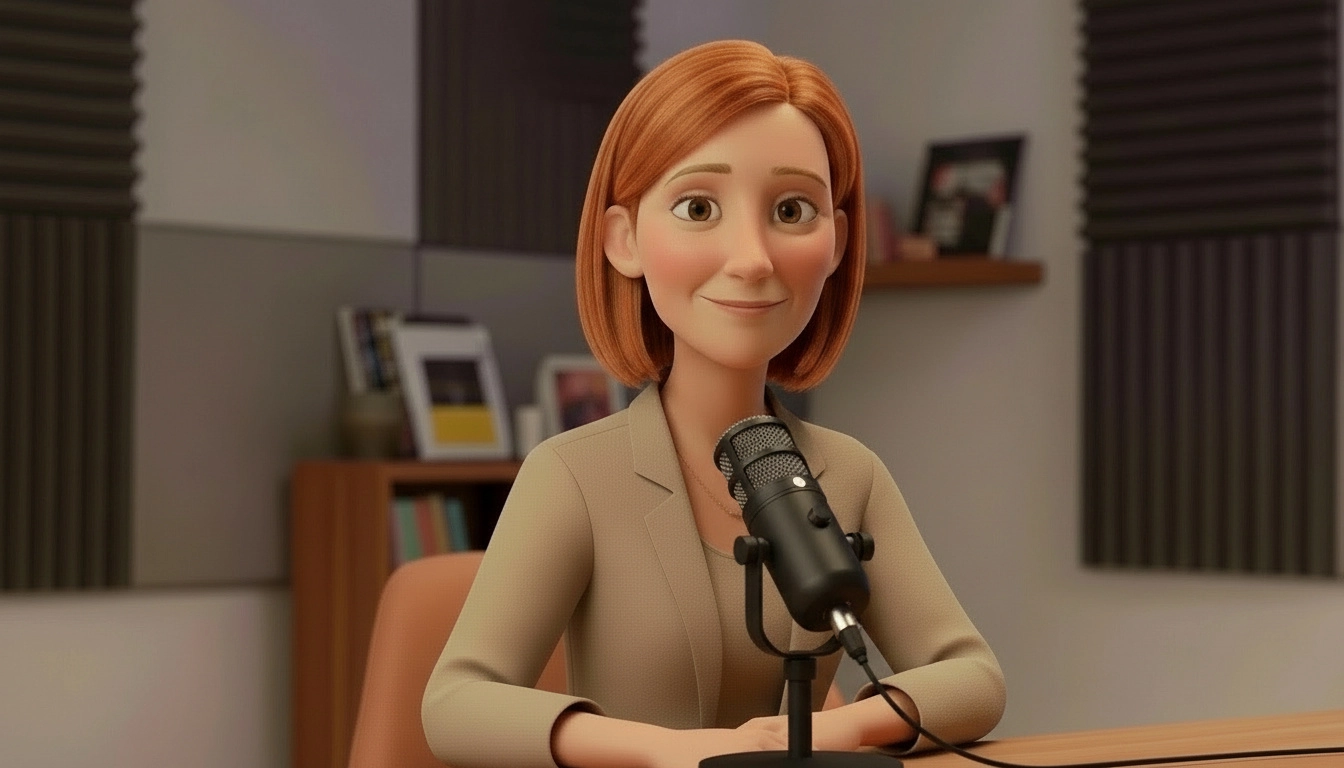
Aoifinn Devitt: Hi, I’m Aoifinn Devitt, and welcome to the 50 Faces Focus Podcast, a special series for Pride Month 2025. This is a little bit different, this podcast, as it’s not with a new guest, but it’s with one of our original guests who kindly sponsored our original Pride series in 2021, Tom Soto. And he also featured as a guest in our main series. And I thought this was a great opportunity to get myself and Tom together on the podcast to talk about, not only get an update from Tom, but also to talk about Pride 2025, what it looks like, how different it is from Pride 2021 when we put it together first, to speak a little bit about why we’re making this podcast today, what was going through my mind when I started to curate the series, which I’m now halfway through recording, and to discuss why we thought it was more important than ever to come with a series this year together with some of the updated messaging that the guests are conveying. Welcome, Tom. Thank you so much for joining me here again.
Tom Soto: Thanks, Eve, and I really enjoy being asked. Thank you.
Aoifinn Devitt: Well, as I mentioned, you were a guest back in one of the original years of the Pride series as well as the podcast series. I’d love to get an update in terms of what you’ve been doing professionally and personally over the last 4 years and maybe just bring us up to speed professional journey has continued, but there have been some personal circumstances that have intervened, which have led you to pivot, but at least deal with those emergencies and now pivot back. So can you update us on where you are in terms of the energy transition work and some of the other professional commitments?
Tom Soto: Well, sure, absolutely. I mean, listen, I think the energy transition work that I’ve been doing for 25 years, I don’t think necessarily ends in the current era. I think it gets a little slow and a little messy by the current administration, but it has so much traction and is such a part of our economic fabric. The 5 million jobs that were created in energy transition during the previous 4 years, the trillions of dollars that have gone in to capitalize the sector, and quite frankly, the success that we have where now we have more renewable energy being deployed than fossil fuels being deployed as new energy sources. So it’s not going to go backwards. It’s just going to slow because of the vagueness that is being offered by this administration. But you even see the House Republican leadership in some cases asking that the House not reverse the tax credits and the subsidies that went into this sector. So I’m sticking to my guns. You know, I’m going to stick with the sector. Last we spoke, I had just initiated SAS Earth Energy Technology. And that is a biomass energy transition platform that seeks to de-risk catastrophic fires in our forests by harvesting and monetizing all the dead trees, what we call high-hazard forest waste, and putting it into a supply chain for fuel for biomass facilities in California, which is cheap fuel, and then converting those biomass facilities from combustion to pyrolytic gasification, taking them to a net carbon negative operating cycle and generating biochar and carbon credits, thus giving me multi-revenue streams and outsized returns. So I’m still focused on that and looking at a great future for that. We’ve raised a good amount of debt and equity to support the vision and the platform. So that’s what I’m focused on for a good part of my time. And then the other part of my time, as you know, I’ve been a fund manager for many years, for 2.5 decades. And so I thought I was done with that after I left TCW until a very, very close friend of mine who had just exited a large-cap private equity fund came to me and wanted to start a new fund. So probably 8 or 9 months ago, we began the fund formation process and we agreed that we were not going to launch the fund until we had capital committed. So we have a number of LPs behind us and we’re going to announce the launch of this fund in early June and the first close, which is very significant because we have the commitments made from the LPs. And we’re also building out office space in Midtown New York at this point. So in June, I’ll be able to come out of the closet, so to speak, on this platform and make it a little bit more known. But I’ve been spending plenty of time with that and my co-founder, and we hope to see that launch and be public probably around first, second week of June. So that’s been the bulk of my time. And of course, as you mentioned, there were certain events that occurred. When you started this podcast, we were in an event, and that was COVID. And one of the things that I saw was the deterioration of the social protocols that one learns at a preteen or preadolescent level, like my son who was Zooming in school for 2 and a half years. And praise God, COVID got under control, kids were able to get back into the classroom, but there was a recovery process. And that’s when you and I first had these conversations. You began your podcast, which I thought was an excellent outlet for folks like all of us who were stuck in their Zoom rooms but wanted to interact socially. And we’ve had that now for the past couple years. And then lo and behold, on Tuesday, January 6th, I look out my window and I see a plume of smoke about 3 or 4 miles away in the Palisades. And I live in the Palisades. And an hour later, when I look out the same window, the two streets behind me are now on fire and we get an evacuation notice. And for one month we were evacuated from our home. The neighborhood behind us, thank God our street is intact, but homes behind us and then up the hill throughout the Palisades and Pacific Coast Highway, maybe 70% of it was destroyed, just burned, gone. Thousands and thousands of homes and structures gone, including about 45% of my son’s school, Palisades Charter High School. And so I hung up my spurs on the fund, on SAS, on all my nonprofit work, which is the NRDC as a board of trustee, the Dodger Foundation, the Science Center. And all I did was focus with Dr. Pam McGee, the principal and executive director of Palisades High, to identify a temporary alternative campus to get the kids into so they didn’t have to go back to the Zoom environment. They had to do Zoom every day from 8:30 to 12, and they did it for several weeks. But in that time, we were able to secure through hook or by crook— we did it— a 100,000-square-foot former Sears store in Santa Monica on Colorado and 4th. And amazingly, over the course of 5 and a half weeks, we were able to negotiate the lease. We were able to get architects come in at a 90% discount. A construction crew at a 90% discount, building materials donated, paint donated, legal donated, a lease signed. And as of April 22nd, Earth Day, we were able to have the 2,500 students of Pali High occupy that site. We took 4 floors, 100,000 square feet. That was nothing. And in 5 weeks, we had 98 classrooms built in that place. And now the kids have a safe, supportive learning environment for their education. So as much as I can make that a thumbnail sketch, that’s what I’ve been up to, you know.
Aoifinn Devitt: It’s so like you, so unexpected to hear that from you. And it’s just so typical, I think, of your— we spoke in our first podcast— of your, your activism, your deep commitment to community, to rebuilding community, and I think to restoring that sense of just connectedness that a community and a school would have. So incredible effort and work, and thank you. I think, I’m sure there have been many thanks he’s given, but it’s just so restorative to see that type of effort. So thank you so much for what you’ve done there. I think many lives changed, just much damage averted in terms of those students and their education and their track. And it was that kind of you being the fixer, you being the sense of having kind of overcome a lot of adversity before. Which I’m sure has made you a great fixer in this case. But it was why you were one of the first people I went to when it came to building the Pride Series ’25. And I think the context of this is we have done a Pride Series, as you noted, since 2021. It was put together because I had canvassed some of my guests who happened to intersect with the LGBTQ+ community, as well as other perhaps aspects of their personality. Perhaps they were in a minority in another way. And their stories had been particularly poignant, and I canvassed them at the beginning of this year to say whether I should do this podcast in 2025. Honestly, normally I wouldn’t have thought twice about doing it, but given some of the headwinds that the community was facing, a sense that I had from some of them that they were preferring to keep their heads down, focus on their immediate work and shoring up their community, and maybe not necessarily raising the head above the parapet to speak about Pride, This was also in light of many corporations pulling back from their support of Pride. And I just asked the question whether this was the year, whether we should, even though it was strongly within my DNA to want to repeat this, to do this because of the importance of storytelling, I did ask the question as to whether this would be a year that we should sit it out, maybe because we might not get the guests willing to participate, and we certainly might not get the sponsors willing to step up. And the overwhelming response from the 40 or so people that I canvassed who’d been previous guests on the series was an overwhelming yes, you must do it, it’s more critical than ever. But your response stood out in particular. And that was what I think convinced me that there was no going back and there was no retreating from this position. And I’d love if you could just take us through a little bit of your thoughts when I asked you that question and how you responded.
Tom Soto: Yeah, listen, I think it’s actually more difficult to say no to an opportunity like this. When you discerned over the idea of continuing the podcast, it’s frankly, because of the character that you are, less difficult to say, you know what, I’m going to continue this. You struggled with why I should stop, right? And if we don’t have community, if we don’t have family, to support and be a part of. We have nothing. But before we have that, we have spirit and we have a moral obligation to become the platform that supports others as their platform helps to support us. And that’s what you do. That’s what this podcast is part of. It’s not a promotional activity. It really is an effort to bring communities together and to provide a fabric that we could all be a part of and express opinion and feel as though there is some affection for our opinion, for our position, for what we’re going through, through the challenges, through the victories, through the defeats. And that’s what you’re providing, despite whether they’re gay or straight or whatever it is. And in our community of fund managers, People are hypersensitive about perception and hypersensitive about tone and content, but sometimes you just have to be bold and say, this is what needs to happen. And you did that. When you asked me that question a couple of weeks ago, maybe a month ago, and asked why I should do this is because we’re in an era where people are actually having to question, are we looking into the face of some tyranny? It may not be textbook, but it certainly is dictionary. And it is tyranny in the sense of oppression, tyranny in the sense of wanting to have control over others. And it’s a tyranny in a sense of just making one’s environment and psychology feel fearful. And that’s not a healthy environment to be in. And the only way that you respond to it, in my opinion, is by standing up to it. And I think I was quoting Timothy Snyder, who’s the author of On Tyranny. And, you know, his basic thesis is, as it was in Nazi Germany and other authoritarian regimes, that, you know, his position is you don’t obey in advance, that most of the power of the authoritarian epic is freely given. In other words, they want it and they pursue it and they set a framework for it. And some communities and individuals just give it. In times like these, the individuals think ahead of what’s ahead. Is it a more repressive government that they’ll want? And then they offer themselves without being asked. We saw Colombia take a deal with the Trump administration. Once you give in to that threat, you have lost your base to negotiate a future. Now the tyranny is in charge of your future. So what happens? The terms of what they thought the agreement had been was changed and became more forceful and more disrespectful, not only of the institution, but the whole educational, higher educational sector. And then Harvard stood up. And now there’s something to be said about they being a beacon that others can rally around and focus on and be part of a larger collective that is concerned about the future of higher education being removed from tax-exempt status, having their federal grants and federal support removed, which, by the way, is not an effect on education. It’s an effect on research into things that I or my parents or family have suffered from— cancer, Alzheimer’s. Solutions to these did not just appear. They went through years and years of billions of dollars of research in institutions like the UC system or Harvard or the Ivy League. That’s where it was all sourced from. If we give that up, if we allow that to be given up, then we’re giving up a future of an improved quality of life. But we can adapt to this way of how power is taught. It’s not how it should be. If you allow it, then it will continue to consume the community and consume more individuals and oppress more. So as I said to you then, if not now, when? And if not me or you, who, right? And what does that remind us of? I was just Thinking that my son, as I say, Mijo, he texted me this morning and he brought a little tear to my eye because we have this conversation about what’s going on right now. And he texted me from school and a screenshot of Eli Wiesel’s Night. His text actually says, holy crap, this book is horrifying, Dada. And I said, it is, Mijo, but it must be read. Eli Wiesel was there and suffered and lived only so he could share with the world the atrocities that the Nazis put the Jewish people through. We can never forget 6 million Jews were murdered, not in battle, but in concentration camps. It’s horrifying. But I agree, young people need to know the history of this kind of behavior so that it never happens again. And unfortunately, books like this are being removed from our educational system and in our own country in less than 100 days. Our president is damaging 250 years of leadership our country has given to the world to stop and avoid these atrocities, and in fact are now doing things similarly to the least of us, the poor, the unfortunate immigrants who just want to live and do well for their family. It’s awful. This is why Dad worked so hard, and your family stands for all the things that Eli Weisel was trying to get us to understand. And that is the promotion of humanity.
Aoifinn Devitt: Very powerful words. And it was your words equally around the authoritarianism and obeying in advance that struck me because it really forced me to ask, why do I do this? And I think, why did I consider not continuing? Partly it was due to it trying to be sensitive to some members of the community desire perhaps not to be as prominent or as overtly seen supportive of each other and of their differences. And then I realized that what are we doing this for? And we are, first of all, seeking to share as many individual stories as possible so that the listener can understand the breadth of the human experience and equally to act as, I suppose, a bit of a time capsule as to how that experience is changing over time. Each of these podcasts starts with an origin story. It always discusses in the Pride series a coming out story. It discusses the evolution of a career backdrop, and usually that has been a story of progress in terms of the increased openness in the workplace, the increased numbers of role models in the workplace for LGBTQ+ individuals, and just an increased sense of inclusion. And I always ask about the gestures that make the biggest difference, whether that’s rainbow lanyards, rainbow events for Pride Month or just the little gestures of allies. And that’s generally, as I said, only going one way, and that’s been up. And I think to be a proper time capsule, we need to chart the impacts that the mood music is having on the community, whether they sense that that direction is now reversing. And I’ve already, in the few podcasts that I’ve recorded out of this series this year, have sensed that it is very real, even from perhaps the most secure members of the community. They do feel tremendous rollback of some of the openness, inclusion that they’d enjoyed before. I think they feel under threat. They feel concerned that some, whether it’s their right to be married, will change over time. And they certainly feel that there has been a weaponization of pride aspects of, say, the trans community that was not there before. And this has touched their lives in many different ways, profound and superficial. And I think that’s my duty as the chronicler of the human experience, is to capture that. I will say that these Pride podcasts have always been among the most poignant and moving of the podcasts that I’ve recorded. They generally provide insights that nobody else can provide, particularly those with some members of the trans community who’ve experienced life as both genders, so have experienced life really on both sides, and therefore can actually give the true insight into how experience is different on the other side. And I’d say that the coming out stories have been so beautiful and so restoring in terms of faith in human nature. And finally, why I do this is because if even one person who is going through a sense of isolation or a sense of not finding their people, if one person hears an experience that they can relate to where they see themselves in that experience, and that gives them confidence, hope, solidarity, and a sense of hope and openness and just general happiness, then that’s worth it. So it’s not a bold ambition. It’s not a grand ambition to change anything, but it was really to keep telling these stories. And thanks to you and that encouragement, I’m now happy to have a Pride series to have in 2025.
Tom Soto: You’re welcome. I look at this era and I think If you want to spite this era, be successful, be happy, live a life of gratitude, but live a life of truth. I am at, and my family live at the crosshairs of everything this administration despises. I am gay. I am out. I have a successful marriage on 20 years with a beautiful 15-year-old adopted son. 5th child born into homelessness, who we were able to adopt and bring into this world as a 3-day-old. And I think the thing that bothers them the most is I believe I’m a successful business leader in the Latino community. Oh, and I’m Latino, right? That’s another thing. And a successful investor. I helped to create and build the climate tech, clean tech sector, which is now embedded into the fabric of our economy. You can’t turn back. We have a price on carbon. We have tailpipe standards. We have a global voluntary market on carbon because, in part, that type of leadership. So I’m at the crosshairs of all of that. And despite it, I get up in the morning and I praise God for this next day and my beautiful family and all the opportunity, the abundance, prosperity, and fortune in our lives. And I know that there’s more. I take a very Jesuit approach to this. And my feeling is, as my mother used to say, which is old proverbs, is those who were cherished cherish, those who have been wounded wound. And we have an administration of wounded. We have an administration that wants to send out more wounds. And it’s very, very unfortunate. But as Voltaire once said, you get what you vote for. And this is what the country voted for. 77 million people were more happy after the election, and 76 million people were very not happy, and another 70 million didn’t vote. And so there is a huge difference between the landslide that this president claims to have had and the actual 1.6% that he actually won by. And so that’s not a mandate, and the pendulum swings. So take notes, remember what happened, and let’s hold those people accountable in the future. And let’s more importantly make sure this never happens again, because 250 years of leadership and building the stature, the prosperity the currency, the economics that we have that is now being fleeced and abused needs to be rebuilt. And that even is going to be the job that you and I are going to have in 2 to 4 years so that our children could look us in the face and say, thank you for doing that. That’s what I’m looking for, Jonah. I’m not going to hand Jonah a country that was less than what I was given by my parents. And so I think our mission is to ensure that we’re active. I see people leaving the country. Oh, I’m going to New Zealand, going to England, whatever. Go. I’m staying here. I’m going to resist. I’m going to fight, and we’re going to win. And our children will have a greater country in their hands when we go to God. So there’s a lot of reasons to do what you’re doing. And by this point, I mean, I don’t, I’ve, past several years, I’ve seen you less as a CIO and an investor and more as a voice and a champion for those folks that are more diverse. But as I always tell, when I sit on these panels and they ask me about DEI and ESG, I just said, get off this stuff. This is not a social experiment. This is a returns-based strategy. Those corporations that have more diversity in the C-suite or on their board, more women, more people of color, those public companies outperform on a free cash flow basis the rest of the index. The same is true with private equity. When you have a diverse fund, you’re going to generate 400 to 500 basis points greater than your core equities. If I don’t hit my hurdle rate, I get fired. If a large-cap BlackRock-type fund doesn’t hit their hurdle rate, they lower the hurdle rate. So, you know, don’t tell me that there’s no discrimination out there. I get it, I live with it, I overcome it.
Aoifinn Devitt: Very well said, Tom. And I know you’ve been a political player for most of your life, and I actually am apolitical in my podcasting. That’s how I thread the needle. I don’t take political positions. I’m quite strict on that. But I will say, I’ll paraphrase words of a charity that I used to see on television growing up, as our work goes on even when it’s no longer news. So my work goes on in terms of chronicling these stories, these human experiences, so that others may gain from them and that I may amplify these experiences and be a scribe at this time as to how this experience is manifesting. And thank you for your support and for your encouragement, and look forward to releasing a great series in the month of June.
Tom Soto: Right on. It’s great that you’re doing this. Just keep it up.
Aoifinn Devitt: This podcast is for informational purposes only and should not be construed as investment advice, and all views are personal and should not be attributed to the organizations and affiliations of the host or any guest.
Aoifinn Devitt: Hi, I’m Aoifinn Devitt, and welcome to the 50 Faces Focus Podcast, a special series for Pride Month 2025. This is a little bit different, this podcast, as it’s not with a new guest, but it’s with one of our original guests who kindly sponsored our original Pride series in 2021, Tom Soto. And he also featured as a guest in our main series. And I thought this was a great opportunity to get myself and Tom together on the podcast to talk about, not only get an update from Tom, but also to talk about Pride 2025, what it looks like, how different it is from Pride 2021 when we put it together first, to speak a little bit about why we’re making this podcast today, what was going through my mind when I started to curate the series, which I’m now halfway through recording, and to discuss why we thought it was more important than ever to come with a series this year together with some of the updated messaging that the guests are conveying. Welcome, Tom. Thank you so much for joining me here again.
Tom Soto: Thanks, Eve, and I really enjoy being asked. Thank you.
Aoifinn Devitt: Well, as I mentioned, you were a guest back in one of the original years of the Pride series as well as the podcast series. I’d love to get an update in terms of what you’ve been doing professionally and personally over the last 4 years and maybe just bring us up to speed professional journey has continued, but there have been some personal circumstances that have intervened, which have led you to pivot, but at least deal with those emergencies and now pivot back. So can you update us on where you are in terms of the energy transition work and some of the other professional commitments?
Tom Soto: Well, sure, absolutely. I mean, listen, I think the energy transition work that I’ve been doing for 25 years, I don’t think necessarily ends in the current era. I think it gets a little slow and a little messy by the current administration, but it has so much traction and is such a part of our economic fabric. The 5 million jobs that were created in energy transition during the previous 4 years, the trillions of dollars that have gone in to capitalize the sector, and quite frankly, the success that we have where now we have more renewable energy being deployed than fossil fuels being deployed as new energy sources. So it’s not going to go backwards. It’s just going to slow because of the vagueness that is being offered by this administration. But you even see the House Republican leadership in some cases asking that the House not reverse the tax credits and the subsidies that went into this sector. So I’m sticking to my guns. You know, I’m going to stick with the sector. Last we spoke, I had just initiated SAS Earth Energy Technology. And that is a biomass energy transition platform that seeks to de-risk catastrophic fires in our forests by harvesting and monetizing all the dead trees, what we call high-hazard forest waste, and putting it into a supply chain for fuel for biomass facilities in California, which is cheap fuel, and then converting those biomass facilities from combustion to pyrolytic gasification, taking them to a net carbon negative operating cycle and generating biochar and carbon credits, thus giving me multi-revenue streams and outsized returns. So I’m still focused on that and looking at a great future for that. We’ve raised a good amount of debt and equity to support the vision and the platform. So that’s what I’m focused on for a good part of my time. And then the other part of my time, as you know, I’ve been a fund manager for many years, for 2.5 decades. And so I thought I was done with that after I left TCW until a very, very close friend of mine who had just exited a large-cap private equity fund came to me and wanted to start a new fund. So probably 8 or 9 months ago, we began the fund formation process and we agreed that we were not going to launch the fund until we had capital committed. So we have a number of LPs behind us and we’re going to announce the launch of this fund in early June and the first close, which is very significant because we have the commitments made from the LPs. And we’re also building out office space in Midtown New York at this point. So in June, I’ll be able to come out of the closet, so to speak, on this platform and make it a little bit more known. But I’ve been spending plenty of time with that and my co-founder, and we hope to see that launch and be public probably around first, second week of June. So that’s been the bulk of my time. And of course, as you mentioned, there were certain events that occurred. When you started this podcast, we were in an event, and that was COVID. And one of the things that I saw was the deterioration of the social protocols that one learns at a preteen or preadolescent level, like my son who was Zooming in school for 2 and a half years. And praise God, COVID got under control, kids were able to get back into the classroom, but there was a recovery process. And that’s when you and I first had these conversations. You began your podcast, which I thought was an excellent outlet for folks like all of us who were stuck in their Zoom rooms but wanted to interact socially. And we’ve had that now for the past couple years. And then lo and behold, on Tuesday, January 6th, I look out my window and I see a plume of smoke about 3 or 4 miles away in the Palisades. And I live in the Palisades. And an hour later, when I look out the same window, the two streets behind me are now on fire and we get an evacuation notice. And for one month we were evacuated from our home. The neighborhood behind us, thank God our street is intact, but homes behind us and then up the hill throughout the Palisades and Pacific Coast Highway, maybe 70% of it was destroyed, just burned, gone. Thousands and thousands of homes and structures gone, including about 45% of my son’s school, Palisades Charter High School. And so I hung up my spurs on the fund, on SAS, on all my nonprofit work, which is the NRDC as a board of trustee, the Dodger Foundation, the Science Center. And all I did was focus with Dr. Pam McGee, the principal and executive director of Palisades High, to identify a temporary alternative campus to get the kids into so they didn’t have to go back to the Zoom environment. They had to do Zoom every day from 8:30 to 12, and they did it for several weeks. But in that time, we were able to secure through hook or by crook— we did it— a 100,000-square-foot former Sears store in Santa Monica on Colorado and 4th. And amazingly, over the course of 5 and a half weeks, we were able to negotiate the lease. We were able to get architects come in at a 90% discount. A construction crew at a 90% discount, building materials donated, paint donated, legal donated, a lease signed. And as of April 22nd, Earth Day, we were able to have the 2,500 students of Pali High occupy that site. We took 4 floors, 100,000 square feet. That was nothing. And in 5 weeks, we had 98 classrooms built in that place. And now the kids have a safe, supportive learning environment for their education. So as much as I can make that a thumbnail sketch, that’s what I’ve been up to, you know.
Aoifinn Devitt: It’s so like you, so unexpected to hear that from you. And it’s just so typical, I think, of your— we spoke in our first podcast— of your, your activism, your deep commitment to community, to rebuilding community, and I think to restoring that sense of just connectedness that a community and a school would have. So incredible effort and work, and thank you. I think, I’m sure there have been many thanks he’s given, but it’s just so restorative to see that type of effort. So thank you so much for what you’ve done there. I think many lives changed, just much damage averted in terms of those students and their education and their track. And it was that kind of you being the fixer, you being the sense of having kind of overcome a lot of adversity before. Which I’m sure has made you a great fixer in this case. But it was why you were one of the first people I went to when it came to building the Pride Series ’25. And I think the context of this is we have done a Pride Series, as you noted, since 2021. It was put together because I had canvassed some of my guests who happened to intersect with the LGBTQ+ community, as well as other perhaps aspects of their personality. Perhaps they were in a minority in another way. And their stories had been particularly poignant, and I canvassed them at the beginning of this year to say whether I should do this podcast in 2025. Honestly, normally I wouldn’t have thought twice about doing it, but given some of the headwinds that the community was facing, a sense that I had from some of them that they were preferring to keep their heads down, focus on their immediate work and shoring up their community, and maybe not necessarily raising the head above the parapet to speak about Pride, This was also in light of many corporations pulling back from their support of Pride. And I just asked the question whether this was the year, whether we should, even though it was strongly within my DNA to want to repeat this, to do this because of the importance of storytelling, I did ask the question as to whether this would be a year that we should sit it out, maybe because we might not get the guests willing to participate, and we certainly might not get the sponsors willing to step up. And the overwhelming response from the 40 or so people that I canvassed who’d been previous guests on the series was an overwhelming yes, you must do it, it’s more critical than ever. But your response stood out in particular. And that was what I think convinced me that there was no going back and there was no retreating from this position. And I’d love if you could just take us through a little bit of your thoughts when I asked you that question and how you responded.
Tom Soto: Yeah, listen, I think it’s actually more difficult to say no to an opportunity like this. When you discerned over the idea of continuing the podcast, it’s frankly, because of the character that you are, less difficult to say, you know what, I’m going to continue this. You struggled with why I should stop, right? And if we don’t have community, if we don’t have family, to support and be a part of. We have nothing. But before we have that, we have spirit and we have a moral obligation to become the platform that supports others as their platform helps to support us. And that’s what you do. That’s what this podcast is part of. It’s not a promotional activity. It really is an effort to bring communities together and to provide a fabric that we could all be a part of and express opinion and feel as though there is some affection for our opinion, for our position, for what we’re going through, through the challenges, through the victories, through the defeats. And that’s what you’re providing, despite whether they’re gay or straight or whatever it is. And in our community of fund managers, People are hypersensitive about perception and hypersensitive about tone and content, but sometimes you just have to be bold and say, this is what needs to happen. And you did that. When you asked me that question a couple of weeks ago, maybe a month ago, and asked why I should do this is because we’re in an era where people are actually having to question, are we looking into the face of some tyranny? It may not be textbook, but it certainly is dictionary. And it is tyranny in the sense of oppression, tyranny in the sense of wanting to have control over others. And it’s a tyranny in a sense of just making one’s environment and psychology feel fearful. And that’s not a healthy environment to be in. And the only way that you respond to it, in my opinion, is by standing up to it. And I think I was quoting Timothy Snyder, who’s the author of On Tyranny. And, you know, his basic thesis is, as it was in Nazi Germany and other authoritarian regimes, that, you know, his position is you don’t obey in advance, that most of the power of the authoritarian epic is freely given. In other words, they want it and they pursue it and they set a framework for it. And some communities and individuals just give it. In times like these, the individuals think ahead of what’s ahead. Is it a more repressive government that they’ll want? And then they offer themselves without being asked. We saw Colombia take a deal with the Trump administration. Once you give in to that threat, you have lost your base to negotiate a future. Now the tyranny is in charge of your future. So what happens? The terms of what they thought the agreement had been was changed and became more forceful and more disrespectful, not only of the institution, but the whole educational, higher educational sector. And then Harvard stood up. And now there’s something to be said about they being a beacon that others can rally around and focus on and be part of a larger collective that is concerned about the future of higher education being removed from tax-exempt status, having their federal grants and federal support removed, which, by the way, is not an effect on education. It’s an effect on research into things that I or my parents or family have suffered from— cancer, Alzheimer’s. Solutions to these did not just appear. They went through years and years of billions of dollars of research in institutions like the UC system or Harvard or the Ivy League. That’s where it was all sourced from. If we give that up, if we allow that to be given up, then we’re giving up a future of an improved quality of life. But we can adapt to this way of how power is taught. It’s not how it should be. If you allow it, then it will continue to consume the community and consume more individuals and oppress more. So as I said to you then, if not now, when? And if not me or you, who, right? And what does that remind us of? I was just Thinking that my son, as I say, Mijo, he texted me this morning and he brought a little tear to my eye because we have this conversation about what’s going on right now. And he texted me from school and a screenshot of Eli Wiesel’s Night. His text actually says, holy crap, this book is horrifying, Dada. And I said, it is, Mijo, but it must be read. Eli Wiesel was there and suffered and lived only so he could share with the world the atrocities that the Nazis put the Jewish people through. We can never forget 6 million Jews were murdered, not in battle, but in concentration camps. It’s horrifying. But I agree, young people need to know the history of this kind of behavior so that it never happens again. And unfortunately, books like this are being removed from our educational system and in our own country in less than 100 days. Our president is damaging 250 years of leadership our country has given to the world to stop and avoid these atrocities, and in fact are now doing things similarly to the least of us, the poor, the unfortunate immigrants who just want to live and do well for their family. It’s awful. This is why Dad worked so hard, and your family stands for all the things that Eli Weisel was trying to get us to understand. And that is the promotion of humanity.
Aoifinn Devitt: Very powerful words. And it was your words equally around the authoritarianism and obeying in advance that struck me because it really forced me to ask, why do I do this? And I think, why did I consider not continuing? Partly it was due to it trying to be sensitive to some members of the community desire perhaps not to be as prominent or as overtly seen supportive of each other and of their differences. And then I realized that what are we doing this for? And we are, first of all, seeking to share as many individual stories as possible so that the listener can understand the breadth of the human experience and equally to act as, I suppose, a bit of a time capsule as to how that experience is changing over time. Each of these podcasts starts with an origin story. It always discusses in the Pride series a coming out story. It discusses the evolution of a career backdrop, and usually that has been a story of progress in terms of the increased openness in the workplace, the increased numbers of role models in the workplace for LGBTQ+ individuals, and just an increased sense of inclusion. And I always ask about the gestures that make the biggest difference, whether that’s rainbow lanyards, rainbow events for Pride Month or just the little gestures of allies. And that’s generally, as I said, only going one way, and that’s been up. And I think to be a proper time capsule, we need to chart the impacts that the mood music is having on the community, whether they sense that that direction is now reversing. And I’ve already, in the few podcasts that I’ve recorded out of this series this year, have sensed that it is very real, even from perhaps the most secure members of the community. They do feel tremendous rollback of some of the openness, inclusion that they’d enjoyed before. I think they feel under threat. They feel concerned that some, whether it’s their right to be married, will change over time. And they certainly feel that there has been a weaponization of pride aspects of, say, the trans community that was not there before. And this has touched their lives in many different ways, profound and superficial. And I think that’s my duty as the chronicler of the human experience, is to capture that. I will say that these Pride podcasts have always been among the most poignant and moving of the podcasts that I’ve recorded. They generally provide insights that nobody else can provide, particularly those with some members of the trans community who’ve experienced life as both genders, so have experienced life really on both sides, and therefore can actually give the true insight into how experience is different on the other side. And I’d say that the coming out stories have been so beautiful and so restoring in terms of faith in human nature. And finally, why I do this is because if even one person who is going through a sense of isolation or a sense of not finding their people, if one person hears an experience that they can relate to where they see themselves in that experience, and that gives them confidence, hope, solidarity, and a sense of hope and openness and just general happiness, then that’s worth it. So it’s not a bold ambition. It’s not a grand ambition to change anything, but it was really to keep telling these stories. And thanks to you and that encouragement, I’m now happy to have a Pride series to have in 2025.
Tom Soto: You’re welcome. I look at this era and I think If you want to spite this era, be successful, be happy, live a life of gratitude, but live a life of truth. I am at, and my family live at the crosshairs of everything this administration despises. I am gay. I am out. I have a successful marriage on 20 years with a beautiful 15-year-old adopted son. 5th child born into homelessness, who we were able to adopt and bring into this world as a 3-day-old. And I think the thing that bothers them the most is I believe I’m a successful business leader in the Latino community. Oh, and I’m Latino, right? That’s another thing. And a successful investor. I helped to create and build the climate tech, clean tech sector, which is now embedded into the fabric of our economy. You can’t turn back. We have a price on carbon. We have tailpipe standards. We have a global voluntary market on carbon because, in part, that type of leadership. So I’m at the crosshairs of all of that. And despite it, I get up in the morning and I praise God for this next day and my beautiful family and all the opportunity, the abundance, prosperity, and fortune in our lives. And I know that there’s more. I take a very Jesuit approach to this. And my feeling is, as my mother used to say, which is old proverbs, is those who were cherished cherish, those who have been wounded wound. And we have an administration of wounded. We have an administration that wants to send out more wounds. And it’s very, very unfortunate. But as Voltaire once said, you get what you vote for. And this is what the country voted for. 77 million people were more happy after the election, and 76 million people were very not happy, and another 70 million didn’t vote. And so there is a huge difference between the landslide that this president claims to have had and the actual 1.6% that he actually won by. And so that’s not a mandate, and the pendulum swings. So take notes, remember what happened, and let’s hold those people accountable in the future. And let’s more importantly make sure this never happens again, because 250 years of leadership and building the stature, the prosperity the currency, the economics that we have that is now being fleeced and abused needs to be rebuilt. And that even is going to be the job that you and I are going to have in 2 to 4 years so that our children could look us in the face and say, thank you for doing that. That’s what I’m looking for, Jonah. I’m not going to hand Jonah a country that was less than what I was given by my parents. And so I think our mission is to ensure that we’re active. I see people leaving the country. Oh, I’m going to New Zealand, going to England, whatever. Go. I’m staying here. I’m going to resist. I’m going to fight, and we’re going to win. And our children will have a greater country in their hands when we go to God. So there’s a lot of reasons to do what you’re doing. And by this point, I mean, I don’t, I’ve, past several years, I’ve seen you less as a CIO and an investor and more as a voice and a champion for those folks that are more diverse. But as I always tell, when I sit on these panels and they ask me about DEI and ESG, I just said, get off this stuff. This is not a social experiment. This is a returns-based strategy. Those corporations that have more diversity in the C-suite or on their board, more women, more people of color, those public companies outperform on a free cash flow basis the rest of the index. The same is true with private equity. When you have a diverse fund, you’re going to generate 400 to 500 basis points greater than your core equities. If I don’t hit my hurdle rate, I get fired. If a large-cap BlackRock-type fund doesn’t hit their hurdle rate, they lower the hurdle rate. So, you know, don’t tell me that there’s no discrimination out there. I get it, I live with it, I overcome it.
Aoifinn Devitt: Very well said, Tom. And I know you’ve been a political player for most of your life, and I actually am apolitical in my podcasting. That’s how I thread the needle. I don’t take political positions. I’m quite strict on that. But I will say, I’ll paraphrase words of a charity that I used to see on television growing up, as our work goes on even when it’s no longer news. So my work goes on in terms of chronicling these stories, these human experiences, so that others may gain from them and that I may amplify these experiences and be a scribe at this time as to how this experience is manifesting. And thank you for your support and for your encouragement, and look forward to releasing a great series in the month of June.
Tom Soto: Right on. It’s great that you’re doing this. Just keep it up.
Aoifinn Devitt: This podcast is for informational purposes only and should not be construed as investment advice, and all views are personal and should not be attributed to the organizations and affiliations of the host or any guest.