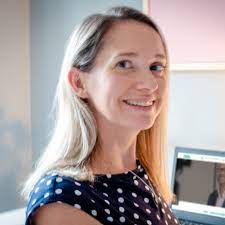
Aoifinn Devitt: This podcast series is brought to you with the kind support of Darwin Alternative Investment Management Limited, which offers innovative, alpha-driven investment solutions that are uncorrelated with traditional asset classes and feature business areas which have not previously been considered by investment funds. The firm aims to create new opportunities for investors to further diversify their portfolios and achieve stable absolute returns. I’m Aoifinn Devitt, and welcome to the 50 Faces Podcast, a podcast committed to revealing the richness and diversity of the world of investment by focusing on its people and their stories. I’m joined today by Charlotte Gibson, who’s a coach, actuary, and pensions consultant. She’s a senior manager at Isio and the founder of The Rewirement, which is focused on redefining retirement through coaching. She previously worked in management at KPMG, and prior to that was an actuarial analyst at Aon Consulting. Welcome, Charlotte, thanks for joining me today.
Charlotte Gibson: Thank you, it’s a pleasure to be here.
Aoifinn Devitt: Well, let’s start by talking about where you grew up, what you studied, and what led to your interest in pensions.
Charlotte Gibson: Yeah, so I grew up in Hitchin in Hertfordshire, which is quite near London, and I had a real passion, I suppose, at school for maths, and I went to university and studied maths and physics. And I think if I’m honest, the reason I did that was I liked the logic of maths. I like the safety that I found in the formulas being right or wrong. And so there was something about the beauty of the rules that it was black or it was white. And I guess I needed that safety. I can’t really think of any other reason why I would have gone to university and studied that, but I did, and I really enjoyed it. And then in my third year at university, you get your careers officer come in and give you a discussion around what do you want to be. When you leave university, and the two that I went to, accountancy and actuarial. And actually, I thought the actuarial discussion sounded really interesting. I’d never ever heard of what an actuary was before, like probably many people today even don’t, but that’s what I chose to be. So I trained to be an actuary, and as part of that, you specialize in an area, and I specialized in pensions.
Aoifinn Devitt: It’s really interesting. I didn’t think of that before, but math of course does give the ultimate closure and a sense of resolution And funny, when I was in university, actuaries were one of the few strands that were guaranteed a job afterwards, so that was always a certain amount of security and closure there. So probably the two are related. Would you say there were any surprising turns over the course of your career and to date?
Charlotte Gibson: So the first 10 years of my career, so started in 2000, first 10 years were fairly standard. So I started as a junior analyst and then progressed really quite quickly through the ranks to senior manager at KPMG. And then in 2010, there was quite a significant couple of events that totally changed everything that I believed in. So, you know, I said I kind of believed in logic and rules, and I taught myself that, you know, you work hard, you get this solution. And in 2010, there was a couple of things that happened that really challenged that. So one was my dad passing away at 57, very suddenly. I was on the way home from work, and I got a call to say he, you know, literally sort dropped down dead from a heart attack. And at the time, I was pregnant with my first child, and that was something that sort of got me through that. And then unfortunately, we lost our baby as well. So there’s two huge, huge events that happened in 2010 that kind of challenged my whole view of the world, and all the rules and beliefs that I had were just thrown out the window. So it was tough. I have to say that KPMG were hugely supportive at the time, And what it meant— so I guess there was two things that kind of emerged for me after all of that. One was that what I valued in my career really changed. So it wasn’t about progressing quickly through the ranks anymore, it was more about the process and enjoying my job, and the variety became really important. And the second was that I was kind of open now to all these possibilities that, that life could throw at me, and, and I wanted to embrace that a bit more than I, than I had before. So I stayed in my job. I still continued as a pensions consultant, and I’m really glad that I did. But alongside that, I took on different roles, and one of the roles that I took on was training to be a coach, a transition coach for women actually coming back into the business after they had been out, um, for maternity leave, which was brilliant. Very different to my day job, very different to the consulting role that I was doing, but it brought a sense of purpose to my job. It was less structured than the consulting role I was doing. Coaching can be, you know, messy at times, but it’s very, very powerful. And I did that alongside my day job, supporting women back into the business. And I think that that probably was quite a turning event in my career because now I was a coach and I was also a pensions consultant, which brought kind of a certain set of skills to me.
Aoifinn Devitt: Very interesting. And we’ll move to speak about the relationship between coaching and how it can help in retirement or rewirement or whatnot. But just since I find it fascinating that it was in finding your own purpose that you sought to give purpose to others. And just on the coaching point, I’ve always found I get so much from coaching. Is it a zero-sum kind of game? Do you find coaches gain from that or does it drain you? How do you find coaching? I suppose, how do you feel when you are a coach?
Charlotte Gibson: I think it’s a real privilege to be a coach, partly because, as you say, I think as you go through coaching training to be a coach, you learn a lot about yourself in terms of how you manage yourself. You’re very aware of your judgments and how you show up for other people, and I’m really privileged to have gone through that. The other bit is the coaching community that you then become part of. It’s a really lovely, often very like-minded group of people that you then become part of your network and That’s meant the world to me since I started that journey. And I think thirdly, it is, as you say, you, you have this sense of purpose. So when you’re in coaching sessions, yes, it can be you giving a lot to that coachee. And I do find that afterwards I do need to take a good hour or so to recharge, because when you’re coaching well, you’re very much in that moment and you’re giving a lot of attention to the coachee. But actually what you get back in terms of a sense of purpose of how you’ve helped them is absolutely worth it. So I think as long as you do look after yourself as a coach and you listen to yourself when you need to recharge, then it is very energizing, it’s uplifting, and yeah, as I say, it’s a privilege to do it.
Aoifinn Devitt: Well, let’s talk now about the origins of The Rewirement. Can you tell us what that is and what your mission there is?
Charlotte Gibson: Yeah, so 18 months ago I set the business up, and it was born out of the desire to, I guess, bring my two worlds together. You know, on the one hand, I’m a pensions consultant and I work a lot with individuals that are trying to understand pensions and financial education, etc. But what I was noticing as part of that is actually that’s one part of it. Absolutely understanding your pension is really important, but the other part of it that was coming up was how scary the retirement transition can be. So, you know, it’s throwing up lots of issues for people. So what am I going to do after I leave my full-time career? What’s my identity now that I’ve left, you know, the label that I’ve given myself? What’s my purpose? There’s so many things that are wrapped up in that that are not just financial. And I saw a lot of parallels to the work I was doing on the transition coaching. So I saw a lot of the models and lots of the skills and techniques that I was working with women coming back into the business, thinking actually there’s lots here that can be taken to the retirement transition to really help people go through that transition, plan for it, be ready for it from a mindset perspective. So I launched The Rewindment to do that, to bring the two together. So to bring coaching skills and coaches to that retirement world and pensions world and, and marry the two together. I called it Rewirement because I couldn’t get away from using the word retirement in some of my branding, even though I don’t like that word because I think it feels quite final. And actually, retirement’s anything but, you know. It’s exciting, it’s the start of something. It might not even be finishing your full-time career or leaving work completely. So I use the word retirement in my literature, but it needs to be rebranded, it needs to be rewired. So that’s where Rewirement was born, in the same way as I think we need to kind of almost rewire our brains when we’re thinking ahead to our retirement so that we can go into that with a sense of energy and vitality.
Aoifinn Devitt: Does this relate to how you say our traditional 3 stages of a working life is changing? Can you maybe just explain what you mean by that?
Charlotte Gibson: Yeah, so I think probably many of your listeners have read The 100-Year Life by Linda Gratton and Andrew Scott, and in that— that book I read quite a number of years ago now— and it really struck me in that, that they make this point that the three-stage life that a lot of us have grown up with, assuming that we’re going to have an education, we’re going to work probably for 40 years, for about 20 to 60-ish, and then we’re going to retire, and that’s the third stage. So education, work, retirement is the typical three-stage life, and I think that is hugely changing. So particularly now in the UK, we’ve got defined benefit pensions are becoming less prominent. So you’re having people retiring in very different ways. People are living a lot longer, which is great on one hand, but it kind of means that that three-stage life doesn’t work anymore for a lot of people, and it’s much more fluid, you know. So you might kind of take sabbaticals partway through your career, you might totally change careers 2, 3, 4 times. And I think society is slowly catching up with that. But actually, if you look at our role models lots of people that have retired recently will have still been doing the sort of more traditional route. So I think that, that we are moving away from that three-stage life, but it’s sort of a transition in a sense that we’re doing that as a society.
Aoifinn Devitt: And if you think about, say, the clients you coach in this rewirement, is there a kind of an average profile? Do you find that people are traveling the world, or are they still doing something involved maybe in their previous career? Are they volunteering? If you were to say, what is a typical retirement today, is that even possible?
Charlotte Gibson: No, I think that’s the point. I don’t think there is a typical retirement nowadays, and I, I’m seeing a trend to people wanting to do some kind of work. So even if they’re moving out of their full-time busy job, how do they get a sense of purpose after that? And it can be through volunteering. So there’s lots of discussions around, can I volunteer Can I do charity work? But also, can I do some part-time, more flexible working that could also bring a bit of income? That’s a sort of a secondary part of it, but it also gives me a purpose and a sense of belonging to a career that can be quite scary to leave behind. So in answer to your question, I don’t think there is a typical way to retire now. I think that’s quite exciting in itself, but it also can be quite overwhelming to people because they haven’t got this well-trodden path anymore that they’re following. But I would say that people are tending to want to stay in work longer, but it to be on a part-time flexible basis and something that they might kind of find enjoyment and energy from, perhaps more than they did so from their full-time jobs.
Aoifinn Devitt: It’s interesting, I’ve used the expression aha moment a lot in this particular series. I think it’s because we think that we know everything there is to know about aging, retirement, and the fact is there’s a lot we don’t know. And I suppose when you work with your clients, do you find anything they learn maybe surprises them about the coaching, maybe about their own potential, about their energy they’re going to have at this stage, what they’re going to want?
Charlotte Gibson: Yeah, I think the most common question is this assumption that they’ve had about their retirement is totally being sort of challenged as part of the work that we do. And I think people are kind of coming to me going, well, I don’t feel like I want to retire, but if I don’t, then what do I do? And I think that’s an interesting discussion. So What we’ll often do is we’ll look back at the career they’ve had. There’s loads of rich data there, you know, about stuff they’ve enjoyed doing, what their strengths are, what’s energized them. And we’ll take all of that learning and then play with it. So, okay, you know this about yourself, you’ve got this really lovely picture of yourself now. How do you want to take that forward? And often they’ll have come with an idea that it’s something very simple, like, I don’t know, retiring and, as you say, moving overseas, and then going ‘But actually, is that going to make me happy? Is that going to make me fulfilled? And if not, how can I design something that does?’ So it’s lovely because there’s been quite a few coachees I can think of that have changed their plans because they’ve realized that’s not going to fulfill them. And I can see that as a real kind of really adding value, because without it, they may have just kind of set— walked into their retirement with the assumption that they had and not been happy. And you do hear a number of stories of people like that, that retire, think it’s going to be wonderful, and aren’t happy in the first few years and sort of waste those healthy years of retirement. So, so that planning ahead, I think, has been really useful for people.
Aoifinn Devitt: And just tied to that sort of modern notion of retirement, I’ve had some guests on other podcast series who’ve spoken about how they have basically decided to do now in their lives what they maybe thought they would always want to do in retirement. Whether that means maybe moving to a farm, moving to the countryside, and they’re learning a new language. Have you seen some of your coachees or people do that?
Charlotte Gibson: That’s a really brilliant point, actually. And what often some of my coachees are people that are thinking about retiring in 10 years’ time, so it’s not an immediate transition, but what they want to do is think about what they can do now to make that future more of a reality. So we often talk about where can you invest your time and your energy to do that. And as part of that, people have talked about, well, how can I experiment now? Because, you know, I’m making an assumption that I want to, you know, live on a farm when I’m 60. How do I know that? How do I know that unless I try it? So what sort of I encourage my coaches to do is, well, experiment now into the constraints that you’ve got. What could you experiment with today? So just as you say, there’ll be people— I had one lady that really wanted to be an ice skating coach when she retired, and she was thinking about waiting until then to do the training. Well, now she’s decided to do it now, so 10 years before, and do it on a part-time basis just to experiment with it. Actually, is that how I want to live that life? So absolutely. And I think that’s kind of quite a, a nice way of bringing that into today. So what can I do today to make that a reality? We’ll experiment and try it, try it out on a smaller level. And that’s been really helpful for a lot of coachees.
Aoifinn Devitt: And it’s interesting because I suppose the norms maybe that prevailed in their thinking maybe were that of the generations before them. And for example, when I look around today, I see many older women not taking on roles maybe of minding grandchildren into their retirement. That’s actually not something that they want to do or that it’s not even feasible to do if children have moved away, et cetera. So do you think society is set up for this new kind of form of retirement as it has evolved?
Charlotte Gibson: I think that there is a lot of work to do and that’s why I find this space really exciting. You know, even if you think about kind of the way we advertise and the way that we market to people that we assume, you know, over 55, over 60, have retired, and how they’re spending their time, I think there’s a lag there in actually what’s happening, happening in reality, how those people actually see themselves and how they’re kind of being marketed to. I think that people are making assumptions about how people want to spend their time. So I think, you know, you’re right that there will be people that want to spend time, more time with grandchildren, but actually That’s not possible for a lot of people. So then therefore, if you take all that away, then, then what is that? So people that are retiring now in this more flexible, fluid way, they’re pioneers, I think. And, and I think, yeah, society hasn’t caught up because we’re almost sort of carving that society out as, as we do that, as we go through that transition, which I think, yeah, why that support, you know, it can be really helpful because you, you don’t necessarily have the role models that you have before.
Aoifinn Devitt: And tied to that, the topic of this podcast series as a main topic is ageism and discrimination against older people in the workplace. If there are some of your coachees perhaps who want to enter or re-enter the workplace or stay there longer, have you seen ageism in practice?
Charlotte Gibson: I think there is this assumption that over a certain age you don’t want to sort of train and upskill and relearn. And I think that actually that does get reflected in the workplace. So lots of the courses and the training will be for people that kind of up and coming through, you know, more junior grades. And I, I think, you know, if you tapped into that really kind of rich, experienced group that are perhaps a bit older, then you could get a lot more from them. But yeah, I think in, in practice at the moment, the resources aren’t spent on training and retraining at that level, and as such, you perhaps don’t get the energy that, that you could do. I think the other problem we’ve got, especially in the financial services industry, is that, as I say, typically people have retired on defined benefit pensions and fairly early. So you’ve got people that have had a really good career in financial services and have retired at 50, 55 entirely and left the industry. So what we’re not seeing is people that are older that are doing that sort of last latter stage of their career in a way that is inspiring. And so I think, again, going back to that sort of lack of role models or lack of visible role models is, is a really important point. And there are some emerging. I spoke to a brilliant guy recently that, you know, had a really kind of quite high-profile job in financial services. He didn’t want to fully retire, but he didn’t want the high stress that he’d had to date. So he took a sabbatical, he took some time to, you know, really think about what it was he wanted, and then he came back into a job at the same firm, different role, probably a lower pressure role, and on a part-time flexible basis. And so if you think about that business, they’ve retained a brilliant guy, but also then the rest of the business is then seeing a, a brilliant energized guy that’s come back and doing some really cool stuff. So I do think it’s changing, but I would say that that example is more the exception than the norm.
Aoifinn Devitt: And I just saw an article in the Wall Street Journal today— here we are at the end of June— about people working into their 80s. Particularly in the financial services industry. So I think it’s starting, the role models are appearing, but yes, slowly but surely. I would love to go back to some personal reflections now. In the work that you’ve done, have there been any highs or lows that you can speak about so far?
Charlotte Gibson: In terms of the retirement coaching, I mean, it’s a fairly new focus for me, so it’s been about 18 months I’ve been doing this. I’d say the high, if I’m honest, is having the confidence to launch the business 18 months ago, and that, that’s a kind of a culmination of support that I’ve had from various people that’s given me that confidence to go and try something. There have been some learning points. It’s a really quite fledgling industry in the UK, so I understand that in the US and Canada retirement coaching is fairly commonplace. So if you said to somebody, if you’ve got a retirement coach, they would know what you meant, whereas over here it’s less so. And so the big part of what I’ve been doing is almost kind of educating or letting people know what coaching is and what career coaching can be, and then how it can apply to the retirement transition. So there have been some sort of like, oh, this is, this is going to take some work moments, not necessarily lows, but just realization that it is quite a big undertaking. But then, you know, that will be peppered with some real highs where I’ve had some brilliant clients that have really appreciated. And as we said before about coaching, kind of bringing stuff to the coach as well, I hold on to those moments and really appreciate them.
Aoifinn Devitt: Well, we’ve had a lot of guests on this podcast who’ve spoken about coaches, more often the traditional type of coach such as sports coach, and they still, you know, decades later are left with some wisdom that that sports coach maybe sowed for them. My last question is around any words of wisdom, creed or motto, advice, maybe whether you give your coachees or that you would give to your younger self. Is there anything that you can leave us with?
Charlotte Gibson: Oh, that’s a lovely question. I think that I guess the main thing that I’ve learned through all of this, through the kind of the low point I talked about in 2010 and also kind of more recently starting the business, is something about trusting the process. And, you know, I talked earlier about wanting there to be rules that you follow, that, that you do follow, and everything’s okay. I think kind of sometimes throwing that out and just simply saying to yourself, trust the process and it will, it will work out, can be really liberating. And it certainly sort of helped me take a few risks recently and embrace that. So yeah, that would be my motto, I suppose, now, is that trust the process and back yourself.
Aoifinn Devitt: Well, thank you so much, Charlotte. I’m seeing someone dedicating themselves now to rewiring of careers and restarting is just such an overwhelmingly positive notion to think of that as an exciting next stage and somehow seems so much more filled with promise than how we might kind of typically conceive of retirement. So thank you for coming here and sharing your wisdom with us.
Charlotte Gibson: Thank you. It’s been a real privilege to talk to you and yeah, thank you for inviting me on.
Aoifinn Devitt: I’m Aoifinn Devitt. Thank you for listening to the 50 Faces Podcast. If you liked what you heard and would like to tune in to hear more inspiring people and their personal journeys, please subscribe on Apple Podcasts or wherever you get your podcasts. This podcast is for informational purposes only and should not be construed as investment advice, and all views are personal and and should not be attributed to the organizations and affiliations of the host or any guest.
Aoifinn Devitt: This podcast series is brought to you with the kind support of Darwin Alternative Investment Management Limited, which offers innovative, alpha-driven investment solutions that are uncorrelated with traditional asset classes and feature business areas which have not previously been considered by investment funds. The firm aims to create new opportunities for investors to further diversify their portfolios and achieve stable absolute returns. I’m Aoifinn Devitt, and welcome to the 50 Faces Podcast, a podcast committed to revealing the richness and diversity of the world of investment by focusing on its people and their stories. I’m joined today by Charlotte Gibson, who’s a coach, actuary, and pensions consultant. She’s a senior manager at Isio and the founder of The Rewirement, which is focused on redefining retirement through coaching. She previously worked in management at KPMG, and prior to that was an actuarial analyst at Aon Consulting. Welcome, Charlotte, thanks for joining me today.
Charlotte Gibson: Thank you, it’s a pleasure to be here.
Aoifinn Devitt: Well, let’s start by talking about where you grew up, what you studied, and what led to your interest in pensions.
Charlotte Gibson: Yeah, so I grew up in Hitchin in Hertfordshire, which is quite near London, and I had a real passion, I suppose, at school for maths, and I went to university and studied maths and physics. And I think if I’m honest, the reason I did that was I liked the logic of maths. I like the safety that I found in the formulas being right or wrong. And so there was something about the beauty of the rules that it was black or it was white. And I guess I needed that safety. I can’t really think of any other reason why I would have gone to university and studied that, but I did, and I really enjoyed it. And then in my third year at university, you get your careers officer come in and give you a discussion around what do you want to be. When you leave university, and the two that I went to, accountancy and actuarial. And actually, I thought the actuarial discussion sounded really interesting. I’d never ever heard of what an actuary was before, like probably many people today even don’t, but that’s what I chose to be. So I trained to be an actuary, and as part of that, you specialize in an area, and I specialized in pensions.
Aoifinn Devitt: It’s really interesting. I didn’t think of that before, but math of course does give the ultimate closure and a sense of resolution And funny, when I was in university, actuaries were one of the few strands that were guaranteed a job afterwards, so that was always a certain amount of security and closure there. So probably the two are related. Would you say there were any surprising turns over the course of your career and to date?
Charlotte Gibson: So the first 10 years of my career, so started in 2000, first 10 years were fairly standard. So I started as a junior analyst and then progressed really quite quickly through the ranks to senior manager at KPMG. And then in 2010, there was quite a significant couple of events that totally changed everything that I believed in. So, you know, I said I kind of believed in logic and rules, and I taught myself that, you know, you work hard, you get this solution. And in 2010, there was a couple of things that happened that really challenged that. So one was my dad passing away at 57, very suddenly. I was on the way home from work, and I got a call to say he, you know, literally sort dropped down dead from a heart attack. And at the time, I was pregnant with my first child, and that was something that sort of got me through that. And then unfortunately, we lost our baby as well. So there’s two huge, huge events that happened in 2010 that kind of challenged my whole view of the world, and all the rules and beliefs that I had were just thrown out the window. So it was tough. I have to say that KPMG were hugely supportive at the time, And what it meant— so I guess there was two things that kind of emerged for me after all of that. One was that what I valued in my career really changed. So it wasn’t about progressing quickly through the ranks anymore, it was more about the process and enjoying my job, and the variety became really important. And the second was that I was kind of open now to all these possibilities that, that life could throw at me, and, and I wanted to embrace that a bit more than I, than I had before. So I stayed in my job. I still continued as a pensions consultant, and I’m really glad that I did. But alongside that, I took on different roles, and one of the roles that I took on was training to be a coach, a transition coach for women actually coming back into the business after they had been out, um, for maternity leave, which was brilliant. Very different to my day job, very different to the consulting role that I was doing, but it brought a sense of purpose to my job. It was less structured than the consulting role I was doing. Coaching can be, you know, messy at times, but it’s very, very powerful. And I did that alongside my day job, supporting women back into the business. And I think that that probably was quite a turning event in my career because now I was a coach and I was also a pensions consultant, which brought kind of a certain set of skills to me.
Aoifinn Devitt: Very interesting. And we’ll move to speak about the relationship between coaching and how it can help in retirement or rewirement or whatnot. But just since I find it fascinating that it was in finding your own purpose that you sought to give purpose to others. And just on the coaching point, I’ve always found I get so much from coaching. Is it a zero-sum kind of game? Do you find coaches gain from that or does it drain you? How do you find coaching? I suppose, how do you feel when you are a coach?
Charlotte Gibson: I think it’s a real privilege to be a coach, partly because, as you say, I think as you go through coaching training to be a coach, you learn a lot about yourself in terms of how you manage yourself. You’re very aware of your judgments and how you show up for other people, and I’m really privileged to have gone through that. The other bit is the coaching community that you then become part of. It’s a really lovely, often very like-minded group of people that you then become part of your network and That’s meant the world to me since I started that journey. And I think thirdly, it is, as you say, you, you have this sense of purpose. So when you’re in coaching sessions, yes, it can be you giving a lot to that coachee. And I do find that afterwards I do need to take a good hour or so to recharge, because when you’re coaching well, you’re very much in that moment and you’re giving a lot of attention to the coachee. But actually what you get back in terms of a sense of purpose of how you’ve helped them is absolutely worth it. So I think as long as you do look after yourself as a coach and you listen to yourself when you need to recharge, then it is very energizing, it’s uplifting, and yeah, as I say, it’s a privilege to do it.
Aoifinn Devitt: Well, let’s talk now about the origins of The Rewirement. Can you tell us what that is and what your mission there is?
Charlotte Gibson: Yeah, so 18 months ago I set the business up, and it was born out of the desire to, I guess, bring my two worlds together. You know, on the one hand, I’m a pensions consultant and I work a lot with individuals that are trying to understand pensions and financial education, etc. But what I was noticing as part of that is actually that’s one part of it. Absolutely understanding your pension is really important, but the other part of it that was coming up was how scary the retirement transition can be. So, you know, it’s throwing up lots of issues for people. So what am I going to do after I leave my full-time career? What’s my identity now that I’ve left, you know, the label that I’ve given myself? What’s my purpose? There’s so many things that are wrapped up in that that are not just financial. And I saw a lot of parallels to the work I was doing on the transition coaching. So I saw a lot of the models and lots of the skills and techniques that I was working with women coming back into the business, thinking actually there’s lots here that can be taken to the retirement transition to really help people go through that transition, plan for it, be ready for it from a mindset perspective. So I launched The Rewindment to do that, to bring the two together. So to bring coaching skills and coaches to that retirement world and pensions world and, and marry the two together. I called it Rewirement because I couldn’t get away from using the word retirement in some of my branding, even though I don’t like that word because I think it feels quite final. And actually, retirement’s anything but, you know. It’s exciting, it’s the start of something. It might not even be finishing your full-time career or leaving work completely. So I use the word retirement in my literature, but it needs to be rebranded, it needs to be rewired. So that’s where Rewirement was born, in the same way as I think we need to kind of almost rewire our brains when we’re thinking ahead to our retirement so that we can go into that with a sense of energy and vitality.
Aoifinn Devitt: Does this relate to how you say our traditional 3 stages of a working life is changing? Can you maybe just explain what you mean by that?
Charlotte Gibson: Yeah, so I think probably many of your listeners have read The 100-Year Life by Linda Gratton and Andrew Scott, and in that— that book I read quite a number of years ago now— and it really struck me in that, that they make this point that the three-stage life that a lot of us have grown up with, assuming that we’re going to have an education, we’re going to work probably for 40 years, for about 20 to 60-ish, and then we’re going to retire, and that’s the third stage. So education, work, retirement is the typical three-stage life, and I think that is hugely changing. So particularly now in the UK, we’ve got defined benefit pensions are becoming less prominent. So you’re having people retiring in very different ways. People are living a lot longer, which is great on one hand, but it kind of means that that three-stage life doesn’t work anymore for a lot of people, and it’s much more fluid, you know. So you might kind of take sabbaticals partway through your career, you might totally change careers 2, 3, 4 times. And I think society is slowly catching up with that. But actually, if you look at our role models lots of people that have retired recently will have still been doing the sort of more traditional route. So I think that, that we are moving away from that three-stage life, but it’s sort of a transition in a sense that we’re doing that as a society.
Aoifinn Devitt: And if you think about, say, the clients you coach in this rewirement, is there a kind of an average profile? Do you find that people are traveling the world, or are they still doing something involved maybe in their previous career? Are they volunteering? If you were to say, what is a typical retirement today, is that even possible?
Charlotte Gibson: No, I think that’s the point. I don’t think there is a typical retirement nowadays, and I, I’m seeing a trend to people wanting to do some kind of work. So even if they’re moving out of their full-time busy job, how do they get a sense of purpose after that? And it can be through volunteering. So there’s lots of discussions around, can I volunteer Can I do charity work? But also, can I do some part-time, more flexible working that could also bring a bit of income? That’s a sort of a secondary part of it, but it also gives me a purpose and a sense of belonging to a career that can be quite scary to leave behind. So in answer to your question, I don’t think there is a typical way to retire now. I think that’s quite exciting in itself, but it also can be quite overwhelming to people because they haven’t got this well-trodden path anymore that they’re following. But I would say that people are tending to want to stay in work longer, but it to be on a part-time flexible basis and something that they might kind of find enjoyment and energy from, perhaps more than they did so from their full-time jobs.
Aoifinn Devitt: It’s interesting, I’ve used the expression aha moment a lot in this particular series. I think it’s because we think that we know everything there is to know about aging, retirement, and the fact is there’s a lot we don’t know. And I suppose when you work with your clients, do you find anything they learn maybe surprises them about the coaching, maybe about their own potential, about their energy they’re going to have at this stage, what they’re going to want?
Charlotte Gibson: Yeah, I think the most common question is this assumption that they’ve had about their retirement is totally being sort of challenged as part of the work that we do. And I think people are kind of coming to me going, well, I don’t feel like I want to retire, but if I don’t, then what do I do? And I think that’s an interesting discussion. So What we’ll often do is we’ll look back at the career they’ve had. There’s loads of rich data there, you know, about stuff they’ve enjoyed doing, what their strengths are, what’s energized them. And we’ll take all of that learning and then play with it. So, okay, you know this about yourself, you’ve got this really lovely picture of yourself now. How do you want to take that forward? And often they’ll have come with an idea that it’s something very simple, like, I don’t know, retiring and, as you say, moving overseas, and then going ‘But actually, is that going to make me happy? Is that going to make me fulfilled? And if not, how can I design something that does?’ So it’s lovely because there’s been quite a few coachees I can think of that have changed their plans because they’ve realized that’s not going to fulfill them. And I can see that as a real kind of really adding value, because without it, they may have just kind of set— walked into their retirement with the assumption that they had and not been happy. And you do hear a number of stories of people like that, that retire, think it’s going to be wonderful, and aren’t happy in the first few years and sort of waste those healthy years of retirement. So, so that planning ahead, I think, has been really useful for people.
Aoifinn Devitt: And just tied to that sort of modern notion of retirement, I’ve had some guests on other podcast series who’ve spoken about how they have basically decided to do now in their lives what they maybe thought they would always want to do in retirement. Whether that means maybe moving to a farm, moving to the countryside, and they’re learning a new language. Have you seen some of your coachees or people do that?
Charlotte Gibson: That’s a really brilliant point, actually. And what often some of my coachees are people that are thinking about retiring in 10 years’ time, so it’s not an immediate transition, but what they want to do is think about what they can do now to make that future more of a reality. So we often talk about where can you invest your time and your energy to do that. And as part of that, people have talked about, well, how can I experiment now? Because, you know, I’m making an assumption that I want to, you know, live on a farm when I’m 60. How do I know that? How do I know that unless I try it? So what sort of I encourage my coaches to do is, well, experiment now into the constraints that you’ve got. What could you experiment with today? So just as you say, there’ll be people— I had one lady that really wanted to be an ice skating coach when she retired, and she was thinking about waiting until then to do the training. Well, now she’s decided to do it now, so 10 years before, and do it on a part-time basis just to experiment with it. Actually, is that how I want to live that life? So absolutely. And I think that’s kind of quite a, a nice way of bringing that into today. So what can I do today to make that a reality? We’ll experiment and try it, try it out on a smaller level. And that’s been really helpful for a lot of coachees.
Aoifinn Devitt: And it’s interesting because I suppose the norms maybe that prevailed in their thinking maybe were that of the generations before them. And for example, when I look around today, I see many older women not taking on roles maybe of minding grandchildren into their retirement. That’s actually not something that they want to do or that it’s not even feasible to do if children have moved away, et cetera. So do you think society is set up for this new kind of form of retirement as it has evolved?
Charlotte Gibson: I think that there is a lot of work to do and that’s why I find this space really exciting. You know, even if you think about kind of the way we advertise and the way that we market to people that we assume, you know, over 55, over 60, have retired, and how they’re spending their time, I think there’s a lag there in actually what’s happening, happening in reality, how those people actually see themselves and how they’re kind of being marketed to. I think that people are making assumptions about how people want to spend their time. So I think, you know, you’re right that there will be people that want to spend time, more time with grandchildren, but actually That’s not possible for a lot of people. So then therefore, if you take all that away, then, then what is that? So people that are retiring now in this more flexible, fluid way, they’re pioneers, I think. And, and I think, yeah, society hasn’t caught up because we’re almost sort of carving that society out as, as we do that, as we go through that transition, which I think, yeah, why that support, you know, it can be really helpful because you, you don’t necessarily have the role models that you have before.
Aoifinn Devitt: And tied to that, the topic of this podcast series as a main topic is ageism and discrimination against older people in the workplace. If there are some of your coachees perhaps who want to enter or re-enter the workplace or stay there longer, have you seen ageism in practice?
Charlotte Gibson: I think there is this assumption that over a certain age you don’t want to sort of train and upskill and relearn. And I think that actually that does get reflected in the workplace. So lots of the courses and the training will be for people that kind of up and coming through, you know, more junior grades. And I, I think, you know, if you tapped into that really kind of rich, experienced group that are perhaps a bit older, then you could get a lot more from them. But yeah, I think in, in practice at the moment, the resources aren’t spent on training and retraining at that level, and as such, you perhaps don’t get the energy that, that you could do. I think the other problem we’ve got, especially in the financial services industry, is that, as I say, typically people have retired on defined benefit pensions and fairly early. So you’ve got people that have had a really good career in financial services and have retired at 50, 55 entirely and left the industry. So what we’re not seeing is people that are older that are doing that sort of last latter stage of their career in a way that is inspiring. And so I think, again, going back to that sort of lack of role models or lack of visible role models is, is a really important point. And there are some emerging. I spoke to a brilliant guy recently that, you know, had a really kind of quite high-profile job in financial services. He didn’t want to fully retire, but he didn’t want the high stress that he’d had to date. So he took a sabbatical, he took some time to, you know, really think about what it was he wanted, and then he came back into a job at the same firm, different role, probably a lower pressure role, and on a part-time flexible basis. And so if you think about that business, they’ve retained a brilliant guy, but also then the rest of the business is then seeing a, a brilliant energized guy that’s come back and doing some really cool stuff. So I do think it’s changing, but I would say that that example is more the exception than the norm.
Aoifinn Devitt: And I just saw an article in the Wall Street Journal today— here we are at the end of June— about people working into their 80s. Particularly in the financial services industry. So I think it’s starting, the role models are appearing, but yes, slowly but surely. I would love to go back to some personal reflections now. In the work that you’ve done, have there been any highs or lows that you can speak about so far?
Charlotte Gibson: In terms of the retirement coaching, I mean, it’s a fairly new focus for me, so it’s been about 18 months I’ve been doing this. I’d say the high, if I’m honest, is having the confidence to launch the business 18 months ago, and that, that’s a kind of a culmination of support that I’ve had from various people that’s given me that confidence to go and try something. There have been some learning points. It’s a really quite fledgling industry in the UK, so I understand that in the US and Canada retirement coaching is fairly commonplace. So if you said to somebody, if you’ve got a retirement coach, they would know what you meant, whereas over here it’s less so. And so the big part of what I’ve been doing is almost kind of educating or letting people know what coaching is and what career coaching can be, and then how it can apply to the retirement transition. So there have been some sort of like, oh, this is, this is going to take some work moments, not necessarily lows, but just realization that it is quite a big undertaking. But then, you know, that will be peppered with some real highs where I’ve had some brilliant clients that have really appreciated. And as we said before about coaching, kind of bringing stuff to the coach as well, I hold on to those moments and really appreciate them.
Aoifinn Devitt: Well, we’ve had a lot of guests on this podcast who’ve spoken about coaches, more often the traditional type of coach such as sports coach, and they still, you know, decades later are left with some wisdom that that sports coach maybe sowed for them. My last question is around any words of wisdom, creed or motto, advice, maybe whether you give your coachees or that you would give to your younger self. Is there anything that you can leave us with?
Charlotte Gibson: Oh, that’s a lovely question. I think that I guess the main thing that I’ve learned through all of this, through the kind of the low point I talked about in 2010 and also kind of more recently starting the business, is something about trusting the process. And, you know, I talked earlier about wanting there to be rules that you follow, that, that you do follow, and everything’s okay. I think kind of sometimes throwing that out and just simply saying to yourself, trust the process and it will, it will work out, can be really liberating. And it certainly sort of helped me take a few risks recently and embrace that. So yeah, that would be my motto, I suppose, now, is that trust the process and back yourself.
Aoifinn Devitt: Well, thank you so much, Charlotte. I’m seeing someone dedicating themselves now to rewiring of careers and restarting is just such an overwhelmingly positive notion to think of that as an exciting next stage and somehow seems so much more filled with promise than how we might kind of typically conceive of retirement. So thank you for coming here and sharing your wisdom with us.
Charlotte Gibson: Thank you. It’s been a real privilege to talk to you and yeah, thank you for inviting me on.
Aoifinn Devitt: I’m Aoifinn Devitt. Thank you for listening to the 50 Faces Podcast. If you liked what you heard and would like to tune in to hear more inspiring people and their personal journeys, please subscribe on Apple Podcasts or wherever you get your podcasts. This podcast is for informational purposes only and should not be construed as investment advice, and all views are personal and and should not be attributed to the organizations and affiliations of the host or any guest.